I’m not a car guy. I couldn’t tell a carburetor from a transmission if my life depended on it. And only in the very vaguest terms could I explain what either of them do. But I go to every antique car museum I can find because I think cars, especially those manufactured prior to the 1960’s, are beautiful works of art.
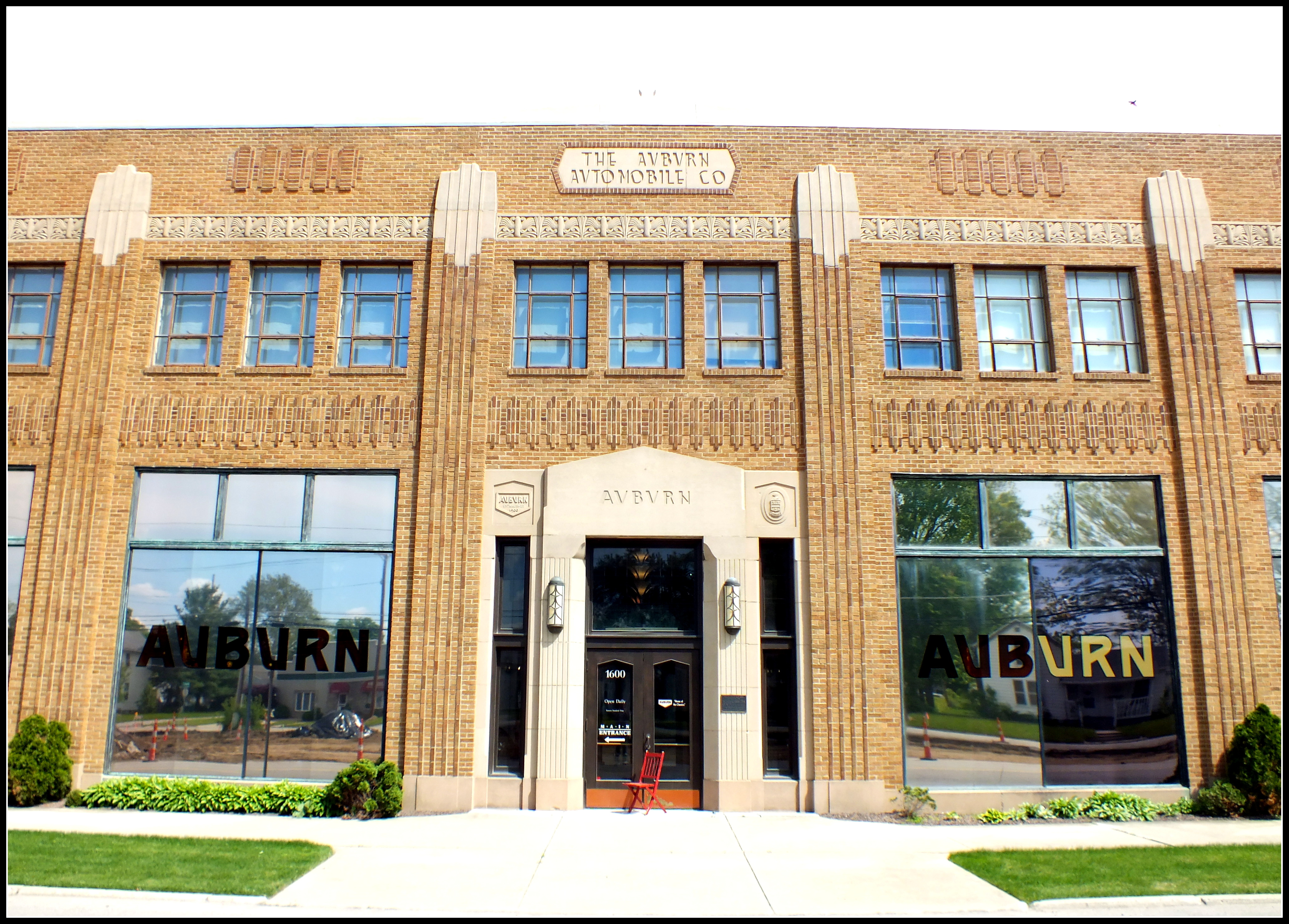
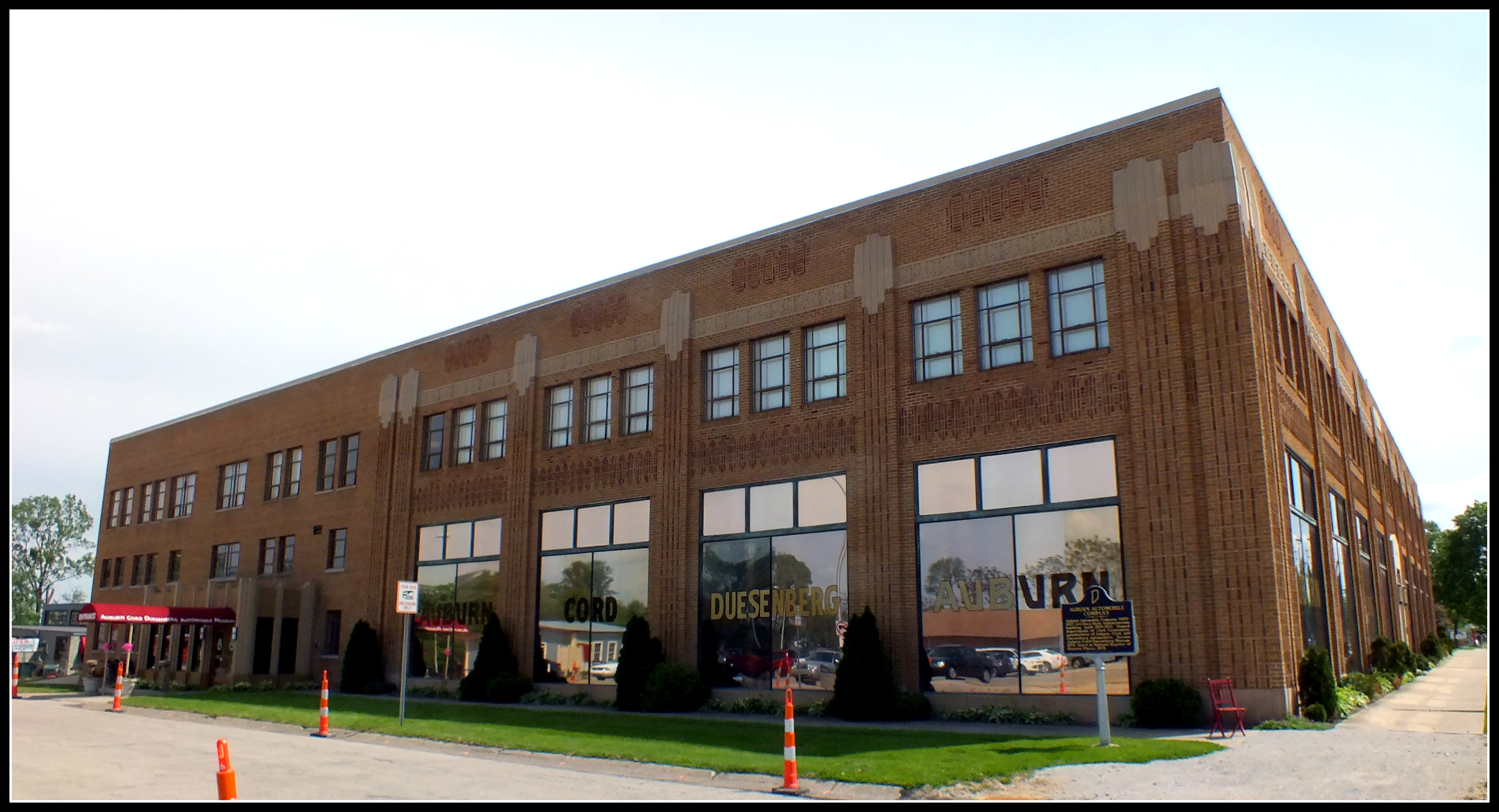
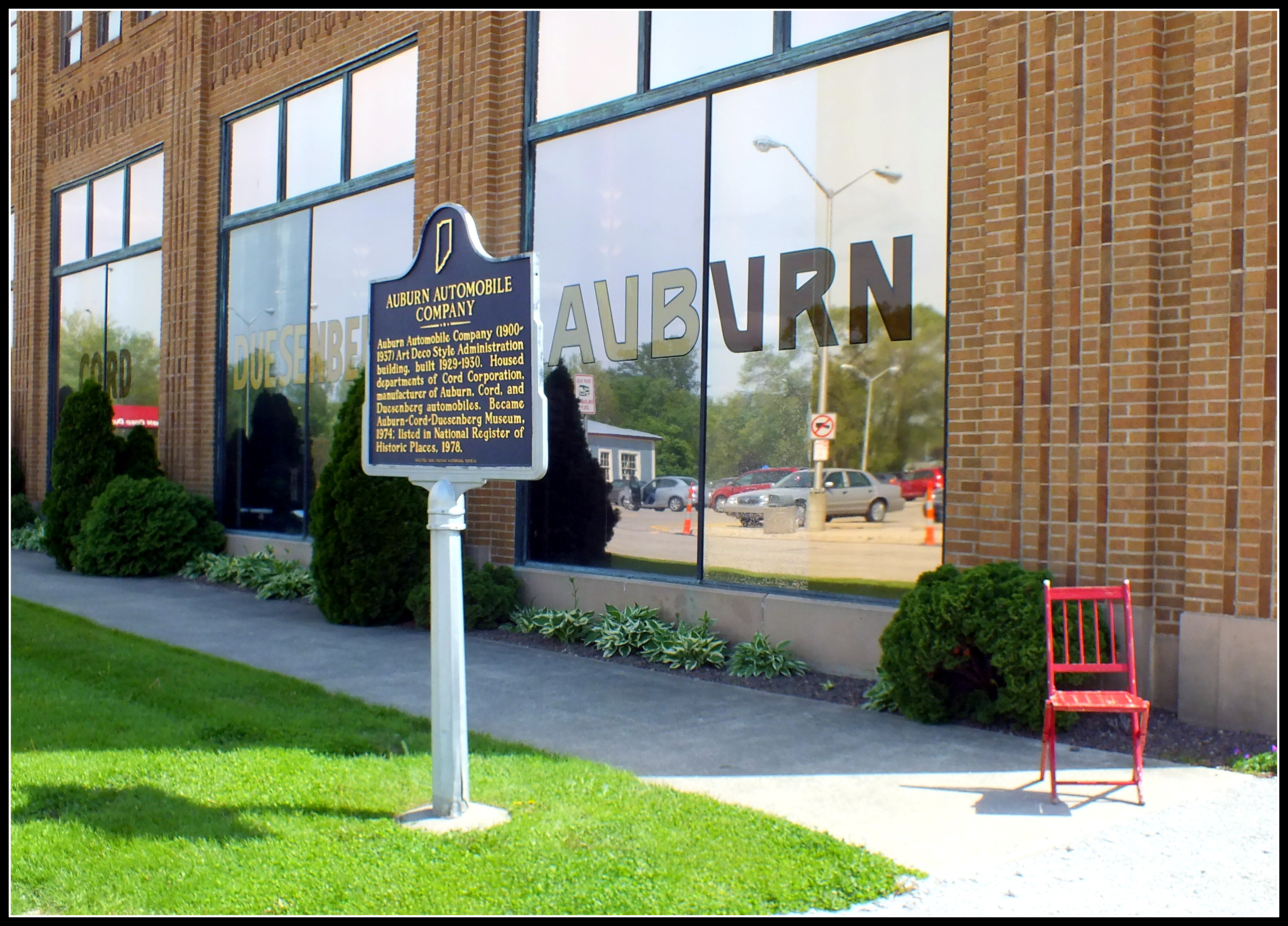
For that reason, we returned to my favorite car museum, the Auburn Cord Duesenberg Museum in Auburn, Indiana. The museum is located in the old headquarters of the Auburn Automobile Company, an Art-Deco building that is stunning in its own right.
The best of the best are on display in the original showroom.
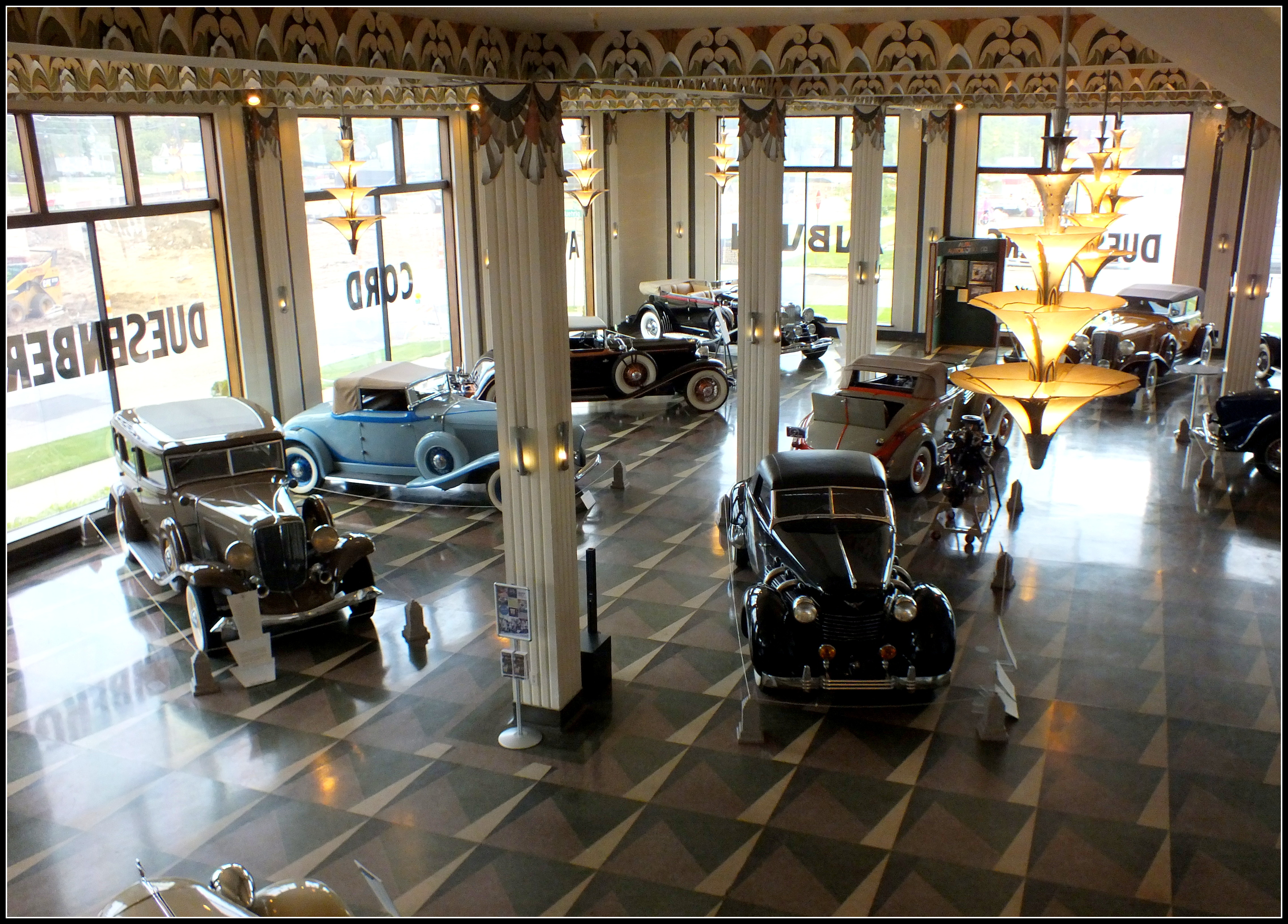
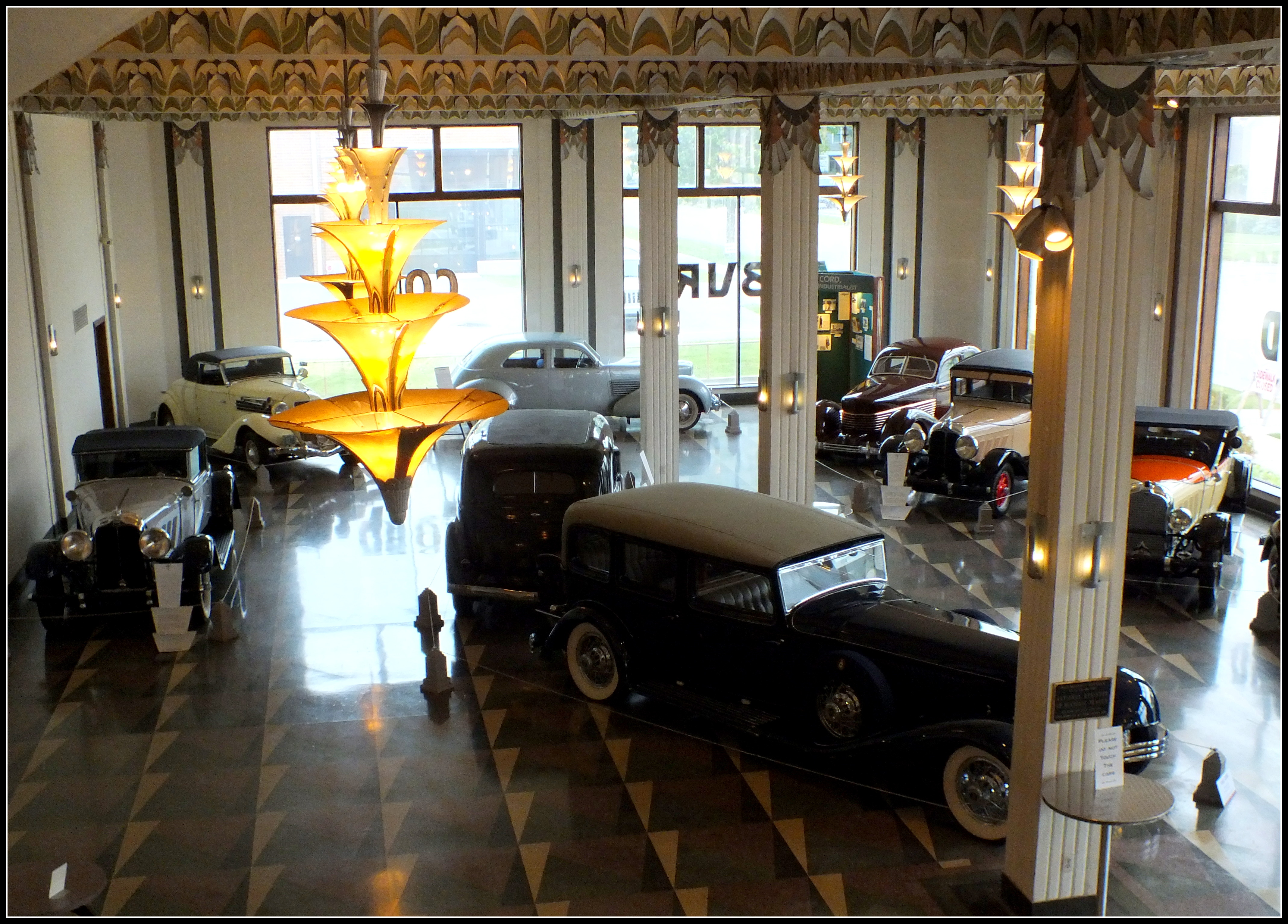
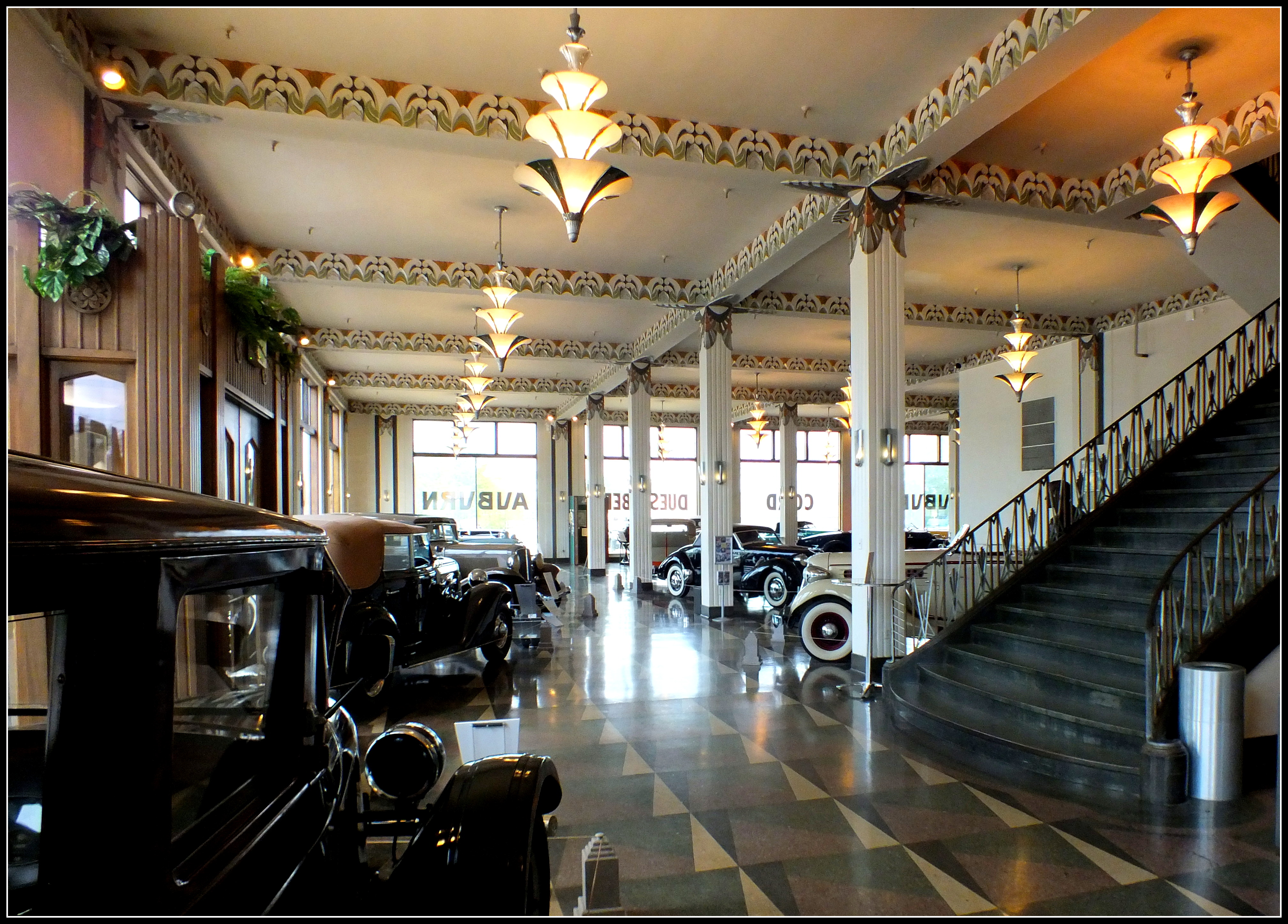
These cars weren’t built for everybody. In the early 1920’s, the average annual salary was $1,300. And the 1930’s was the decade of the Great Depression. I got a good idea of the type of people who owned these cars by looking at the ads on display.
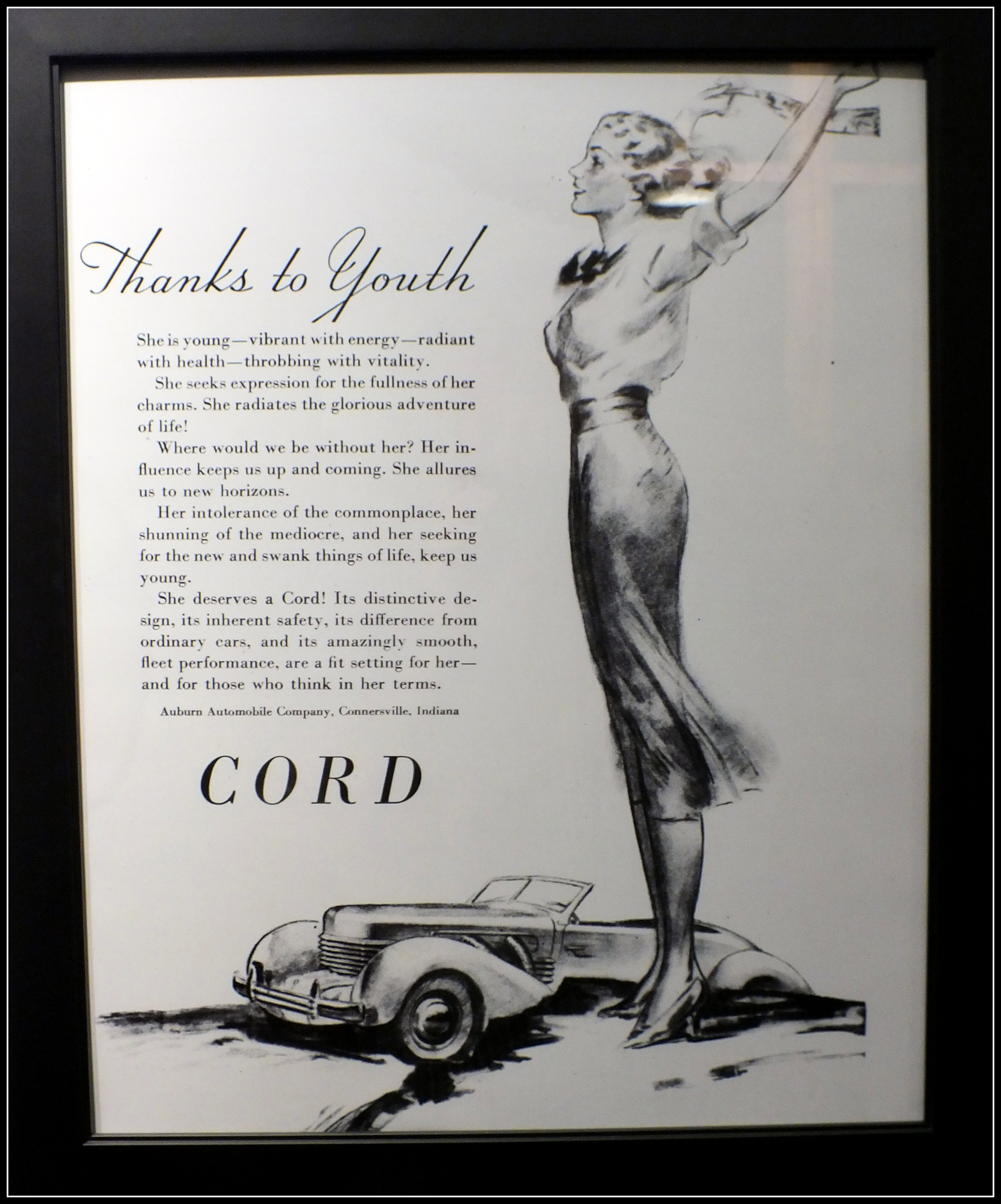
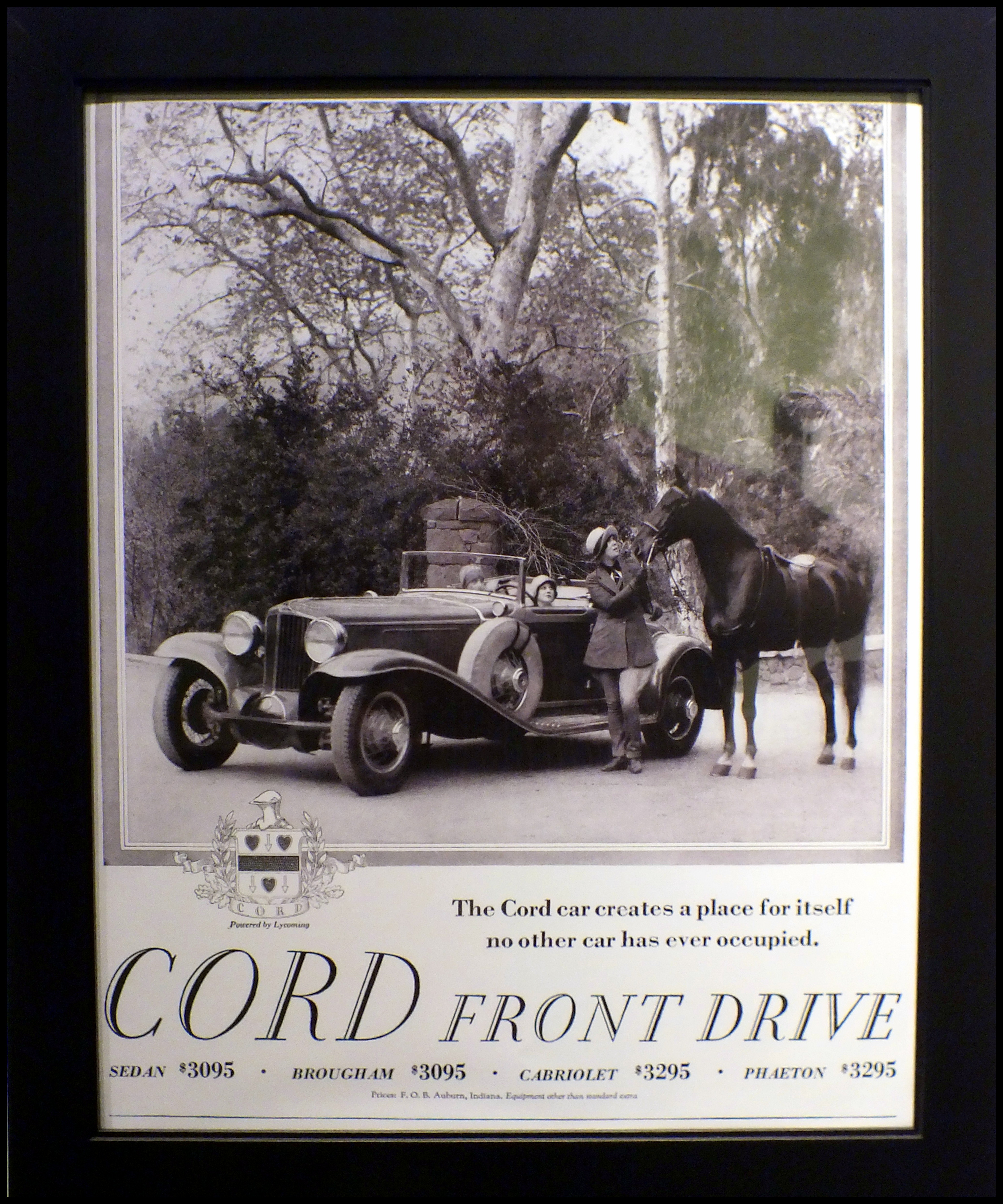
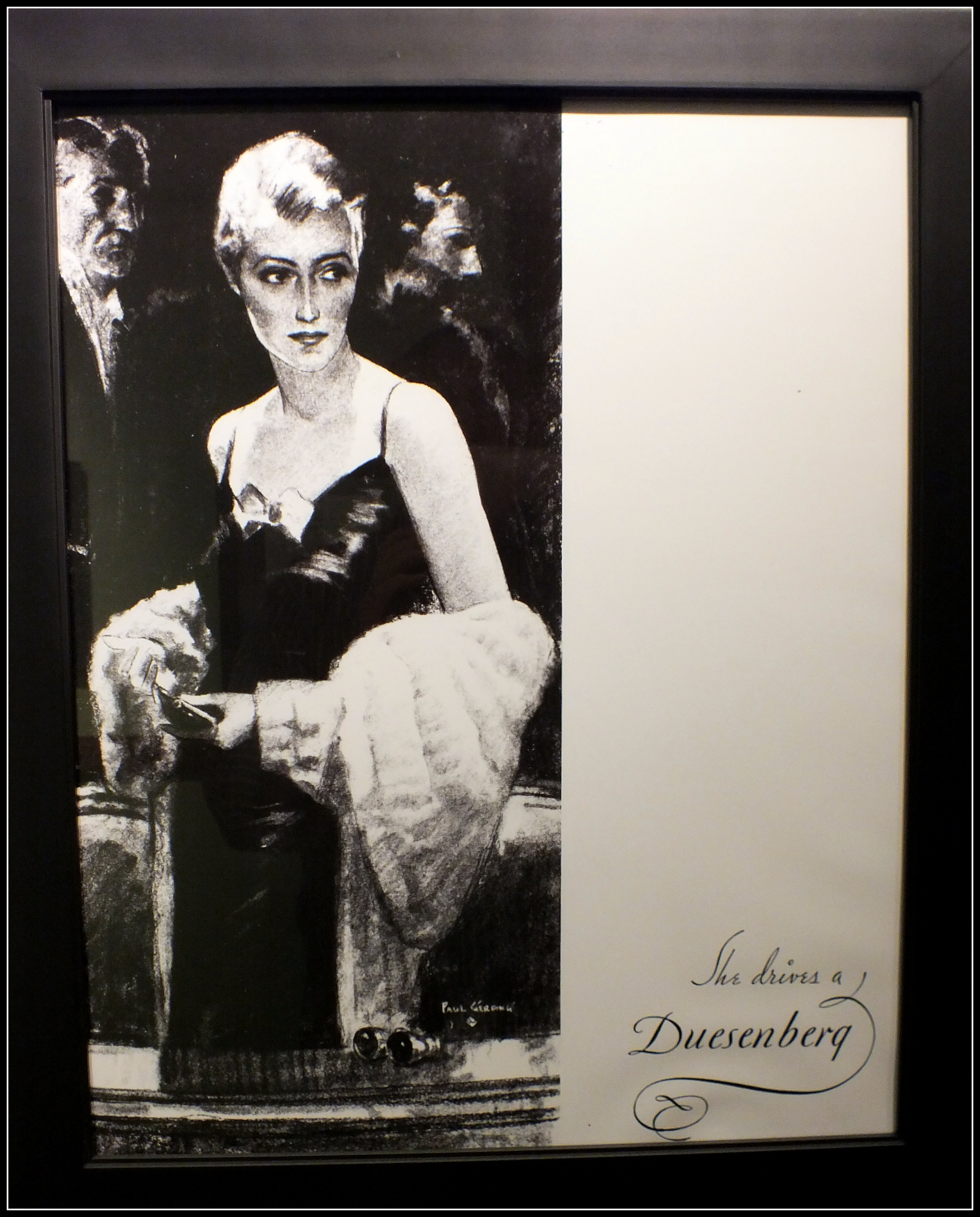
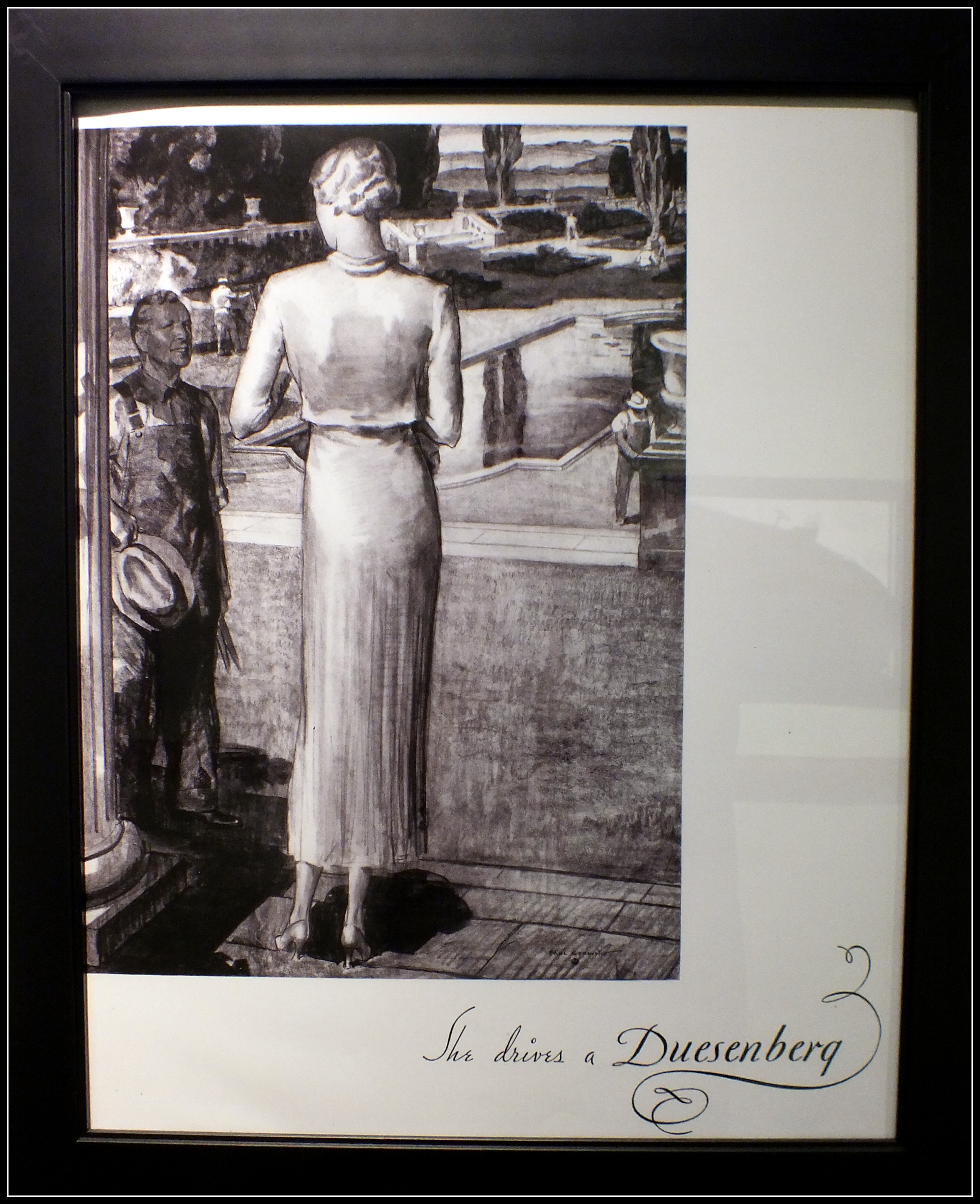
Especially this next one, which appeared in magazines like Vogue and Vanity Fair. Interesting that they portray a lifestyle and not a product.
The museum had several galleries, each with a theme. In addition to the Auburns, Cords and Duesenburgs, there was a room filled with early cars made in Indiana, one with special interest cars and classics from a variety of makes. I’m going to arrange the pictures chronologically
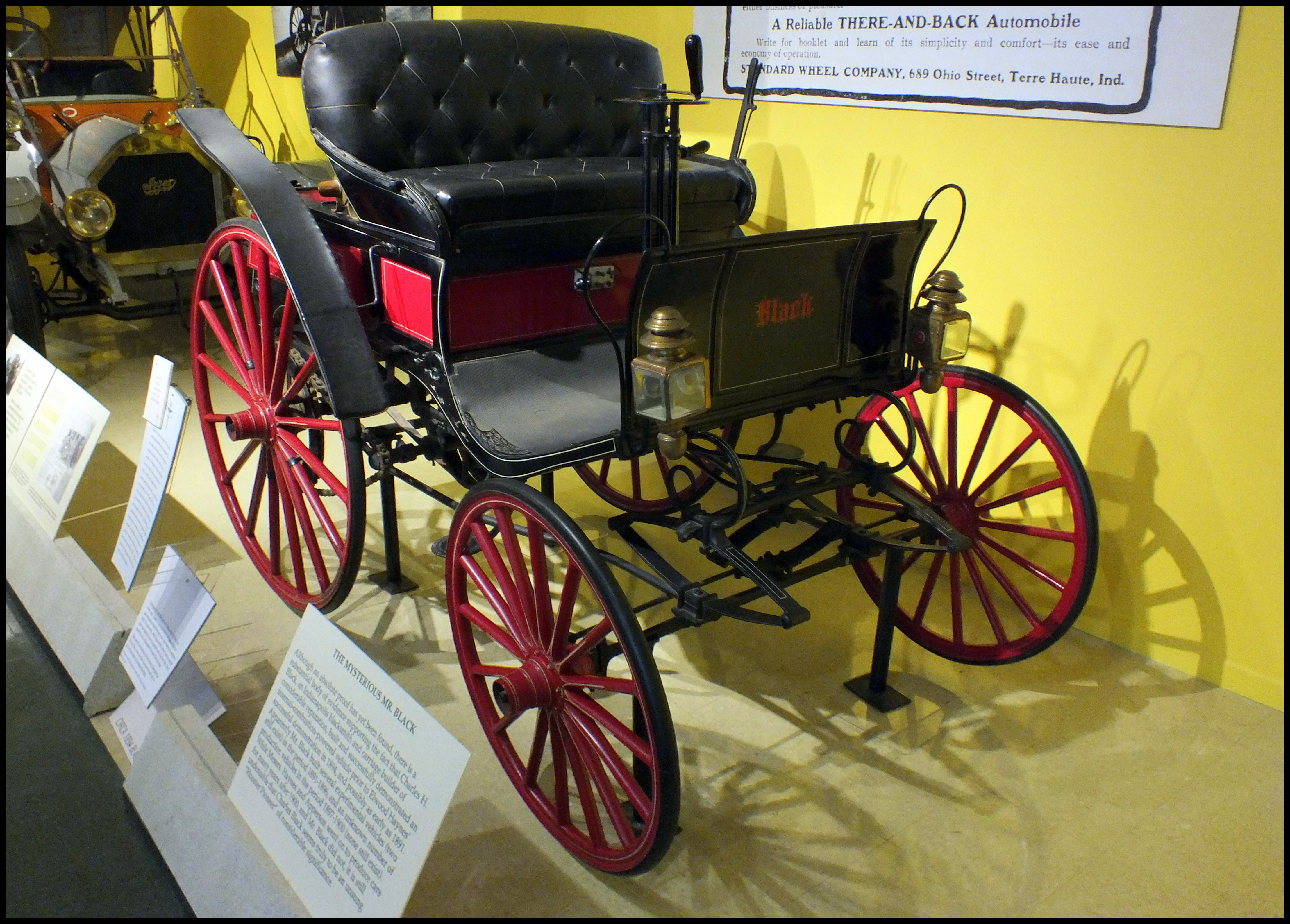
1894 Black
This is possibly the first car ever built in Indiana and one of the oldest built in the United States. Charles H. Black owned a carriage works and blacksmith shop. After driving a neighbor’s Benz, he got the urge to build his own car.
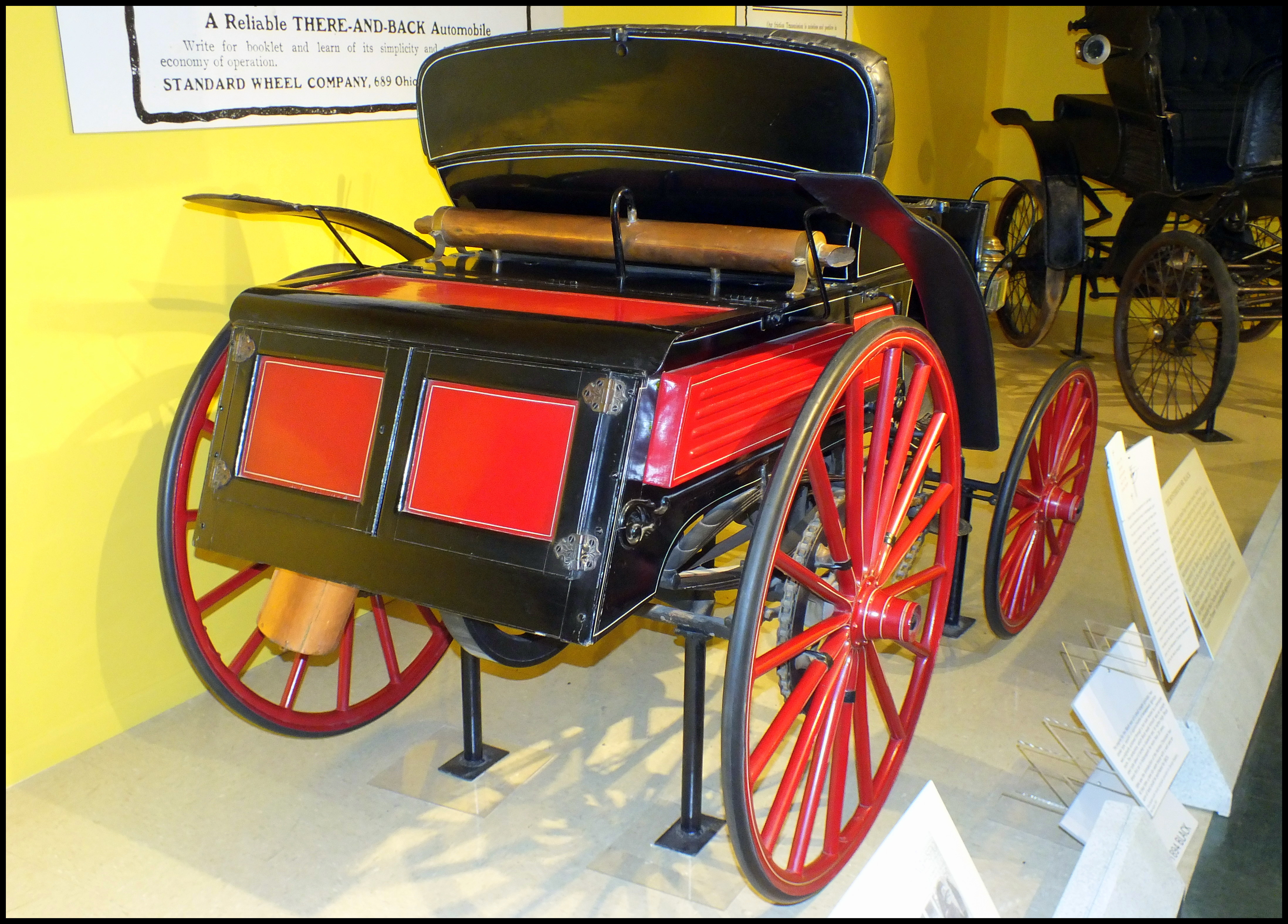
1899 Waverley Stanhope Phaeton Electric Car
This model was produced by the Waverley Bicycle Company and was popular with doctors. This particular car was once owned by John Garrett, the U.S. Ambassador to Italy. It cost $1,500.
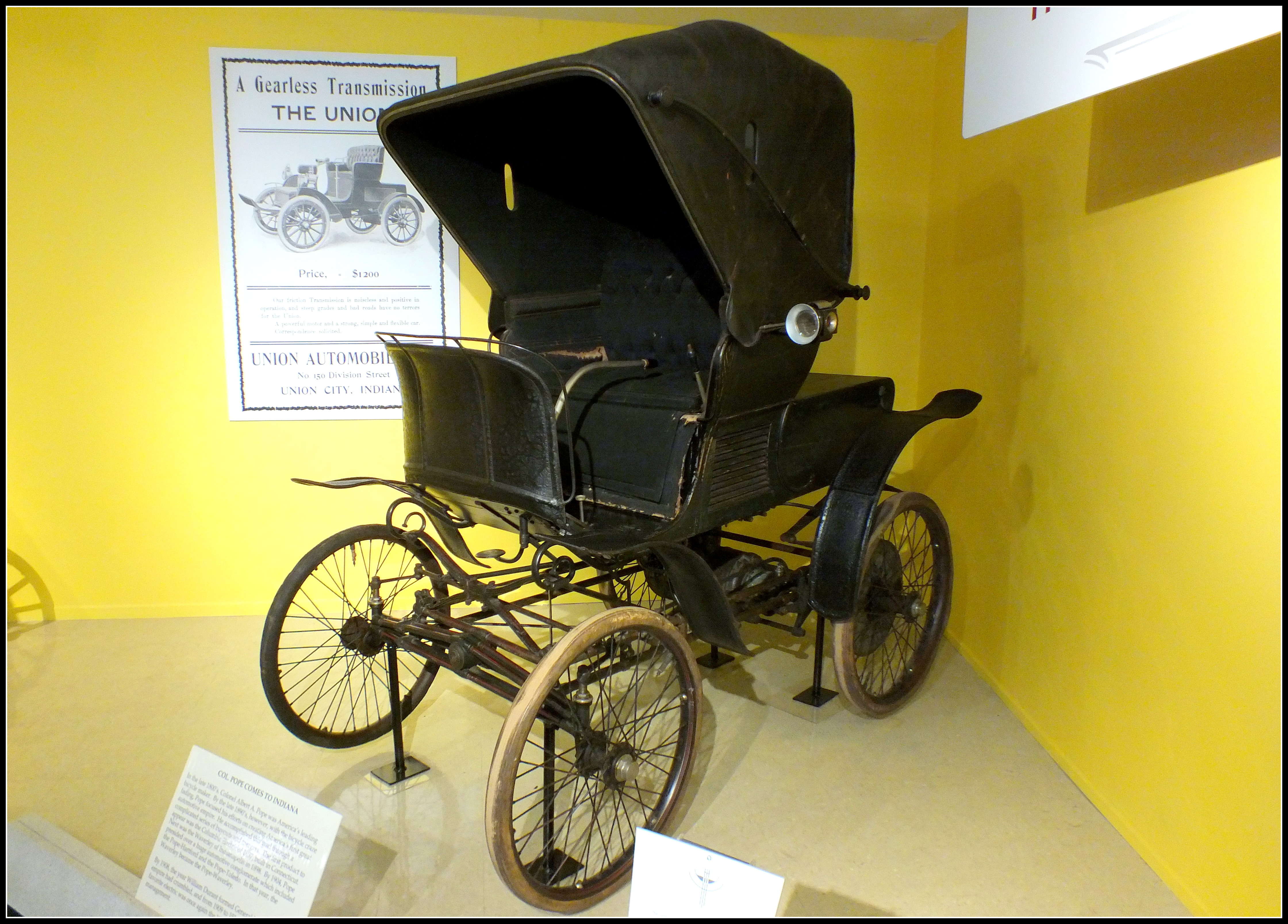
1901 Haynes-Apperson
In 1901, one of these cars was driven from Kokomo, Indiana to New York City and back in 73 hours. Note the spindles on the seats.
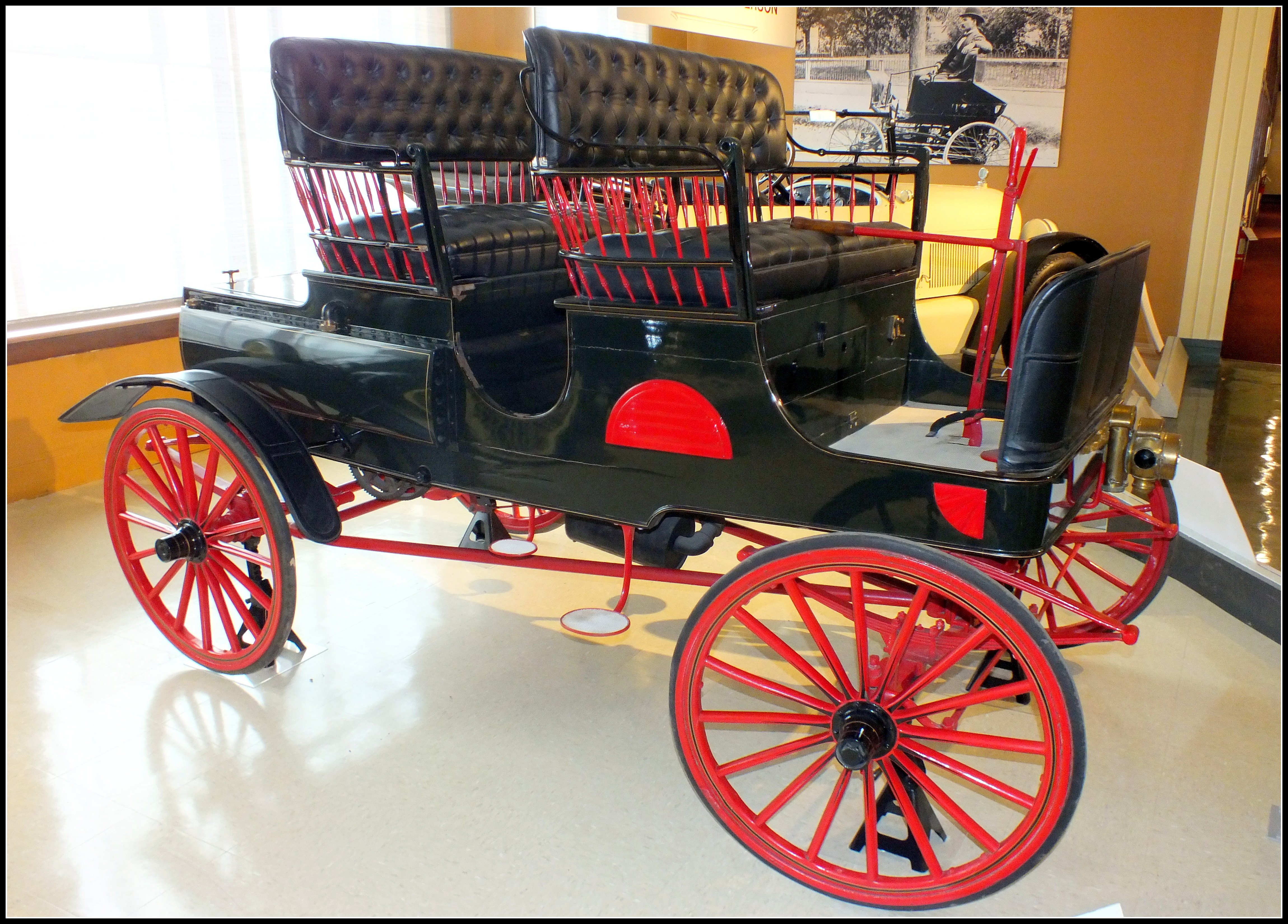
1904 Auburn
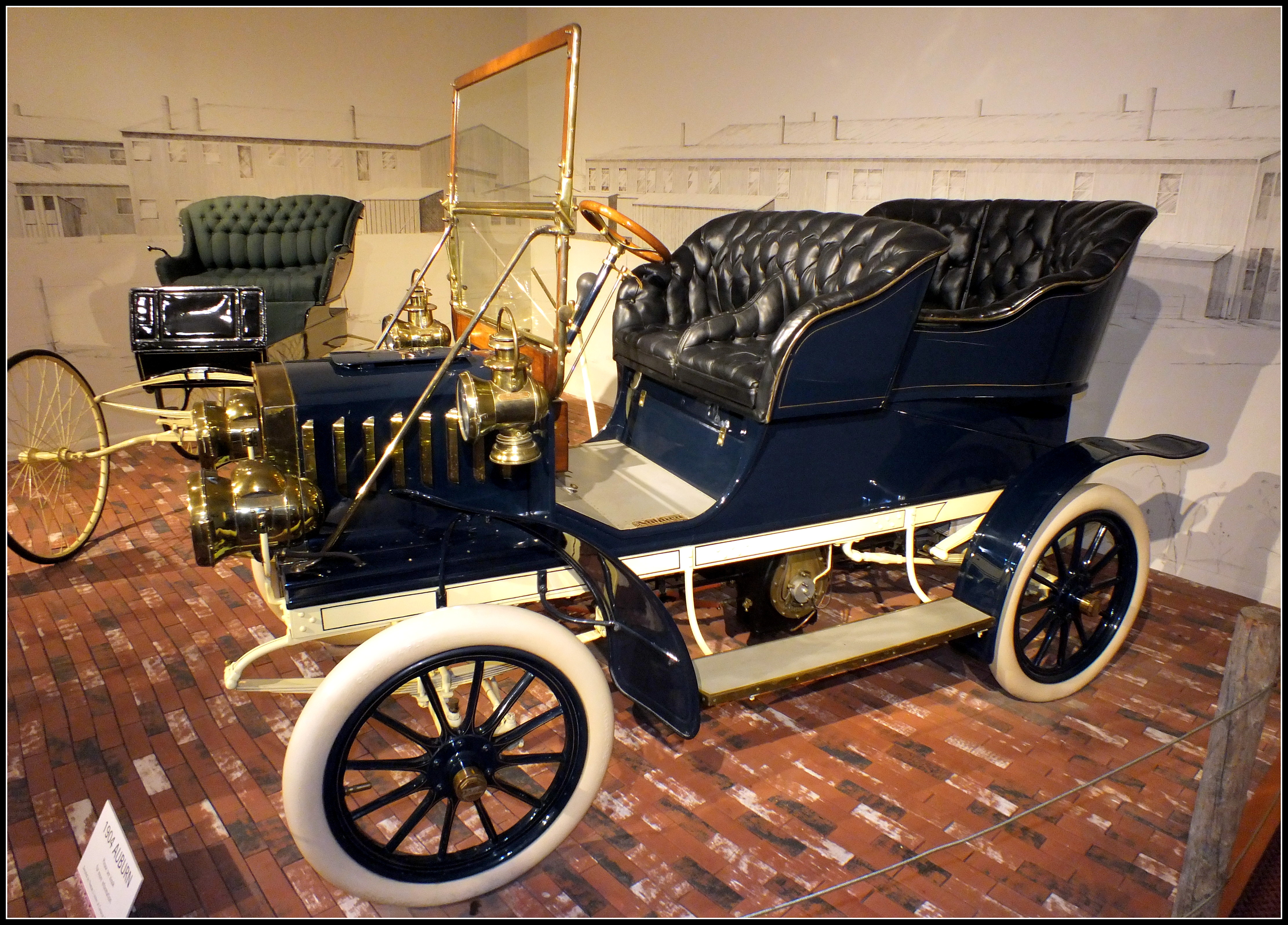
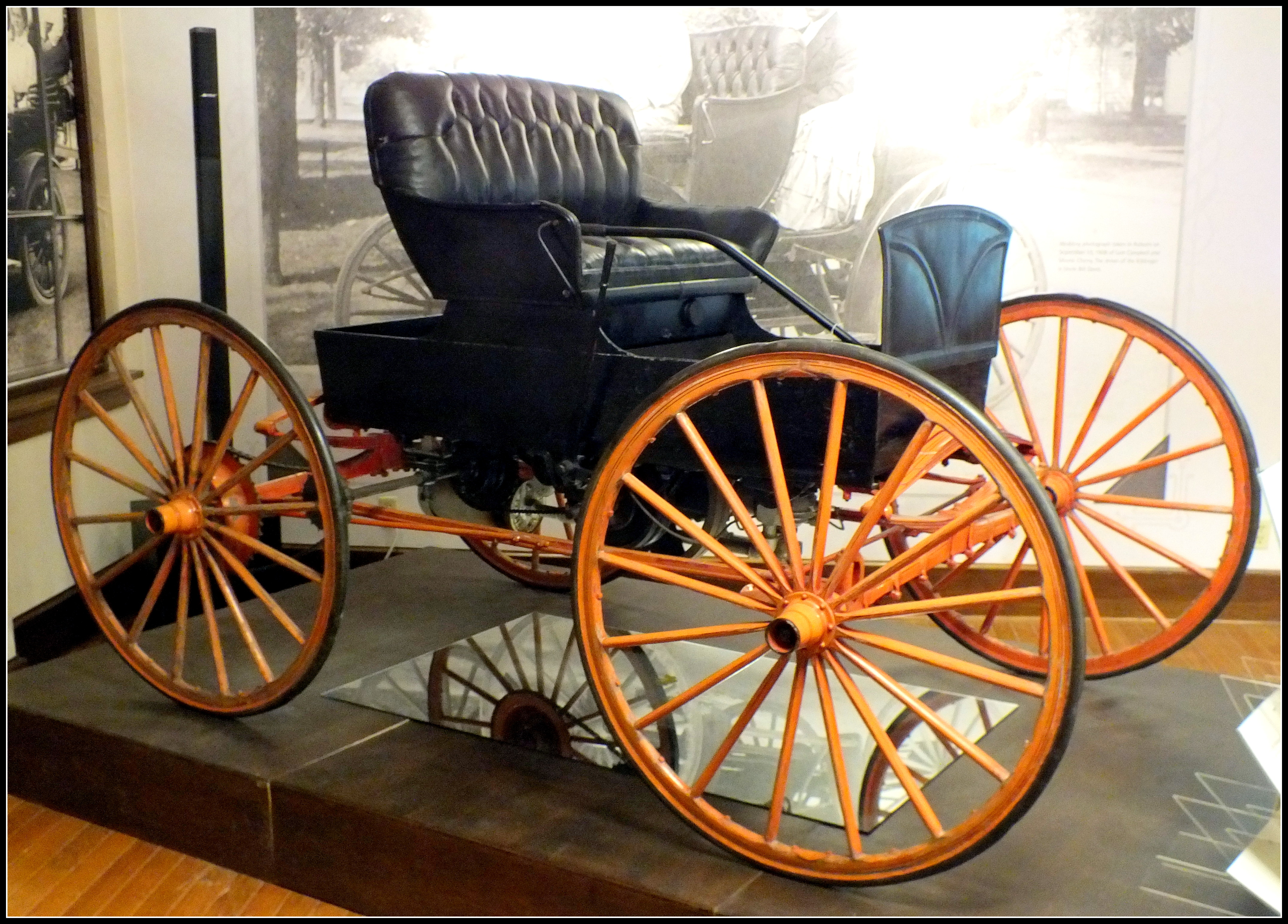
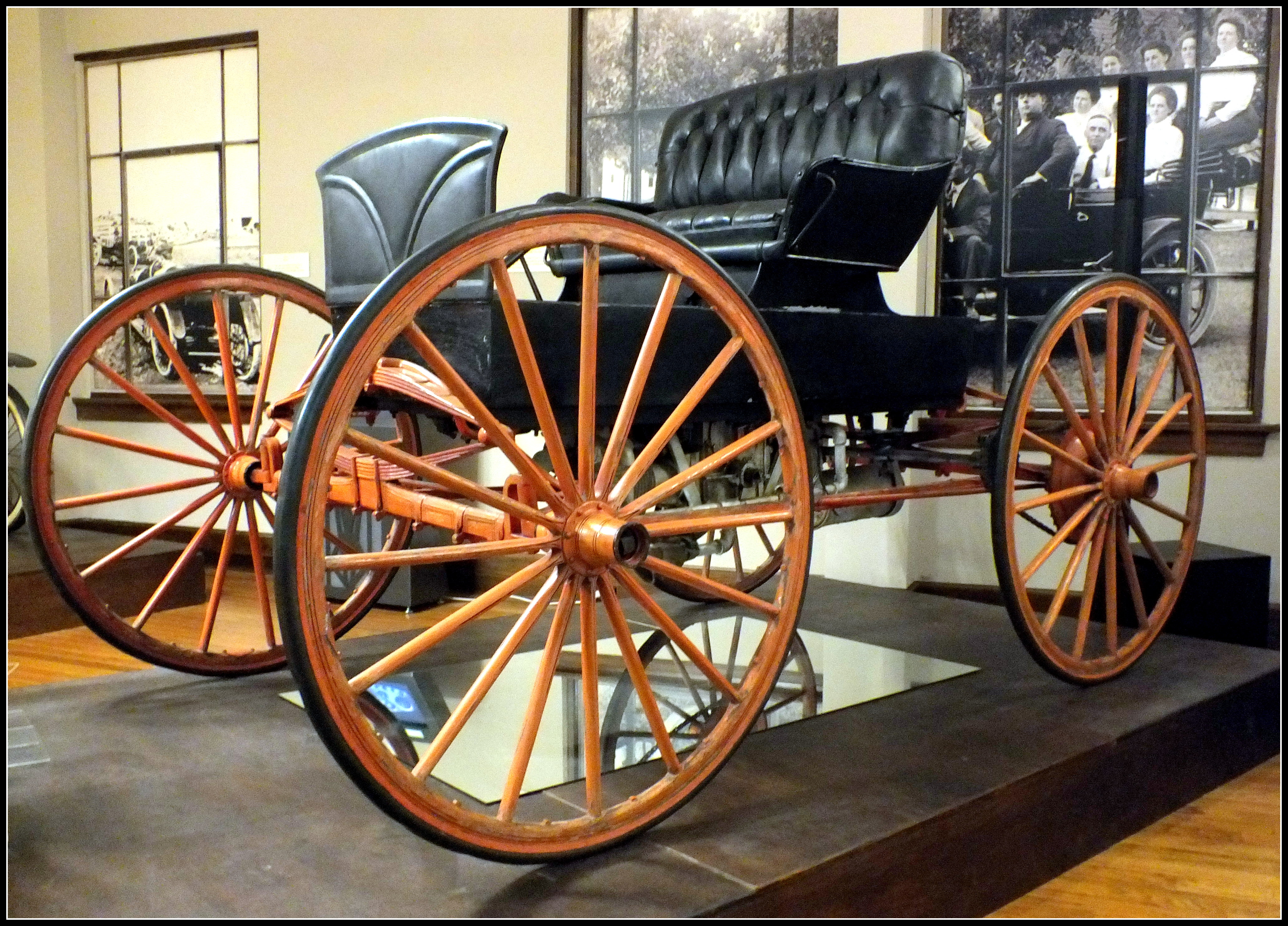
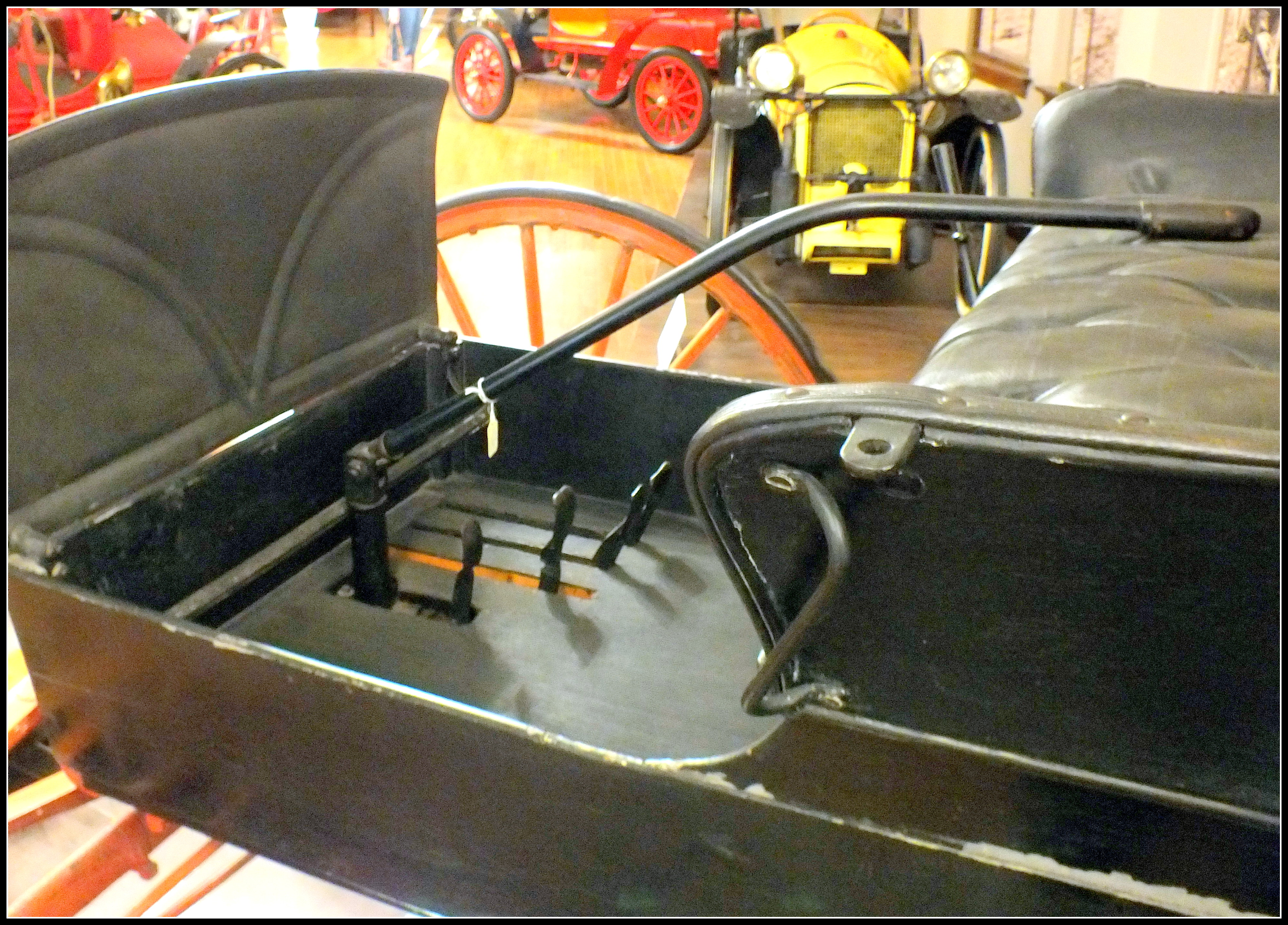
1907 Kiblinger Runabout
This car was owned by Henry Ford and displayed in the Henry Ford Museum in Michigan. New, it cost $375. It had a high speed of 25 mph.
1908 Auburn Touring Car
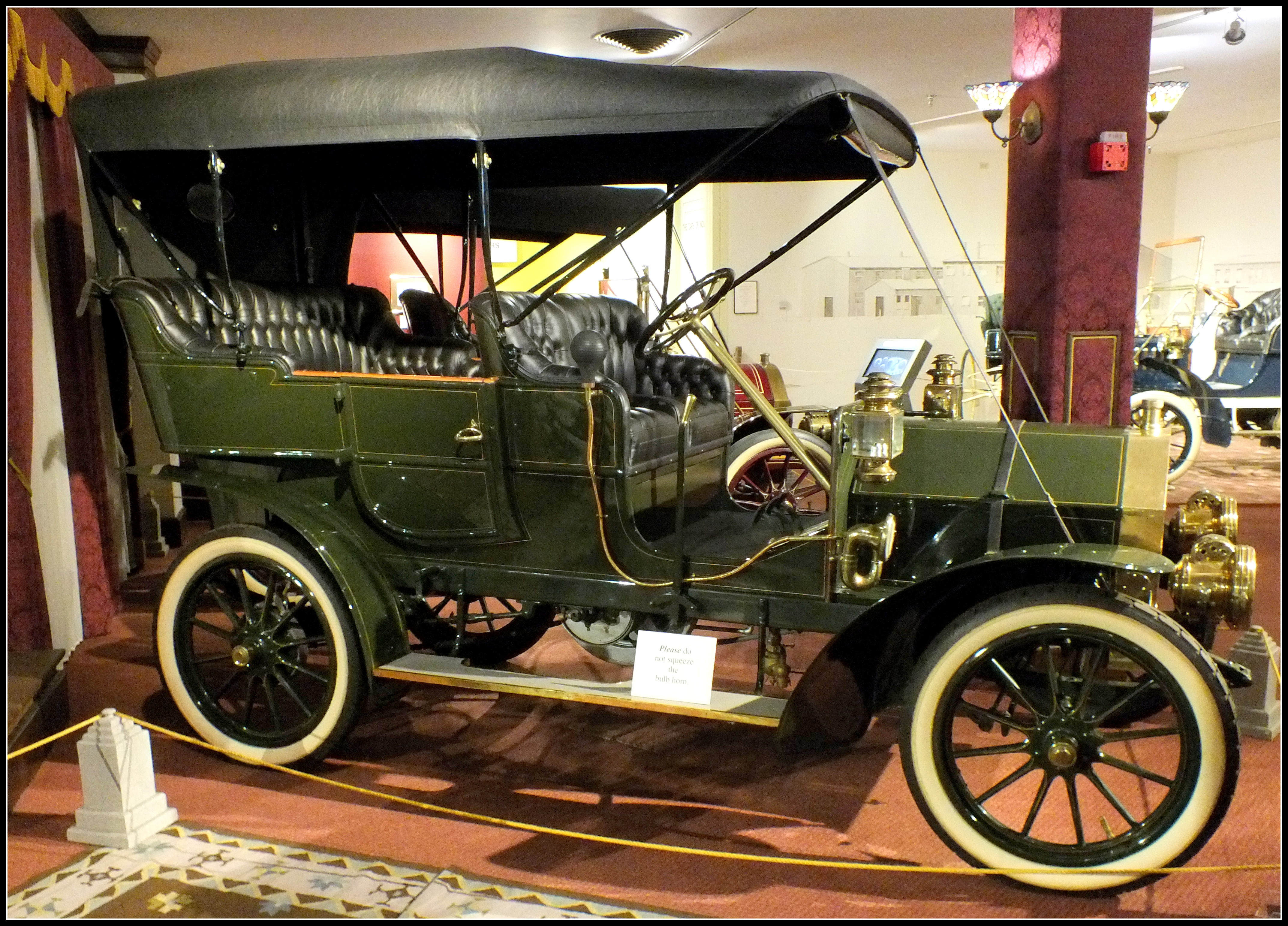
It was still in running condition until 1971 when the barn it was stored in was leveled by a tornado. New, it cost $2,195.
1908 Auburn Touring Car
A total of 1,018 Auburns were sold in 1908.
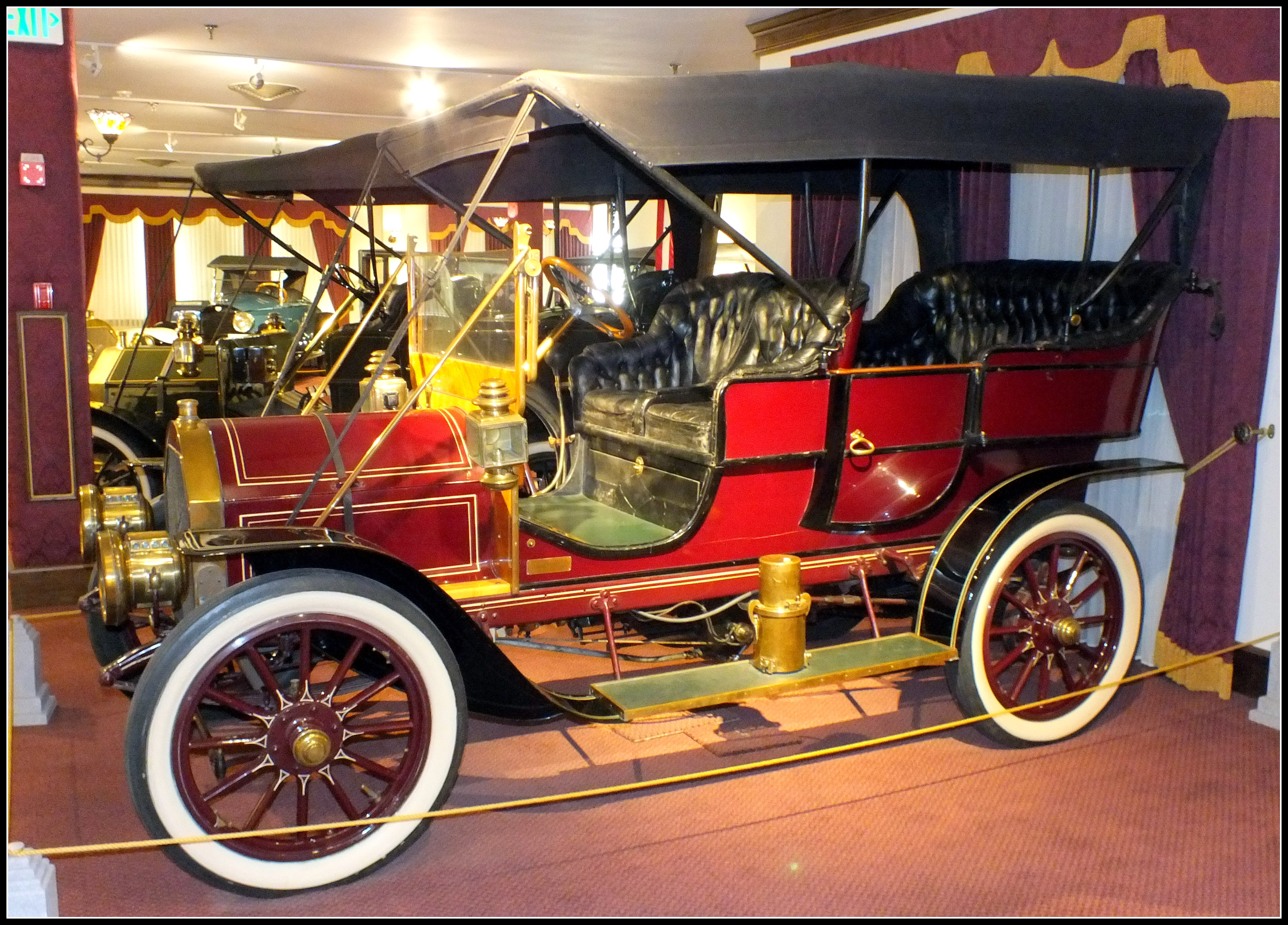
1908 Zimmerman Runabout
Zimmerman built buggies before it turned to automobiles. This one cost $650 new.
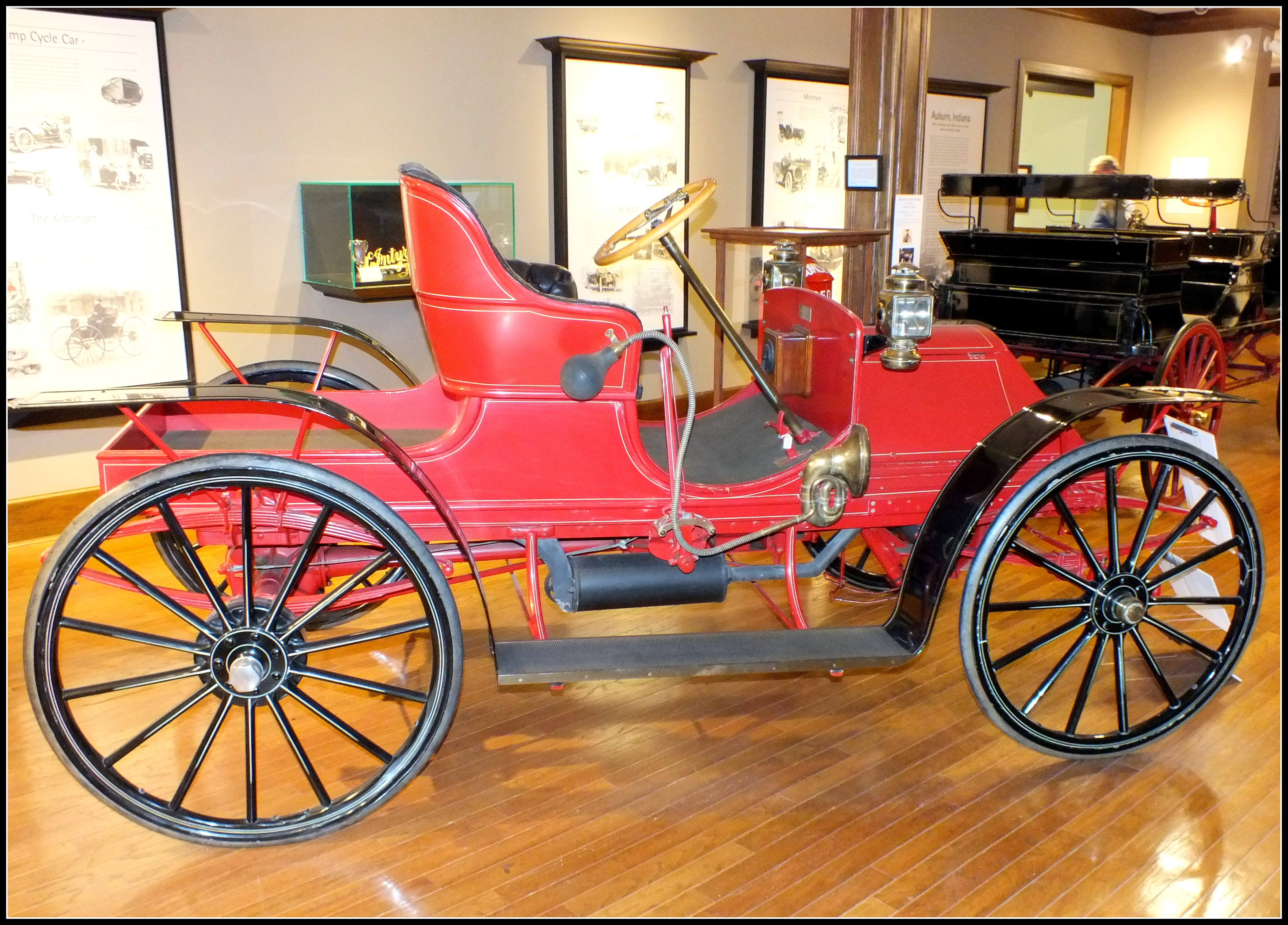
1909 McIntyre Autobuggy
The rear seat is removable to turn a passenger car into a commercial vehicle, and the back end has a tailgate. The red item in the case behind the car is a 1912 Bowser Gasoline Pump.
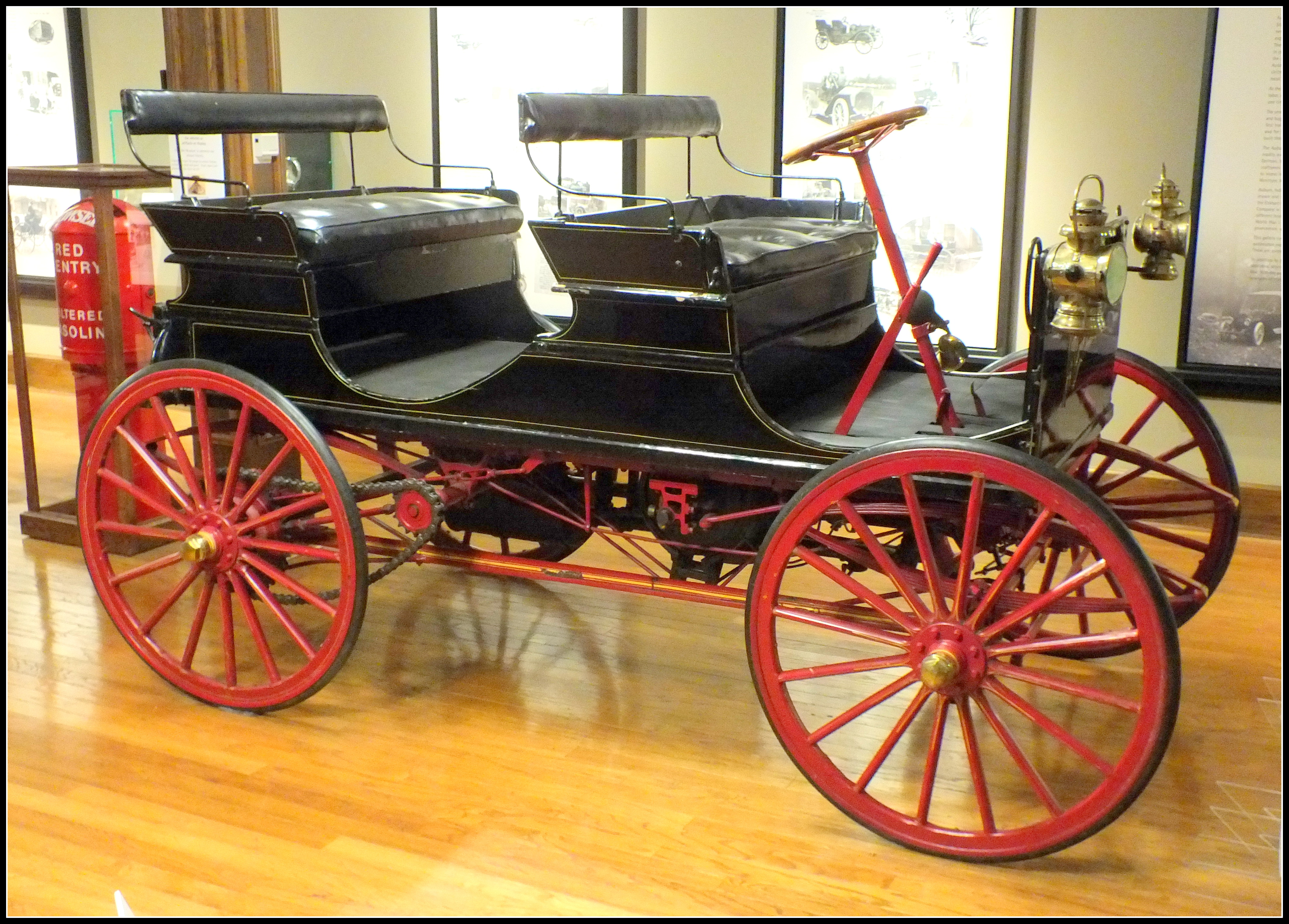
1909 McIntyre Touring Car
Many early models are known as highwheels because of their clearance. This was popular because of the sorry state of roads in 1909. This one cost $850 brand new.
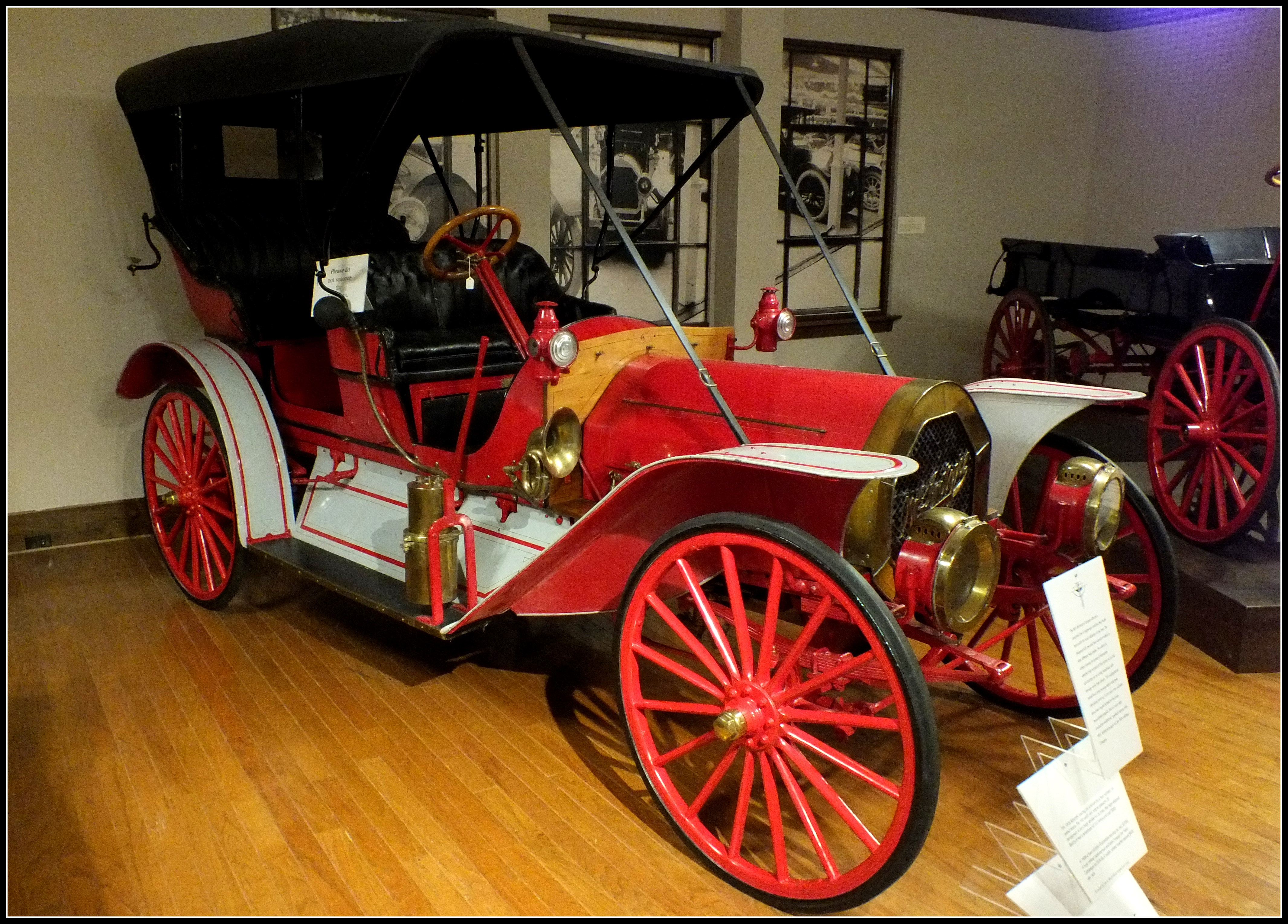
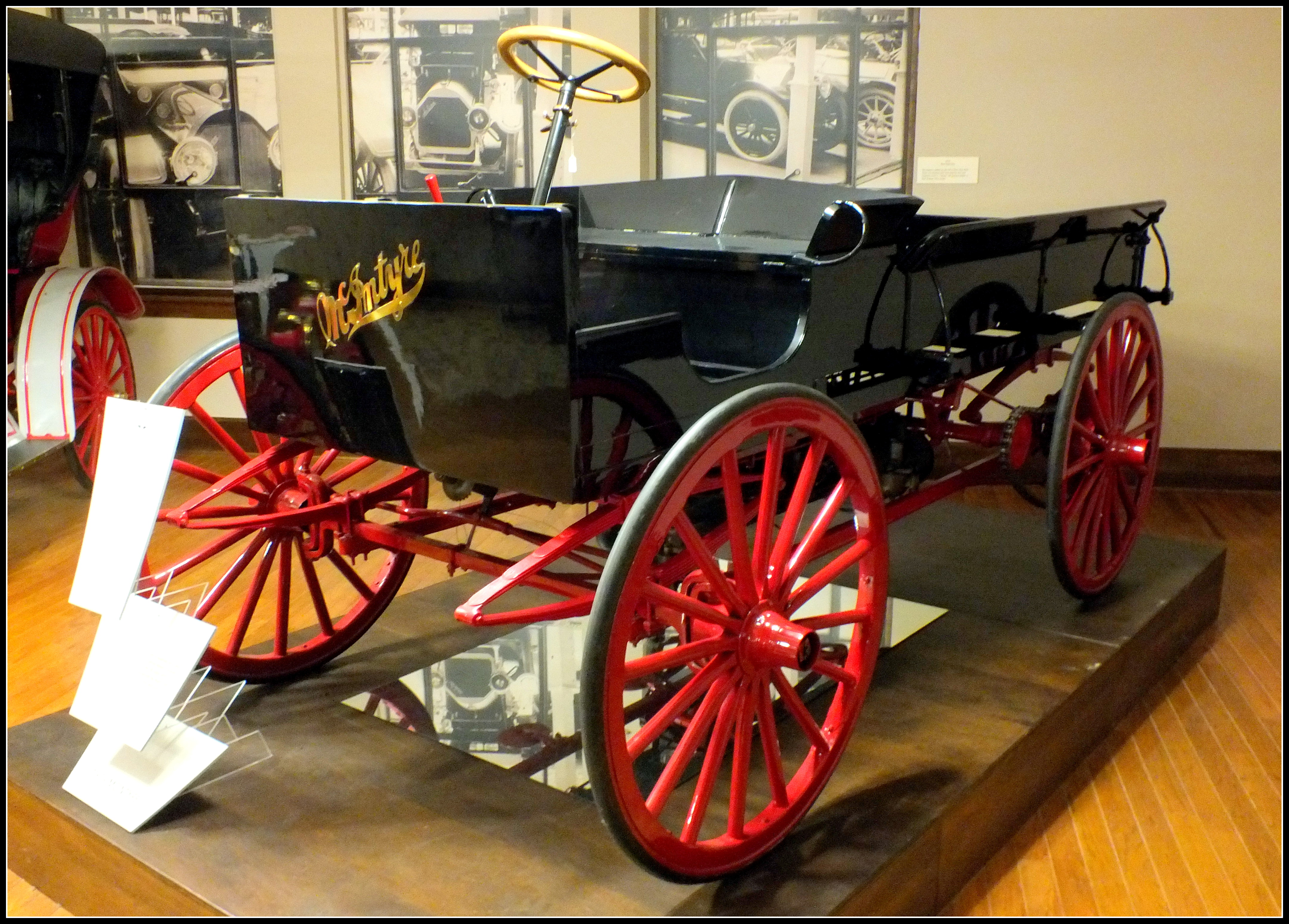
1909 McIntyre Truck
Like a lot of early cars, this truck is basically a carriage equipped with an engine.
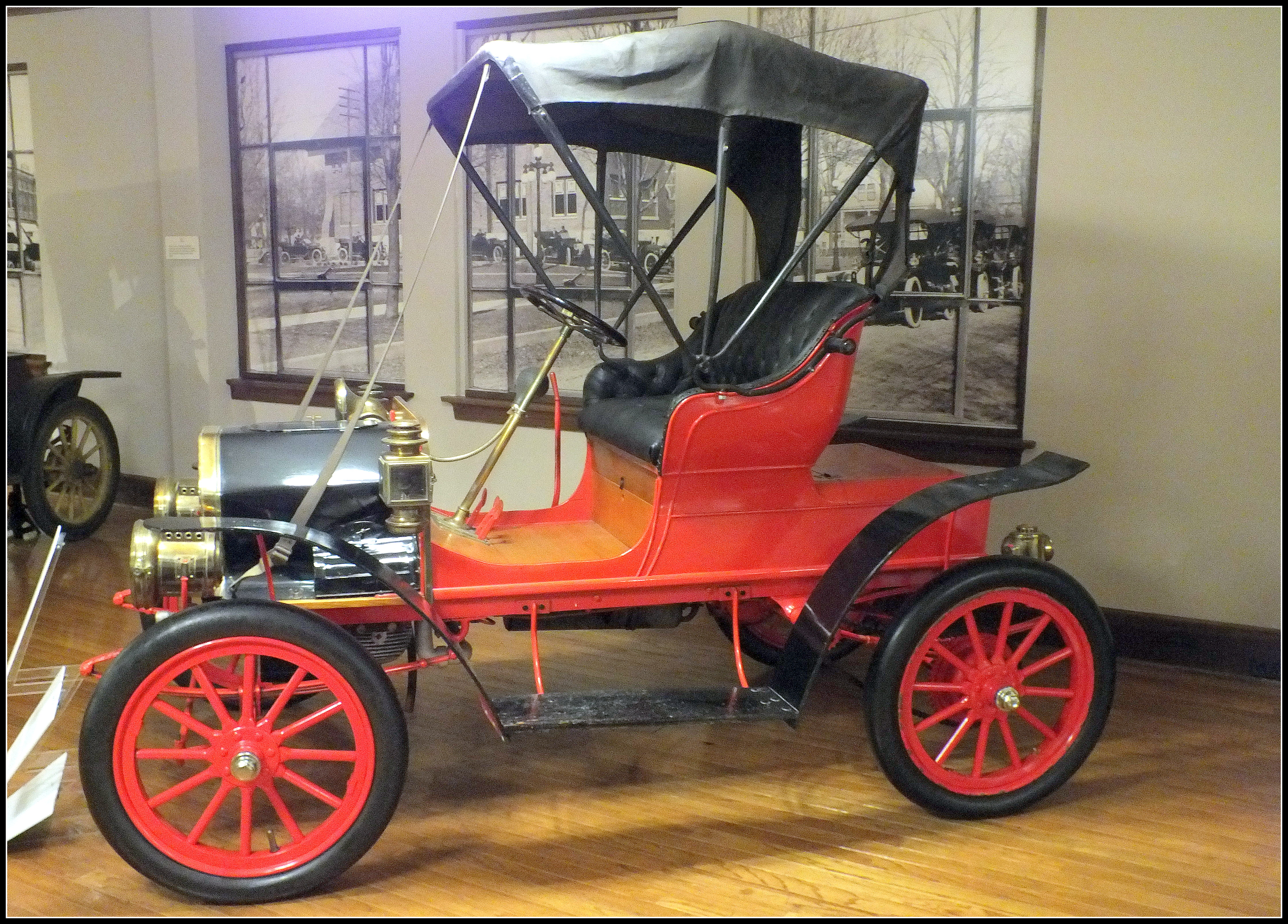
1909Â Zimmerman Runabout
Unlike other highwheelers, this one has pneumatic tires.
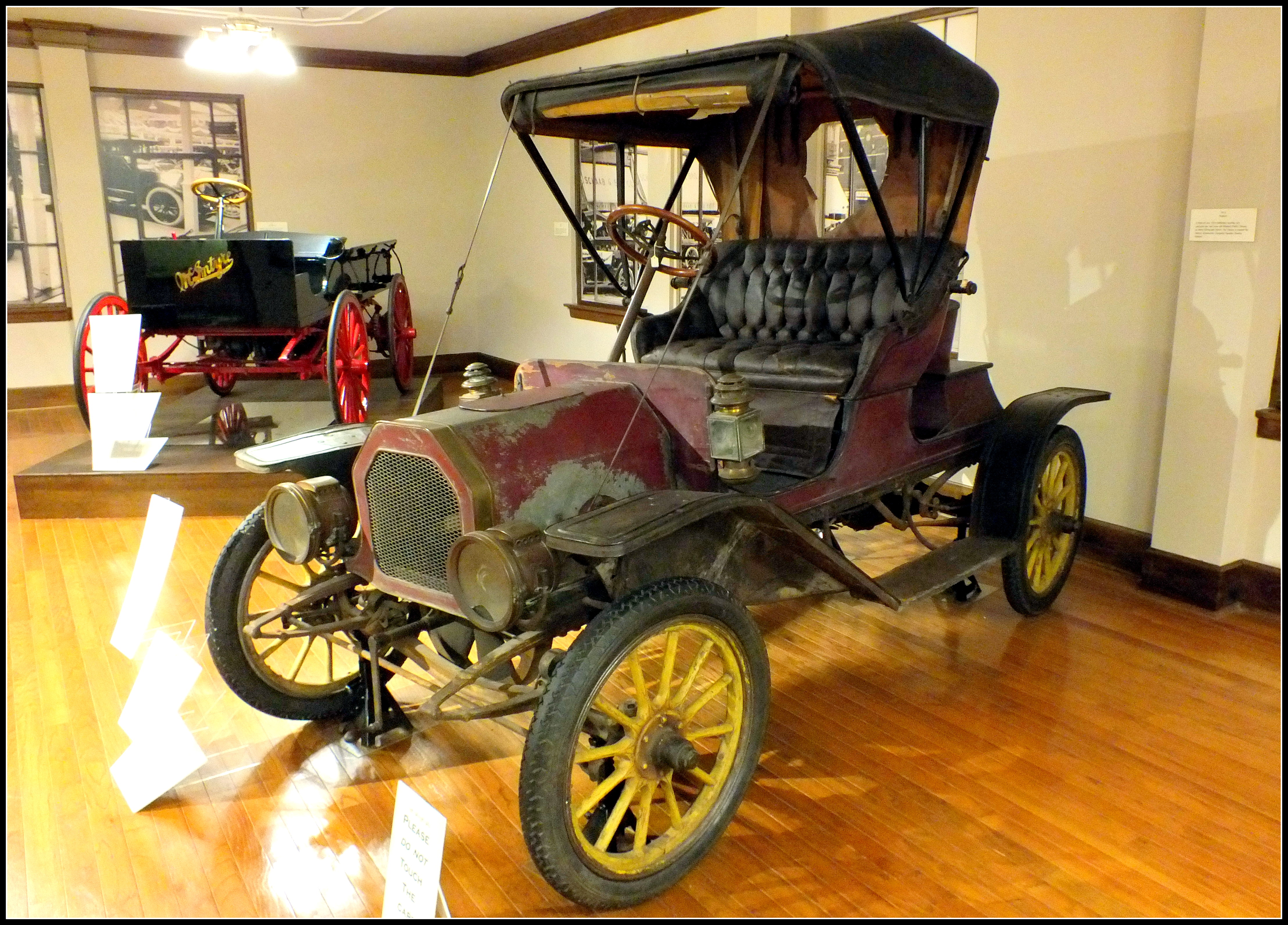
1910 Zimmerman Runabout
It was owned for many years by a woman doctor who used it for house calls. It’s still in its original condition without restoration.
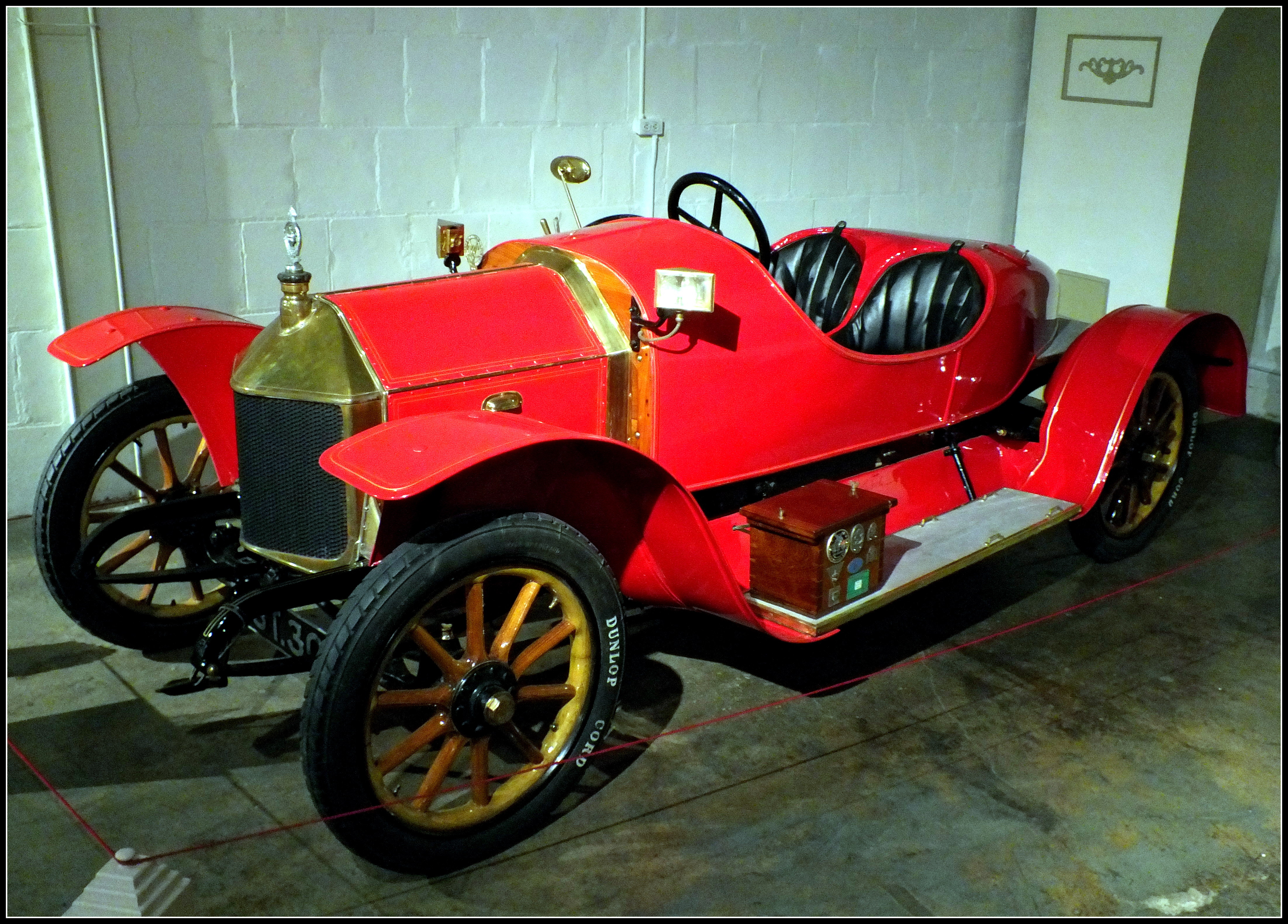
1911 Metallurgique Boattail Speedster
Manufactured in Belgium. This car appeared in the movie The Great Race in 1965.
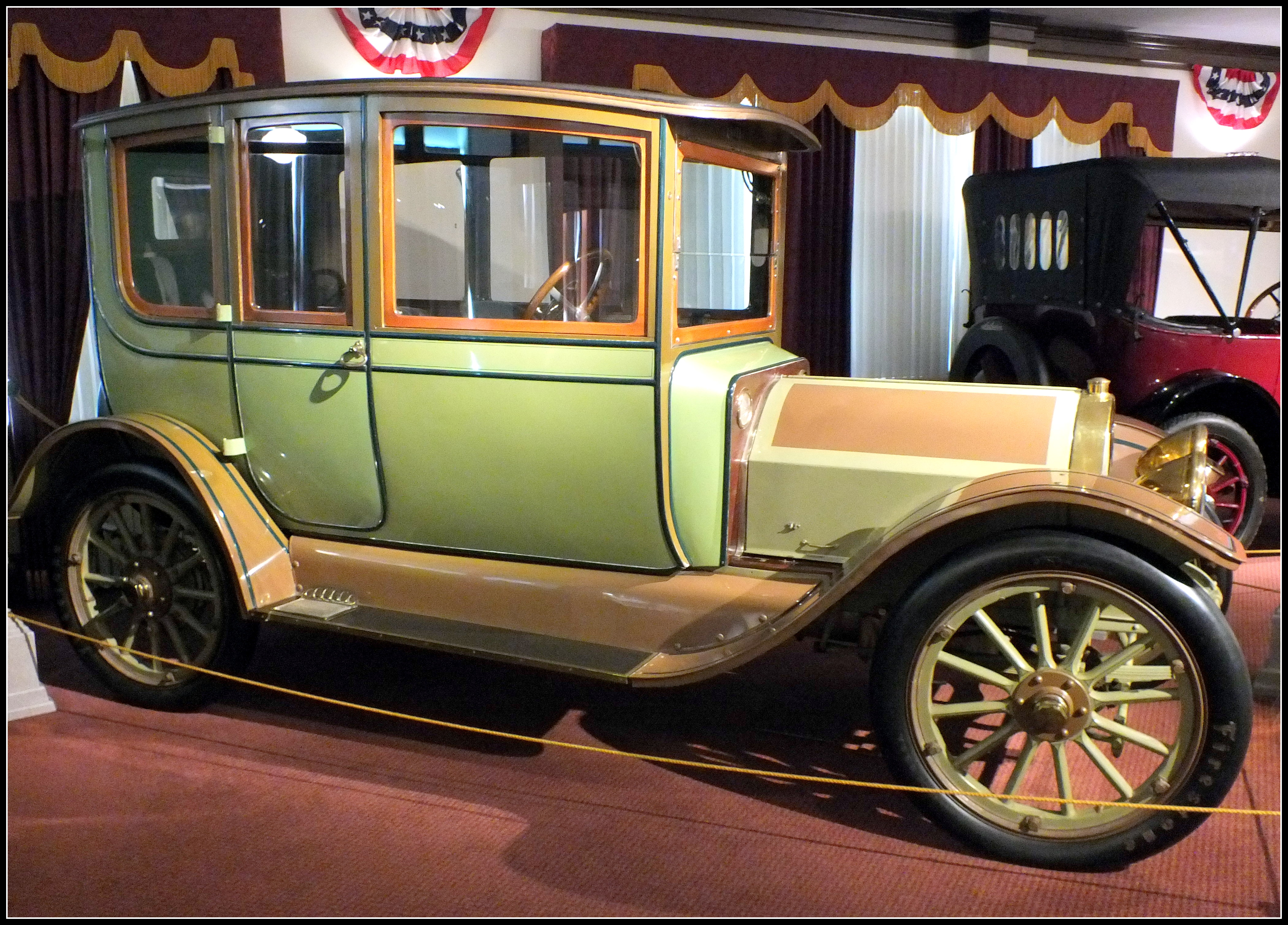
1912 Auburn Special Formal Sedan
This car was built for an auto show and billed as the “Car of Tomorrow.” Note the doors. There’s only a back door on the passenger side and only a front door on the driver’s side.
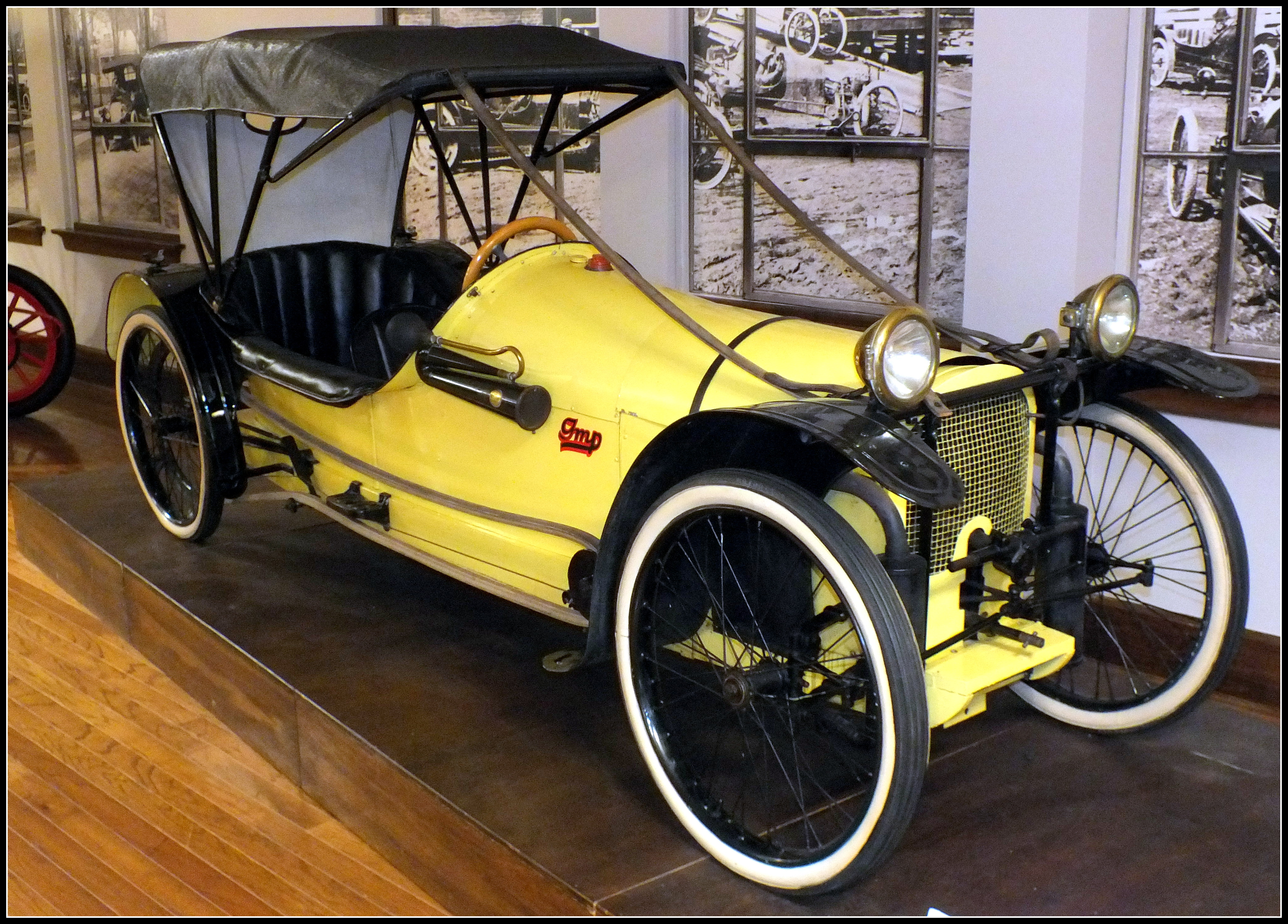
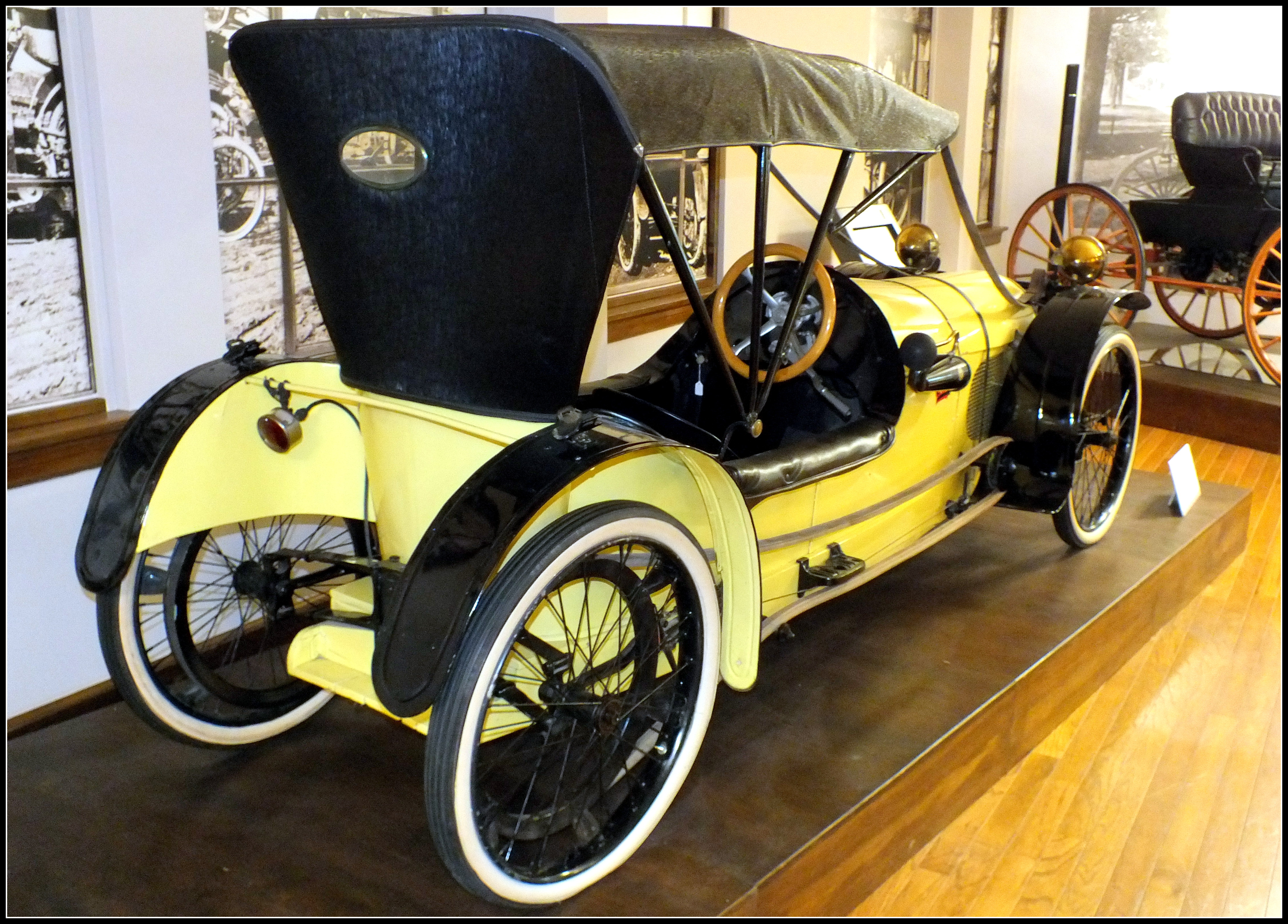
1913 Imp Cycle Car
This car is only one passenger wide in the front. It’s basically just a four-wheeled motorcycle.
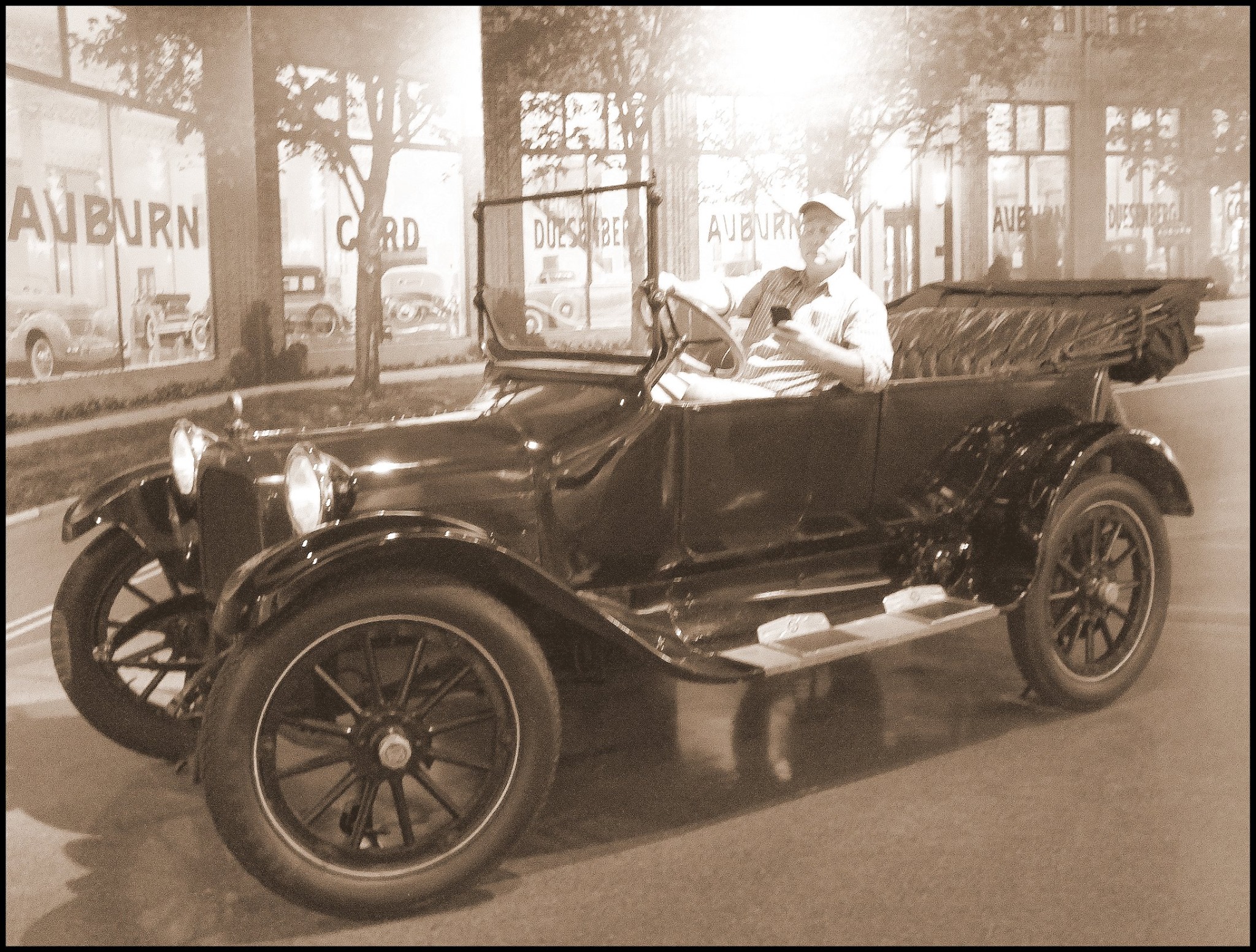
1916 Dodge
This car was marketed with the slogan “It speaks for itself.” It was reliable and durable — General Pershing used one as a command vehicle during the border war with Mexico and it was used during the first mechanized cavalry charge by the U.S. Army. We were invited to hop in and get our photos taken, so we did.
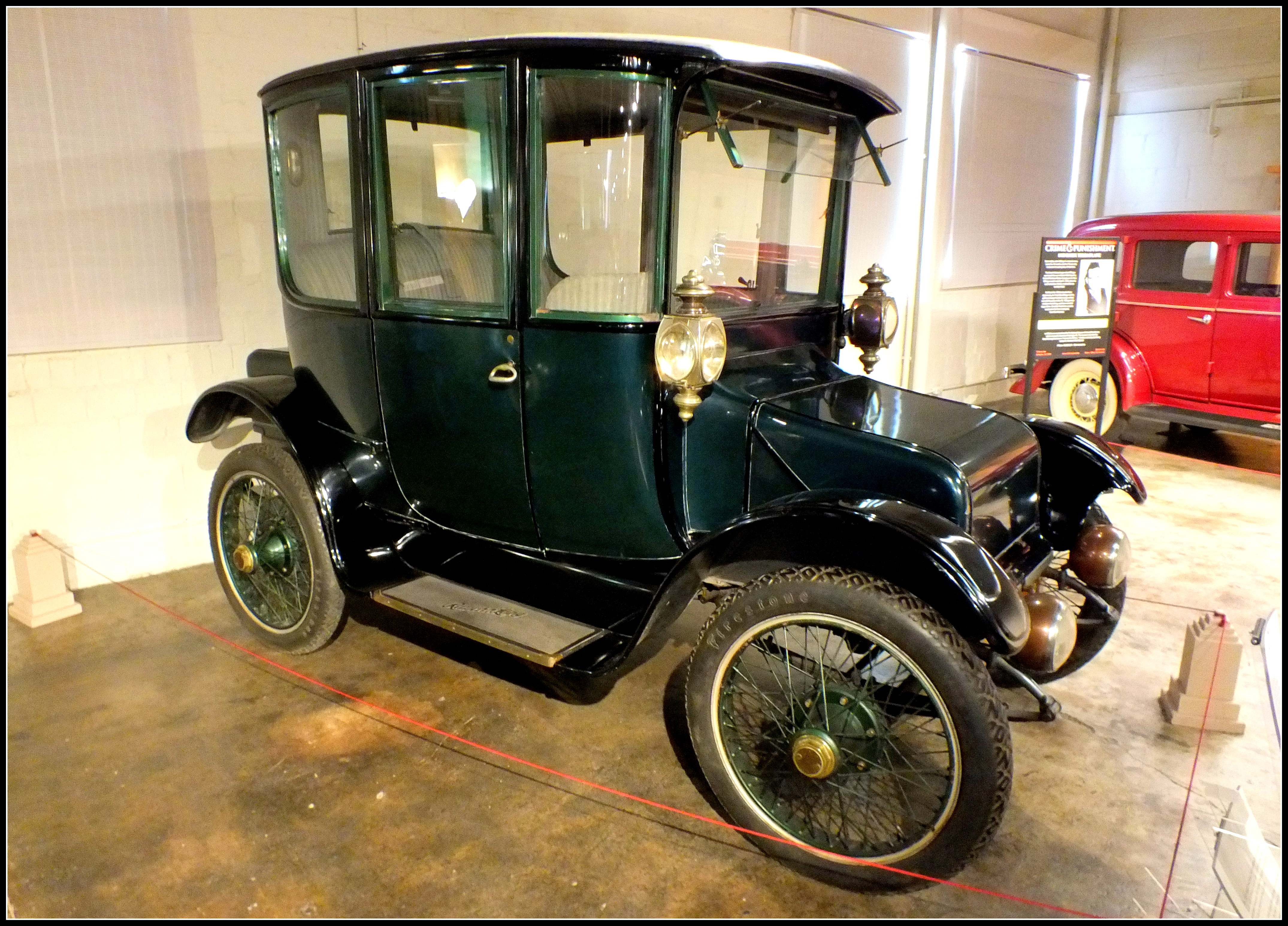
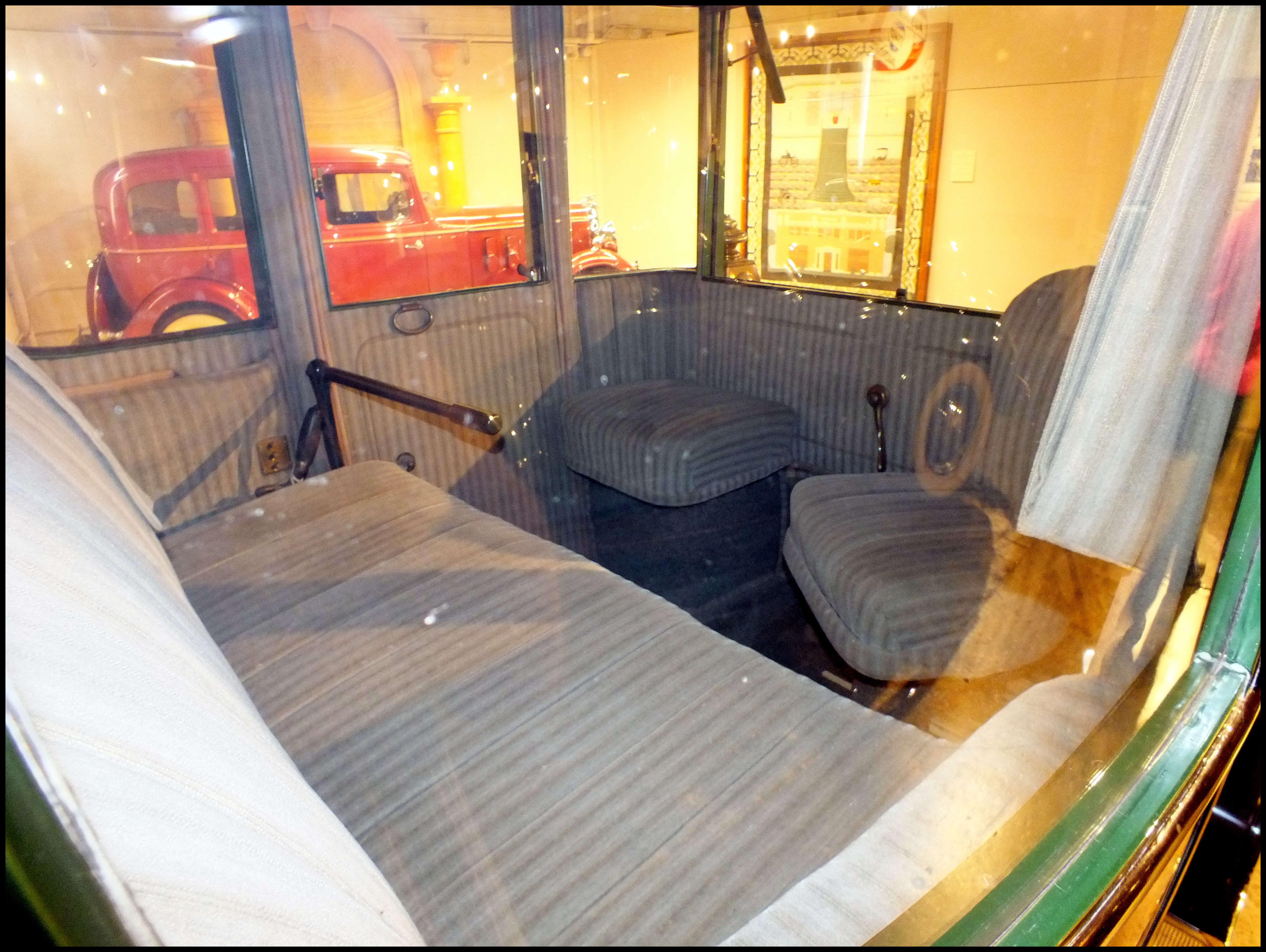
1916 Rauch and Lang Electric Car
Early on, there was a debate between promoters of electric, gasoline and steam-drive cars. Electric cars lost because of their slow speeds and limited travel distances. This one has six forward speeds and three reverse speeds. It sold for $3,000. The driver sat in the back seat, while the two front seats faced the back of the car..
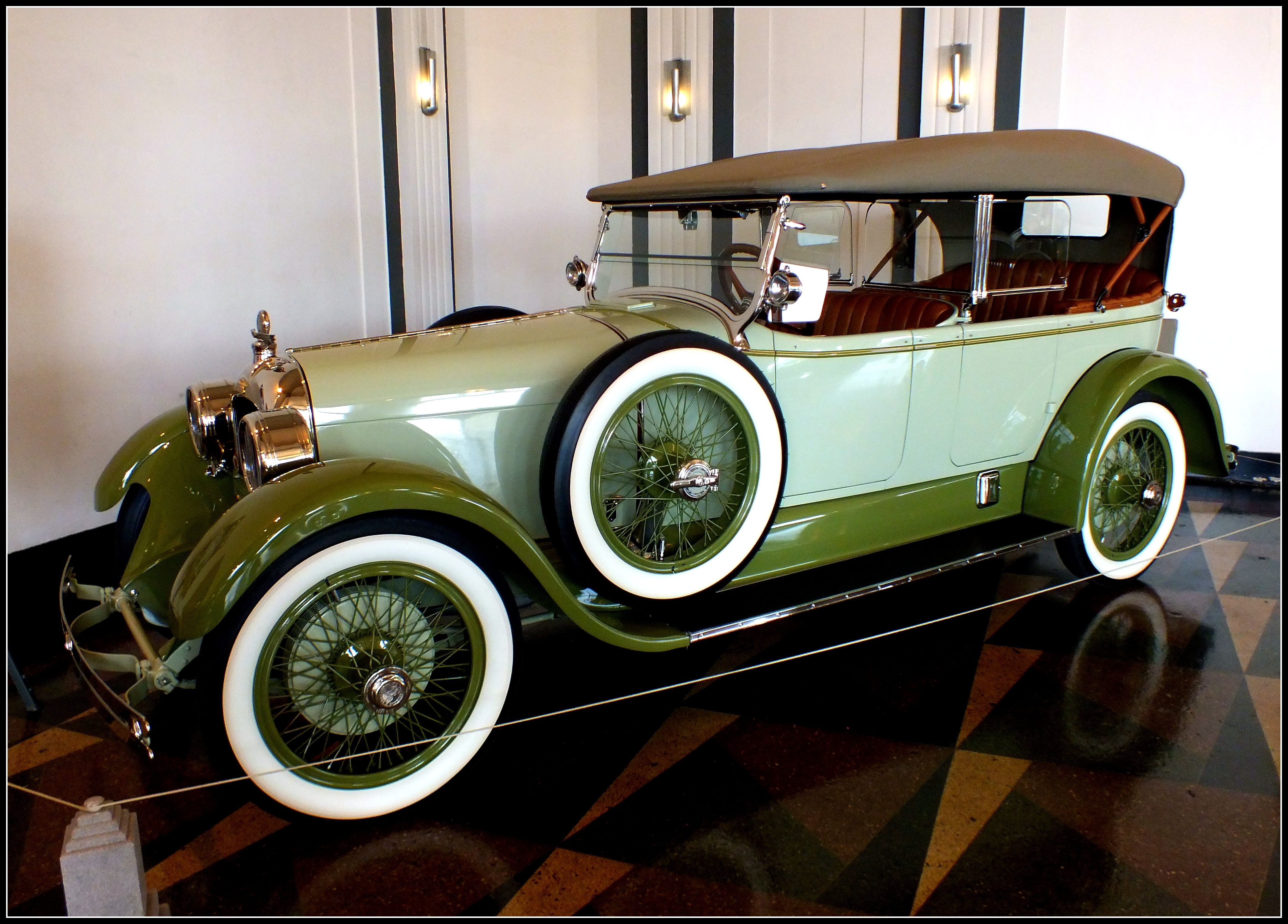
1923 Duesenberg Sport Touring Car — It cost $5,750 brand new.
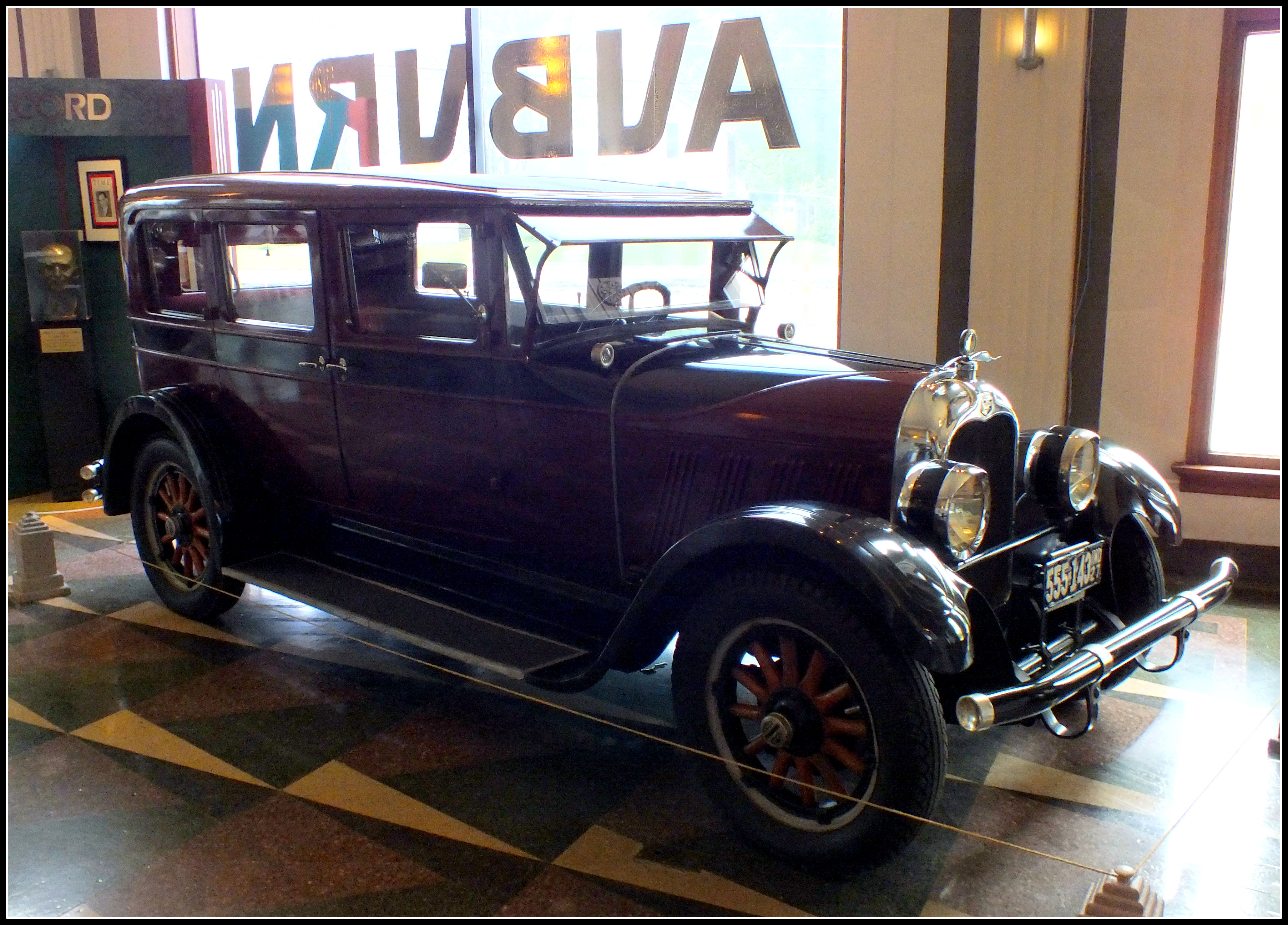
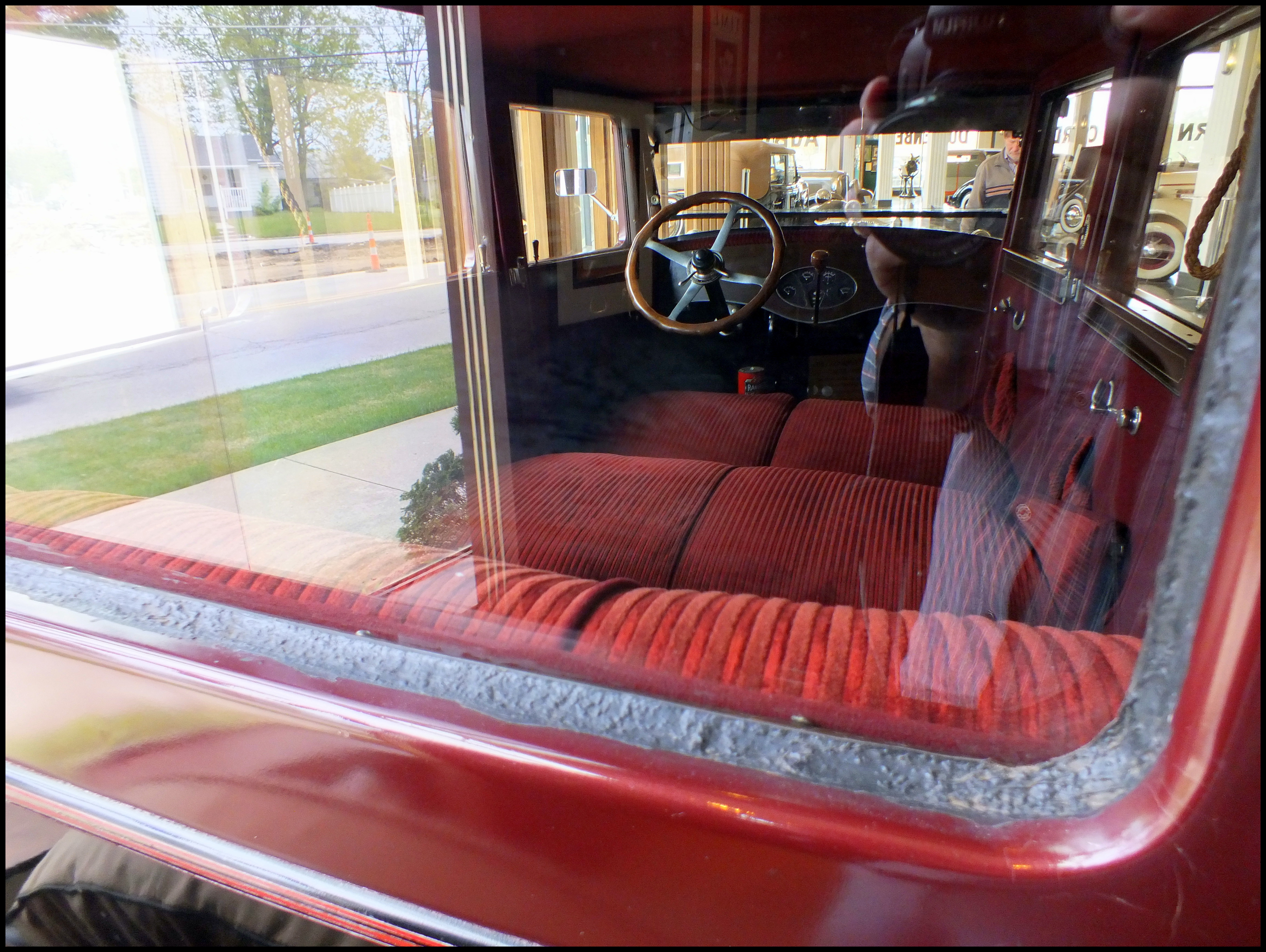
1927 Auburn Wanderer
All the seats fold down to form a mattress-like surface that provided “deluxe sleeping accommodations while en route on tours, hunting or camping excursions.” New, it cost $1,345. It was hard to get a good photo with all the glare and reflection, but you get the general idea.
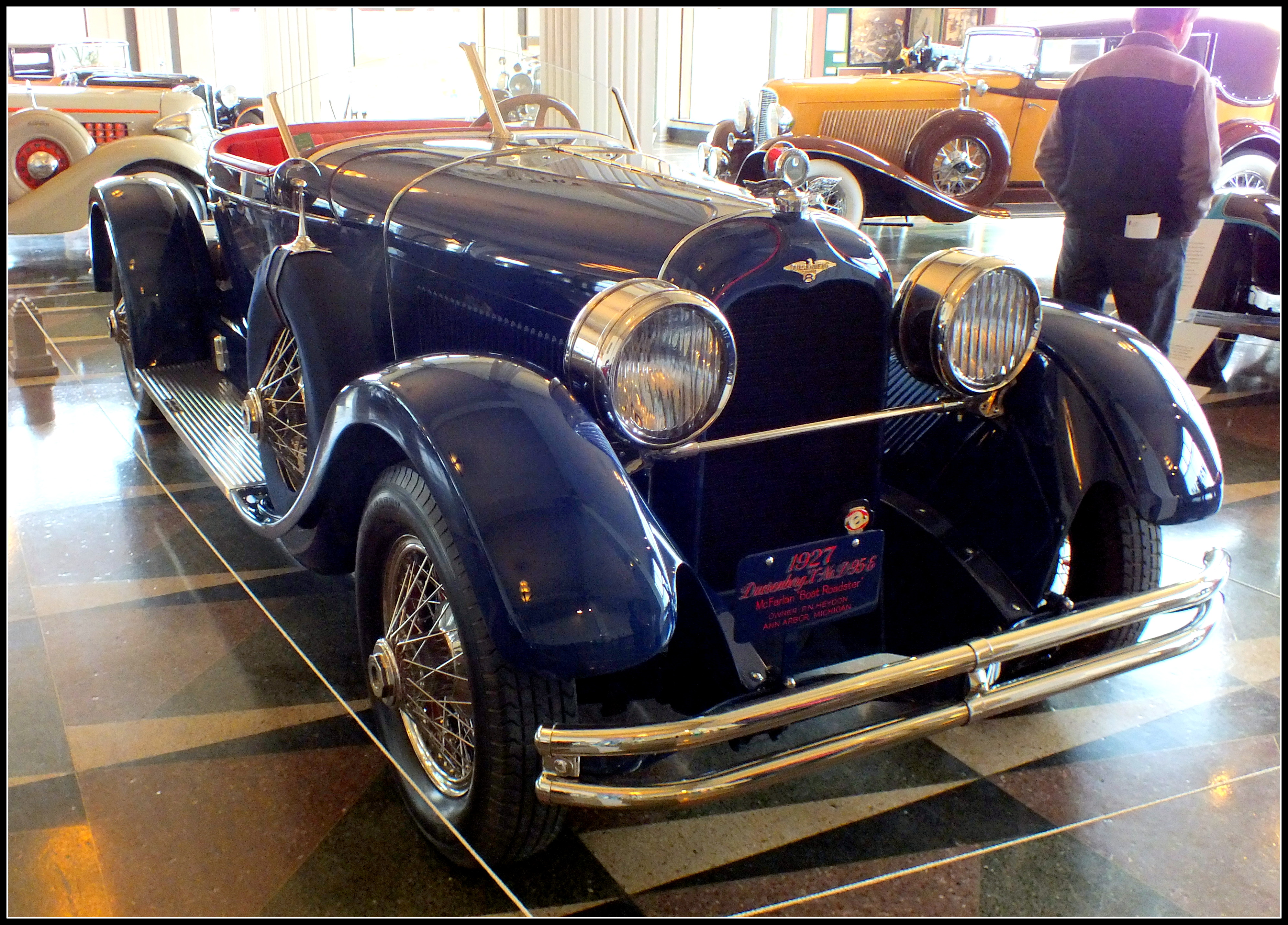
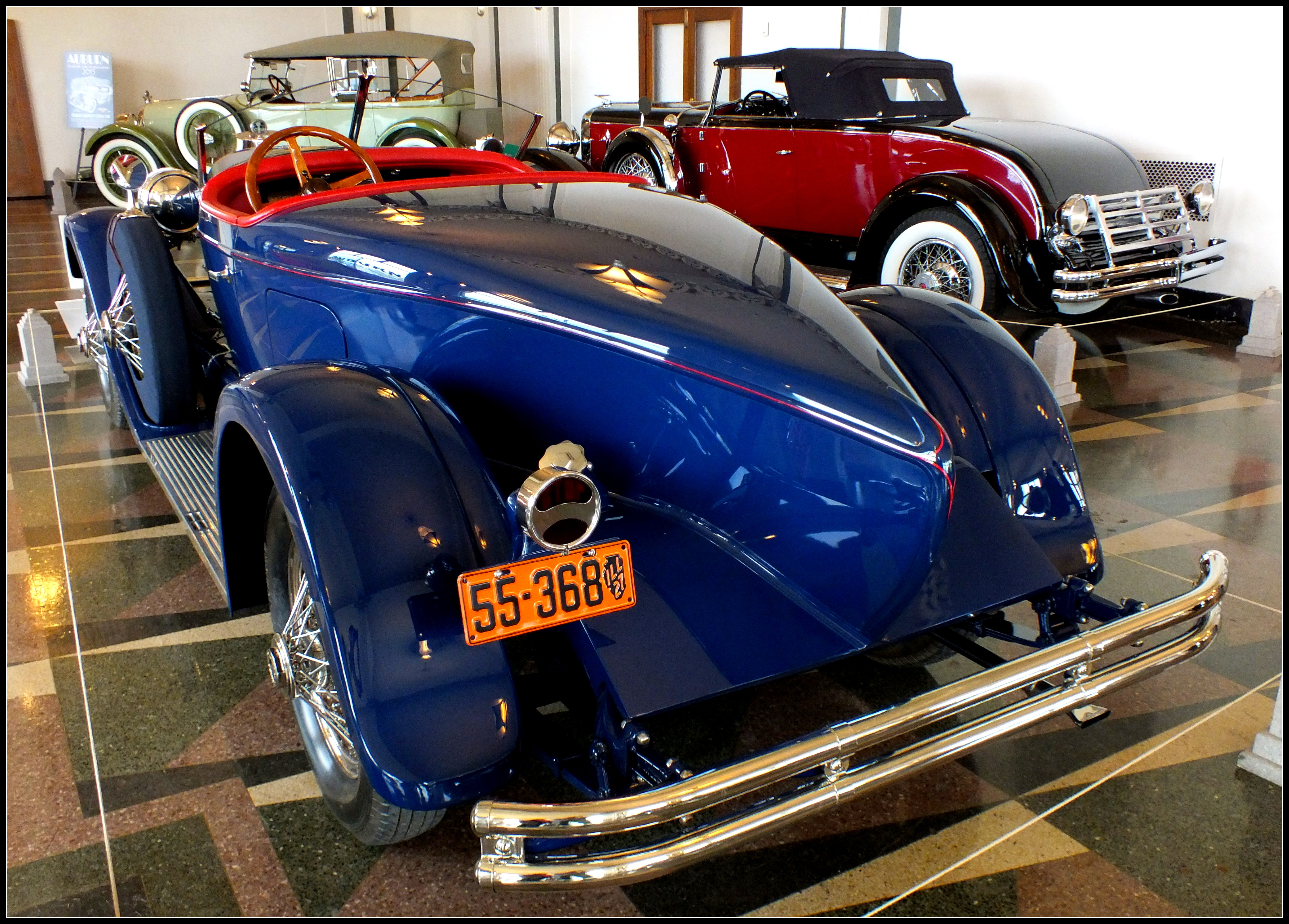
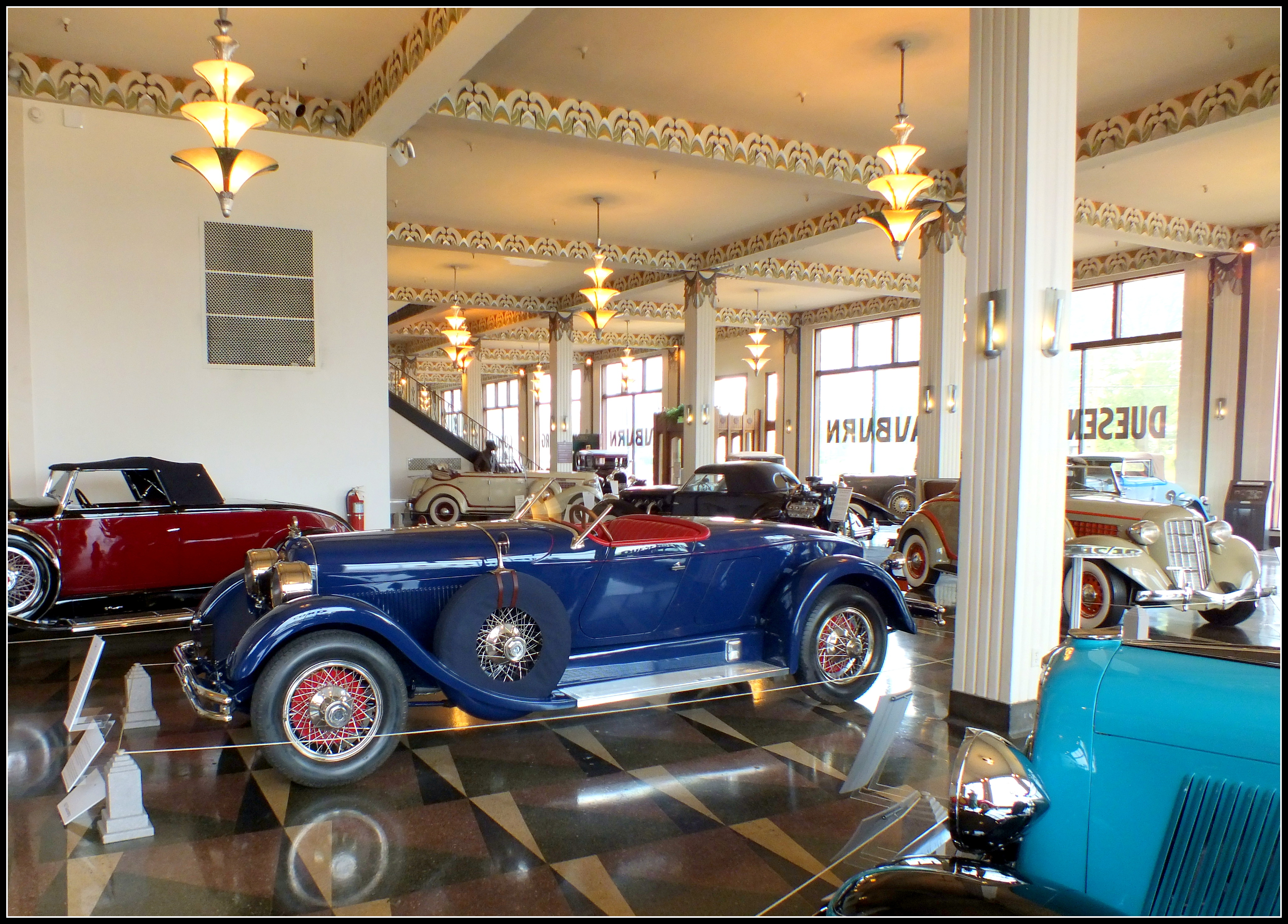
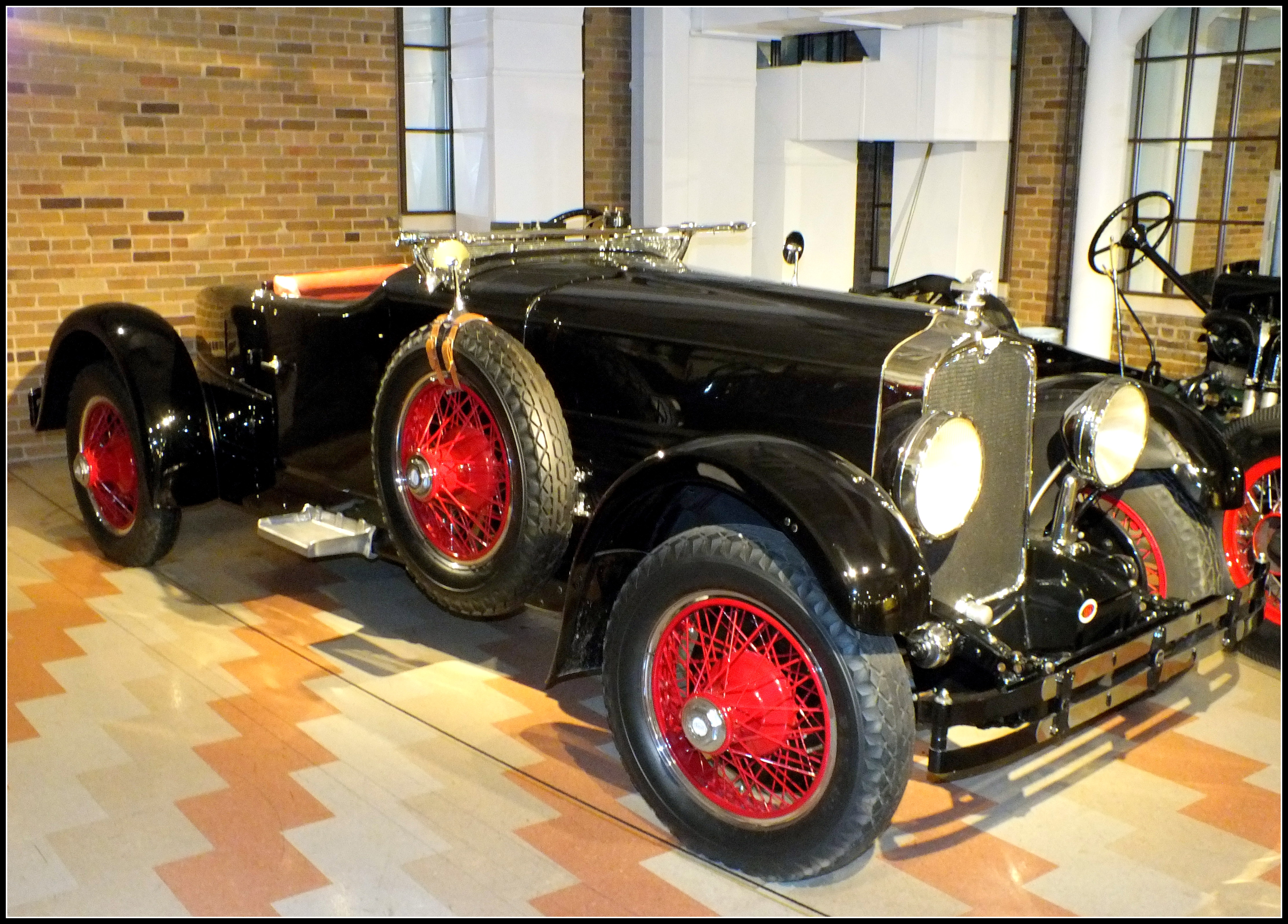
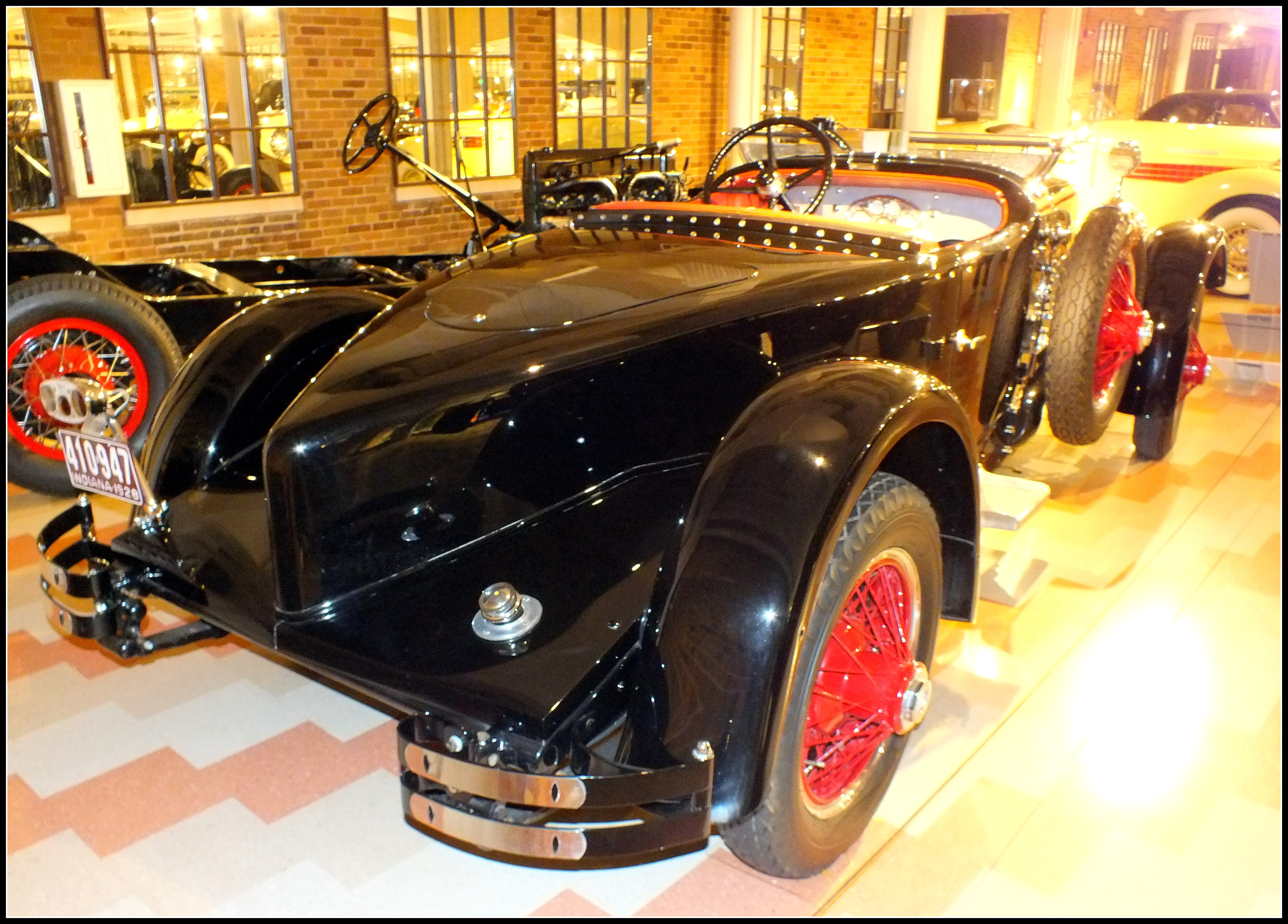
1927 Duesenberg Boattail Roadster
We were told to pay special attention to this car because it was one-of-a-kind, built for a show and so lacking “amenities” such as windshield wipers and a top. But the style was such a hit that it has been called “one of the most significant and influential motorcars ever built” and created the enthusiasm for “personal sports cars.”
1928 Stutz Black Hawk Boattail Speedster
At the time of its manufacture, this was the fastest production car built in America. New, it cost $4,895.
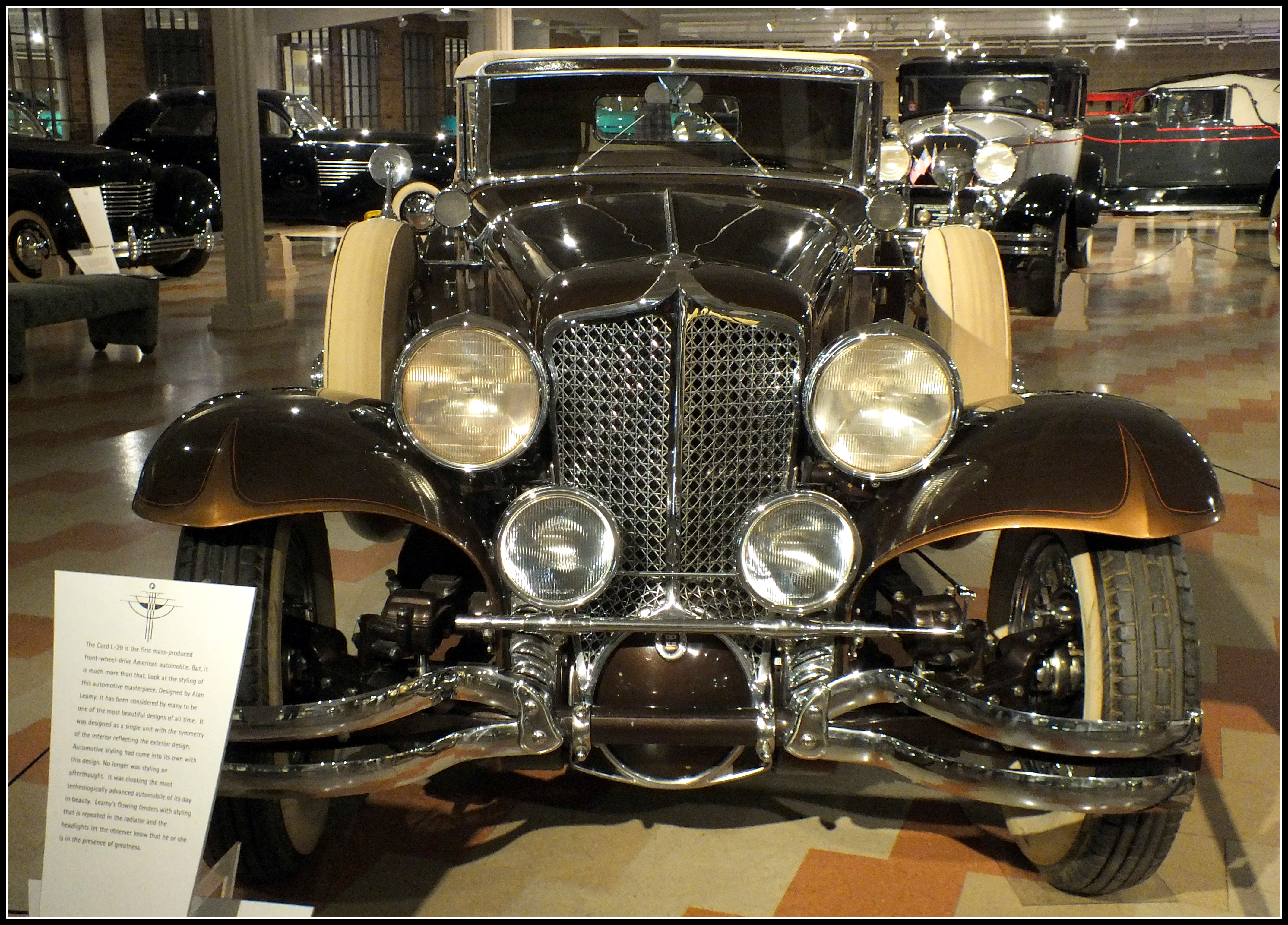
1930 Cord
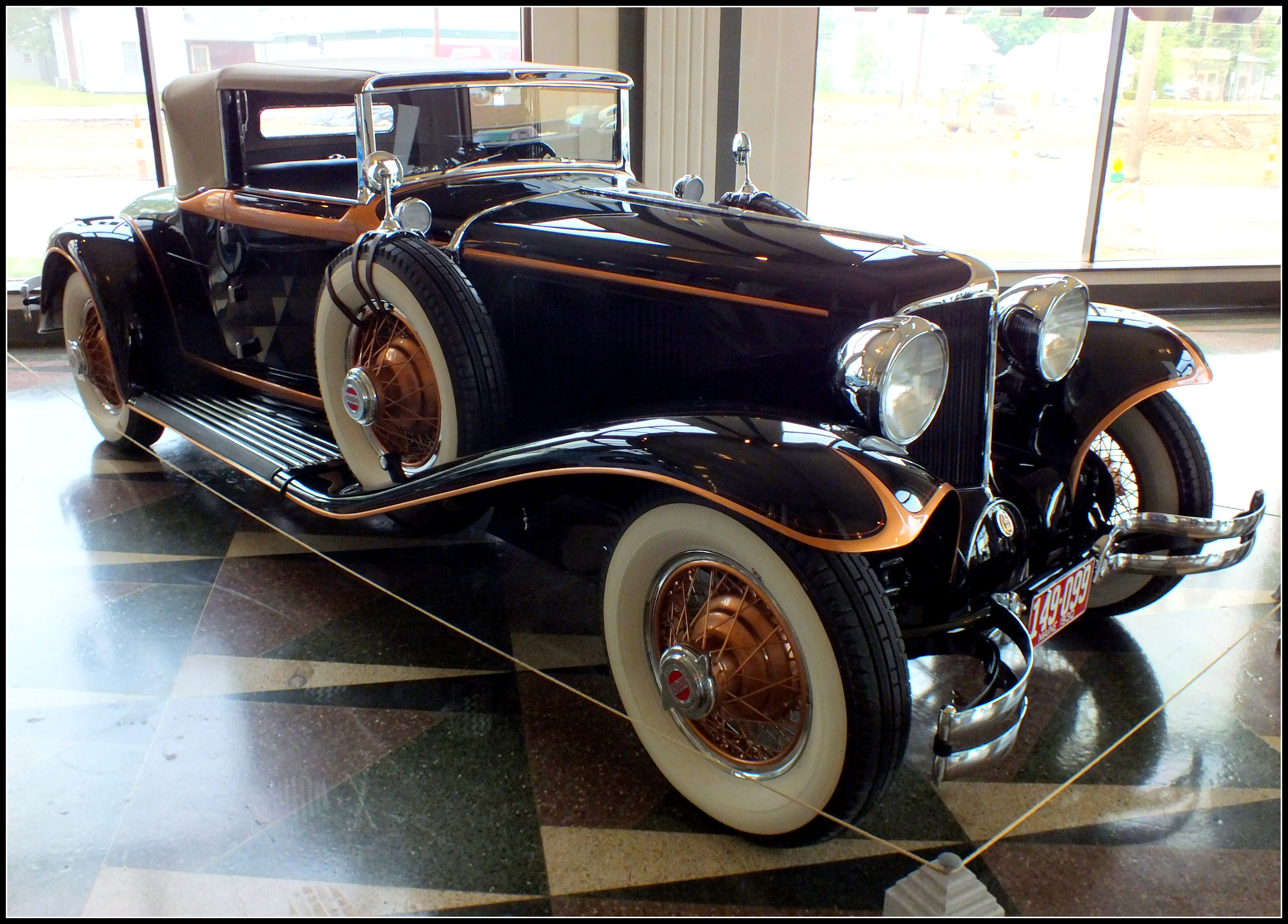
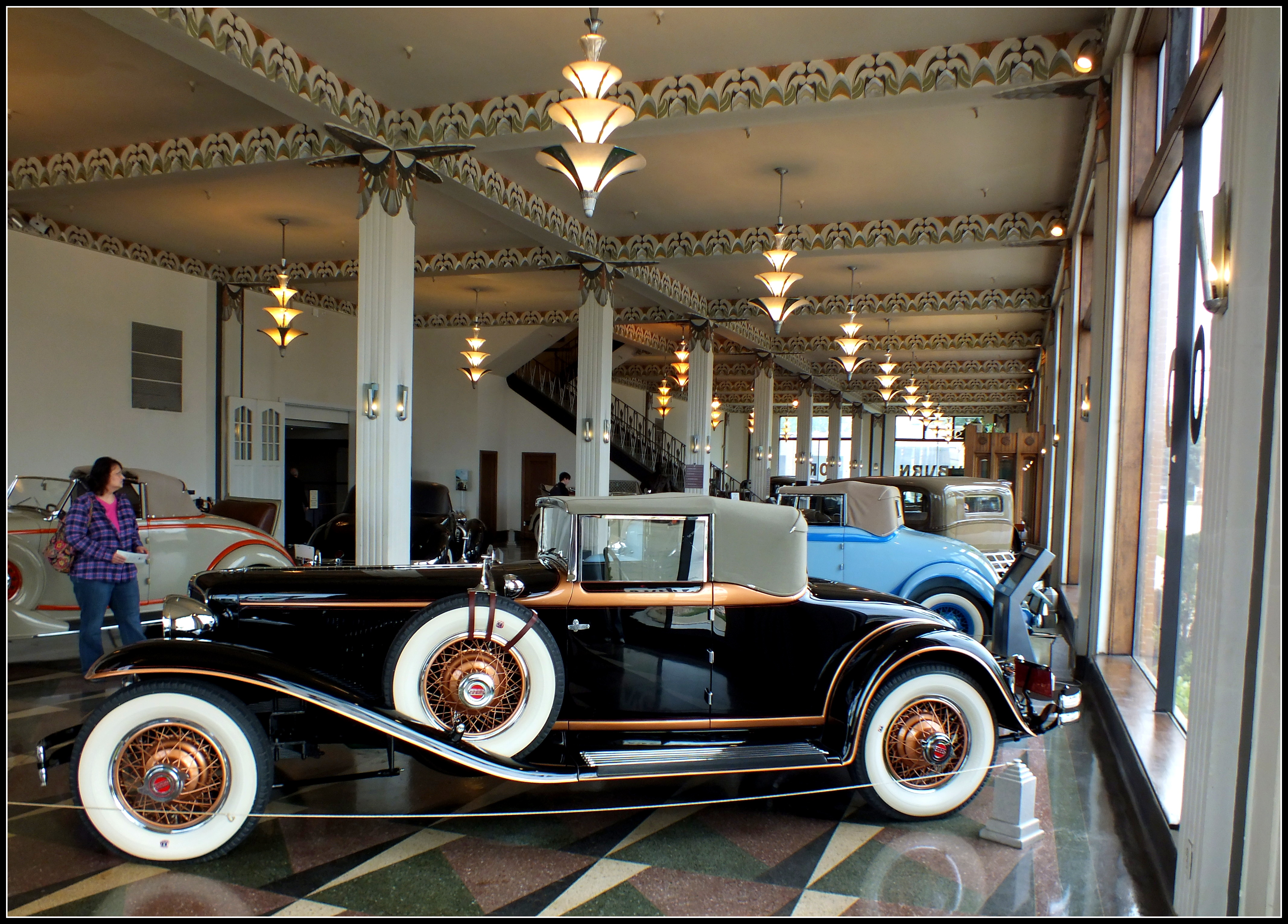
This was the first mass-produced front-wheel-drive car. When new, the axle was painted copper, like the trim.
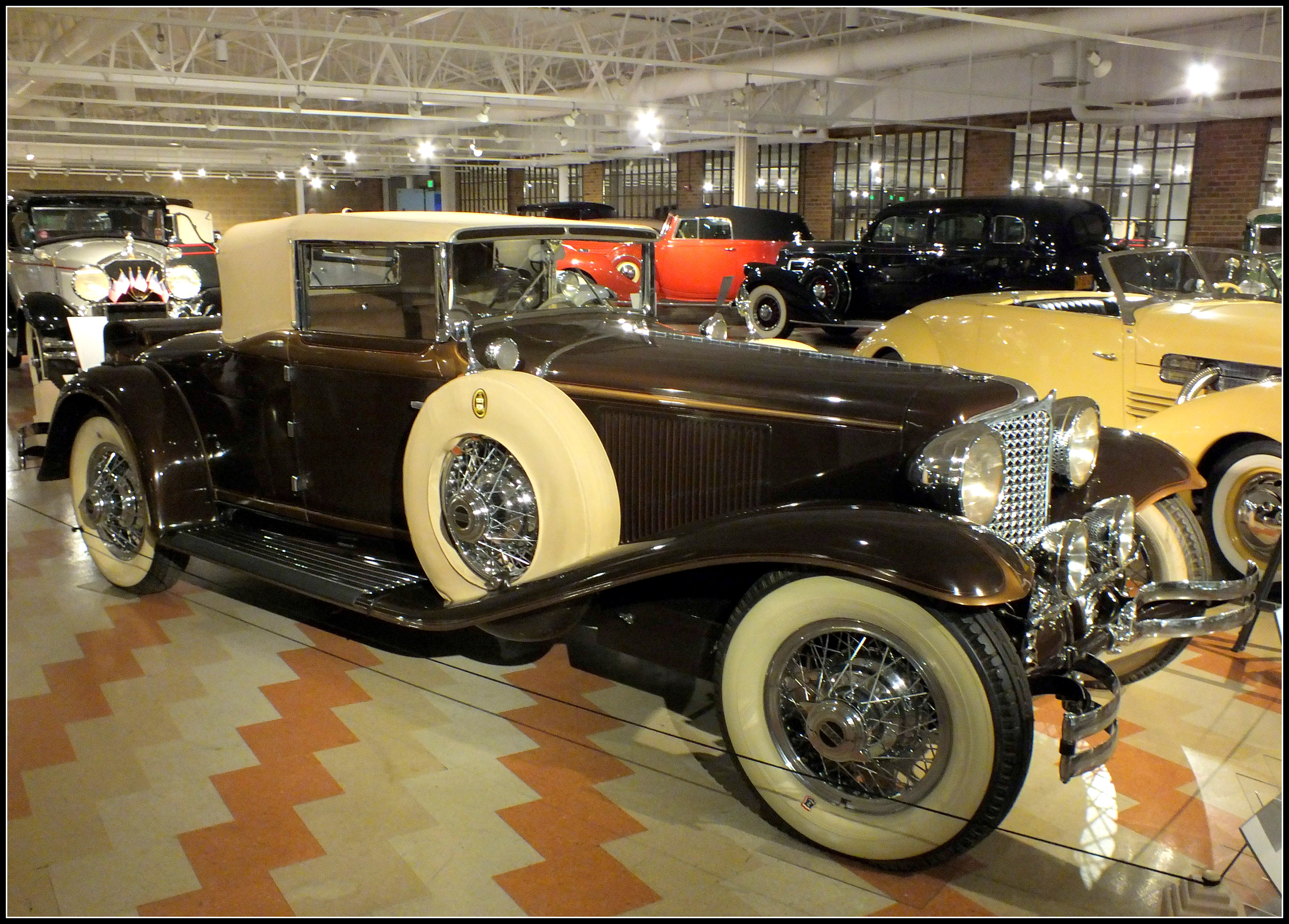
1930 Cord
This model is considered by many to be one of the most beautiful designs of all time. It also happens to be one of my wife’s favorites in the museum.
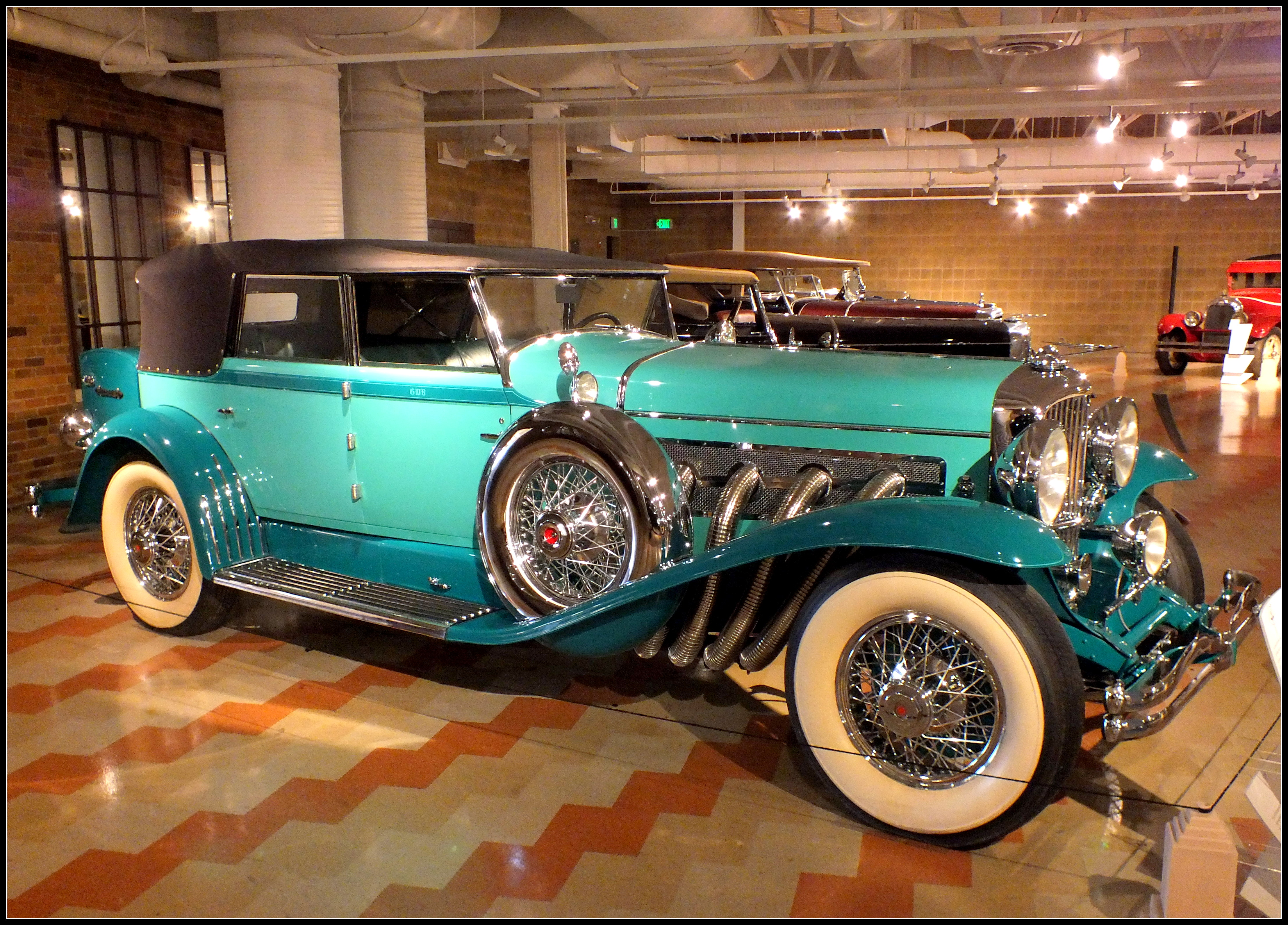
1930 Duesenberg
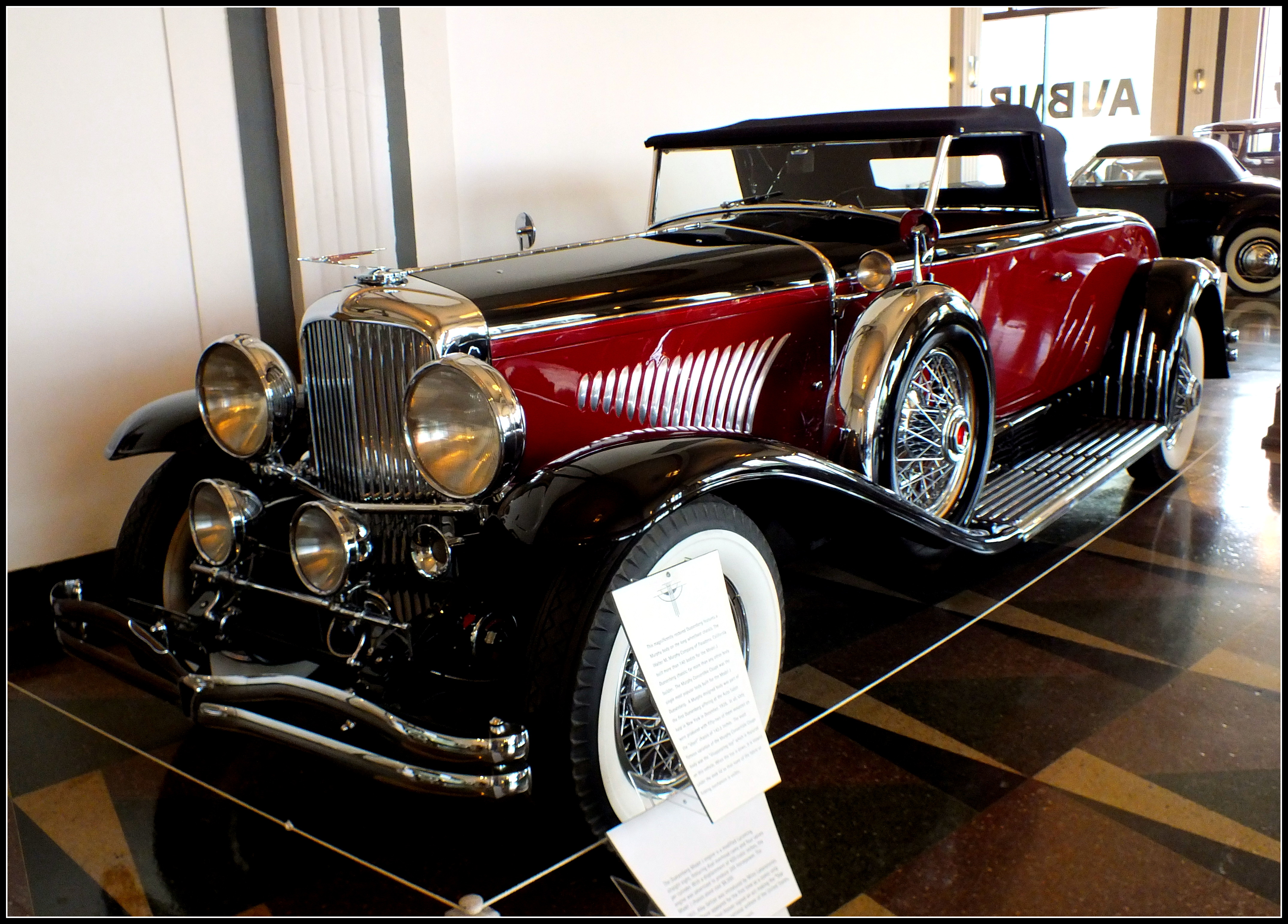
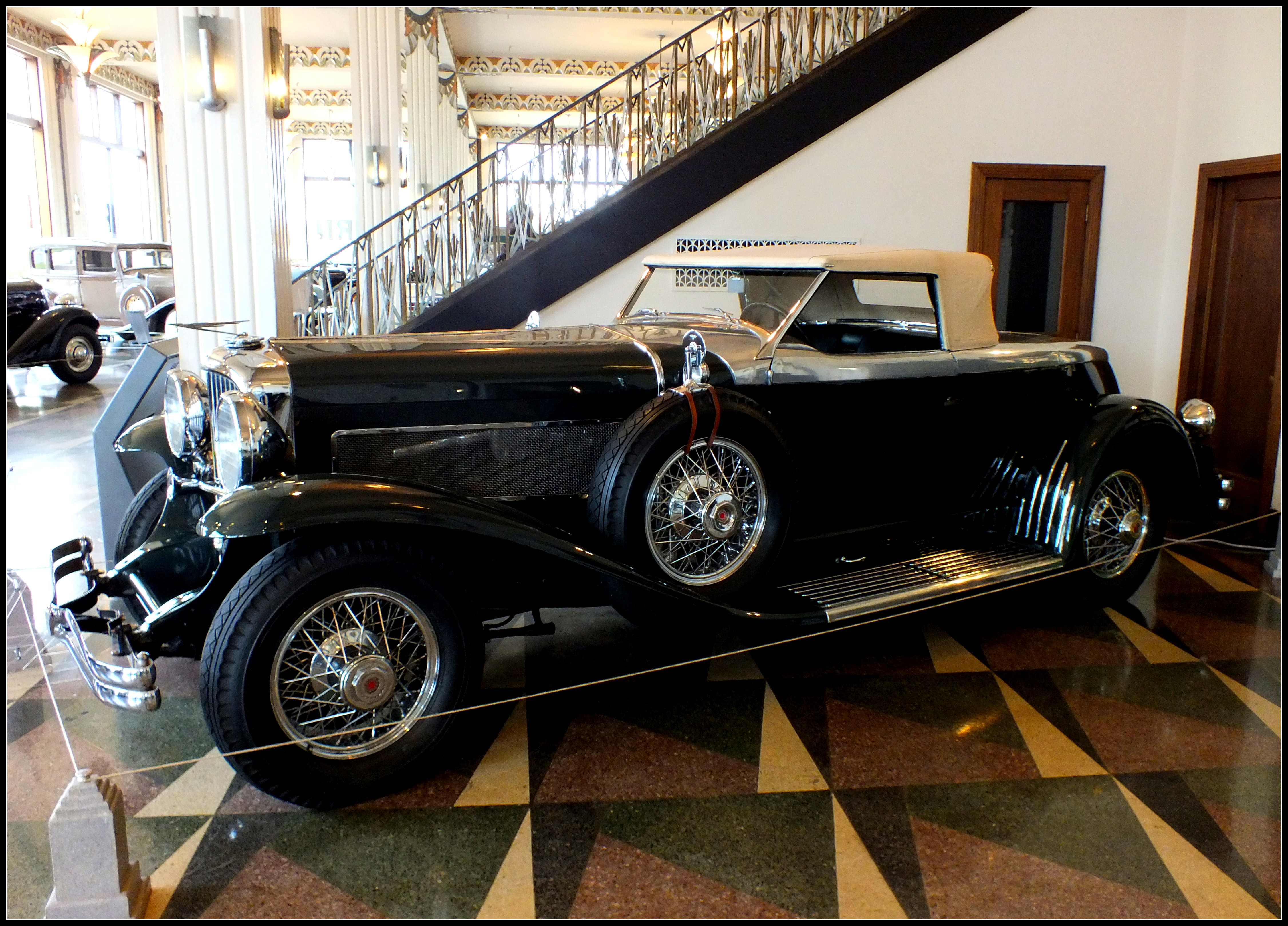
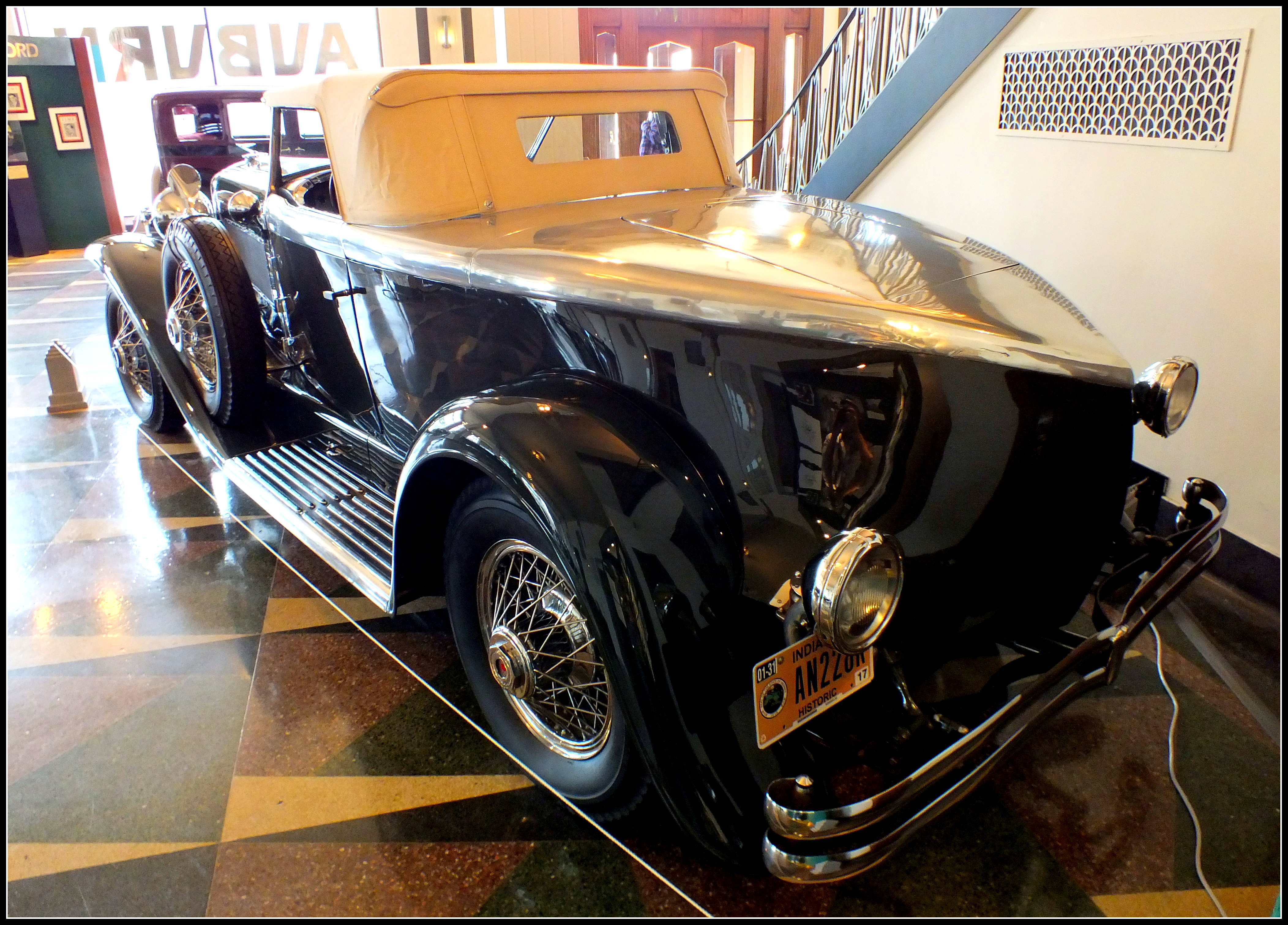
1931 Duesenberg Murphy Convertible Coupe
When you bought a Duesenberg, you were basically buying a chassis. You’d then take the chassis to another company who would customize a body for you. The Murphy in the name refers to the body builder. This one features a “disappearing top” — the top goes under a lid on the deck so that none of the fabric or frame is visible. New, the chassis alone cost $8,500.
1931 Cord Speedster
It’s easy to think of the past in black-and-white. Apparently, that wasn’t the case.
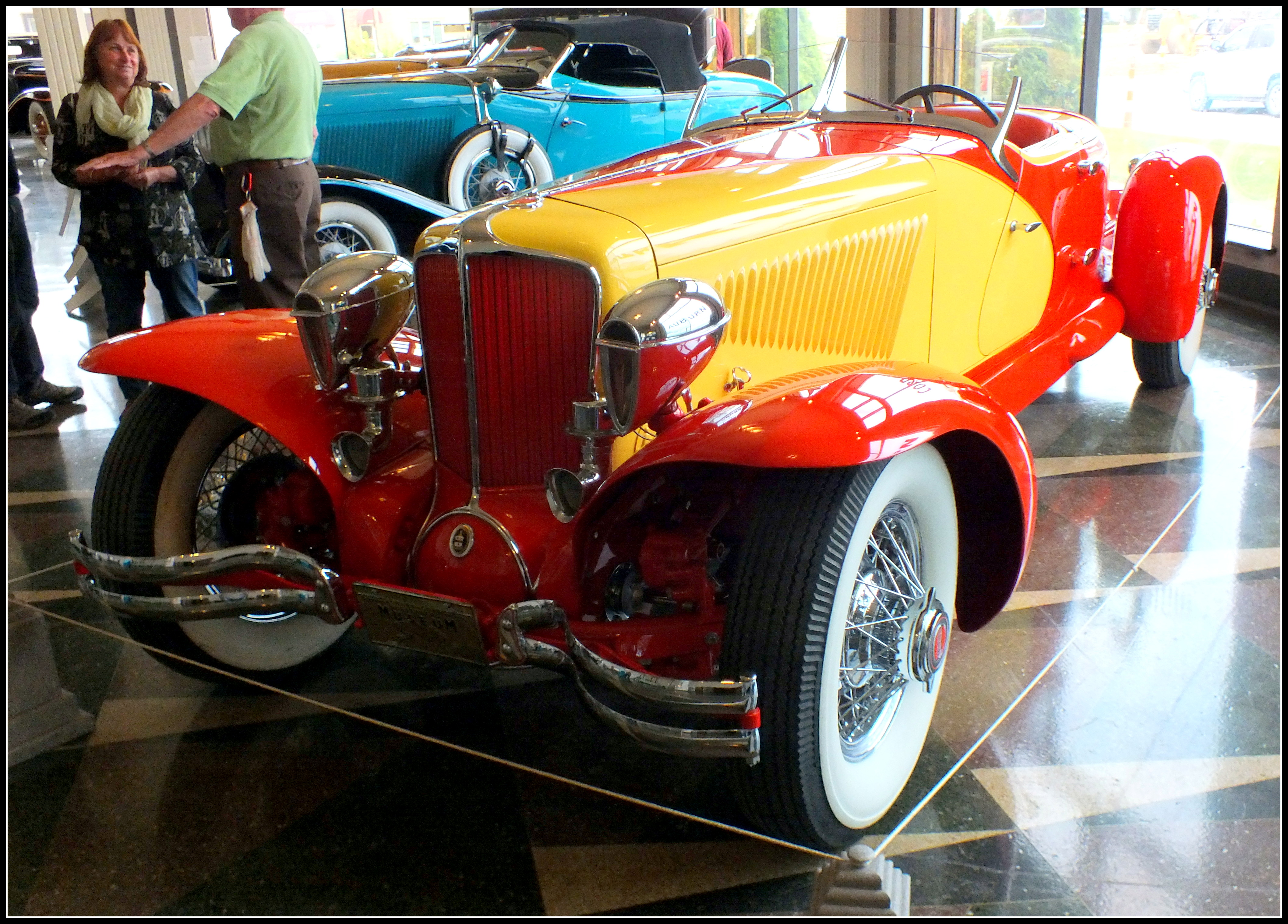
1932 Auburn Speedster
This was another of my wife’s favorites. It cost a mere $975 brand new.
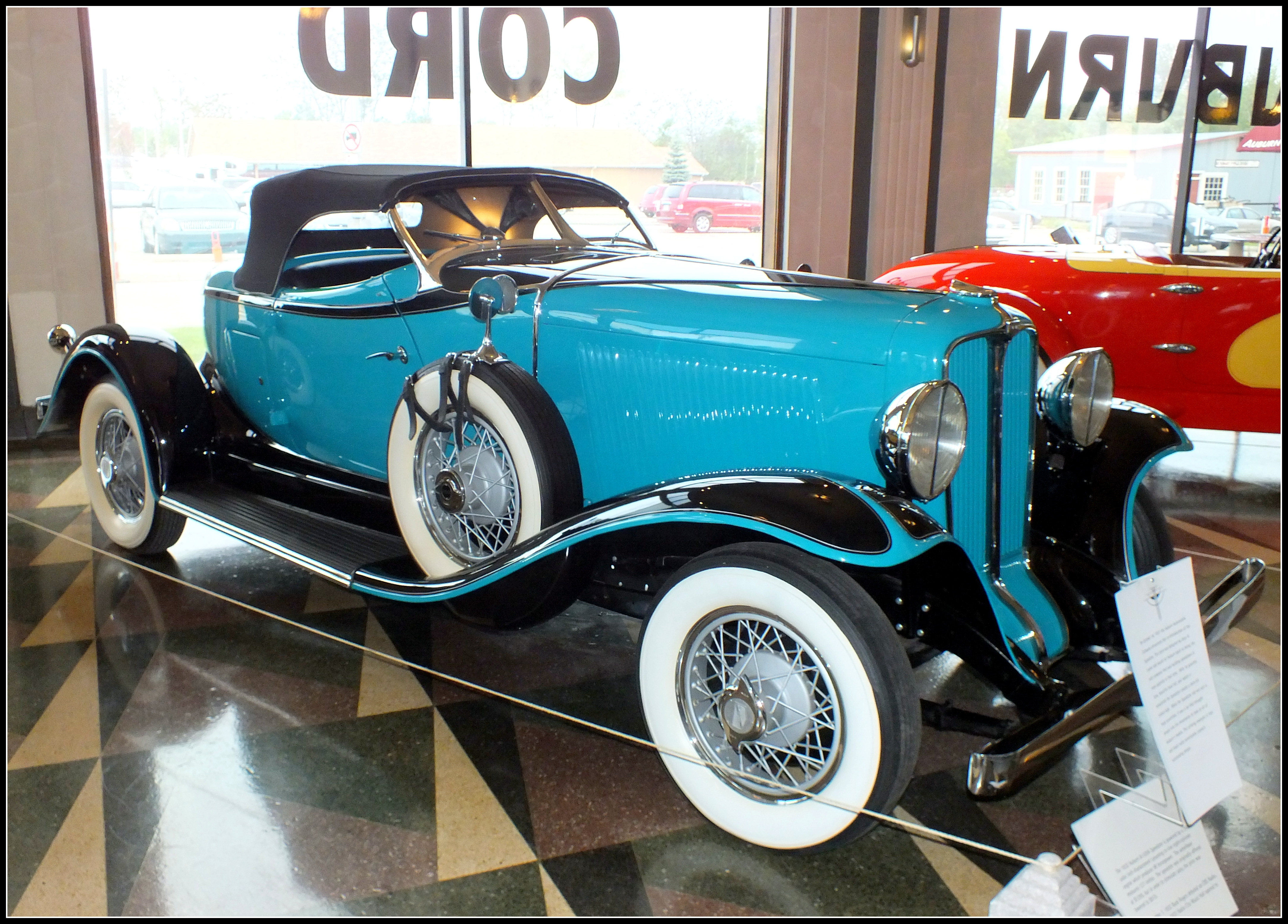
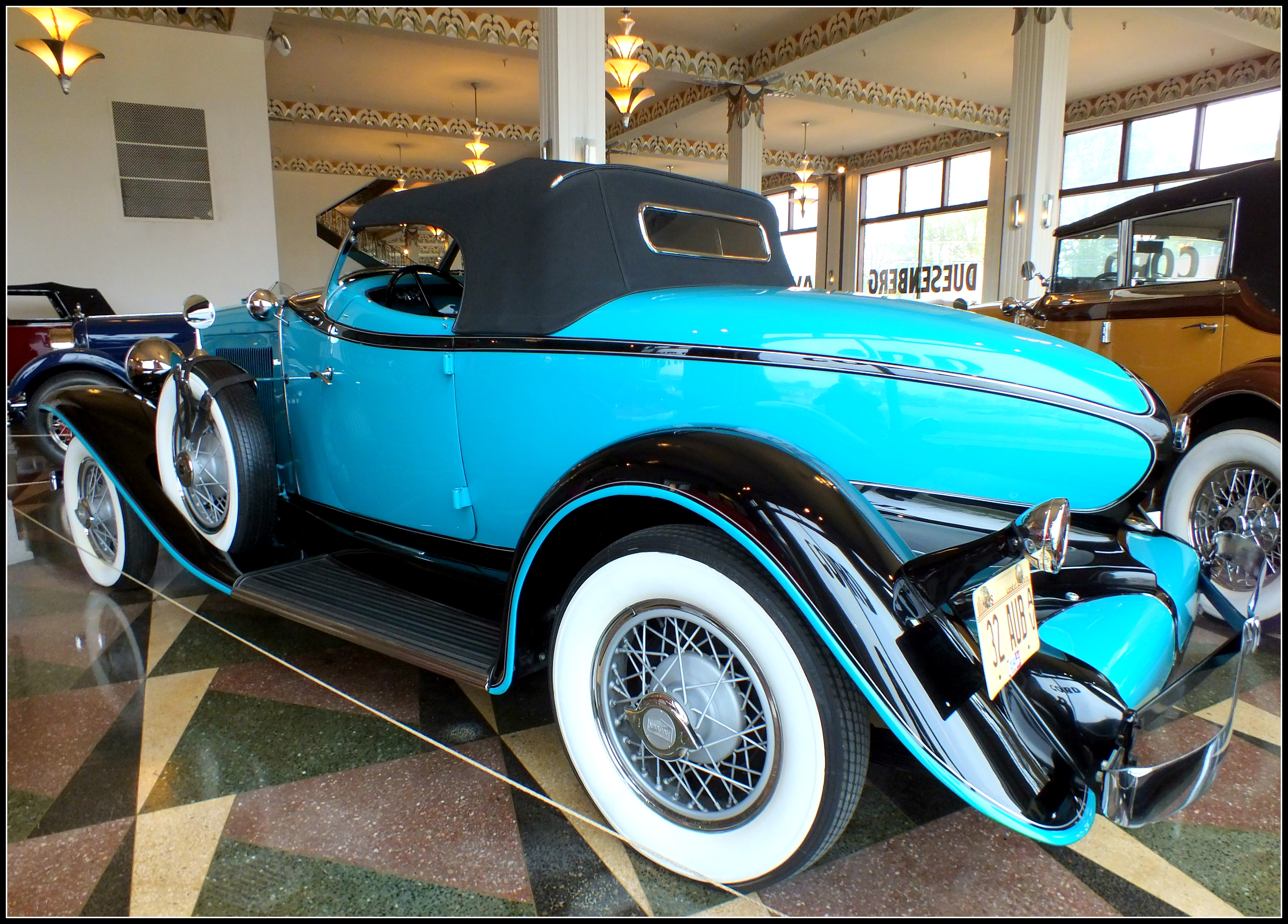
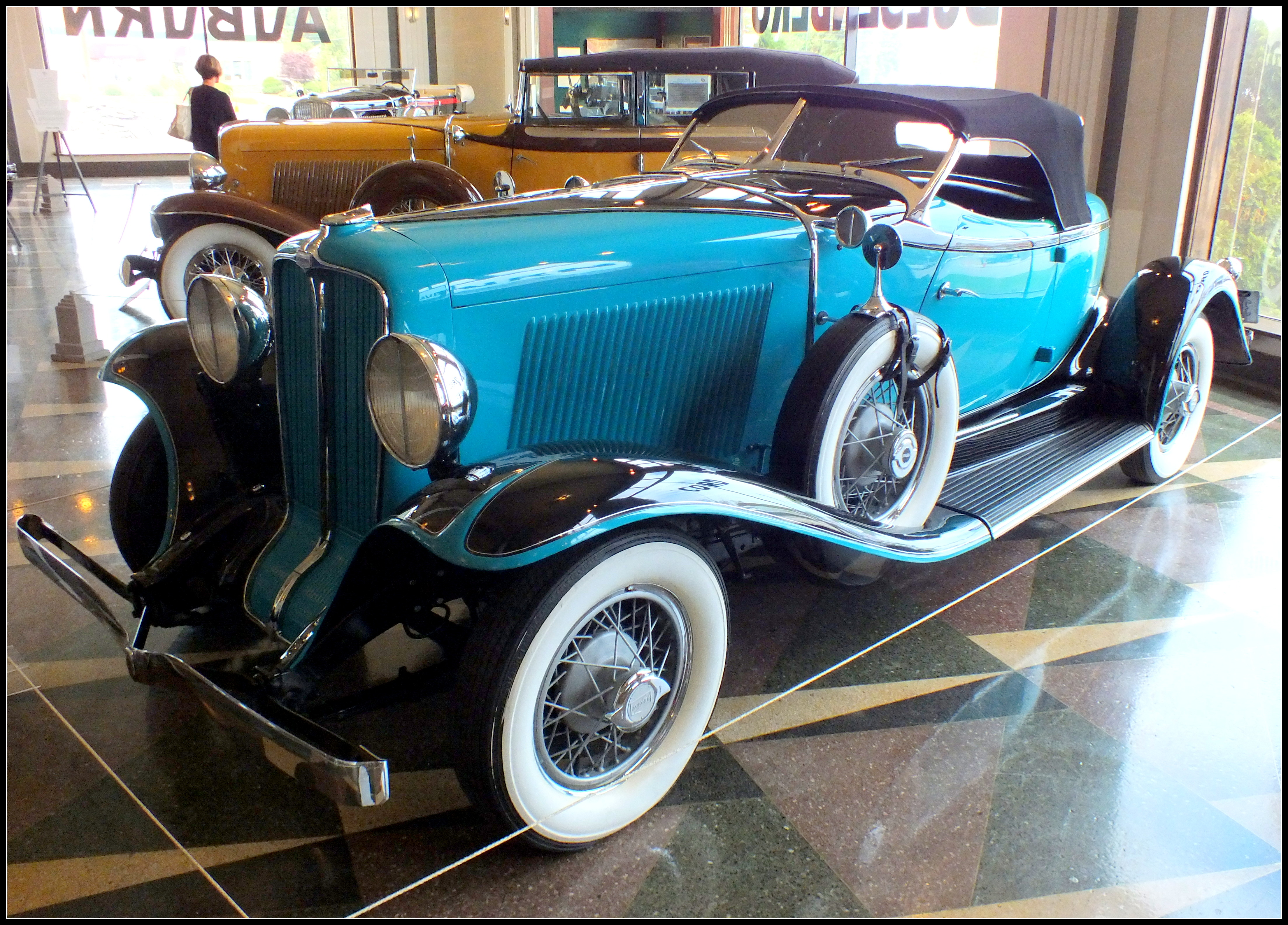
1932 Cord
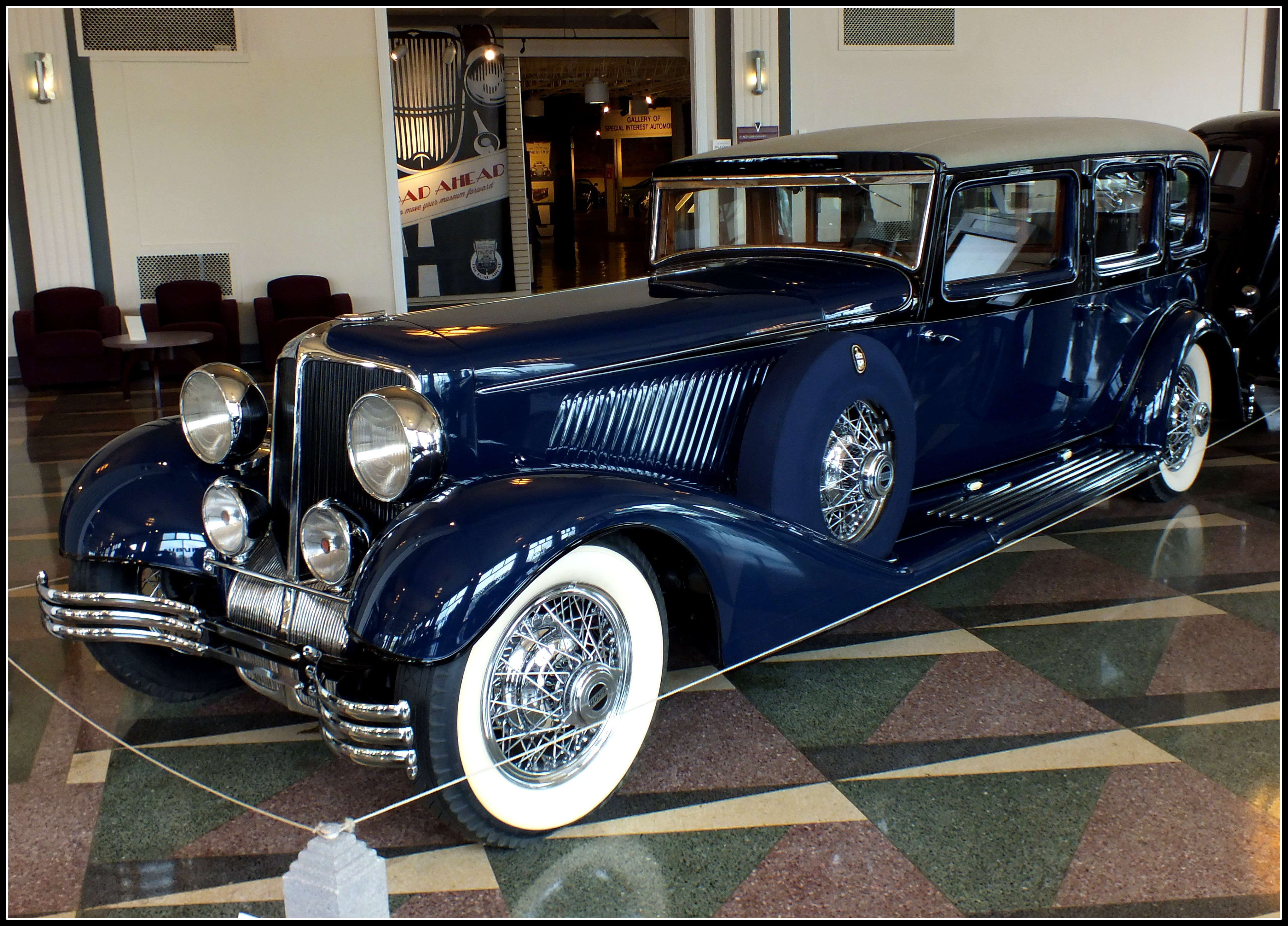
1932 Duesenberg
The price for this one was $14,750. I read somewhere (not in the museum) that Duesenbergs were horrible to drive — over-powered, hard to steer. But they looked so fine …
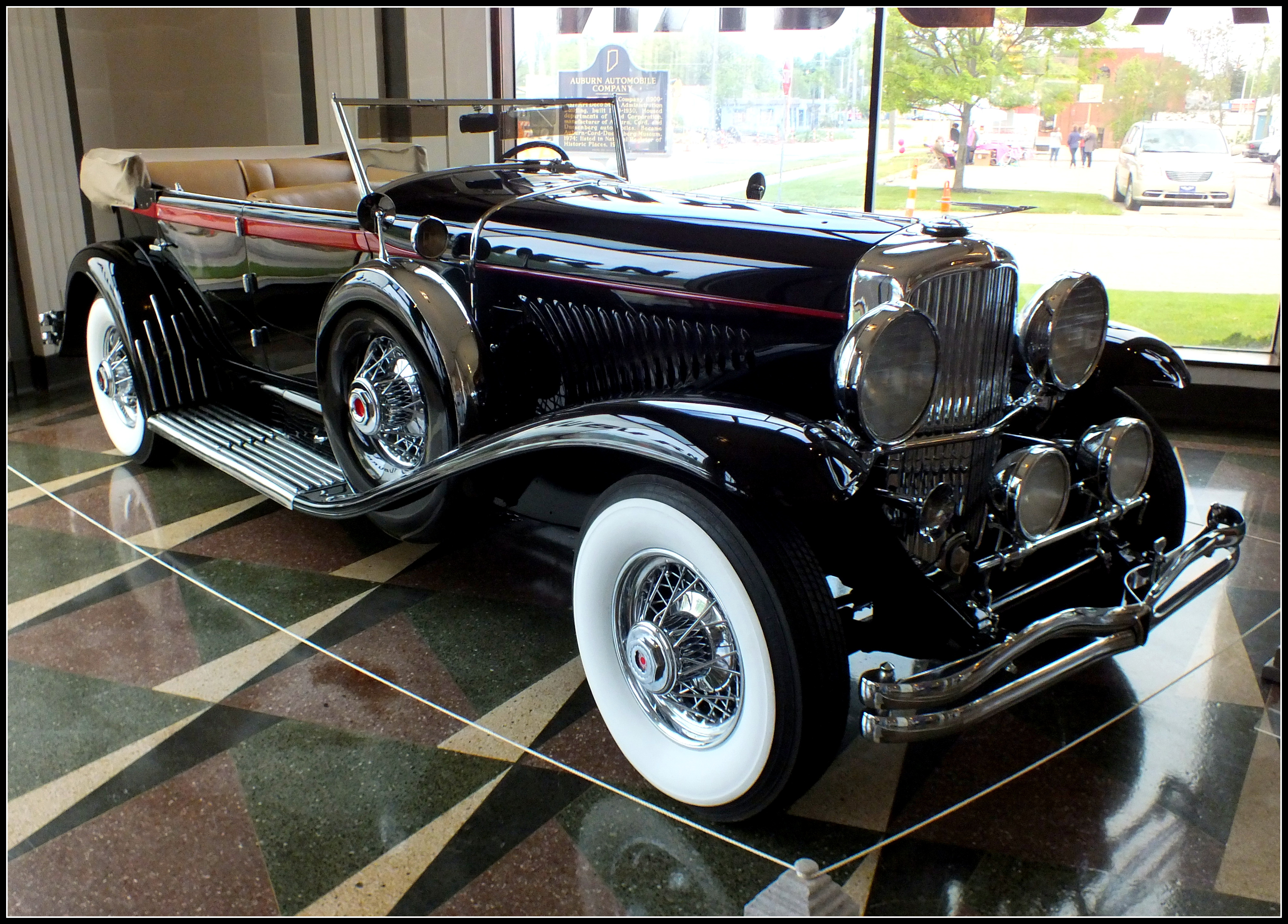
1932 Duesenberg Torpedo Convertible
This is one of just five of this model manufactured. This car was owned by the son of the founder of General Motors, by J. Paul Getty and by the author, John O’Hara. New, it cost $15,000. Personally, I think the design and color scheme make it rather unattractive.
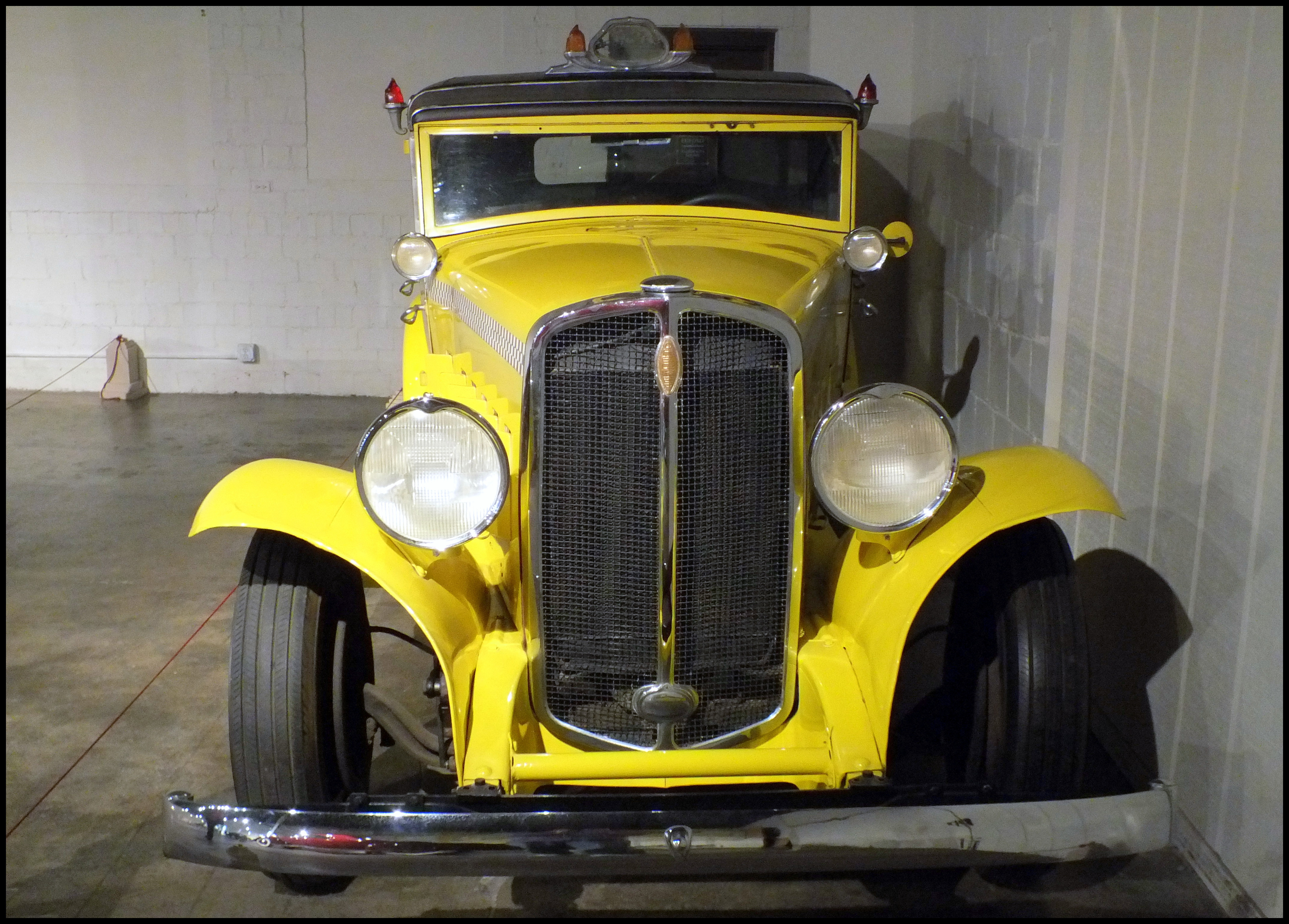
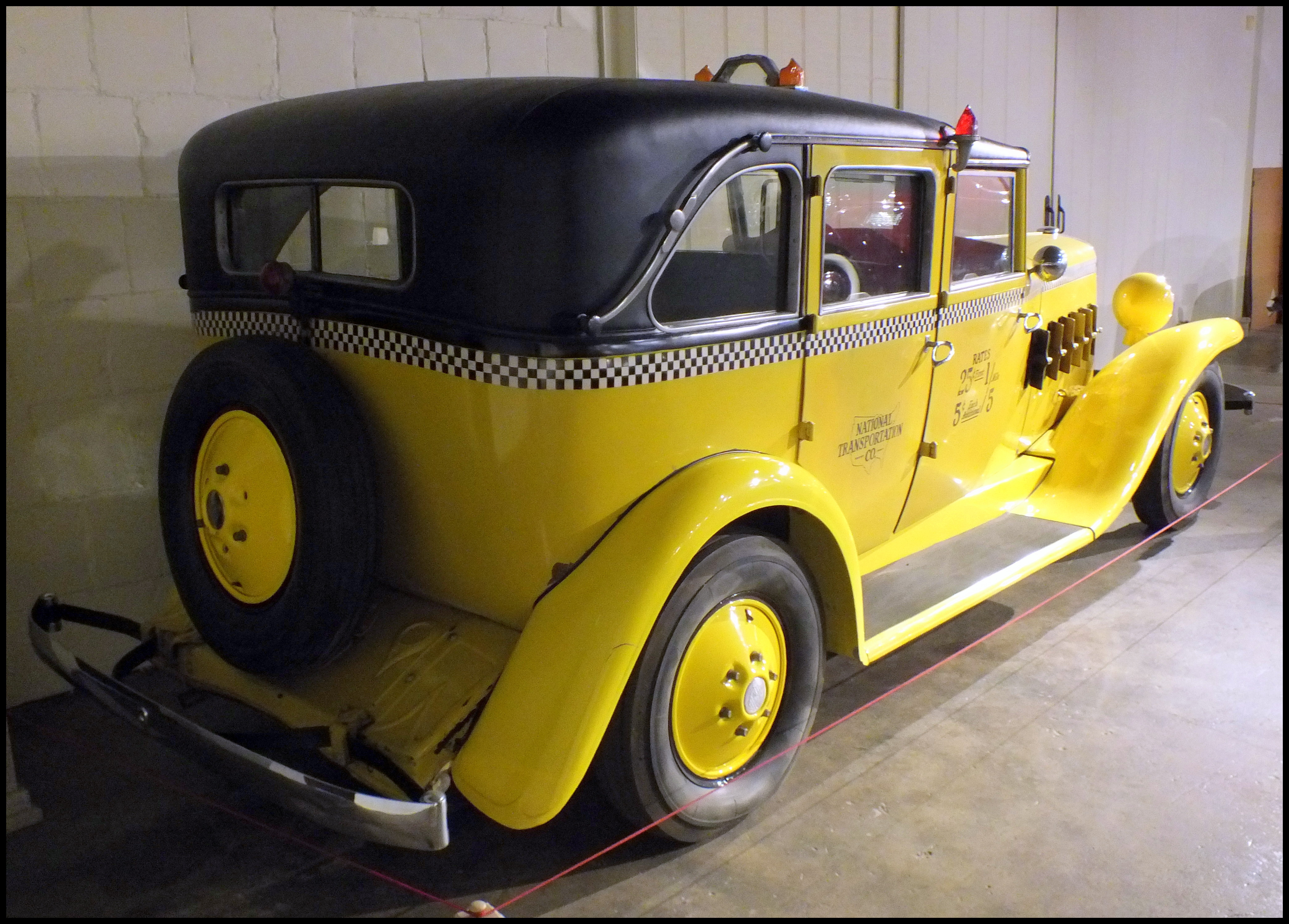
1933 Checker
Checker cabs were built by the Cord Corporation from 1933 to 1937. This one has an Auburn engine.
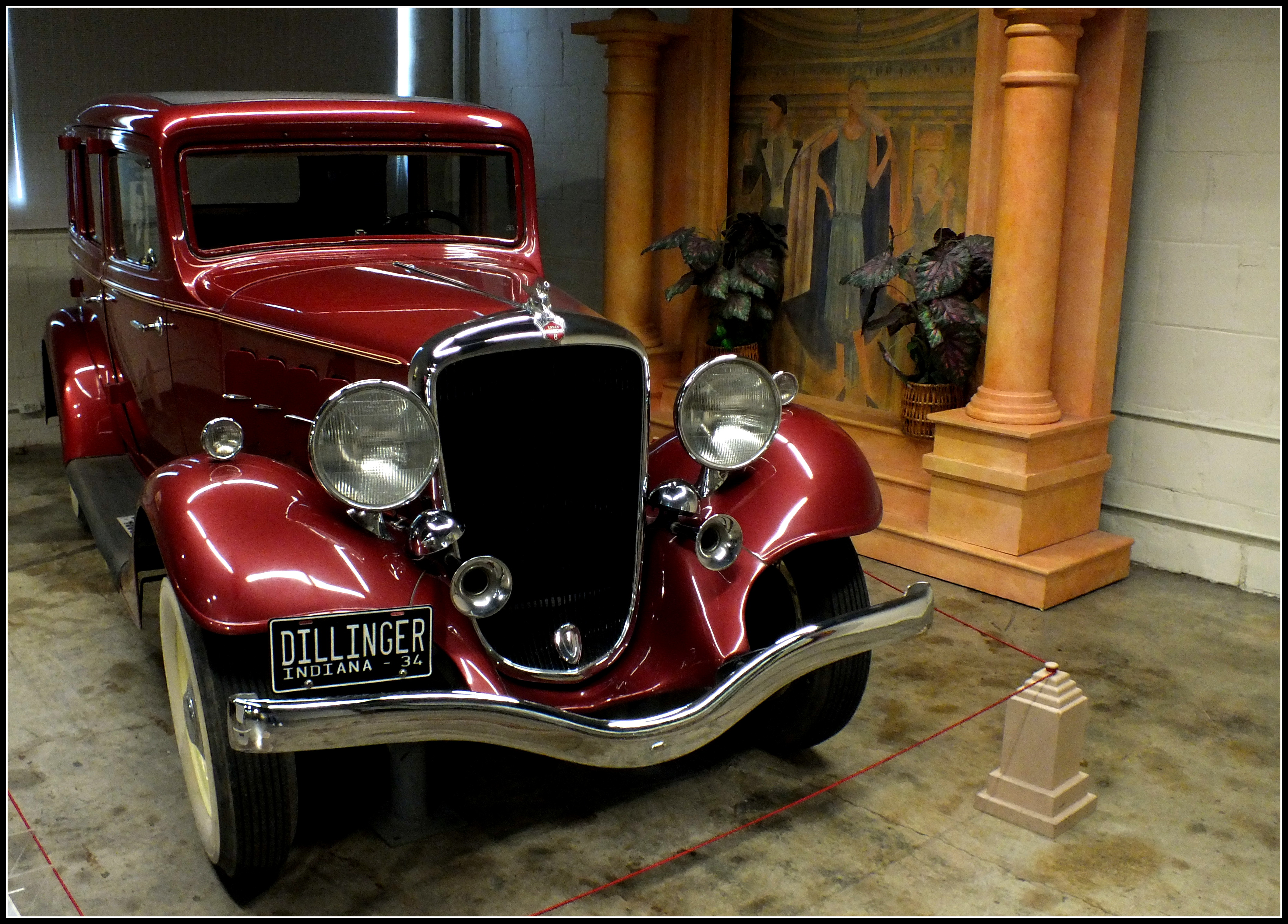
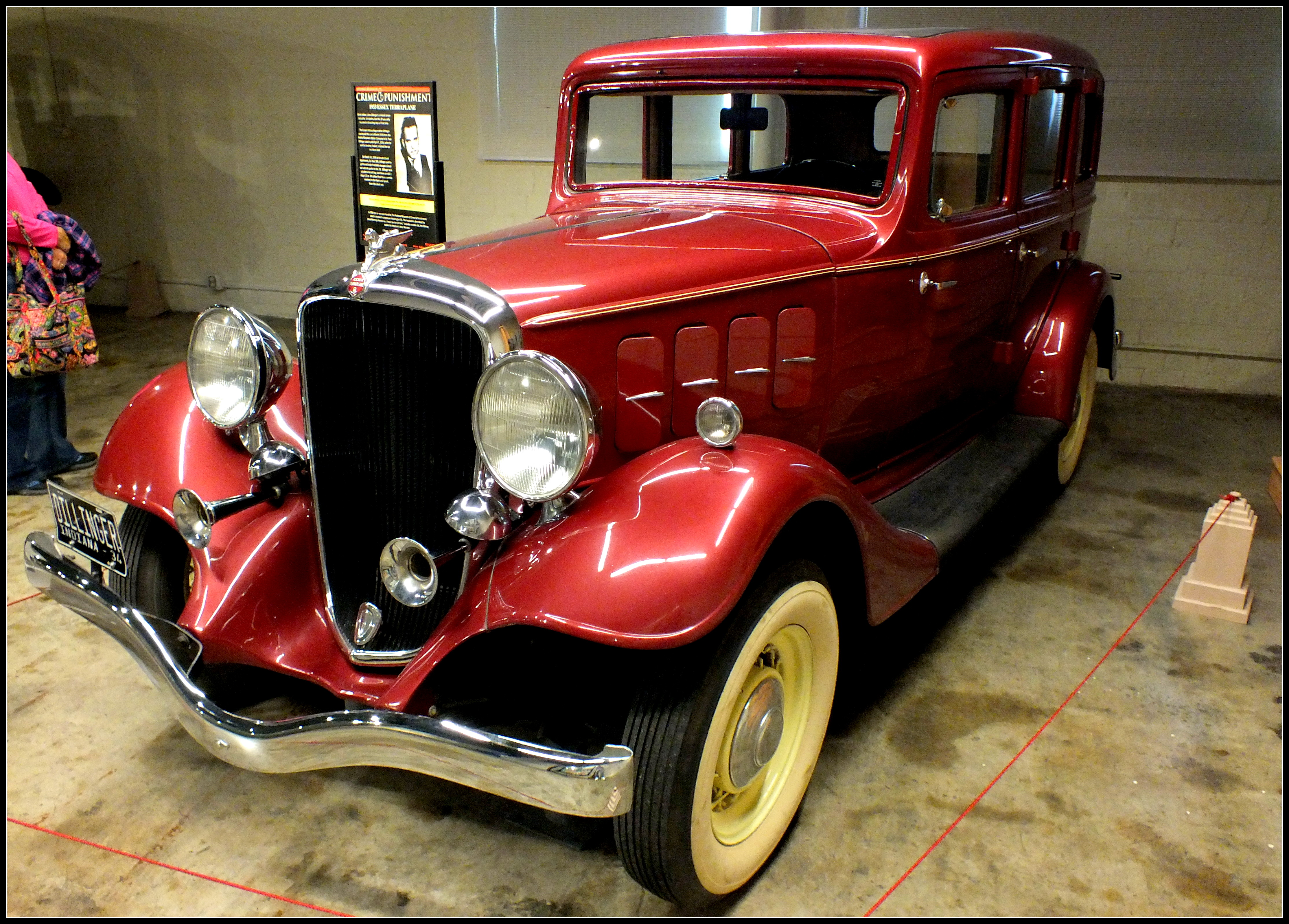
1933 Essex Terraplane
Built by the Hudson Motor Car Company. Drivers of Terraplanes were supposed to feel like they were flying. In the marketing for this car, driving became “gliding” and accelerating was called “taking off.” It proved excellent at hill-climbing and won many competitions. This particular car was bought in St. Paul by John Dillinger, who drove it for eight days before his brother, Hubert, crashed it. On March 31, 1934, Dillinger and his girlfriend, Evelyn Frenchette escaped a shoot-out with police in this car. Dillinger was hit in the leg. Two bullets from a police revolver are still inside the front cowl panel, although the holes have been patched.
1934 Auburn Phaeton
A “Phaeton” is, technically, an open vehicle without protection from the weather. But I’m not sure auto manufacturers always stuck to technical definitions. This body style proved to be unpopular, which probably helped bring about the end of the Auburn line of cars.
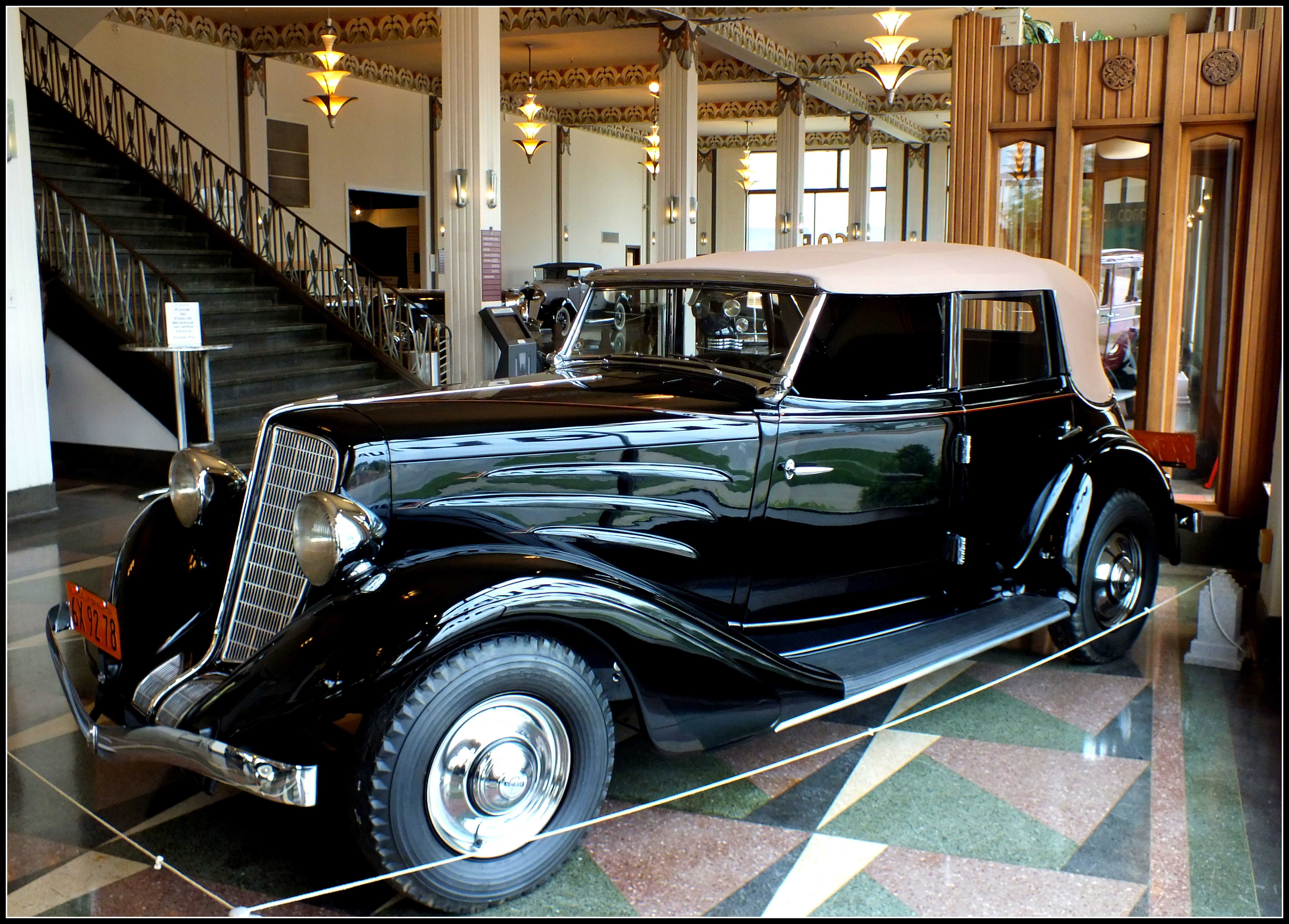
1935 Auburn
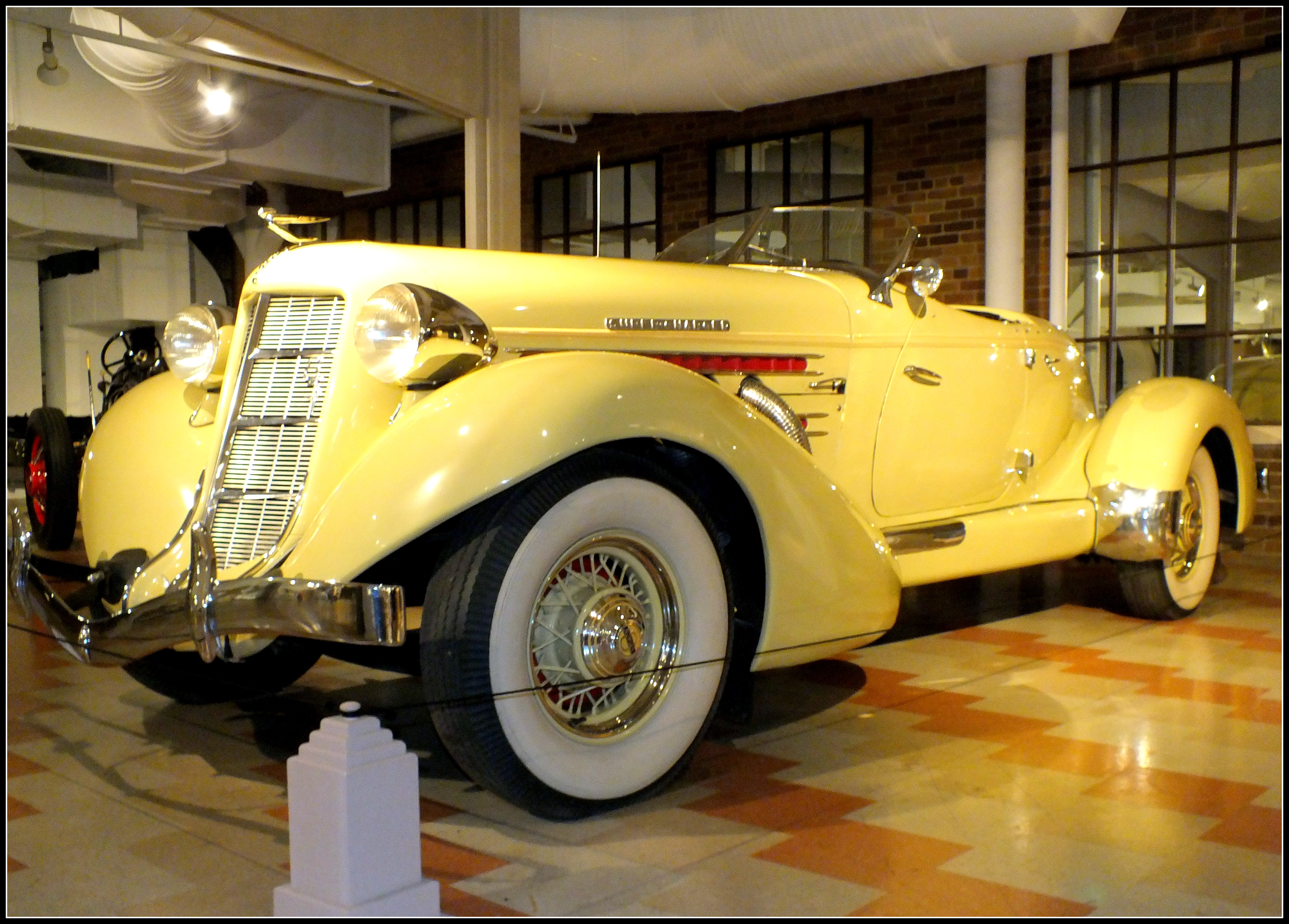
1936 Auburn Cabriolet
I looked it up. Cabriolet is a fancy word for a convertible coupe. 1936 was the final year for Auburn automobiles. Only 1,850 of all models were sold. Perhaps this was due to the fact that, in the middle of the depression, the cheapest one cost $945 while a comparable Chevrolet cost $595.
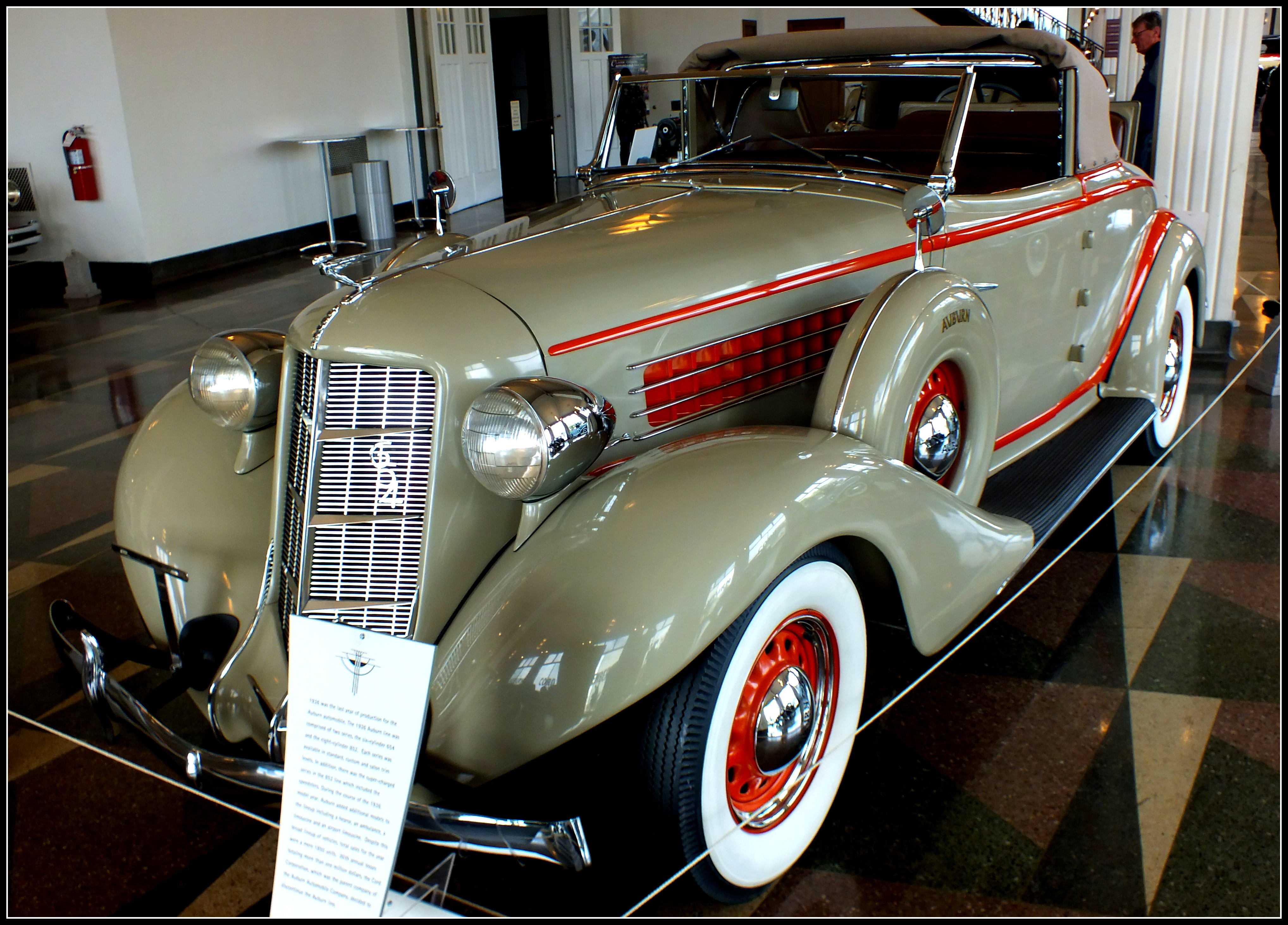
1936 Auburn Phaeton
This particular car was purchased by a man who lived on Cyprus. He bought it for a road trip from Italy to the Olympic Games in Munich, Germany. During World War II, it was used by the British Army until they realized how much gas it consumed. It was brought home to the U.S. by a serviceman returning from duty.
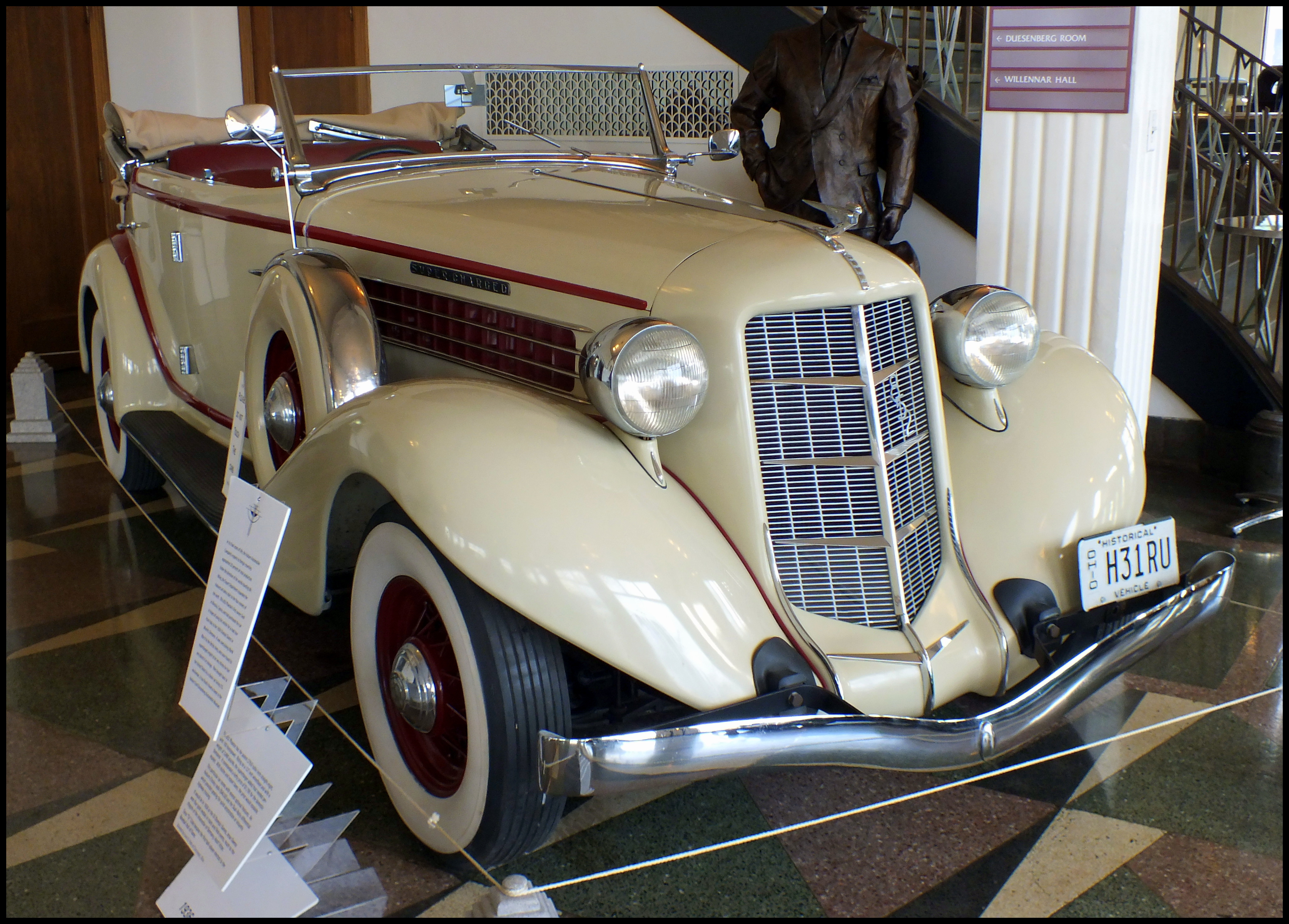
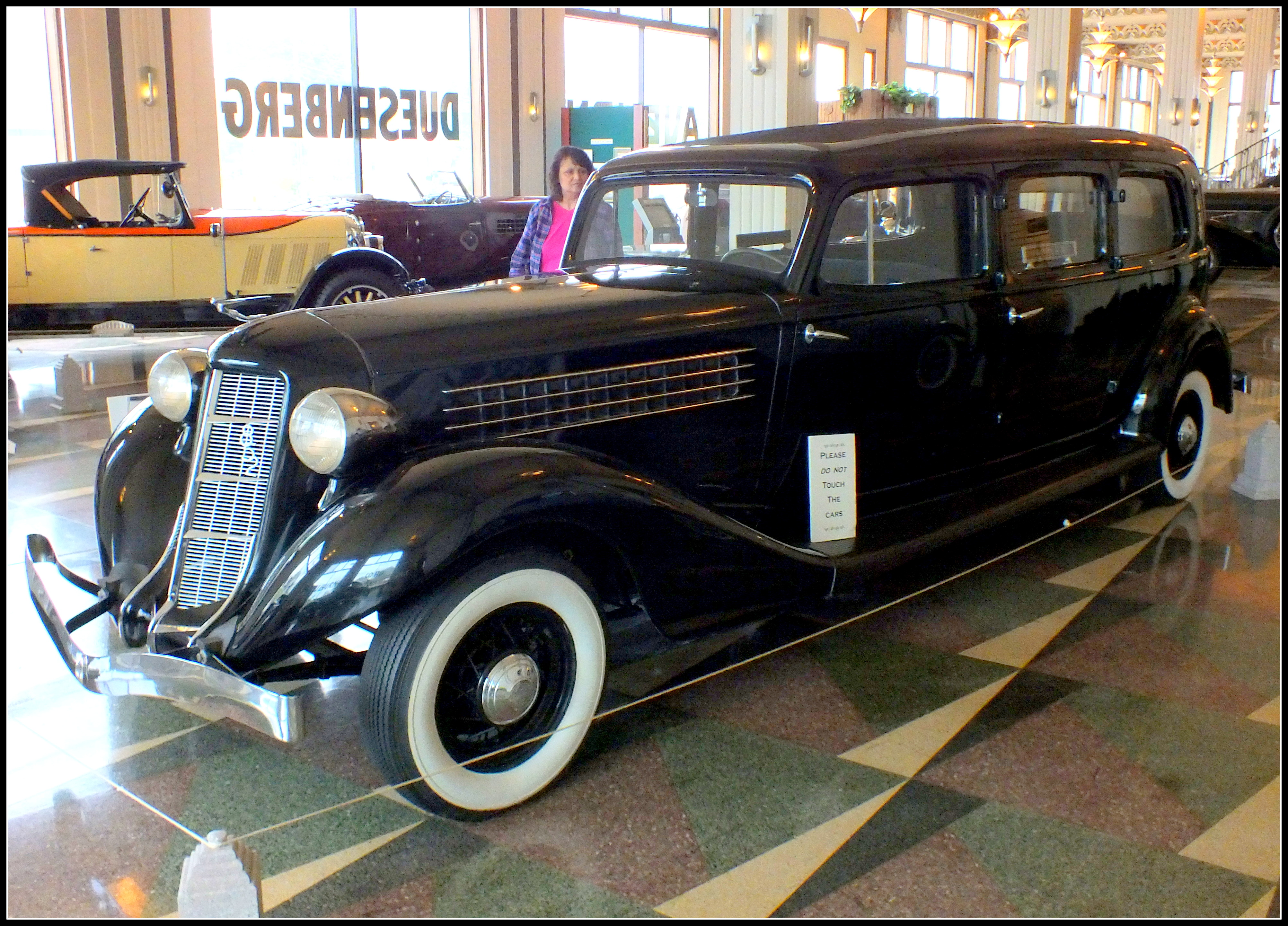
1936 Auburn Hearse
The fine folks at Auburn knew the company was in trouble, so they began offering a line of commercial vehicles, including a limousine, an ambulance and this hearse. Only 75 were built. This one was owned by a funeral home in Fairmount, Indiana.
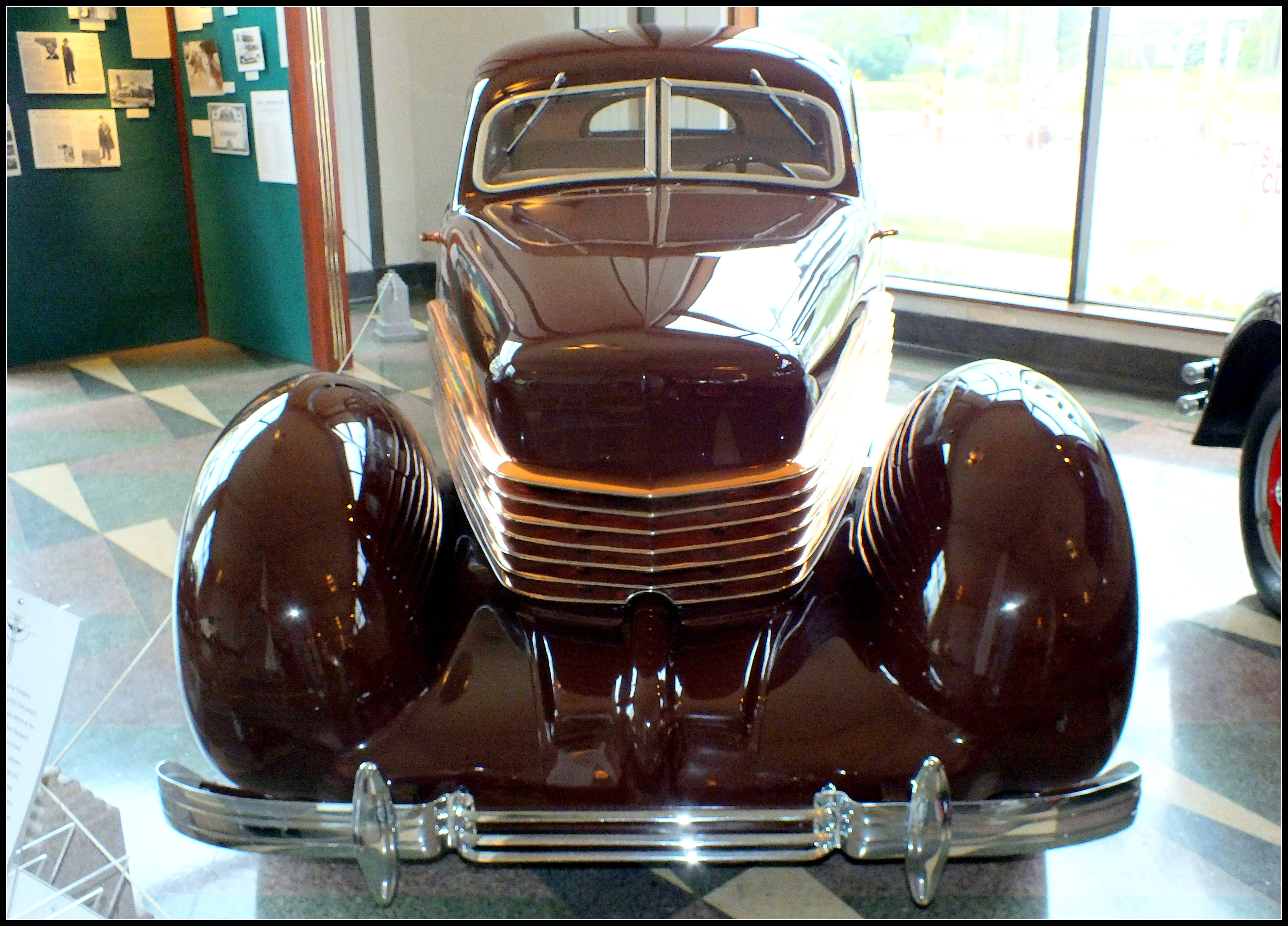
1936 Cord Sedan
This is a hand-built prototype built for a show. The design was so popular that people stood on top of other cars to get a look at it.
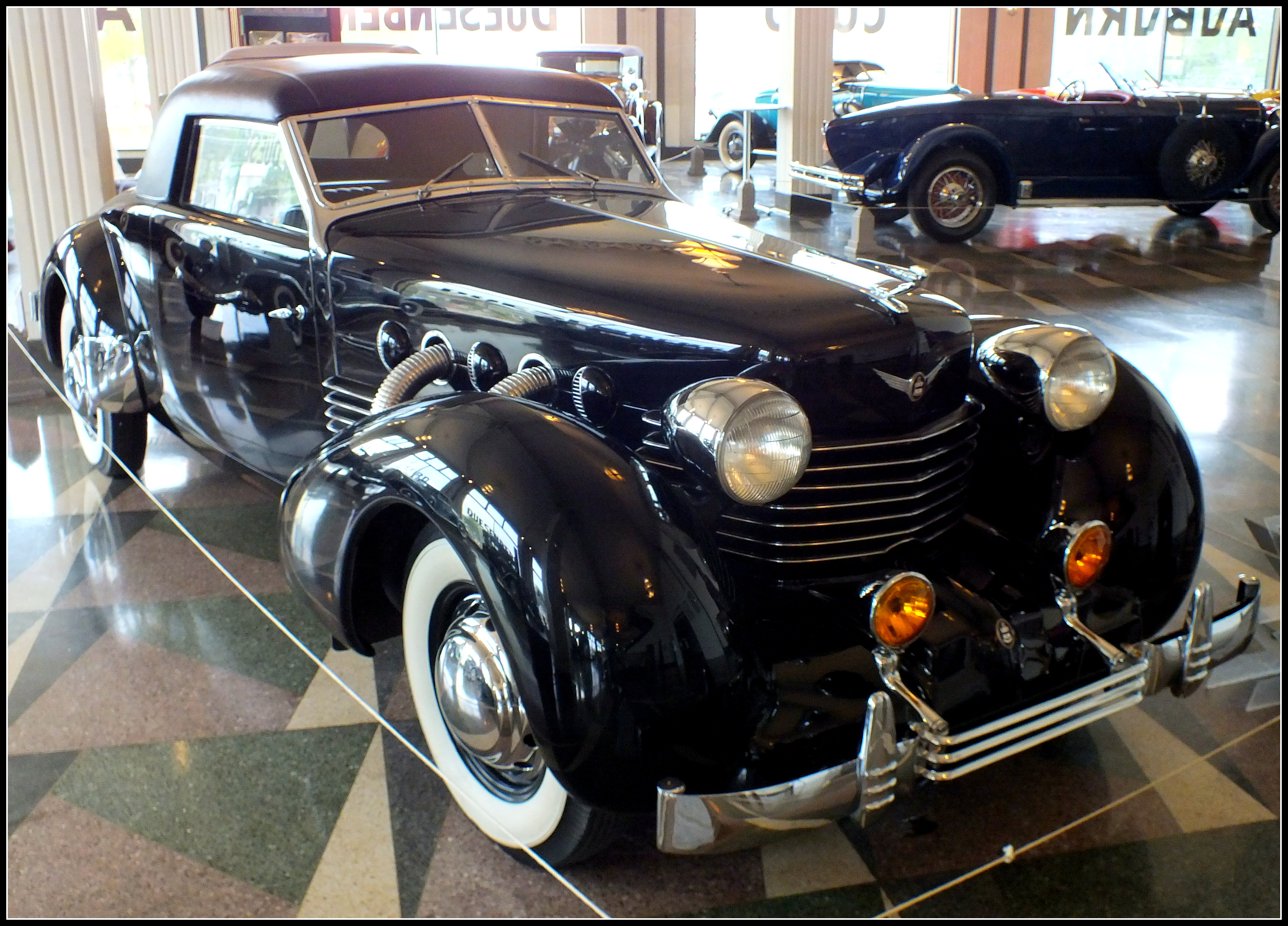
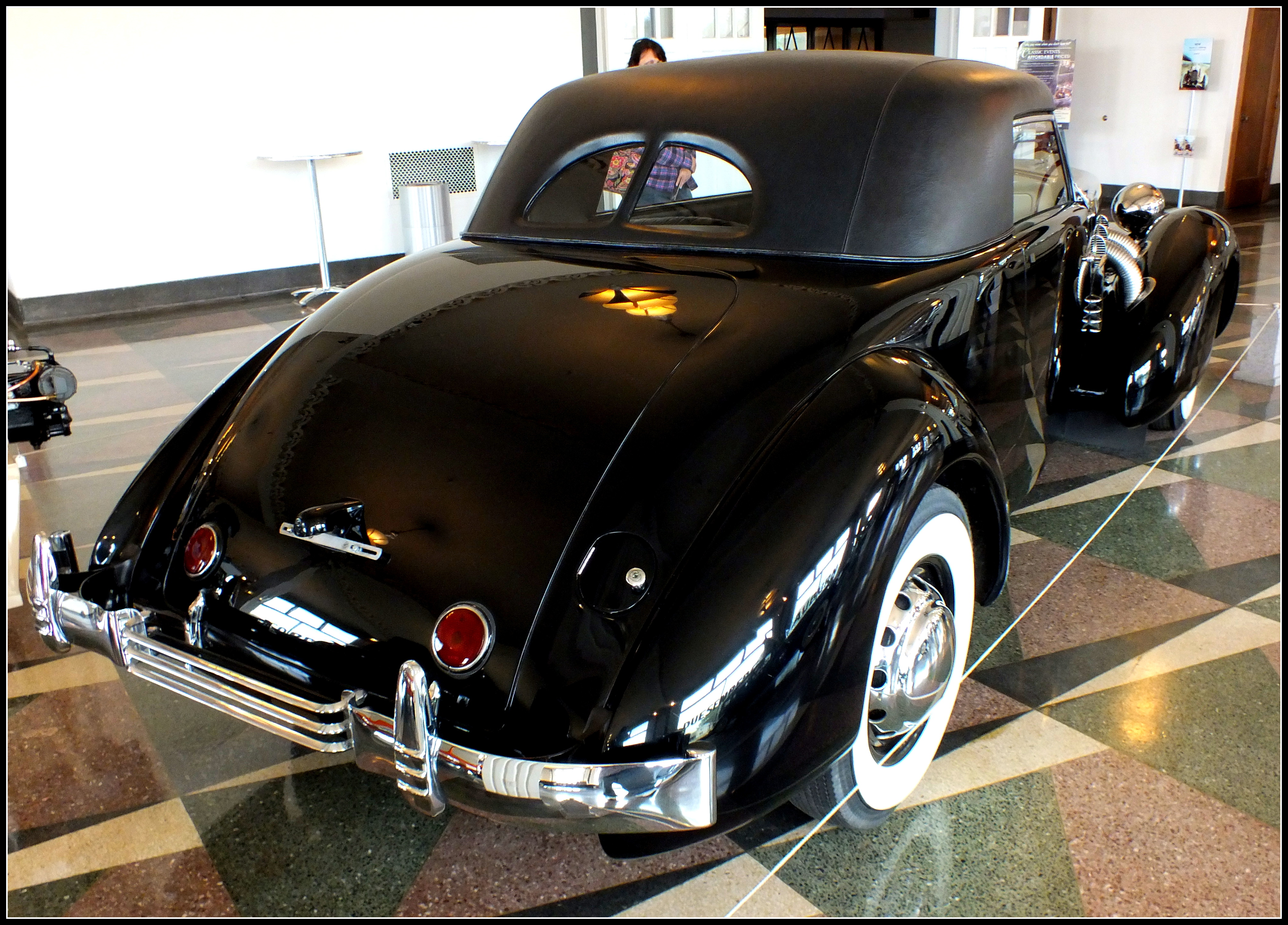
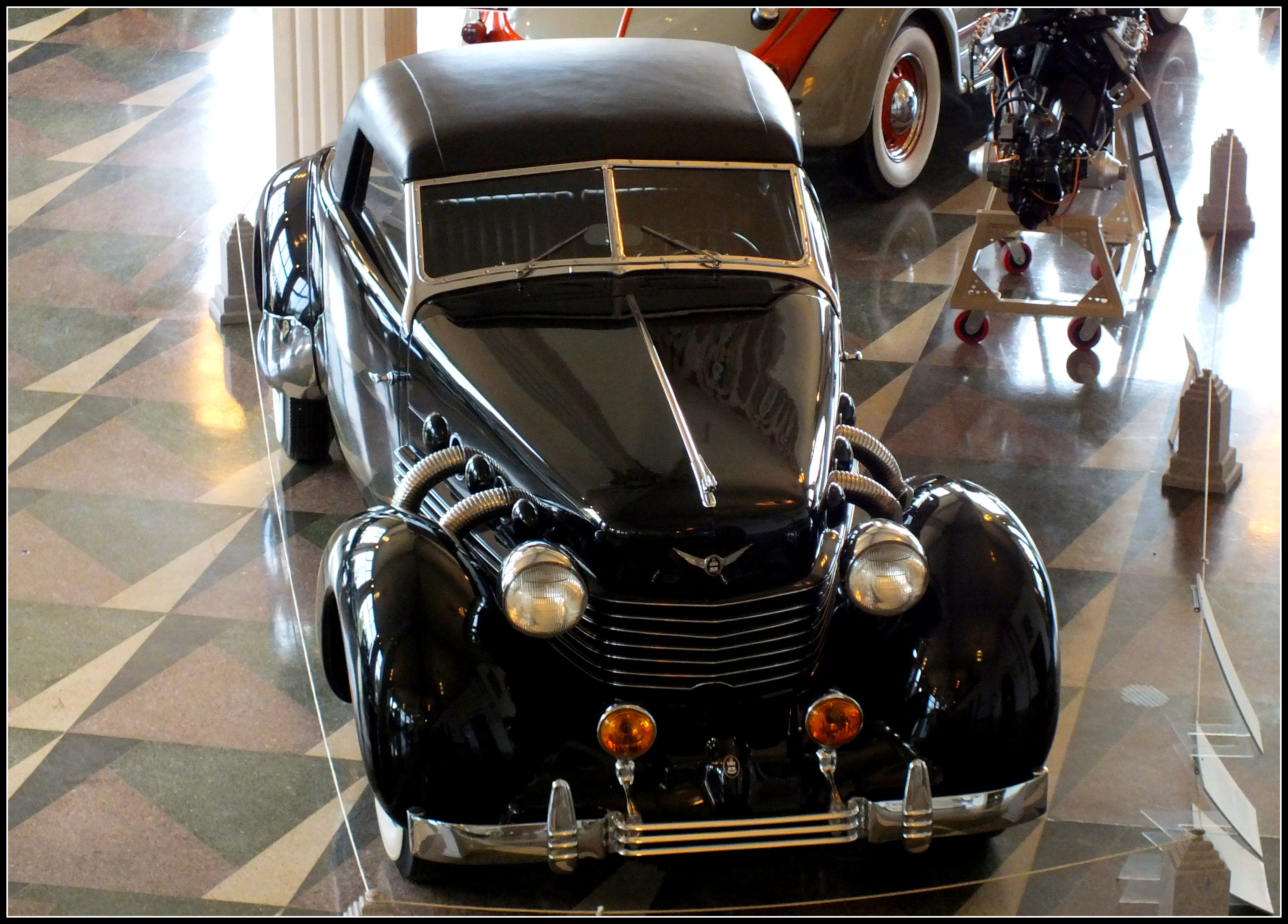
1937 Cord Coupe
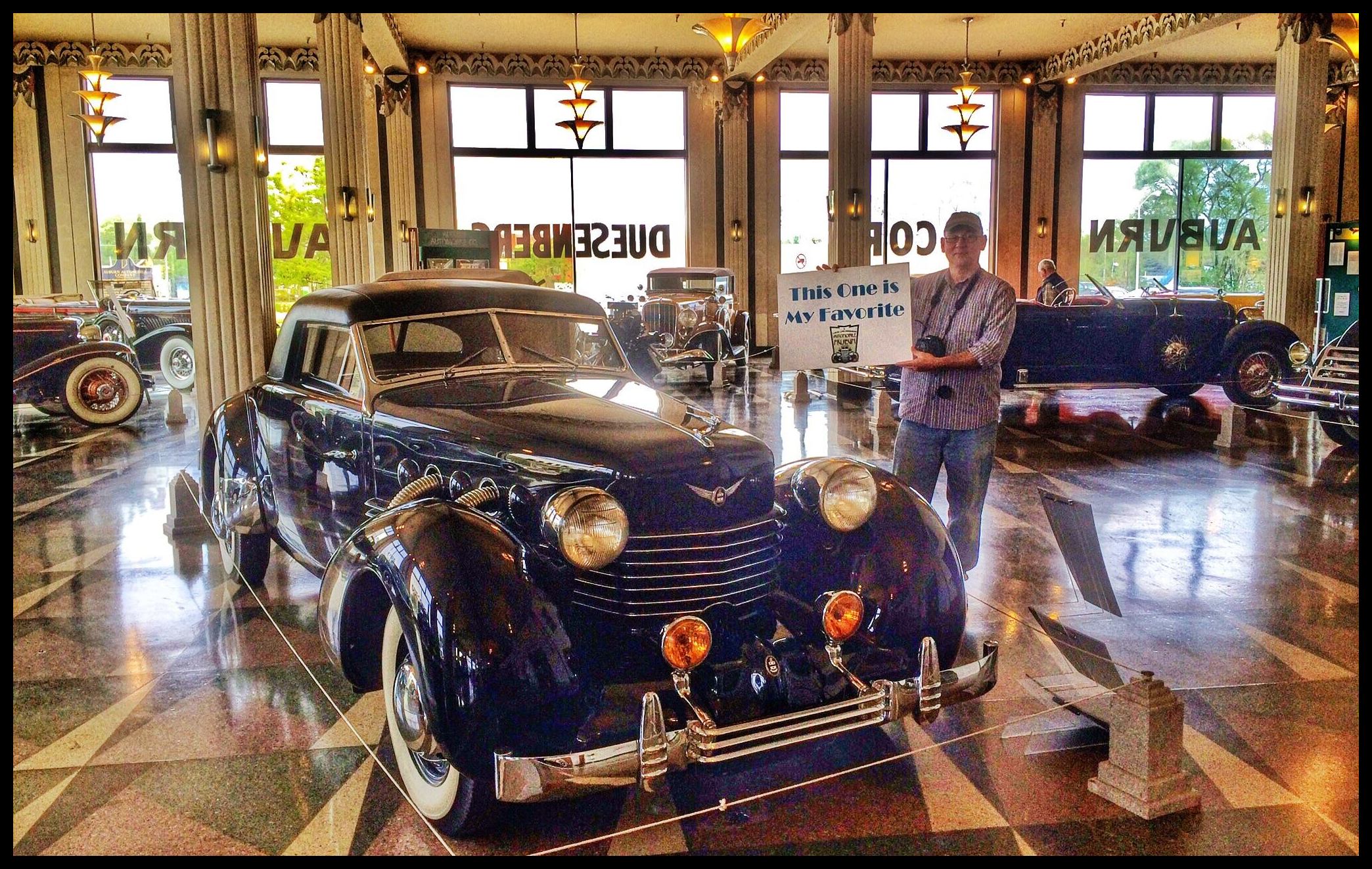
This is one of my favorites. I really like that front grill. It was built for the founder of Champion Spark Plugs — for $3,500. The chrome headlights, hood ornament and padded leather top were all custom features.
There was a stack of sign boards nearby. A notice nearby said we were to take them anywhere we liked in the museum and get our photo taken with them. So I did.
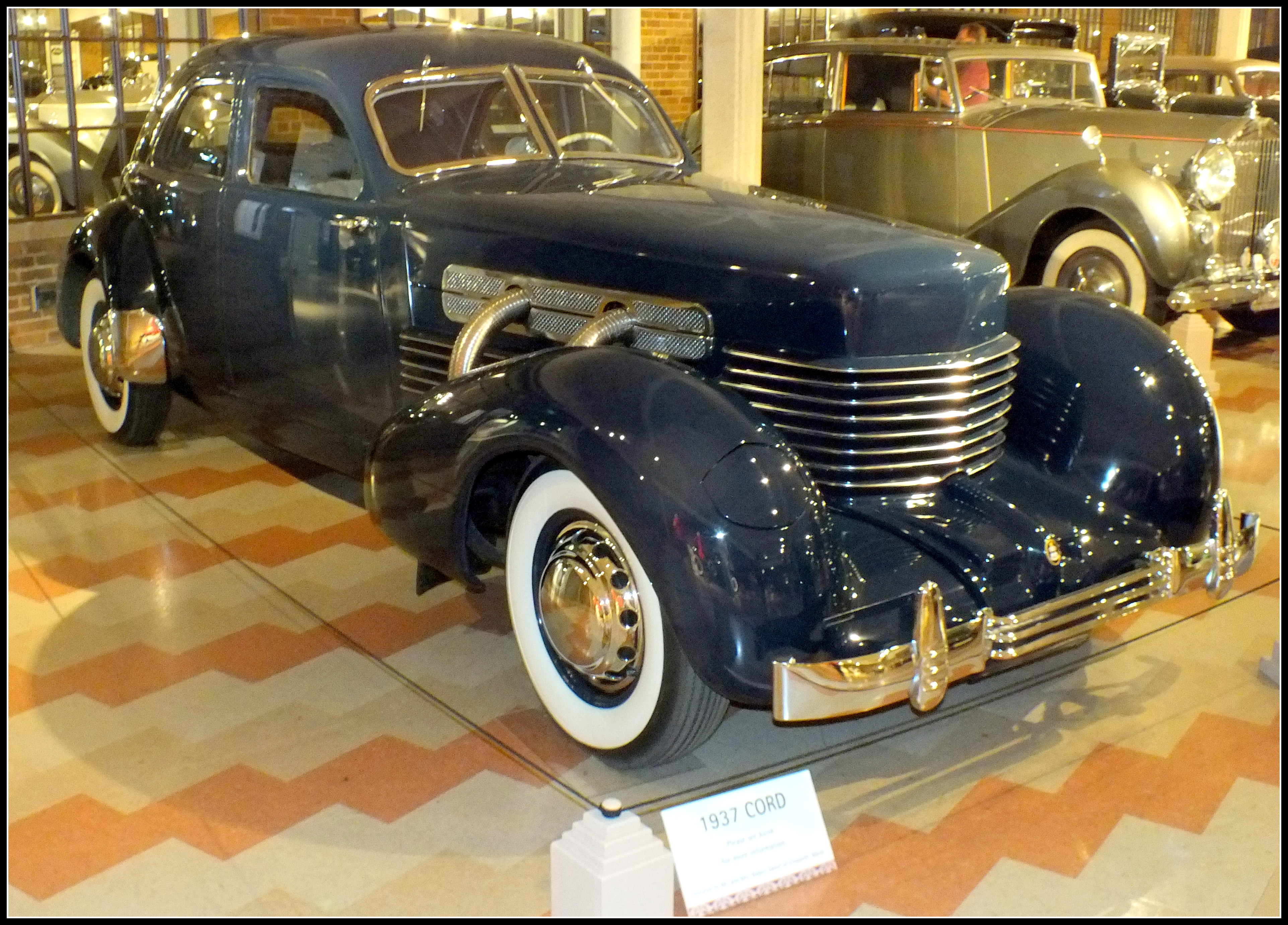
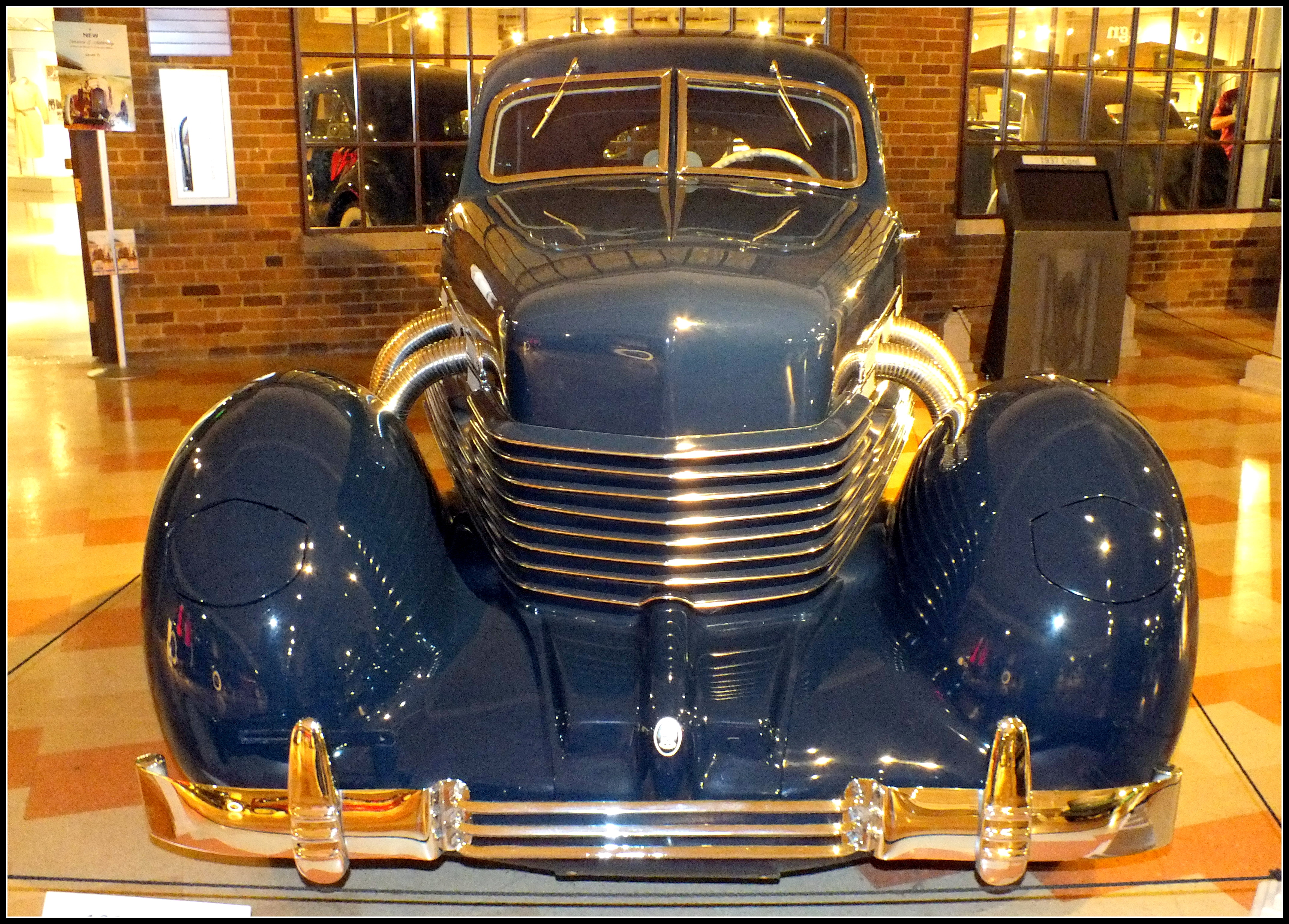
1937 Cord
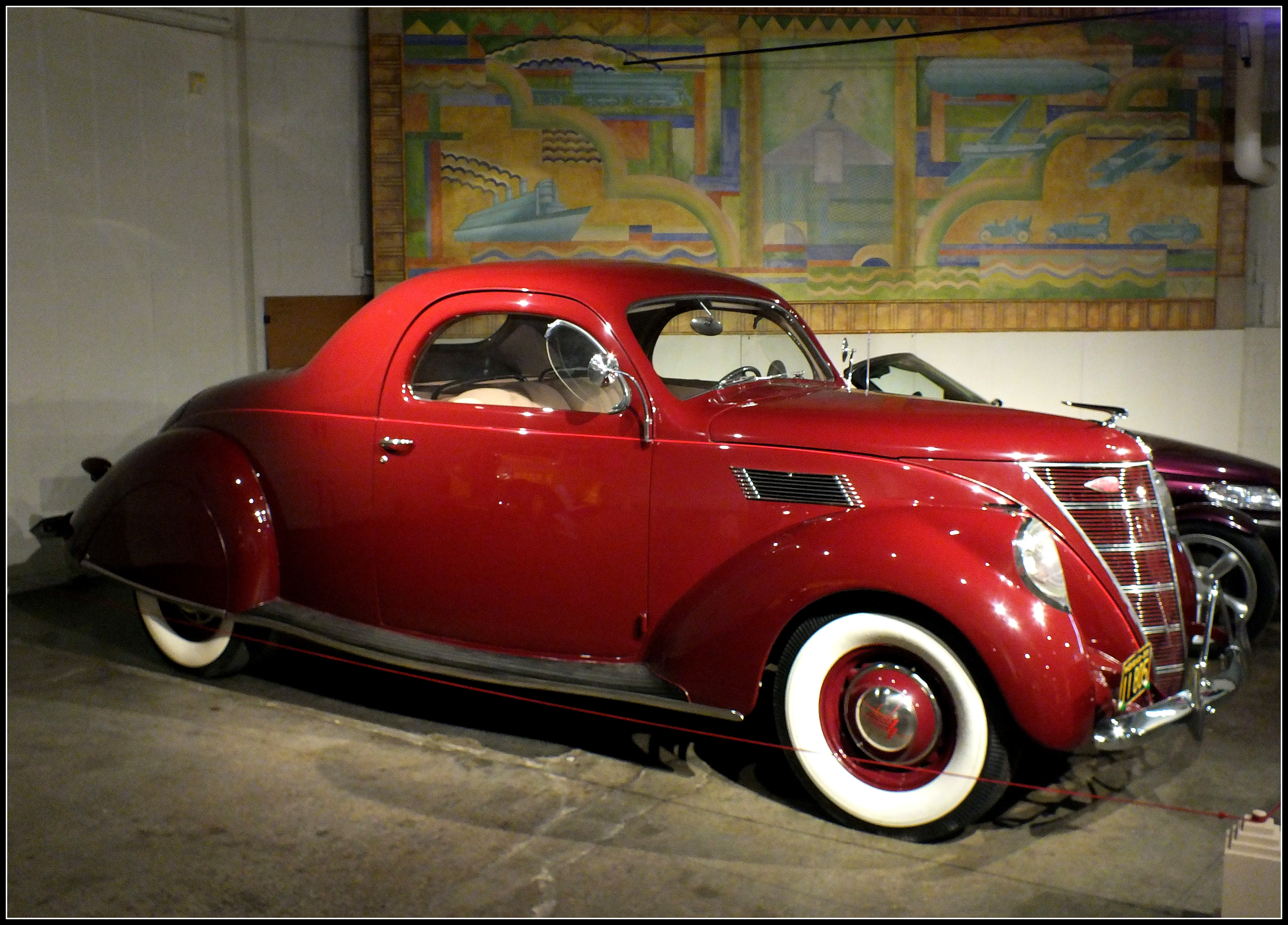
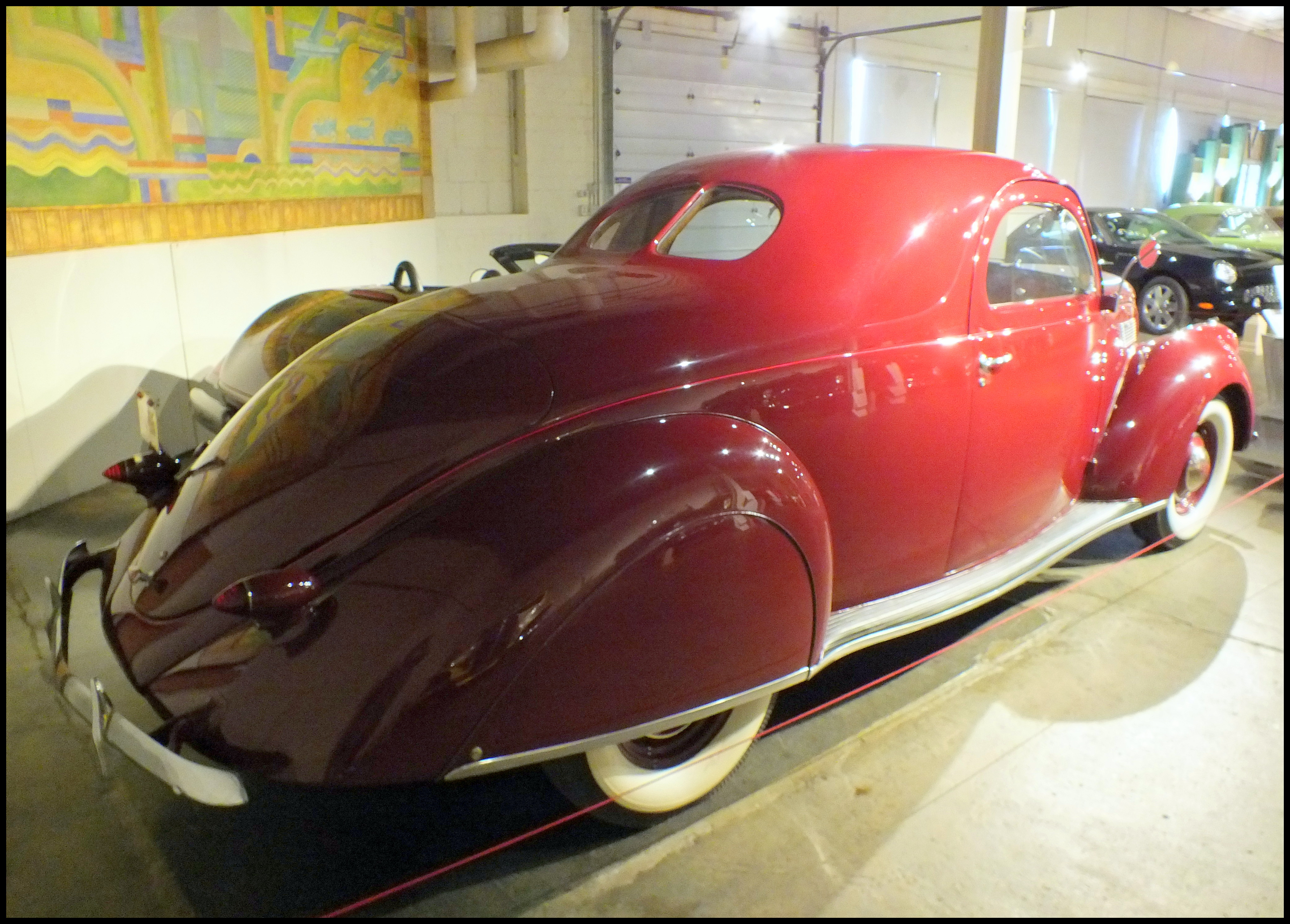
1937 Lincoln Zephyr
This one has a 12-cylinder engine. It sold new for $1,165. Its teardrop shape is considered by some to make it one of the most attractive cars of the 1930’s, but I think they got a bit carried away with the trunk.
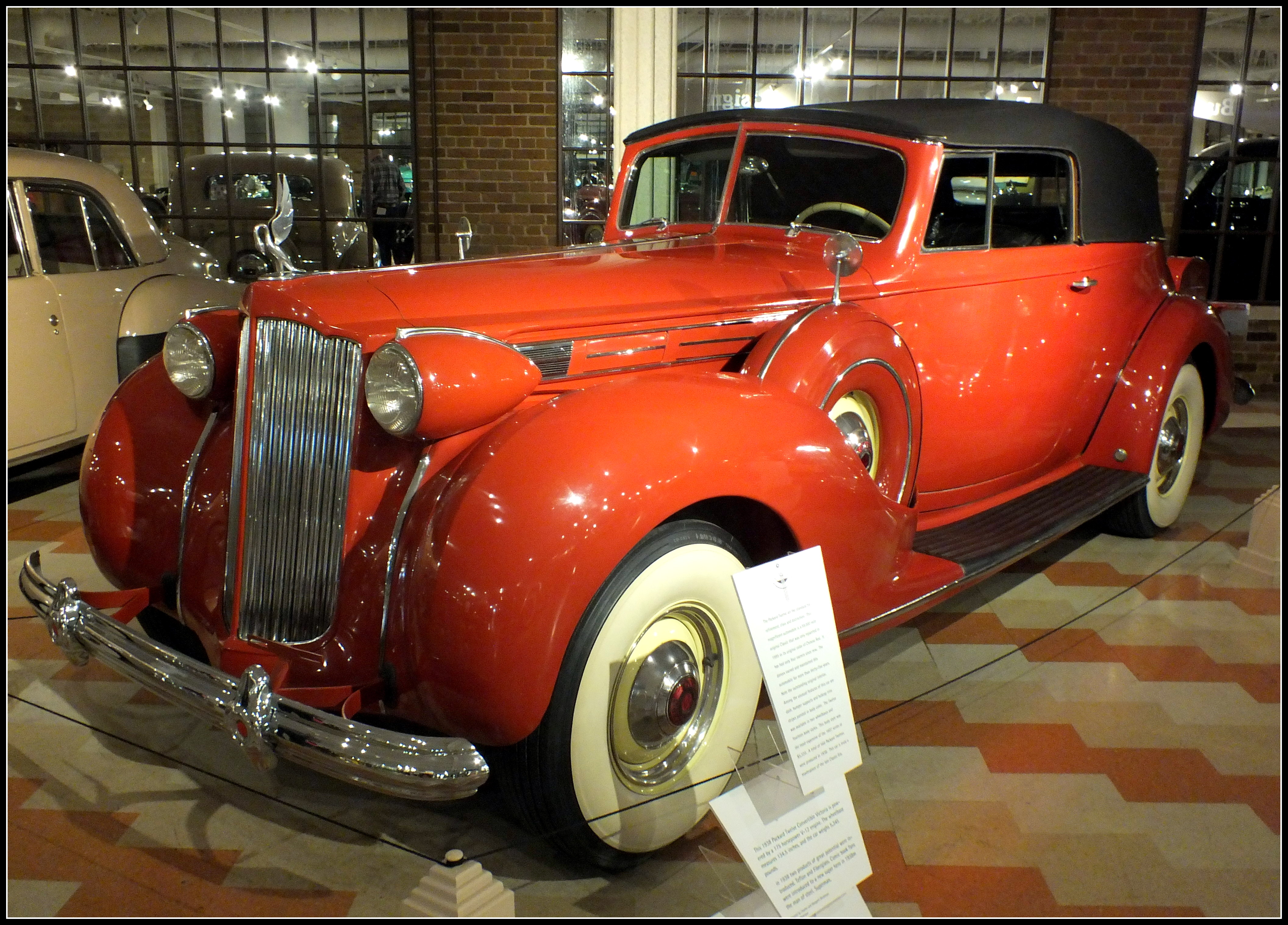
1938 Packard Twelve Convertible Victoria
This car has only been driven 59,000 miles and is in its original condition except for being repainted in its original color of Chinese Red. As the name implies, it has 12 cylinders. It sold new for $5,320.
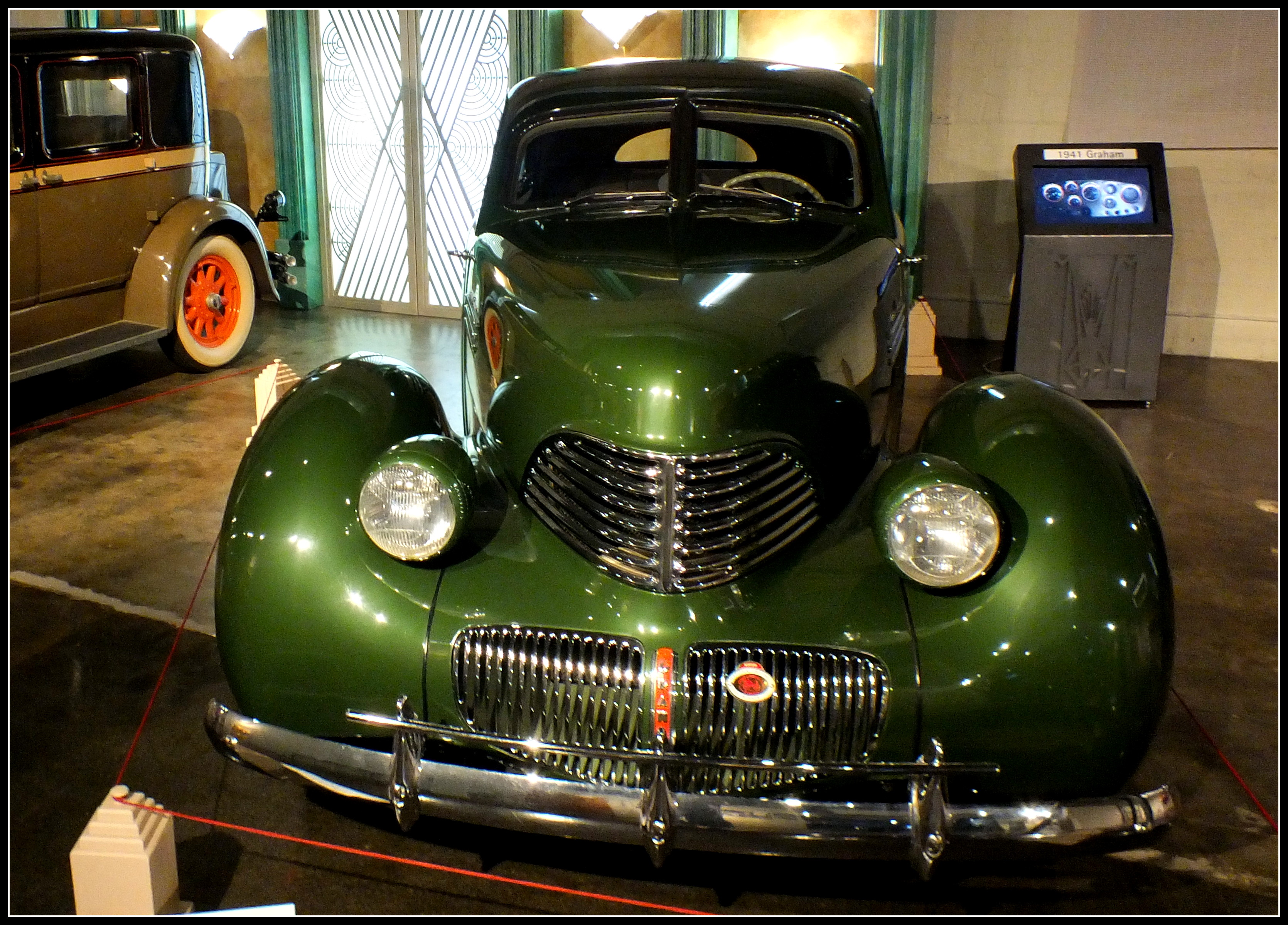
1941 Graham