
This park wasn’t on our original agenda, but when I saw that we would be passing through Greensboro in the middle of a long drive, I decided we could use a break. Besides, who can pass up a Revolutionary War battlefield?
Turns out I could have. There isn’t much here.
In March, 1781, General Cornwallis and his British army was campaigning in the south, pretty much having things their own way. American general Nathanael Greene had a small army to oppose him, but he realized the British couldn’t win the war so long as the American had an army in the field. He let Cornwallis chase him around, always keeping one step ahead. Finally Greene received some new troops and decided to confront Cornwallis. He set up his army in three lines, the first made up of untrailed militia that he knew wouldn’t stand for long. The British came on, the Americans fought back hard and the two armies blasted each other until Greene decided it was time to go. His casualties had been relatively light, while Cornwallis had lost almost a fourth of his army. The British held the field and captured the American artillery, but Greene survived to fight another day. Frustrated, Cornwallis headed for Virginia (ending up at Yorktown), while Greene headed south to clear the rest of the British out of the southern states.
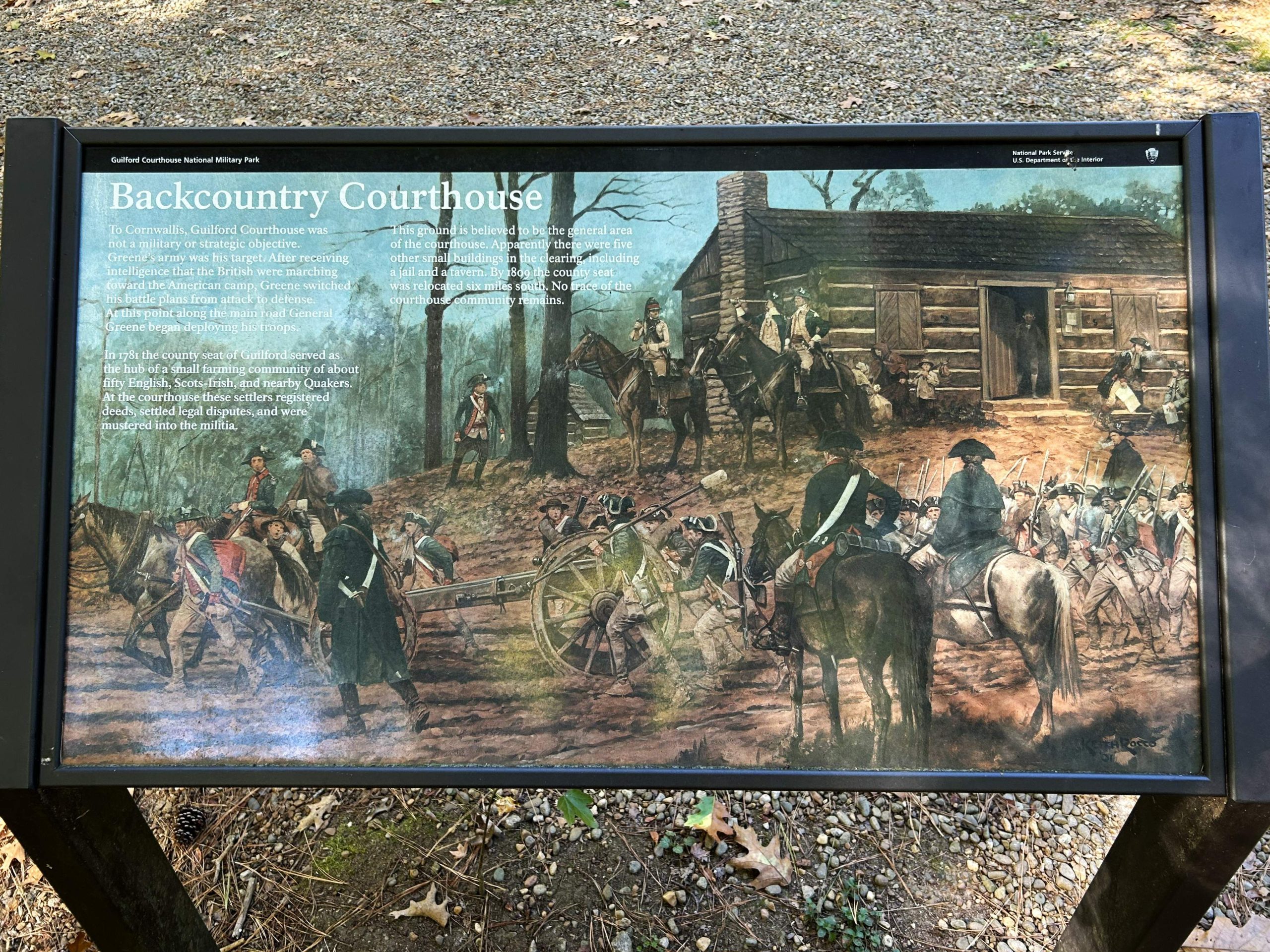
The small community that gave the battle its name is gone without a trace. There were no fortifications, so no evidence of the battle remains. The park preserves a patch of woods with a few clearings. The Hoskins farm, where the British formed to begin the battle, has been reconstructed. In the early 1800’s, a group of local men decided to turn the battlefield into a monument park and cemetery of the Revolutionary War. There is a huge statue of Greene (after whom Greensboro was named).
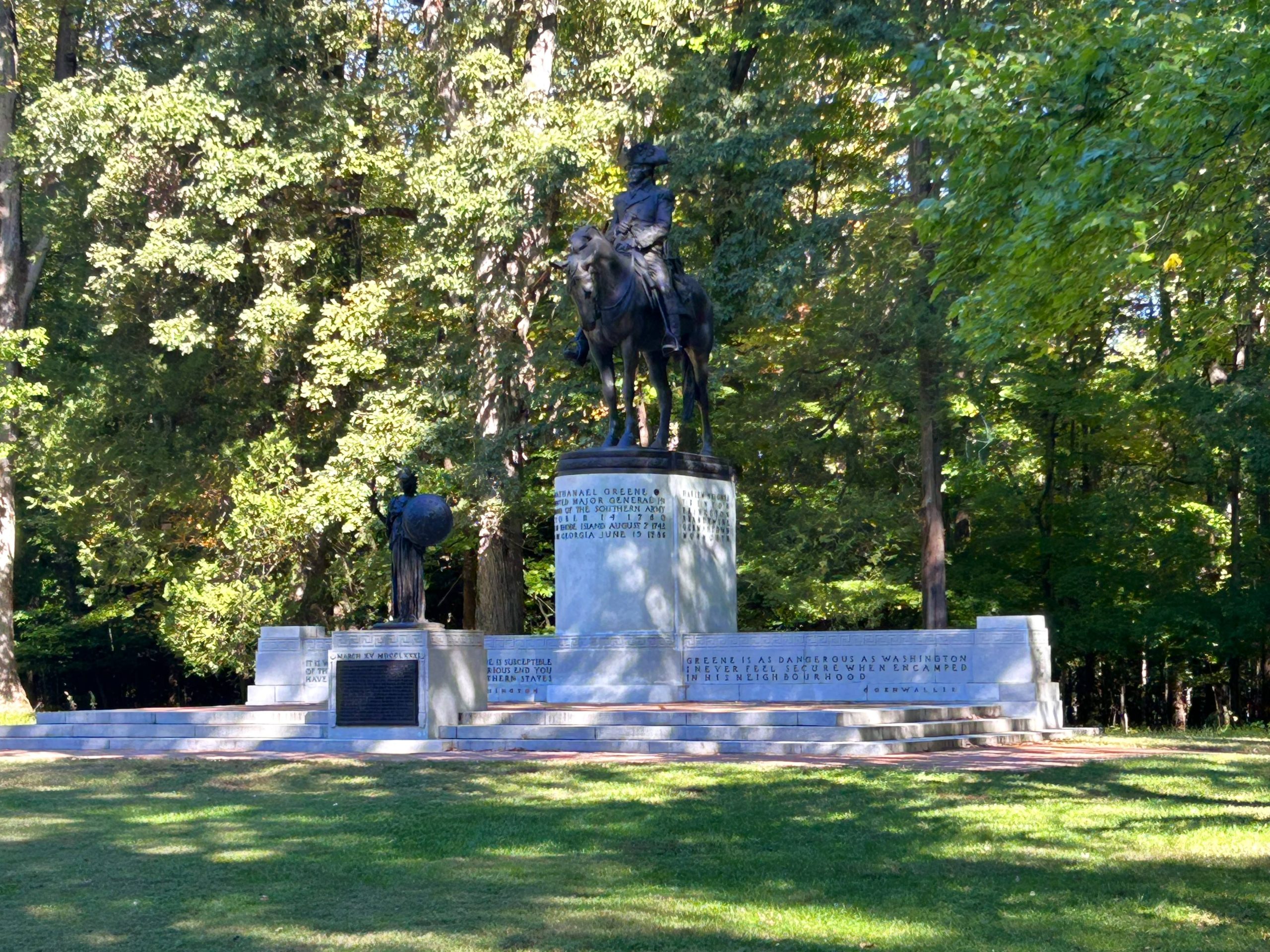
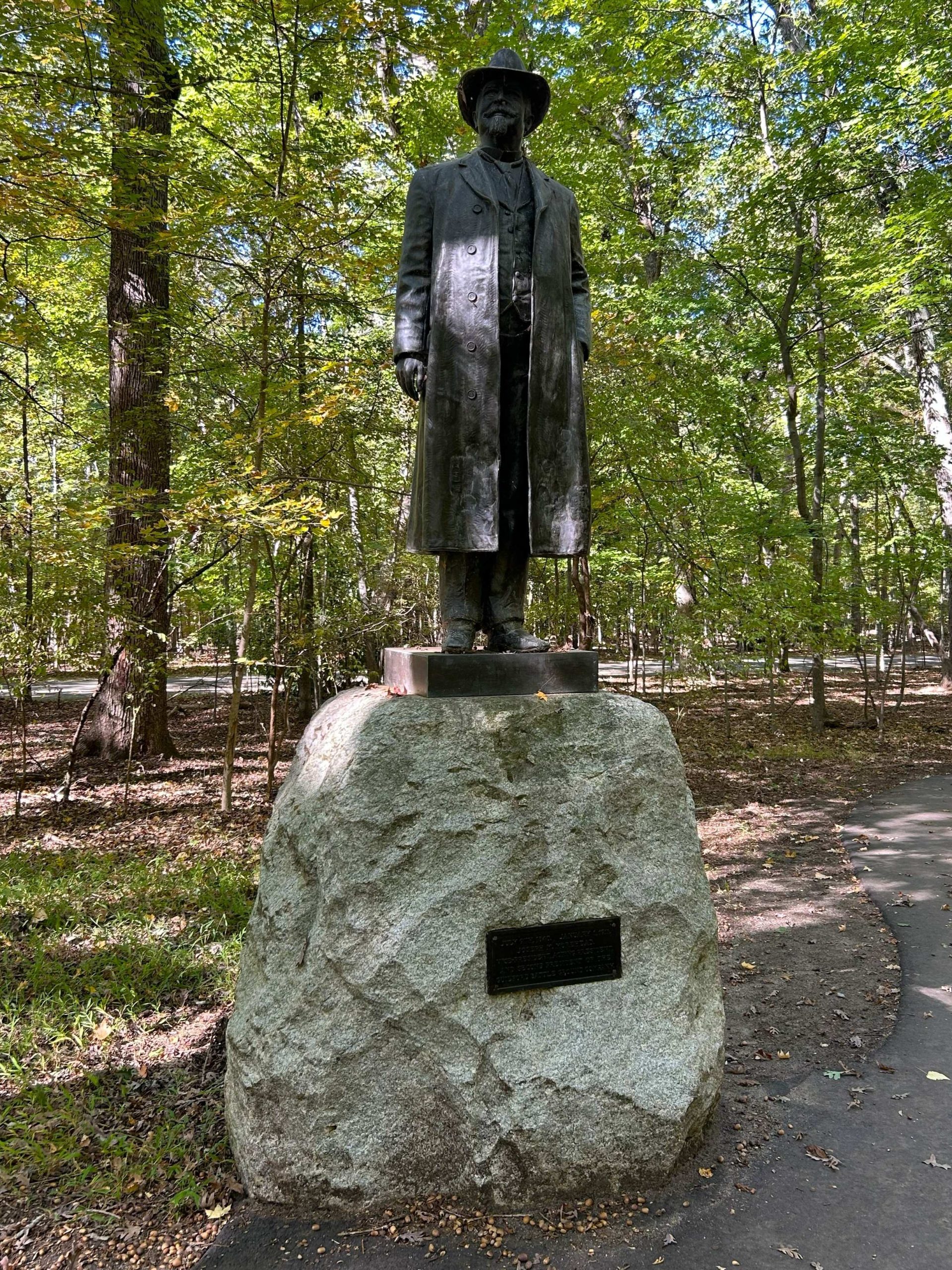
There’s also a monument to North Carolina’s three delegates to the Constitutional Convention even though they had no connection to the battle. And there’s a monument to one of the guys who decided to fill the park with monuments, which I suspect may have been his point all along.
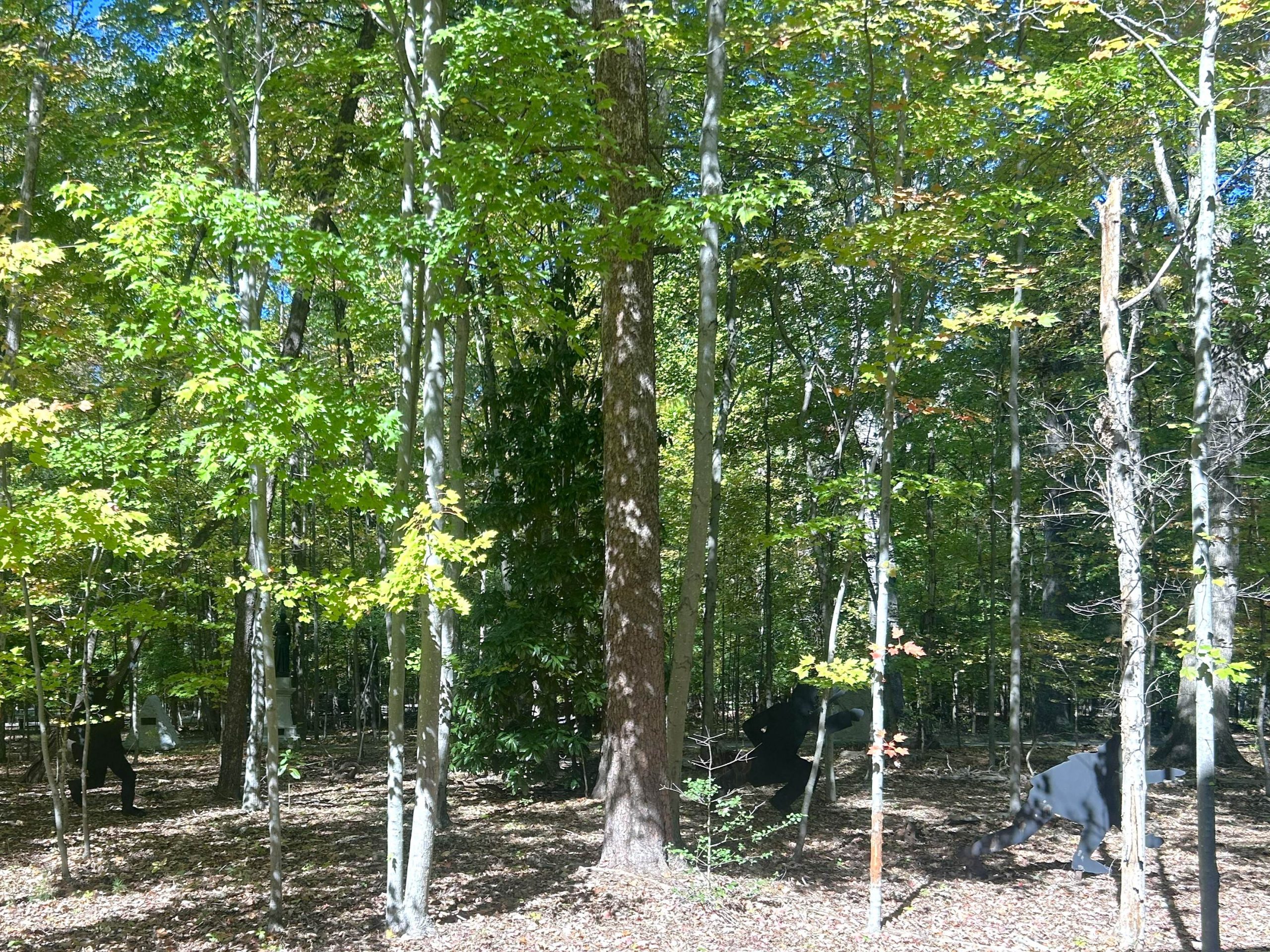
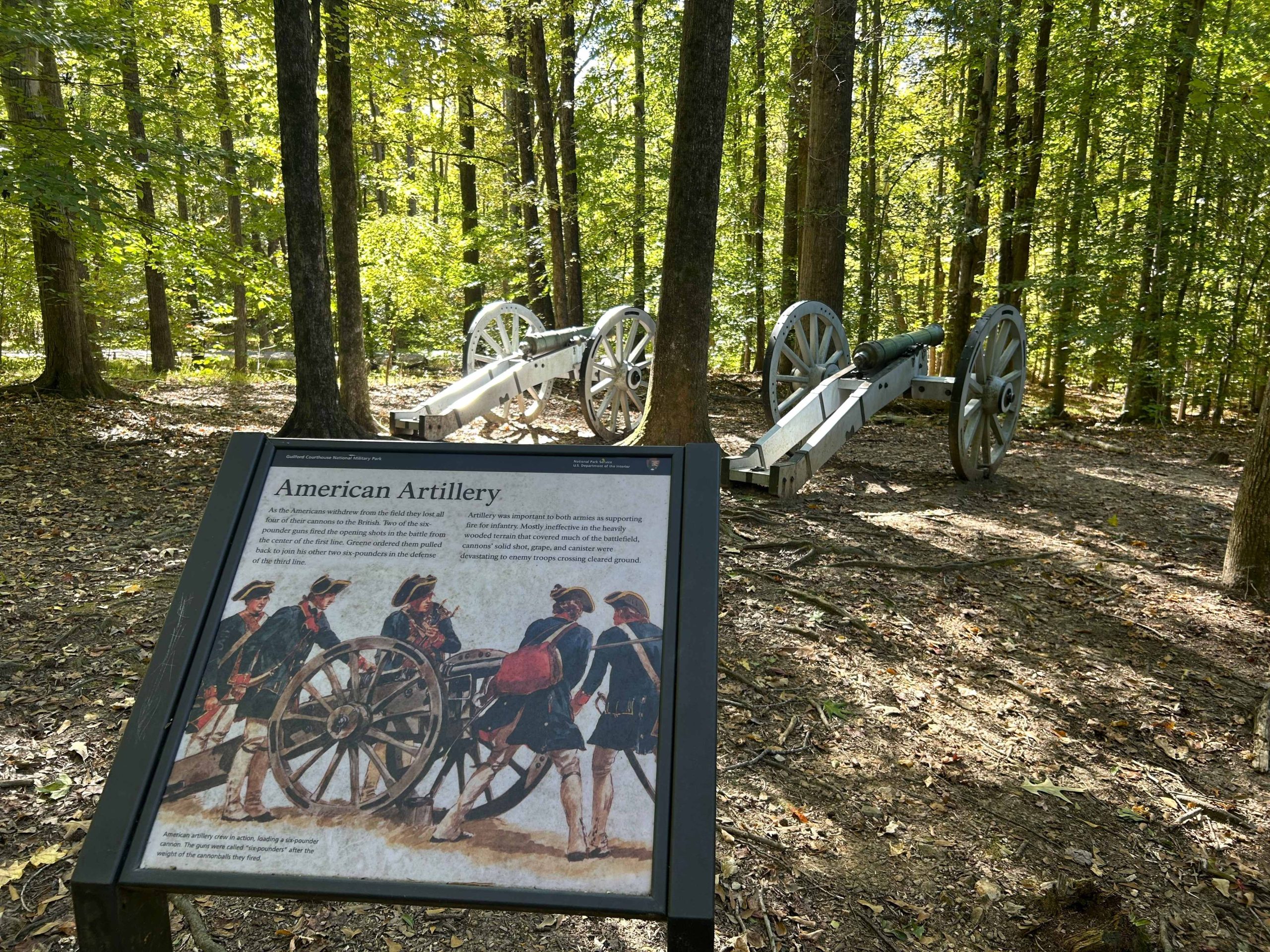
The woods along the first American line. See the silhouettes of militia men running through the trees?
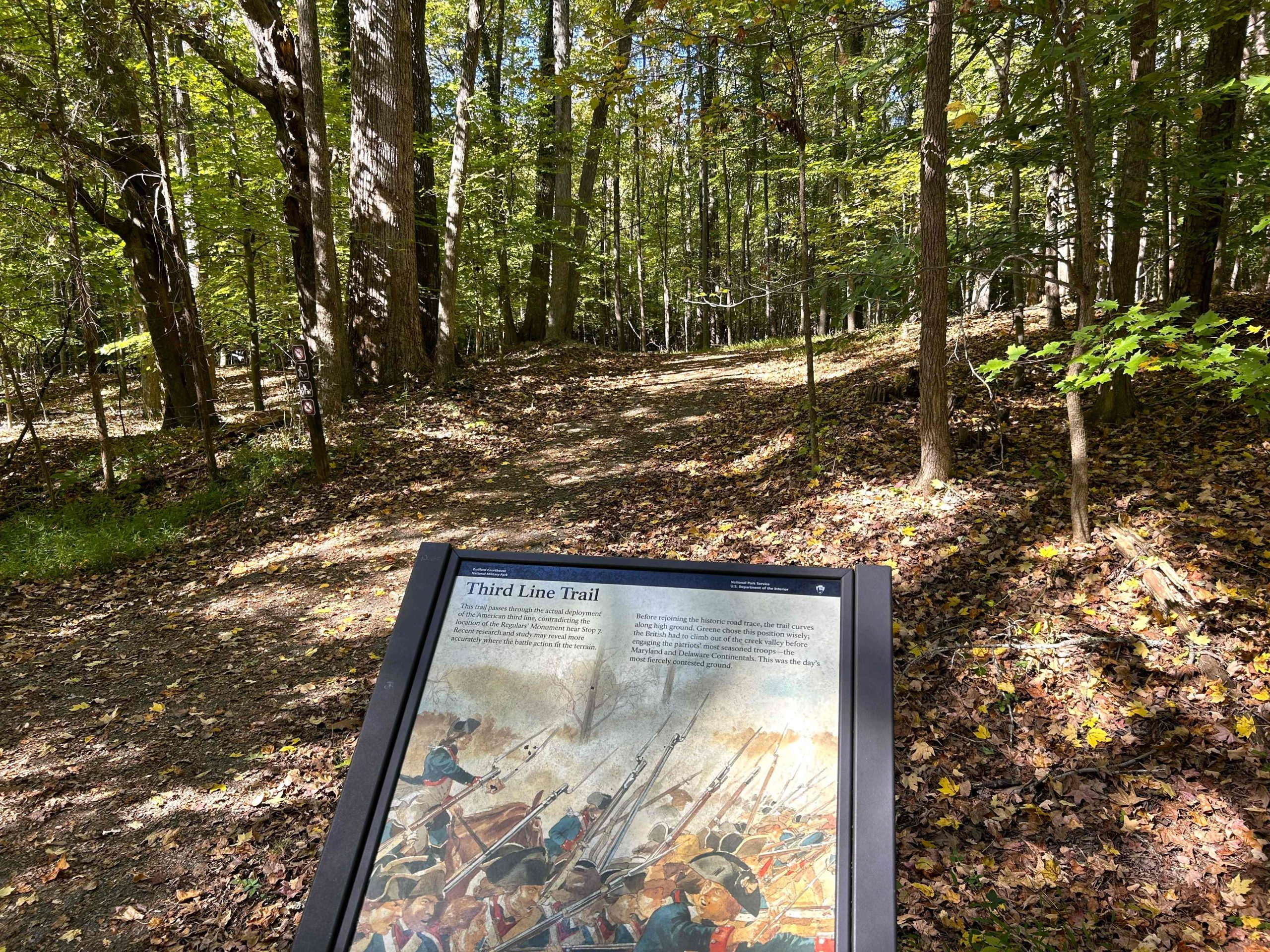
The location of the third American line.
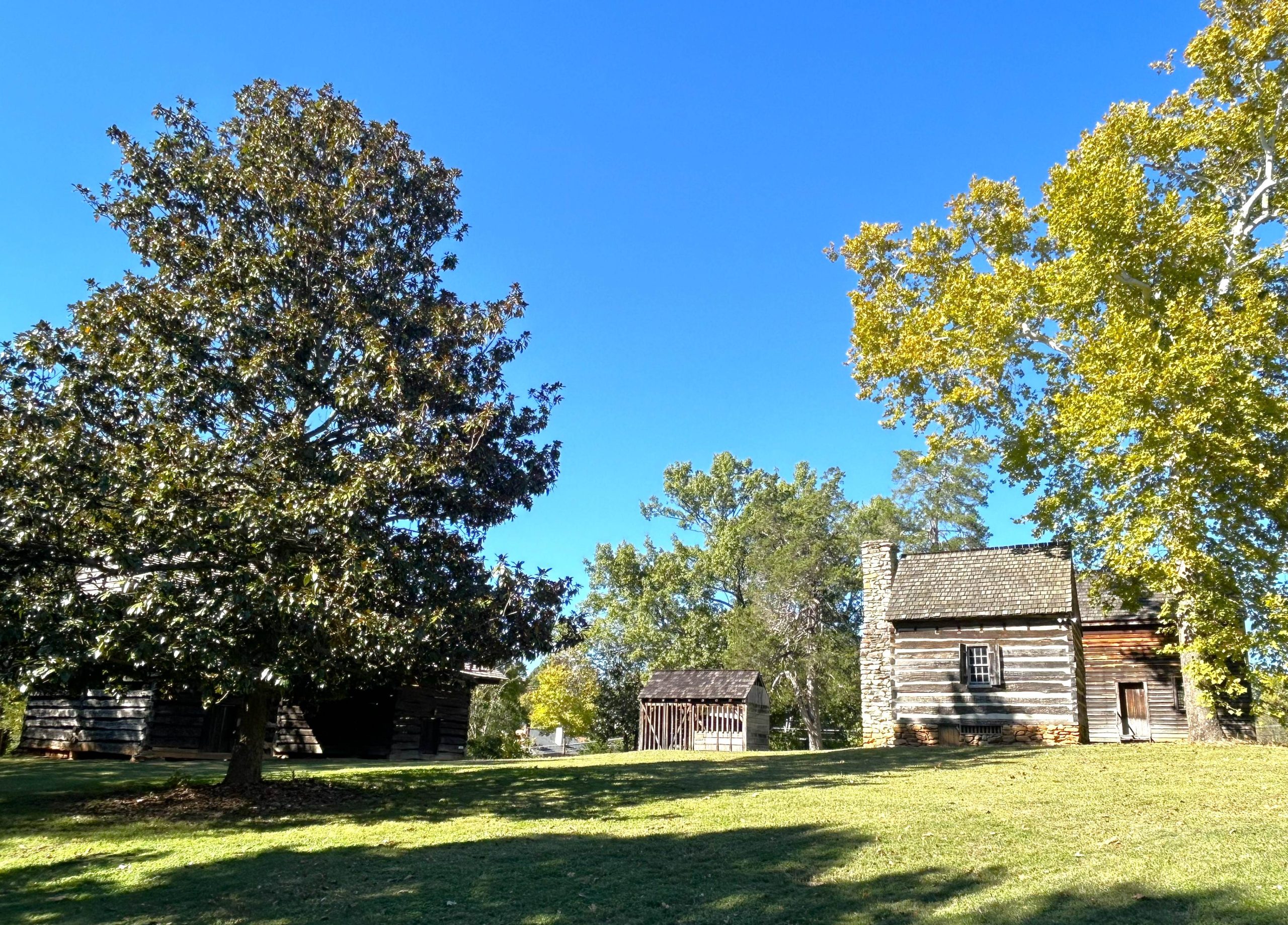
The Hoskins Farm, from where the British launched their attack.
We toured the visitor center and learned about the role of women and enslaved persons. We drove the tour road, which was a little challenging. The park sits in the middle of a residential area in Greensboro and the residents consider the road to be their personal walking/jogging track. Some of them were reluctant to move for vehicles. We walked around a little bit near where the courthouse use to be, by Greene’s statue, and at the Hoskins Farm, but I don’t think we were there an hour total. Worth seeing, but not worth going to see.