Fort Vancouver National Historic Site

Nothing particularly amazing ever happened at Fort Vancouver, but the site has had a long and varied history.

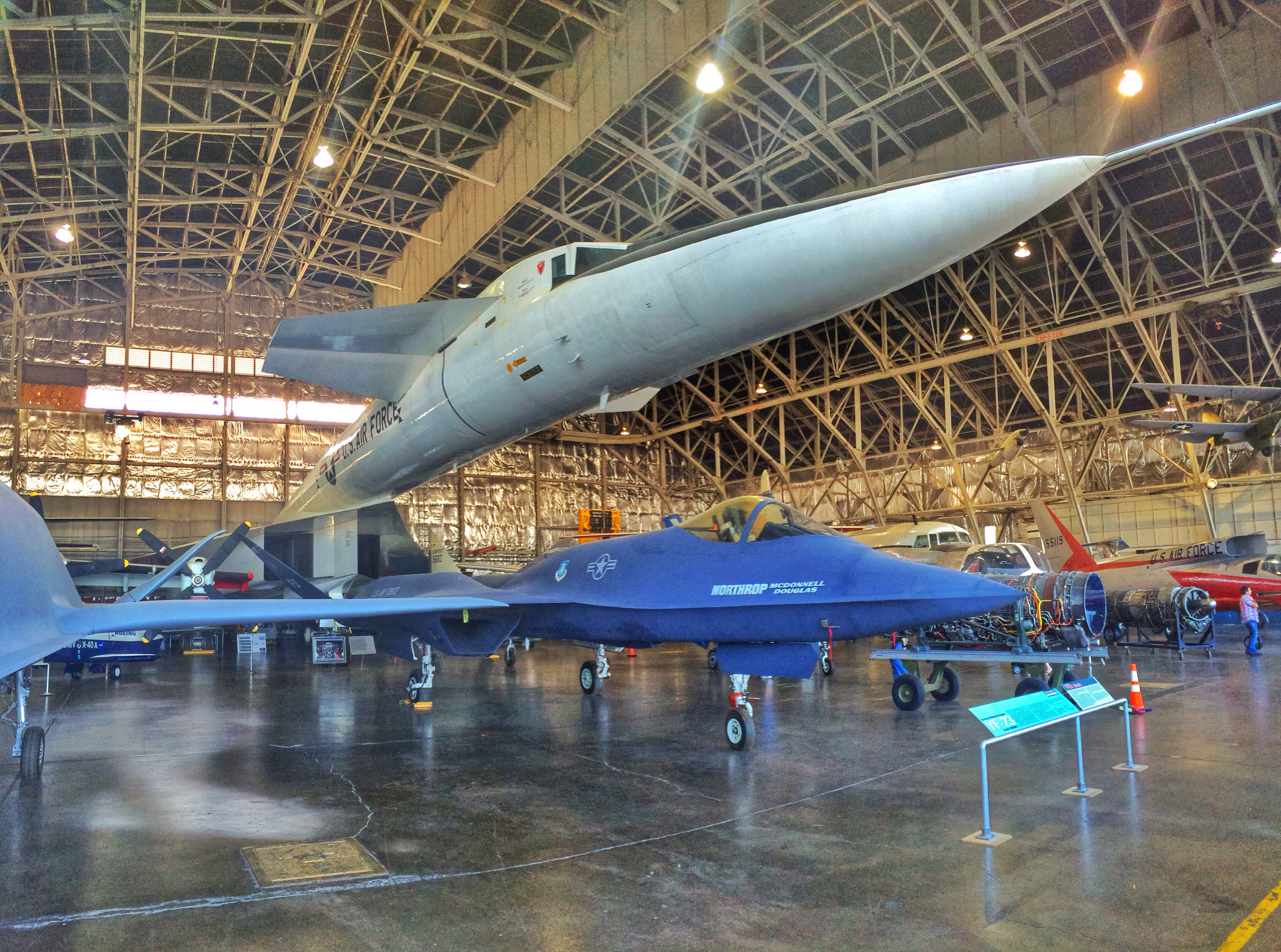
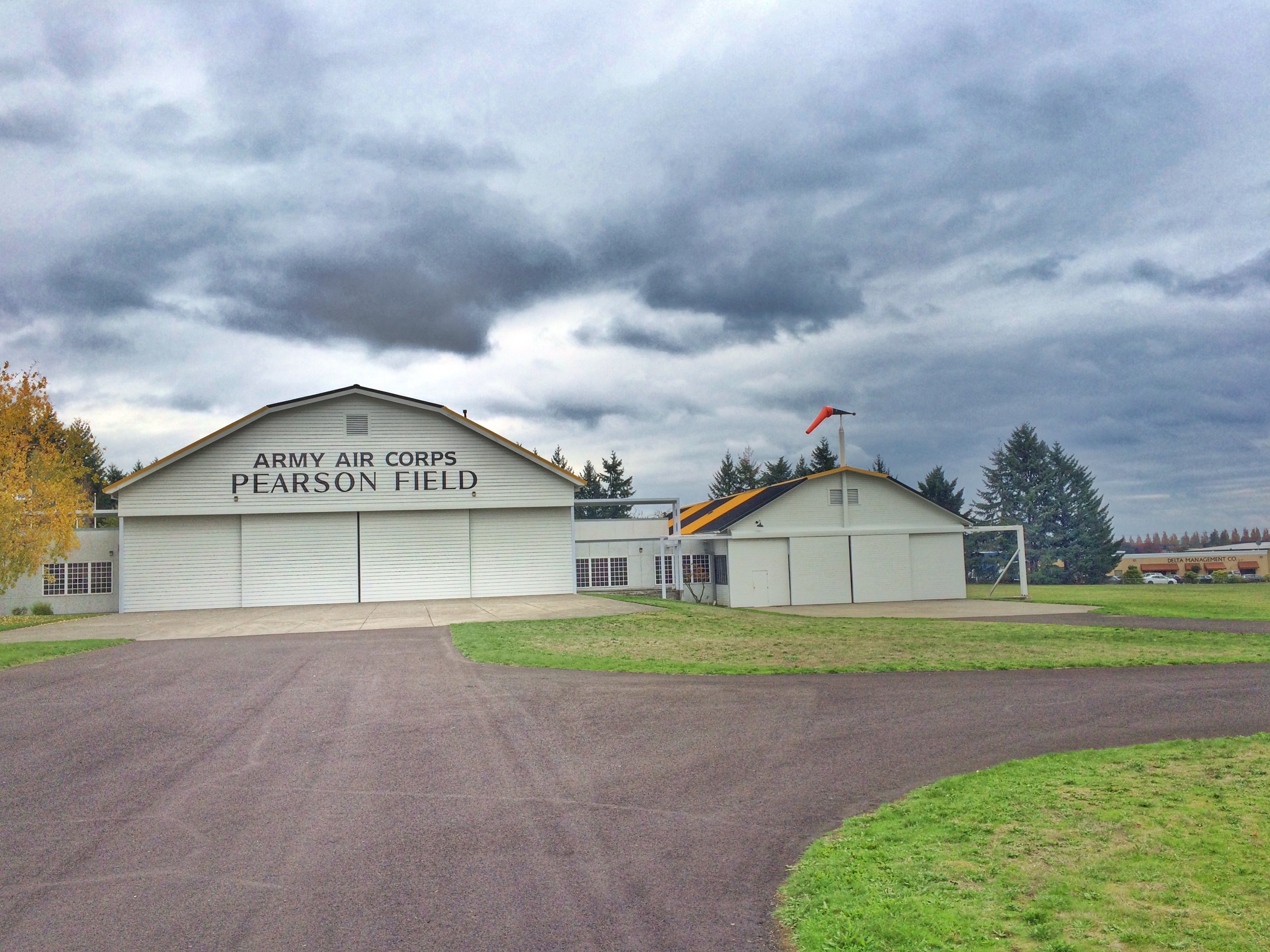
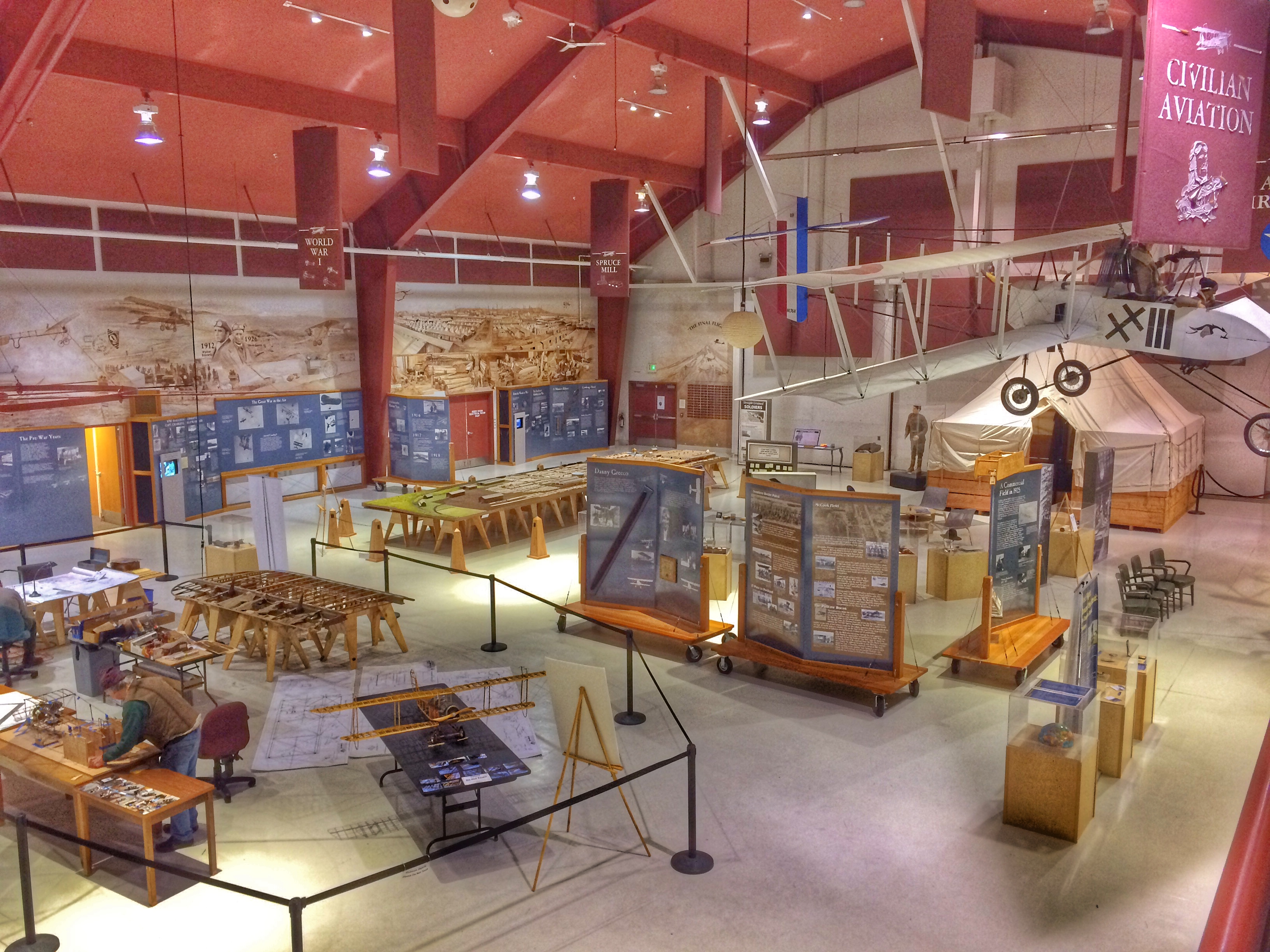
I started my tour at the Pearson Air Museum, an old hangar for what used to be an Army air base — the oldest one still in use. The National Park Service has decided to use the hangar as a museum of early airplanes, but it’s rather sketchy. After having toured the Air Force Museum in Dayton, Ohio, recently, this one was pretty pathetic and I didn’t stay long.
IMG_3039

The two rangers on the left side of the photo were building a scale model of a very early airplane that was flown from the field.
IMG_2989

IMG_3038

Near the hangar is a monument celebrating perhaps the most notable airplane-related event to occur at the field. In 1937, a Soviet Ant-25, carrying three crew members including pilot Valeri Chkalov, landed at the field after completing the first non-stop flight over the North Pole from Moscow.

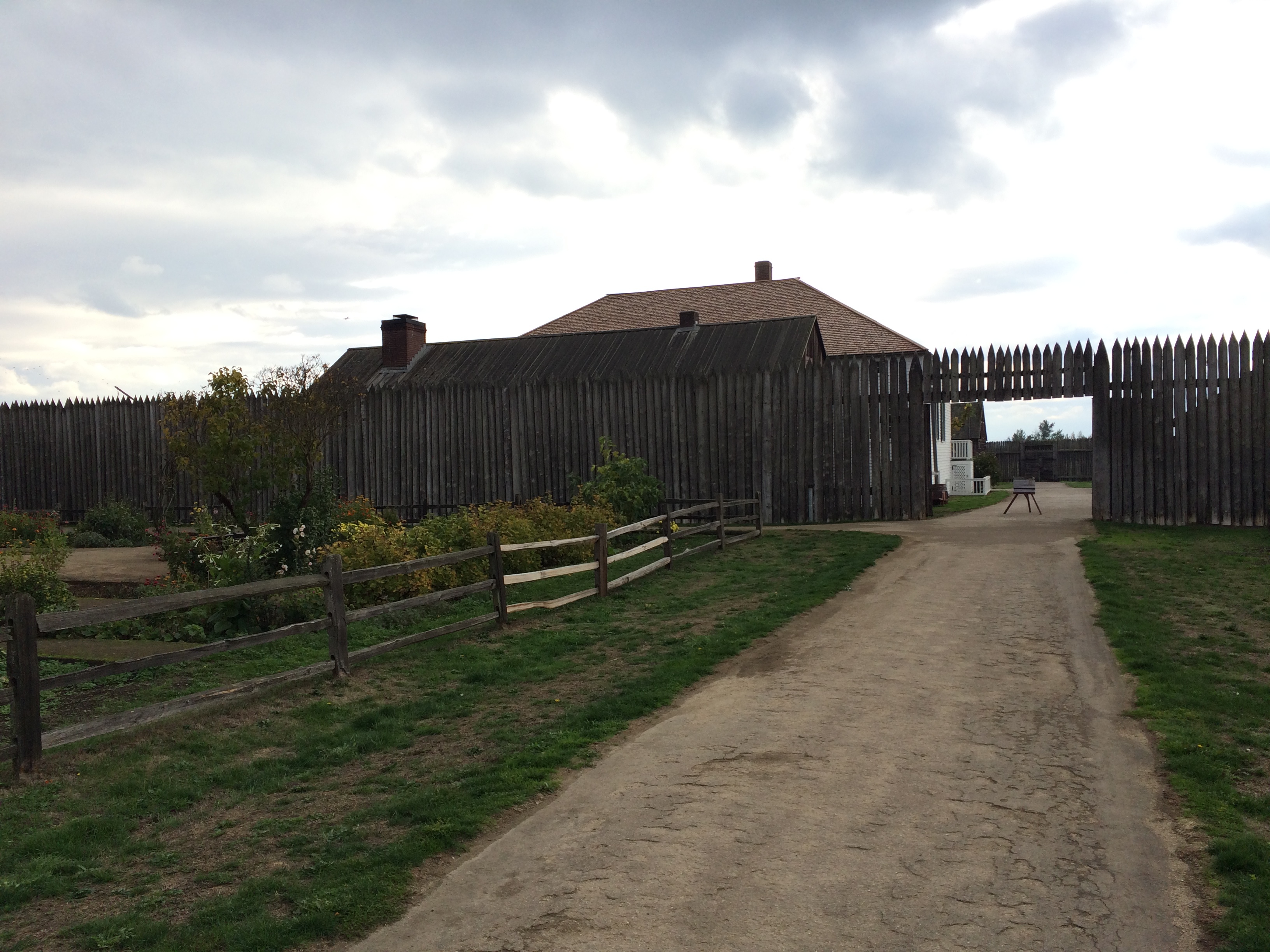
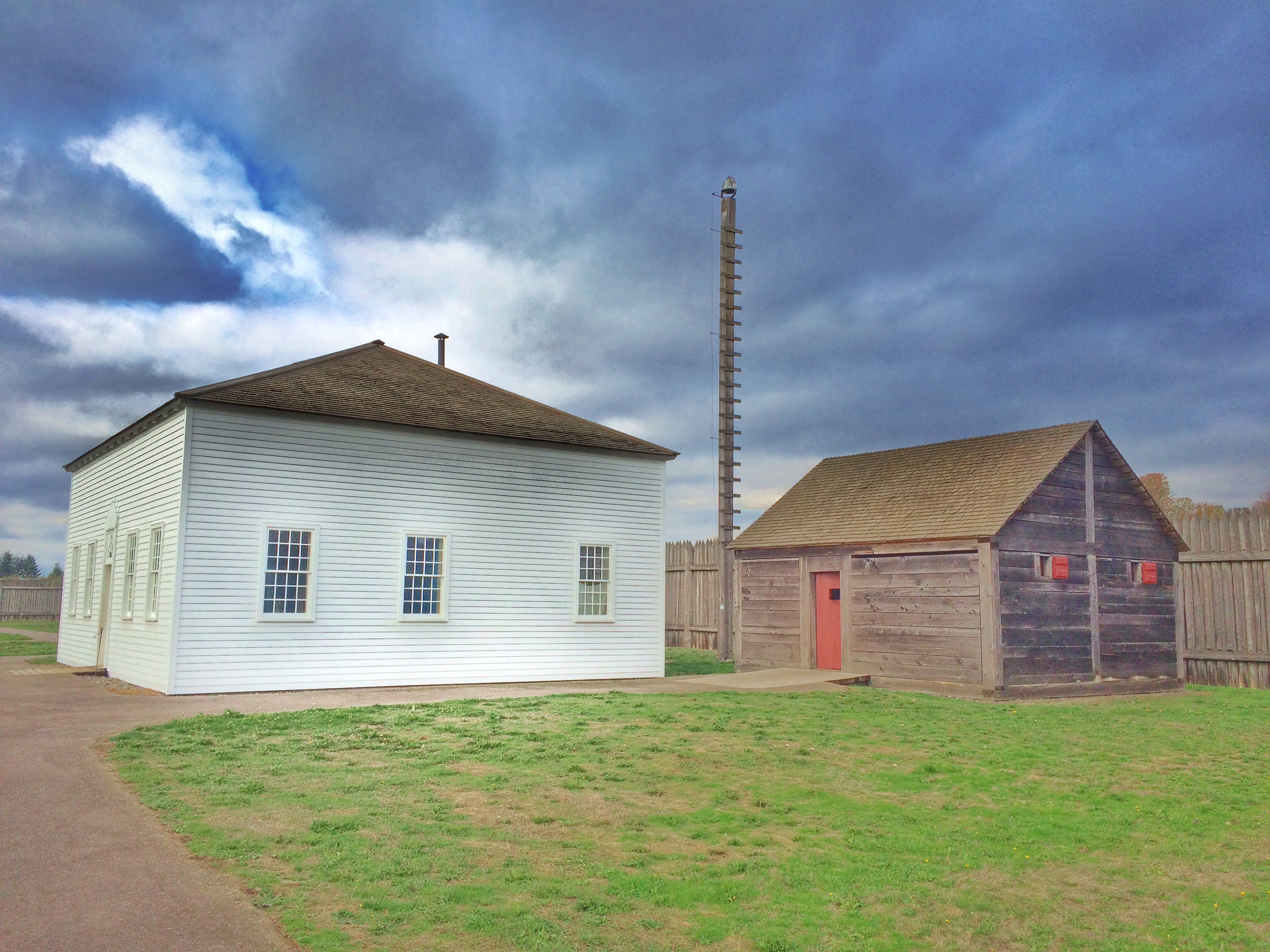
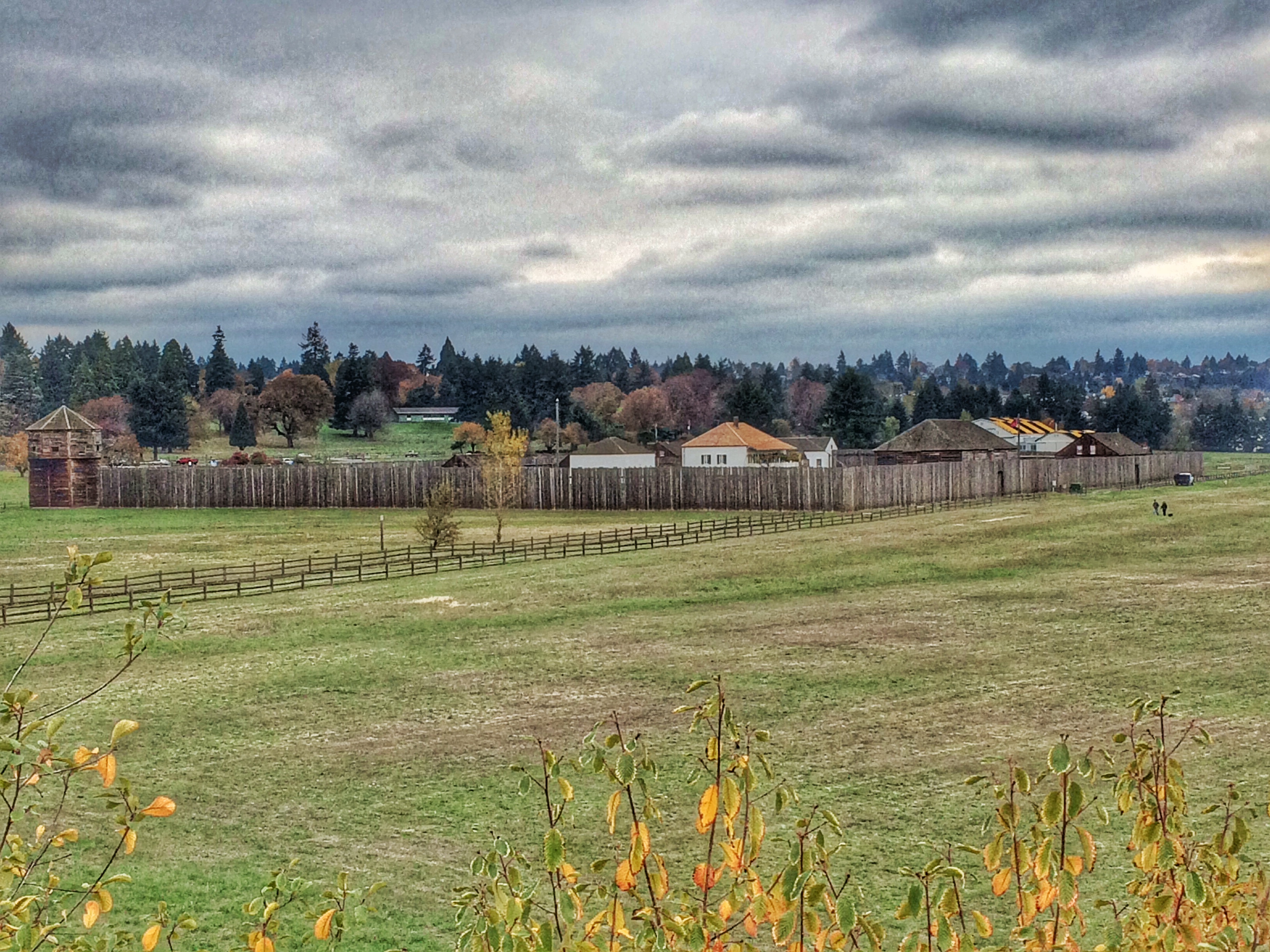
I then headed to the reconstruction of the fort. The original fort was built in 1825 by the Hudson’s Bay Company to establish Britain’s claim to the Oregon territory also claimed by the United States. As American settlers entered the region, Dr. John McLoughlin, the chief factor, sold them supplies and even extended them credit. In 1846, the border between the United States and Canada was established at the 49th parallel. The Hudson’s Bay Company held out at the fort for a time, but moved away in 1860. Within a few years, the fort had disappeared due to fire and decay.  The site was excavated starting in 1947 and reconstruction began in 1966. About half the buildings that were inside the palisade have been rebuilt. A volunteer in the carpentry shop told me that the Hudson’s Bay company kept ridiculously-precise records of everything, so they know, not only where the buildings were and what they looked like, but how many barrels of supplies and containers of soap they had on had at any given time.

The Fort reminded me a lot of Fort William in Ontario, which was also a fur trading post.
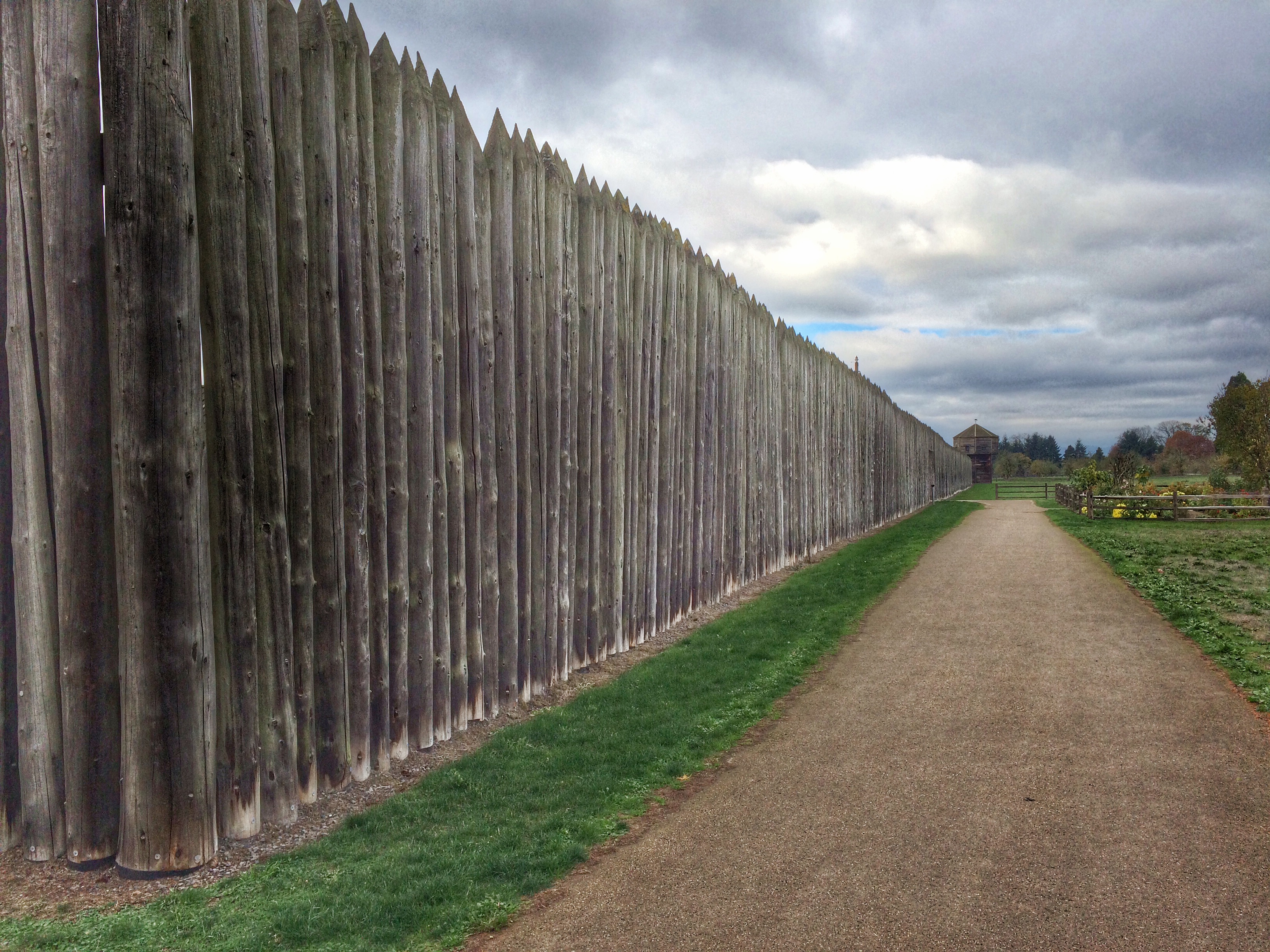
IMG_2991

aIMG_2996

The chief factor’s residence

aIMG_2995

The white building on the far right is the bake house, built into the wall because it provided bread for ships crews and others in addition to fort personnel.  Behind the chief factor’s house in the photos above and below can be seen the kitchen.
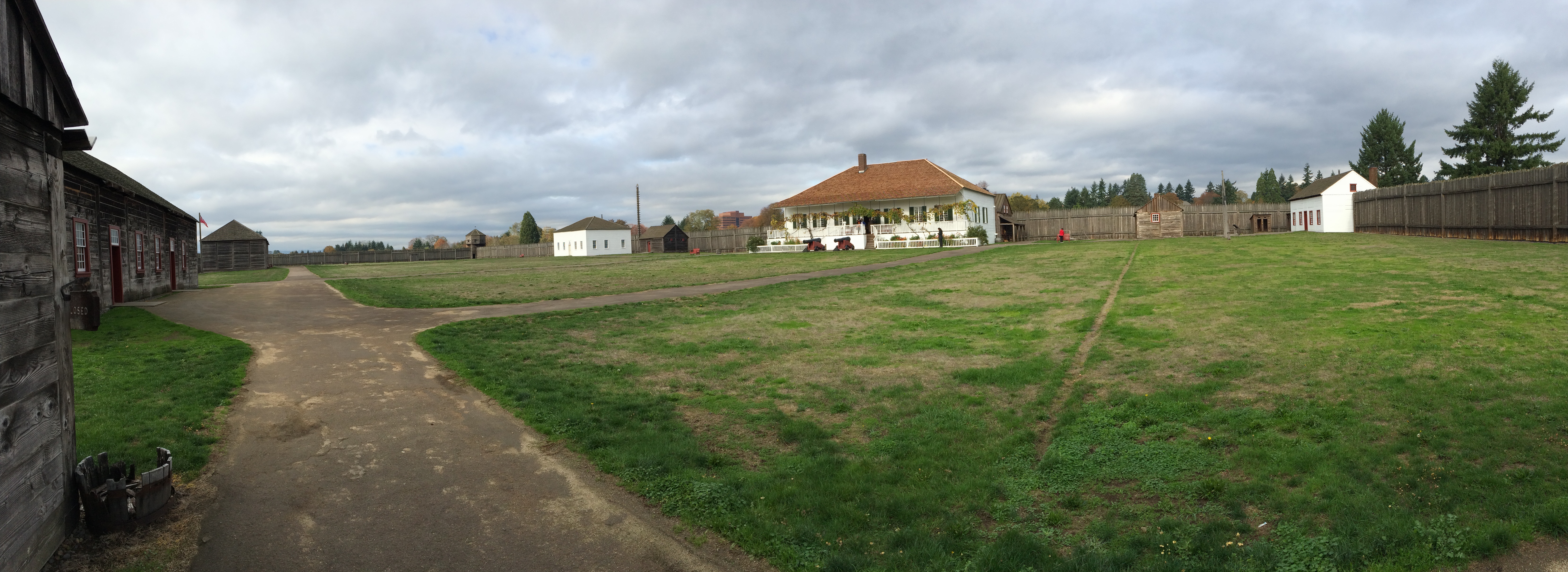
IMG_2993

Inside the kitchen (Just to show how seriously the National Park Service takes its reconstructions)

IMG_2994

The blacksmith shop and Indian trade shop/dispensary
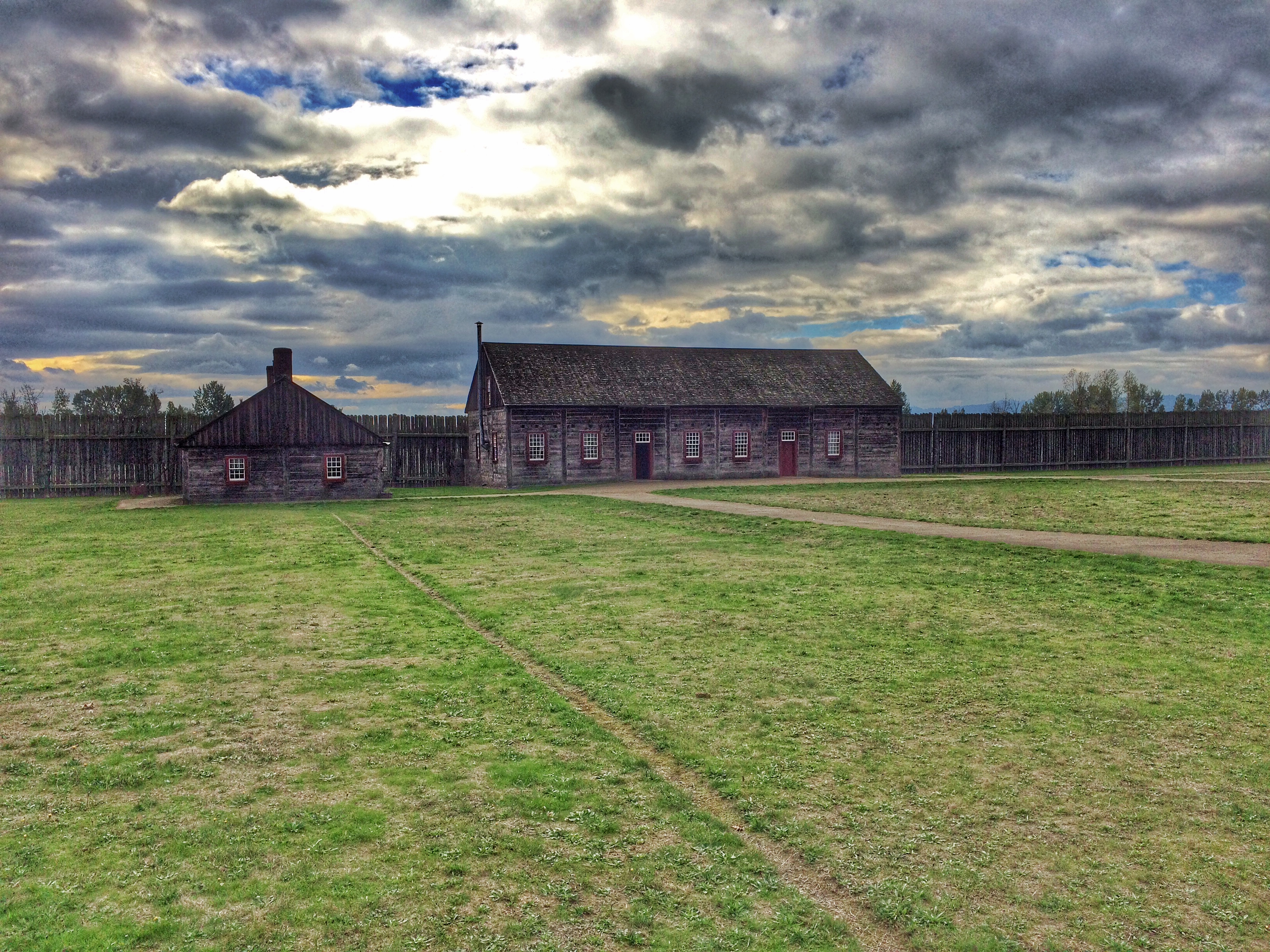
IMG_2992

The building on the right is one of the several fur warehouses that were in the fort.
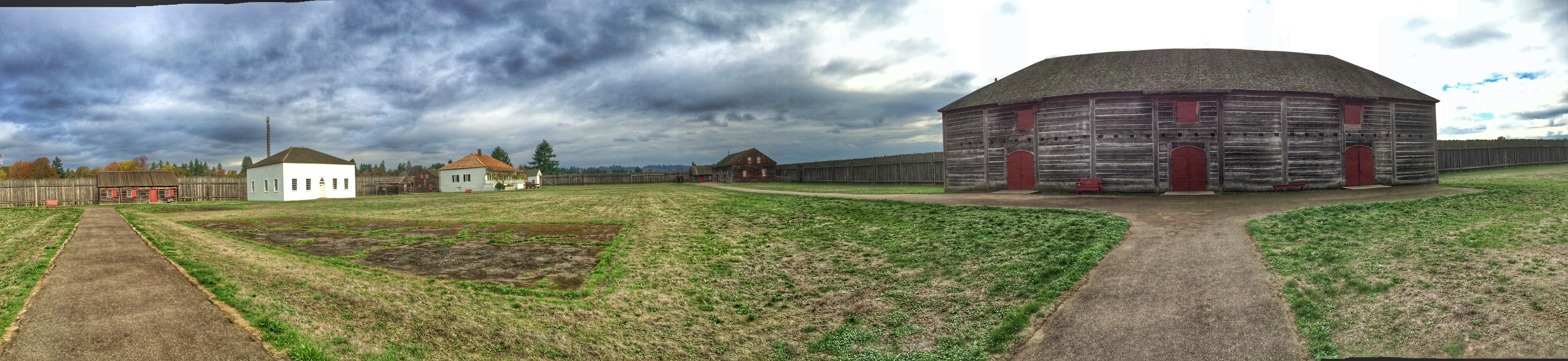
IMG_2998

The bastion, built mostly to fire salutes to ships arriving from other countries. Note the beaver weather vane (with a Starling on top)

IMG_2999

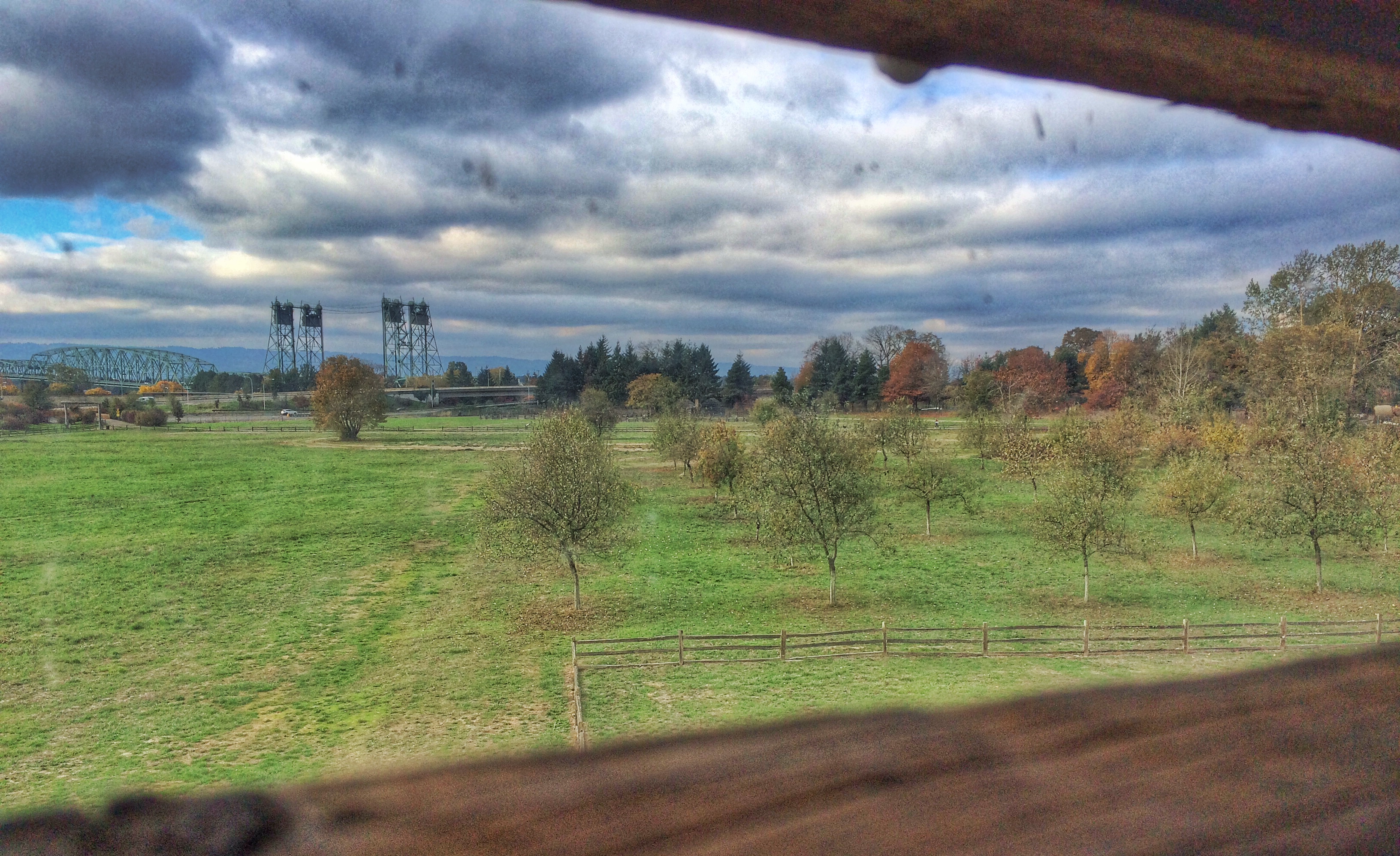
The view from the bastion.

IMG_3003

The carpentry shop on the left

IMG_2997

The carpentry shop and jail

IMG_3004

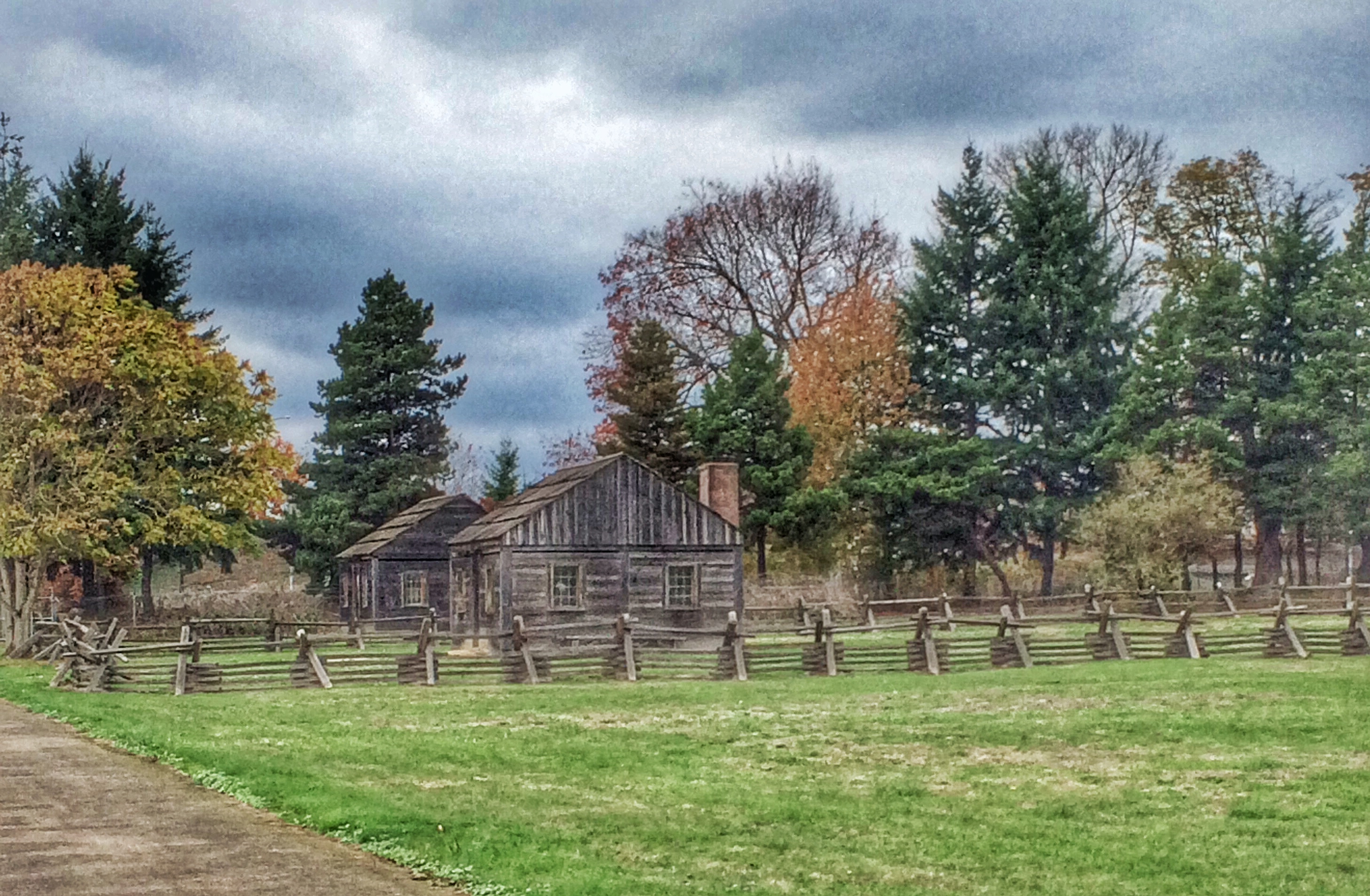
There were never any hostilities to speak of at the fort. Many of the workers and their families lived in small cabins west of the fort in a community called The Village. Two of the houses have been reconstructed.
IMG_3002

IMG_3026

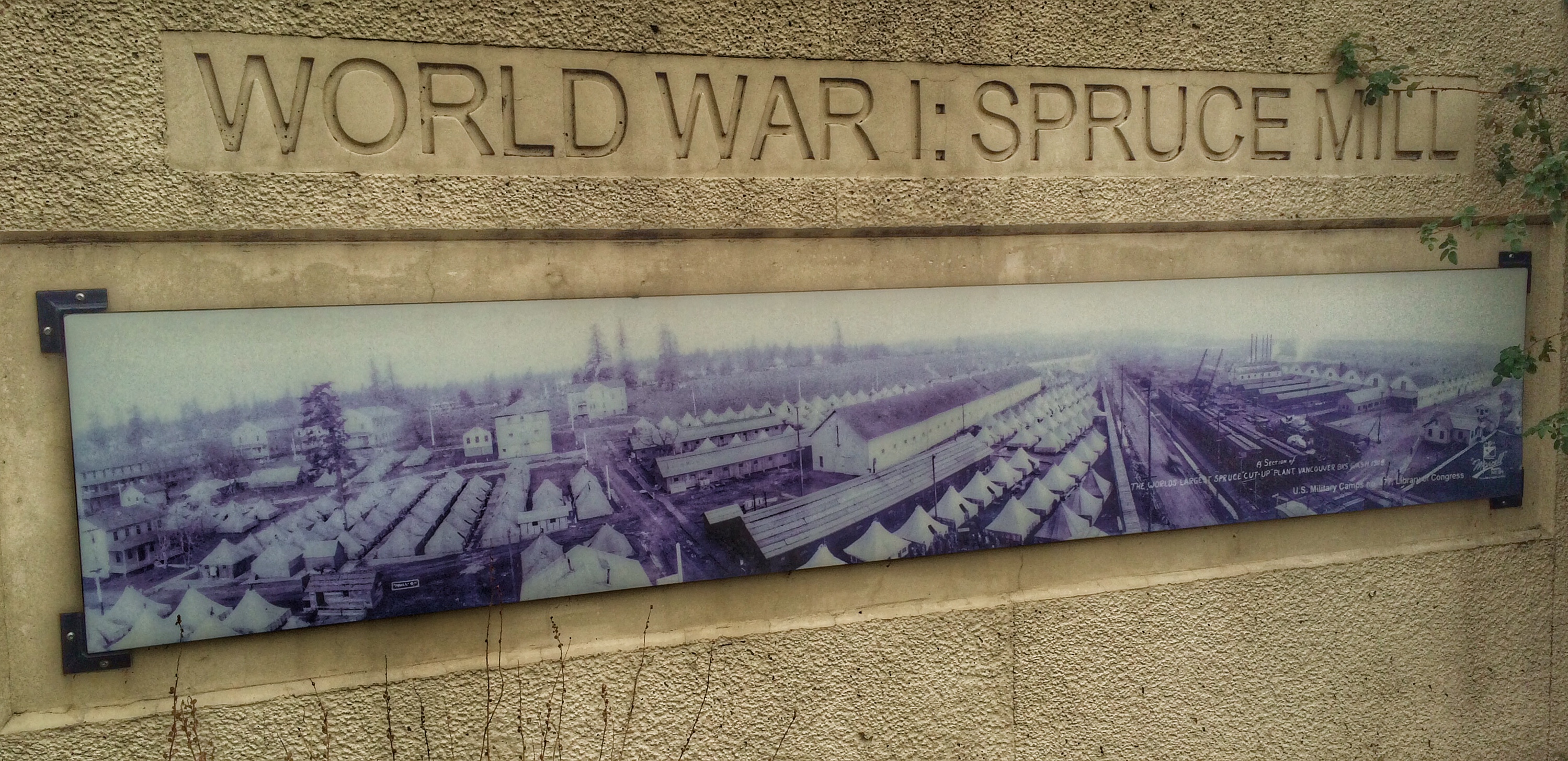
During World War I, the area was occupied by a huge spruce mill which cut Sitka Spruce trees into boards that were shipped overseas to America’s allies to make airplanes. Nothing remains of this operation except photos, one of which I found on a wall near the river.
IMG_3034

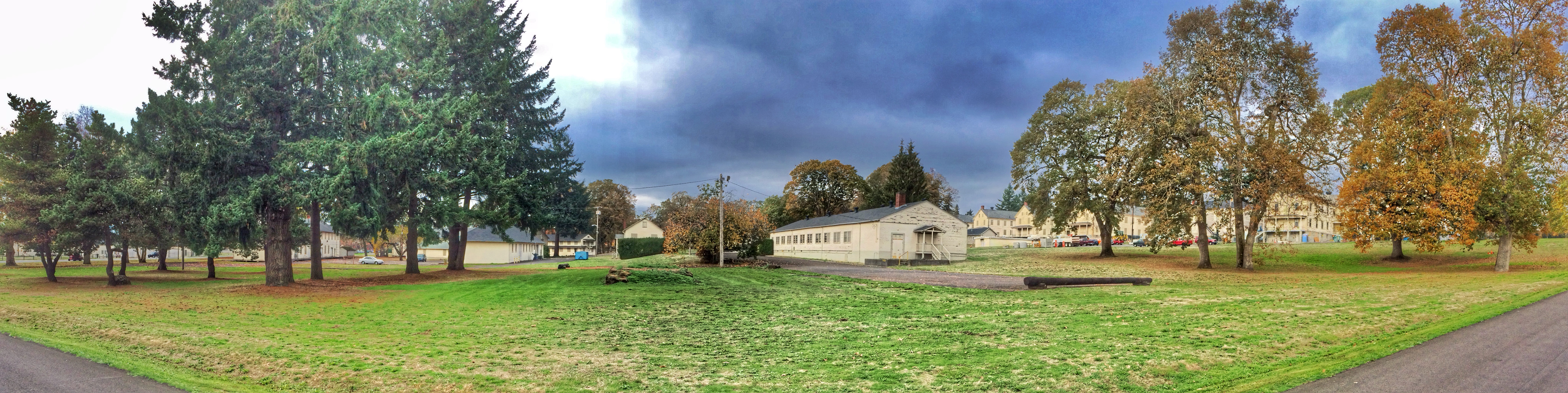
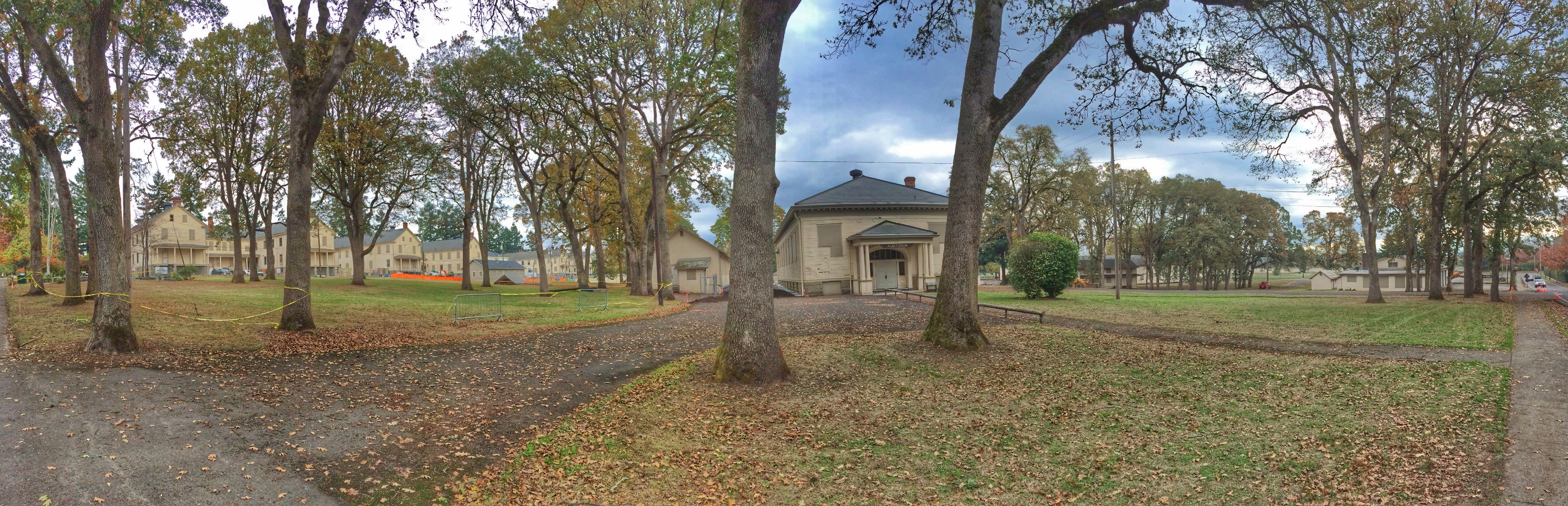
Within the boundaries of the National Park, there are also barracks and other buildings used by the Army during both world wars.
IMG_3005

IMG_3025

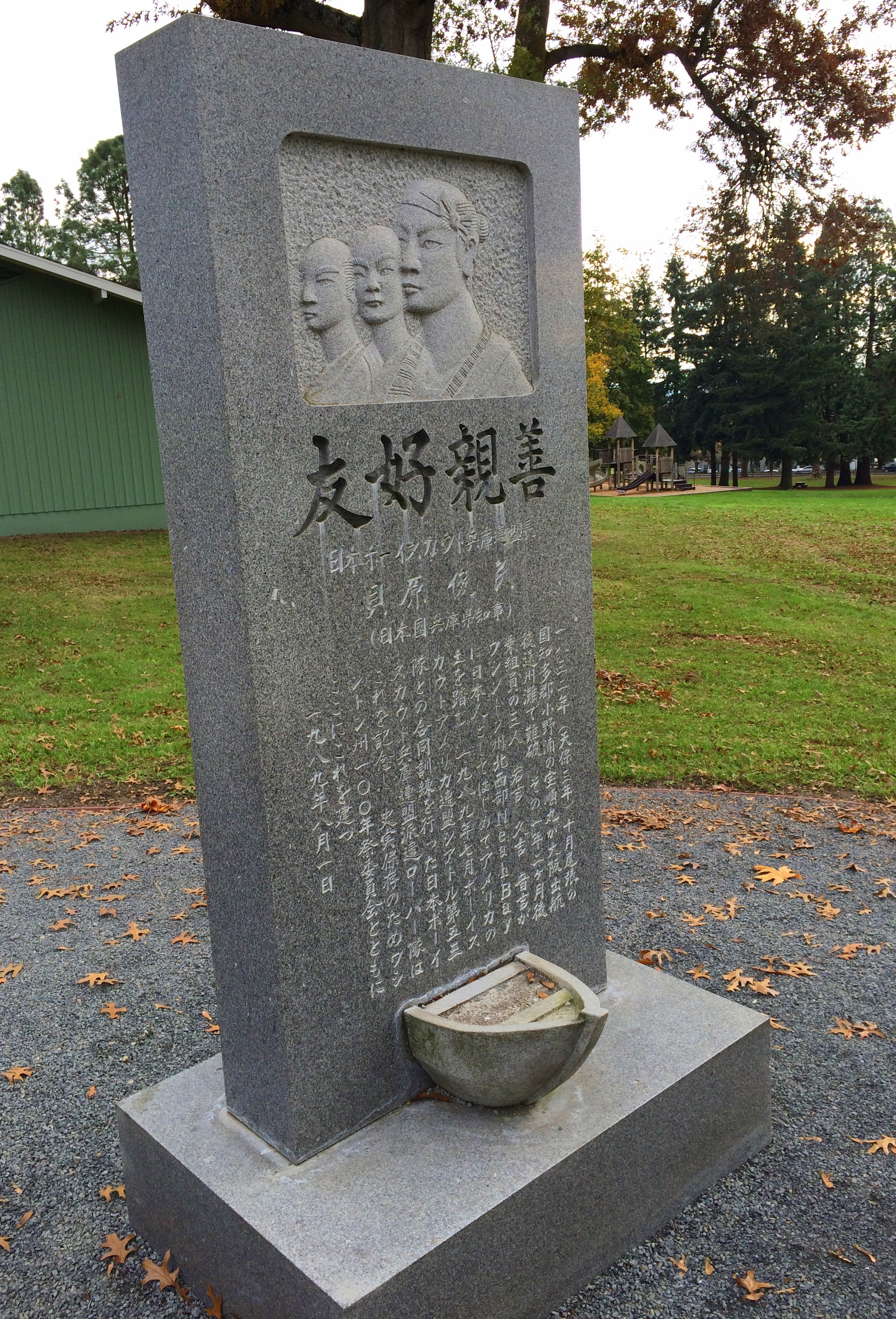
I also stumbled upon this monument, celebrating the first visit by Japanese to United States soil.
aMG_5947

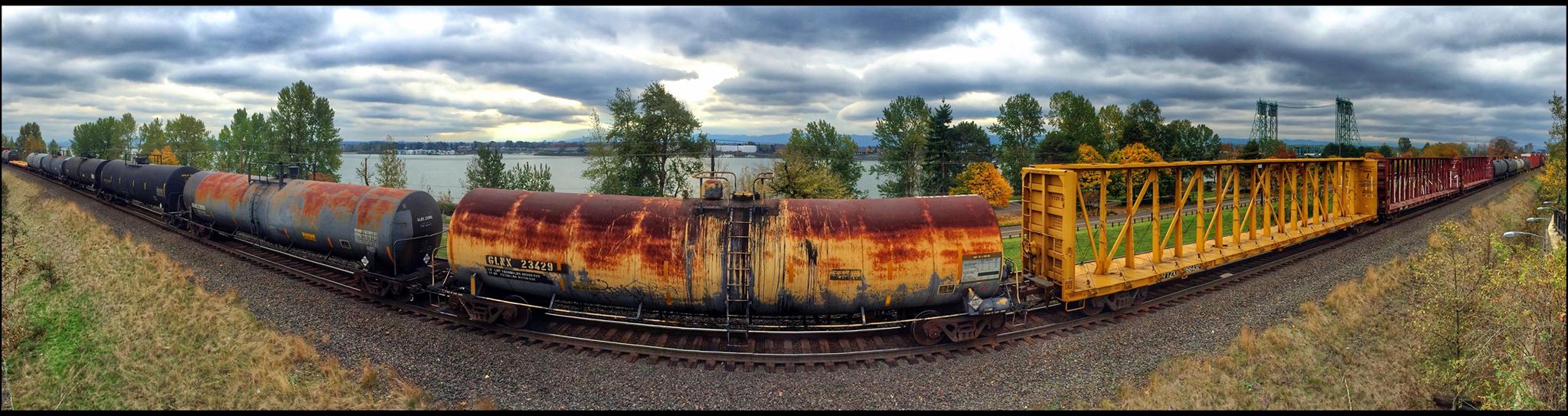
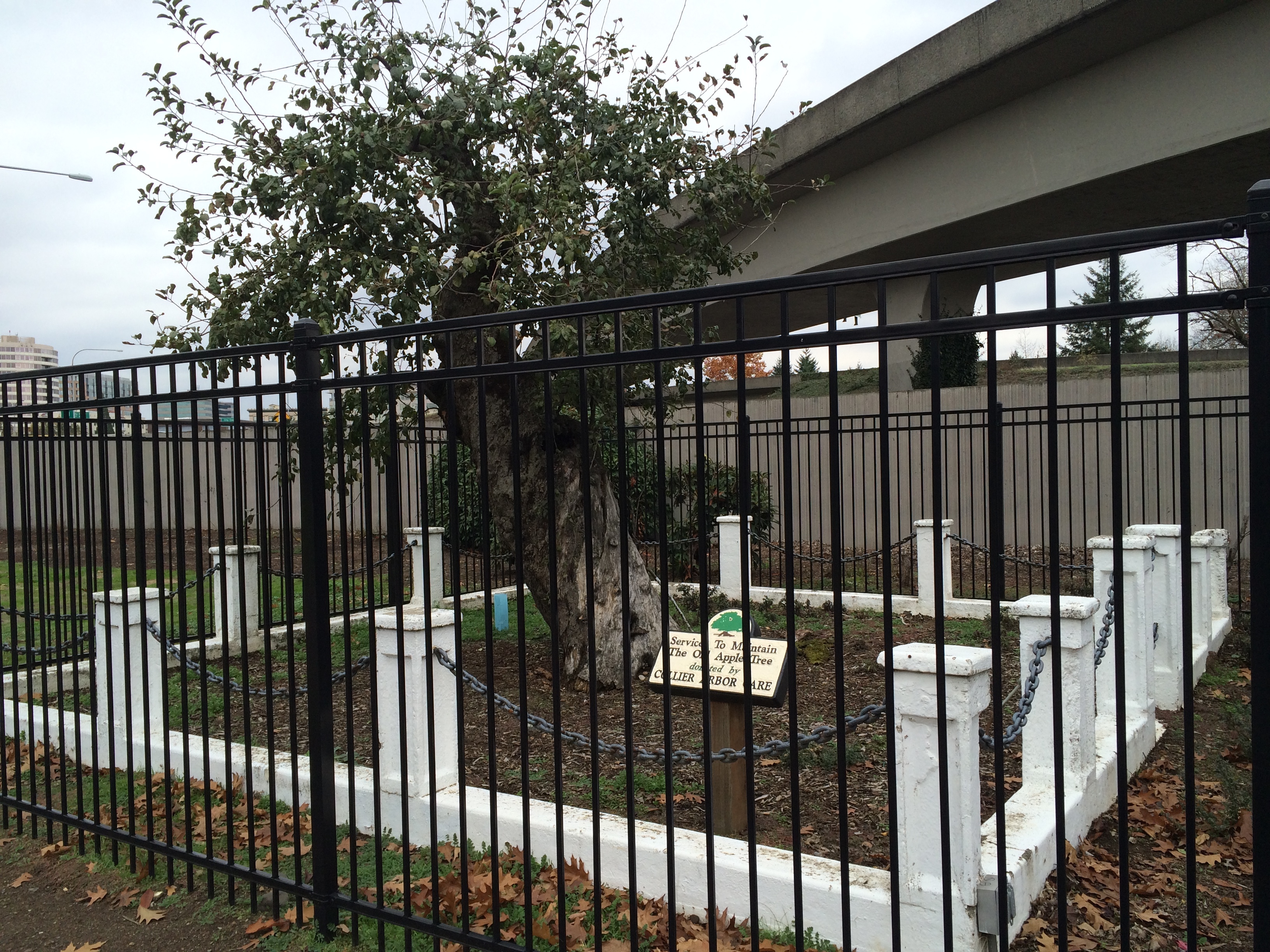
I followed a path across a bridge over a highway and down along the Columbia River. Along the way I saw this old apple tree, the oldest remaining tree from the area’s apple-growing past.
aIMG_3030

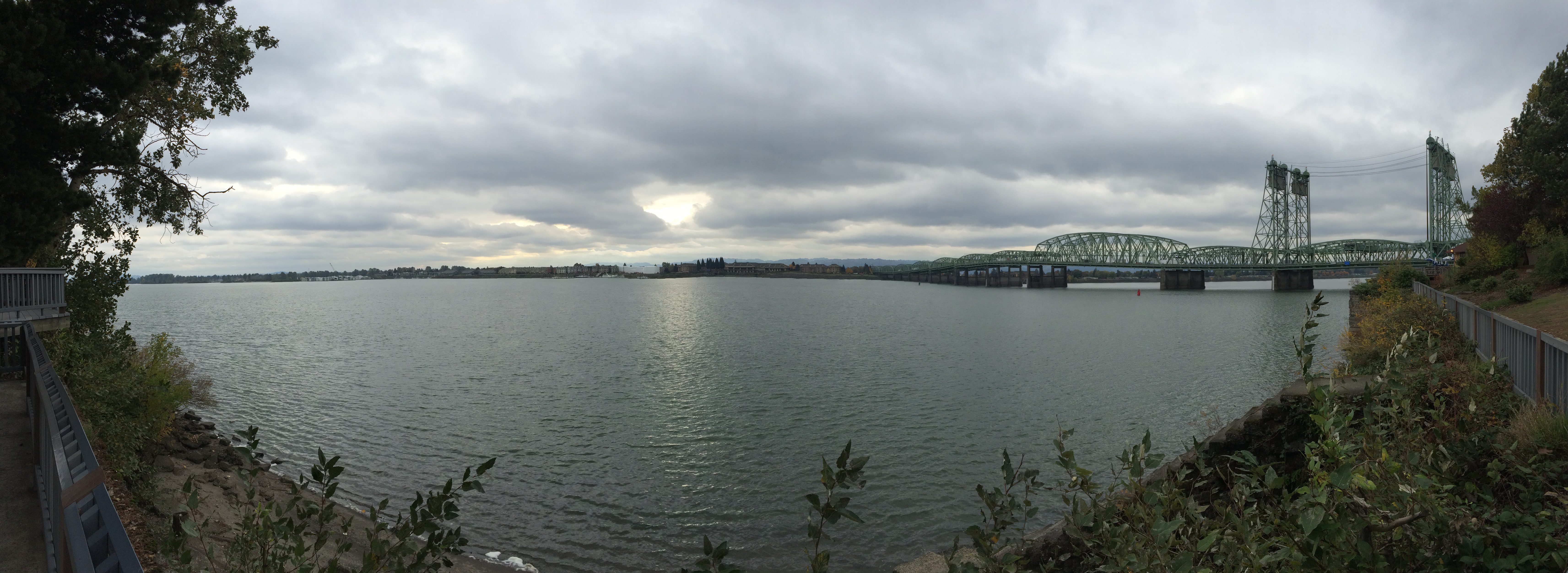
Looking across the Columbia River into Portland, Oregon.
IMG_3031

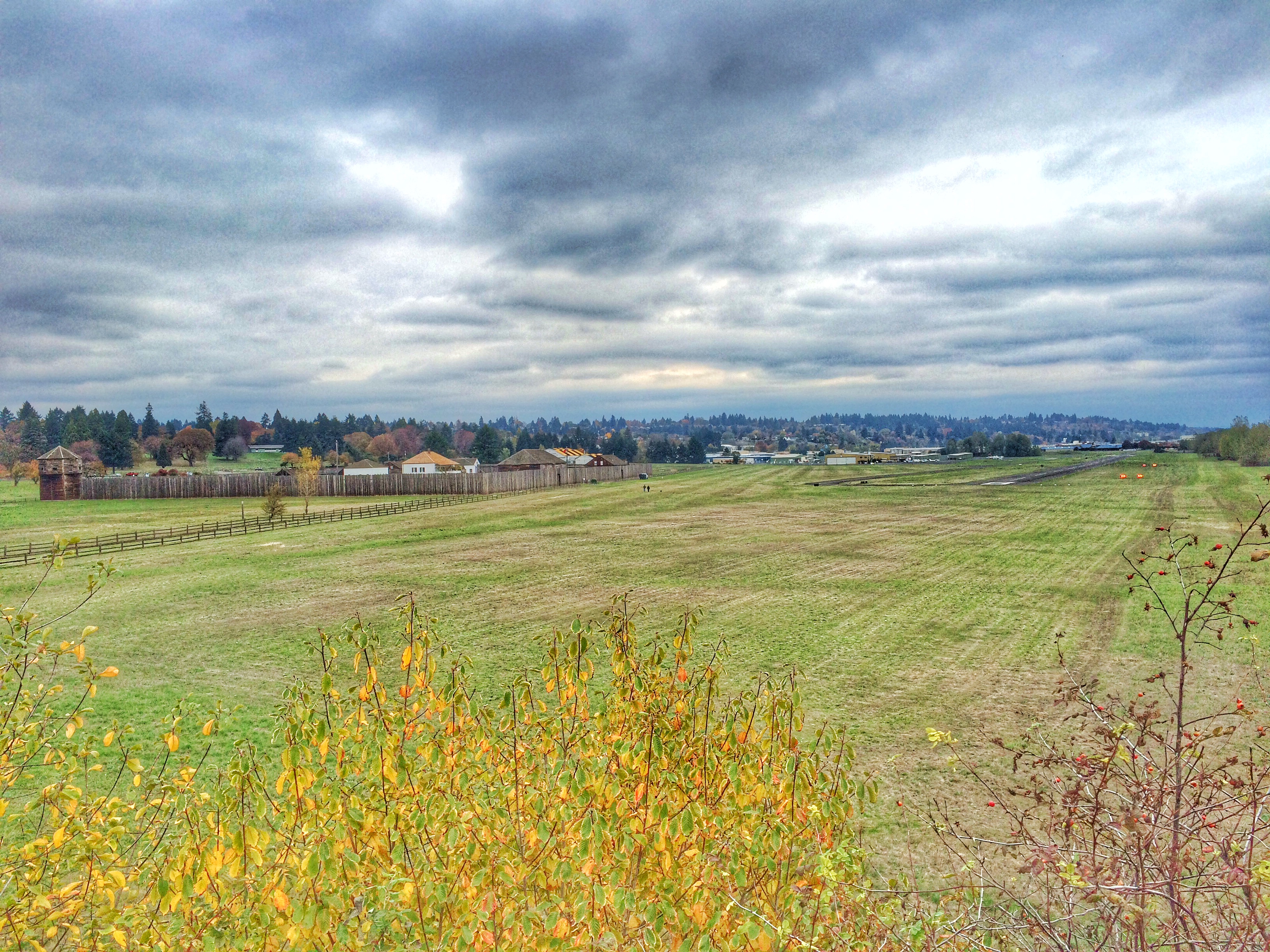
Looking down on the fort and airfield from the bridge over the highway.
IMG_3027

IMG_3028

Two views of the Columbia River from the bridge.

IMG_3029

12194985_10207112260780395_2977946801460566301_o

Posted in Oregon | Comments Off on Fort Vancouver National Historic Site

Bird #472 — Cackling Goose

branta (to burn) hutchinsii (named for Thomas Hutchins, 1790 English attache of the Hudson’s Bay Company)

Thursday, February 5, 2015

Fort Vancouver National Historic Site — Vancouver, Washington

In 2004, it was determined that the four smallest subspecies of the Canada Goose were a separate species, called the Cackling Goose. It is primarily a western species, with only the occasional individual or small group showing up with Canada Geese in the eastern United States. I’d never seen one, in part, because I’d never thought it worth my while to scan each individual in the large flocks of geese I’ve seen. But when I found out I was going to Portland in November, I checked and saw that Cackling Geese were common in the area.

I intended to look for the goose near Salem on Wednesday and then tour Fort Vancouver on Thursday before flying home in the afternoon. But then I found out by boss would be with me and, at the last minute, decided not to take my binoculars or good camera on the trip.

Then on Thursday morning, I made a snap decision to drive about 20 miles north to Ridgefield National Wildlife Refuge and take a stab at seeing the goose with just my eyes and the camera on my phone. The wildlife loop at the refuge is only about three miles long. There were a lot of birds around. During the half hour it took me to make the loop, I saw

  • Northern Shoveler
  • American Coot
  • Red-winged Blackbird
  • Great Blue Heron
  • Northern Pintail
  • Green-winged Teal
  • Mallard
  • American Wigeon
  • Gadwall
  • Northern Harrier
  • Sandhill Crane
  • Red-tailed Hawk

Not a bad list for someone with no binoculars who never got out of the car. I also saw two flocks of geese, one of them quite large. But they were too far off for me to see any details. I figured they were probably Cackling Geese because their calls sounded higher-pitched than the calls of Canada Geese, and I found out later that that’s almost certainly what they were. But I couldn’t be sure, so I didn’t count them.

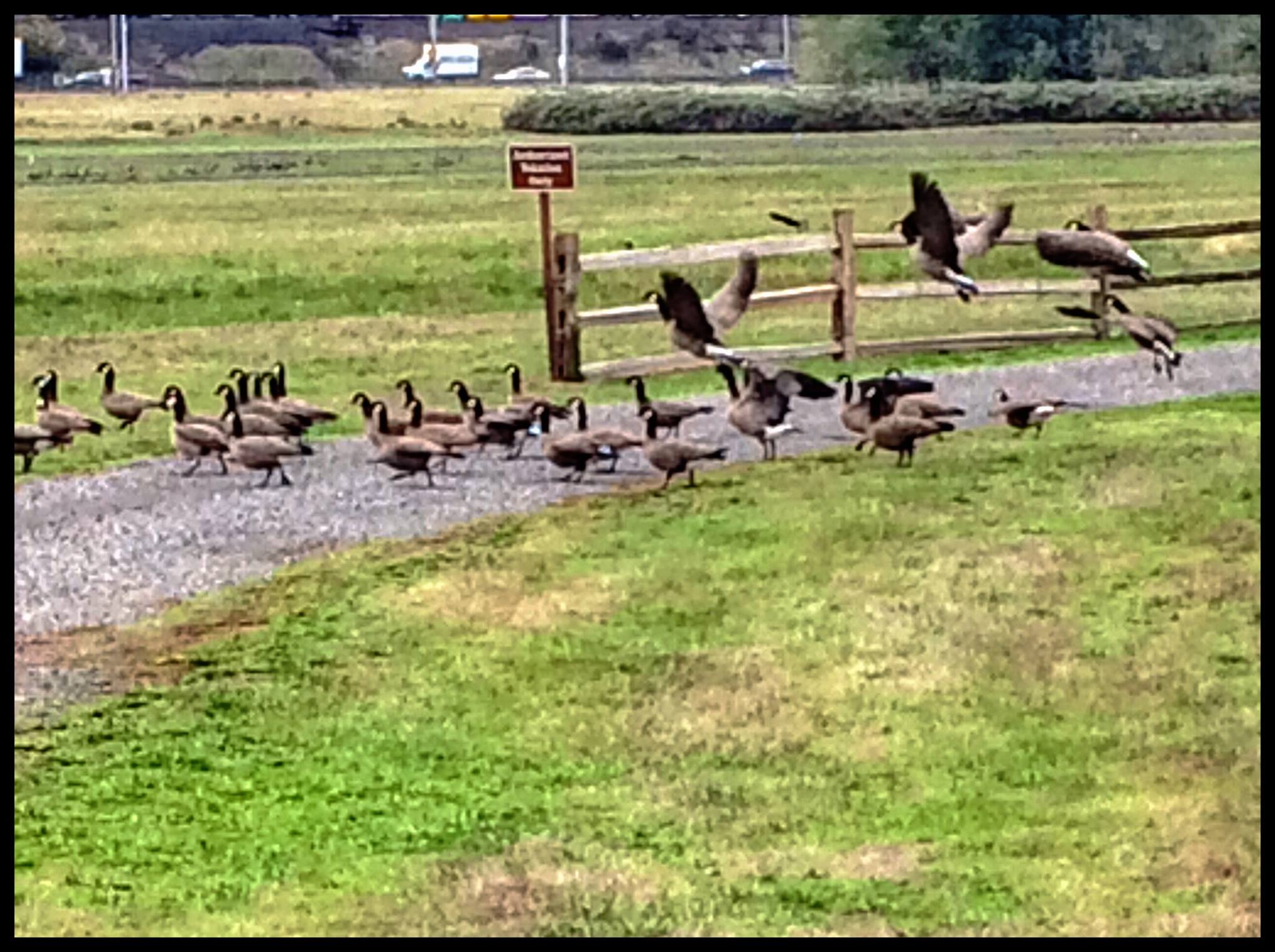
I drove south to Fort Vancouver on the Columbia River just across from the Portland Airport. And there, on the grass along the runway of Pearson Field next to the Pearson Air Museum in the park, was a flock of probably 500 geese.

906077_10207112295101253_1853664049874710901_o

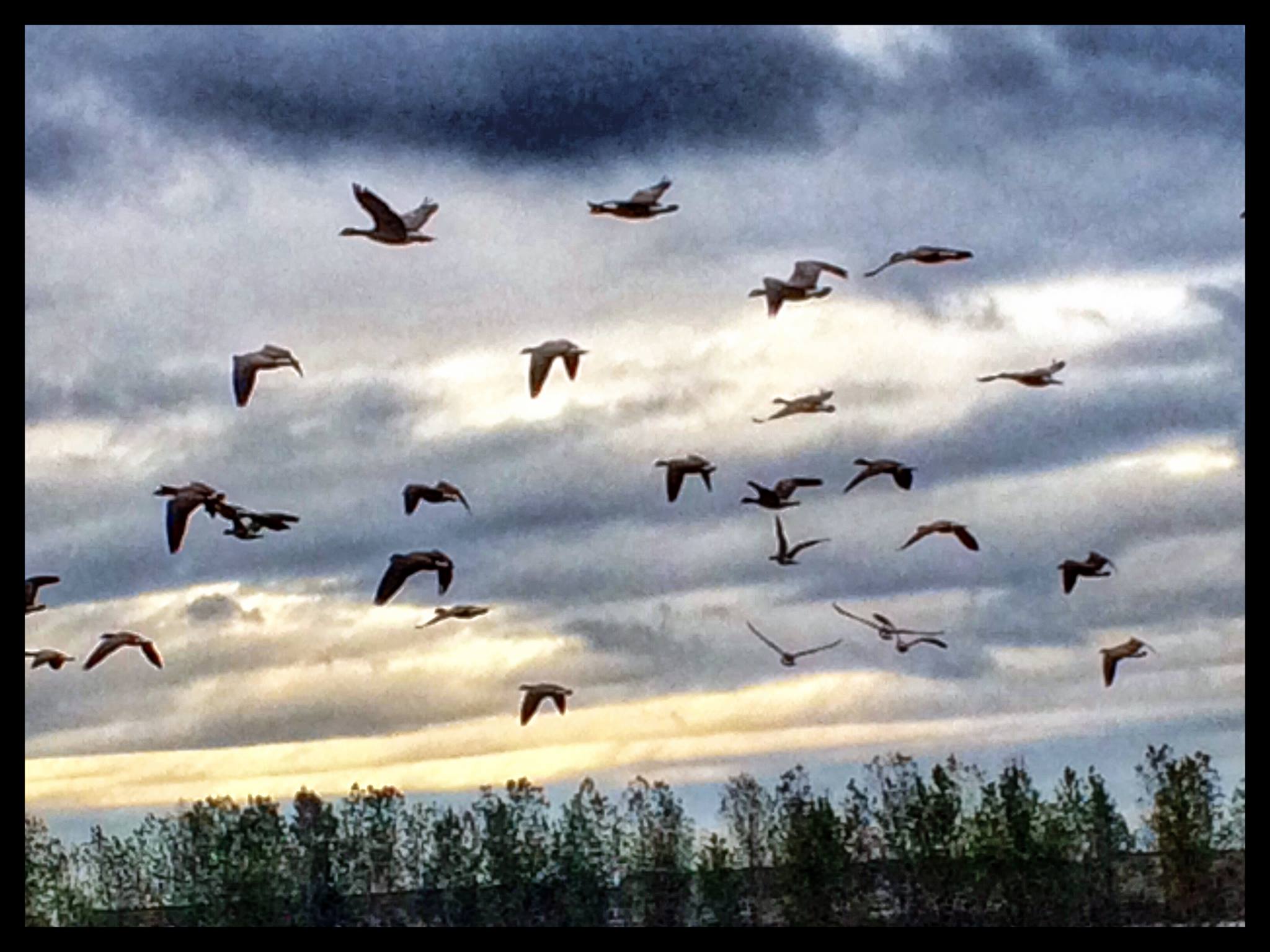
I walked slowly toward them for a better view, but they kept walking, or flying, off before I could get a great photo. They certainly seemed smaller to me, and their heads looked round and the bills stubby. I finally got some fairly good photos with my camera as part of the flock flew past.

12030439_10207112295141254_7561543321371252653_o

IMG_2990

What I could see, along with my impression that the calls were different than those of Canada Geese, convinced me to count them as Cackling Geese. Especially since I was sure I could see a couple of individuals that were quite a bit larger (and, therefore, Canada Geese). But I wanted to be sure.

I walked down to the reconstruction of the old Hudson Bay Company Trading Post and asked the ranger in the cabin by the entrance if he knew about birds. He didn’t, but he called another ranger who did and put him on speaker phone.

I said, “I’m a serious birder out here on business. I didn’t realize I would have time to bird, so I didn’t bring my binoculars. I’m wondering about the flock of geese I saw in the field here. They seem to be very small and I want to know what the chances are that they are Cackling Geese.”

The guy said something like, “They’re Cackling Geese. 98% of the total population winters right here, from Puget Sound down to … (I forget where he said). In all my years of birding here, I think I’ve only seen Canada Geese maybe 10 times.”

I said I thought I’d seen a couple Canadas mixed in with the flock, and he said it was entirely possible, but that the bulk of them were Cackling Geese. I had my bird.

I toured the fort and wandered around the park. Around 2:00 p.m., I headed back to the car. The Cackling Geese were much further off, but the flock was also much larger, with probably 2,000 geese along the airport runway. Here’s just a tiny part of the total flock.

IMG_3036

Posted in Wildlife | Comments Off on Bird #472 — Cackling Goose

Highlights from Recent Reading

An incident of our journey was an amusing illustration of the vicissitudes of Western life. In passing through Fargo, on the Northern Pacific Railroad, an old townsman of ours always came to see us, but invariably after dark. He had taken a claim in the very heart of the town, which was disputed by an energetic widow. If he left his place in the daytime for a few hours, he always returned to find his cabin occupied by the goods and chattels of the widow, and his own effects reposing on the snow outside his door. Then ensued the ejection of the interloper by one of the town authorities, and our friend would re-establish himself. After these raids were repeated a few times, he learned to keep guard during the day and steal out after dark. In vain outsiders advised him to settle the difficulty by asking a clergyman to unite the claims. His eyes turned from the widow to a young girl in his native state, who now presides unmolested over the disputed domicile, while the widow has forsaken war for the peace of another hearthstone.

  • from Boots and Saddles: or, Life in Dakota with General Custer, by Elizabeth B. Custer

Tigers do not know that human beings have no sense of smell, and when a tiger becomes a man-eater it treats human beings exactly as it treats wild animals, that is, it approaches its intended victims up-wind, or lies up in wait for them down-wind.

The significance of this will be apparent when it is realized that, while the sportsman is trying to get a sight of the tiger, the tiger in all probability is trying to stalk the sportsman, or is lying up in wait for him. The contest, owing to the tiger’s height, coloring and ability to move without making a sound would be very unequal were it not for the wind-factor operating in favor of the sportsman.

In all cases where killing is done by stalking or stealth, the victim is approached from behind. This being so, it would be suicidal for the sportsman to enter dense jungle, in which he had every reason to believe a man-eater was lurking, unless he was capable of making full use of the currents of air. For example, assuming that the sportsman has to proceed, owing to the nature of the ground, in the direction from which the wind is blowing, the danger would lie behind him, where he would be last able to deal with it, but by frequently tacking across the wind, he could keep the danger alternately to right and left of him. In print this scheme may not appear very attractive, but in practice it works, and, short of walking backwards, I do not know of a better or safer method of going up-wind through dense cover in which a hungry man-eater is lurking.

  • from Man-Eaters of Kumaon, by Jim Corbett

The little shop round the corner, which for thirty-five years I had not seen, was the same, except that it looked a deal smaller. It wore the same shingles — I was sure of it; for did not I know the roof where we boys,  night after night, hunted for the skin of a black cat, to be taken on a dark night, to make a plaster for a poor lame man? Lowry the tailor lived there when boys were boys. In his day he was fond of the gun. He always carried his powder loose in the tail pocket of his coat. he usually had in his mouth a short dudeen; but in an evil moment he put the dudeen, lighted, in the pocket among the powder. Mr. Lowry was an eccentric man.

  • from Sailing Alone Around the World, by Joshua Slocum

Many of the incidents were ludicrous. When I found myself, for instance, disentangling the sloop’s mast from the branches of a tree after she had drifted three times around a small island, against my will, it seemed more than one’s nerves could bear, and I had to speak about it, so I thought, or die of lockjaw, and I apostrophized the Spray as an impatient farmer might his horse or his ox. “Didn’t you know,” cried I — “didn’t you know that you couldn’t climb a tree?” But the poor old Spray had essayed, and successfully too, nearly everything else in the Strait of Magellan, and my heart softened toward her when I thought of what she had gone through. Moreover, she had discovered an island. On the charts this one that she had sailed around was traced as a point of land. I named it Alan Erric Island, after a worthy literary friend whom I had met in strange by-places, and I put up a sign, “Keep off the grass,” which, as discoverer, was within my rights.

  • from Sailing Alone Around the World, by Joshua Slocum

Water lilies dotted the river while the water was clear enough to see as fish darted about while they crossed from Cary to Fox River Grove, she remembered. [I posted this on facebook with the heading “Why We Need Editors”]

  • from a Northwest Herald special edition on the history of Cary and Fox River Grove

So many transportation routes pass through Rochelle that it has gained the nickname “the Hub City.” With two interstates, two other major highways, and two railroads intersecting there, Rochelle resembled the hub of a wagon wheel. The moniker is so popular that Rochelle High School’s sports teams call themselves “the Hubs.”

There were a number of homesteads scattered throughout Flagg Township when the sparse settlement of Hickory Grove welcomed the arrival of the Chicago & North Western Railway in 1854, connecting it with Chicago. Railroad officials named the stop Lane Station, honoring Rockford developer Dr. Robert P. Lane. Hickory Grove adopted the name and incorporated as the village of Lane in 1861. Not long afterward, Lane endured a series of fires that consumed most of its downtown buildings. Residents became suspicious after the second fire, and when a third one erupted, a suspect named Thomas Burke was arrested and tried for arson. But before a verdict was reached, the locals took the law into their own hands and hanged Burke in the middle of the town. After the incident, disapproving outsiders began to refer to Lane as “Hangtown” or “Hangman’s Town.” Unable to shake the epithet, embarrassed Lane residents sought a new name. They came by it in an unlikely way — when a group of local men in a drug store noticed a bottle of the laxative Rochelle Salts on the shelf, they declared that because the city needed “a good cleaning out,” it should be called Rochelle. The name became official in 1866.

  • from Roadside History of Illinois, by Stan Banash

“I heard you bein’ interviewed on the radio this morning,” Retch said.

“How’d I do?” I said.

“Fine. But what was that about you being an avid hunter, you big liar? Ha!”

“What are you talking about, Retch? You know I’m an avid hunter.”

“Don’t think you can pull that on me. There ain’t no such thing as avids.”

  • from Into the Twilight Endlessly Grousing, by Patrick McManus
Posted in Reading | Comments Off on Highlights from Recent Reading

Thoughts of a Life-long Cubs Fan During the 2015 Postseason

  • My parents took me to one or two Cubs games every year when I was little. Grandstand seating was unreserved back in those days, so we’d sit up under the upper deck. The park was never crowded, so we’d be all by ourselves away from the beer drinkers and smokers. We’d always leave in the seventh inning to beat the crowds. (Dad would always say “We can listen to the rest of the game on the radio.” I didn’t think about it much as a kid, but when anybody pulls that line on my now I say, “Why did we come at all. We could have listened to the whole game on the radio.”) Dad told me I was at the final game Stan Musial played at Wrigley Field.
  • Mom would always have the Cubs game on WGN when I came home from school and during the summer. Listening to, and rooting for, the Cubs was just something you did in my family. I don’t remember a time when the Cubs weren’t part of what was going on in our house.
  • I began following baseball seriously in 1967. Maybe it was because that’s when the Cubs became competitive for the first time in my lifetime. They finished in third place. The Cardinals played the Red Sox in the World Series and I followed the games closely. I can still recall the Cards lineup from that year.
  • My Dad used to listen to the Cardinal night games on KMOX. It shared a place on the dial with WMBI, so we had to wait for Moody to go off the air before we could tune it in. Dad knew I liked to listen, so he’d let me keep my bedroom door open so I could hear from the other room. I spent many, many evenings in my bed listening to Harry Caray and Jack Buck broadcasting Cardinal games. The Cardinals have been “that team” for me as long as I’ve been a Cubs fan. That’s why this past week was so sweet.
  • 1969. The Cubs had winning records in ’67 and ’68, and they had a lot of very good players. My favorite was Glenn Beckert, the second baseman. I came home from school on opening day, put my radio on the front doorstep and played catch by myself while listening. The Phillies scored three runs in the 9th to tie the game and then scored again in the 11th to go ahead. And then Willie Smith hit a two-run homer to win the game in the bottom of the 11th. Cub fans knew right then that that team was going to the World Series. And so it seemed for a while until they collapsed in August and were overtaken by the Mets who went on to win the series.
  • The Mets. They had only been around for eight years and had never had a winning season. In 1962, they lost 120 games. ONE HUNDRED AND TWENTY GAMES. (The worst team in baseball this past season lost 99.) The Mets were losers. They were a joke. They were NOT to be taken seriously. And they not only finished ahead of the Cubs but won the Series. I imagine Cubs fans that year felt a lot like Cardinal fans feel this year. (And I’m sorta rooting for the Mets to beat the Dodgers tonight so the Cubs can beat them and put 1969 to rest.)
  • If there had been any question about my being a Cubs fan at that point, it would have been settled once for all by my friendship with the family of one the players, Phil Regan.
  • Randy Hundley, the Cubs catcher, came to our church once too. He and his family went out to eat with my parents after the service. I had the flu and couldn’t go. Randy and his wife had just had a baby son. My Dad held the kid and, years later, when that son, Todd, played for the Mets and Cubs and came to the plate, my Dad would say, “I held him in my arms.”
  • I never believed that the Wrigleys and the Tribune company, when they owned the Cubs, didn’t want to win. But I very much believed that they didn’t have the baseball knowledge or the incentive to try to make them win. As long as the park was filled, which it generally was, there was no advantage to paying more money to fix it up or to get great players.
  • I’ve remained a fan always. When the Cubs have been interesting and competitive, I’ve watched every game I could. During some of the awful years, and there have been several, I’ve watched many fewer games, but I’ve always known what was happening, checking the box scores, following the stats on individual players. There’s never been a time when I didn’t root for them. My thinking was, in part, that if they ever do win, to have given up would be unbearable.
  • The difference now is that the Ricketts are Cubs fans. They want to win. Since the day they hired Theo Epstein, I’ve been 100% on board with the new plan. I knew there would be some bleak years, but I could see where they were going with it and I enjoyed watching the process. The Cubs organization is now doing the sort of things winning teams do. There is really no connection between the Cubs of the past and the Cubs now. Yes, the history is there and the Ernie and Ryno flags hang from the foul poles, but it’s very much as though the old Cubs disbanded four years ago and a new expansion team called the Cubs started up in Chicago.
  • It’s fun watching the rest of baseball adjust to this fact. Everybody still thinks of the Cubs in their old, historic, lovable loser guise and is having a tough time adjusting to the new reality.
  • Case in point. In game 6 of the 2003 NLCS, the Cubs had a 3-0 lead on the Marlins. There was one out and a man on second. Mark Prior had a 3-2 count on Luis Castillo who hit a foul ball to left field. Moises Alou went over to the wall to attempt the catch when Steve Bartman reached out and deflected the ball. Alou went nuts. Every Cubs fan watching, including myself, immediately experienced a feeling of total dread. Right then, the game, the series and the season were over. But why? It was a foul ball. If it had been hit ten rows further back into the stands, it would have just been a foul ball. If Bartman hadn’t touched it and Alou had tried but failed to make the catch, it would have been just a foul ball. Nobody would have noticed it. And yet we all knew it was the end. The Marlins scored eight runs in the inning and won the game and the series. The Cubs didn’t win another postseason game until the Wild Card Game against the Pirates this year.
  • But look at this year. In the first five postseason games, Addison Russell, Javier Baez, and Chris Bryant have all made errors in key situations that allowed the other team to extend innings. I don’t recall the exact details, but I know a couple of those errors were in late innings of close games and put runners on base and brought good hitters to the plate. They weren’t foul balls, they were costly errors. But see, I don’t even remember the exact details because this is no longer THAT team. I didn’t get feelings of dread. I knew these guys could deal with it. And they did.
  • Some Cardinal fans are ticked off because the Cubs fans are taking shots at them and the Cardinals’ organization. Give me a break. First, ragging on fans of other teams is half the fun of sports. Second, if the Cubs win the World Series every year for the rest of my life and the Cardinals finish dead last every year for the rest of my life, no Cardinal fan will have heard any where near the number of shots at them and their team as I’ve heard as a Cubs fan to this point in my life. (There are always those fans of every team who go over the top and get vulgar and personal, which is never cool.)
  • Cardinal fans boast that they are the best fans in the world. I’m not going to argue. The Cardinals have given their fans a lot of good reasons to be enthusiastic and loyal. It’s not hard to be a good fan of a team like that. Any honest Cubs fan will admit that we’ve been pretty jealous for a long time.
  • Which is why I’m having so much fun this year. I think the Cubs are now that sort of organization.
  • On the other hand, Cardinal fans, don’t be ridiculous. Being a fan of a good team doesn’t make you a better person.
  • For years, I’ve ragged on Cardinal fans who refer to their teams as “we” instead of “them.” I’ve caught myself calling the Cubs “we” a couple of times in recent days. I’ve got to stop doing that.
  • While I’m on the subject of the Cardinals … All year long, I heard fans and pundits saying how the Cardinals are so good and their organization so deep that they managed this great record, winning 100 games, in spite of several good players getting injured. They can’t be beaten. They’re a juggernaut. They have such a good system that they can deal with anything. OK. But then, as soon as the Cubs beat them in the NLDS, it was “The Cardinals aren’t at full strength. Their key players were hurt. The Cubs got lucky.” Sorry. You can’t have it both ways. And anyway, I believe that the Pirates had the best record in baseball after May 1 and the Cubs had the best record in baseball after June 1, so I think the question of who was the better team going into the playoffs is an open one. Not trying to detract from the Cardinals great season. I’m just saying that whichever of the three teams in that division came out of the NLDS, it wouldn’t really be a surprise or an upset.
  • All five teams still alive in the postseason wear blue caps.
  • I believe the baseball on top of the right-field scoreboard is Schwarber’s, but I don’t believe it landed there on the fly. My theory is that it bounced off a building across the street, or perhaps off an airplane, and landed back on the scoreboard.
  • This is fun. What ever happens from this point on, this is fun.

IMG_5753

To follow up after the Cubs were swept by the Mets in the NLCS.

  • I heard an interview with Ron Darling, announcer for TBS and former Mets’ pitcher. He said he watched the Mets all season long and the team in the NLCS was not the same team. They were suddenly playing better in every aspect of their game. He also mentioned how inconsistent, and even random the umpires’ ball and strike counts were, and how this played to the Mets’ advantage.
  • Part of the Cubs strategy all season long was to lay off the borderline pitches, force up the opposing pitcher’s pitch count and make him throw something hittable. If the umpire is calling balls strikes, the batter is forced to swing at pitches he doesn’t like.
  • Still, the Mets played excellent ball in all areas. The Cubs were out-hit, out-pitched, out-managed, and sloppy in the field. Daniel Murphy hit a home run in all four games (and in the final two in the Mets/Dodger NLDS), an exhibition of hitting that set records for postseason play.
  • Having said all that, this series wasn’t as lopsided as it appears at first glance. In the first game, Chris Bryant couldn’t get a ball out of his glove, which allowed a runner to reach first and an inning to continue. On a play at the plate, Montero, the Cubs’ catcher, set up behind the plate. The ball beat the runner, but Montero’s position allowed the runner to slide across the base into the tag. Those two plays go the other way, it’s a tie ballgame.
  • In the second game, Arietta got off to a rough start and allowed the first three batters to score — thanks to a Murphy home run. Eliminate that, and the rest of the game is 1-1. If the Cubs could have pulled those two out, it would have been a lot different going back to Wrigley up two games.
  • If …
  • Some people who jumped on the bandwagon after the Cardinal series lost no time jumping back off and ripping the Cubs. Others see this as a continuation of the curse. I know one guy who had decided to give up on the Cubs after 63 years because of this one series. Whatever …
  • I happen to think that considering this season a failure because the Cubs didn’t win the World Series is a lot like considering a vacation to Hawaii a failure because you didn’t make it all the way to Tahiti.
  • The Cubs owners and management have stated that they intend to make this a winning team over the long run. During the last four seasons, they have taken a series of steps that prove they mean what they say. That means they will continue to improve the product. Their goal is to get to the postseason. What happens then is anybody’s guess.
  • The idea that this current team has four or five years to win it all or it’s just another failure is old-Cubs thinking. That’s the way the Cubs used to be run. But, if the current management does what it says it will do, there is no window. Instead, there will be a constant tweaking and developing of new talent to keep the team competitive always.
  • There are no guarantees. That’s why they play the games. And that’s why it’s fun. The suspense, the challenge, the strategy. This team isn’t only fun during the season. They’ve made it fun to watch them during the off-season too.
  • I like baseball because it’s baseball. I like the Cubs because baseball is more fun when you pick a team to get to know and to follow. When that team is competitive, it’s even better. If the Mets win the World Series, they will have a total of 102 wins — season and postseason combined. But if they lose, the most wins they can get is 101, just the like the Cardinals and Cubs already have. (The Mets lost, with only one win in the World Series, so their win total for the year was 99.) You’re setting a pretty high standard if you consider that a failure for the Cubs and a reason to give up on a team.
Posted in Baseball | Comments Off on Thoughts of a Life-long Cubs Fan During the 2015 Postseason

Back to the National Museum of the U.S. Air Force

When we visited the Air Force Museum in Dayton, Ohio last November, we didn’t have time to visit the hangar where the presidential planes are kept. It isn’t connected to the rest of the museum, but is actually on the Wright-Patterson Air Force Base. We visited again and went to that hangar first. We had to show a government-issued I.D. and take a ten-minute bus ride to get there.

Our timing was good. They are building an additional hangar onto the museum to display these planes. The one on the base was closing three days after our visit so the planes could be transferred.

Sacred Cow

The Douglas VC-54C Skymaster was the first plane built for a President. It was officially called The Flying White House, but was referred to as the Sacred Cow. Franklin Roosevelt used it to get to Yalta in 1945. Truman also used it extensively, and it was on board this plane that he signed the legislation that created the Air Force.

For some reason, I didn’t get a close-up of this plane from the outside. It’s the silver one in the left background of this pan.

IMG_2924

We were allowed on board. There was a narrow walkway between panels of Plexiglas to keep us away from the furniture, which made photography almost impossible.

IMG_2925

Boeing VC-137C SAM Two-Six-Thousand

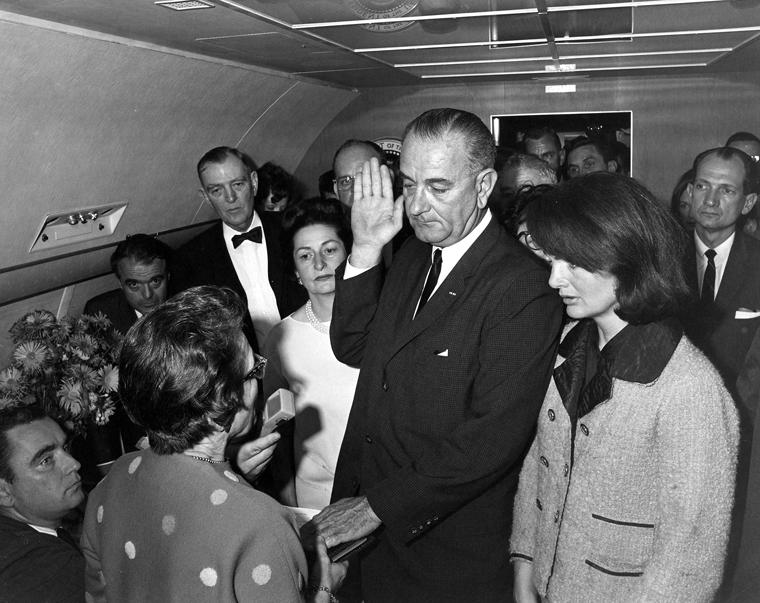
This plane was used for 36 years, beginning in 1962. It flew eight sitting presidents, beginning with Kennedy.

IMG_2926

It was on this plane that Lyndon Johnson took the oath of office after Kennedy’s assassination.

ST-1A-1-63

That same area looks like this now.

IMG_2917

It also flew Nixon to China and Nixon, Ford and Carter to the funeral of Anwar Sadat. Queen Elizabeth flew on it in 1983.

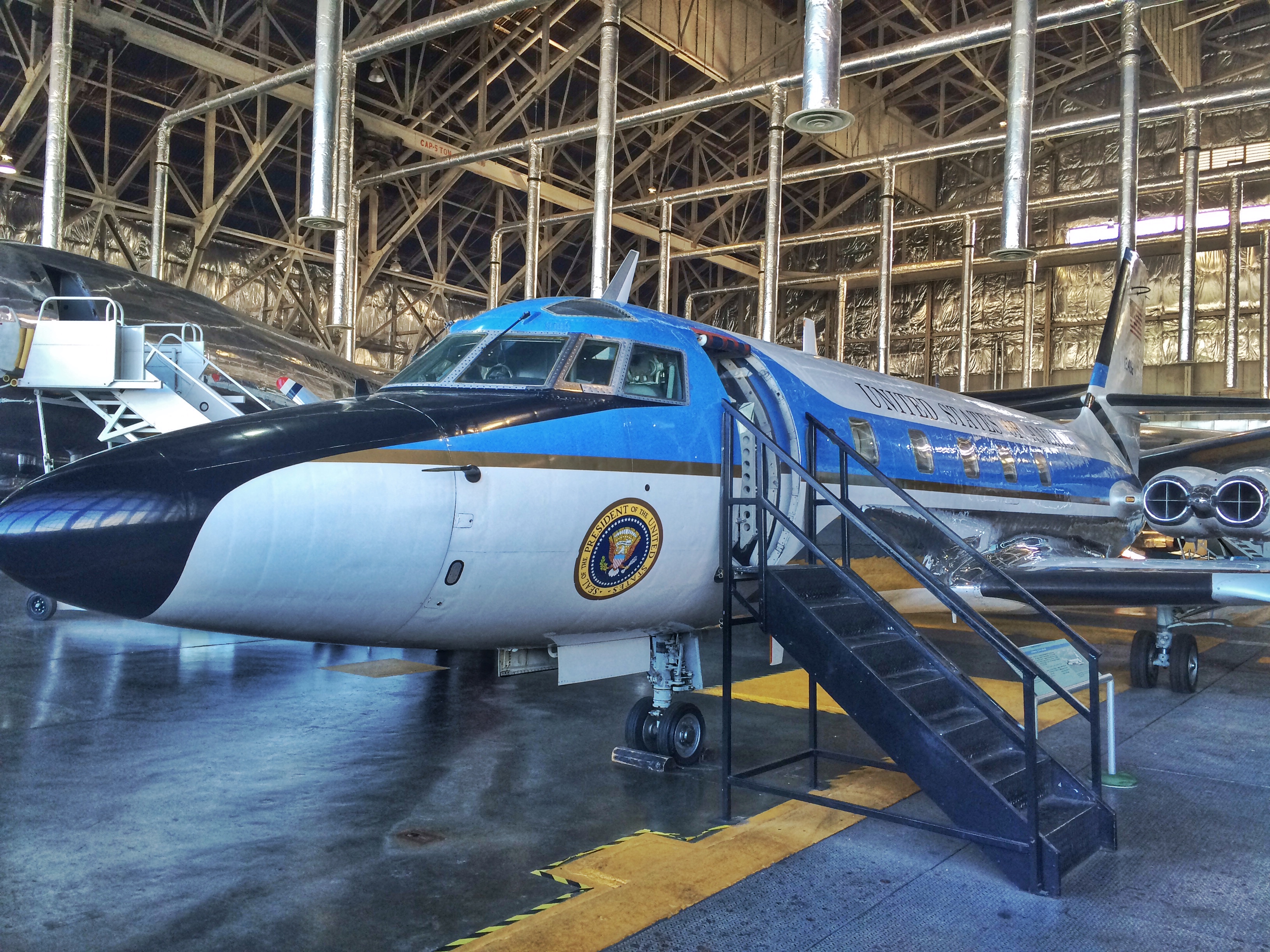
Lockheed VC-140B JetStars

IMG_2932

This plane was called “Air Force One” when Presidents Johnson, Nixon, Ford, Carter and Reagan, although, due to its size, Johnson referred to it as “Air Force One Half.”

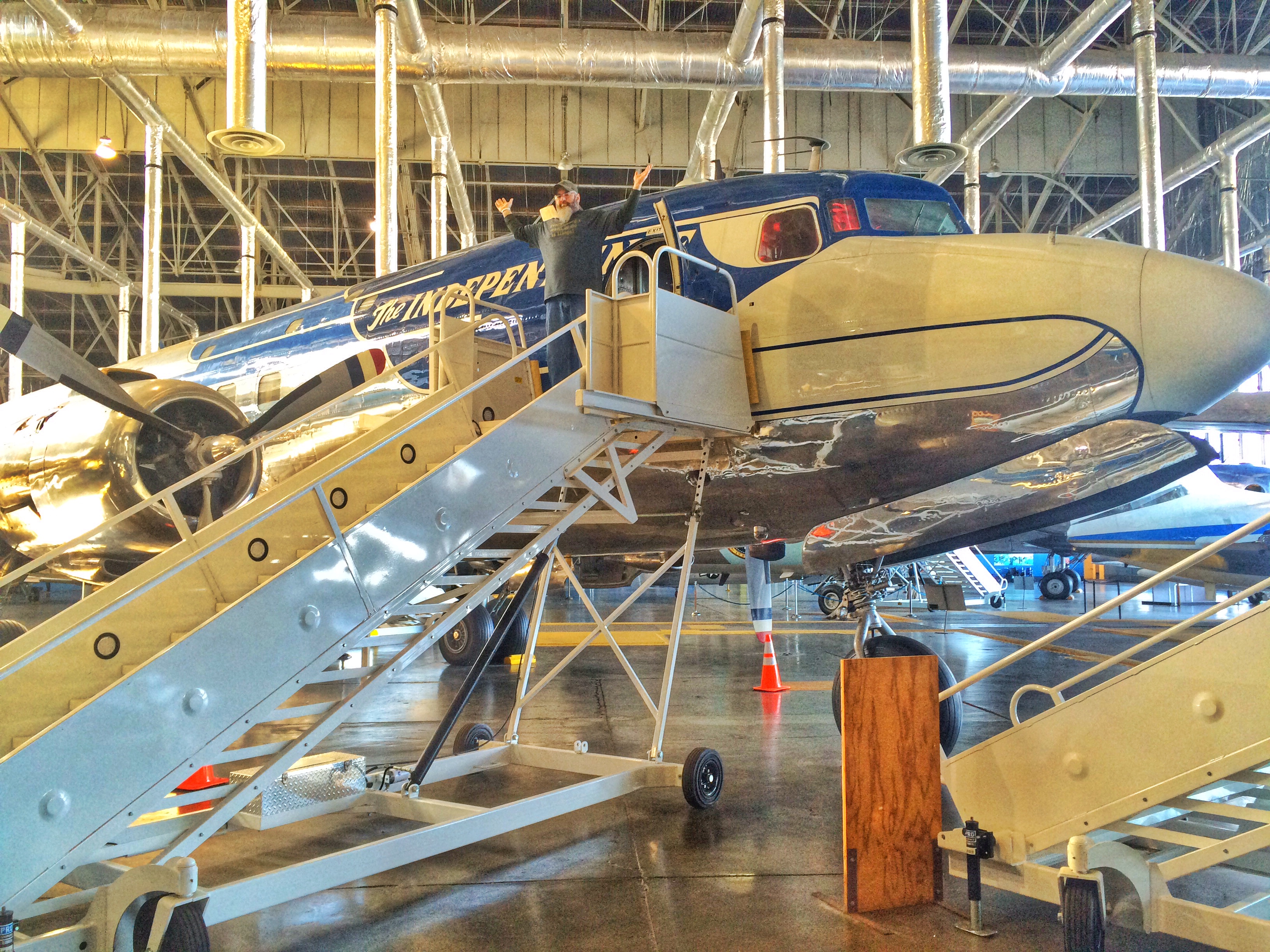
Douglas VC-118 The Independence

IMG_2920

IMG_2916

Used by Truman from 1947 to 1953, including his historic flight to Wake Island to discuss the Korean War with MacArthur.

IMG_2922

Lockheed VC-121E Columbine III

Didn’t get a good picture of this one either. I took the pan at the top of the post from the stairs outside the cockpit, and some of the plane can be seen at the far left.

It served as Eisenhower’s official plane for most of his years in office.

IMG_2918

In the same building was the Research and Development Gallery. We were only given 50 minutes to view both hangars and by the time I got to this one, I had to hurry. I was also less focused on these because my interest is in planes with direct ties to history.

McDonnell XF-85 Goblin

This plane was designed to be a “parasite” which was stored in the bomb bay of B36 Bombers. If enemy planes were sighted, the parasite would be released and then later return to hook on to the larger plane. It had no landing gear, but it did have skids for emergency landings. It was tested, but never flew from a B36 or saw any action.

IMG_2928

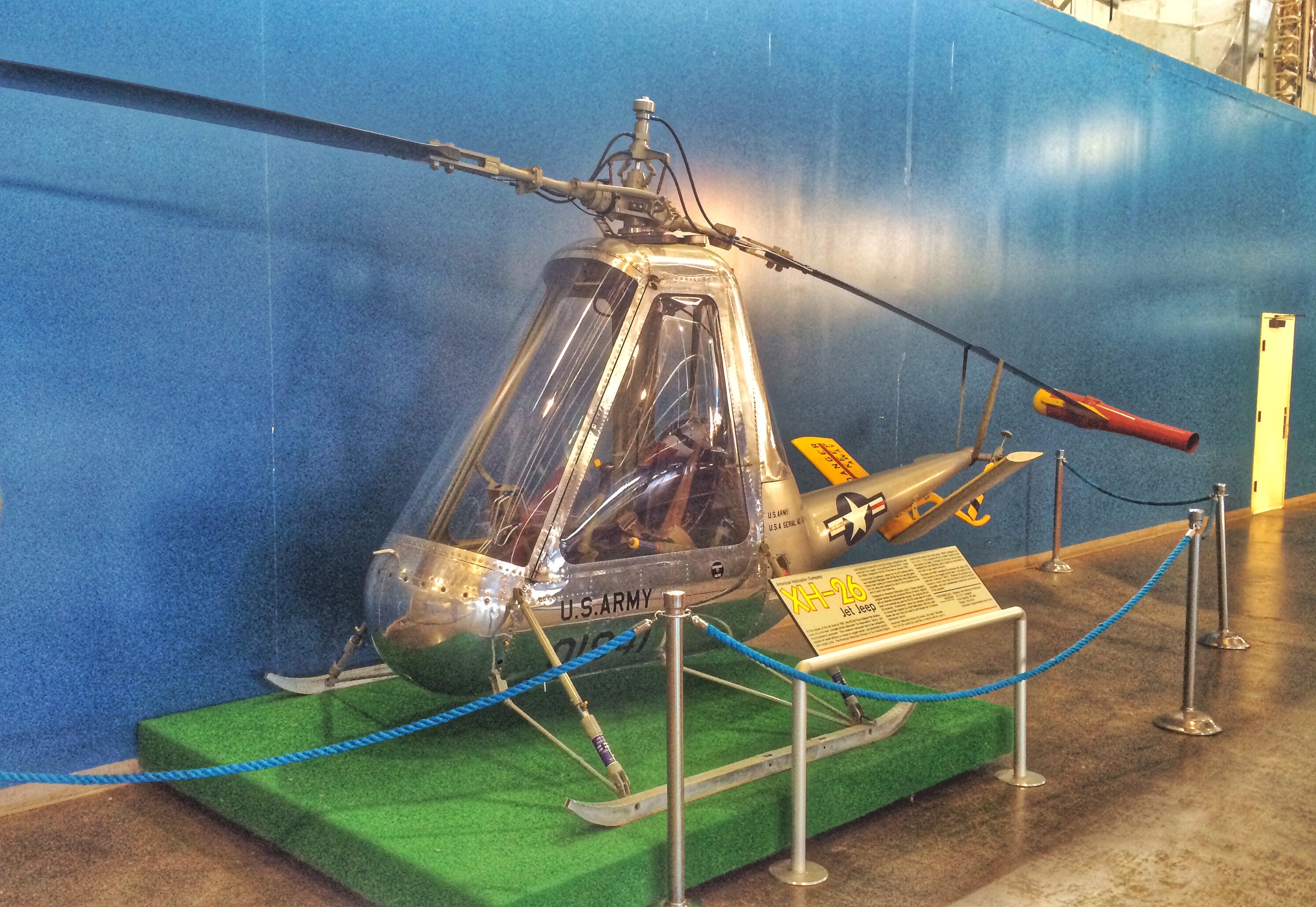
XH-26 Jet Jeep

Designed to be carried on a trailer and, when needed, carry one man and use Jeep fuel. It was never used because it made too much noise.

IMG_2927

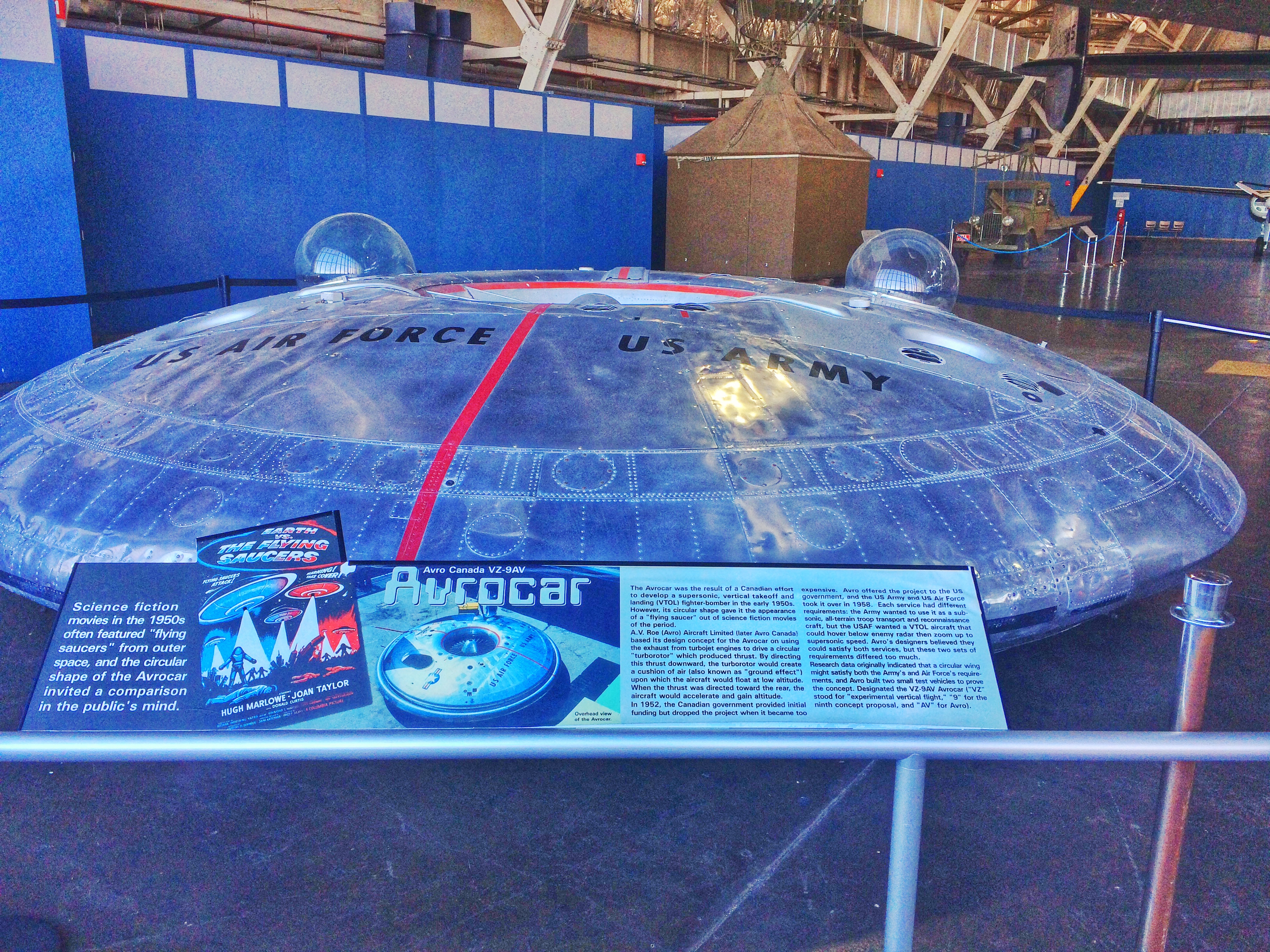
Avro Canada VZ-9AV Avrocar

I now believe people when they say they’ve seen flying saucers (although I still don’t believe in aliens visiting earth).

IMG_2929

Initially designed by Canada, but the United States took over when it proved too expensive. It was designed to be a supersonic fighter/bomber with vertical take-off and landing capability. It was never put into production because it was unstable more than three feet off the ground.

Northrop Tacit Blue

Built to test stealth technology.

IMG_2931

XB-70 Valkyrie (top)

Two of these were built to test supersonic (mach 3) high-altitude bombers. This one flew many times from 1964-1969. The other one crashed. It kinda cracked me up to read that the skin is made from “stainless-steel honeycomb sandwich panels.”

Northrop-McDonnell Douglas YF-23A Black Widow II (bottom)

Built as a fighter to counter Soviet advances. Two companies built competing planes. This one was not chosen.

IMG_2930

Ryan X-13 Vertijet

Built to test vertical take offs and landings. It was flown successfully several times in 1957.

IMG_2933

On the bus ride, and again in the hangar, we were told to watch for the aliens in the windows. I looked, but didn’t see them until I asked one of the guides. She pointed way up in a corner to this.

IMG_2934

For all that build-up, I was expecting something a bit more exciting.

We spent the afternoon touring the rest of the museum, but I covered that extensively on our last visit, so I won’t repeat any of it here. We also paid $8 each to see a 3D movie called Fighter Pilot in the theater with the largest screen in Ohio. It was 50 minutes long, about an Air Force training exercise. I thought it was spectacularly boring. Much of it was obviously shot in front of a blue screen. This surprised me since everything else in the museum is fascinating.

Posted in Ohio | Comments Off on Back to the National Museum of the U.S. Air Force