Teddy Roosevelt’s Guide to Reading

1. The room for choice is so limitless that to my mind it seems absurd to try to make catalogues which shall be supposed to appeal to all the best thinkers. This is why I have no sympathy whatever with writing lists of the One Hundred Best Books, or the Five-Foot Library. It is all right for a man to amuse himself by composing a list of a hundred very good books … But there is no such thing as a hundred books that are best for all men, or for the majority of men, or for one man at all times.

2. A book must be interesting to the particular reader at that particular time.

3. Personally, the books by which I have profited infinitely more than by any others have been those in which profit was a by-product of the pleasure; that is, I read them because I enjoyed them, because I liked reading them, and the profit came in as part of the enjoyment.

4. The reader, the booklover, must meet his own needs without paying too much attention to what his neighbors say those needs should be.

5. He must not hypocritically pretend to like what he does not like.

6. Books are almost as individual as friends. There is no earthly use in laying down general laws about them. Some meet the needs of one person, and some of another; and each person should beware of the booklover’s besetting sin, of what Mr. Edgar Allan Poe calls “the mad pride of intellectuality,” taking the shape of arrogant pity for the man who does not like the same kind of books.

7. Now and then I am asked as to what books a statesman should read,  and my answer is, poetry and novels — including short stories under the head of novels.

8. Ours is in no sense a collector’s library. Each book was procured because some one of the family wished to read it. We could never afford to take overmuch thought for the outsides of books; we were too much interested in their insides.

9. [We] all need more than anything else to know human nature, to know the needs of the human soul; and they will find this nature and these needs set forth as nowhere else by the great imaginative writers, whether of prose or of poetry.

10. Books are all very well in their way, and we love them at Sagamore Hill; but children are better than books.

He also said: “I as emphatically object to nothing but heavy reading as I do to nothing but light reading — all that is indispensable being that the heavy and the light reading alike shall be both interesting and wholesome.”

Posted in Reading | 1 Comment

Somewhere in Missouri

Somewhere in Missouri

Route 67 north of Poplar Bluff

Posted in Photos | Comments Off on Somewhere in Missouri

The Adventures of Ozzie and Harriet

Ozzie Nelson was a big band leader and his wife, Harriet, was a vocalist. They were regulars with Red Skelton  and later launched their own show.

The Adventures of Ozzie and Harriet was a very popular TV show from 1952 to 1966. In a lot of ways, it was reality TV. Ozzie and Harriet Nelson and their two sons, Dave and Eric (Rick) played themselves. Their actual house, in Tenafly, New Jersey, was used for exterior shots on the show, and the interior used at the studio was very similar to the Nelson’s house. Some of the episodes were built around events that happened in real life. The world got to watch the boys grow up on TV — in later years, they married and their wives were written into the plot.

The plots were thin, Ozzie tinkered around the house, acting goofy, and never seemed to go to work. His wife, Harriet, was wise and kind and generally found a way to save the day. Dave and Rick were clean-cut kids who worried about getting dates.

Adv_of_Ozzie_and_Harriet_Nelson_Family_1955

I watched six episodes on a “best of” DVD.

Fall Guy (Season 1, Episode 4) — Ozzie tells Dave he doesn’t always have to do favors for people, then promises his neighbor Thorny that Dave will take his niece to a dance. Dave turns him down at first, but agrees after meeting the niece.

David’s Birthday (Season 2, Episode 6) — David has a date with Sally, who he thinks is 19. He worries that she will find out it’s his 17th birthday. Harriet shows the kids some family movies that reveal Dave’s age. Sally confesses that she’s just about to turn 16.

David’s Engagement (Season 4, Episode 1) — Ozzie and Harriet jump to conclusions and think that Dave is getting married at the Justice of the Peace. They race to stop him, but find out he’s just paying a speeding ticket.

A Ball of Tin Foil (Season 4, Episode 9) — Ozzie rents a trailer to cart away the family junk, but ends up trading his junk for the junk of other men in the neighborhood. When their wives make them bring it all back, the Nelsons end up with a lot more junk than they started with.

Captain Salty and the Submarine (Season 5, Episode 2) — Ozzie sees a kids’ show on TV and orders a toy submarine to see how it works. The producer, thinking he’s a kid, picks him as the winner of a bicycle. Ozzie goes on the show and says the bike is for a kid in the neighborhood, then finds out his friend Thorny lied about the kid and wants the bike for himself.

Ricky the Drummer (Season 5, Episode 28) — Ricky plays drums for a band that’s performing in town. He also sings a solo and a quartet with his family and does some dancing. It was episodes like this that launched Rick Nelson’s musical career.

I’m not going to rush out and watch all 435 episodes. (It is the longest running sit-com in TV history.) But the Nelsons were likeable, wholesome, and occasionally genuinely funny. I was entertained.

Before The Adventures of Ozzie and Harriet was a TV show, it was on the radio. I listened to one episode called “Be On Time,” which aired on June 23, 1953. Ozzie lectures Ricky about being late and then decides to make the lecture the theme of his speech at Dave’s school. But he forgot to turn the power back on after fixing a light and was late for the speech. Fortunately, it was postponed for some reason.

The family acknowledged that it was Rick’s fame that kept the show around for so long. 53 of his songs made the Billboard Top 100. He was never really able to escape from the role he played on TV. He started a country-rock band called Stone Canyon Band, but it wasn’t very popular. When he appeared at Madison Square Garden in 1971 with long hair and refused to play his popular old songs, he was booed off the stage. He responded by writing “Garden Party” (You can’t please everyone/so you’ve got to please yourself). A series of failed relationships, drug abuse and fights with fellow musicians filled much of the rest of his career before he was killed in a plane crash in 1985.

Posted in Pop Culture | Comments Off on The Adventures of Ozzie and Harriet

Highlights from Recent Reading (and movie watching)

His one striking peculiarity was his Partingtonian fashion of loving and using big words for their own sakes, and independent of any bearing they  might have upon the thought he was purposing to convey. He always let his ponderous syllables fall with an easy unconsciousness that left them wholly without offensiveness. In truth his air was so natural and so simple that one was always catching himself accepting his stately sentences as meaning something, when they really meant nothing in the world. If a word was long and grand and resonant, that was sufficient to win the old mans’ love, and he would drop that word into the most out-of-the way place in a sentence or subject, and be as pleased with it as if it were perfectly luminous with meaning.

from Roughing It, by Mark Twain

__________

To the Klinchon people of north-western Canada, walking and knowing are barely divisible activities: their term for “knowledge” and their term for “footprint” can be used interchangeably.

The relationship between thinking and walking is also grained deep into language history, illuminated by perhaps the most wonderful etymology I know. The trail begins with our verb “to learn,” meaning “to acquire knowledge.” Moving backwards in language time, we reach the Old English “leornian,” “to get knowledge, to be cultivated.” From “leornian” the path leads further back, into the fricative thickets of Proto-Germanic, and to the word “liznojan,” which has a base sense of “to follow or to find a track” (from the Proto-Indo-European prefix “leis-” meaning “track”). “To learn” therefore means at root — to follow a track. Who knew? Not I, and I am grateful to the etymologist-explorers who uncovered those lost trails connecting ‘learning’ with path-following.

In its original verb-form, the Arabic “sarha” meant “to let the cattle out to pasture early in the morning, allowing them to wander and graze freely.” It was subsequently humanized to suggest the action of a walker who went roaming without constraint of fixed plan. One might think the English equivalent to be a ‘stroll,” an “amble” or a “ramble,” but these words don’t quite catch the implications of escape, delight and improvisation that are carried by sarha. “Wander” comes close, with its word-shadow of ‘wonder,” as does the Scots word “stravaig,” meaning to ramble without set goals or destination, but best of all perhaps is “saunter,” from the French “sans terre,” which is a contraction of “a la sainte terre,” meaning “to the sacred place;” i.e. “a walking pilgrimage.” Saunter and sarha both have surface connotations of aimlessness, and smuggled connotations of the spiritual.

There is a Spanish saying, “caminar es atesorar!“: “To walk is to gather treasure!”

from The Old Ways, by Robert Macfarlane

__________

We’ve got a blind date with destiny … and it looks like she’s ordered the lobster. (The Shoveller)

from the movie Mystery Men

__________

He [Churchill] called Attlee “a sheep in sheep’s clothing” and “a modest man with much to be modest about.”

Studies at the University of Chicago and the University of Minnesota have found that teachers smile on children with high IQs and frown upon those with creative minds. Intelligent but uncreative students accept conformity, never rebel, and complete their assignments with dispatch and to perfection. The creative child, on the other hand, is manipulative, imaginative and intuitive. He is likely to harass the teacher. He is regarded as wild, naughty, silly, undependable, lacking in seriousness or even promise. His behavior is distracting; he doesn’t seem to be trying; he gives unique answers to banal questions, touching off laughter among the other children … 70 percent of pupils rated high in creativity were rejected by teachers picking a special class for the intellectually gifted.

from The Last Lion: Visions of Glory, by William Manchester

__________

You just can’t help some people until they’ve hit rock bottom, and by then you’ve lost interest.

from the TV show Seinfeld

Posted in Reading | Comments Off on Highlights from Recent Reading (and movie watching)

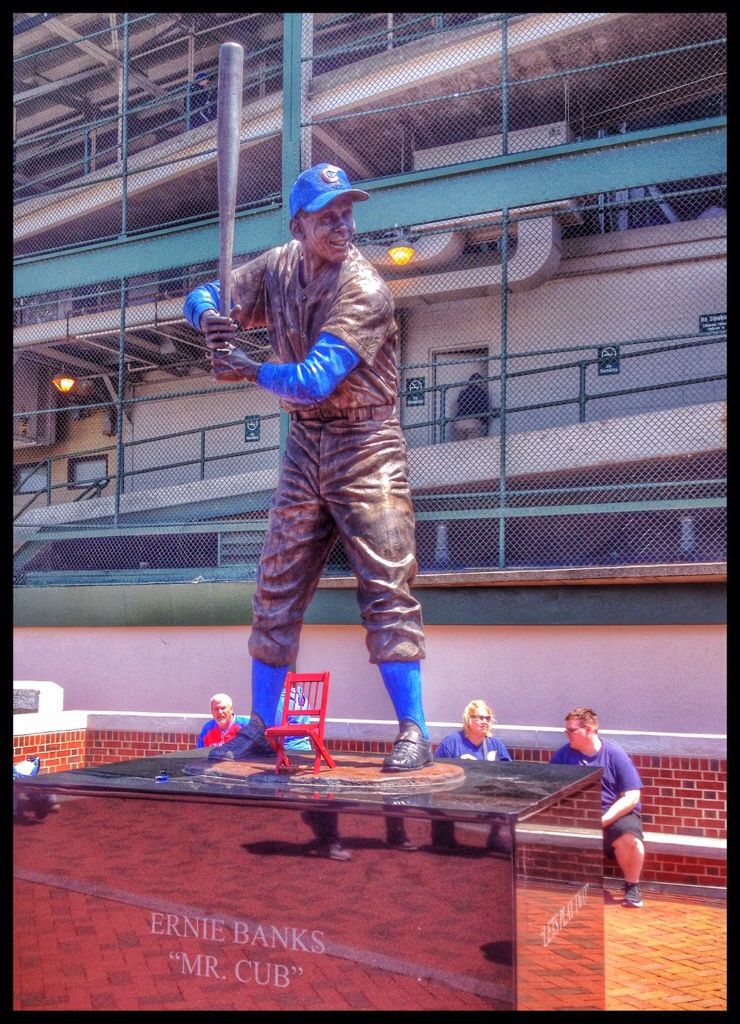
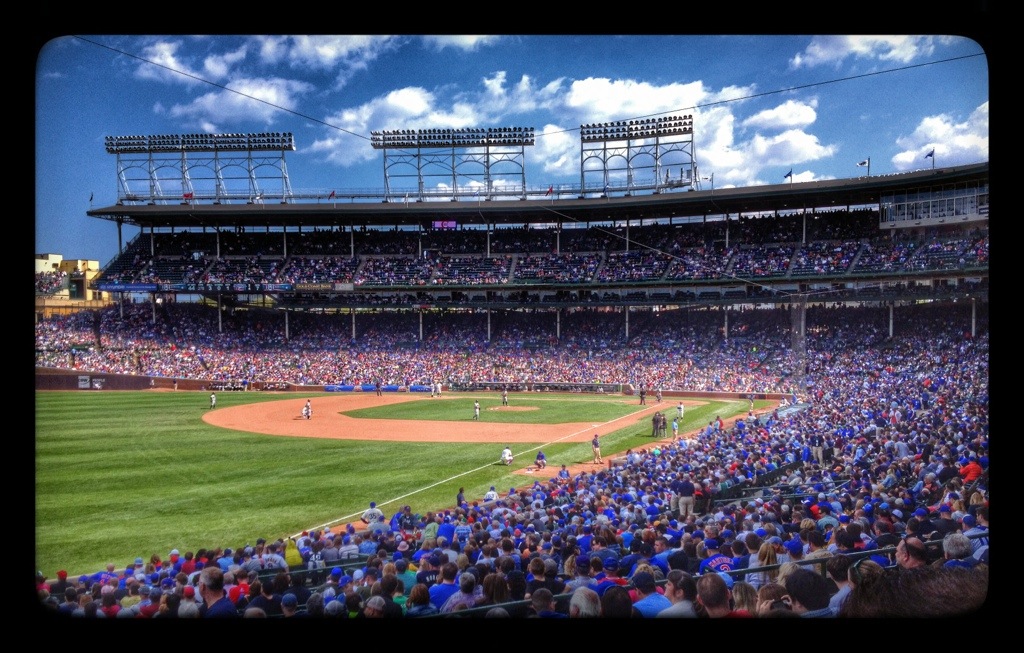
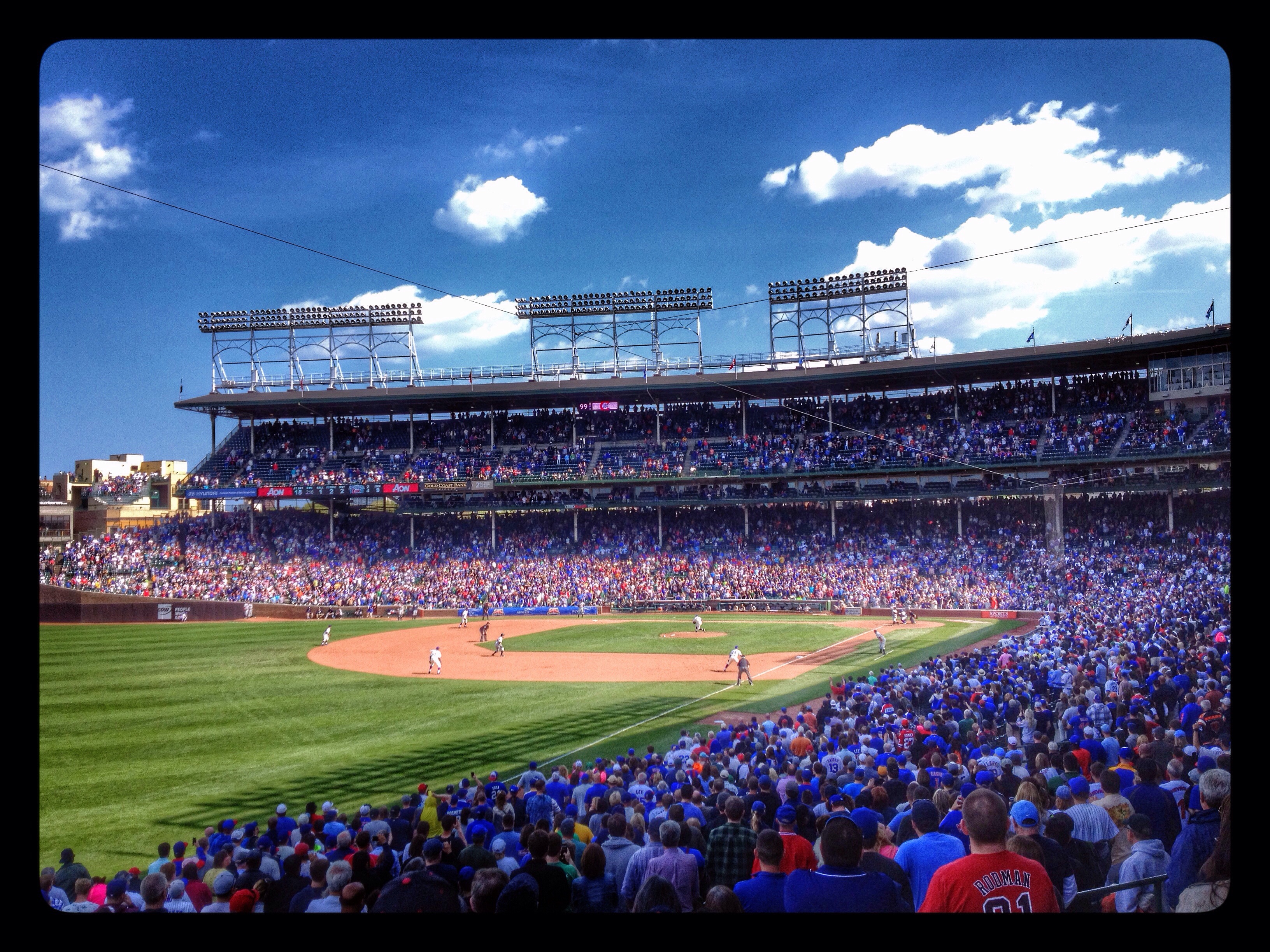
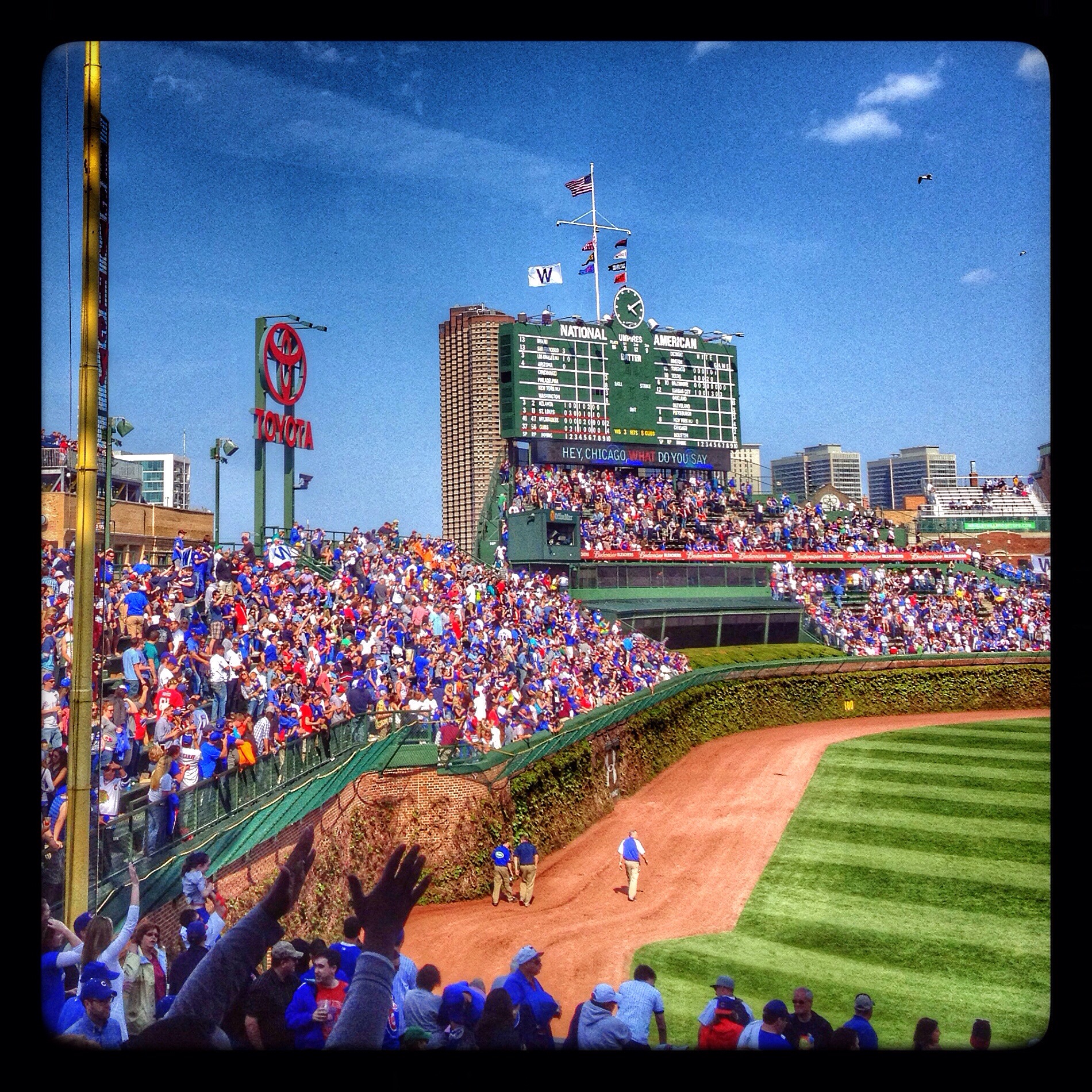
Cubs vs. Brewers — Wrigley Field

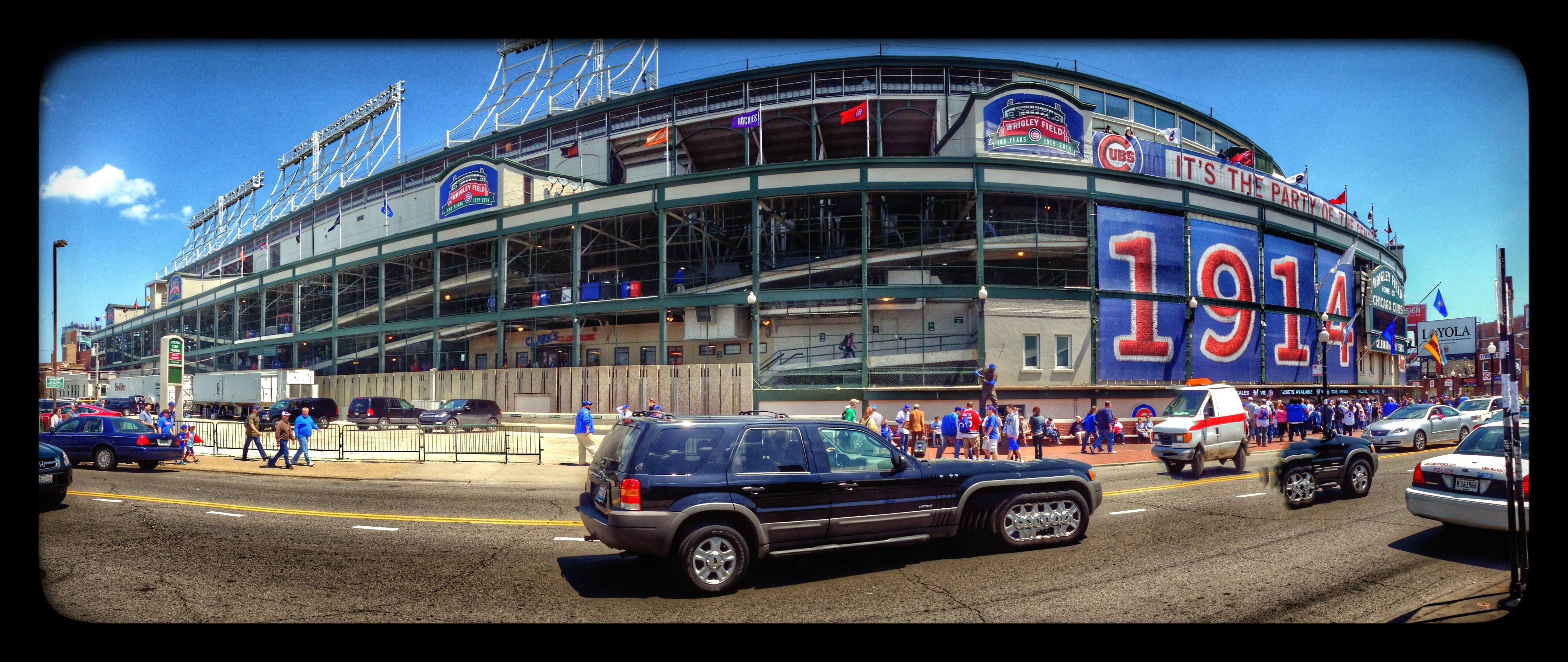
My daughter bought a couple tickets to a Sunday afternoon game and invited me along. We took the Pace shuttle from Woodfield, ate lunch at McDonald’s across the street, and got to our seats about half an hour before game time.

20140518-204903

(Here’s an example of how iPhone panoramas handle moving vehicles.)

20140519-195652.jpg

20140518-204854

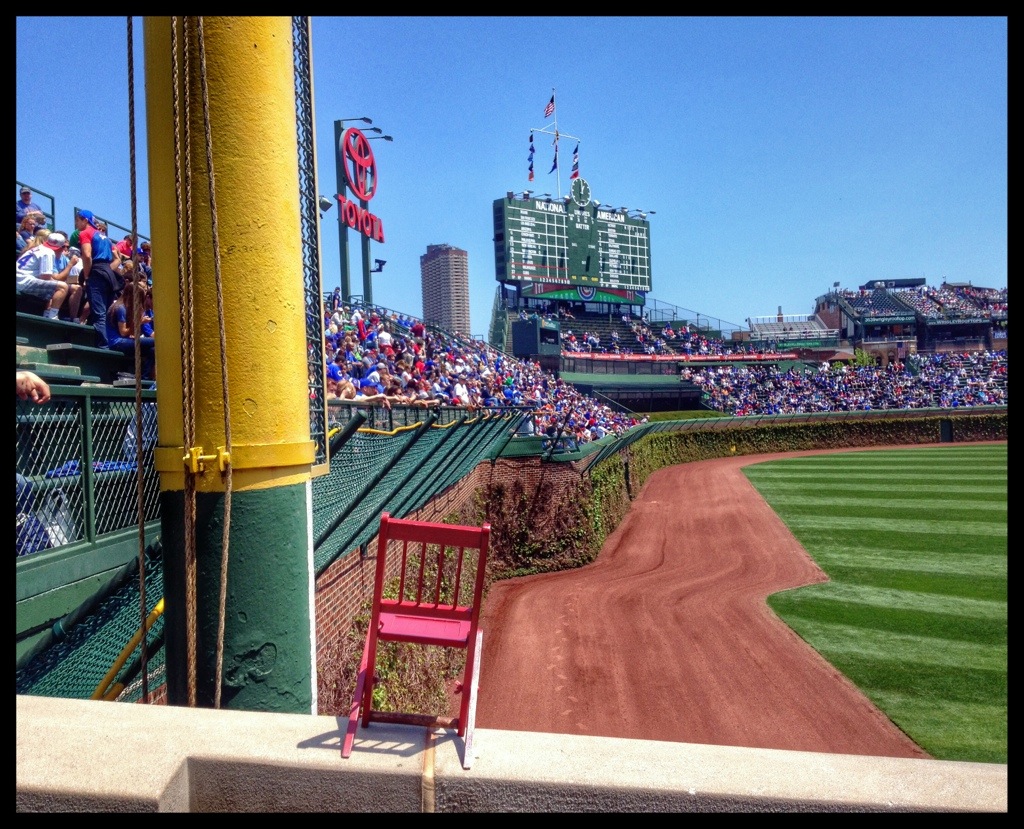
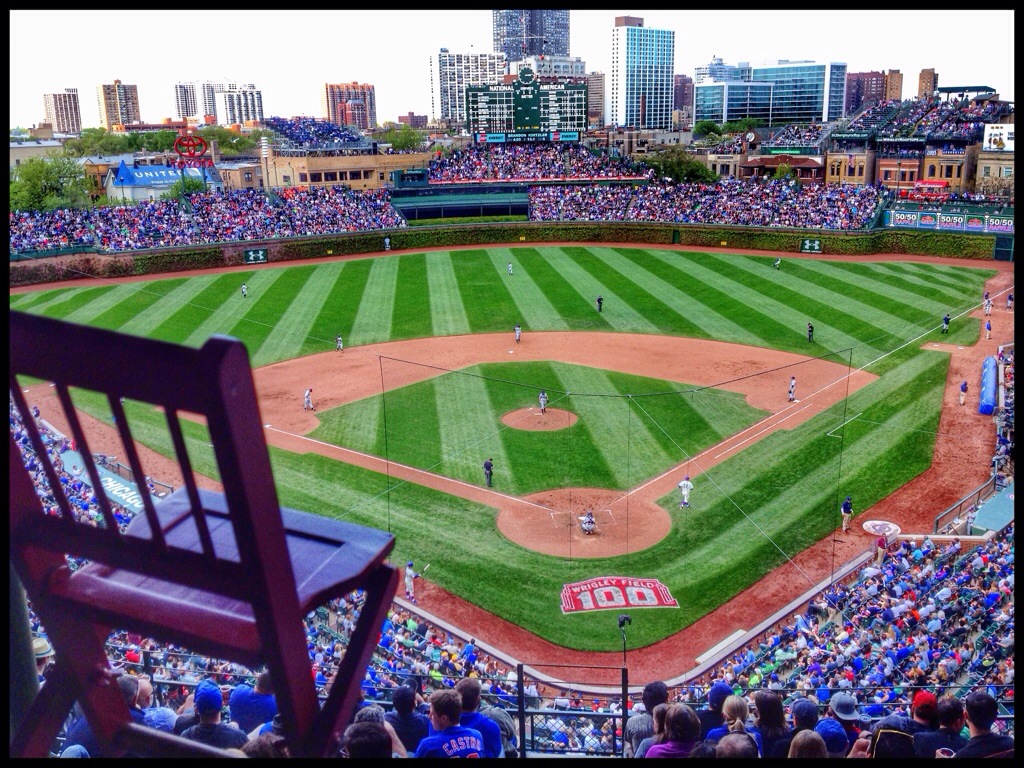
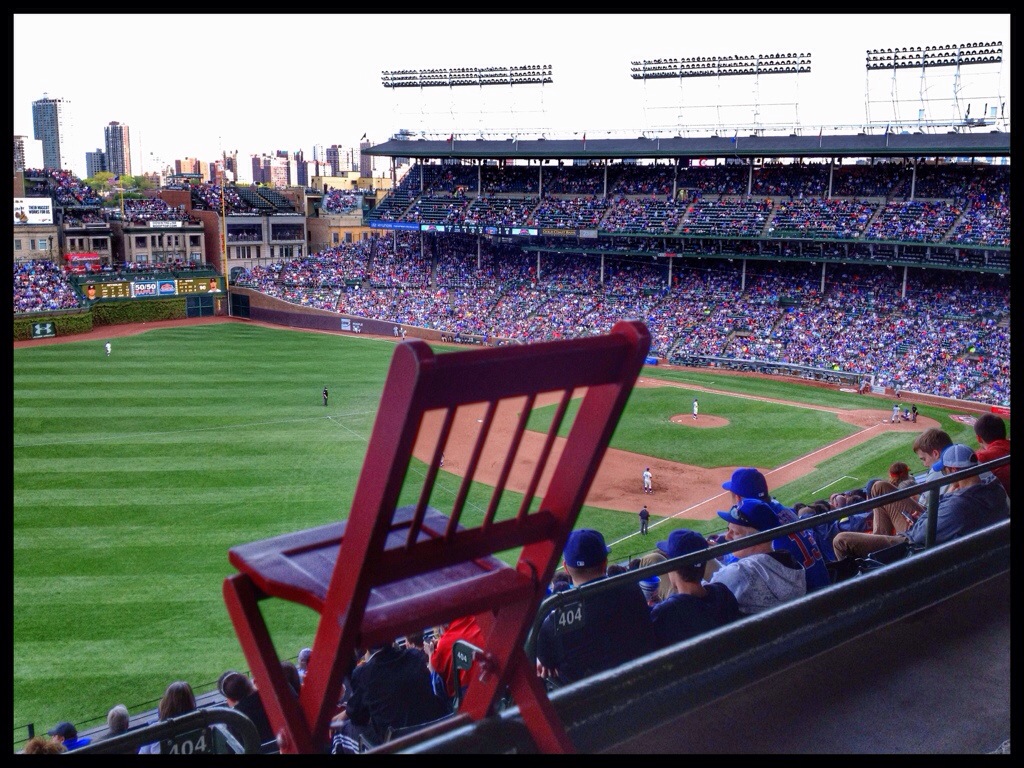
Our seats were way down the left field stands, almost to the outfield fence, but they were still pretty good. Our seats weren’t far from the left field foul pole, so I walked down shortly before the game started to get this shot. I actually had to wait a few seconds for a dad who was there with his young daughter to take his own photo of the chair.

20140518-204959

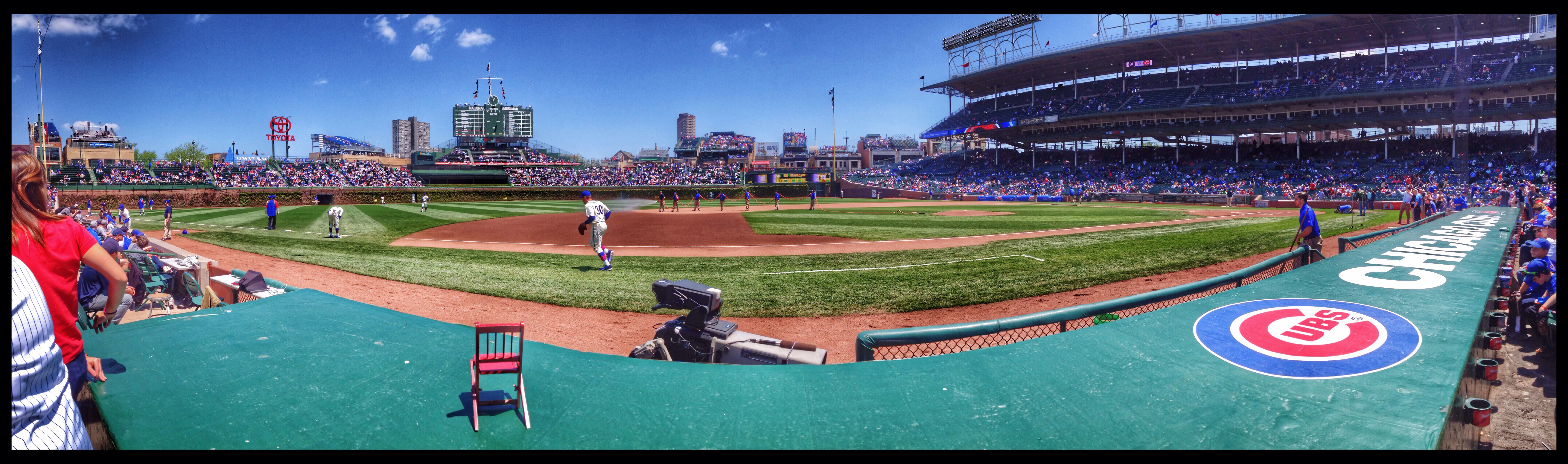
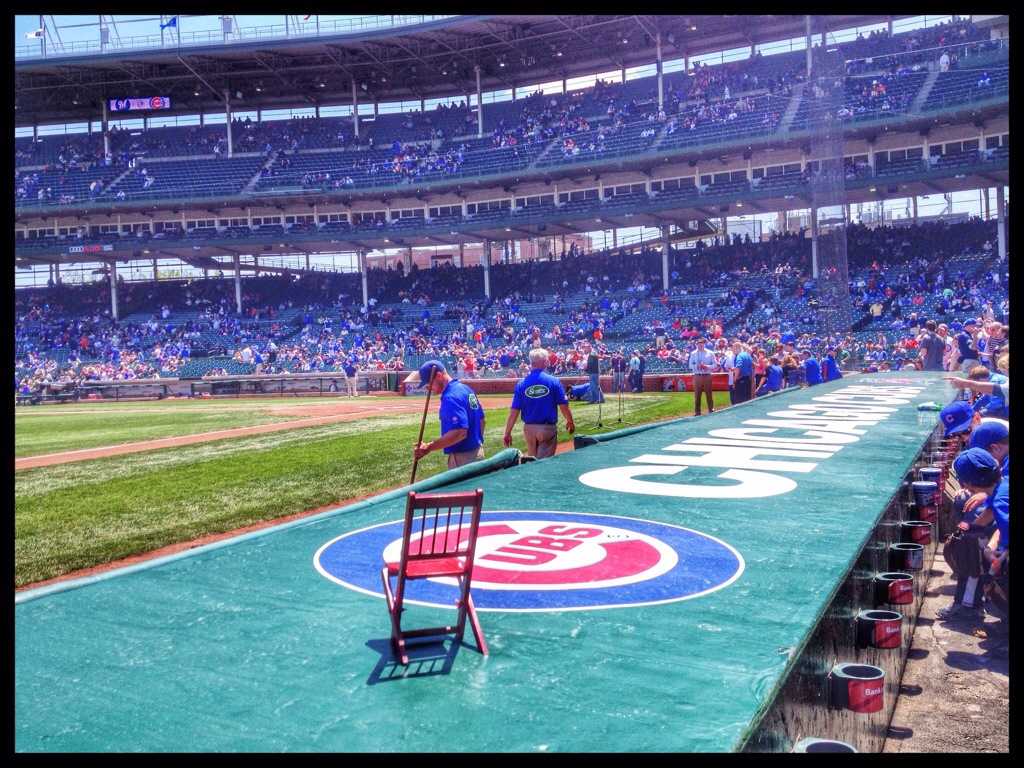
About half an hour before game time, I asked an usher if I could take a photo of the chair on the dugout. He asked to see my ticket. I politely replied that my seats were “way up there.” He looked at the chair and said, “No more than 60 seconds.” I don’t think I took that long.

20140518-211733

20140518-204939

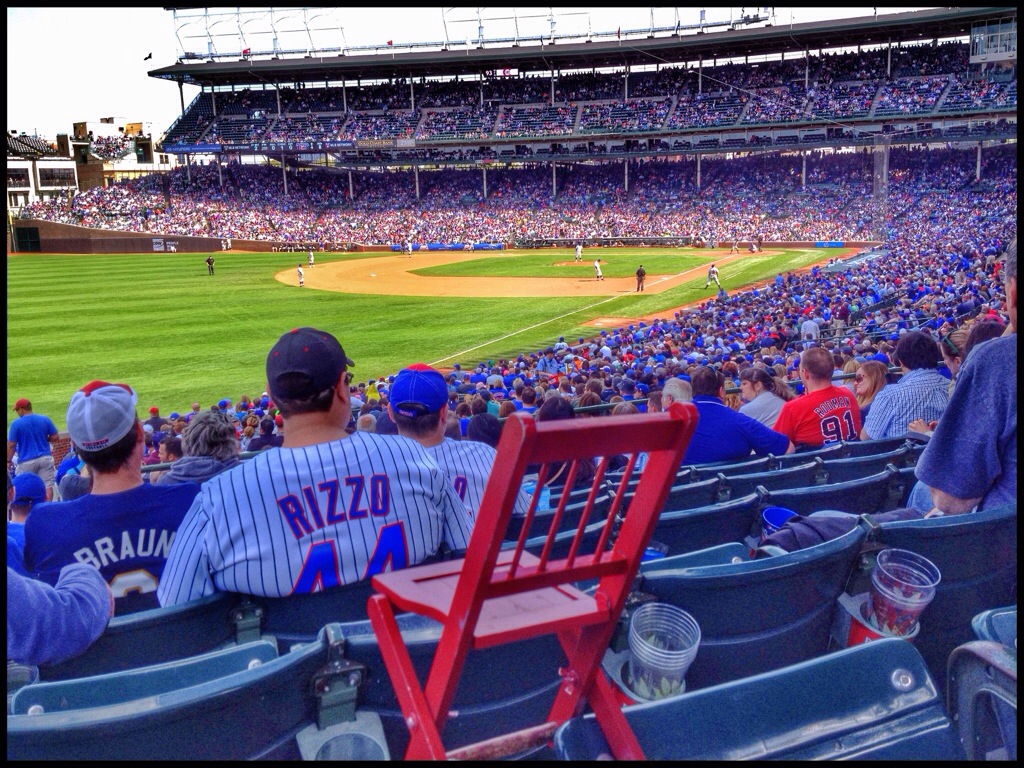
Here was the view from our seats.

20140518-204714

We had great views of the two home runs the Cubs hit, one by Castillo and one by Olt. Travis Wood walked the bases loaded in the first inning, but escaped unscored-upon and didn’t give up a hit or a run until the fifth when Rickie Weeks hit a two-run homer.

20140519-195839.jpg

The weather could not have been more pleasant.

20140519-195759.jpg 20140520-173750-63470944.jpg

In the sixth inning, I climbed to the upper deck and took some photos.

20140519-200027.jpg

20140519-200131.jpg

20140519-200221.jpg

20140518-204824

20140518-204756

I got to see my first umpire replay review in the seventh when Junior Lake was ruled out on an attempted steal of second after initially being called safe. You can see the umpires huddling here with Lake awaiting his fate on second.

20140519-195939.jpg

Here Hector Rondon strikes out Khris Davis to end the game with Ryan Braun on second. The Cubs won 4-2.

20140519-195445.jpg

We stayed in our seats until the “W” went up on the scorecard.

20140519-195530.jpg

Screenshot (2)_stitch

It was a long day — we left home at 9:45 a.m. and didn’t get back until 6:30 p.m. And we switched seats twice, once because a large man sat next to my daughter and crowded her into sitting sideways and once because the guy behind us spilled a full cup of beer on my seat (fortunately this happened when I was walking around). But we had fun hanging out together and enjoying the weather and the crowd and we saw a great game.

Posted in Baseball | Comments Off on Cubs vs. Brewers — Wrigley Field