Historic Fort Wayne — Fort Wayne, Indiana

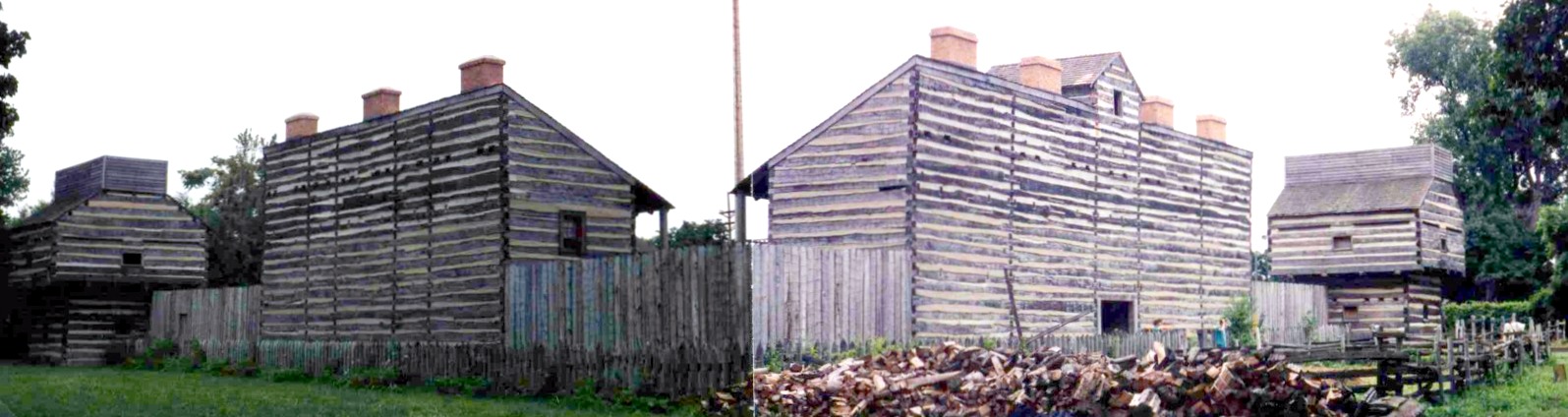
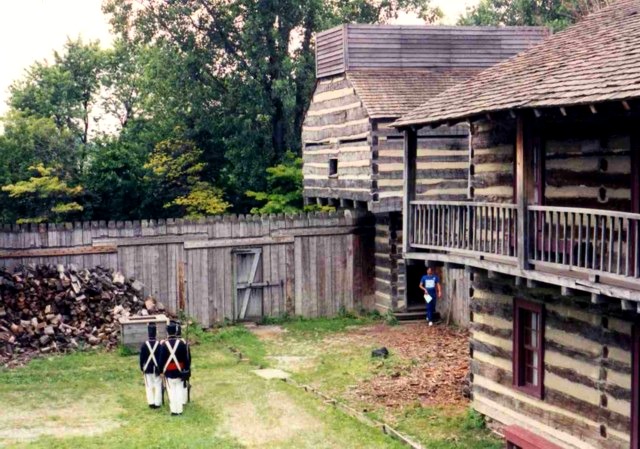
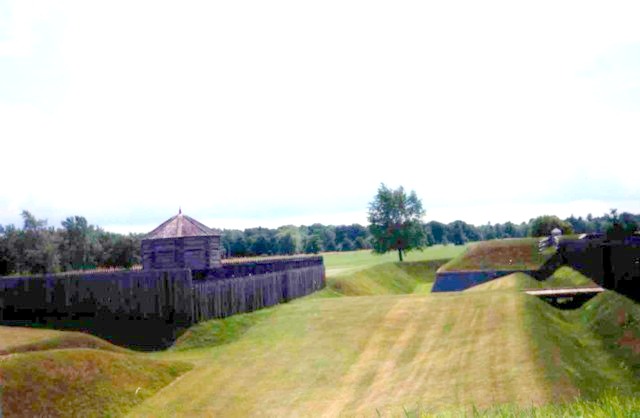
We visited here on one of our annual baseball junkets. The fort is tucked into downtown Fort Wayne along the Sewer Maumee River. There were several out-buildings, and the place was crawling with people dressed in period outfits — more re-enactors, in fact, than there were tourists.

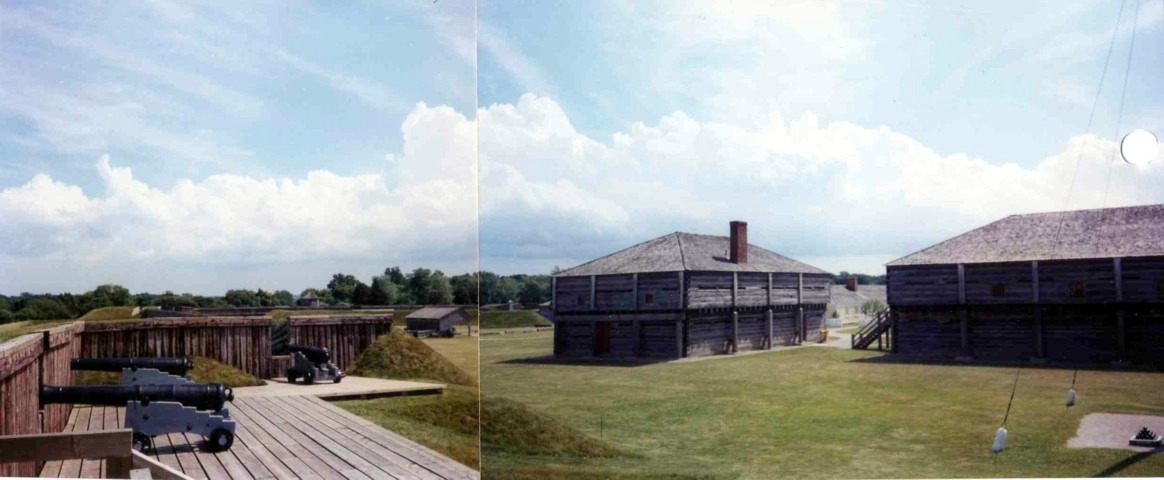
The buildings inside the fort were all cut in half, and the back walls formed the outside wall of the fort. The insides were pretty much interchangeable. We wandered around making disparaging comments and complaining about the admission price ($3.50 each). We watched demonstrations on sheep shearing and blacksmithing.

At one point, a parade went by — three guys marching in circles around the inside of the fort while one of them yelled commands.

It actually was rather impressive for an inner-city reproduction, but it paled in comparison to Fort George, which I had visited just a week before.

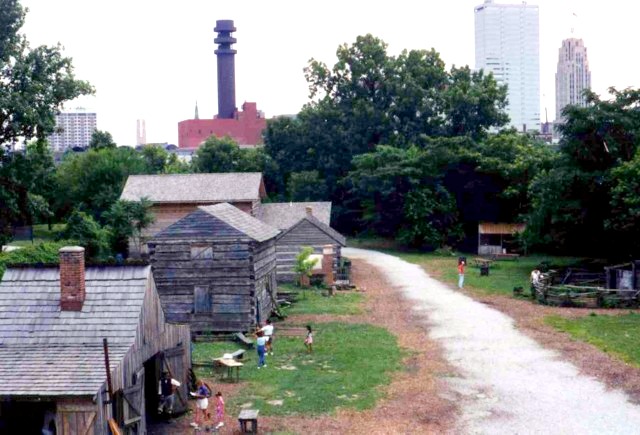
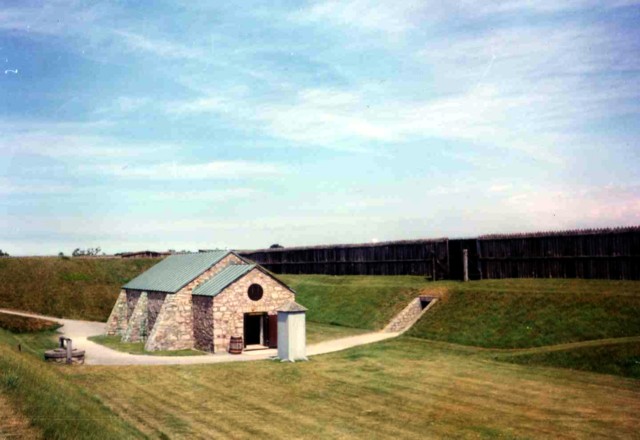
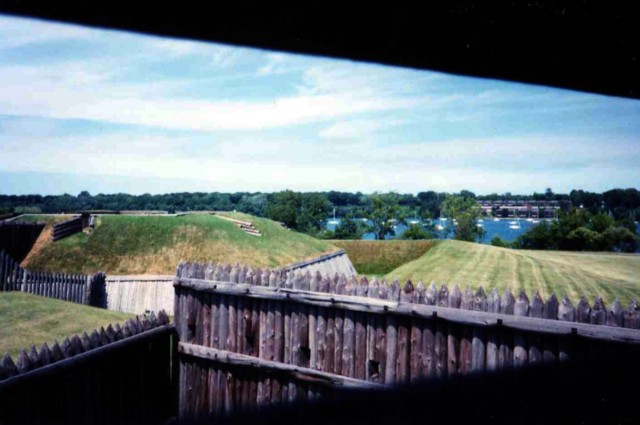
The outbuildings with modern Fort Wayne in the background.

Posted in Indiana | Comments Off on Historic Fort Wayne — Fort Wayne, Indiana

Welland Canal Lock 3 Complex — St. Catharines, Ontario, Canada

We drove from Niagara-on-the-Lake to St. Catherines. On the way we stopped at one of the many orchard fruit stands for supper. We bought two kinds of juice, a carton of fresh-picked cherries and some awesome muffins. As we drove through the Canadian countryside, we spit the cherry pits out the windows and tried to hit the signs as we passed.

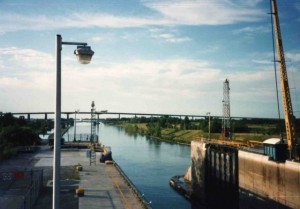
The Welland Canal is the part of the St. Lawrence Seaway that bypasses Niagara Falls. The canal is about 26 miles long. It includes eight locks and raises ships a total of 326 feet from Lake Ontario to Lake Erie. There’s a visitor center and viewing platform at St. Catherines, the Lock 3 Complex. We toured the museum and spent several hours watching three ships lock through.

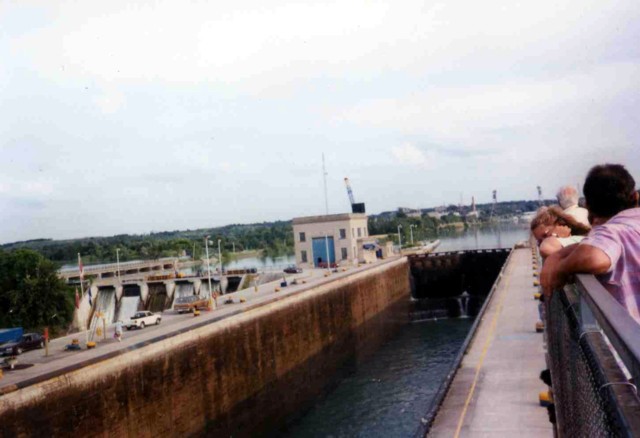
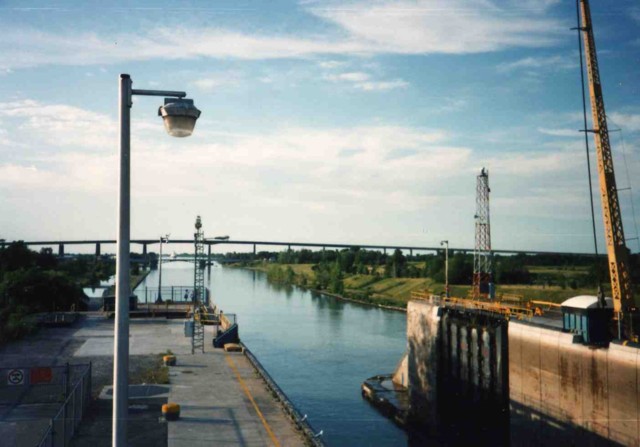
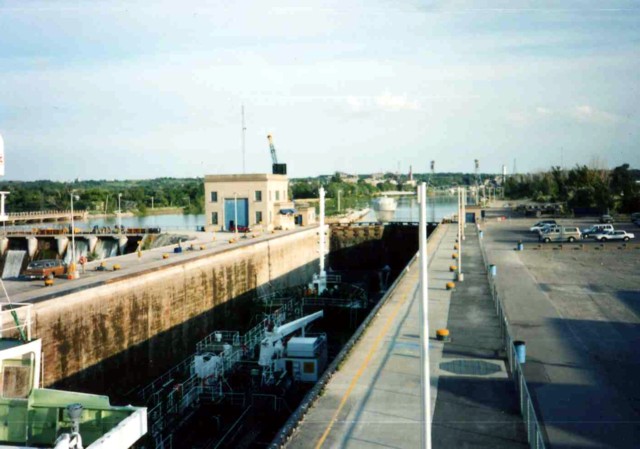
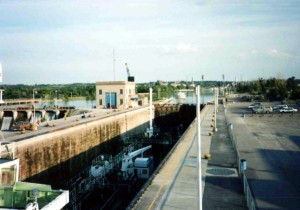
Here’s the lock from the platform looking north (left) and south (right).
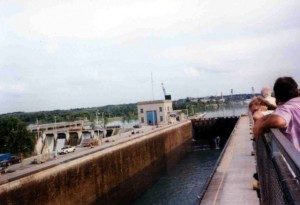
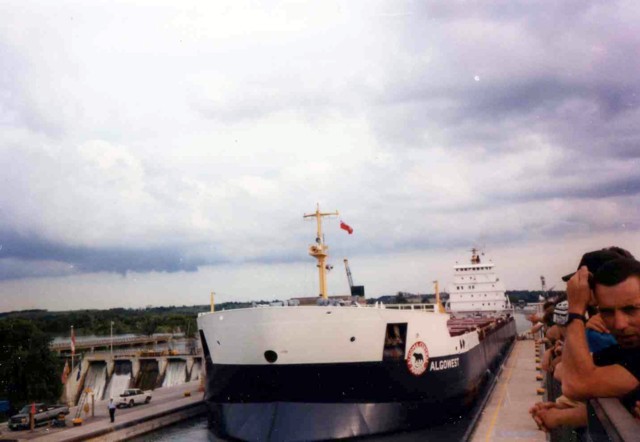
The first ship was the Algowest, a bulk carrier (probably grain) with a Canadian registry that was heading south (going downhill). The tankers that use the canal are built to the maximum size that can fit in the locks, which makes for a pretty tight fit. As it locked through, sprinklers were spraying the deck.
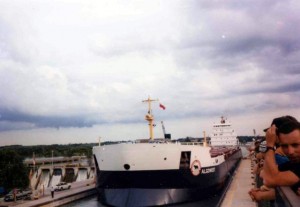
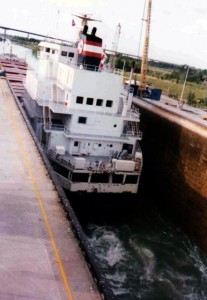
As the pilot cabin floated by, the captain and his wife stood in the window and waved to us on the platform.

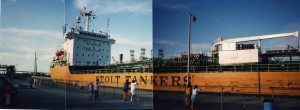
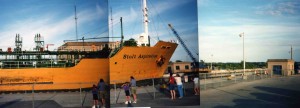
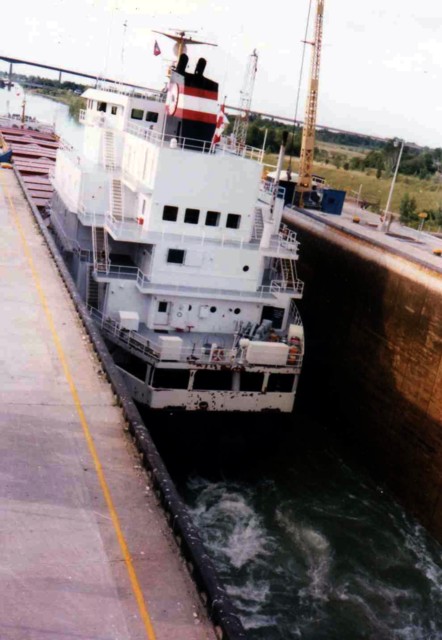
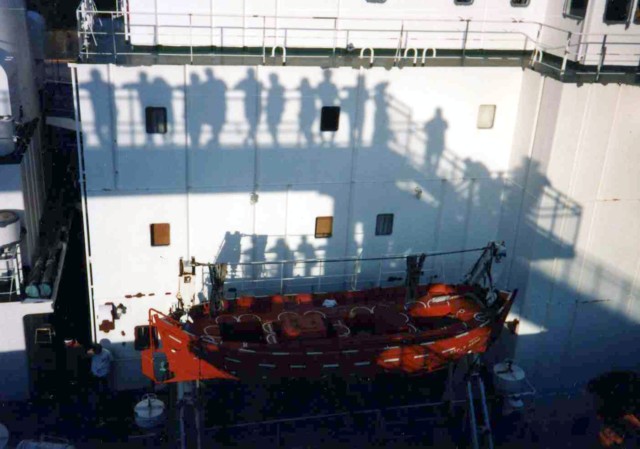
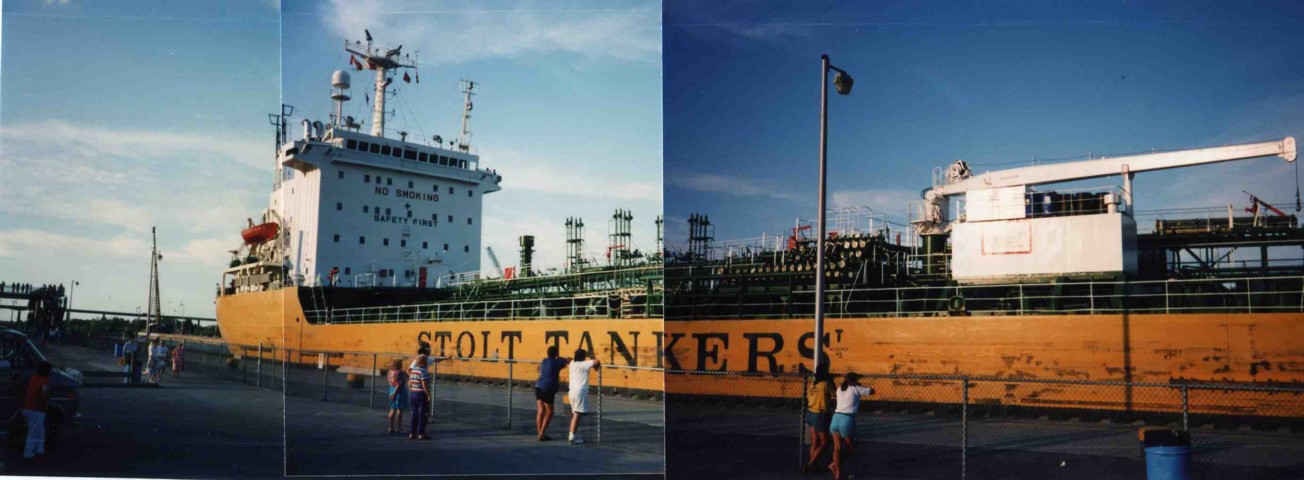
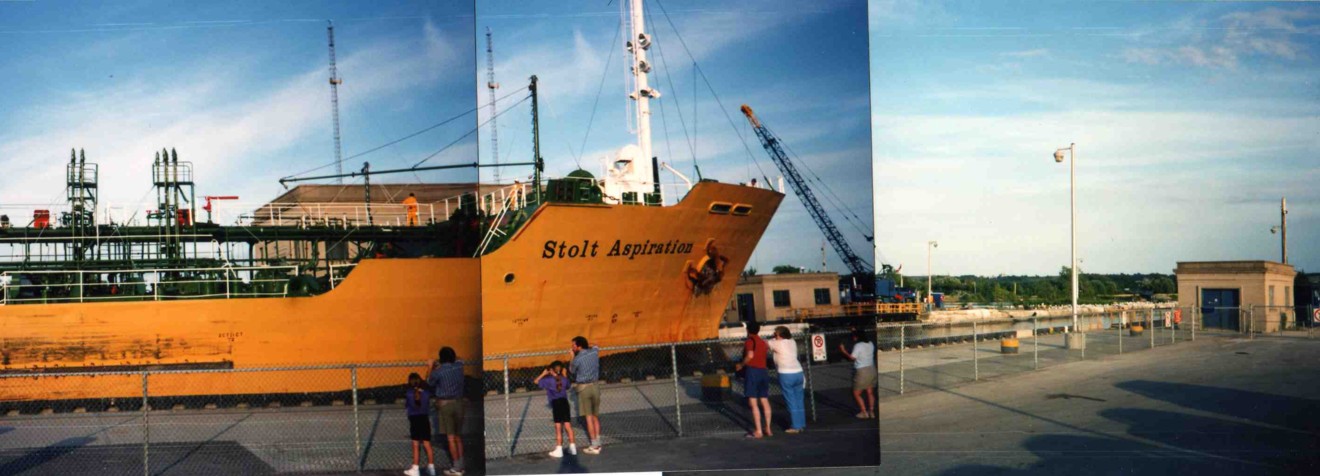
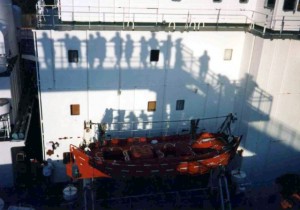
The second ship was the Stolt Aspiration, with a Panamanian registry. Its cargo was listed as “unknown.” It must have been something volatile — there were “hazardous cargo” signs all over the place. The ship was heading north (going uphill). It wasn’t as large or as clean as the Algowest. In the photo on the left, it has just moved into the lock (giving a good indication of how deep the lock was). The photo on the right shows the lifeboat hanging next to the main structure on the ship (look at the panorama to see the same lifeboat on the left). My friend’s silhouette is on the far left — mine is near the top of the stairs.
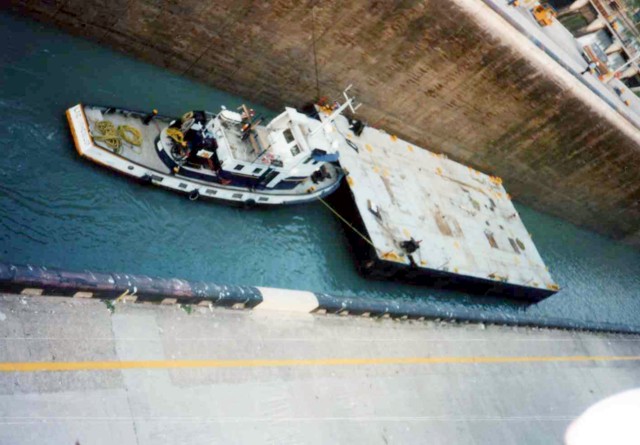
A couple of Panamanian-looking crew members were leaning against the rail pointing to and commenting on the girls on the viewing platform. After the Stolt Aspiration locked out, I was ready to leave. But there was one more ship on the schedule, and my friend wanted to stay and see it. He relaxed on the platform while I walked around taking photos. When the “ship” finally came, it was an anticlimax — a small tugboat, called the Lac Vancouver, pushing a barge. It was also heading north, so the lock had to be emptied before it could enter. A tiny motor boat rode down with the water and was totally dwarfed in the lock.
Posted in Places to Go | Comments Off on Welland Canal Lock 3 Complex — St. Catharines, Ontario, Canada

Fort Mississauga — Niagara-on-the-Lake, Ontario, Canada

After leaving Fort George, we went looking for Fort Mississauga, a part of the Canadian National Park System that hasn’t been restored. We finally found it sandwiched between Lake Ontario and a golf course. We parked on a side street and walked across the fairways. There wasn’t much to see — just some earthworks and a brick tower. It looked positively Medieval.

Fort Niagara, in New York, was visible across the Niagara River with Lake Ontario on the left.

Posted in Places to Go | Comments Off on Fort Mississauga — Niagara-on-the-Lake, Ontario, Canada

Fort George National Historic Site — Niagara-on-the-Lake, Ontario, Canada

We continued north, stopping next at Fort George (Canadian) National Historic Site. We stayed for almost three hours and enjoyed it tremendously. The place is huge, so it was hard to get photos that captured it well. The fort was built in 1802 and fought over during the War of 1812. It was abandoned shortly after the war. There were a lot of guides in period costumes, but unlike at Fort Erie, these were friendly, informative, and actually doing fort-appropriate activities.

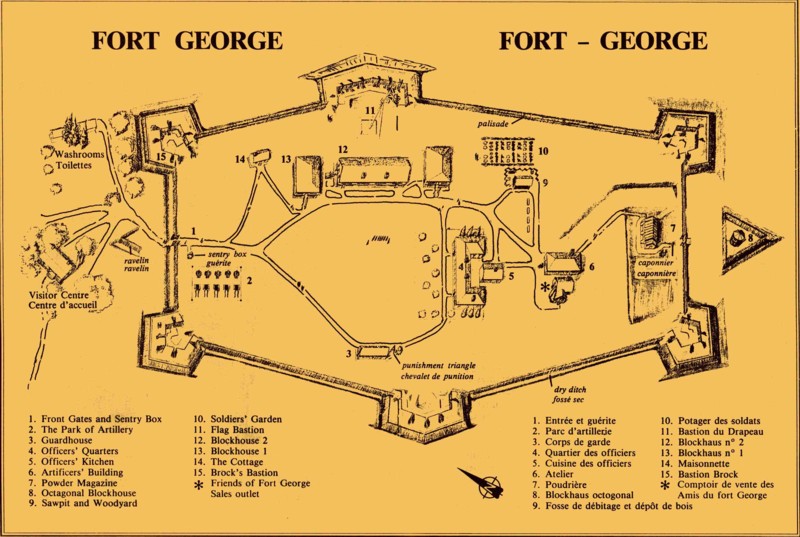
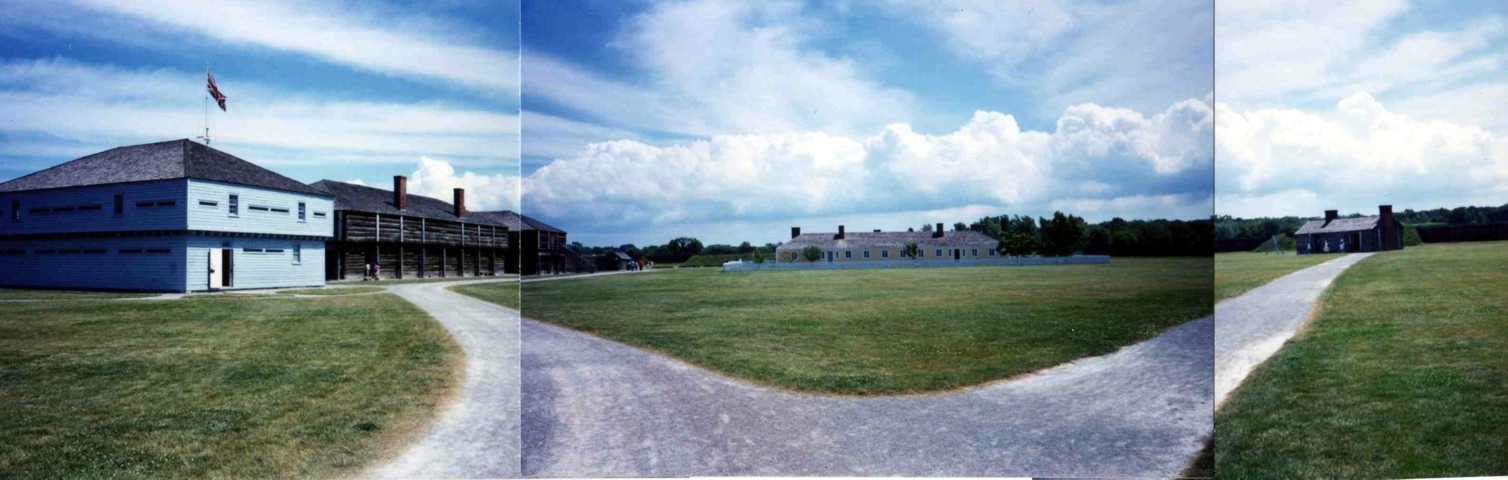
The panorama was taken from right inside the front gate (1 on the map).

The buildings on the left are the barracks/blockhouses. The yellow building in the center is the officers’ quarters (4). The jail (3) is on the right. As you can see, it wasn’t crowded.

Two young ladies in period costume were in the officers’ quarters, playing and singing a Mozart opera. We had an interesting chat with them about life in 1812.

This is the powder magazine (7), set down in a depression to reduce damage to the rest of the fort in case of explosion. It’s the only remaining original building, and before the fort was restored, it was used as a shed by a guy who farmed inside the ruins.

The tunnel on the right in the photo leads to the blockhouse (8 — below) that is separated from the rest of the fort and is the only way to get to that building.

The photo below is the view from the blockhouse with the Niagara River and New York in the distance.

The photo below is the Flag Bastion (11) with the barracks on the right. There were excellent museum displays on weapons, the War of 1812 and Indians in these buildings.

Posted in Places to Go | Comments Off on Fort George National Historic Site — Niagara-on-the-Lake, Ontario, Canada

Queenston Heights — Queenston, Ontario, Canada

After leaving Fort Erie, we drove north, deliberately avoiding the congestion around Niagara Falls.

During the War of 1812, the Americans crossed the river and climbed the steep bluffs to surprise the British. They had success at first, but a counter-attack lead by Major General Sir Isaac Brock forced them back against the drop-off and forced them to surrender. Here’s the view from the heights looking across the river to New York. The cliffs on the Canadian side where we stood were just as steep.

Queenston Heights

Here’s the redan, occupied by the Americans for a little while, where Brock was killed.

Queenston Heights

Unfortunately, we discovered that we could climb to the top of Brock’s Monument. There were 240 steps to the top and as my friend put it, “I have a new respect for the number 240.”

Queenston Heights

The stairway was very, very narrow, and the steps were very steep. In order to pass anybody who was coming down, I had to press myself back against the wall, and even then they had to gingerly scrape past.

And then we got to the top and saw the viewing platform. I suppose a moment’s thought would have warned us, but we didn’t think. It was tiny. Three people at most could fit at a time, and then only shoulder to shoulder — It might have been three feet in diameter. The four windows were the size of pie plates. We stayed about two minutes, then headed back down. On the way, we passed a group of about 20 people climbing up. We laughed, but we didn’t warn them. Hey, nobody warned us. It was our turn to pass on the inside of the stairwell where the steps were about two inches wide. I couldn’t help wondering, if I fell headlong, would I be able to stop myself before I got to the bottom?

Posted in Places to Go | 1 Comment