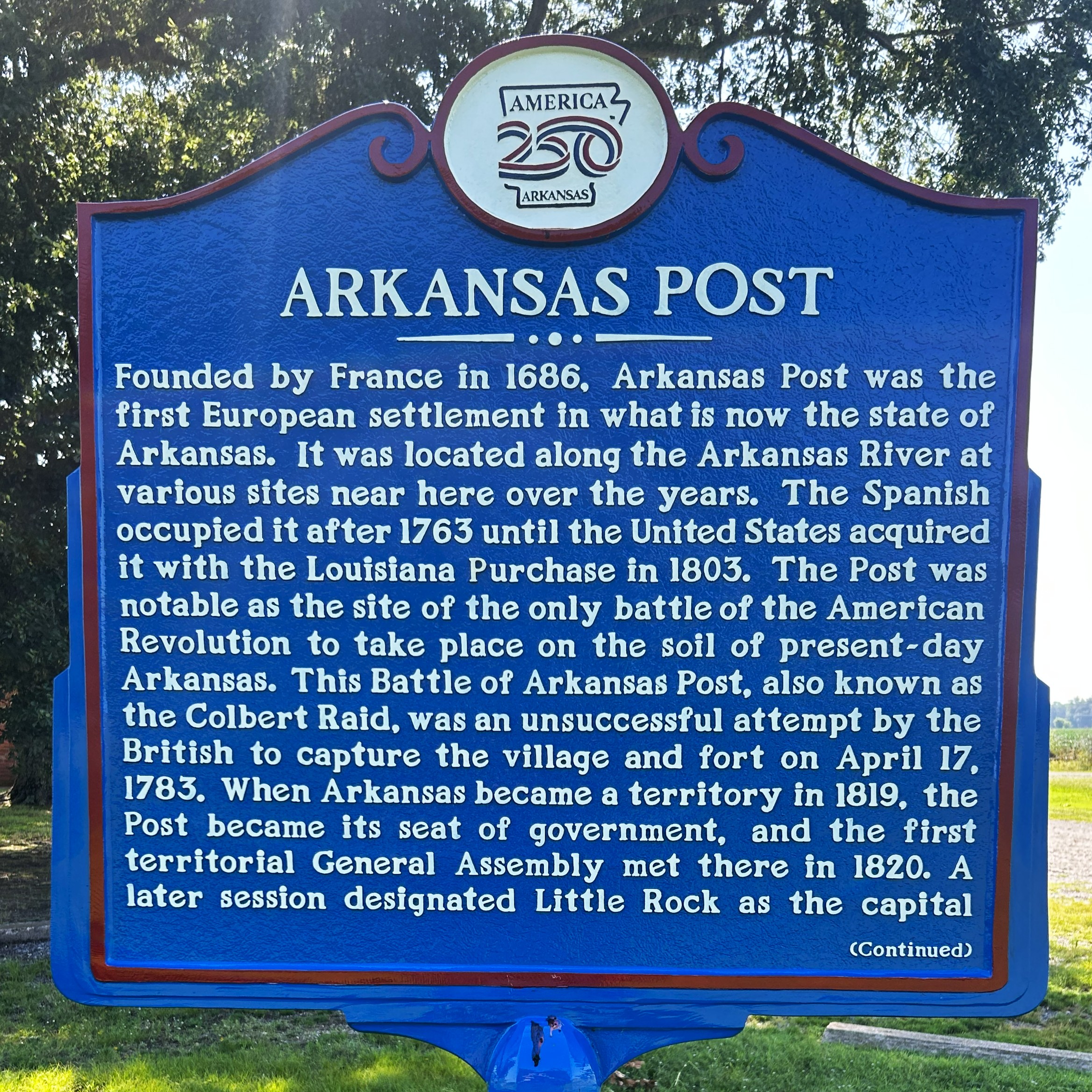
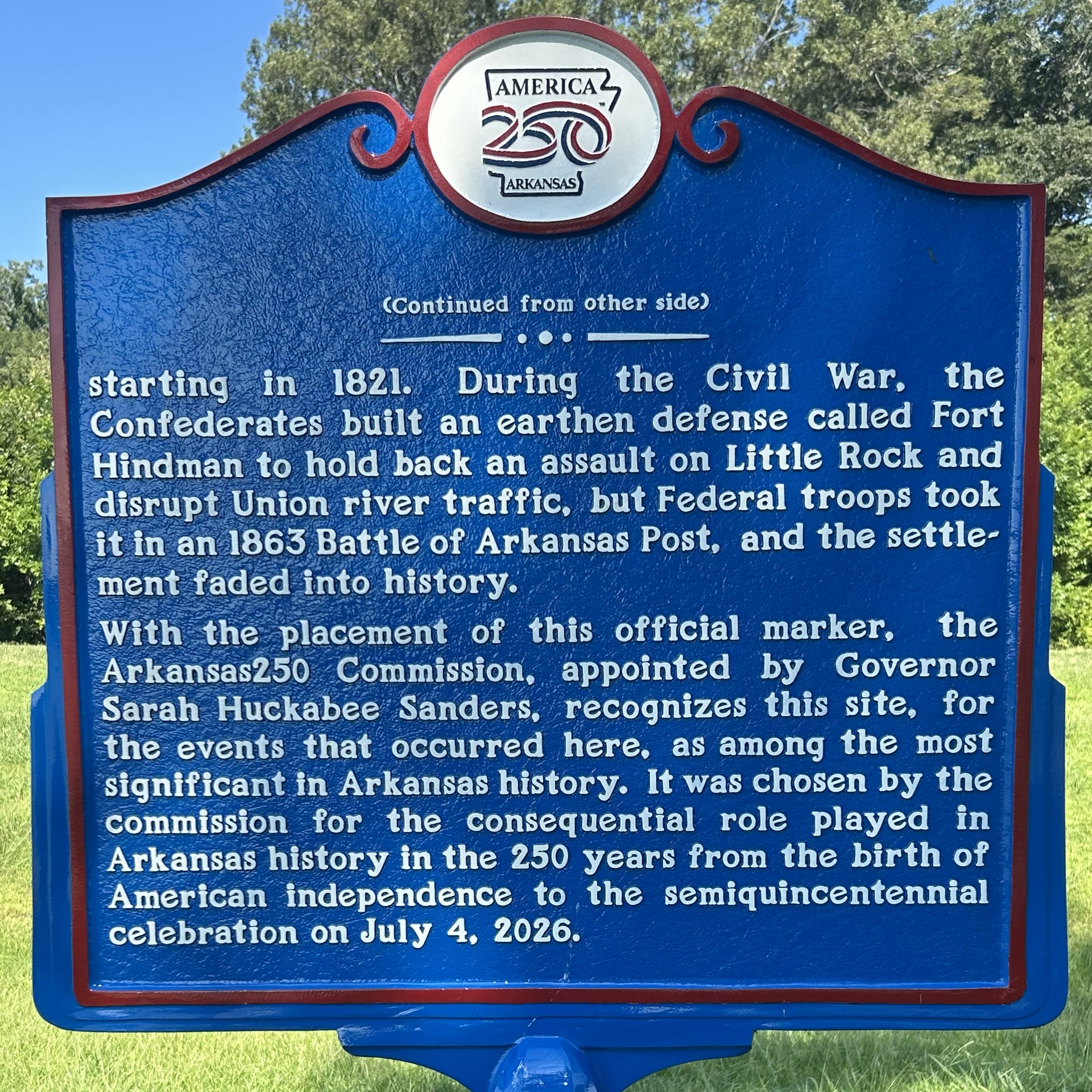
This museum and its artifacts were once the Arkansas County Museum until the state took it over. Like any county museum, it has it dresses and uniforms donated by locals, a mock-up of a doctor’s office and general store, antique housewares, and, of course, Indian pottery. But as a state park, the things are arranged nicely.
The park sits on a wedge of land by the turnoff to Arkansas Post National Memorial.
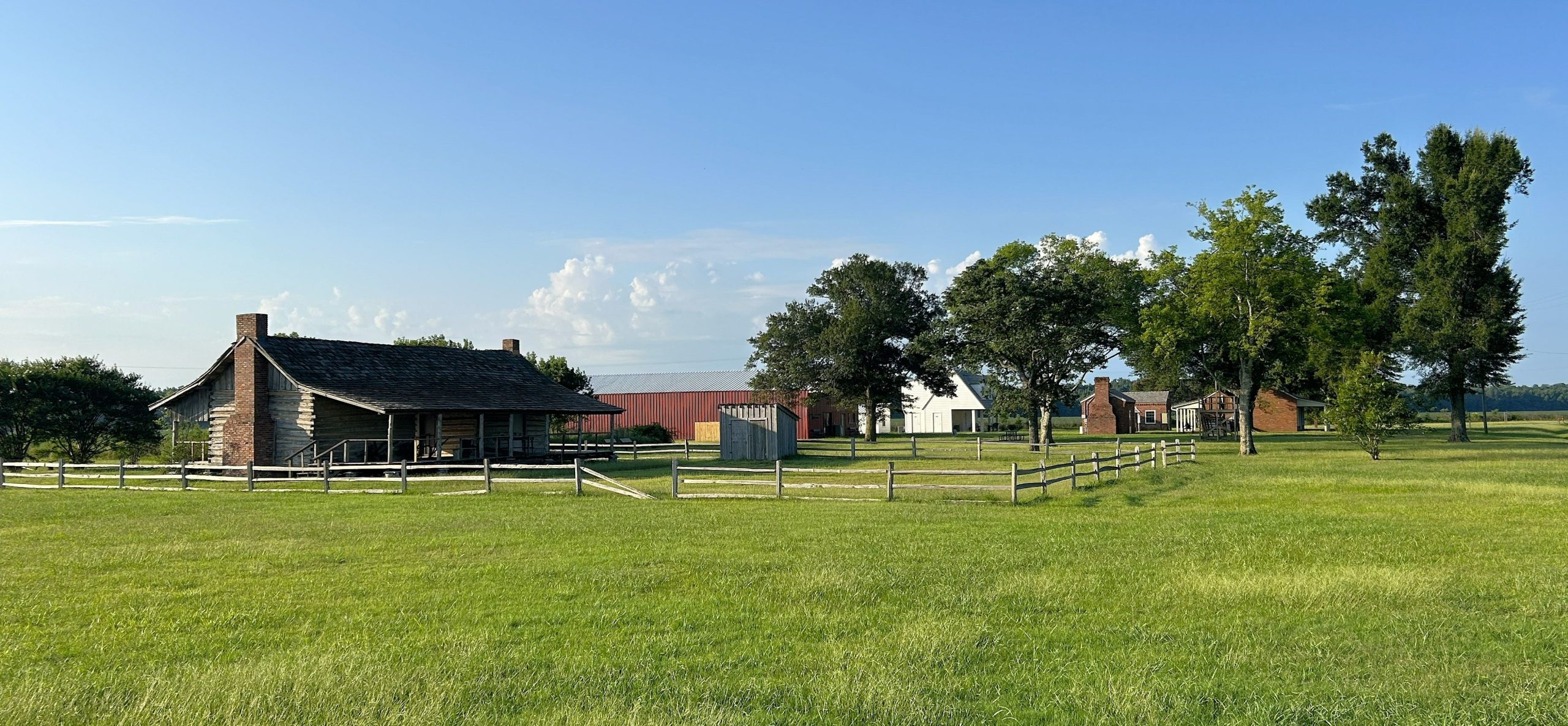
I stopped in once before a year or so ago, before I was collecting passport stamps. On that visit, the sole employee was painting a door. Today, the sole employee was replacing vent filters in the visitor center. On both occasions, I was the sole visitor.
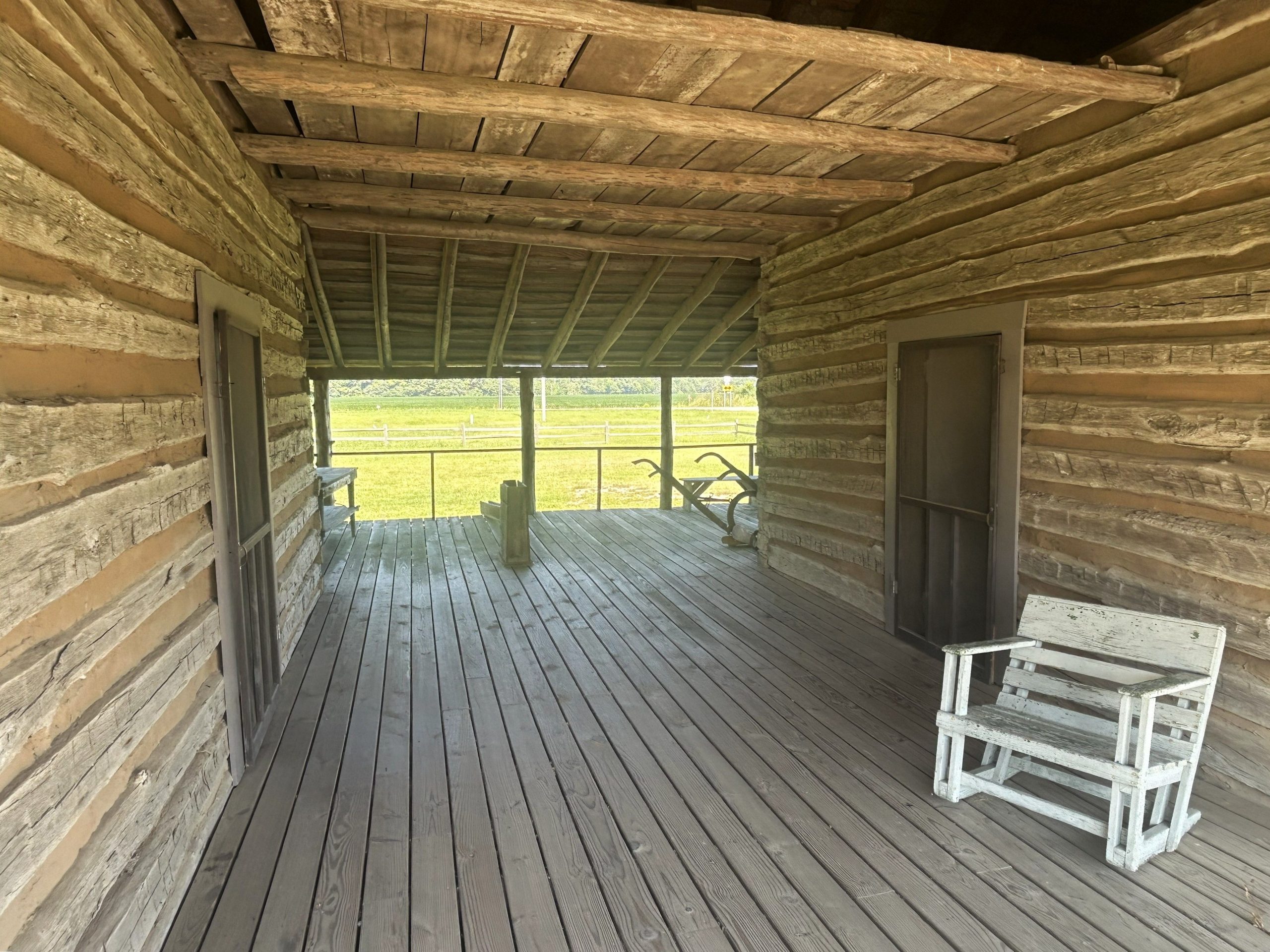
The Refeld-Hinman Log House is the only original structure. It was built in 1877 about half a mile from where it now sits — presumably without the wheelchair ramp. It was constructed without nails.
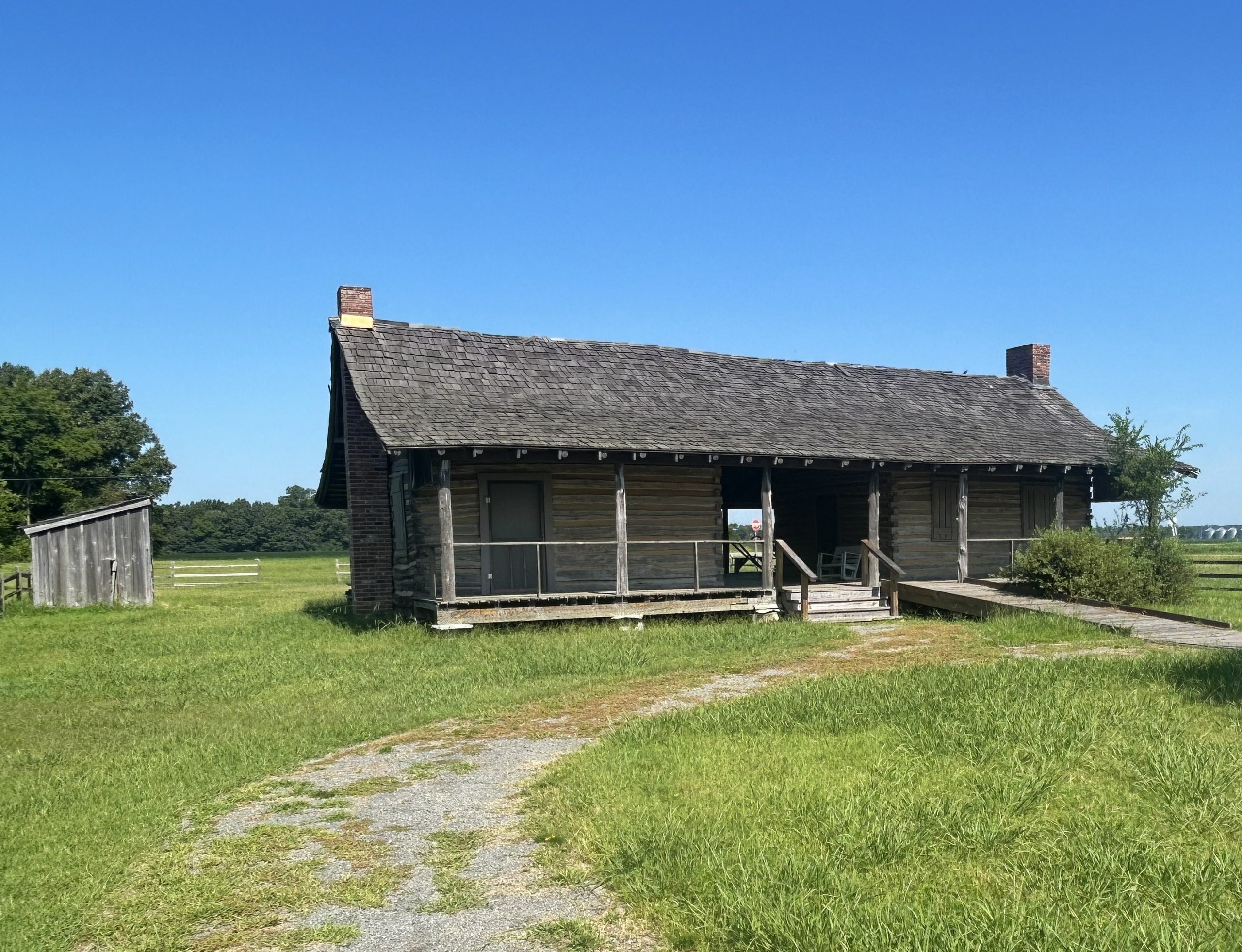
It’s a dog-trot cabin, which means the two halves of the house are separated by an open section in the middle where much of the family activity took place. I think it’s a great idea.
The visitor center was built to look like a southern-style house. There’s a display of women’s fashions inside, and a room made up like a parlor. Next to it is the summer kitchen building.
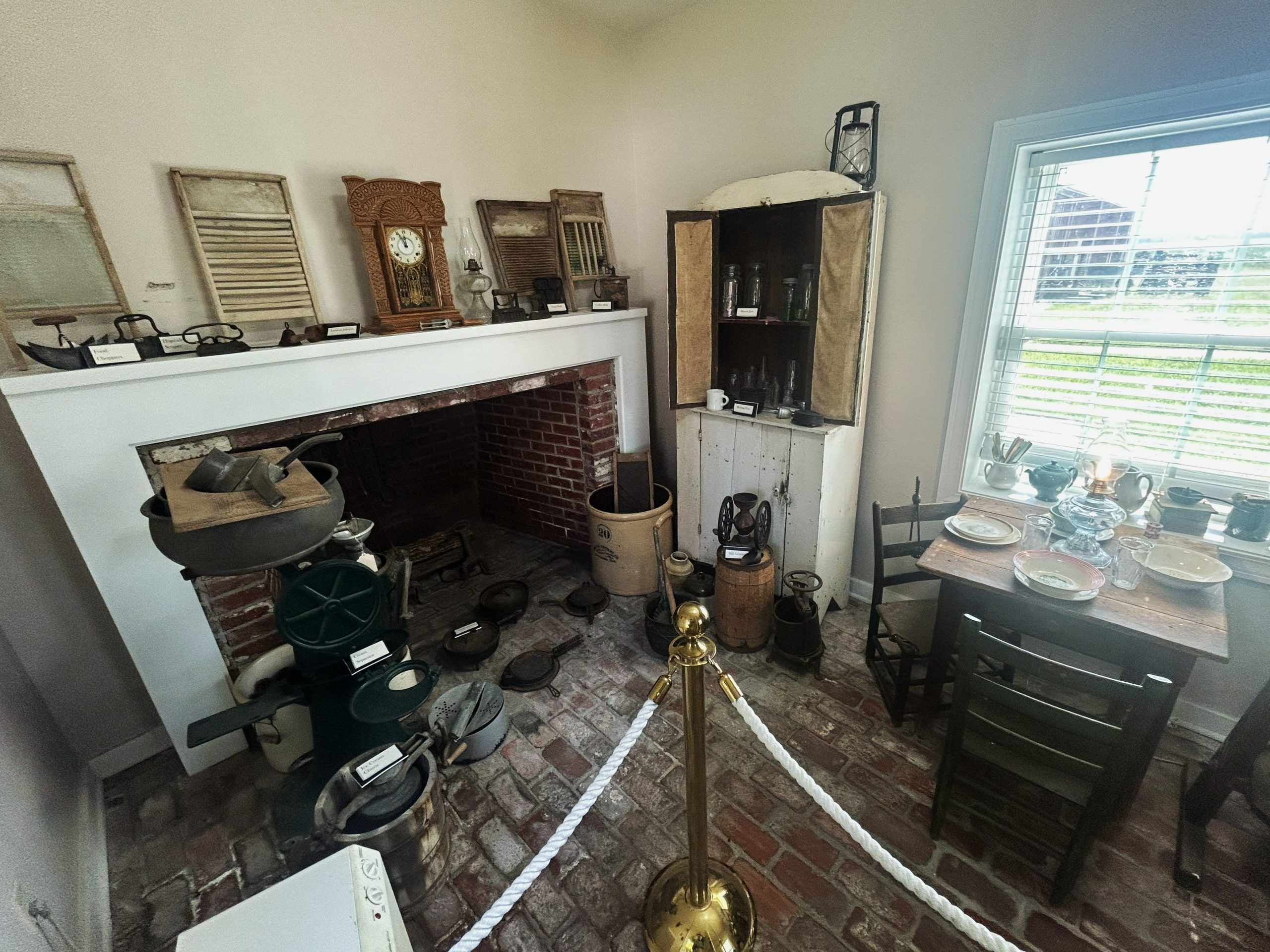
The filter-changing lady told me there were two original buildings. The cabin was one, and the other is a playhouse on display inside the main exhibit building. I guess it’s a building …
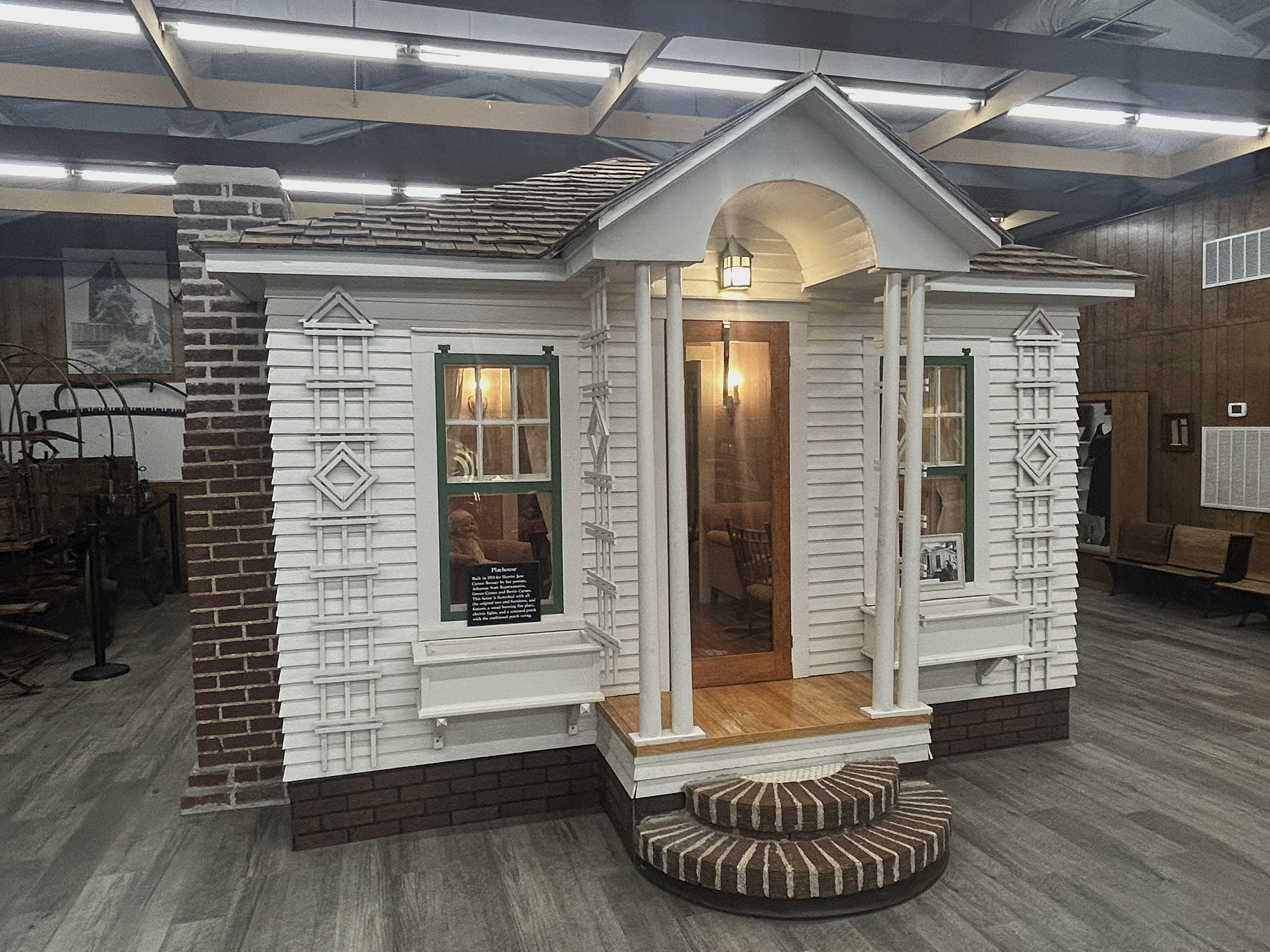
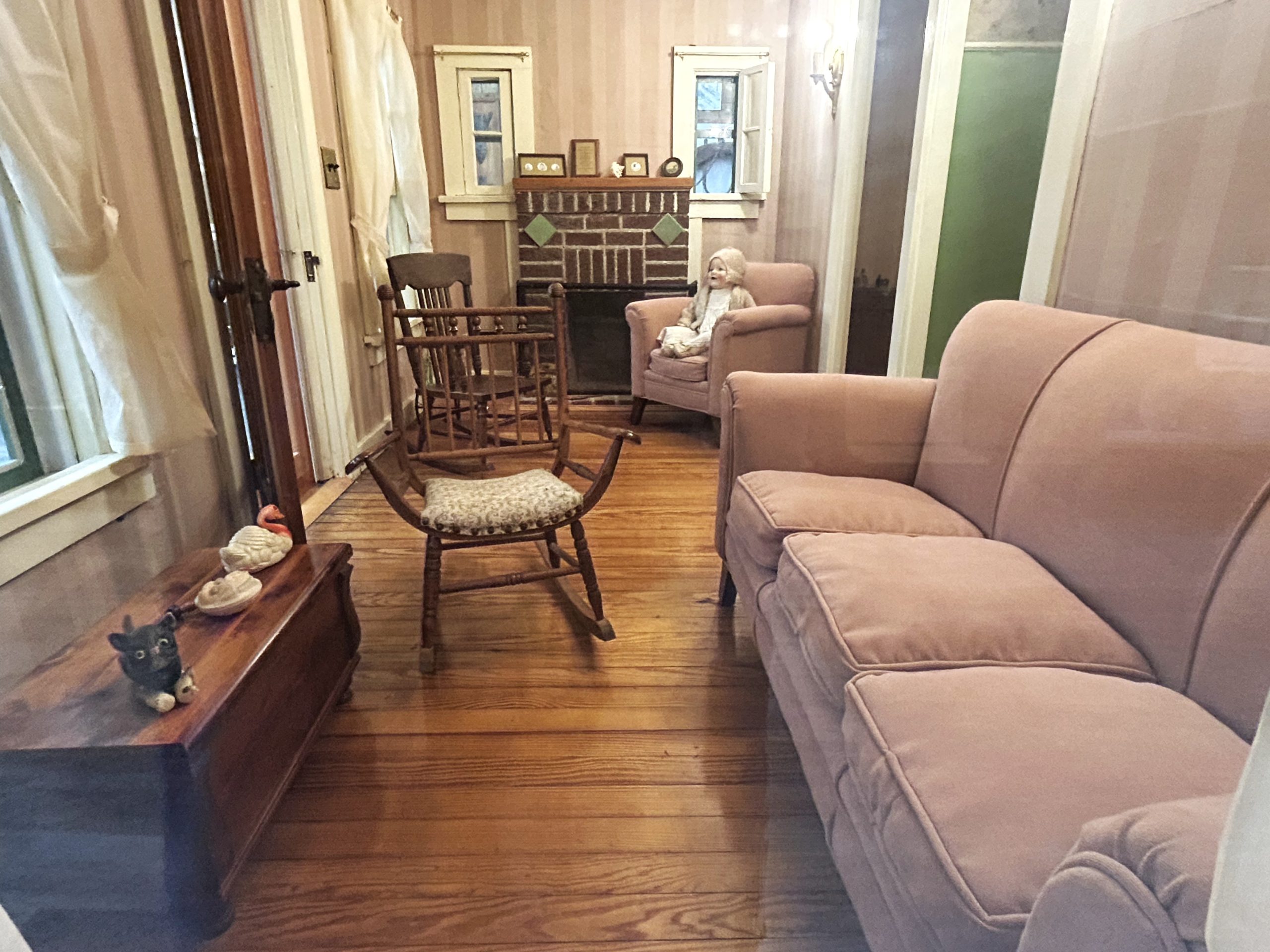
It was built in the 1930 by a state congressman for his daughter. It has a wood-burning fireplace, electricity, and a screened back porch.
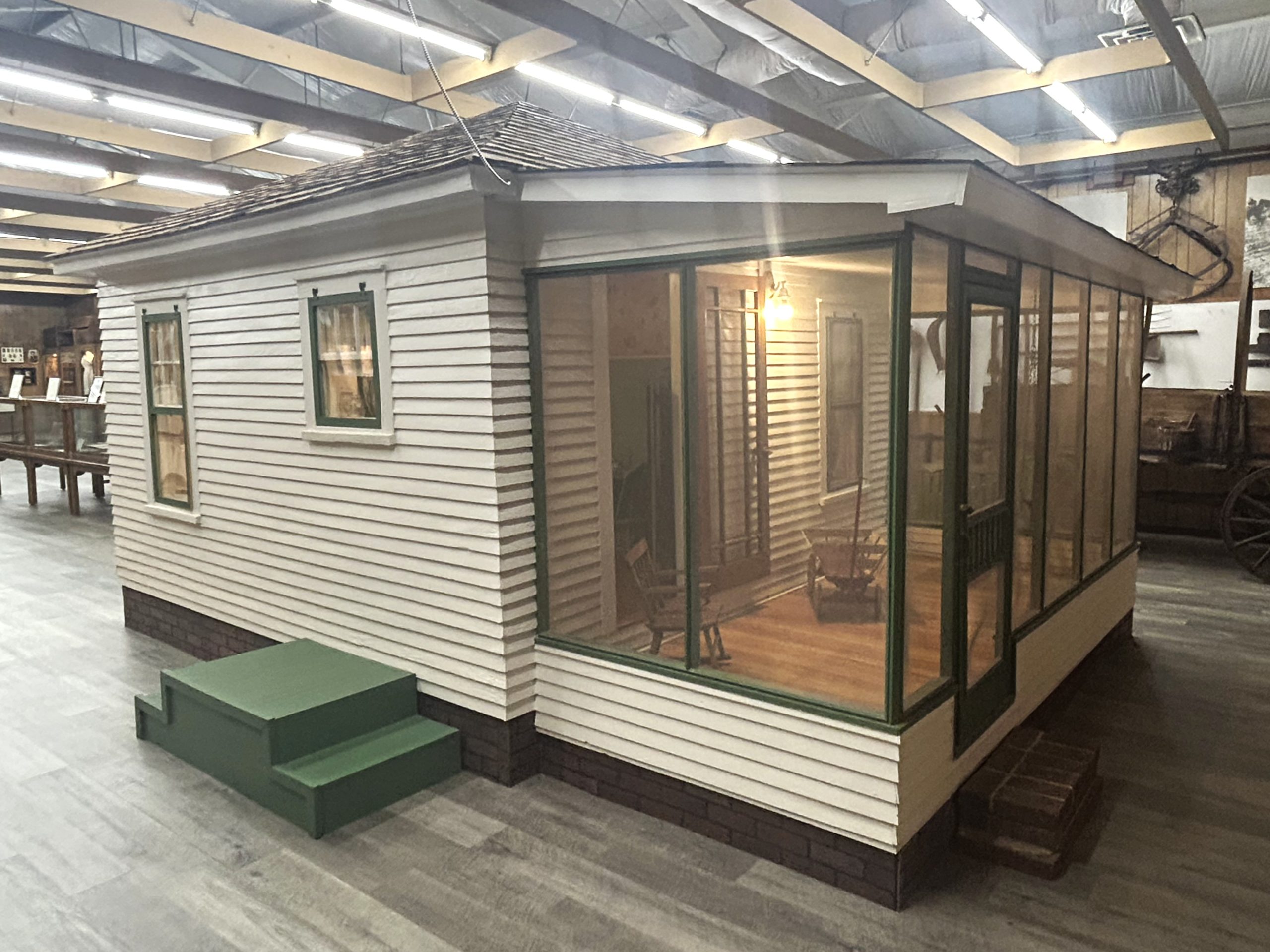
The inside is furnished with kid-sized furniture in the living room, kitchen, and bedroom.
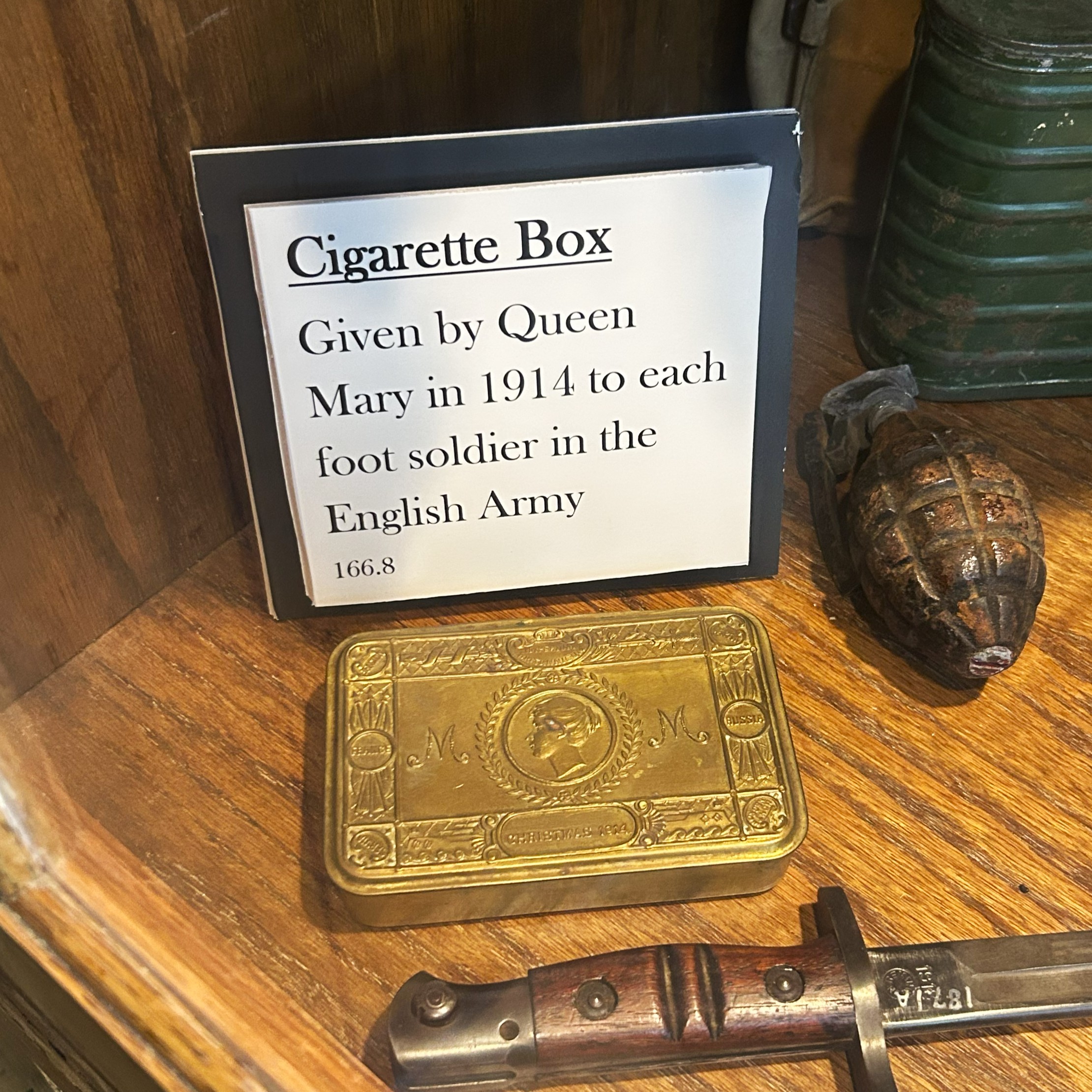
Other exhibits in the building include this cigarette box from WWI. The story of how it found its way to rural Arkansas may be the most interesting thing about it.
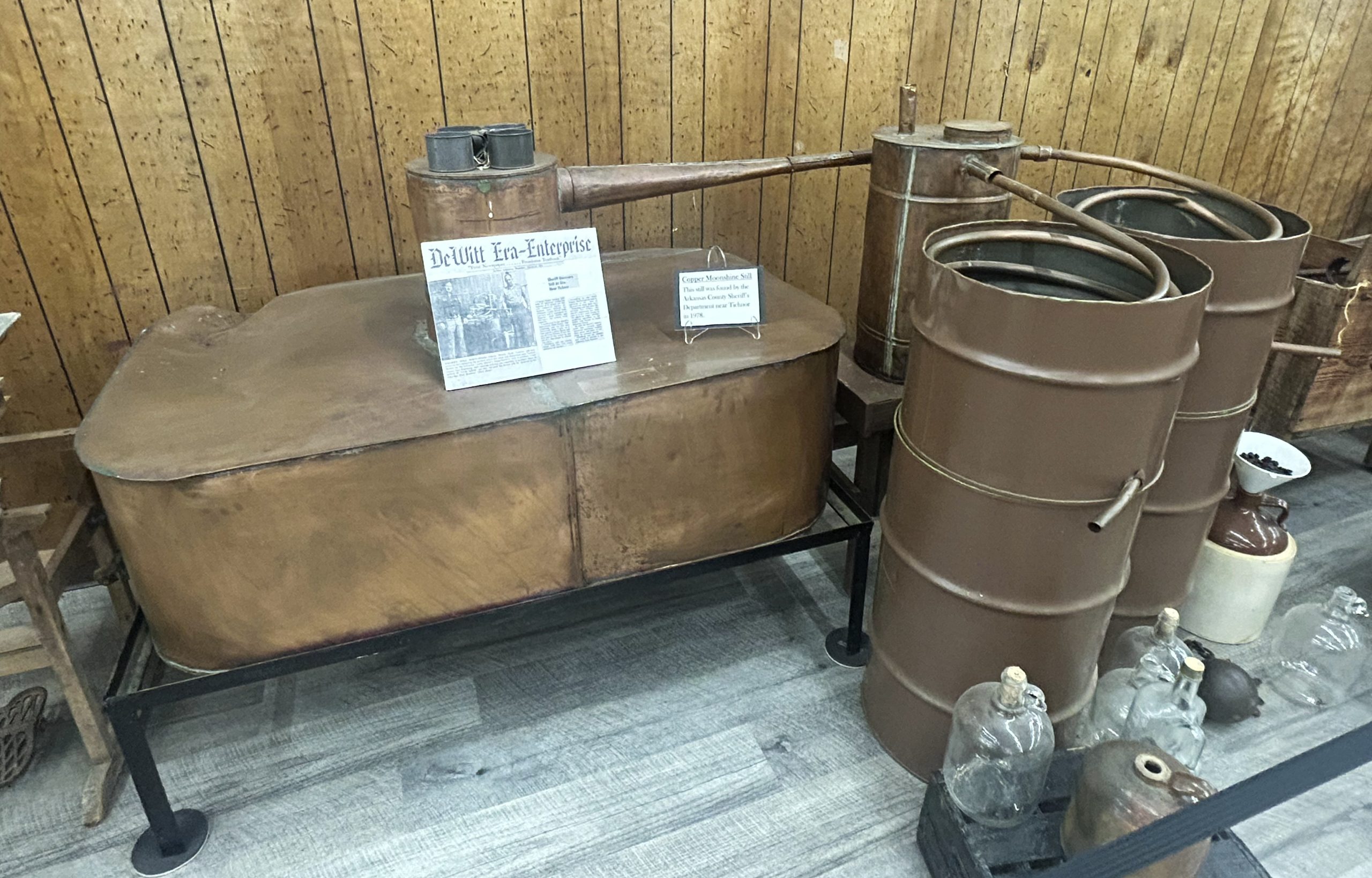
This moonshine still was discovered and confiscated in 1978 near Tichnor, Arkansas. It could produce 50 gallons a day.
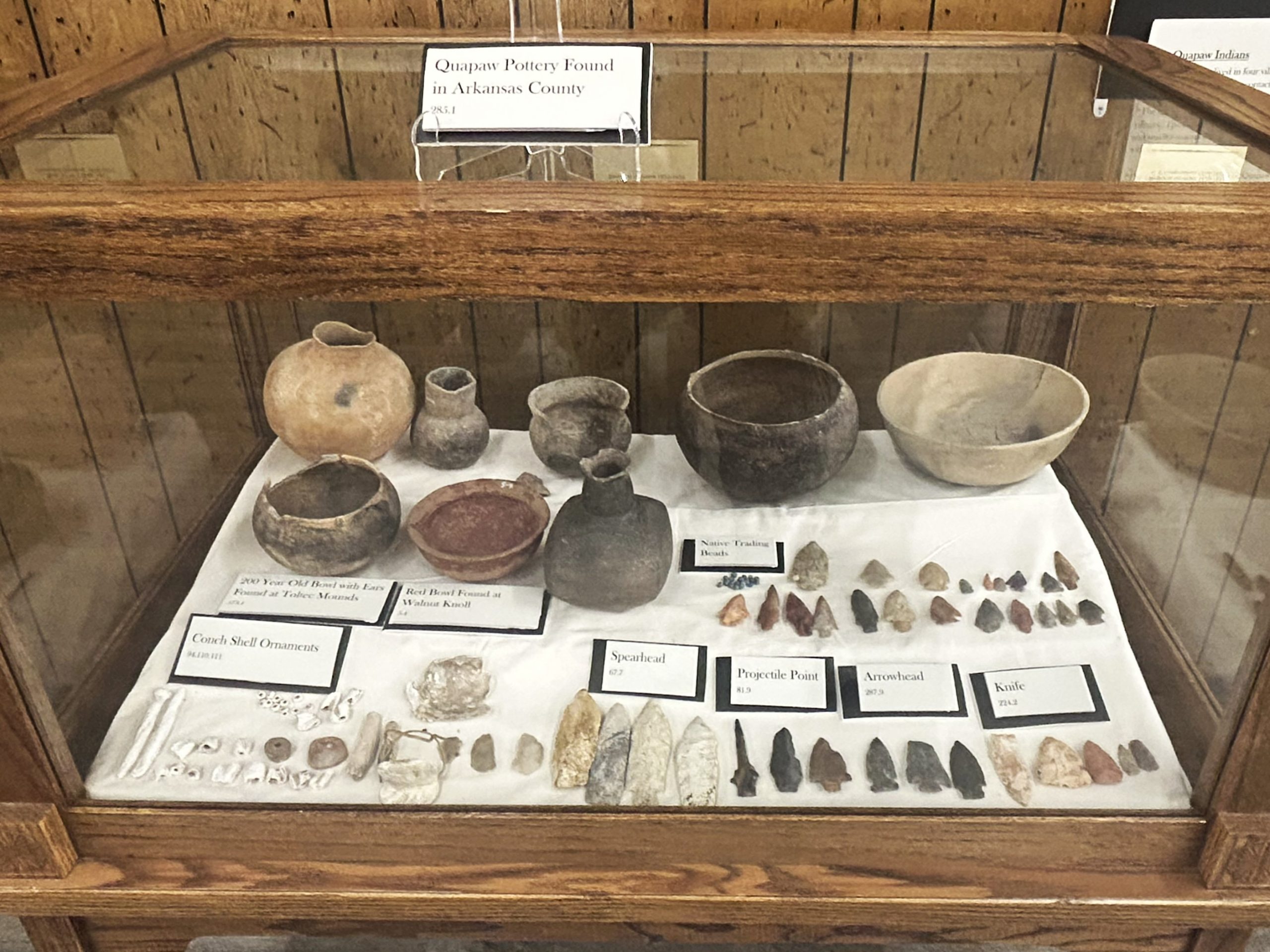
And of course Indian pottery. You can’t have a museum in Arkansas without Indian pottery.
I looked at everything there was to see, and even read most of the signs, and I don’t think I was there half an hour.