
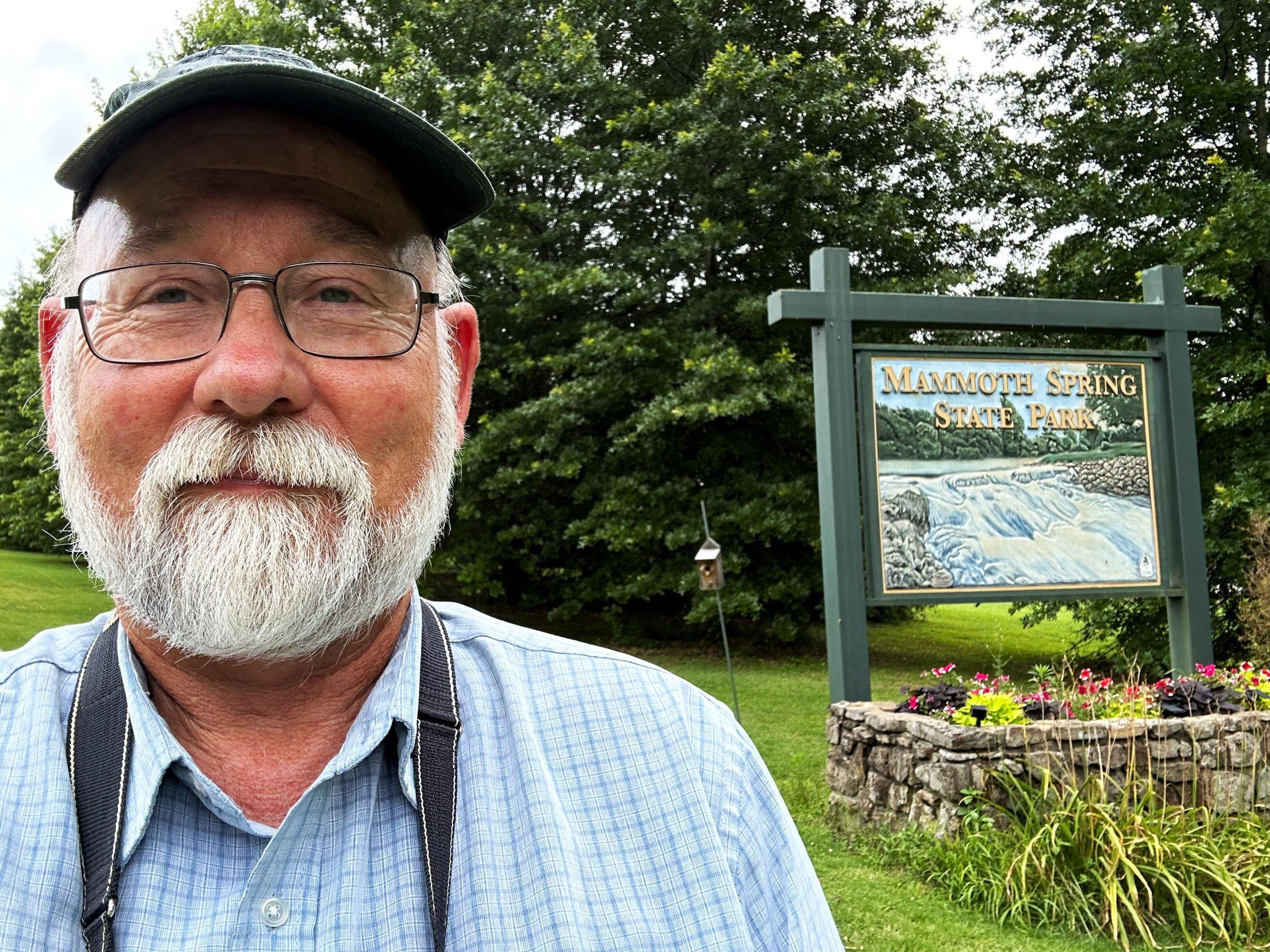
This park is in extreme northern Arkansas near the Missouri border — literally 500 feet from the Missouri border. It seems more like a city park than a state park — there is no wild area or campground — just a lake, a gift shop that doubles as the state welcome center, a hydroelectric dam and power house, a train depot, some picnic tables, and a baseball diamond.
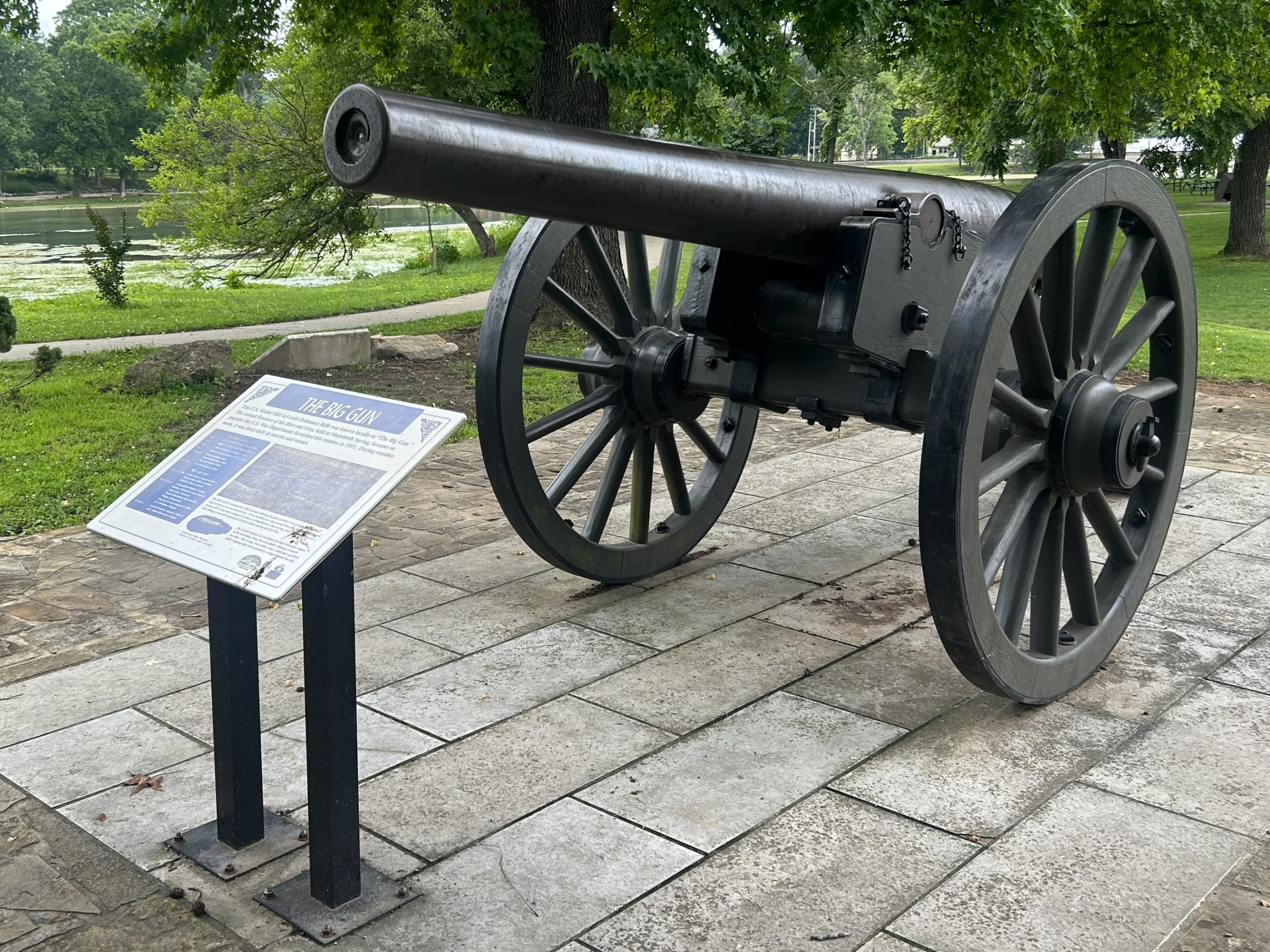
After talking with the overly enthusiastic young man in welcome center, I set off to see the spring. First I came upon a Civil War cannon that has nothing to do with Mammoth Spring or Arkansas. It was a gift from the Federal government because there was an annual reunion of Confederate and Union troops here — when there were any. They still have an annual festival although Civil War veterans no longer attend.
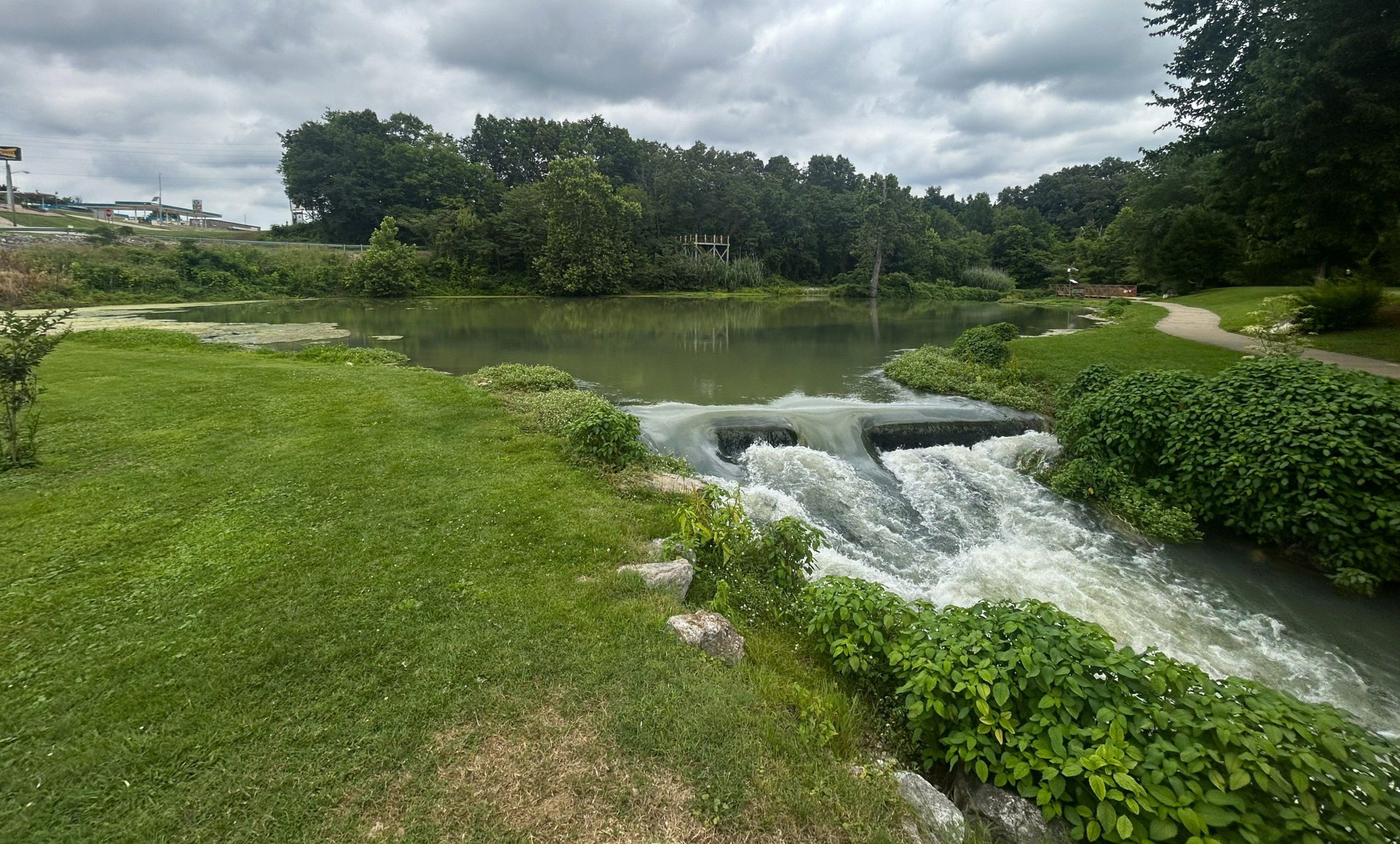
The spring shoots up seventy feet below the surface of a pond and cascades over two waterfalls into Spring Lake. It’s the 10th largest spring in the world with a flow of 9.78 million gallons of water per hour or 235 million gallons a day.
Here’s the view I took later from the observation deck visible in the trees in the center of the photo. The Welcome to Missouri sign is just beyond the gas station on the hill.
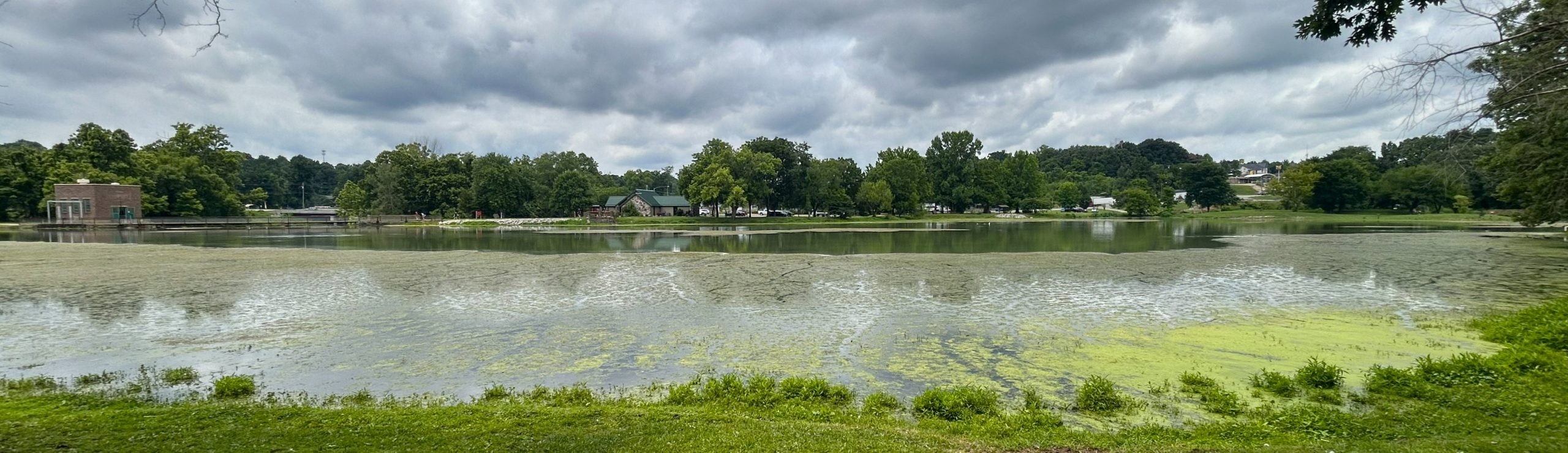
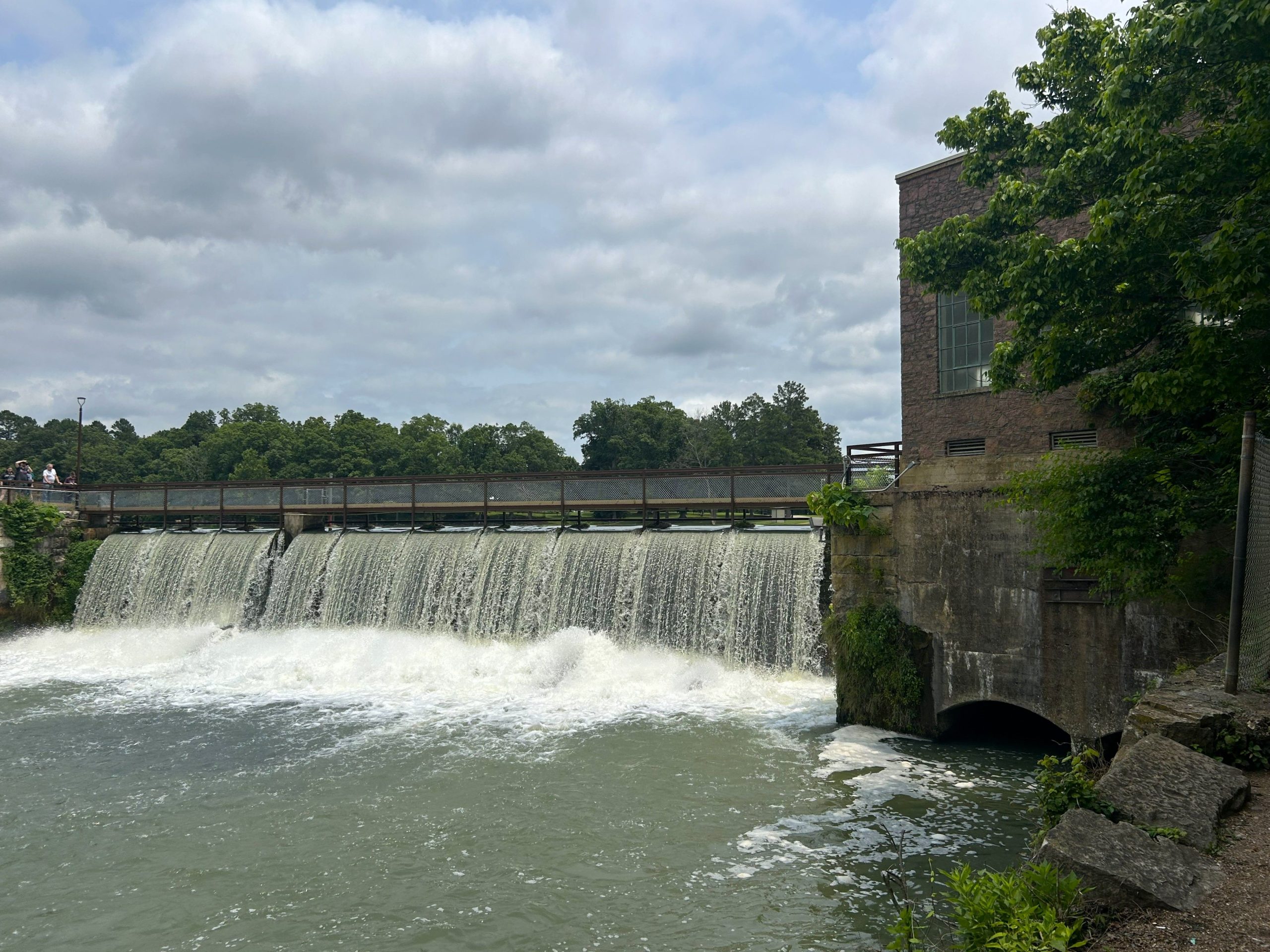
This is Spring Lake looking west from near the Train Depot. The power house and dam are on the left, the welcome center is in the middle, and the spring is hidden in the trees on the right.
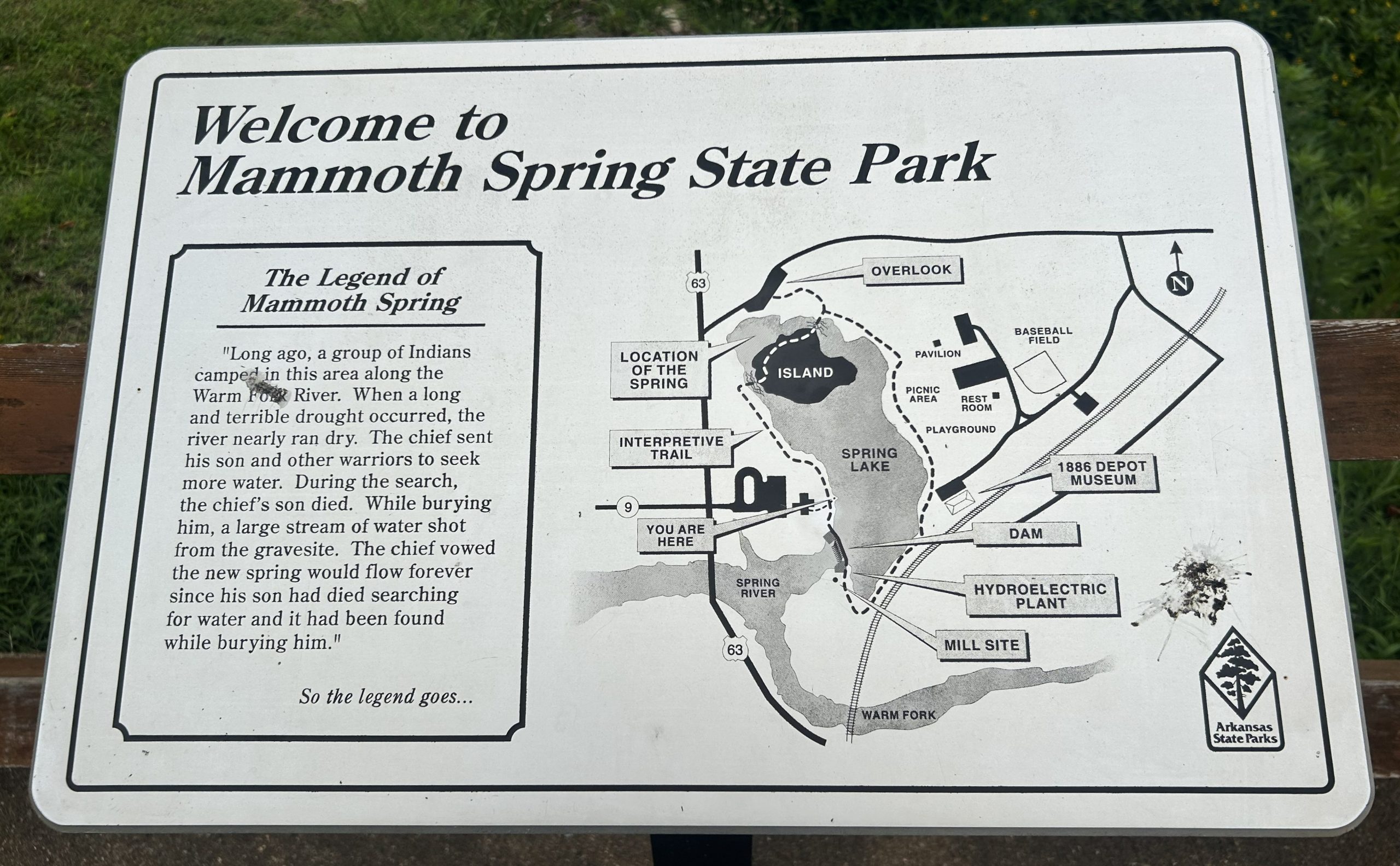
The dam was originally built by the mammoth Spring Milling Company, a large concern that milled and sold wheat. Just one small cement structure is left. You can see what the mill looked like on this sign.
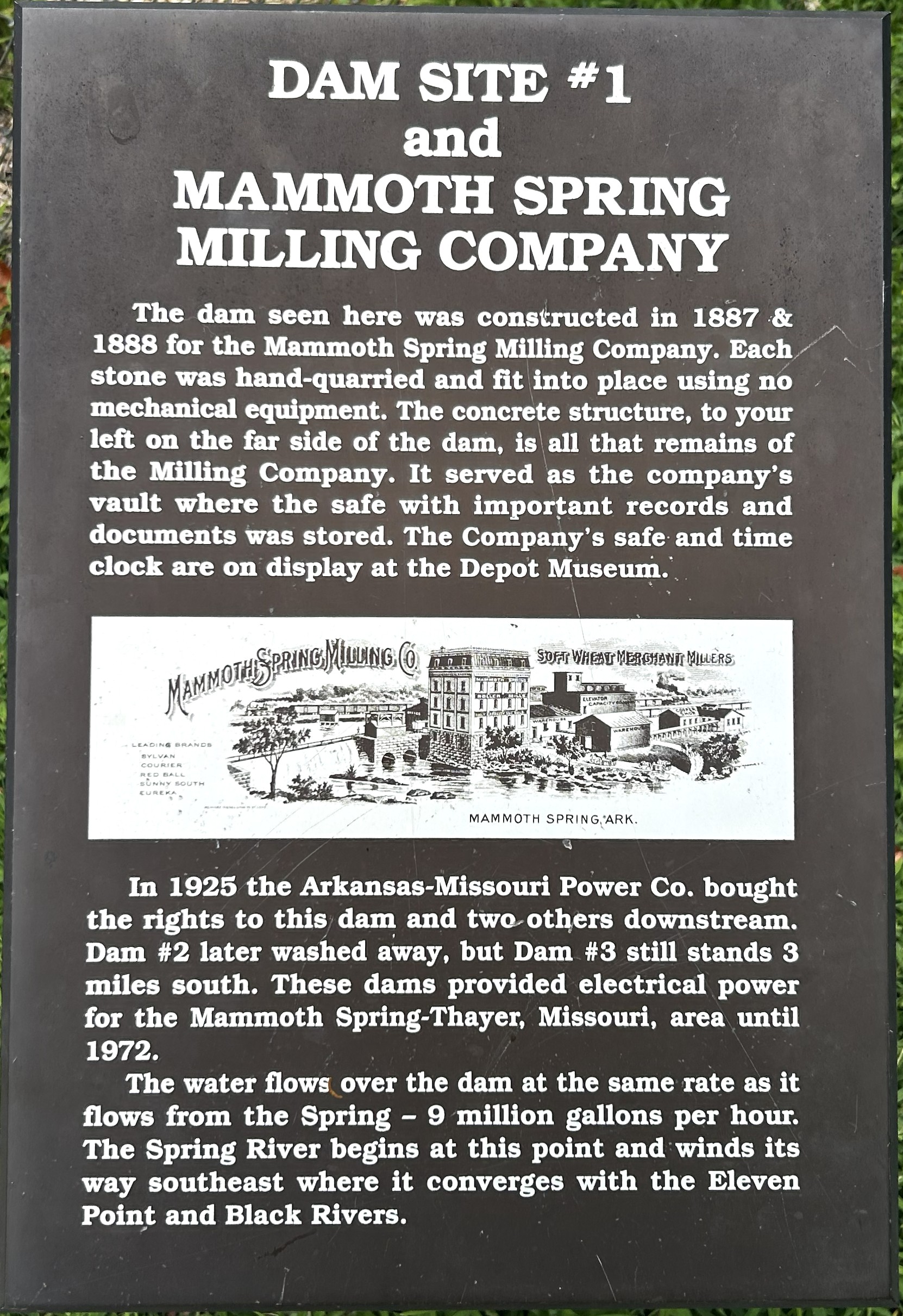
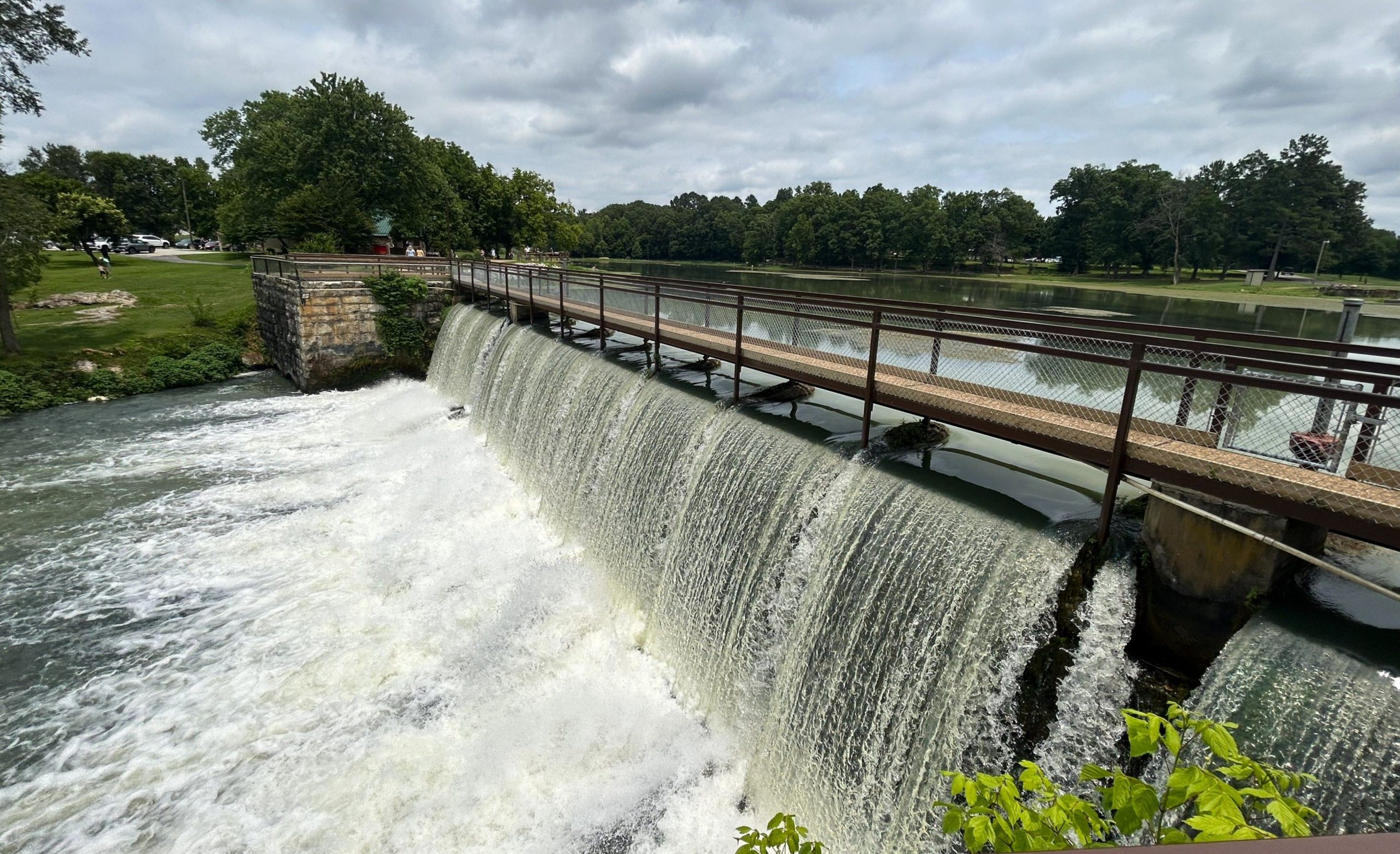
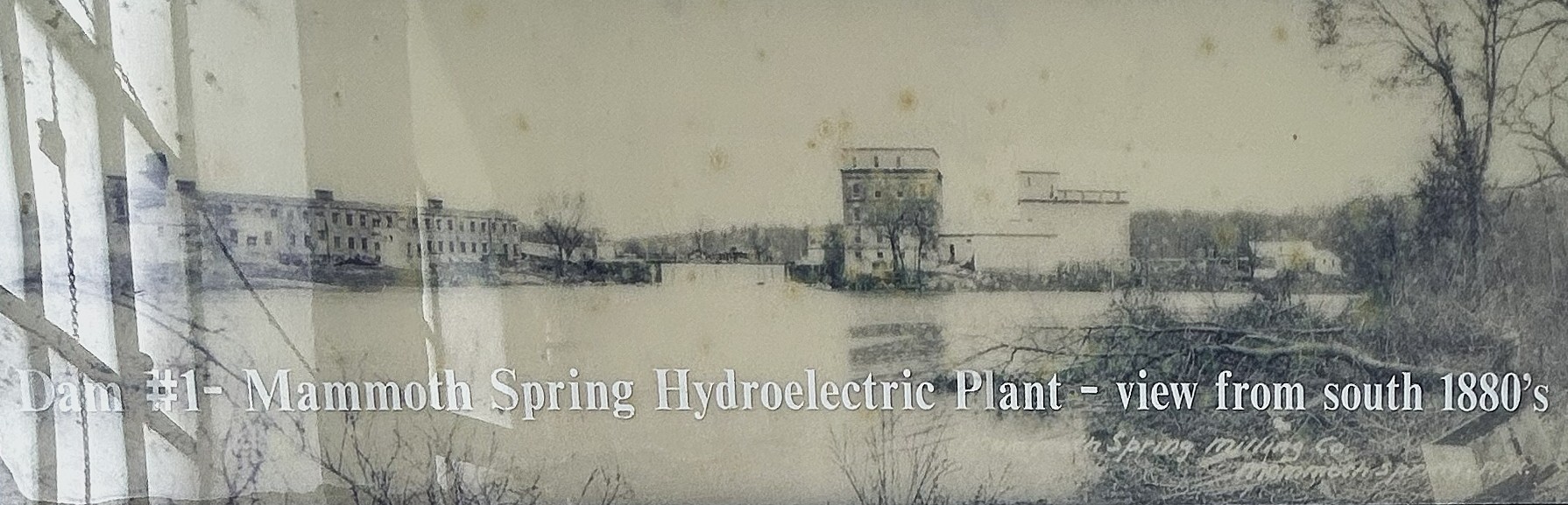
It was then purchased by a power company, which operated here until the early 1970s. Here’s what things looked like when that was here.
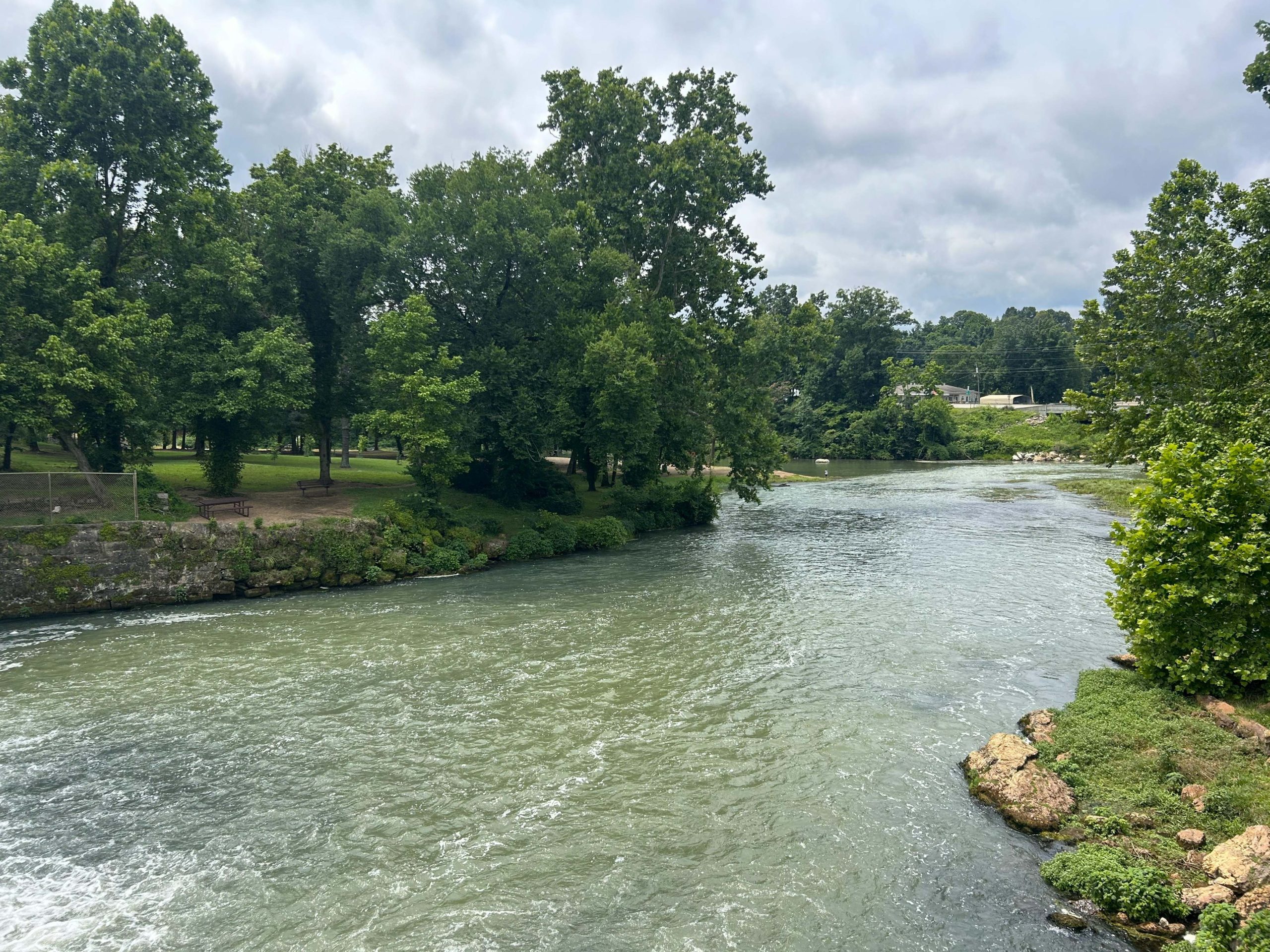
I’m not sure anything demonstrates the size of the spring so much as the view down Spring River. The spring is the sole source of water for the river. Mammoth indeed.
I came on a Wednesday because I wanted to see the Depot Museum, which is closed some days. But I had to wait around for an hour until the guide returned from lunch. I wandered about looking for birds and covering pretty much the entire park. It isn’t large.
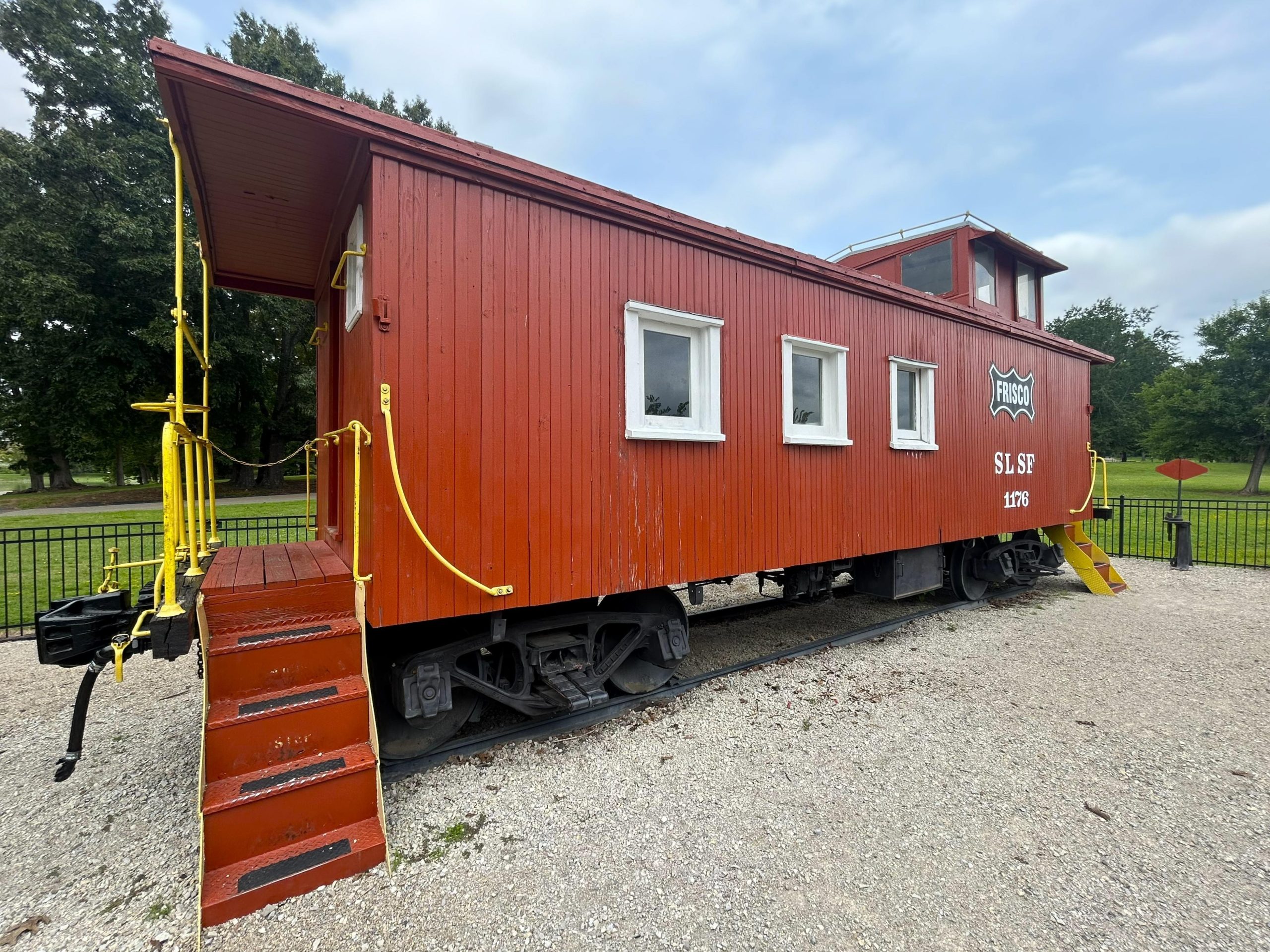
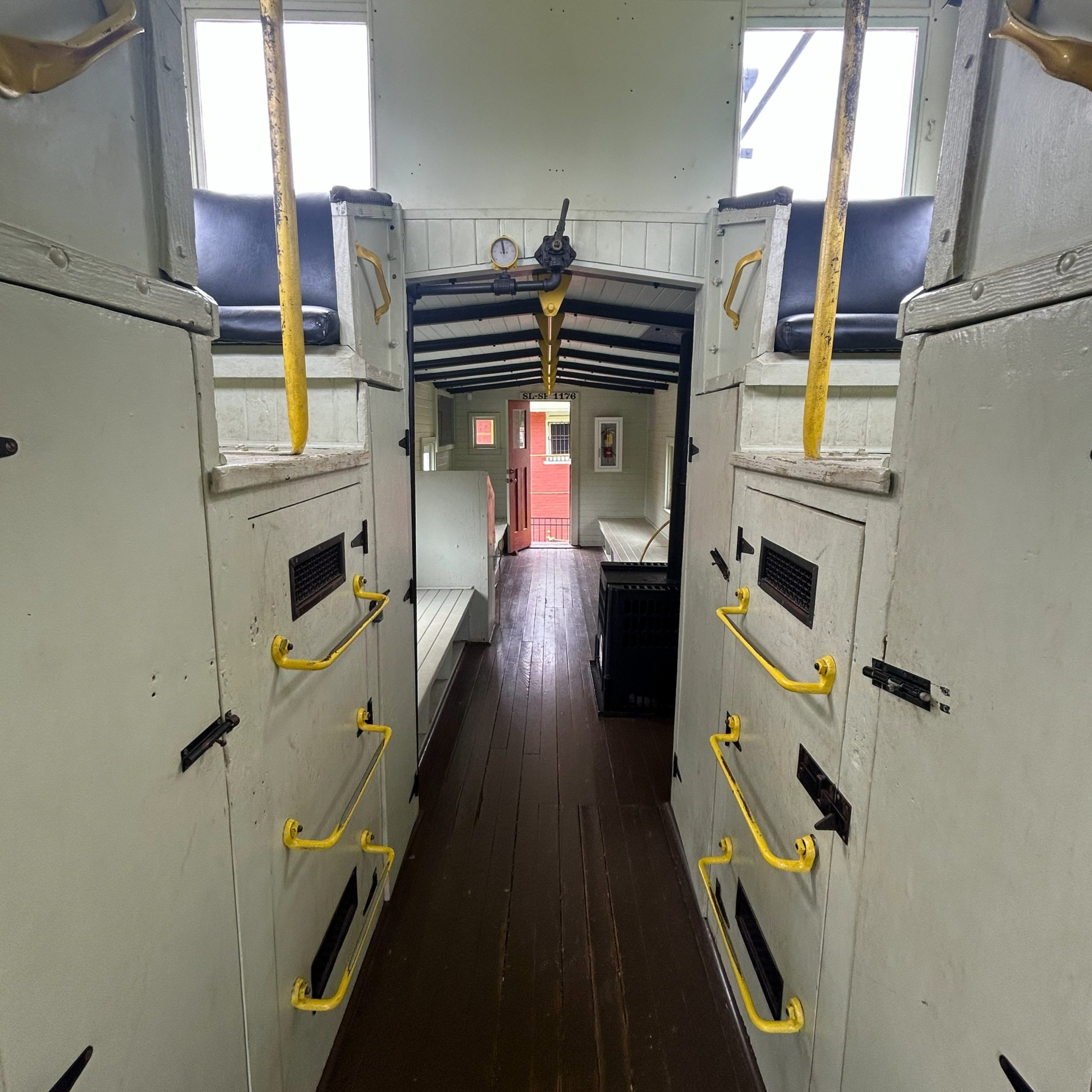
I also wandered around and through the caboose parked next to the depot.
The depot was built on this spot in 1885 for the Kansas City, Ft. Scott & Memphis Railroad.
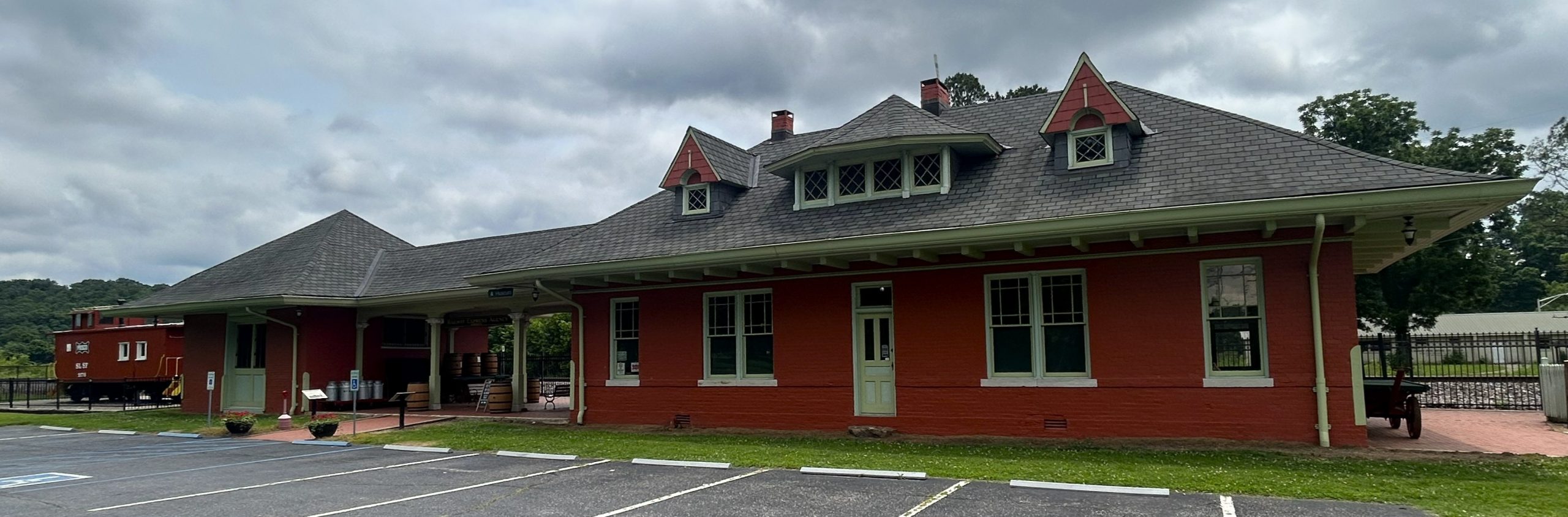
It’s set up with dioramas inside to give a feel for what it would have looked like in operation if all the people had been made of wax.
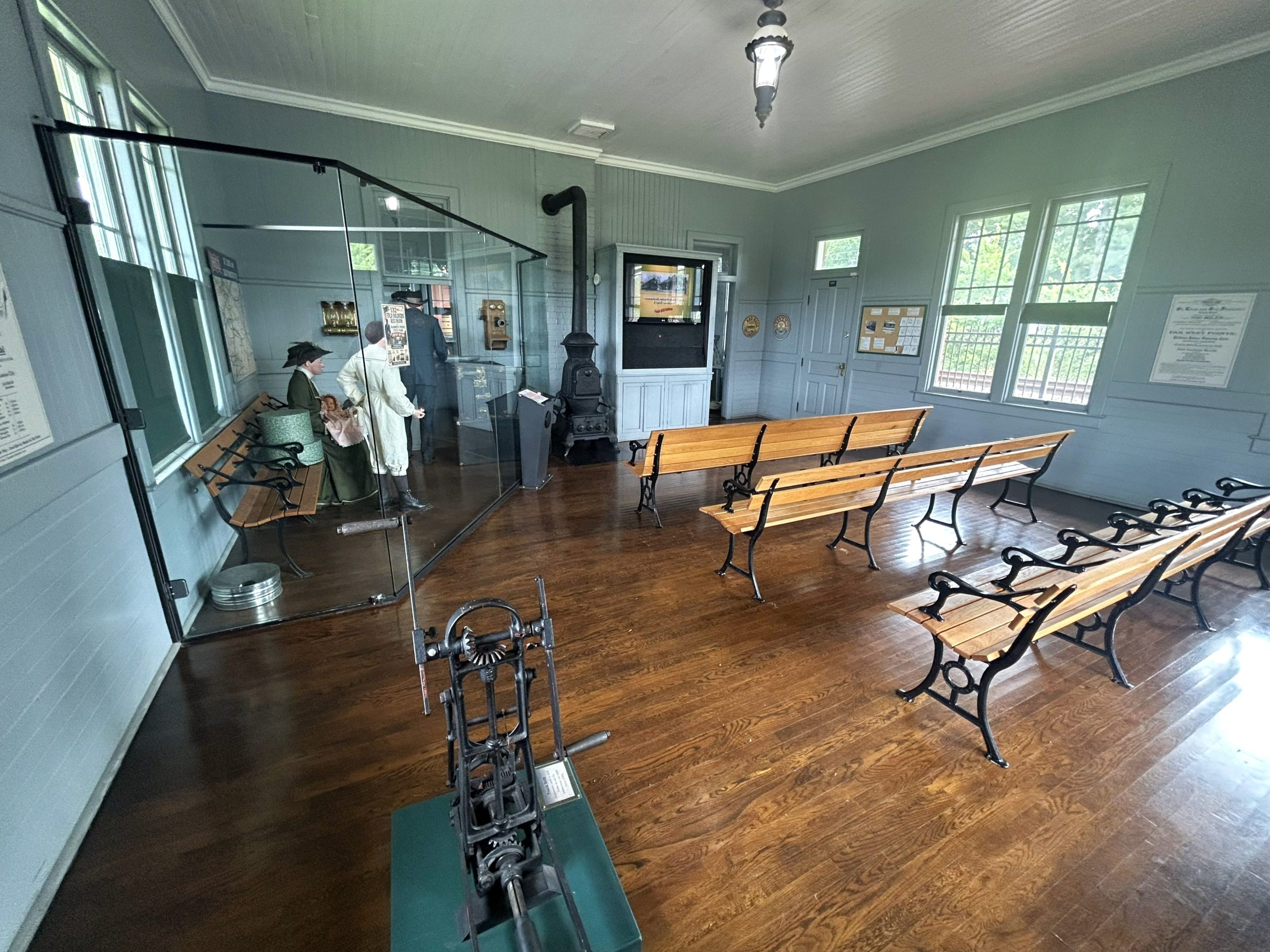
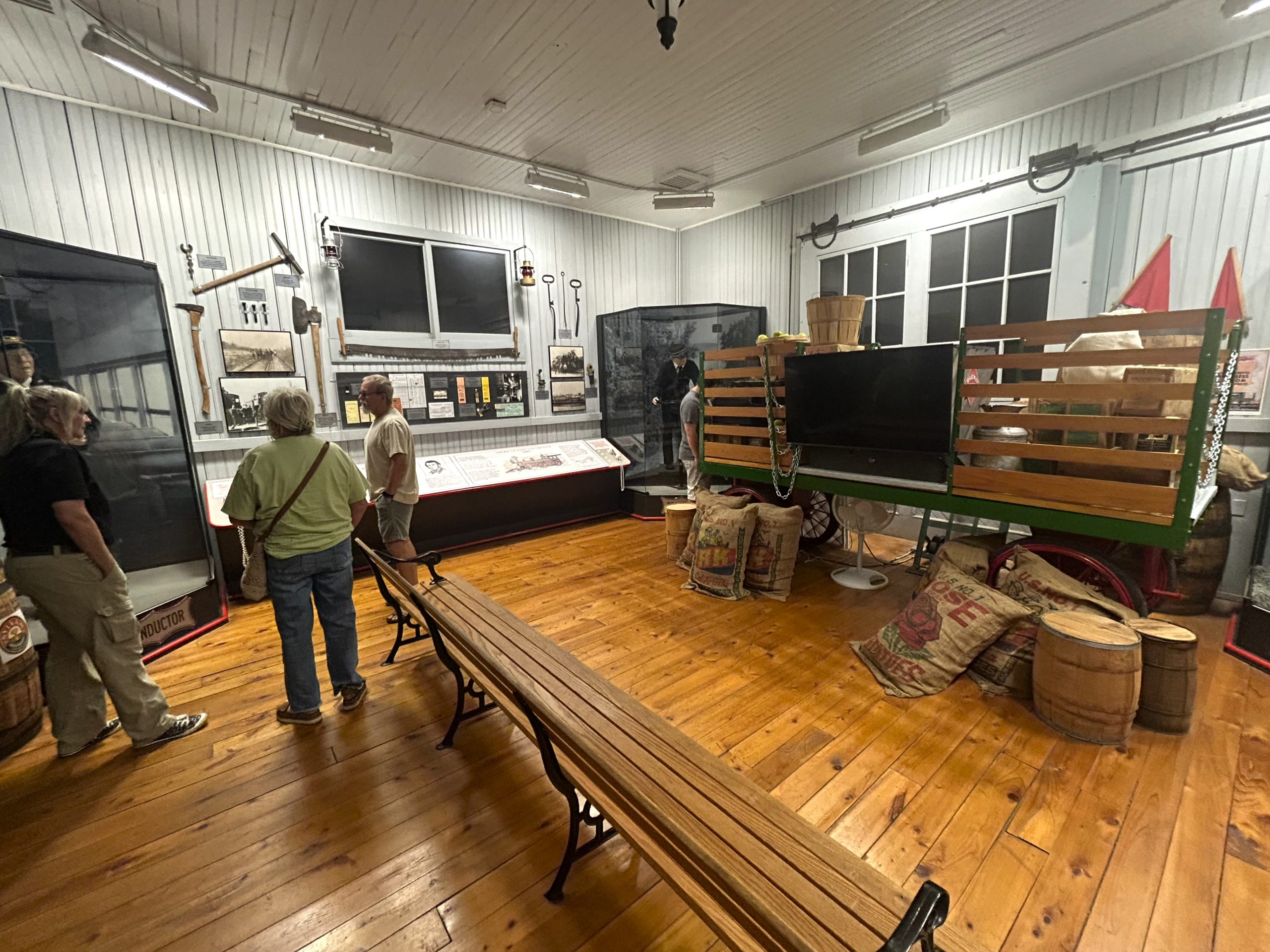
There were interesting displays on the walls, including one on the four or five train wrecks that have dumped cars into Spring Lake over the years.
The smaller section of the depot was the baggage area, and the guide unlocked that and let us in there too.
In all, I was at the park for something less than two hours, but I feel like I saw what there was to see. It was a pleasant place, but I’m unlikely to return since it’s almost three hours from my house.