The Warbling Vireo has just been officially split into Eastern and Western species, netting me another lifer. According to my eBird records, I saw my first Western one in 2008 on a work trip to Portland. My sister and I went out a couple days early to sightsee. On the first day, we drove along the Columbia River, stopping at three or four places to look around and bird. I remember the Viento State Park— just a thin strip of vegetation between the highway and the river, but I don’t remember this particular bird because it was just a Warbling Vireo at the time, and I’d seen plenty of them in Illinois.
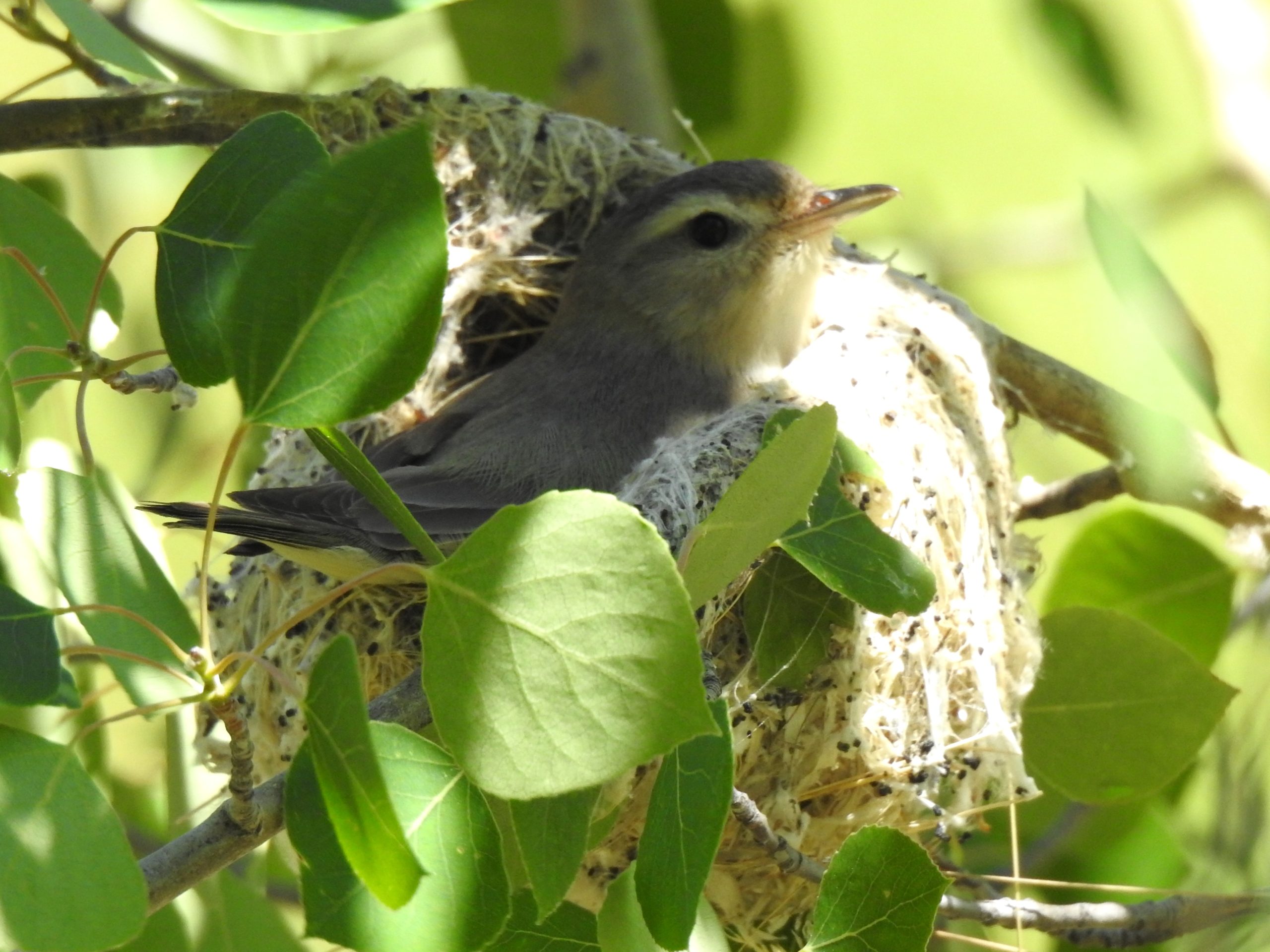
I do have a distinct memory of two Western Warbling Vireos I saw in Eleven Mile Canyon in Colorado on June 20, 2020. My wife and I had visited the canyon a short time earlier, and when I looked at the park list, I realized I was just a few birds away from having the largest list. I went back and spent a good chunk of a day looking for birds, and by the end of the day, I had the largest list (since surpassed—as of October, 2025, I’m in second place, five behind the leader). Anyway, maybe because the Western Warbling Vireo’s song is somewhat different than the Eastern song I’m more familiar with, I decided to find the actual bird and make sure it was a Warbling Vireo. It took me a long time. I circled around a small clump of Aspen, trying to triangulate and find the bird. I finally spotted it—actually sitting in its nest and singing. I didn’t know birds did that. Later in the day, about five miles away, I heard a second one. This time, with a better idea of what to look for, I found it much faster. It was also singing on its nest. I got photos of both birds.
When the new species was added to eBird, my records were automatically split. I’ve seen Western Warbling Vireos 43 times, most of them in Colorado while I lived there, but also a few in Arizona on my 2022 trip and one in Grant Teton National Park in 2024.
Posted inWildlife|Comments Off on Bird #609 — Western Warbling Vireo
The day began oddly. As I was checking out at the Hampton Inn, the clerk saw where I was from and said, “Wow, you’re a long way from home. Did you drive?” I said “yes.” I thought it was an odd question. For starters, we were only eight hours away from home, which isn’t that far, and I’m not sure how else we could have gotten there. My “yes” was said in a voice that meant “I’m not sure why this surprises you since you work in a hotel and see people from out of state all the time. Can you expand on your question.” The clerk must have thought my “yes” meant, “You are a world-class moron.” He gave me a curt “Fine, then,” and wouldn’t speak to me again. It was Macomb, after all. Perhaps he confused Arkansas with Alaska or Albania or something. After a quick breakfast at the hotel, we took off.
We had four goals today.
Get from Macomb, Illinois to Ogden Dunes, Indiana.
Travel through Mercer and Stark Counties, the two counties in Illinois I’d never been in.
Avoid all Illinois toll roads. Some backstory here: In 2023, we traveled up to Wisconsin and returned through Illinois, visiting some of our old haunts and old friends in Chicagoland. Along the way, we drove on toll roads. You can no longer pay on the road but have to go online when you get home to pay the tolls. The Illinois government site says that it can take as long as two weeks for your tolls to appear on the site. We checked several times and never found them. We even took a screen shot of the page to show that they weren’t there. Then we got a bill in the mail for our tolls and a hefty fine for not paying them within two weeks. We sent the screen shot in to prove that we couldn’t pay them and were told that wasn’t sufficient evidence and we had to pay the fine. There may have been a 12 minute window after the tolls showed up on the site and before we were fined, I don’t know. The entire thing a perfect example of the rampant corruption and incompetence that battle for preeminence in the state. We vowed that we would never give the Illinois Tollway another penny of our money.
Avoid the stretch of I-80-94 across Northern Indiana where the road is 12 lanes wide and packed with trucks, many of which are pulling two or even three trailors.
All of that means that we would be taking a lot of backroads. At first this was fine—Mercer and Stark counties are out of the way, which is why I’d never been in either before, but we checked them off early in the morning. The entire rest of the drive consisted of going east for a few miles, then north for a few miles, then east for a few miles, then north for a few miles, with a few southward jogs now and again. We were on roads so obscure that we didn’t find a place to eat lunch until we got to Crown Point, Indiana at around 2:30.
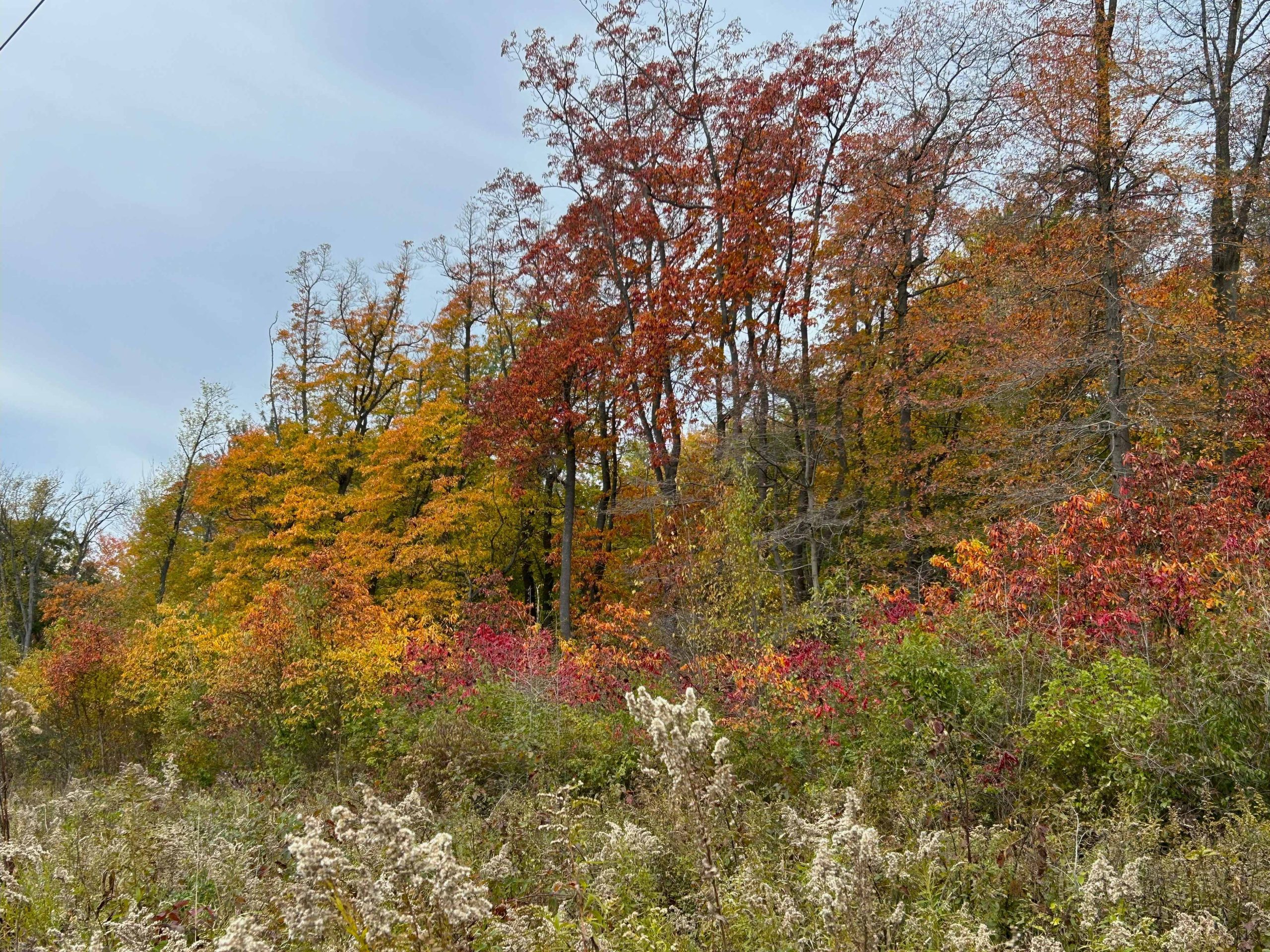
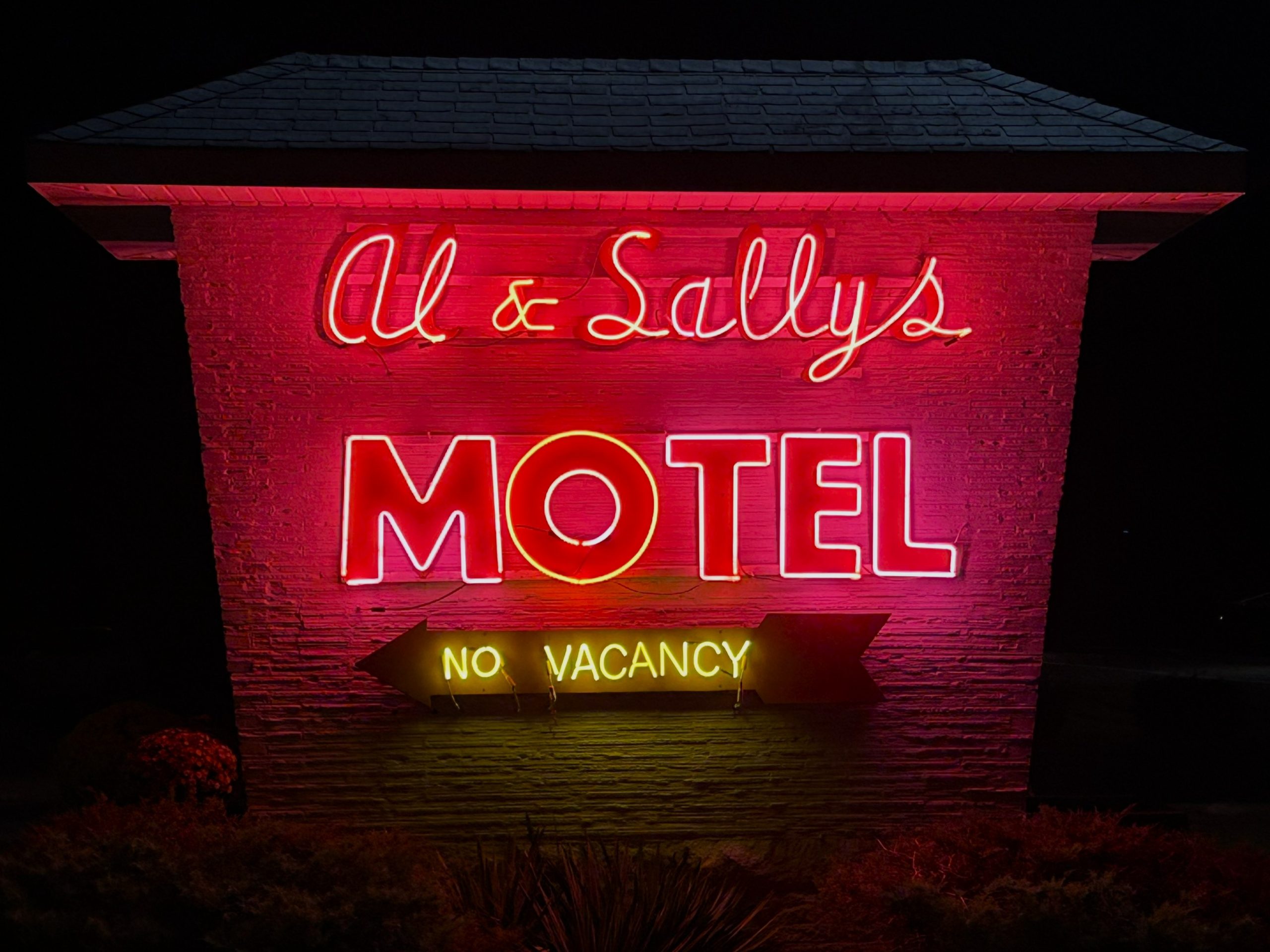
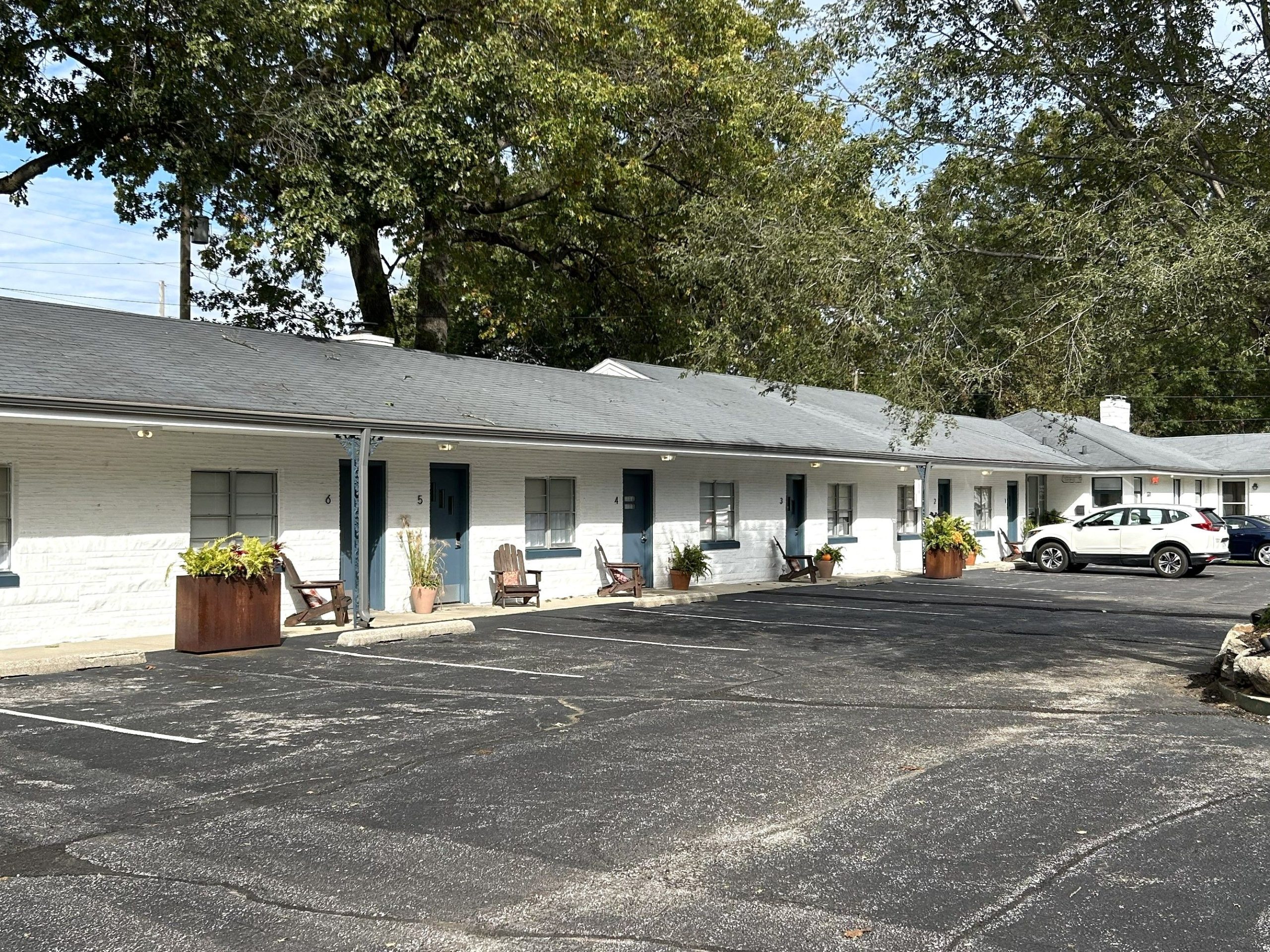
Our hotel was called Al & Sally’s Hotel in Town of Pines, about 20 minutes east of my nieces house. We had to make that 20-minute drive several times over the next two-and-a-half days, but most of it was through pretty Fall woods, so we didn’t mind.
The hotel looked cute on the outside and advertised itself as vintage. We soon discerned that “vintage” was code for “we don’t feel like upgrading but we don’t mind charging a lot.”
Not to complain, but …
The curtains were thin and let in a great deal of light. They were also not wide enough to cover the window so we had to find various ways to stretch them and hold them in place.
There were no chairs in the room except four very small, uncomfortable wooden ones around the tiny table.
The bathroom was in serious need of upgrading, especially in the tub. Various ceramic and plastic parts of no-longer-existing towel racks and soap dispensers jutted out so that we were constantly bumping them. Also, the tile hadn’t been grouted in a long time and the room smelled very musty.
There was no way to adjust the volume on the TV, which was loud.
Only half the lights in the room worked, and there was no overhead light.
The mattresses were hard and lumpy from who-knows-how-many previous renters, and we both had very sore backs after our three nights there.
On Friday evening, we drove to my niece’s house in Odgen Dunes and hung with family, which was very enjoyable.
On Saturday morning, I abandoned my wife to a morning with no place to sit and went birding. I had a good time, although October birding in Northern Indiana is a lot like winter birding in Arkansas. I was hoping to see Mute Swans, Black-capped Chickadees, and American Black Ducks. I never saw the Mute Swans this trip. I did see a pair of Trumpeter Swans and a small flock (17 I think) of Sandhill Cranes (which are rare in Arkansas).
By mid-morning, I was feeling guilty about my wife, so I went back to the hotel and suggested an adventure. We drove around on backroads looking at foliage for awhile, then drove along Lake Michigan. We stopped at a gift shop and ate lunch at Joe’s Bread, where my great-niece and great-nephew both work. They weren’t there that day, but the food was good.
We were back at the hotel with a couple hours to kill, so I walked across the railroad tracks behind the building to a bike trail in Indiana Dunes National Park.
The wedding was at a small, pretty church in Odgen Dunes at 3:00. We saw some shirttail relatives we hadn’t seen since moving from Illinois nine years ago. The reception was at a yacht club nearby. We sat with family and had a good time.
On Sunday, we hung with our niece and her husband, our nephew and his wife, and various assortments of great-nieces and great-nephews who came and went. We hung around the house for a while, then drove to Town of Pines to Joe & Freddy’s for lunch. We walked a marsh trail, then along the Beverly Shores beach, then went back to the house to eat Pizzaria Uno and watch the Packers/Steelers game. The family hadn’t been all together like this since my sister died in 2020, so it was nice to see everyone.
We left our hotel at 7:30 on Monday and drove all the way home, again avoiding I-80-94 and Illinois toll roads. We ate lunch at Culver’s in Effingham, Illinois. In keeping with a tradition we started years and years ago, my wife did the driving through Missouri while I handled Illinois and Arkansas. We got home at 7:40 p.m. and a few days later came down with a virus that seems like some variety of COVID, but it was a successful vacation, and we loved spending time with my family.
Posted inPlaces to Go|Comments Off on Illinois and Indiana
There wasn’t a lot in Hannibal we wanted to see — Mark Twain’s boyhood home, of course, but it is one of the few touristy towns in the Midwest I’ve never been to, and it was on our way to Indiana, so we stopped.
We wanted to get out of the Lighthouse Inn as soon as possible so we drove downtown and ate a leisurely breakfast at a cafe/bookstore/gift shop called Java Jive. The food was good and the atmosphere was fun. We managed to be the first people in the door of the visitor center for the Mark Twain Boyhood Home and Museum. The museum consists of eight buildings—the interpretive center, Huck Finn’s house, Mark Twain’s house, a gift shop, Becky Thatcher’s house, a justice of the peace office where Clemen’s father worked, Grant’s Drugstore where Clemen’s, his mother, and his siblings lived after his father died, and a museum building.
They don’t have anywhere near enough artifacts or information to fill all those buildings. We hadn’t even finished reading the displays in the interpretive center when I noticed I was seeing the same information two or three times. The Huck Finn house is a reconstruction of the home of Tom Blankenship, Samuel Clemen’s boyhood friend and supposedly the inspiration for Huck Finn.
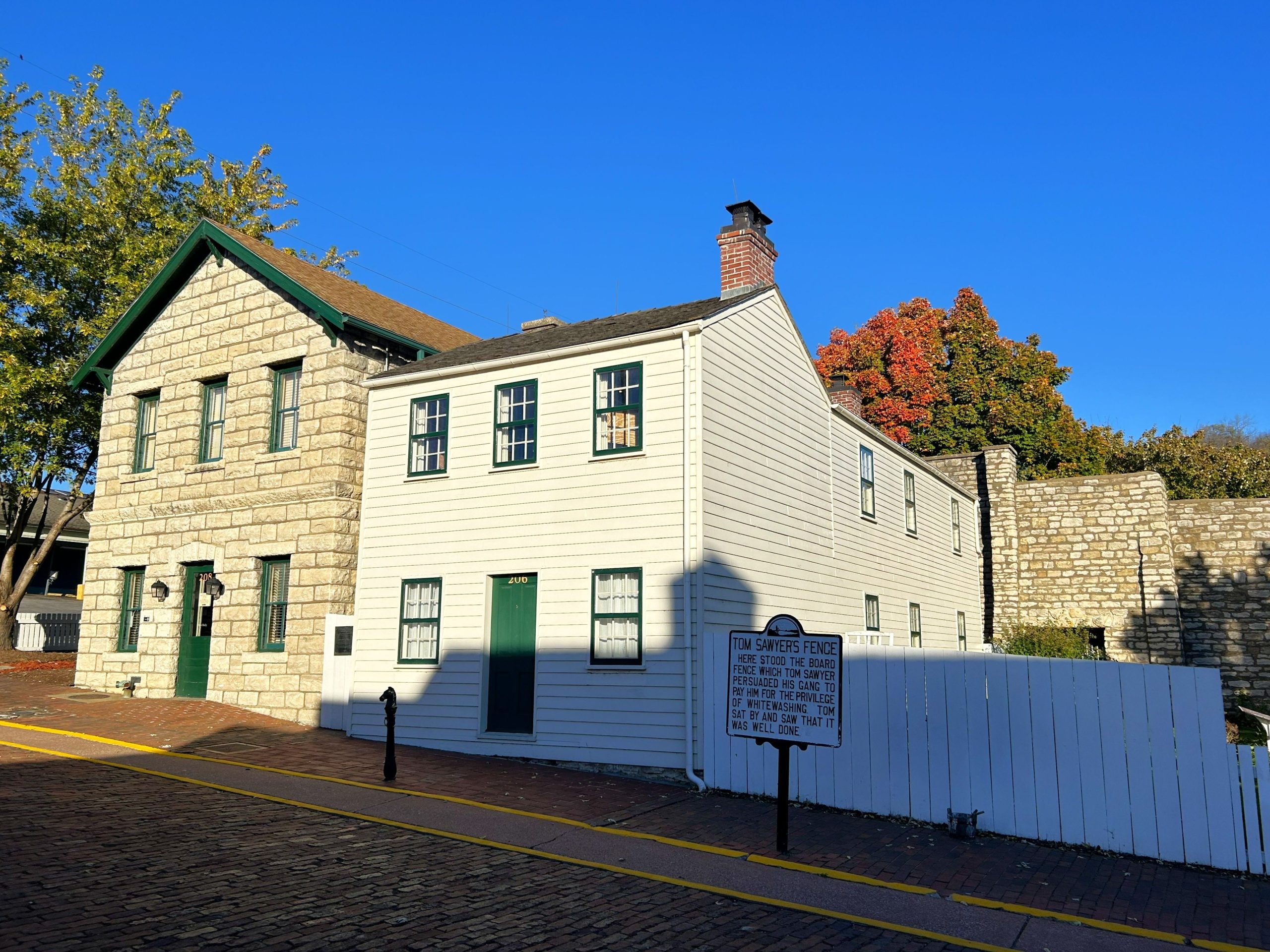
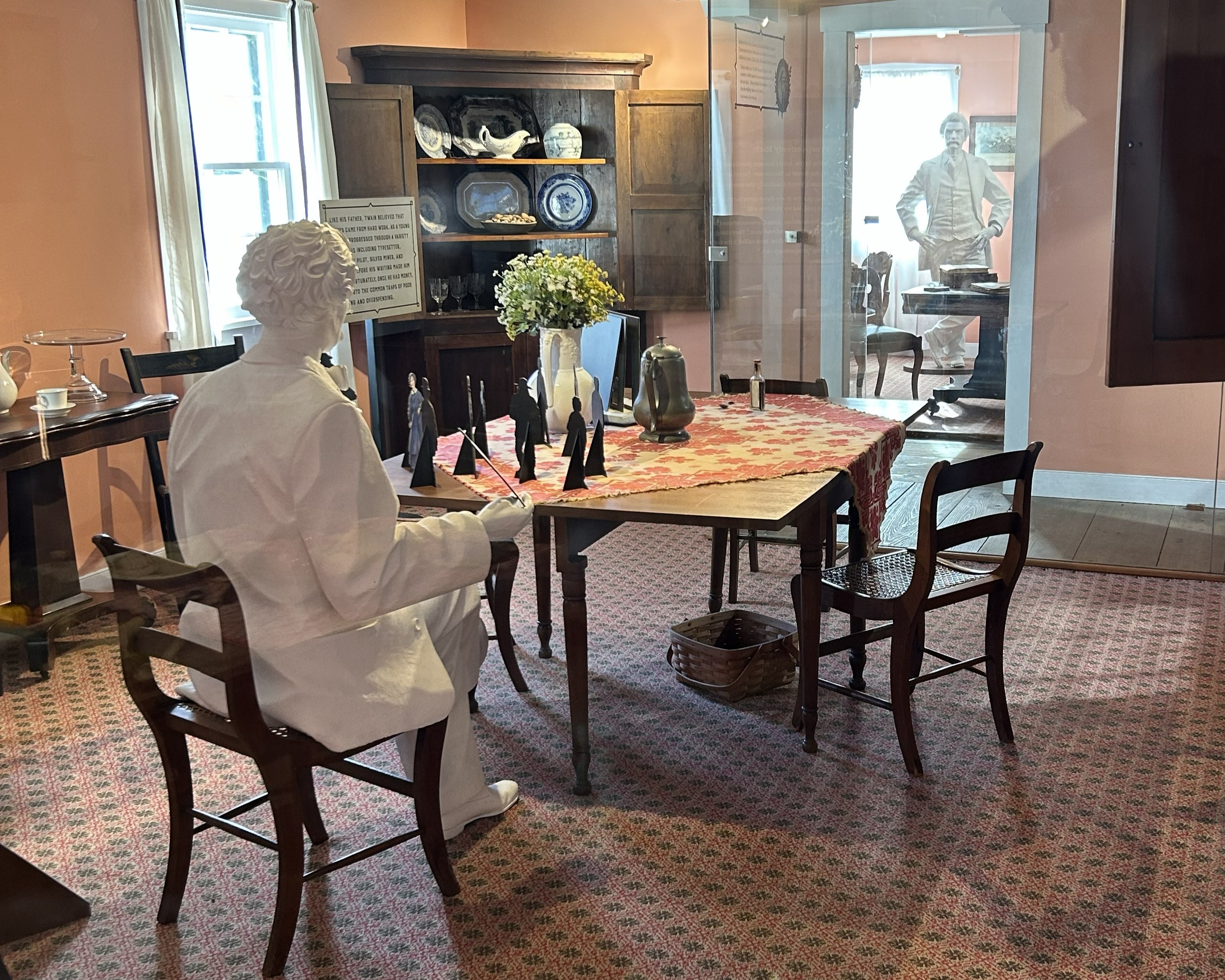
Clemen’s boyhood home is just filled with period artifacts and life-size statues of the adult Clemens in every room. The whitewashed fence from Tom Sawyer is on one side of the house and the gift shop is on the other.
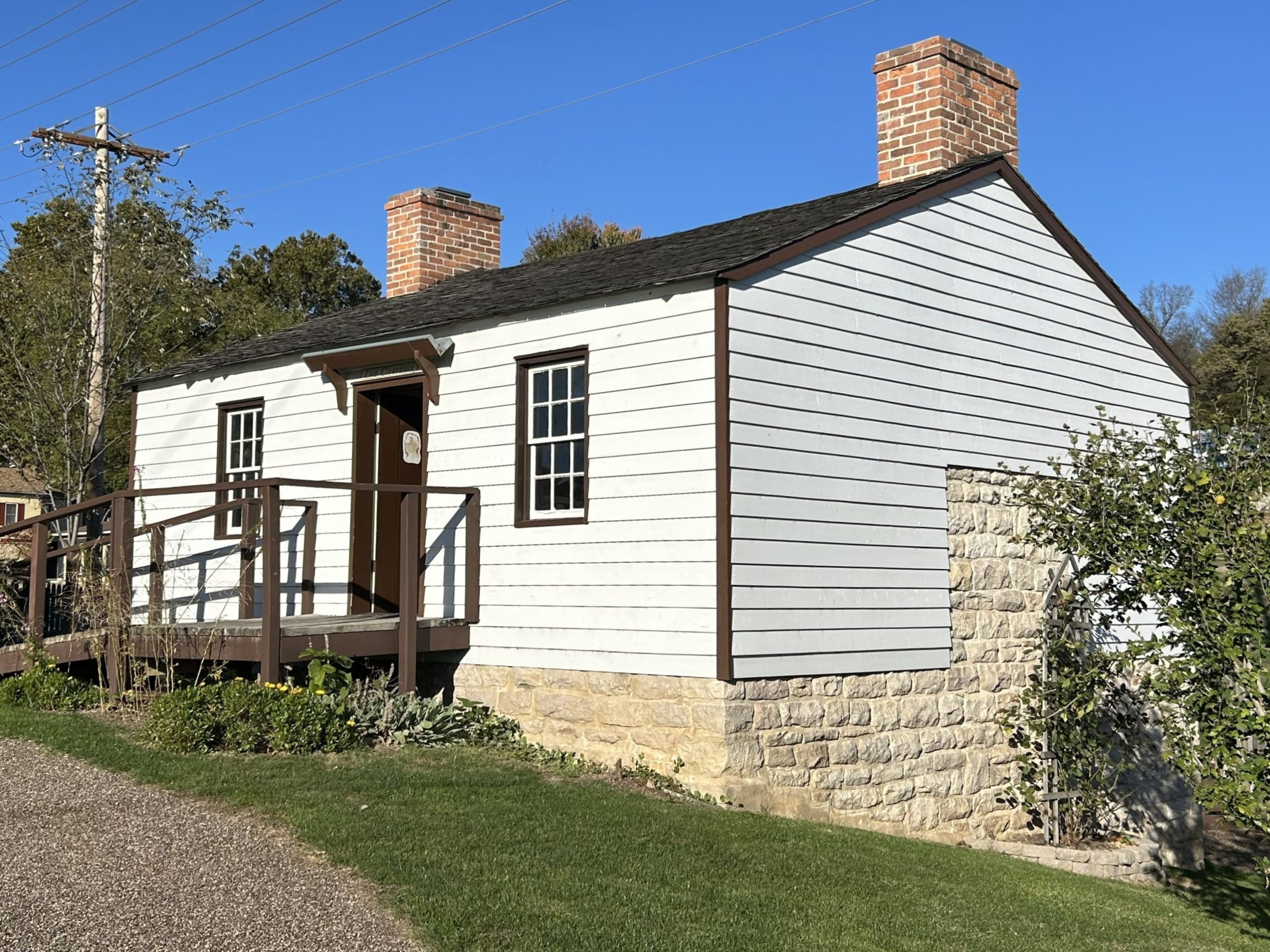
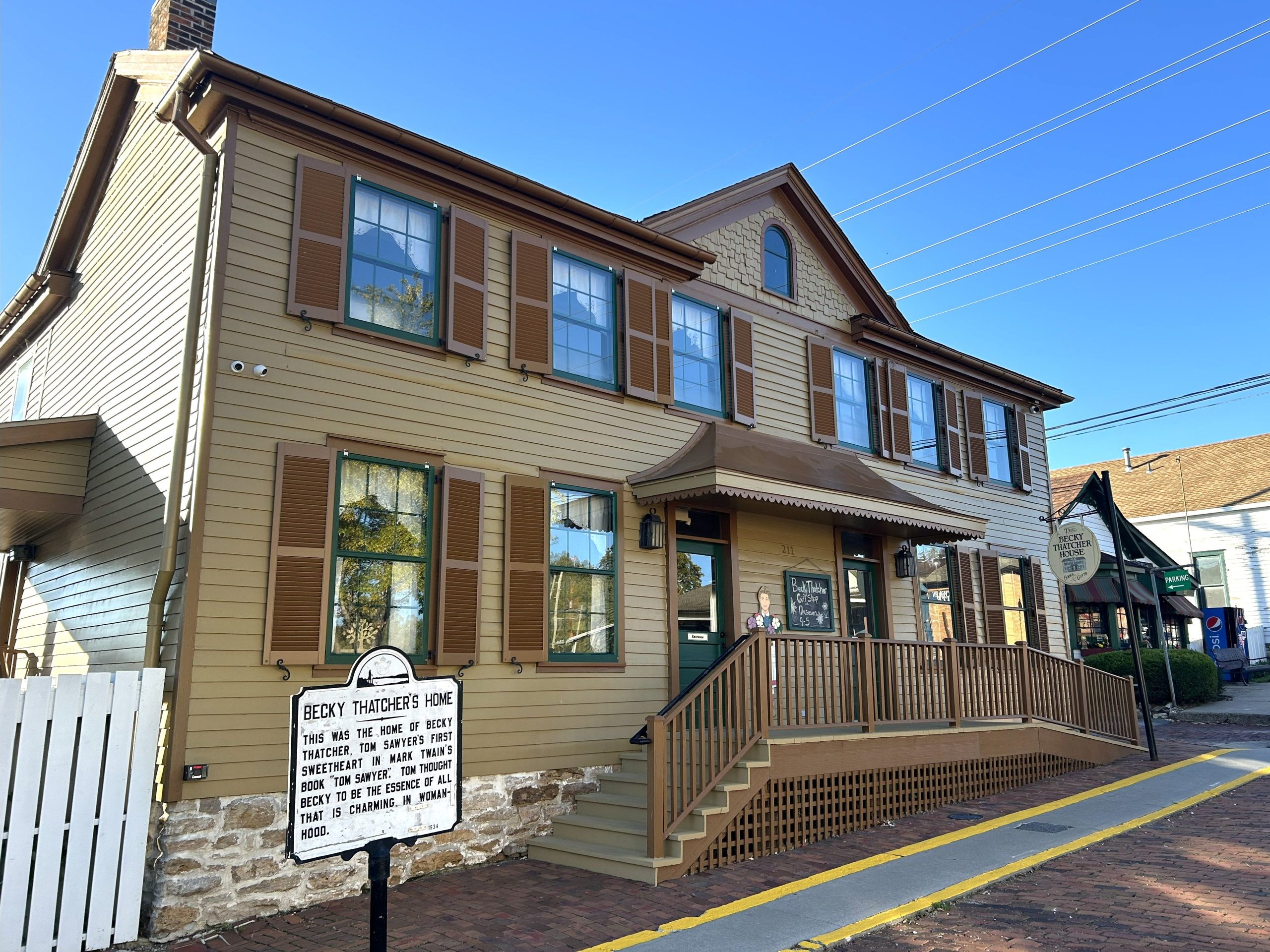
Across the street is Becky Thatcher’s house, actually the girlhood home of Laura Hawkins who was a friend of Samuel Clemens. There was nothing inside this huge house except an interactive display for kids comparing the lifestyles of the Becky (well-off), Tom (middle class), Huck (poor) and Jim (slave).
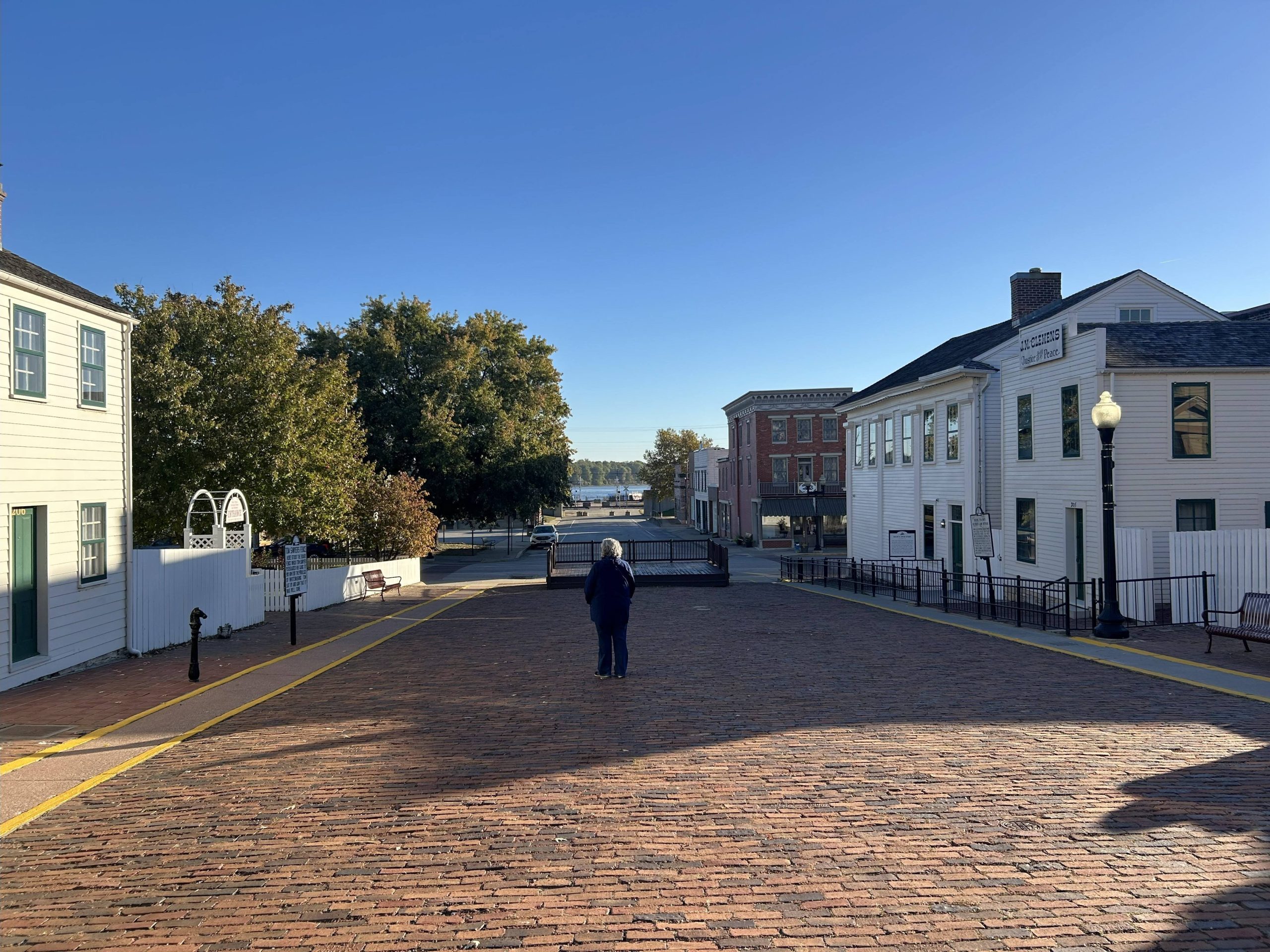
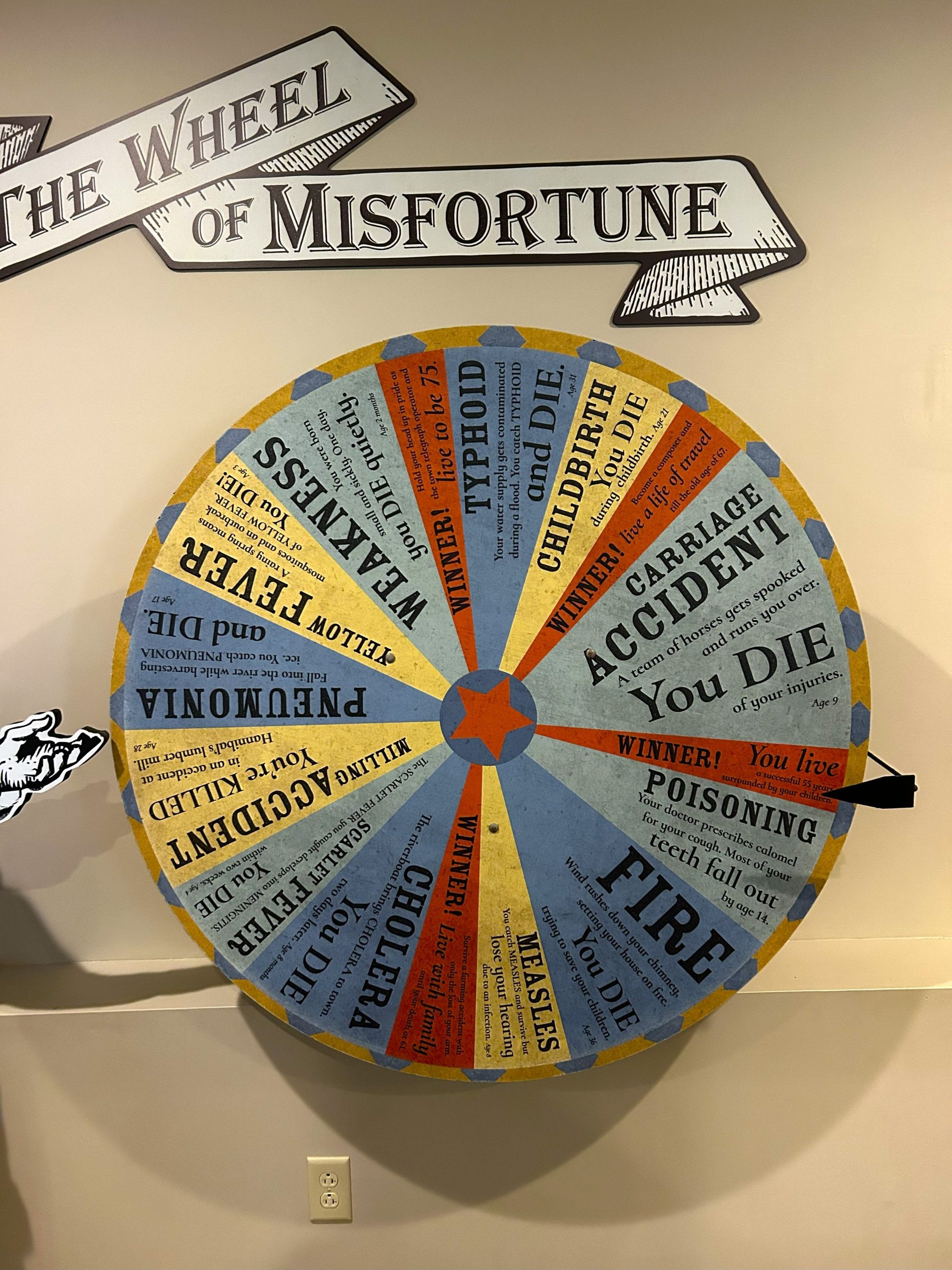
The justice of the peace and Grant’s Drugstore are on the right in the street photo above. There was very little of interest in either of them except the Wheel of Misfortune, which we could spin to see how we were going to die. I actually managed a long and happy life. My wife died of typhoid, I think.
We stopped back at Java Jive for something to drink and a cinnamon roll, then did the museum building. The displays upstairs were actually interesting, although even here they didn’t come close to filling the room. There were artifacts from Clemen’s life, first editions of his books, photos of his family, and illustrations from his famous books done by Norman Rockwell.
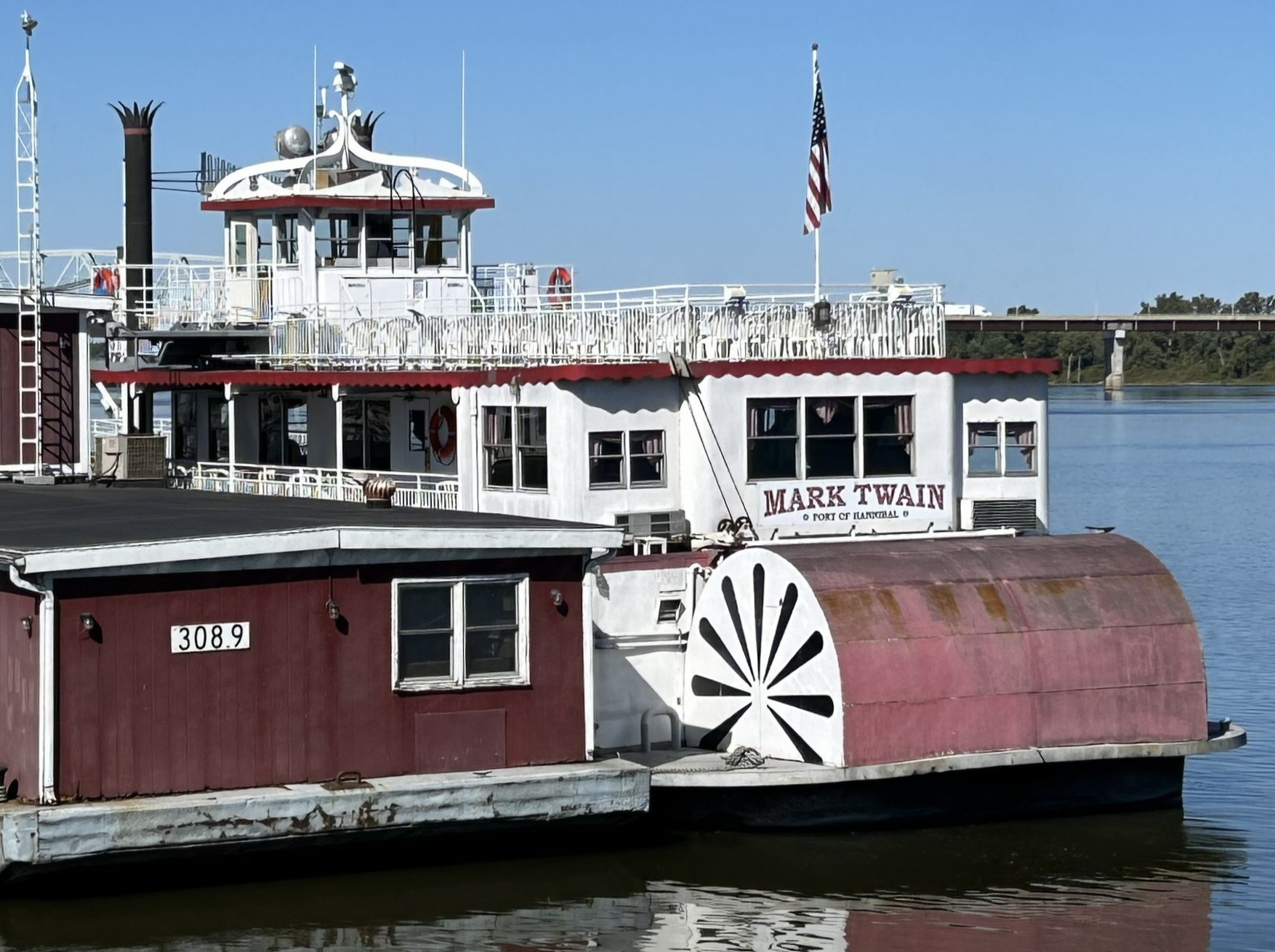
We weren’t interested in the famous cave where Tom and Becky got lost—we’ve seen caves. We weren’t interested in Molly Brown’s birthplace—it was tiny and we’ve toured her house in Denver. We weren’t interested in Lover’s Leap—every town near a hill has one. My wife likes boat rides, so we opted for a hour-long trip on the Mississippi, on the Mark Twain Riverboat. It didn’t even pretend to have a sternwheel, just a tarp-covered cylinder at the back, and the engines were obviously diesel.
We found seats at the very front on the middle deck. We’d no sooner sat down than a guy pulled up a chair and began talking to us. He was from Kansas, on his way with his wife to Indiana to have their motorhome fixed after colliding with a deer. We learned this and a whole lot more — including his wife’s ailments and food preferences — when she joined us a short time later. Among other things, we learned that they had totally bought into the Lover’s Leap legend about the Indian maid and Indian brave who jumped to their deaths when her father forbade their marriage. But when the narrator on the boat told the story in a way that was deliberately and obviously nonsense, they kind of shut up and soon left our company. Maybe I’m being harsh. There probably aren’t a lot of places in Kansas where one can jump to one’s death.
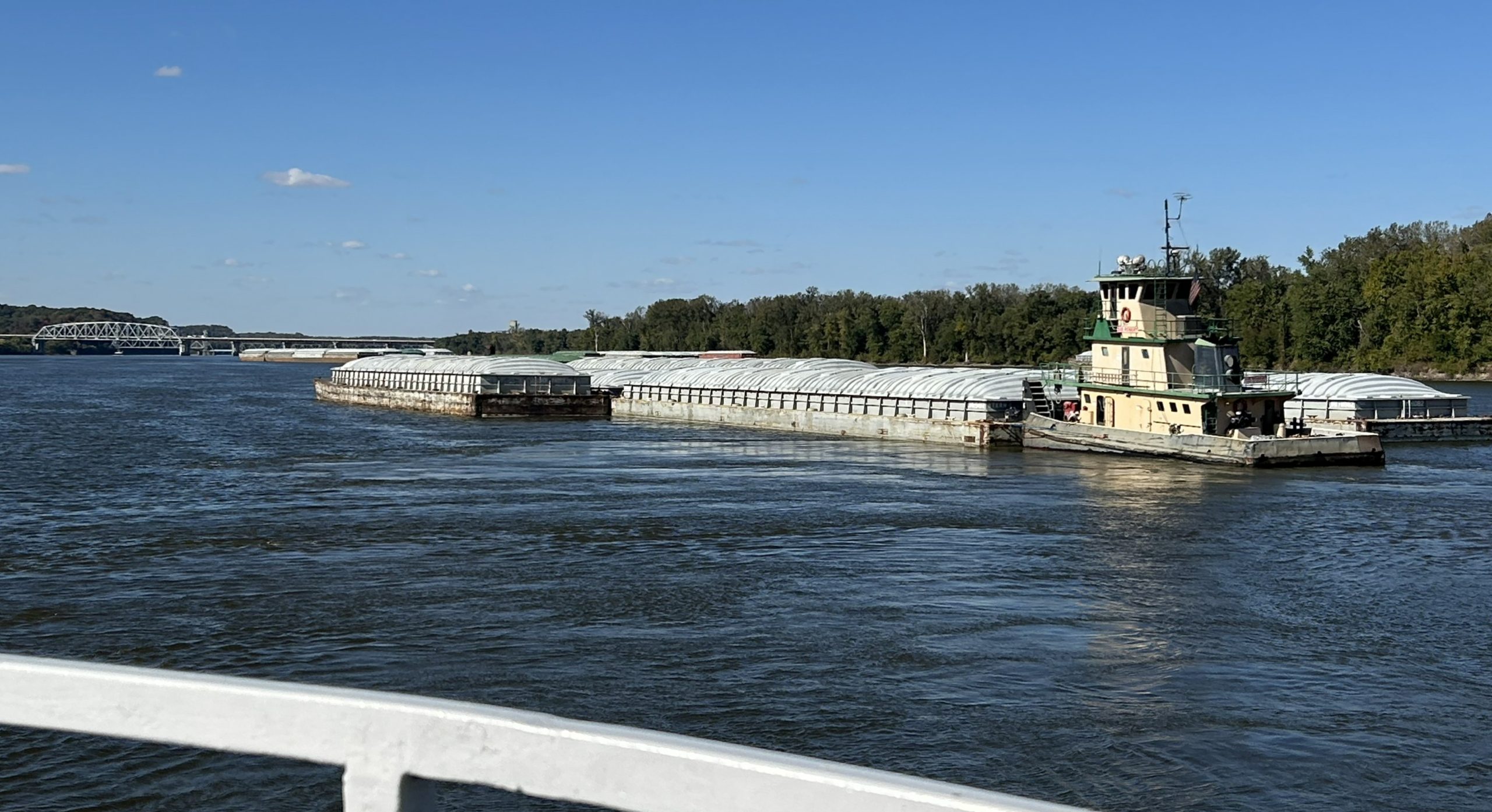
The ride went upstream for about a quarter mile, then turned and went about two miles downstream, then back to Hannibal. There wasn’t much to see. I thought it was a little dull, but my wife found it relaxing. The most interesting thing for me was watching a working towboat stack barges in the channel to be picked up later by a bigger towboat and taken downstream.
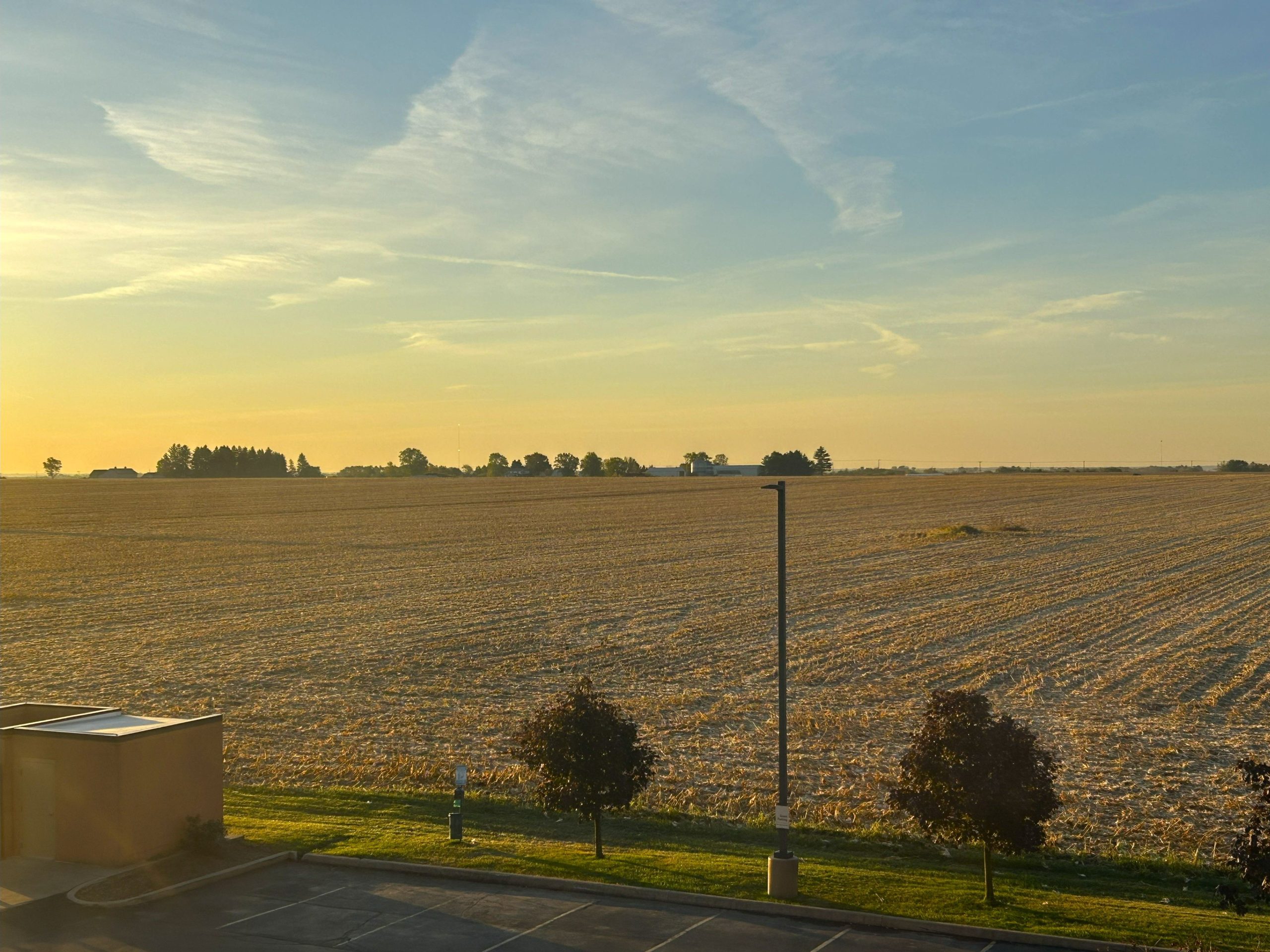
Back on shore, we crossed the bridge visible in the photo above and headed into Illinois. We ended up at a Hampton Inn in Macomb. When we’d moved out of the state, there were still three counties I’d never been in, and Macomb was the county seat of one of them. I left my wife in our room overlooking lovely Illinois scenery while I did some unexciting birding at local parks.
When I got back, we had a boring, expensive supper at McAlister’s, then watched another lousy Loretta Young movie on TV.
We left the rental condo at 8:30 and drove northeast through Missouri, eating lunch at Culver’s in Jefferson City.
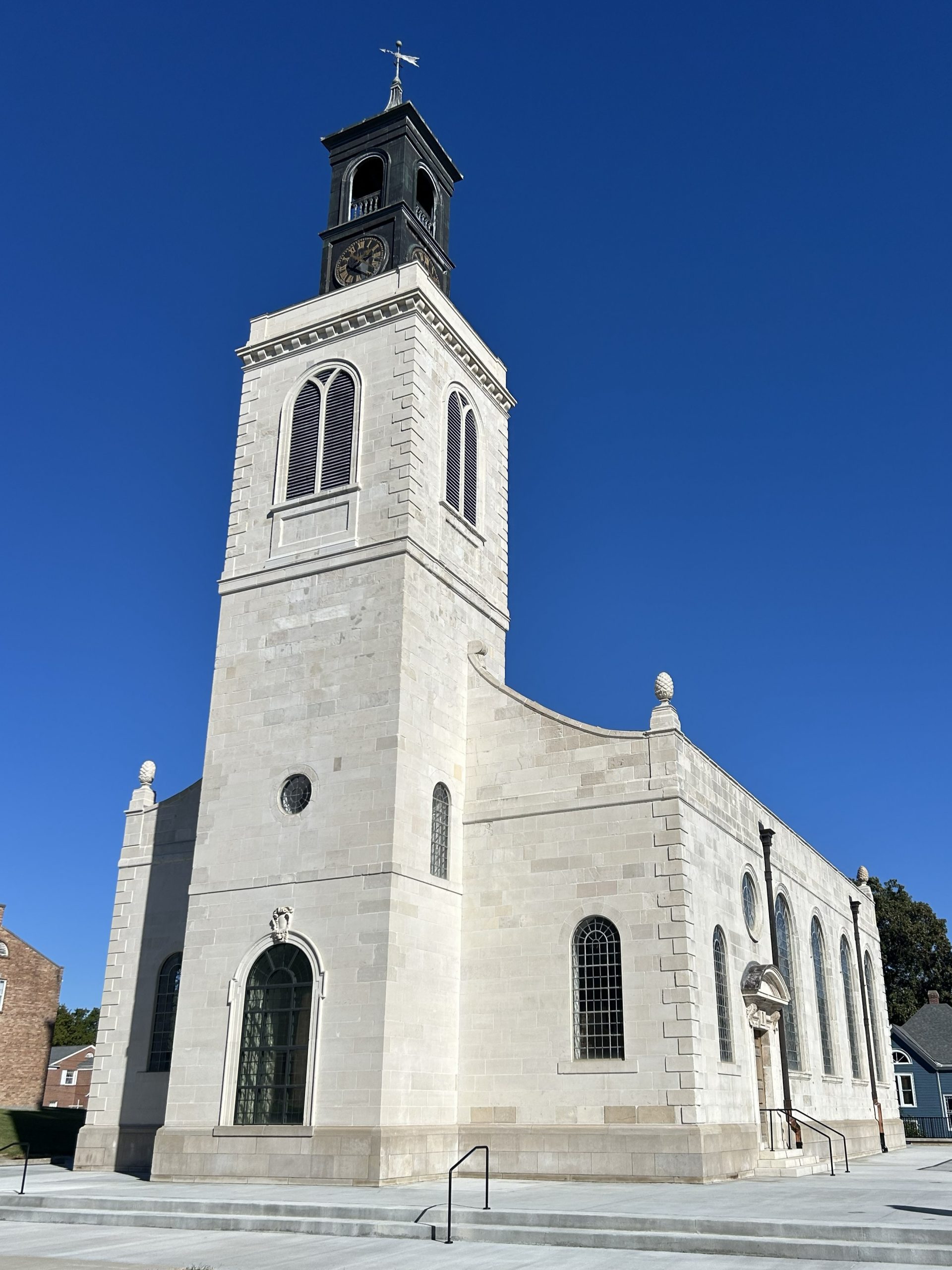
In the afternoon we stopped at Westminster College in Fulton to see America’s National Churchill Museum. In March, 1946, the college asked Churchill to speak. President Truman, who was from Missouri, urged Churchill to accept, and so he did. His speech warned of the “iron curtain” descending across Europe as Russia dominated the countries it had overrun during WWII.
The museum is housed underneath a 17th-century London church called St. Mary the Virgin, Aldermanbury. It was designed by famous British architect Sir Christopher Wren, but after being seriously damaged in the blitz, the British were going to tear it down. Instead, it was dismantled and brought to central Missouri.
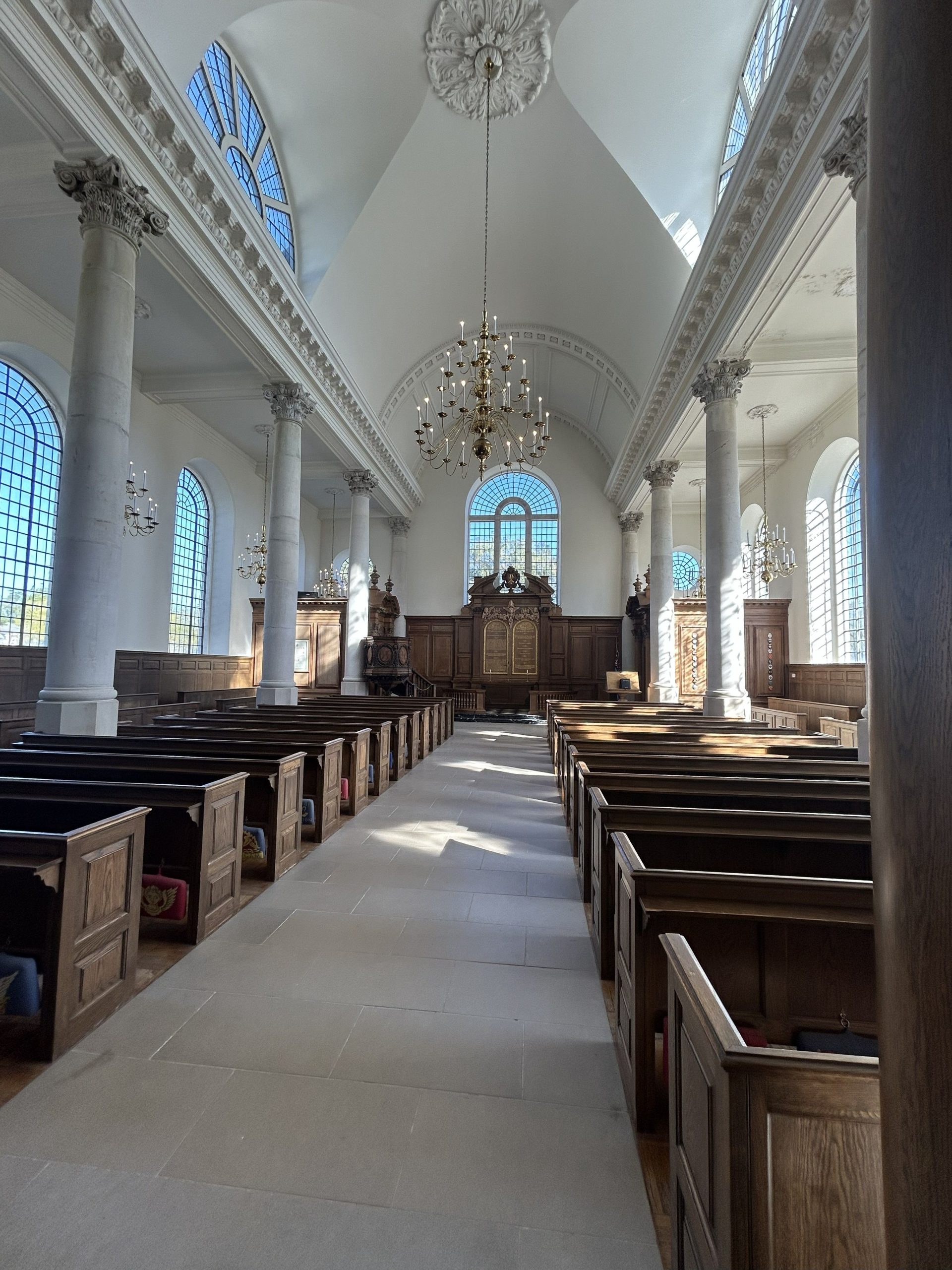
We asked, and a young man escorted us upstairs into the restored church, which was beautiful. Wren insisted on clear windows instead of stained glass to let in light.
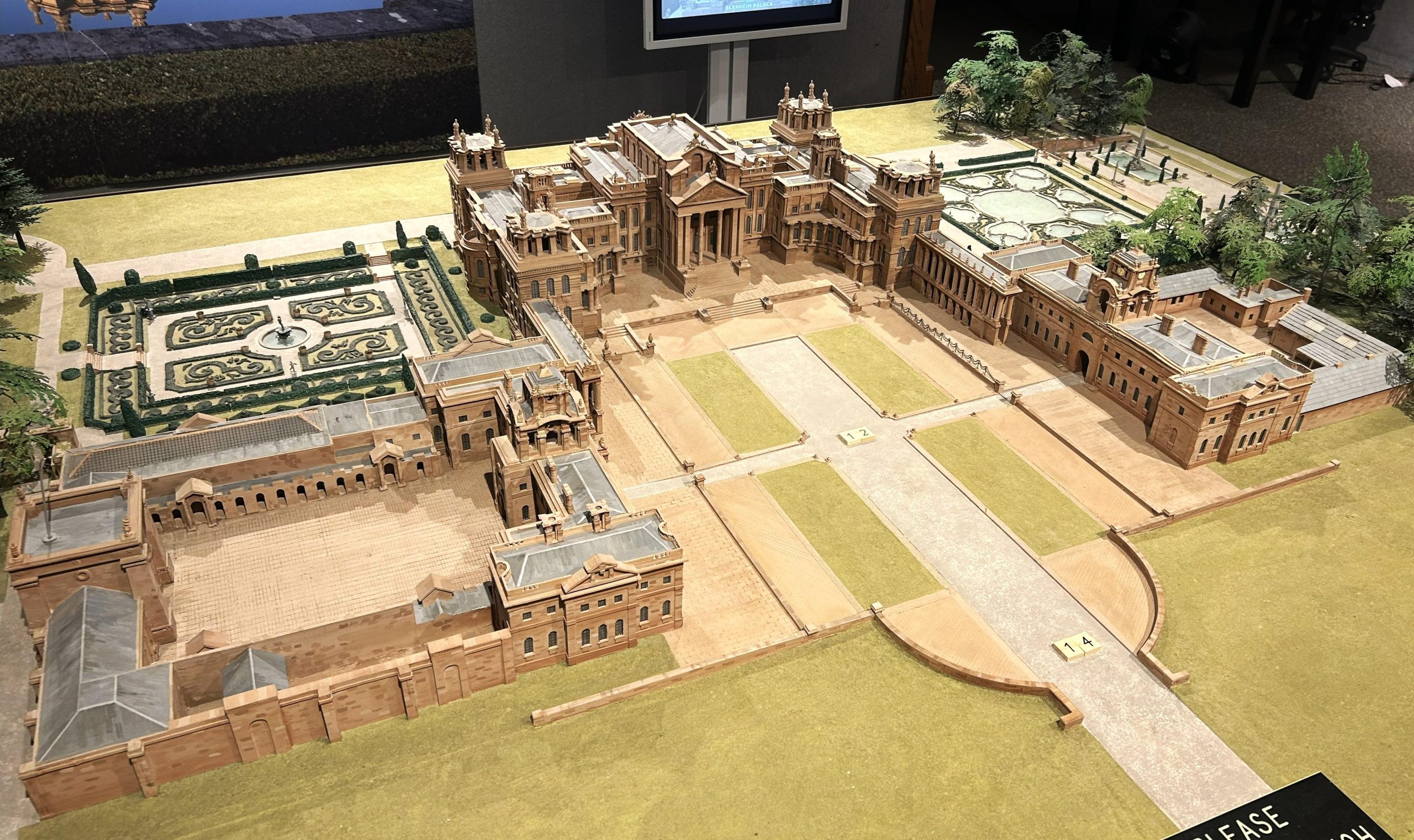
The museum would have been better if it included more artifacts rather than just signboards to read, but it was about half a mile off our route and worth the time it took. It also featured a special exhibit on Blenheim, the estate of the Duke of Marlborough, where Churchill (a relative of the Duke) was born.
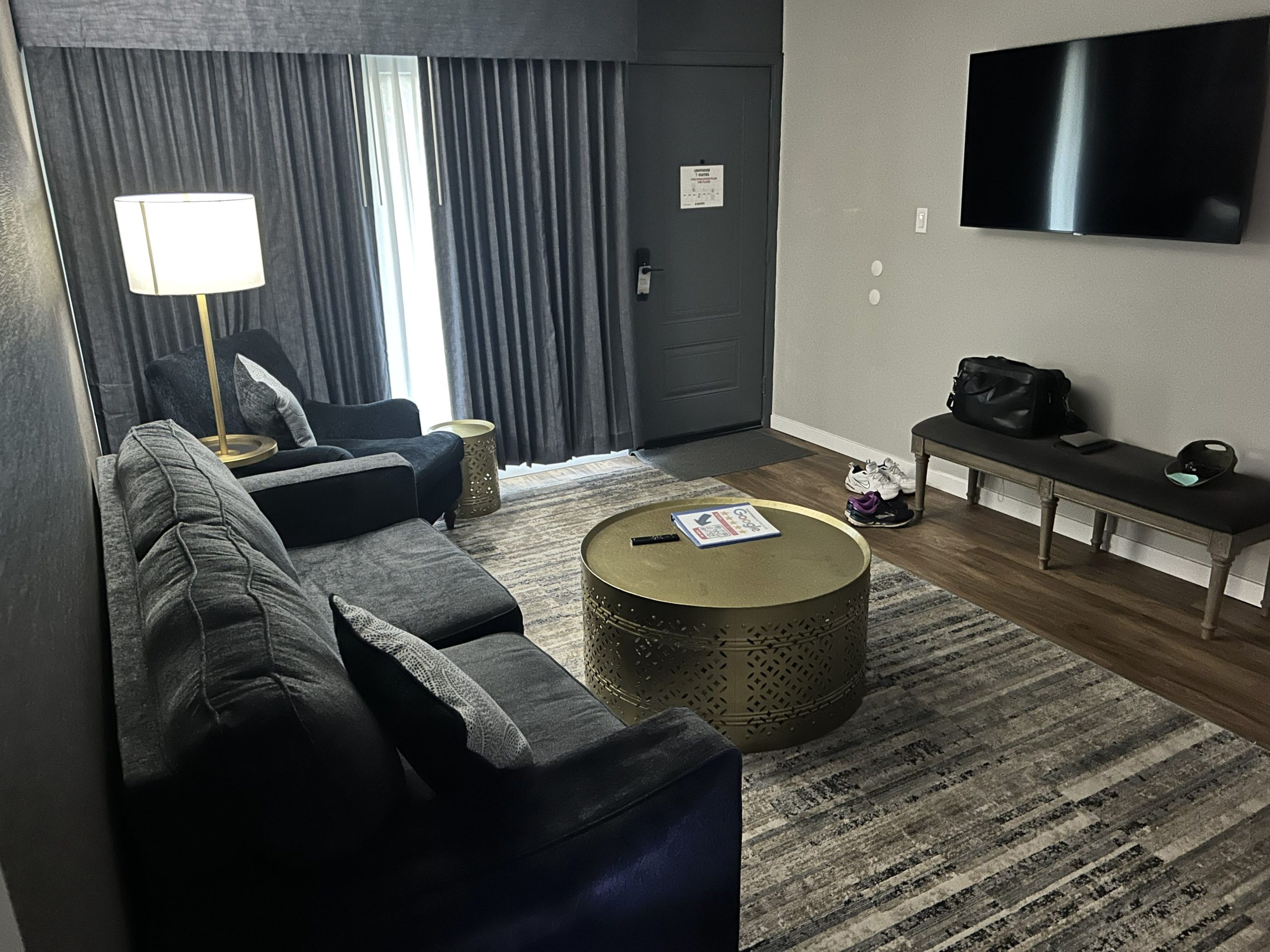
It was about another hour to Hannibal. After much discussion, we settled on a Best Western near the historic downtown area. But when we arrived, a busload of seniors had just finished checking in and all that was left were king suites for $200+ a night. When I said that was too much, the lady behind the desk called the Lighthouse Inn just up the street and then sent us there. We knew nothing about it, but on blind faith booked a room for $158. It was a weird place, right next door to a weed-covered abandoned building and just down from the Happy Stay Inn where the lady at the Best Western said we “don’t want to go.” Check-in was mostly on-line. The lady in the office who checked us in was leaving at 6:00 p.m. We ended up in a suite with two large rooms and a bath, hard, ugly furniture, and no decoration except a full-wall mural of the Golden Gate Bridge in the bedroom.
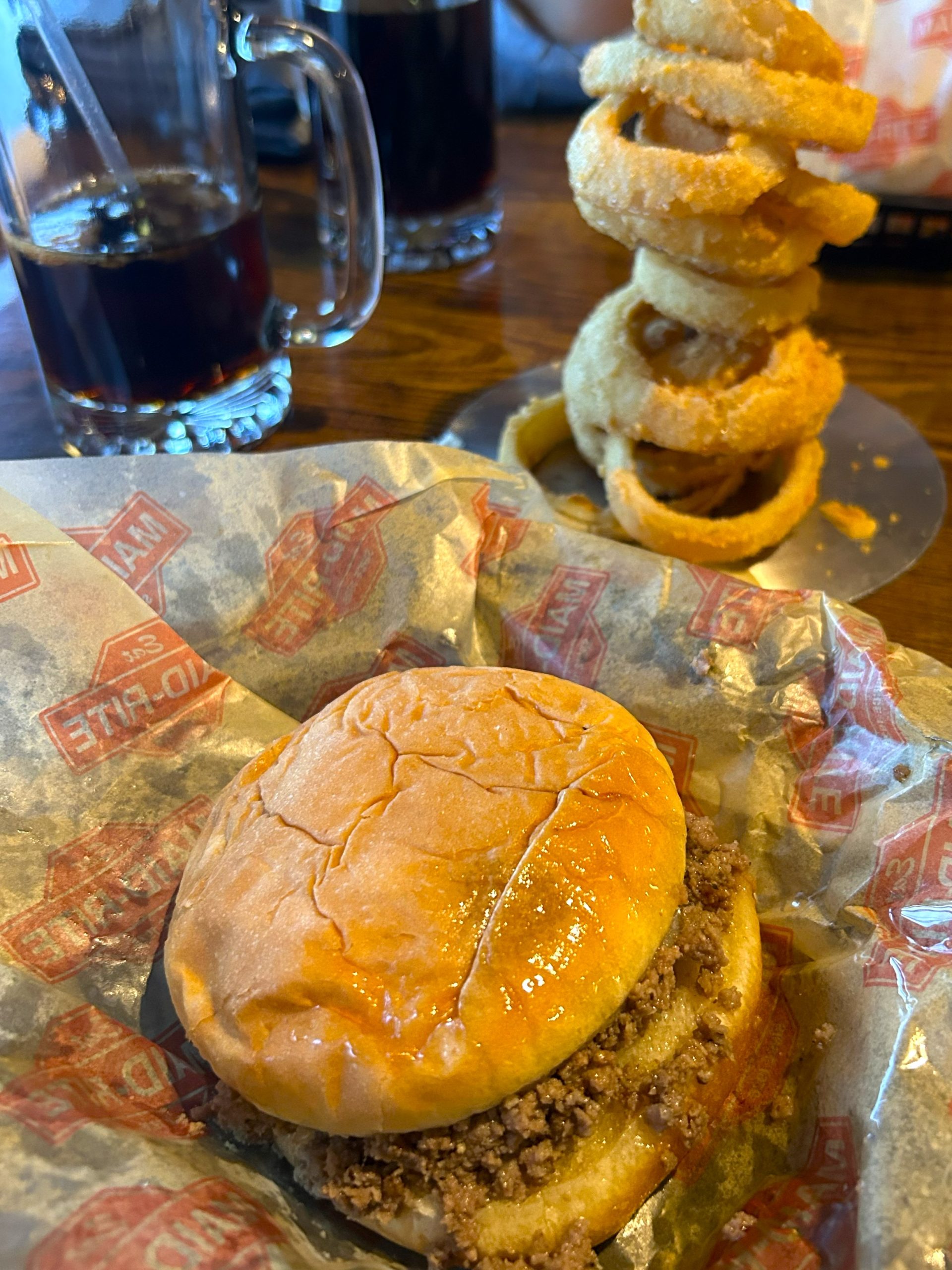
We ate supper at the Mark Twain Dinette, which served Maid-Rite loose meat sandwiches. Think sloppy joe without the sauce. They were mediocre, but the onion rings and house root beer were very good. I felt pretty sick during the night, and I suspect this may be my last loose meat sandwich.
Back at our weird hotel, we watched an old, awful Loretta Young movie on TV and tried to ignore the guys who pulled up in their loud car and had a shouting and swearing fest in the room below us. But we survived the night and woke in the morning none the worse for wear.
Posted inMissouri|Comments Off on Branson to Hannibal
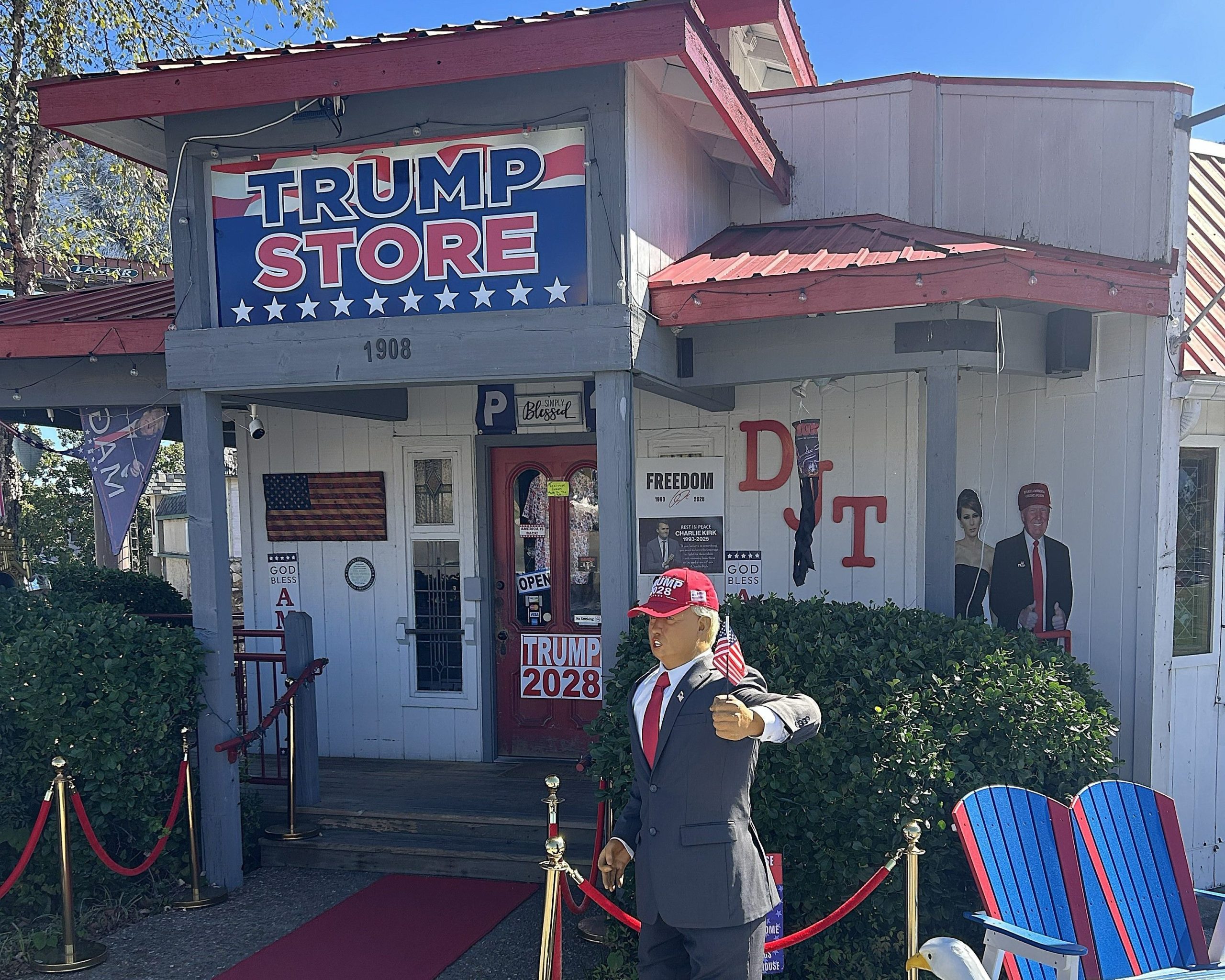
All we’d planned for this day was one show, so we hung around the condo for a while. I got restless, of course, so mid-afternoon we went to a local bakery called Simply Baked for savory pies. We drove into Branson and took our time wandering through a flea market. We each found some stuff to waste money on. We still had time to kill, so we visited the Trump store, which cracked me up no end.
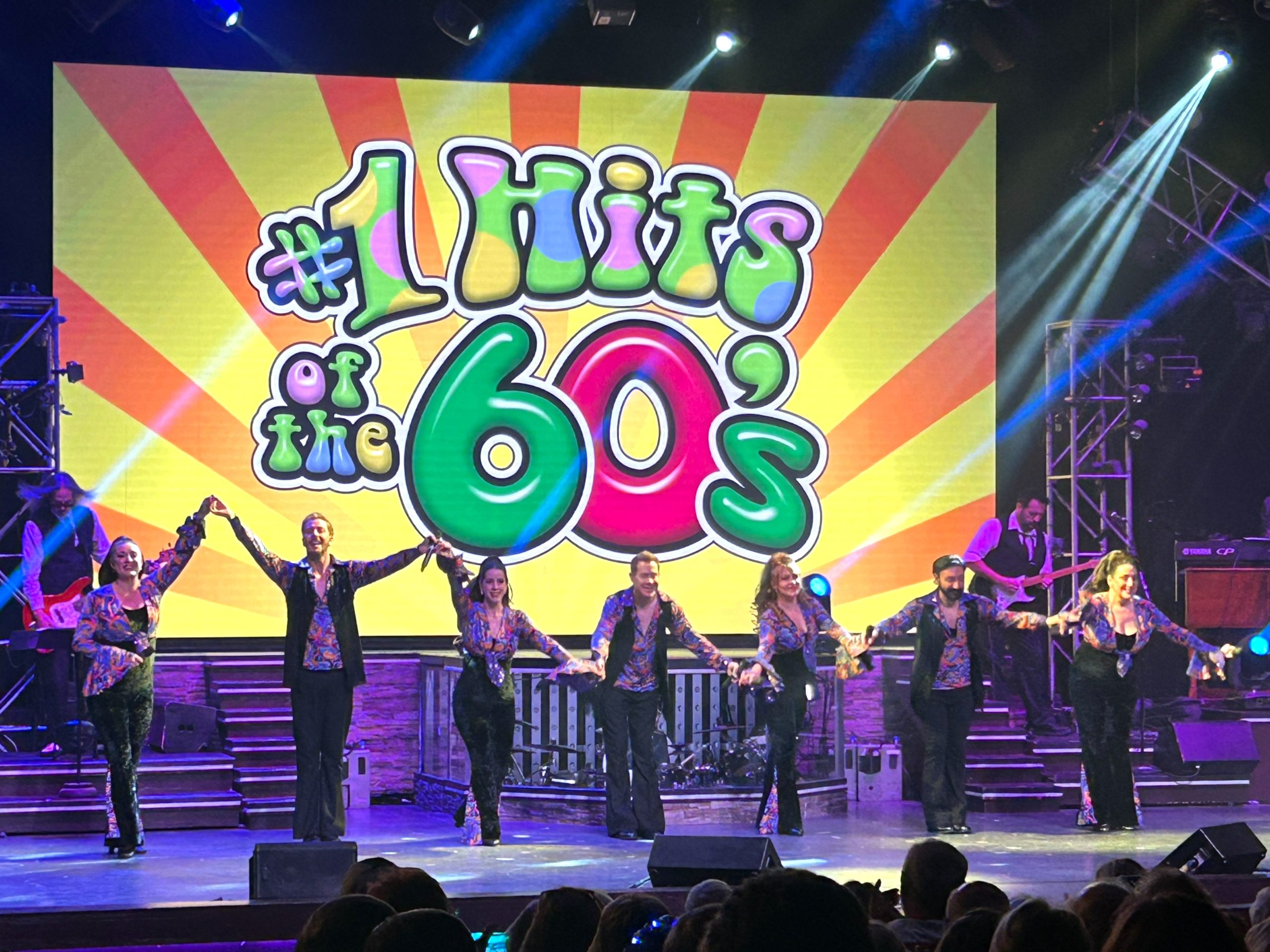
It was finally time for our show—#1 Hits of the 60’s. This consisted of a two-hour medley of small sections of songs from the 50’s to the 80’s, none of them lasting more than 35 seconds or so. In other words, just when I’d start getting into a song, they’d switch to another one. The cast consisted of overweight women and rather effeminate men doing random choreography while zipping through the songs. My wife enjoyed it, but I wanted out almost from the get-go. I’ll say this for them though — they must have set some sort of record for costume changes.
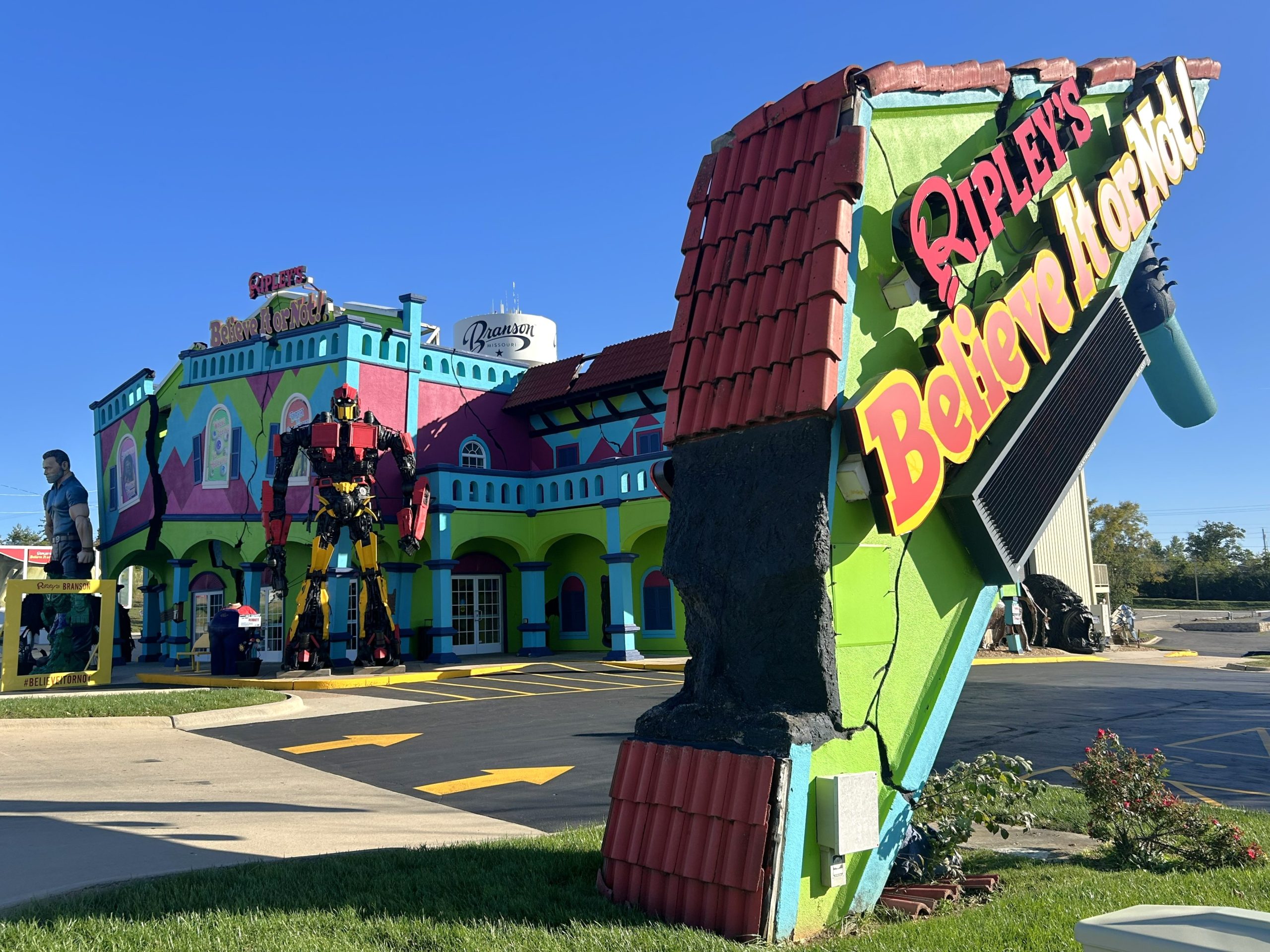
We went from the theater to the nearby and nearly empty Ripley’s Believe It or Not Museum.
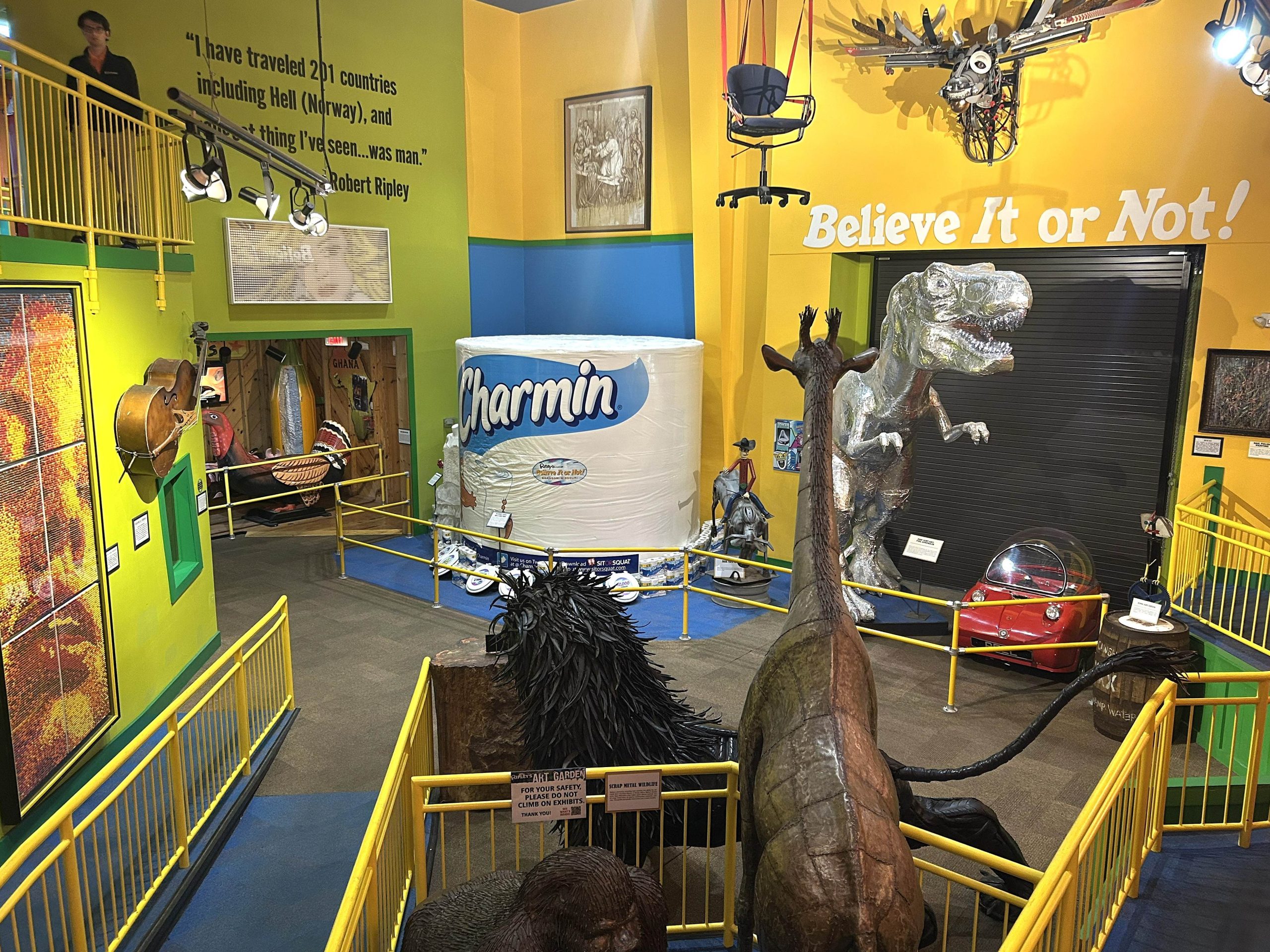
I’ve been to Ripley’s museums before. They’re weird and fun, although not to be taken entirely seriously. Perhaps the oddest thing about this one was how very empty it was. The guy in the photo below was an employee. There were only two of them there, and no other customers. This guy tried to sell us a photo of the two of us. I think every show and attraction in Branson took, or asked to take, a photo of us together and then tried to sell it to us. We could have spent over $100 on these if we’d bought them all. We bought none.
We drove to the north side of Branson for supper at Texas Roadhouse, then headed back to the condo.