Superman’s Birthplace

We had a little while to kill on the morning of the Fourth, so we drove to the east side of Cleveland to see the neighborhood where Jerry Siegel and Joe Shuster lived. They were the teenagers who created Superman.

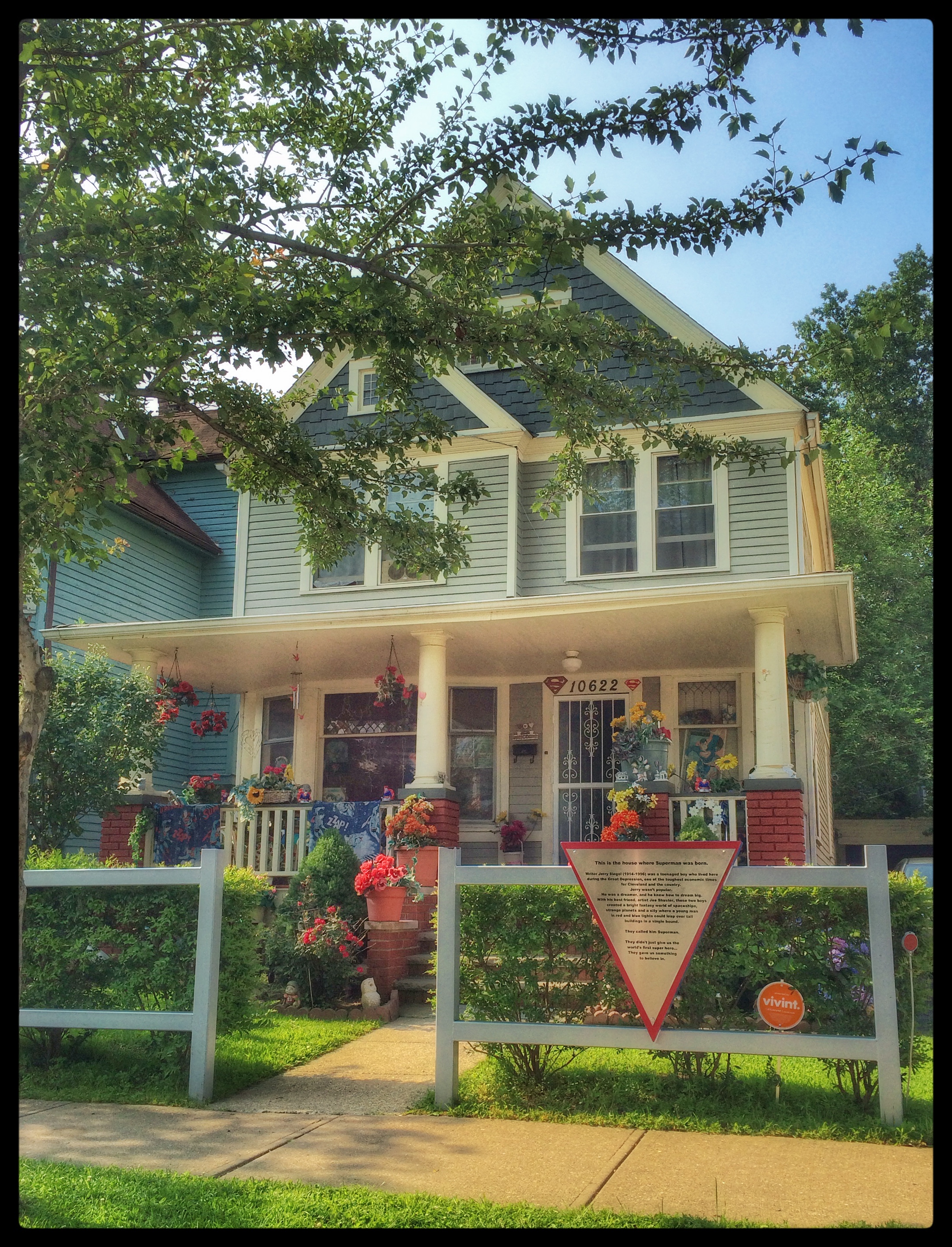
The neighborhood isn’t a pleasant one and my wife wasn’t enthusiastic about our adventure. We found Siegel’s house first. It’s the nicest one on the street. A society of Superman fans have offered to buy it for a museum. The owners aren’t ready to sell, but they are willing to give the society right of first refusal. In return, the society pays to keep up the house. I paused out front and took some photos. That’s when I noticed the guy on the front porch reading a paper. A few seconds later, a largish, middle-aged Black woman in a Superman T-shirt came out the front door. I waved and she waved back.

IMG_2540

IMG_2541

The sign on the fence reads:

This is the house where Superman was born.

Writer Jerry Siegel (1914-1994) was a teenaged boy who live here during the Great Depression, one of the toughest economic times for Cleveland and the country.

Jerry wasn’t popular. He was a dreamer, and he knew how to dream big. With his best friend, Joe Shuster, these two boys created a bright fantasy world of spaceships, strange planets and a city where a young man in red and blue tights could leap over tall buildings in a single bound.

They called him Superman.

They didn’t just give us the world’s first super hero — They gave us something to believe in.

I drove a couple blocks away to find the lot where Joe Shuster’s house used to be. When I turned on the street, I noticed a sign that said “Joe Shuster Lane.” I stopped and took a photo with my cell phone. Two guys half a block away saw me. One of them yelled, “Hey, could you please inform me what exactly you’re doing?”

Not really. I’m not about to type what he really said. I pointed to the sign and said, “Just taking a photo of the sign. Superman.” And then I took off. The guy yelled some more I couldn’t understand, but I didn’t go back and ask.

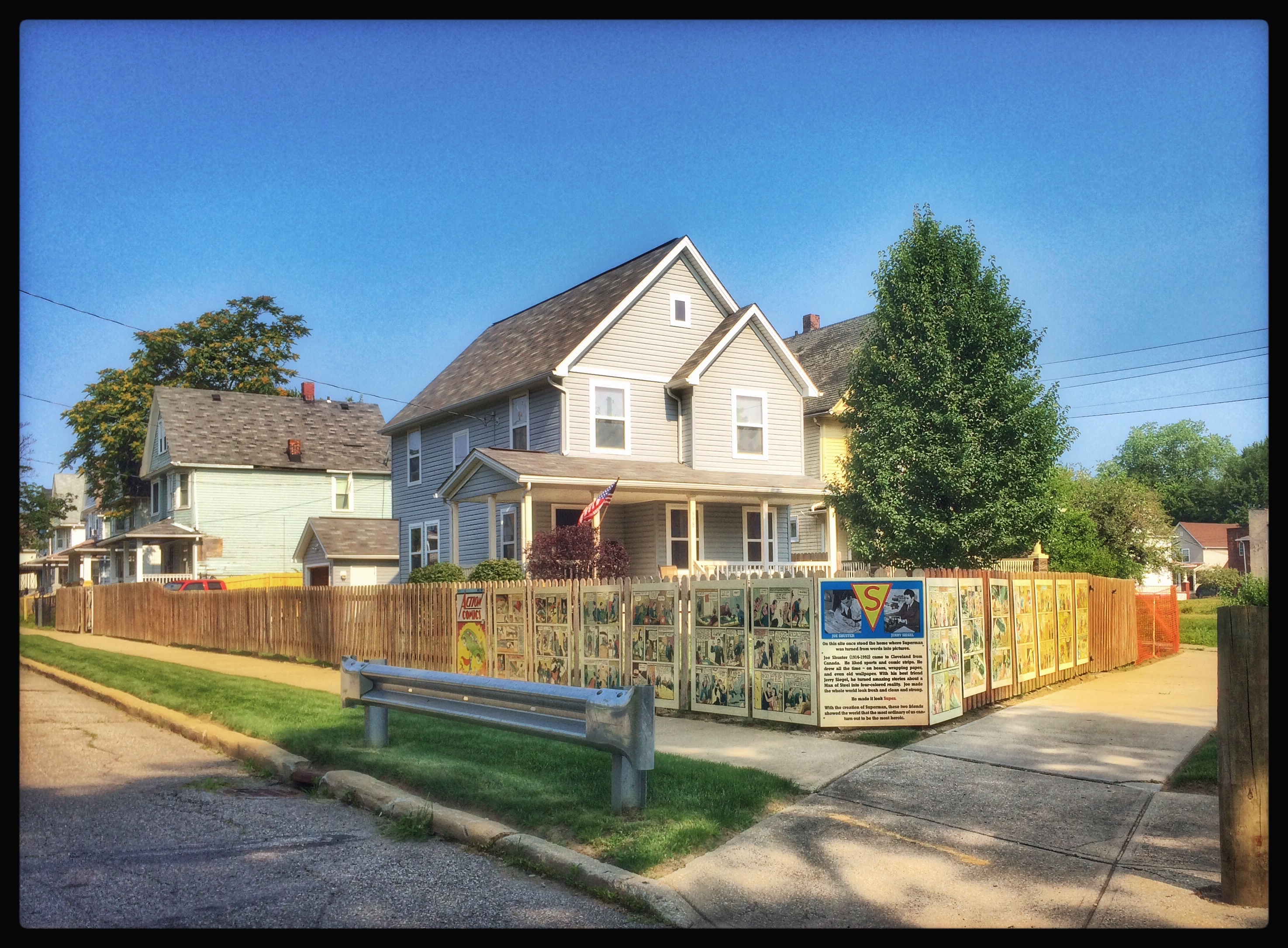
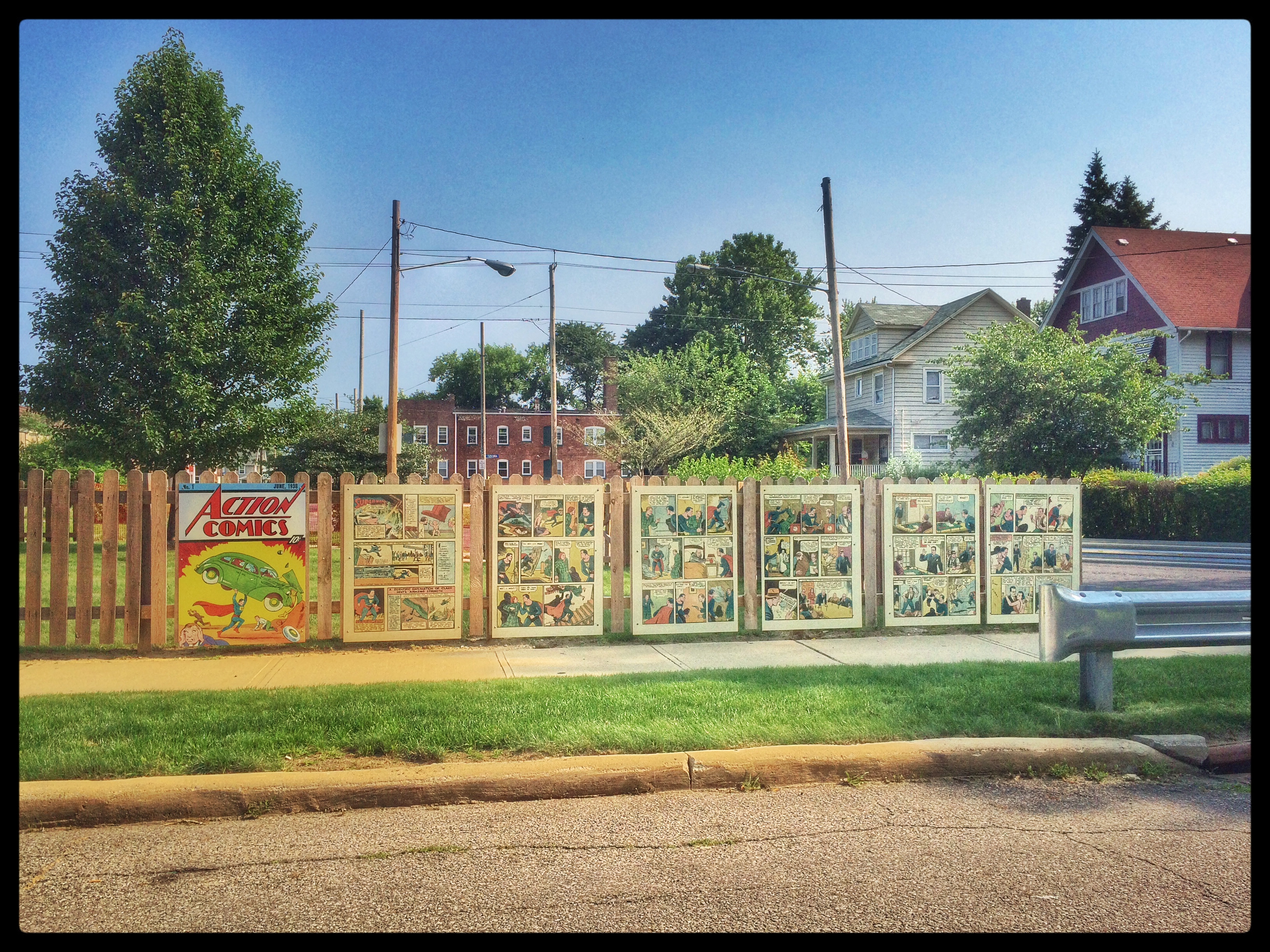
Shuster’s apartment is long gone, but on the fence around the lot somebody has placed metal sheets with the cover and panels from the first Superman comic.
IMG_2542

IMG_2538

The sign says:

On this site once stood the house where Superman was turned from words into pictures.

Joe Shuster (1914-1992) came to Cleveland from Canada. He liked sports and comic strips. He drew all the time — on boxes, wrapping paper, and even old wallpaper. With his best friend Jerry Siegel, he turned amazing stories about a Man of Steel into four-color reality. Joe made the whole world look fresh and clean and strong.

He made it look Super.

With the creation of Superman, these two friends showed the world that the most ordinary of us can turn out to be the most heroic.

There was another sign on a street corner not far away, but we were feeling out of our comfort zone after the last confrontation, so we didn’t stop. It read:

Home of Superman

Jerry Siegal [sic] and Joe Shuster, two Glenville High School students imbued with imagination and talent and passion for science fiction and comics, had dream become reality in 1932. They created Superman, the first of the superheroes ever to see print. The 1932 prototype was of a villainous superhero. Superman then became the hero who has been called the Action Ace, the Man of Steel and the Man of Tomorrow.

Although the success of Superman spawned an entire industry, publishers and newspaper syndicates did not originally accept the creation. Superman did not appear until 1938 when he became a lead feature on the cover of Action Comics No. 1. As co-creators of the most famous of mythical beings, Siegal and Shuster infused popular American culture with one of the most enduring icons of the 20th century. Superman has appeared in animated series, live-action series, major motion pictures, advertisements, and comic books, where his popularity grows with each generation of readers.
Posted in Pop Culture | Comments Off on Superman’s Birthplace

A Christmas Story House

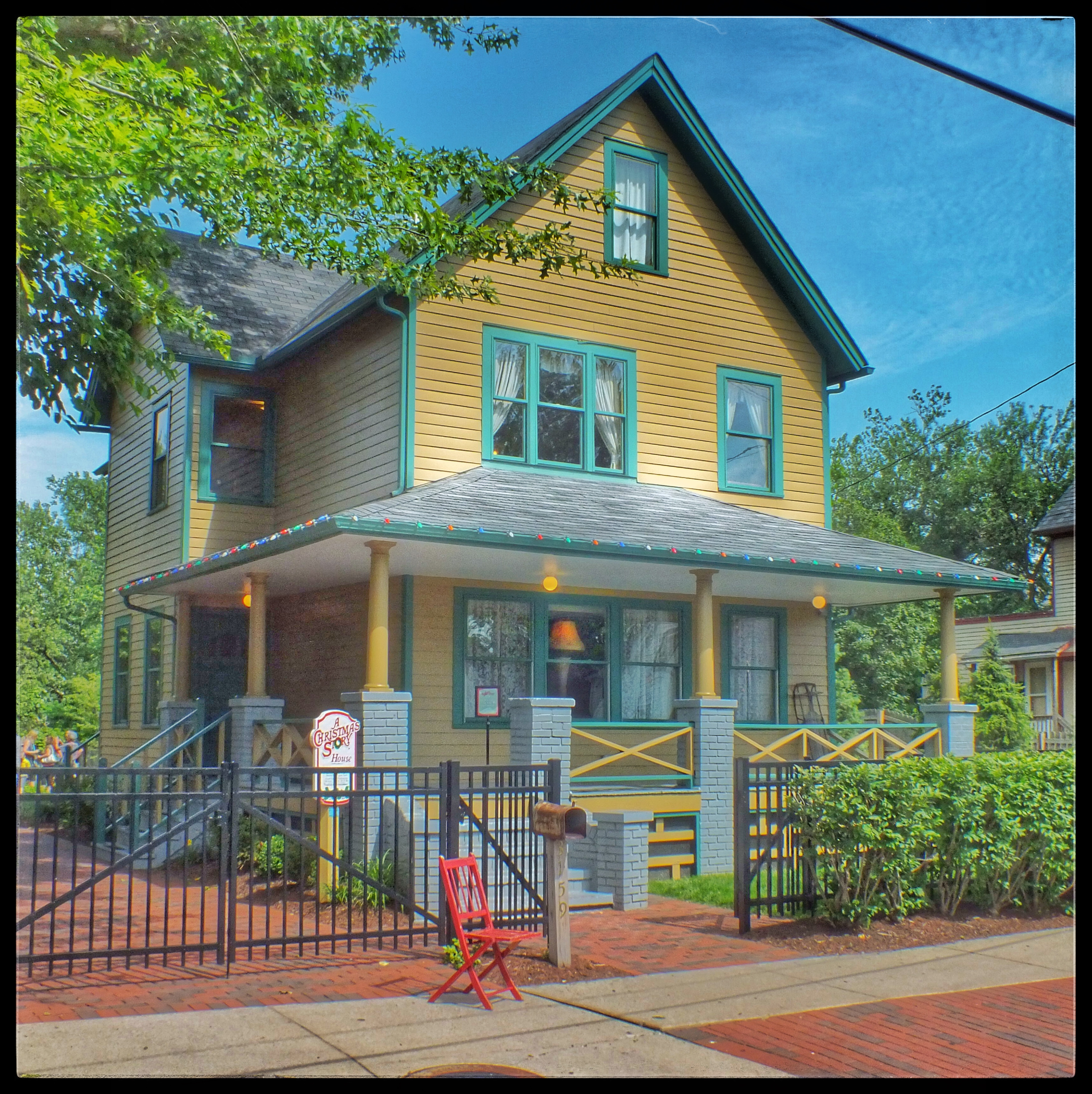
I’ve watched A Christmas Story perhaps three times, but my wife’s a big fan, so when she found out the house in Cleveland used in the movie was open for tours, we had to go.

IMG_2593

Jean Shepherd wrote a memoir of his youth in Hammond, Indiana called In God We Trust, All Others Pay Cash. When the stories in that book were turned into the movie, the name of the town was changed to Hohman. But most of it was filmed in and around Toronto — except the scenes of the outside of the house and Higbee’s Department Store, which were shot in Cleveland.

Some guy who made his living making and selling leg lamps found out the house was for sale. He bought it and restored it and opened it as a museum. He must be making good money because he’s since bought two houses across the street, one for a gift shop and one for a museum. He’s also funding the restoration of other houses in the neighborhood.

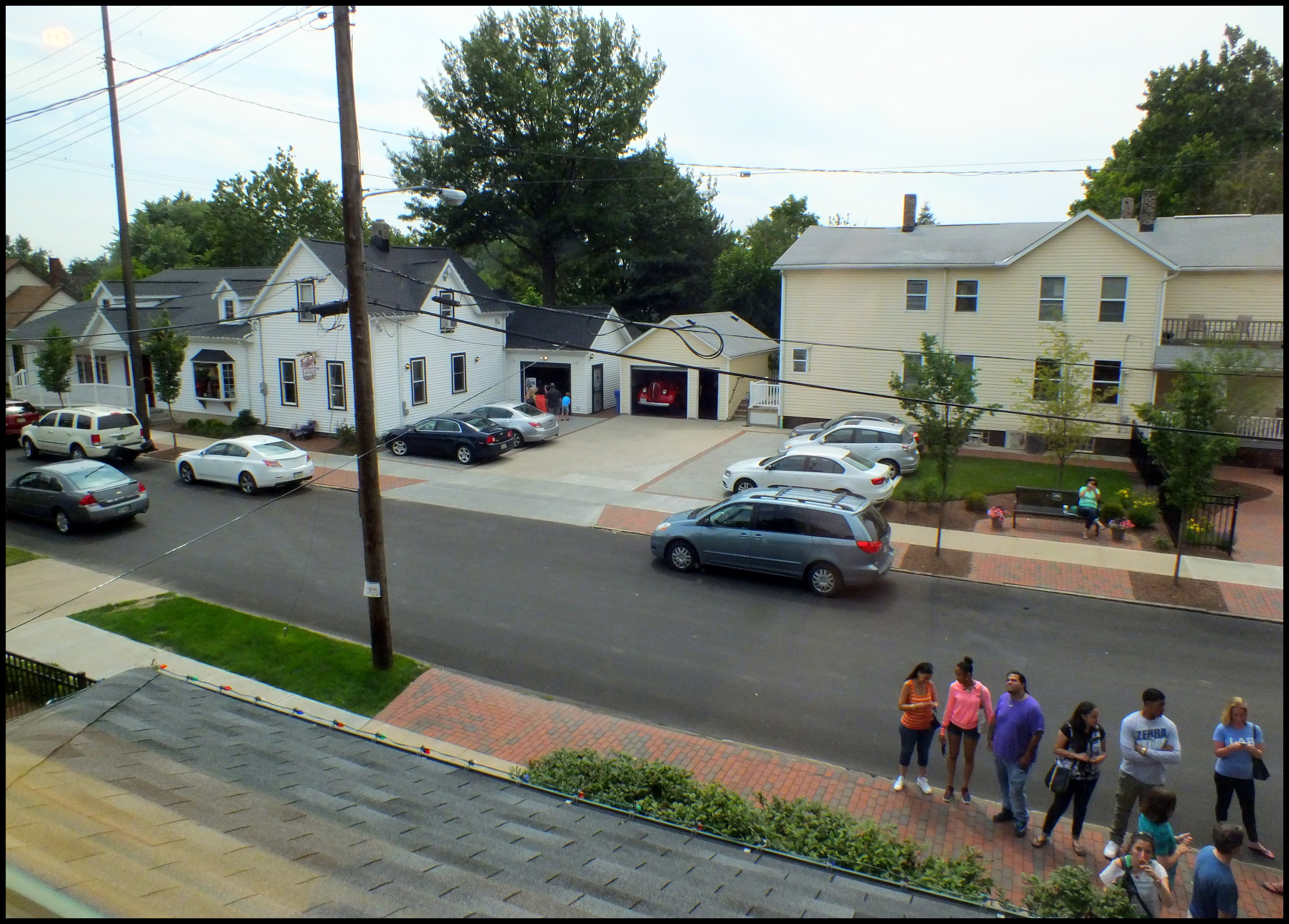
As we drove up, we saw a guy motioning us into his yard where we could park for $5. I decided to try other options first and found a free spot in a tiny parking lot between the gift shop and museum across the street.

aDSCF3565

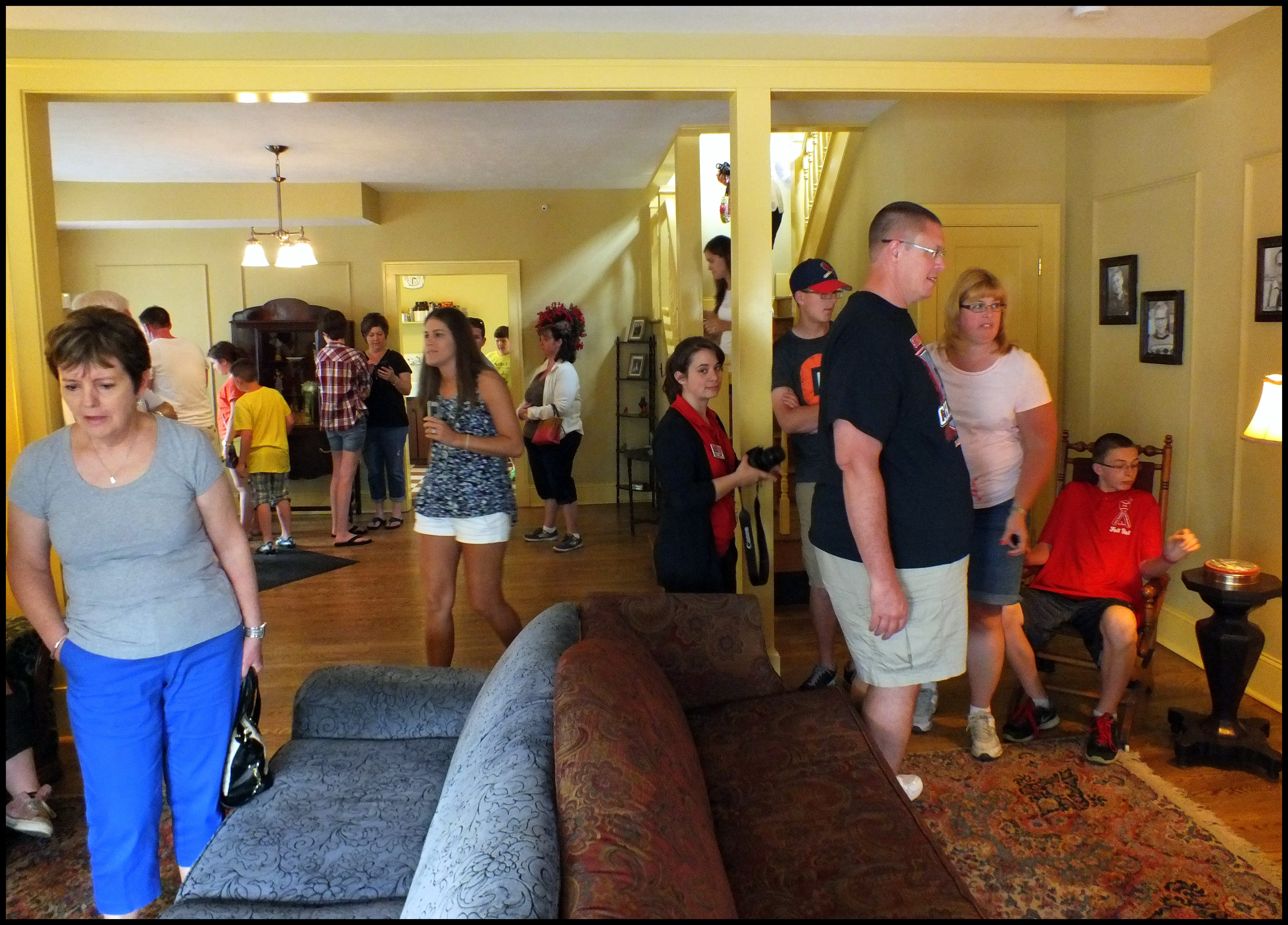
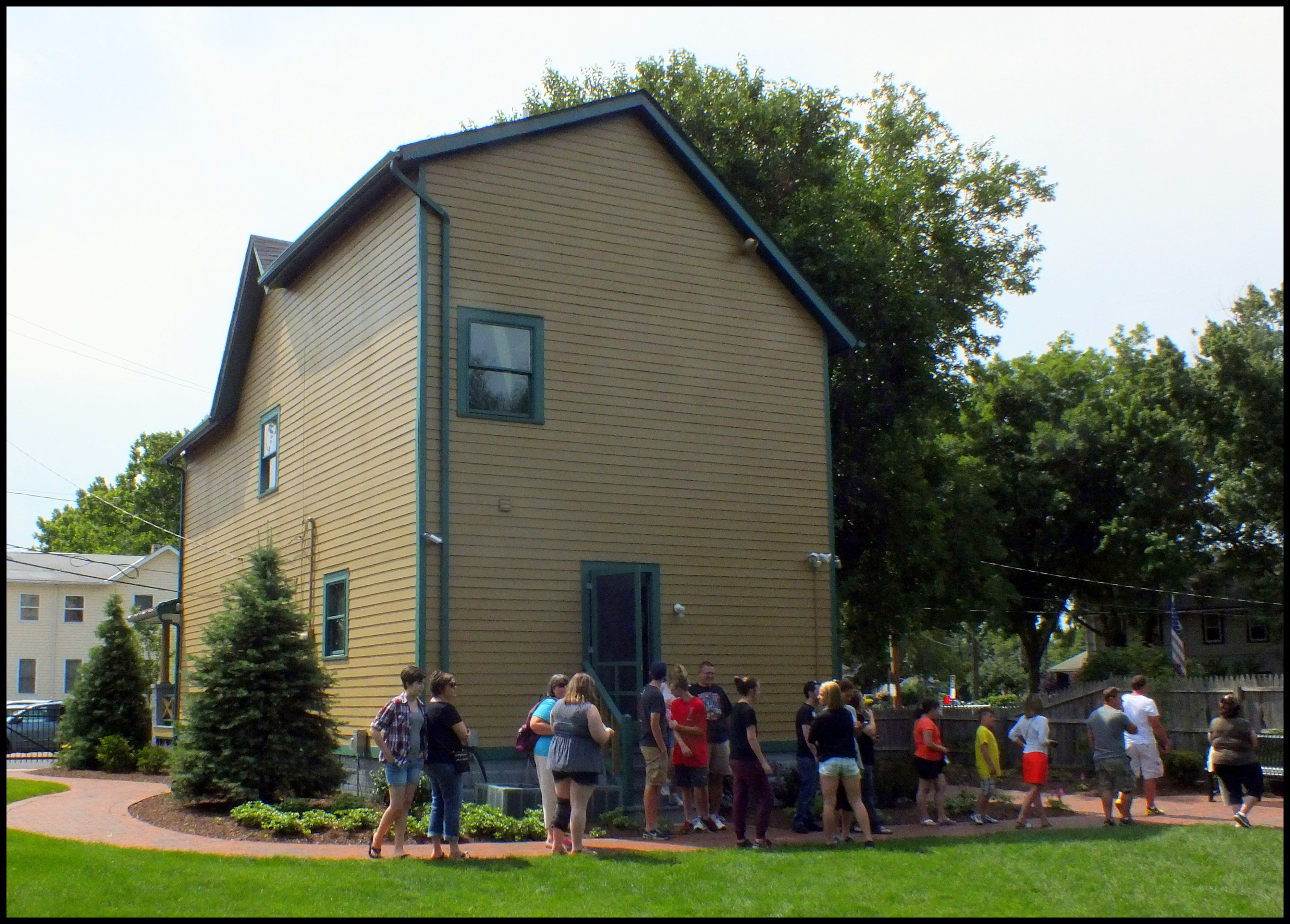
We paid a ridiculous amount for the tour and were ushered into the house by an enthusiastic young woman. (That’s her on the other end of the couch looking into the camera in the photo below.} There were probably 30 of us crowded into the front room as she gave us some information. She then let us wander about.

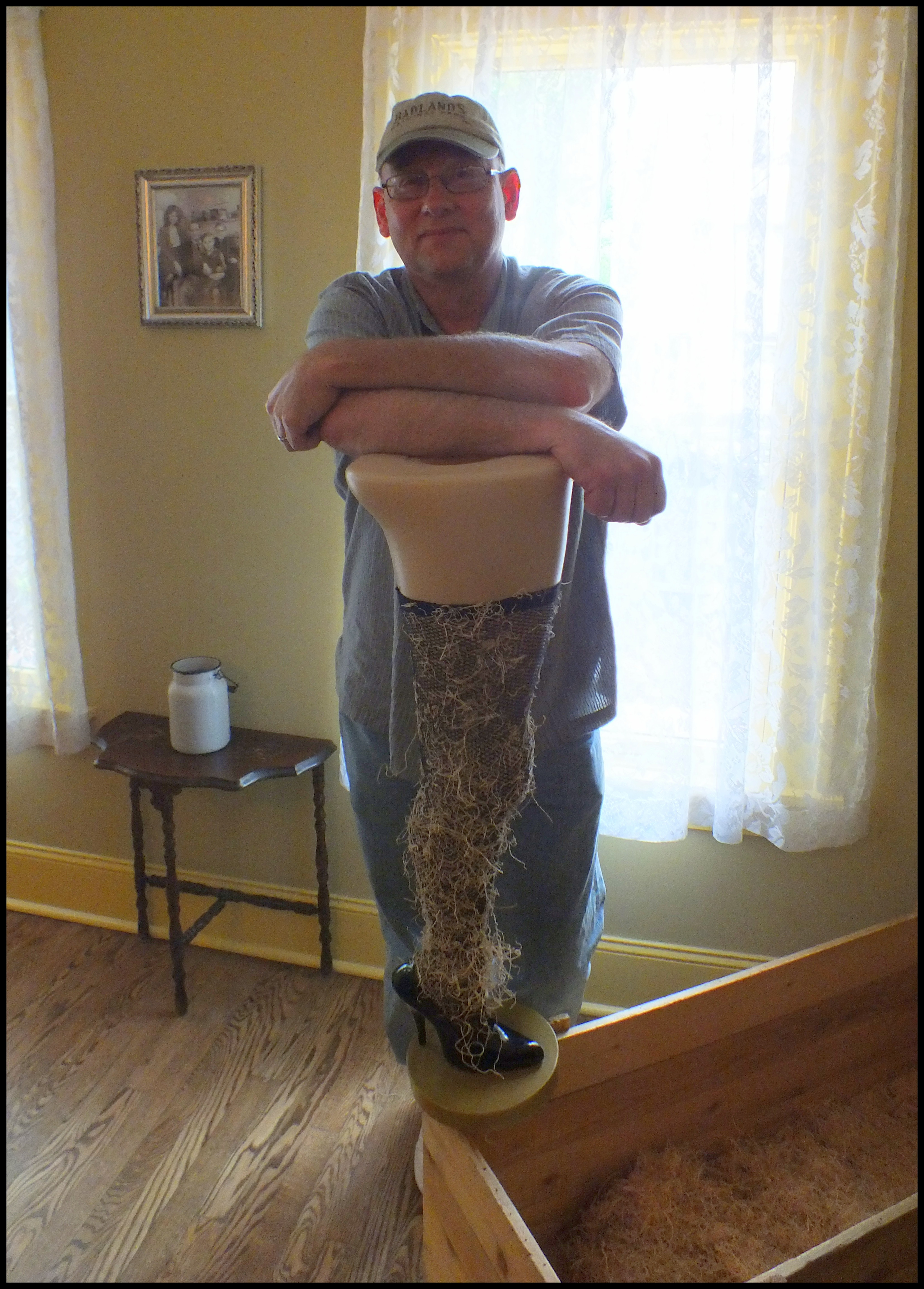
None of the scenes from the movie were shot in the house and the rooms aren’t even arranged the same way but the owner has done a good job decorating the place to look like the sets in the movie.

aDSCF3580

Since nothing was authentic, there were no limitations on what we could touch. People wandered about reenacting scenes from the movie.

aDSCF3569

aDSCF3566

aDSCF3564

aDSCF3560

aDSCF3559

aDSCF3574

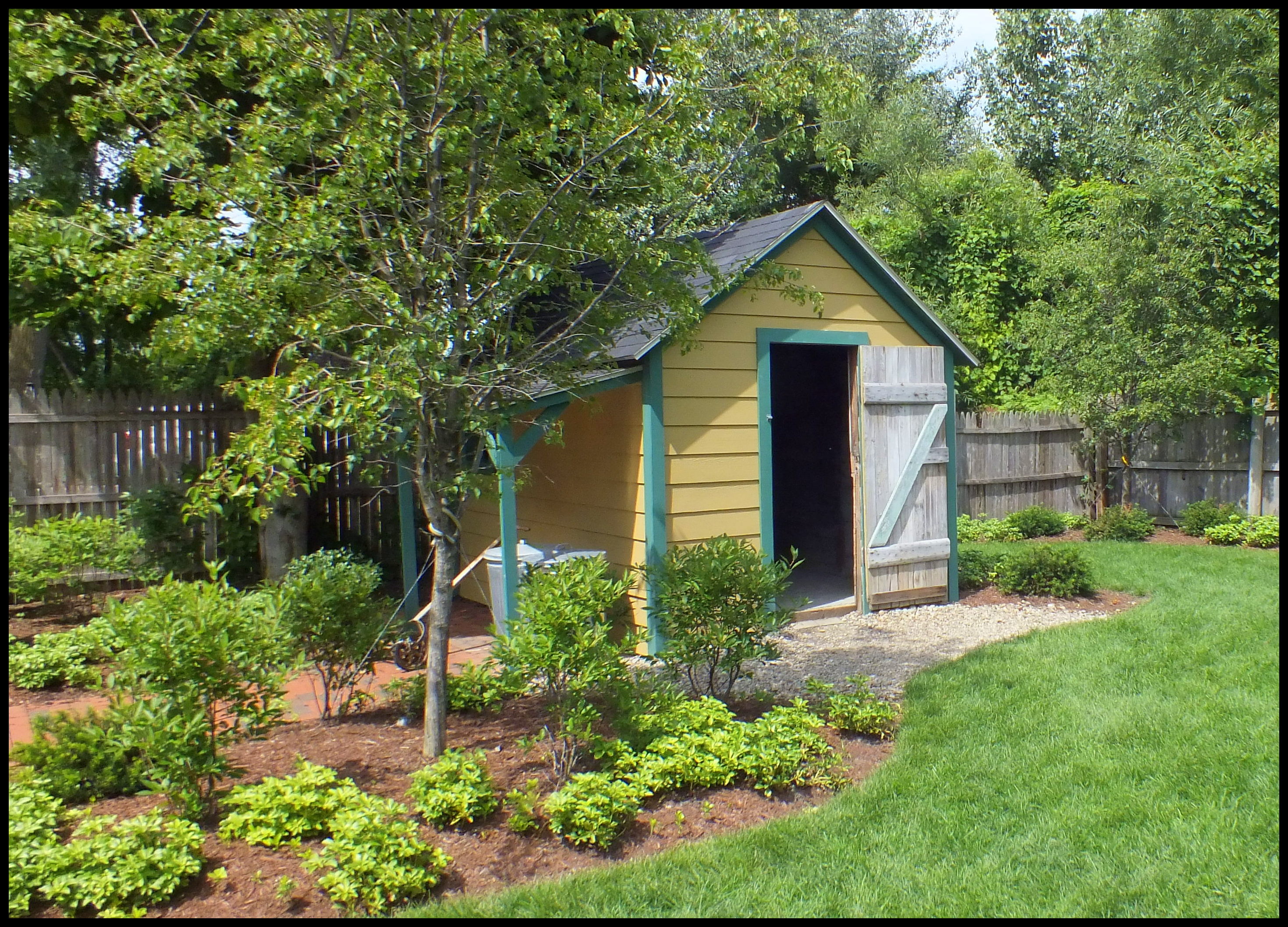
We were then ushered into the backyard where we saw the shed where Black Bart and his men hid out.

aDSCF3583

aDSCF3584

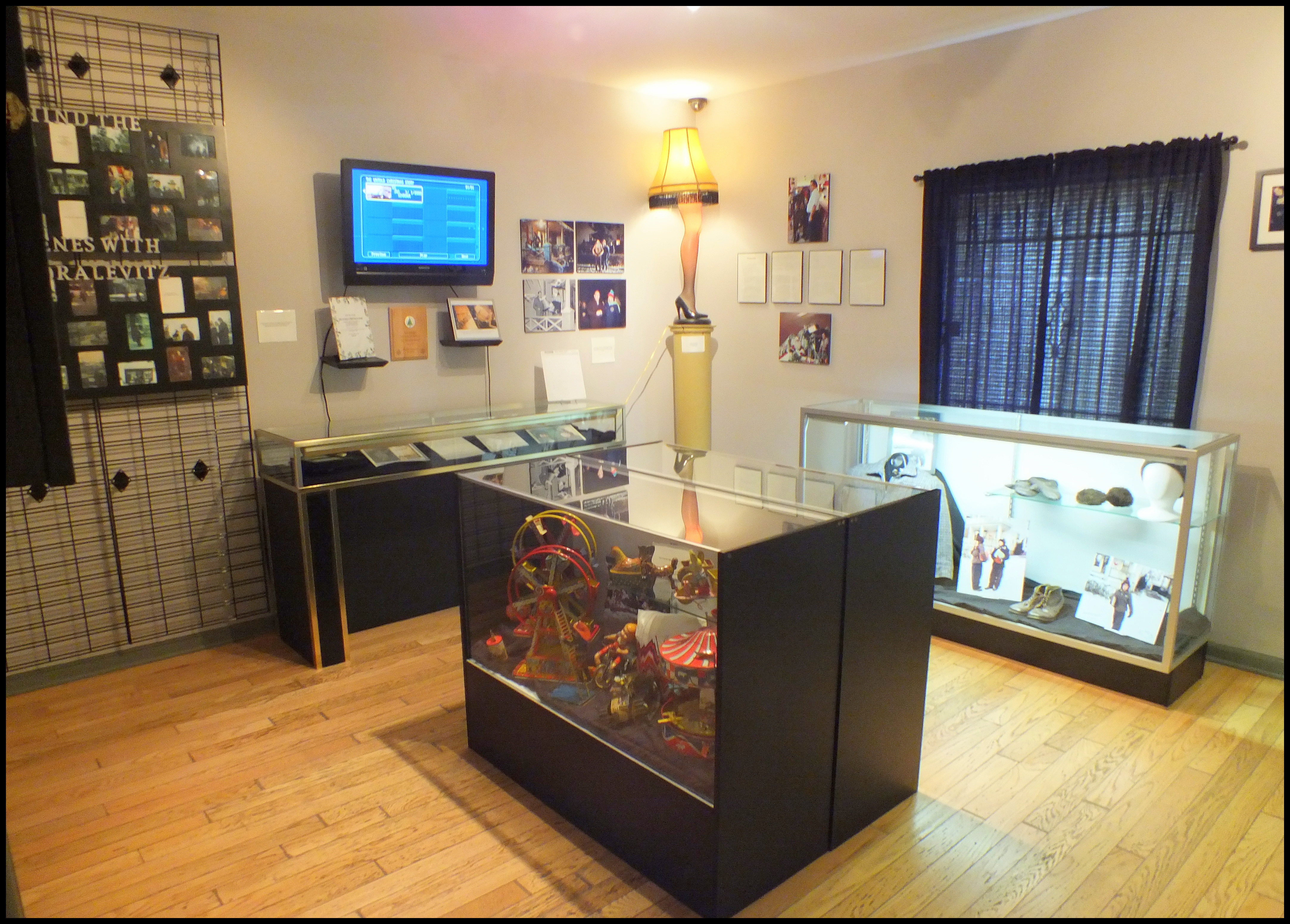
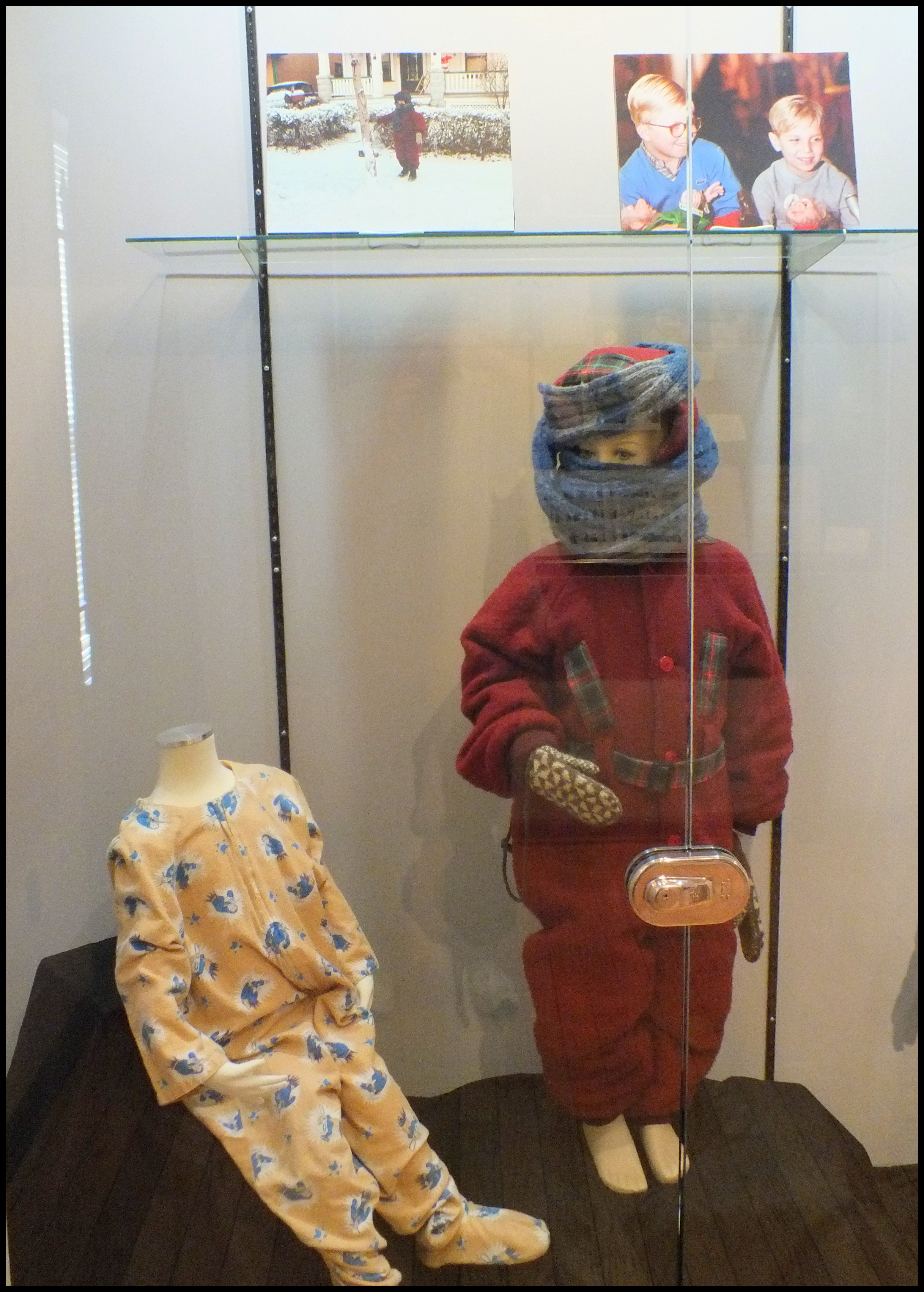
Then it was across the street to the museum where we were allowed to wander about some more. It’s tough to know exactly what we were seeing there. A lot of the stuff looked very authentic, but most of it didn’t really claim to have been actually from the movie.

aDSCF3606

aDSCF3589

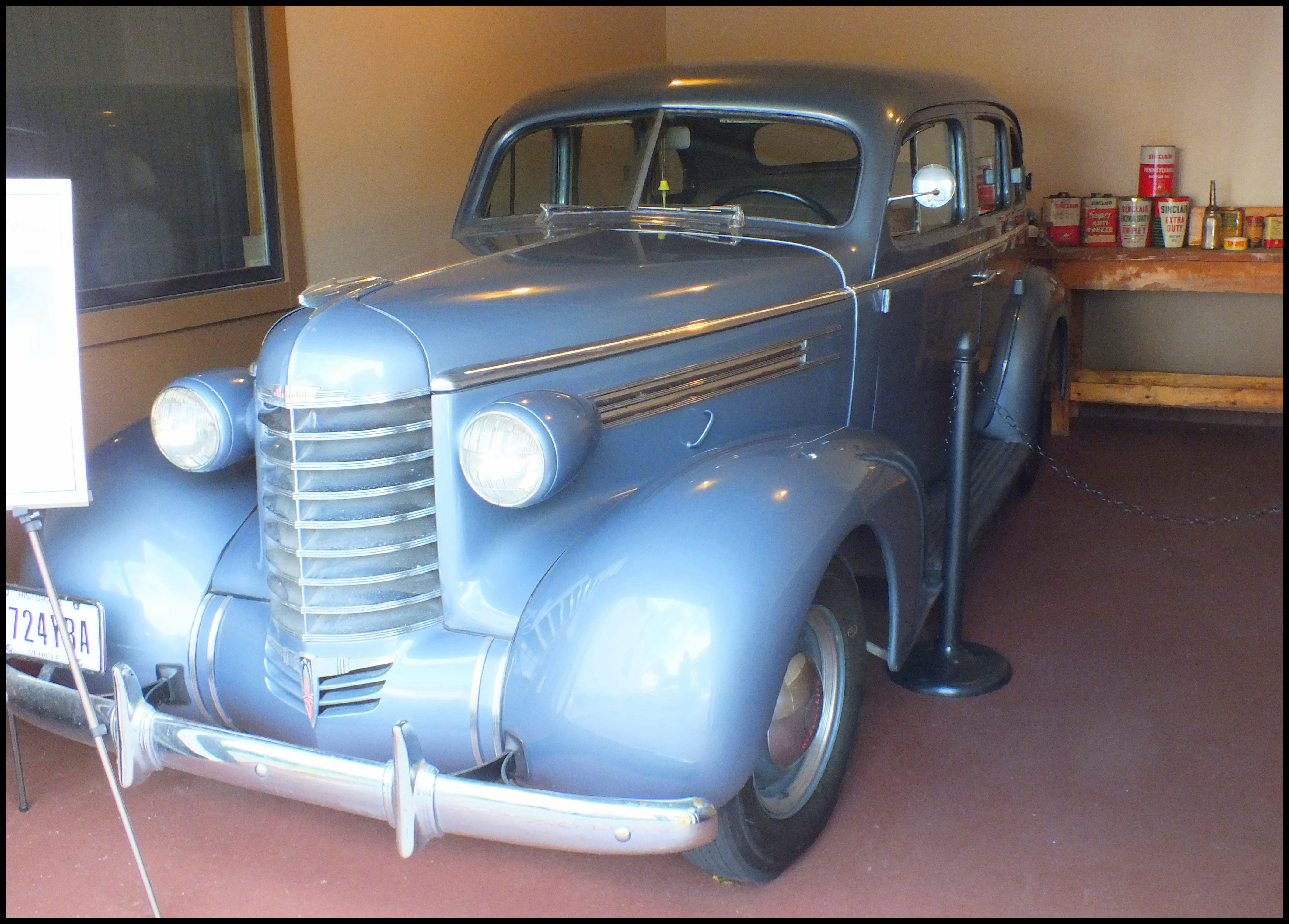
In the garage outside was a 1938 Oldsmobile like the one used in the movie. Or perhaps it was the very one used in the movie. Hard to say.

aDSCF3618

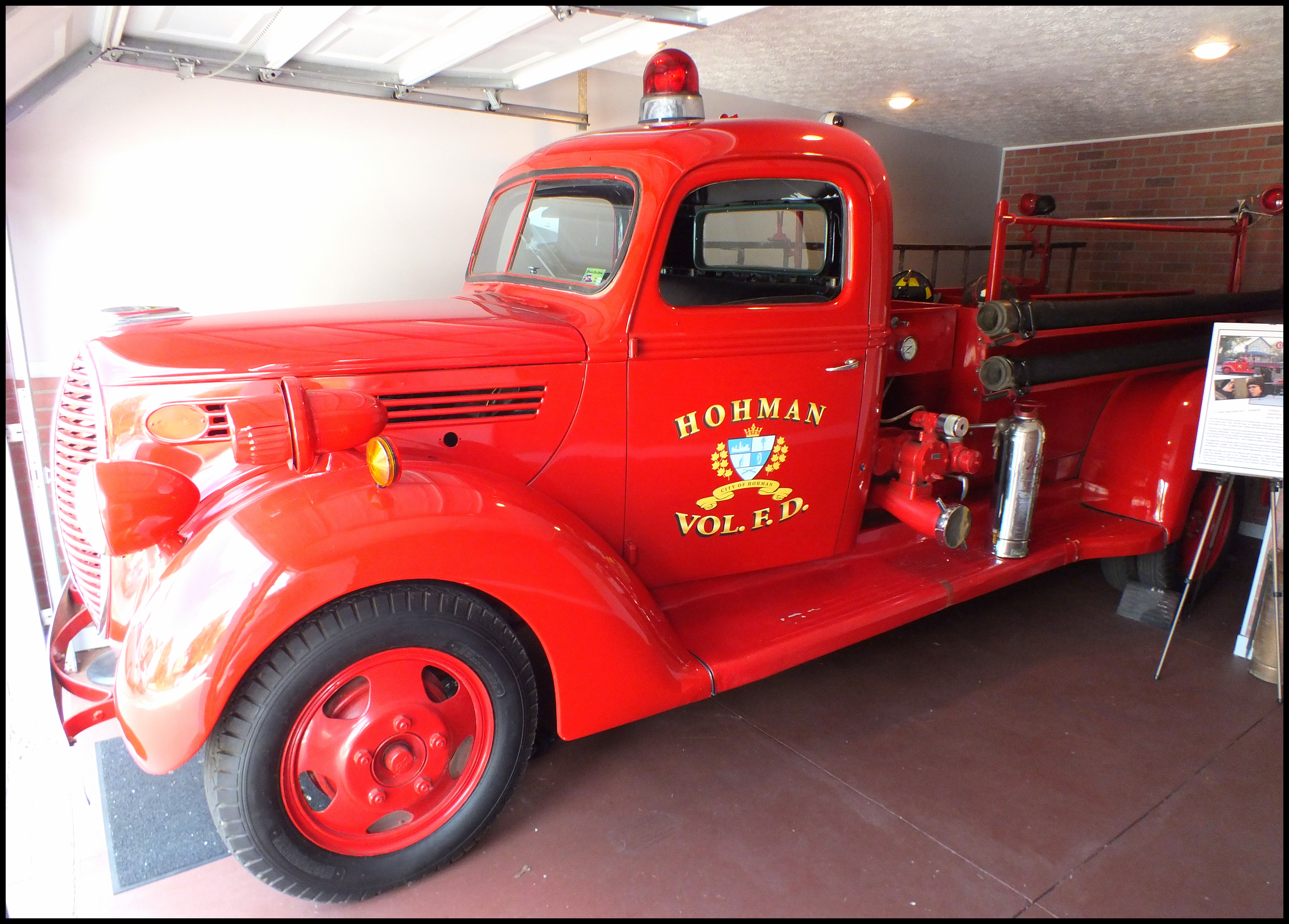
There was also a firetruck similar to the one used in the scene where Flick gets his tongue stuck to the flagpole.

aDSCF3622

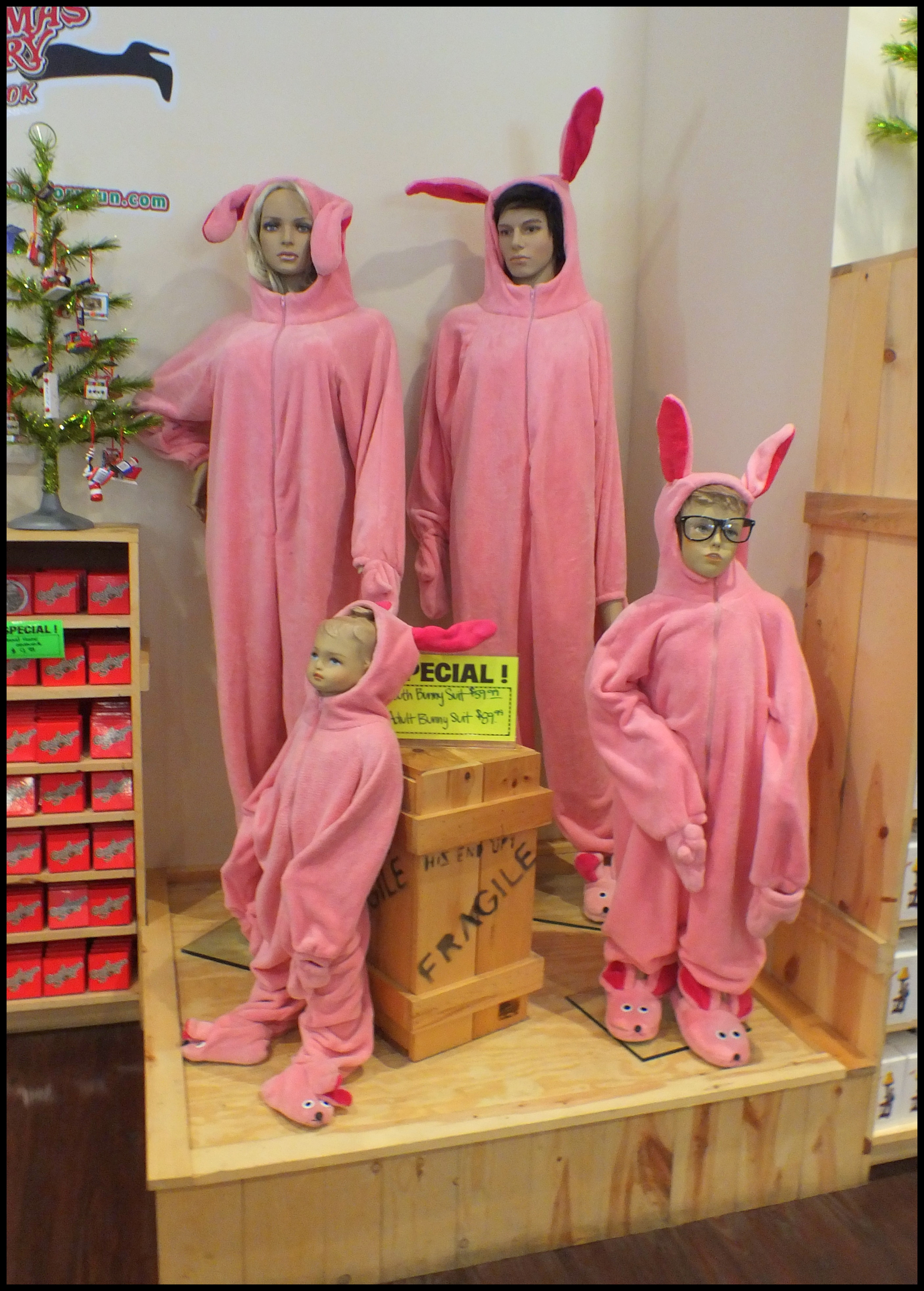
We bought a bunch of stuff in the gift shop, but not one of these suits.

aDSCF3557

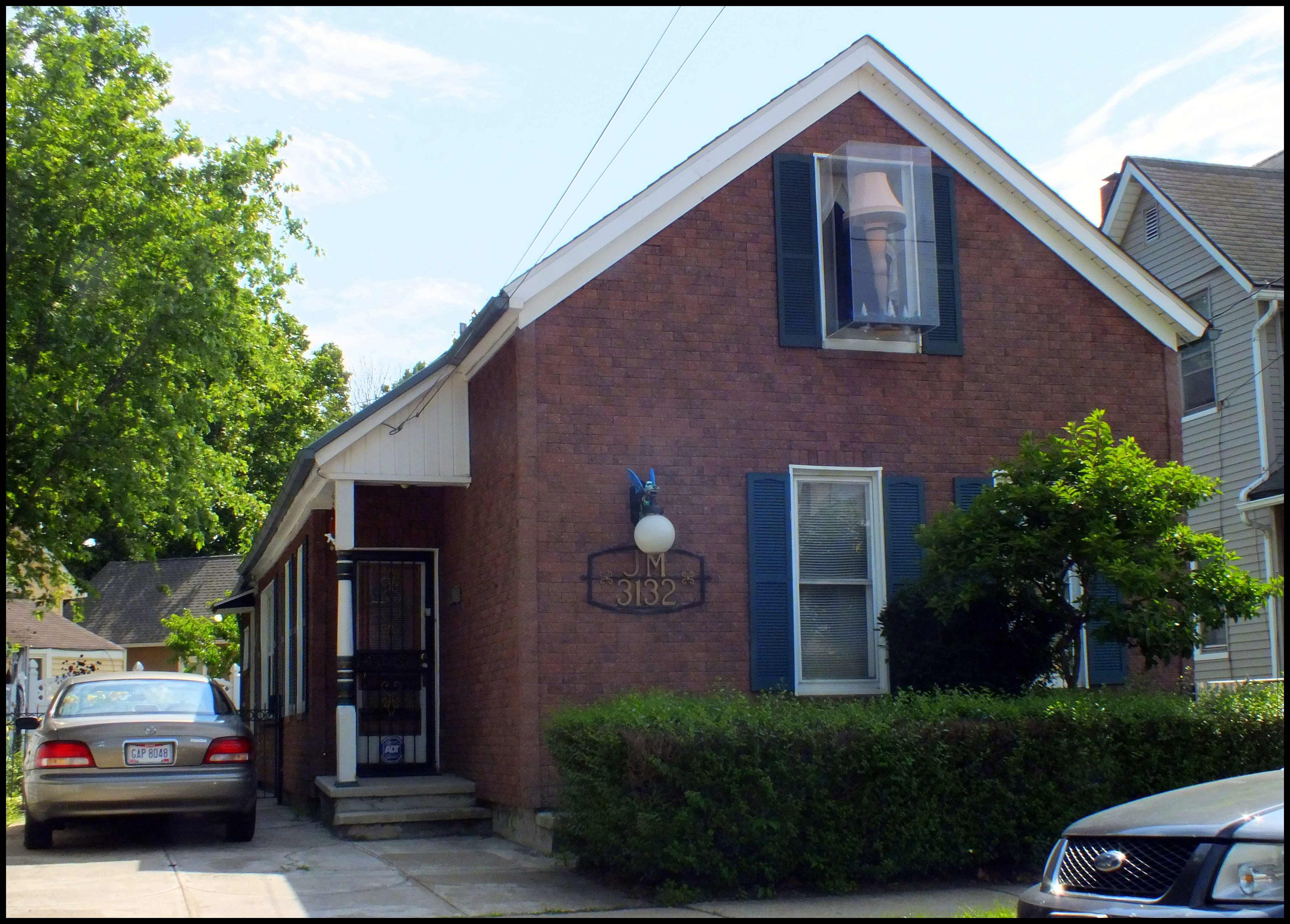
A guy who lived three houses up the street gave the film crew free use of his driveway. In exchange, they gave him a part in the movie as the guy who delivered the leg lamp box. Some years later, he was given a leg lamp in honor of his role and he proudly displays it in a special window in his house.

aDSCF3623

The next morning we drove through downtown Cleveland and found the store that used to be Higbees. It’s now a casino.

IMG_2594

Posted in Ohio | Comments Off on A Christmas Story House

Storm

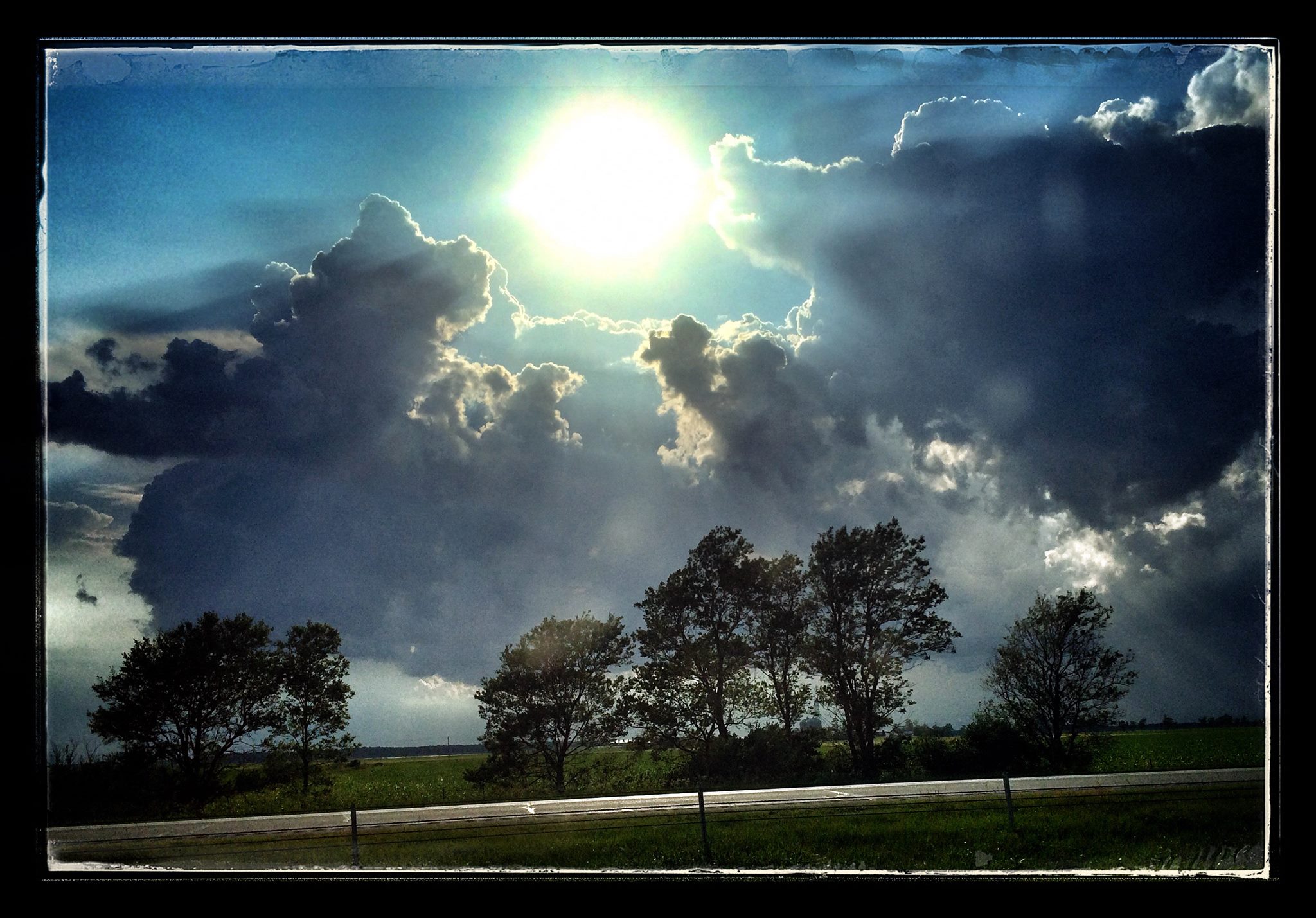
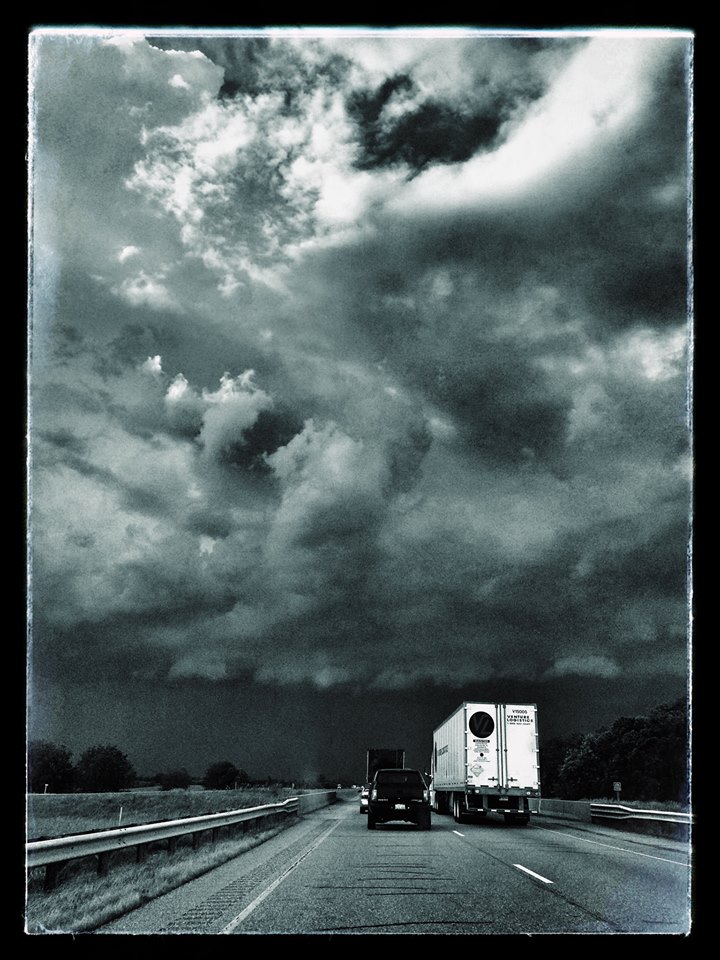
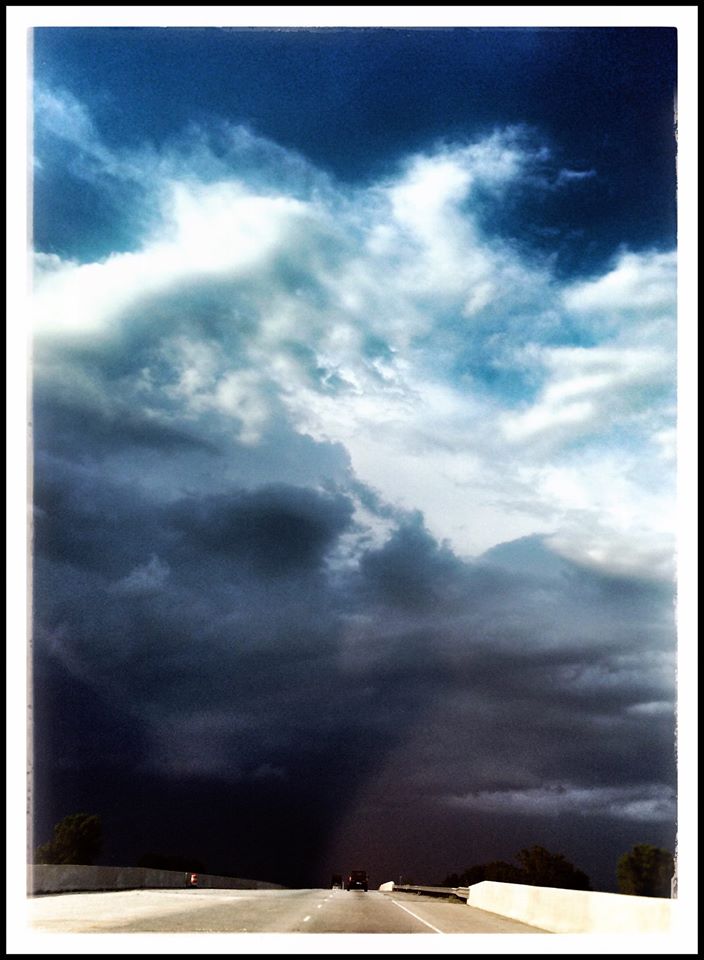
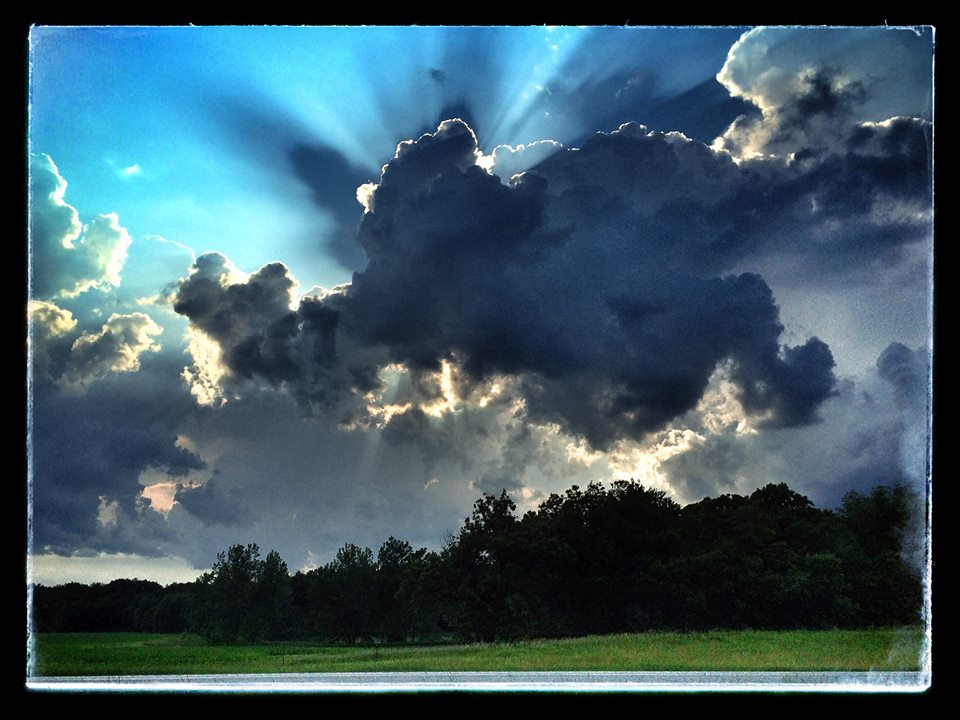
I-65 in Northern Indiana, heading north toward Chicago. It looked scarey, but except for three minutes of intense downpour near Crown Point, we managed to slide in just behind it.

11112524_10206096725432646_2490076163493399408_o

11391273_10206096725912658_5673073484112031858_n

11406141_10206096725112638_7313305836211710275_o

11424448_10206096725632651_8745281184659086483_n

10458543_10206096725512648_183150749603655703_n

Posted in Photos | Comments Off on Storm

Inside the Ohio Statehouse

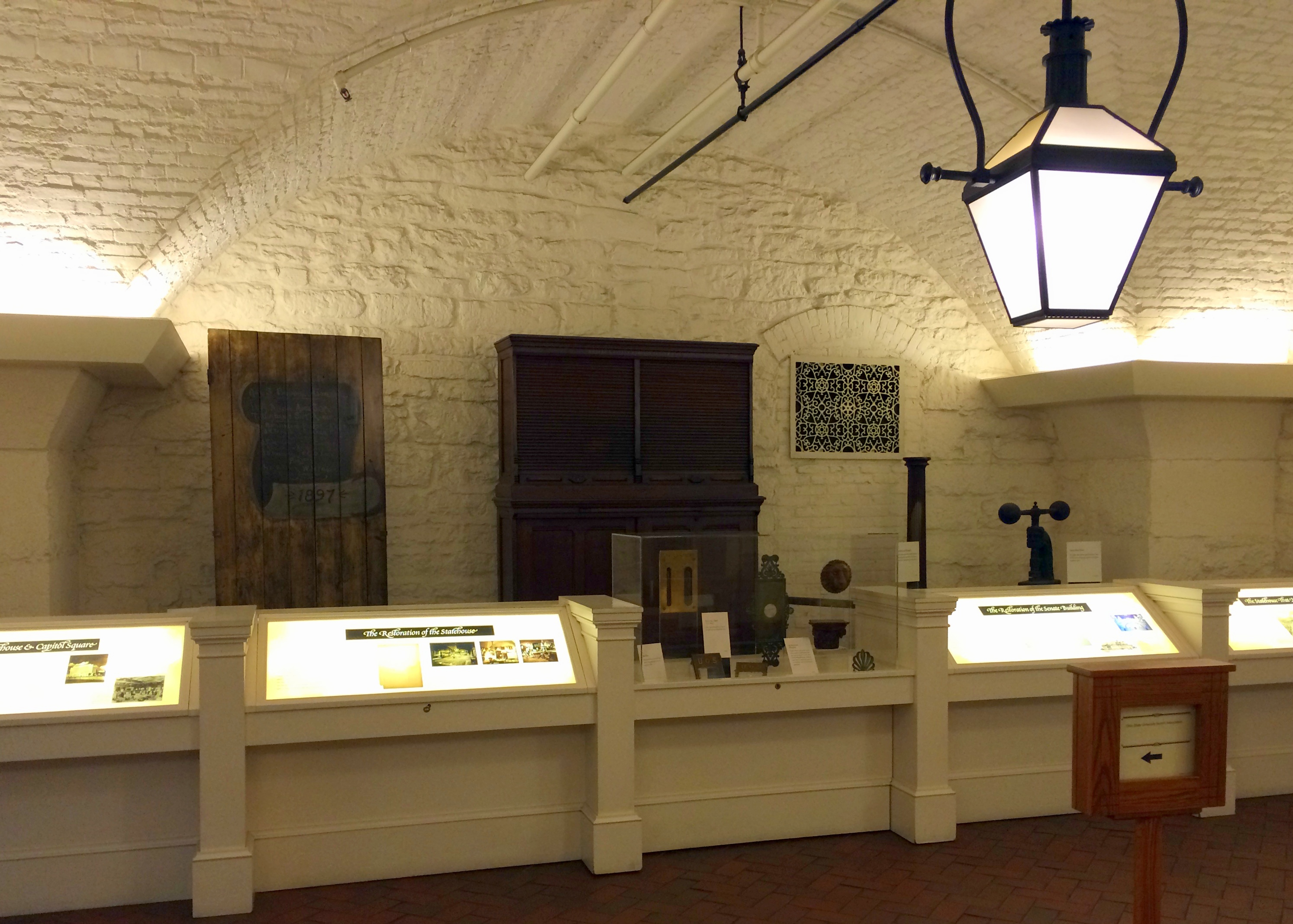
After my circumperambulation of the Ohio state capitol, I wandered inside. The lower level, or at least those parts of it I had access to, were given over to displays and artifacts related to Ohio history.

oIMG_4366

The first room had a county map of the state on the floor.

oIMG_4371

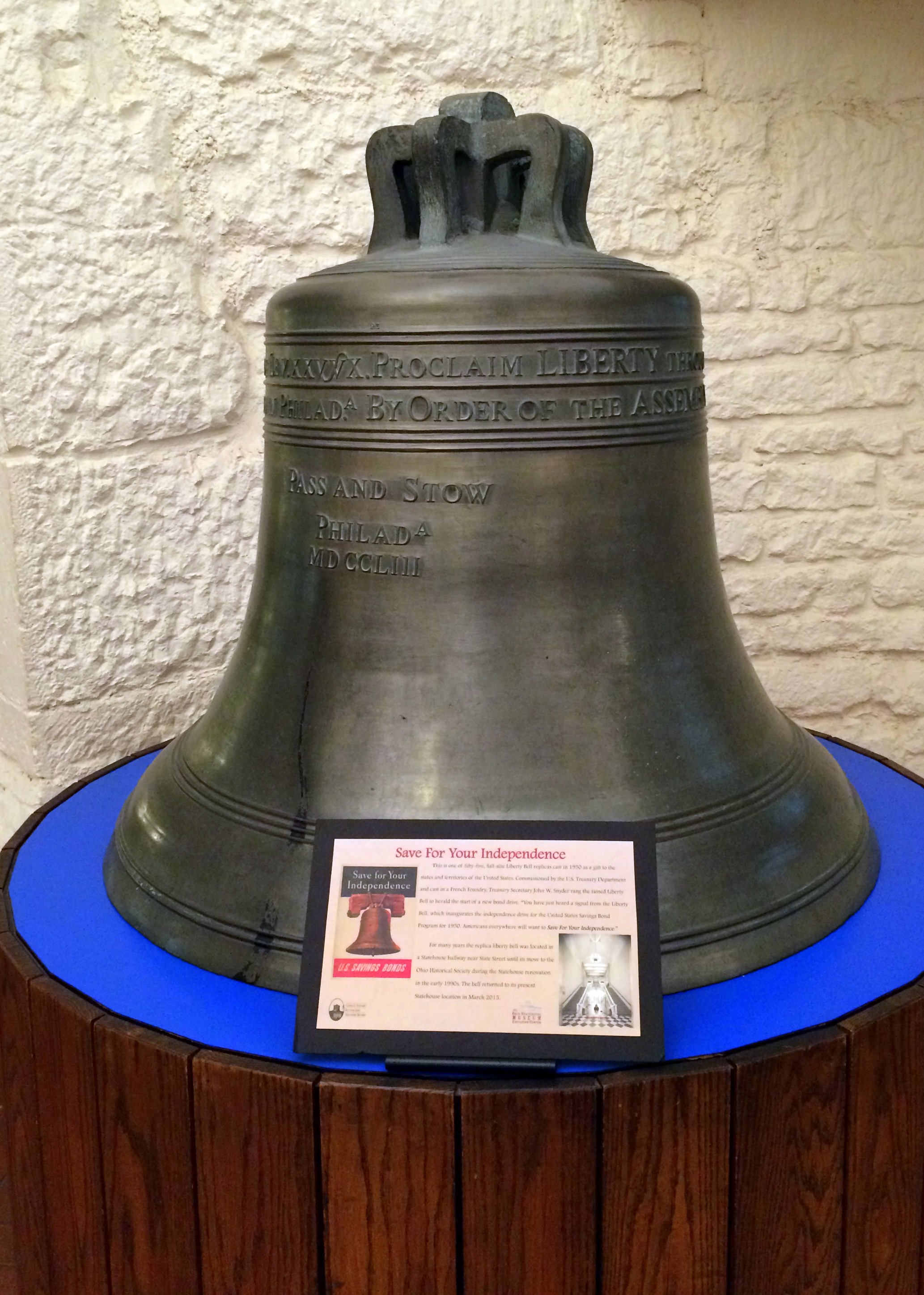
A replica of the Liberty Bell.

oIMG_4361

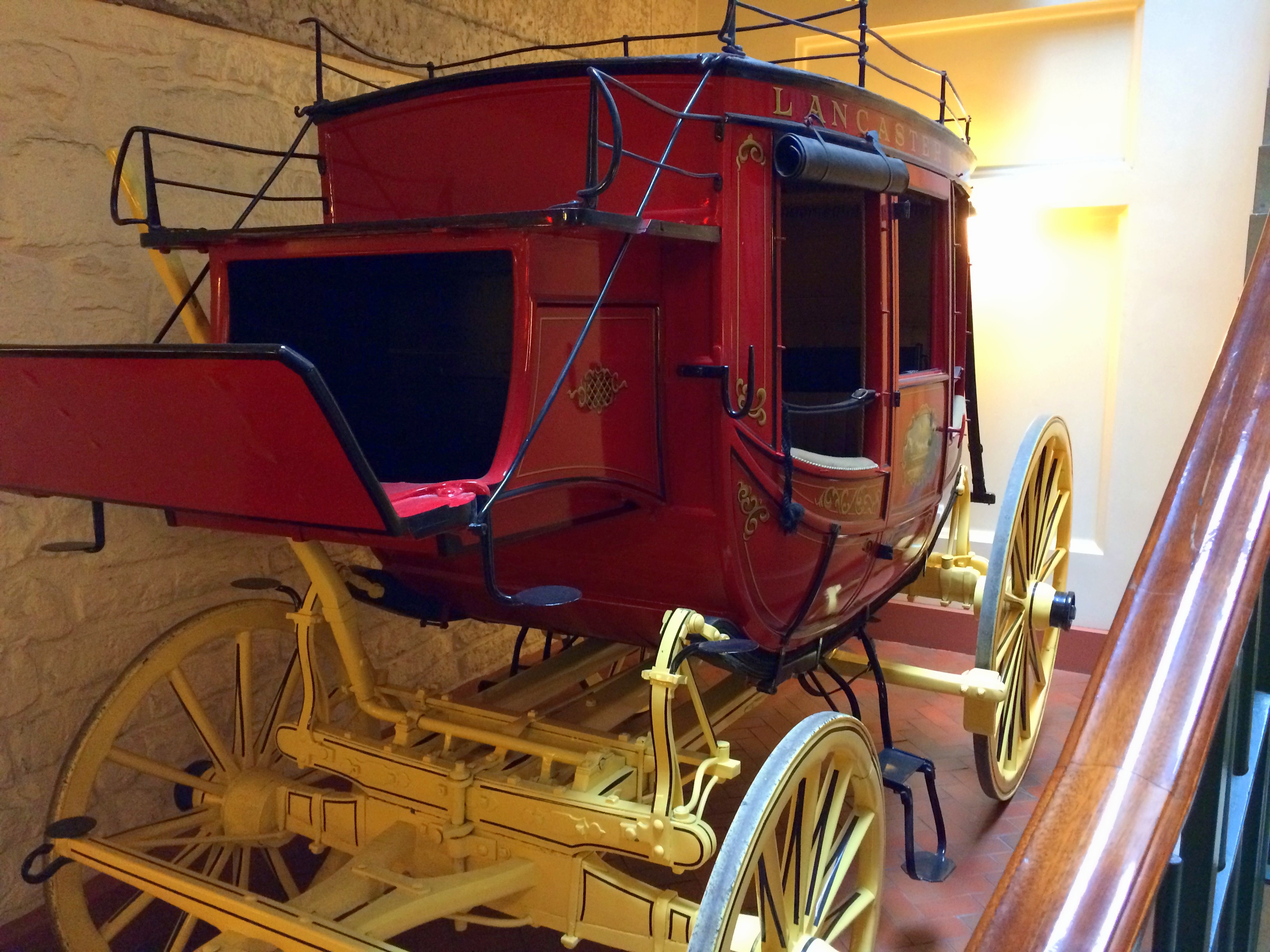
A stagecoach was tucked in a corner next to a stairwell to represent the way people traveled to the capital when the statehouse was first built.

oIMG_4387

I took the elevator  up a level to the rotunda. This is the rather odd skylight in the weirdly-abbreviated dome.

oIMG_4378

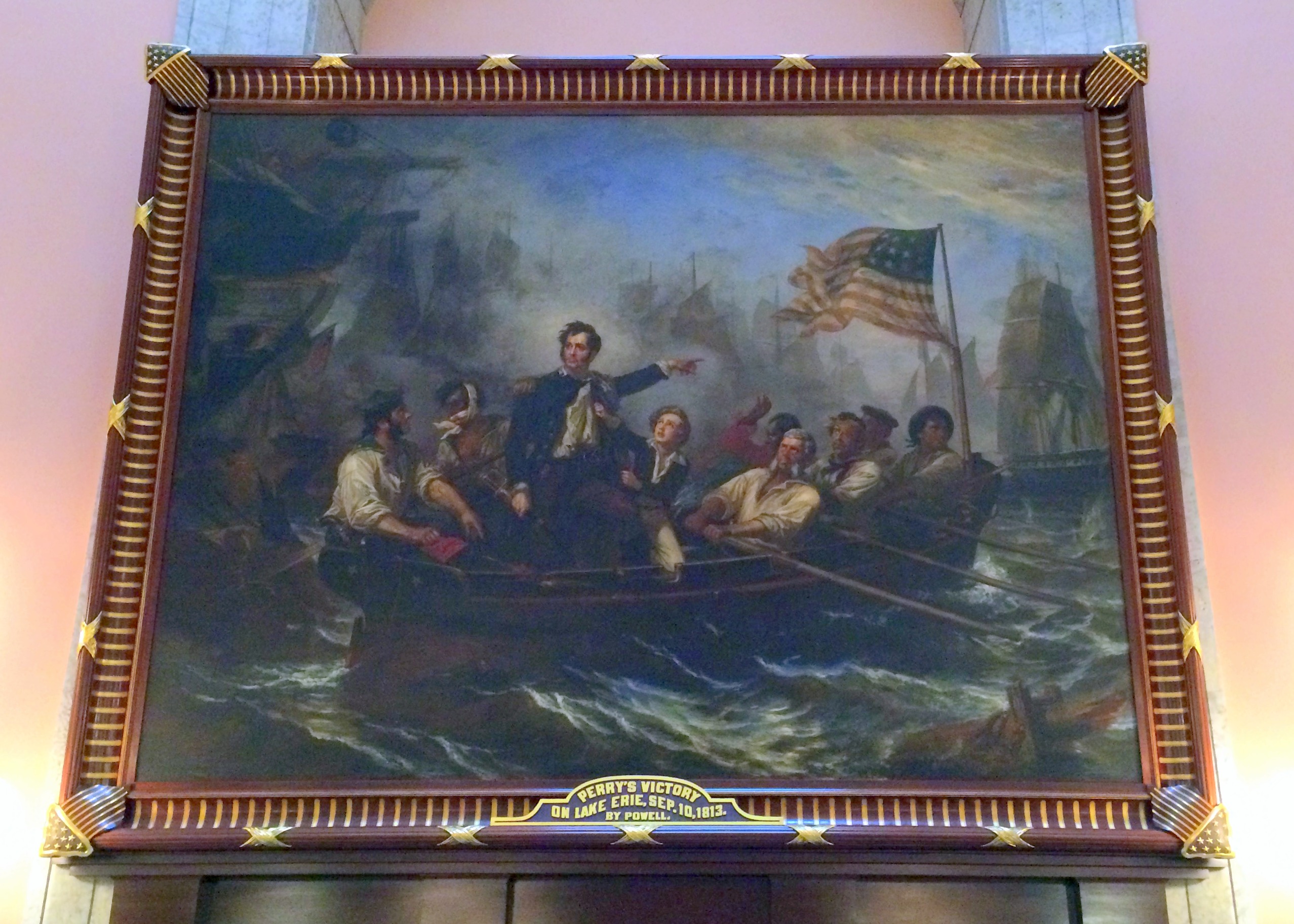
There were several giant paintings, most of which looked vaguely familiar. The top one is The Battle of Lake Erie — Perry’s Victory.

oIMG_4374

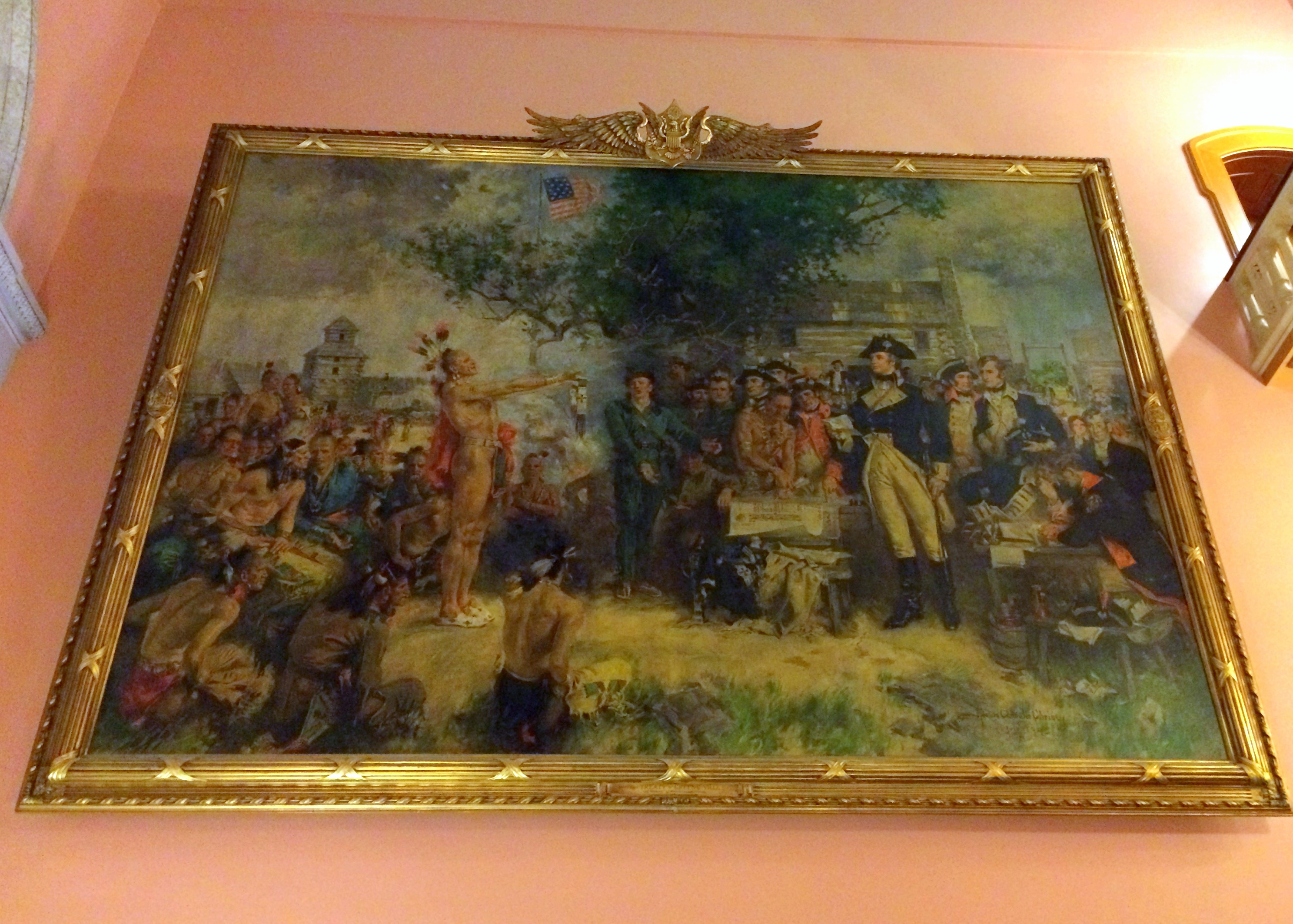
The Treaty of Greene Ville

oIMG_4380

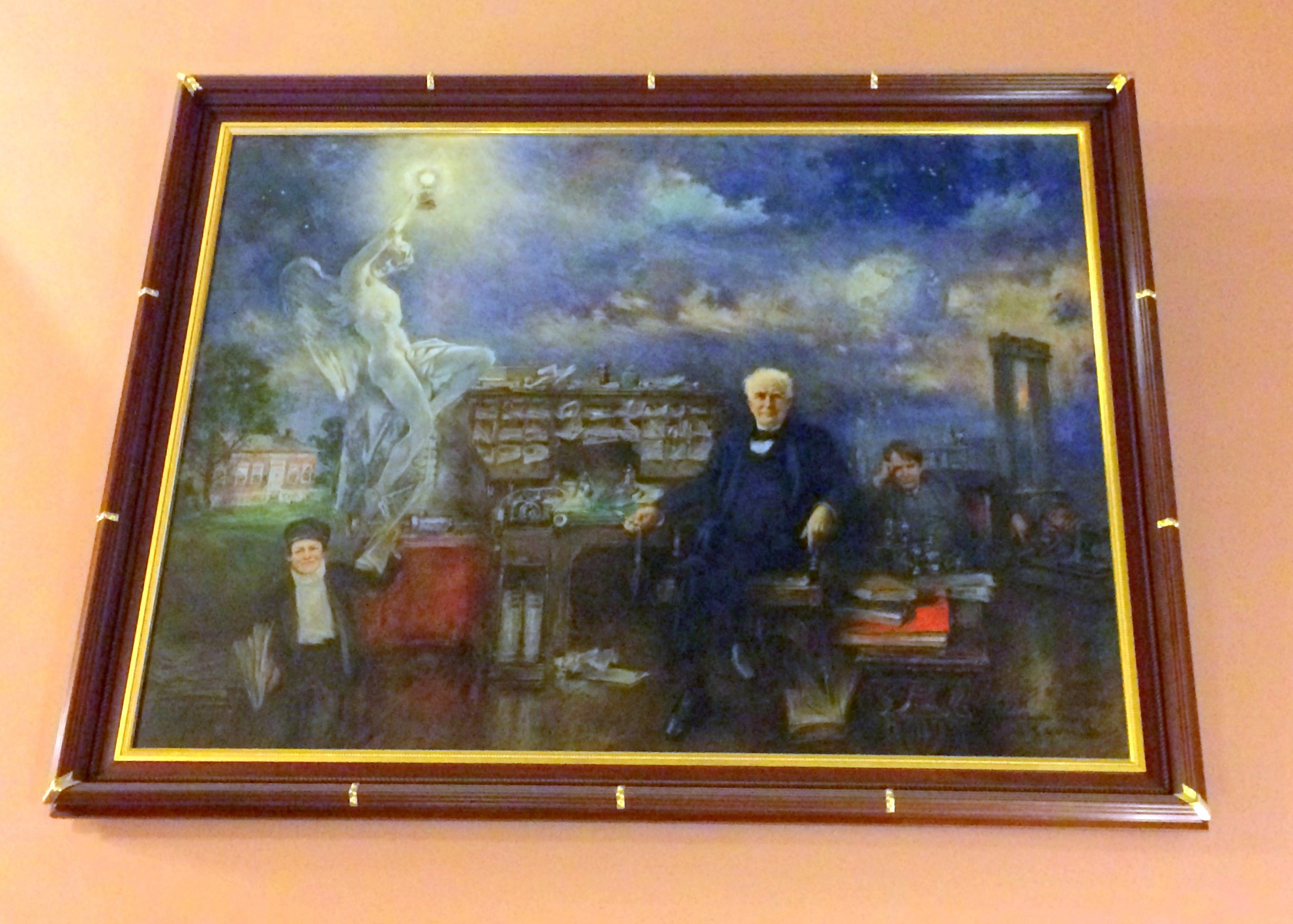
Dawn of a New Light

oIMG_4381

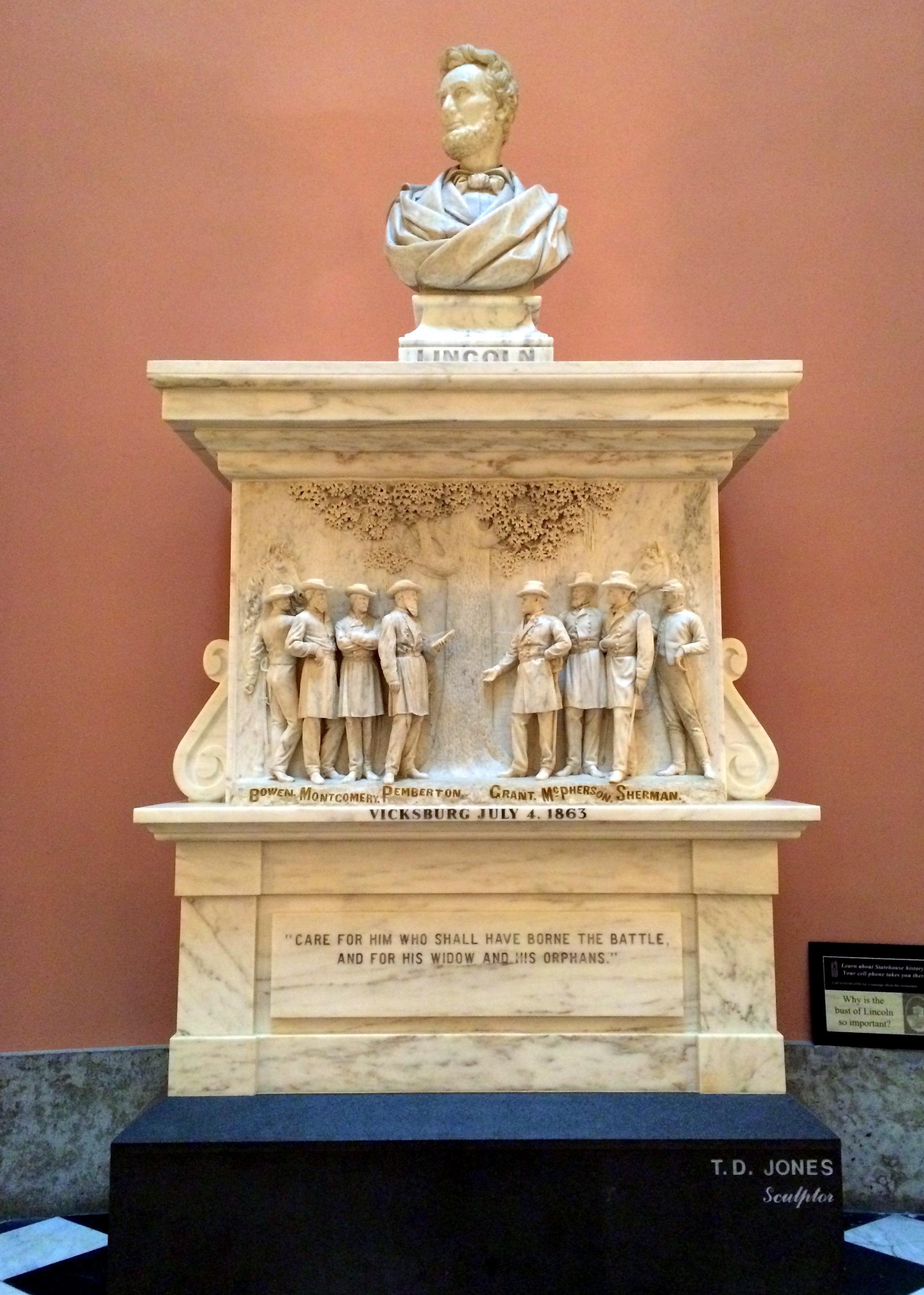
The Lincoln-Vicksburg Monument, commemorating the 1863 Civil War battle with a phrase from Lincoln’s second inaugural address.

oIMG_4375

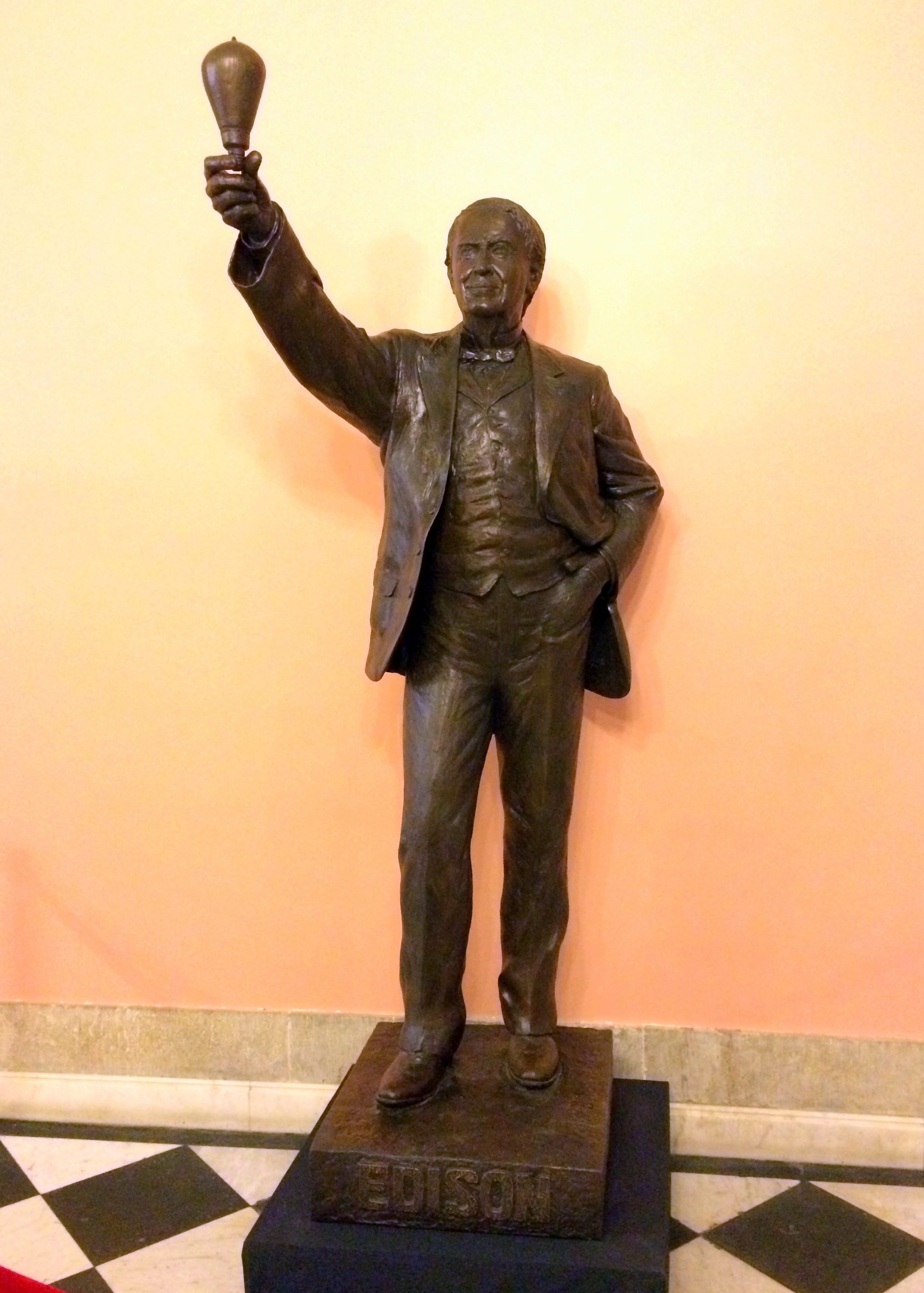
A statue of Thomas Edison which will be moved to the National Statuary Hall in the United States Capitol in October, 2015 to take its place with other statues of great Americans.

oIMG_4384

There was much more of this type of thing, and it was fun to wander around and look, but I didn’t have time to take the guided tour.

Posted in Ohio | Comments Off on Inside the Ohio Statehouse

Outside the Ohio Statehouse

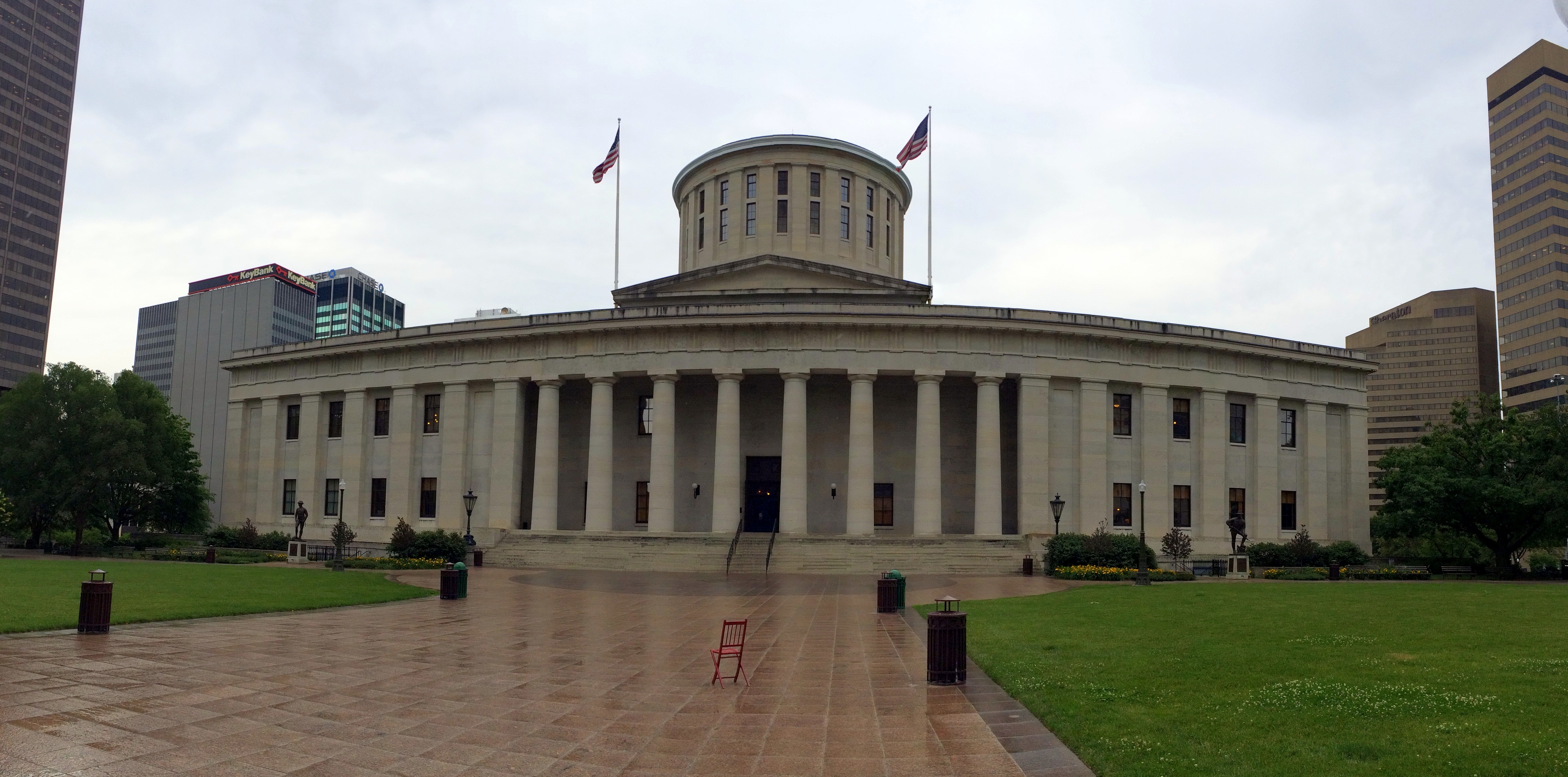
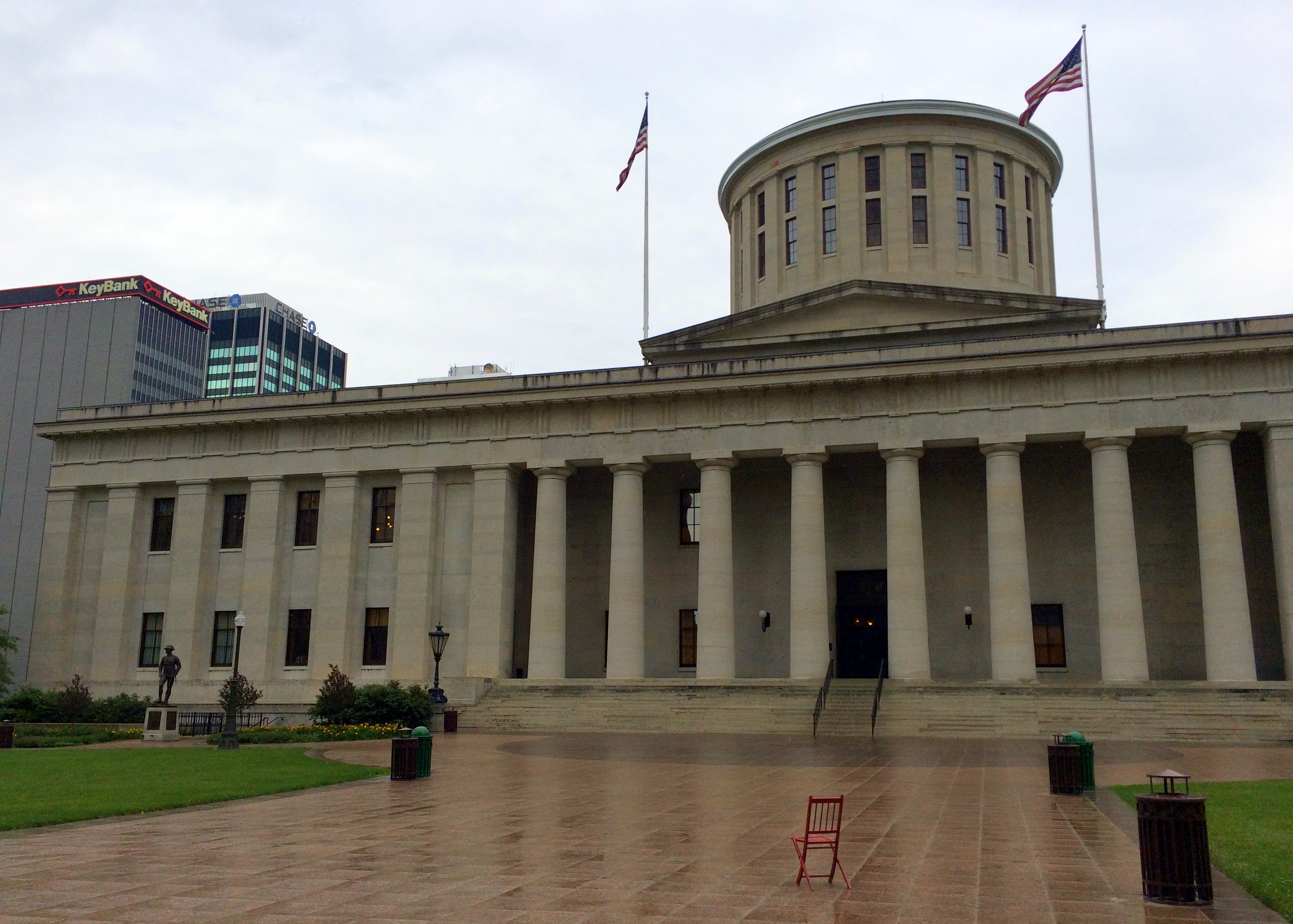
I spent an hour and a half on a rainy Monday morning exploring outside and inside the Ohio Statehouse in Columbus. Here in the approximate order in which I happened upon it, is what I saw.

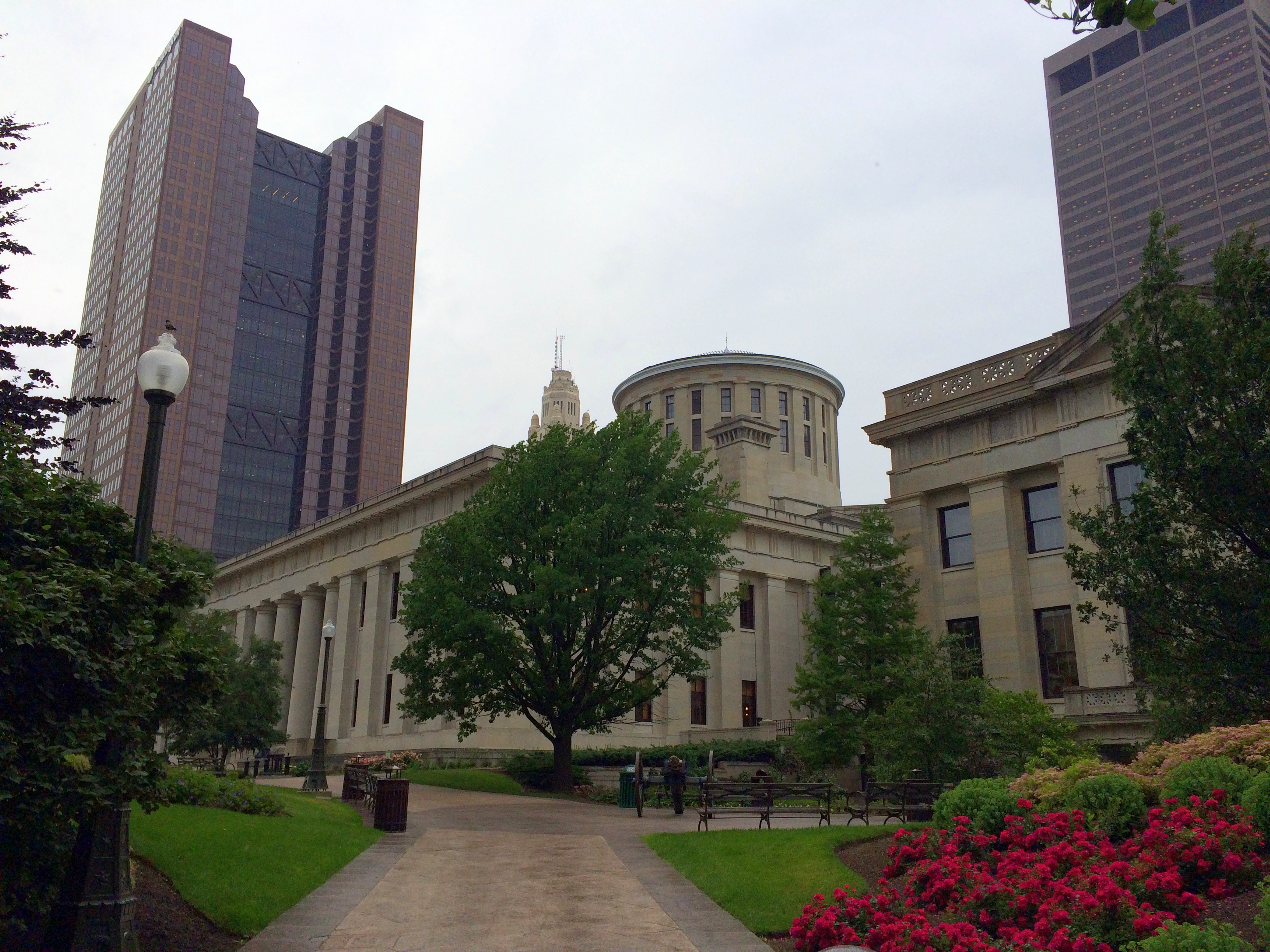
I parked on the street about half a block away, and approached from the southeast. This was my first view of the weird abbreviated dome.

oIMG_4319

oIMG_4394

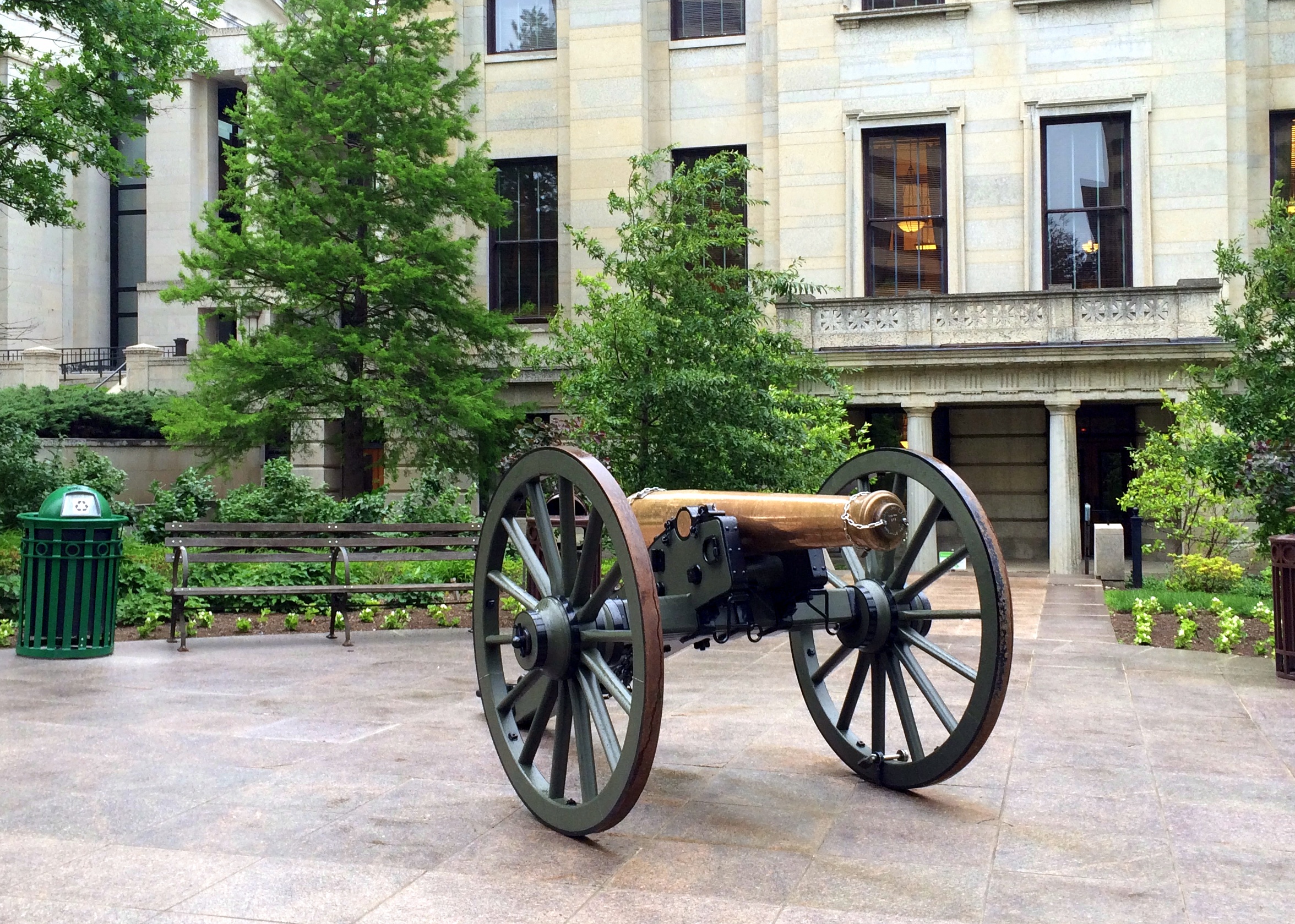
There’s a Civil War cannon at each corner of the plaza.

oIMG_4320

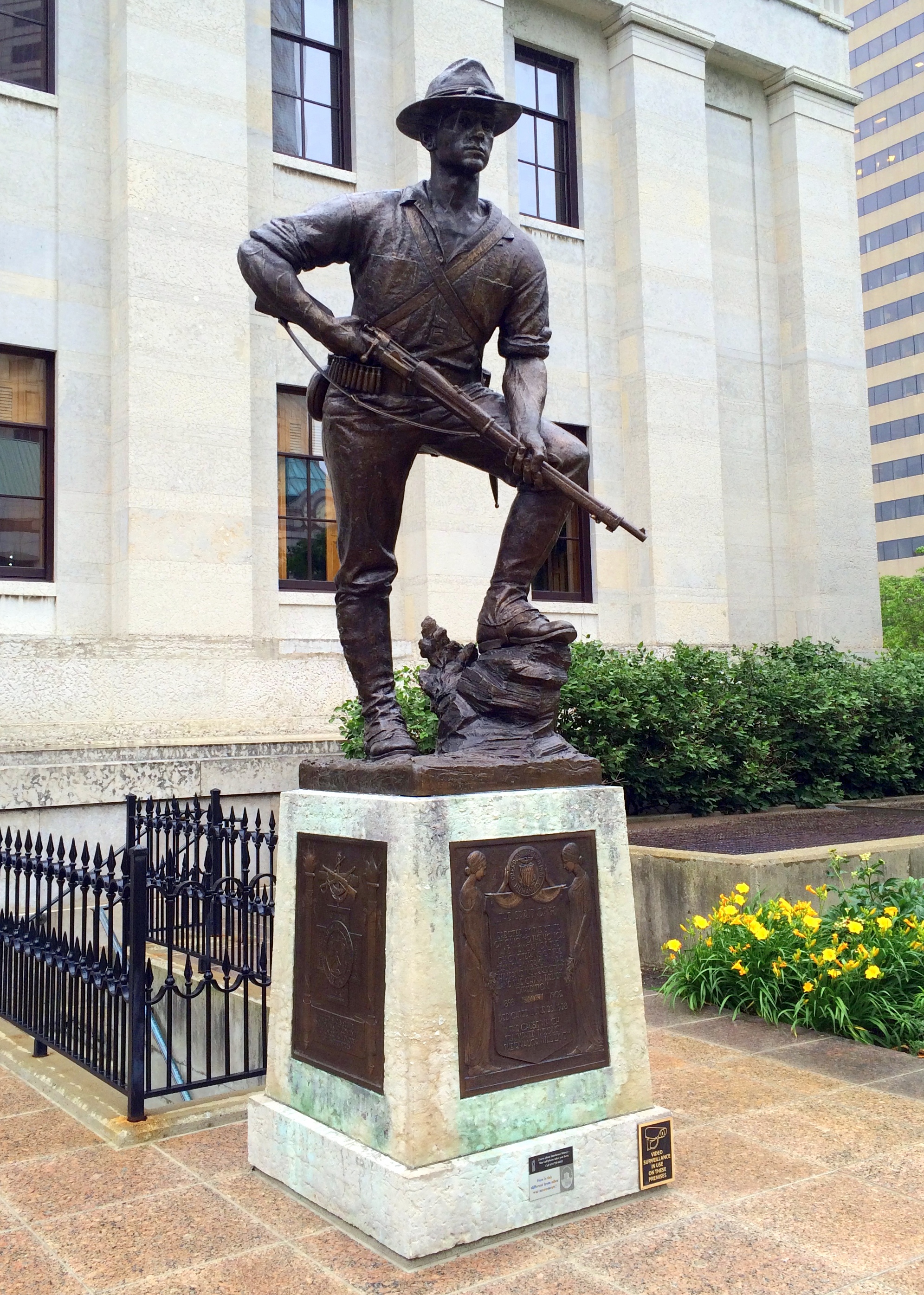
Monuments to soldiers of (left) the Spanish-American War, the Philippines Insurrection and the China Relief Expedition and (right) World War I.

oIMG_4326 oIMG_4336

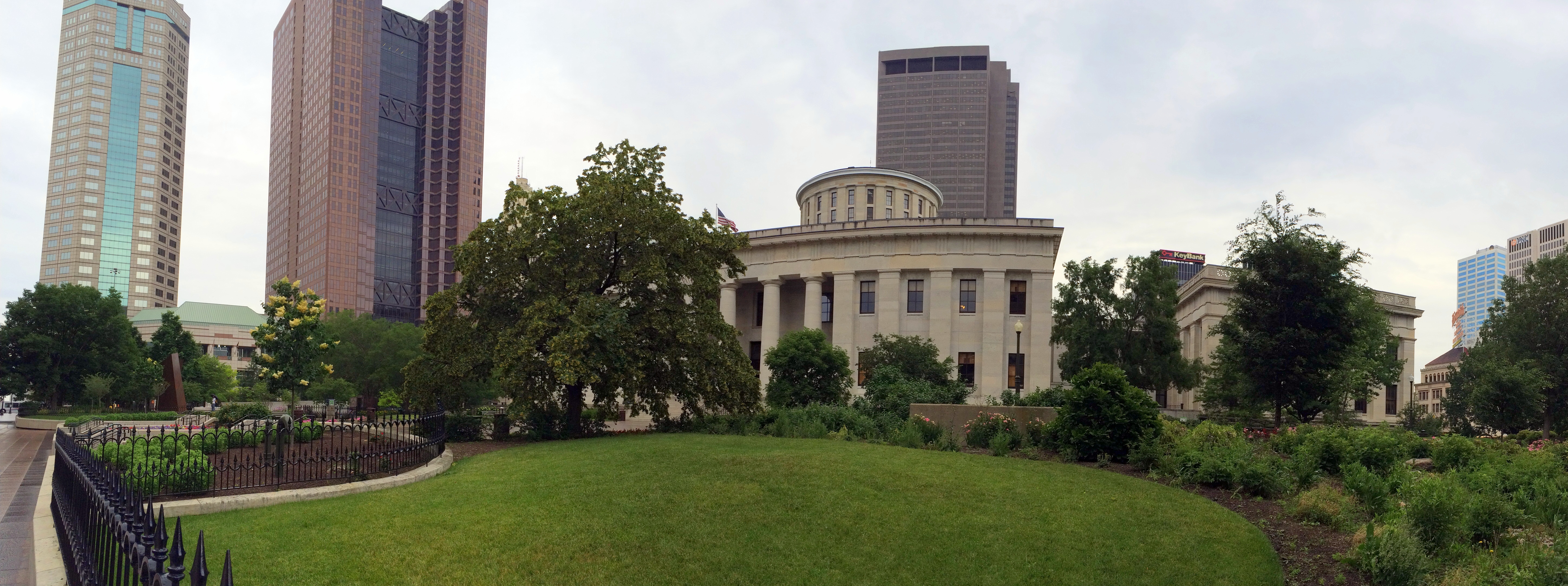
The west side. I still think (and always will) that the cupola without a dome looks unfinished and weird.

oIMG_4396

oIMG_4397

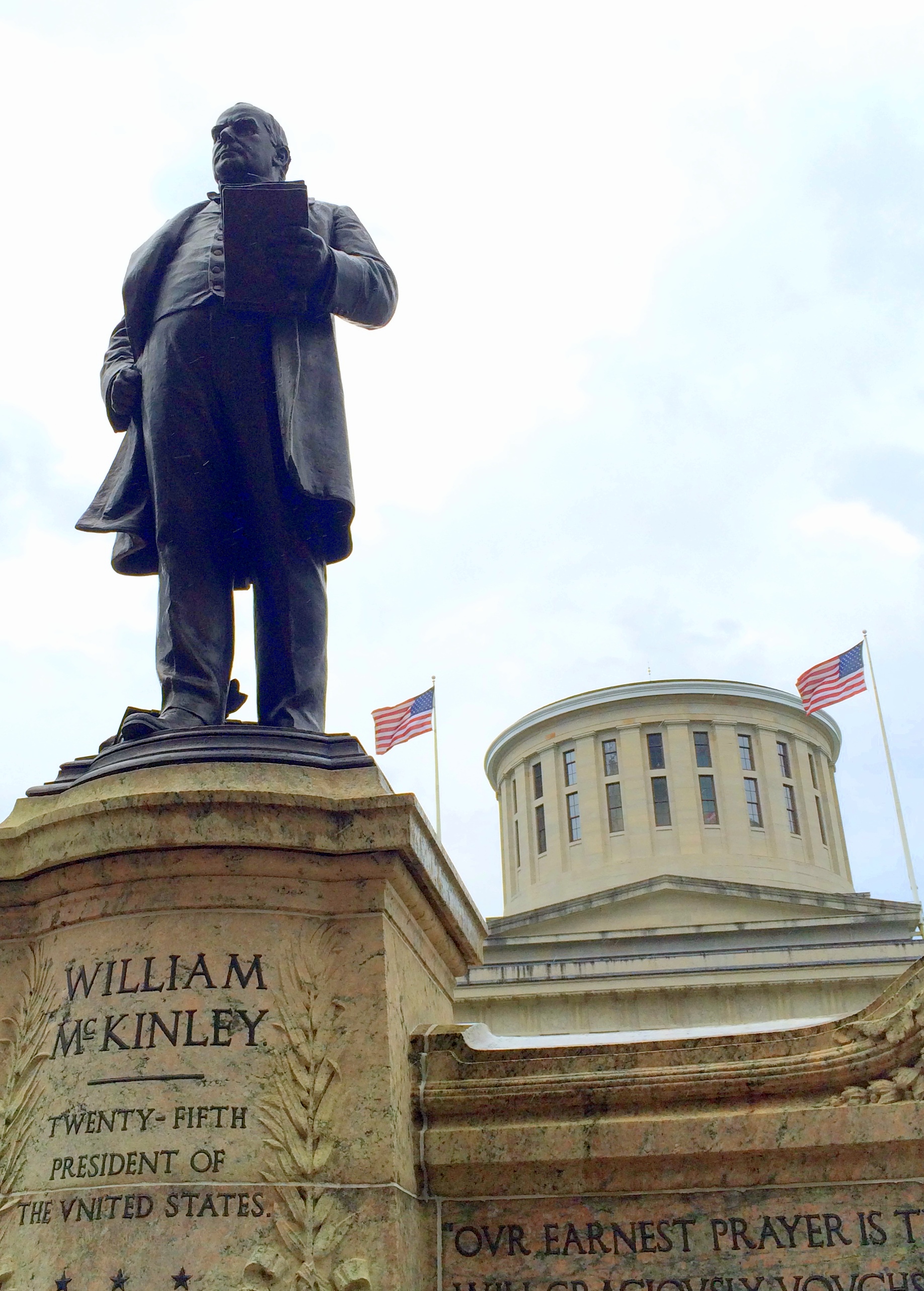
President William McKinley Memorial. McKinley was a native of Ohio and governor of the state from 1891 until 1896 when he became President. When McKinley was in Columbus, he and his invalid wife Ida lived in the Neil House Hotel across the street from the Statehouse. As William walked across the road to work, he would stop at this spot and wave his handkerchief to his wife who was watching out the window.

The statues on the sides represent peace and prosperity, both with children who represent future generations.

oIMG_4329

oIMG_4327

oIMG_4332

The quote is from the speech he made in Buffalo, New York just before he was assassinated.

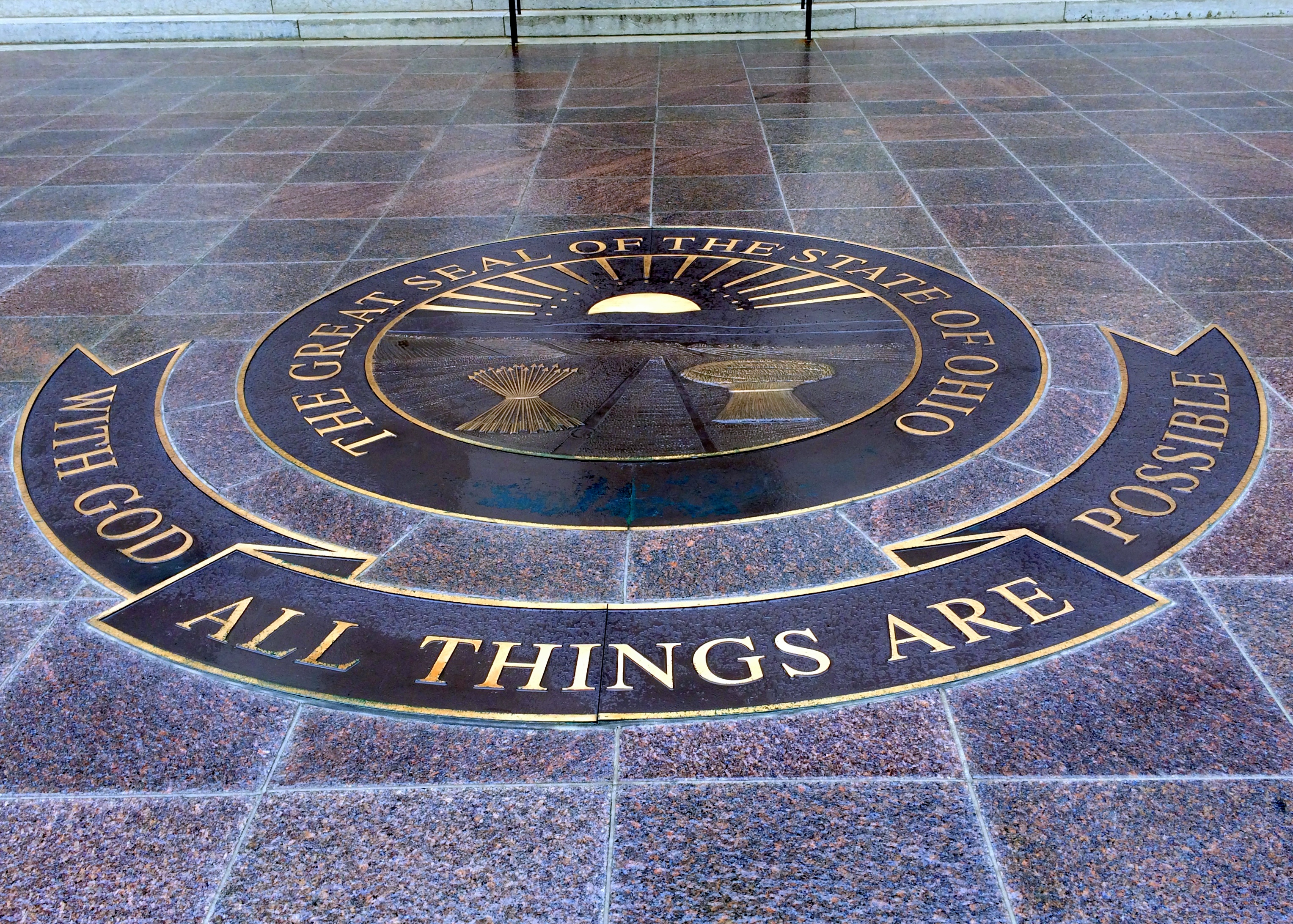
The state seal of Ohio

oIMG_4334

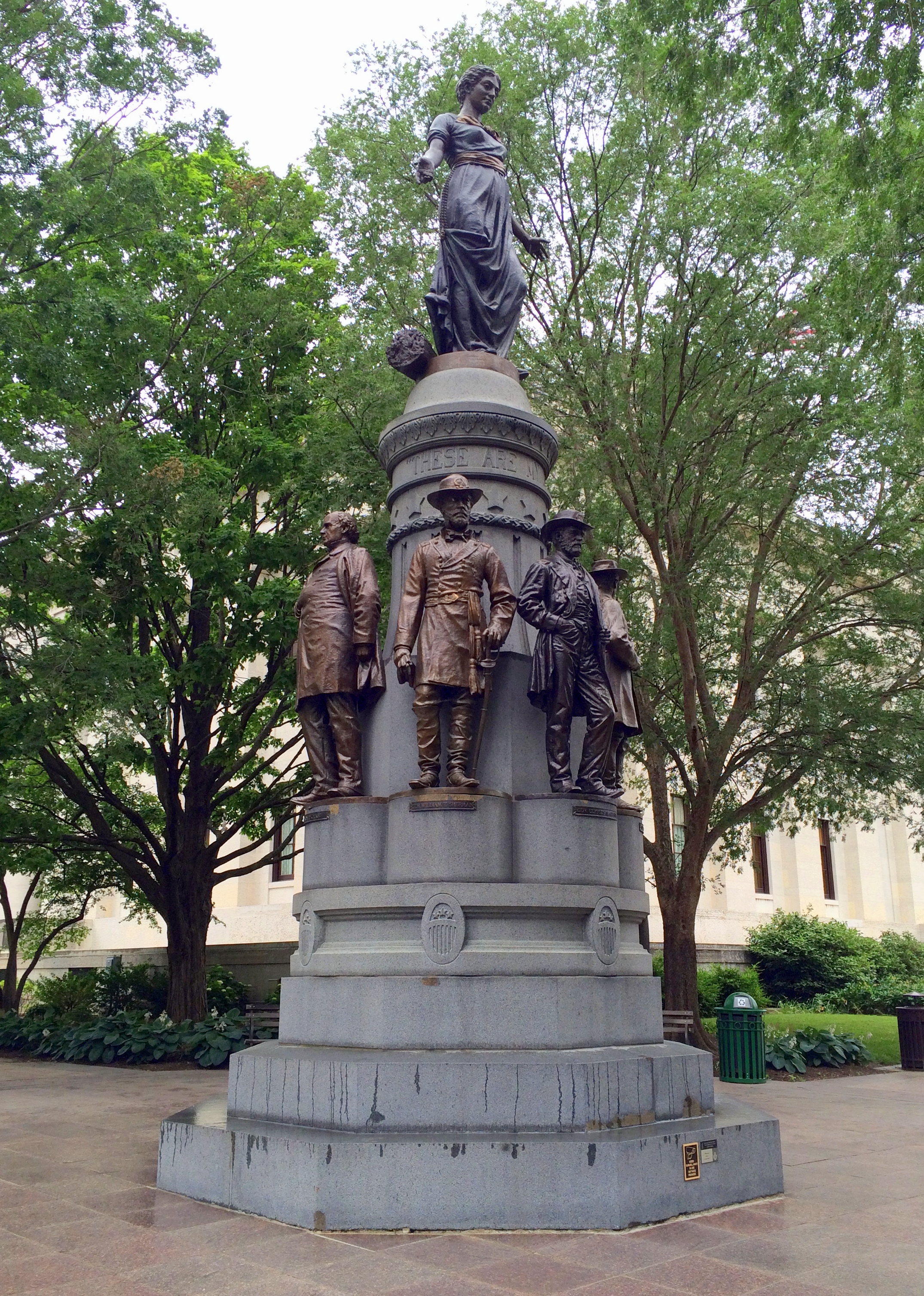
This statue is called “These Are My Jewels” referring to a legend about a Roman woman named Cornelia who, when asked where her jewels were, returned with her sons. The seven men around the base are seven natives of Ohio who were active for the Union during the Civil War. They are Generals Ulysses S. Grant, William T. Sherman and Phillip Sheridan; Generals and Presidents James A Garfield and Rutherford B Hayes; Secretary of the Treasury Salmon P. Chase; and Secretary of War Edwin Stanton. It was created for and displayed at the World Columbian Exposition in Chicago in 1893.

James Thurber, a native of Columbus, wrote the statue into a short story titled The Day the Dam Broke. He described a mob of women climbing onto the shoulders of the Jewels to escape an imaginary flood.

oIMG_4337

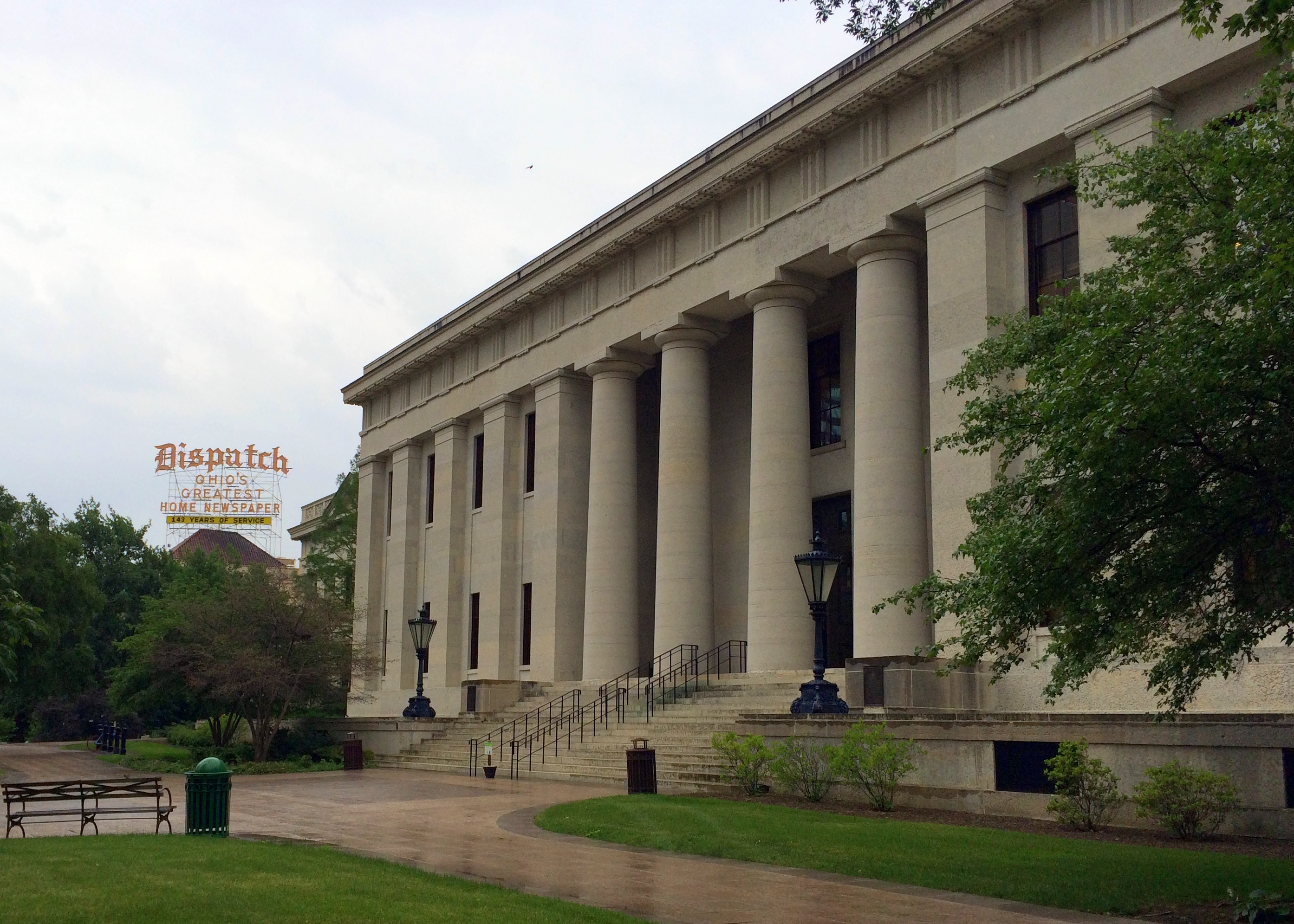
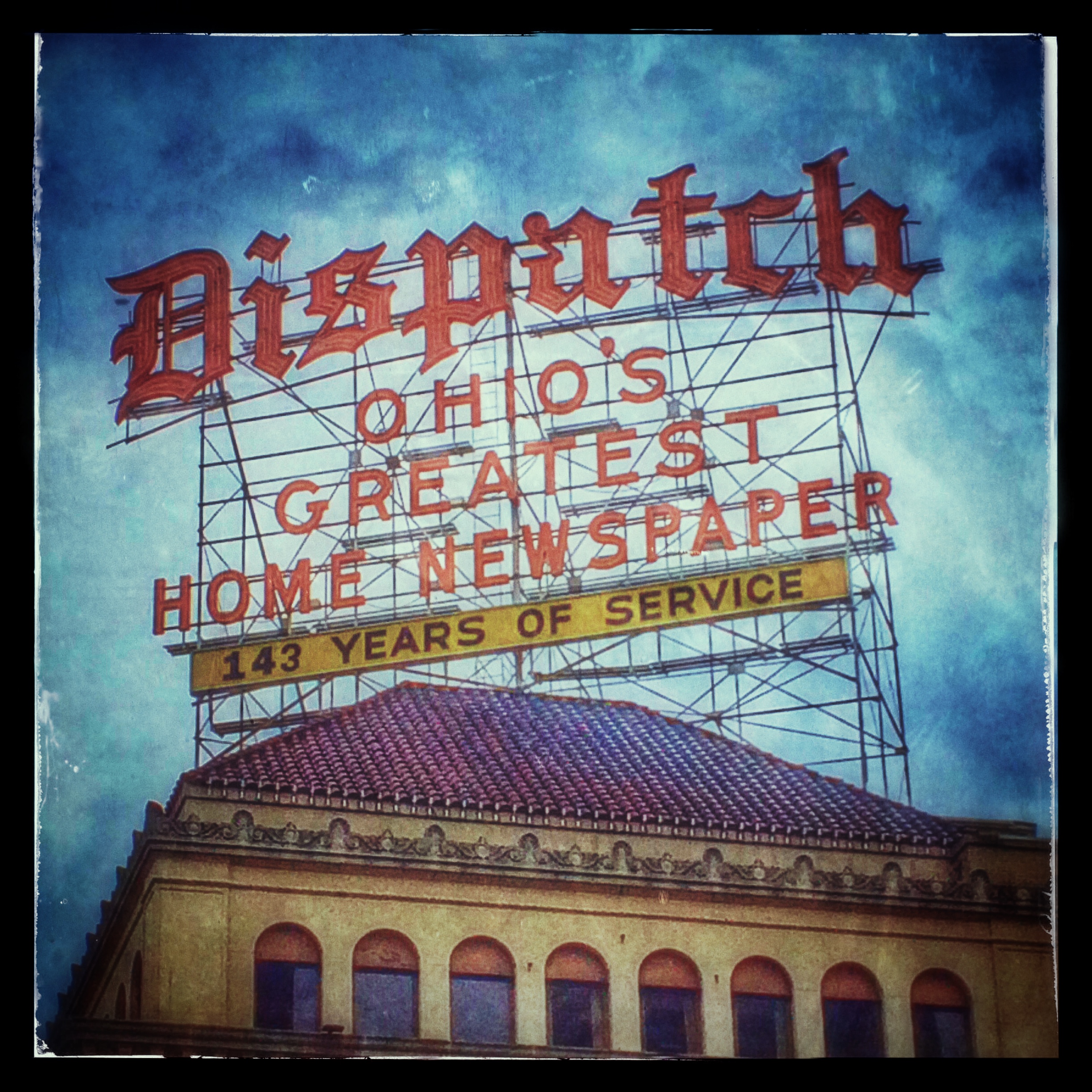
The north side. The Columbus Dispatch sign advertises the local newspaper which has been published since 1871.

oIMG_4345

IMG_4400

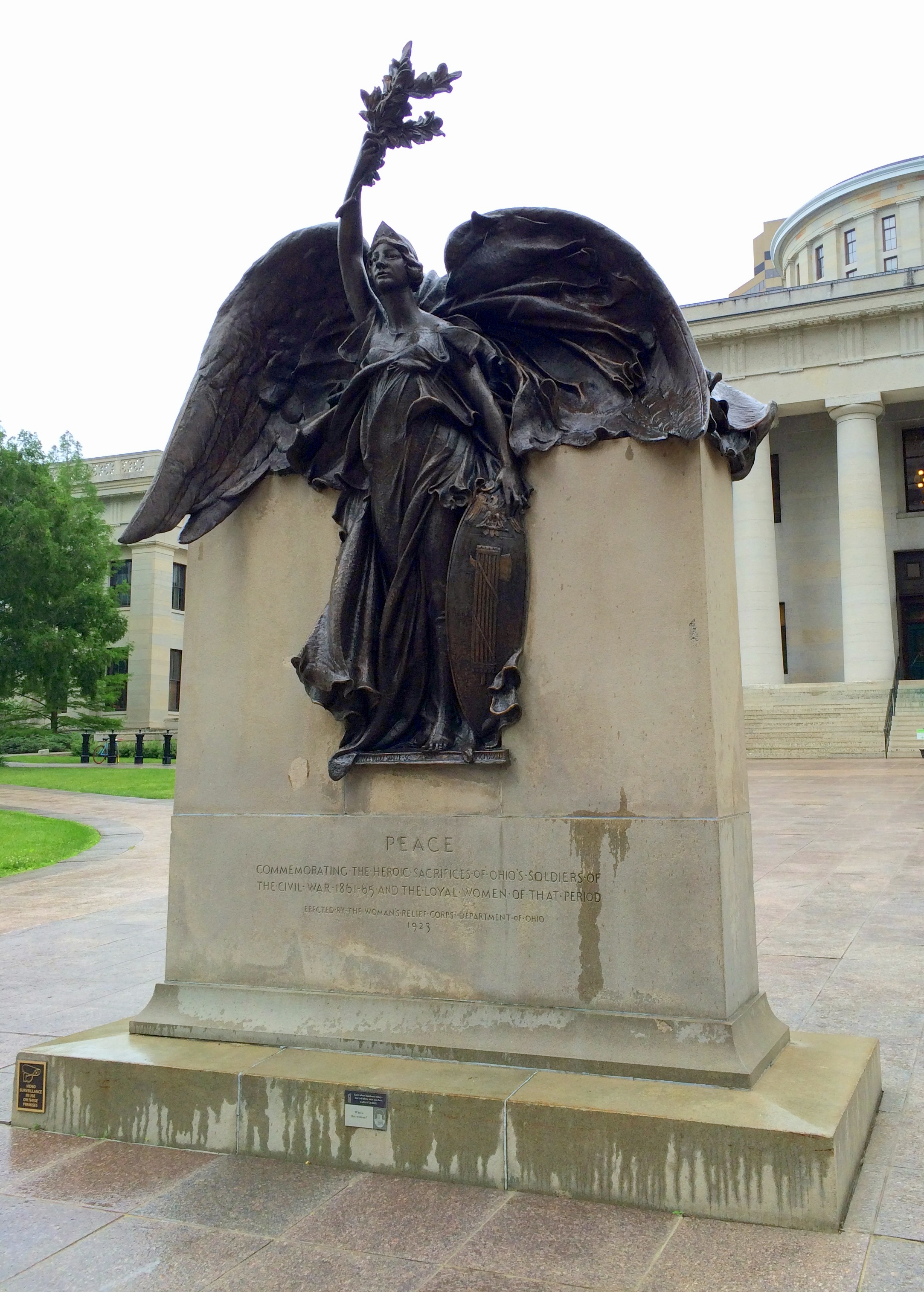
Peace, in honor of Civil War soldiers.
oIMG_4347

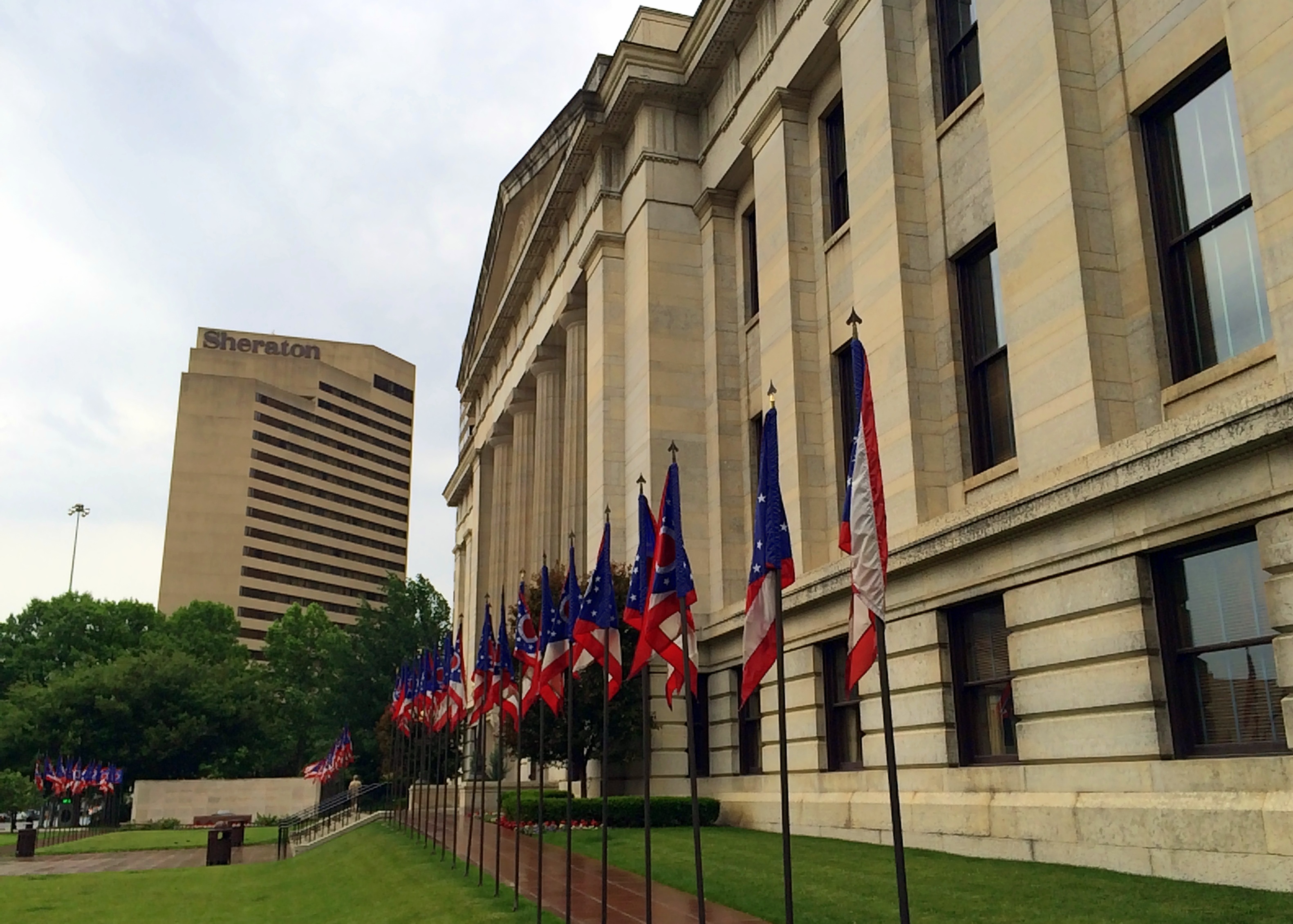
The east side, with flags for each of the counties in the state. They, and the curved white walls at each end of the plaza, commemorate the soldiers of World War II and wars since then.

oIMG_4354

oIMG_4389

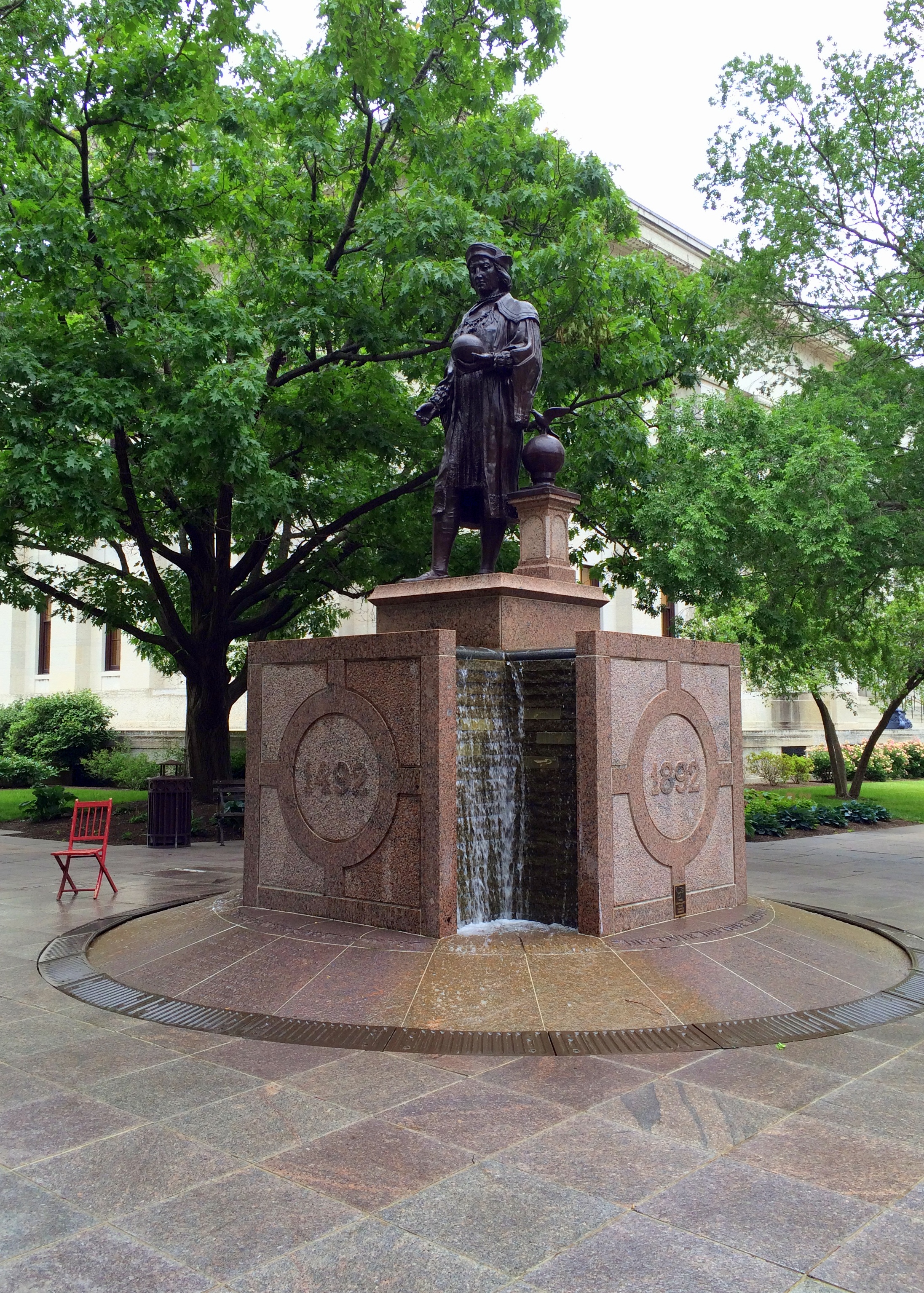
Christopher Columbus Discovery Monument. The city is named after Columbus. The statue was created in 1892, on the 400th anniversary of his founding of America. It was moved to the capitol in 1932. The base was created in 1992, on the 500th anniversary.
oIMG_4398

Posted in Ohio | Comments Off on Outside the Ohio Statehouse