Chicago Christmas 2014

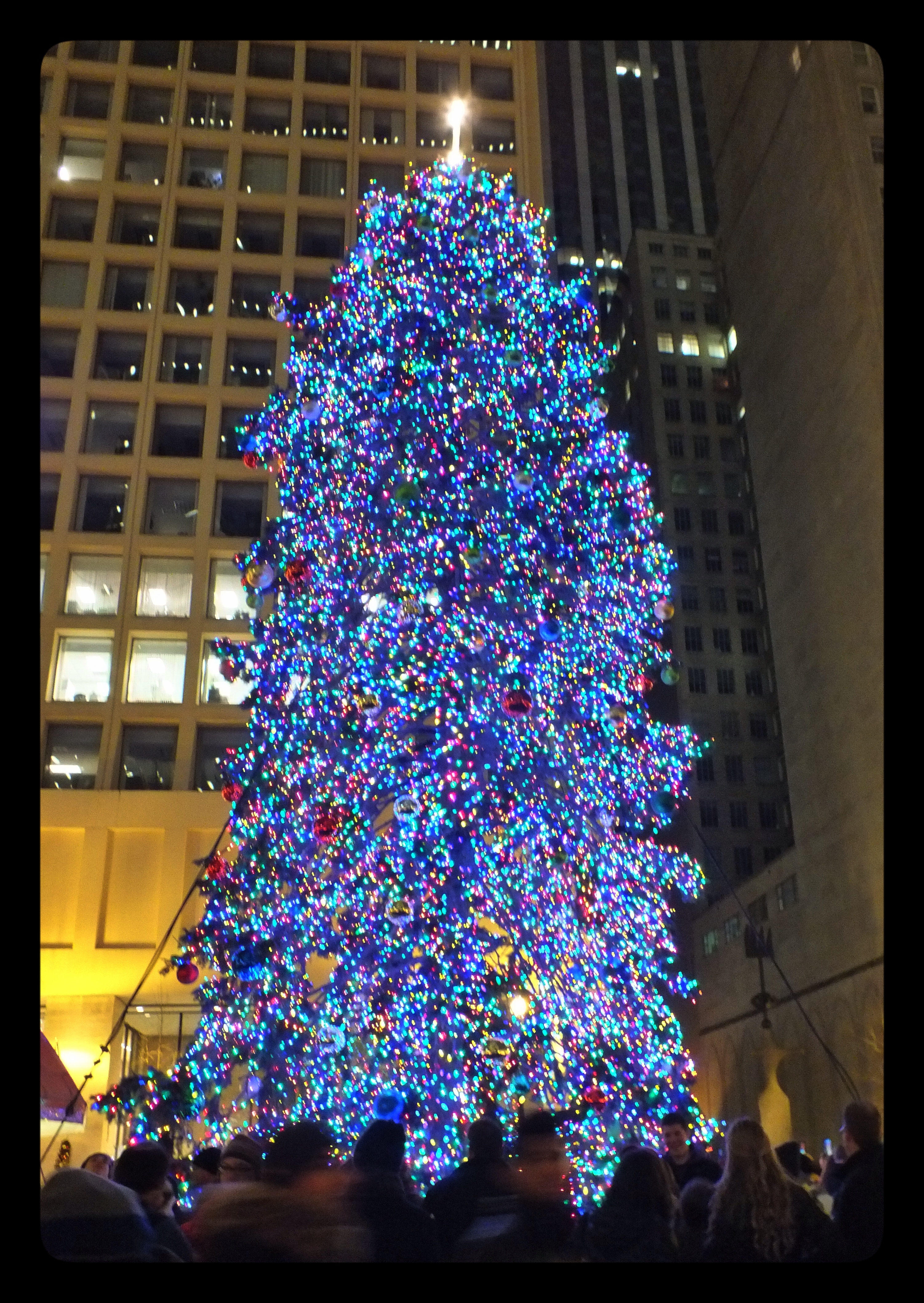
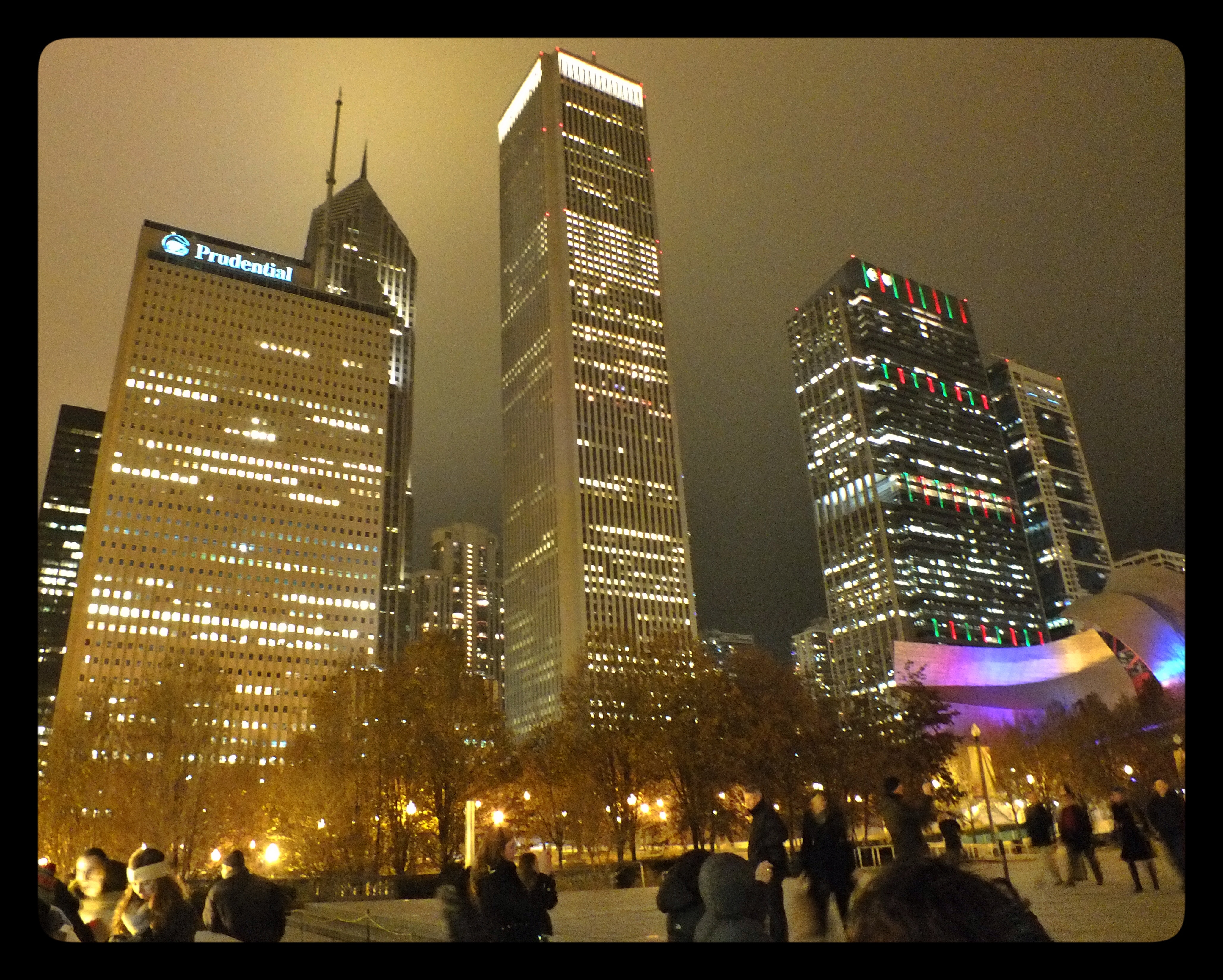
We took our annual trip to downtown Chicago on a crisp, cool and dry Friday. We expected huge crowds, but considering this was the weekend before Christmas, it was remarkably empty.

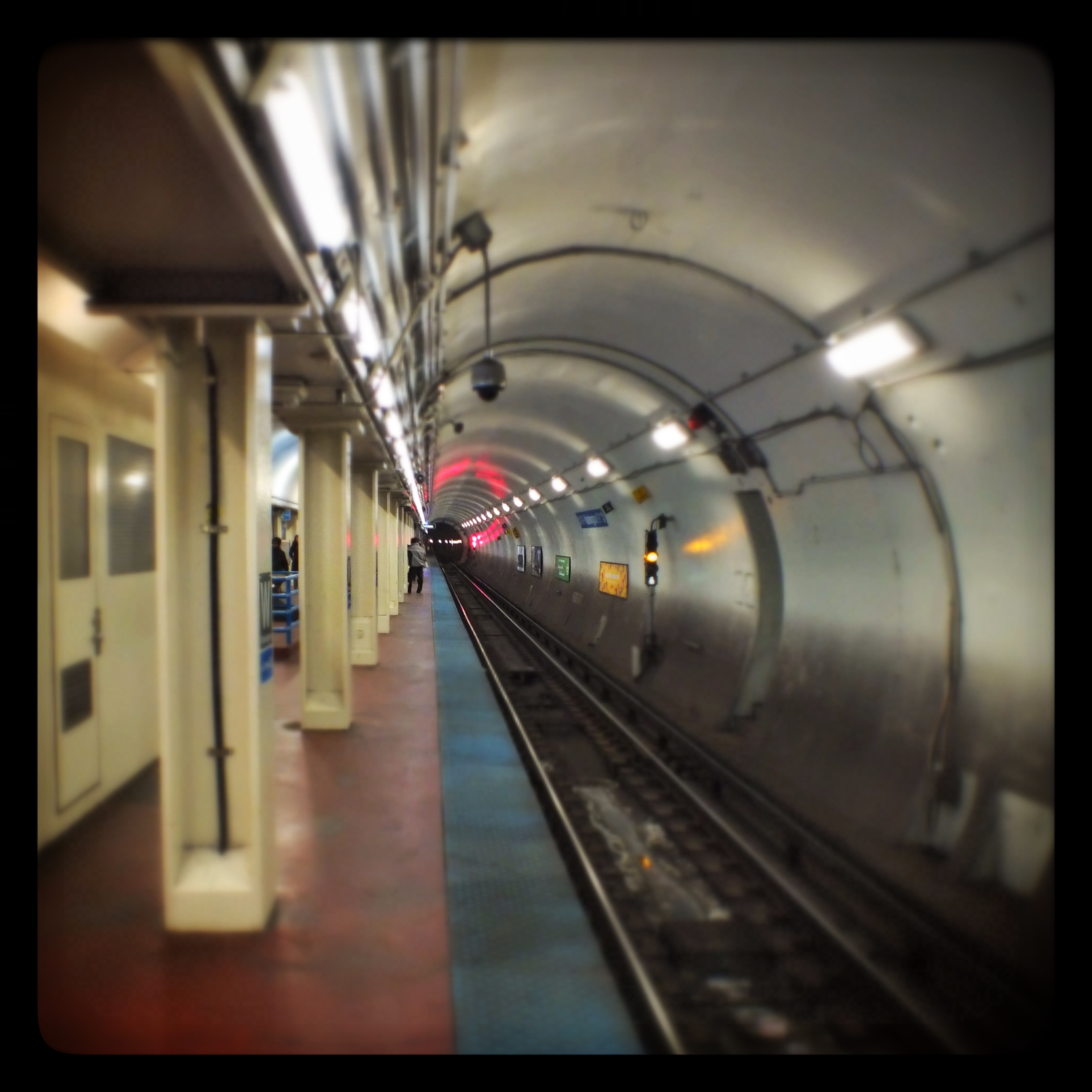
We rode down on the El/Subway.

IMG_9839

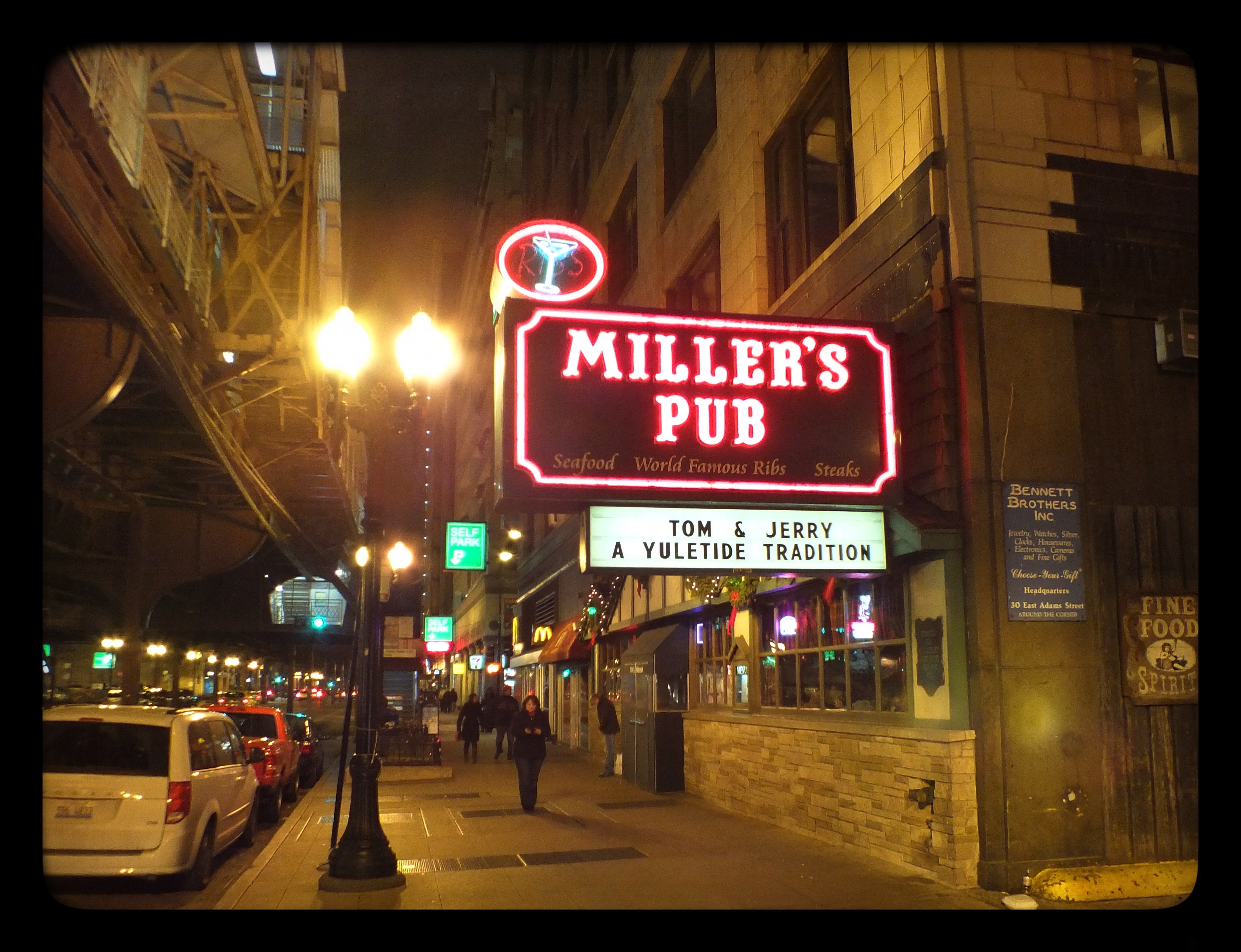
We ate supper at Miller’s Pub.

IMG_9804

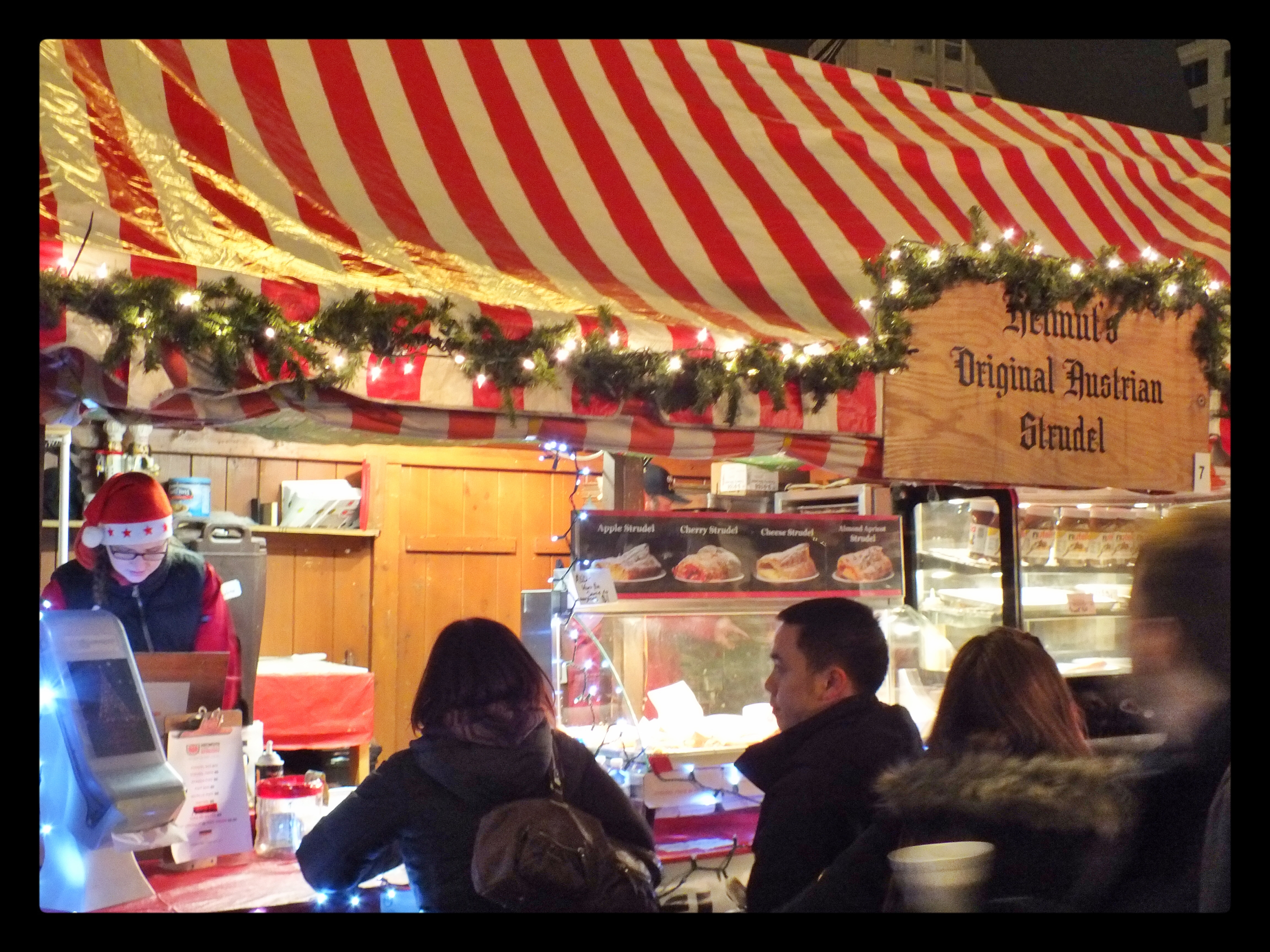
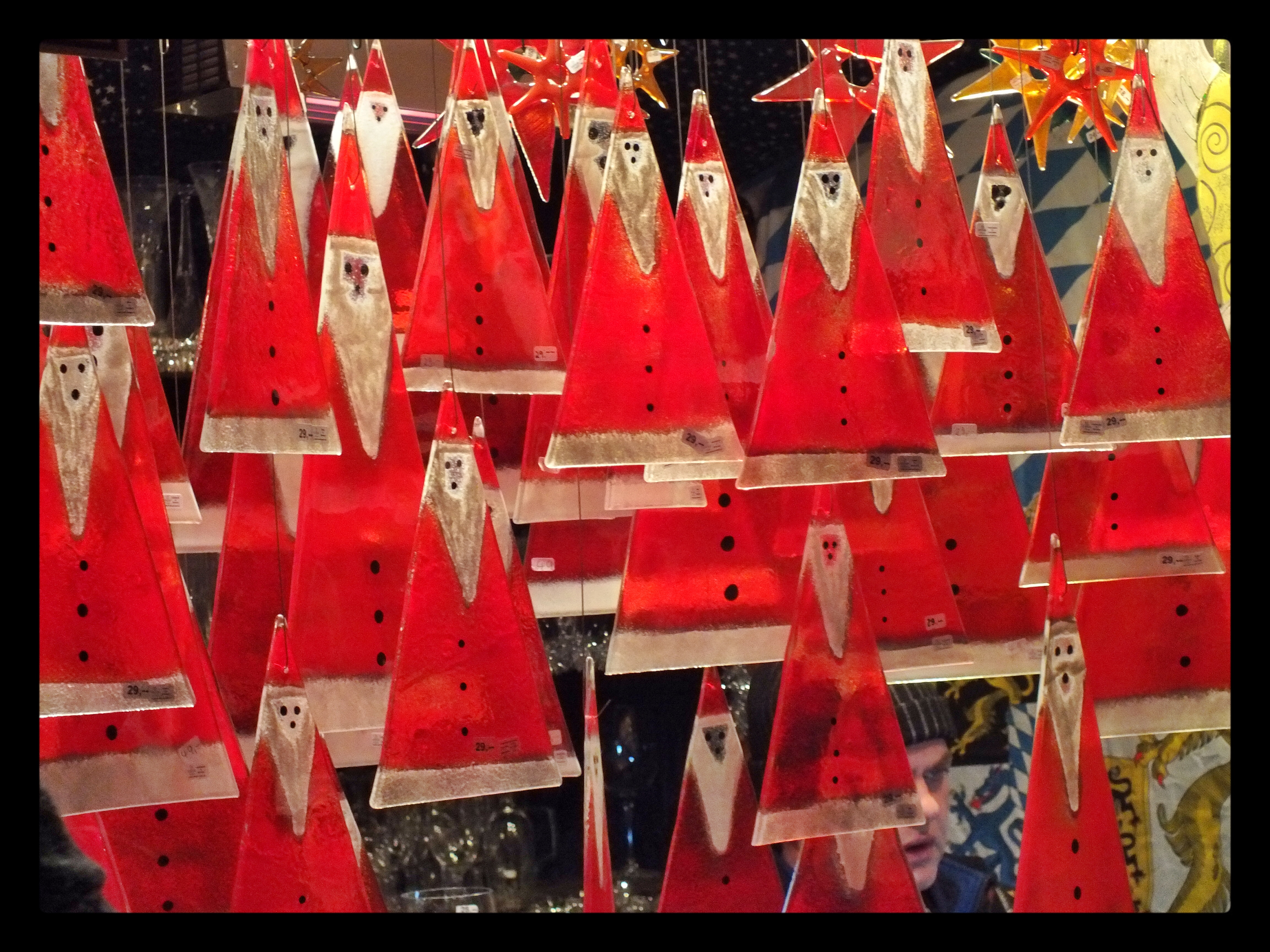
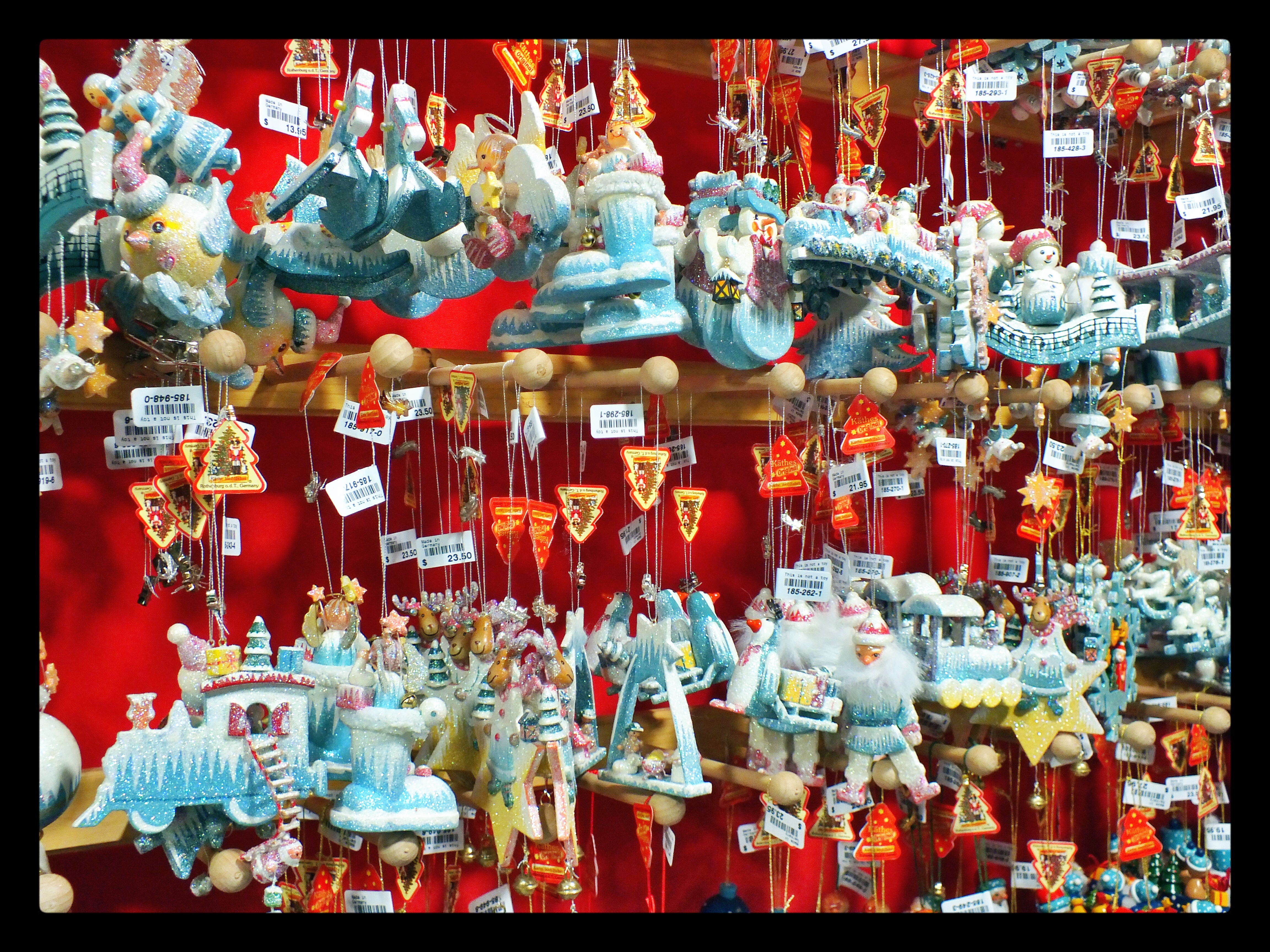
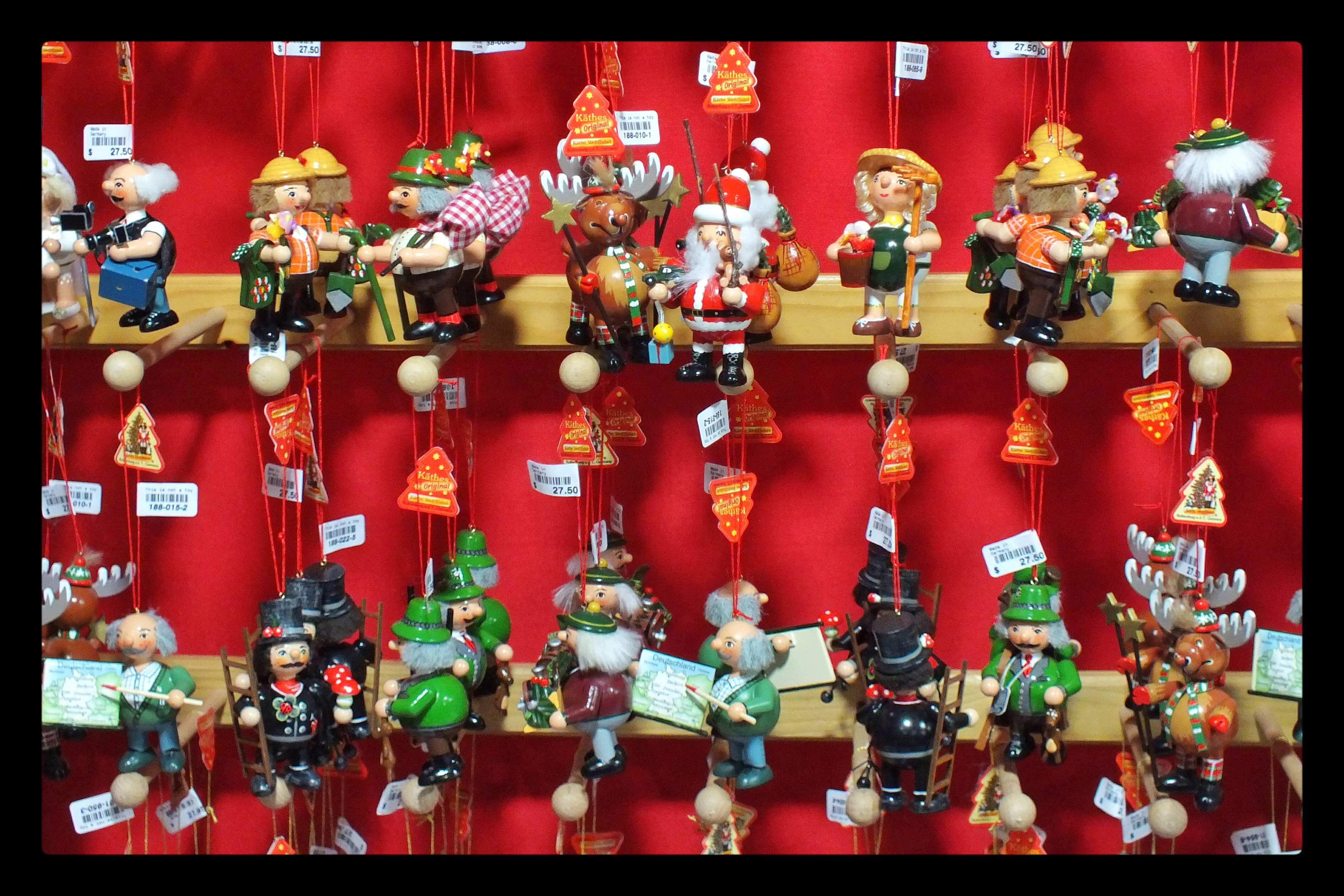
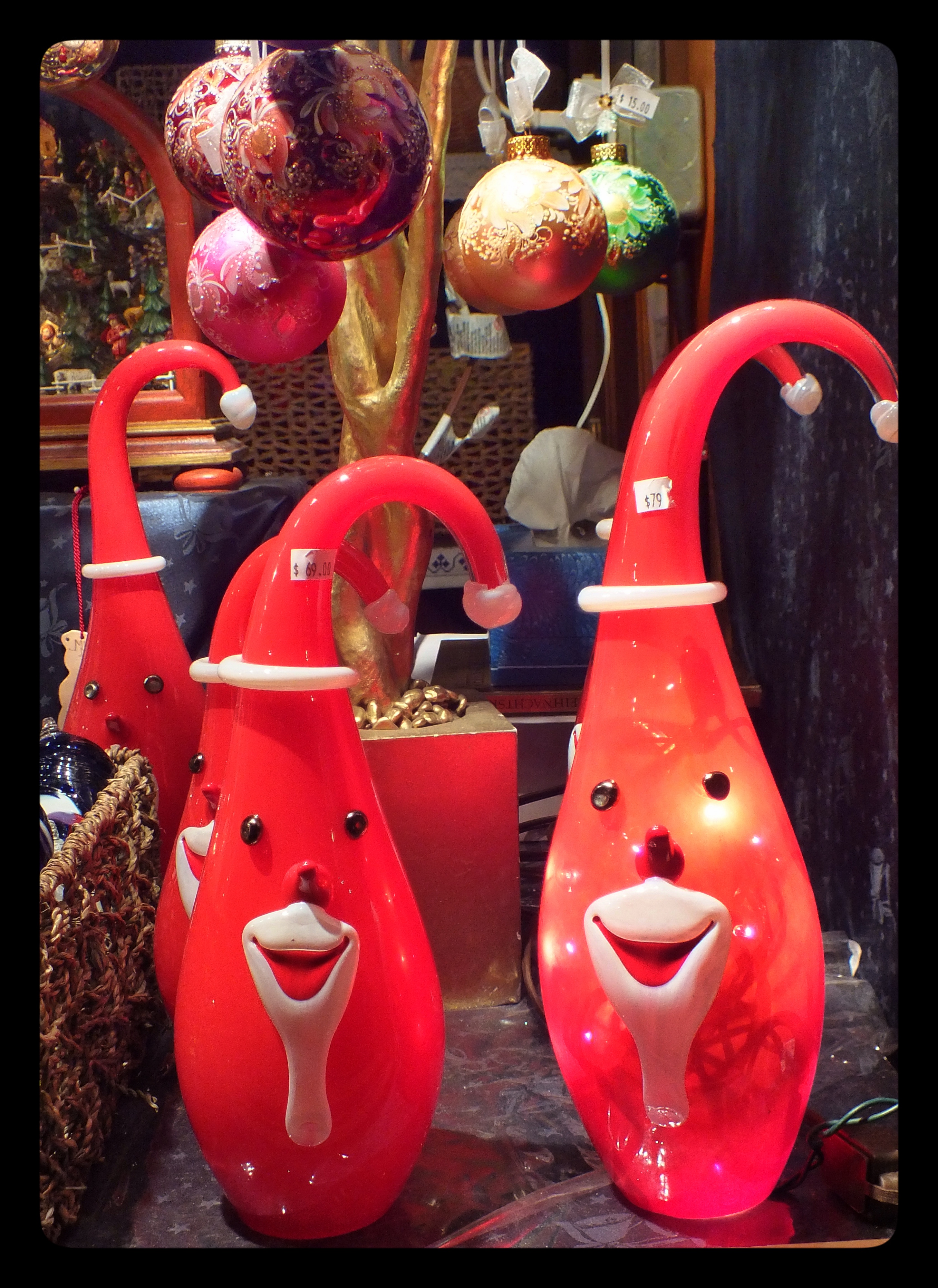
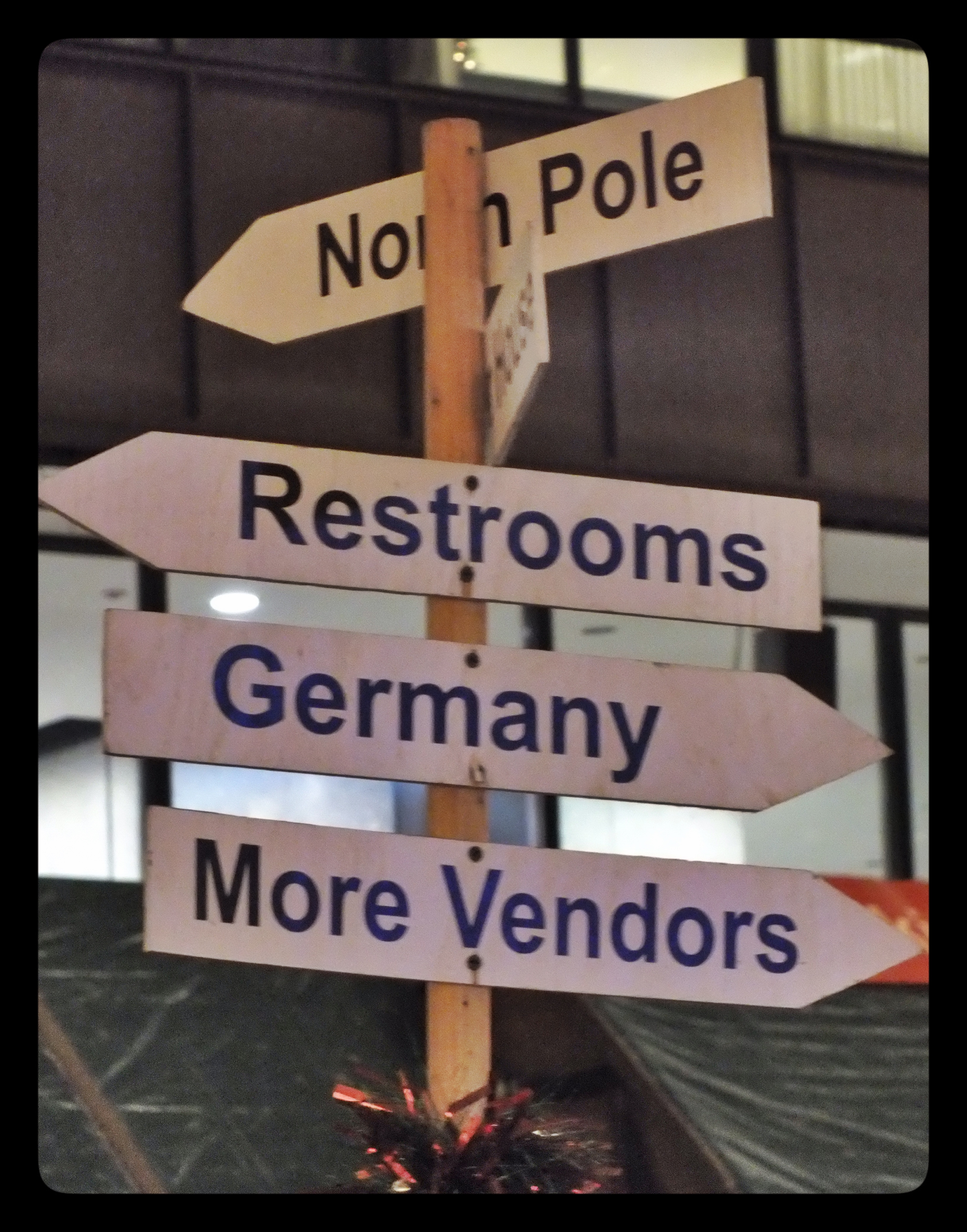
Wandered through the Christkindlmarket and bought strudel.

IMG_9853

IMG_9854

IMG_9849

IMG_9850

IMG_9846

IMG_9847

IMG_9844

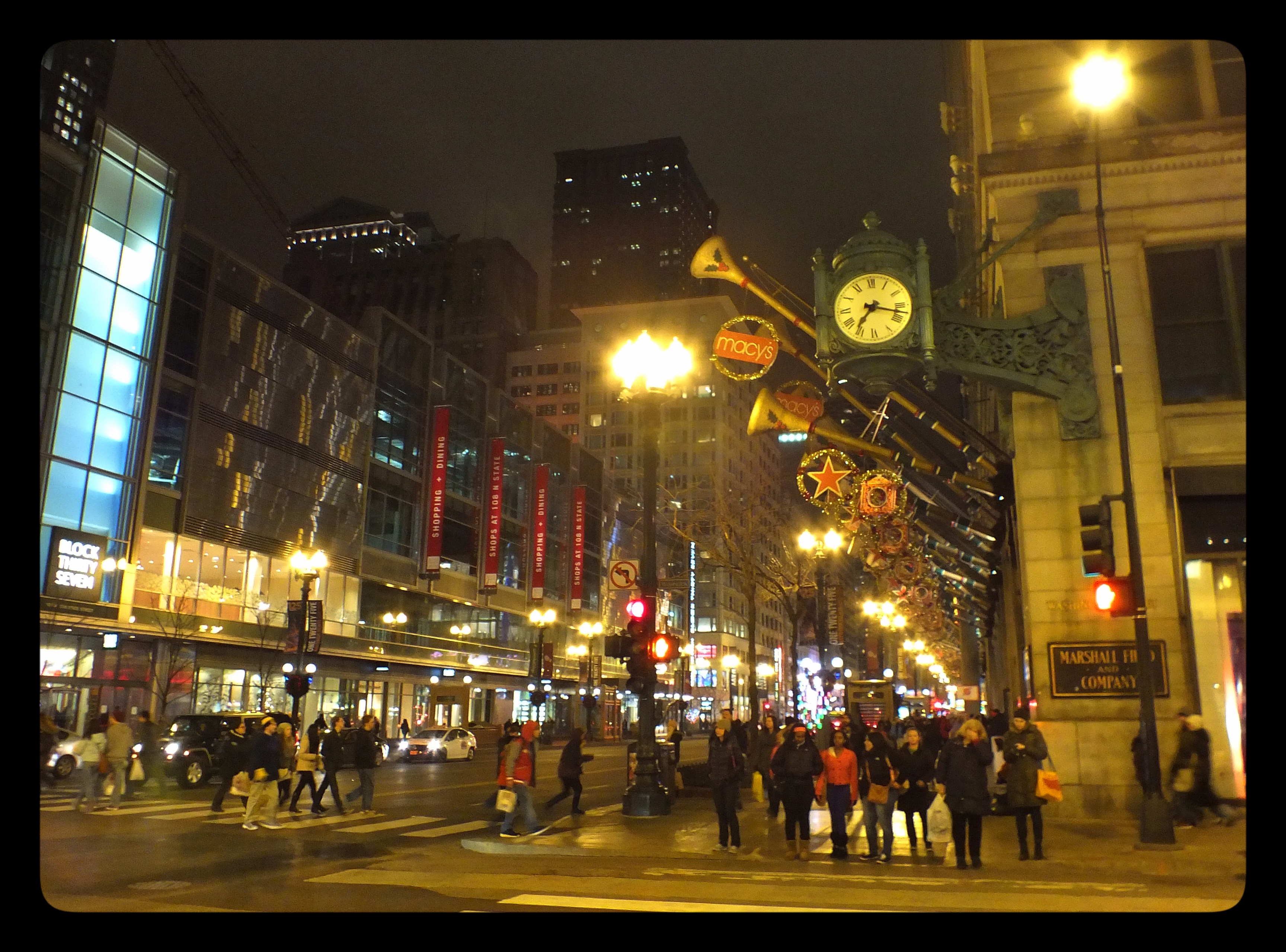
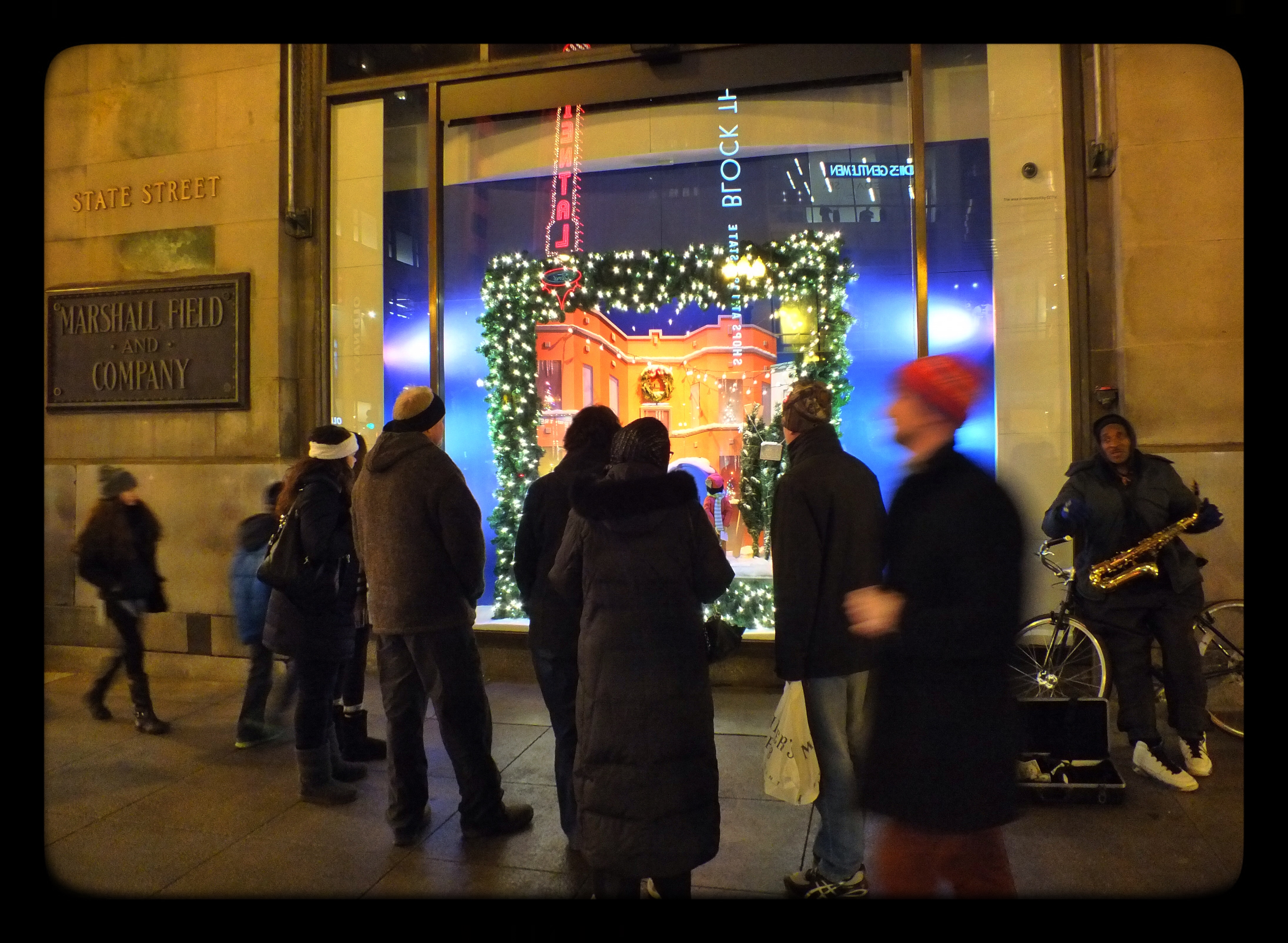
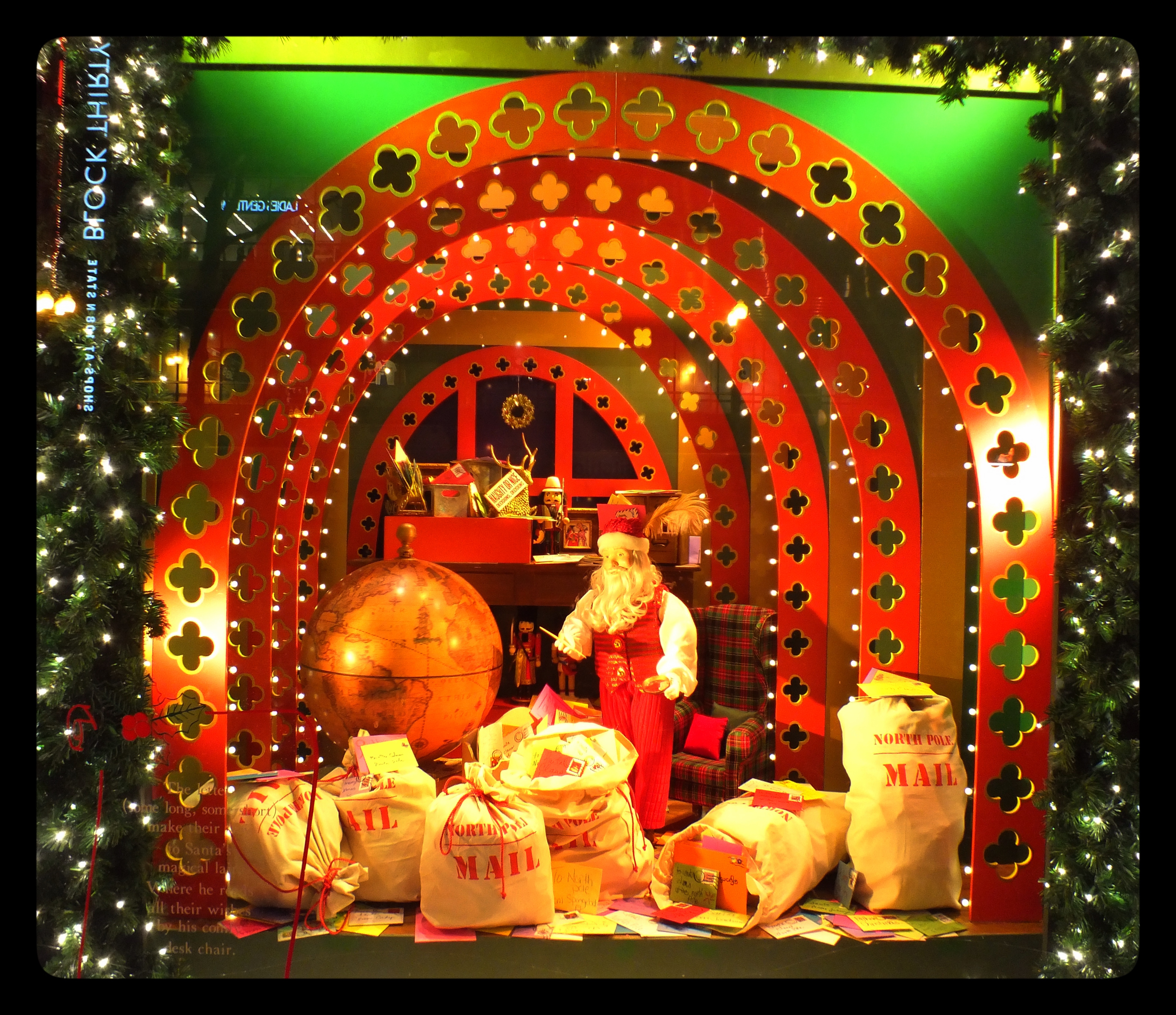
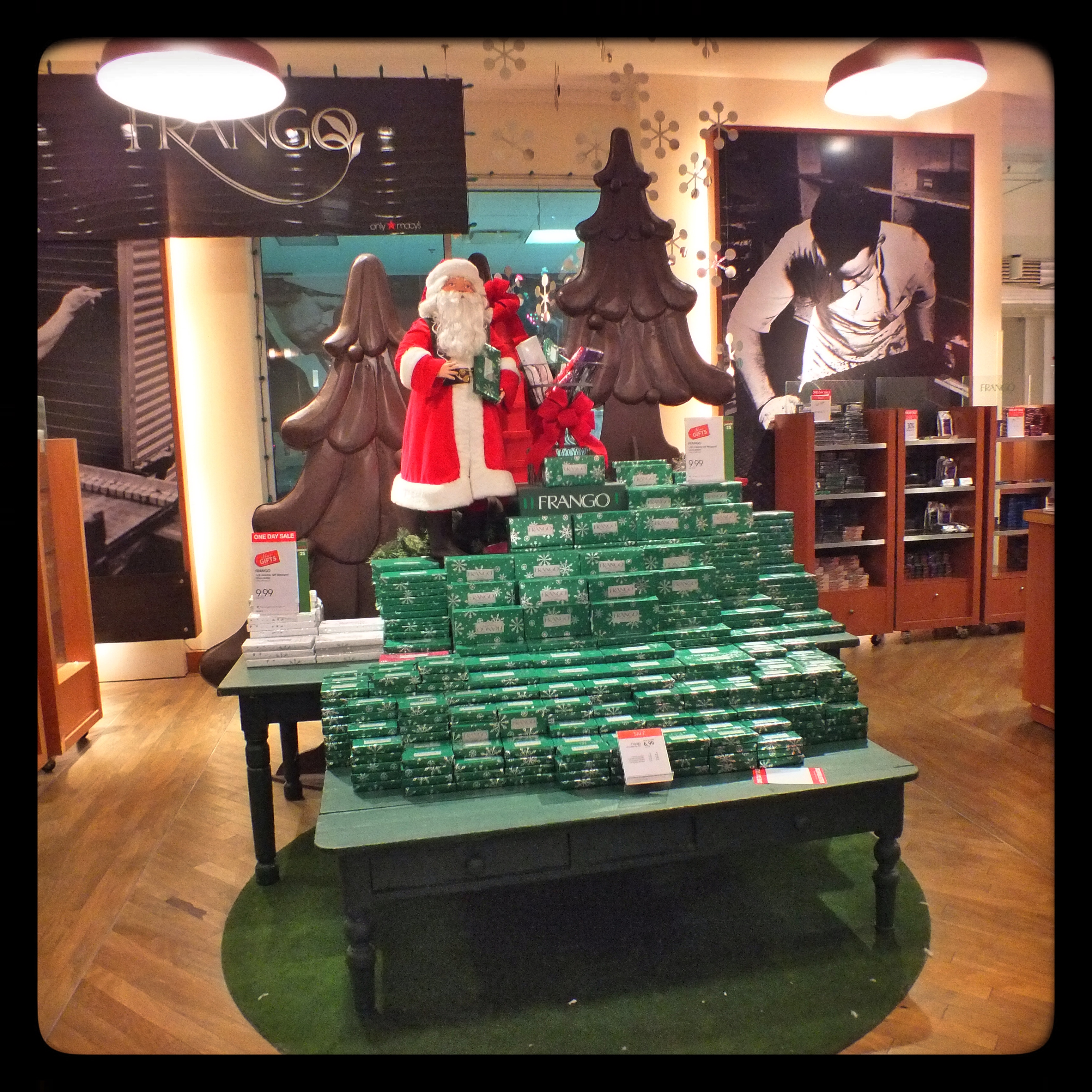
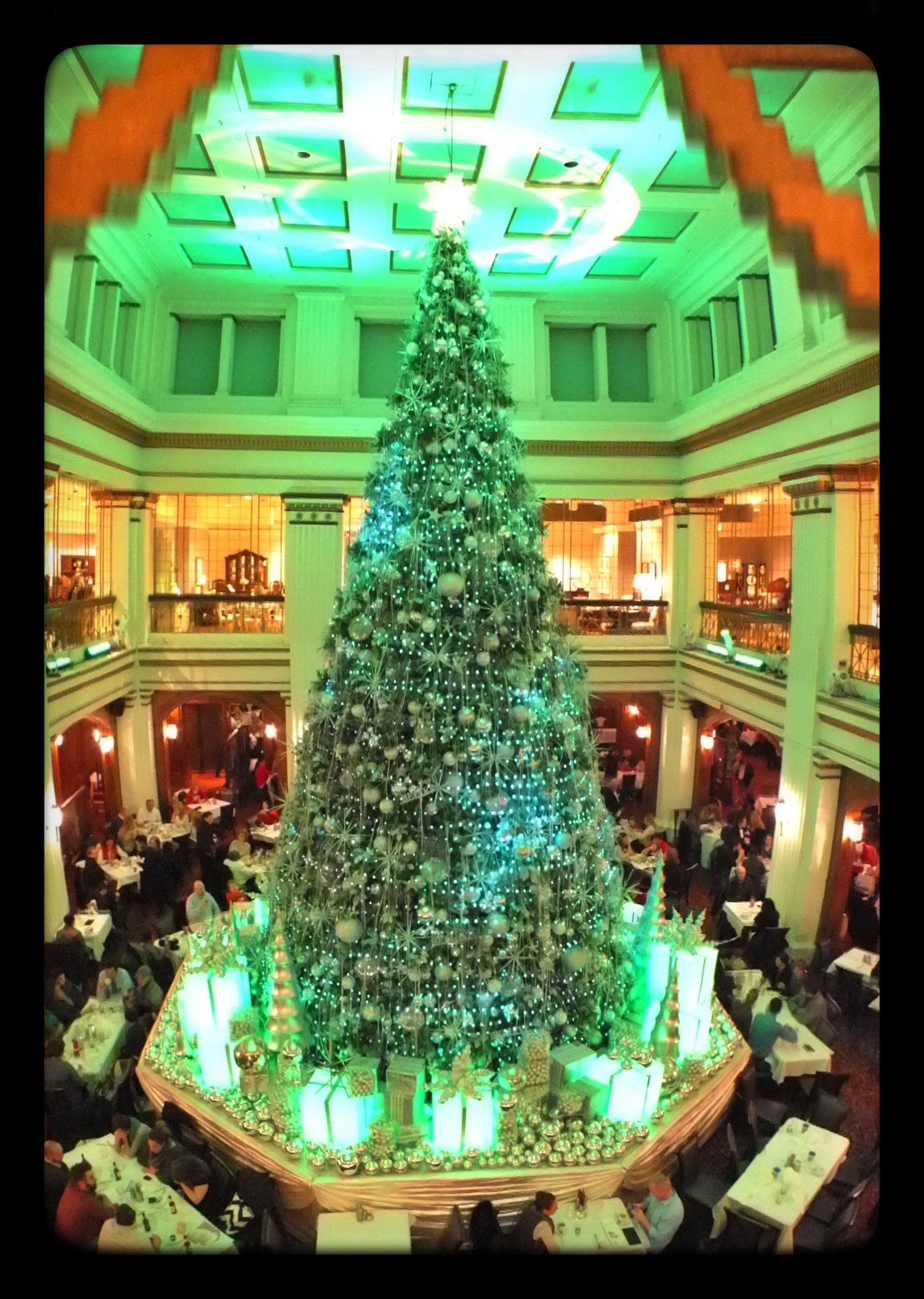
Walked to Macy’s and looked in the windows and bought Frango Mints.

IMG_9805

IMG_9811

IMG_9810

IMG_9812

IMG_9813

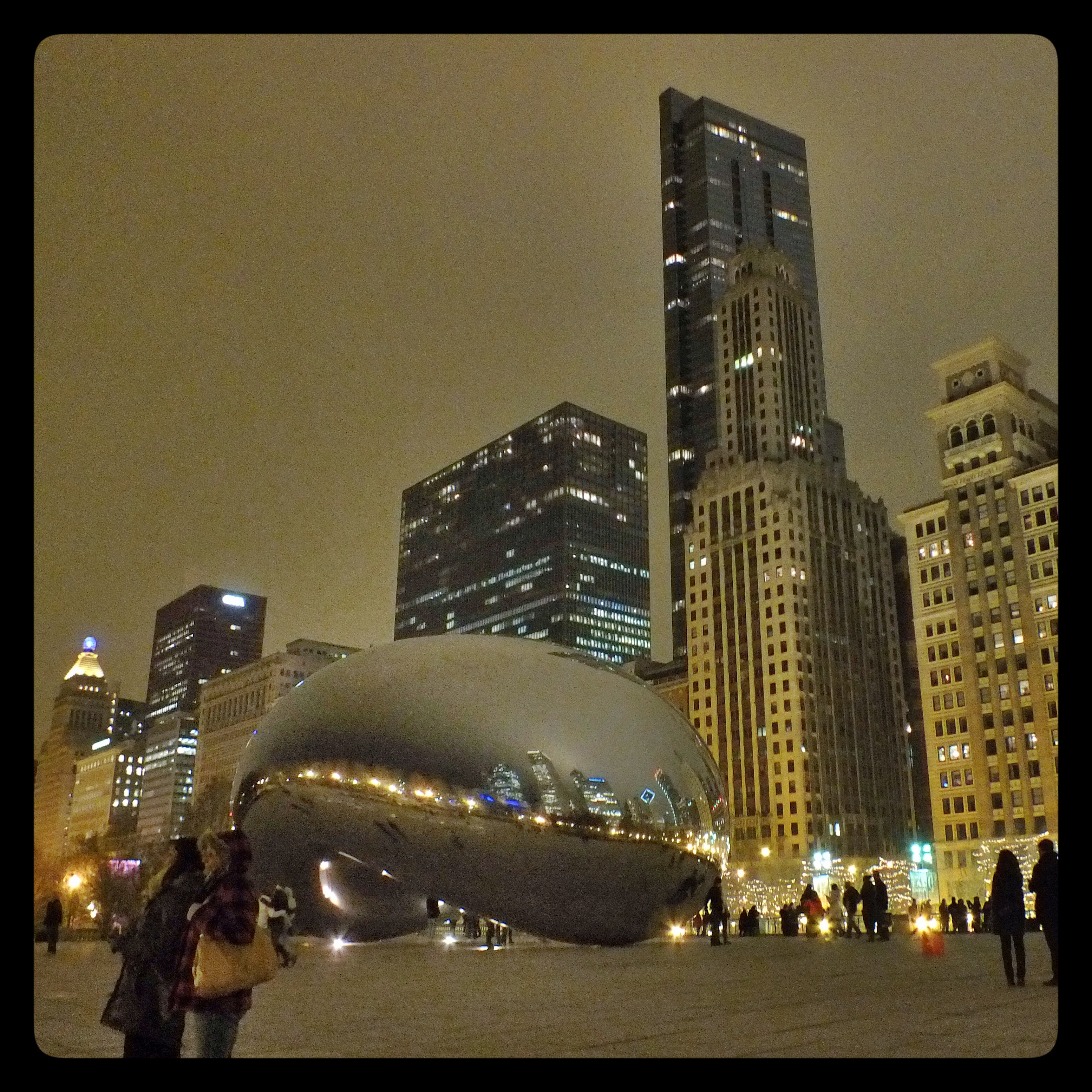
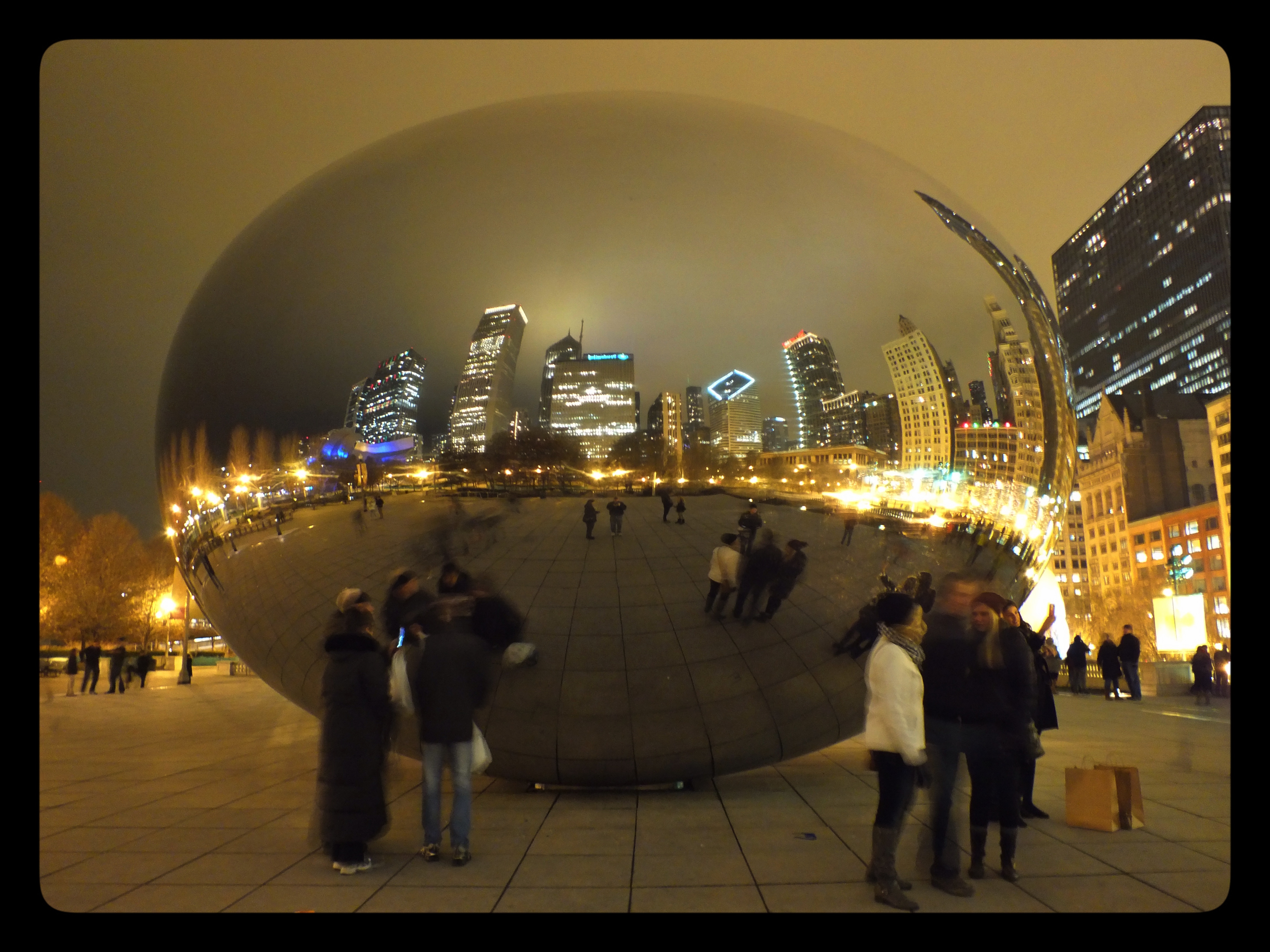
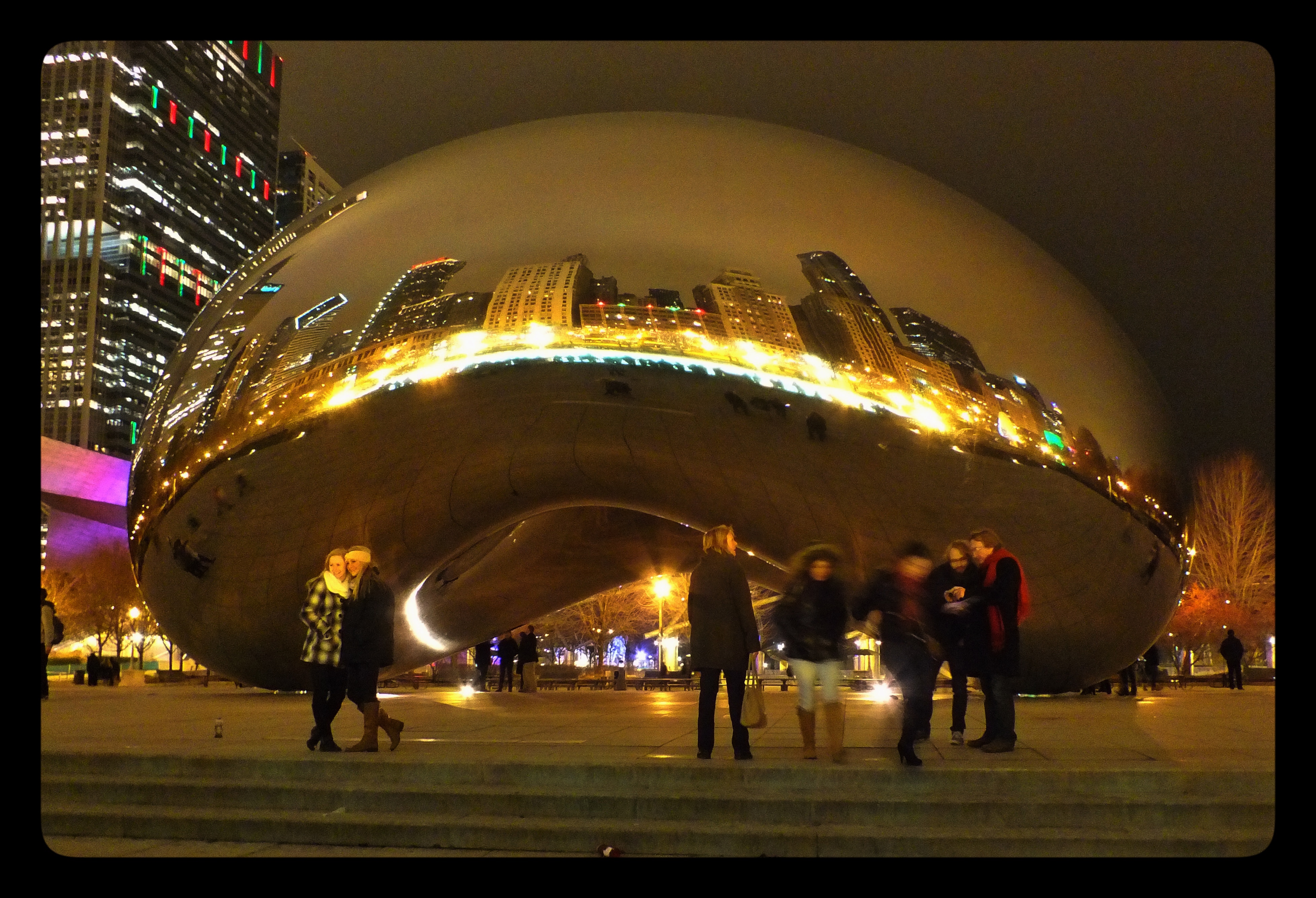
And stopped by the Bean in Millennium Park.

IMG_9842

IMG_9841

IMG_9840

IMG_9843

In other words, we did all the same stuff we always do (for seven years now) and had a great time.

Posted in Illinois | Comments Off on Chicago Christmas 2014

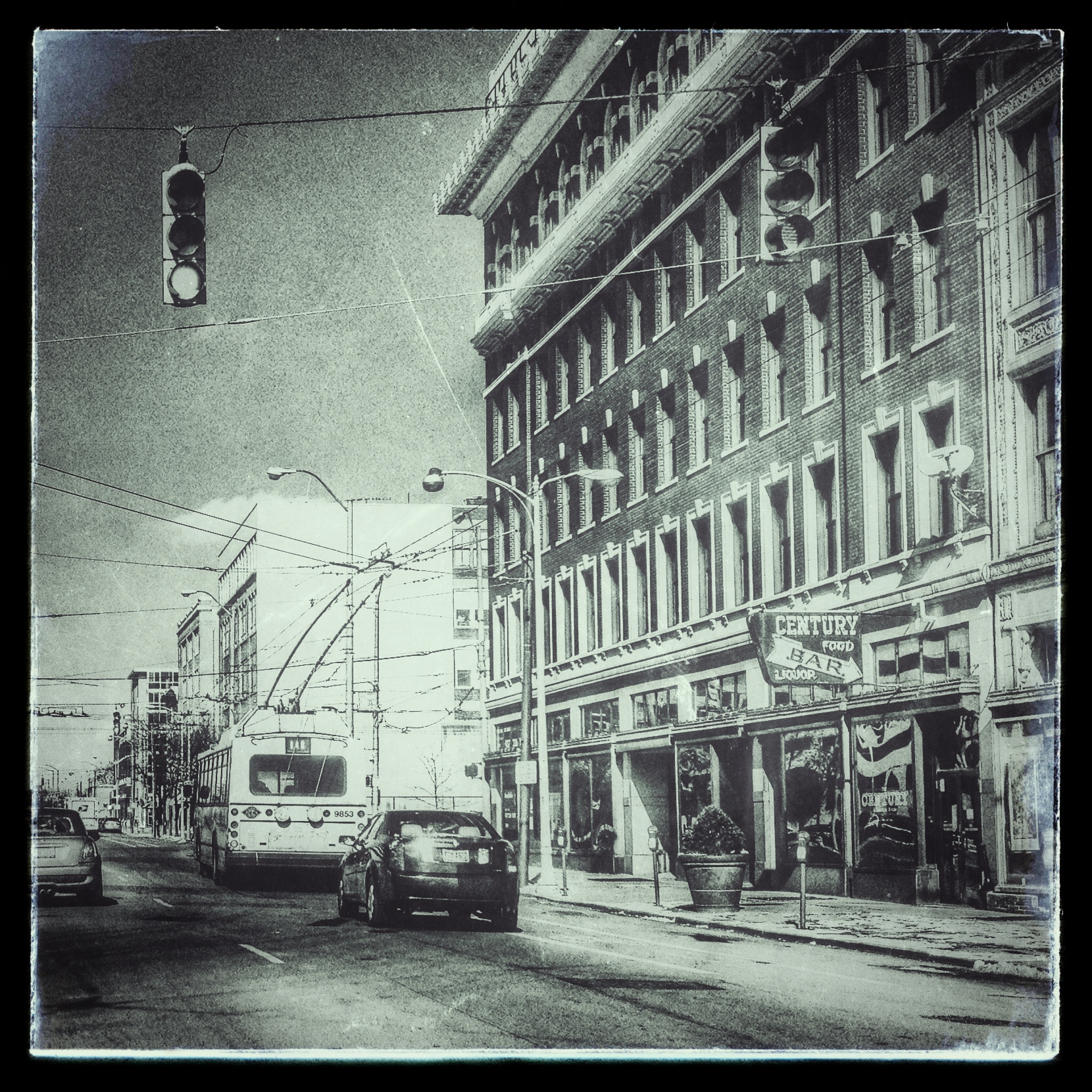
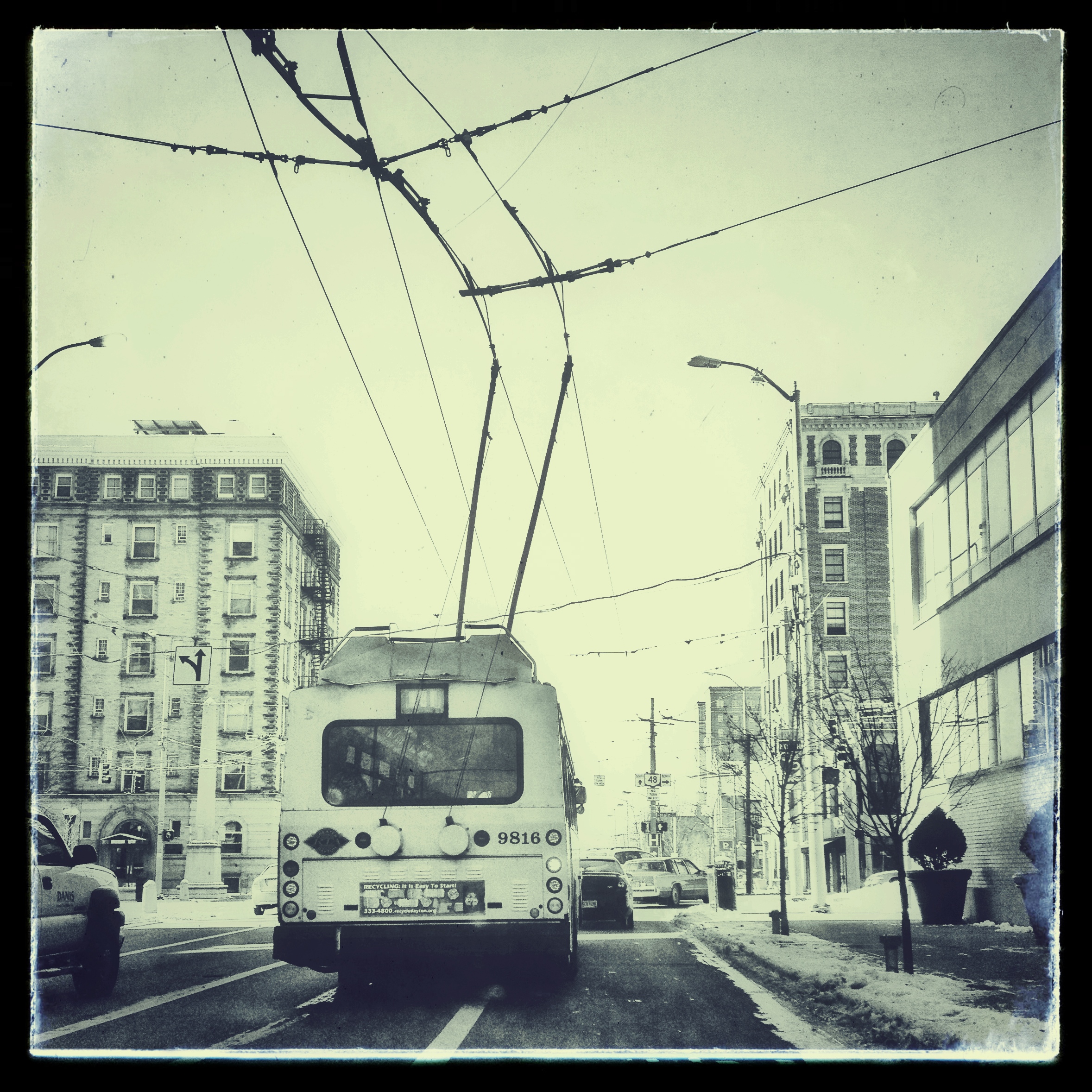
Downtown Dayton, Ohio

IMG_9793

IMG_9796

Posted in Photos | Comments Off on Downtown Dayton, Ohio

National Museum of the U.S. Air Force — Cold War and Beyond

We did the Cold War hangar even quicker than we did Korea and Vietnam. We had a long drive home ahead of us and still wanted to visit the Wright Brothers Bicycle Shop downtown (which, it turned out, was closed).

Mark 41 Thermonuclear Bomb — Designed to be carried by B-47, B-52 and B-70 aircraft, it was to be released at high-altitude, using parachutes to retard its fall, thereby permitting the releasing plane to escape from the target area safely.

IMG_9745

Convair B-36J Peacemaker — Intercontinental strategic bomber

IMG_9743

Lockheed F-94C Starfire (left) — Rocket-firing interceptor

Avro CF-100 Mk IV Canuck (right) — Canadian-built fighter.

Grumman OA-12 Duck (right, above, the yellow one) — Used during WWII and afterwards for rescue missions.

IMG_9758

Sikorsky MH-53M Pave Low IV — Used for long-range, low-level missions to insert, extract, and resupply special operations forces. This particular helicopter was assigned to the 20th Expeditionary Special Operations Squadron. Its last flight was a combat mission in Iraq on March 28, 2008

IMG_9756

Lockheed F-117A Nighthawk (background) — The world’s first operational stealth aircraft. This was the second one built and was used for testing.

IMG_9757

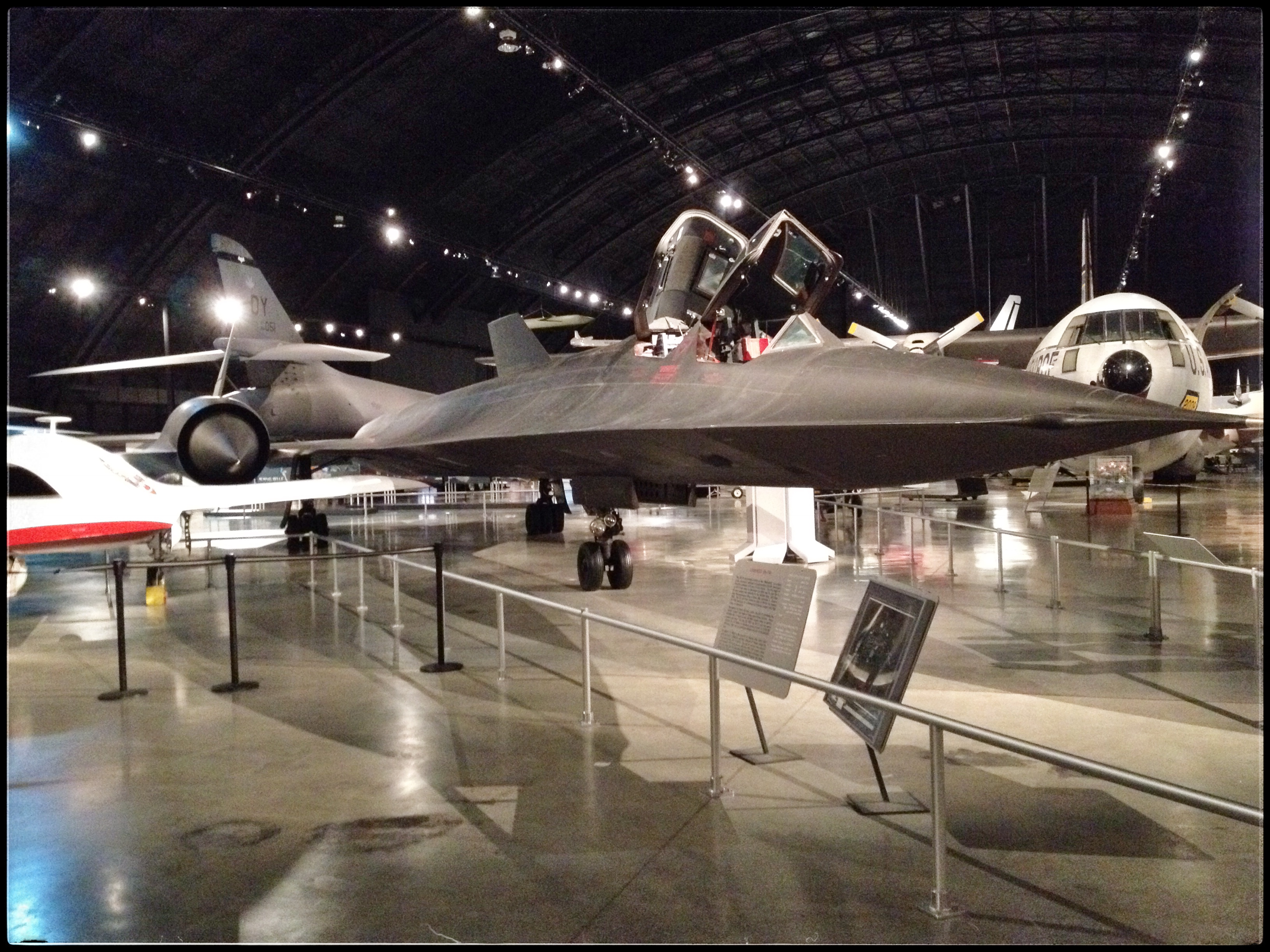
Lockheed SR-71A Blackbird —  long-range, advanced, strategic reconnaissance aircraft. During its career, this aircraft accumulated 2,981 flying hours and flew 942 total sorties (more than any other SR-71), including 257 operational missions, from Beale Air Force Base, Calif., Palmdale, Calif., Kadena Air Base, Okinawa, and RAF (Base), Mildenhall, England.

IMG_9761

Convair F-102A Delta Dagger (center) — The world’s first supersonic all-weather jet interceptor. This particular plane served the 57th Fighter-Interceptor Squadron in Iceland. On occasion, it encountered Soviet aircraft flying reconnaissance missions over the arctic

Martin RB-57D (right) — a strategic reconnaissance aircraft that could fly high enough to avoid interception.

IMG_9762

North American F-86H (left, foreground) — fighter-bomber with its skin removed to show structure

Boeing KC-97L Stratofreighter (left, background) — tanker for mid-air refueling

IMG_9774

Martin CGM-13B Mace — Tactical surface-launched missile designed to destroy ground targets.

IMG_9772

Boeing WB-50D Superfortress (left) — The last propeller-drive bomber

Cessna LC-126A (above, center) — Used for Arctic rescue.

IMG_9778

IMG_9771

North American F-86D Sabre — Rocket-firing interceptor

IMG_9776

Northrop B-2 Spirit — Long-range stealth bomber

IMG_9773

Lockheed Martin F-22A Raptor — The world’s first stealthy air dominance fighter.

IMG_9728

General Atomics YMQ-9 Reaper — Long-range remotely piloted aircraft used for locating and destroying time-critical and highly mobile targets.

IMG_9775

Apollo 15 Command Module Endeavor — Apollo 15 was the fourth mission to land astronauts on the moon and the only Apollo mission with an all-Air Force crew. Col. David R. Scott, Lt. Col. James B. Irwin and Maj. Alfred M. Worden flew this command module to the moon in 1971.

IMG_9760

Douglas SM-75/PGM-17A Thor (left) — Intermediate range ballistic missile

Martin Marietta SM-68B/LGM-25C Titan II (center) — Intercontinental ballistic missile.

IMG_9759

There were other exhibits outside the museum, but the wind chill was below zero, so we only glanced briefly at a few of them.

Replica of the 8th Air Force Control Tower used in England during WWII,

IMG_9794

Lockheed C-141C Starlifter “Hanoi Taxi” — jet troop and cargo carrier. This particular plane airlifted the first American prisoners of war to freedom from Gia Lam Airport in Hanoi, North Vietnam, on Feb. 12, 1973. The Hanoi Taxi flew two missions into Hanoi, carrying out 78 POWs and two civilian returnees to the Philippines, and four missions from the Philippines to the United States, carrying 76 ex-POWs.

IMG_9777

Posted in Ohio | Comments Off on National Museum of the U.S. Air Force — Cold War and Beyond

National Museum of the U.S. Air Force — Korea and Vietnam

By the time we got to the second hangar, we were suffering from information overload. My wife sat down and watched a video on Bob Hope and the USO while I made a quick pass through the two sections.

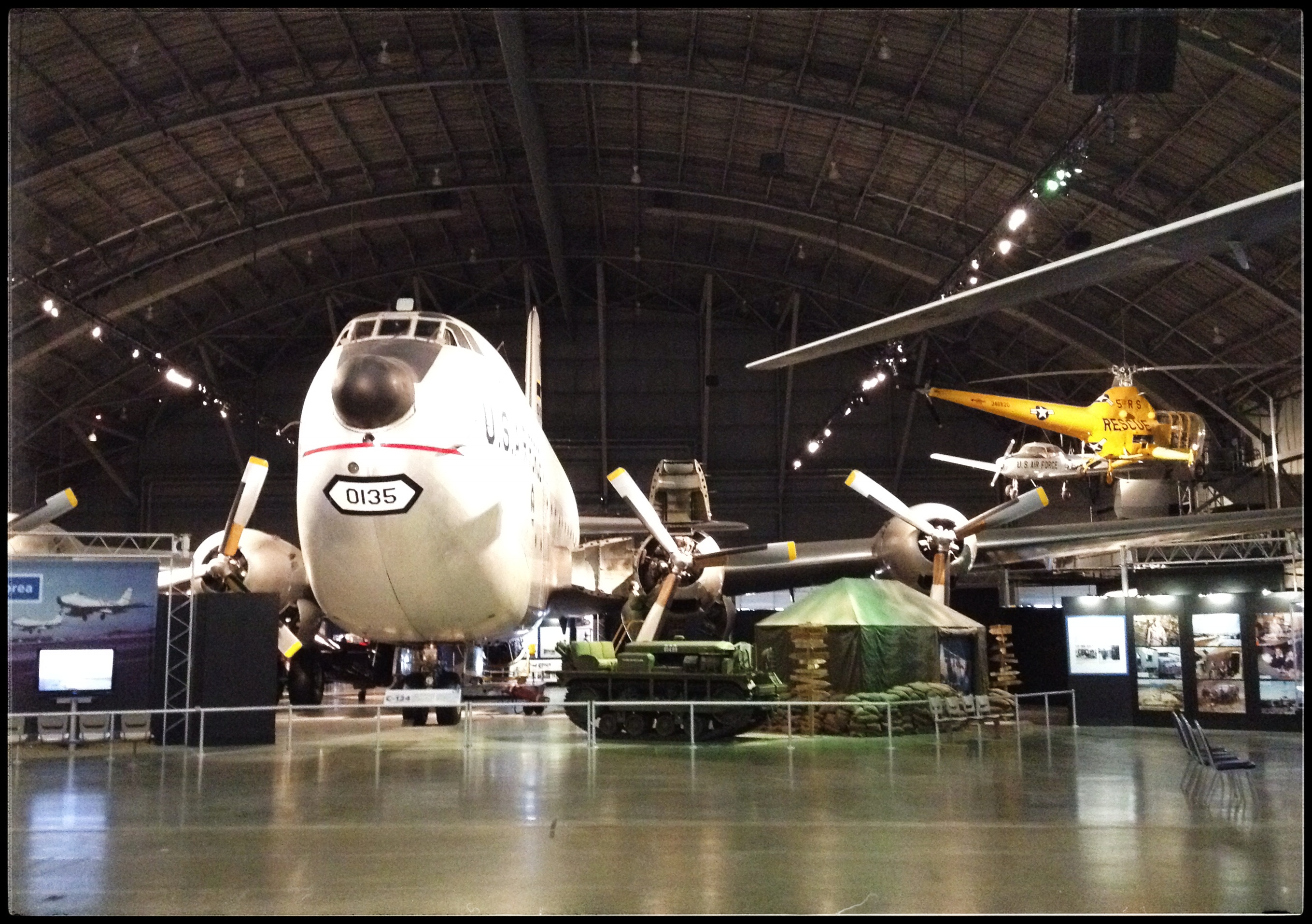
Douglas C-124C Globemaster — cargo and troop carrier capable of handling tanks, field guns, bulldozers and trucks. It could also be converted into a transport capable of carrying 200 fully-equipped soldiers or 127 litter patients and their attendants in its double-decked cabin.

Sikorsky YH-5A Dragonfly (upper right, yellow) — Used to rescue pilots shot down behind enemy lines and to evacuate wounded soldiers.

IMG_9713

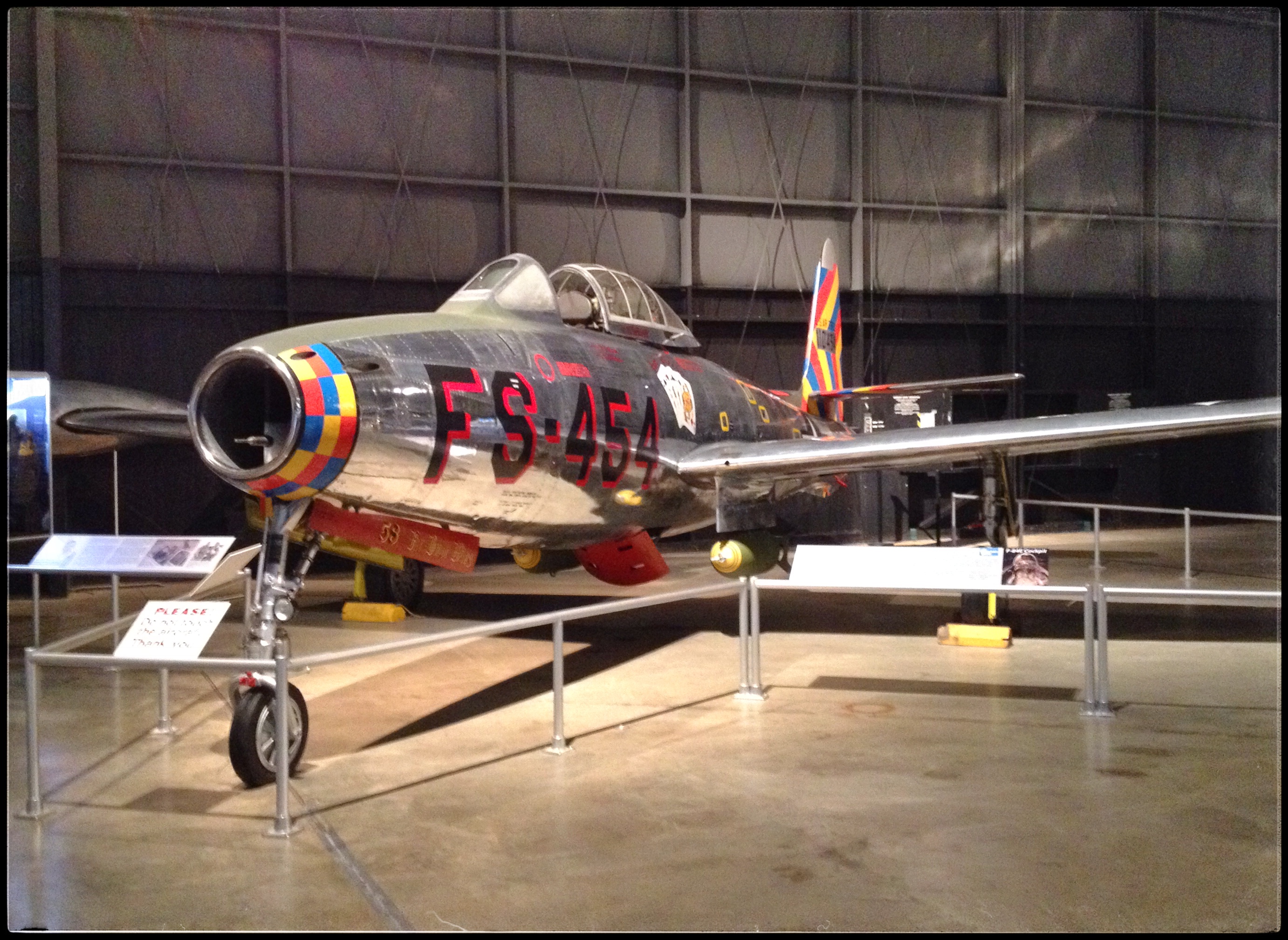
Republic F-84 Thunderjet — Long-range escort and interdiction (attacking the enemy’s transportation) fighter with tactical nuclear bomber capabilities.

IMG_9718

Lockheed F-94A Starfire (left) — Interceptor with radar-tracking capability, used as a night-bombing escort.

North American B-45C Tornado (right) — the first jet bomber

North American L-17A Navion (upper background) — Used for liaison, reconnaissance, light cargo carrying and forward air control.

IMG_9717

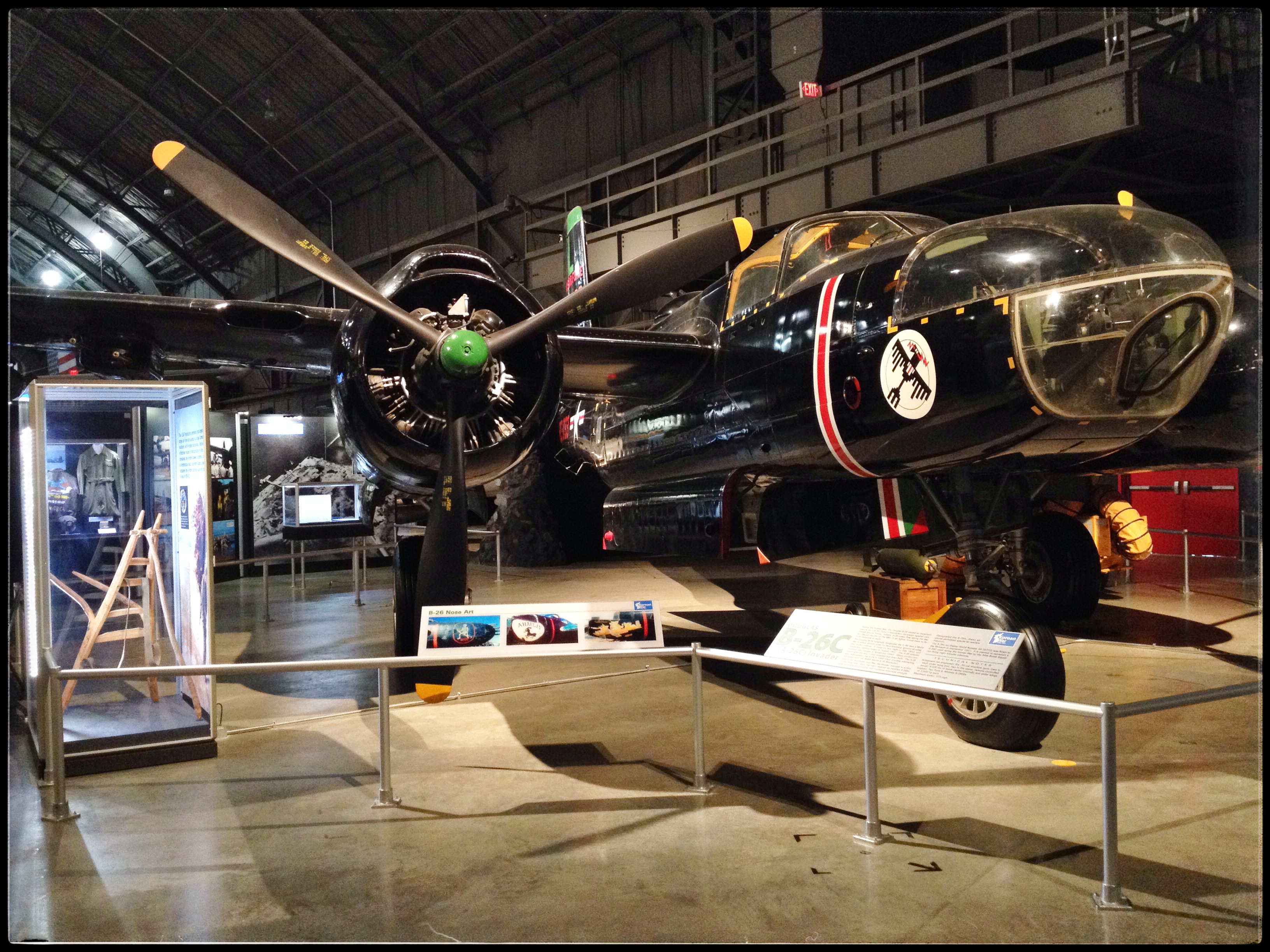
Douglas B-26C (A-26C) Invader — Used for night bombing and interdiction.

IMG_9715

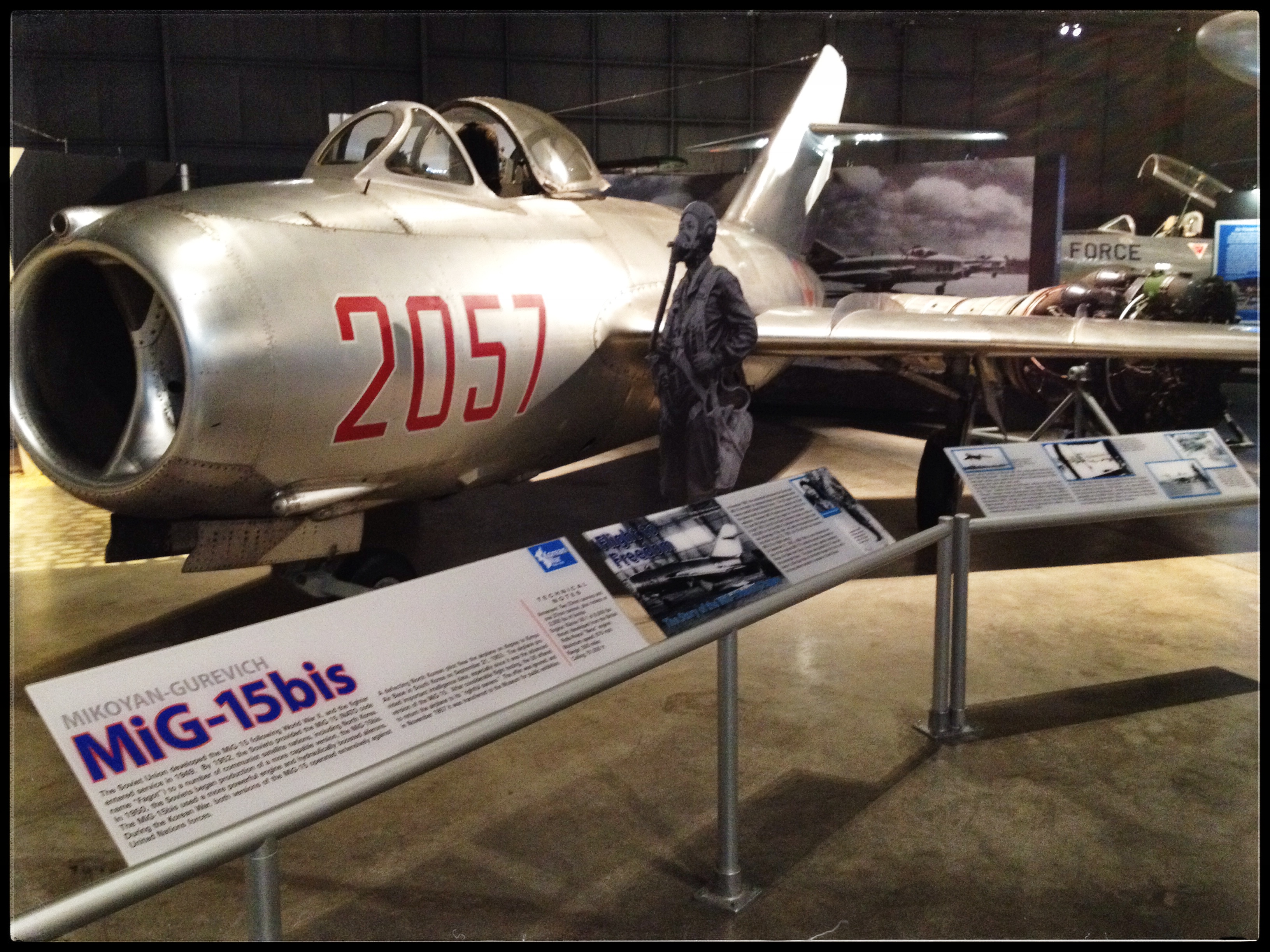
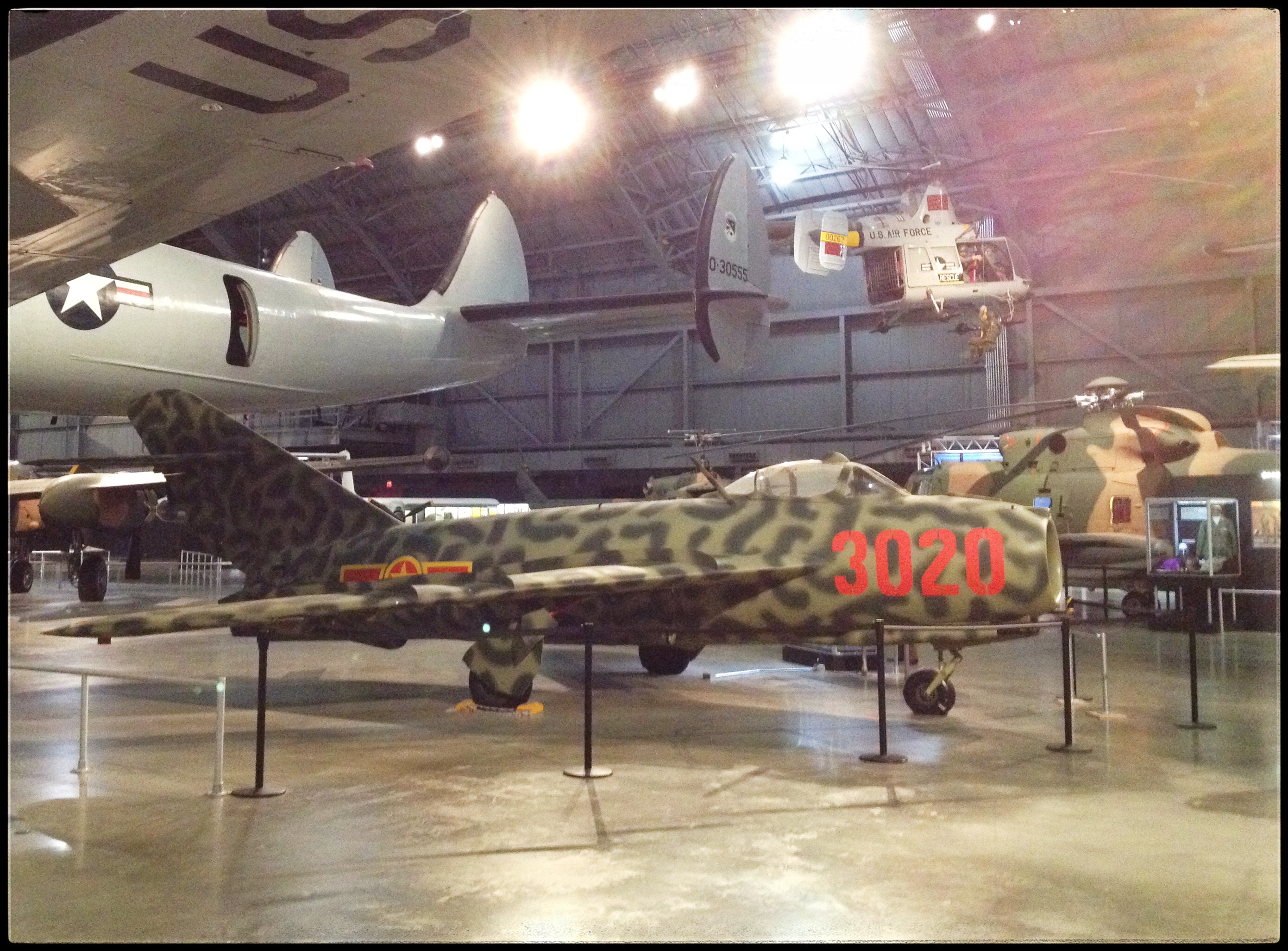
Mikoyan-Gurevich MiG-15bis — Soviet fighter used by North Korea. This particular airplane was flown by a defecting North Korean pilot to Kimpo Air Base in South Korea on Sept. 21, 1953.

IMG_9731

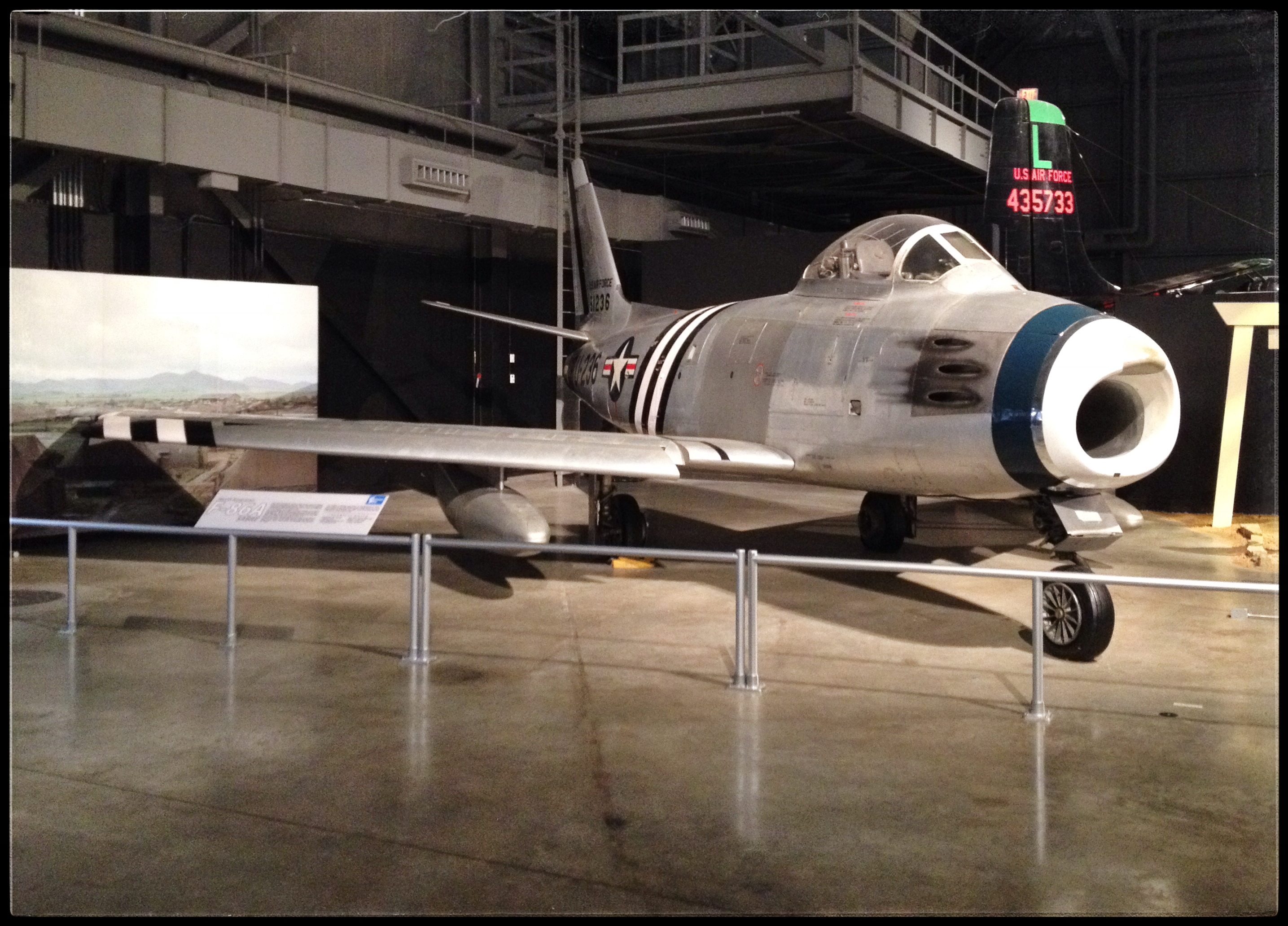
North American F-86A Sabre — The first U.S. swept-wing fighter. In Korea, F-86 pilots had shot down 792 MiGs, with a kill ratio of about 8:1. 

IMG_9730

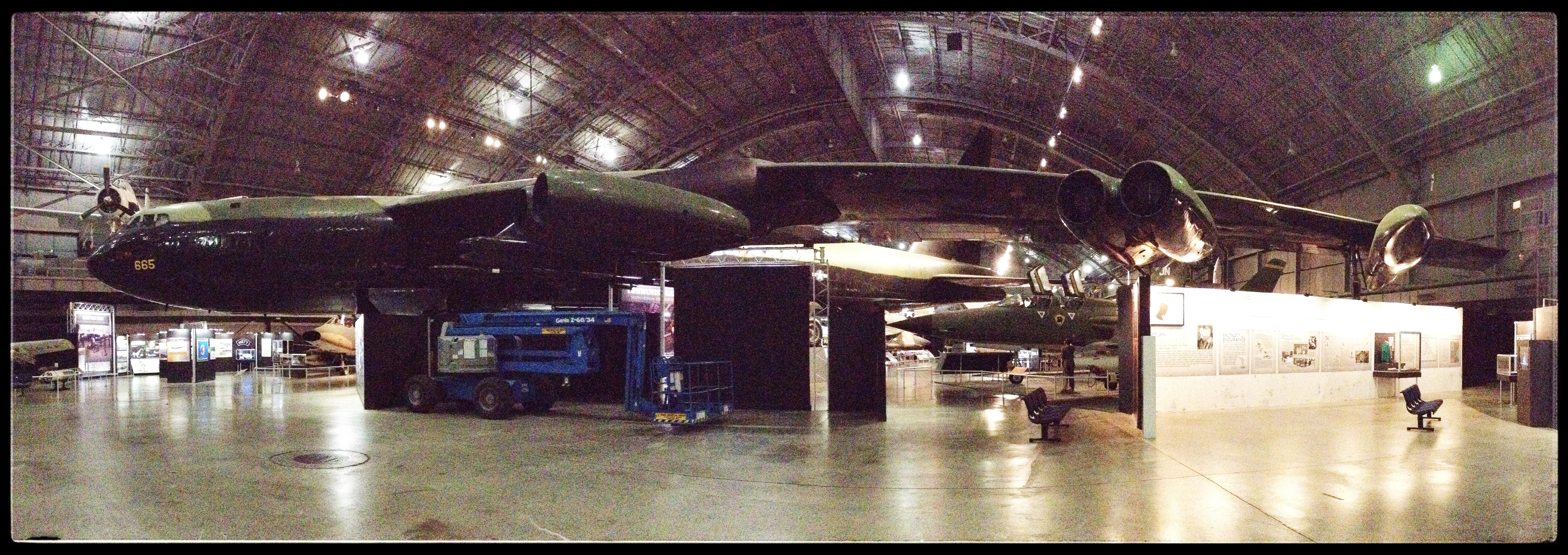
Boeing B-52D Stratofortress — Long-range heavy bomber. This particular plane saw extensive service in Southeast Asia and was severely damaged by an enemy surface-to-air missile on April 9, 1972. In December 1972, after being repaired, it flew four additional missions over North Vietnam.

IMG_9747

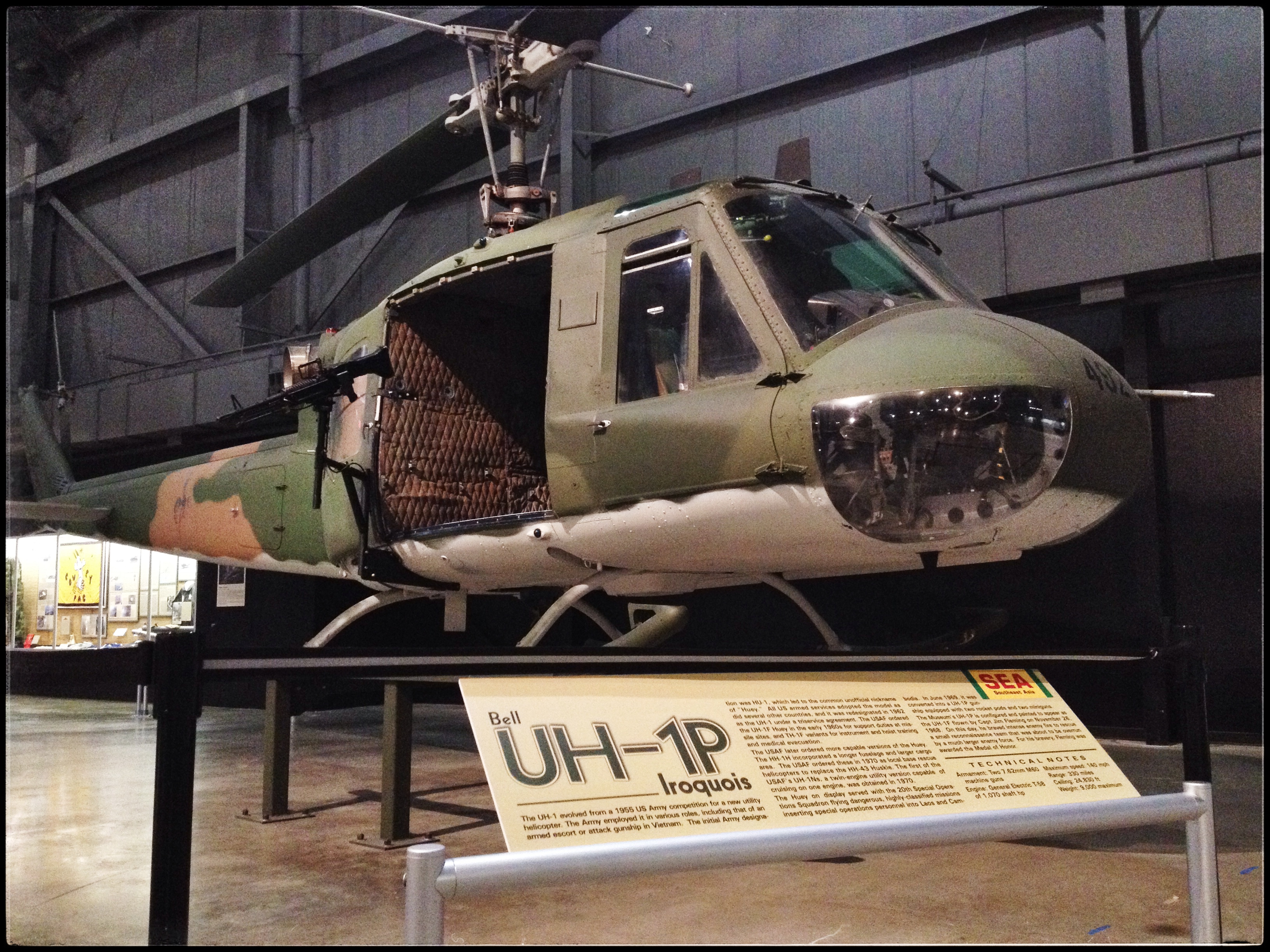
Bell UH-1P Iroquois — The “Huey” escort and gunship. This particular helicopter served in South Vietnam with the 20th Special Operations Squadron flying dangerous, highly-classified missions carrying special operations personnel into Laos and Cambodia.

IMG_9729

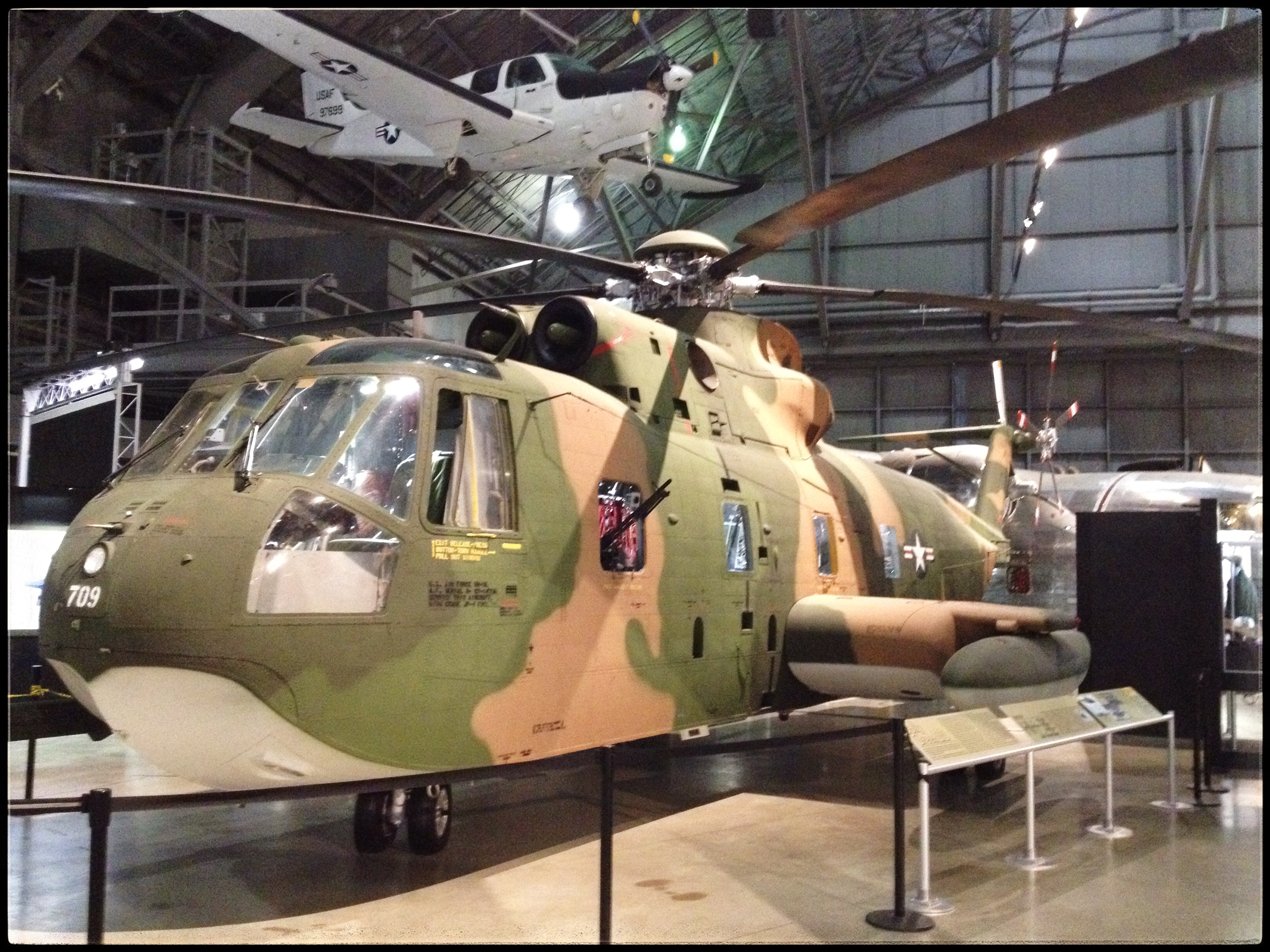
Sikorsky HH-3E Jolly Green Giant — Used for combat search and rescue.

IMG_9733

Mikoyan-Gurevich MiG-17F — Soviet fighter. This particular plane was used by the Egyptian Air Force.

IMG_9734

Republic F-105D Thunderchief — Supersonic tactical fighter-bomber. This particular plane served in the 357th Tactical Fighter Squadron, 355th Tactical Fighter Wing, based at Takhli Royal Thai Air Base in Thailand. The nickname Memphis Belle II refers to the B-17F that carried the same artwork during WWII.

IMG_9744

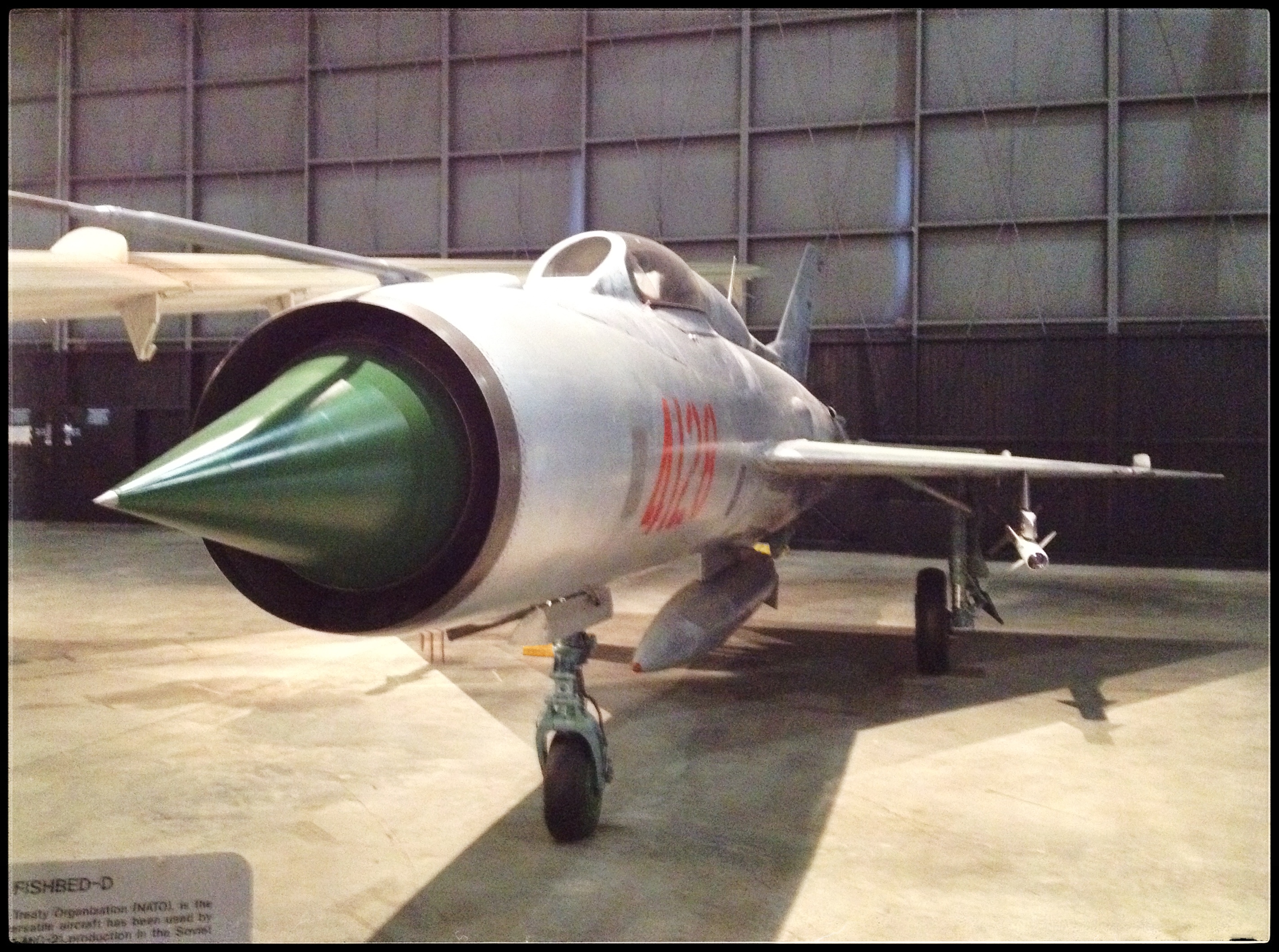
Mikoyan-Gurevich MiG-21PF “Fishbed-D” — Soviet jet fighter. This particular plane carried air-to-air missiles but no guns.

IMG_9742

General Dynamics F-111A Aardvark — Tactical fighter-bomber. This particular plane was used in 1972-1973 by the 474th Tactical Fighter Wing during Linebacker II (night strikes against North Vietnam).

IMG_9746

IMG_9732

Posted in Ohio | Comments Off on National Museum of the U.S. Air Force — Korea and Vietnam

National Museum of the U.S. Air Force — World War II

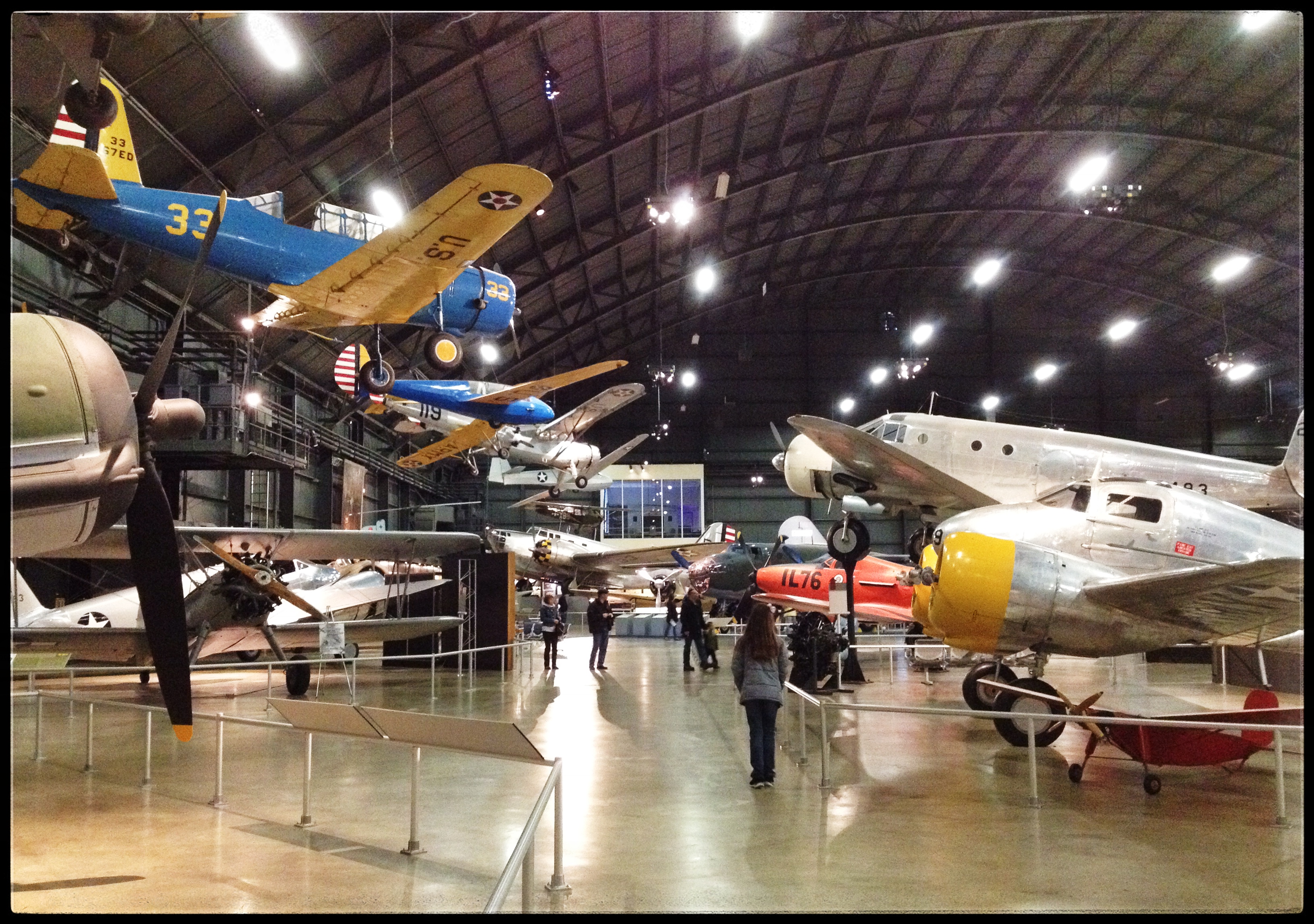
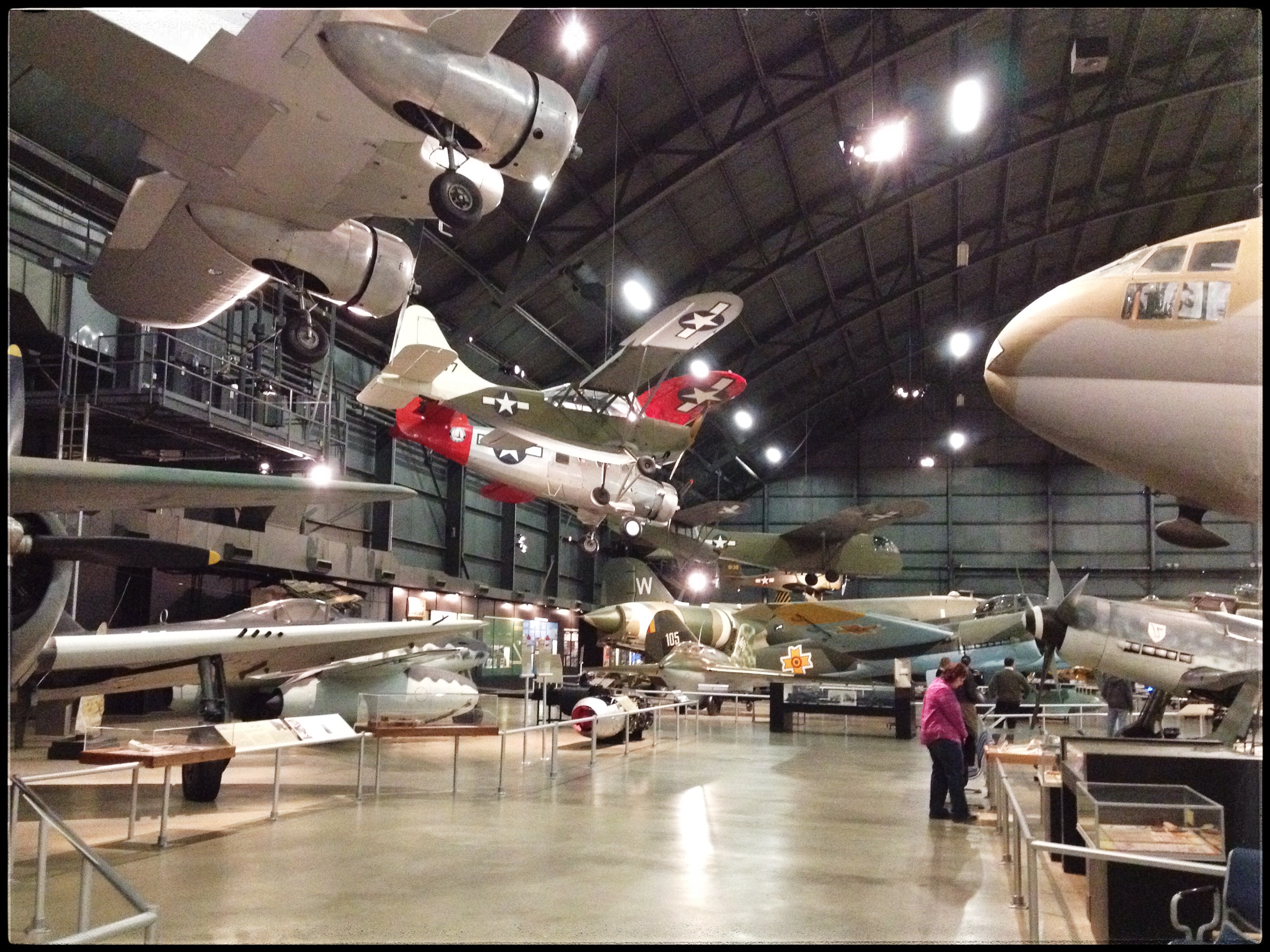
This is the part of the museum I found the most interesting and the part in which we spent the most time, but even so, we only saw a fraction of what there was to see.

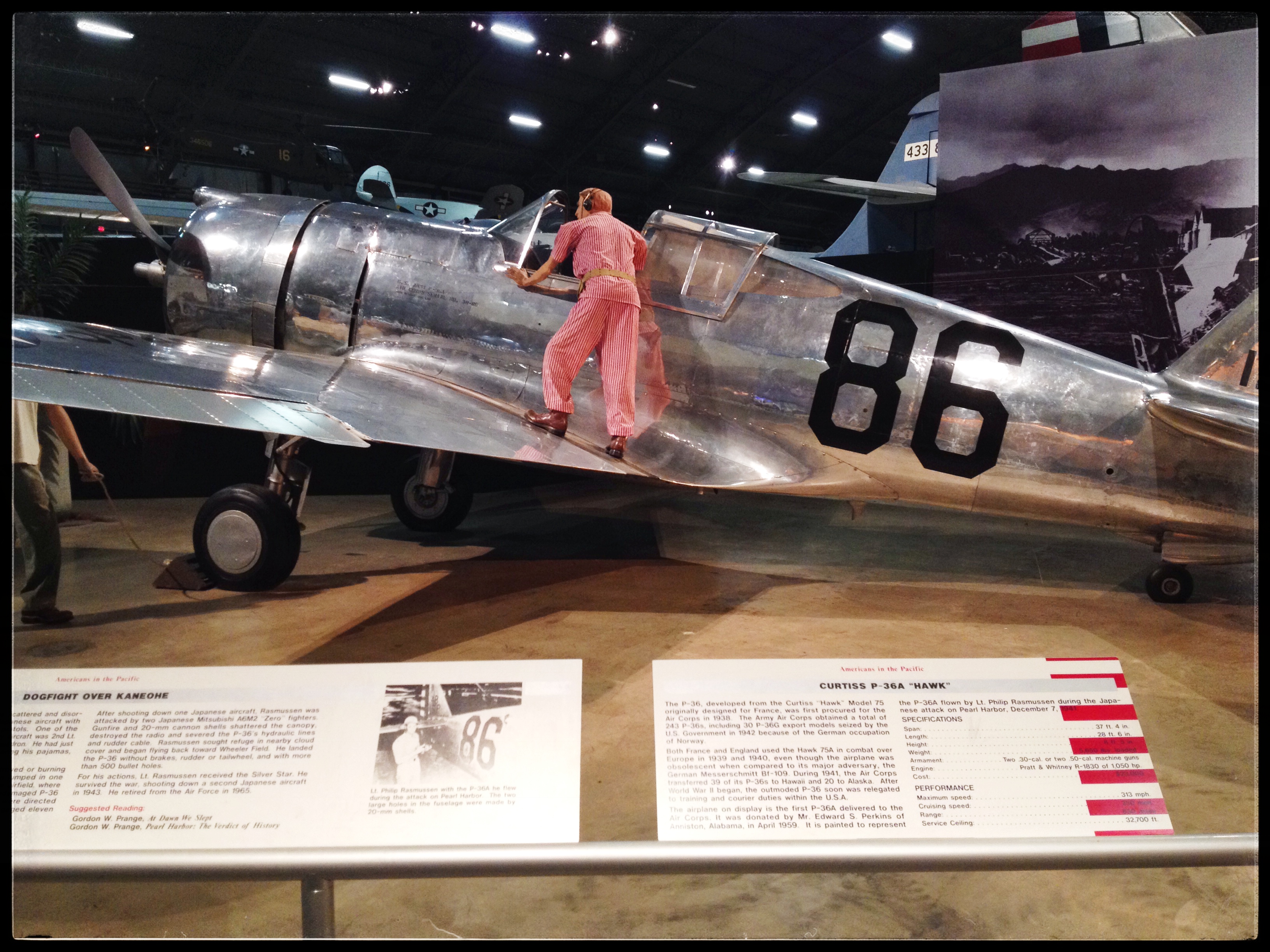
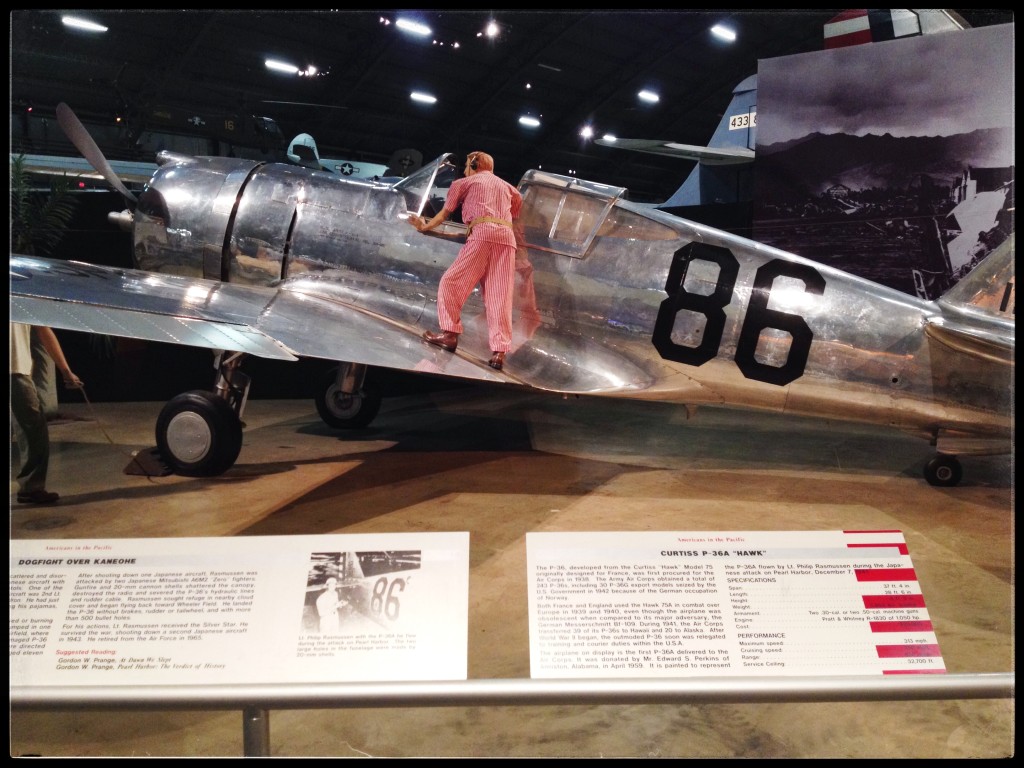
Curtiss P-36A Hawk — Fighter used by the United States, England and France at the beginning of the war but quickly replaced by better planes. This is the first one delivered to the Air Corps and is decorated like one that saw action at Pearl Harbor.
IMG_9641

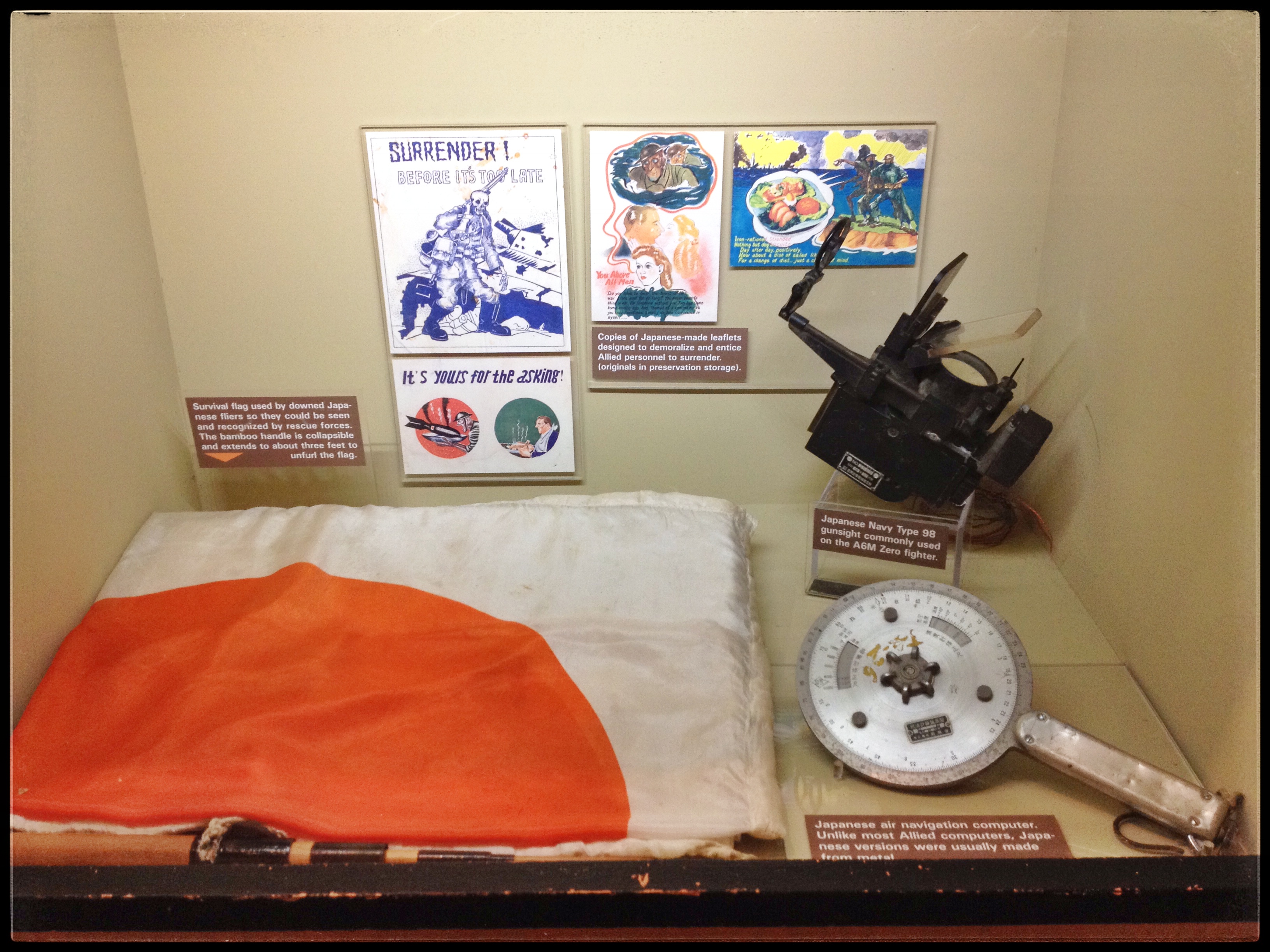
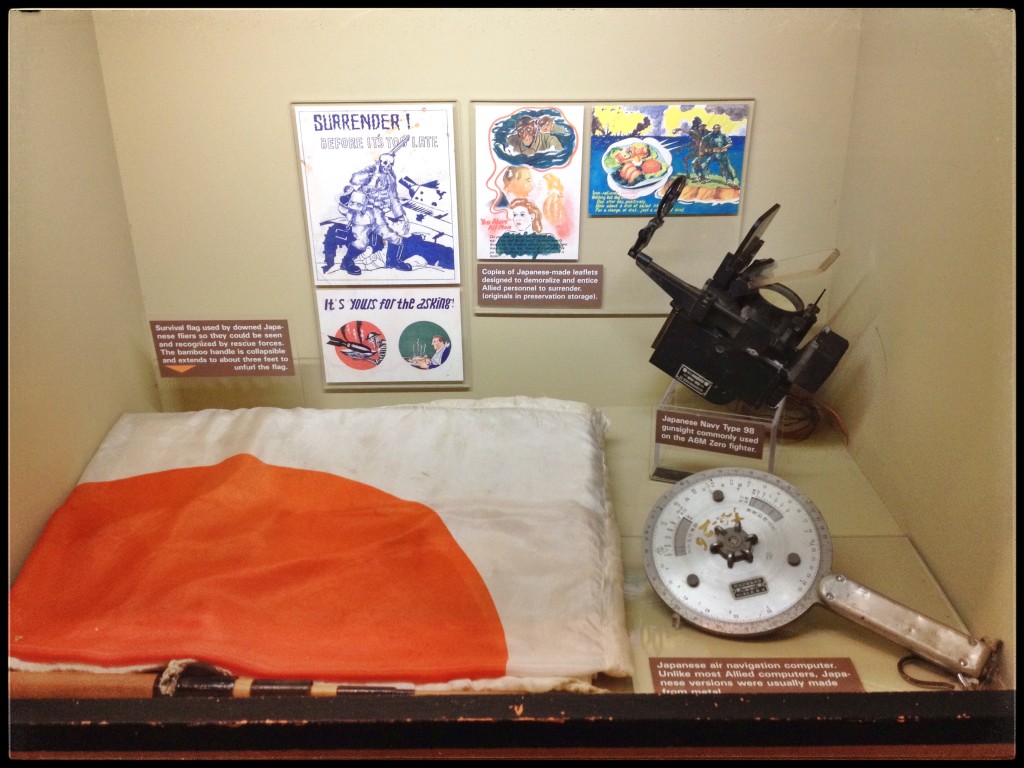
A variety of items used by the Japanese during the war.
IMG_9646

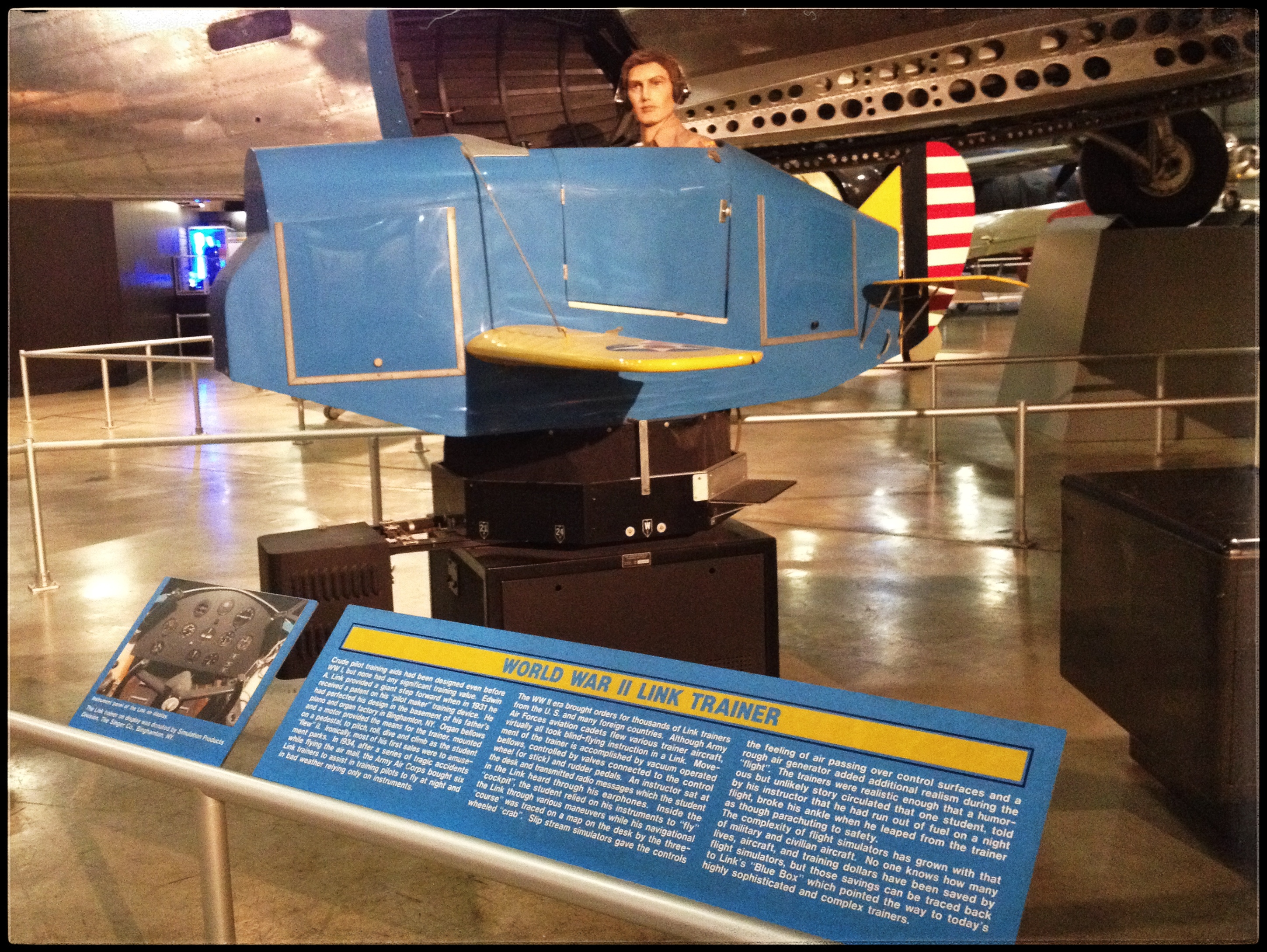
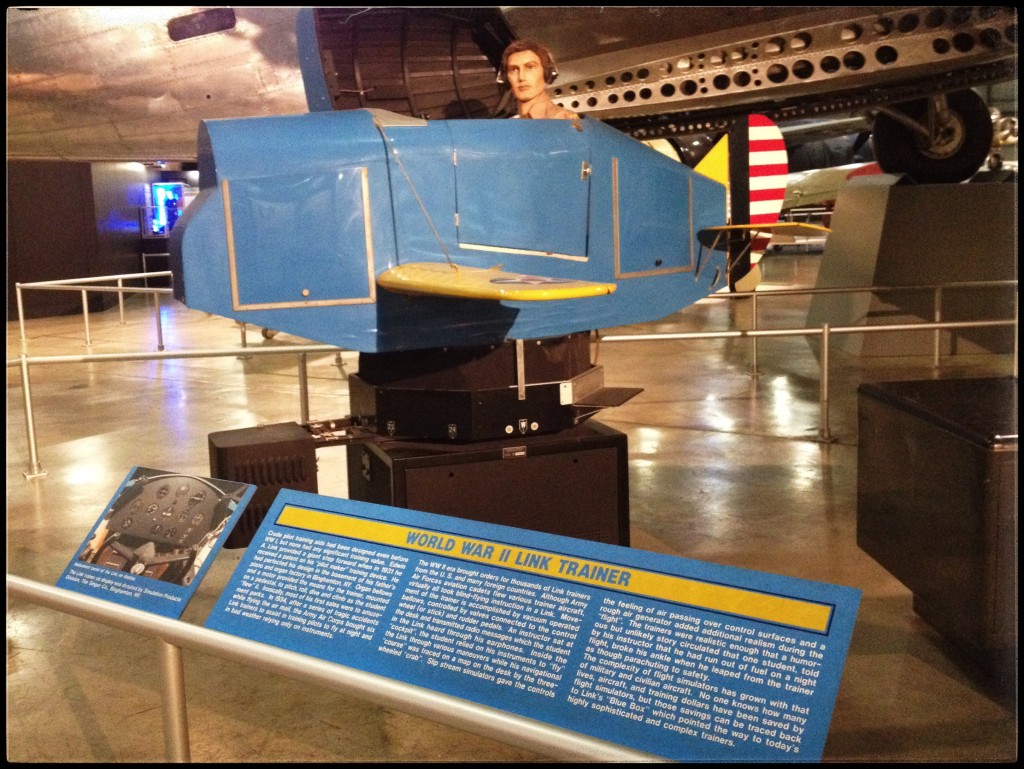
Link Trainer — Created during the 1930s to train pilots, but used primarily by amusement parks until the war began.
IMG_9642

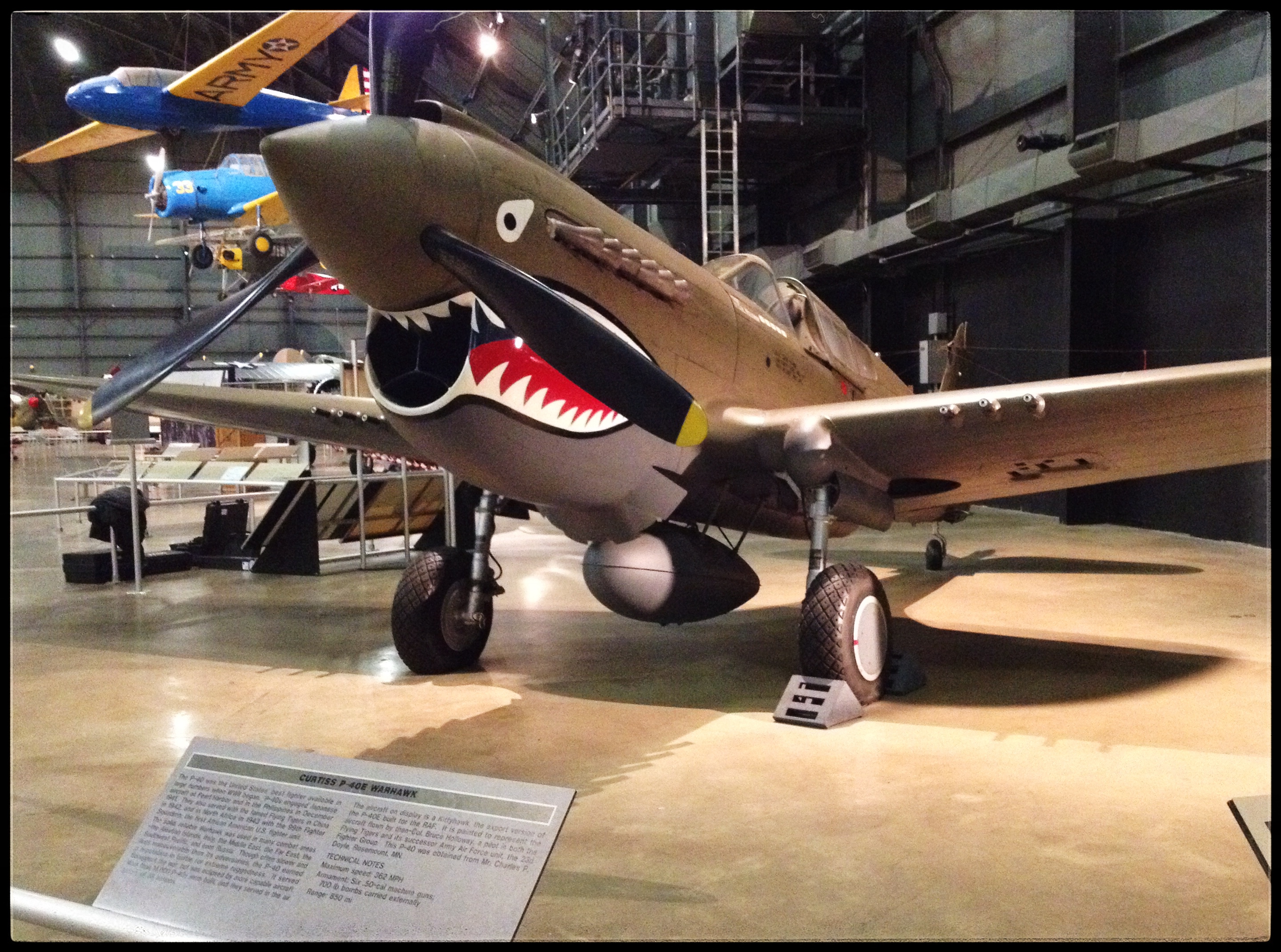
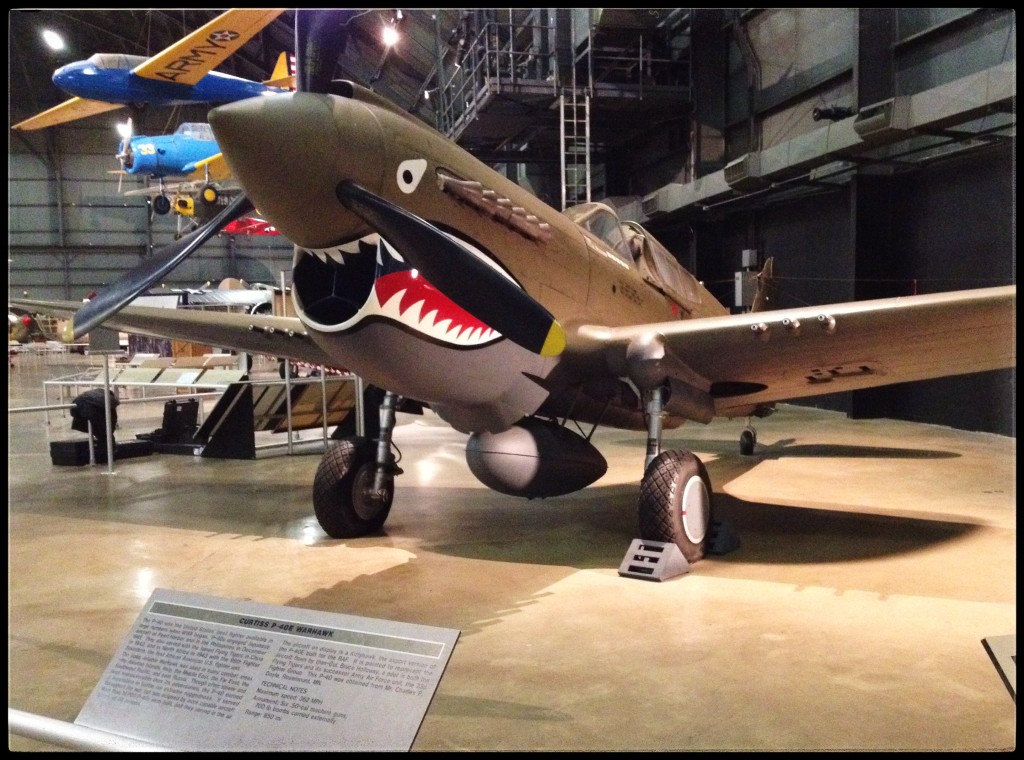
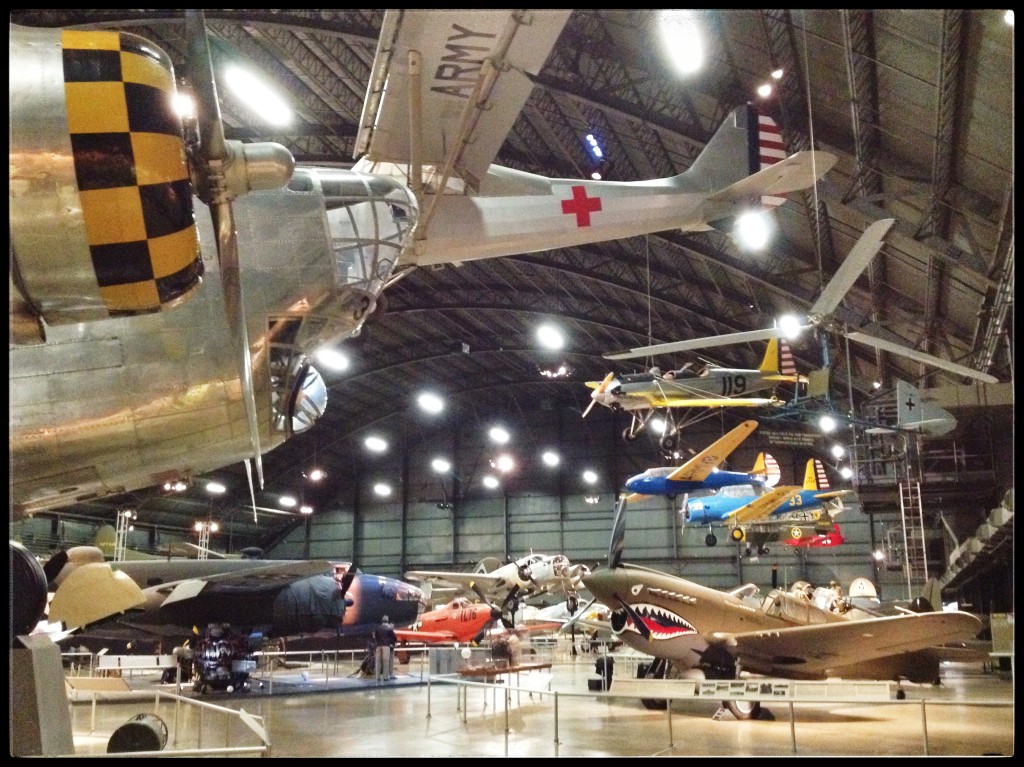
Curtiss P-40E Warhawk — Fighter used by many nations throughout the war. This one is painted to represent the Fighting Tigers.
IMG_9640

IMG_9643

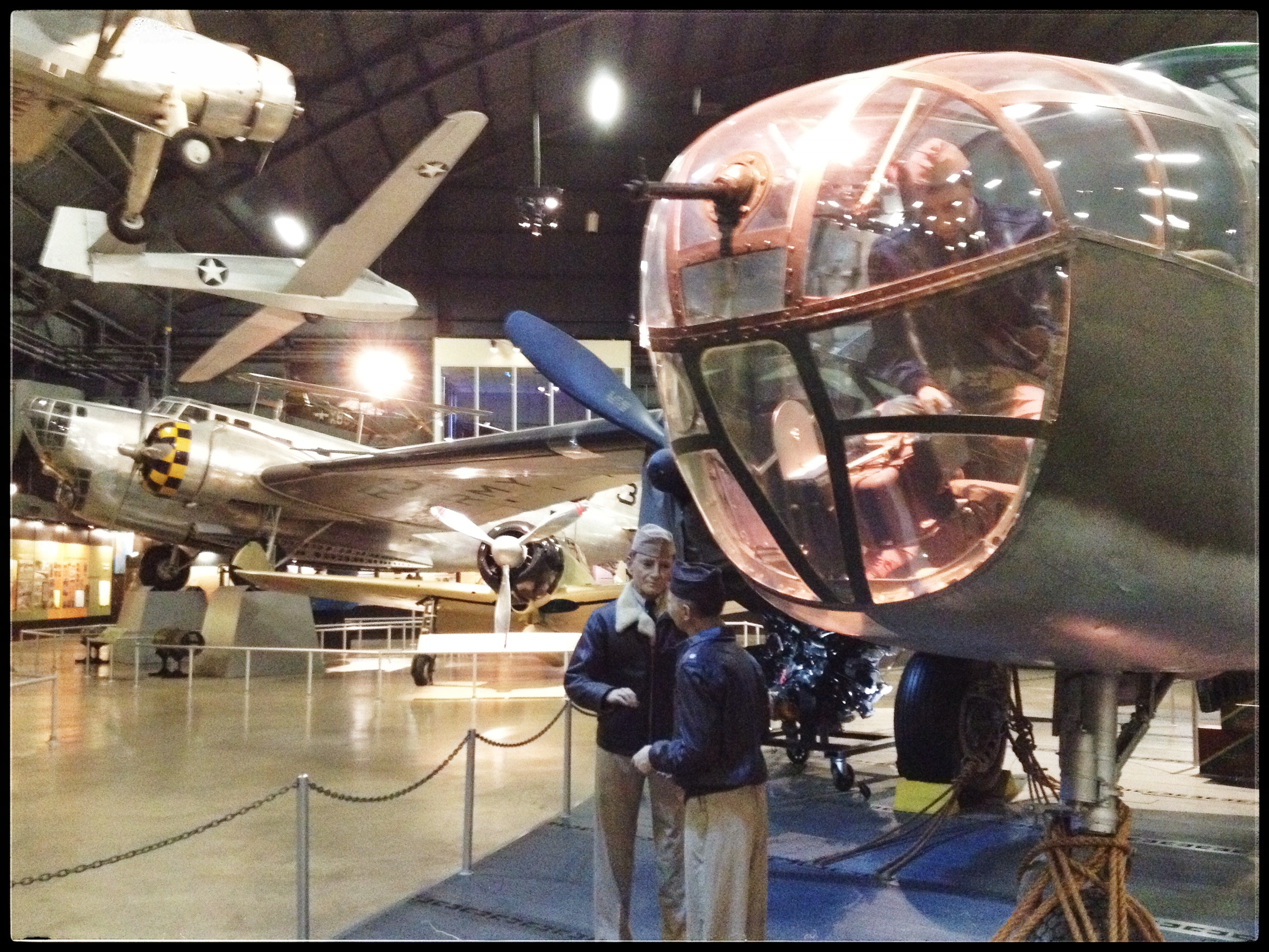
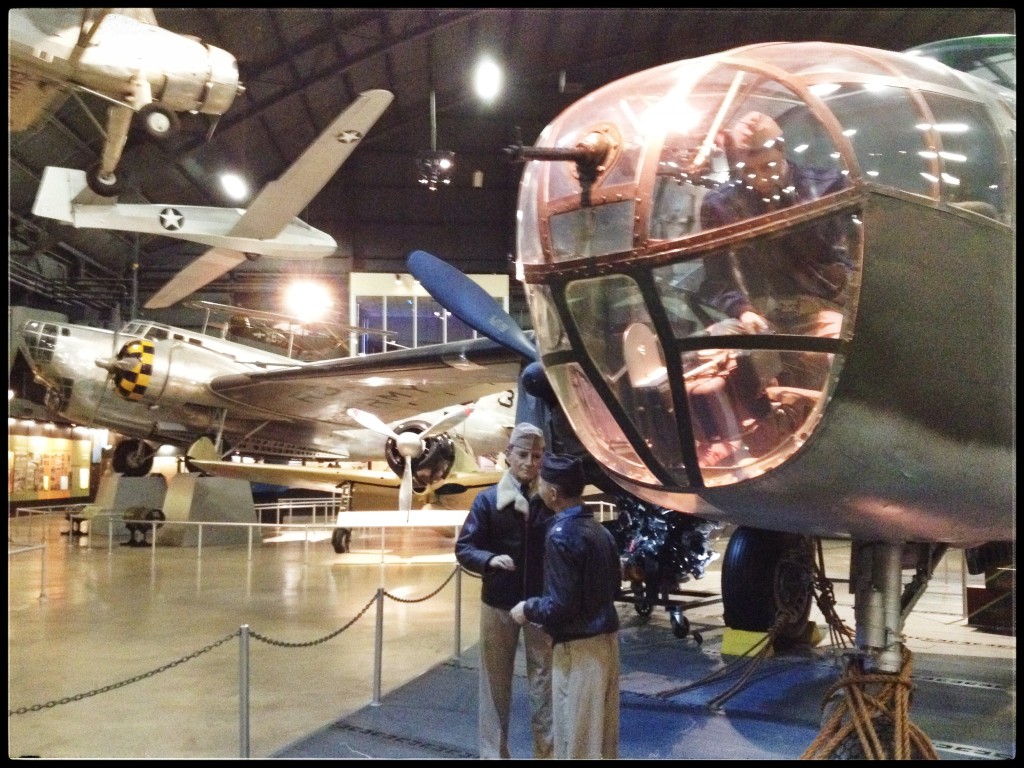
North American B-25B Mitchell (foreground) — Medium bomber painted to represent the Doolittle Raid on Tokyo

Douglas B-18 Bolo (background) — Bomber used early in the war.
IMG_9645

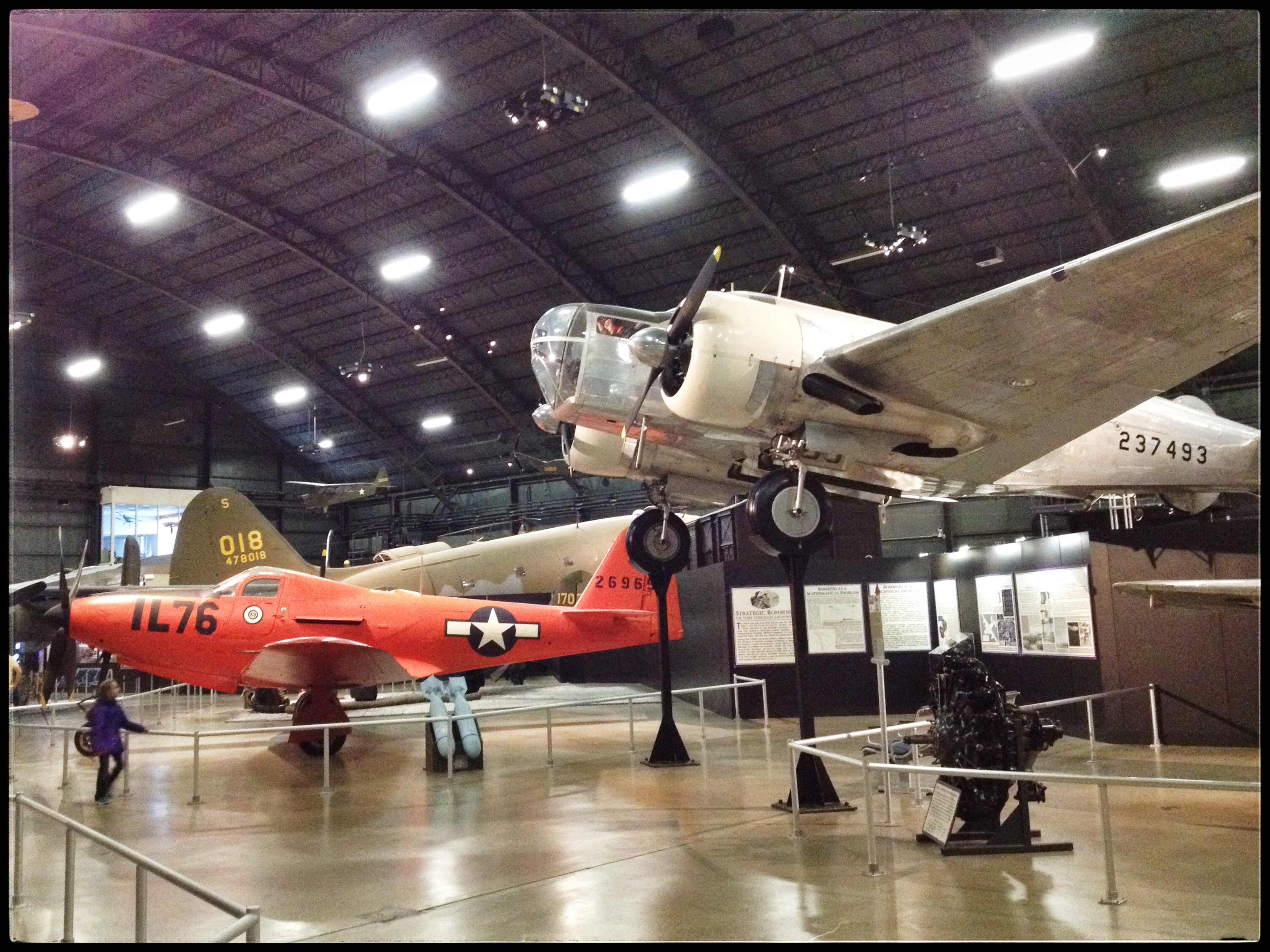
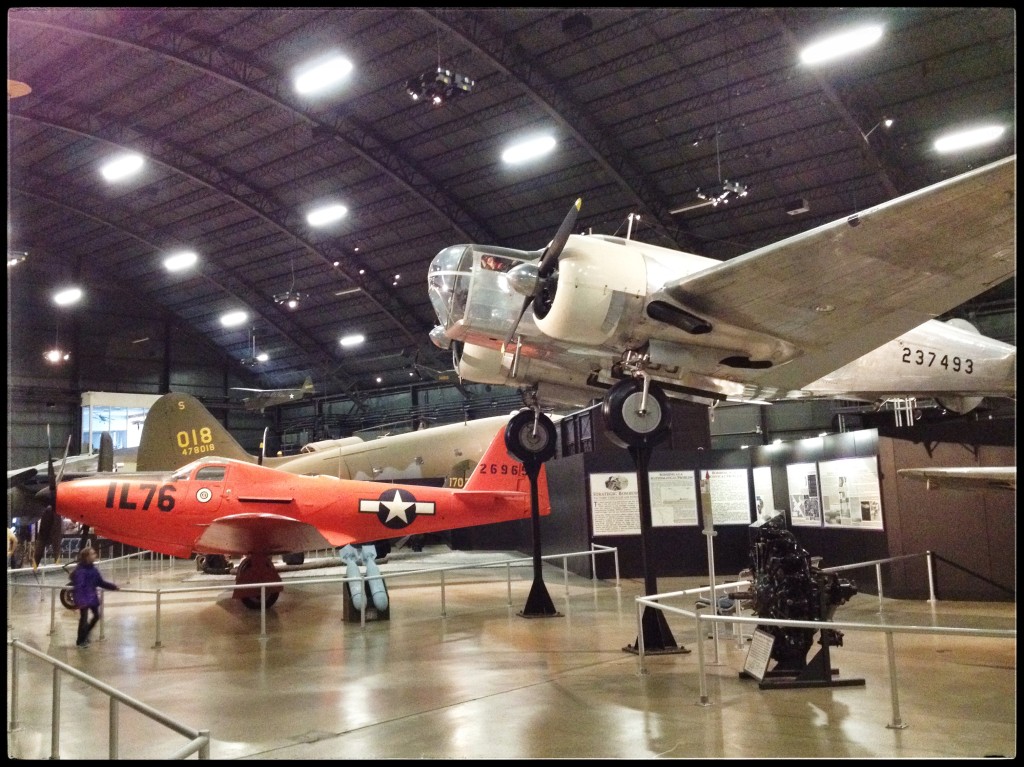
Bell P-63E Kingcobra (left) — American-built fighter used mostly by Russia.

Beech AT-11 Kansan (right) — American bomber trainer used by most bomber pilots.
IMG_9644

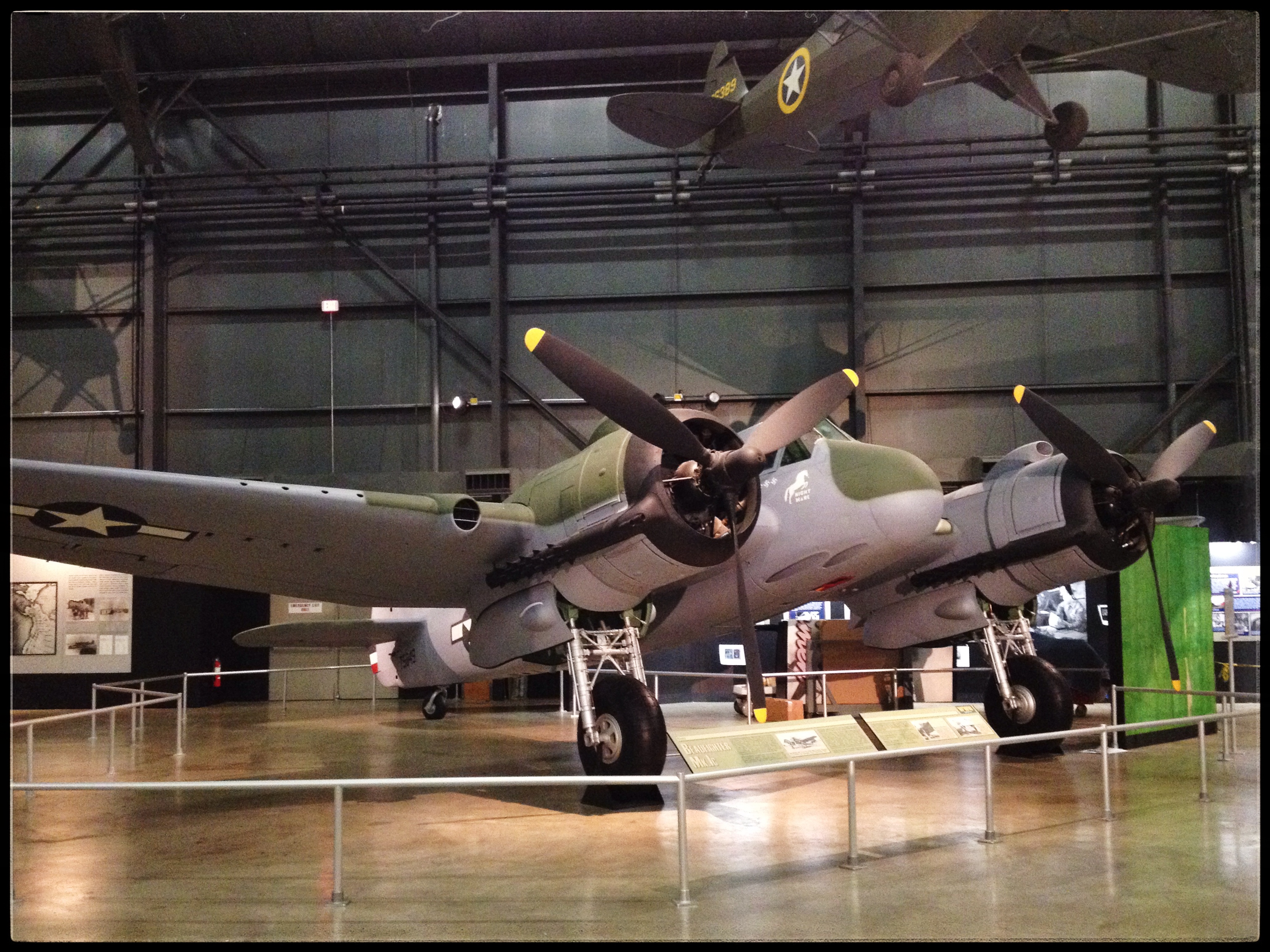
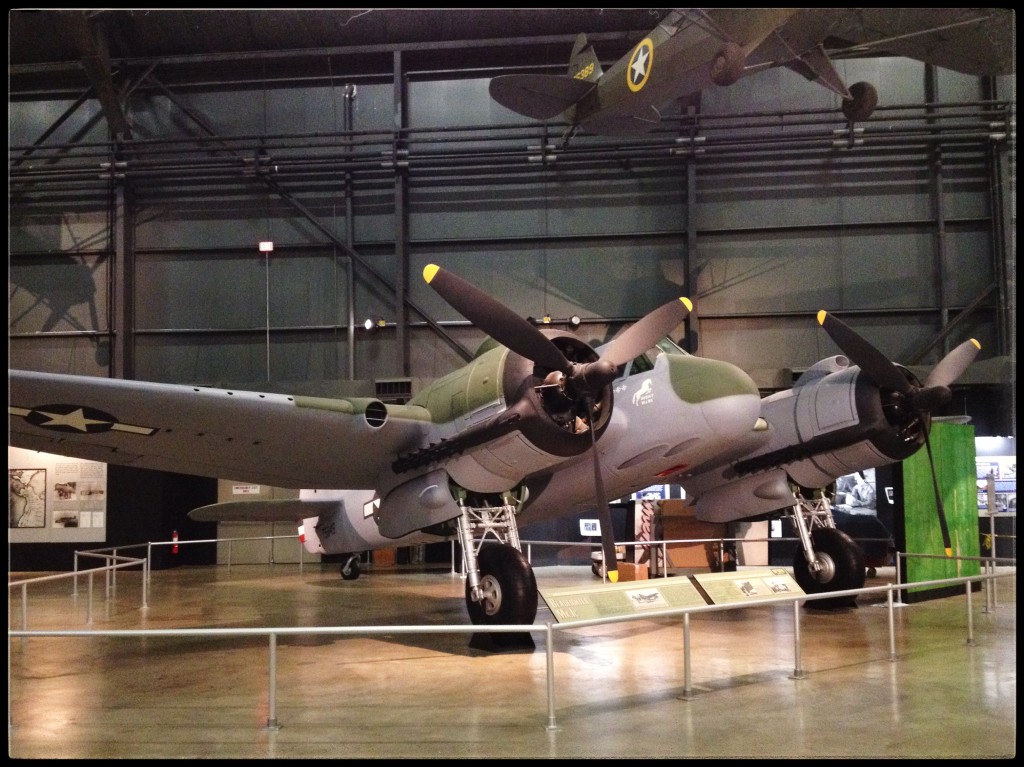
Bristol Beaufighter — British night fighter used extensively during the Blitz.
IMG_9639

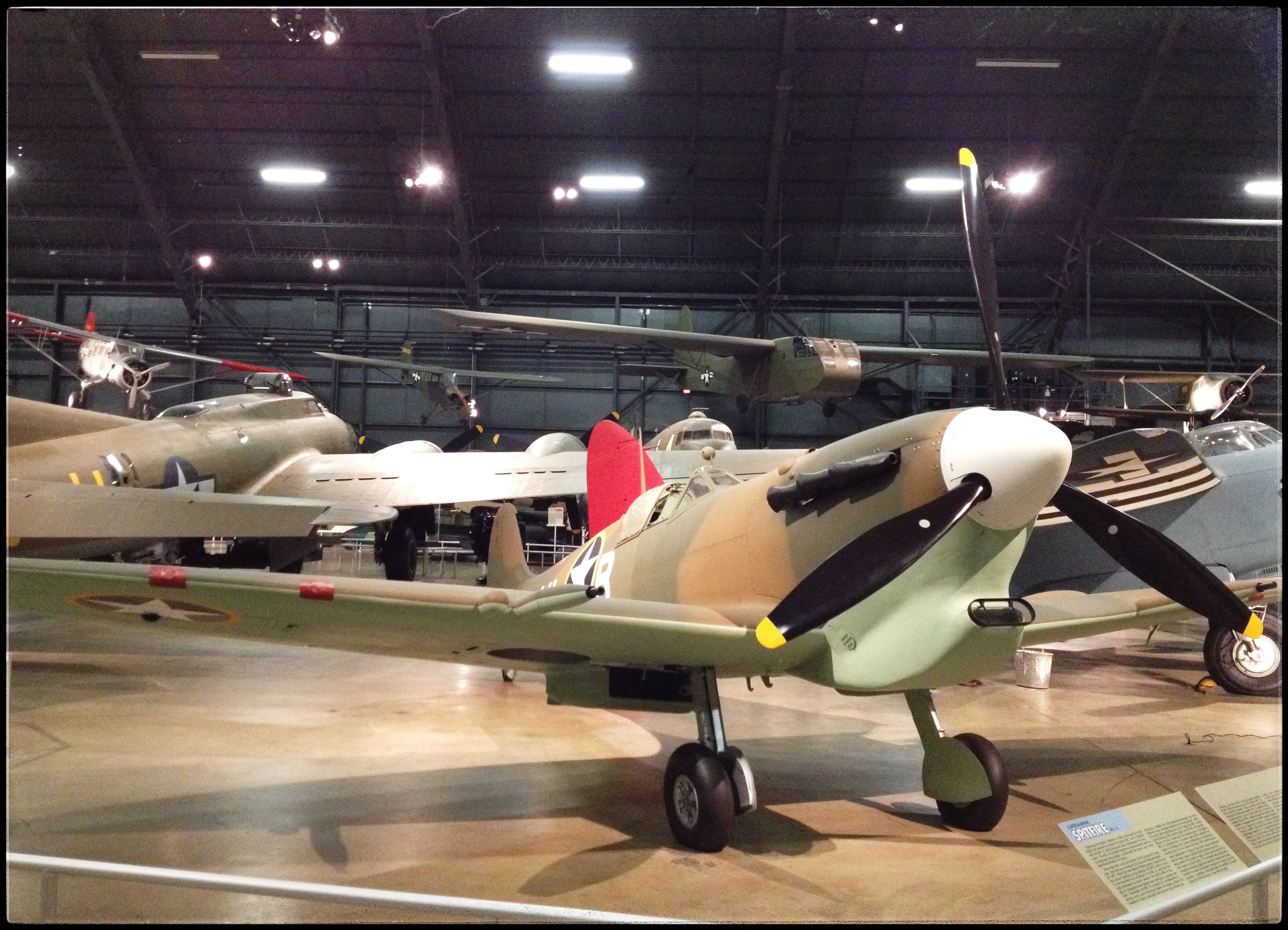
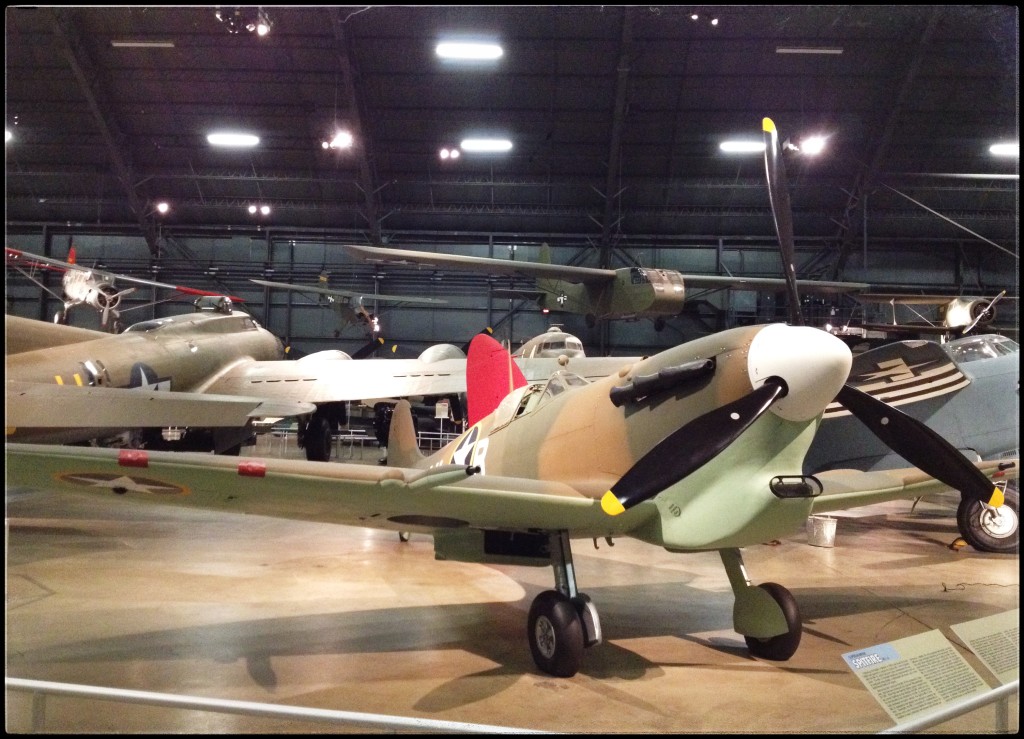
Supermarine Spitfire Mk.Vc — British fighter. This particular plane was used during the war by the Royal Australian Air Force.
IMG_9659

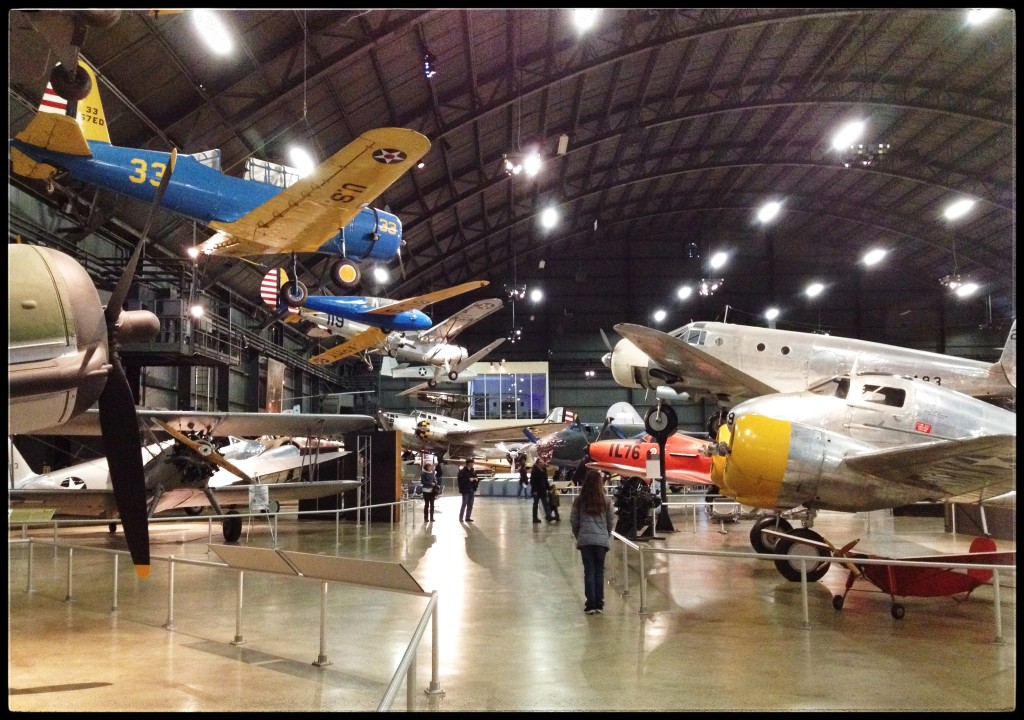
Vultee BT-13B Valiant(left foreground, blue with yellow wings) — Trainer used for pilots who had passed the first level of training.

Laister-Kauffmann TG-4A (left background, blue with yellow wings) — Glider trainer

Curtiss AT-9 Jeep/Fledgling (right foreground) — Twin-engine trainer
IMG_9655

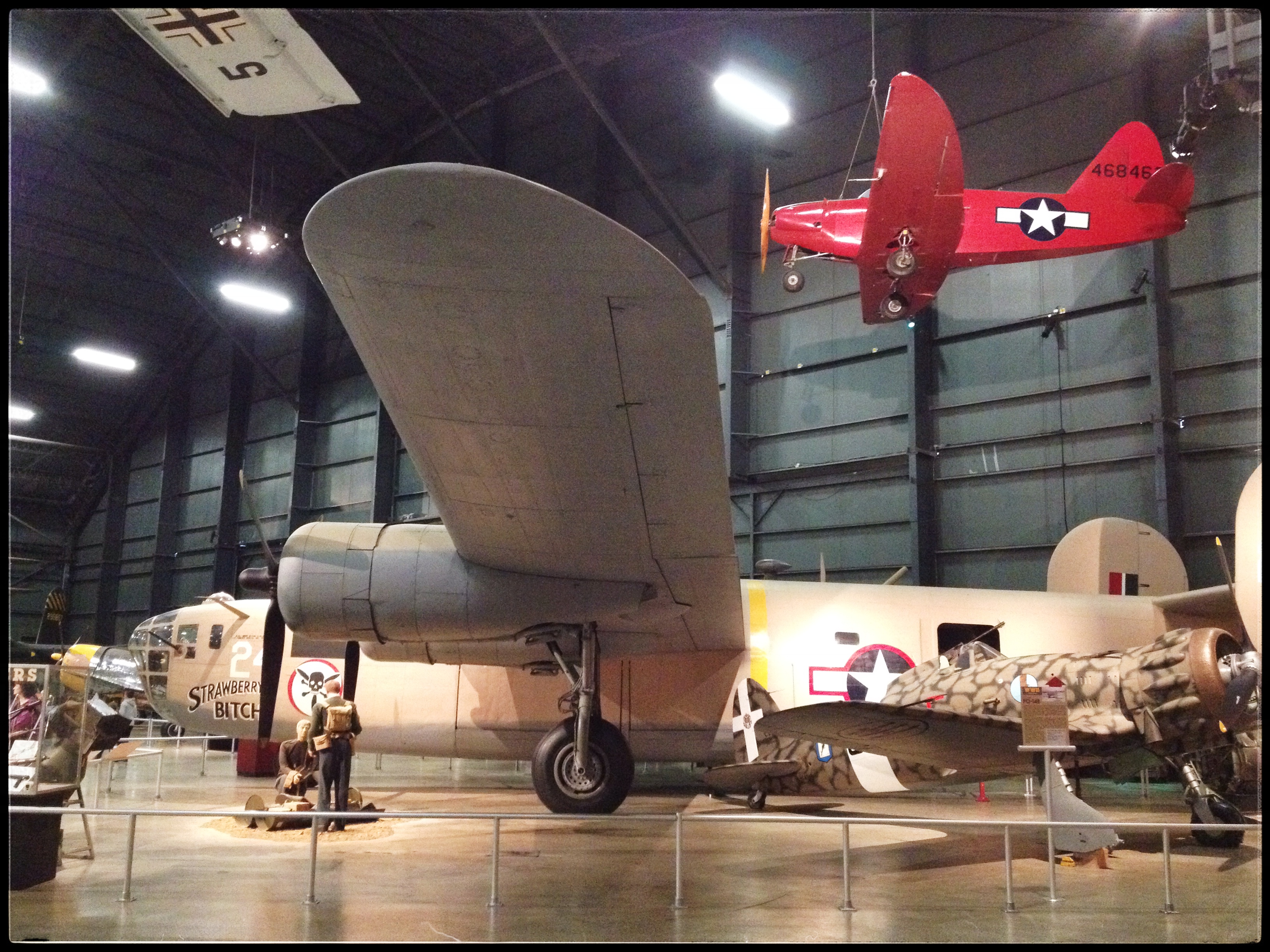
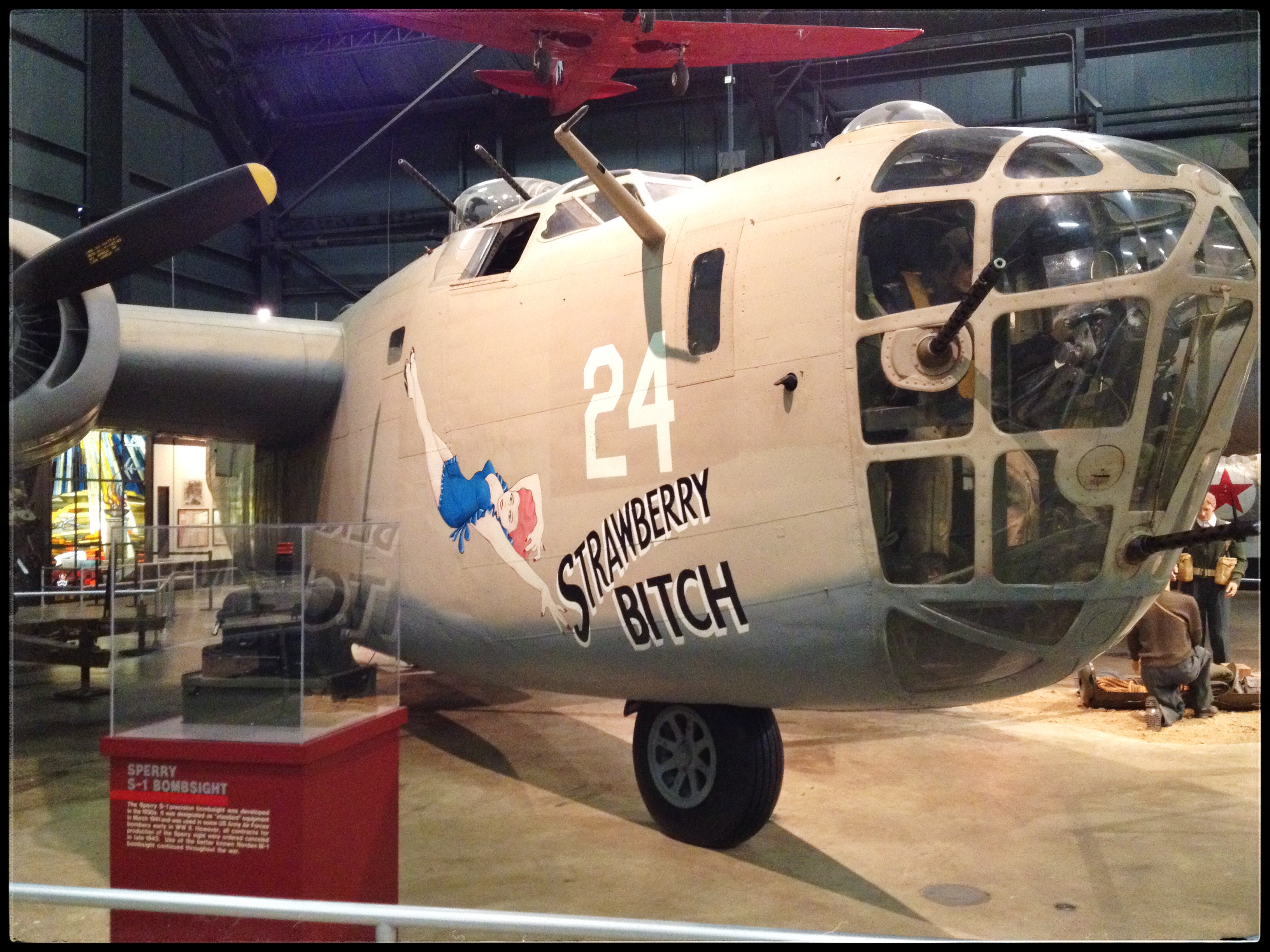
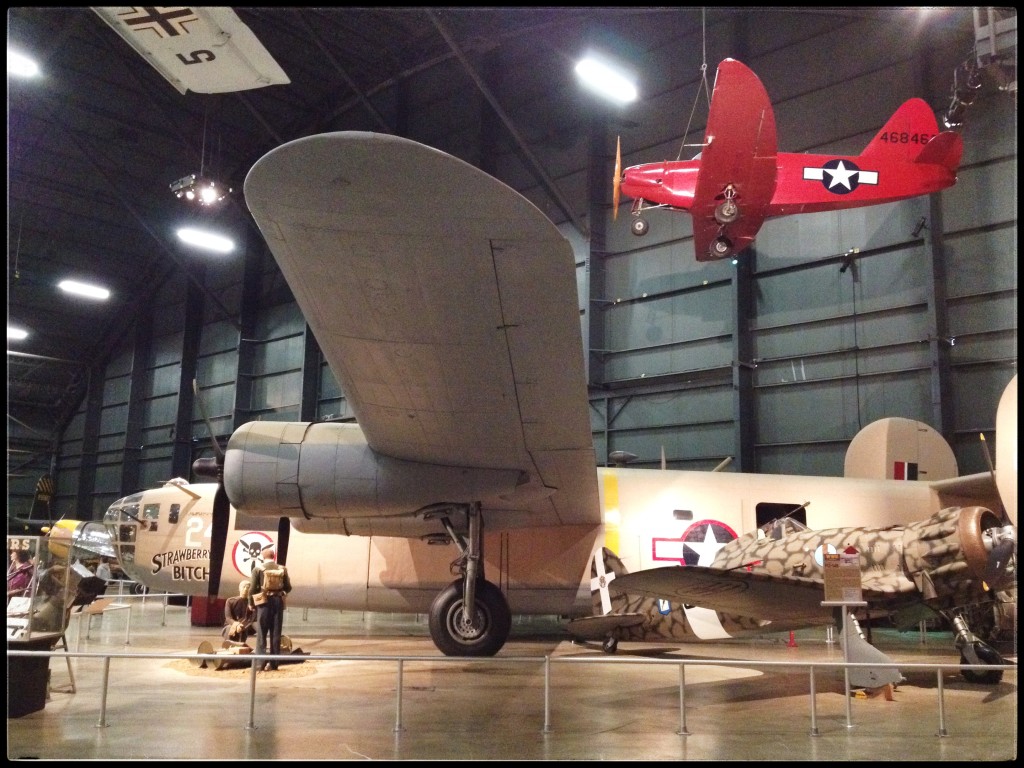
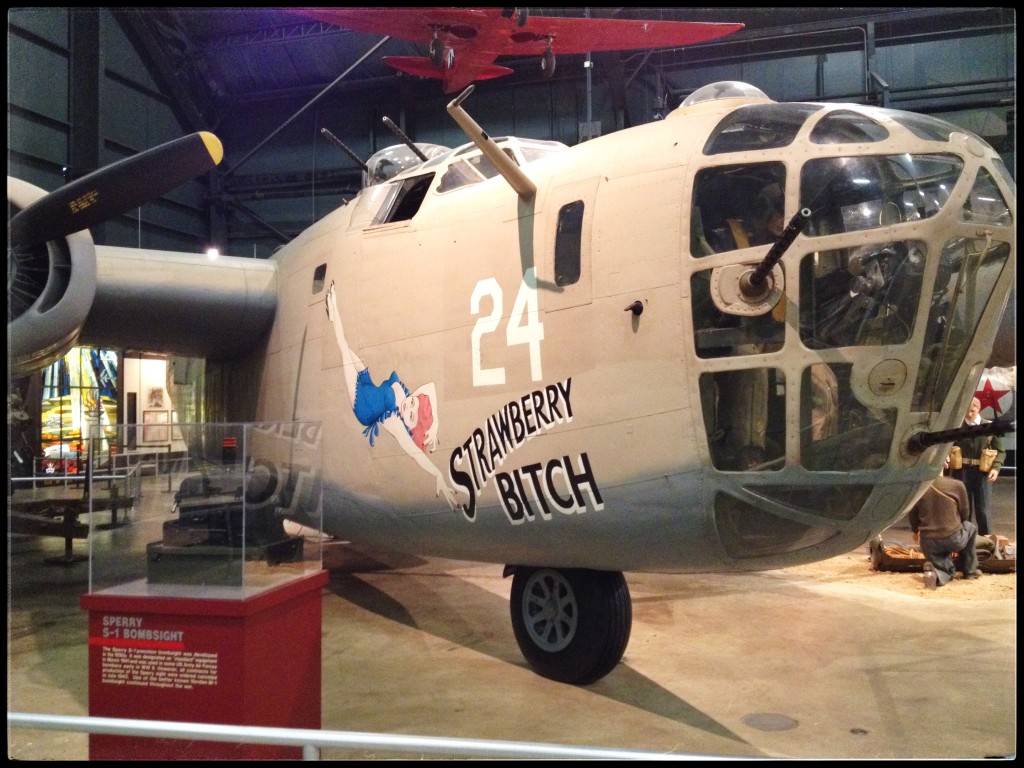
Consolidated B-24D Liberator (the big one) — Long-range bomber used in the raid from North Africa against the oil industry at Ploesti, Rumania. This particular plane flew combat missions from North Africa in 1943-1944 with the 512th Bomb Squadron.

Culver PQ-14 (upper right) — Radio-controlled target aircraft for training anti-aircraft artillery gunners.

Macchi MC.200 Saetta (lower right) — Italian fighter captured by the British at Banghazi airfield following the battle of El Alamein and later displayed around the United States to sell war bonds.
IMG_9657

IMG_9661

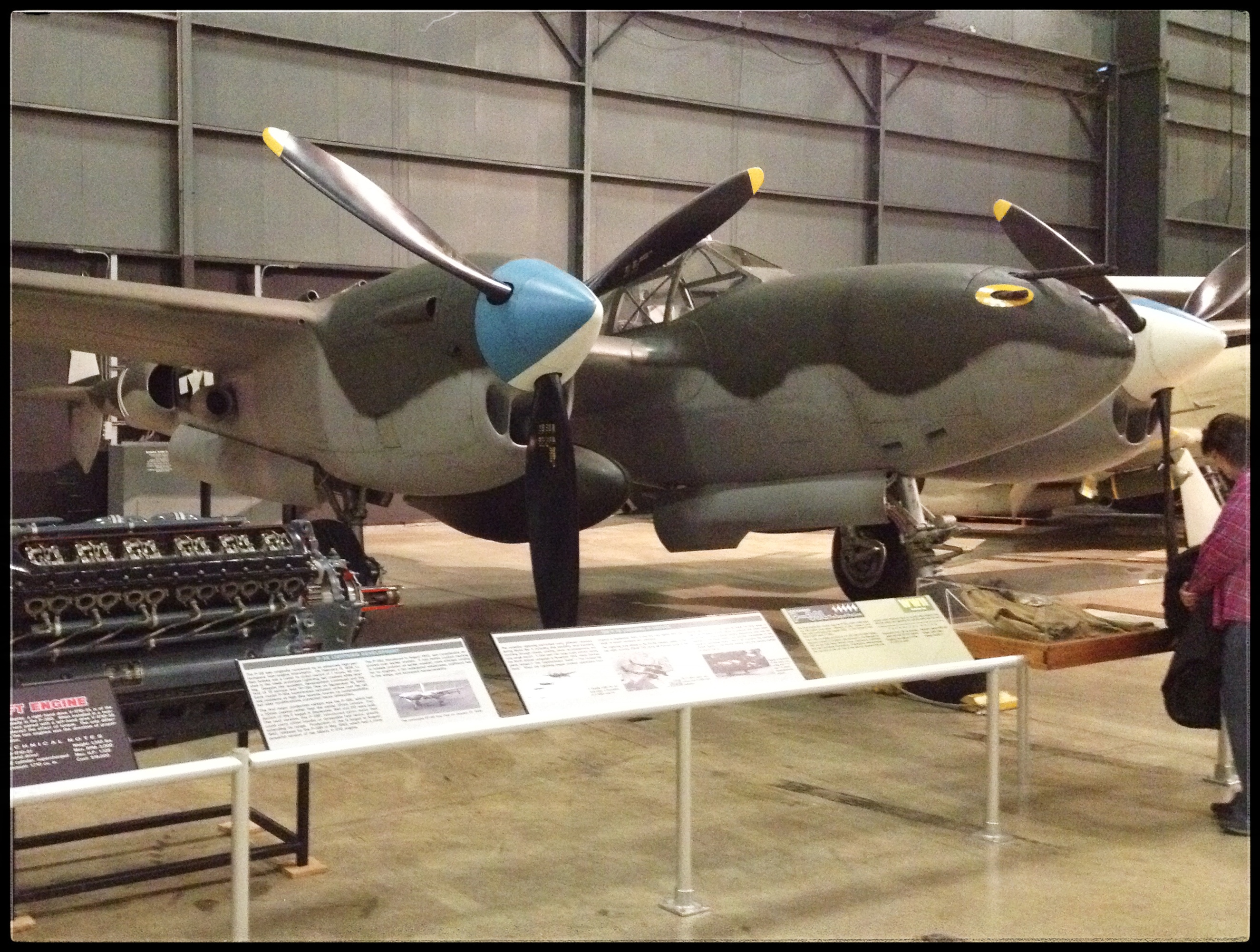
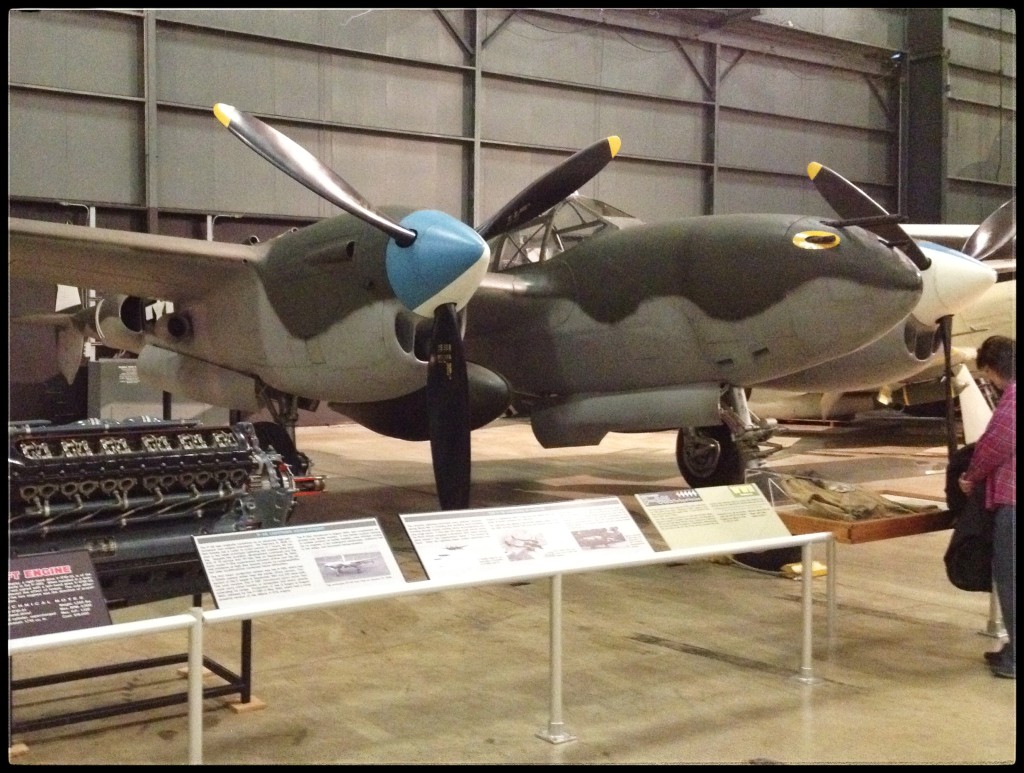
Lockheed P-38L Lightning — Dive bomber and long-range fighter.
IMG_9656

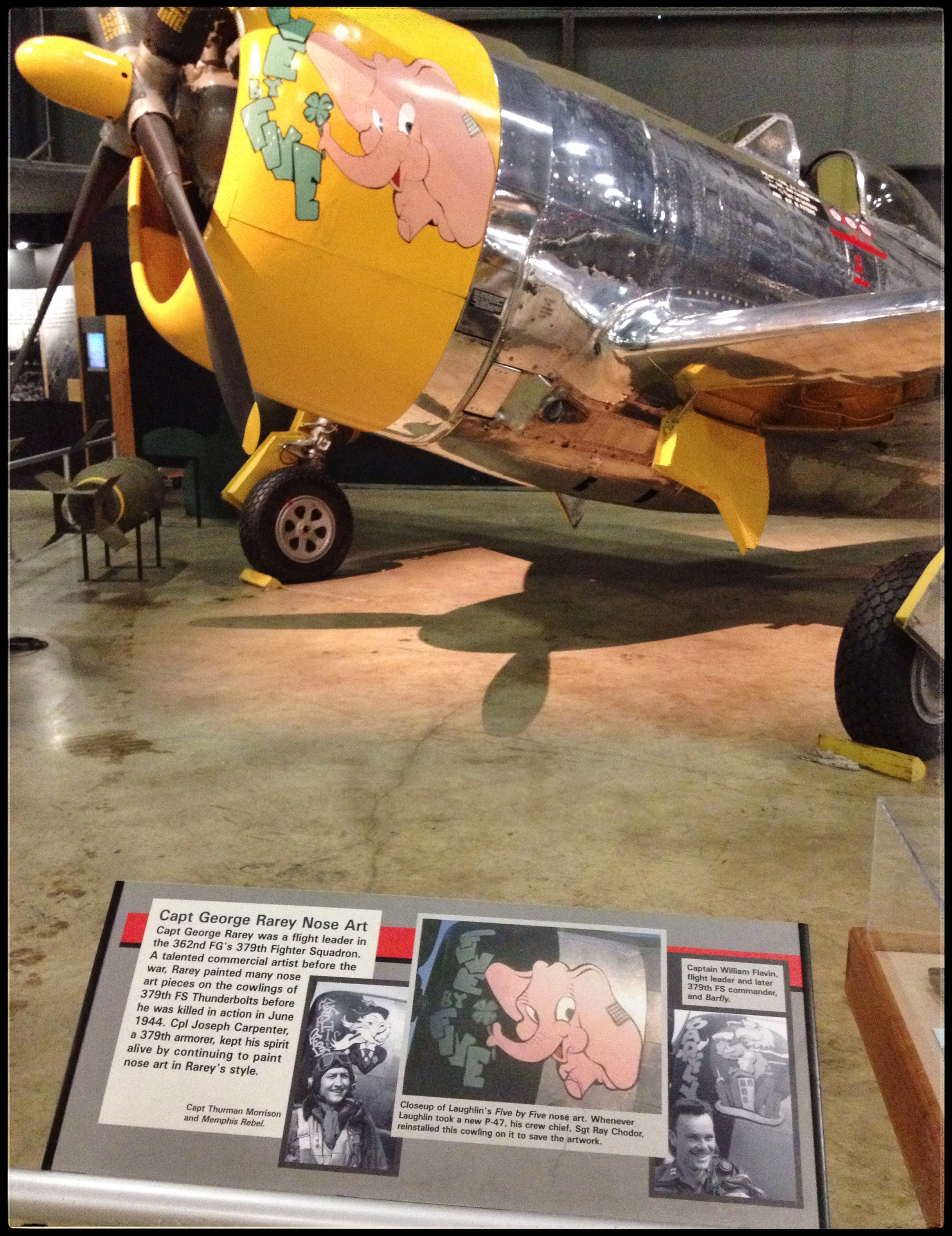
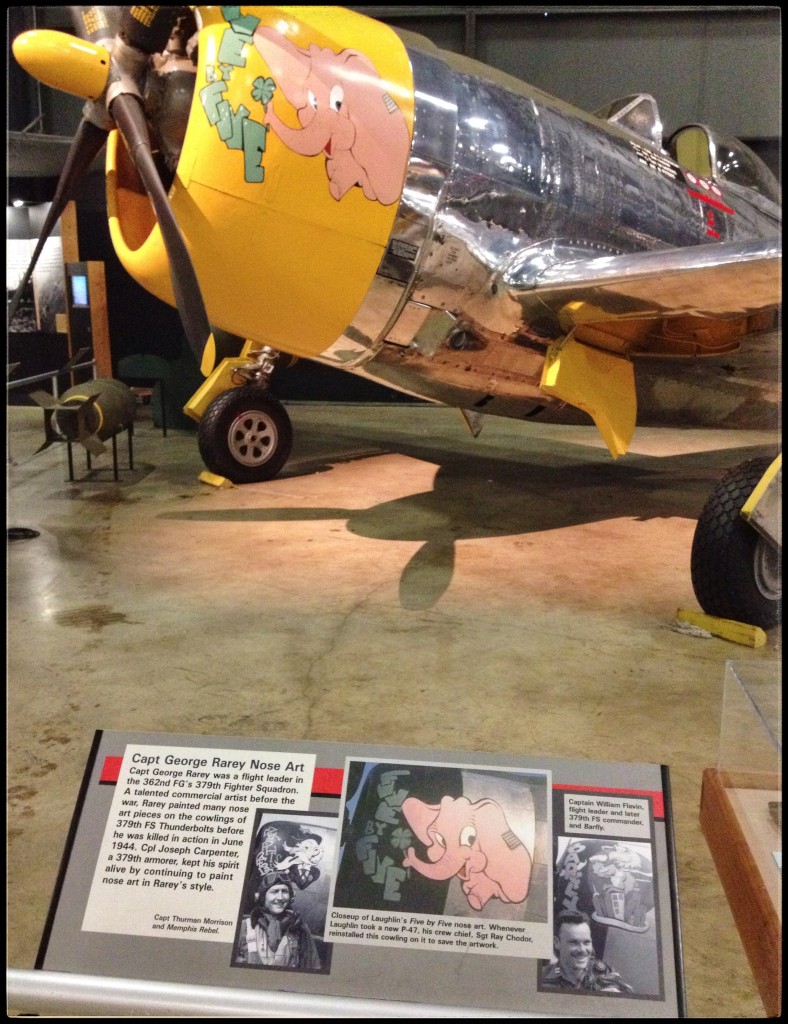
Republic P-47D — fighter used throughout the war by several nations. This particular plane was built in the late 1940s and used by the Peruvian Air Force.
IMG_9660

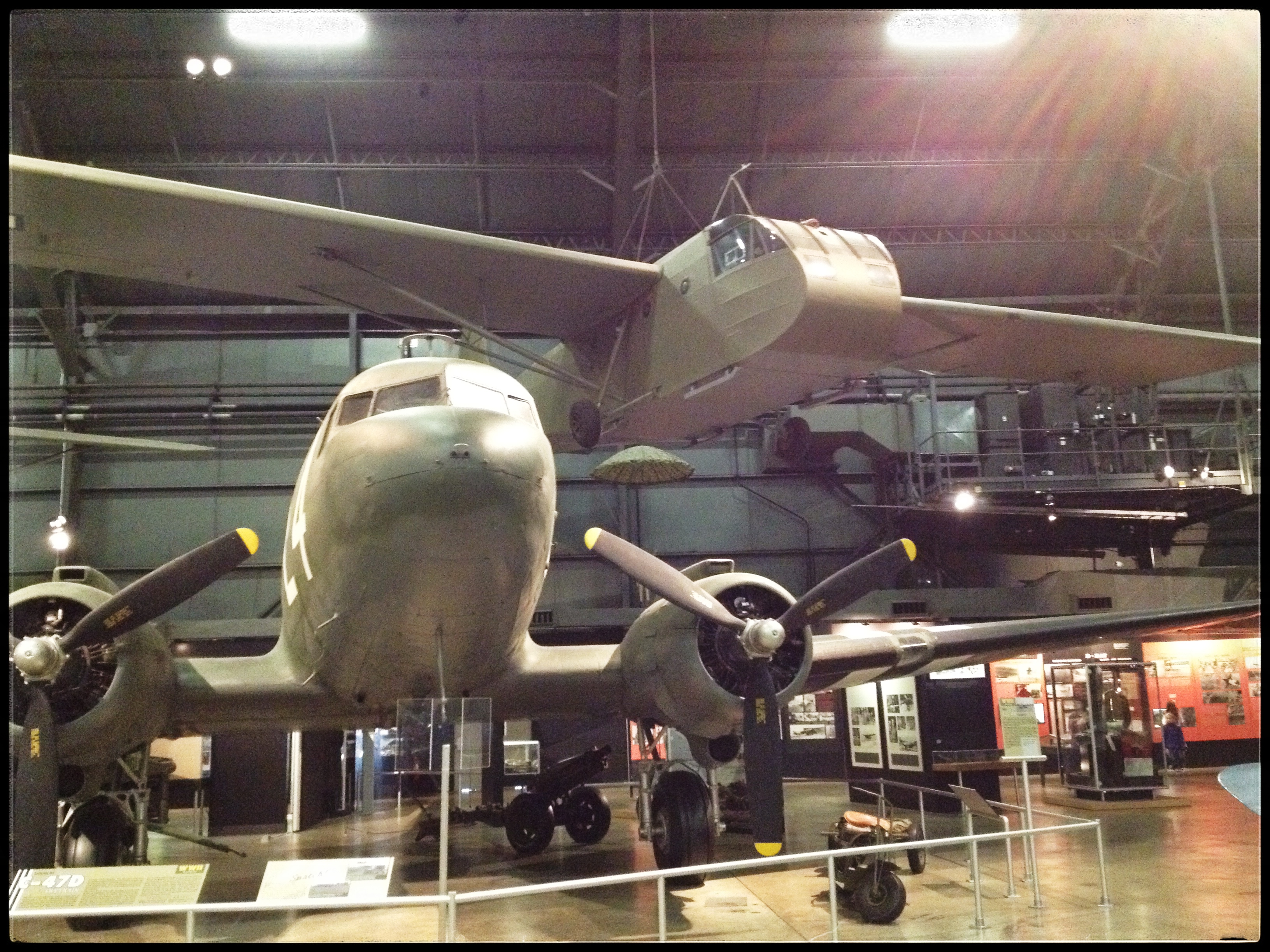
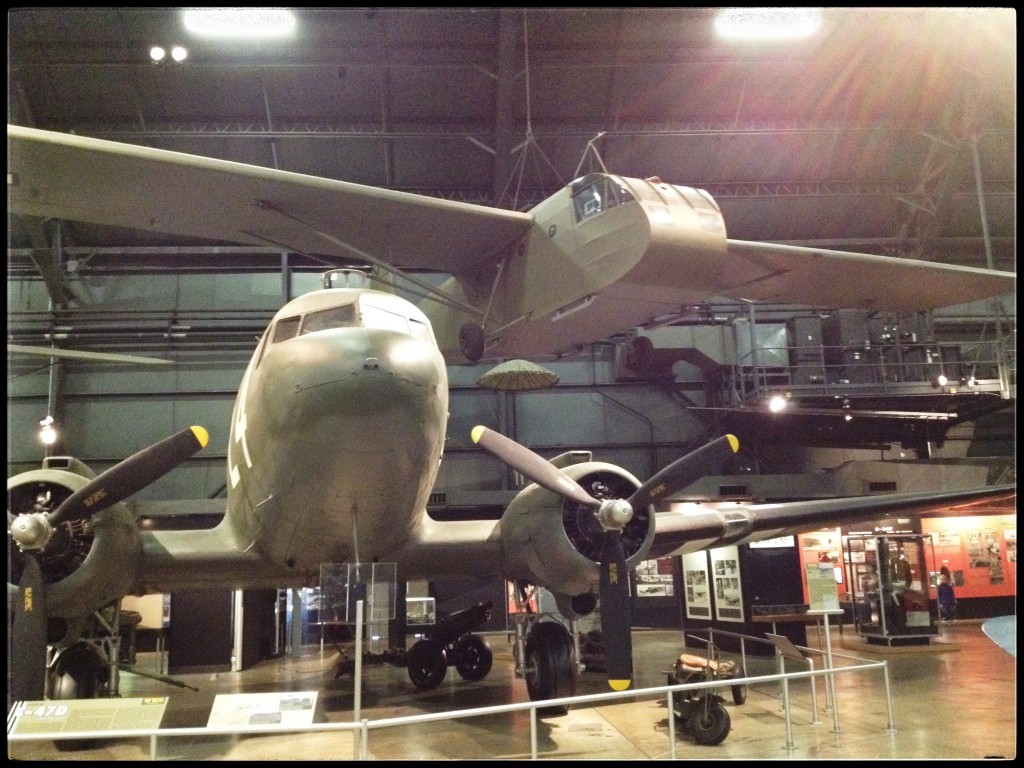
Waco CG-4A Hadrian (above) — Glider built of wood and metal covered with fabric, used in Sicily and on D-Day.

Douglas C-47D Skytrain (below) — Called the “Gooney Bird.” Used as a troop and cargo carrier and to tow gliders. This particular plane was the last C-47D in regular use by the Air Force.
IMG_9670

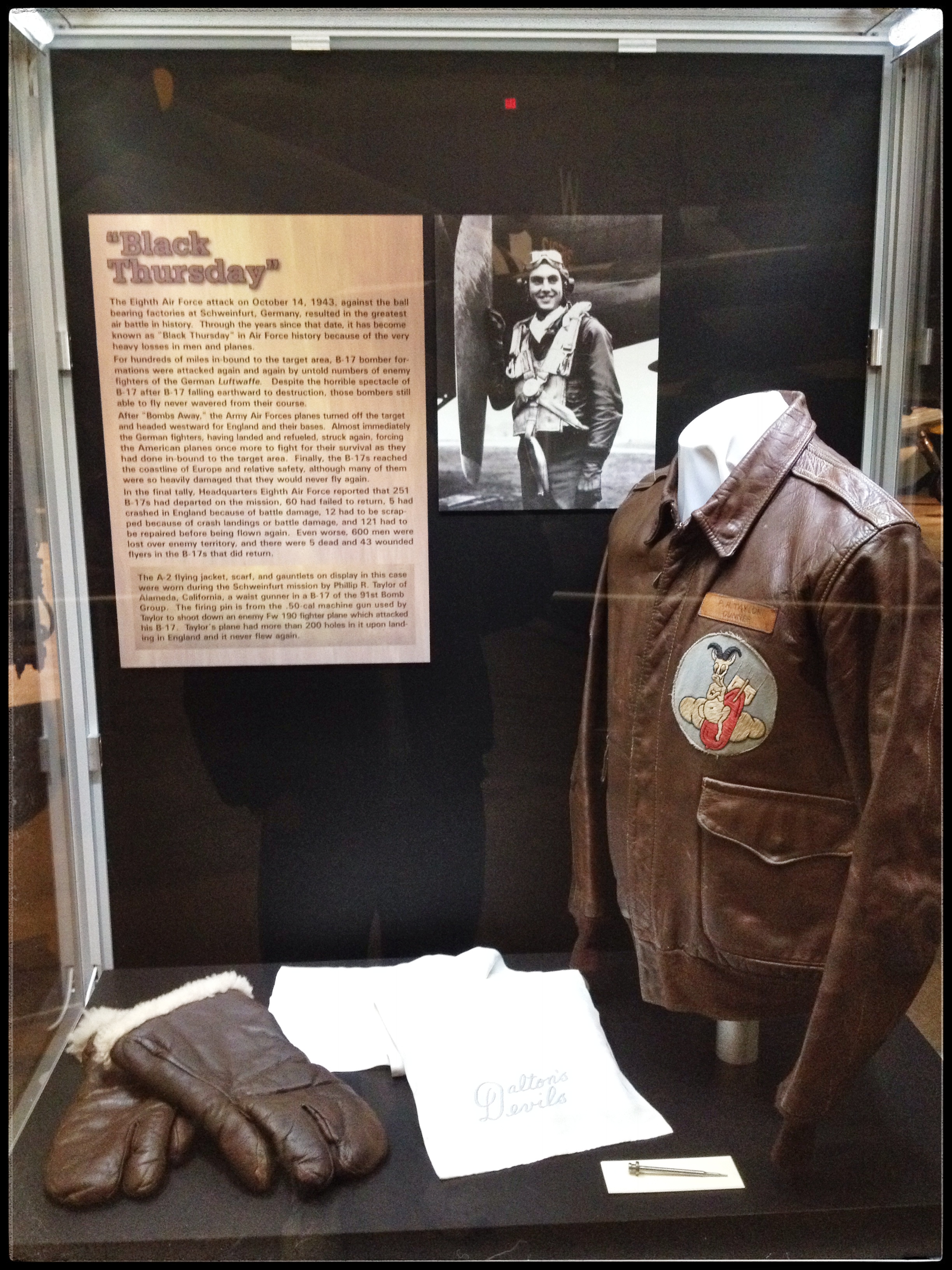
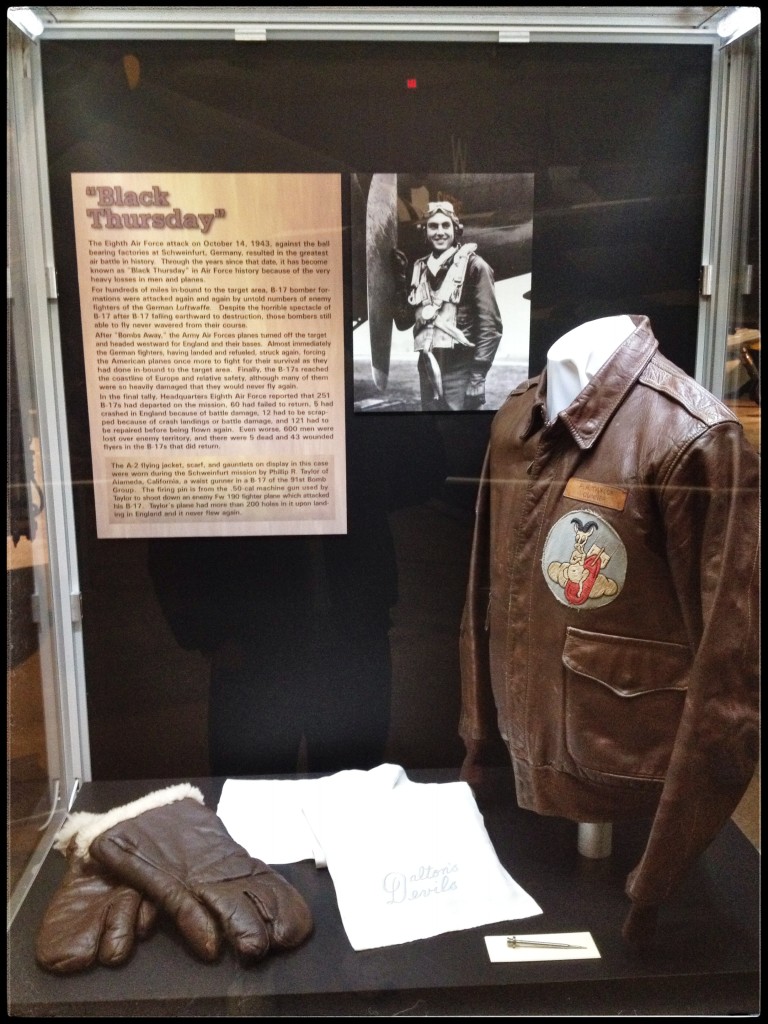
The A-2 flying jacket, scarf and gauntlets worn by Phillip R. Taylor of Alameda, Calif., a waist gunner in a B-17 of the 91st Bomb Group during the Schweinfurt mission. The 8th Air Force attack on Oct. 14, 1943, against the ball bearing factories at Schweinfurt, Germany, resulted in the greatest air battle in history. The firing pin is from the .50-cal. machine gun used by Taylor to shoot down an enemy Fw 190 fighter plane that attacked his B-17. Taylor’s plane had more than 200 holes in it upon landing in England, and it never flew again.
IMG_9672

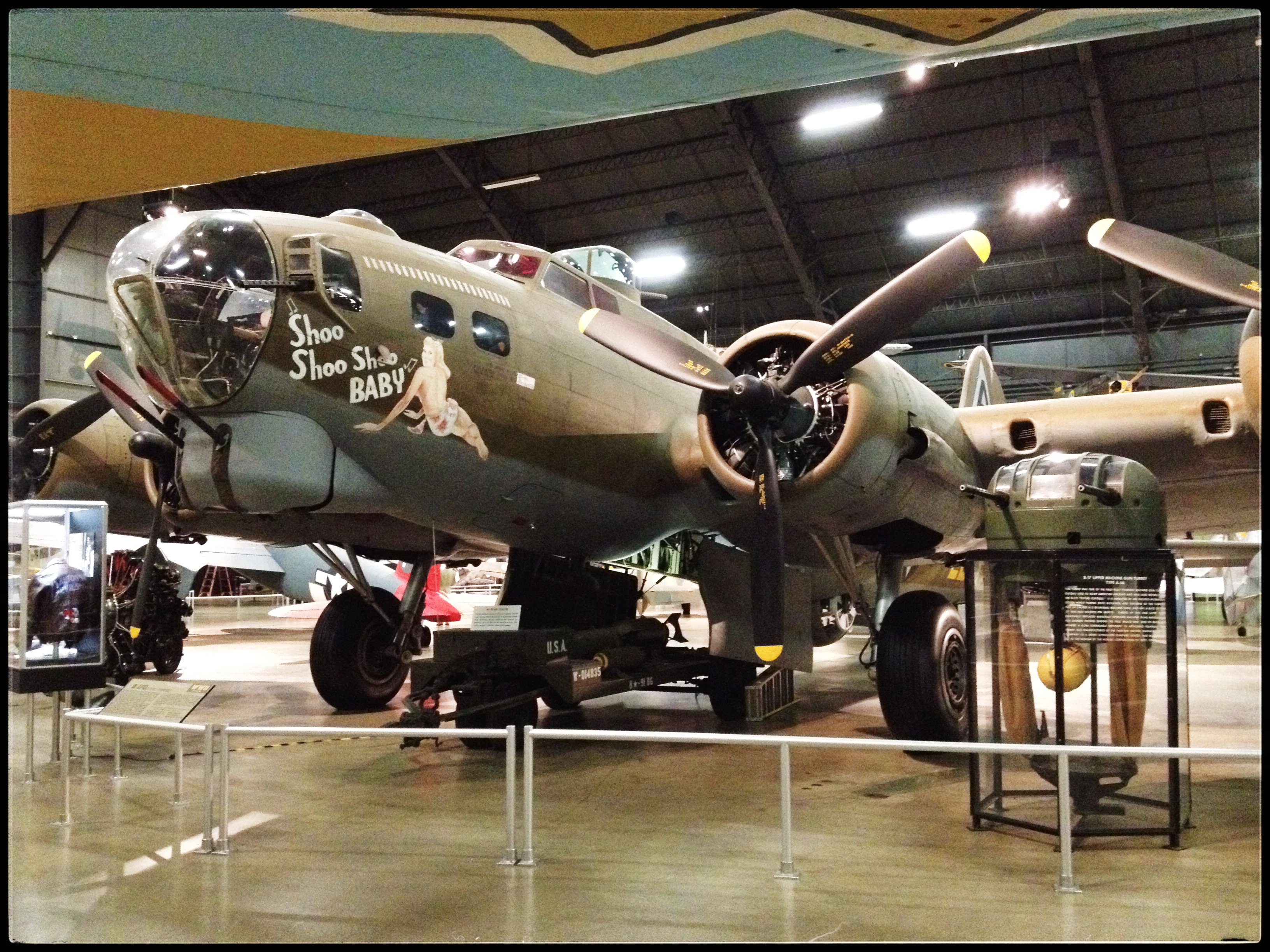
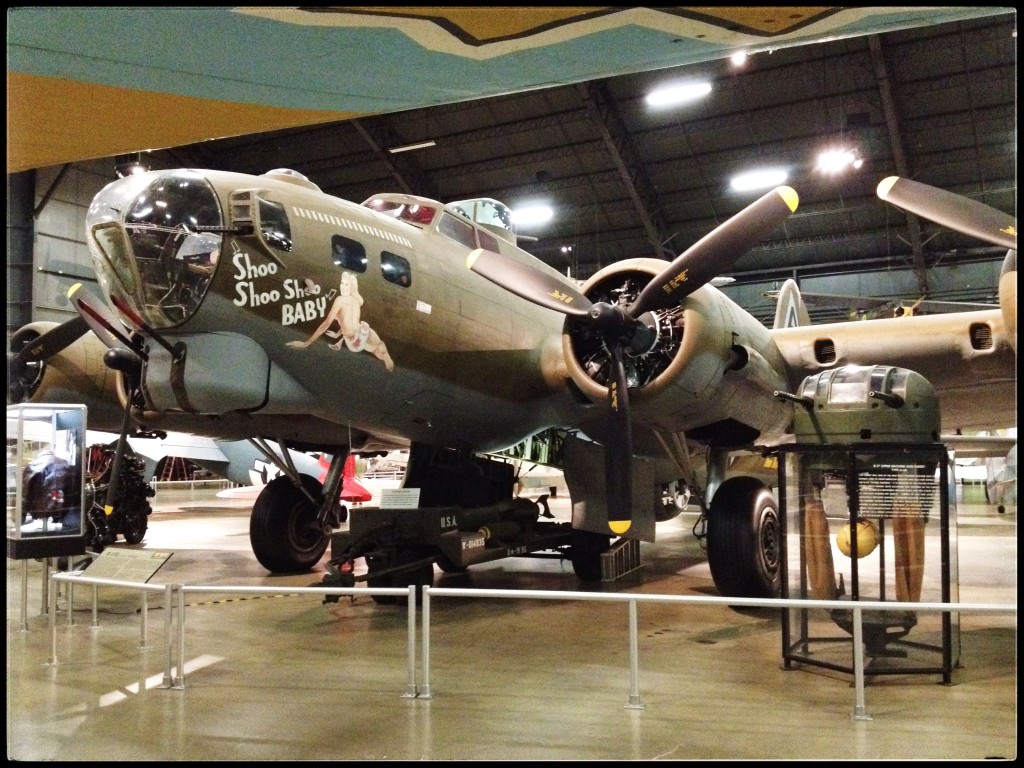
Boeing B-17G Flying Fortress — Daylight bomber. In March 1944 this particular B-17G was assigned to the 91st Bomb Group — “The Ragged Irregulars” — and based at Bassingbourn, England. There its crew named it Shoo Shoo Shoo Baby, after a popular song. It flew 24 combat missions in WWII, receiving flak damage seven times. Its first mission (Frankfurt, Germany) was on March 24, 1944, and last mission (Posen, Poland) on May 29, 1944, when engine problems forced a landing in neutral Sweden where the airplane and crew were interned.
IMG_9671

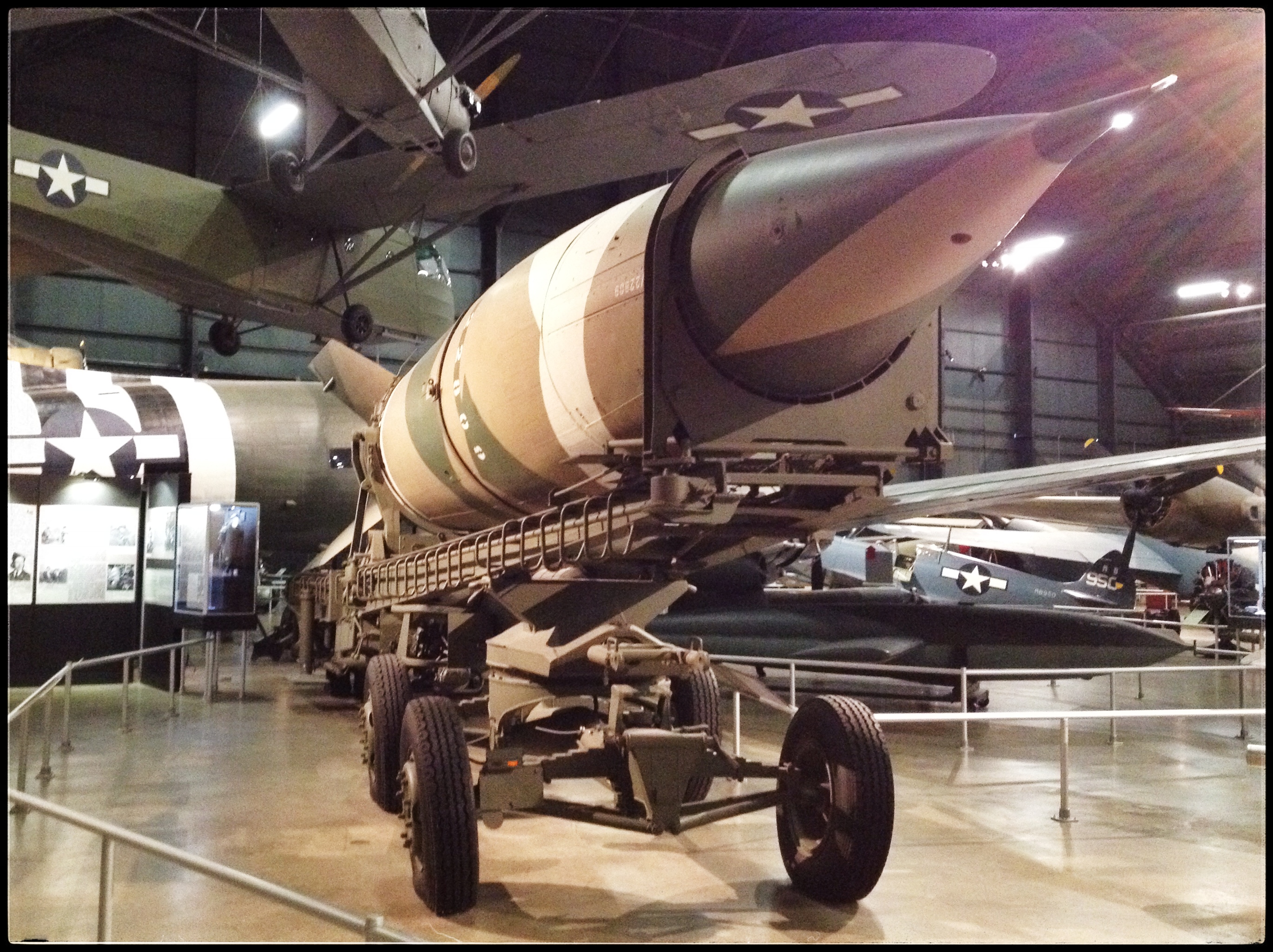
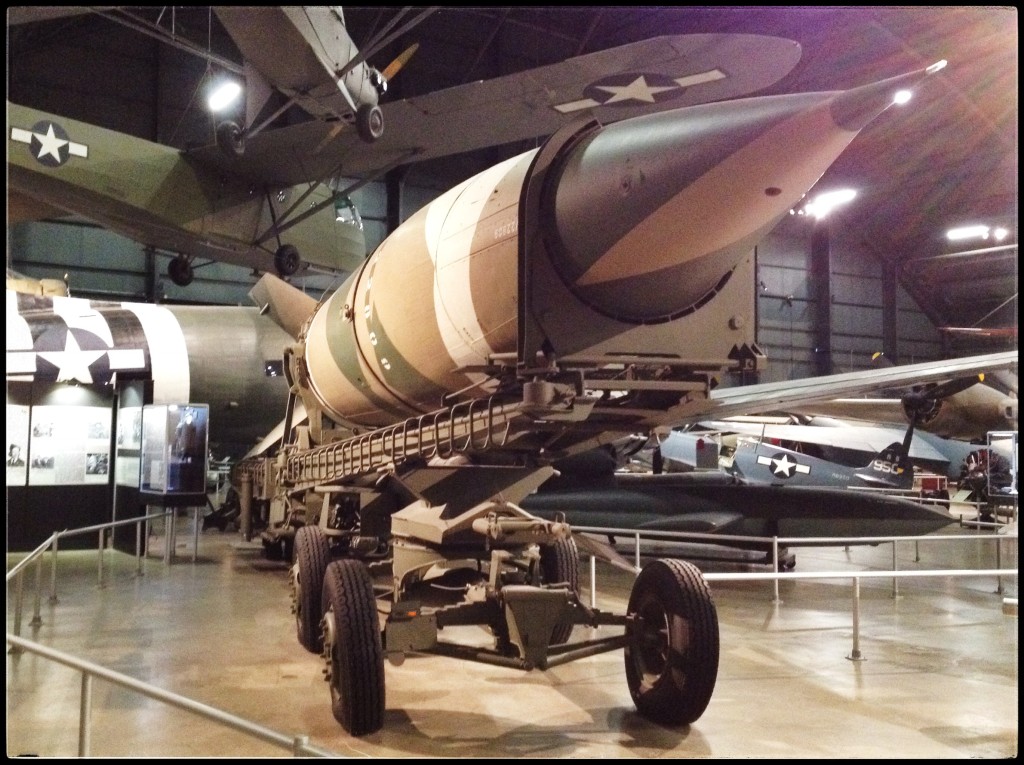
V-2 on Meilerwagen — The first practical modern ballistic missile, built by Germany and launched at England and Belgium. This particular rocket was damaged in an air attack by allied forces before it could be launched.
IMG_9674

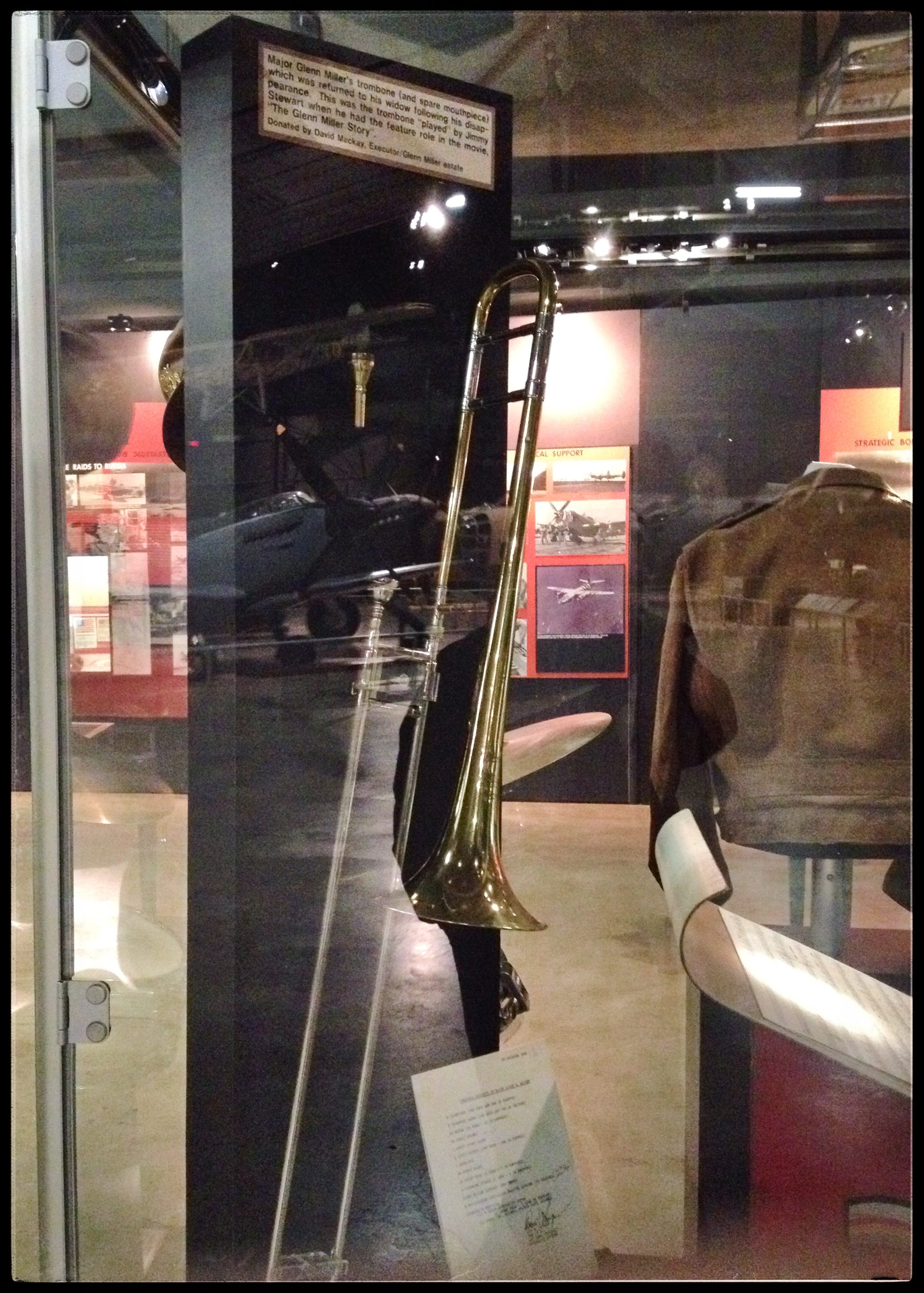
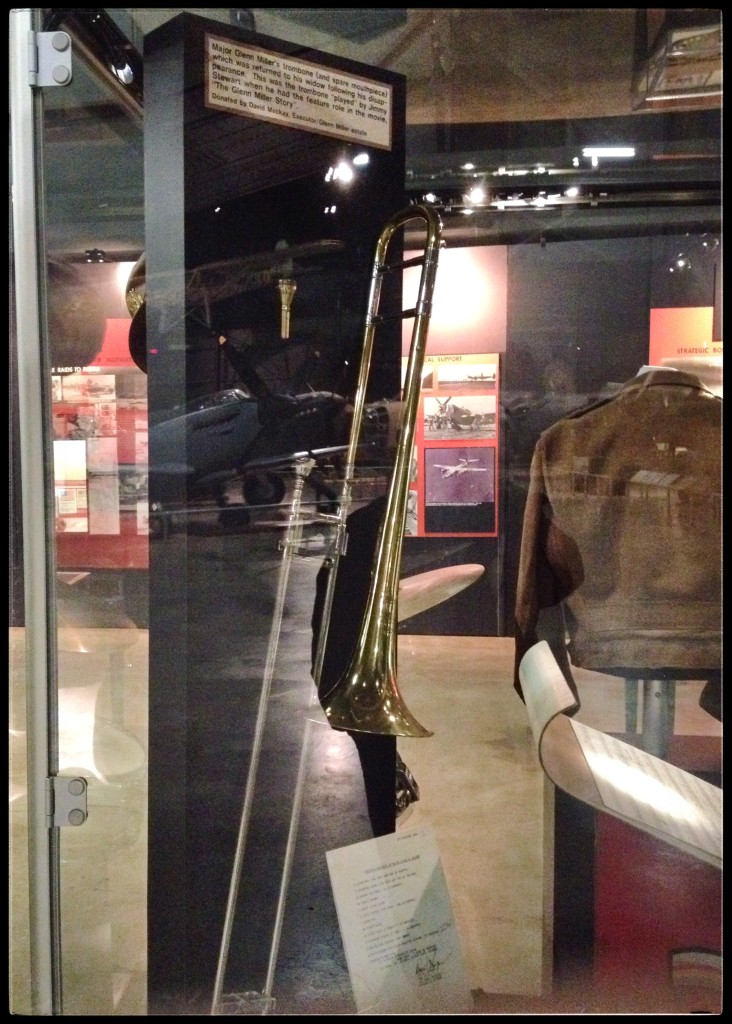
Trombone played by Major Glenn Miller in the Maj. Glenn Miller Army Air Force Band. It was also used by Jimmy Stewart in the movie The Glenn Miller Story.
IMG_9673

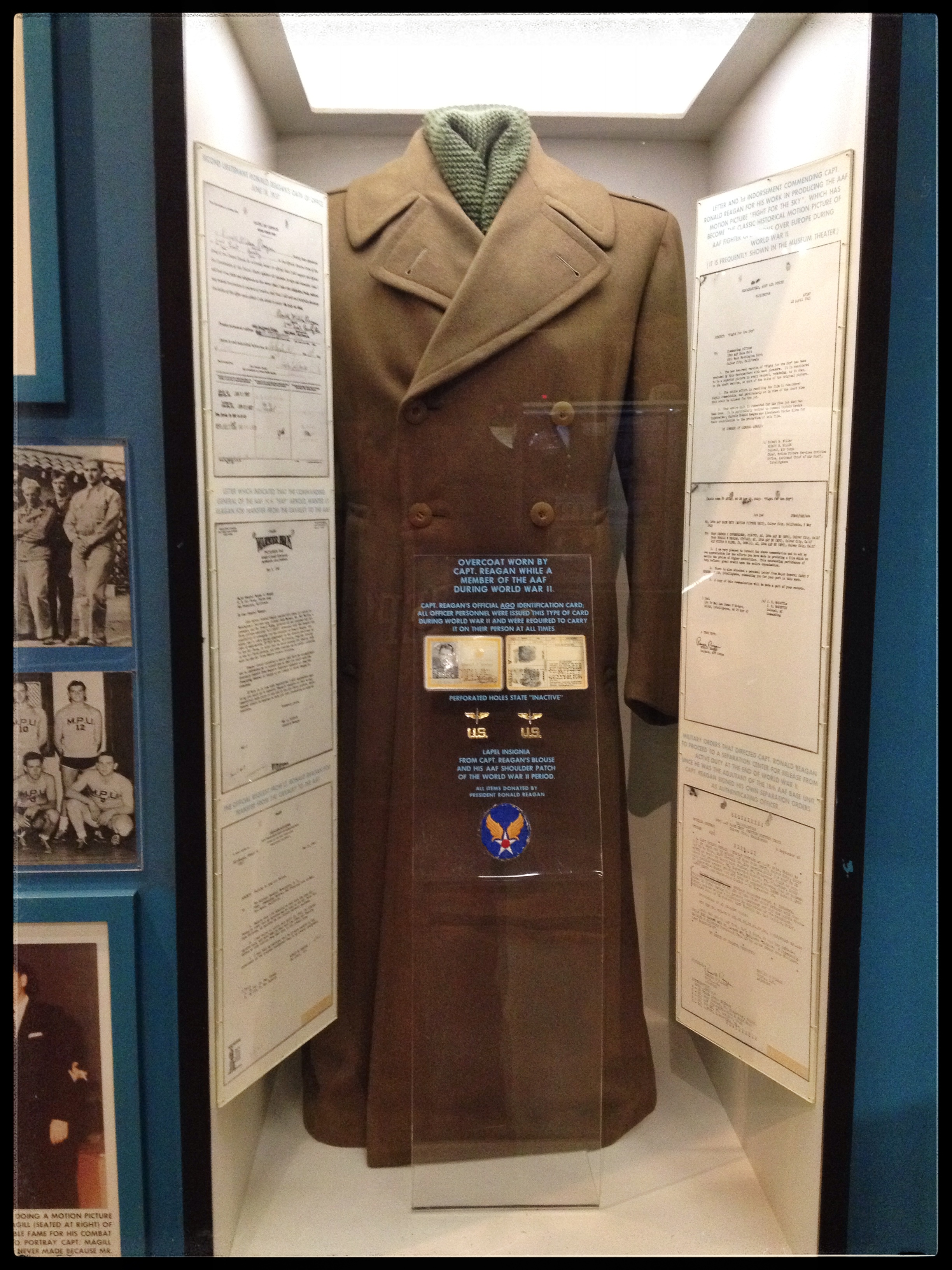
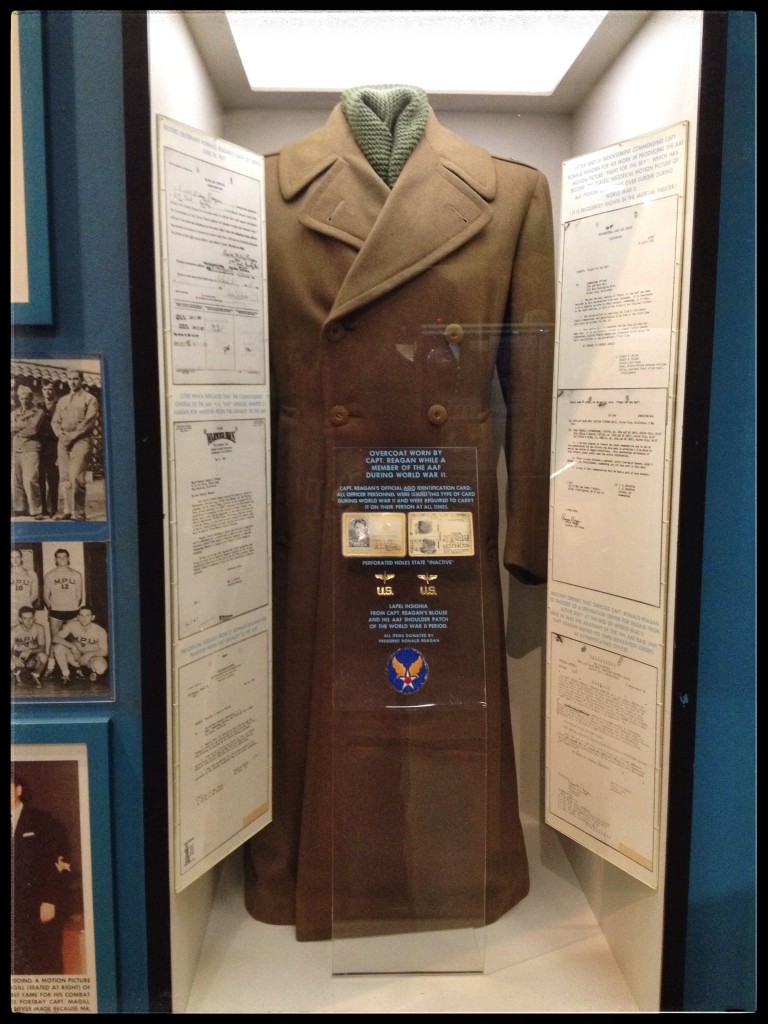
Ronald Reagan’s overcoat worn while serving in active duty with the 1st Motion Picture Unit and the 18th AAFBU. Reagan served as Personnel Officer, Post Adjutant, Executive Officer, and Commanding Officer. By the end of the war, his military units had produced 400 training films for the AAF.
IMG_9675

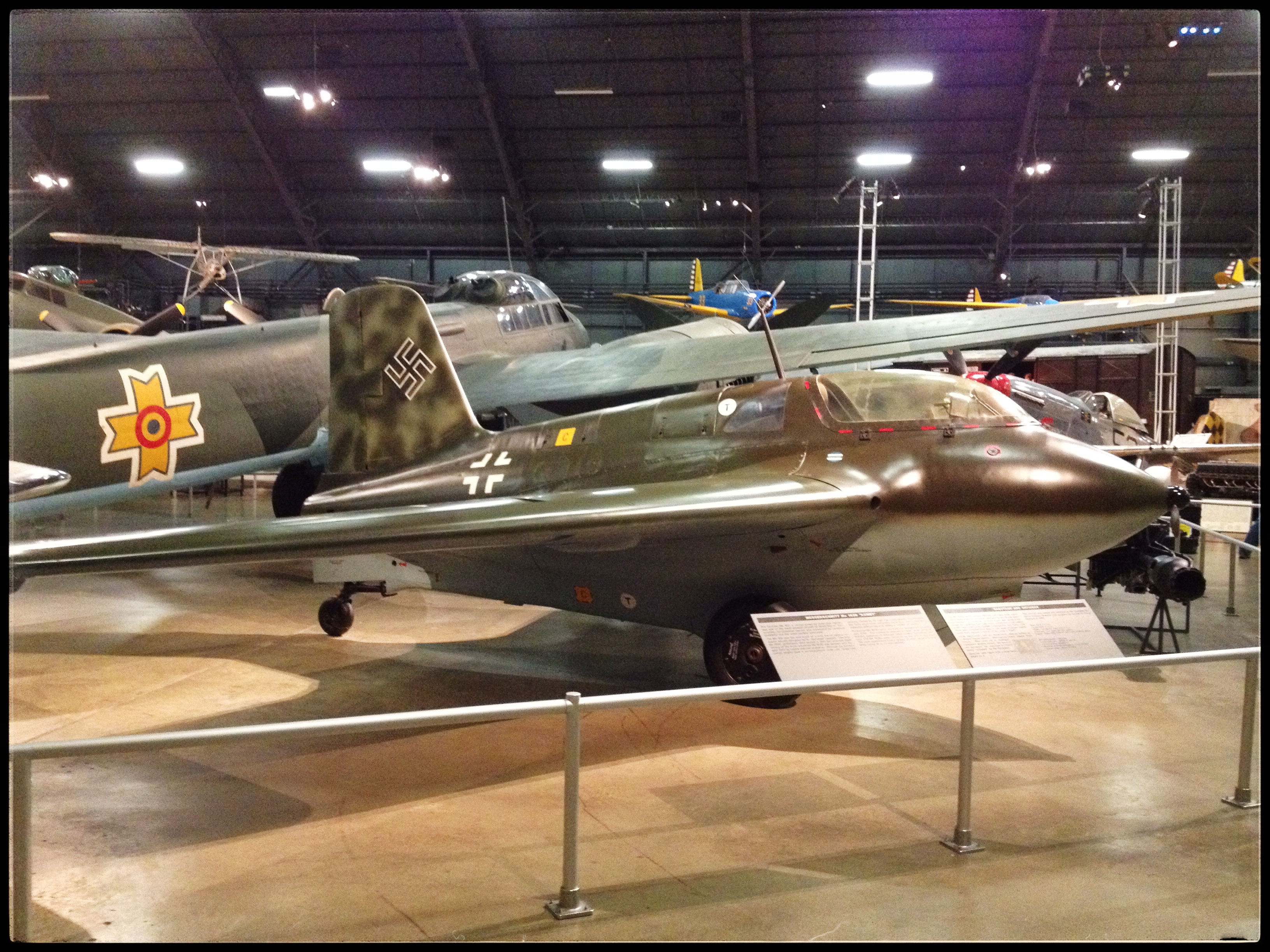
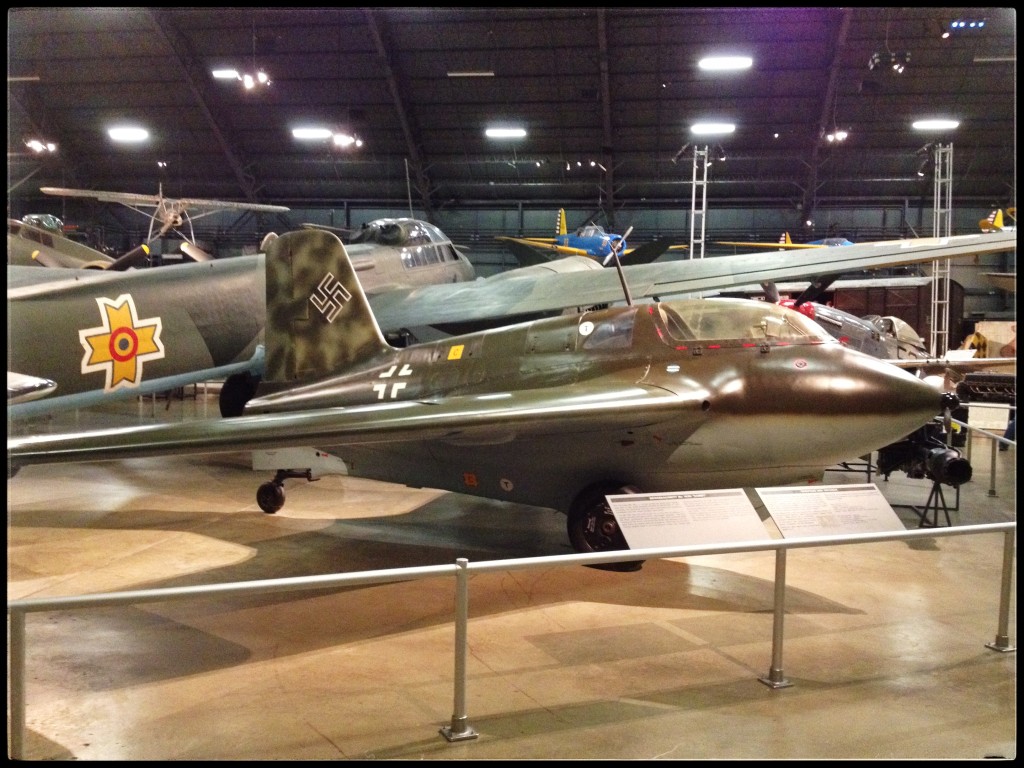
Messerschmitt Me 163B Komet — Rocket-powered fighter built by Germany, used sparingly. This particular plane had some issues that may have been caused by sabotage by the French forced laborers.
IMG_9677

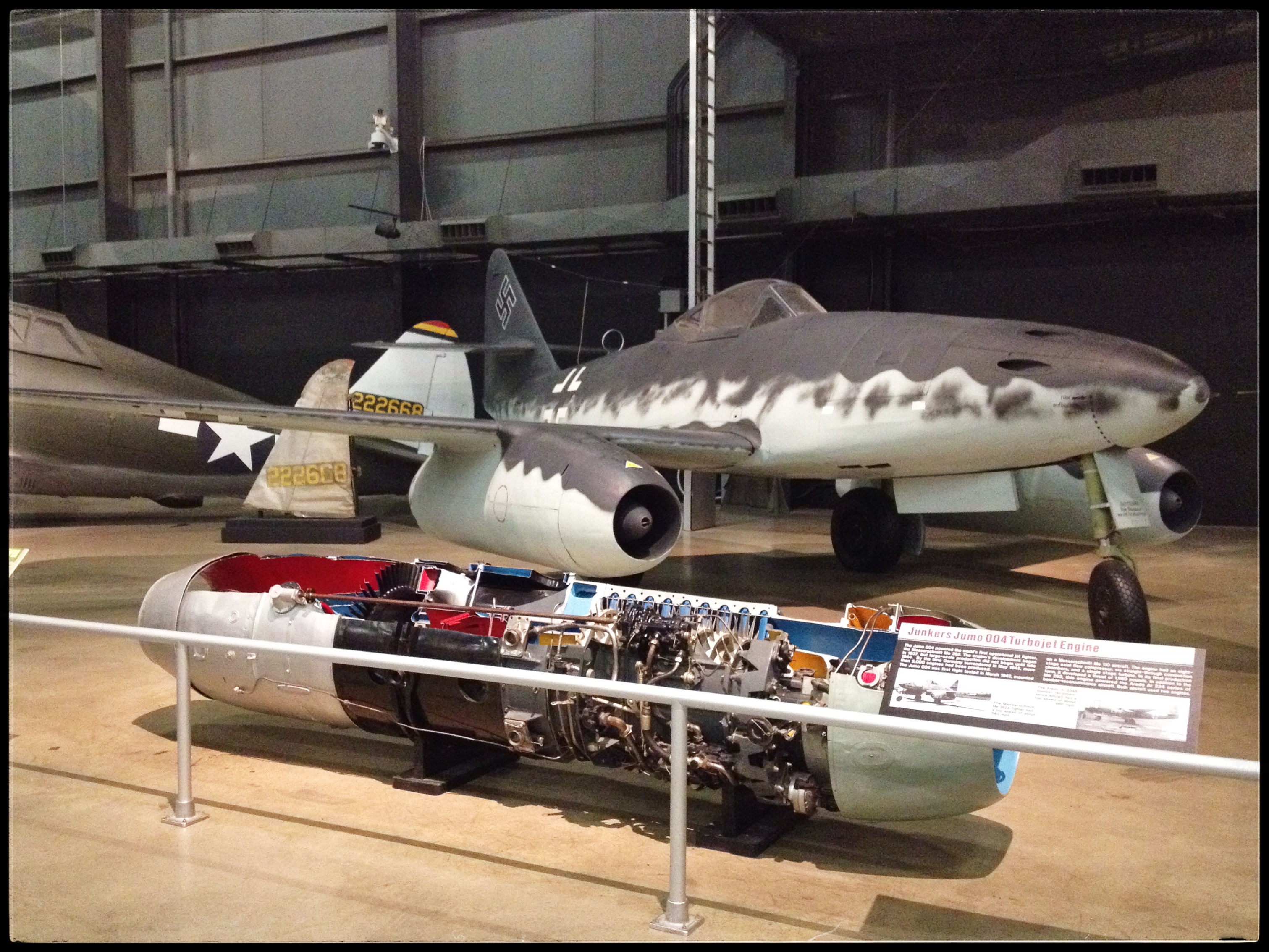
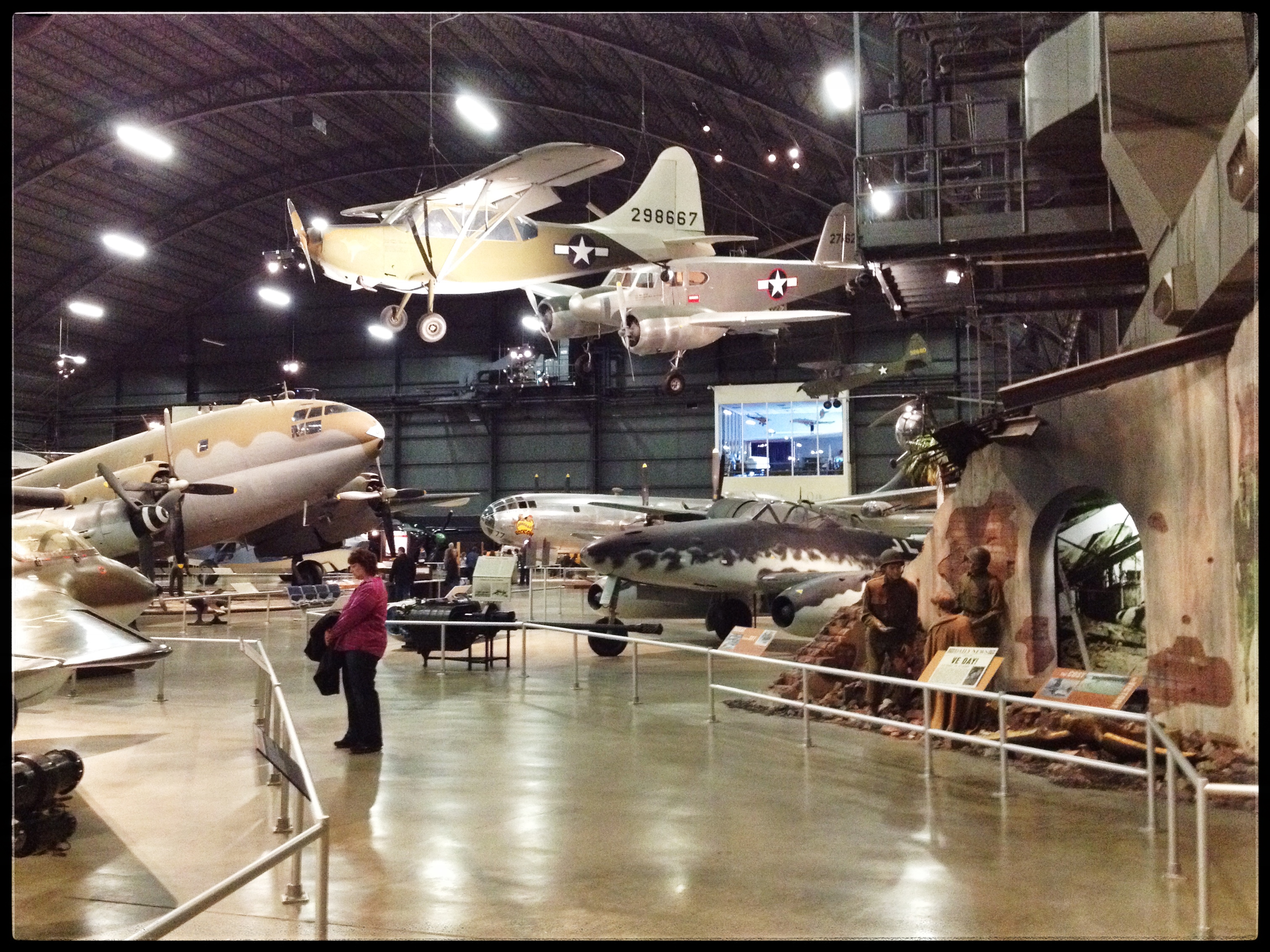
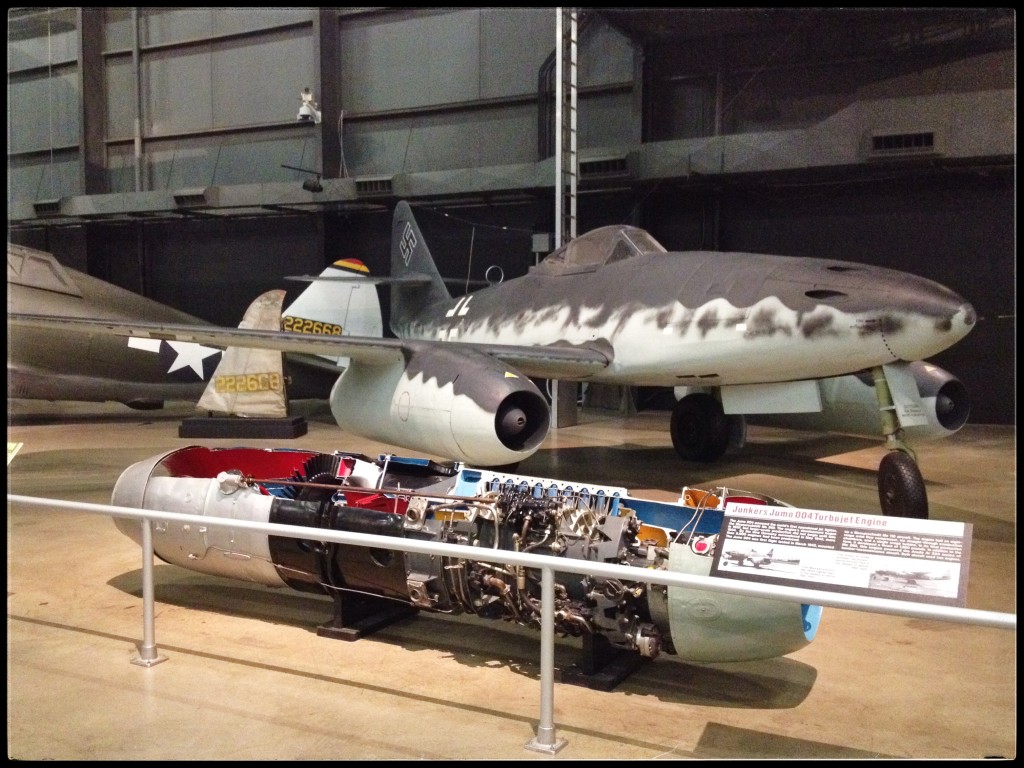
Messerschmitt Me 262A Schwalbe — The first operational jet fighter. It proved very effective in combat but few made it to production due to allied bombing, lack of fuel and other problems. This particular one was captured when the war ended.
IMG_9687

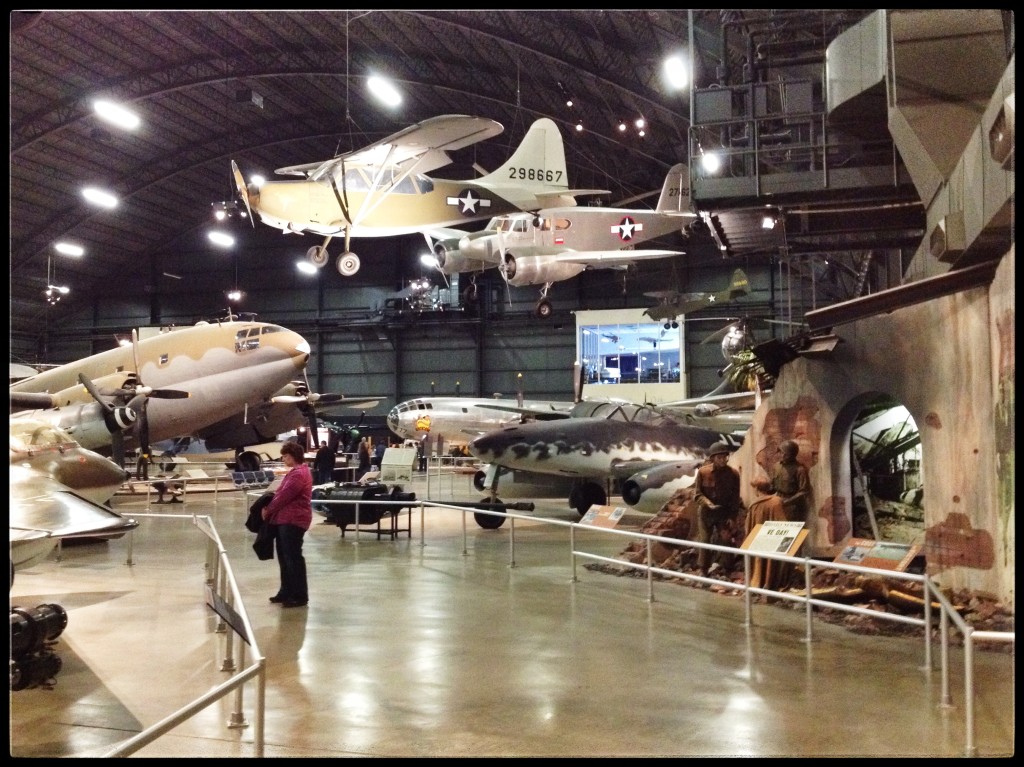
Stinson L-5 Sentinel (foreground, above) — Used for reconnaissance, front-line medical evacuation, delivering supplies, laying communications wire, spotting enemy targets, personnel transport, rescue and even as a light bomber.

Cessna UC-78B Bobcat (background, above) — Used for personnel transport
IMG_9676

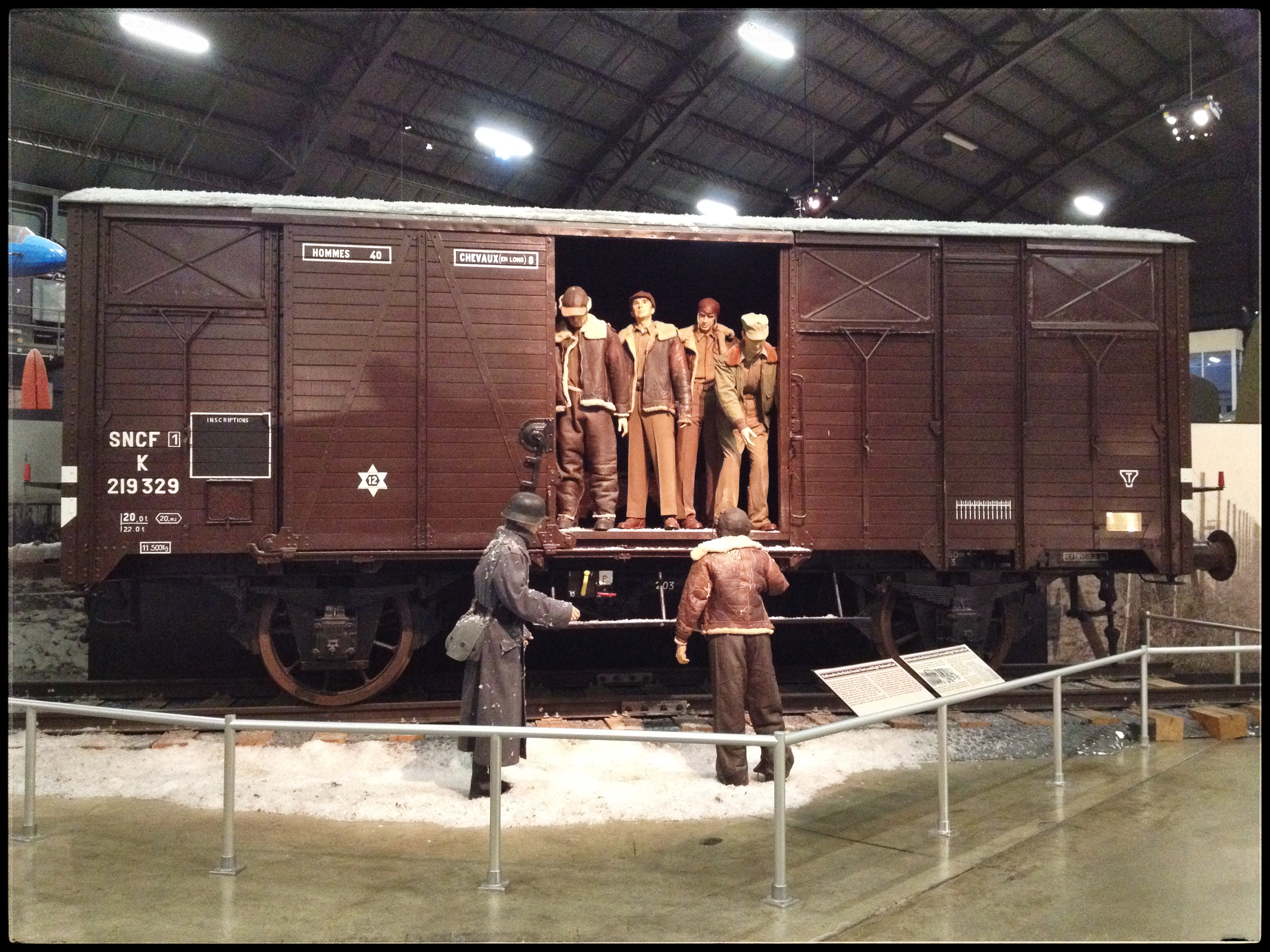
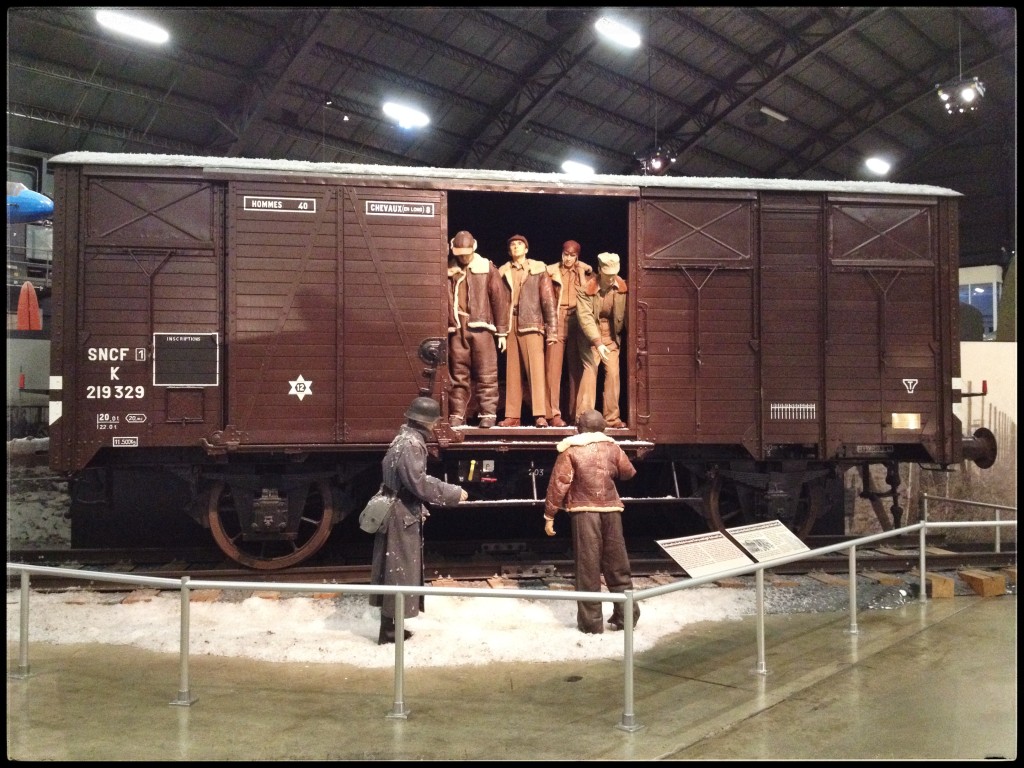
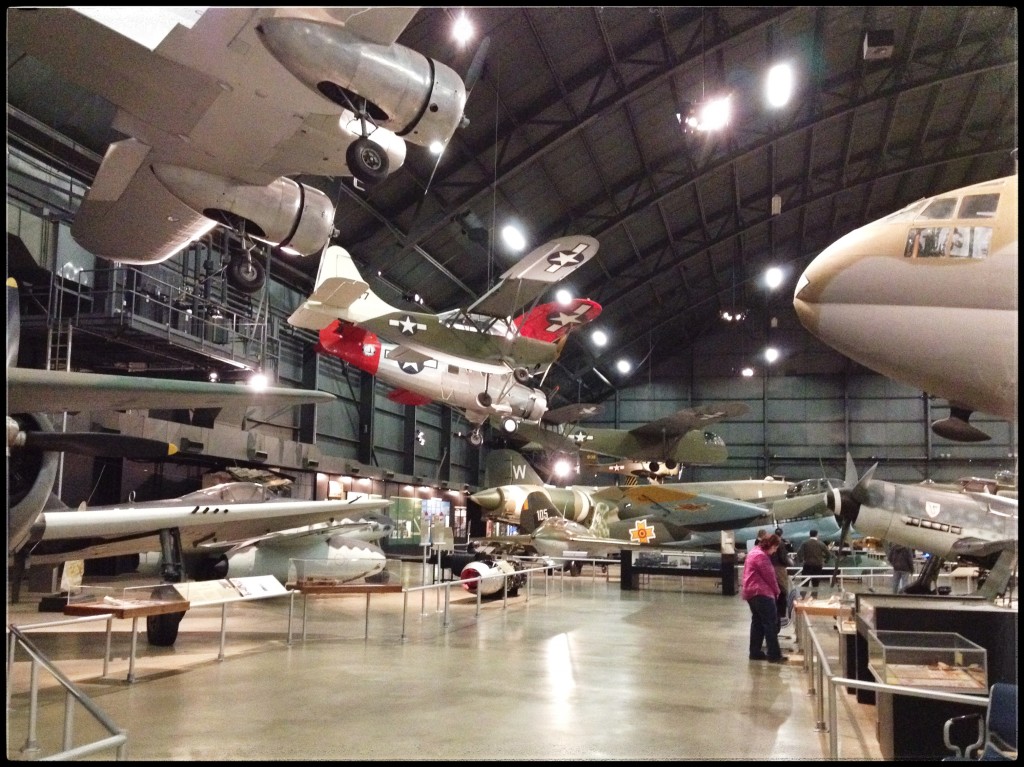
French “Forty and Eight” boxcar — These cars received their names because they could carry 40 men or eight horses — sometimes as many as 90 prisoners of war were forced into each boxcar. This particular car operated between France and Germany and likely carried P.O.W.s.
IMG_9689

IMG_9688

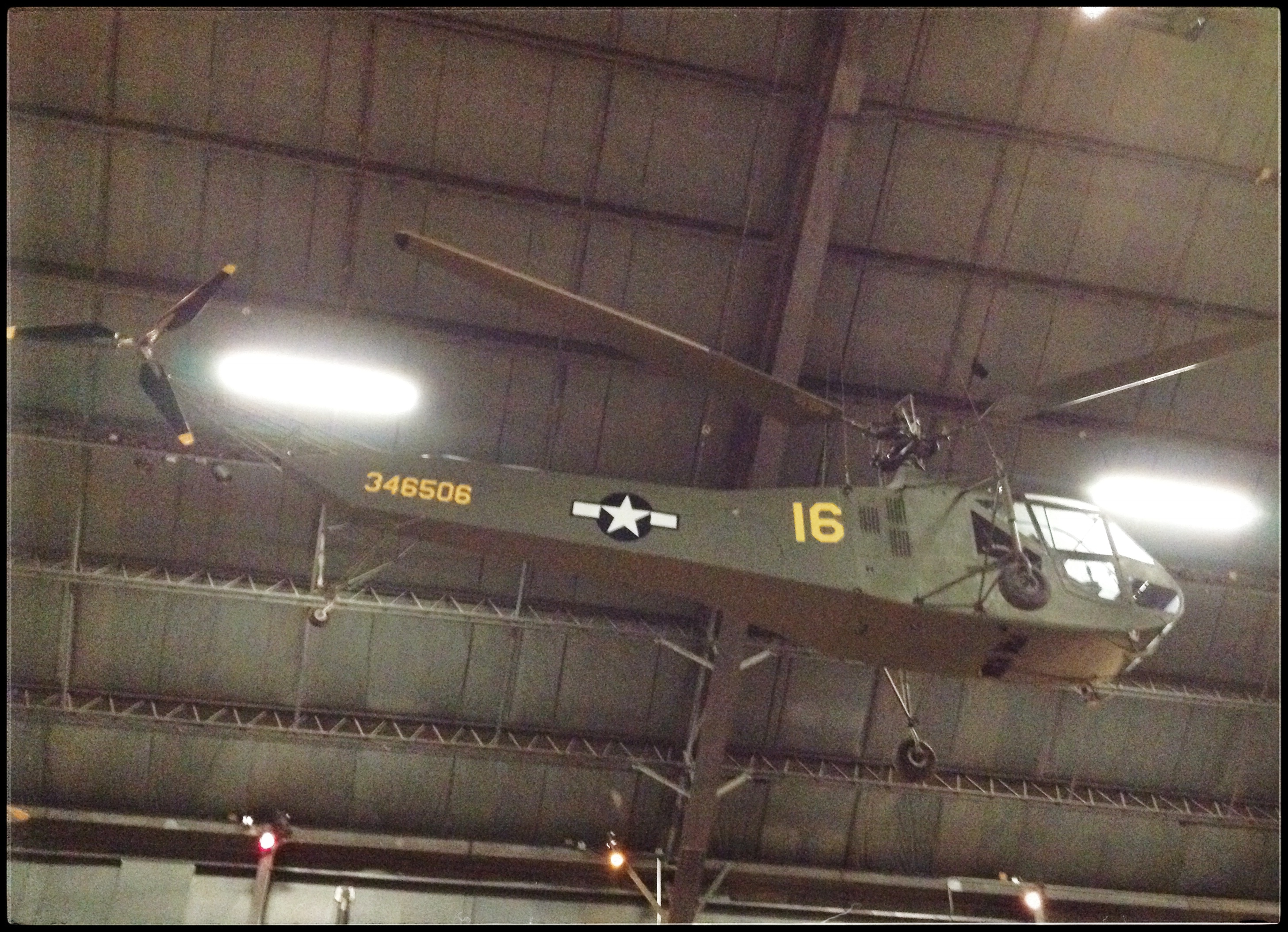
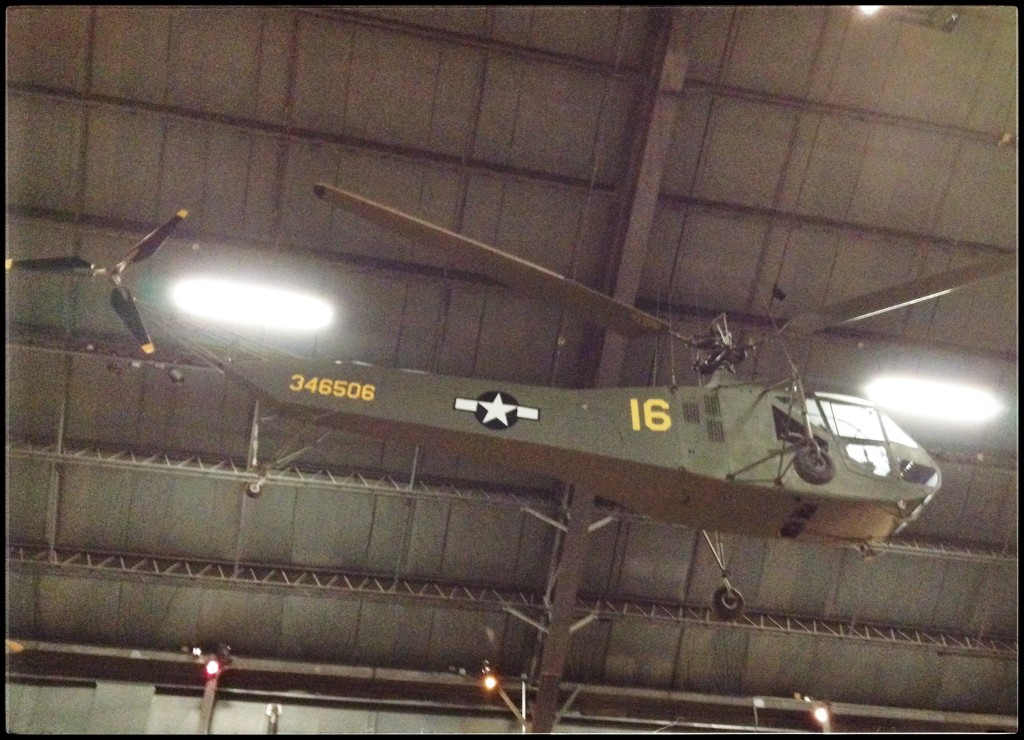
Sikorsky R-4B Hoverfly — The first production helicopter, used for the first time in combat in May, 1944.
IMG_9686

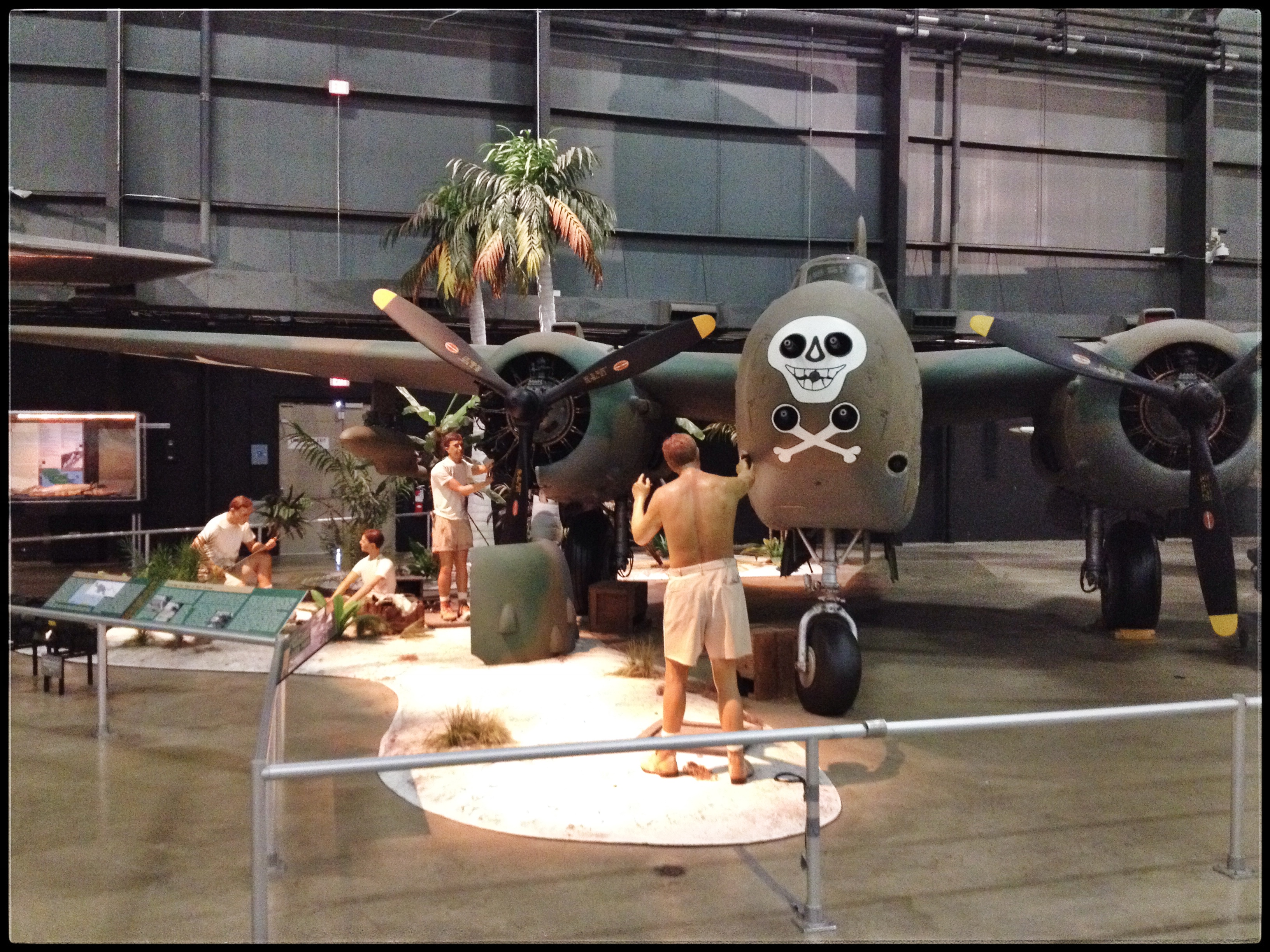
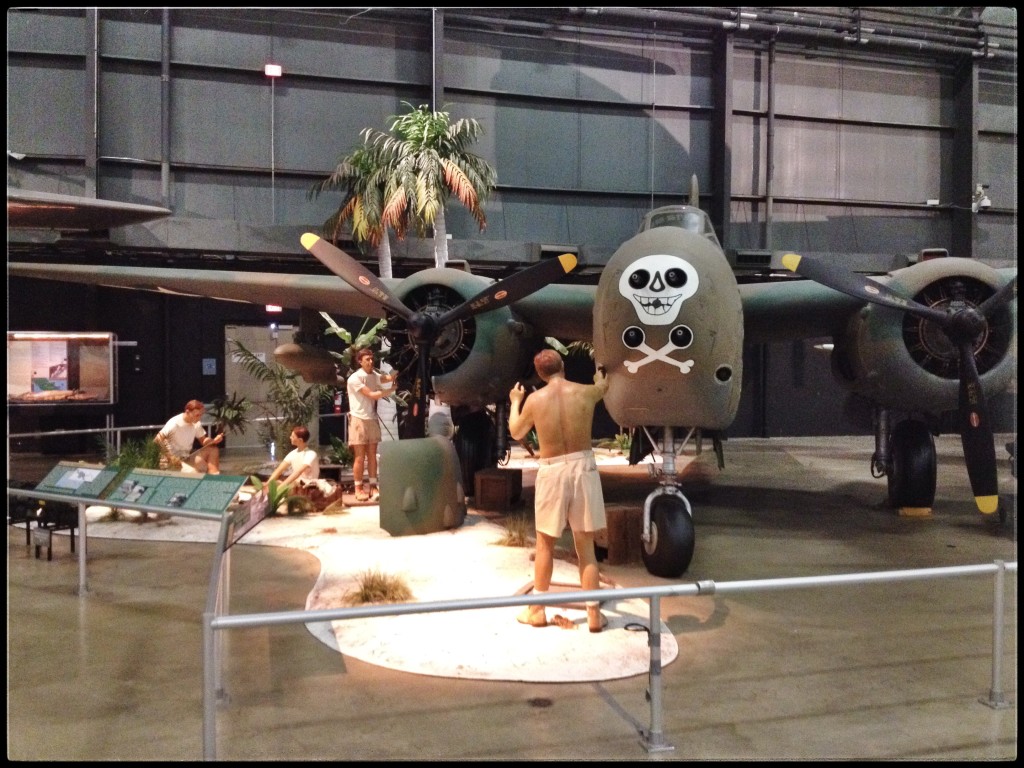
Douglas A-20G Havoc — Bomber also used on low-level strafing attacks in almost every theater.
IMG_9693

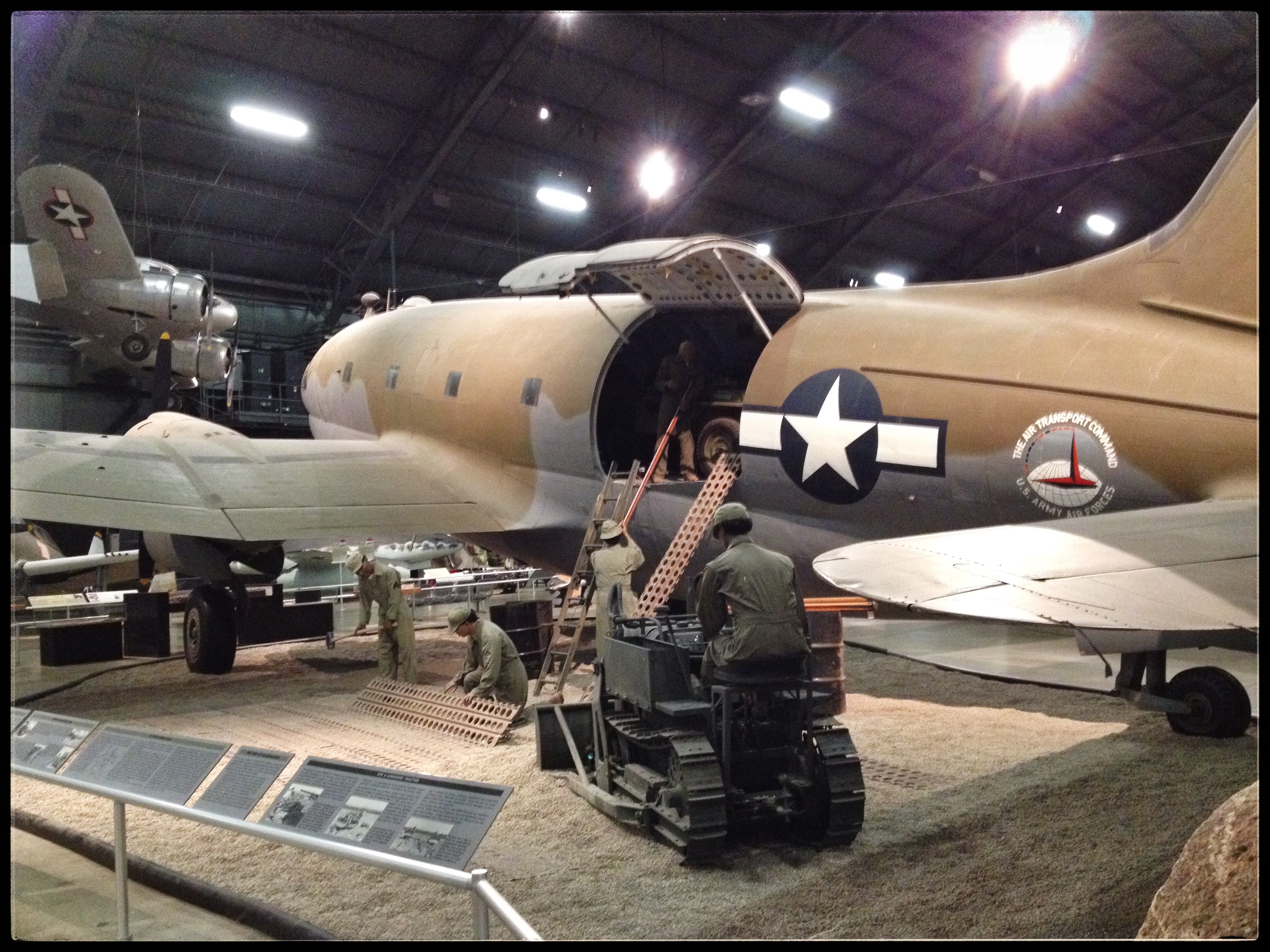
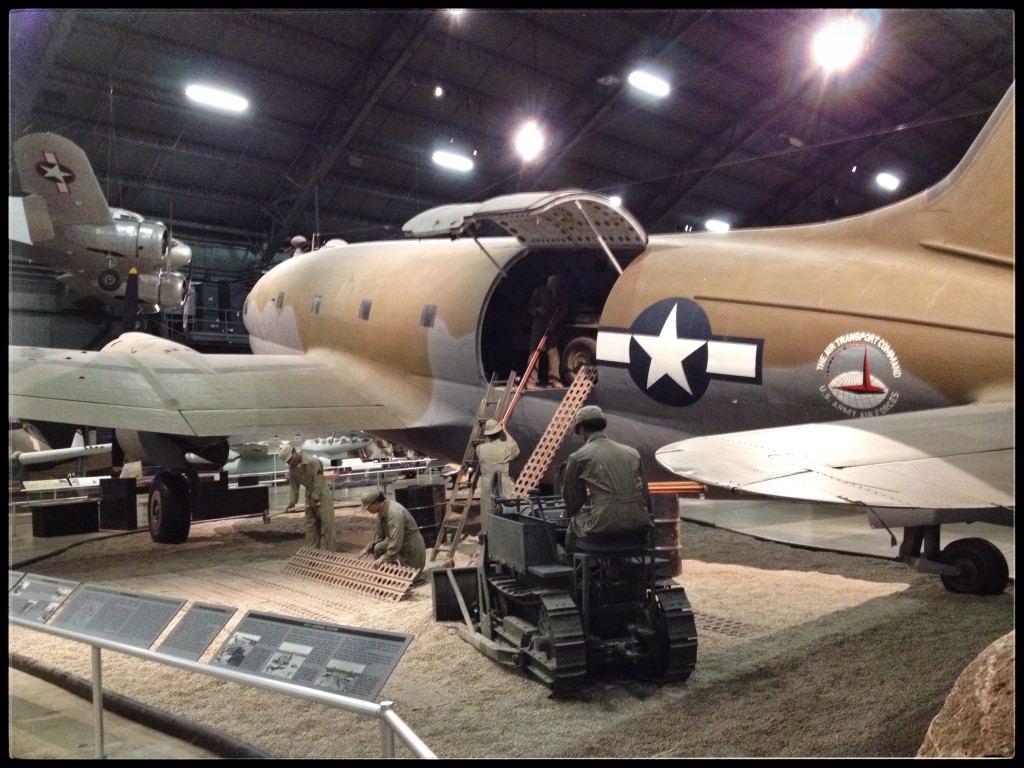
Curtiss C-46D Commando — Troop and cargo carrier of the type used to fly supplies over the “Hump” from India to China.
IMG_9691

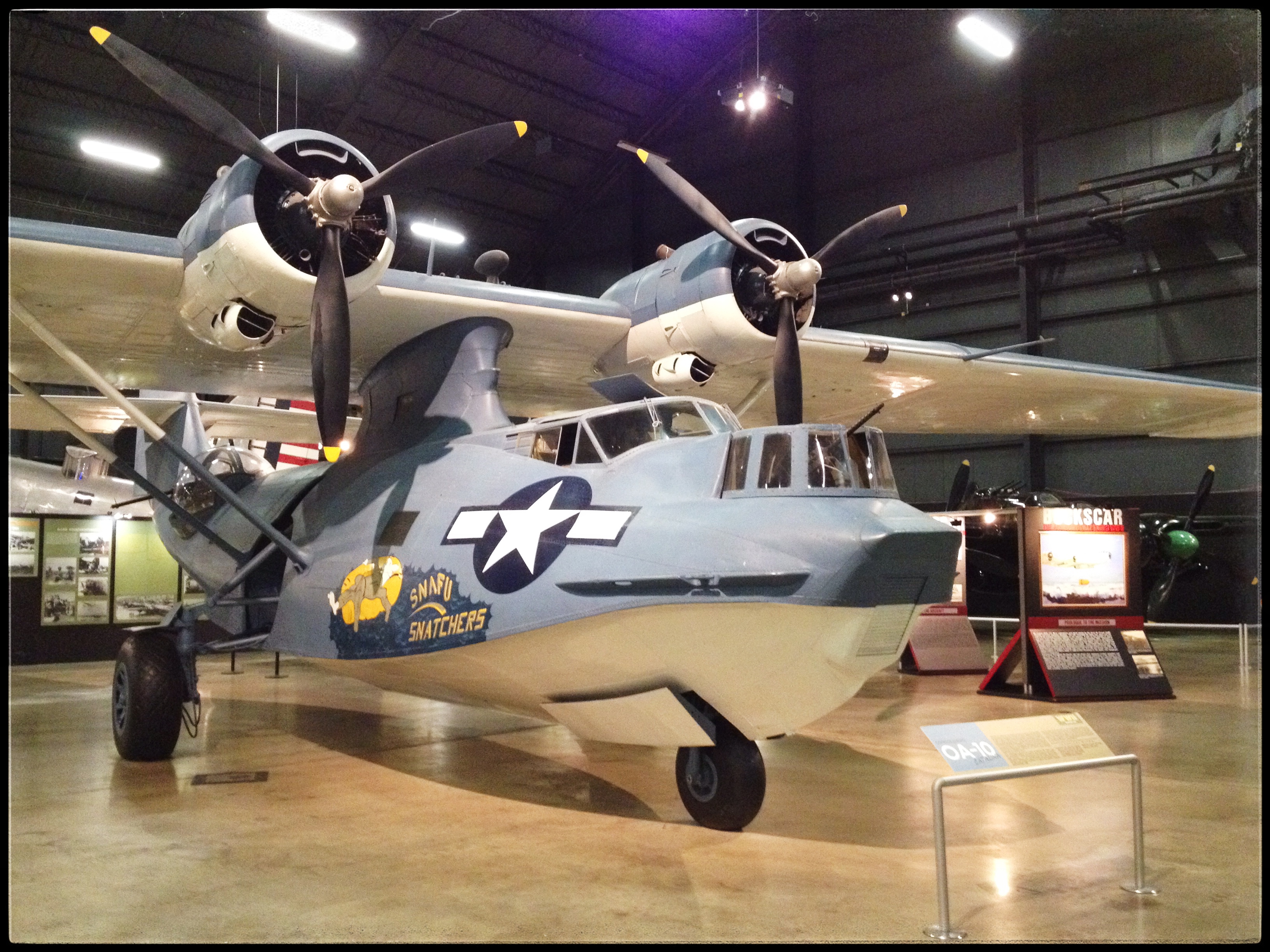
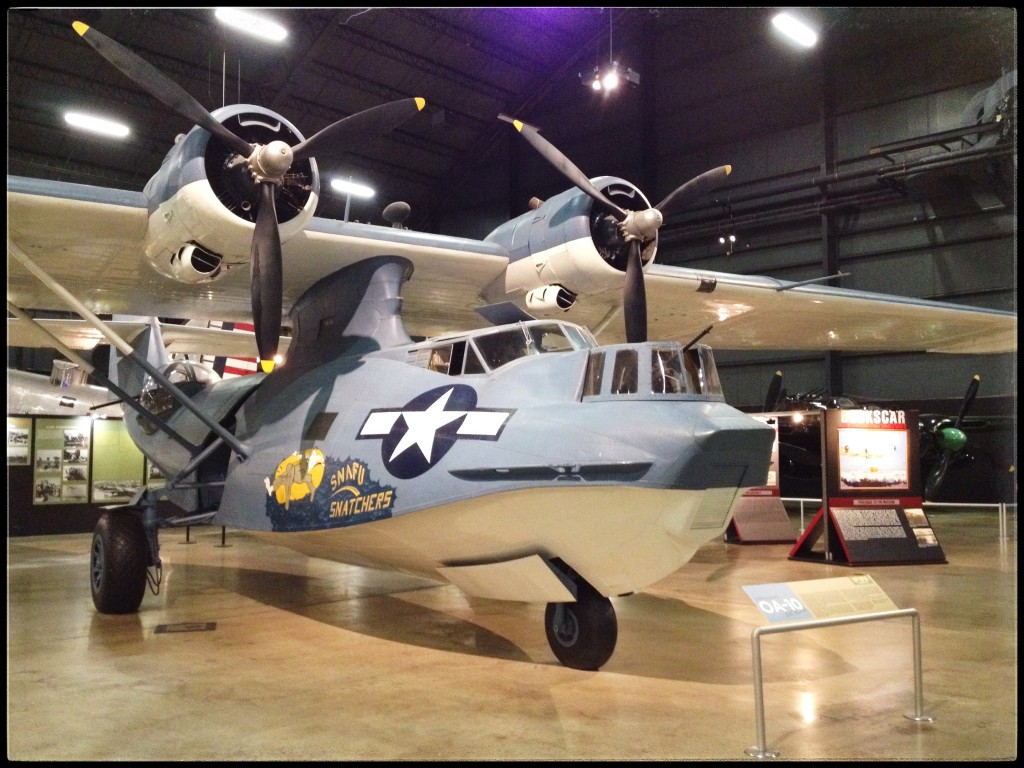
Consolidated OA-10 Catalina — Flying boat with retractable wheels for landing on land. Used primarily for sea rescue.
IMG_9701

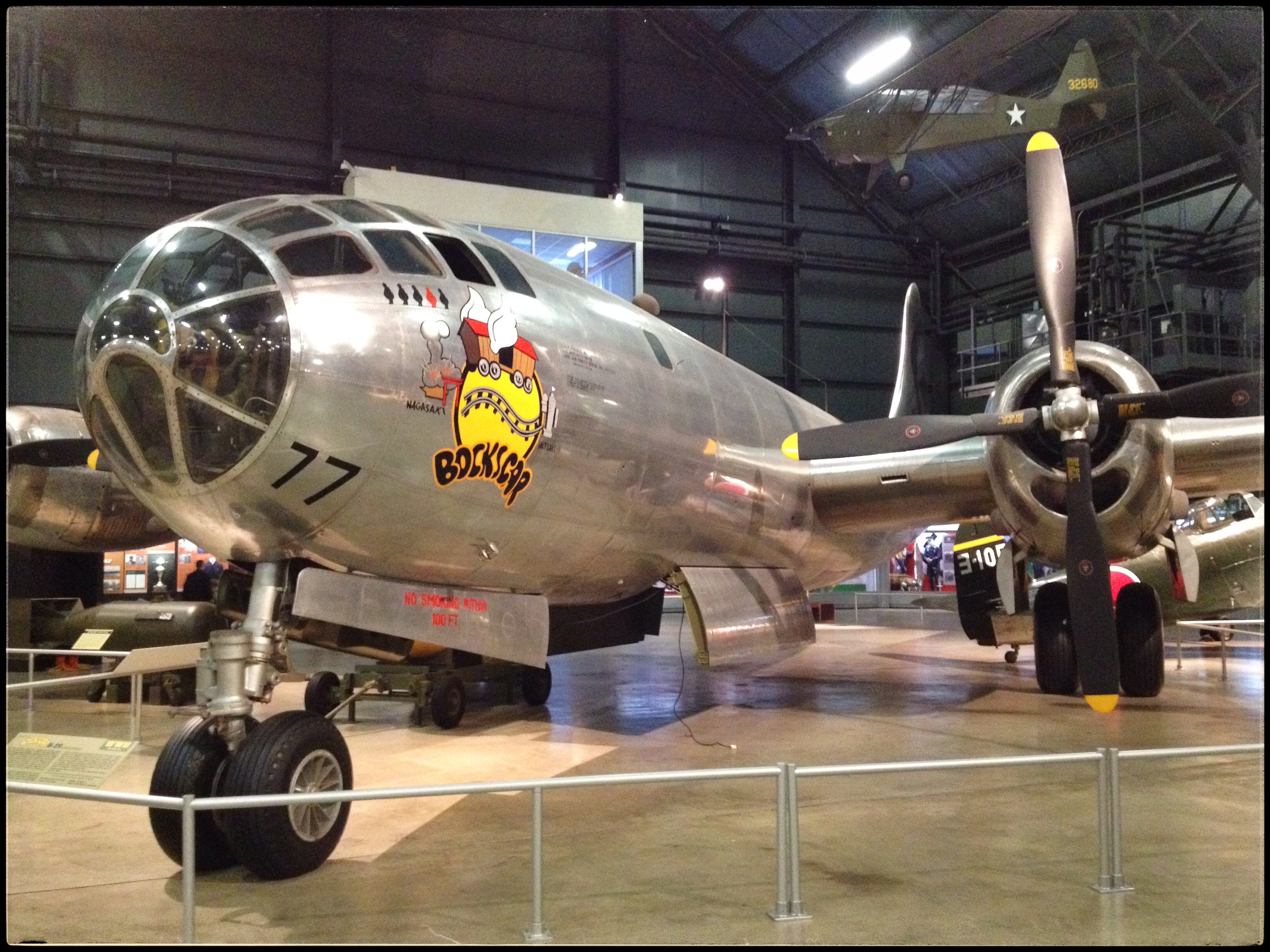
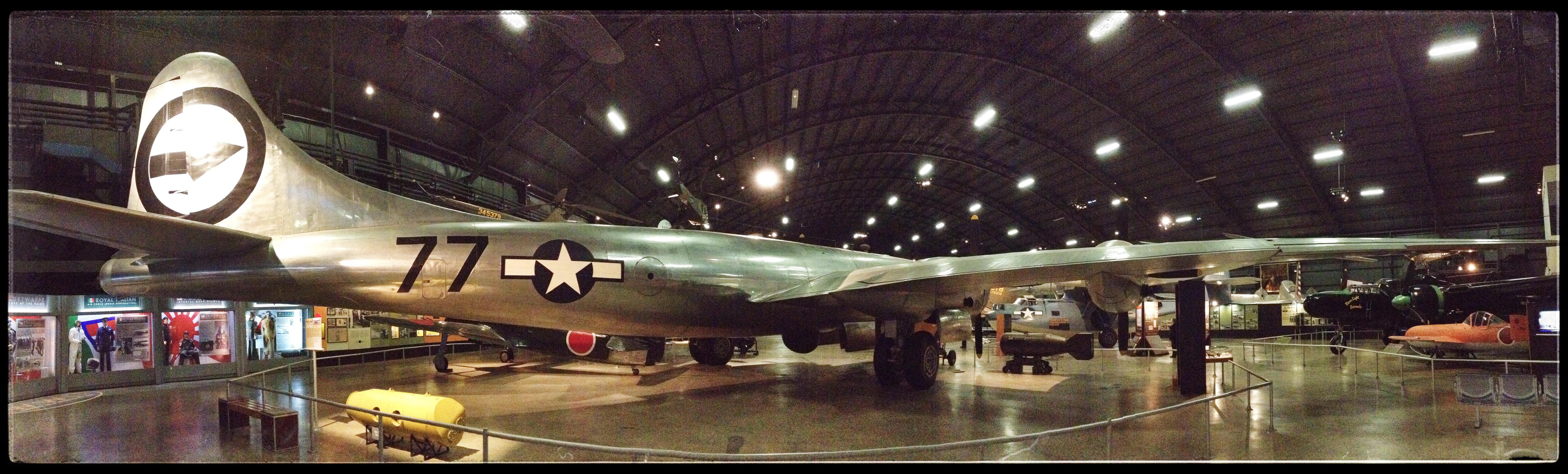
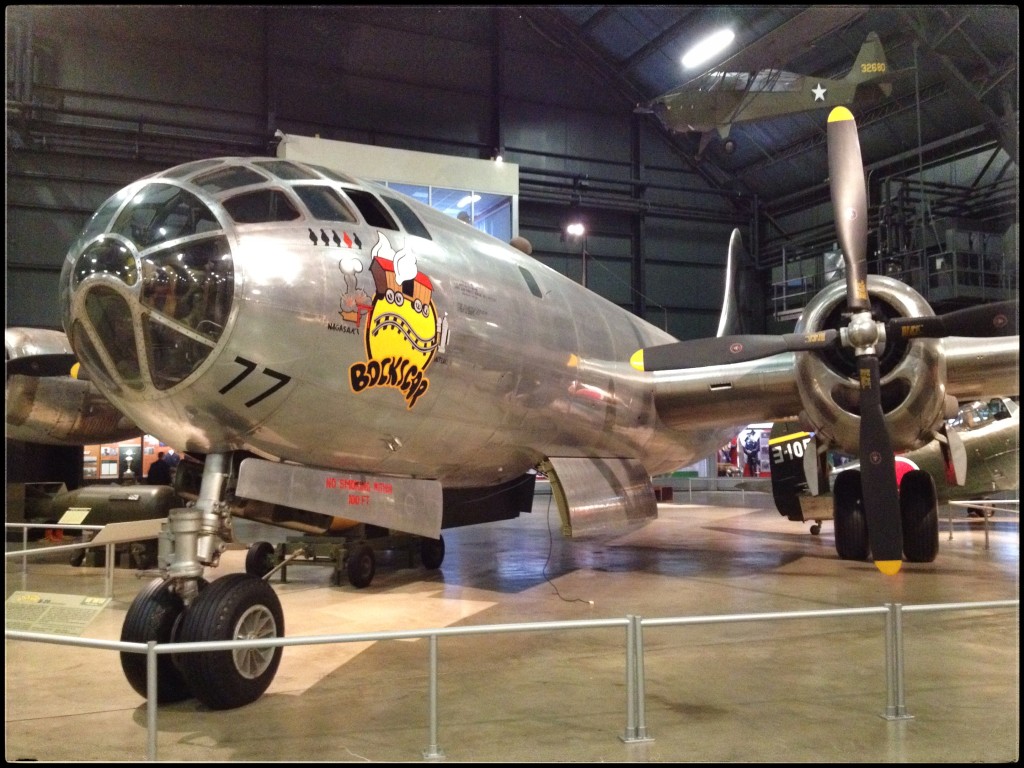
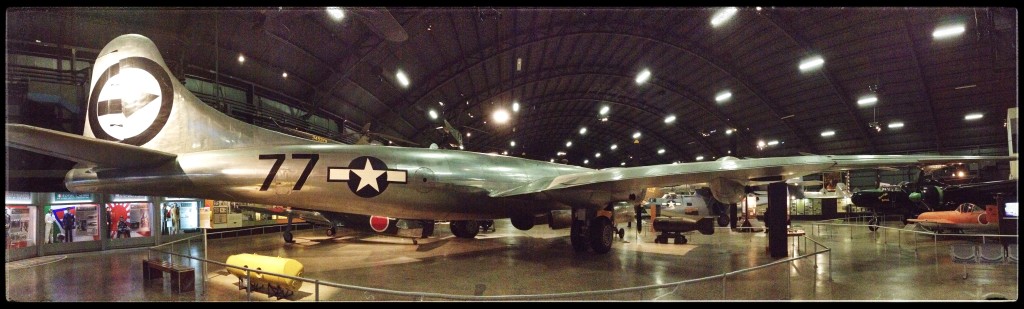
Boeing B-29 Superfortress — Long-range bomber. This particular plane, Bockscar, dropped the Fat Man atomic bomb on Nagasaki on Aug. 9, 1945.
IMG_9692

IMG_9714

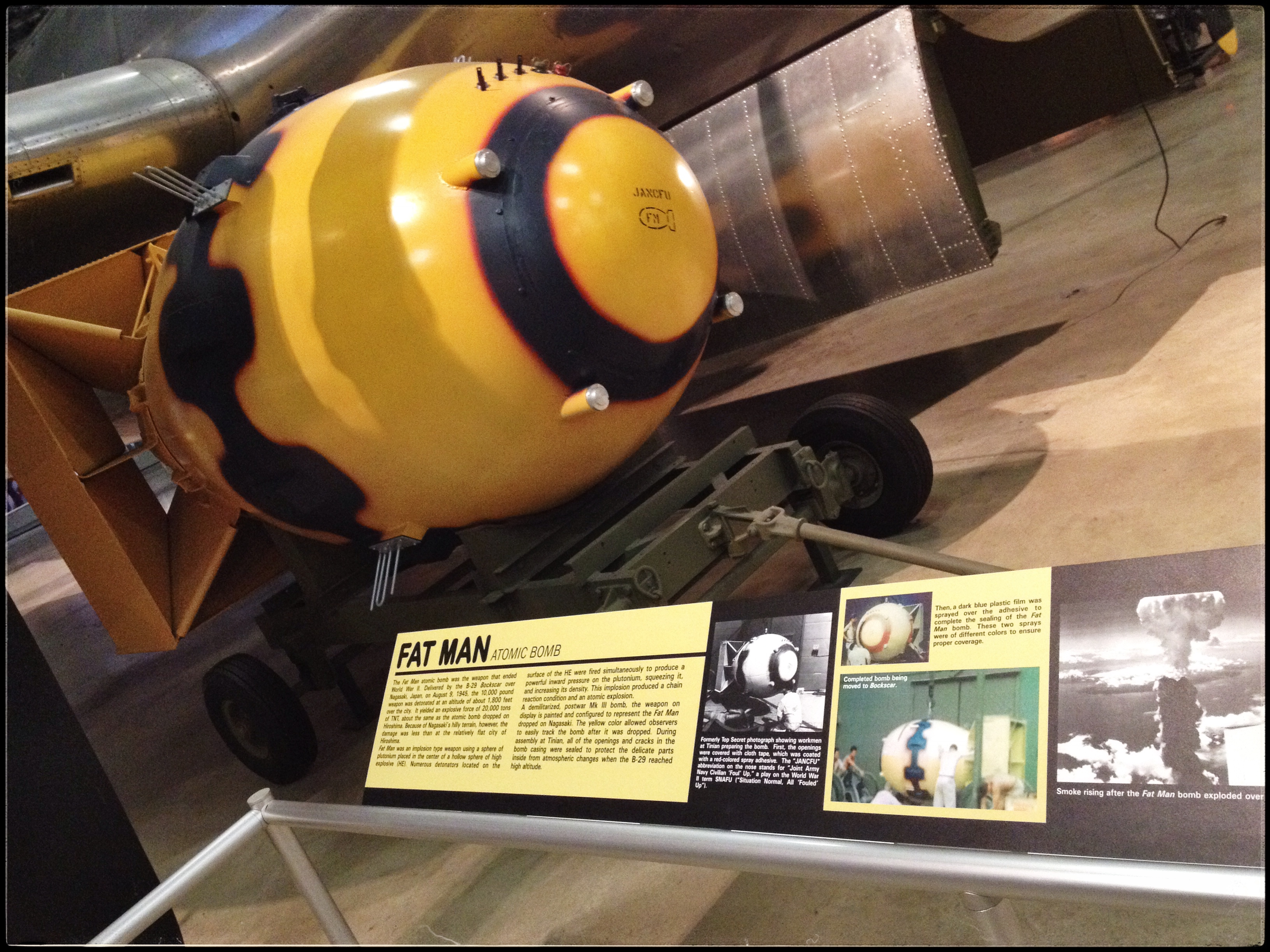
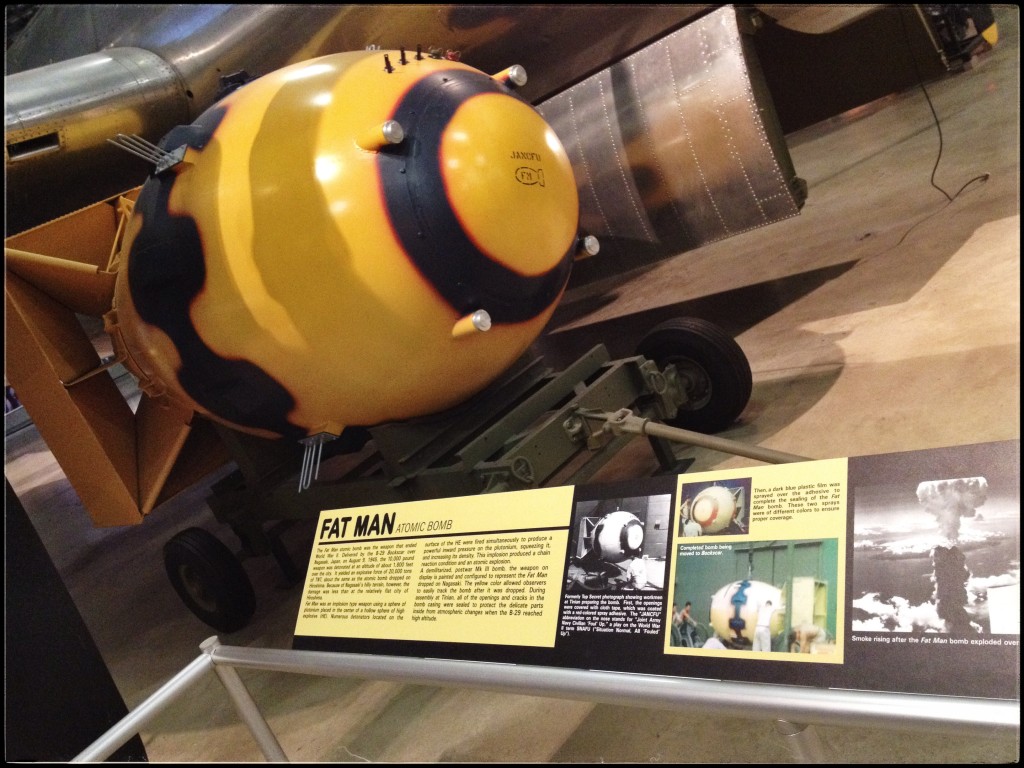
Replica of the “Fat Man” bomb dropped over Nagasaki, Japan, on Aug. 9, 1945.
IMG_9705

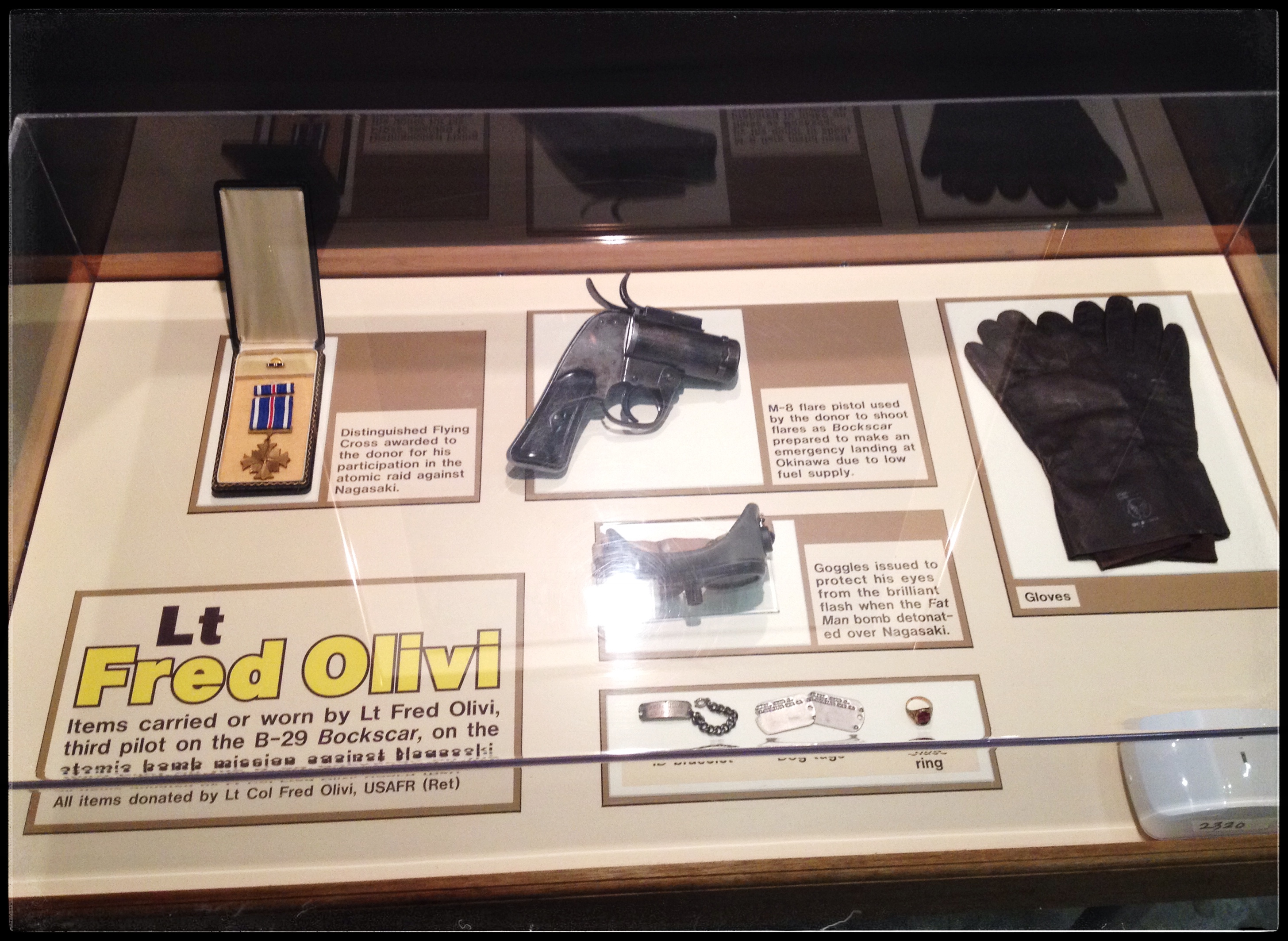
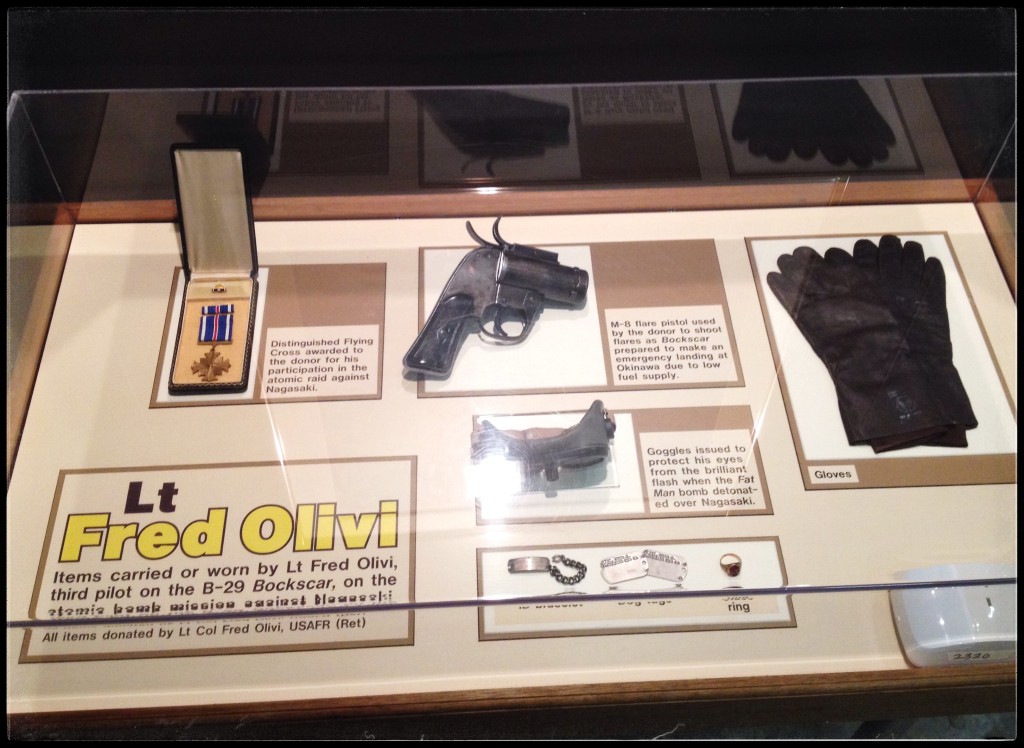
Items carried by Lt. Fred Olivi, third pilot on the Bockscar when it dropped the bomb on Nagasaki.
IMG_9704

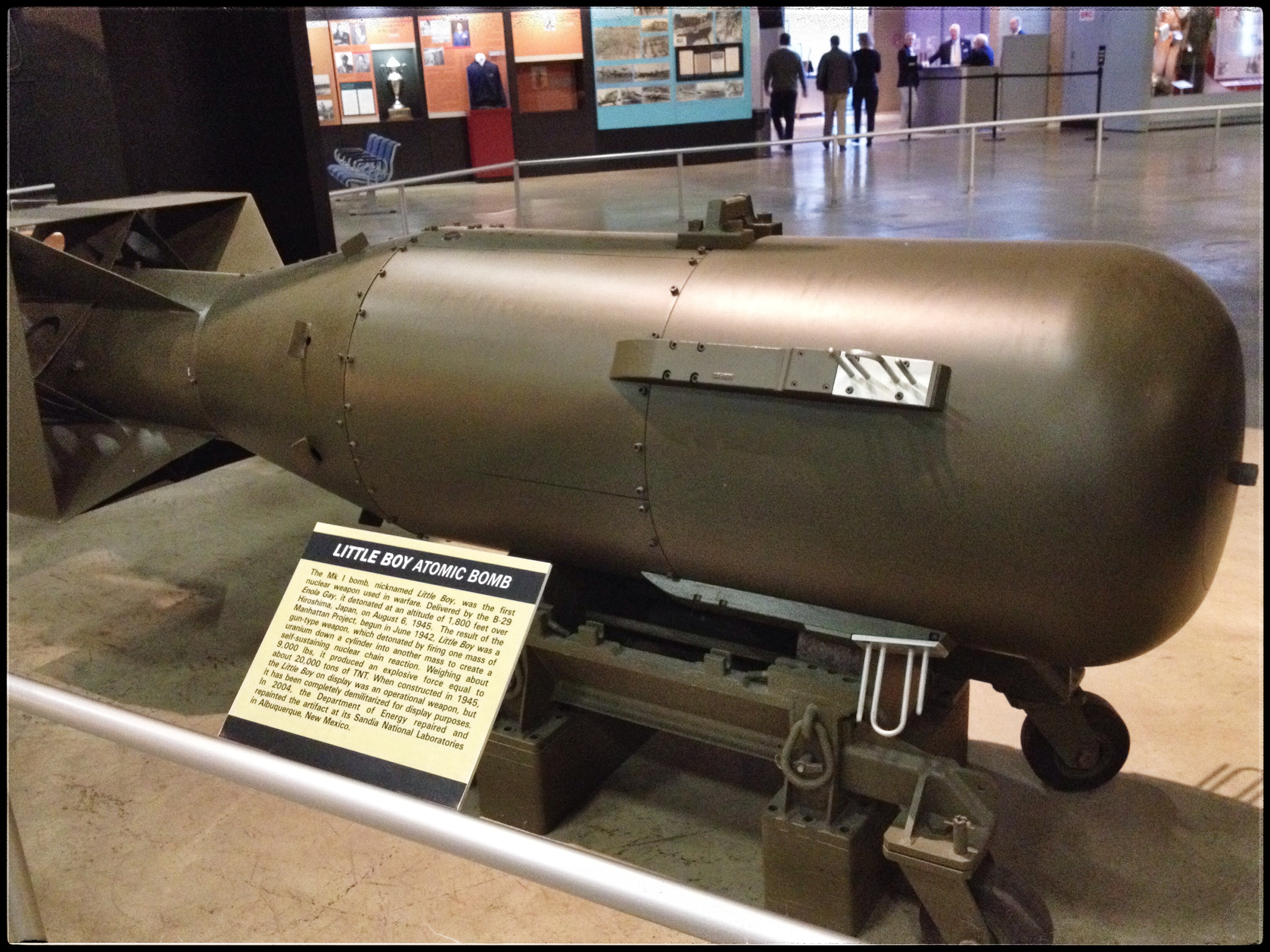
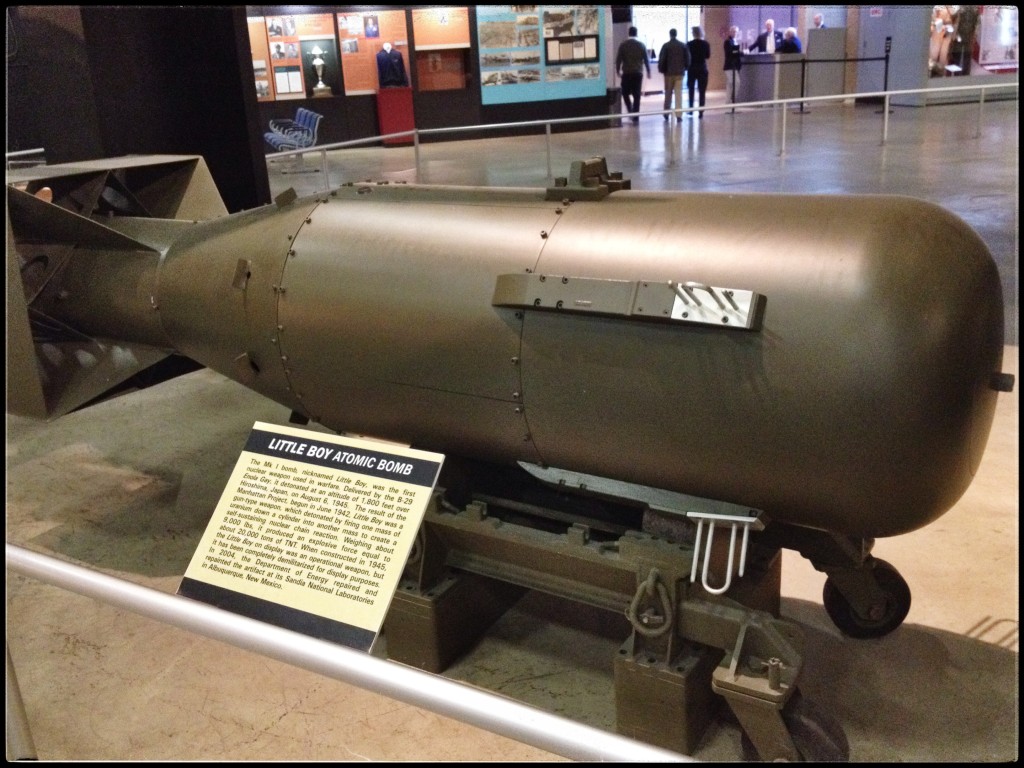
Mk I bomb, nicknamed “Little Boy,” the first nuclear weapon used in warfare. It was dropped by the B-29 Enola Gay on Hiroshima, Japan, on Aug. 6, 1945. This particular one was an operational bomb when built.
IMG_9703

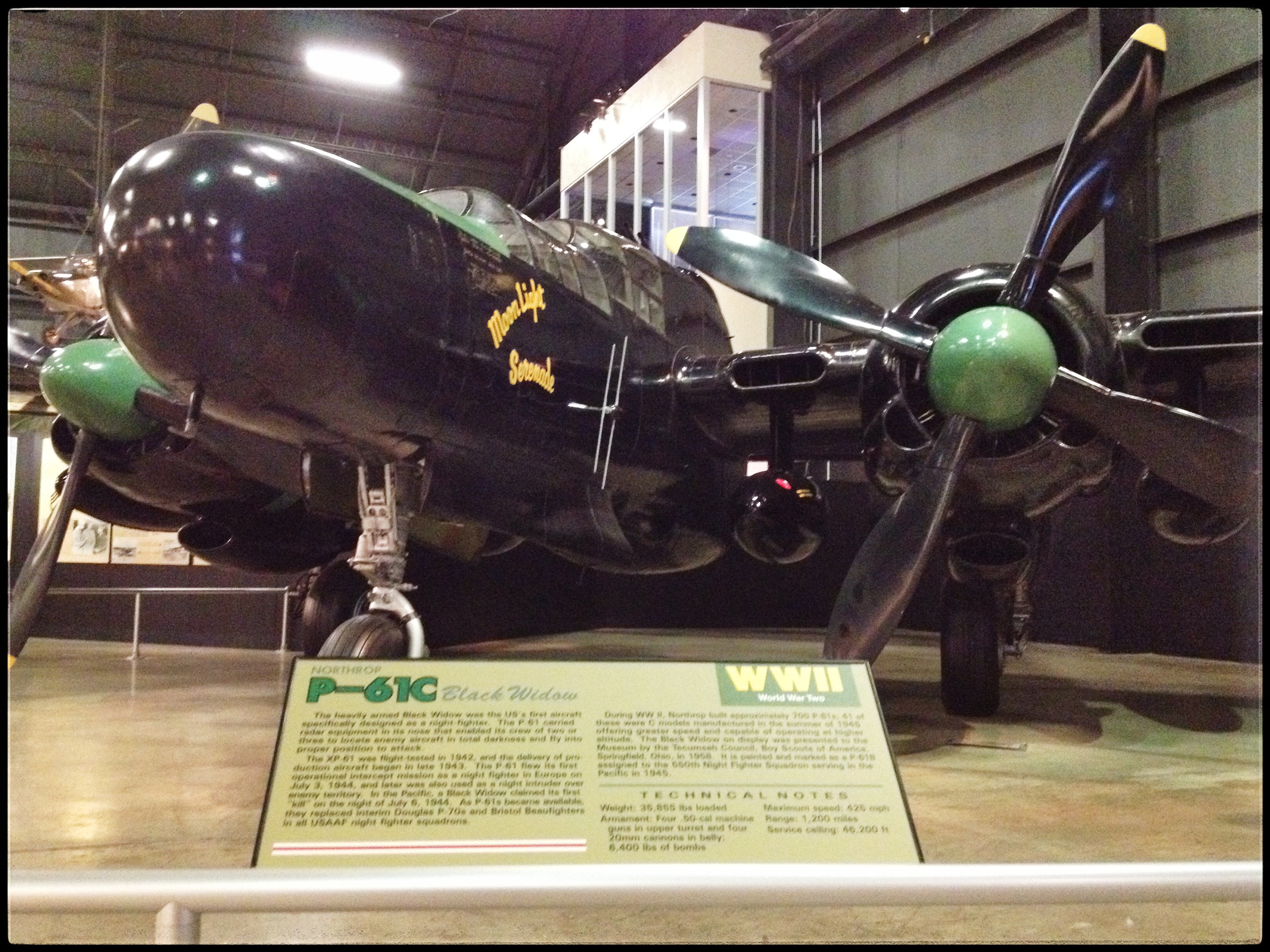
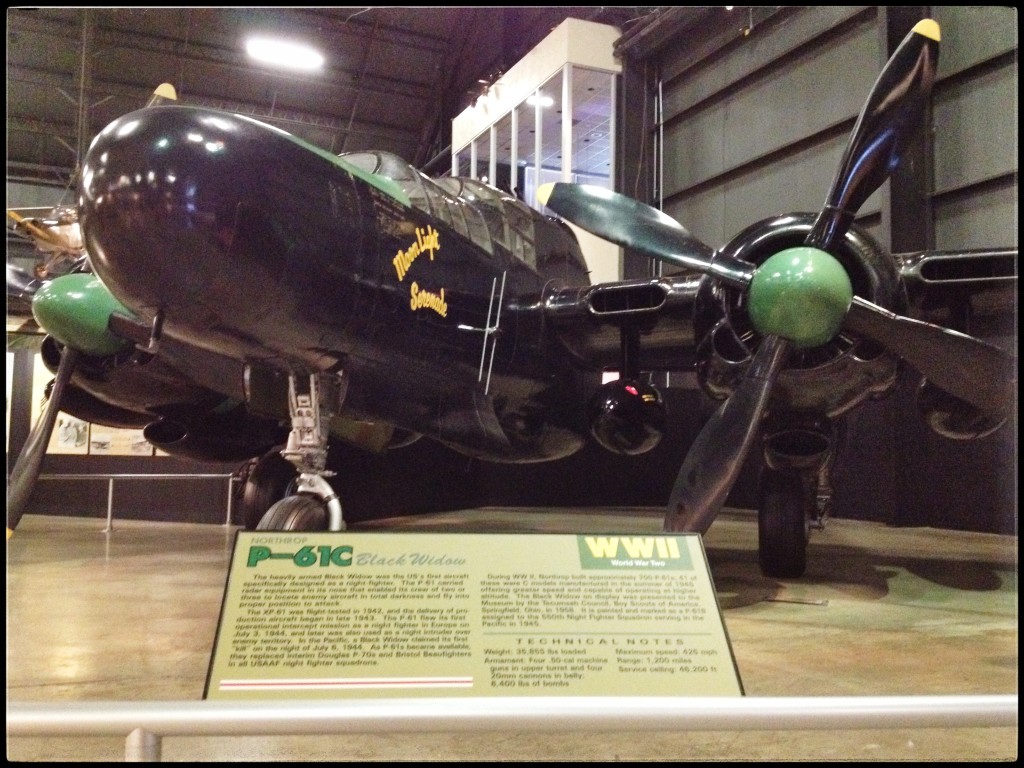
Northrop P-61C Black Widow — Night fighter
IMG_9702

Posted in Ohio | Comments Off on National Museum of the U.S. Air Force — World War II