National Museum of the U.S. Air Force — Early Years

We visited Dayton to see the National Park sites commemorating the Wright Brothers, but in spite of what the web page said, they were closed. This museum was right across the road from our hotel, so we went for Plan B — and were glad we did.

The place was huge and fascinating. It would have taken us two or three days to see everything. We were there for three hours. The museum fills four huge hangers, two other large rooms and a large outdoor space.

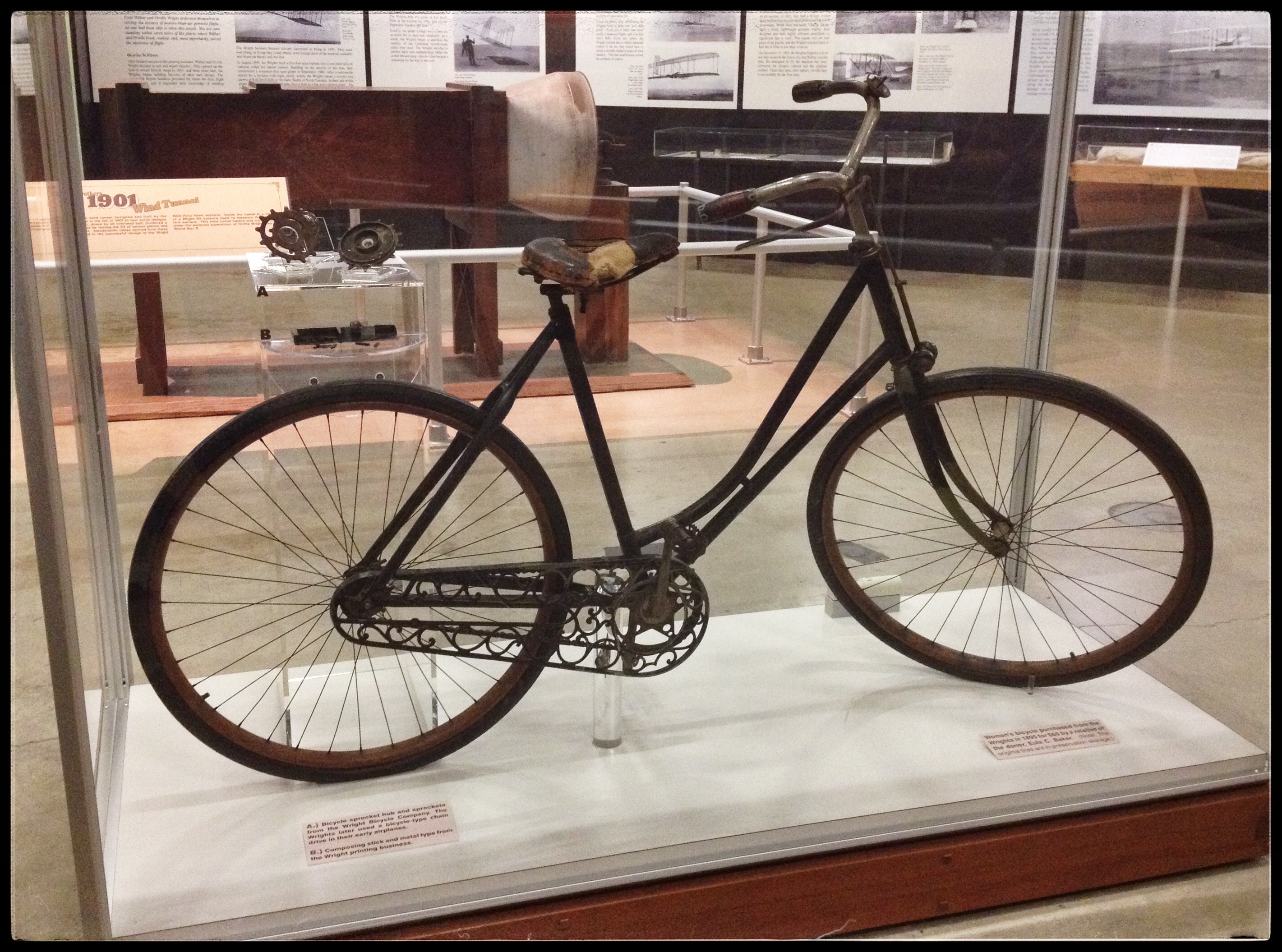
Bicycle from the Wright Bicycle Co.
IMG_9610

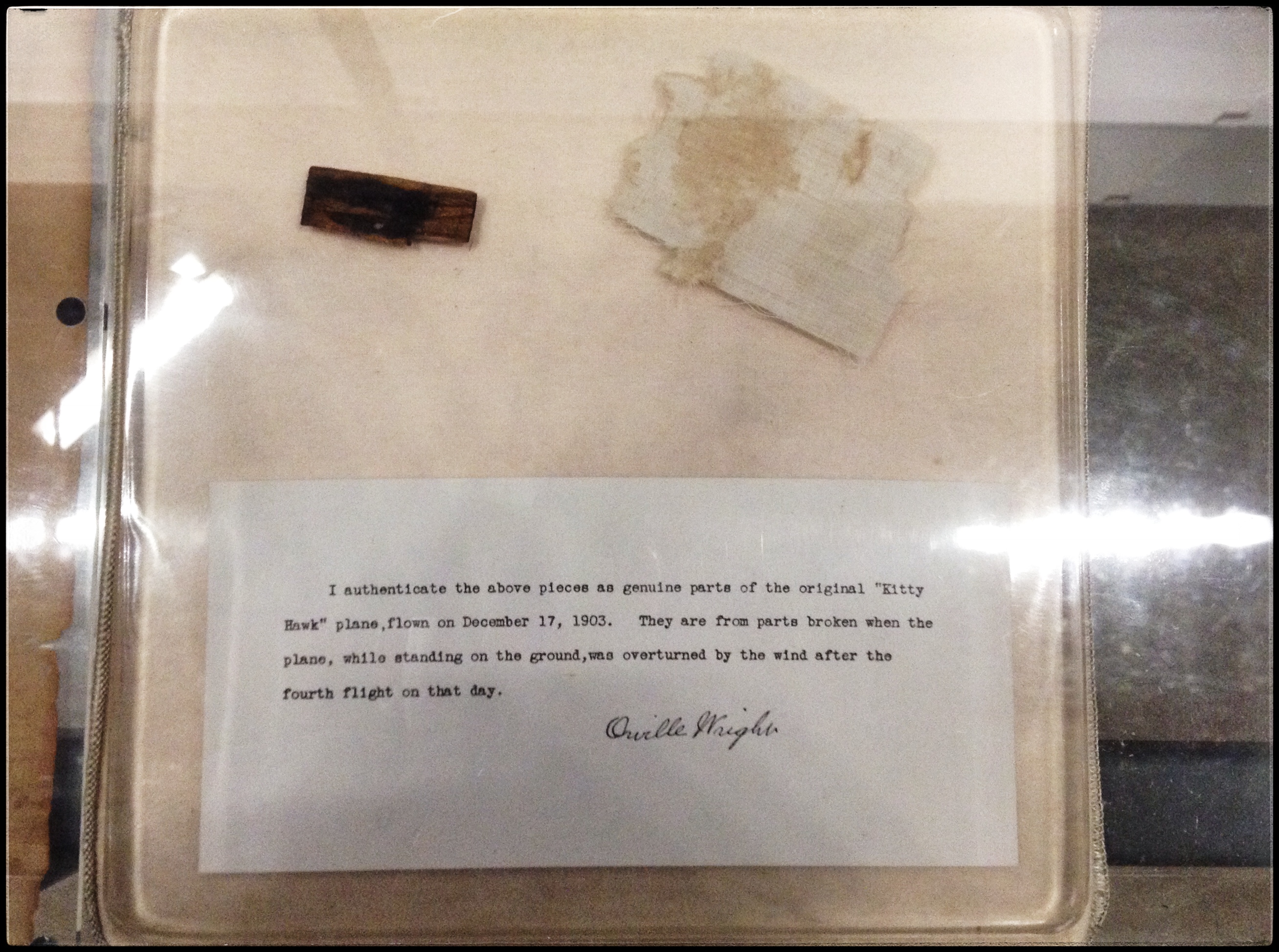
Pieces from the original Wright Brothers plane that flew for the first time in 1903.
IMG_9604

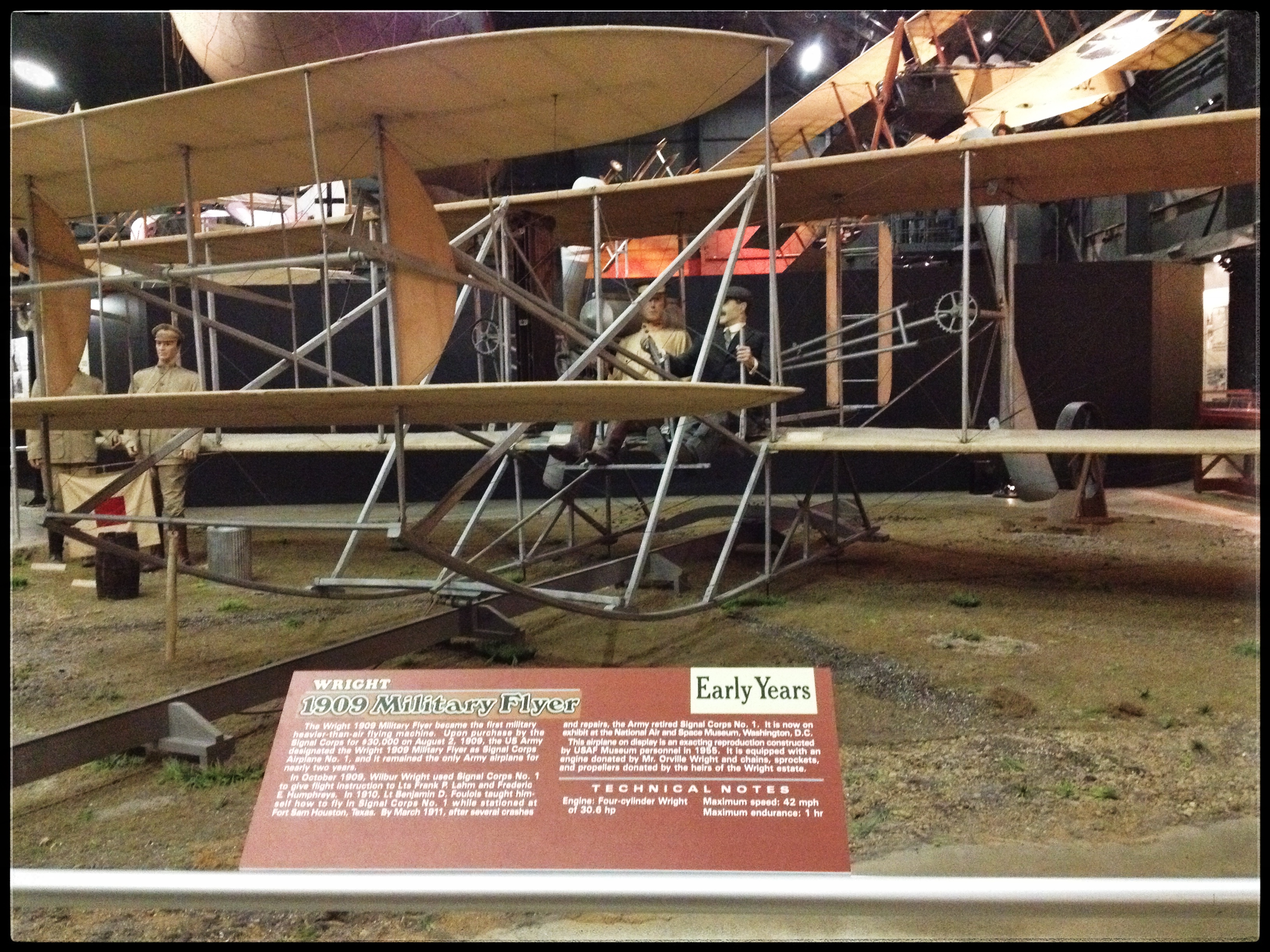
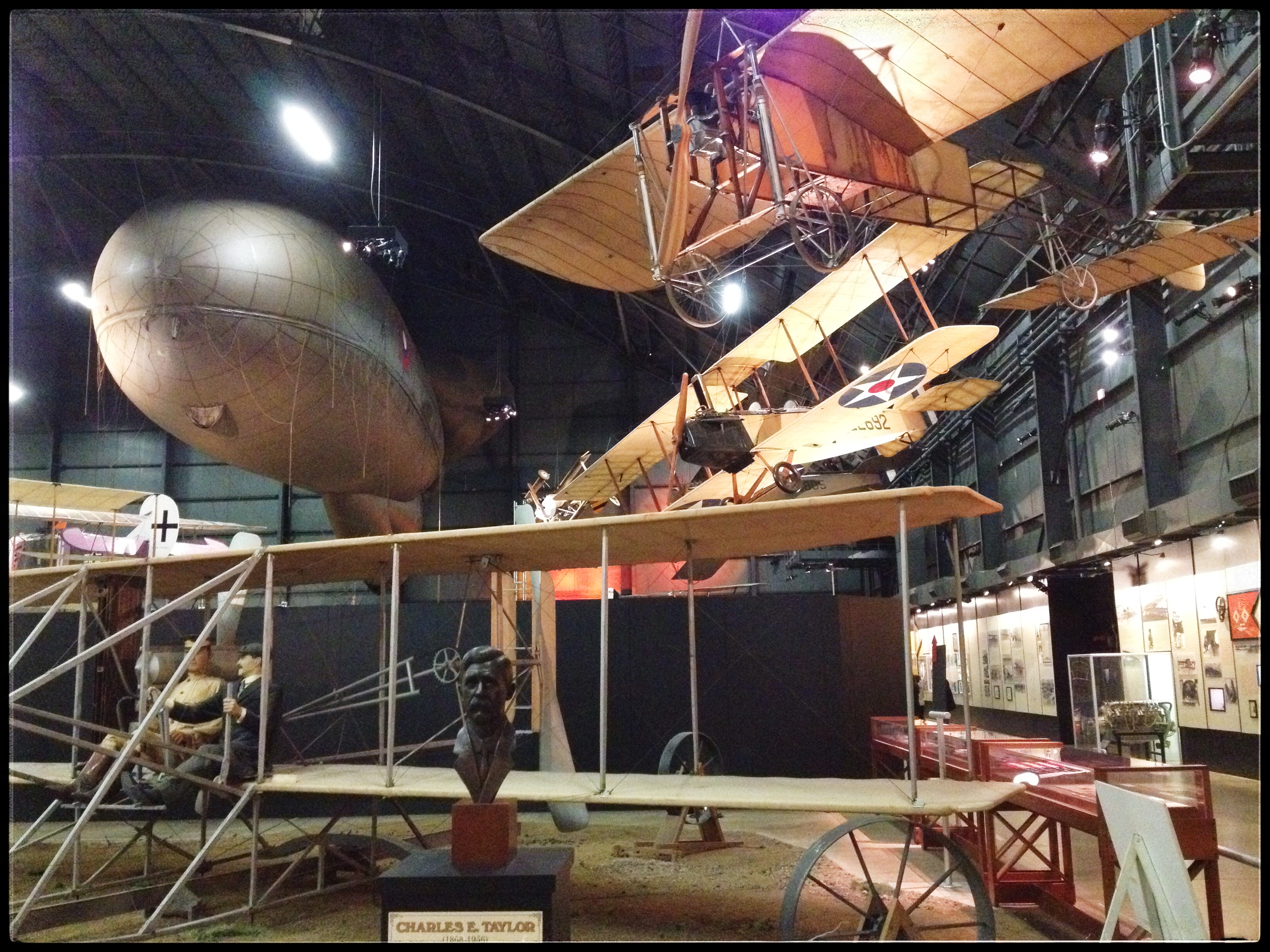
Wright 1909 Military Flyer — This is an exact replica of the first military airplane, although the engine and other hardware were made by the Wrights. The original is in the Smithsonian
IMG_9607

IMG_9609

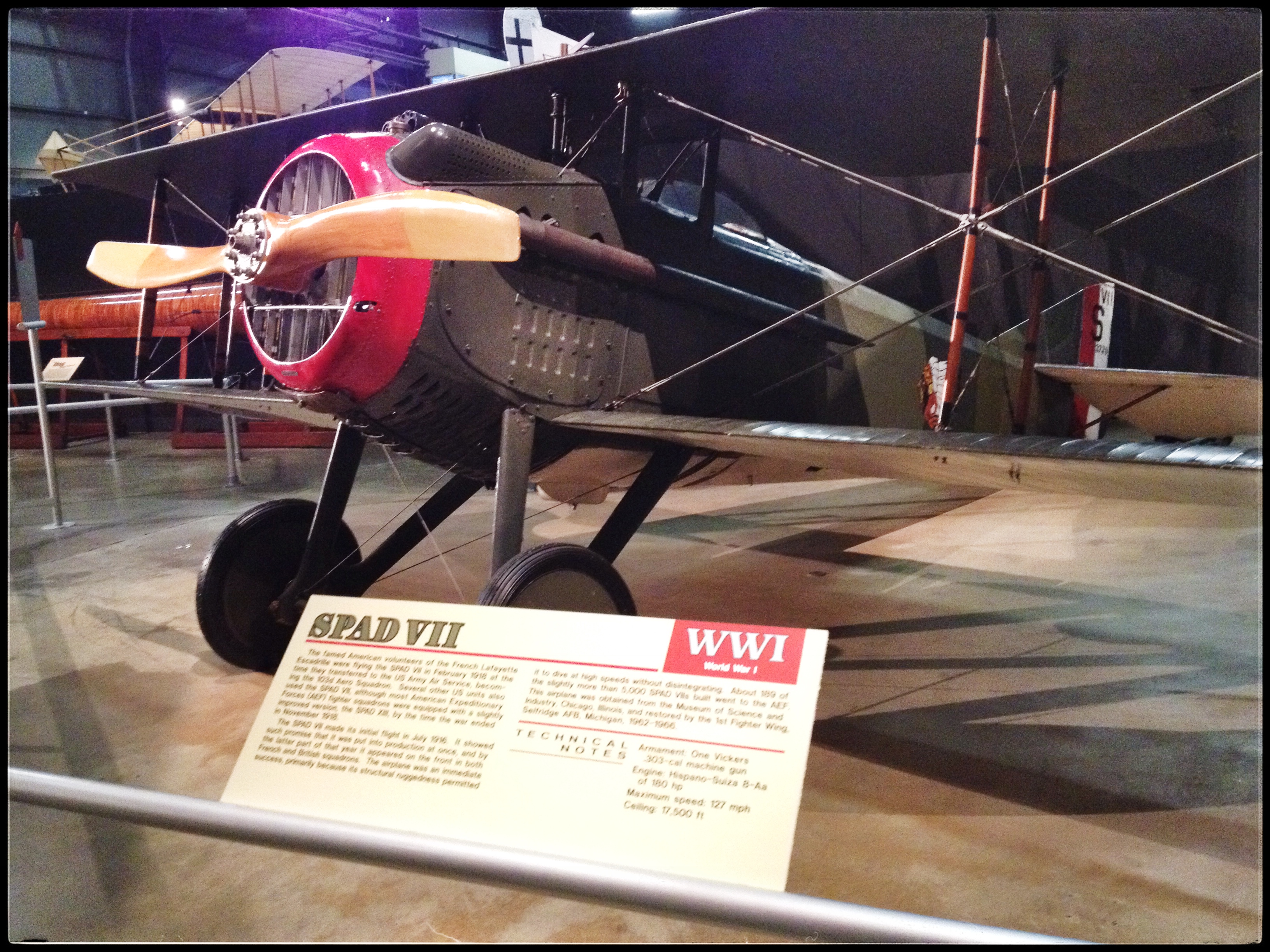
Spad VII — Used by the Lafayette Escadrille beginning in 1916.
IMG_9605

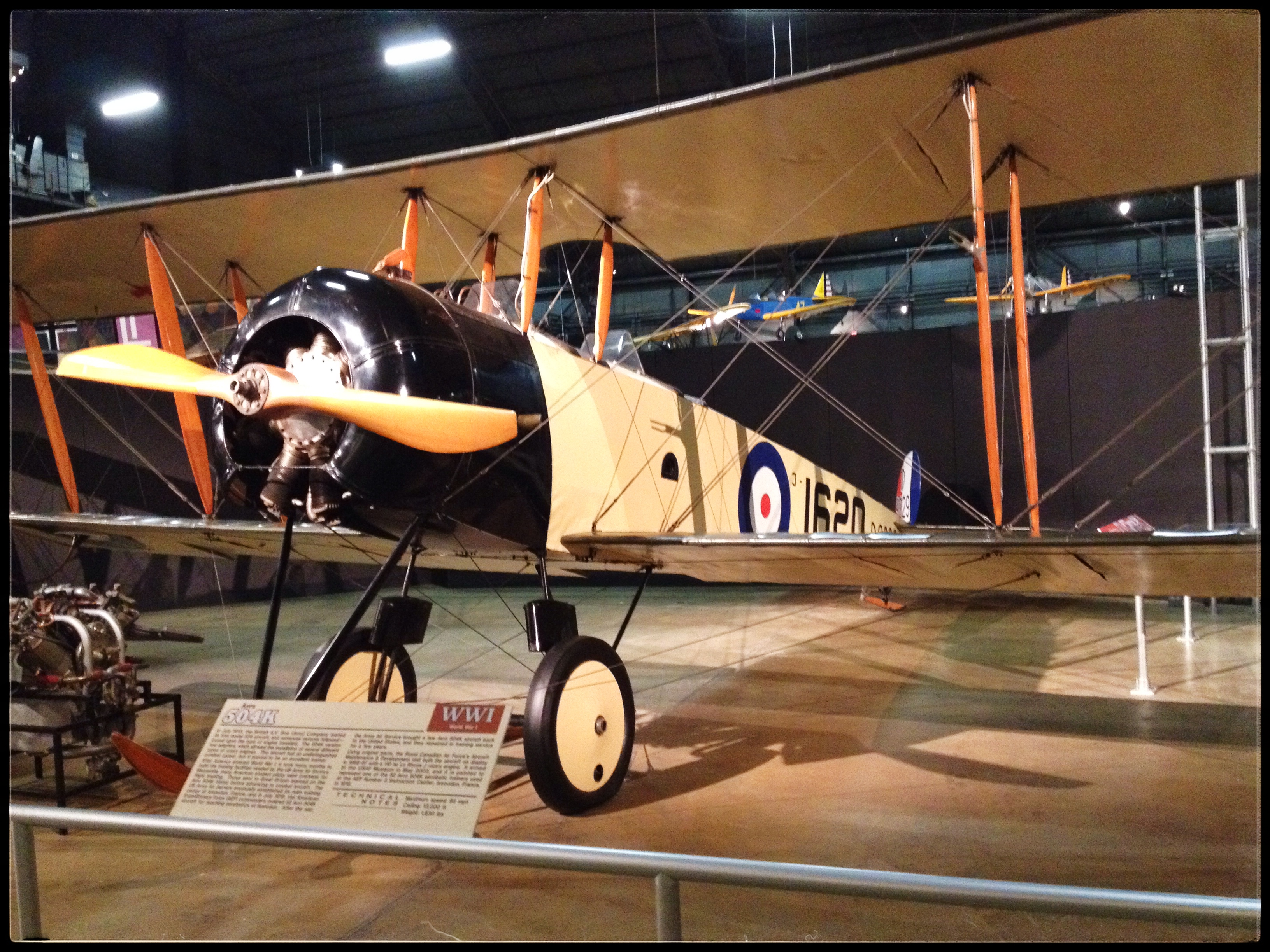
Avro 504K — Used by British and American pilots as a trainer during WWI.
IMG_9608

The cross from Quentin Roosevelt’s grave, placed by German troops after they shot down his plane.
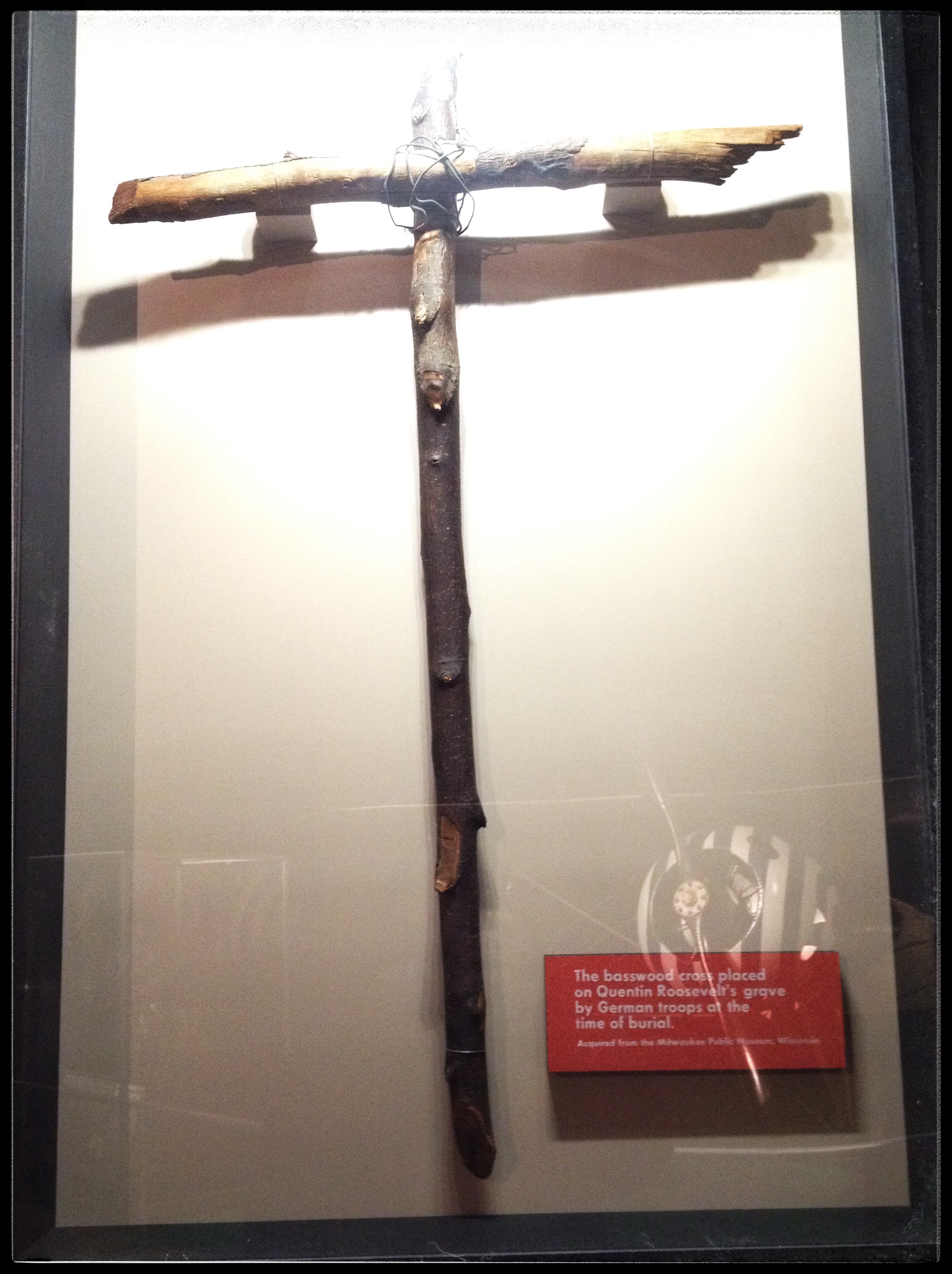
IMG_9612

Fokker Dr. 1 — A replica of the German dogfighter, the type used by Manfred von Richthofen, the Red Baron.

IMG_9606

Sopwith Camel F.1 — A replica of the premiere British fighter during WWI, built from original plans.
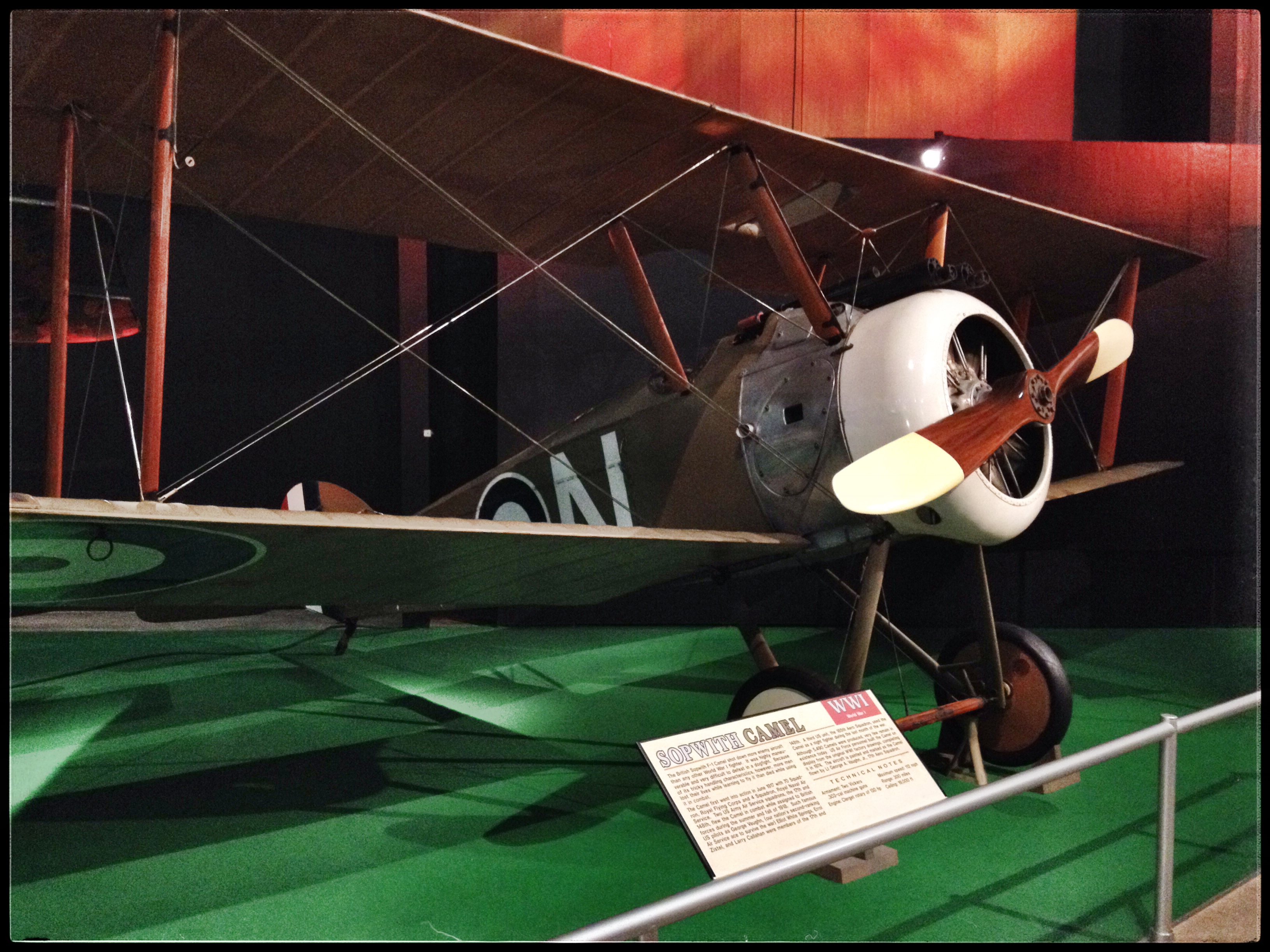
IMG_9611

Caquot Type R Observation Balloon — Used throughout WWI for combat observation and into WWII in non-combat situations. This one, built in 1944, is believed to be the only original balloon still in existence.

Packard LePere LUSAC 11 — An American-built fighter that didn’t make it into combat during WWI. This is the only original one still in existence.
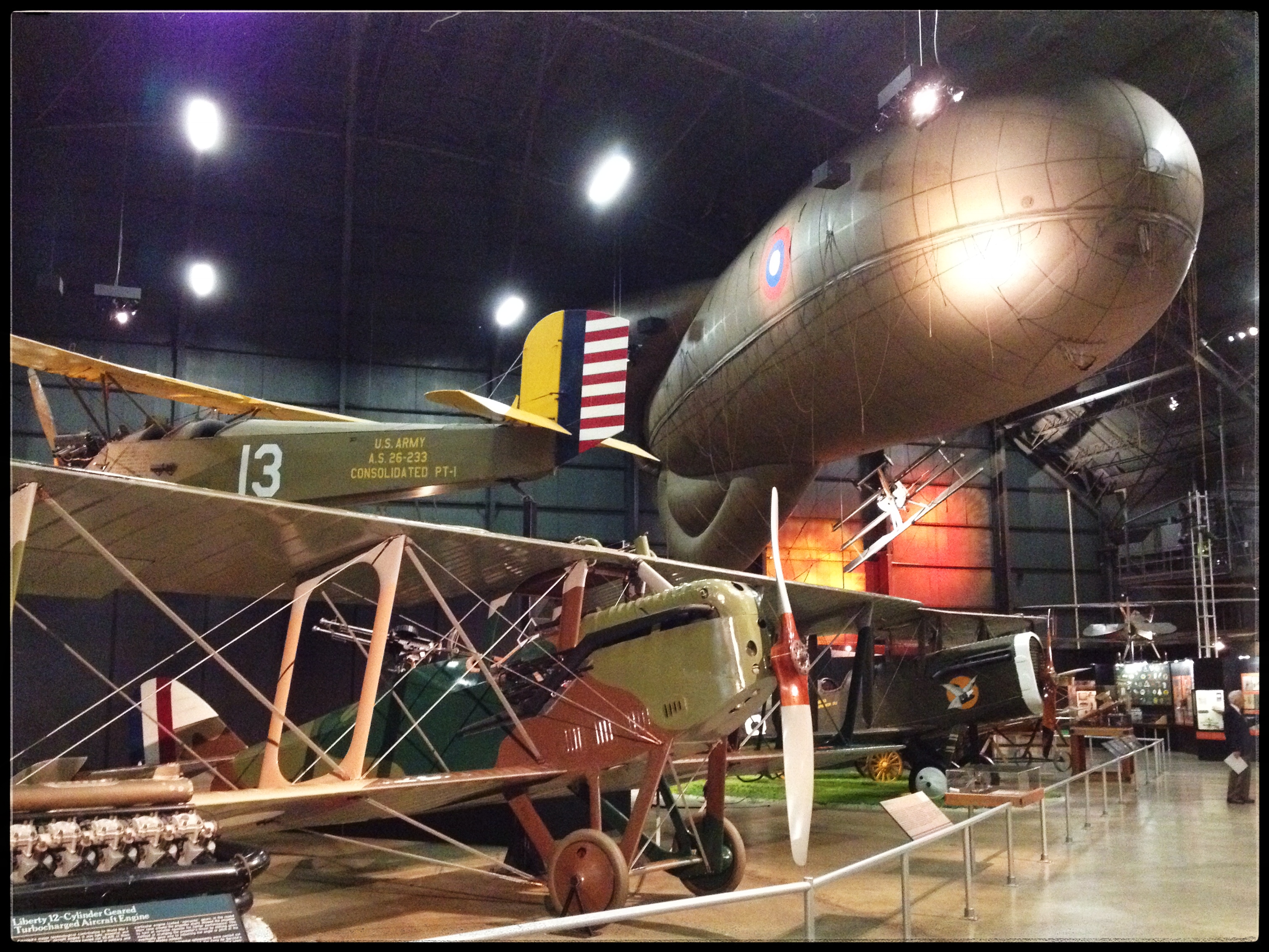
IMG_9625

Fokker D.VII — Replica of a German fighter
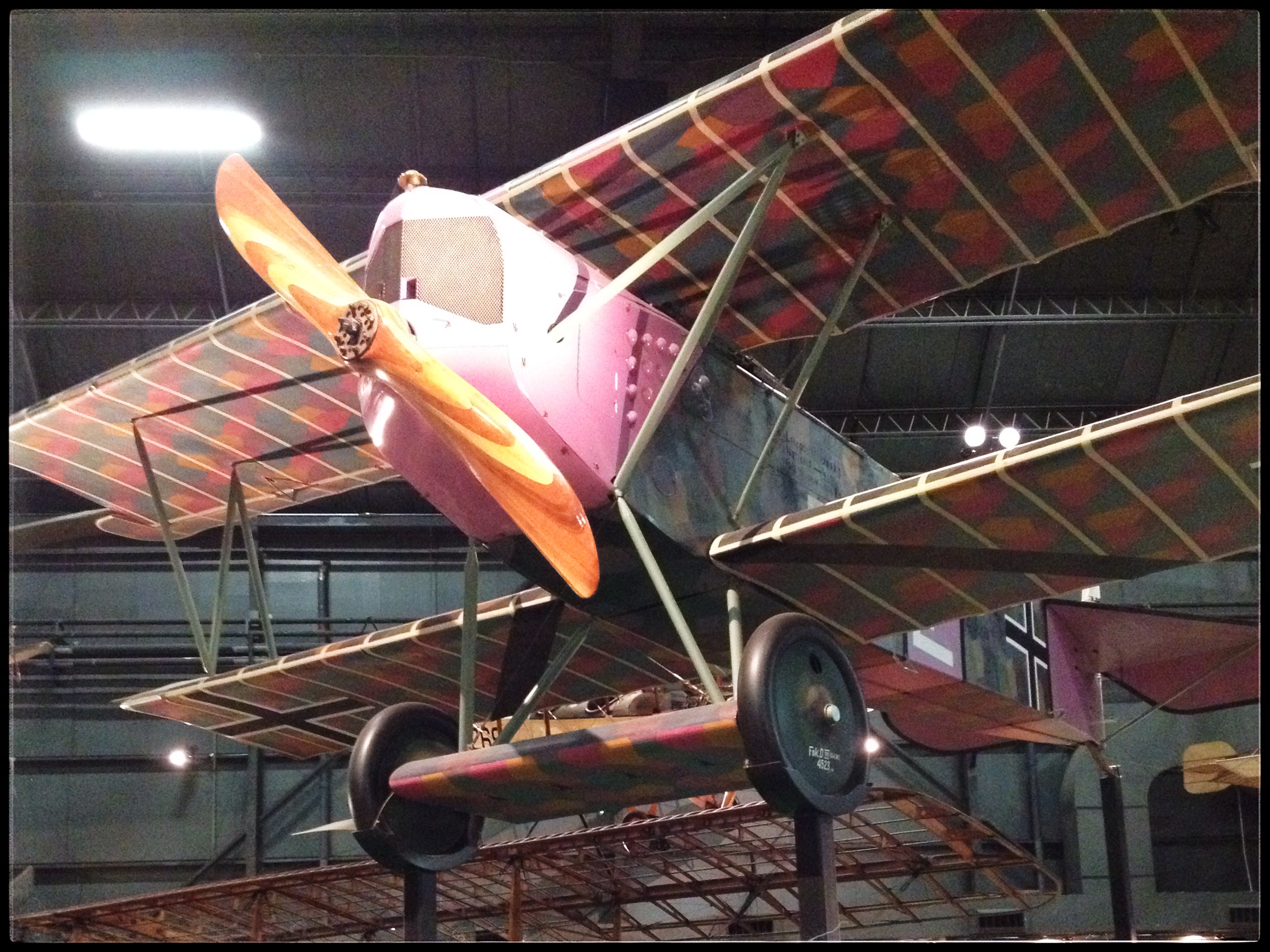
IMG_9624

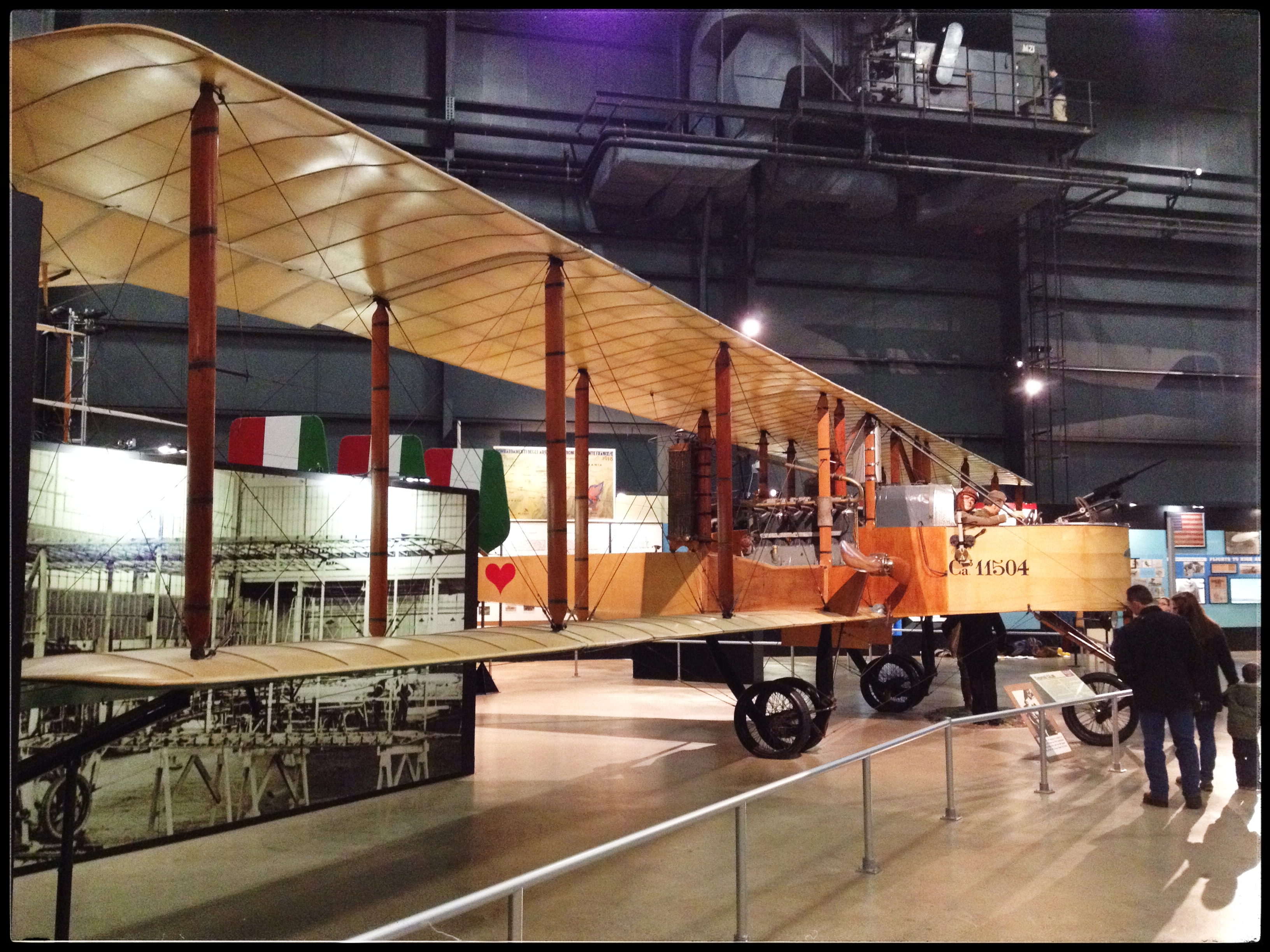
Caproni Ca. 36 — WWI heavy bomber. This plane served in the Italian Air Force.
IMG_9623

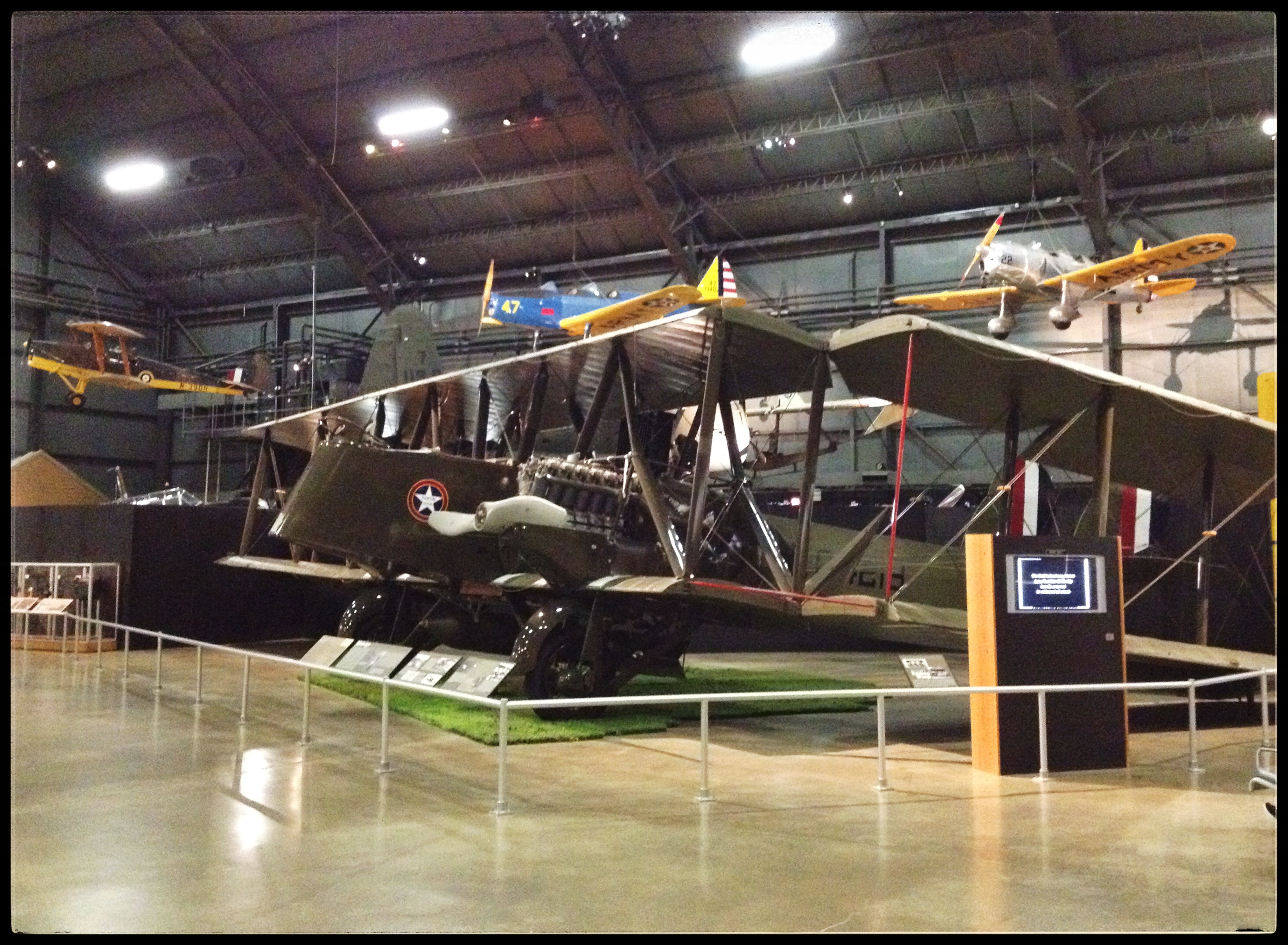
Martin MB-2 — Replica of the first American-built bomber from 1920.
IMG_9627

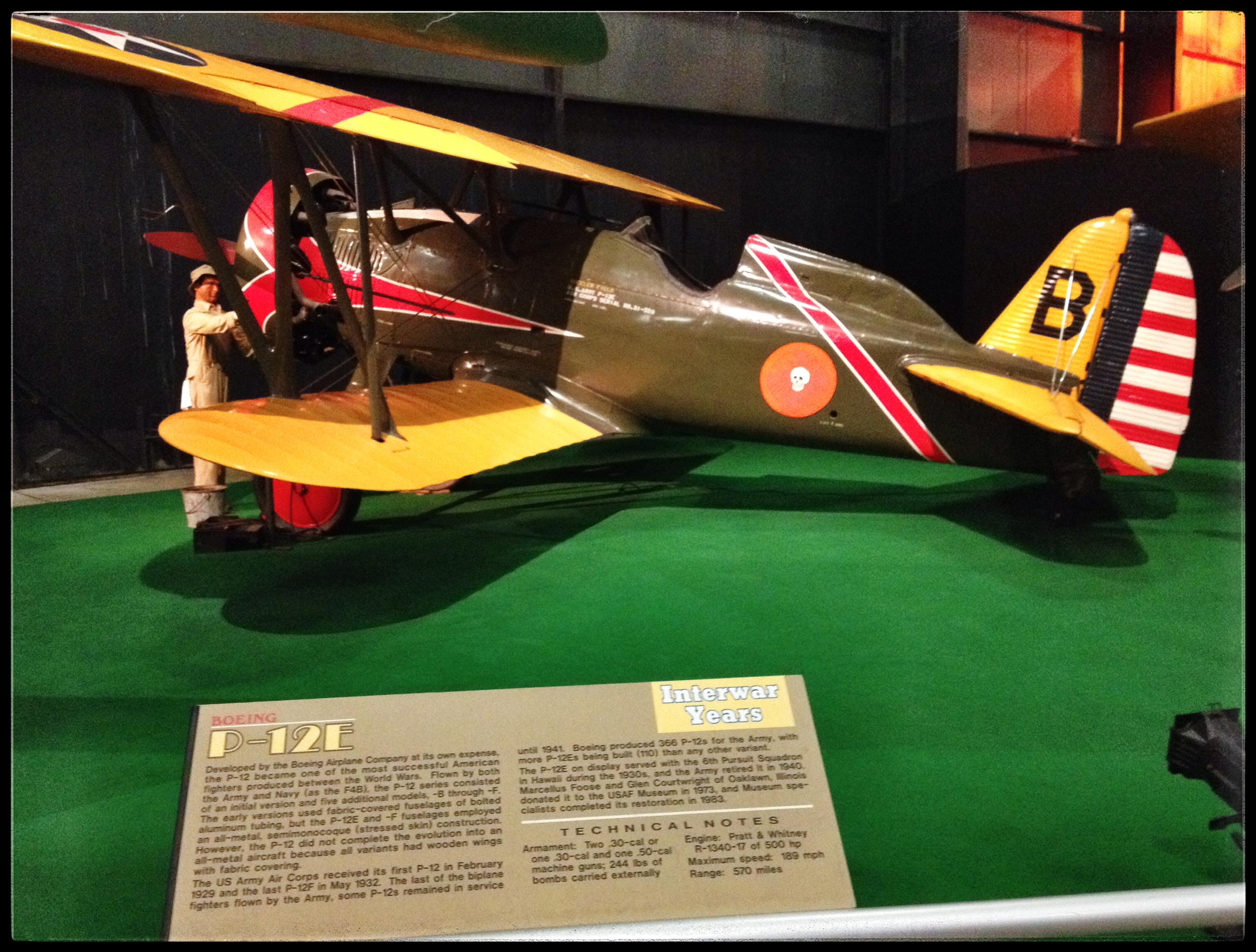
Boeing P-12E — U.S. fighter used between the wars. This particular plane served with the 6th Pursuit Squadron in Hawaii during the 1930s.
IMG_9626

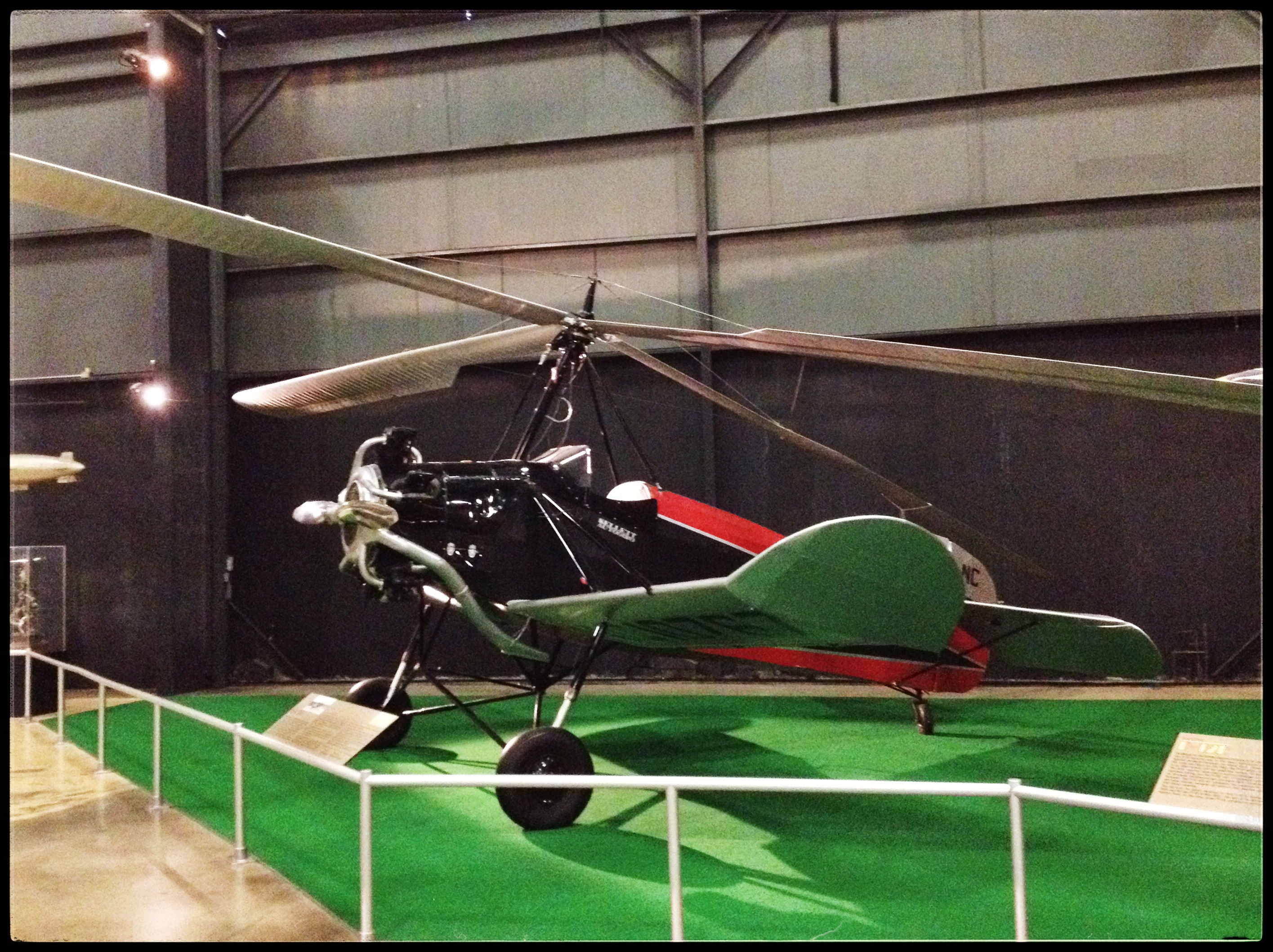
Kellet K-2/K-3 Autogiro — Built for short take-offs and landings and slow-moving military observation. This one was built in 1931 and tested at Wright Field.
IMG_9630

Curtiss O-52 Owl — Built as an observation plane just before WWII but used only for coastal submarine patrols.

IMG_9628

Hawker Hurricane MKIIA — WWII British fighter used most famously during the Battle of Britain. This one was built in Canada between 1940 and 1942.

The “crashed” plane in the background is a North American BT-14, used during WWII as a trainer. The diorama demonstrates what happens when a pilot braked too hard with a tail wind.
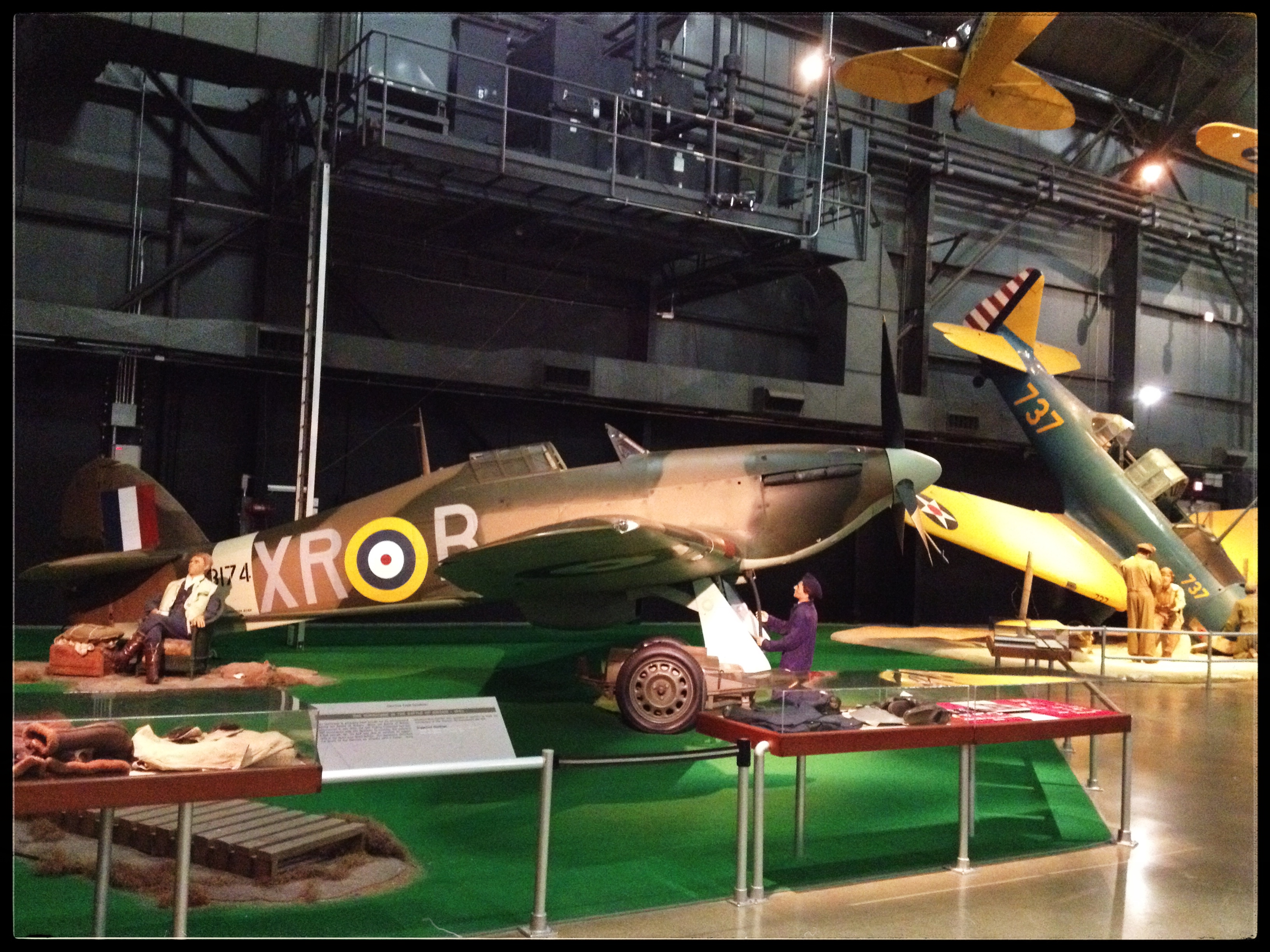
IMG_9629

North American O-47B (on the right) — Observation plane with windows in the belly, decorated in the colors of the 112th Observation Squadron of the Ohio National Guard.

Fairchild PT-19A Cornell (on the left with the yellow “47”) — Trainer used during WWII.

IMG_9622

Posted in Ohio | Comments Off on National Museum of the U.S. Air Force — Early Years

Wright Brothers

We had a couple hours to kill in Dayton, so we decided to visit the Dayton Aviation Heritage National Historical Park, which celebrates the Wright Brothers who lived and worked in the city. Our first stop was Huffman Prairie Flying Field Interpretive Center, where the brothers improved the airplane from a gimmick to a practical machine. We ran into a small problem — although the web site said it would be open every day, it was closed. A sign on the door of the visitor center said it was closed on Mondays and Tuesdays after November 3. That’s fine. They probably don’t get enough traffic to make it worthwhile to be open. But it would be nice if they updated the Internet.

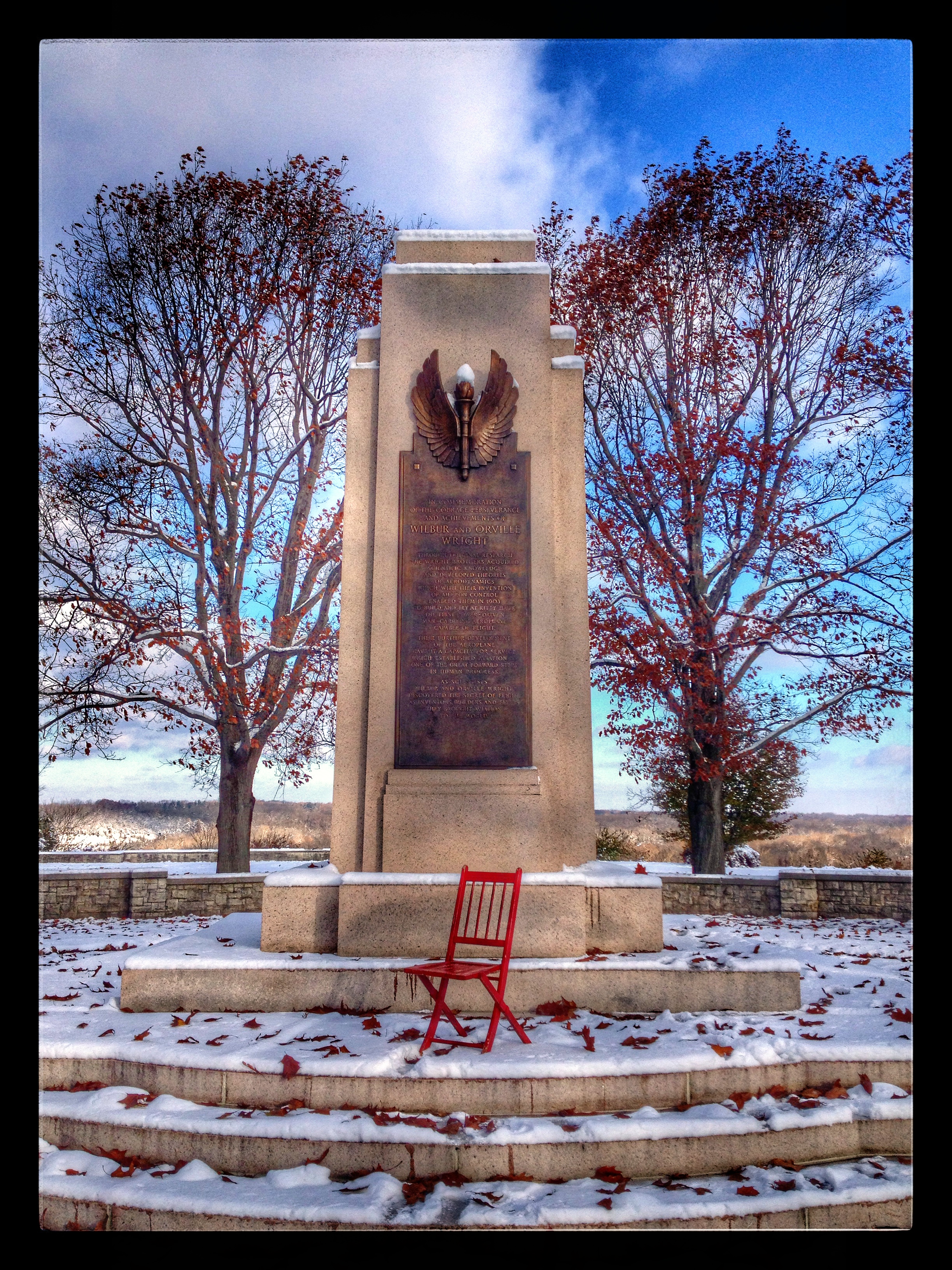
Anyway, it was 8 degrees out, with a windchill of about -20. I jumped out to take a photo of the monument and look at the field, which I don’t think I actually managed to find. It’s down the hill and to the left from where I took this photo.

The monument, which was dedicated on August 19, 1940 (Orville’s 69th birthday) reads:

In commemoration of the courage, perseverance and achievements of Wilbur and Orville Wright. Through original research the Wright Brothers acquired scientific knowledge and developed theories of aerodynamics which with their invention of aileron control enabled them in 1903 to build and fly at Kitty Hawk the first power-driven man-carrying aeroplane capable of flight.

Their further development of the aeroplane gave it a capacity for service which established aviation as one of the great forward steps in human progress.

As scientists Wilbur and Orville Wright discovered the secret of flight. As inventors, builders and flyers they brought aviation to the world.

IMG_9579

We’d found out that Huffman Prairie was closed, contrary to the web page, but surely the main visitor center for Dayton Aviation Heritage National Historical Park would be open, right?

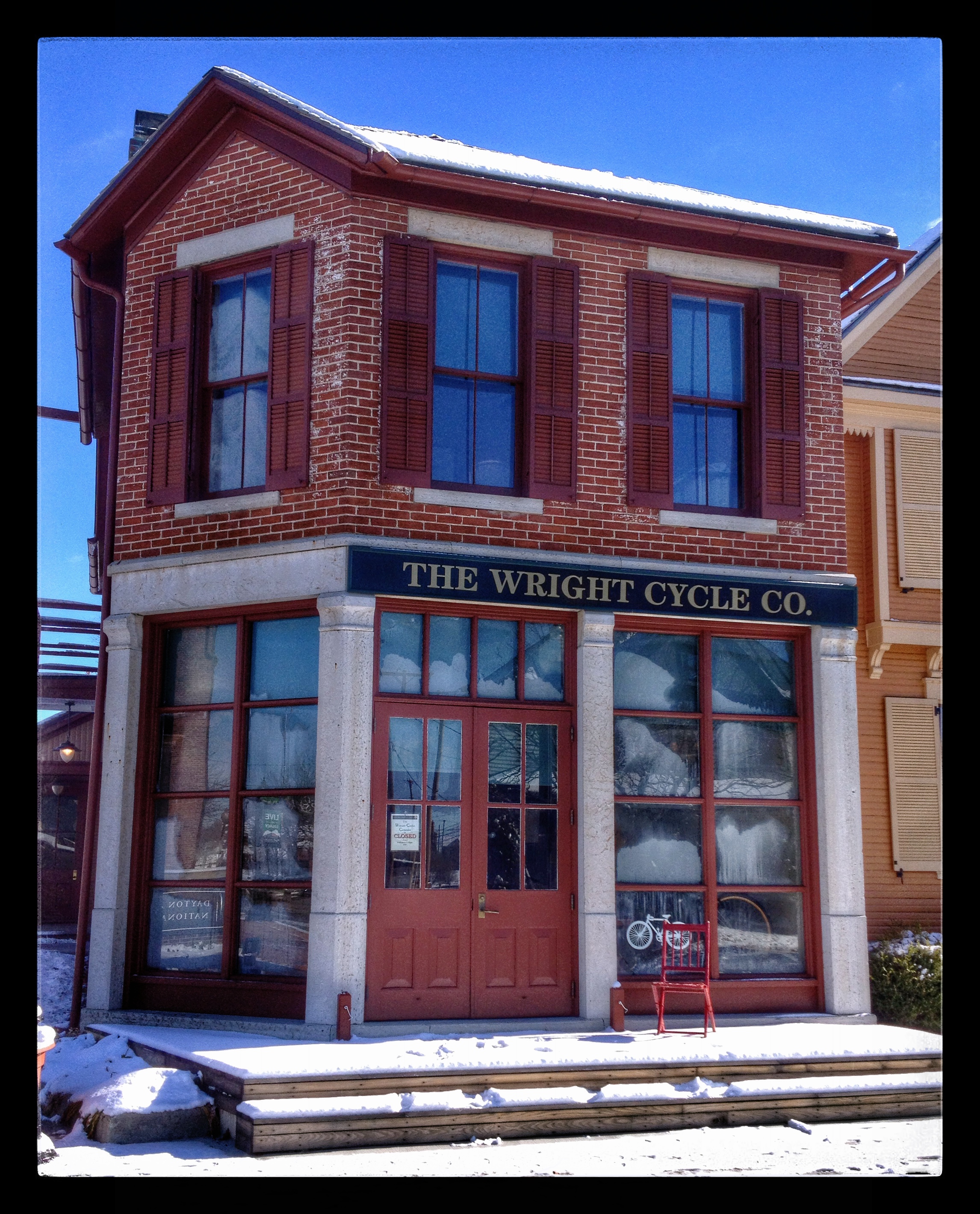
Wrong. We checked. I took a quick photo of The Wright Cycle Company, one of the actual buildings in which the brothers operated their business. They worked here from 1895 to 1897. (The building in which they actually designed their plane has been moved to Greenfield Village in Michigan.)

IMG_9581

All the National Park sites celebrating the Wright Brothers were closed, so there was nothing left for us to do but find one of the many monuments scattered about town.

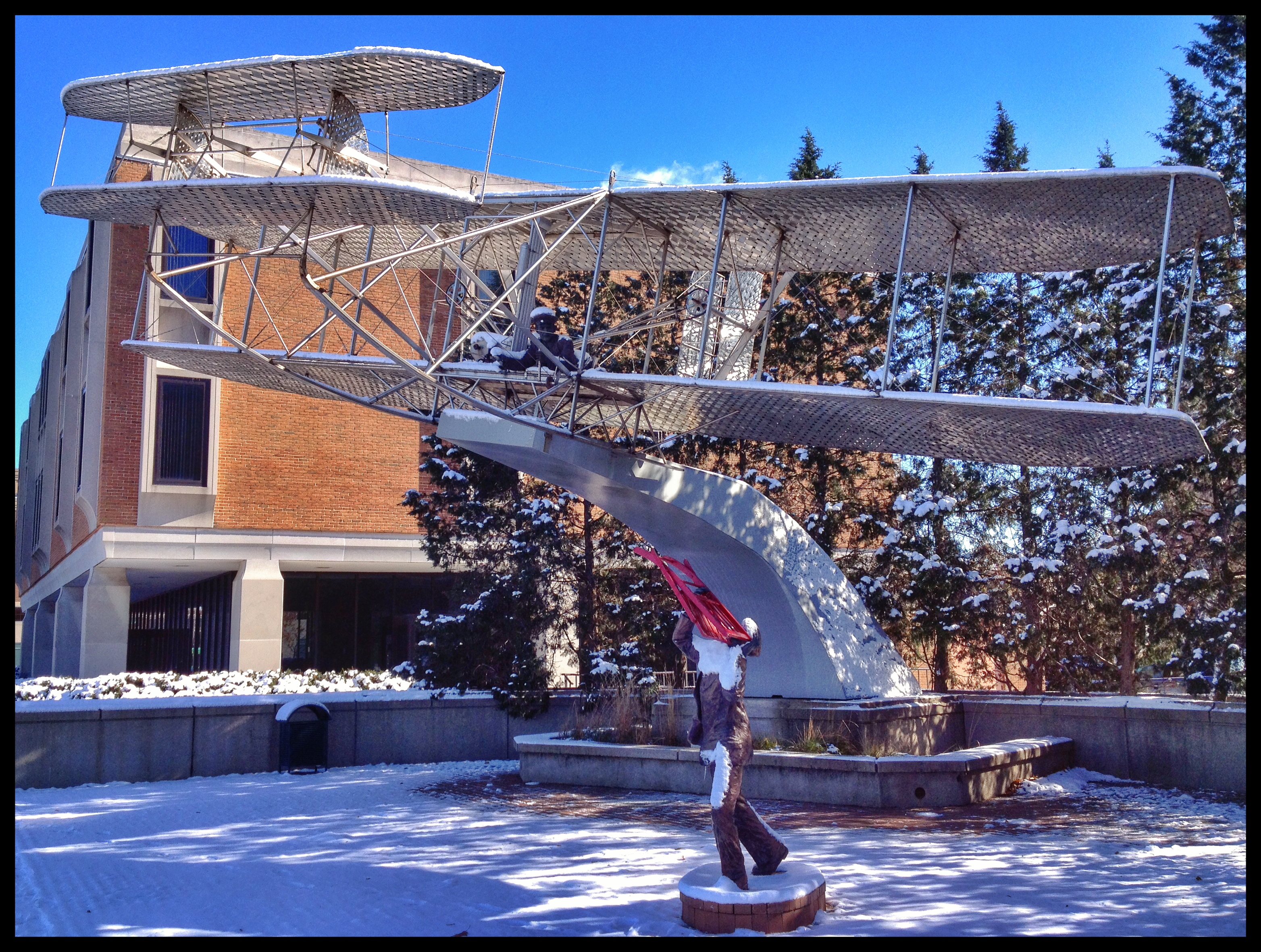
This one is next to the Dayton Engineers Club, built by a group of inventors from the city. Orville Wright was president for a while. A statue has been built next door, showing Wilbur flying the 1905 Wright Flyer while Orville runs alongside and tries to hand him a chair.

Sunday night’s snow had left several inches on Orville’s face. I tried to scrape some of it off, but it was caked on pretty solidly.

IMG_9585

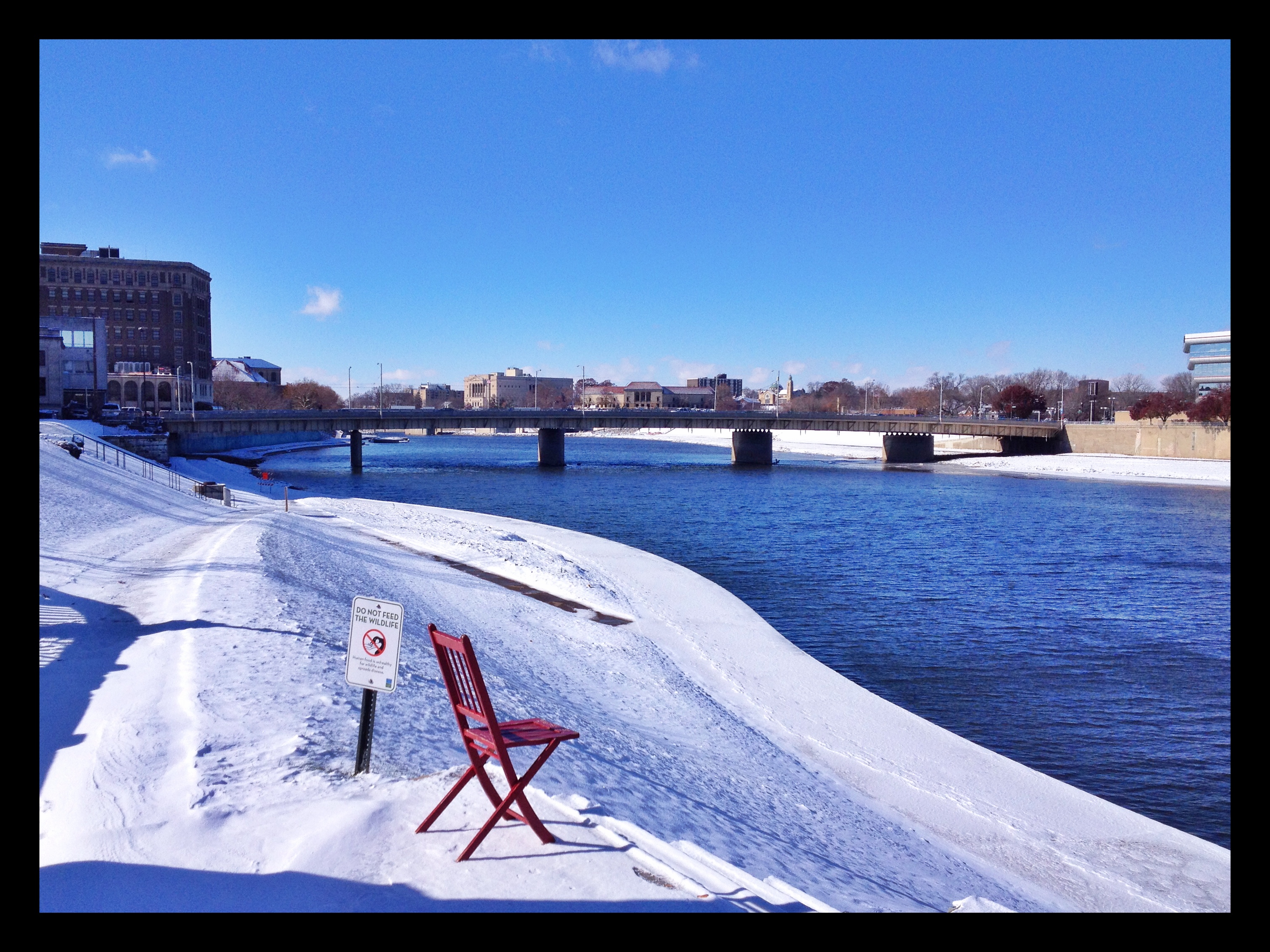
Four inches of snow and temperatures in the single digits in mid-November pretty much brought things to a halt in Dayton. For example, there was nobody in the park along the Great Miami River, right across the street from the sculpture.

IMG_9590

Posted in Ohio | Comments Off on Wright Brothers

Ohio

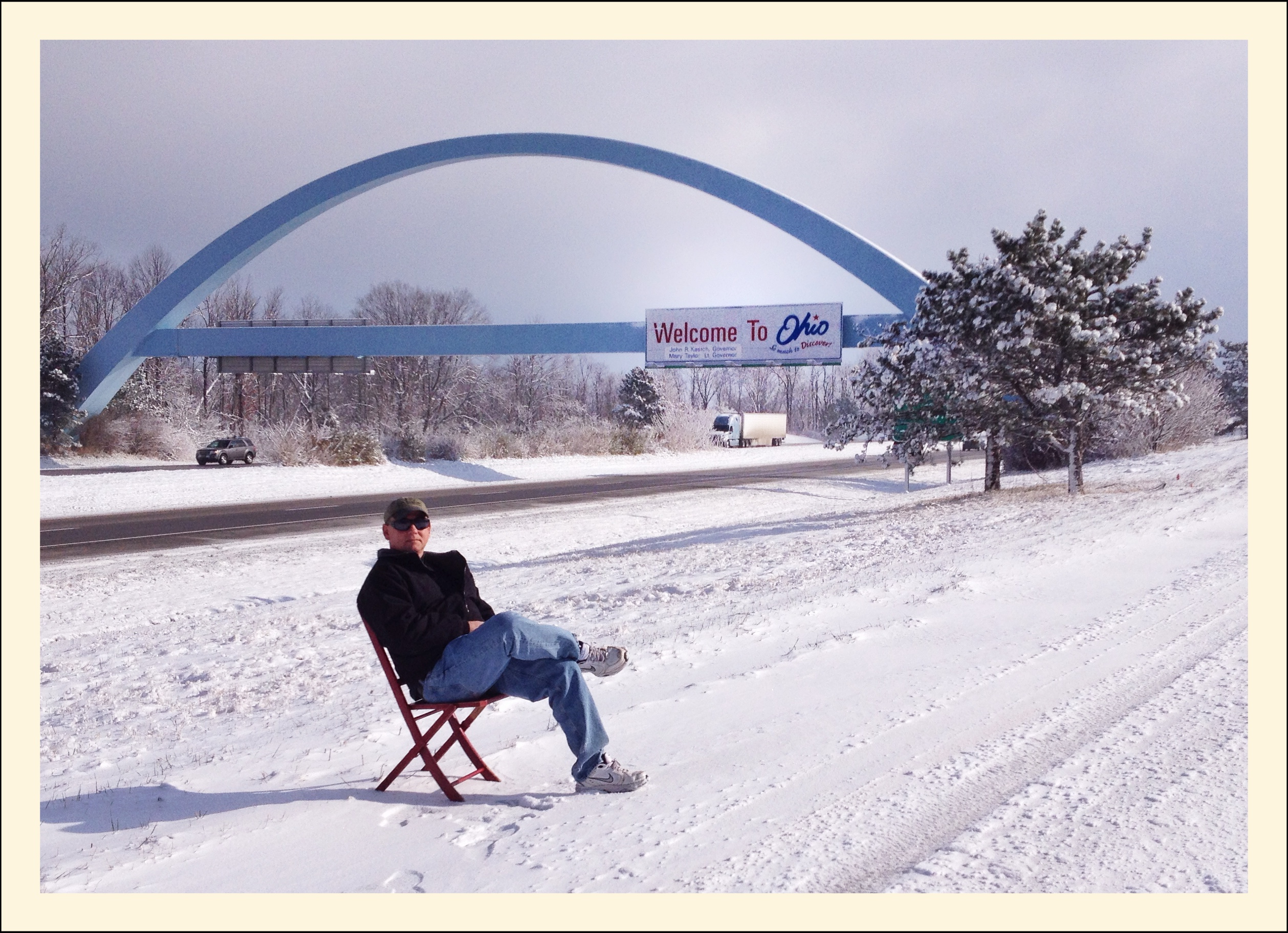
The red chair has been in Ohio before, but I never found a good place for a photo. This time, we entered the state hard on the heels of a four-inch snowfall. I saw the sign and saw an exit and made a snap decision to pull off. I found myself on an unplowed ramp leading to a closed truck weighing station.

Even though it was only about 18 degrees out, with a stiff wind, I talked my wife into getting out of the warm car to take a picture.

I-70 near Clayton, Ohio

IMG_9578

Posted in Ohio | Comments Off on Ohio

Ted Drewes

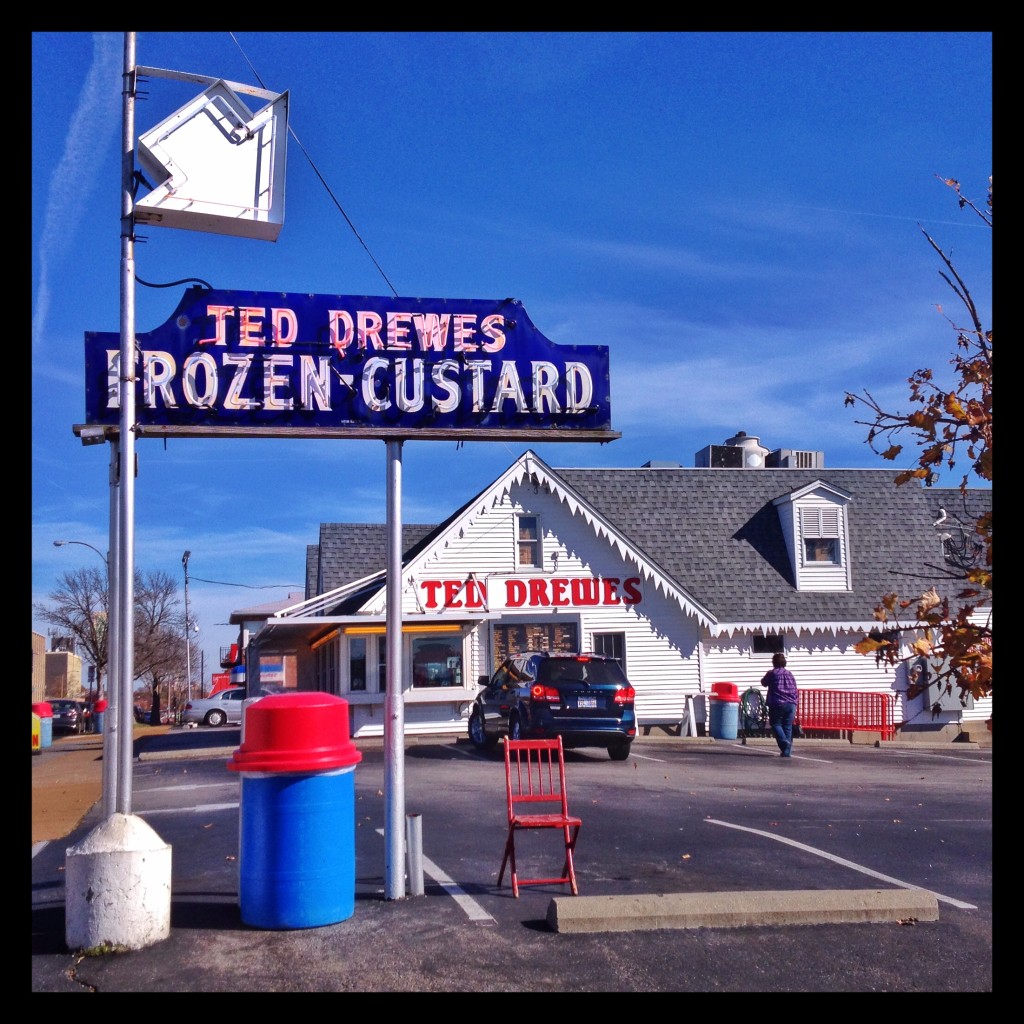
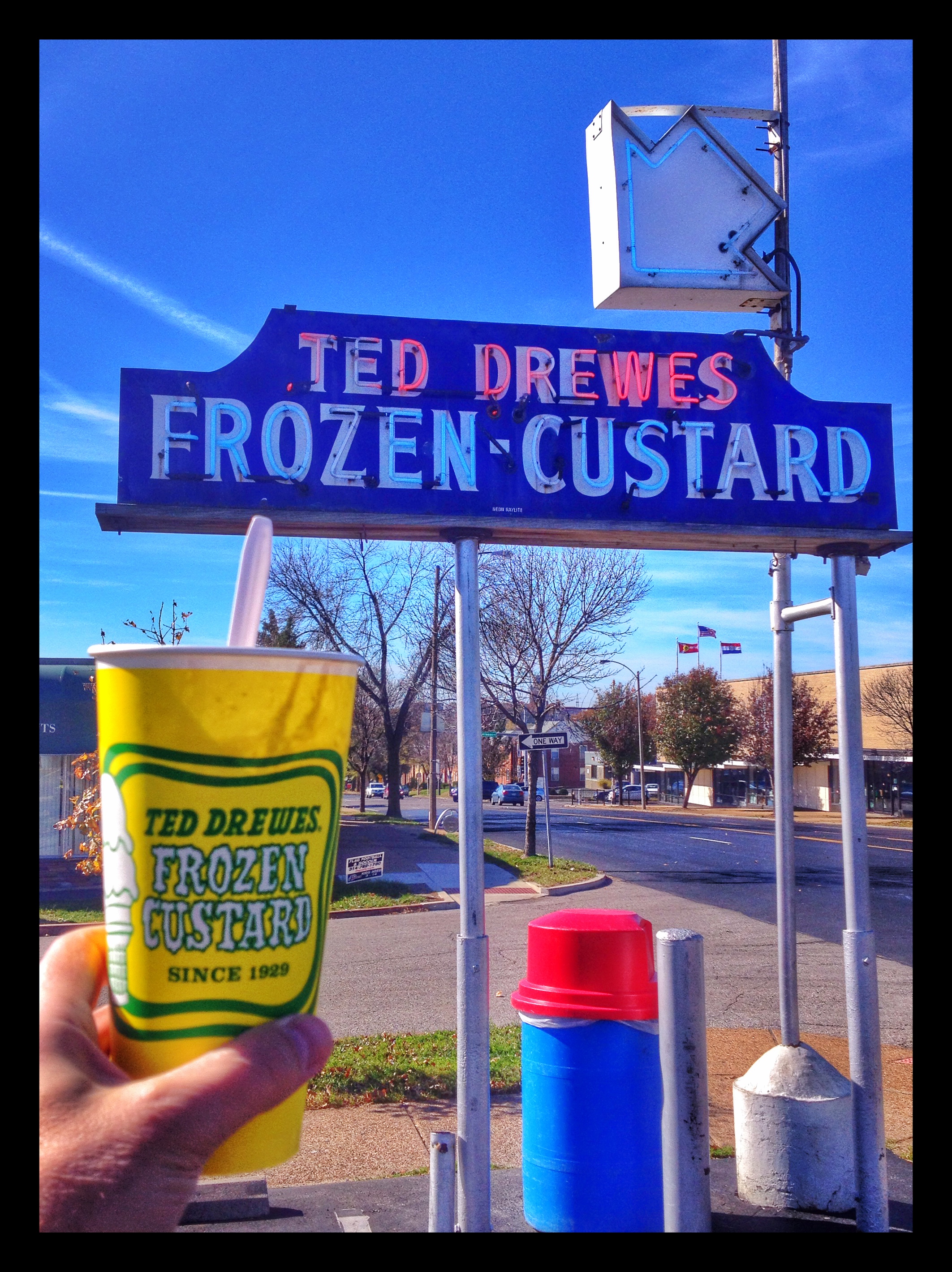
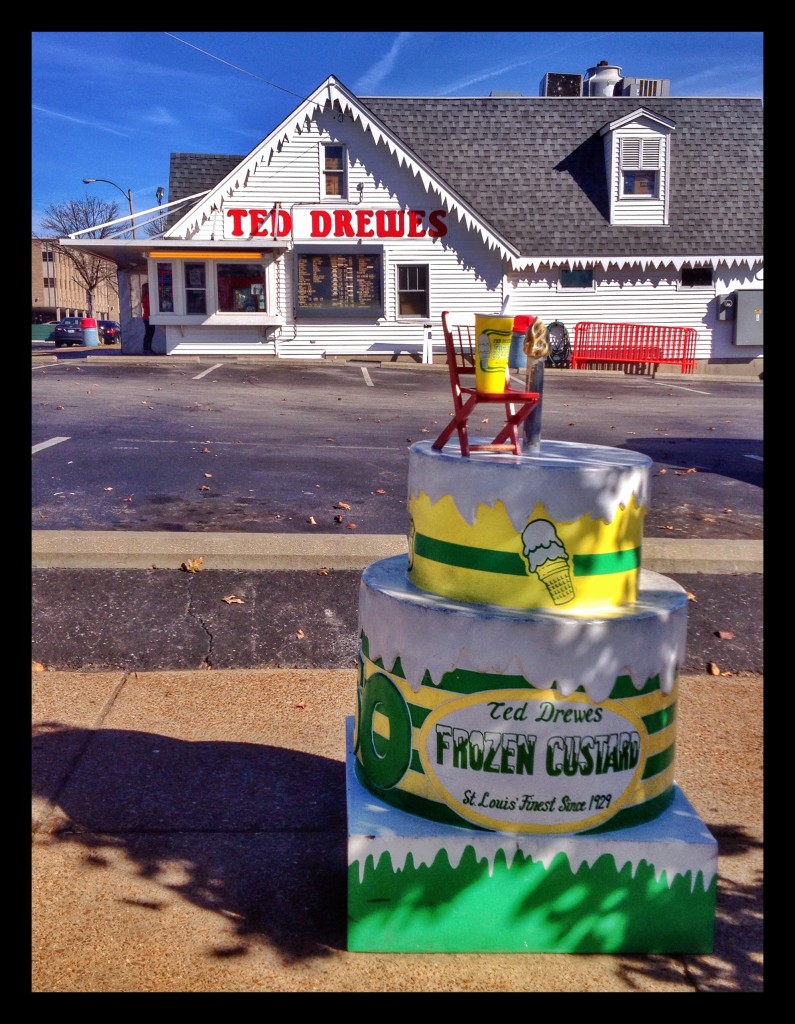
Our final fun stop on our quick trip to Missouri was at Ted Drewes Frozen Custard in St. Louis. It wasn’t lunchtime yet, but we ate dessert first — I got a chocolate chip and raspberry concrete and my wife got a turtle sundae (of course). Both were awesome.

IMG_9456-1024x1024

IMG_9560

IMG_9454-795x1024

Posted in Missouri | Comments Off on Ted Drewes

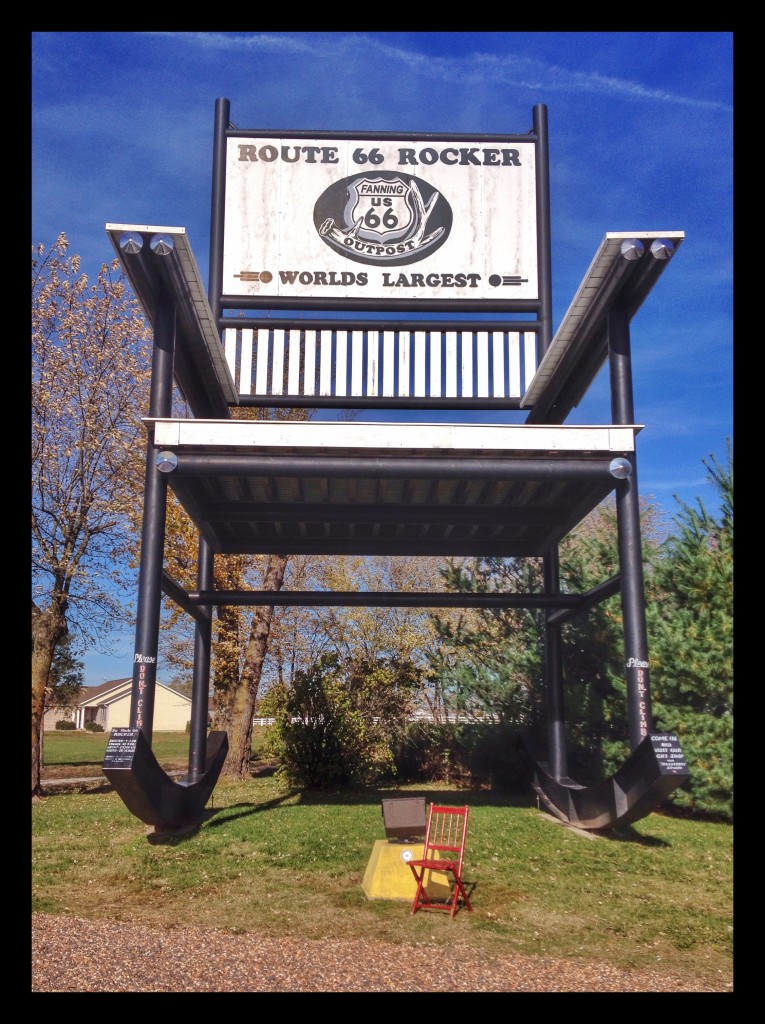
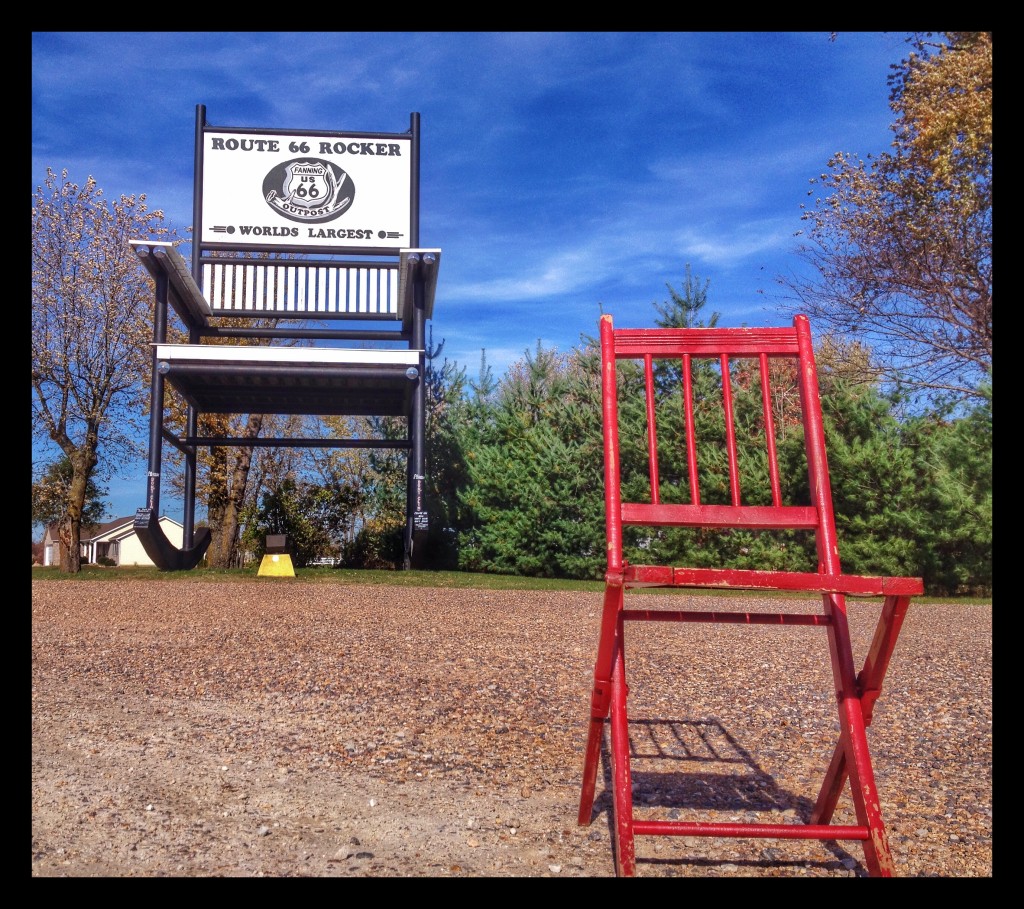
World’s Largest Rocking Chair

We drove from St. James to Cuba on Route 66. This wasn’t as exciting as it sounds. The road was closer to the east-bound lanes of Interstate 44 than the west-bound lanes were. A huge metal rocking chair sits next to a gift shop.

IMG_9455-765x1024

I asked the woman in the gift shop “Why a rocking chair?” She said, “To get people like you to stop by.” Which, while true, isn’t terribly flattering and didn’t really answer the question.

IMG_9457-1024x909

Posted in Missouri | Comments Off on World’s Largest Rocking Chair