Ted Drewes

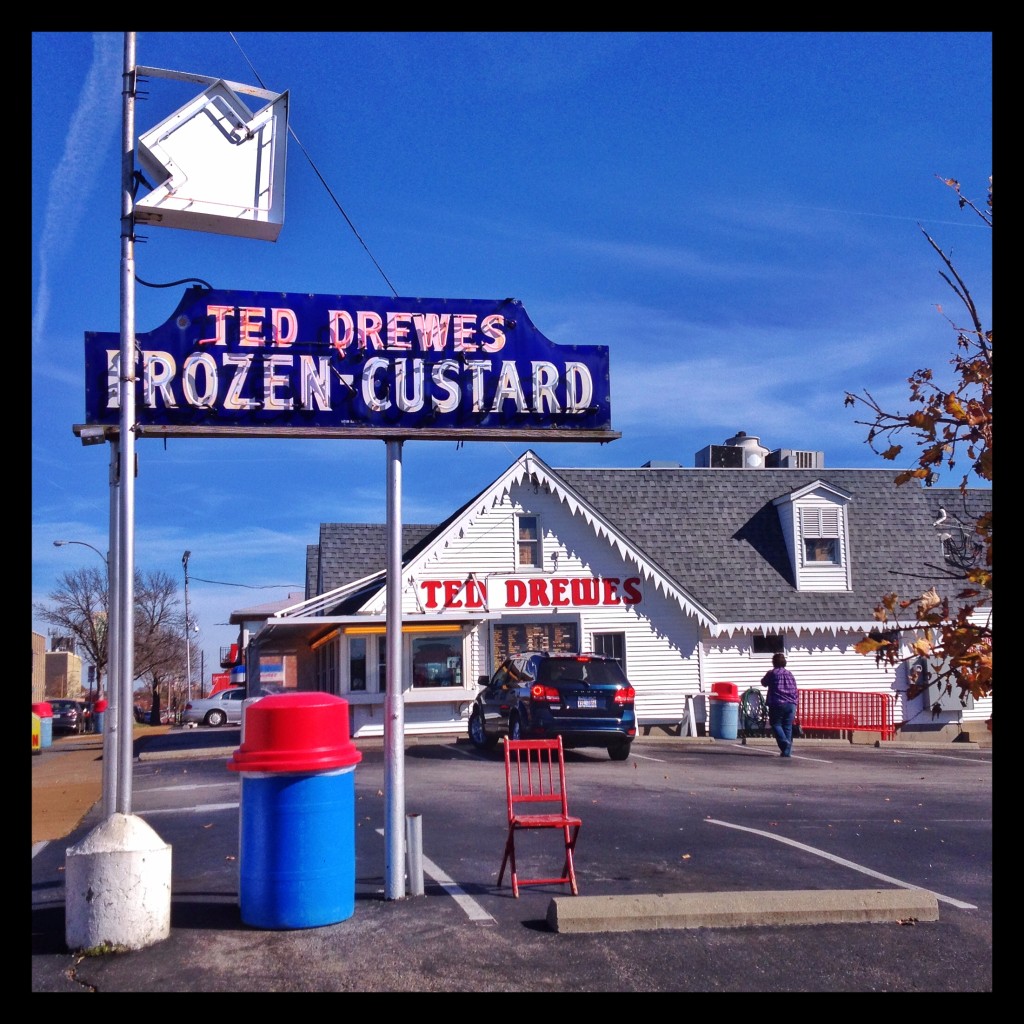
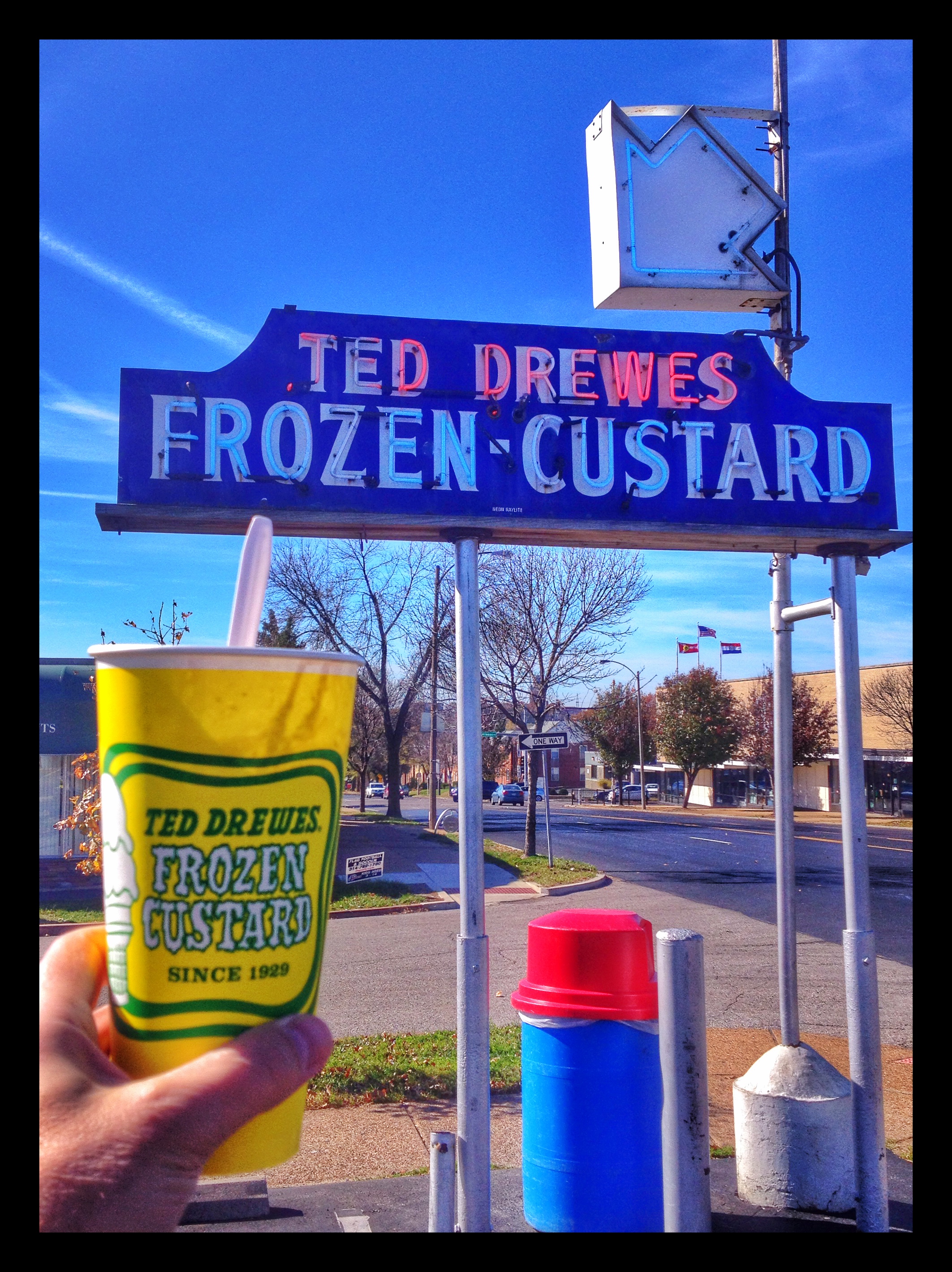
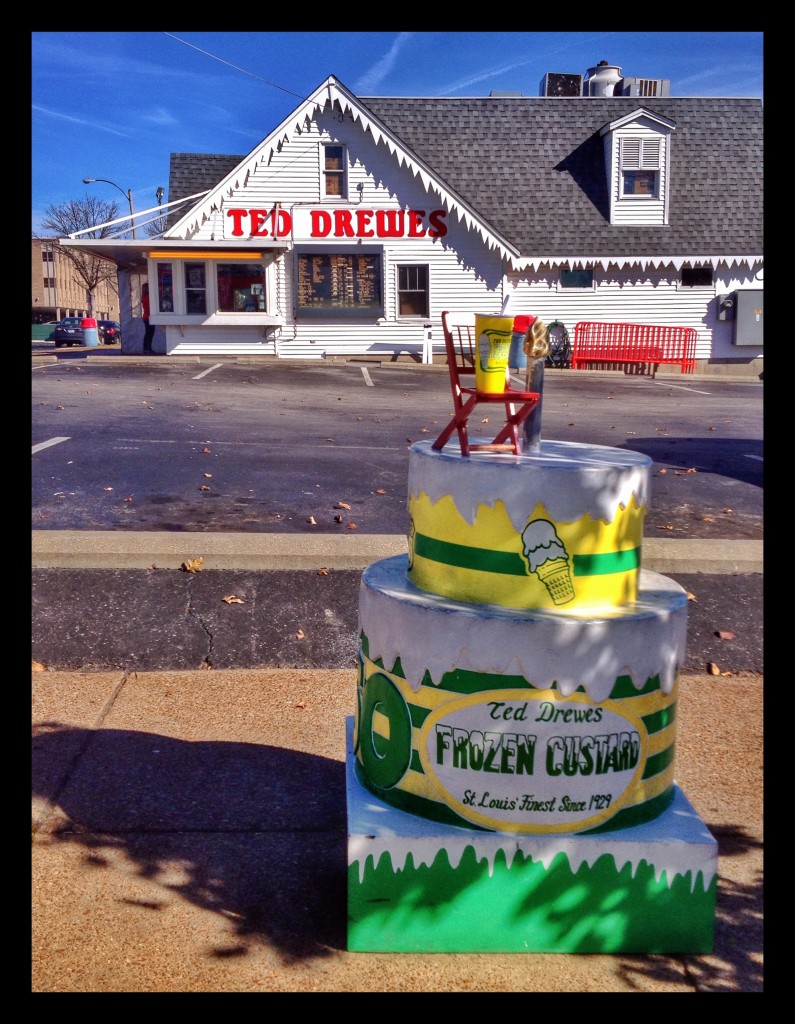
Our final fun stop on our quick trip to Missouri was at Ted Drewes Frozen Custard in St. Louis. It wasn’t lunchtime yet, but we ate dessert first — I got a chocolate chip and raspberry concrete and my wife got a turtle sundae (of course). Both were awesome.

IMG_9456-1024x1024

IMG_9560

IMG_9454-795x1024

Posted in Missouri | Comments Off on Ted Drewes

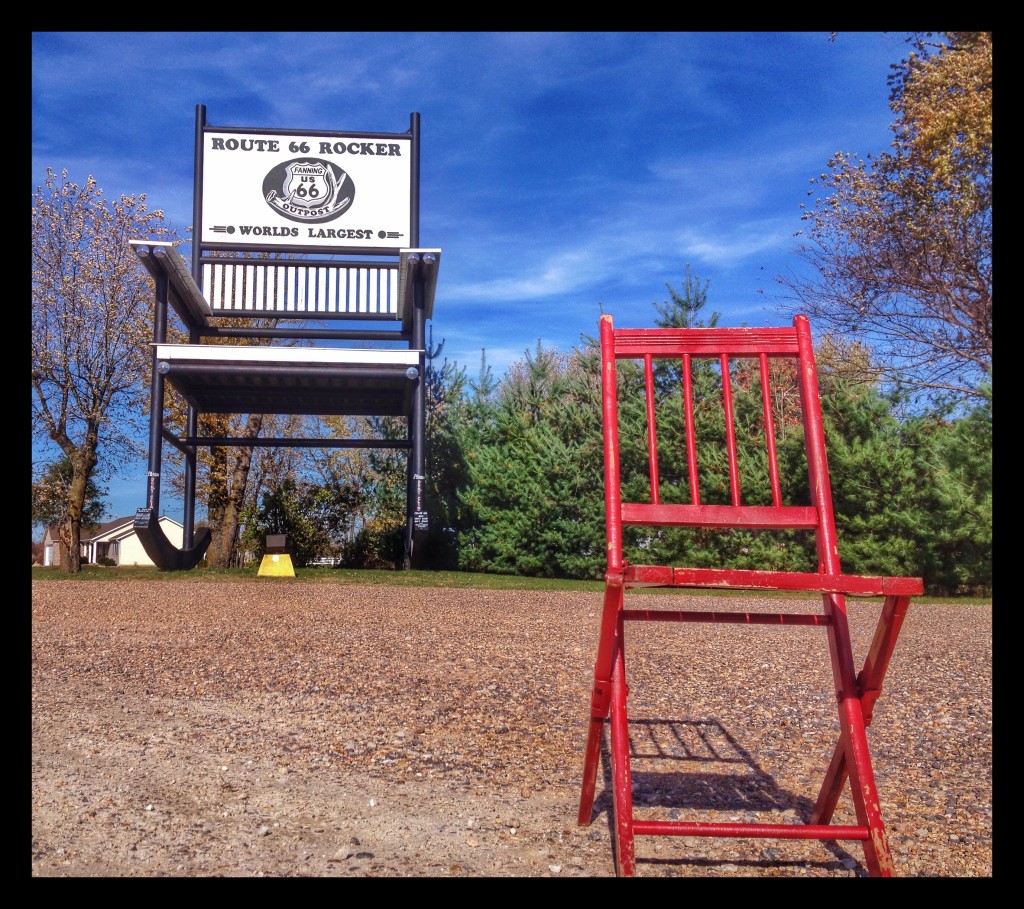
World’s Largest Rocking Chair

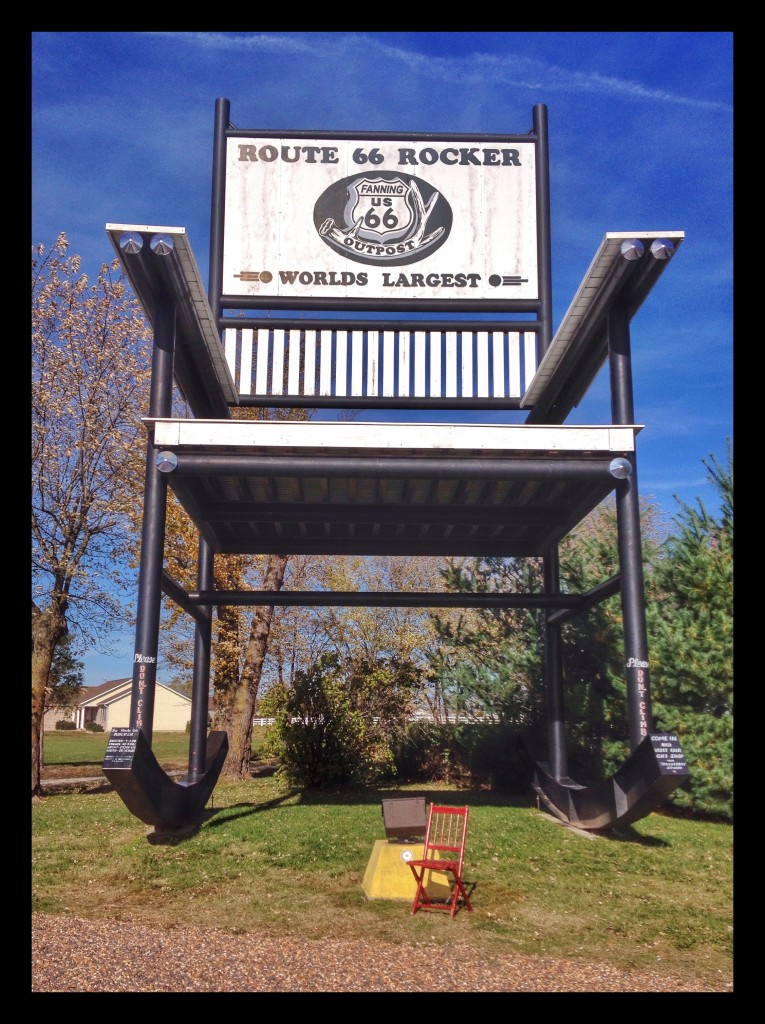
We drove from St. James to Cuba on Route 66. This wasn’t as exciting as it sounds. The road was closer to the east-bound lanes of Interstate 44 than the west-bound lanes were. A huge metal rocking chair sits next to a gift shop.

IMG_9455-765x1024

I asked the woman in the gift shop “Why a rocking chair?” She said, “To get people like you to stop by.” Which, while true, isn’t terribly flattering and didn’t really answer the question.

IMG_9457-1024x909

Posted in Missouri | Comments Off on World’s Largest Rocking Chair

Vacuum Cleaner Museum

When we planned our trip to Missouri, I checked the Internet for interesting things to do along the way. That’s how I found the Vacuum Cleaner Museum in St. James.

I wanted to stop just because it was silly, but I had a hard time convincing my wife. It turned out to be really interesting, and she even wants to go back!

IMG_9462-702x1024

The woman at the desk said we could go through on our own or get a tour from her. We opted for the tour, and it was fun. The museum is set up as a series of rooms, each featuring vacuums, accessories and advertisements from a particular decade.

The 1910’s, with several models that aren’t electric. Suction is created by turning a crank or pumping the canister.

IMG_9558

IMG_9463-1024x688

The sign on the wall asks why vacuums have headlights. The answer: because a lot of houses didn’t have outlets, so vacuums were powered by unscrewing light bulbs and screwing the vacuum cord into the light socket. Therefore, no light — therefore, headlights.

The woman in the advertisement is demonstrating.

IMG_9561

Here’s one of those vacuums, with an adapter.

IMG_9559

The 1920’s. The vacuum on the right could be reversed to make the suction draw through the handle so you could lift it to reach along the ceiling. It also had an accessory that you could attach to your pillow. It would suck out the feathers and clean and fluff them. You could then reverse it to blow the feathers back in.

IMG_9553

IMG_9555

IMG_9554

The 1930’s and 40’s

“I want $4.50, and I want it now!”

IMG_9557

IMG_9556

IMG_9551

IMG_9552

The 1950’s. Our guide kept referring to the “hassocks,” the boxes built to hold accessories but made to look like furniture. But she had us confused for a bit because she kept pronouncing it as “has socks.”

IMG_9461-1024x687

IMG_9548

The 1960’s

IMG_9550

IMG_9527

IMG_9529

The first wet-vac. It didn’t last long because it wasn’t grounded and people kept getting shocked.

IMG_9549

IMG_9530

The 1970’s

IMG_9528

IMG_9526

There were more modern ones too, but we didn’t find them as interesting. We had to listen to a short sales pitch at the end, of course, but we didn’t mind. The woman showed us one vacuum that could sense dirt. When the carpet was clean, the headlights would turn off. It also had a coating that looked copper, green, or red, depending on the light. It retailed for $1,500. We didn’t buy one.

img001-791x1024

img002-791x1024

Posted in Missouri | Comments Off on Vacuum Cleaner Museum

Miller Cave and the Big Piney River

There are several caves on Fort Leonard Wood, but Miller is the only one open to the public. We drove down several base roads and then up onto a ridge on a dirt track where we found a tiny parking area and a rough trail that led down the hill for maybe 100 yards to the cave entrance.

IMG_9424-1024x682

The part of the cave that we saw consists of two rooms connected by a small opening. Other openings looked out over the Big Piney River and a stretch of farmland in the river valley. It was the most beautiful view from a cave I’ve ever seen.

IMG_9485

IMG_9474

I took this pan with my cell phone.

IMG_9406-1024x540

And this one was stitched together from four photos taken with my 35mm.

IMG_9452-1024x560

IMG_9483-1024x672

IMG_9484

IMG_9473

Just above the cave there was a ledge that gave even better views of the river and the valley.

IMG_9495

IMG_9494

IMG_9493

IMG_9491

IMG_9518

IMG_94321-682x1024

IMG_9453-1024x1024

We drove a short way to a picnic area on the base named Happy Hollow.

IMG_9533

IMG_9433-1024x682

IMG_9492

IMG_9451-1024x1024

IMG_9531

Posted in Missouri | Comments Off on Miller Cave and the Big Piney River

Fort Leonard Wood

The Fort Leonard Wood museum was closed. Near the museum, there is a park filled with military vehicles and several old barracks, mess halls, and other structures from World War II.

IMG_9502

This one is a mobile flame-thrower.

IMG_9503

IMG_9504

IMG_9505

In army speak, this is a Patrol Boat, River (PBR) MK 2. It was developed during the Vietnam War for use on the rivers. Most of them were used by the Navy, but the 18th Military Police Brigade also used them.

IMG_9459-1024x633

IMG_9458-1024x566

The post was built in 1941 as part of the build-up for World War II. There were hundreds of barracks, mess halls, supply sheds and other buildings put up in a very short time (one site I saw said that a building was completed every 40 minutes). Not many of the buildings remain, and those that do have been modernized and covered with metal siding. These have been restored to their original appearance.

IMG_9516

Building 1317, built in 1941 to house 53 enlisted men and 10 non-commissioned officers. In 1944, the beds were replaced with bunks to increase capacity to 120 men. There were 613 identical barracks built at Fort Leonard Wood during World War II.

IMG_9515

IMG_9514

IMG_9513

Posted in Missouri | Comments Off on Fort Leonard Wood