Highlights from Recent Reading

Solvitur ambulando, writes St. Jerome — “to solve a problem, walk.”

So who cares? is always a writer’s most fearsome uncertainty. Whatever the genre, a reader may begin to care if writers will look closely and report precisely and with imagination.

from Here, There, Elsewhere, by William Least Heat-Moon

__________

Mr. Thomas Jefferson, like other Virginia gentlemen before him, having made a purchase of western lands, sent some agents to look over the property. Since his was the largest such purchase ever made, the work of his agents attained corresponding fame, and is known as the Lewis and Clark Expedition. Only Captain Lewis could have been called educated, and even he was a poor speller. Captain Clark was frontier-bred, and his misspellings at times approached the inspired.

This rage for divorce has especially affected all words which utilize, or seem to utilize, the French article. We now have LaBolt and LaPlant, both in South Dakota, and both at least partially justified, since they commemorate people of French ancestry. More curious is LaPine (Oregon). This was originally Lapine, and was named in pseudo-French because of the pine trees there, though it actually means female rabbit. With such a craze under way, we can wonder that Lemongrove (California) chose to become Lemon Grove instead of Le Mongrove.

from Names on the Land, by George R. Stewart

__________

The youth gets together his materials to build a bridge to the moon, or perchance a palace or temple on the earth, and at length the middle-aged man concluded to build a wood-shed with them. (Henry David Thoreau)

How we spend our days is, of course, how we spend our lives. What we do with this hour, and that one, is what we are doing … A life of good days lived in the senses is not enough. The life of sensation is the life of greed; it requires more and more. The life of the spirit requires less and less; time is ample and its passage sweet.

Why do you never find anything written about that idiosyncratic thought you advert to, about your fascination with something no one else understands? Because it is up to you. There is something you find interesting, for a reason hard to explain. It is hard to explain because you have never read it on any page; there you begin. You were made and set here to give voice to this, your own astonishment.

Einstein likened the generation of a new idea to a chicken’s laying an egg; “Kieks — auf einmal ist es da! Cheep — and all at once there it is.”

One of the few things I know about writing is this: spend it all, shoot it, play it, lose it, all, right away, every time. Do not hoard what seems good for a later place in the book, or for another book; give it, give it all, give it now. The impulse to save something good for a better place later is the signal to spend it now. Something more will arise for later, something better. These things fill from behind, from beneath, like well water. Similarly, the impulse to keep to yourself what you have learned is not only shameful, it is destructive. Anything you do not give freely and abundantly becomes lost to you. You open your safe and find ashes.

If this life be not a real fight, in which something is eternally gained for the universe by success, it is no better than a game of private theatricals from which one may withdraw at will. But it FEELS like a real fight. (William James)

from The Writing Life, by Annie Dillard

Posted in Reading | Comments Off on Highlights from Recent Reading

Opera in Focus

Our afternoon Mystery Trip location was Opera in Focus, a puppet theater in the basement of the Rolling Meadows Park District headquarters. The performance lasted maybe 45 minutes and consisted of songs from the operas Turandot and Tales of Hoffman and the musical South Pacific and a piece titled “Duetto buffo di due gatti” (Humorous Duet for Two Cats).

The stage, sets and puppets were impressive, but the act itself wasn’t as grand. The puppets pretty much stood on the stage and moved their arms while recorded music played over the speakers. Not easy to do, I’m sure, but not very flashy either.


20140510-181739.jpg

After the performance, we were allowed backstage, and this was the most interesting part. The walls were lined with puppets and props from past shows.

20140510-181800.jpg

20140510-181751.jpg

20140510-181813.jpg

We got to see how the puppets were operated.

20140510-181745.jpg

20140510-181828.jpg

And how they were made.

20140510-181823.jpg

Posted in Illinois | Comments Off on Opera in Focus

Cuneo Mansion

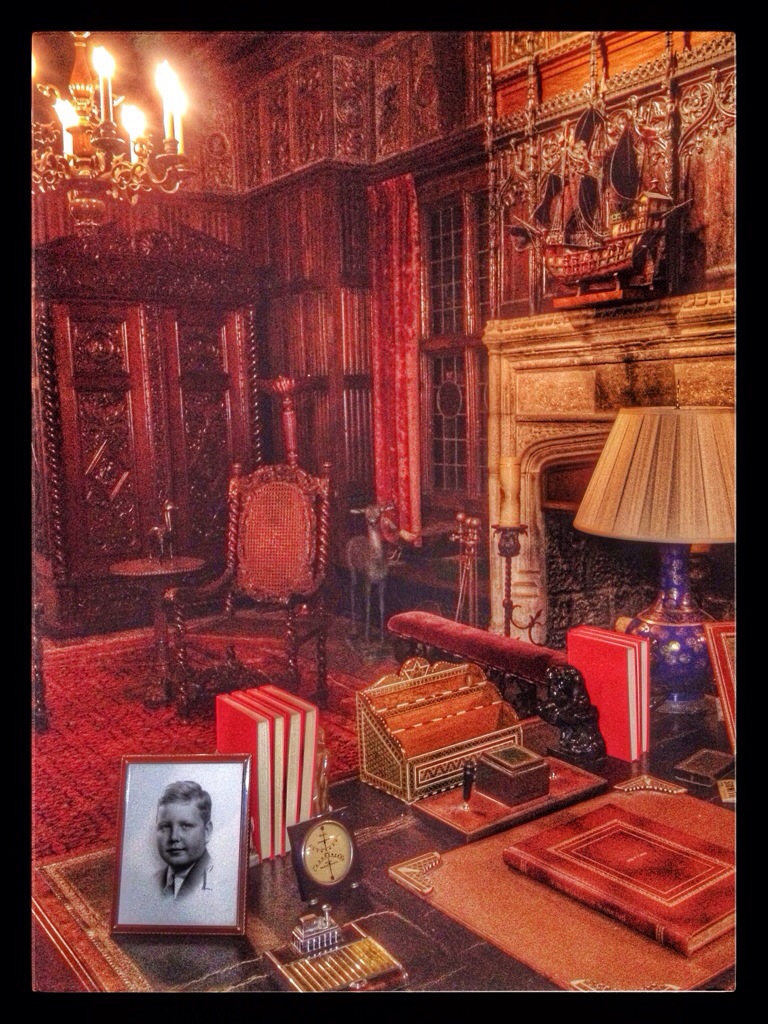
I went with 15 coworkers to tour the Cuneo Mansion in Vernon Hills, Illinois. The Mansion was built in 1916 by millionaire Samuel Insull, who made his money in utilities. He designed the home in the Italianate style, with a central courtyard with a retractable roof that could be opened to the sky in pleasant weather.

Insull lost his fortune in the Great Depression. The mansion was sold to John F. Cuneo, a millionaire in the publishing business. He also owned Hawthorn Melody Farm, where my parents frequently took me when I was young.

Cuneo closed the roof over the courtyard permanently and filled the home with antiques. He died in 1977. His wife lived in the home until her death in 1990. It’s been a museum ever since. If you want to know more, here’s a history of the property.

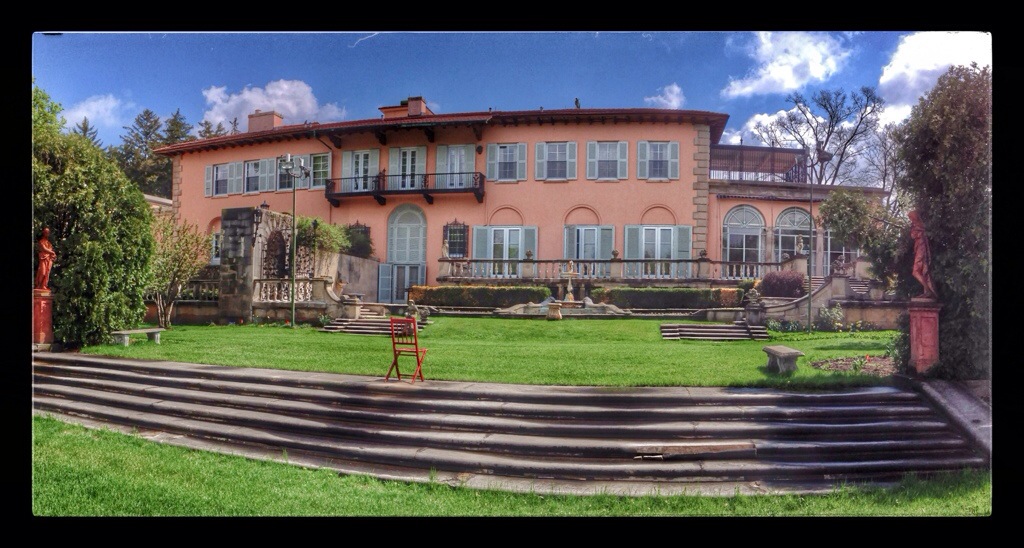
The back of the house. (I didn’t get a good photo of the front because our bus was parked there.)

20140510-141306

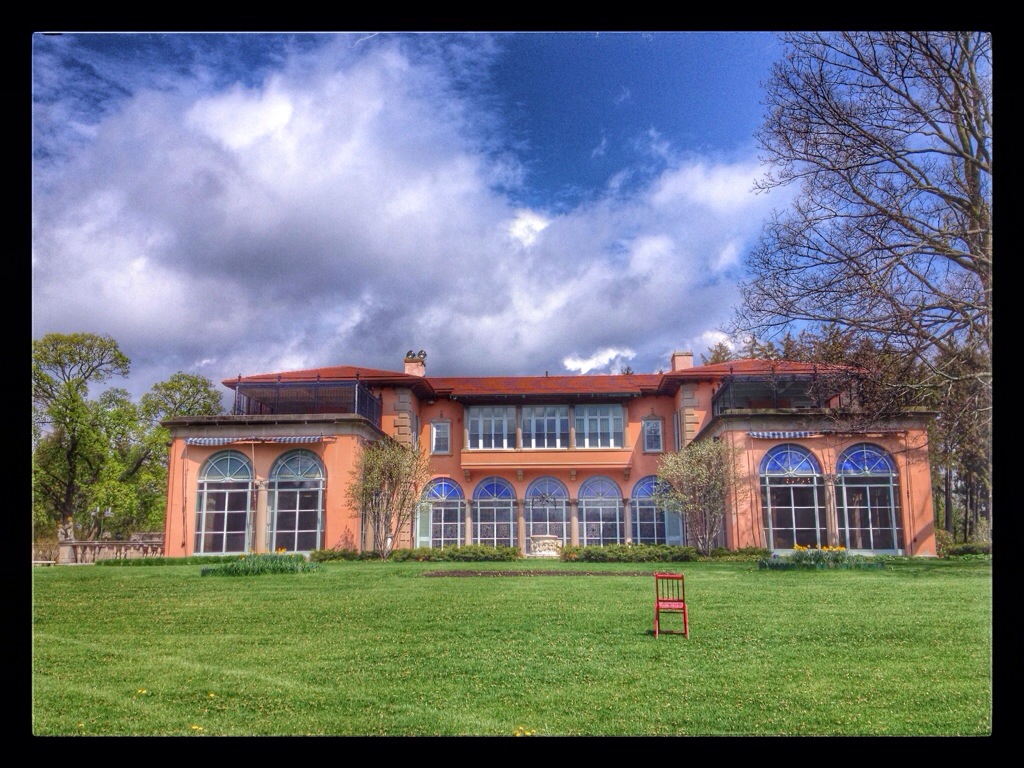
The side of the house as seen from the sculpture Garden.

20140510-141258

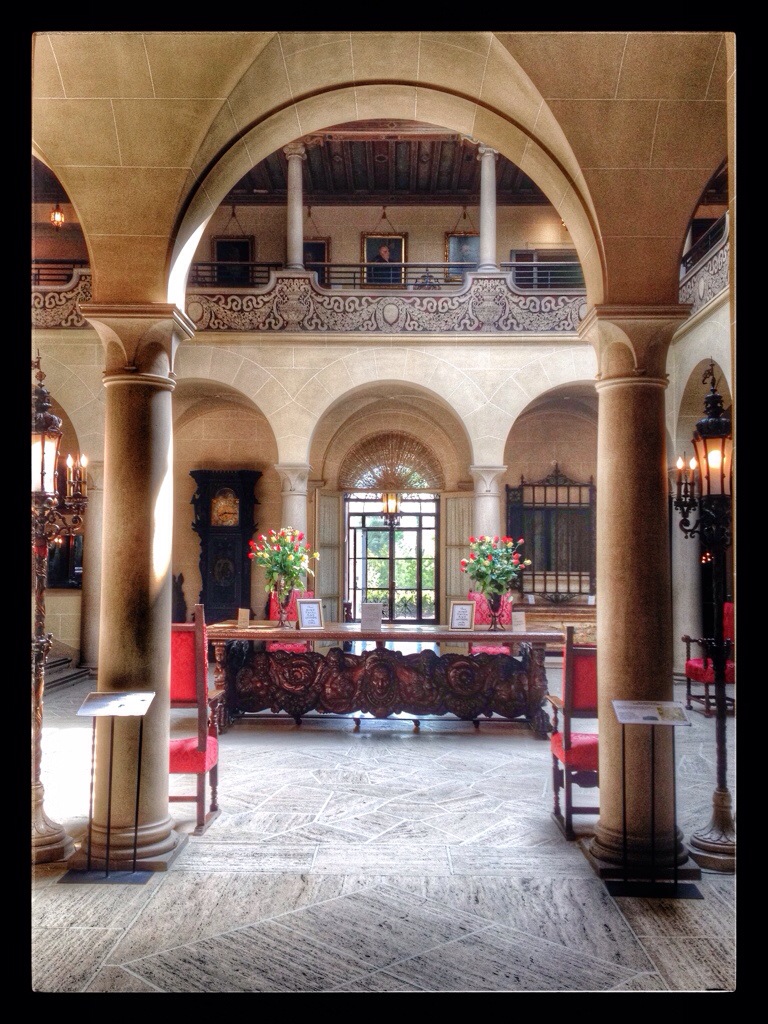
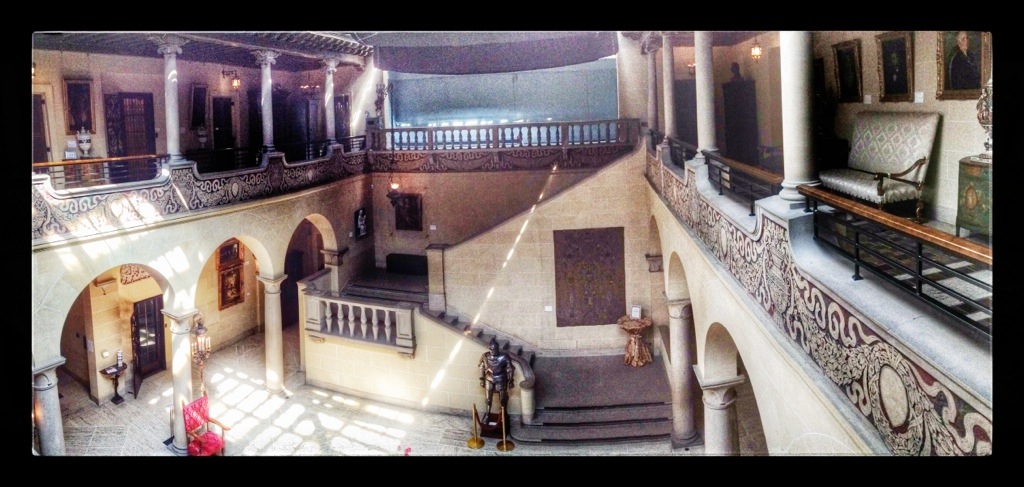
The central courtyard.

20140510-200010.jpg

The “oldest working elevator in Lake County” can be seen across the courtyard.

20140510-200054.jpg

20140510-224740.jpg

20140510-200050.jpg

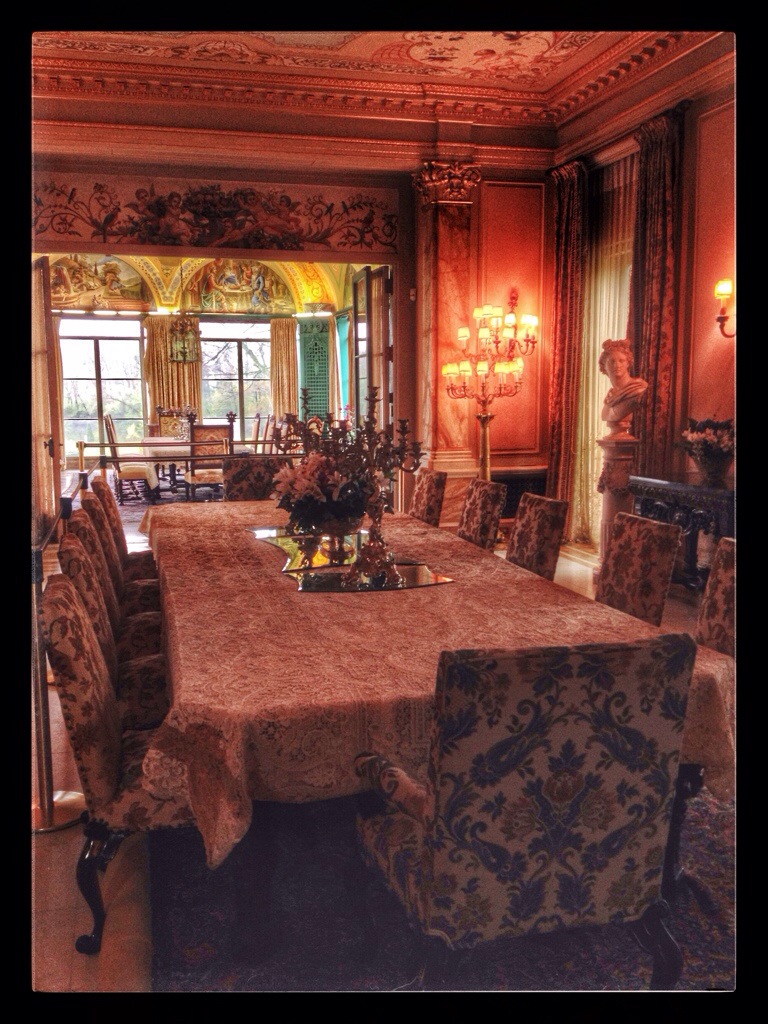
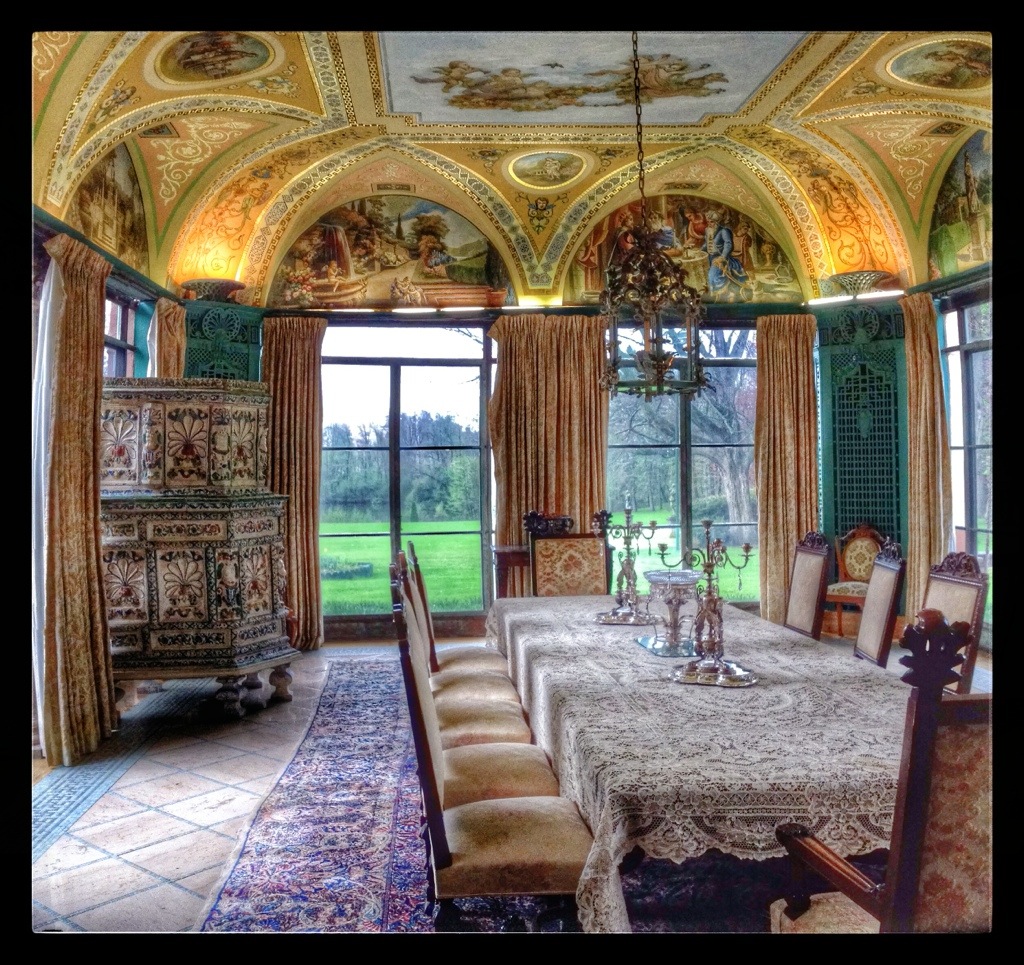
The dining room(s). When all the leaves are in the table, it can seat 75. The Cuneos sat at either end and communicated by phone. The candelabra in the corner is one of four, once owned by Napoleon in his palace in Corsica. All the ceilings are hand painted by John Mallin.

20140510-200021.jpg

The object on the left is a ceramic furnace from Germany.

20140510-200016.jpg

The chapel. They had to get permission from the Pope to build and use it.

20140510-200032.jpg

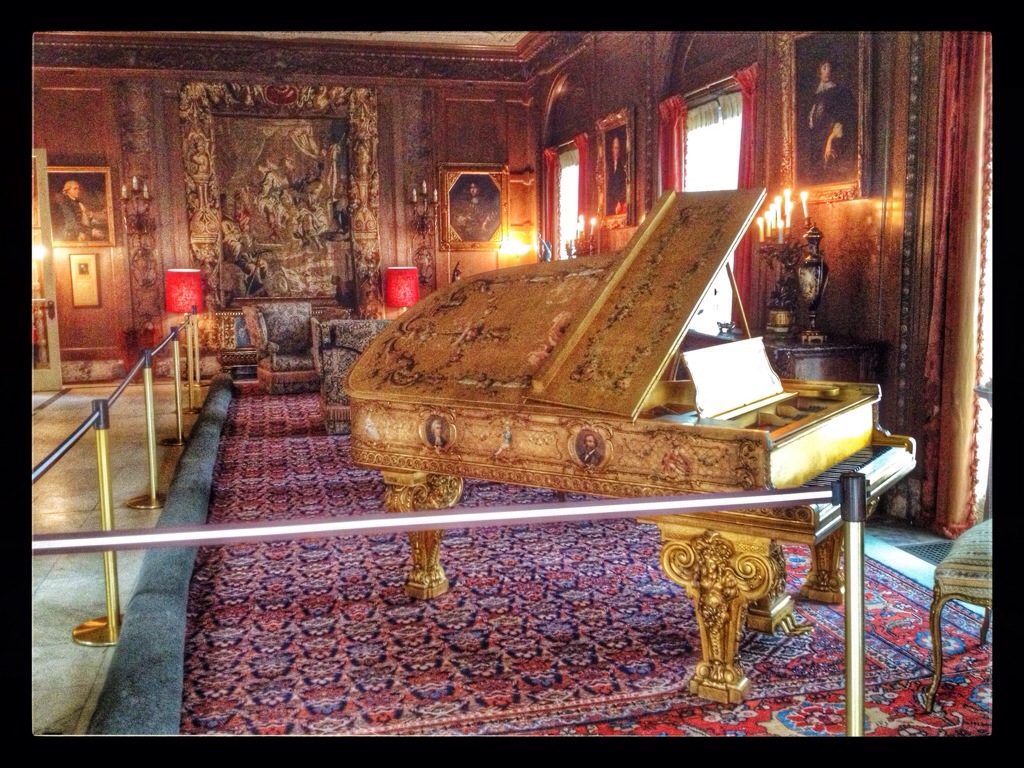
The salon

20140510-200027.jpg

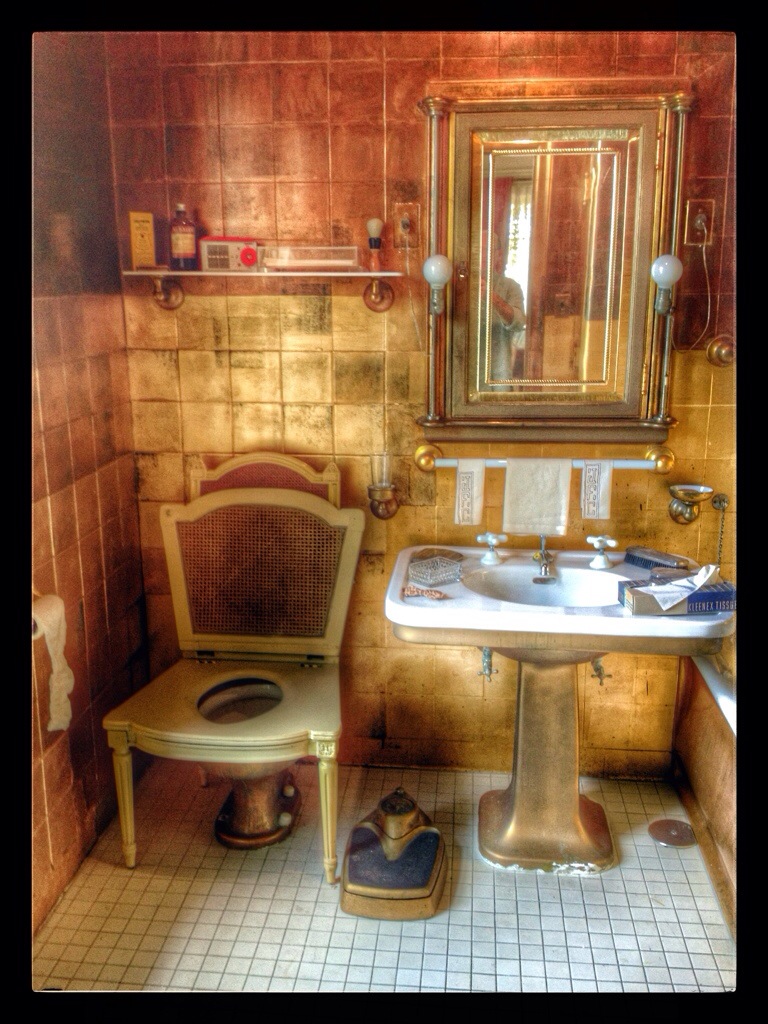
The ladies’ powder room. The “facilities” are in a smaller room to the right where the walls are decorated with gold leaf (which also backs the mirrors).

20140510-200043.jpg

The ship’s room. It was designed to look like the captain’s cabin of a 17th century sailing ship. Our guide said it was an actual cabin removed from a ship, but the official page on the Internet uses the qualifier “presumably.”

20140510-200038.jpg

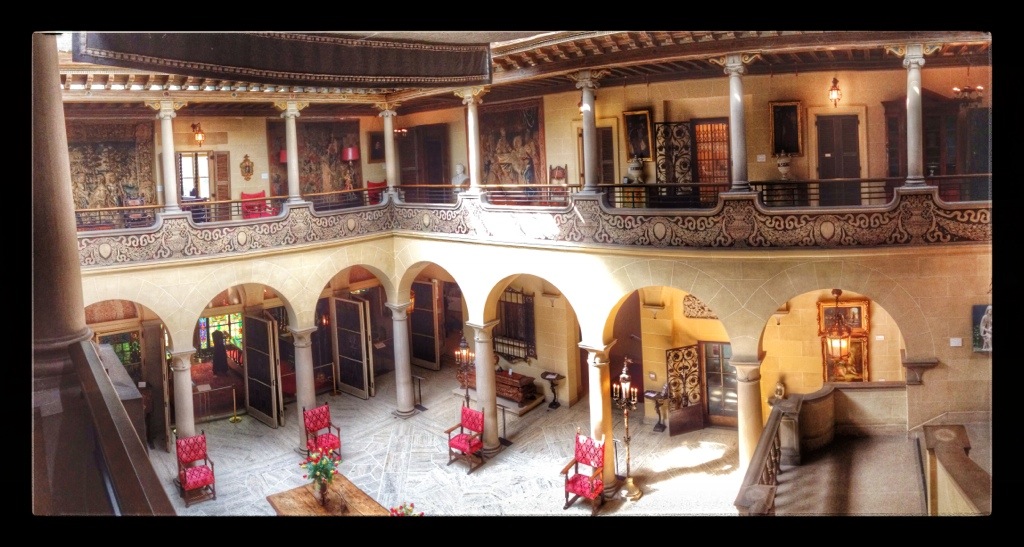
An upstairs walkway overlooking the courtyard

20140510-200005.jpg

Mrs. Cuneo’s bath

20140510-200104.jpg

Mr. Cuneo’s bath

20140510-200059.jpg

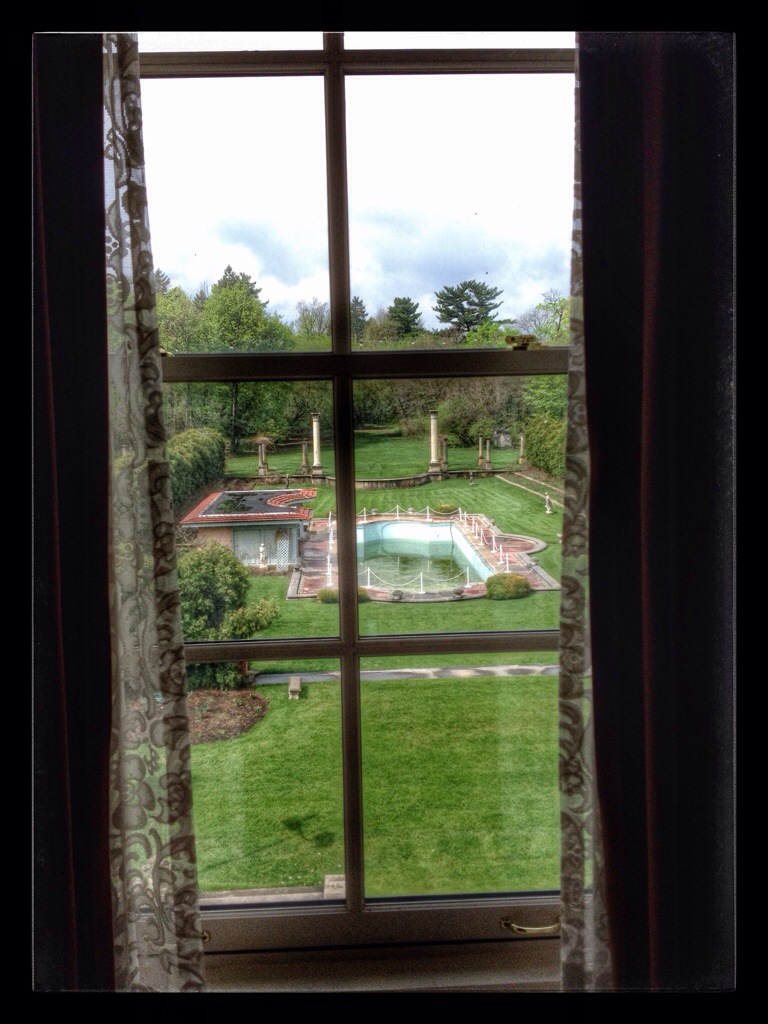
Looking out on the backyard

20140510-200111.jpg

The bars on this sleeping porch were put up in the early 1930’s. We were told that this was done shortly after the Lindbergh baby was kidnapped because the Cuneos were concerned for the safety of their son, John Jr. We were also told that no steps were taken to protect the daughter, Consuela. Again, the official guide hedges quite a bit. I suspect it may have been as much to keep the boy in as to keep other people out.

20140510-200116.jpg

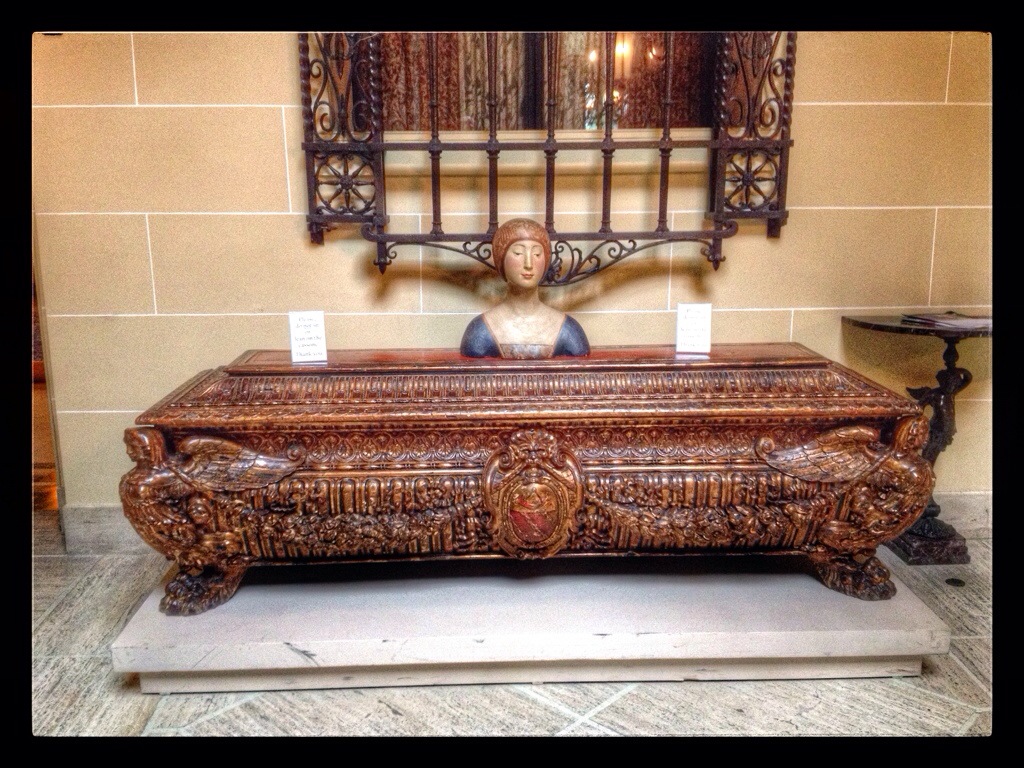
This is one of several cassoni in the house. These elaborate chests were built as hope chests for wealthy Italian women. At the time of a wedding, the chest would be carried to the bride’s new home.

20140510-200000.jpg

Posted in Illinois | Comments Off on Cuneo Mansion

Gateway Arch

When I walked out of Cardinals Nation restaurant, I noticed something very strange — the rain had stopped and the sun was poking through the clouds. More storms were forecast later in the day so I had to make hay, as it were.

I went back to my room and exchanged the Little Red Chair for THE Red chair, then headed for the Arch. Here’s the view from Luther Ely Smith Square, immediately next to my hotel.

IMG_6639-768x1024

I walked under the arch and took the photo on the left. It turned out pretty good, but I was disappointed that I didn’t get to the grass on the top. I returned the next morning and practiced until I got it right, but the sky wasn’t as interesting.

IMG_6481_2-275x1024  IMG_6575-240x1024

The visitor center at Jefferson National Expansion Memorial, under the Arch, opened at 9:00. My ticket to ride to the top was for 9:20, which gave me about 15 minutes to tour the Museum of Westward Expansion. Since I didn’t read any of the displays, that was plenty of time.

IMG_6586-768x1024

My turn came and I packed into one of the tiny tram cars for the ride up the Arch. I was with a friendly family of three who had no idea what to expect. They didn’t even know we could get out of the cars at the top.

The wind was gusting up to 45 mph, and the Arch swayed noticeably and constantly. It didn’t bother me, but a lot of people got out on top, turned around and rode back down on the next available elevator. I stayed up top about 15 minutes.

It wasn’t until later that I realized this was essentially a photo of people’s backsides.

IMG_6577-1024x768

Note the sign that says we’re 630 feet up. The girl in the orange jacket found me and my chair far more fascinating than anything out the windows.

IMG_6576-1024x768

The Old Courthouse and my hotel (the Drury Plaza Hotel at the lower left) from the Arch.

IMG_6584-1024x730

I would have stayed up top longer, but I had a long drive ahead of me. I walked down the curving steps to the landing for my assigned car and took this photo looking back up.

IMG_6578-768x1024

I was stuck with two couples on the way down. The five of us were crammed in the car tightly, but the trip was shorter.

Outside the Arch, I descended the steps to the bank of the Mississippi where I found this monument to the founders of St. Louis. Note the working dredge boat on the river.

It was so windy this morning, that the chair almost blew into the river.

IMG_6585-693x1024

On the previous evening during a brief stretch of sunshine, I took a photo from the top of the steps, right under the Arch. The first bridge on the left is the Eads Bridge, built in 1874. At that time, it was the longest arch bridge in the world. It’s still being used for cars and passenger trains.

IMG_6641-1024x282

Posted in Missouri | Comments Off on Gateway Arch

Rally Runner

My table at dinner looked out on the sidewalk that runs outside the center field fence at Busch Stadium. I noticed a guy dressed all in red, with his face painted red, running back and forth. An hour later, when I returned with THE Red Chair, he was still at it. I toyed with asking him to sit in the chair, but he didn’t seem inclined to stop. So I set up the chair and waited for him to jog by. He saw me, and I think tried to sneak up on me to keep out of my photo, but I snapped at just the right time.

IMG_6595-923x1024

At the moment, the Cardinals were beating the Reds 7-6. I was hoping I could mess with the Rally Runner’s mojo and make the Cardinals lose, but the game ended with that score.

I looked on the Internet and found that the guy has his own web page. It says, among other things, “I have no doubt the Cardinals will win the World Series in 2014. Absolutely no doubt. I can’t do it by myself, I just simply do what God has me do. I am following His plan for me.” I guess if God is rooting for St. Louis, the rest of the National League might as well forfeit the season.

A month after I first posted this, I got this comment on my blog:

Hey I’m the St. Louis Cardinals’ Rally Runner! I don’t have a web page! Or do I? I don’t know about it and can’t find it! However I’m making one now. I don’t remember the red chair. And I would have stopped if you flagged me down unless it was during a rally. I don’t have a web site but I’m sure I said what is stated in your article. I got a kick out of seeing it, I’m glad I just happened to come across it! Lol. I guess you’re not a Cardinals fan?! Lol.

When I went back out to look, the web page I’d found was gone.

Posted in Stories | Comments Off on Rally Runner