Begging Burros

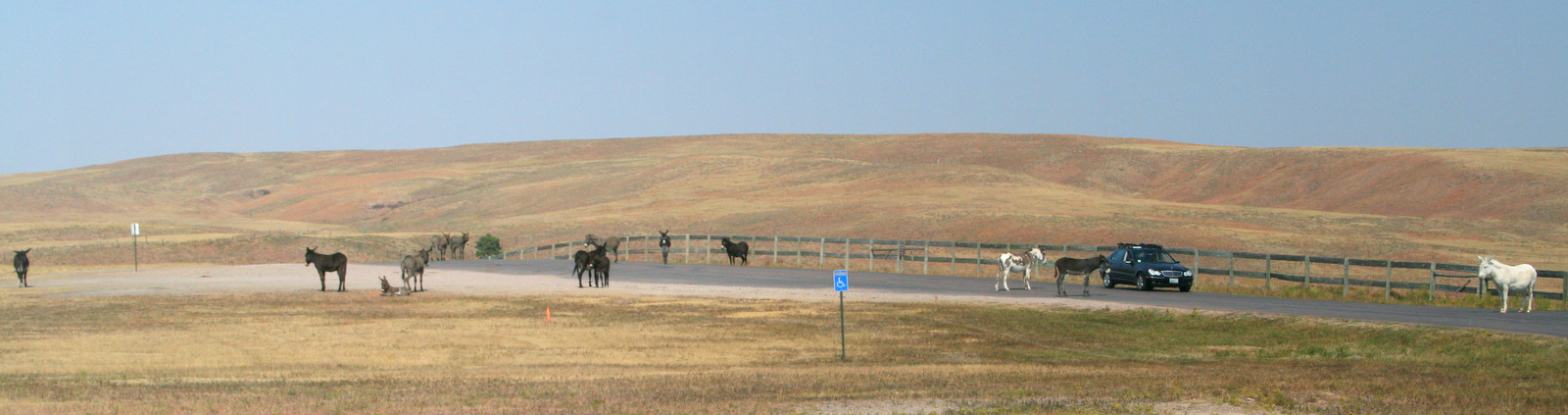
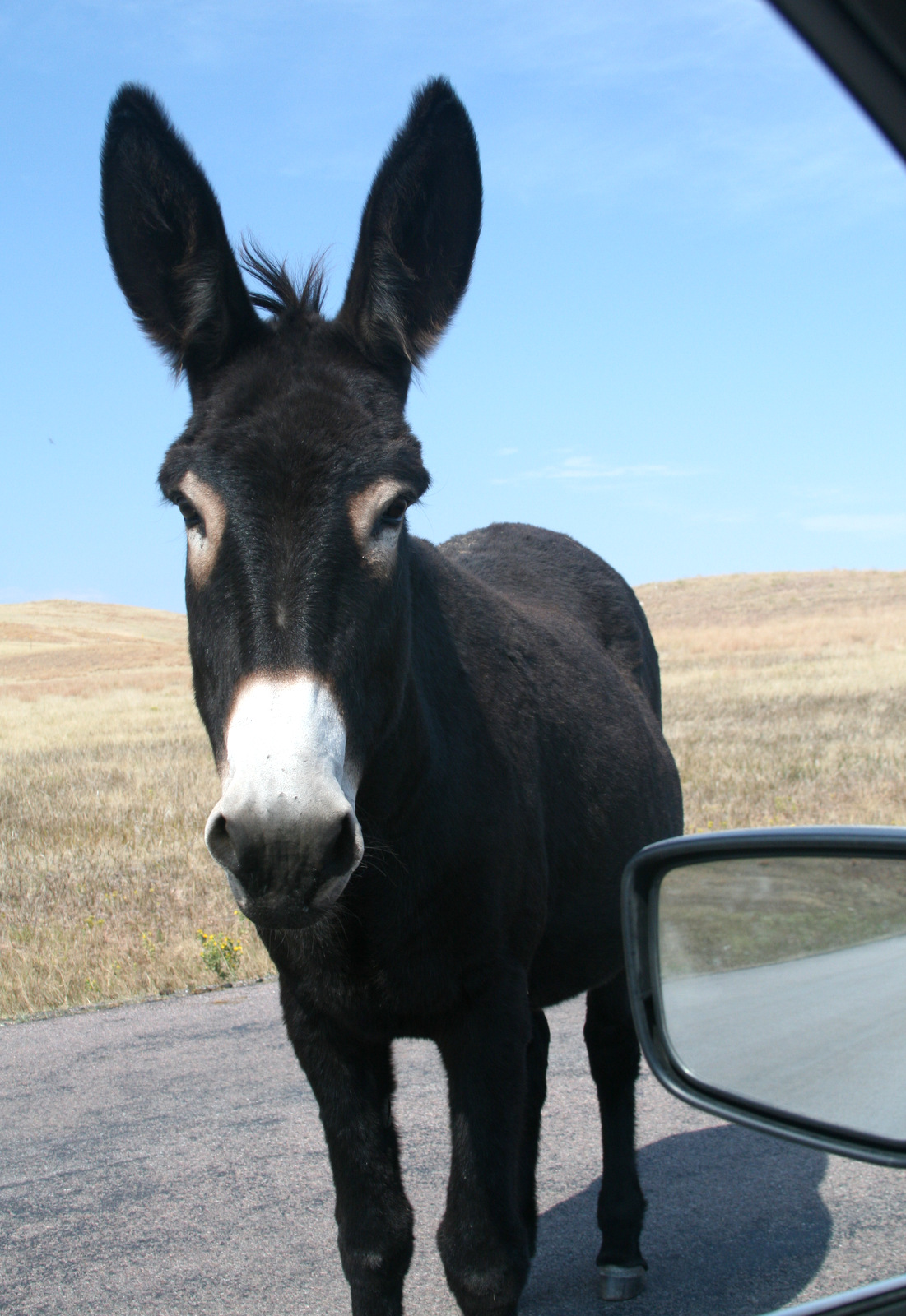
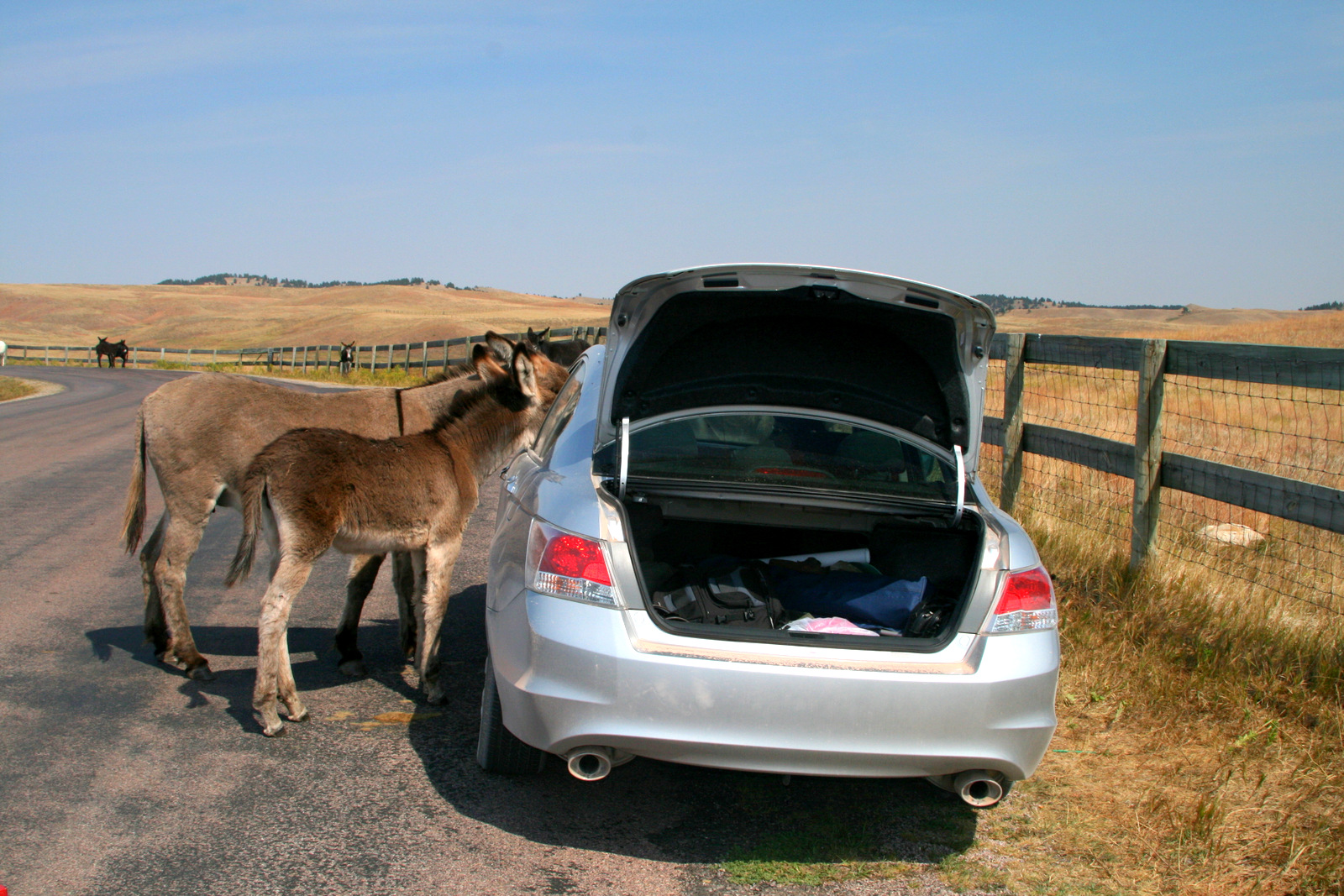
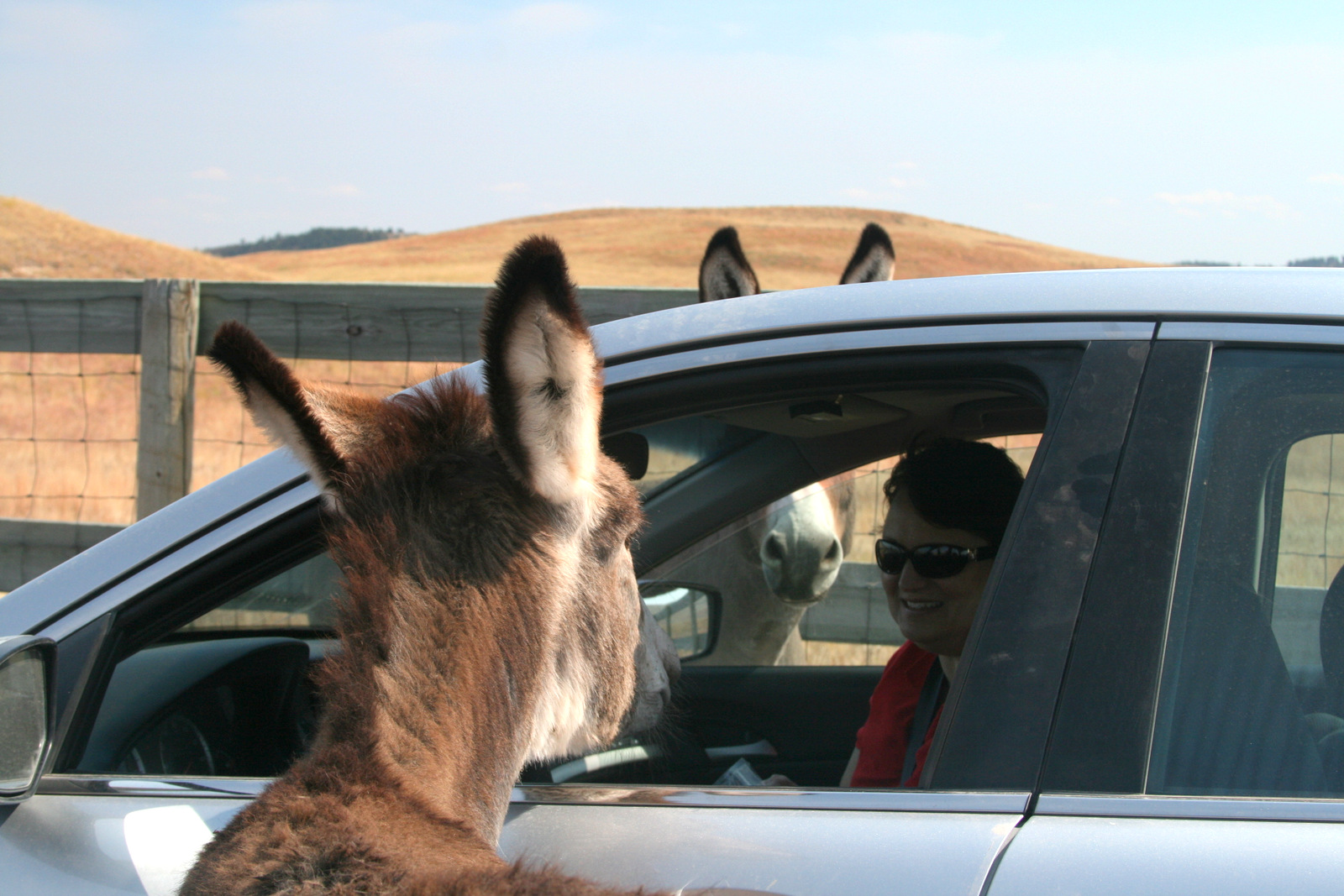
Years ago, burros were used to carry tourists up to the top of Harney Peak. When the concession closed down, the burros were released into the wild. They thrive in a semi-tame state along the Wildlife Loop Road, begging for food through car windows. There are warnings that they can be dangerous, but I think the danger consists mostly in the risk that they’ll take a bit of skin from a finger when you feed them. I had to push two of them out of the way to get into our car and lived to tell the story.

They’re not hard to find.

And they’re not shy.

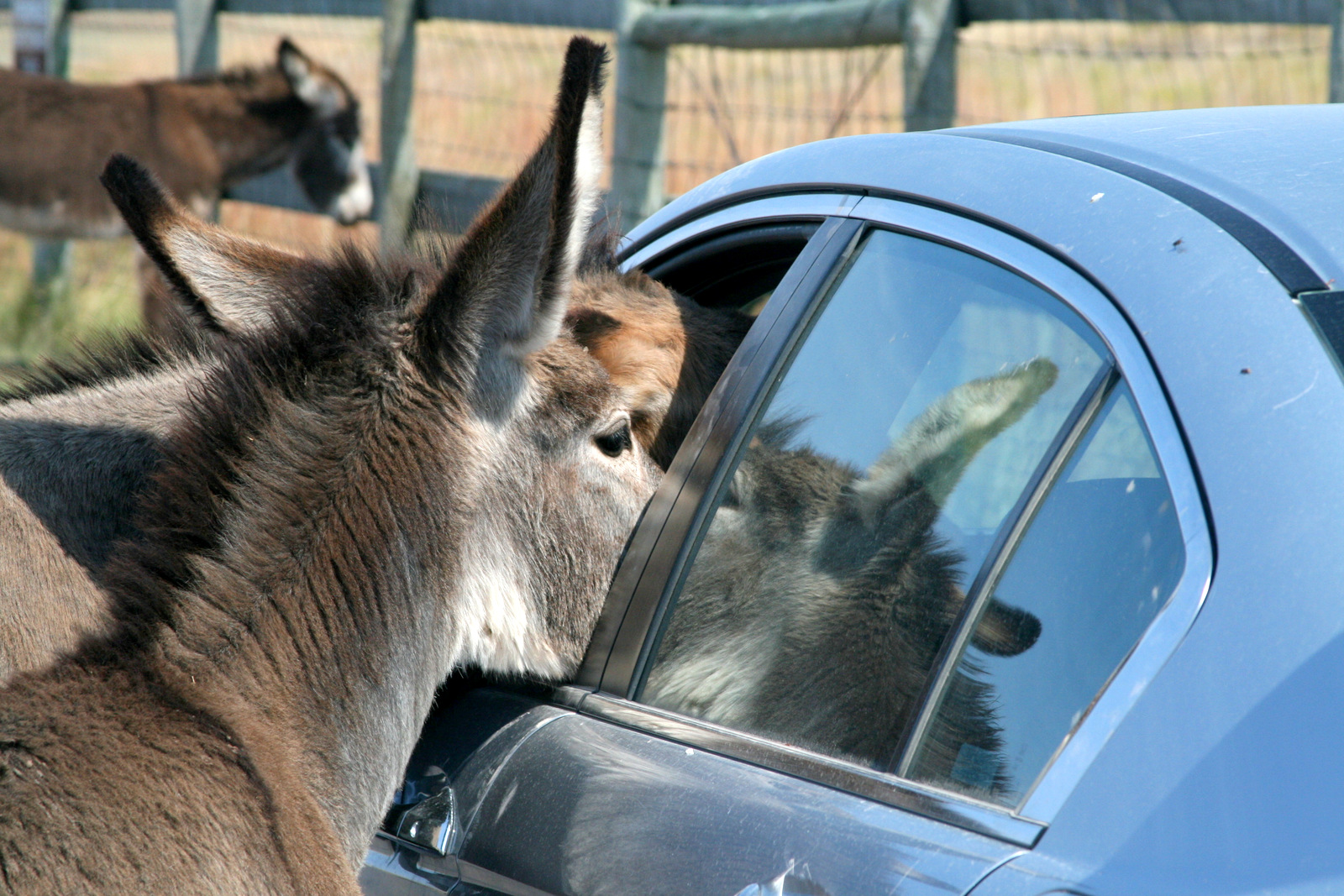
I got out to take some photos. Immediately, three burros approached the car. The driver’s window was open, and two stuck their heads inside. My wife grabbed a bag of almonds and began feeding them. A third burro went around to the passenger side, but that window was closed, so it just licked the glass.

We hung around until we were out of almonds and the burros moved on to the next car.

Posted in Photos | Comments Off on Begging Burros

Wind Cave National Park — The Park

I was more interested in the parts of Wind Cave National Park that are above ground than I was in the cave. I asked a ranger in the visitor center and was directed off the normal, more-crowded tour road onto a couple of dirt roads into the interior of the park where animals are more-frequently seen and visitors are scarce.

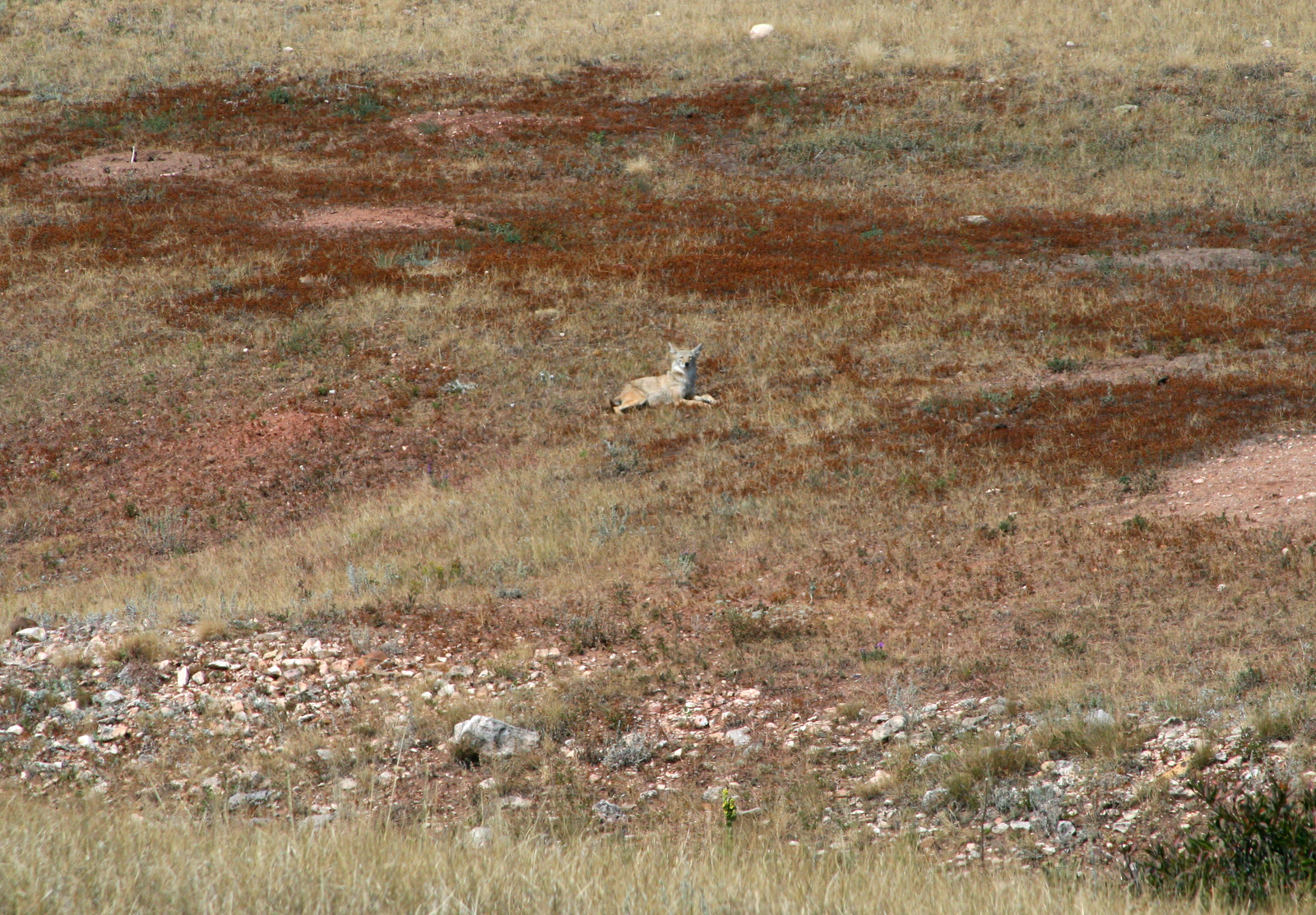
We’d barely left the visitor center parking lot when I saw a Coyote trotting across a field. I stopped to look at it, and it stopped to look back at me. We looked at each other for a few minutes, then I drove on.

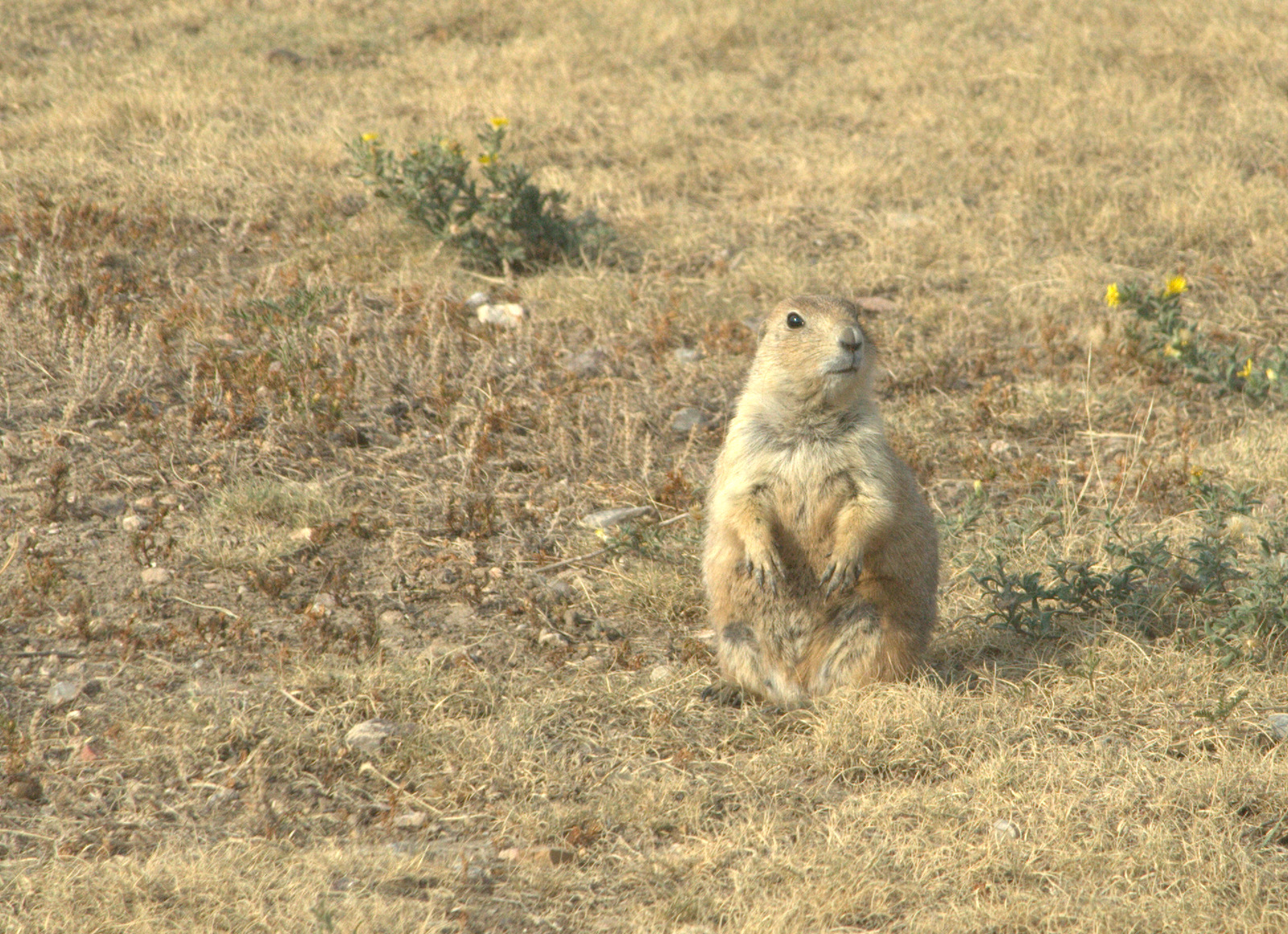
There were prairie dogs pretty much everywhere we went.

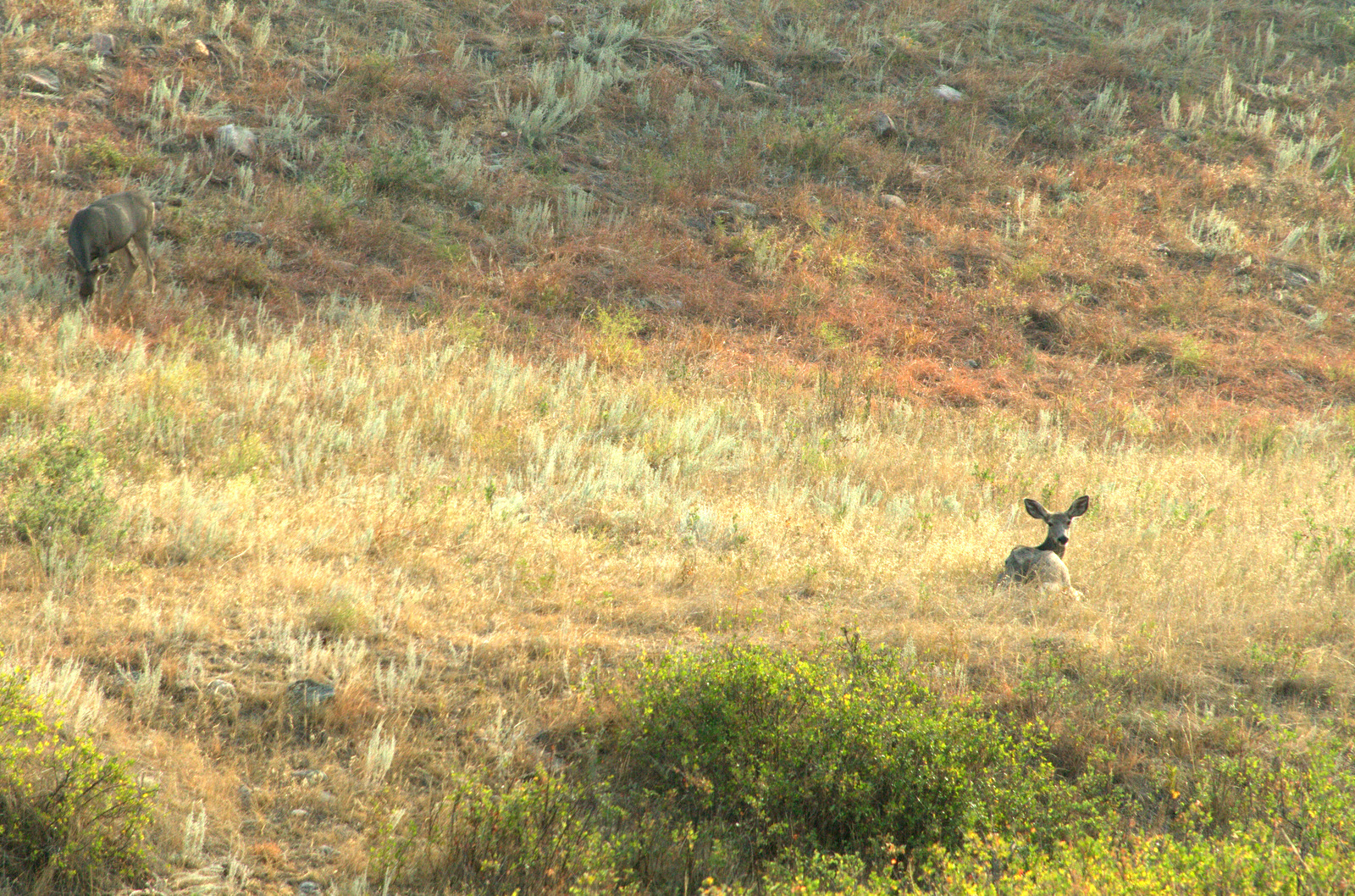
Mule Deer near park headquarters.

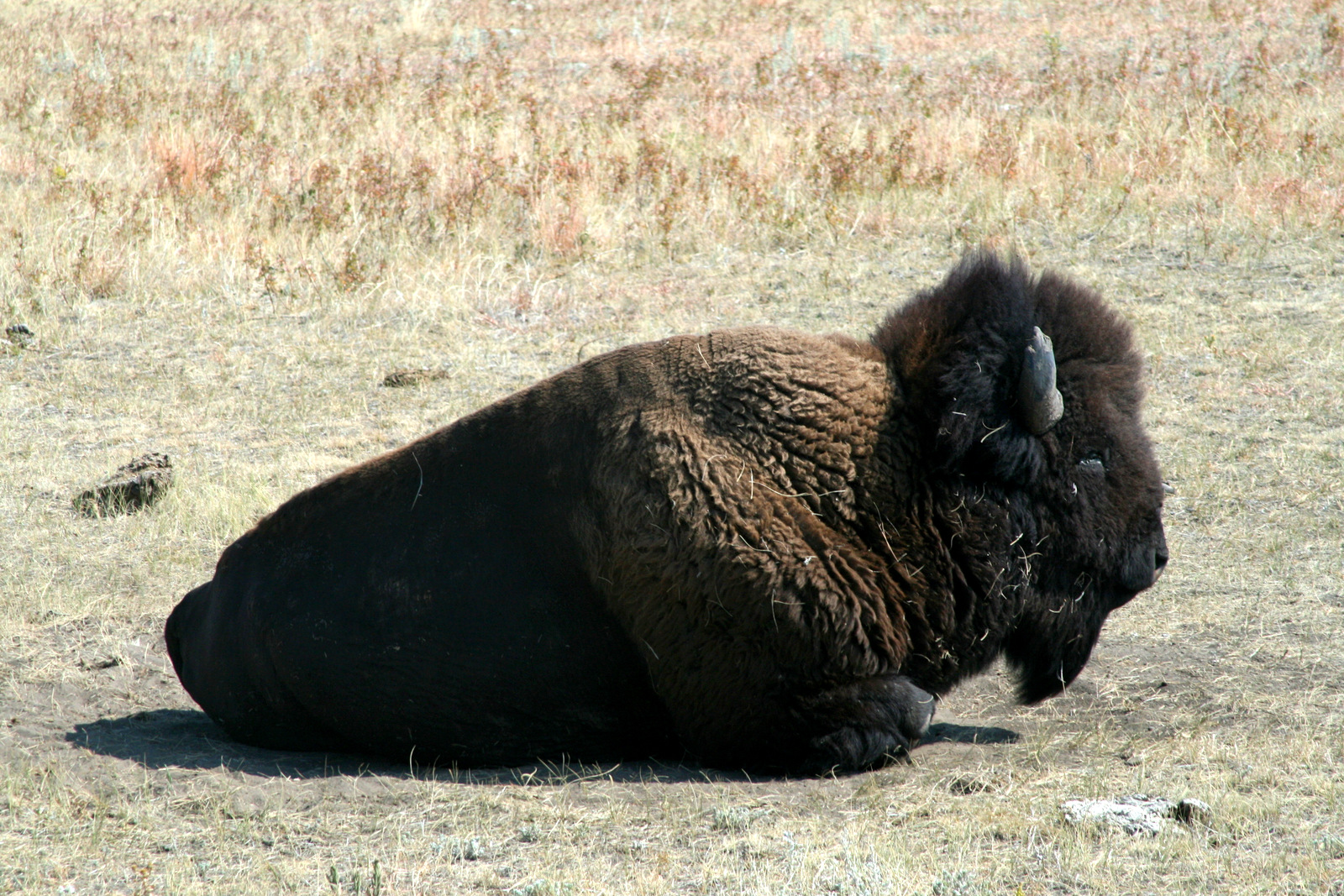
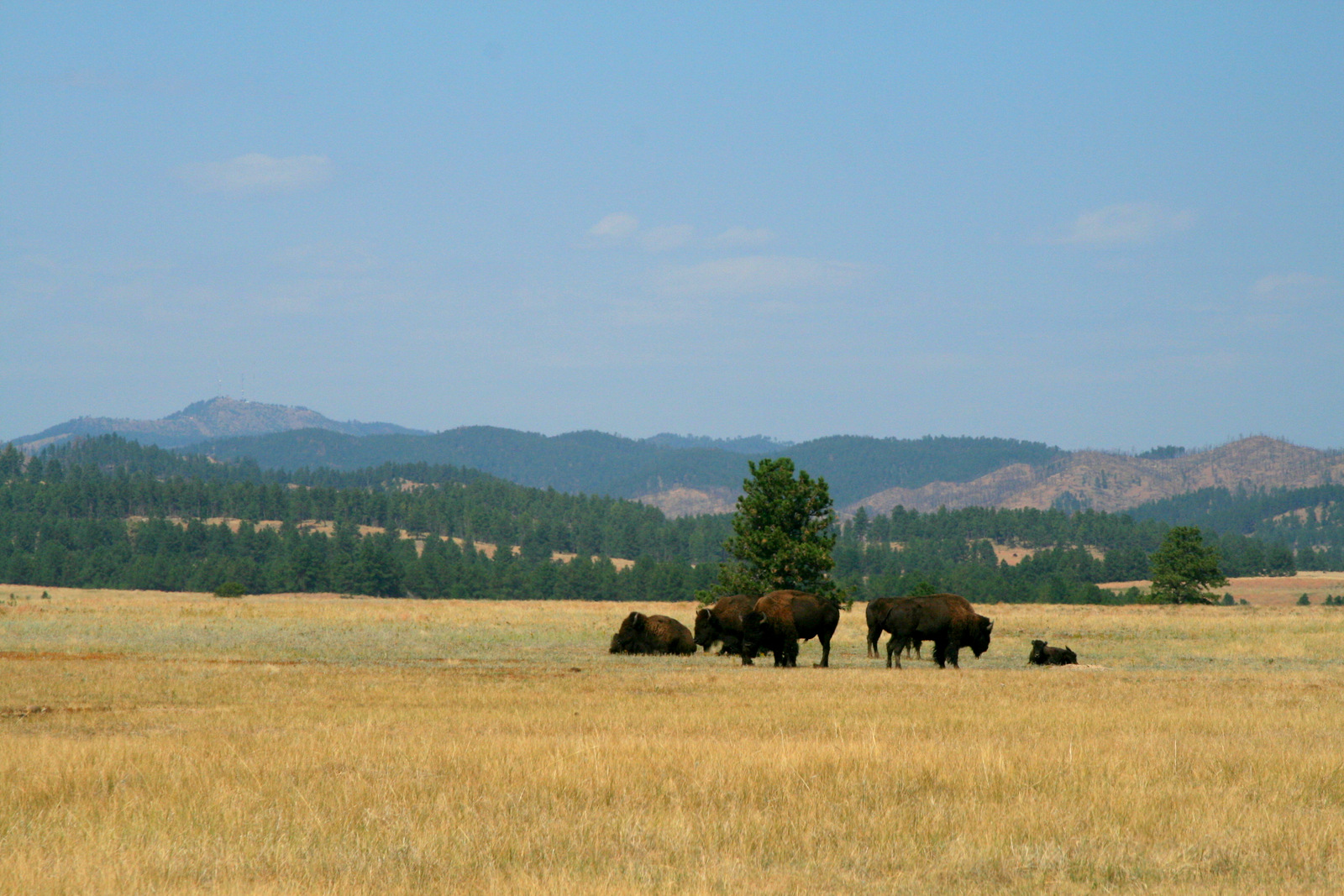
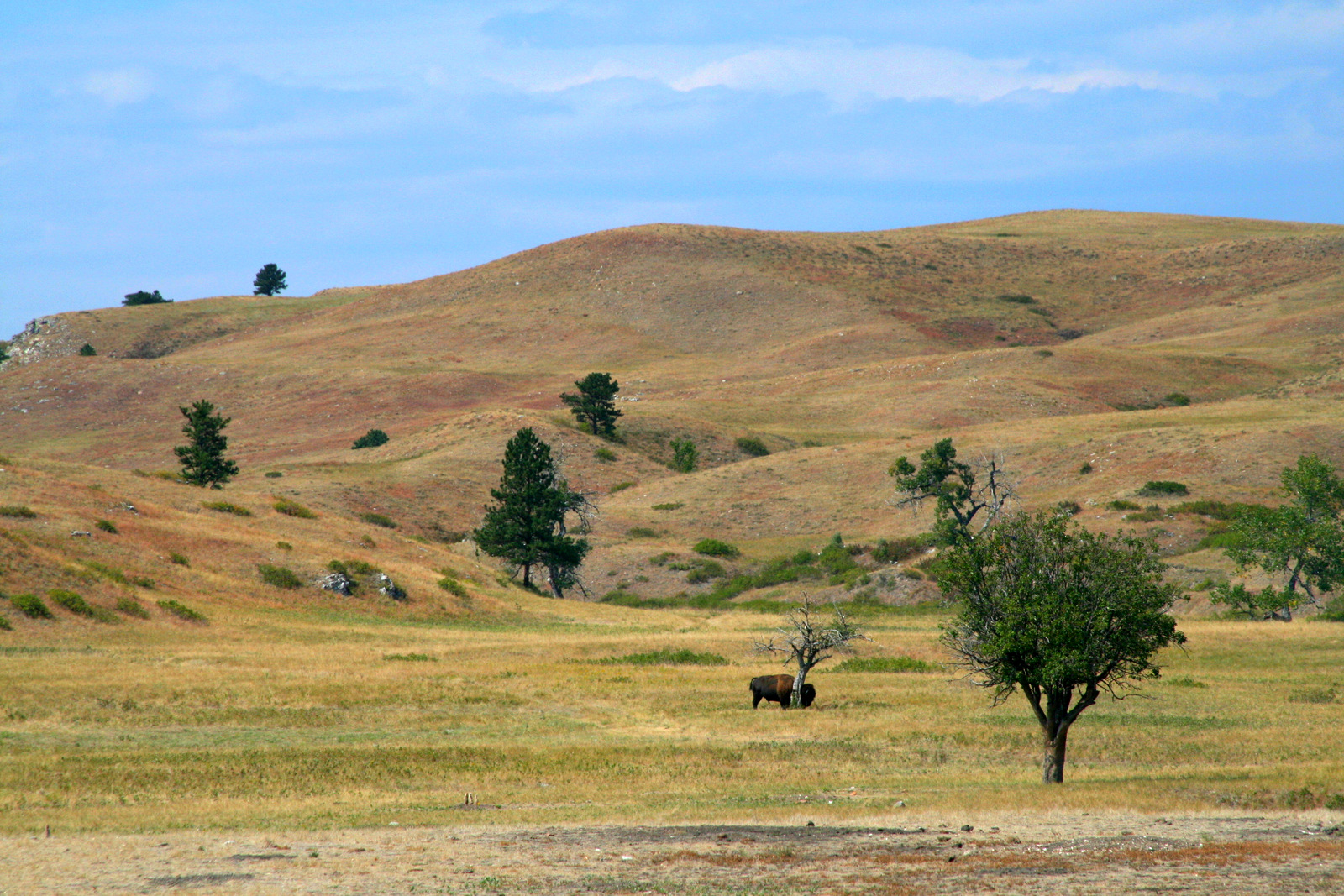
The Bison are kept within the park boundaries and managed. The herd is culled every fall during a round-up that attracts tourists from all over. The numbers in the park are kept at around 1,600. This bull was relaxing about 20 feet off the road.

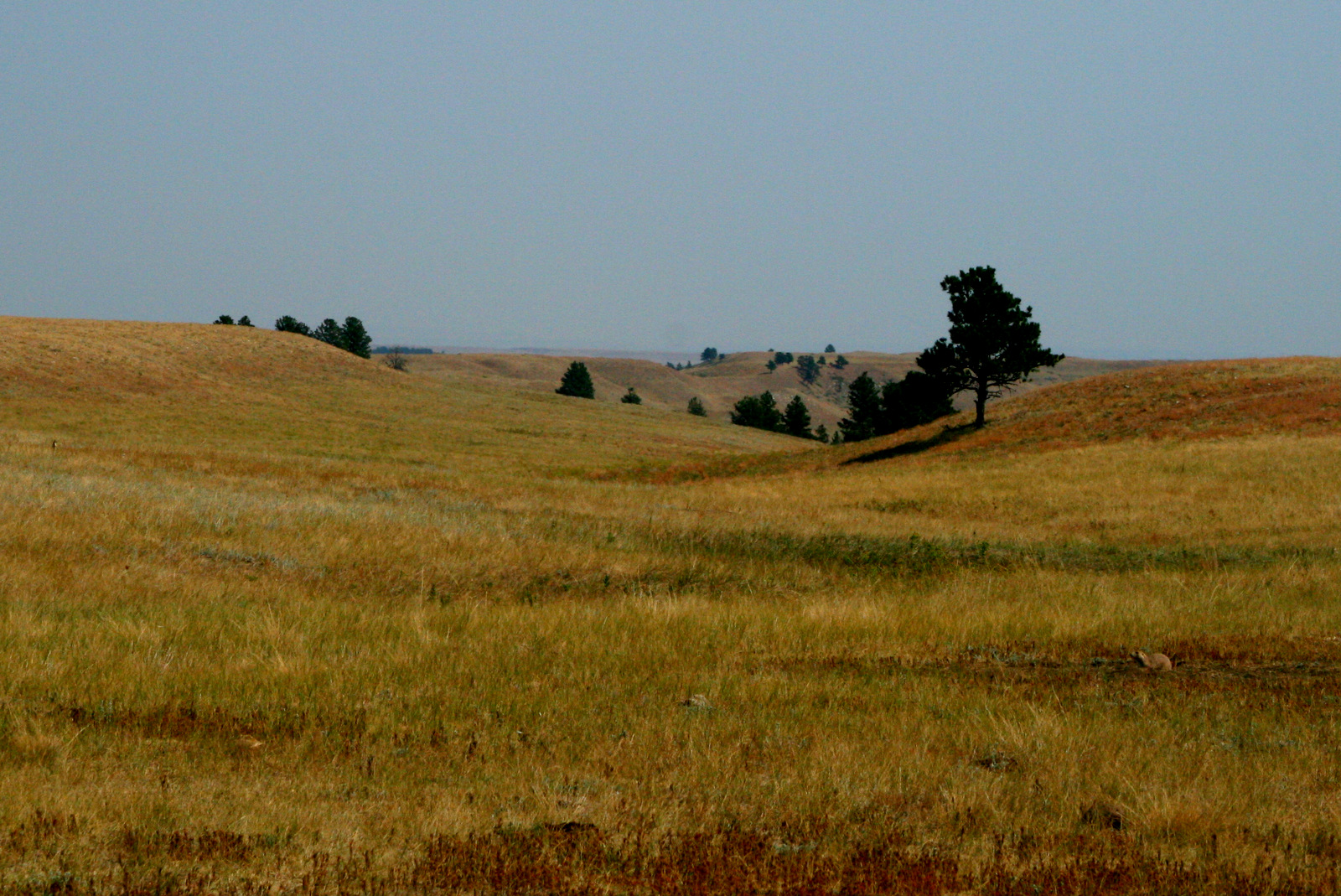
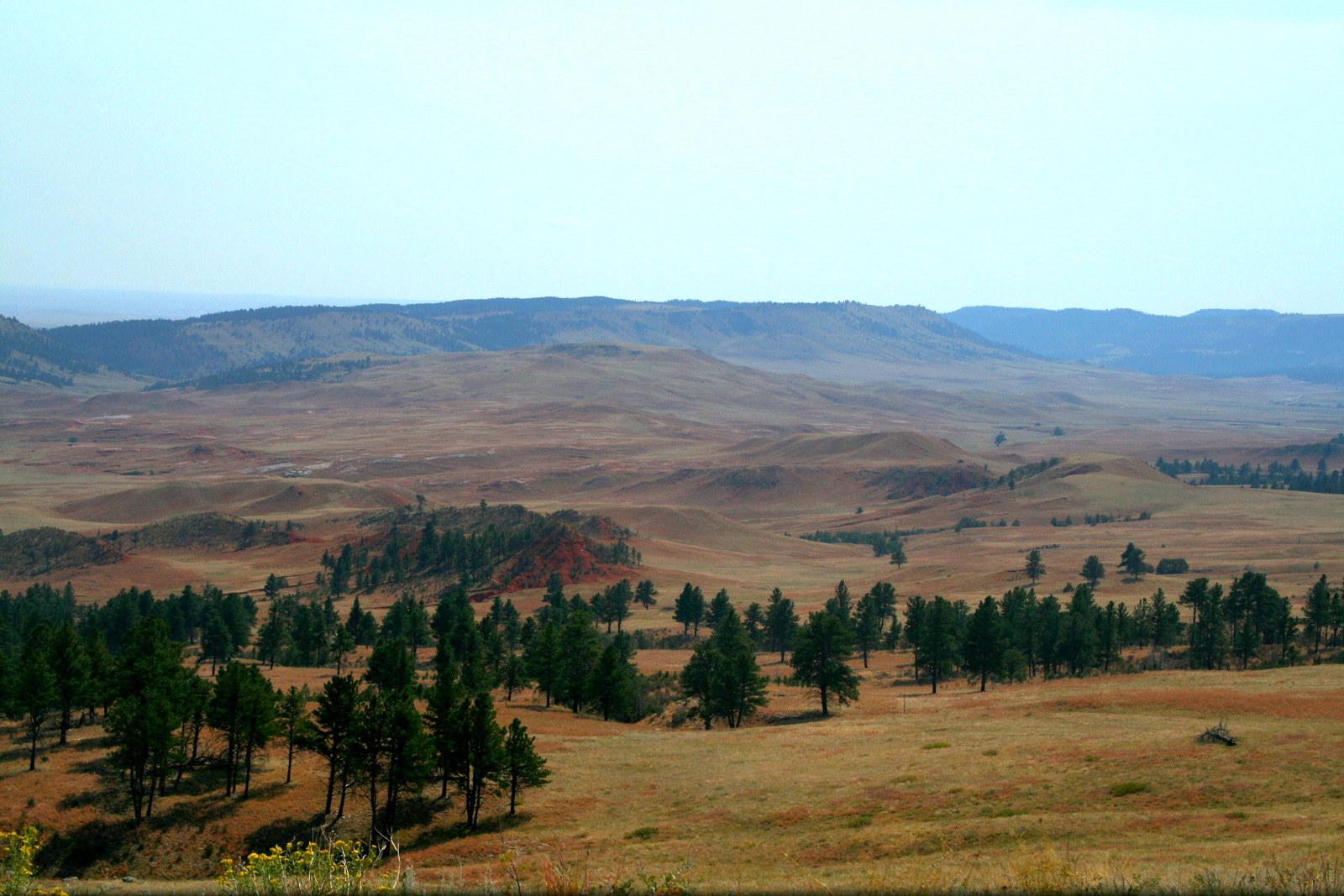
Once we got onto the dirt roads, there was very little traffic and wide-open views.

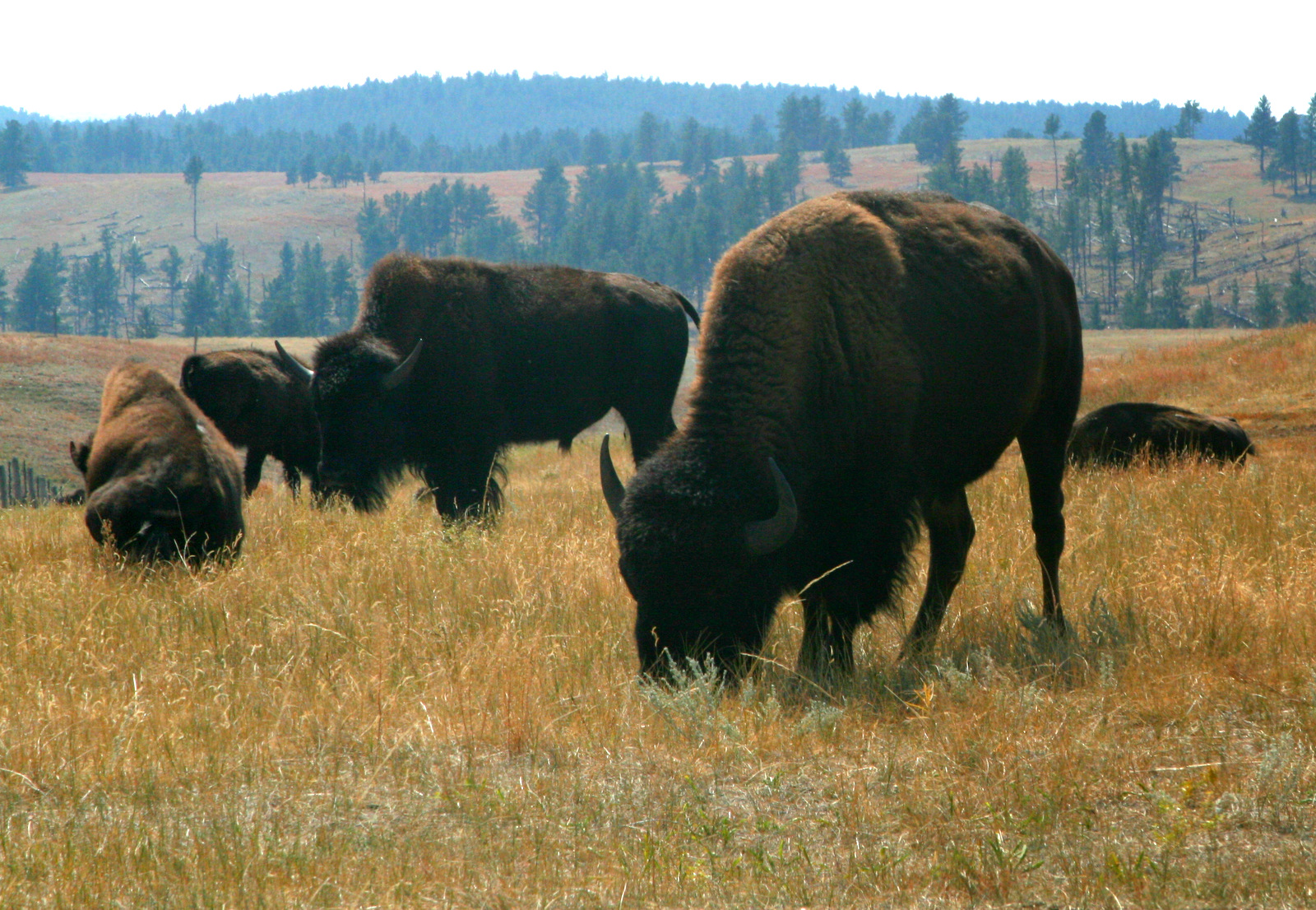
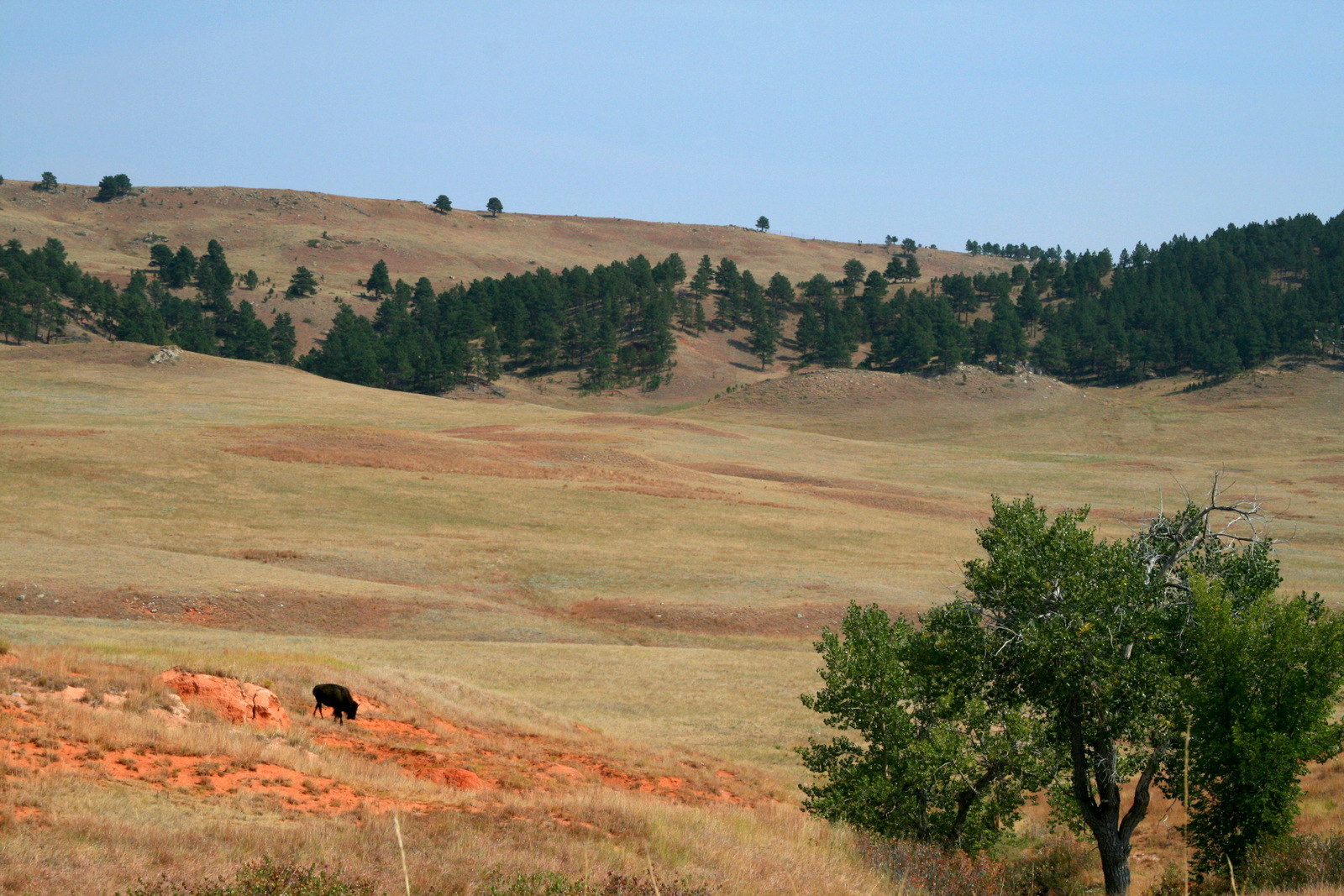
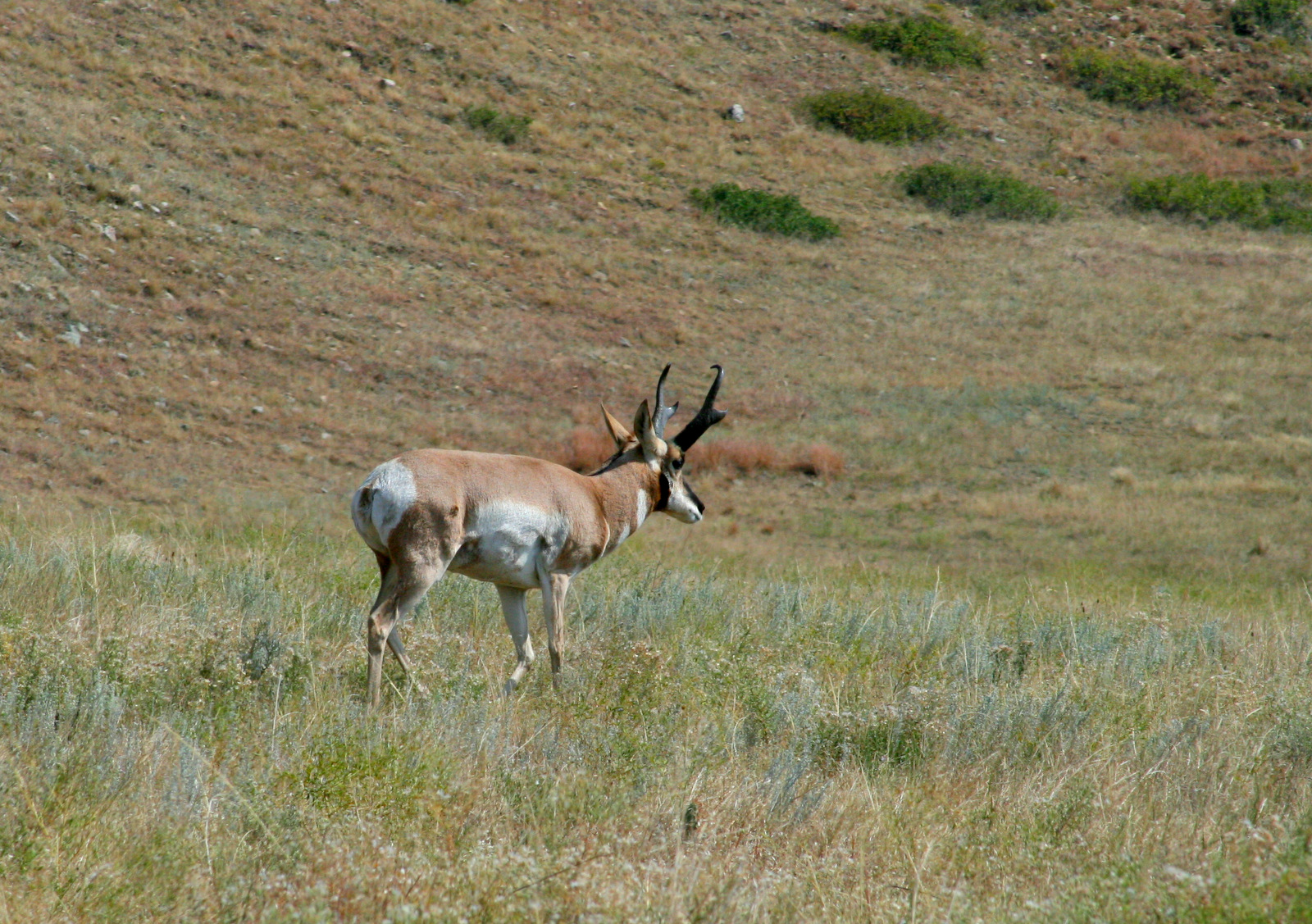
Every so often, the amazing views would be enhanced by a herd of Bison or a Pronghorn or Mule Deer. The ranger told me that only the Bison are managed. The Pronghorn and deer can jump the fence. There are elk in the park that can’t jump the fence, but they’ve designed fences that can be lowered to let the elk out and then raised to keep them out so the numbers in the park don’t get too large. We didn’t see any elk.

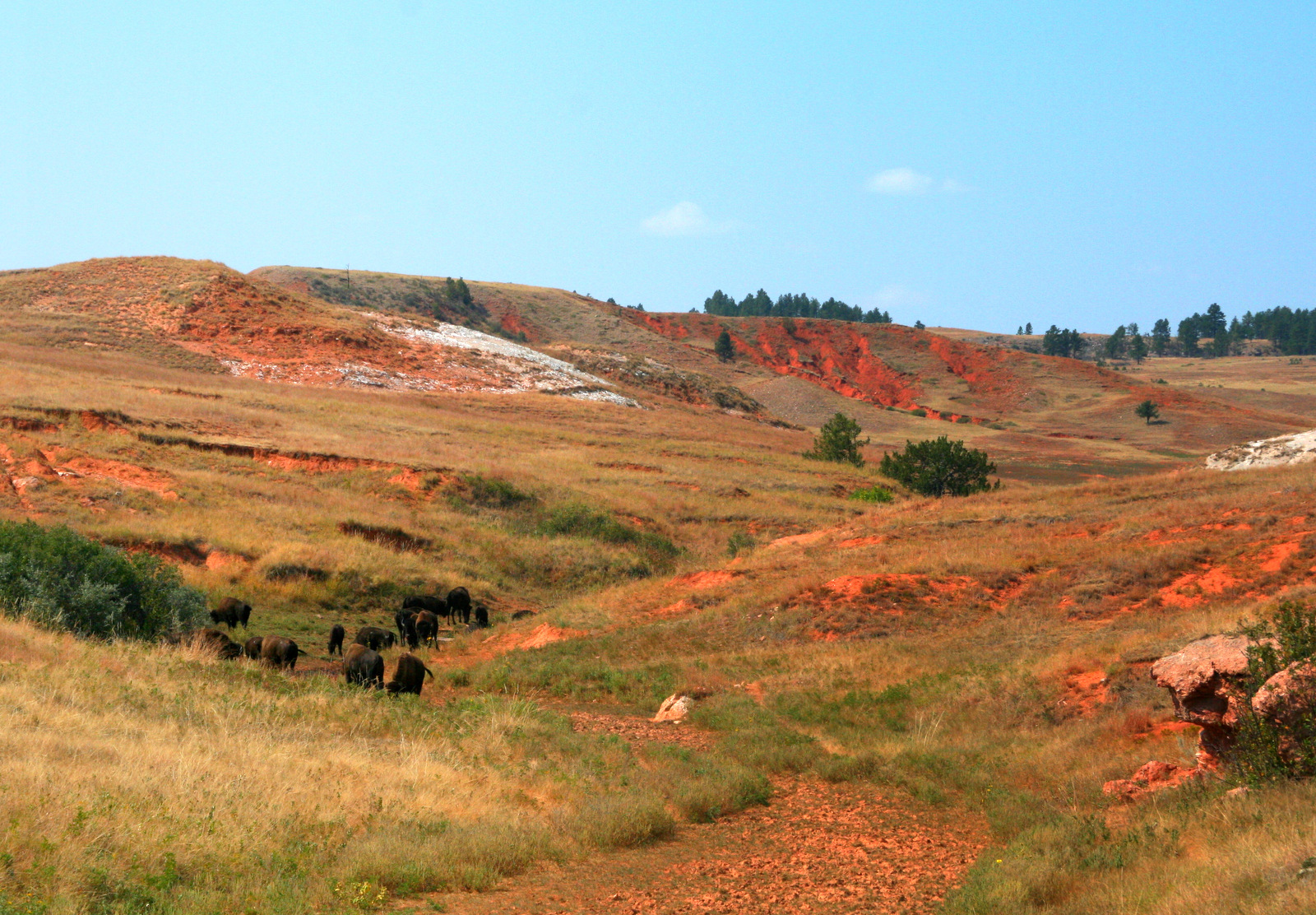
Note the Bison herd in the gully. They give some clue to the scope of the landscape.

A beautiful, lone Pronghorn walked across the road in front of the car, giving us great looks.

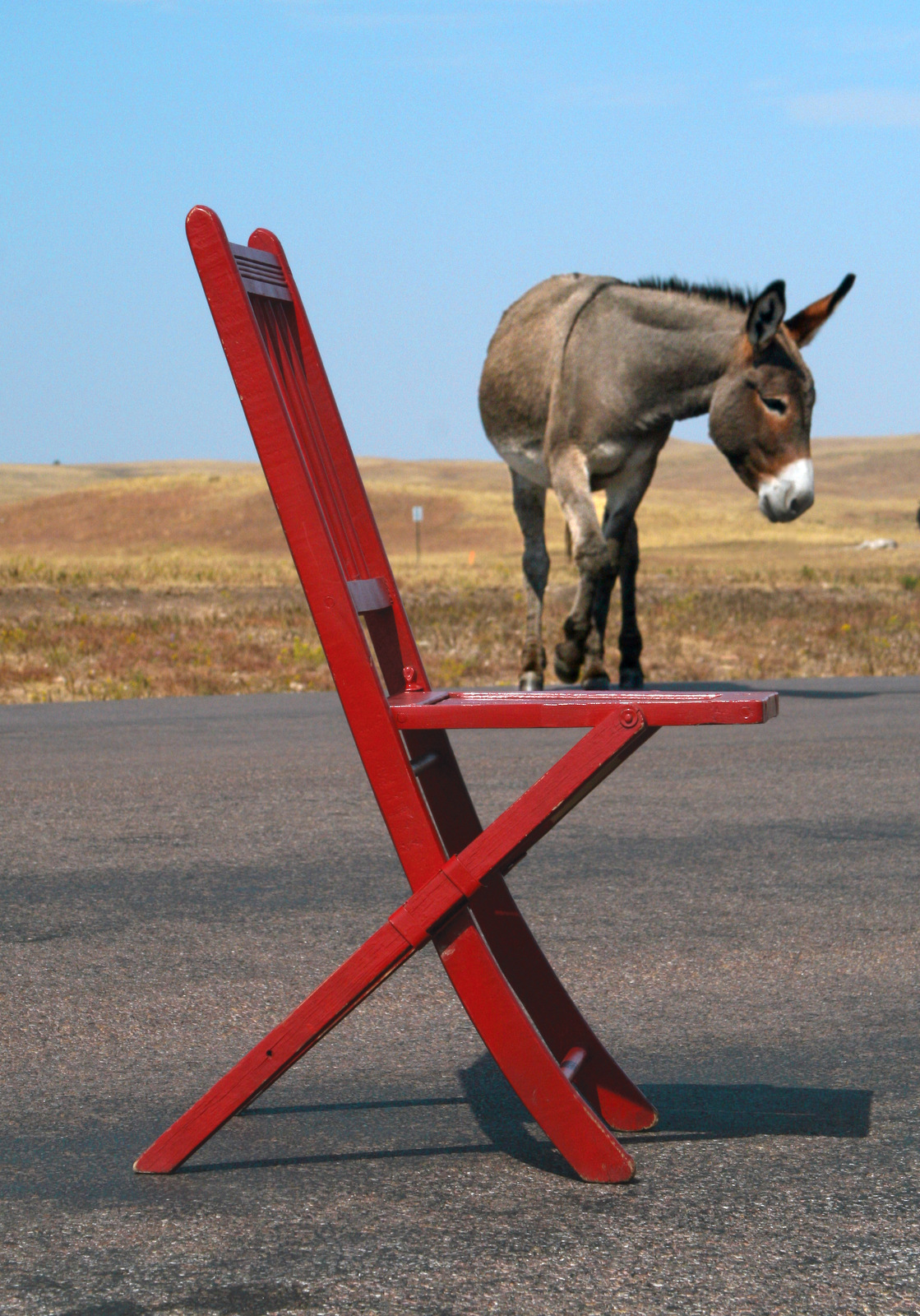
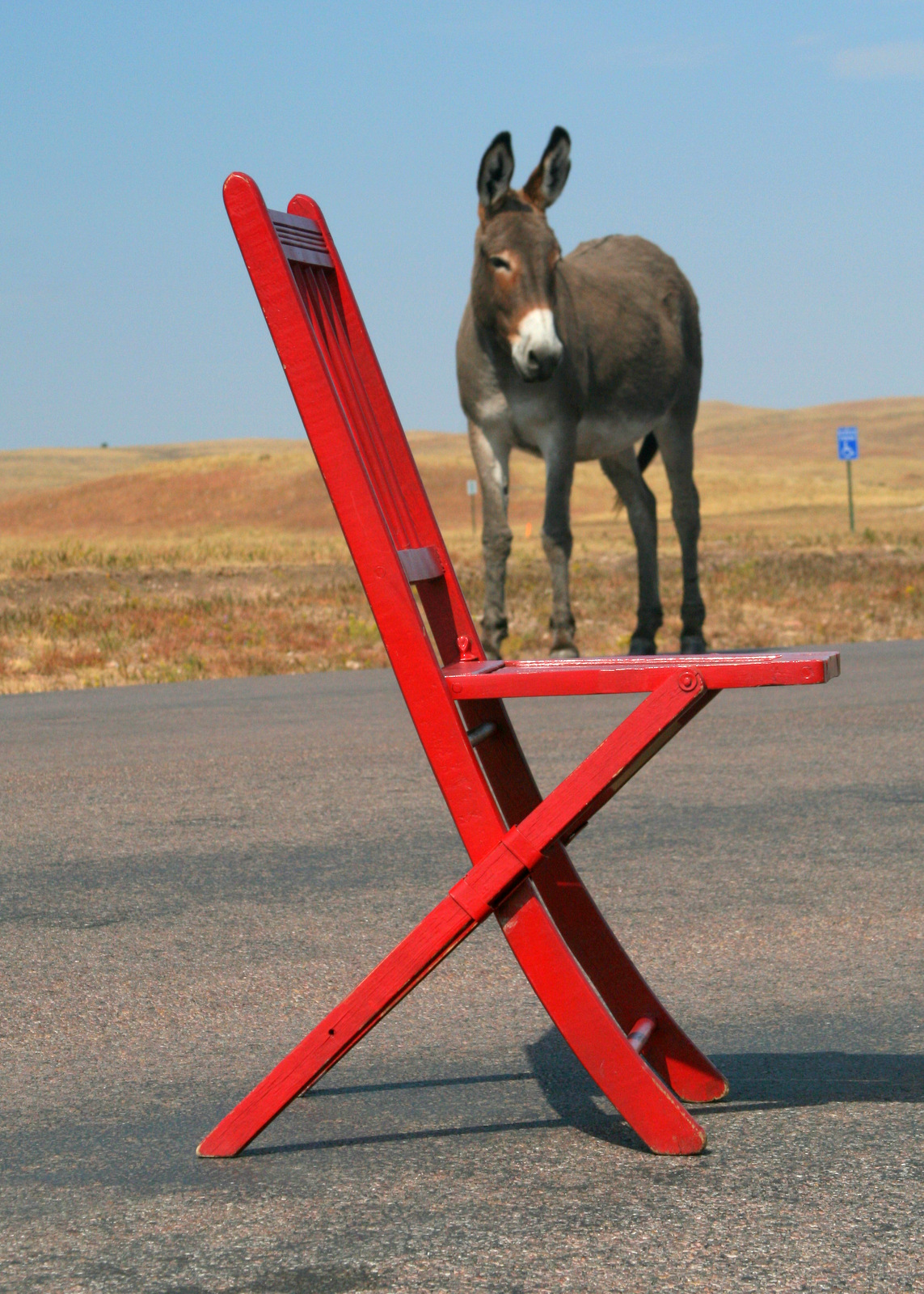
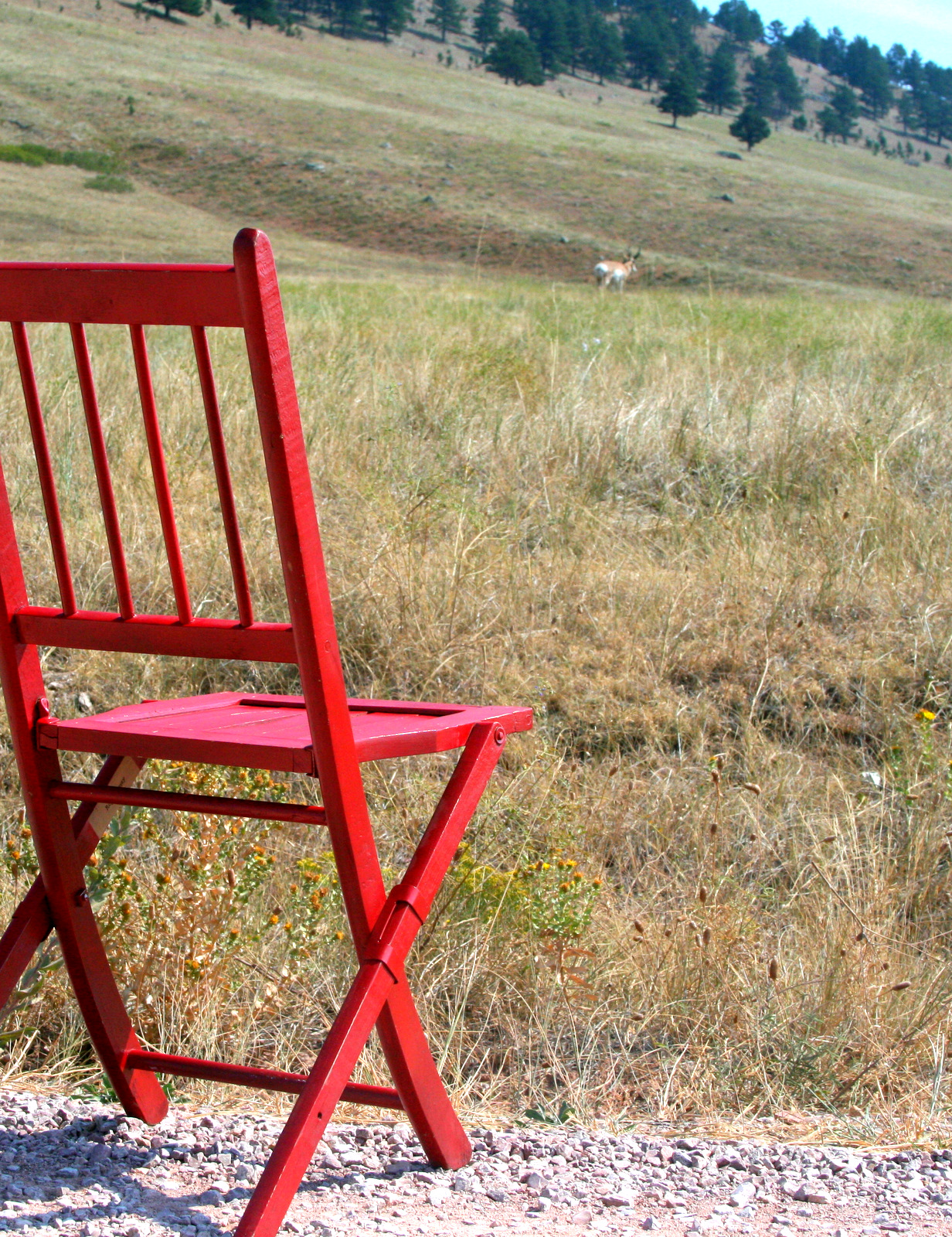
But when I took out the chair, it took off. I scrambled and got this lovely shot.

The road dumped us out in the middle of the wildlife loop in Custer State Park, so we drove back to our lodge on that route.

Posted in South Dakota | Comments Off on Wind Cave National Park — The Park

Wind Cave National Park — The Cave

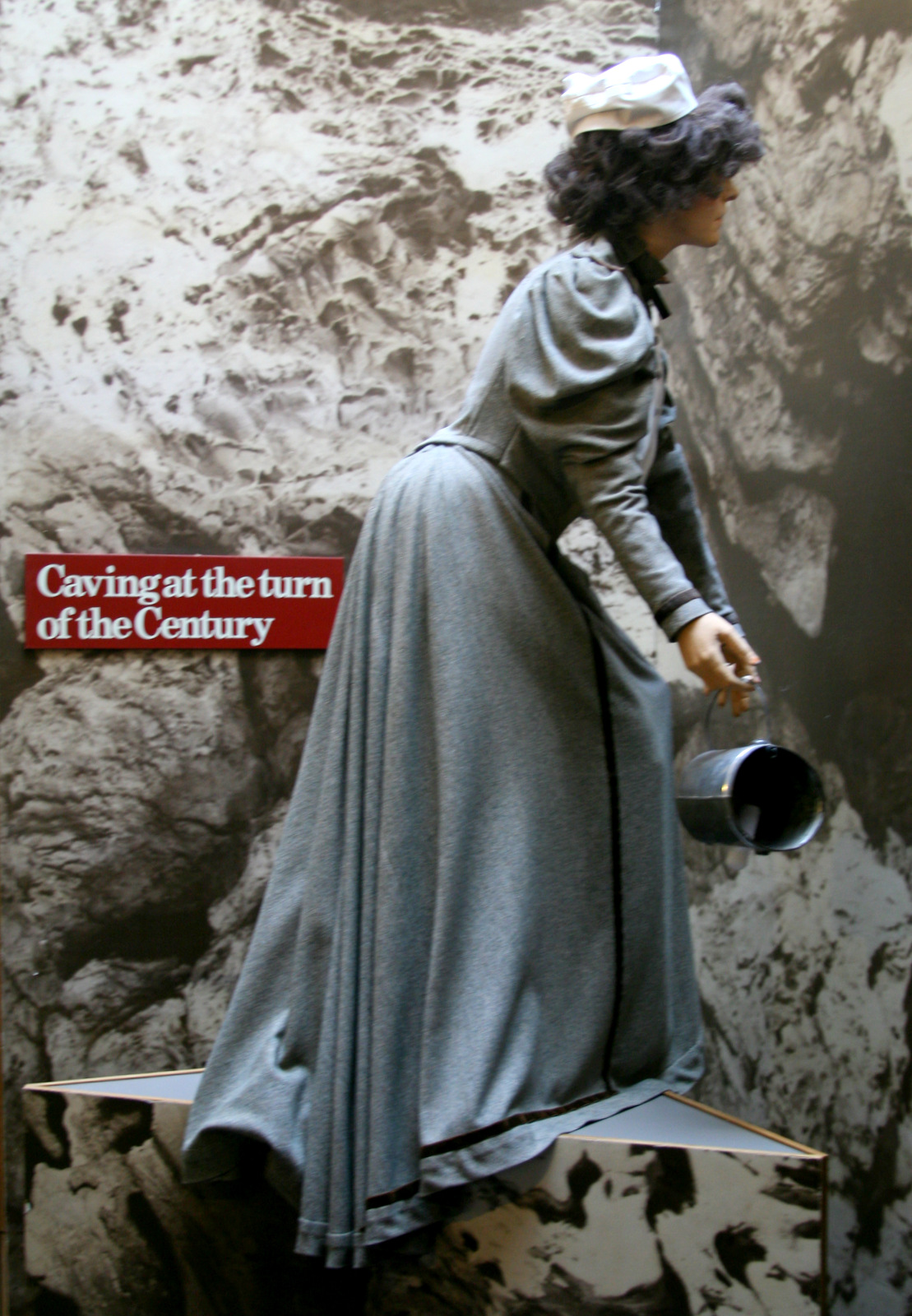
On our first day in the Black Hills, we headed to Wind Cave National Park. We wanted to beat the crowds, but just missed the first tour of the day, which meant that we had to loiter around the visitor center for about an hour. That’s where I learned that caving at the “turn of the century” involved wearing a long dress and staring at cave walls from four inches away. Presumably, they’re not referring to the most recent turn of the century.

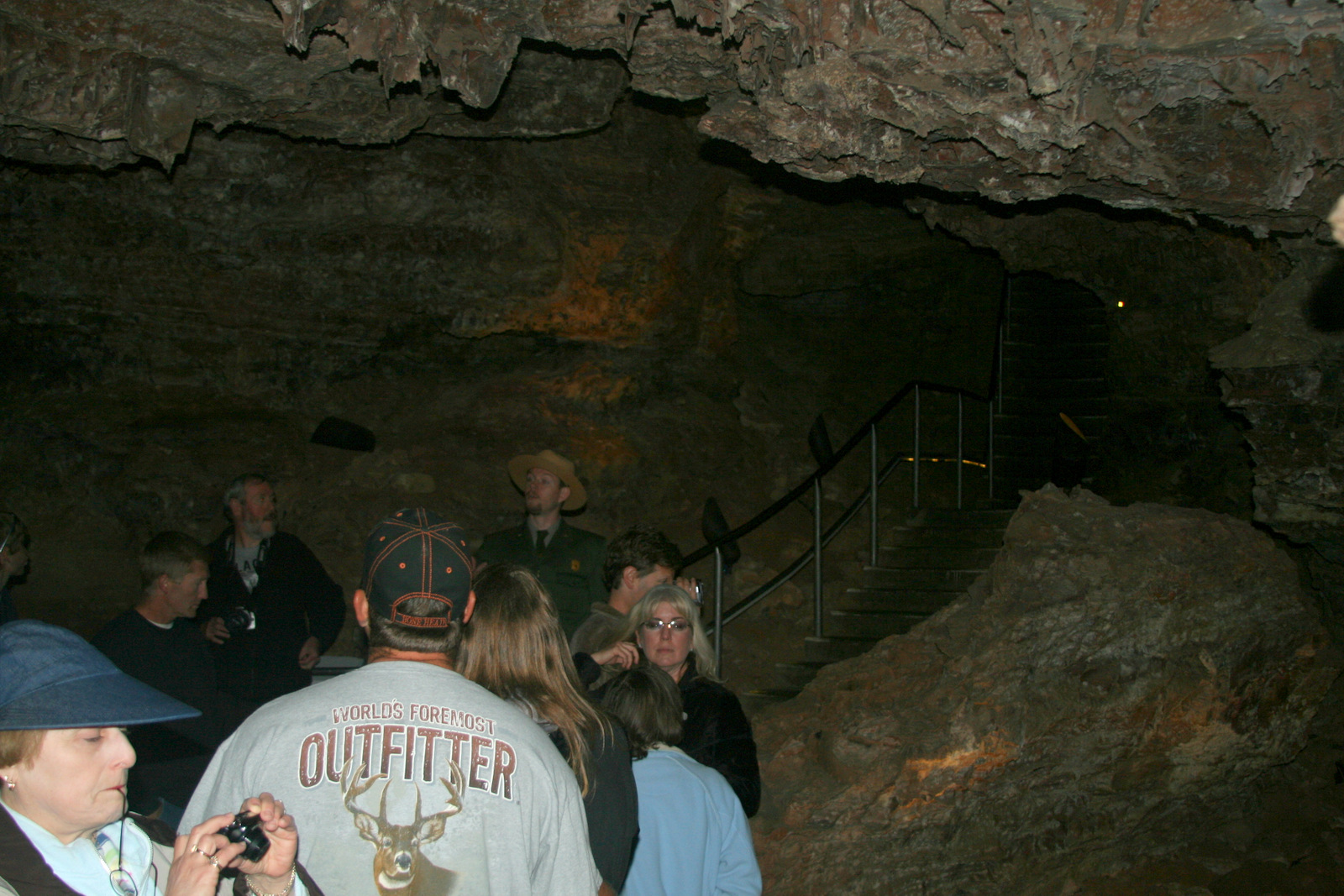
We took the Natural Entrance Tour with 38 other people. I found the name rather ironic, since this the entrance we used.

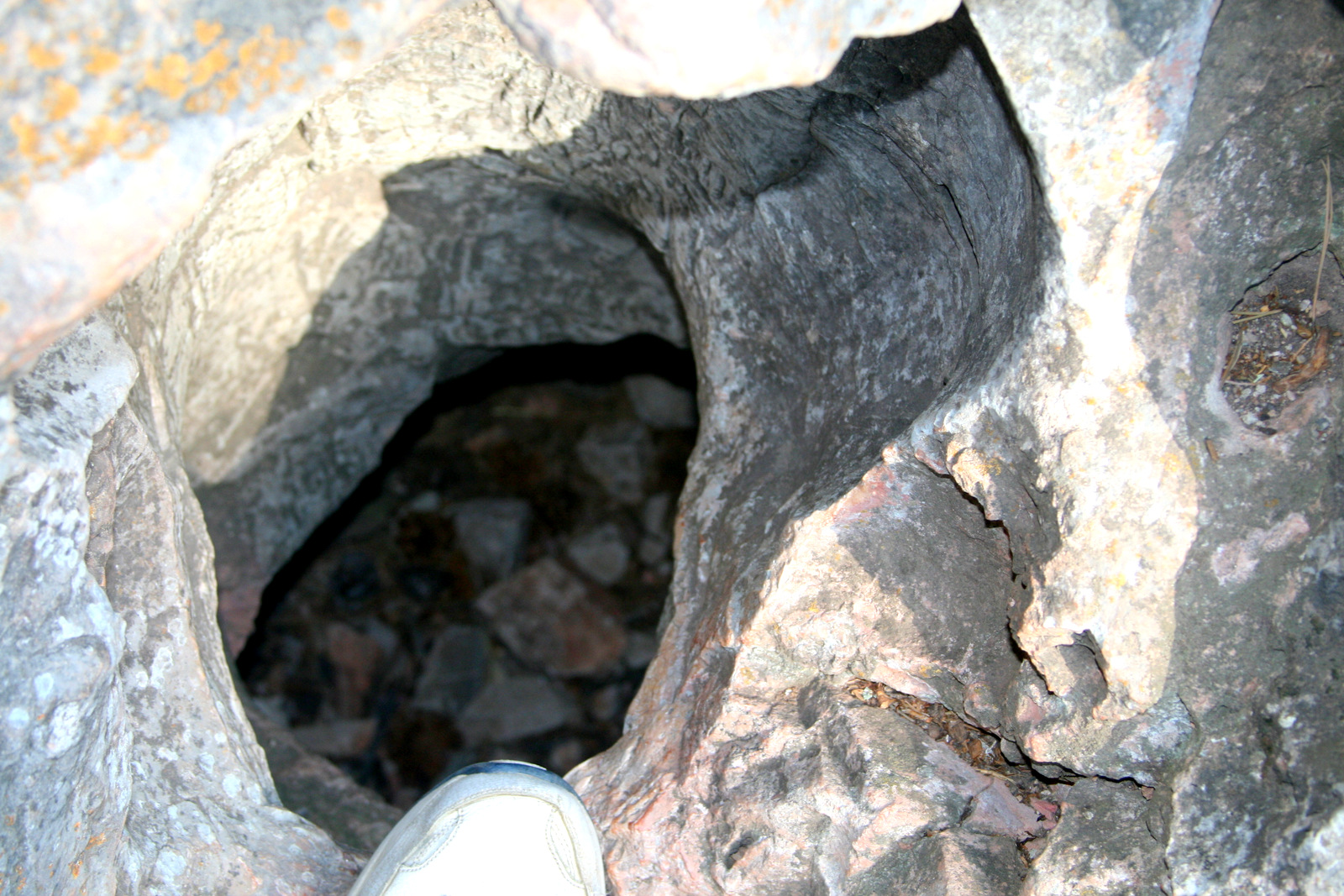
The real natural entrance was nearby. It wasn’t much bigger than the hole in the seat of a normal toilet. For perspective, I took a photo with part of my shoe next to the hole (of the cave, not a toilet).

Wind Cave got its name because, depending on the barometric pressure, air rushes either in or out of the hole. On the day we were there, our guide held a strip of ribbon over the entrance to show that the air was rushing in. Sometimes, we were told, it rushes so fast that it makes a whooshing noise, but not, alas, on this day.

Wind Cave is thought to be the fifth longest cave in the world. About 150 miles of passages have been explored, but studies indicate that perhaps as much as 95% is still undiscovered. This sounds more impressive than it is. The passages aren’t linear — they’re interwove in several levels. Think of a pile of Pick-Up Sticks and imagine the sticks themselves are the cave passages and the spaces between them are rock. It’s more like that. The entire 150 miles of known passage all fit under a square mile of surface area.

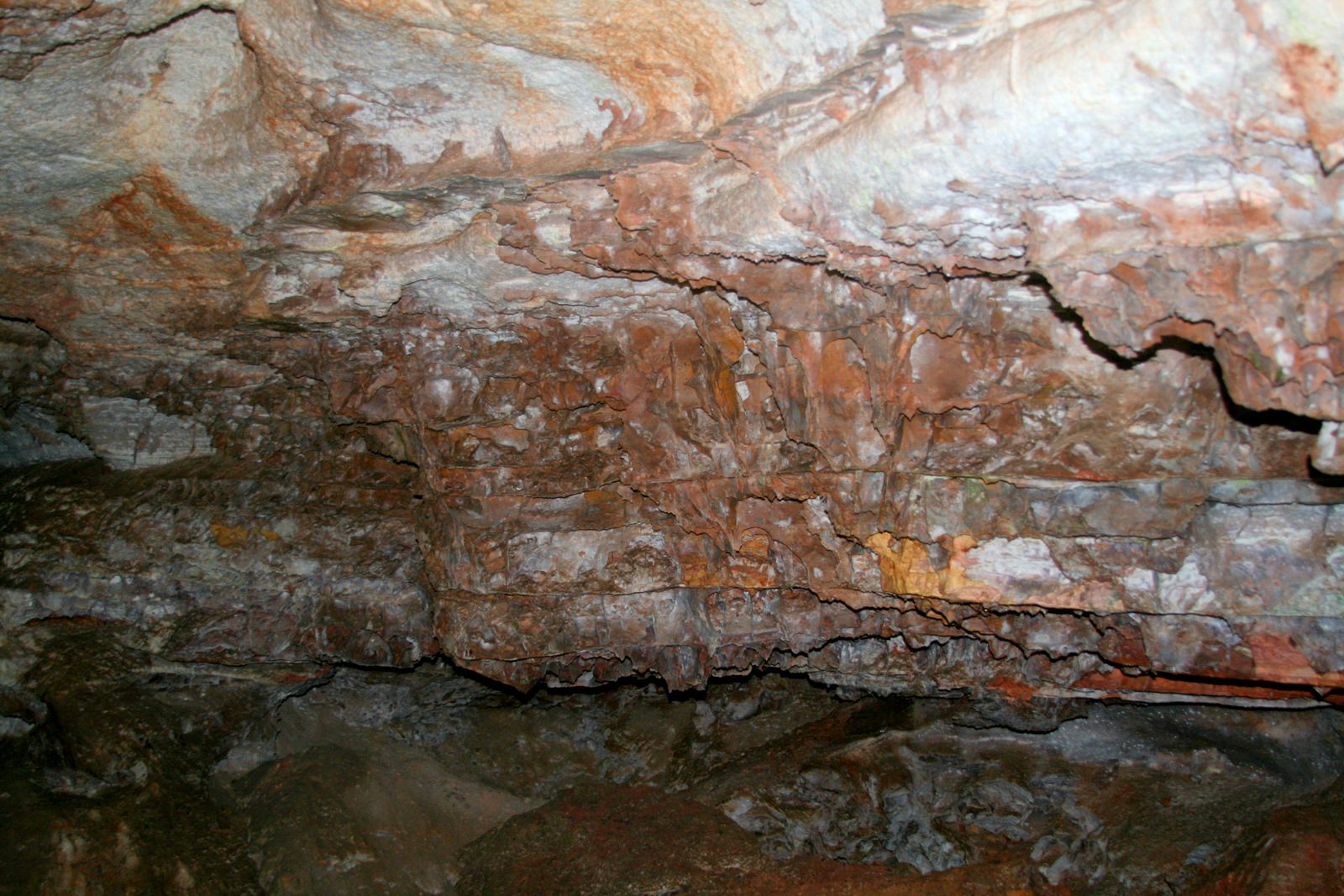
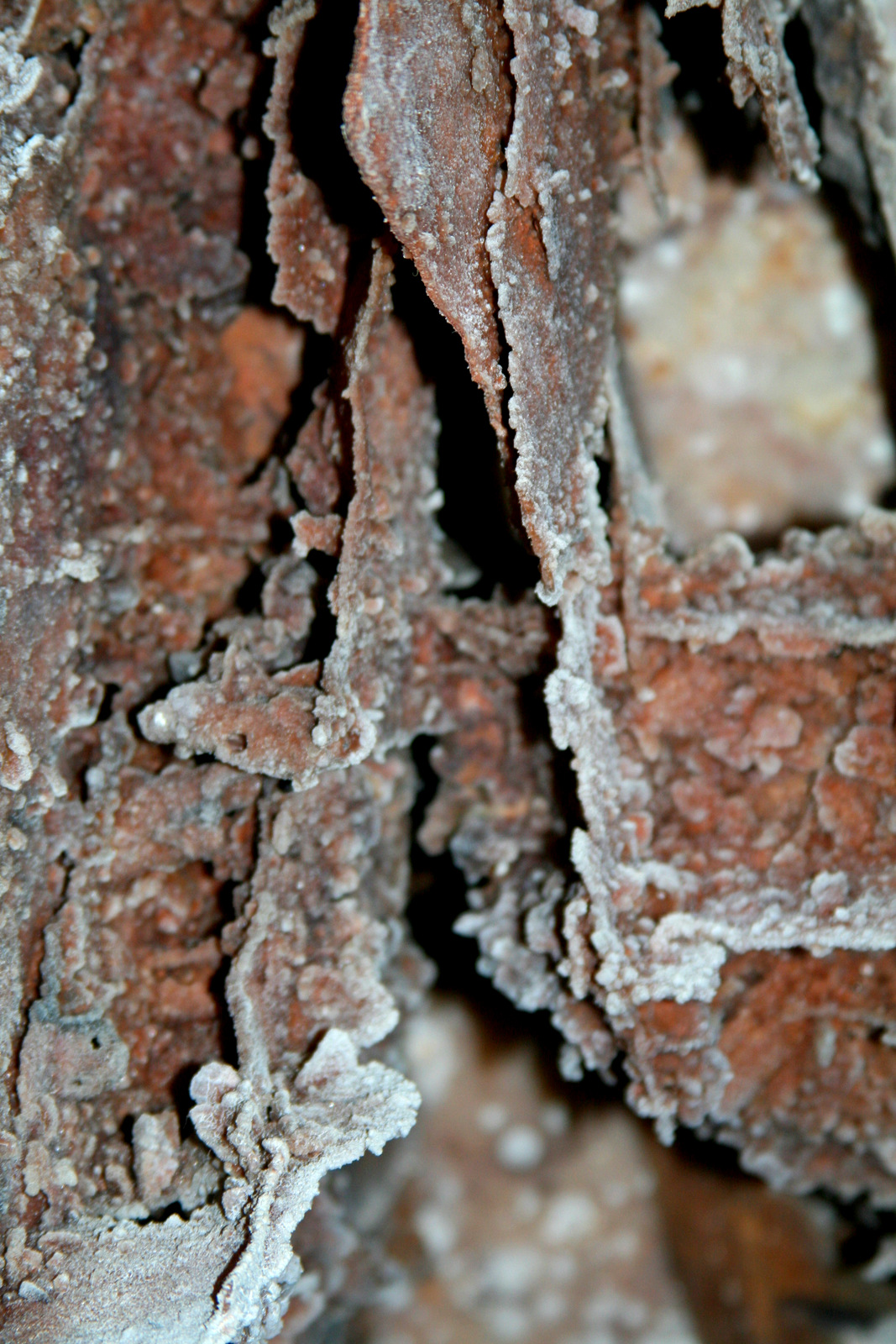
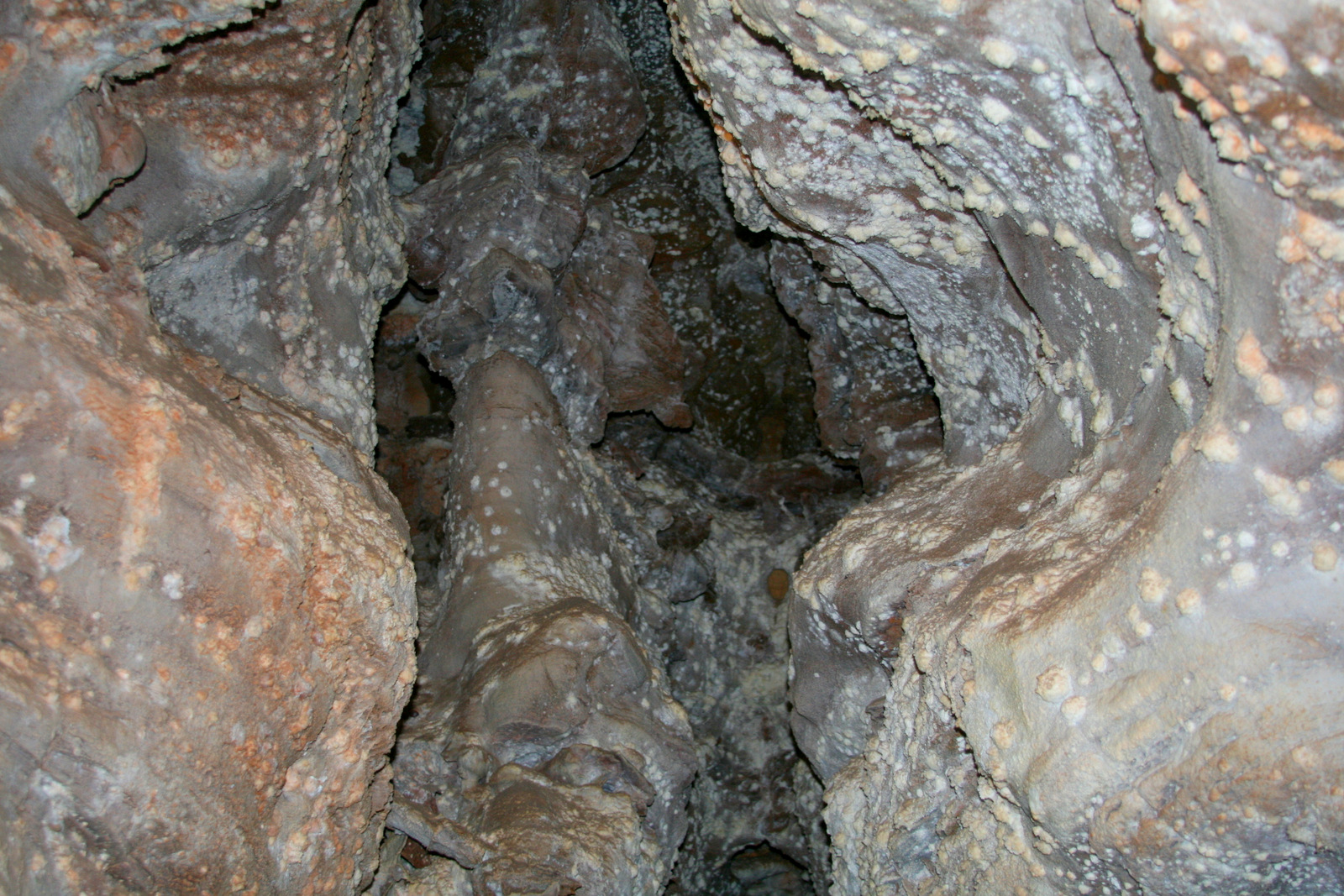
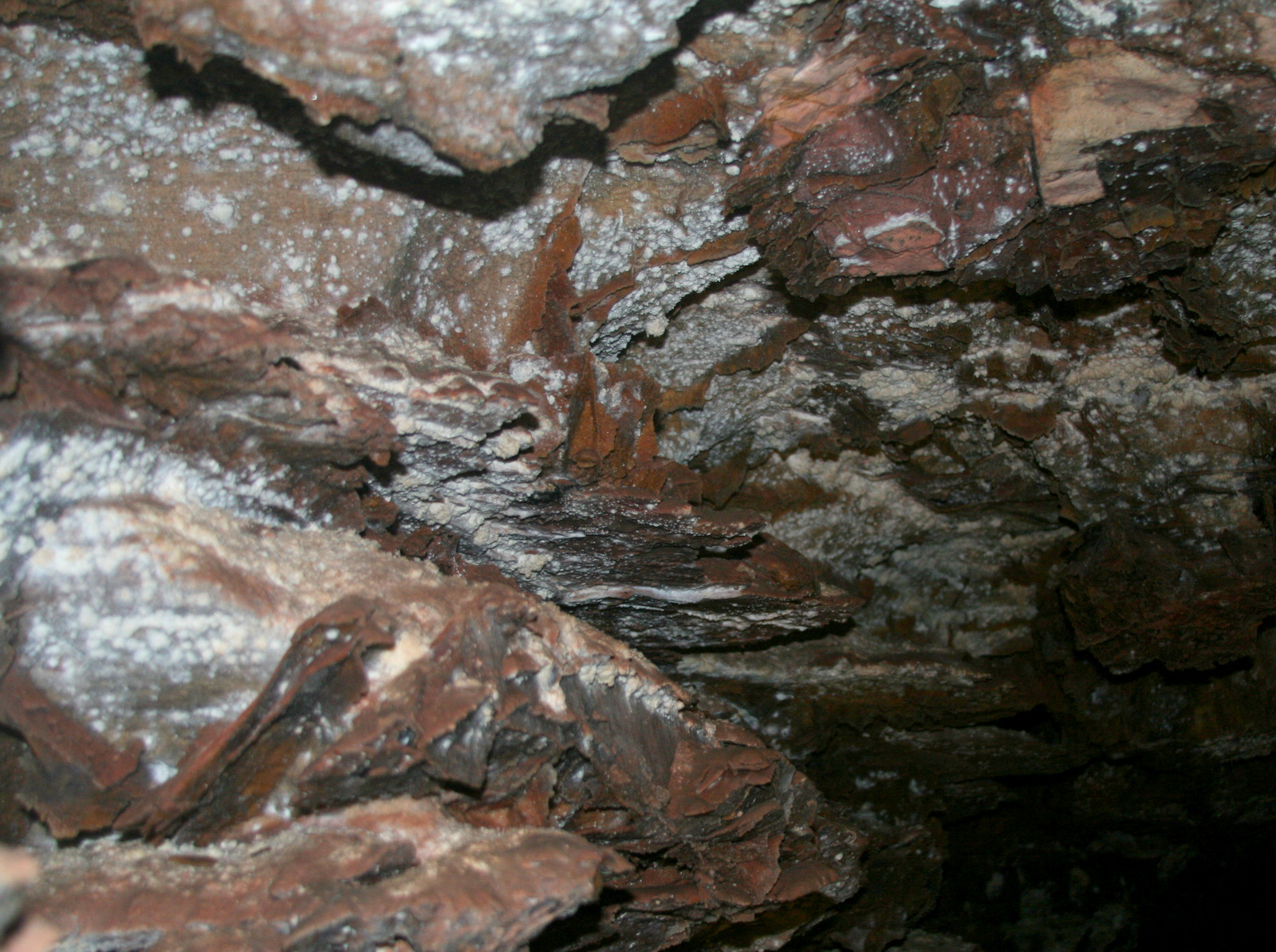
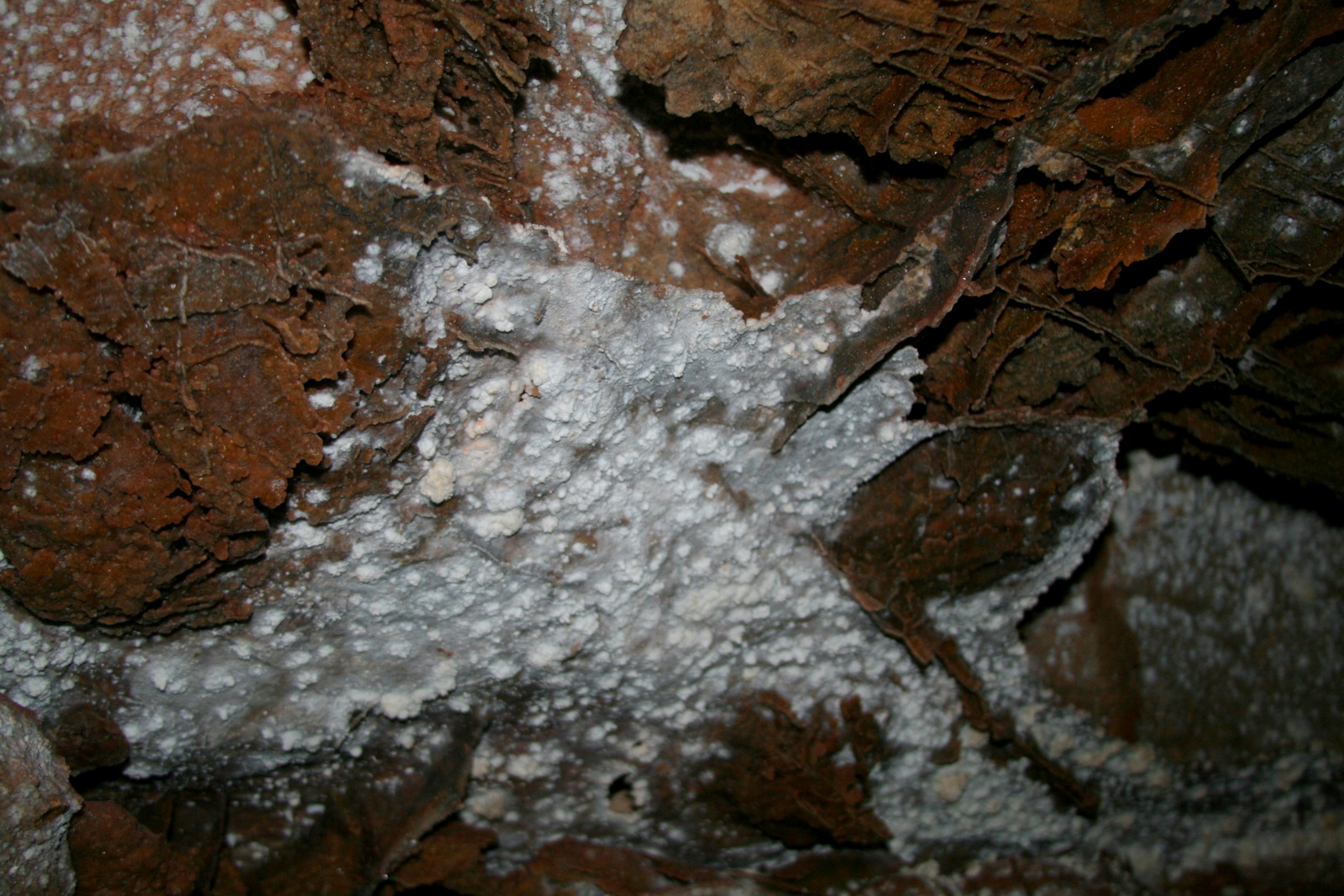
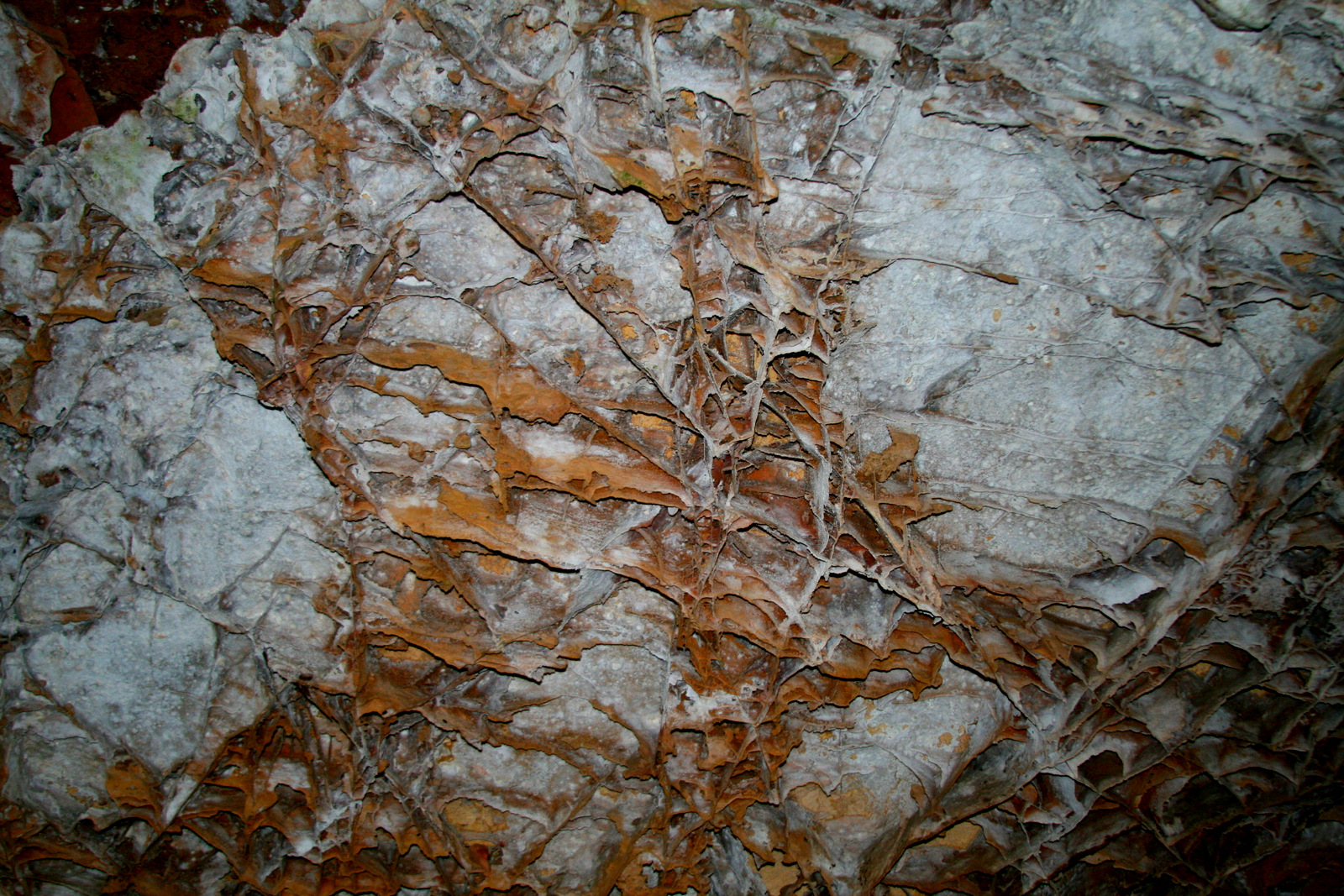
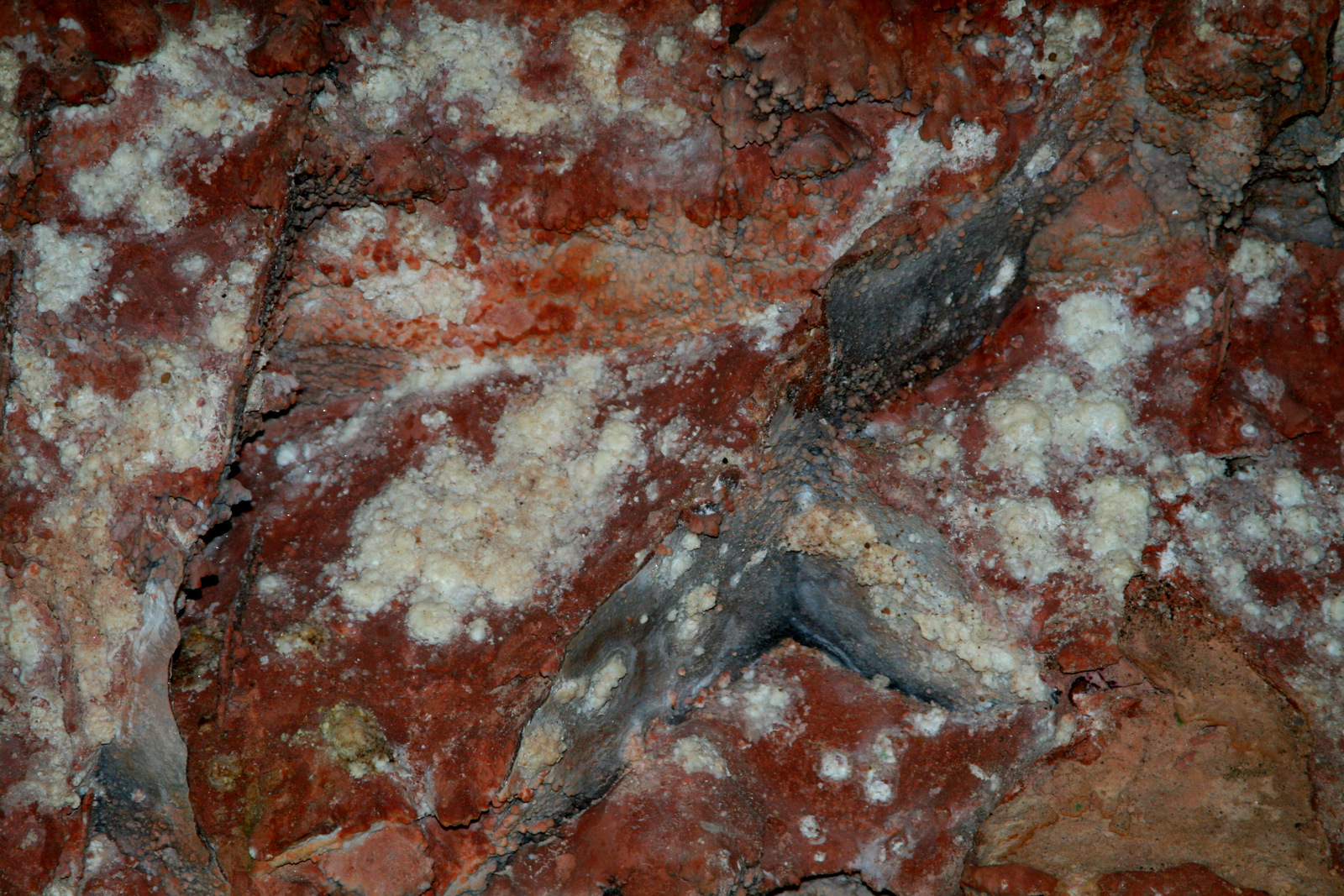
The cave is known primarily for its “boxwork” formations. We were told that the stuff of these formations wasn’t formed on the walls of the cave but instead filled cracks in rocks. When the rocks dissolved, the harder boxwork material remained. The cave also features a formation known as “popcorn” caused by minerals dripping through the walls.

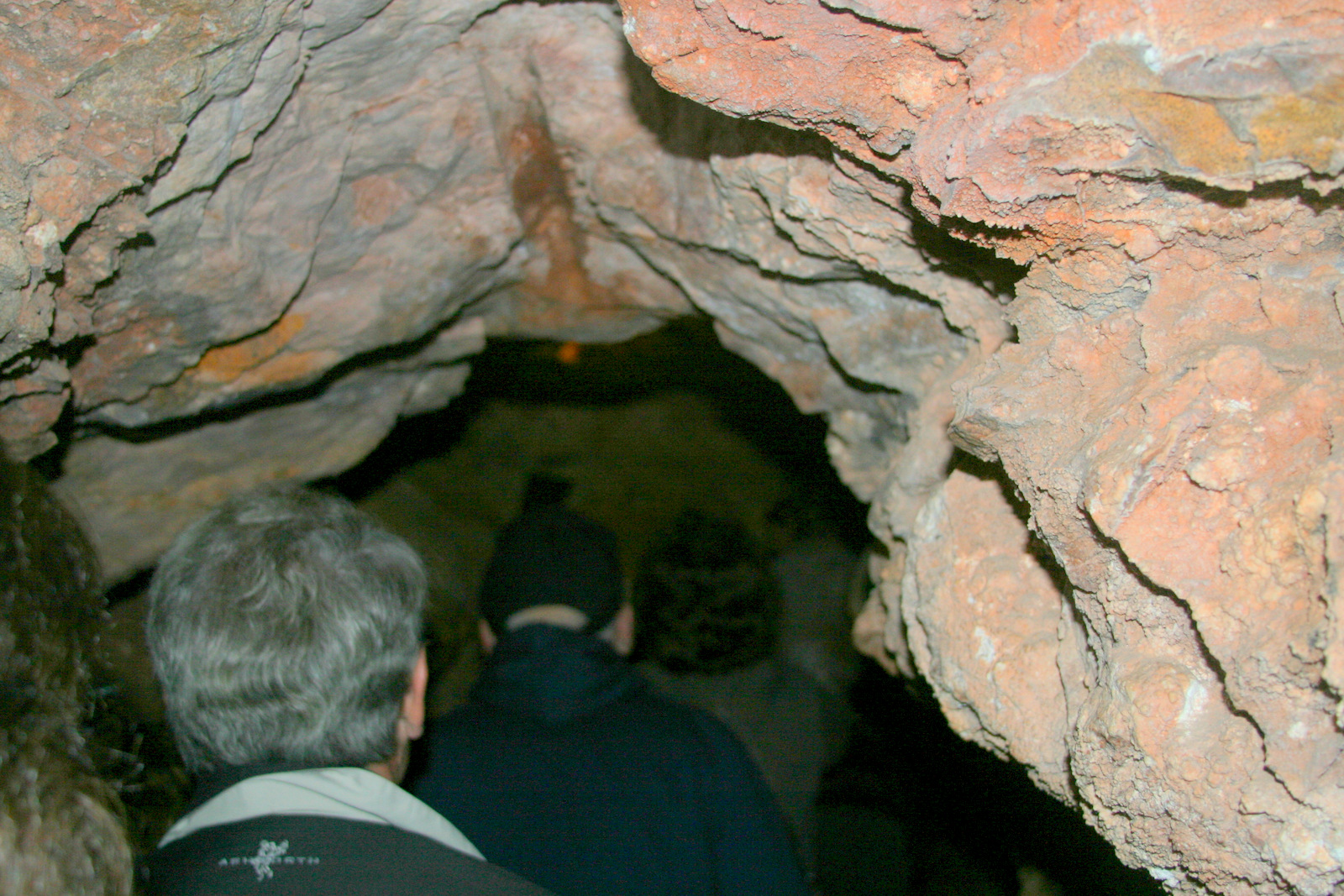
Our tour took an hour and a half and covered a half-mile of cave. Most of the way was through narrow, low passages. We had to walk in single file and there wasn’t much time to stop and look at the surroundings. Which was OK because the surroundings were pretty much just boxwork and popcorn. There were only three spots on the tour where the cave opened up enough for all of us to gather, and at each of these spots the guide would talk about the discovery and exploration of the cave, the geological formation or conservation for the future. It was interesting enough, but if you’re only going to tour one cave in the Black Hills, make it Jewel Cave — there’s a lot more variety. Wind Cave wasn’t a cave tour so much as it was an underground hike.

This is boxwork.

So’s this.

Here’s a close-up.

Here’s popcorn. Kinda looks like mold.

And here, to mix things up a bit, is popcorn on boxwork.

The passageways mostly looked like this.

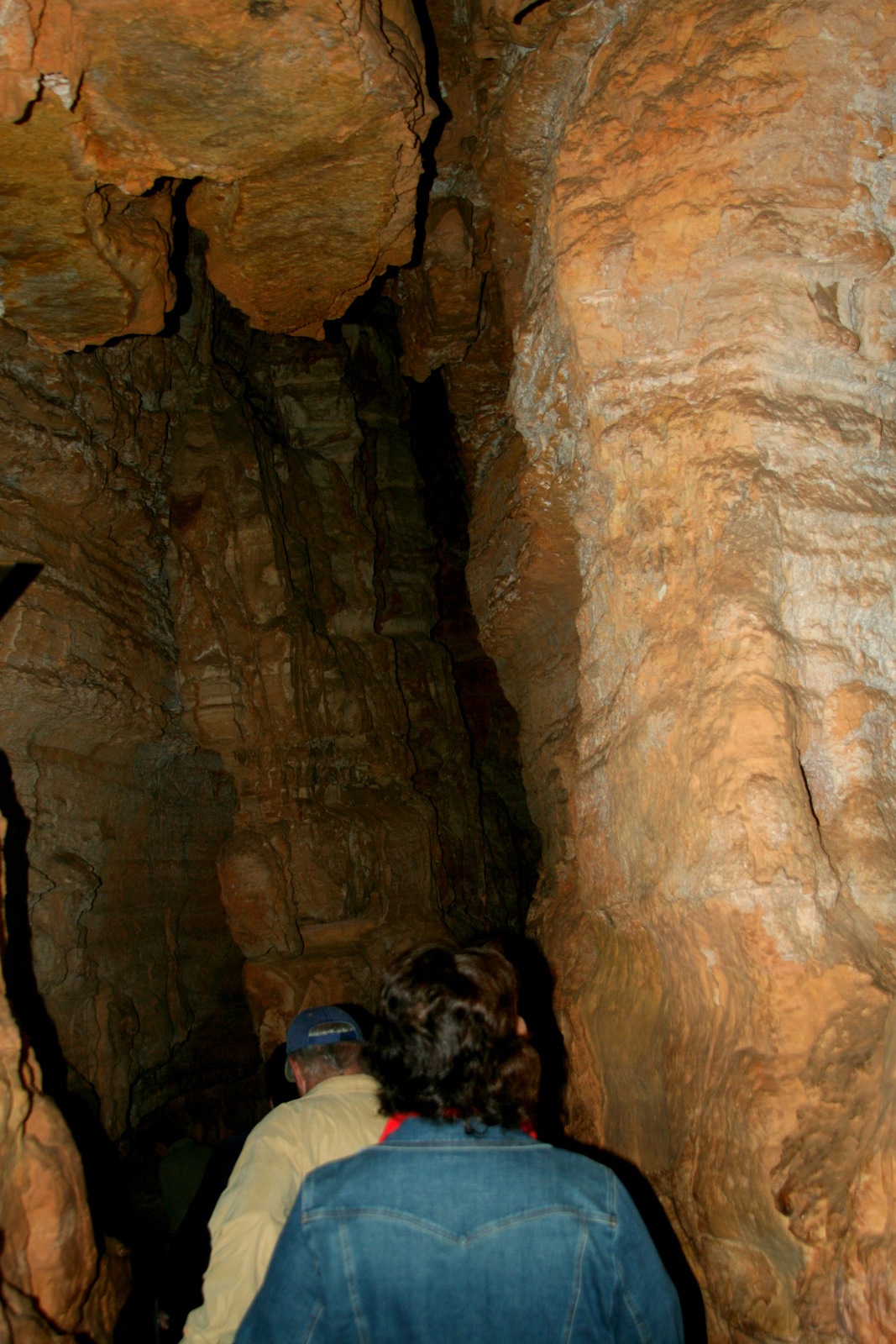
Here’s one of the spots where the cave opened up a bit. There isn’t much to see except boxwork. And popcorn.

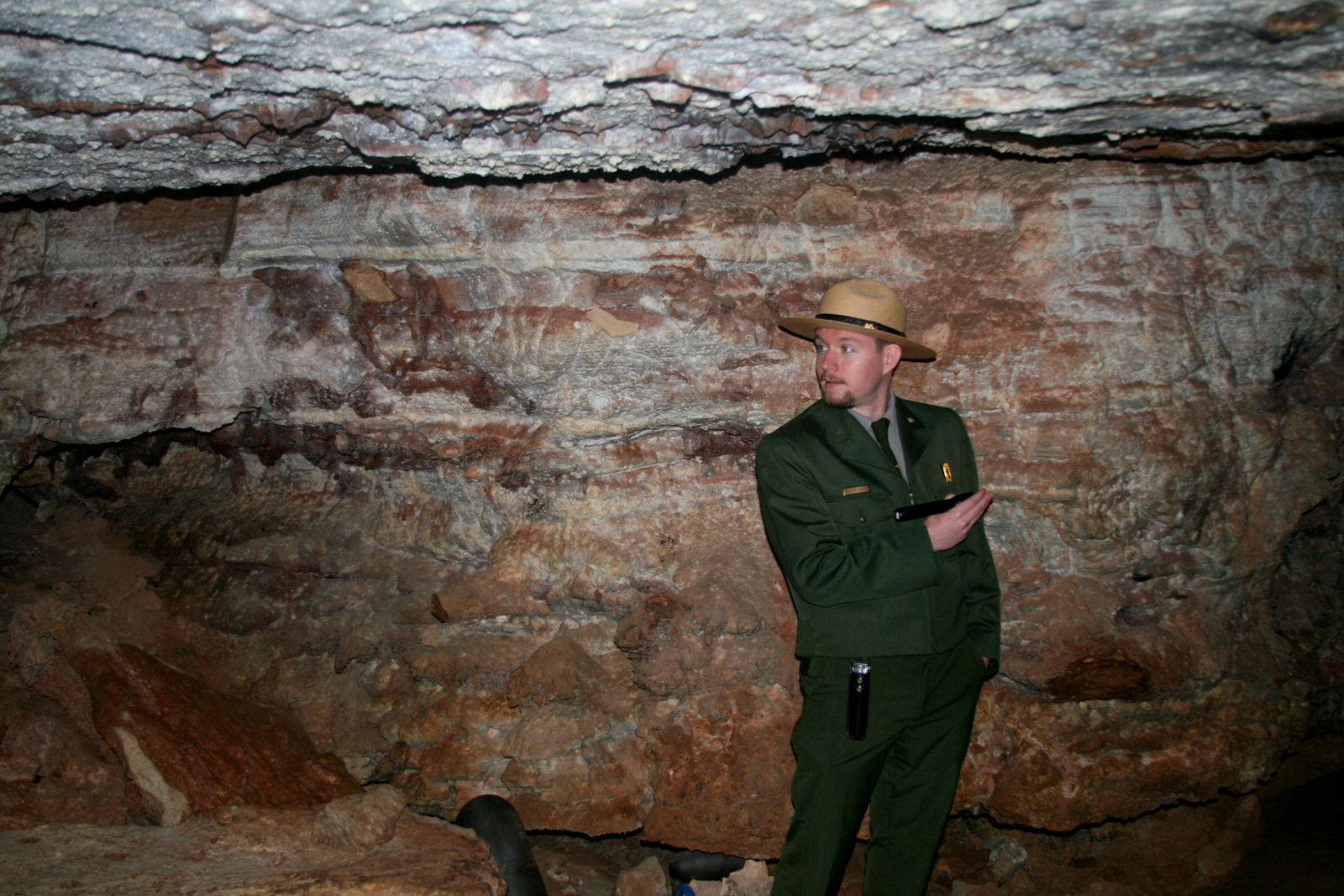
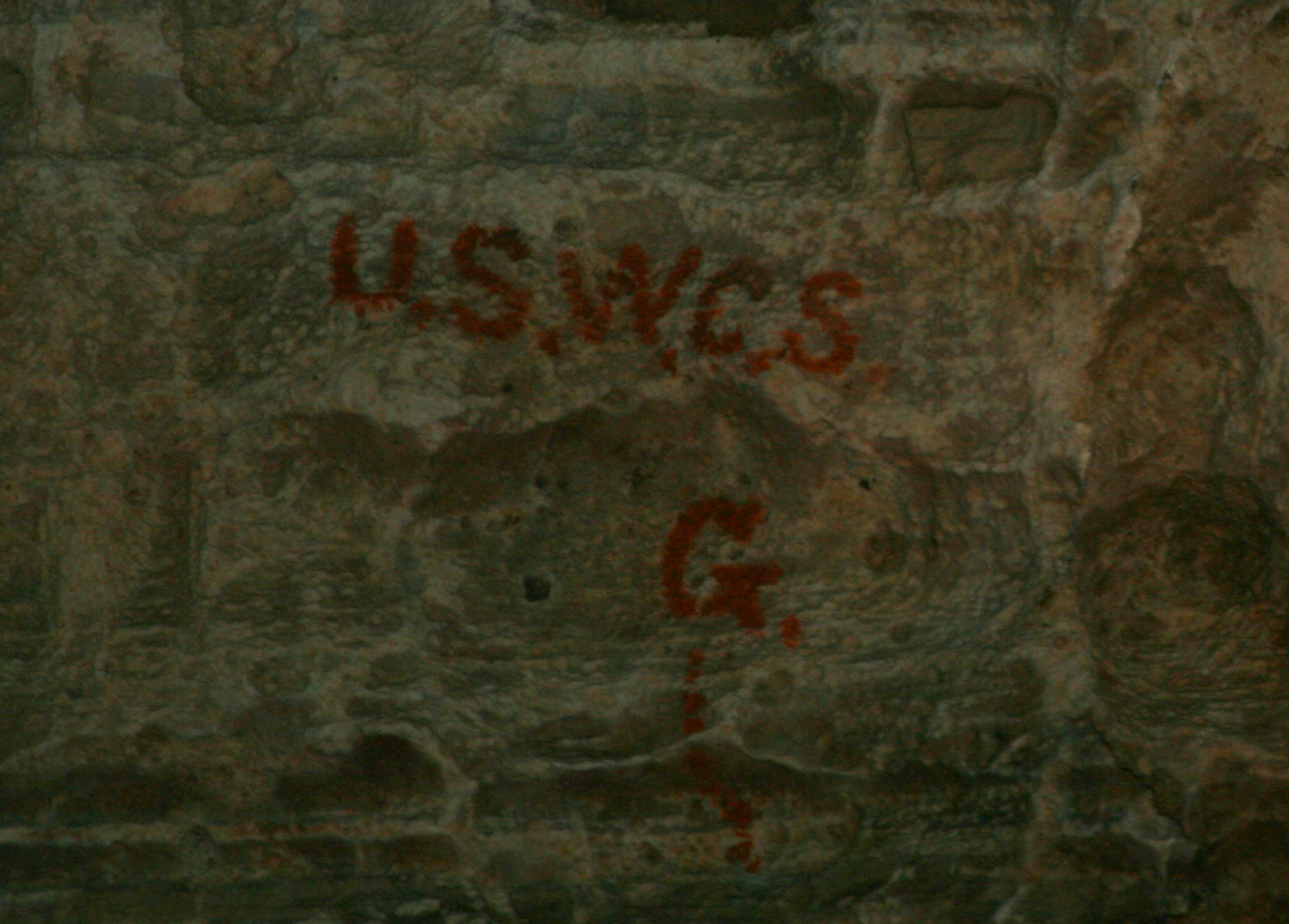
Here’s our guide. He was enthusiastic and pleasant. He’s shining his flashlight on some writing on the wall. He explained that it was a survey mark from an exploration of the cave done in 1902 (I think.) He said the National Park Service took over the next year and any writing done on the walls after that date is called something else — a federal offense.

As with every cave tour I’ve ever been on — probably 15 or so in my life — there comes a point when the guide turns off the lights to show what it’s like when you’re in a cave with no lights.

It’s dark.

There are so many passages in Wind Cave that undiscovered places exist close to the tour routes that people have been using for 100+ years. A few years back, an exploration was moving through a new passage when they heard someone talking. They looked up through a narrow hole and saw one of the guides from the tour we were taking looking back at them.

Here’s some more boxwork with a bit of popcorn.

And here am I after the tour outside the visitor center with no boxwork or popcorn to be seen.

Posted in South Dakota | Comments Off on Wind Cave National Park — The Cave

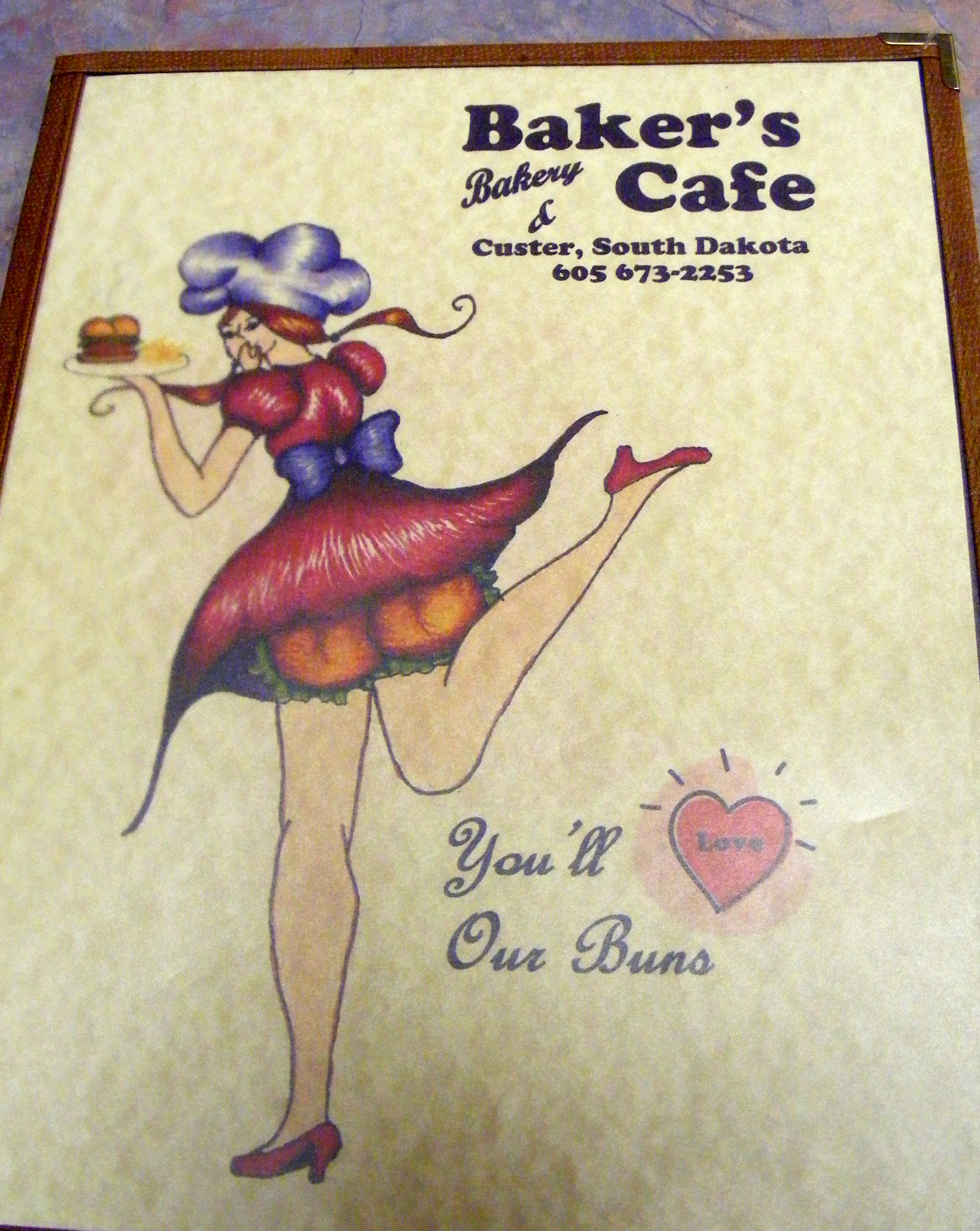
Baker’s Bakery — Custer, South Dakota

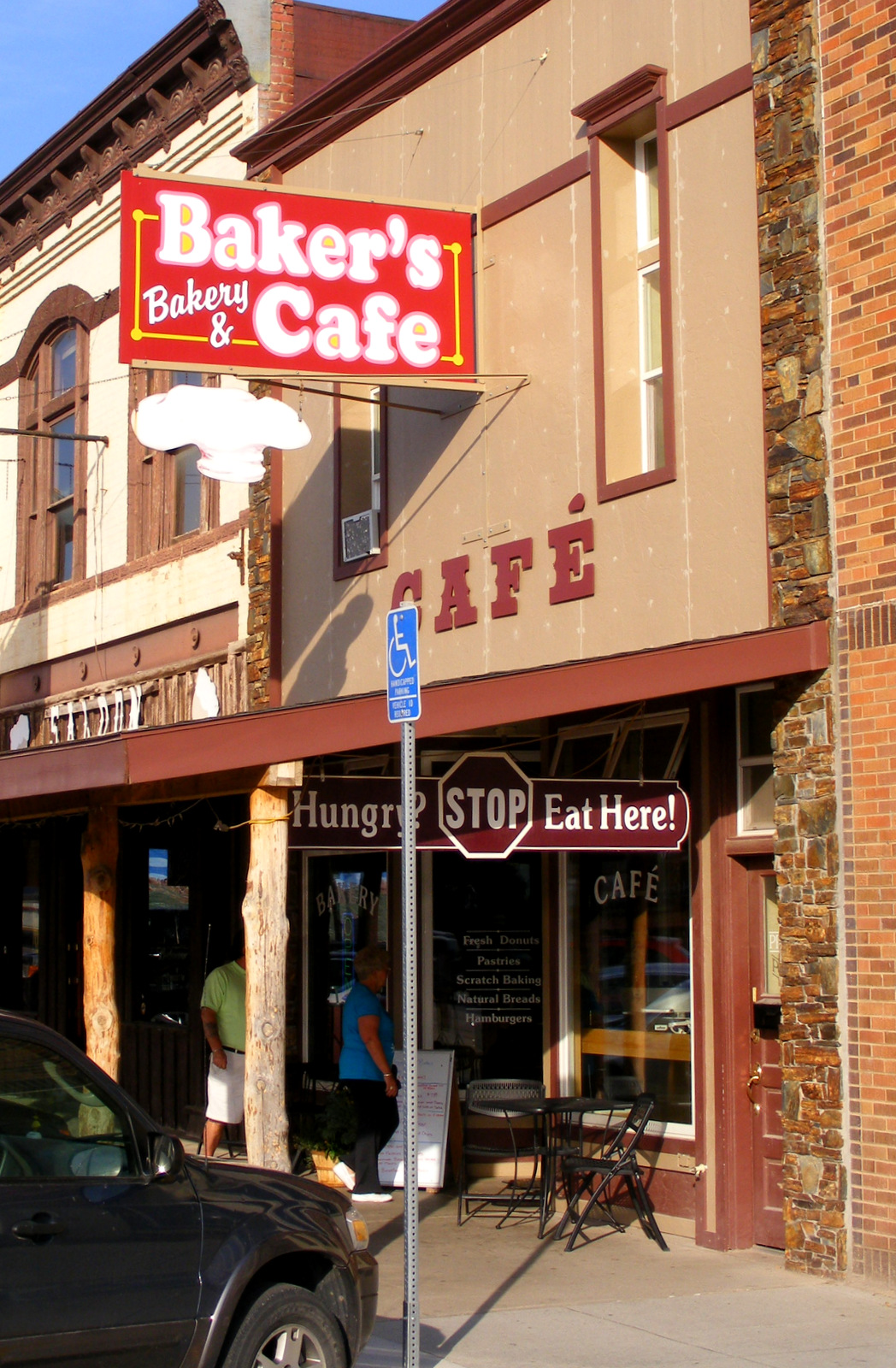
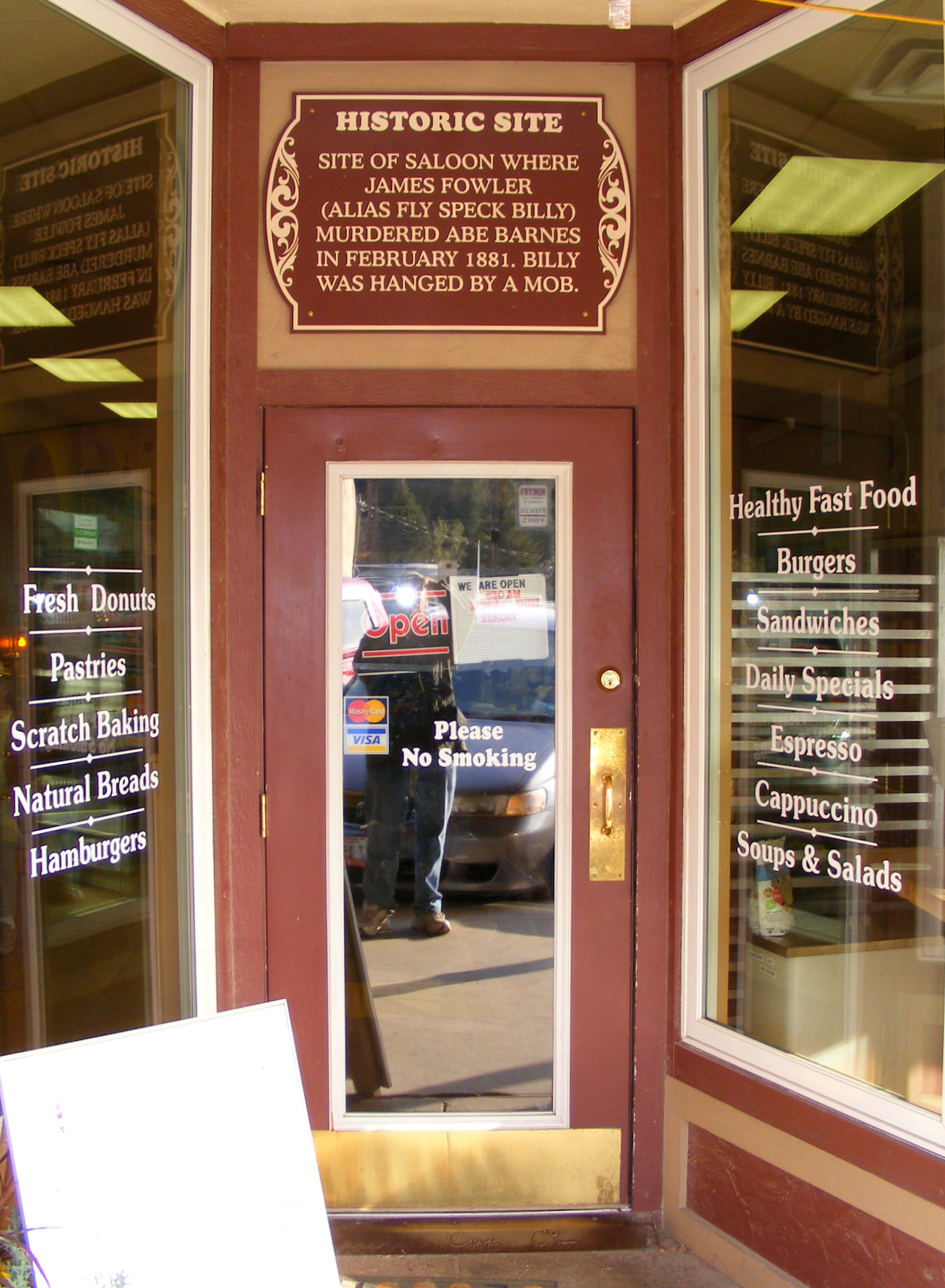
Sometimes it’s the little things that make a vacation amazing. On our first morning in the Black Hills, we decided to tour Wind Cave National Park. But first — breakfast. We headed into Custer, which not only was the closest town, but was on the way. We headed down the main street and looked for “a bakery or something.” Almost immediately we saw this place.

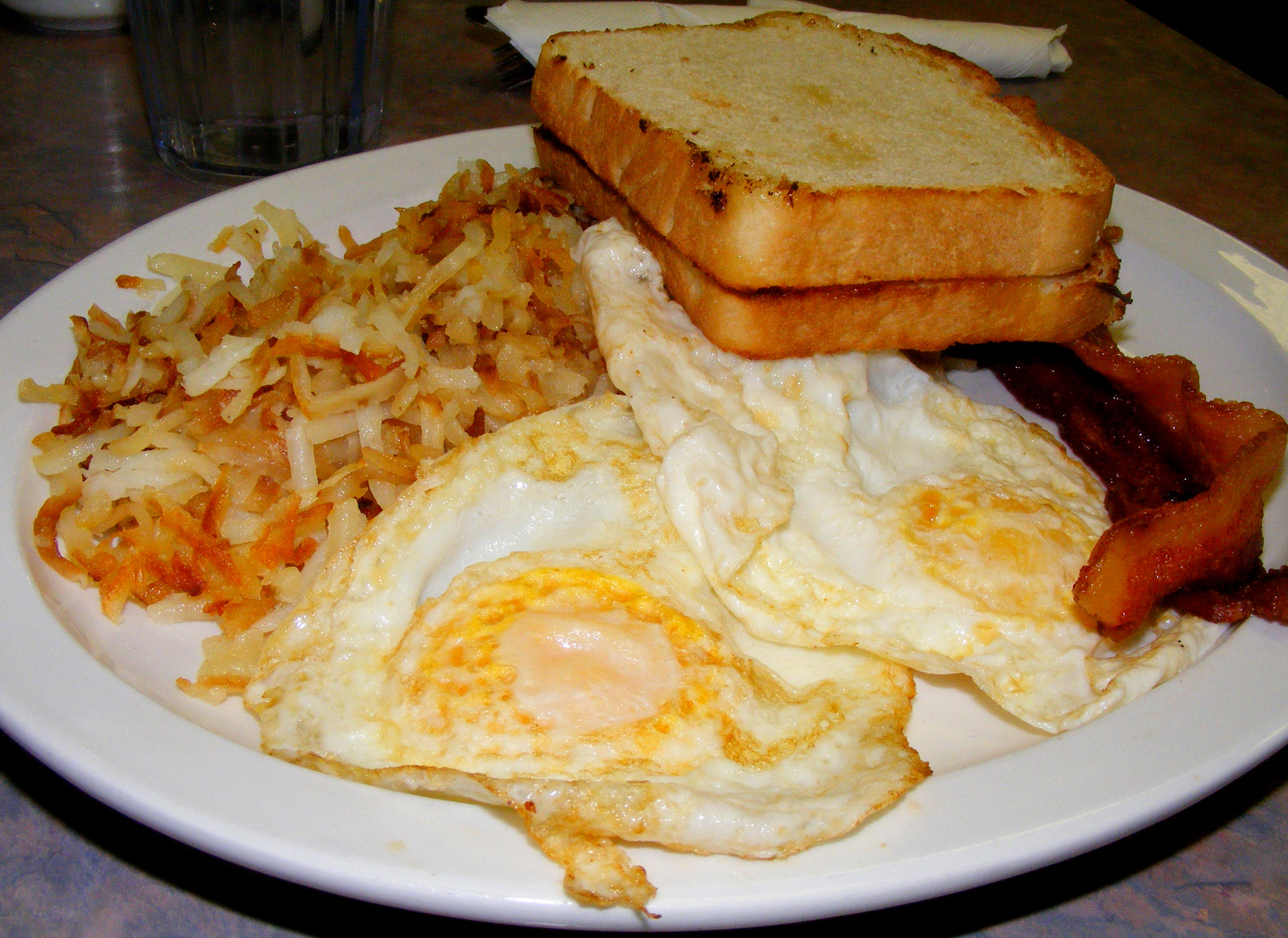
It didn’t look like much inside. There was a bakery counter filled with doughnuts and other pastries, several of which we subsequently tried and all of which were good except the hubcap-sized cinnamon rolls which were just average. The maple-glazed doughnuts were a particular favorite. The walls of the restaurant were painted beef-Stroganoff beige and there wasn’t much in the way of decoration. The booths in the front room were packed, so we were stuck at a small table in an even-less-fancy back room. I ordered the “special” — which happened to be the breakfast I always order in restaurants, bacon, hash browns and eggs easy-over.

Everything was perfect. Even the toast was fresh-baked and very tasty. We ended up going here six times during the six days we were in the area.

Wednesday — breakfast

Thursday — I drove in and picked up pastries that we ate in our room. Then our friends came and we headed back over for lunch.

Saturday — The four of us ate breakfast here.

Sunday — My wife and I ate breakfast here.

Monday — The four of us ate breakfast here before we headed back to Illinois.

We had the same waitress for several of the breakfasts. We ordered the same meal, but with different combinations of items and different ways of preparing them, but she got them all right without making a mistake. By the last morning, she had memorized our preferences. We felt like regulars.

There was a sign over the door informing us that this was the very location of a saloon where James “Fly Speck Billy” Fowler murdered Abe Barnes.

I asked the waitress how Fowler got the nickname of “Fly Speck,” but she didn’t know. So when I got home, I looked it up on the Internet and discovered this:

James Fowler became known as Fly Speck Billy because of his freckles. He was lynched as a result of a series of poor choices, alcohol and bad timing. He’d begged a ride on Abe Barnes’ freight train from Sydney, Nebraska, to Custer, in 1876. When he got to town, he got drunk, borrowed Barnes’ revolver and when Barnes refused to get up from his card game to drink with him, shot him in the back, killing him.

Fly Speck Billy tried to escape, but a man standing by the door banged him on the head with a chair, and Billy collapsed into the arms of Sheriff Code, who was just walking into the saloon. Vigilantes later that night jumped Code and his deputies, took Fly Speck Billy up on what is now known as Pageant Hill south of Custer and lynched him.

I can’t help wondering if his nickname helped point him toward a life of crime.

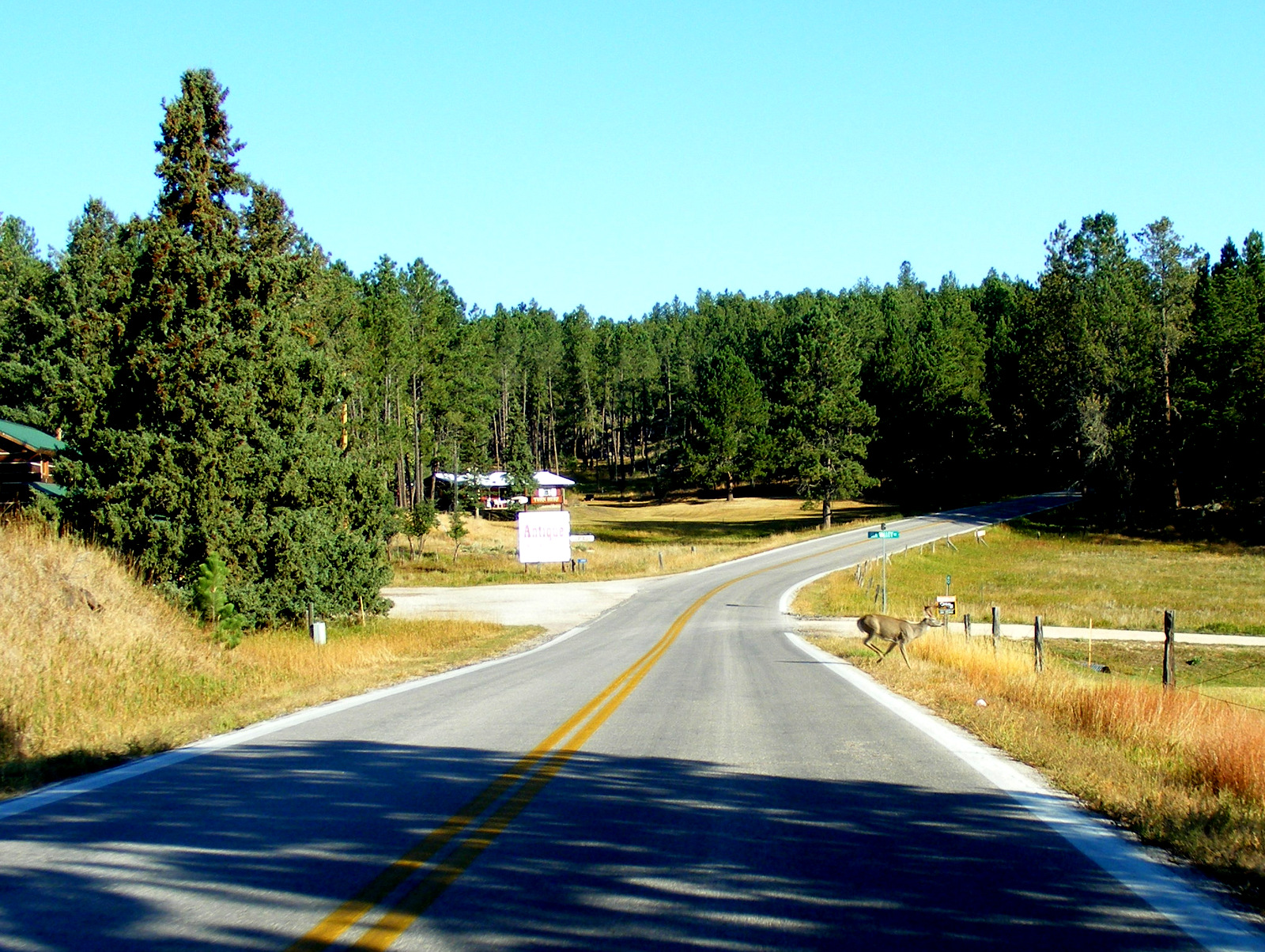
The seven miles from our lodge to Custer were interesting too. Almost every time we made the trip, a herd of deer ran across the road in front of the car. When they weren’t running across the road, they were grazing in the front yard of a house.

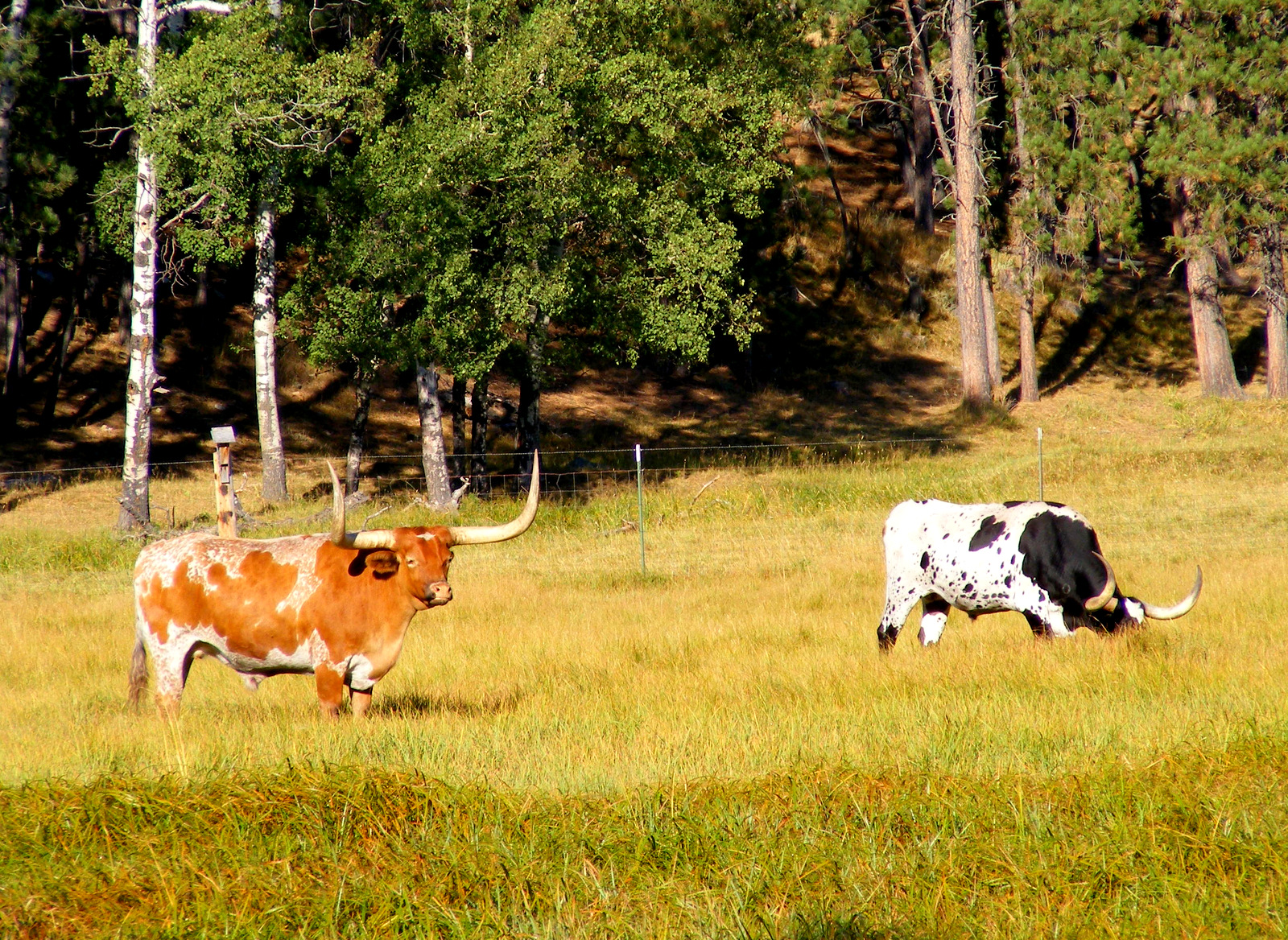
And there was a herd of longhorns in a pasture a bit closer to the lodge.

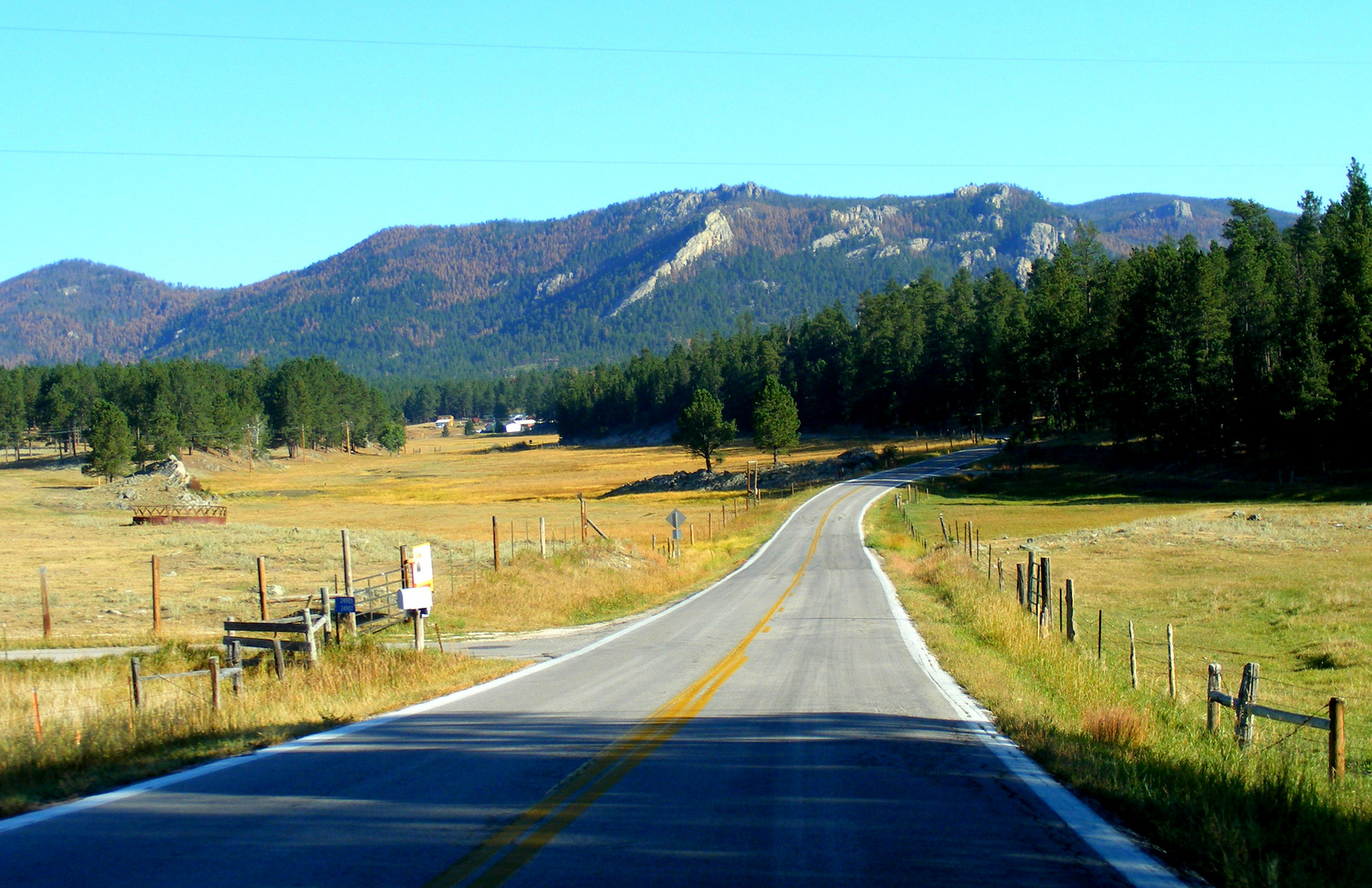
The scenery wasn’t bad either. The red trees on the mountains are pines killed by a pine beetle infestation. Apparently they have no way to stop the critters from killing the trees, but thinning the forests helps some. We saw a lot of red pine groves and a lot of cut lumber.

Posted in South Dakota | Comments Off on Baker’s Bakery — Custer, South Dakota

Minuteman Missile National Historic Site — South Dakota (Part 2)

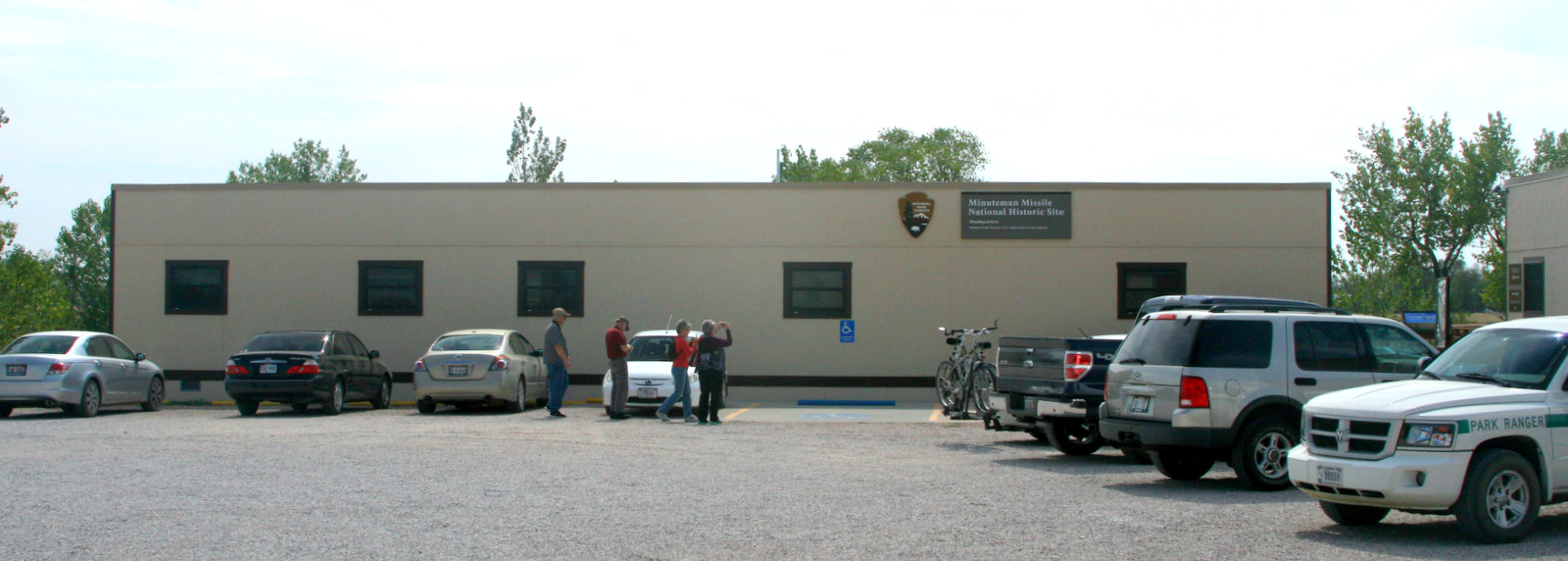
After visiting the Delta-09 site, we spent the morning touring the Badlands. At 1:00, we headed north to the headquarters of Minuteman Missile National Historic Site — which turned out to be a trailer in the parking lot of a Conoco gas station.
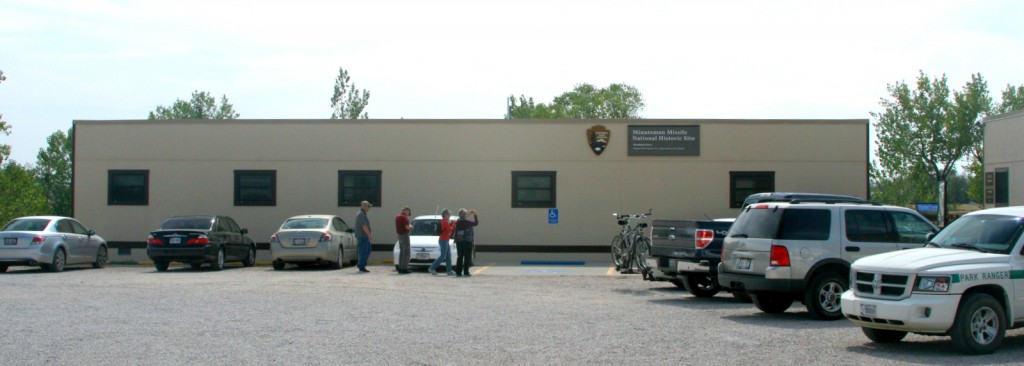
There wasn’t much to see there — one small room with a few items on display and a short video. We got tickets for the 3:00 tour of the Delta-01 Launch Control Facility. Which meant that we had two hours to kill.

The Conoco station advertised buffalo hot dogs, and since it was past lunchtime, we wandered over. We didn’t have many options. The two buildings were pretty much all there was to the town of Cactus Flats.
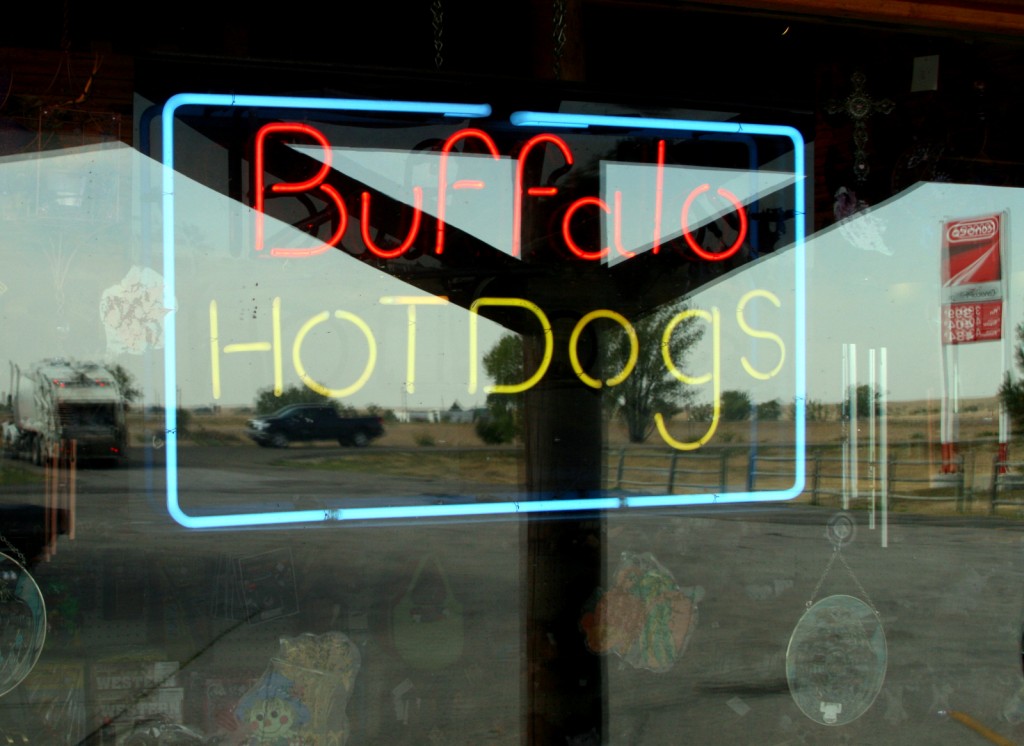
We sat at a table in the large gift shop and ate our hot dogs. This was the second time in one day that I’d eaten a sit-down meal in a gift shop, easily beating my previous record of none. The hot dogs were very good.

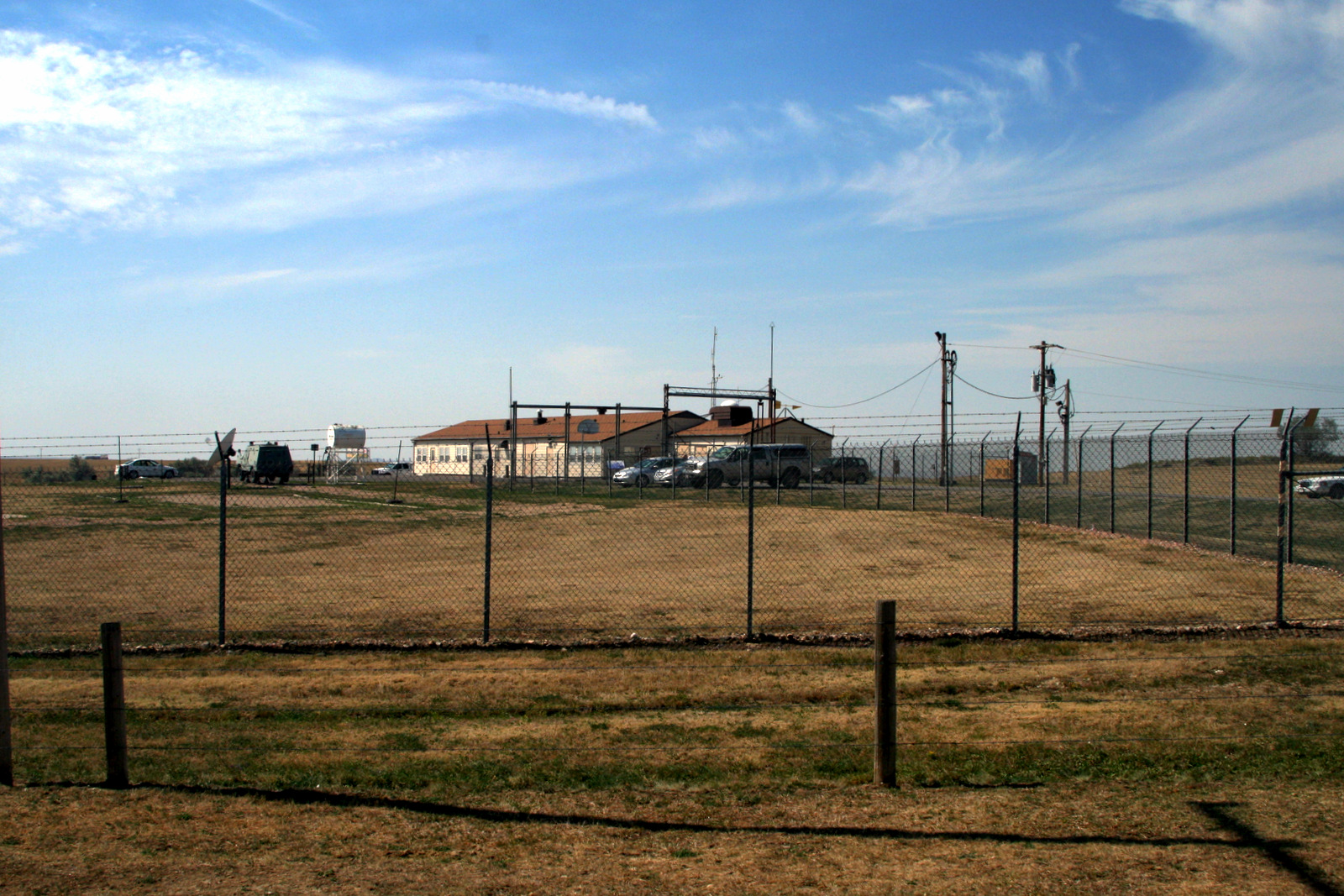
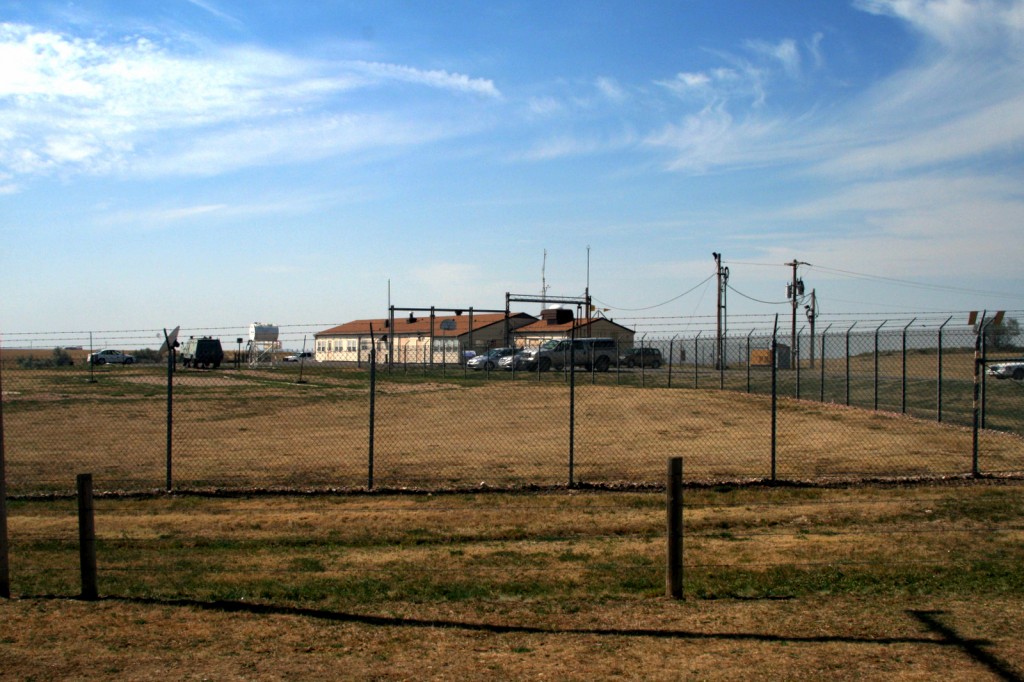
We got on the interstate and drove about four miles west and exited onto another dirt road. About a quarter mile off the interstate, we came to this building.
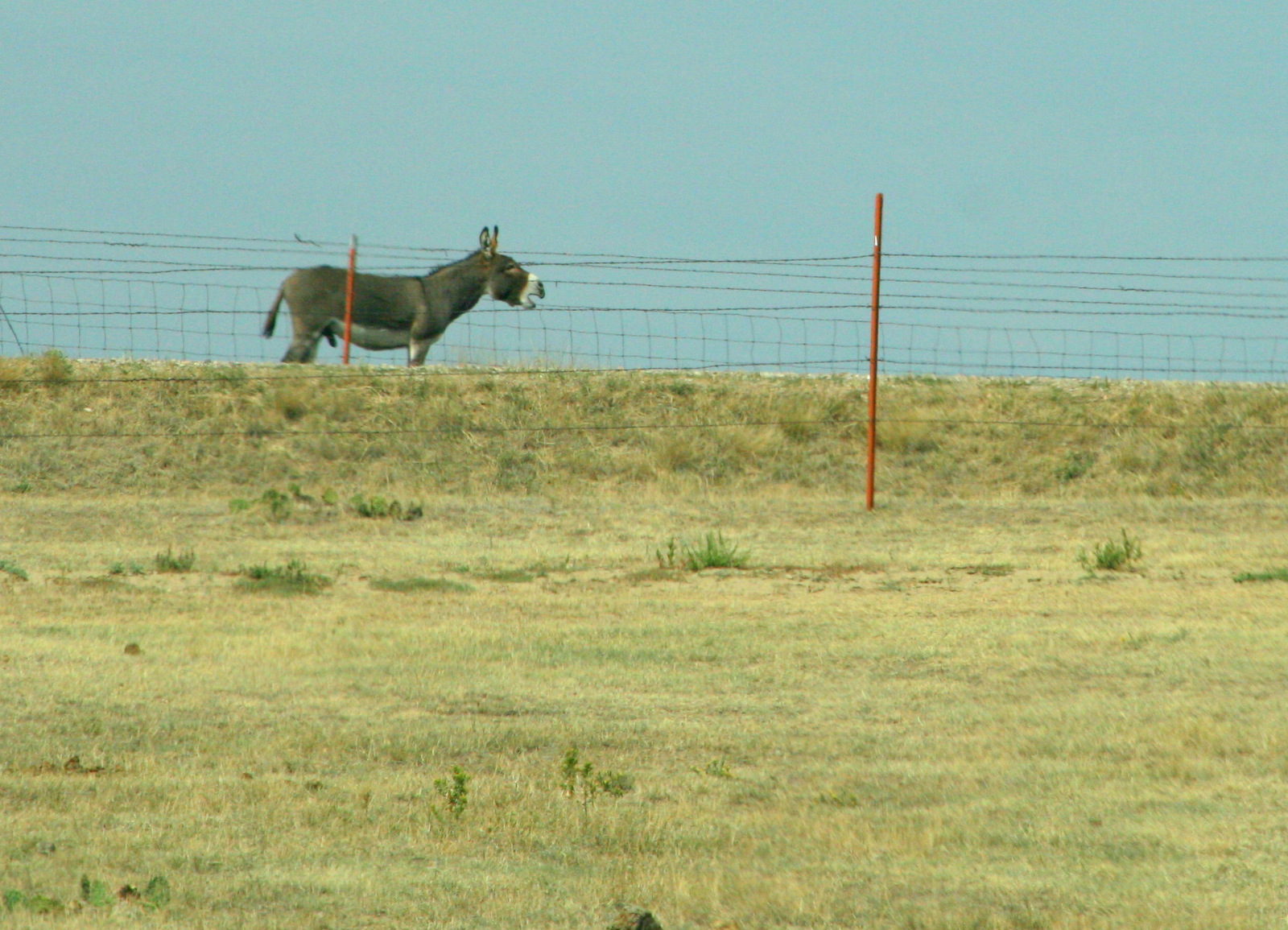
But before we could tour it, we had to wait another hour. We sat in the car and listened to old-time radio shows and drifted in and out of sleep. There was nothing in front of us except a short stretch of grass and a fence on top of a ridge beyond which we couldn’t see. Suddenly a donkey appeared from nowhere running at full speed along the fence until it was out of sight. About 10 minutes later it came back, jogging this time. It stopped in front of the car and let out a loud bray, then jogged off over the ridge. We had no idea what it was doing, but we appreciated the entertainment.
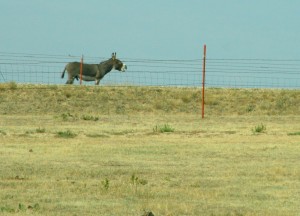
Three o’clock came and we got out of the car and waited by the gate with two other couples. While we waited, we got to see a guy in a very old truck empty the site septic tank, which was exciting.
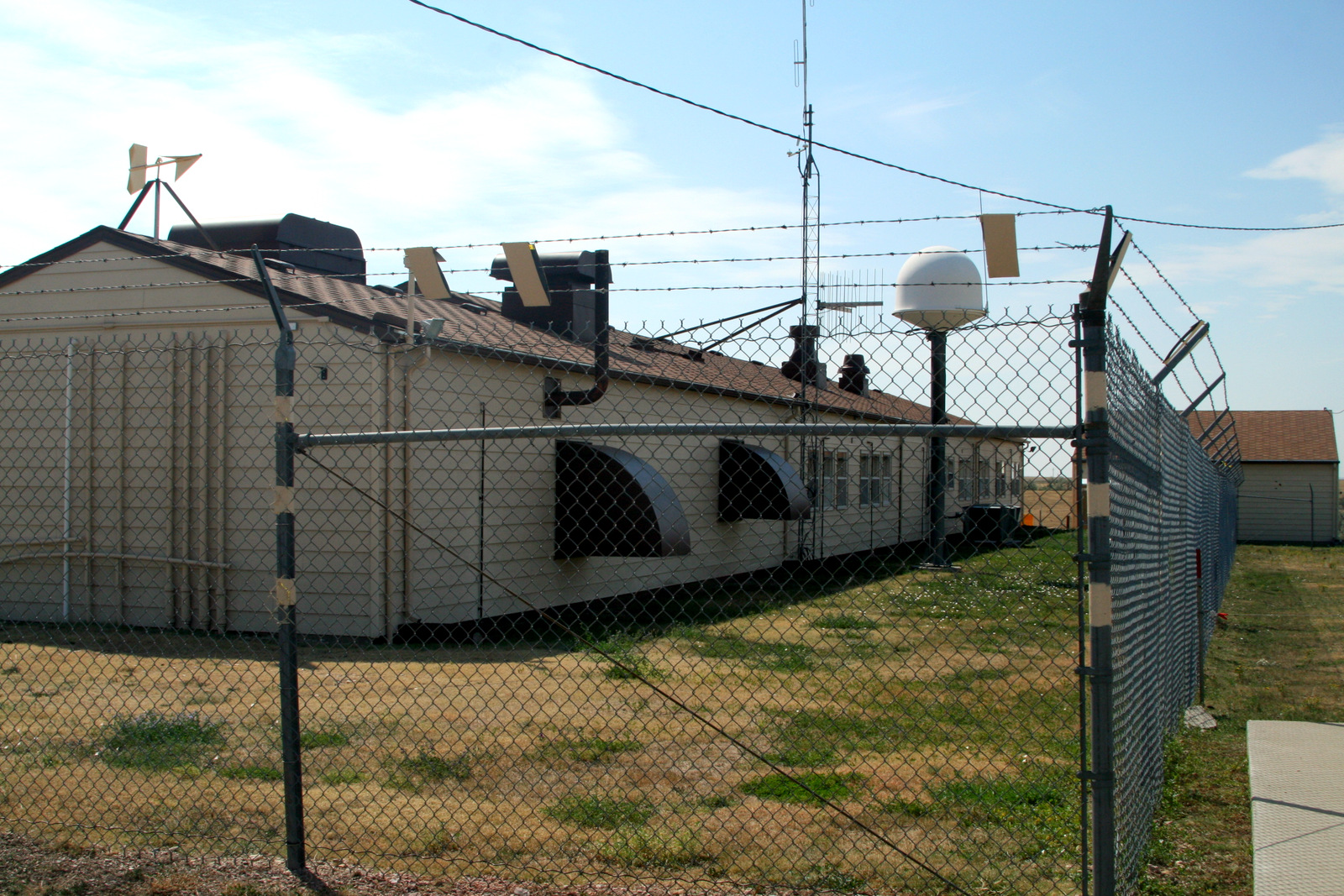
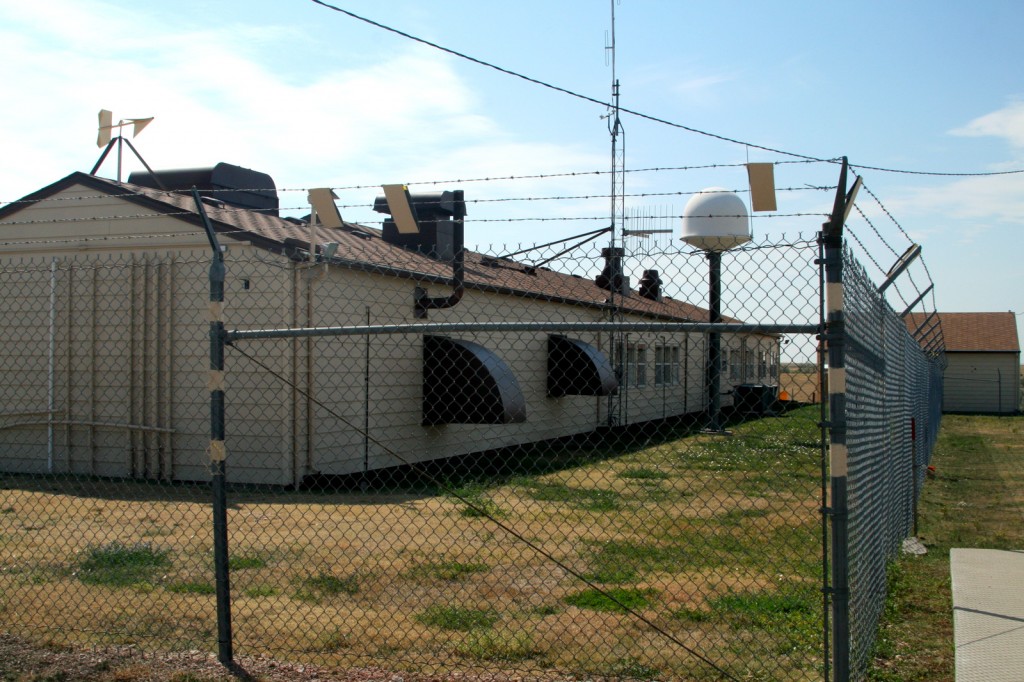
The back of the building.
The tour before us finally ended at 3:15 and the six of us filed through the gate. Our guide was very enthusiastic. He asked each of us where we were from and what we did. One guy flew for FedEx. He was with his girlfriend from Alaska and they were on their way to get married. The other couple was from the Netherlands. The guy was a writer. When I said I was a writer too, the guide got excited and kept telling me that he hoped I would write about the Minuteman Missiles.

Really.

He said this about four times during the tour.

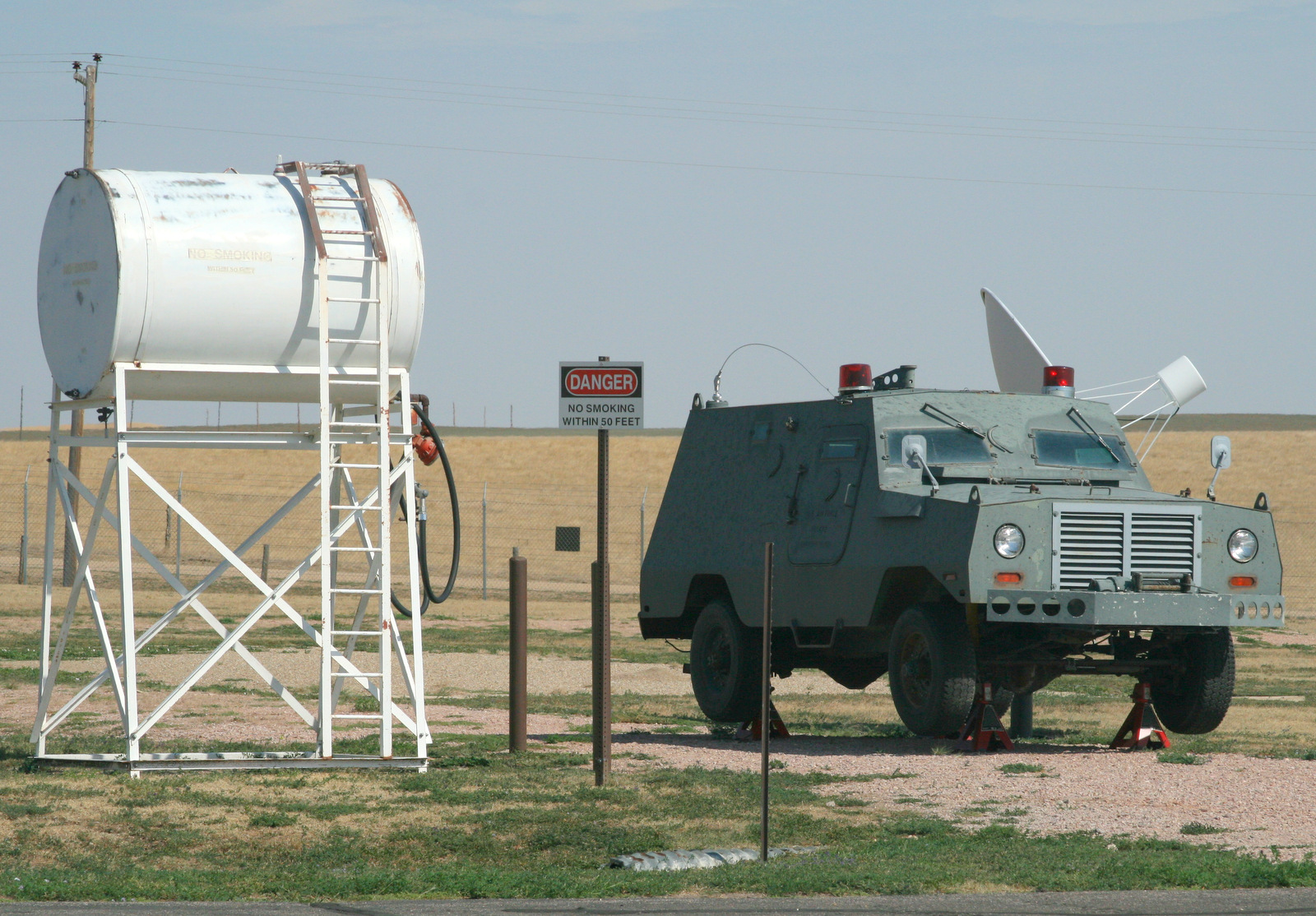
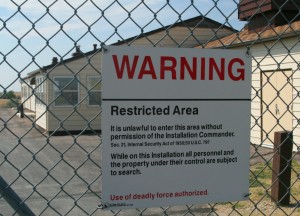
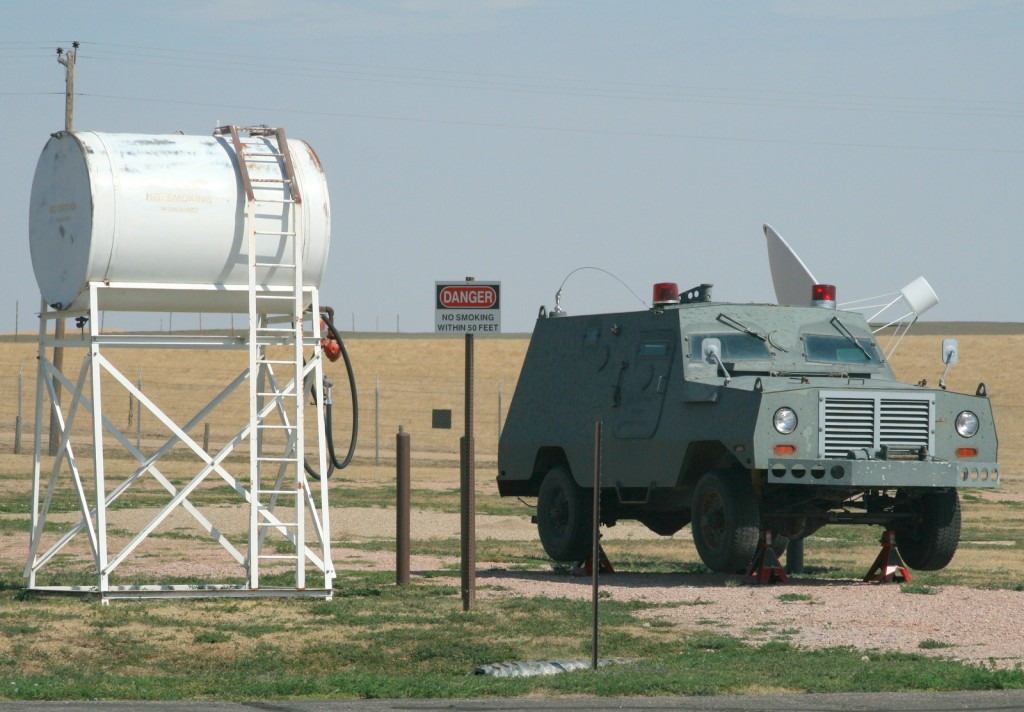
He pointed to the Delta Flight Peacekeeper vehicle parked nearby. He explained that the missile sites were unmanned, but if any security breach was detected, four security guys would hop in the truck and be there in minutes. I asked if there was ever an incident and the guide said there was one — in North Dakota. Three peace protesters climbed the fence by one missile silo with burglary tools. The guide laughed at this because the silos are built so securely that you would need several hours to get into one with a jackhammer. Anyway, when the security guys arrived, they gave a warning. Protocol was to give one warning and then use deadly force. Two of the guys dropped to the ground and surrendered. The other tried to run for the fence but was taken down by a shot in the leg. Nobody was killed, but after that, people pretty much got the message.
Nobody lived full-time in the Launch Control Facility. Rotating shifts would man it for a couple days each. They included the site commander, the security personnel and the facility maintenance men. The Air Force officers who manned the bunker down below rotated on 24-hour shifts and never mingled with the guys up top.

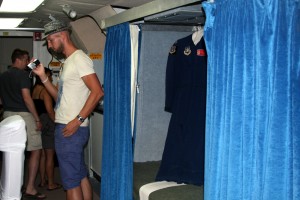
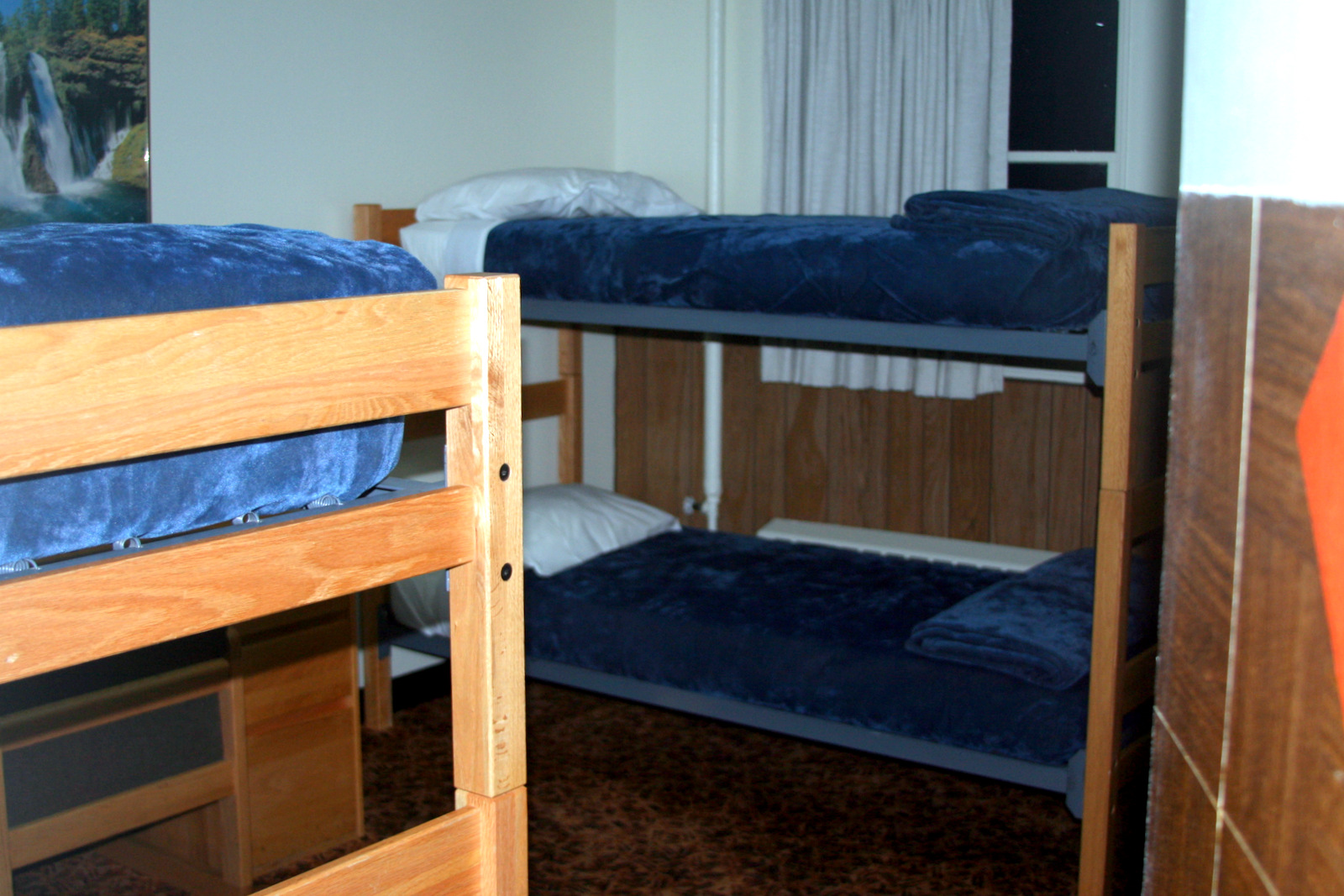
This is the C.O.’s room and the security personnel bunk room (with blacked-out windows). These guys were always ready to respond to an incident at one of the missile sites and had loaded weapons handy at all times.

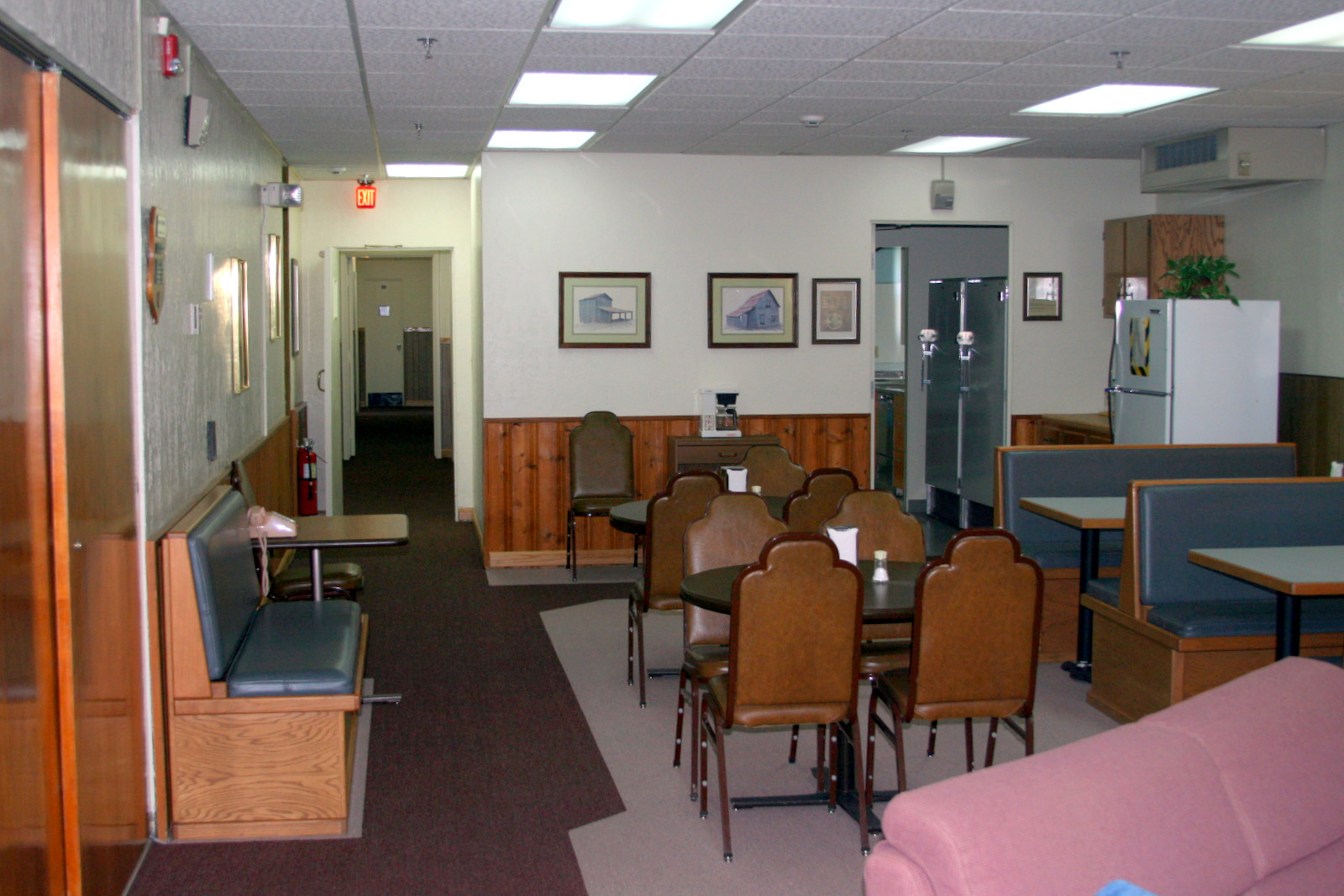
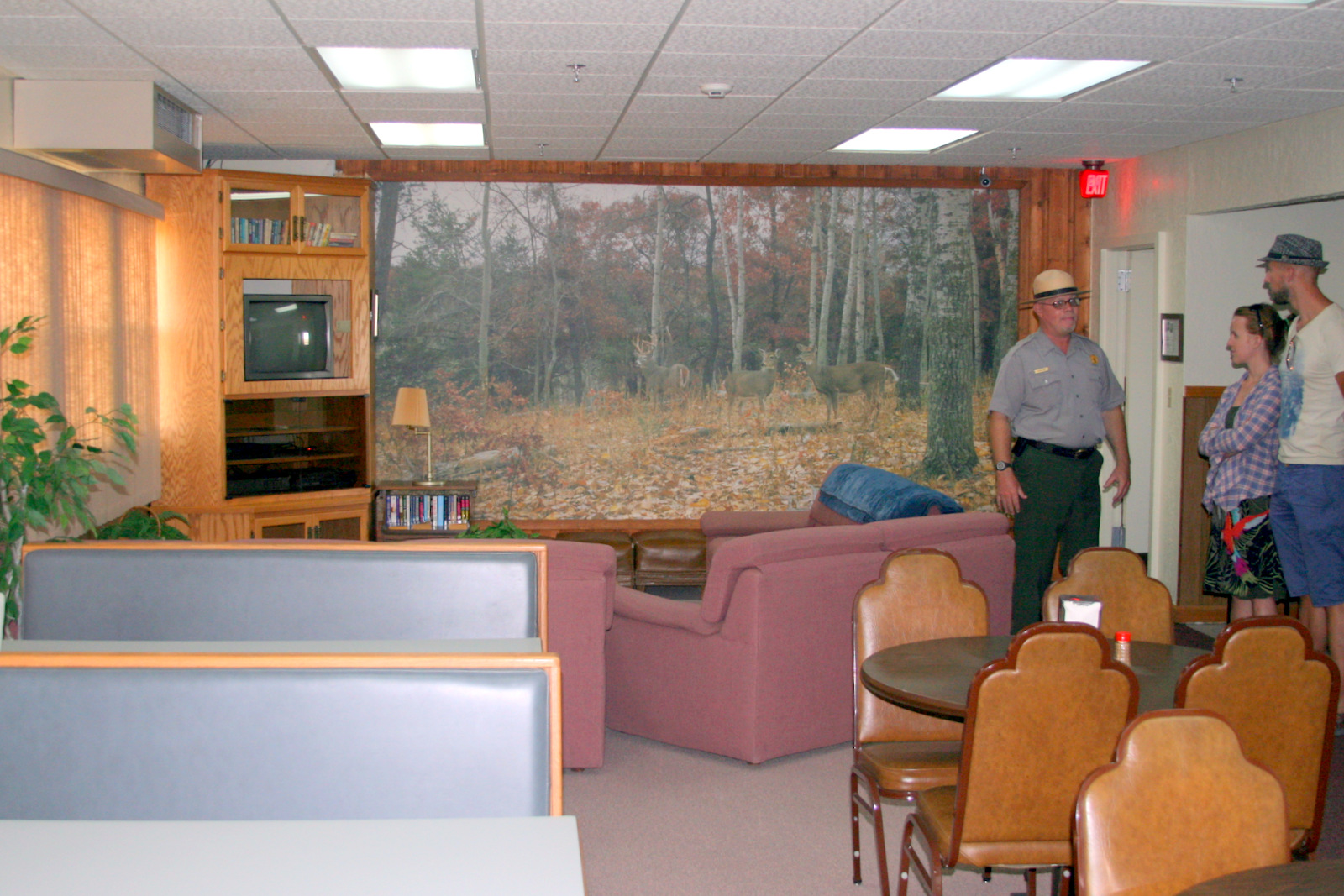
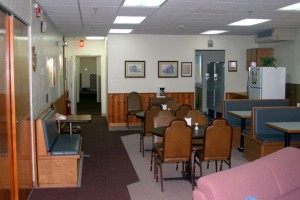
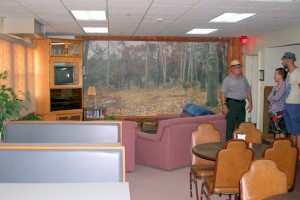
Two shots of the eating area and lounge. That’s our guide in the second photo with the couple from the Netherlands. We were told that everything in this building is exactly the way it was when the site closed down, including the magazines and video tapes. Since this just happened in 1991, it wasn’t terribly exciting yet.
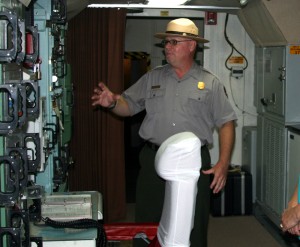
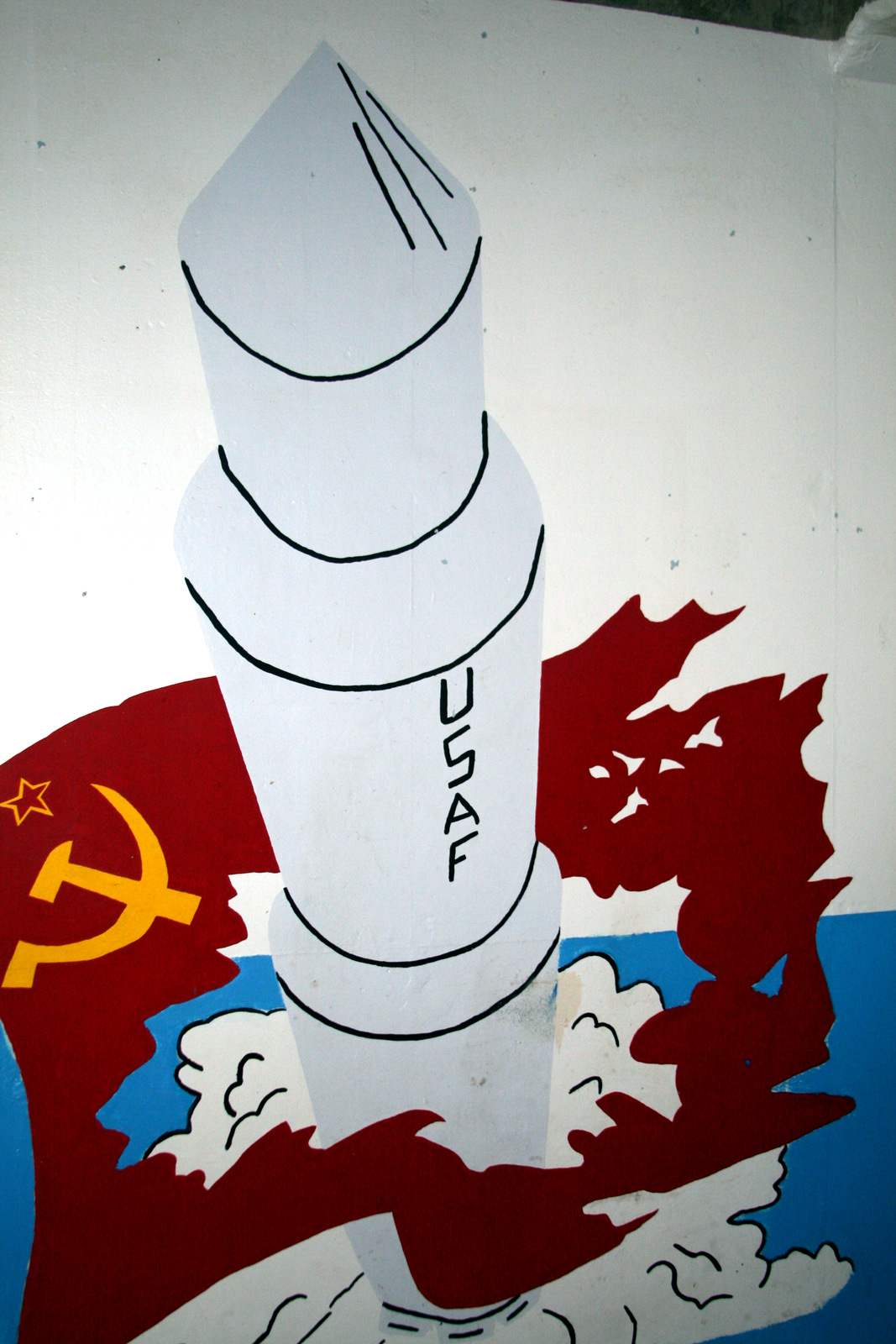
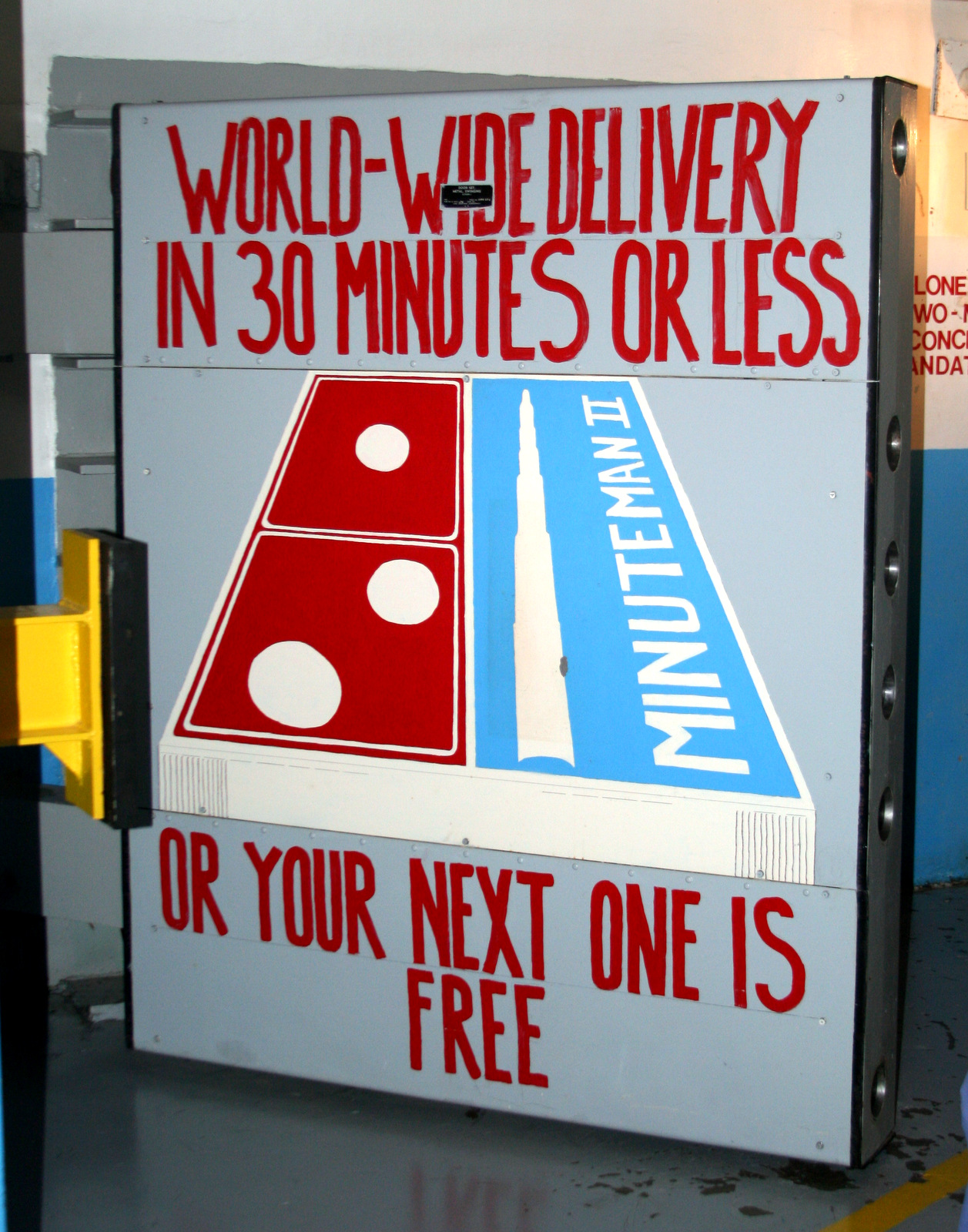
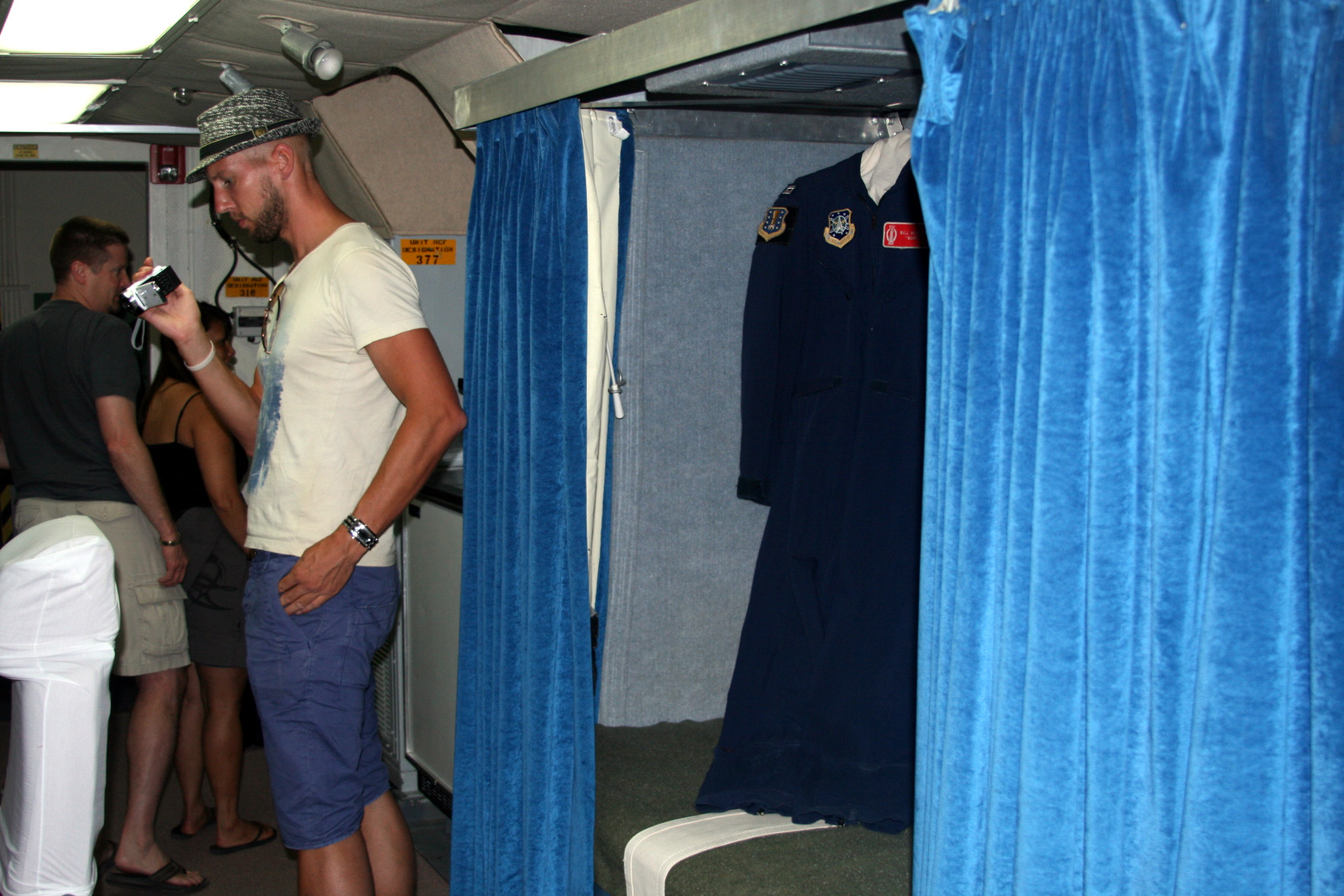
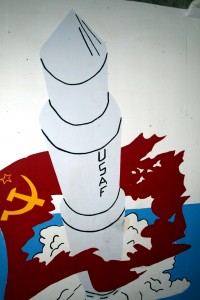
The seven of us crammed (which is why tours are limited to six people) into the elevator down to the bunker. Propaganda artwork was painted on the walls to keep up morale.
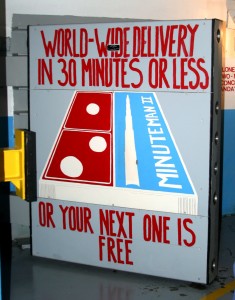
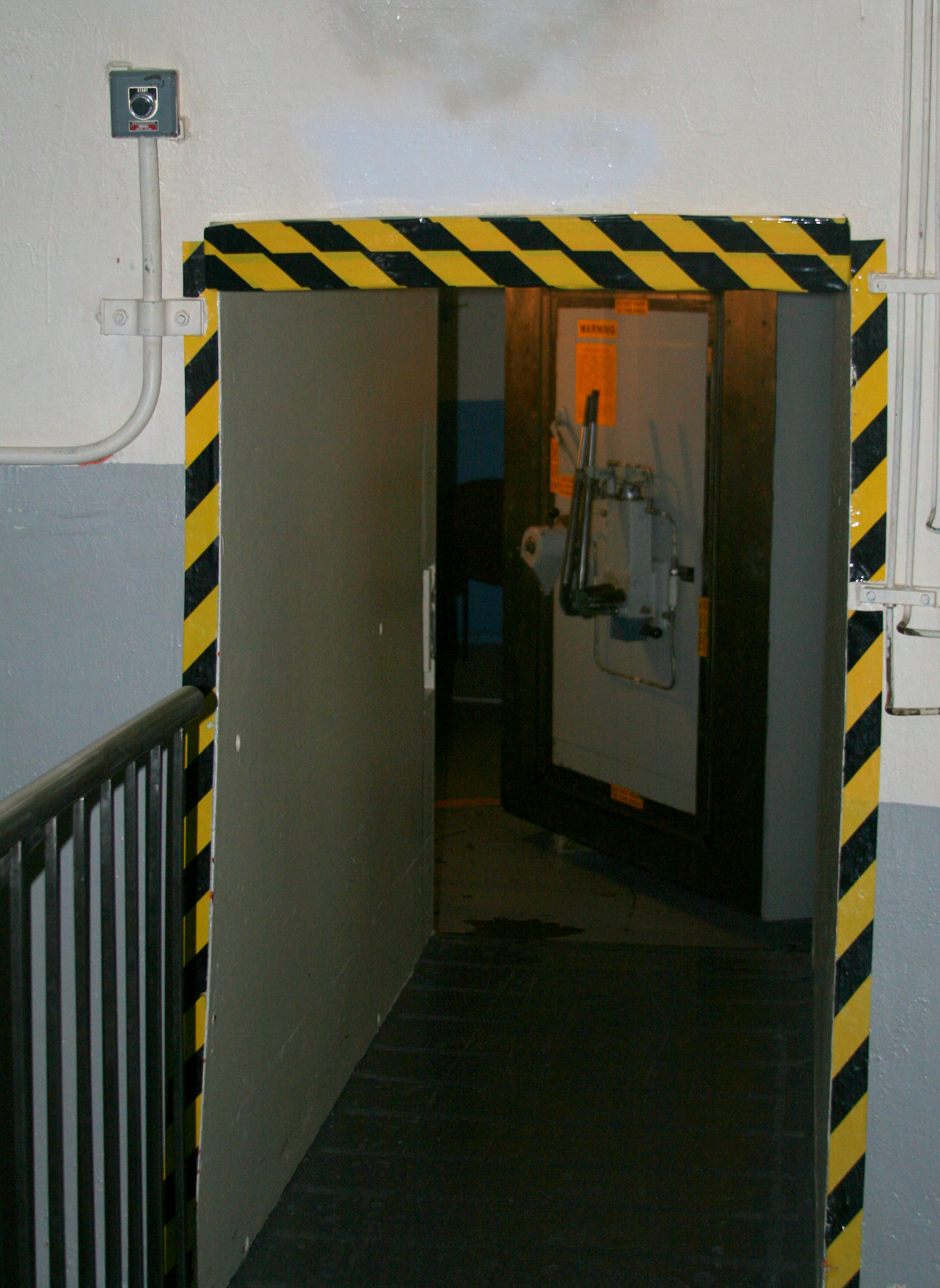
The bunker had to be able to withstand any ground attack and even a nuclear blast. That’s why the door was this thick.
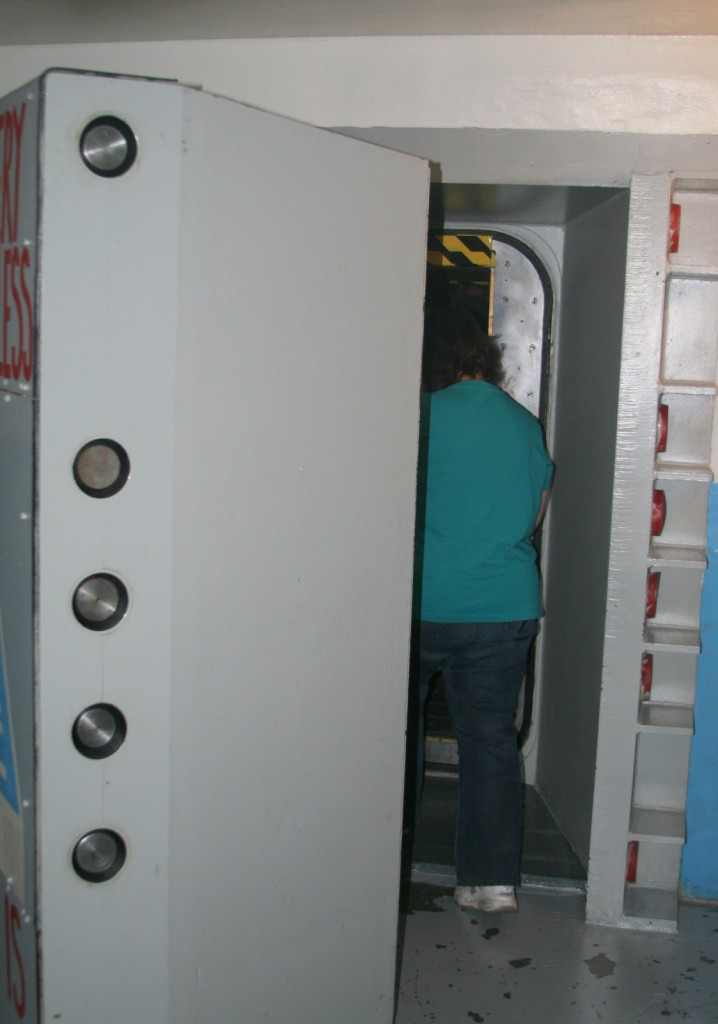
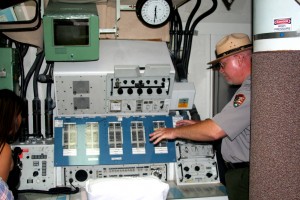
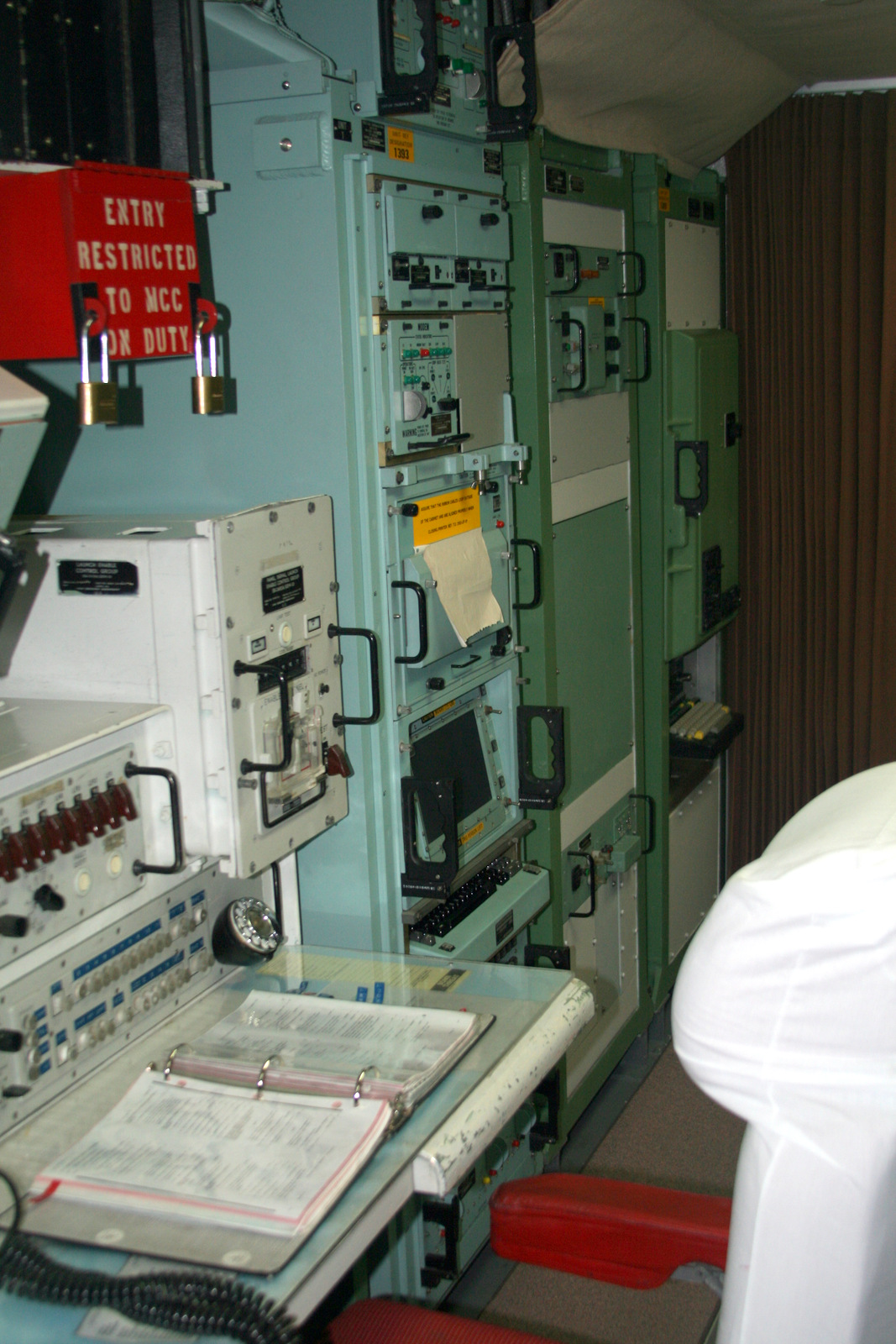
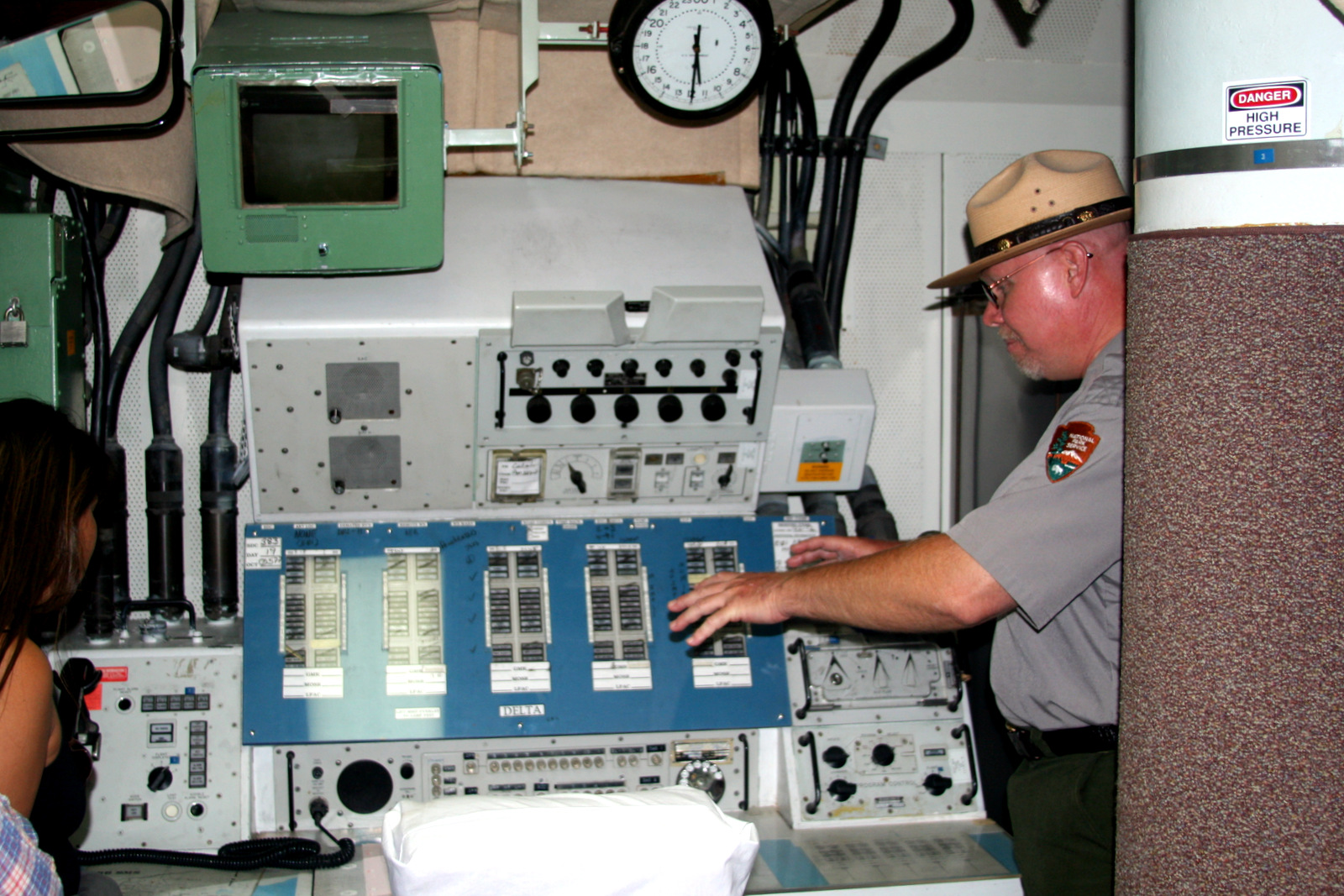
The inside of the bunker was perhaps 40-feet long and 15-feet wide. The entire thing was designed to be able to move with an earthquake or bomb blast. During alerts, the two officers who manned it were belted into chairs that moved on tracks to they couldn’t be thrown from their positions.
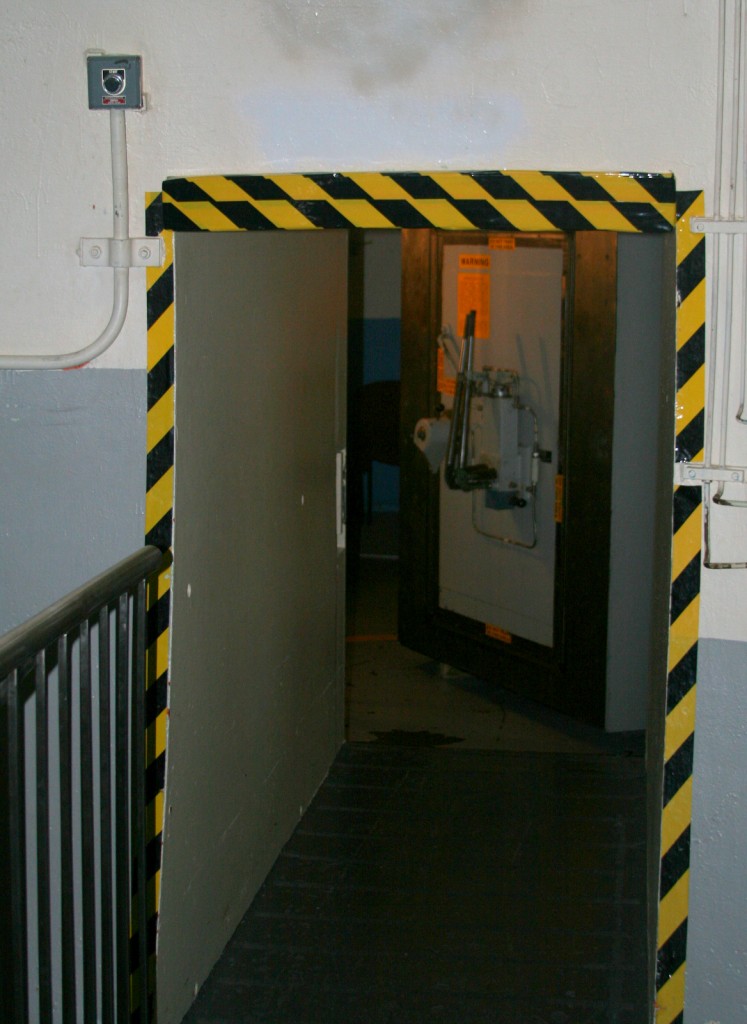
The bunker had a bed, a toilet and facilities for some limited cooking. One of the crews had rigged up a car cassette player in the corner so they could listen to music during their 24 hours of lock-down.
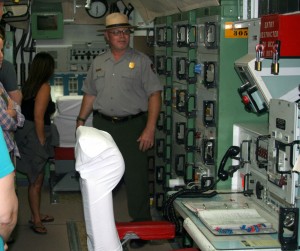
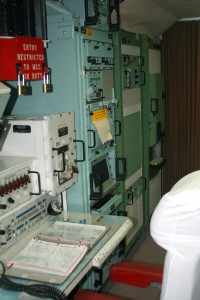
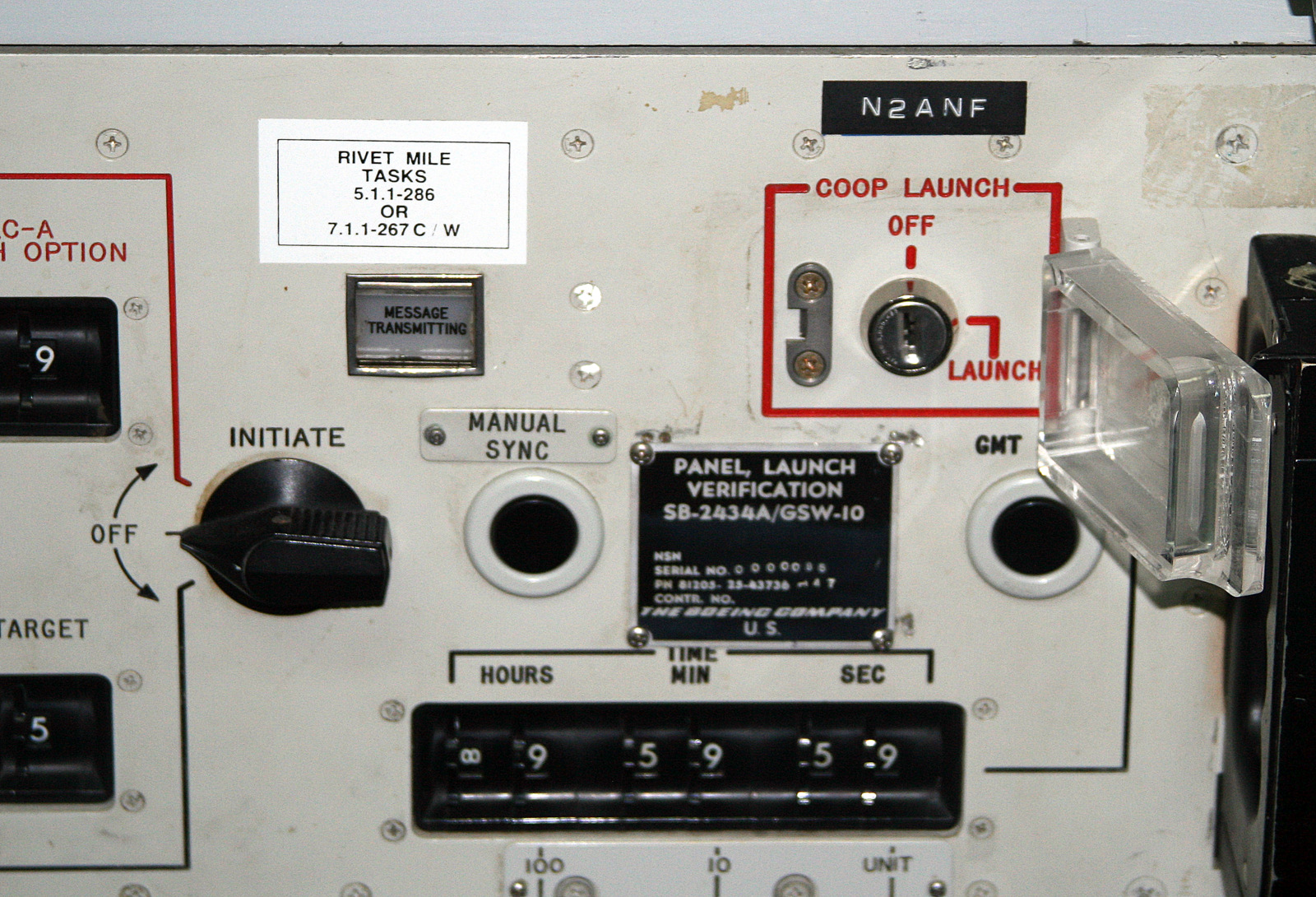
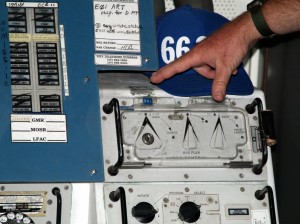
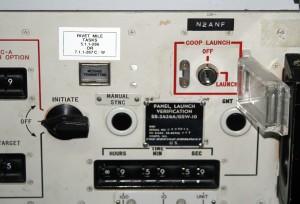
To launch a missile, the two officers in the bunker would have had to turn two keys simultaneously. The keyholes were 15 feet apart so no one person could launch a missile.
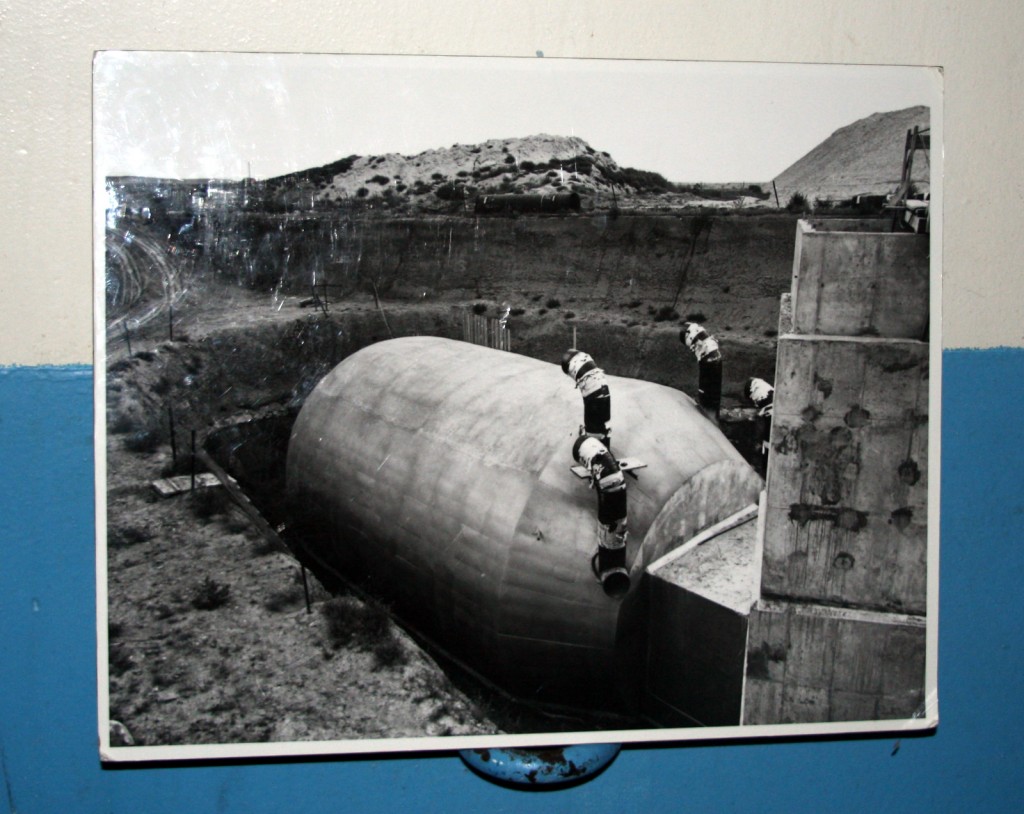
Here’s a photo of the bunker being installed to give an idea of how big it was.
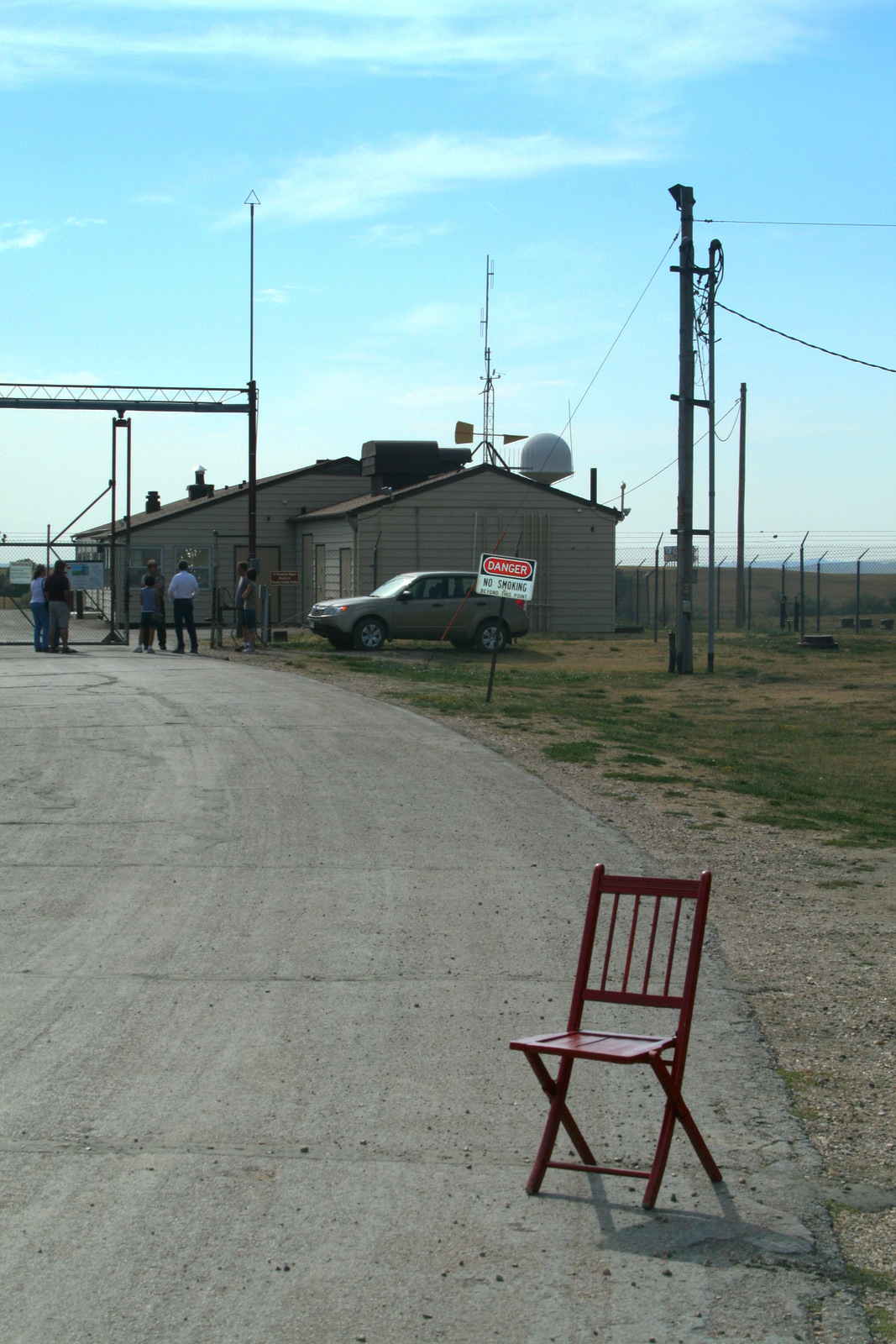
Our tour ended around 4:00. We were getting in our car when I realized I hadn’t taken a photo with the chair. Yea, I know it’s another lame one.

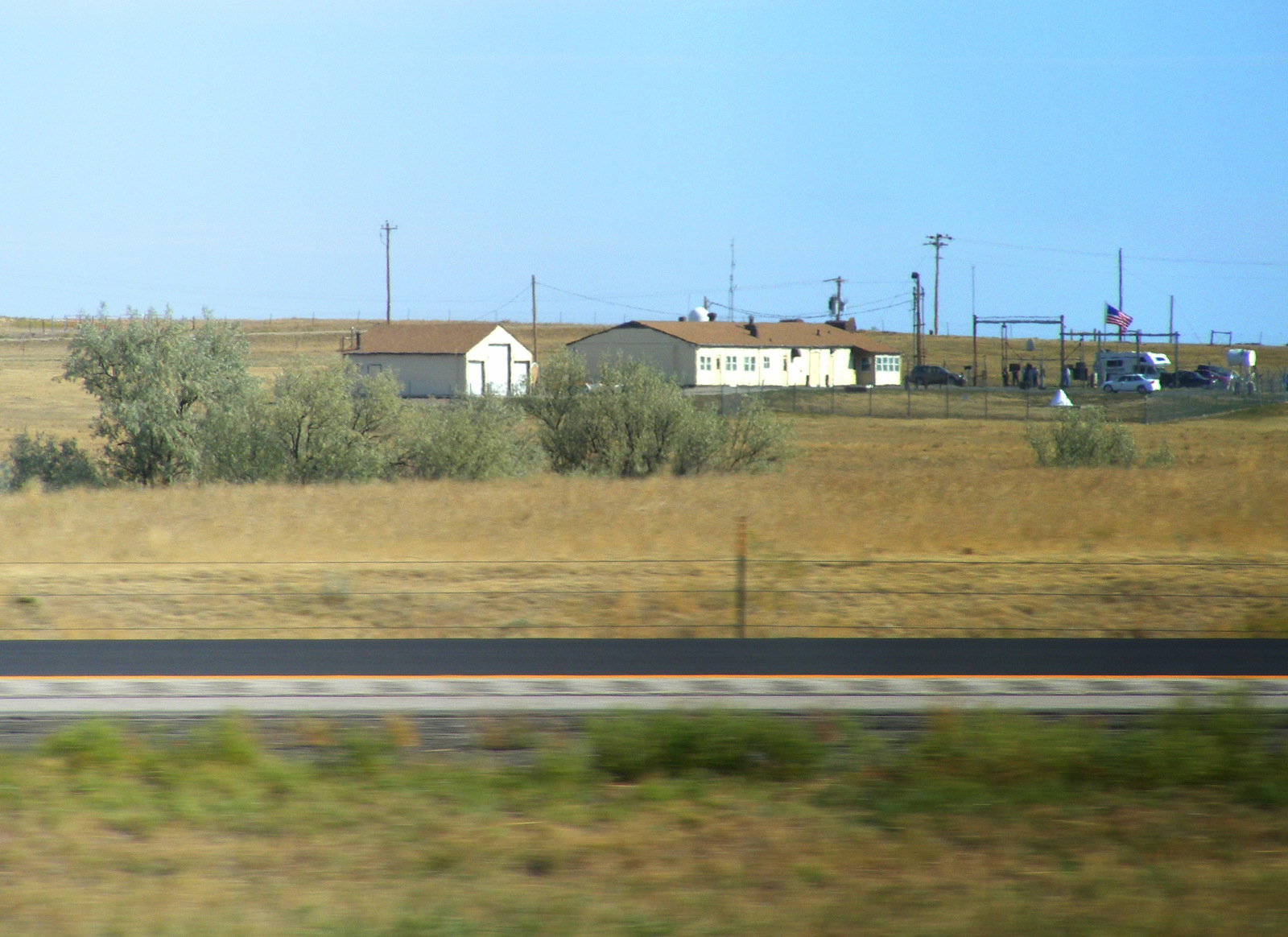
Six days later we drove by on I-90 headed for home. I took a photo from the car to show how far from the highway this all took place.

Posted in South Dakota | Comments Off on Minuteman Missile National Historic Site — South Dakota (Part 2)