I’d been hoping for six lifers on Tuesday, and I’d only seen two. My main objective on this day was Phantom Canyon Road, but I decided to take a couple hours and hit a spot that was supposed to be good for birds that inhabit the PJ. (That’s how the local birders refer to the Pinyon-Juniper scrub that covers the lower slopes of the foothills.) I drove up the Arkansas River Valley into Canon City and then south into Temple Canyon.
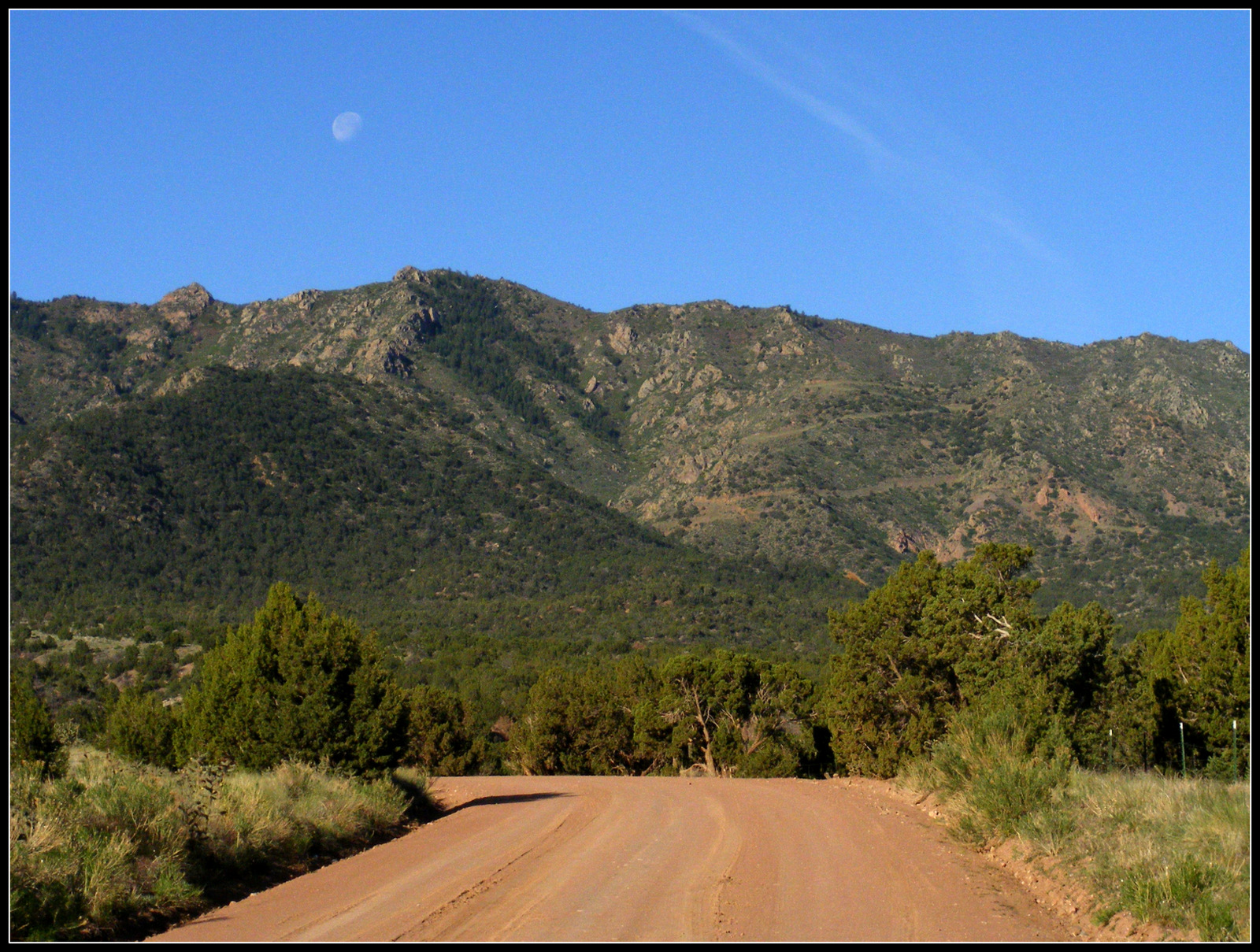
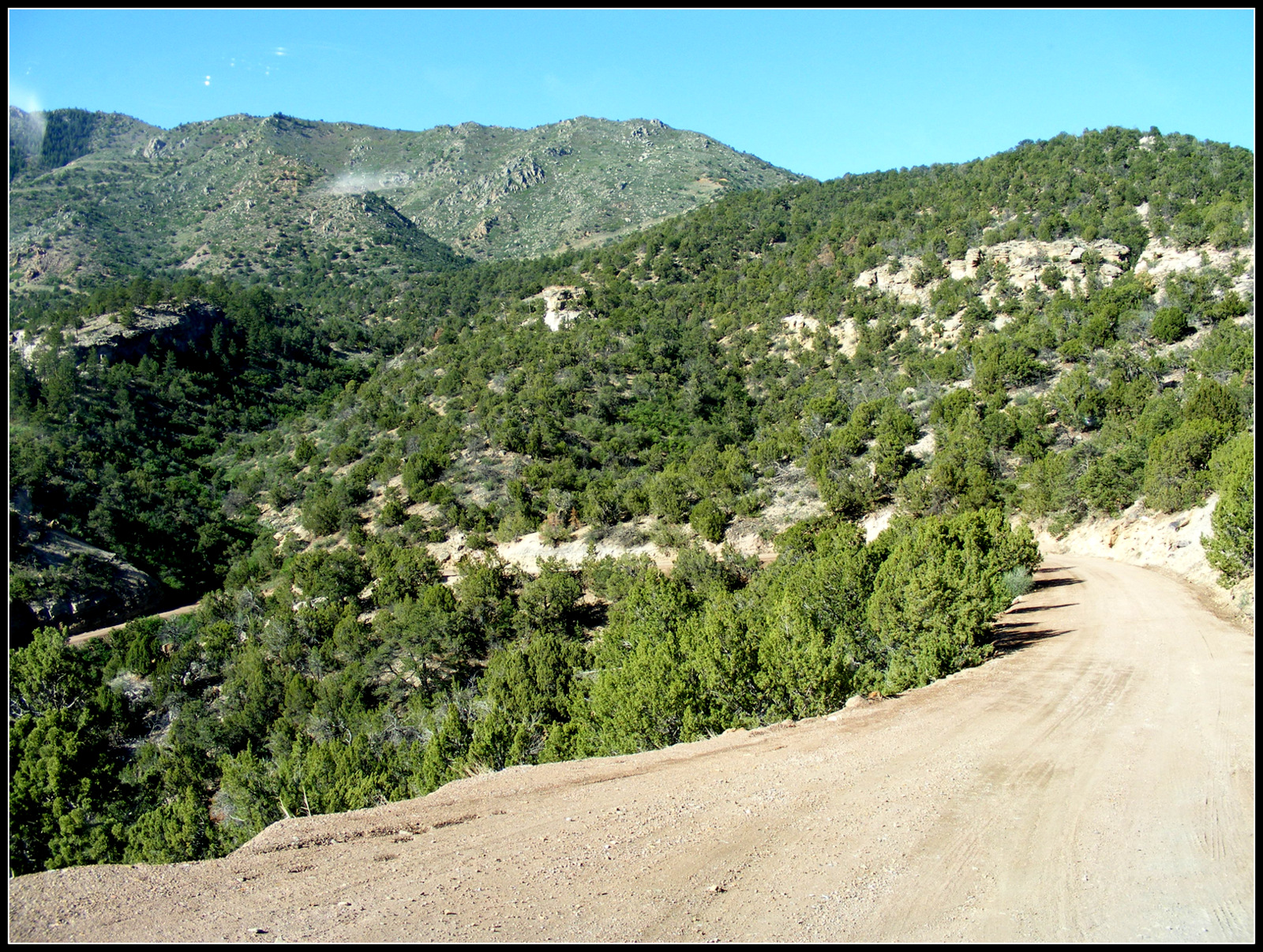
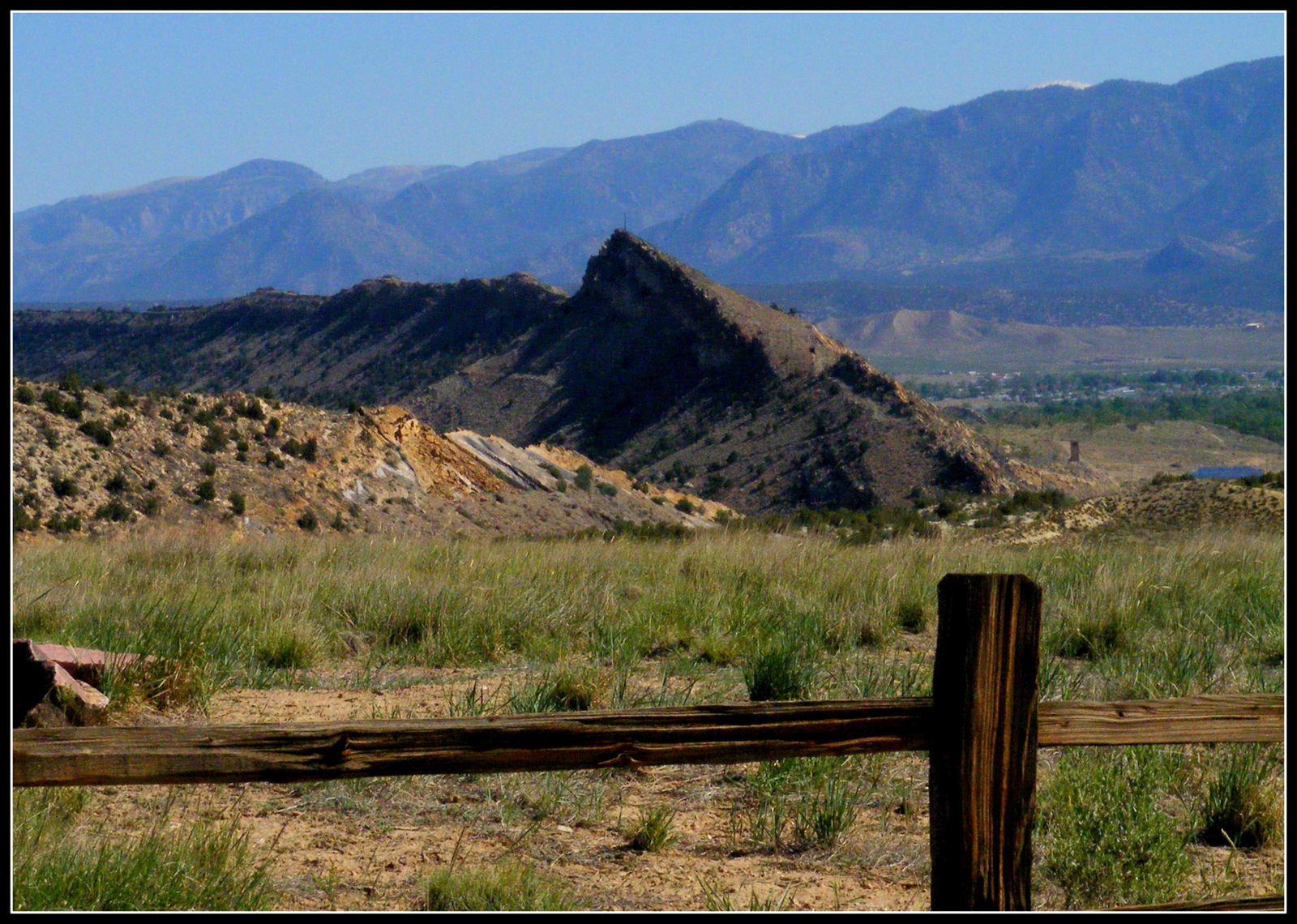
There were birds around, but I wasn’t having much luck identifying them. I parked and wandered around at a few different locations. The road curled upwards for three or four miles and then crested this ridge.
Two things happened right about here. First, the road got a lot rougher and I had to drive slower. Second, I passed a sign that read “Welcome to Temple Canyon Park.” I thought I’d been in Temple Canyon Park all along. I realized that to go further would mean a serious commitment of time. I pulled through a picnic area and turned around.
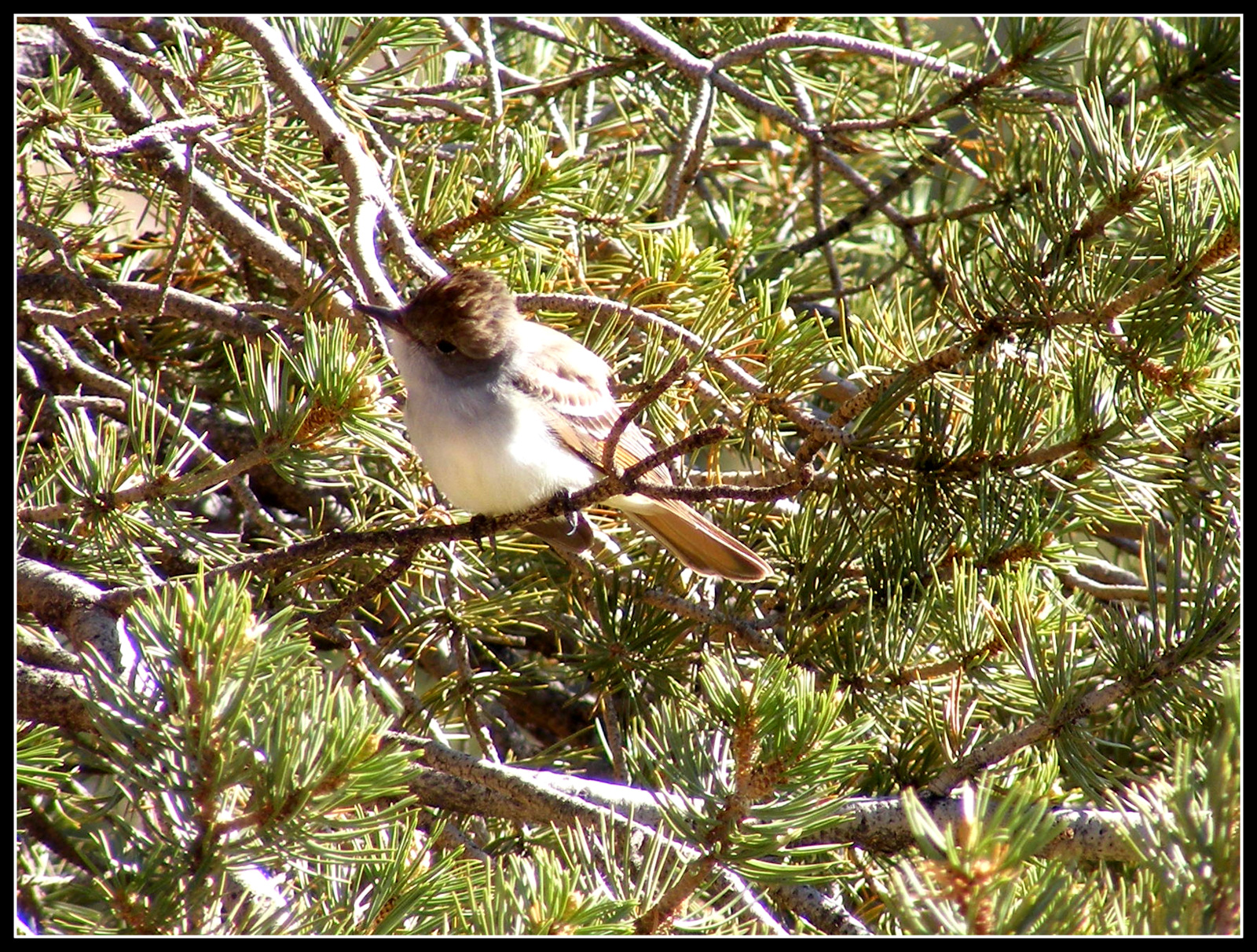
I birded my way back down and finally saw a lifer (next post). At one stop, a friendly Ash-throated Flycatcher stopped by to say hello.
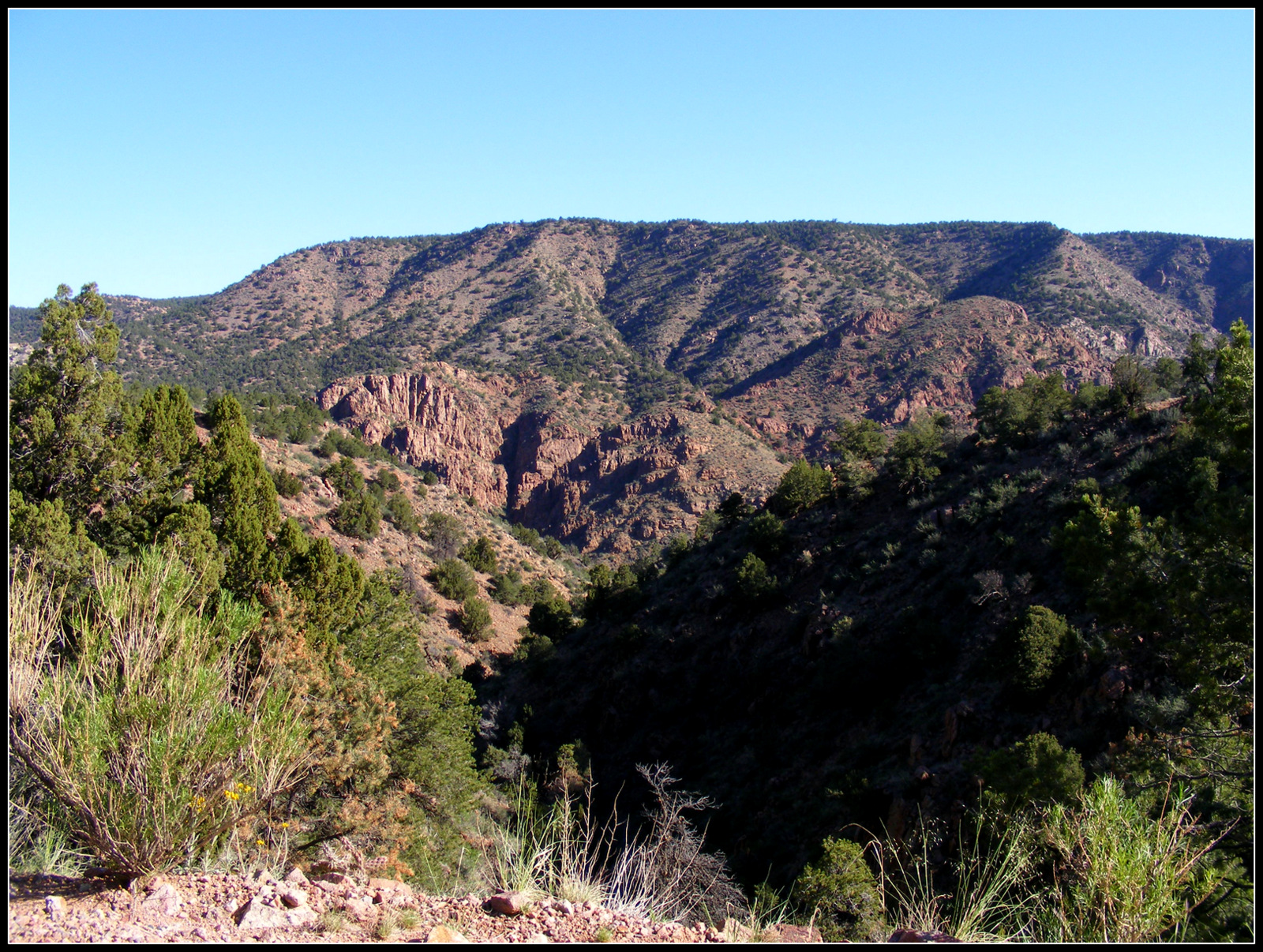
I only saw one other car during the hour I was on the road. People had dumped trash near the bottom, but apart from that, the canyon was very pretty and felt remote.
A Scaled Quail hopped on a fencepost as I drove out of the canyon, while a second one scurried behind a patch of yucca.
At this stage of my birding career, any trip that delivers even one lifer is worth the time.
Tired as I was, I had trouble falling asleep on Tuesday night. It was almost 1:00 am before I finally faded off. I’d set my alarm for 7:30, but woke up shortly after 6:00 and got up. The hotel bill, including tax was $124 — that’s almost $25/hour to sleep, but under the circumstances I felt it was worth it.
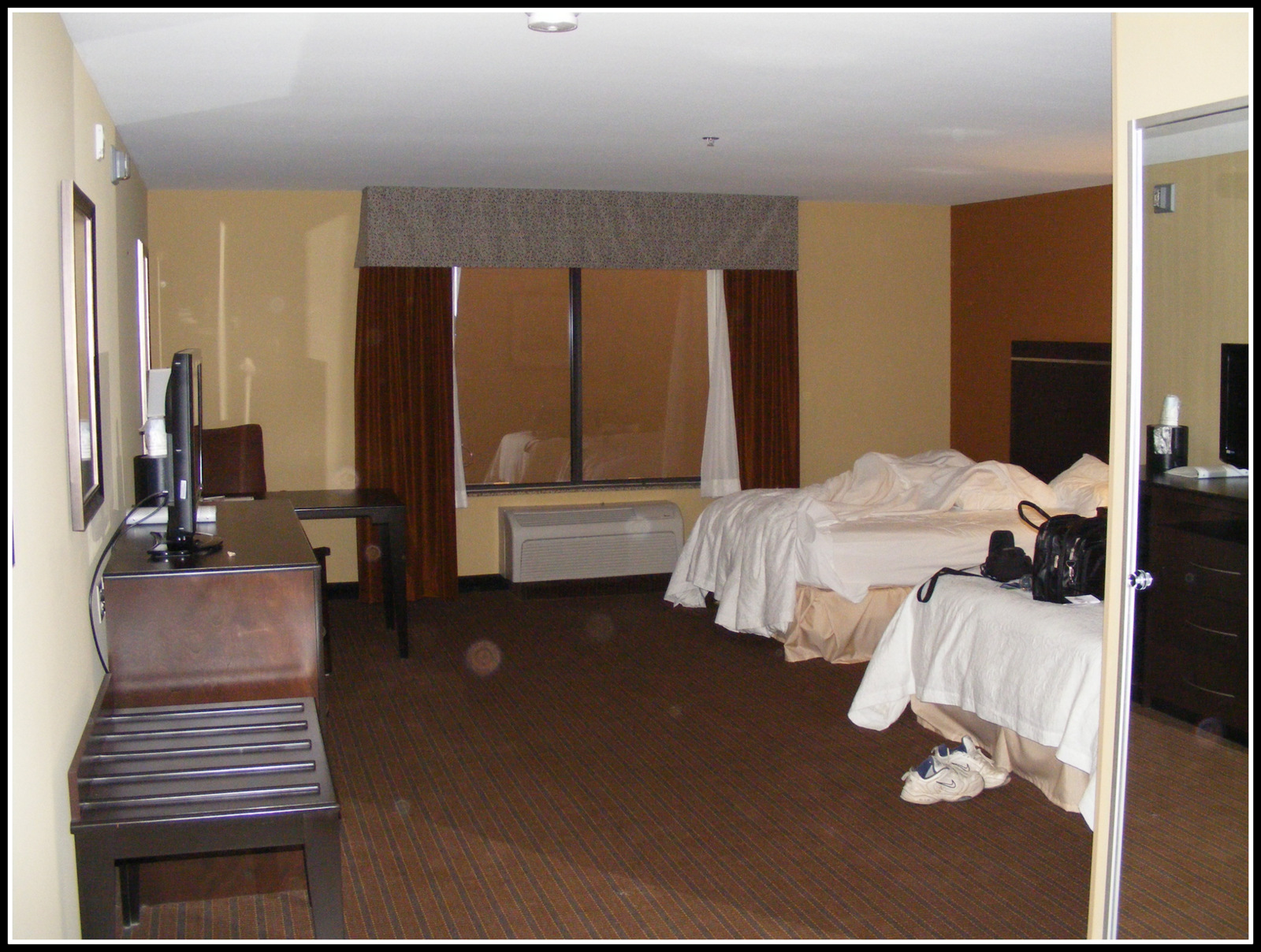
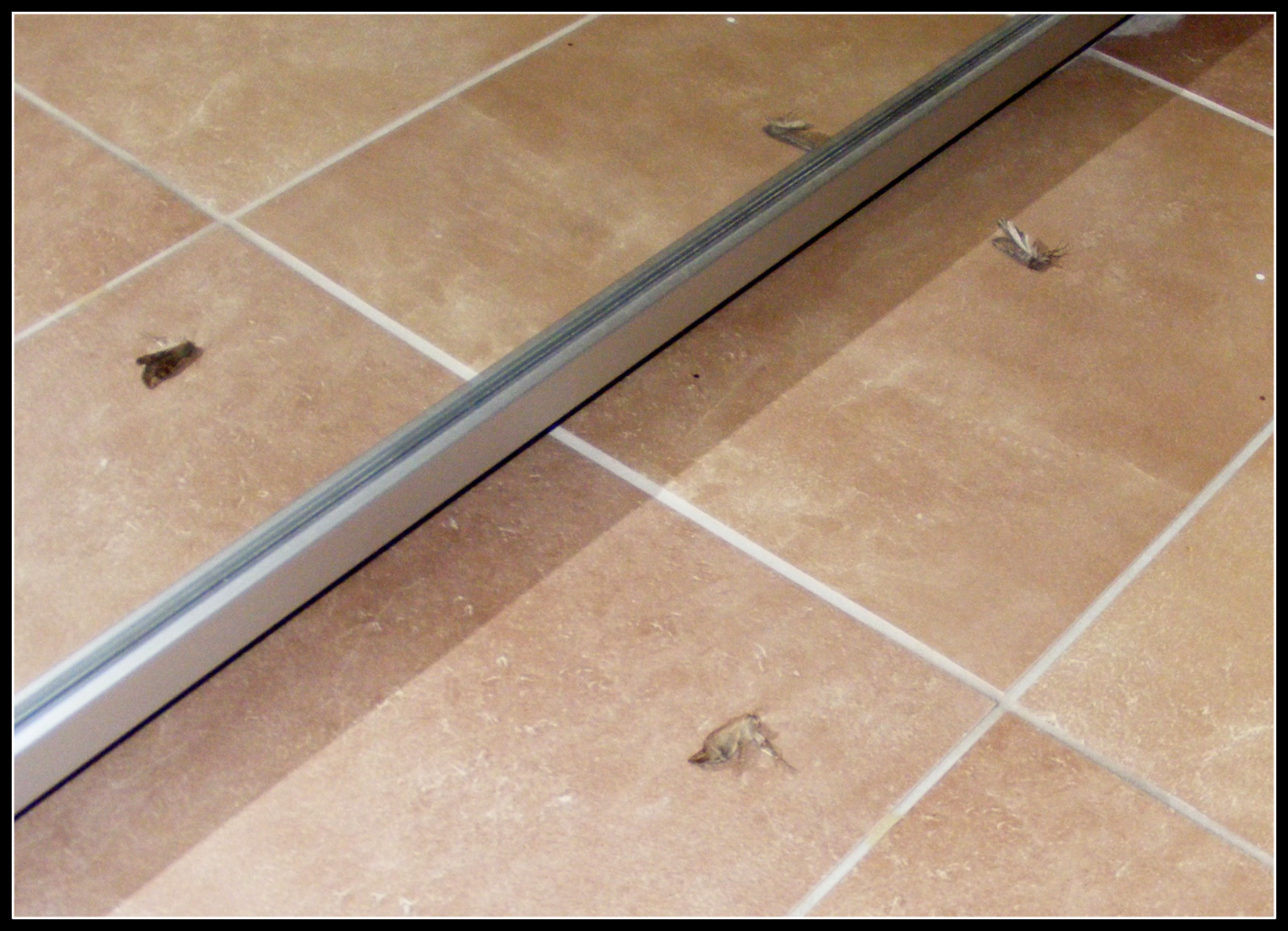
I opened the blinds and saw why my room had been the last one to be rented. Check out the view — and the dead moth on the desk in front of the TV.
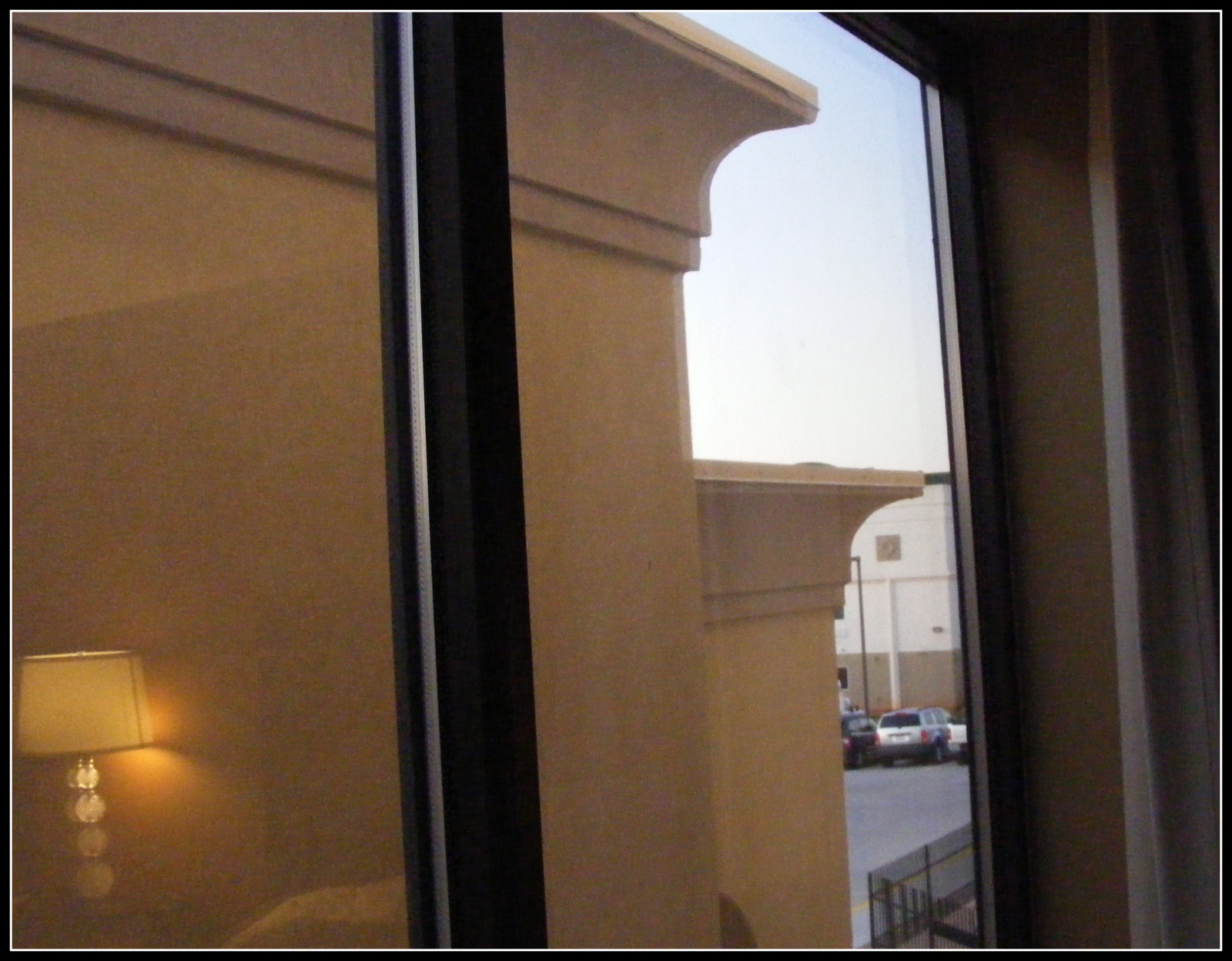
The room was directly above the front door of the hotel (and right next to the elevators). The bit of facade to which the sign is attached blocks the view. If I pressed my face up against the glass and looked to the side, I could see this.
I wanted to be on my way, so I grabbed breakfast to go — two blueberry muffins, a banana and an oatmeal bowl filled with scrambled eggs with ham and cheese.
The guy who’d checked me in the night before was still at the desk. He asked how my room was. I said it was fine, but just for his information, it was infested with moths. He blamed it on global warming. Seriously. He said, “We didn’t get a deep enough freeze this past winter and it didn’t kill them off. They’re all over Pueblo.”
I’m not sure this explains why the room wasn’t cleaned …
I left the marsh at 9:00 pm and headed west. Back at home, before I began the trip, I’d looked up restaurants in all the towns I was passing through to see if there were any I particularly wanted to visit. I had discovered Lucy’s Tacos in La Junta, but it had never been my plan to stop this late. I decided to settle on the first McDonald’s I passed.
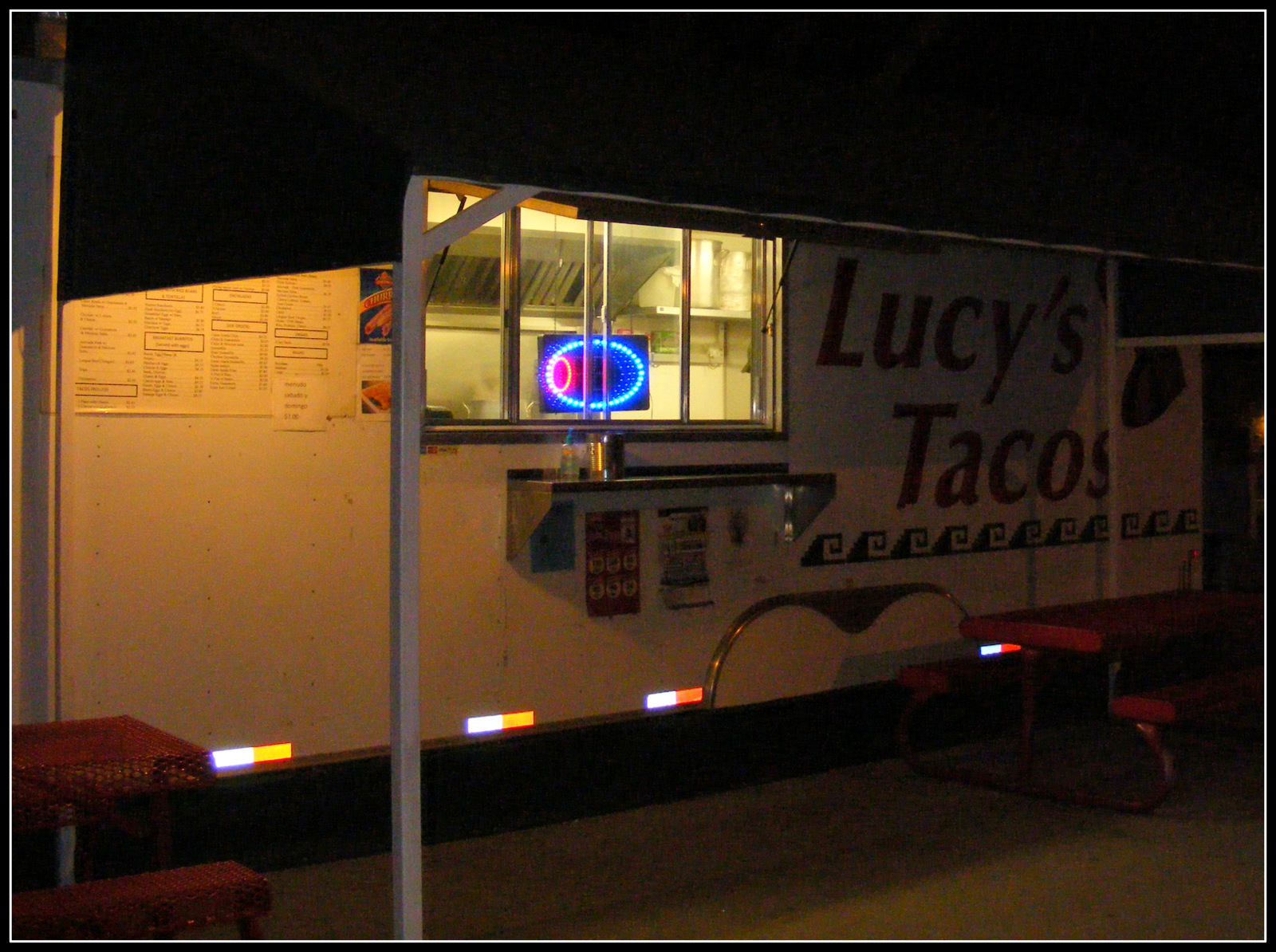
But then I saw the turn for the La Junta business district and, on the spur of the moment, pulled off. The town was closed. There were no lights and no people anywhere. I found Lucy’s Tacos, and it looked closed too. But there was a lit “open” sign in the window.
As I drove by, I noticed a trailer parked next door. It wasn’t very well lit either, but I could see a lighted window and another “open” sign. I circled the block and pulled in. A pleasant Mexican man greeted me and recommended the beef tacos. I ordered two, and a side of chips and salsa.
I really hadn’t thought this through very well. It was late, I had a long way to go. I didn’t want to sit in the dark in Lucy’s parking lot and eat, but this food wasn’t going to be easy to eat on the go.
I took a bite of one of the tacos and drove away. I’d been counting on Lucy for the use of a bathroom, but she’d let me down. I pulled into the McDonald’s on the outskirts of town and walked inside. The young woman behind the counter gave me a look that communicated “please don’t be here.” She asked, “Are you just using the bathroom, or are you buying something?” I said I was using the bathroom, and I just wanted a bottled water. Her attitude perked up after that. It turns out that even the McDonald’s in La Junta closes at 10:00.
Back in my car, I took another bite of my taco. It was very tasty. I pulled out my iPad and tried to connect with McDonald’s wi-fi so I could call ahead to the Hampton Inn in Pueblo and make sure they had a room. My iPad found the signal, but just wouldn’t connect. The lights of the McDonald’s were going off behind me — maybe they shut their wi-fi down too.
I looked up and … there, not 200 yards away was a Hampton Inn. I sighed. I’d been up since 4:15. I was 70 miles away from Pueblo. It was 10:00 at night. I was exhausted. And I had a supper of tacos and chips getting cold on the seat next to me. I finished off the first taco and decided to be smart. I’d make the drive in the morning and just get a room here.
Or not. They were full. After having decided to stay in La Junta, the thought of a drive to Pueblo became even more daunting. But I had little choice.
I opened my window most of the way (it was around 54 degrees by this time). I leaned forward in my seat. I found a classic rock station on the radio and turned up the volume. I pulled out on US-50 west. The trip was uneventful, as it turned out. I managed to grab the occasional bite and finish the other taco. By the time I got to the chips, they were cold and soggy. Lucy’s had put the salsa on top instead of on the side and it had soaked in. It tasted good, but I could only finish about half of it.
I arrived in Pueblo at 11:15. The guy behind the desk at the Hampton Inn said they didn’t have any more rooms. I didn’t panic, because there were several other hotels in the immediate area, but I said, “Really? Because I got up at 4 this morning in Chicago and I’d really like to find a bed.”
He said they did have one last room, but it would cost $109. I said that was OK. As I walked into the room, I was greeted by several large moths flying around. Many others were lying dead on the floor.
laterallus (from latus, side, flank, and rallus, rail) jamaicensis (Jamaica)
Tuesday, May 8, 2012 — 9:00 pm
County Roads 16 and HH — Fort Lyon, Colorado
When I began birding 33 years ago, one of the requirements for adding a bird to a life list was “to see identifying field marks in good light.” But that was before birding was popular. A handful of birders trying to see the field marks on a rare bird is one thing — thousands of birders trying to do so is not so good.
So at some point, the individuals who govern the sport of birding changed the requirement to “diagnostic field-marks for the bird, sufficient to identify the species, must have been seen and/or heard.” In other words, a birder no longer has to see the bird at all if he is able to definitively identify it by sound.
One of the birds that brought about this rule change is the Black Rail. It’s a tiny marsh bird the size of a sparrow. It’s extremely secretive and, when approached, prefers to skulk off through the reeds rather than flying away. It spends most of it’s time foraging about in the thickest part of marshes, often underneath mats of reeds. And it’s nocturnal. Add to all that the fact that it’s a very rare bird and can only be found in a handful of marshes along the coasts and an even smaller handful of inland marshes.
There are two ways to see a Black Rail.
Be extremely lucky and just happen to be in the right place at the right time and looking in the right direction on the very rare occasions when one scurries across a tiny open place in a marsh.
Wade out into the middle of a marsh in the middle of the night and play a recording of its calls. If one responds and comes close enough, attempt to shine a flashlight on it. Even after all this, you’re as likely to step on a Black Rail as you are to see one. Wading into a swamp while playing recordings is illegal in all National Wildlife Refuges and probably most other places — and unpleasant in all of them.
To this point, I’ve seen all the birds on my life list, although I’ve identified several of them by sound. (In other words, I saw the bird, but that alone wouldn’t have been enough to identify it. I needed to hear it too.) I was reluctant to change my standards, but the Black Rail convinced me otherwise.
I said all that to say this — One place where Black Rails can be consistently heard is in the large marshes along the Arkansas River in southeast Colorado. The books say that they only call “late at night,” but I decided to give it a try.
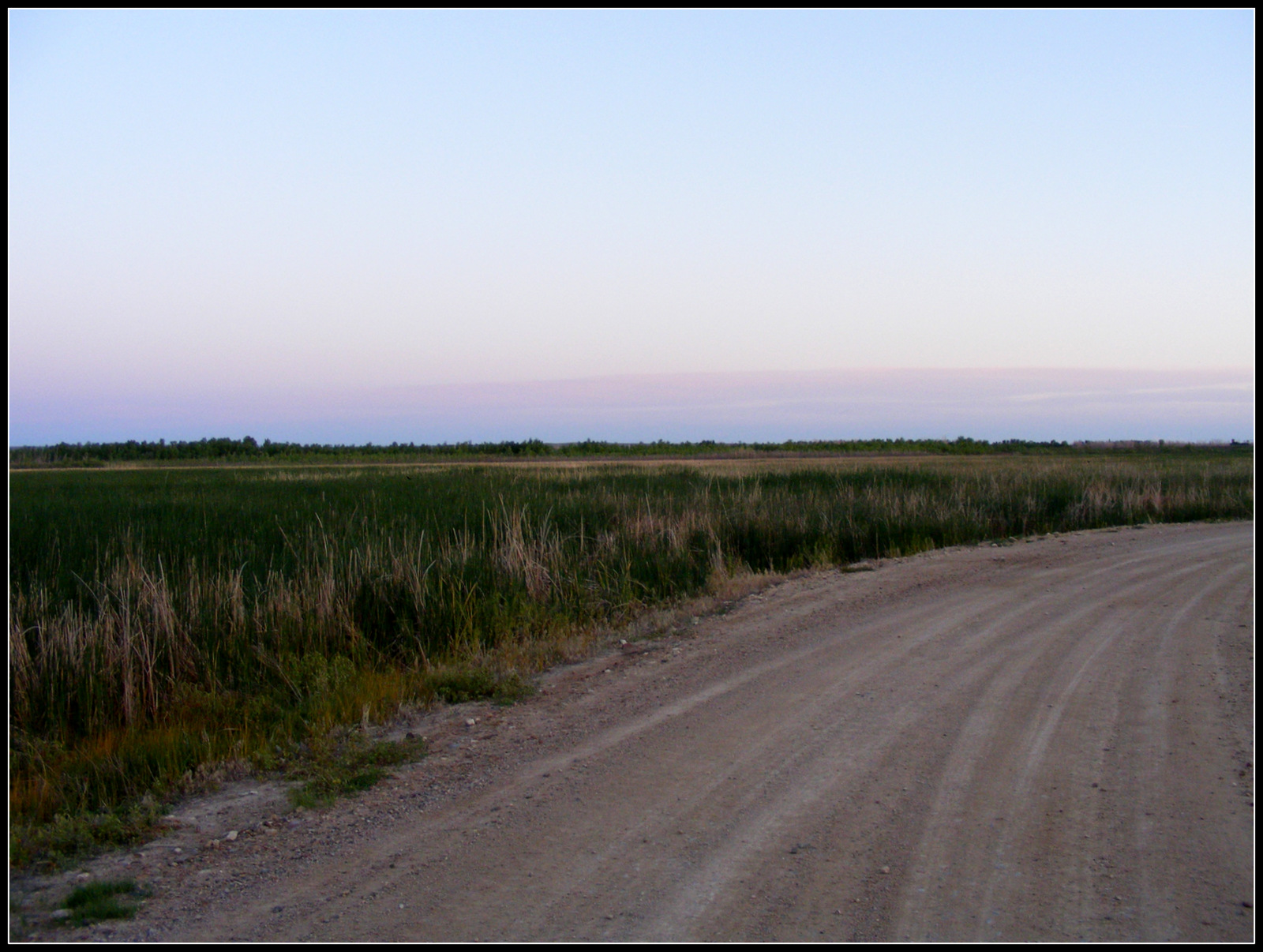
I drove down several lonely roads until I found a spot listed on the Colorado Birding Trails website. There was nothing around except Fort Lyon National Cemetery, about a mile up the road. I parked the Jeep on a sharp bend in the road next to a huge marsh.
It was 7:50 when I parked. The sun had just dipped below the horizon off to my right. I had gotten up at 4:15 that morning and had a busy day. I was tired and wondering what I was doing there. But I was there, so I decided to stick it out until 8:30. The marsh was filled with calling Red-winged Blackbirds. A Common Yellowthroat sang not far off. A Sora (a more common rail) called a few times.
As it got darker, it got cooler and damper. The mosquitoes found the open window of my car. The noise of the Red-wings slowly abated until there was only an occasional single song. The only lights I could see were probably four miles away to the south.
8:30 came and it still wasn’t completely dark. It was getting creepy, sitting there by myself in a strange place miles from the nearest town with nobody on earth aware of where I was and my windows open. But the thought of driving off and missing the bird by a minute kept me there. I decided to give it until 8:45.
I saw the headlights of a car approaching from behind me. I turned my car on and flipped on the lights so he could see me (and so I could make a quick getaway if I needed to). The driver passed by slowly and disappeared. I turned off my car. Five minutes later, he came back by in the other direction. It was 8:45. Virginia Rails were calling now. I kept thinking of my 90-mile drive back to Pueblo where I planned to spend the night.
I decided to give it until 9:00. No, 9:00 seemed too late. I’d split the difference and give it until 8:53. I sat in the now pitch blackness and listened to the night.
At 8:52, I heard a noise I hadn’t heard before. The Black Rail has a very distinctive call, an emphatic kee-kee-derr. What I was hearing was a long way off, but it kinda sounded like “derr.” I got out of the car and stood in the road. I heard it several more times, but I couldn’t be sure. I wanted to think I heard the call, but did I really?
I got back in the car and listened. A minute later I was 87.4 percent sure I’d heard it. It sounded like it was coming from off in front of the car. I pulled forward 50 yards and stopped. This time I was sure. There were probably three or four calling. I had my bird. I held my camera out the window and took a video of the night. The loud noise you hear at the beginning is my camera attempting to focus on darkness. If you turn the sound up ALL the way, you can hear at least two Black Rails near the end of the clip.
I smiled to myself and headed back to civilization.
calamospiza (from kalame, a stalk of grain, and spiza, finch) melanocorys (from melanos, black, and korus, lark, because it sings in flight)
Tuesday, May 8, 2012 — 4:55 pm
County Road 10 north of Las Animas, Colorado
Lark Buntings are perhaps the most-easily-seen North American bird that wasn’t already on my life list, and I knew I had a very good chance of seeing them on this trip.
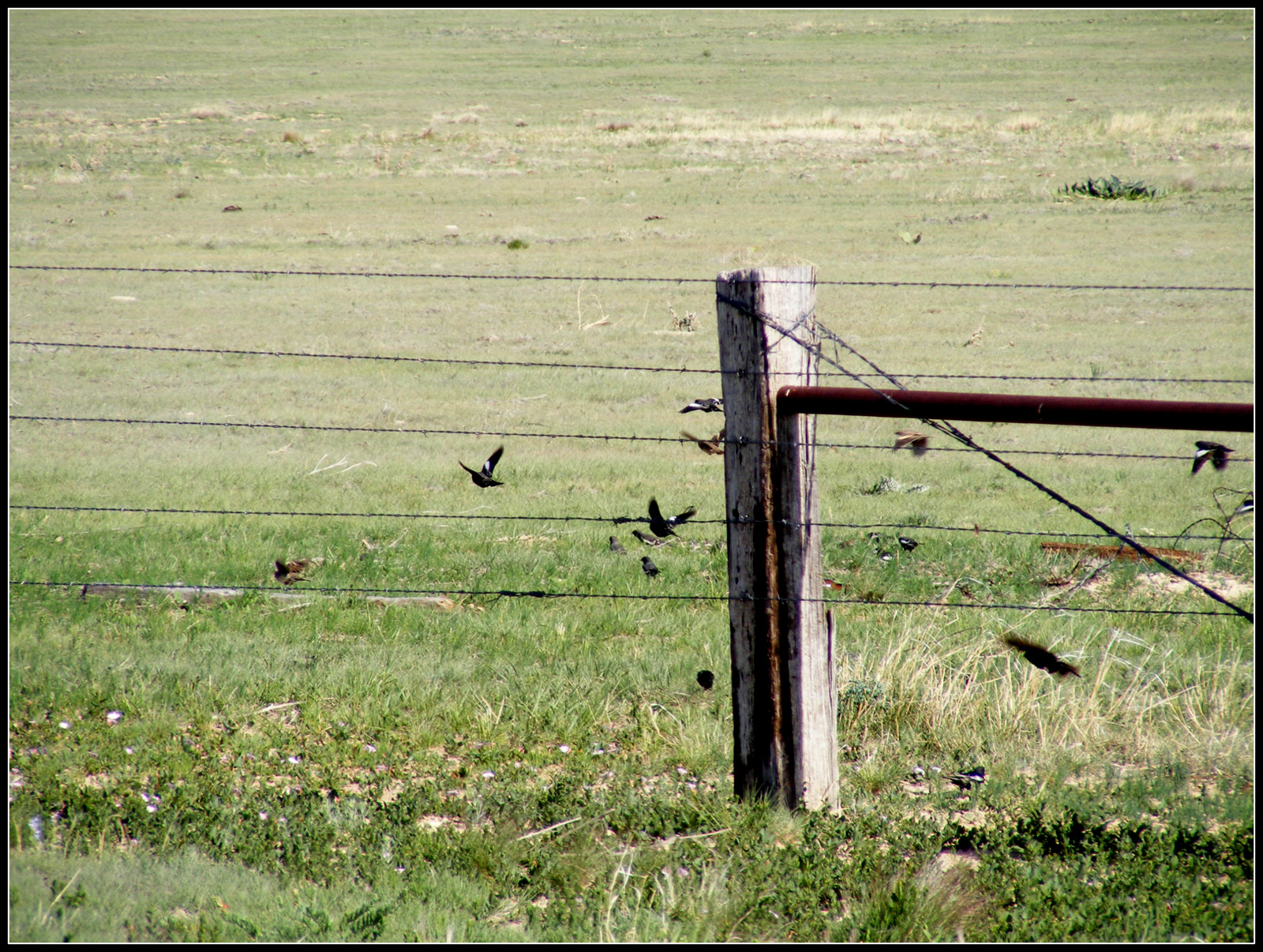
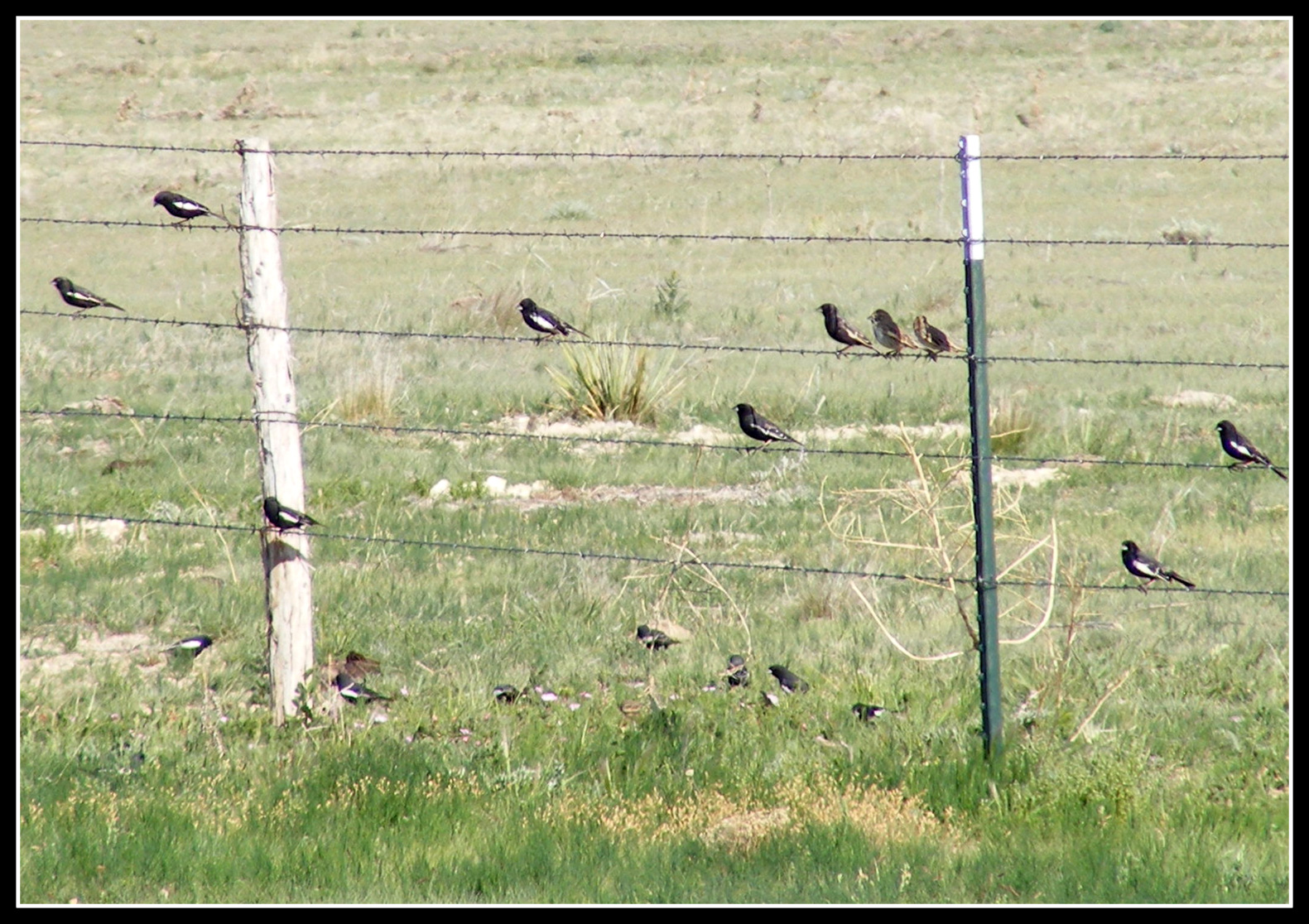
I spotted several of them in the pasture just before I got to the cattle guard that marked the end of the roadside fence. There’s no mistaking them — the males are jet black with white wing patches and tail corners.
Moments after I spotted them, my phone rang. This time it was my wife asking how to connect to wi-fi in her motel room in Orlando, Florida, where she was at a training conference. I couldn’t really help her much, I’m afraid.
Fortunately, the birds stuck around. When I first saw them, I counted 18 males and 3 females, but when they flew across the road I could see there were many more.
Posted inWildlife|Comments Off on Bird #452 — Lark Bunting