Workin’ at the Car Wash — Part One

After I graduated from high school, I needed a job to earn money for college in the fall but wasn’t all that excited about finding one. My dad wasn’t one to wait, so he found one for me — at the Old Orchard Car Wash in Skokie, Illinois. It was owned by M & R (Marks and Rosenfield) Amusement Companies, which also owned the Old Orchard Theater next door and several other theaters and car washes. The manager was a guy named Russ who went to our church. It was through Russ that I got the job.

Russ was a nice guy, if a bit of a loose cannon. He kept a kangaroo in a pen in his backyard. For the first couple months, Russ picked me up in his Jeep pickup and drove me to work. I recall opening the truck door my first day and finding a Doberman Pinscher curled up on the floor. Russ assured me that the dog was friendly, and it was, although we had a hard time convincing some of the car wash customers when Russ allowed it to roam the hallways.

I started working on the front of the line, wiping down cars and cleaning the windows. Nobody explained anything to me. I was just given a towel and told to go to work. It was January, remember, and the wind coming in the front door, combined with the water off the cars, made me very cold. Between cars, I huddled next to the huge towel drying machine back in the corner. I stuck a sandwich and an apple in my pocket that morning. Nobody said anything to me about lunch, so around noon I took bites between cars. Both the sandwich and the apple had gotten pretty beat up during the morning.

That night, and for several nights afterwards, I had this endless dream about a stream of cars coming out the front of the car wash. After spending 10 hours working there all day, I didn’t much enjoy dreaming about it all night. Washing car windows seems like an easy task, but after a few days, the tips of my fingers became so sore that I couldn’t touch anything. For about a week, I was in constant pain, but then the nerves all died or something and I was fine. Many of the customers tipped us for washing their windows and detailing their cars. It was a great joy to spend half an hour cleaning a thick layer of cigarette smoke residue off the windows of a Pacer and be rewarded with .50.

Because I spoke English and was honest and reasonably intelligent, I was made supervisor after I’d worked there about a month. This basically meant that I had to work six 10-hour days every week with no overtime because I was on salary. My actual pay was about $2.50 an hour, and even though I still chipped in and helped wipe down the cars when things were busy, I rarely got tips anymore. There were even times when I’d do all the work on a car and the owner would tip one of the workers because he assumed they needed it more. When things weren’t busy, my job was to stand around and make sure the other guys were working, which was really boring. The only advantage that I could see was that, instead of a dumpy blue jumpsuit that looked like a prison suit, I got my own uniform. Every week a truck would come by and deliver six pairs of blue pants and six shirts that had “Roger Foreman” stitched on the pocket.

 My rides to work and home with Russ had been getting less and less sure. One day he was in a hurry and dropped me off by the “Welcome to Des Plaines” sign on Golf Road. I lived in Des Plaines, yes, but on the other side of town, about eight miles away. For a while, I got rides with Rusty, the assistant manager. He was a friendly enough guy, but a total moron. He used to drive about 80 mph whenever there was a chance. He was drinking a beer one evening when we were pulled over by a policeman. He shoved the beer in my hand and said, “Here, stick this under your seat.” I tried, but the can tipped over and the car stunk of beer. Somehow the policeman didn’t pick up on it, and Rusty only got a speeding ticket.

Rusty and I combined for one moment of great heroism. It was mid-afternoon on a slow day. We were standing in the lobby chatting with the cashier when we heard a yell coming from the line. The wash was automatic, meaning that the cars were put in neutral and pushed through the line on rollers with nobody inside. One of them had been jostled and came out the front in gear. The worker who was driving the cars outside that day reached for the handle, but the car didn’t stop. Instead of opening the door and stepping on the brake, he jumped back and yelled. Skokie Boulevard, a busy four-lane road, ran at right angles to the car wash about 40 yards from the front door. The car was headed straight out into traffic. When we saw what was happening, Rusty and I took off running. I was a little bit ahead as we tore open the lobby door, crossed the front section of the car wash and ran outside. The car was picking up speed, and we didn’t have time to create a plan. I made it to the driver side door first and managed to open it. Rusty stepped on my foot and tripped me right at that moment. I fell on my face. He raced up my back and dove headlong in through the open door and pushed down the brake pedal with his hands. The front of the car was about two feet from traffic.

Rusty quit before summer, and I was given his duties, although I kept the title of supervisor and didn’t get a raise. I was given my own set of keys, and as Russ often didn’t show up until later in the day, or at all, I had to open the car wash at 8:00 am and close it at 6:00 pm. I ran the register a lot when the cashier came in late (which happened frequently because she stayed up partying every night), handled all the money and helped with maintenance. When Russ was around, I assigned myself to the back pumps, filling cars with gas and writing the amounts on slips of paper that the owners would give to the cashier. One of the greatest joys was listening to fifty customers a day who asked for Polish Wax, but pronounced it as though it were from Poland, and thought they were being hilariously funny and clever.

Frank, a World War II veteran who had a palpable hatred for anything Japanese, including cars, worked the pumps in the mornings. As the summer wore on, I began working the front pumps on many afternoons.  This was rather funny, because I didn’t have a clue what I was doing. On one of my first days, a customer asked me to check his oil. I’d been shown how to do that at some point. It turned out that he was a couple quarts low, so he asked me to add some. I hadn’t been shown how to do that, and he was pretty ticked off when he saw me about to dump it into his radiator.

My rides had dried up, so I had to get to work on my own. I had to set my alarm for 5:00 am. After a quick shower, I’d grab a Pop-Tart and walk two miles to downtown Des Plaines where I’d catch a bus. I developed the skill of sleeping in short stretches, waking up often to see where the bus was. Only once during that entire summer did I sleep past my stop, and then only by a block. Once I got off, I had to walk another mile to get to the car wash. I had to repeat the trip to get home. A bus went by at around 6:15. On the days I had to close the car wash, I had to make sure the gas pumps were locked, make sure the money was taken care of, set the alarm, lock the doors and sprint for a mile. If I missed the bus, I had to wait for about 45 minutes for the next one. There was a customer named Marvin Marvel (I kid you not) who used to come in right before closing every day and insist on having his windows cleaned, his oil checked and his tank filled. He was a scrawny, short little man who drove a huge Cadillac. If he got there at 5:59, after I had the pumps closed up and was about to lock the doors, he’d insist on service. He knew misters Marks and Rosenfield personally and would threaten me if I tried to insist we were closed. He made me miss the bus many times. On those evenings, I sat on a bench watching people coming home from work on the Skokie Swift, or I would wander the aisles of a hobby shop, looking at models.

This post is getting pretty long, so I’ll leave my further adventures at the car wash for another day.

Posted in Stories | Comments Off on Workin’ at the Car Wash — Part One

100 Most Important American Musical Works of the 20th Century (by National Public Radio)

ADAGIO FOR STRINGS, SAMUEL BARBER (prem. 1938) —  8/19/2015 (Slow. It built in intensity and volume in the middle, but never, in my uncultured, unmusical opinion, got interesting.)

AIN’T THAT A SHAME, words/music FATS DOMINO (1955); as performed by FATS DOMINO — 12/6/19 (I have long been familiar with this song. It’s considered important because it was the first Black R&B song to chart on the mostly White pop charts. I like it OK, although it’s rather redundant.)

ALEXANDER’S RAGTIME BAND, words/music IRVING BERLIN (1911); as performed by IRVING BERLIN — 12/6/2019 (Considered to be the song that launched the idea of popular songs. The 1911 version sounds very dated, but the tune is catchy and I can see why it caught on.)

ALL OR NOTHING AT ALL, words/music JACK LAWRENCE/ARTHUR ALTMAN (1940), as performed by FRANK SINATRA and HARRY JAMES & HIS ORCHESTRA (1943) — 12/6/2019 (The song that launched Sinatra’s career and was “a turning point in popular music.” It’s a bit slow for my taste, but pleasant enough as background music.)

APPALACHIAN SPRING, AARON COPLAND (1944) — 1/27/2020 (I’ve heard of this piece, but as I lay on the floor and did my best to listen attentively, there never was a moment when I thought, I recognize this. There never was a moment when I thought, I like this. There was never even a moment when I though, This wouldn’t be so bad as background music.)

AS TIME GOES BY, words/music HERMAN HUPFELD (1931) — 1/28/20 (I love Casablanca, so I love the song, but I like the instrumental part better than the lyrics.)

BACK IN THE SADDLE AGAIN, words/music RAYWHITLEY/GENE AUTRY (1939); as performed by GENE AUTRY — 1/28/20 (Considered one of the greatest western songs ever. It was Autry’s signature song. I can’t think of much else to say.)

BLOWIN’ IN THE WIND, words/music BOB DYLAN (1962) — 1/28/20 (A lot of questions without answers —or at least none that the song provides. I’m guessing many of the people who like this song feel secretly superior.)

BLUE MOON OF KENTUCKY, BILL MONROE (1947) — 1/30/20 (A “bluegrass waltz” sung twice with a much faster tempo on the second time through. Monroe had a high, screech voice that doesn’t do much for me. I like Elvis’ version better.)

BLUE SUEDE SHOES, CARL PERKINS (1956) — 1/30/20 (One of the first songs to cross over from the country charts to the pop charts. I’m not a big fan of suede shoes, but I’ve always liked the song.)

BODY & SOUL, instrumental version by COLEMAN HAWKINS (1939) — 06/14/26 (Soft saxophone jazz. The sort of music I picture being played softly over the intercom as I walk down the hallway of a fancy hotel late at night. Not enough melody for me to remember.)

BORN TO RUN (LP), BRUCE SPRINGSTEEN (1975)

CHORUS LINE (musical), music MARVIN HAMLISCH/words EDWARD KLEBAN (1975)

COAL MINER’S DAUGHTER, LORETTA LYNN (1971)

CRAZY, words/music by WILLIE NELSON, performed by PATSY CLINE (1961)

DJANGO, music JOHN LEWIS; performed by MODERN JAZZ QUARTET (1955)

DREAM A LITTLE DREAM OF ME, GUS KAHN/WILBER SCHWANDT/FABIAN

ANDRE performed by Kate Smith (1931); revived by Mama Cass Elliot (1963)
DRUMMING, STEVE REICH (1971)

FIDDLER ON THE ROOF (musical), SHELDON HARNICK/JERRY BOCK (1964)

FINE & MELLOW, words/music BILLIE HOLIDAY (1940)

FIRE AND RAIN, words/music JAMES TAYLOR; as performed by JAMES TAYLOR (1970)

FOGGY MOUNTAIN BREAKDOWN, music EARL SCRUGGS, performed by EARLE FLATT/ LESTER SCRUGGS and THE FOGGY MOUNTAIN BOYS (1949)
4:33, JOHN CAGE (1952)

GIVE MY REGARDS TO BROADWAY, GEORGE M. COHAN (1904)

GONE WITH THE WIND (film score), MAX STEINER (1939)

GOOD VIBRATIONS, THE BEACH BOYS (1966)

GRACELAND (LP), PAUL SIMON (1986)

GRAND CANYON SUITE, FERDE GROFE (1931)

GREAT BALLS OF FIRE, JERRY LEE LEWIS (1957)

THE GREAT PRETENDER, THE PLATTERS (1955)

GUYS & DOLLS (musical), FRANK LOESSER (prem. 1950)

HELLHOUND ON MY TRAIL, ROBERT JOHNSON (1937)

HELLO DOLLY (tune), words/music JERRY HERMAN; as performed by LOUIS ARMSTRONG (1964)

HIS EYE IS ON THE SPARROW, words/music C.D. MARTIN/C.H. GABRIEL; as performed by MAHALIA JACKSON (1958)

HOOCHIE COOCHIE MAN, words/music WILLIE DIXON; as performed by MUDDY WATERS (1954)

HOUND DOG/DON’T BE CRUEL, words/music JERRY LEIBER/MIKE STOLLER; OTIS BLACKWELL/ELVIS PRESLEY; as performed by ELVIS PRESLEY (1956)

I GOT RHYTHM, GEORGE & IRA GERSHWIN (1930)

I WALK THE LINE, words/music JOHNNY CASH; as performed by JOHNNY CASH (1956)

I WANNA BE SEDATED, THE RAMONES (1977)

I’M SO LONESOME I COULD CRY, words/music HANK WILLIAMS; as performed by HANK WILLIAMS (1949)

IN THE MOOD, words ANDY RAZAF, music JOE GARLAND (1939), performed/recorded GLENN MILLER & HIS ORCHESTRA (1940)

(GOODNIGHT) IRENE, words/music HUDDIE LEDBETTER (LEAD BELLY) and

JOHN LOMAX (1950), as performed by THE WEAVERS

KIND OF BLUE (LP), MILES DAVIS (1959)

KING PORTER STOMP, JELLY ROLL MORTON (1924)

KO KO, CHARLIE PARKER (rec. 1945)

LA BAMBA, words/music WILLIAM CLAUSON; as performed by RITCHIE VALENS (1958)

LET’S STAY TOGETHER, words/music AL GREEN/WILLIE MITCHELL/AL JACKSON; as performed by AL GREEN (1971)

LIGHT MY FIRE, THE DOORS (1967)

LIKE A ROLLING STONE, BOB DYLAN (1965)

A LOVE SUPREME (LP), JOHN COLTRANE (1964)

MACK THE KNIFE, words MARC BLITZSTEIN (after BERTOLT BRECHT)/music

KURT WEILL; as performed by ELLA FITZGERALD (1960)

MAYBELLENE, words/music by CHUCK BERRY, RUSS FRATTO, and ALAN FREED; performed by CHUCK BERRY (1955)

MOOD INDIGO, DUKE ELLINGTON (1931)

MY FAIR LADY (musical), LERNER & LOWE (1956)

MY FUNNY VALENTINE, music RICHARD RODGERS/words LORENZ HART (1937)

MY GIRL, words/music by WILLIAM ROBINSON and RONALD WHITE; as performed by THE TEMPTATIONS (1965)

NIGHT & DAY, COLE PORTER (1932)

A NIGHT IN TUNISIA, DIZZY GILLESPIE (1946)

OKLAHOMA! (musical), RODGERS & HAMMERSTEIN (1943)

ONCE IN A LIFETIME, THE TALKING HEADS (1983)

ONE O’CLOCK JUMP, COUNT BASIE (1938)

OYE COMO VA, words/music TITO PUENTE (1963); recorded by SANTANA (1971)

PAPA’S GOT A BRAND NEW BAG, JAMES BROWN (1965)

PEGGY SUE, words/music JERRY ALLISON/BUDDY HOLLY/NORMAN PETTY; as recorded by BUDDY HOLLY (1957)

PORGY AND BESS, music GEORGE GERSHWIN/words IRA GERSHWIN/DUBOSE HEYWARD (1935)

PSYCHO (film score), BERNARD HERMANN (1960)

PURPLE HAZE, JIMI HENDRIX (1967)

RAPPER’S DELIGHT, SUGARHILL GANG (1979)

RESPECT, words/music OTIS REDDING (1965); as performed by ARETHA FRANKLIN (1967)

RHAPSODY IN BLUE, GEORGE GERSHWIN (1924); orchestrated FERDE GROFE (1926)

ROCK AROUND THE CLOCK, words/music MAX FREEDMAN and JIMMY DE KNIGHT (1953); first recorded by BILL HALEY (1955)

ROUND MIDNIGHT, music THELONIUS MONK (1946)

(GET YOUR KICKS ON) ROUTE 66, words/music BOB TROUP (1946); performed by NAT KING COLE

ST. LOUIS BLUES, words/music W.C. HANDY (1914); as performed by BESSIE SMITH

SHAFT (single), ISAAC HAYES (1971)

SHOWBOAT (musical), HAMMERSTEIN/KERN (1927)

SING, SING, SING, words/music LOUIS PRIMA (1936), as performed by BENNY GOODMAN & HIS ORCHESTRA at Carnegie Hall 1938

SINGIN’ IN THE RAIN (film musical), words/music ARTHUR FREED/NACIO HERB BROWN (1952)

SITTIN’ ON THE DOCK OF THE BAY, words/music OTIS REDDING and STEVE CROPPER (1968); recorded by OTIS REDDING

SMELLS LIKE TEEN SPIRIT, NIRVANA (1991)

STAND BY YOUR MAN, words/music TAMMY WYNNETTE and BILLY SHERRILL (1968); as performed by TAMMY WYNNETTE

STARDUST, words MITCHELL PARISH/music HOAGY CARMICHAEL (1929)

SYMPHONY OF PSALMS, IGOR STRAVINSKY (1948)

TAKE FIVE, music PAUL DESMOND (1960); recorded by DAVE BRUBECK

TAKE MY HAND, PRECIOUS LORD, words/music THOMAS A. DORSEY (1932)

TAKE THE A TRAIN, BILLY STRAYHORN (1941), performed by DUKE ELLINGTON ORCHESTRA

TALKING BOOK (LP), STEVIE WONDER (1972)

TAPESTRY (LP), CAROLE KING (1971)

THIS LAND IS YOUR LAND, WOODY GUTHRIE (1956)

TOM DOOLEY (traditional), arranged by DAVE GUARD (1958); as performed by THE KINGSTON TRIO

THE VELVET UNDERGROUND & NICO (LP), THE VELVET UNDERGROUND (1967)

WARNER BROS. CARTOONS, music CARL STALLINGS (1940s & 1950s)

WE SHALL OVERCOME, words/music ZILPHIA HORTON, FRANK HAMILTON, GUY CARAWAN, PETE SEEGER (1960); believed to have originated from C. ALBERT TINDLEY’S 1901 Baptist hymn I’LL OVERCOME SOME DAY

WEST END BLUES, words by CLARENCE WILLIAMS/music by JOE OLIVER (1928); as performed by LOUIS ARMSTRONG AND HIS HOT FIVE

WEST SIDE STORY (musical), LEONARD BERNSTEIN/STEPHEN SONDHEIM (1957)

WHAT’D I SAY, RAY CHARLES (1959)

WHAT’S GOING ON, words/music by AL CLEVELAND, MARVIN GAYE, and RENAULDO BENSON (1970); recorded by MARVIN GAYE

WHITE CHRISTMAS, IRVING BERLIN (1942); as performed by BING CROSBY

WILDWOOD FLOWER, CARTER FAMILY (1927)

WIZARD OF OZ (film musical), words E.Y. HARBURG/music HAROLD ARLEN (1939)

Posted in Pop Culture | Comments Off on 100 Most Important American Musical Works of the 20th Century (by National Public Radio)

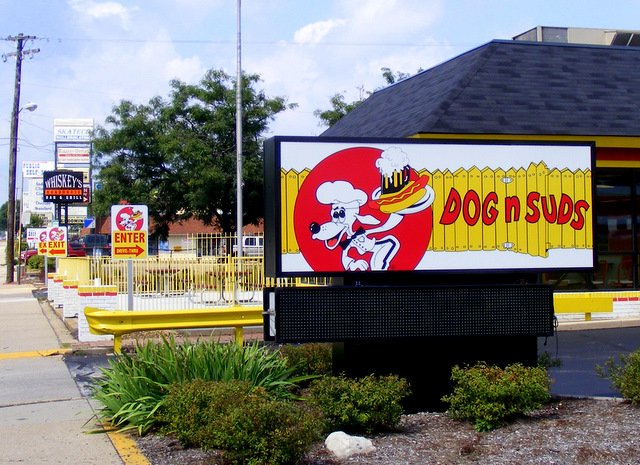
Dog n Suds — Rockford, Illinois

A brand new Dog n Suds opened in Rockford this spring. It’s located in an old McDonald’s. It’s a dine-in restaurant with a drive-through window — no car hop service. The reviews on the Internet were all rather negative. I suspect it won’t be around long, so I thought I’d better visit while I can.

On Saturday, July 31, my daughter and I drove over for lunch. We hit a lot of traffic and a construction zone on the way out, so it was 2:30 by the time we arrived. The place was empty — we had it to ourselves most of the time we were there.

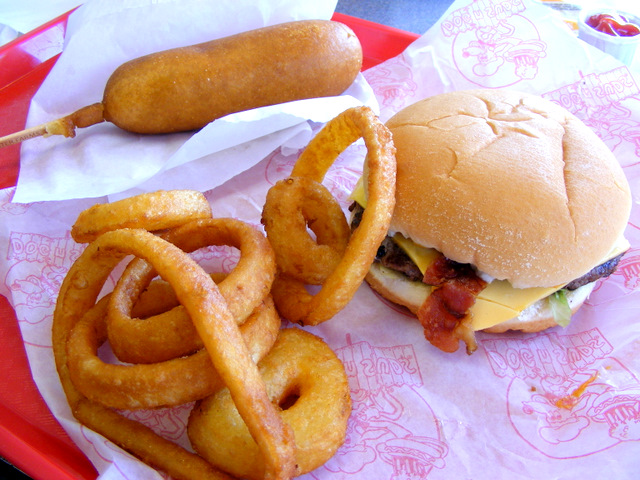
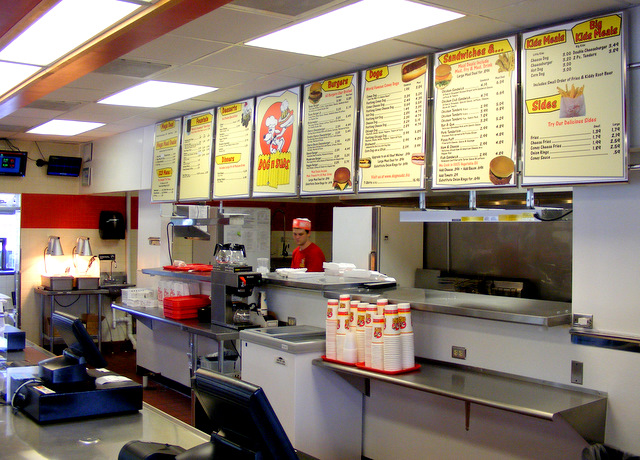
It didn’t feel at all like a Dog n Suds. It still had the McDonald’s furniture and, I think, decorations. I had a cheeseburger that was fair, onion rings that were very good and a corn dog that wasn’t.

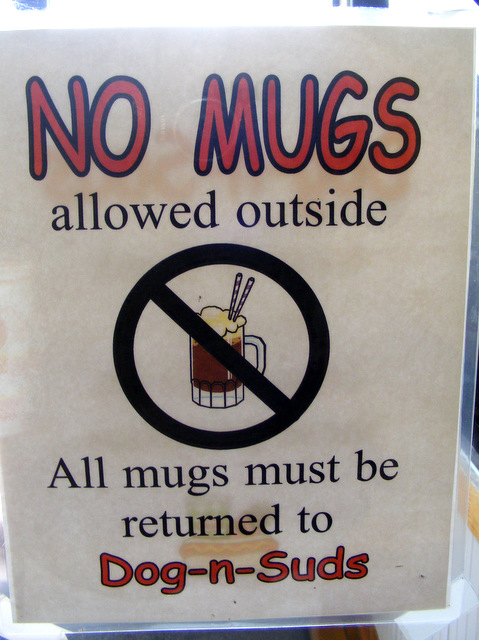
The best thing about it was the root beer — it was in a serve-yourself fountain so we could drink as much as we wanted.

We tried a different route home, but it wasn’t much better. We got home at 4:30. The round trip for lunch took us four hours. But I’ve been there, and nobody can take that away from me.

Posted in Illinois | Comments Off on Dog n Suds — Rockford, Illinois

Wooden Bridge

I set the chair next to the bridge and walked to the other side of the pond to get this photo. But the sun was behind the clouds and it simply wasn’t working. I gave up and headed back to the car when a sudden beam of light shot through a small hole. I raced back and managed to get two shots before the sun disappeared again. (7/26/10)

Posted in Photos | 2 Comments

World War 2.1

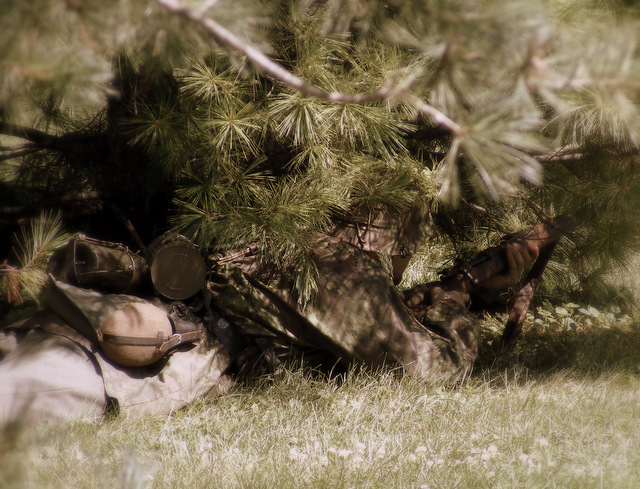
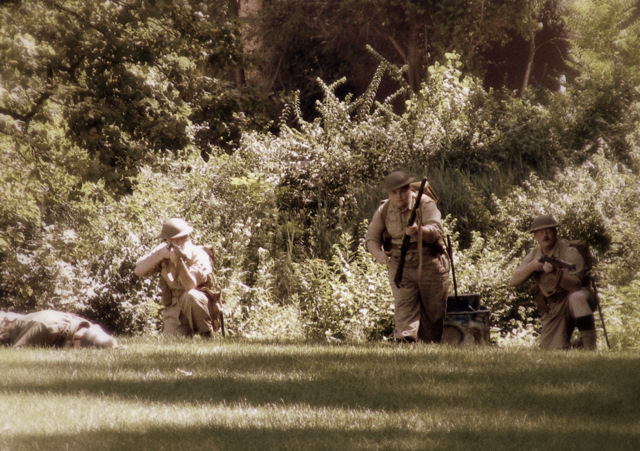
A friend and I drove down to New Lenox one warm Sunday afternoon to see a World War II reenactment. I expected to see dozens, or maybe even hundreds, of men and women in authentic uniforms standing around jeeps and army trucks.

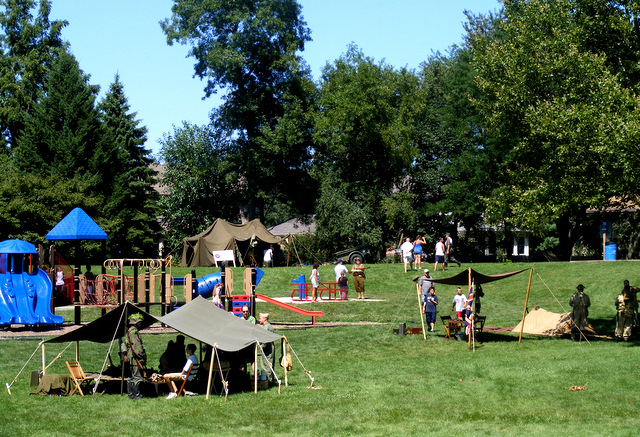
What we actually saw was about 20 men and two women in four tents in the middle of a disc golf course next to a playground.

There was something about the setting that seemed to strike a wrong chord. I’m not sure what it was. (I heard a couple of the British troops planning an attack on the playground, but it never came off.) I decided to attempt a reenactment of my own and take photos in 1940’s style.

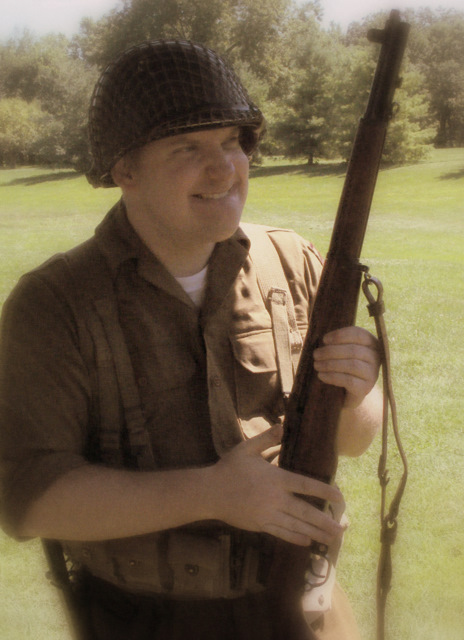
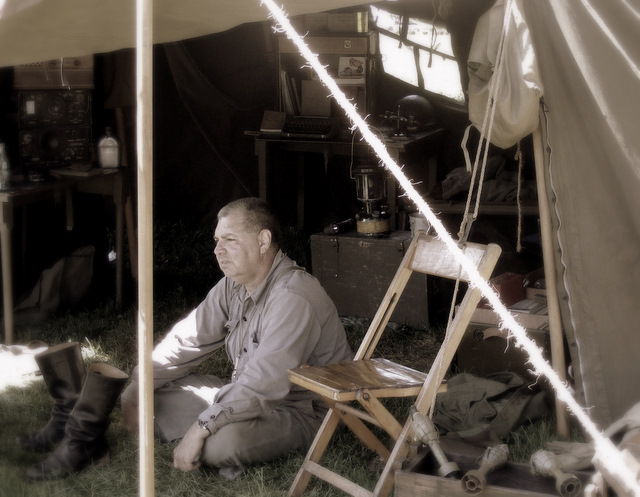
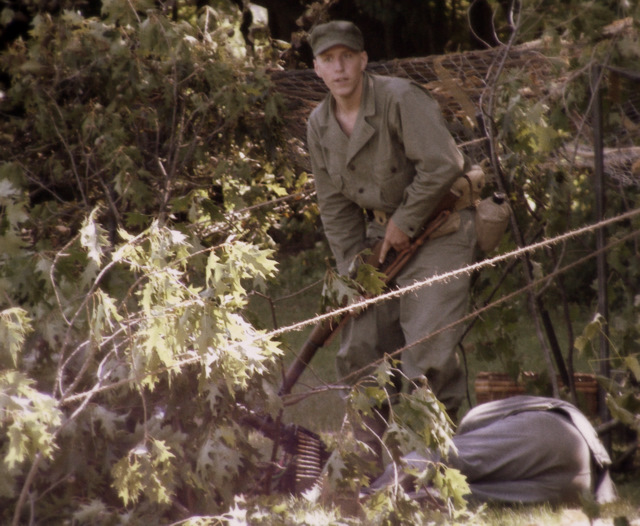
One of the American soldiers.

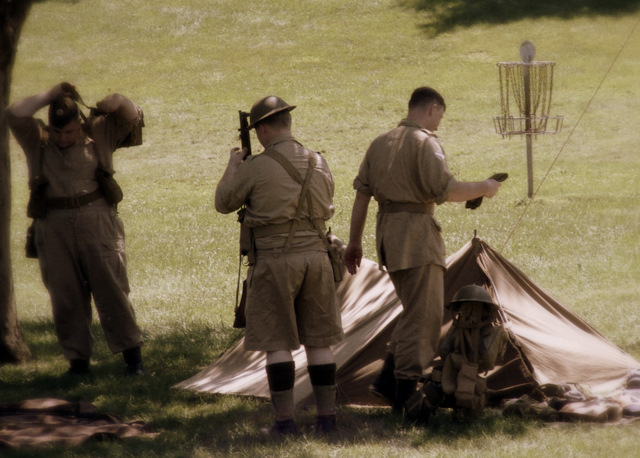
We chatted with him for several minutes, and then with two guys who were dressed in British uniforms. Most of their stuff was actual army surplus from the war. This rifle was a prop, but some of the guys use real weapons (but not real ammunition).

The Brits prepare for battle

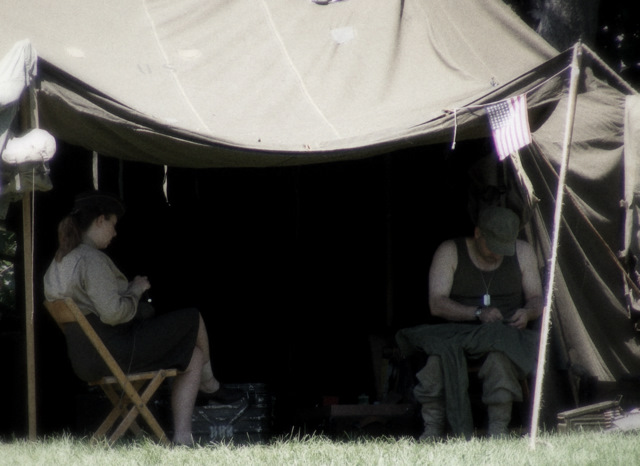
The American headquarters

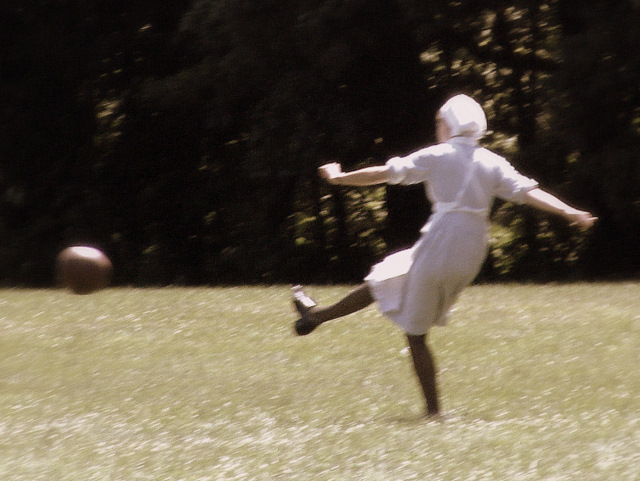
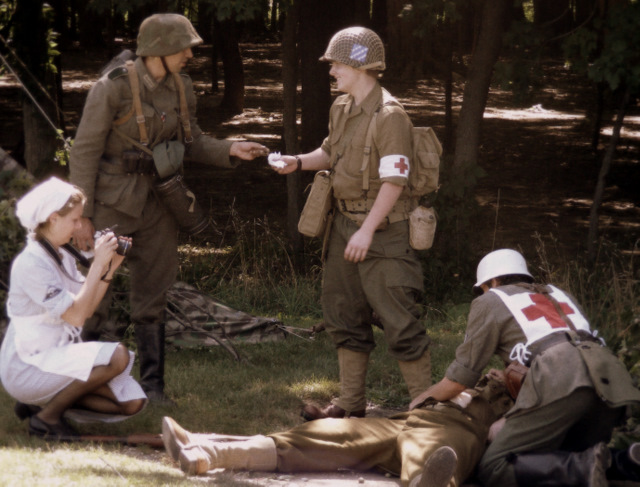
A German nurse plays football

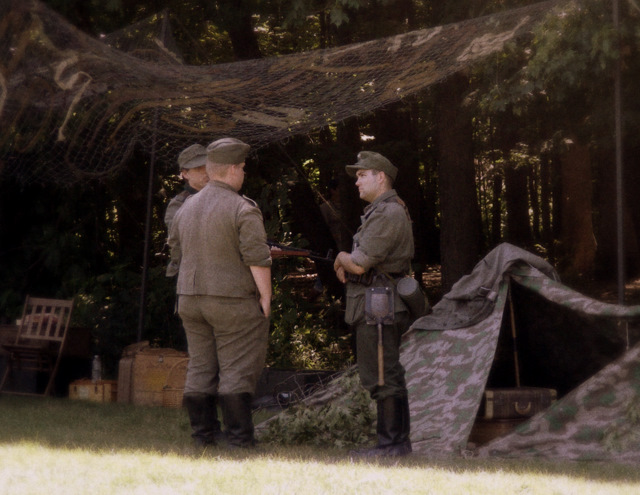
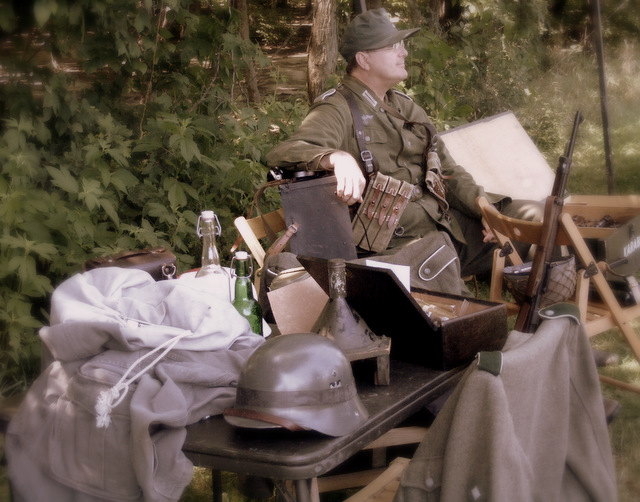
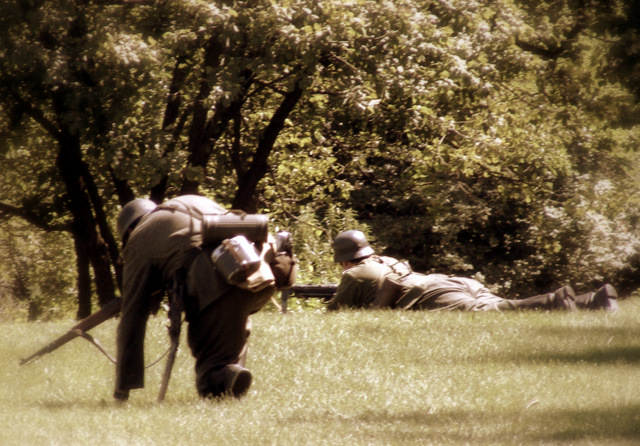
Germans

About an hour after we arrived, all the spectators gathered behind a rope near the German tent. An American soldier gave us a brief explanation of the war in France. While he was doing this, the soldiers from all the armies gathered in the German tent to plan the battle — an attack by an American reconnaissance unit on a German field base.

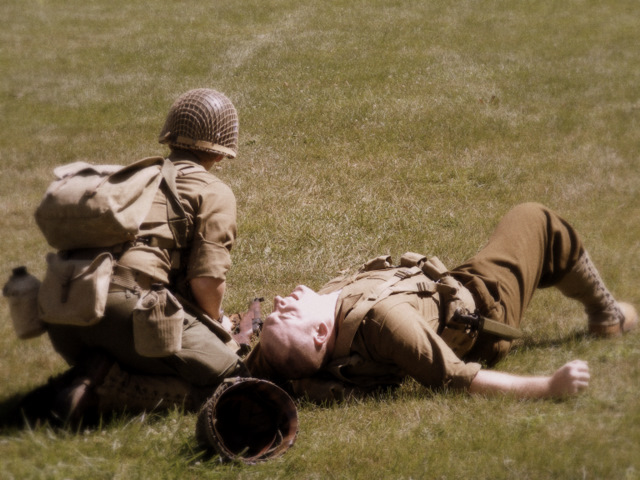
The guy we talked to was one of the casualties. He told us later that he doesn’t think enough American soldiers “die” in reenactments, so he’s willing to do what he can to balance things out.

The Brits weren’t actually involved in the battle officially, but they came charging in on the right flank near the end.

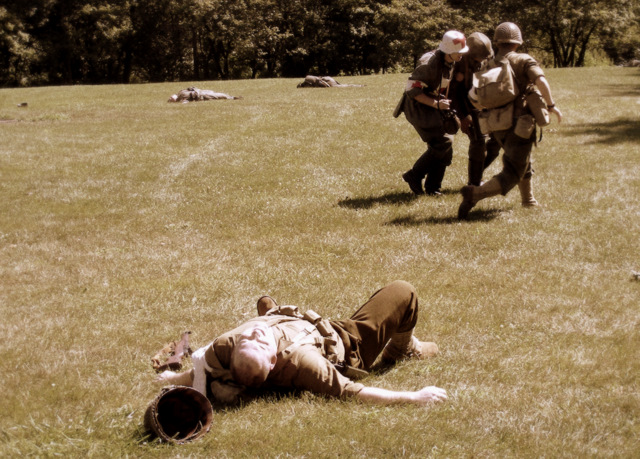
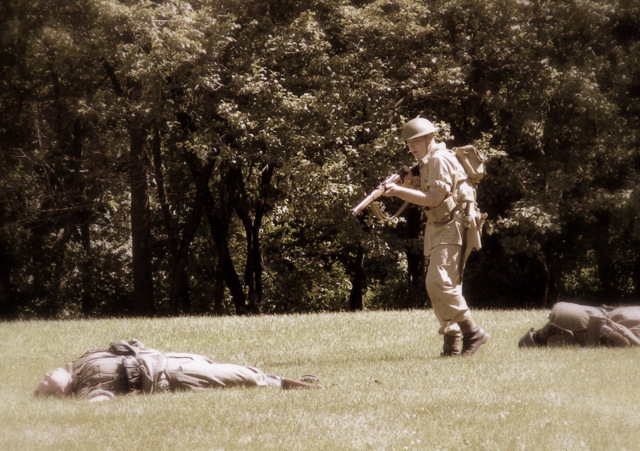
At the end of the battle, the guide explained that “the Americans are going to check the dead Germans and look for intelligence.”

The final bit of action was one guy dying while being photographed by the German nurse.

The battle lasted about seven minutes — it was called a battle, but was really more of a skirmish. I will give the reenactors this — they had a lot of enthusiasm.

Posted in Miscellaneous | Comments Off on World War 2.1