I knew about the museum in the Michigan Avenue Bridge bridgehouse, but I wasn’t planning on visiting on this day. But the rain was coming down harder, and I was getting wetter. The usual river-level entrance was closed because of the construction of the River Walk, so when I turned the corner from Wacker Drive onto the bridge, there was an open door and a place to get out of the rain right in front of me. I stepped in and paid my $3.
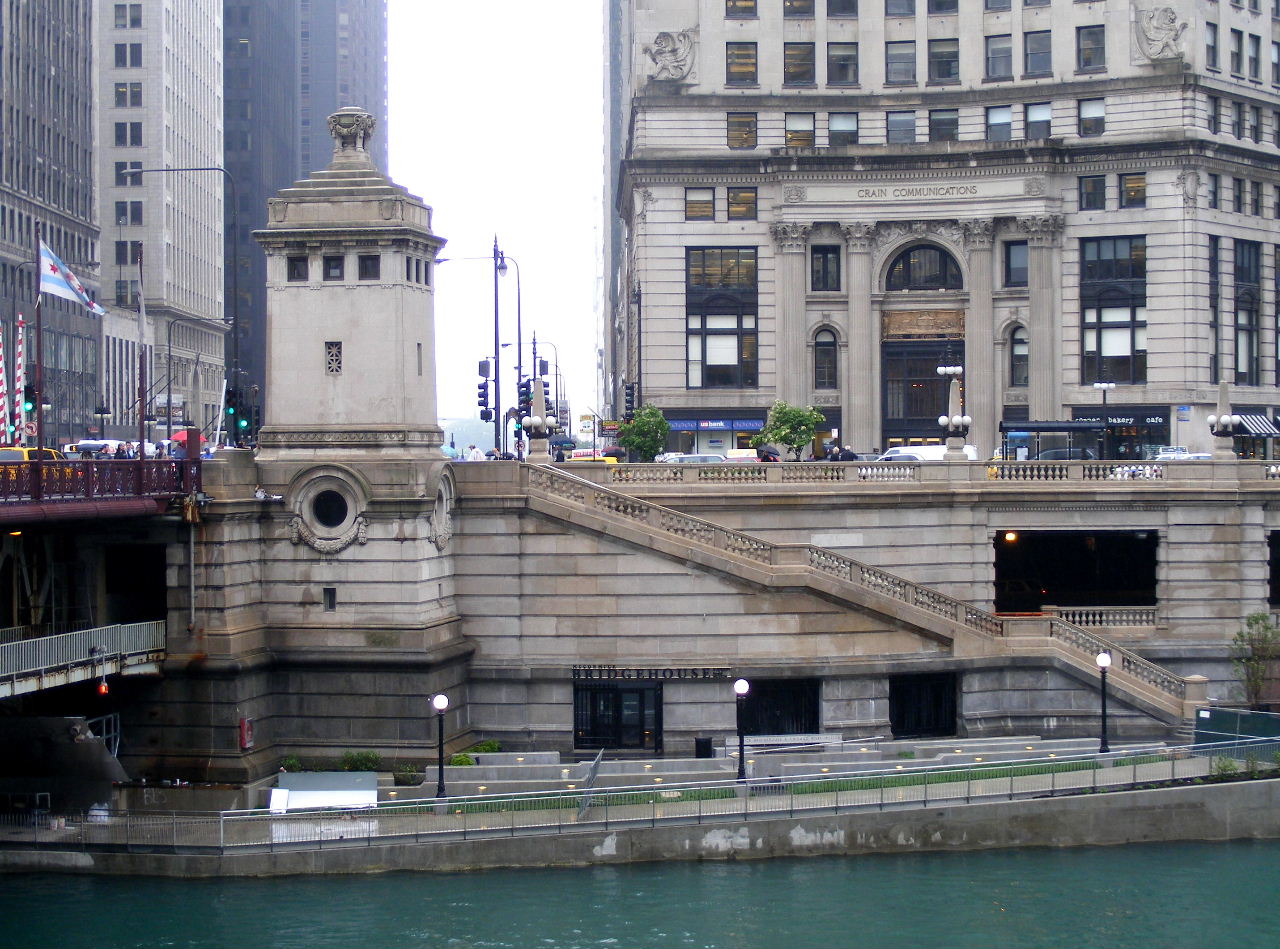
Here’s the bridgehouse from the north side of the river. The usual entrance is down along the river.
The guy who took my money told me that a free lecture was scheduled at noon if I was interested. I wandered around the five levels of the museum. The displays weren’t much — just panels on the wall (complete with typos) that gave the history of the river, but I found it fascinating to be inside the bridgehouse, particularly when looking out one of the many windows at the city. I was the only visitor, but I kept running into employees of the museum who were very friendly and who without fail encouraged me to stick around for the lecture.
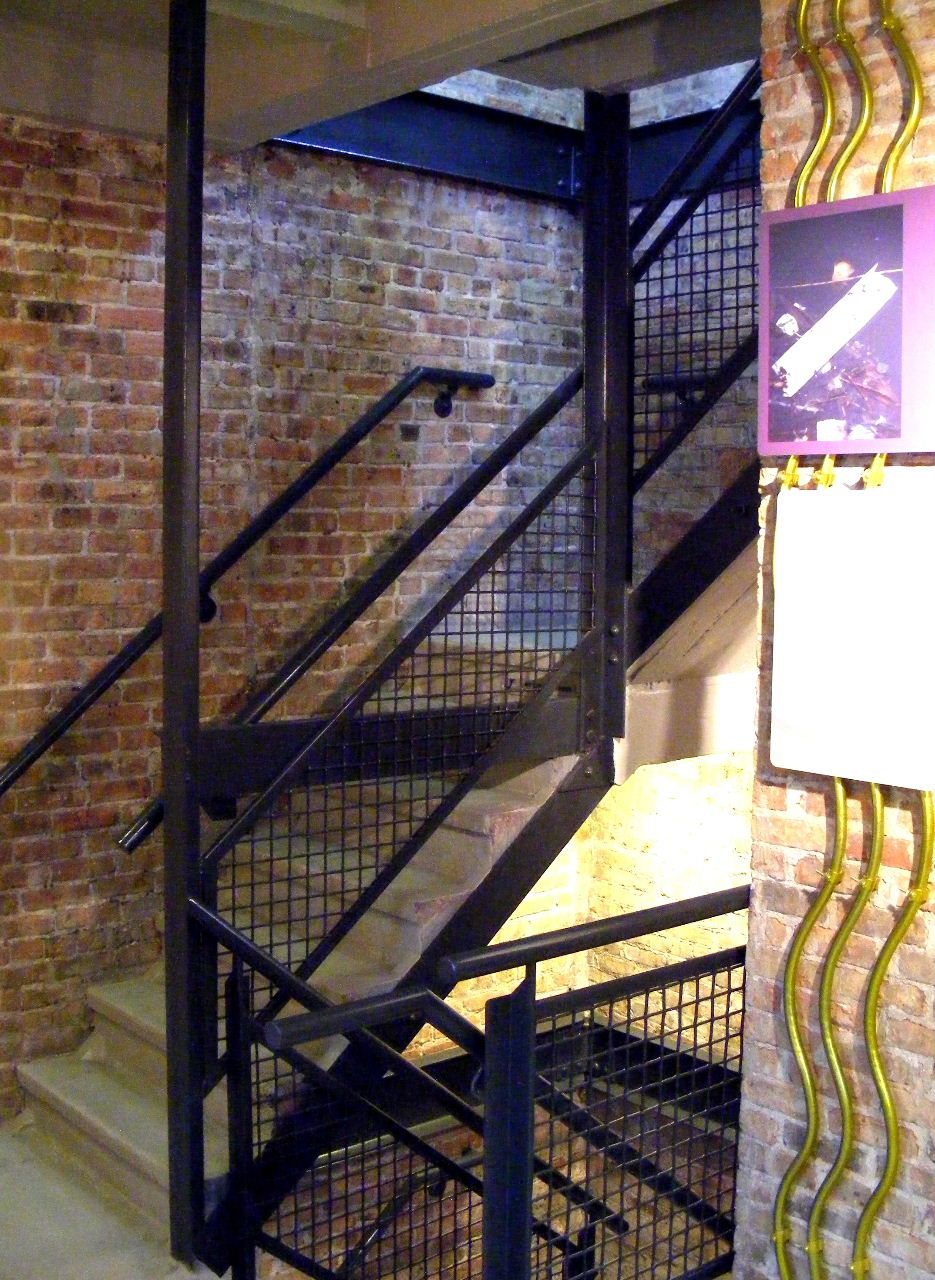
Most of the museum looked like this. I think this was between levels two and three, just below street level.
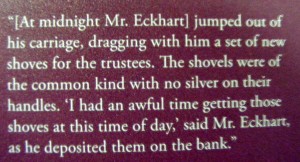
Here’s one of the typos I mentioned, along with a shot of the gears that raise and lower the bridge.
Here’s the view out one of the round windows you can see in the photo above, looking west toward the Marina Towers.
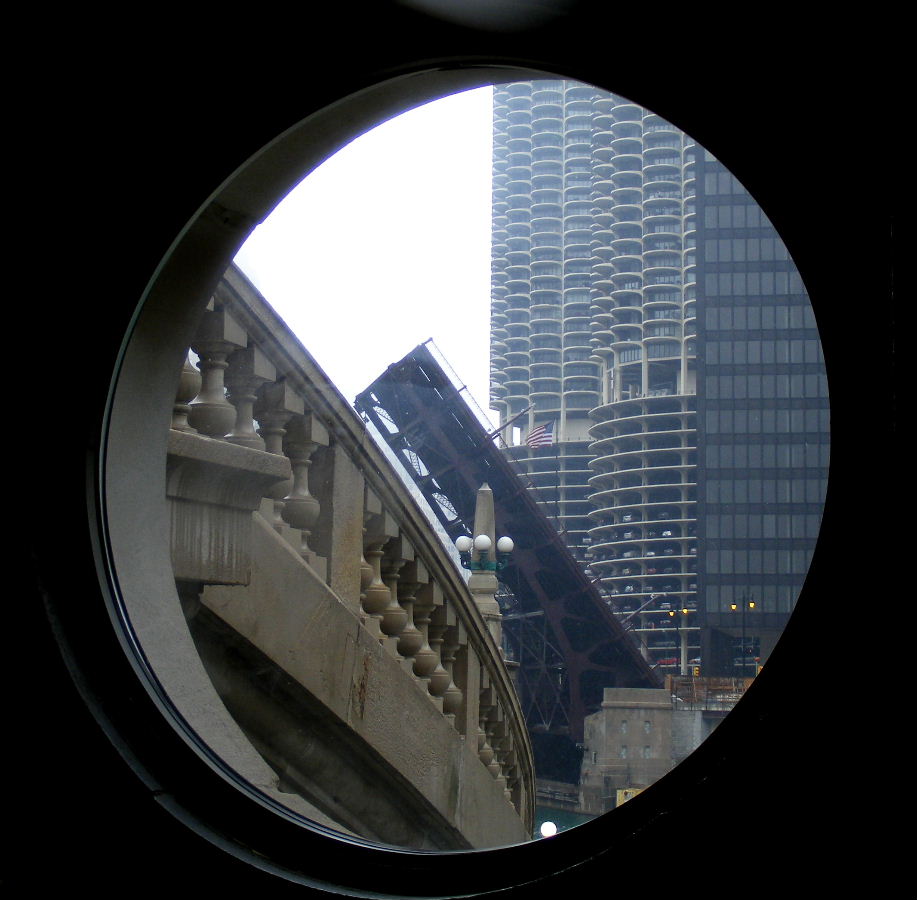
Michigan Avenue Bridge is a bascule trunnion bridge. Bascule means “seesaw” in French. The trunnion is the point on which the bridge pivots. Each wing of the bridge weighs 4,100 tons and each counterweight weighs 12,000 tons. The bridge surface and the counterweight are so perfectly balanced that the wings can be raised and lowered by a motor comparable to that in a 1950 Volkswagon Beetle. Ice or even a coat of paint can upset the balance.
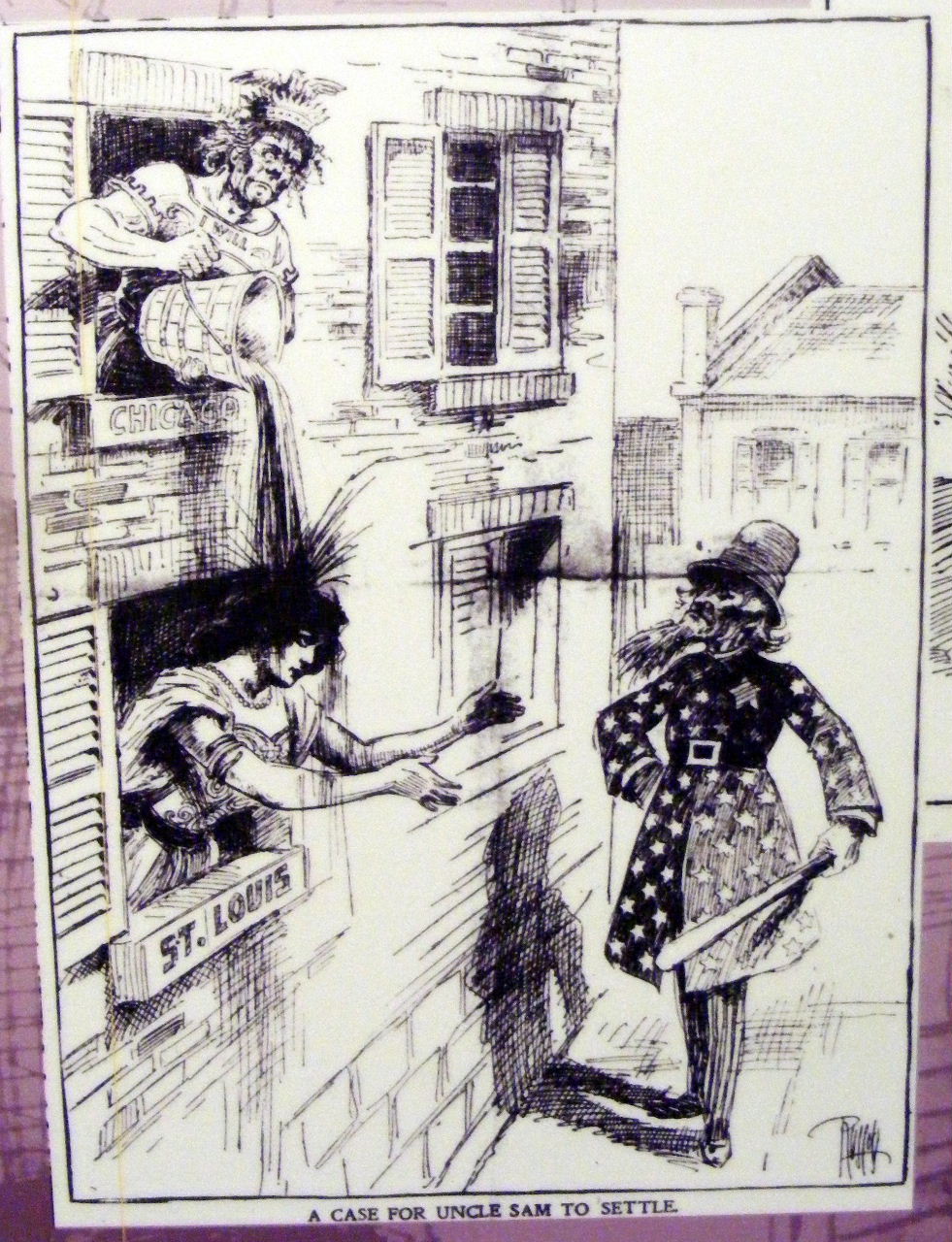
Before 1900, Chicago’s sewage flowed into the river and then out into Lake Michigan where the city’s drinking water came from. Engineers figured out a way to reverse the flow of the river with locks at the lake end and a canal linking the river to the Des Plaines River at the south end. The unreasonable folks in St. Louis had issues with Chicago sending its sewage down to their city. They complained and sued to force Chicago to stop its plans. The city leaders of Chicago, feeling strongly that St. Louis was just being petty, sneaked out one early morning and broke through the last barrier, presenting the government with a fait accompli. This political cartoon shows St. Louis complaining to Uncle Sam while Chicago dumps its waste on her head.
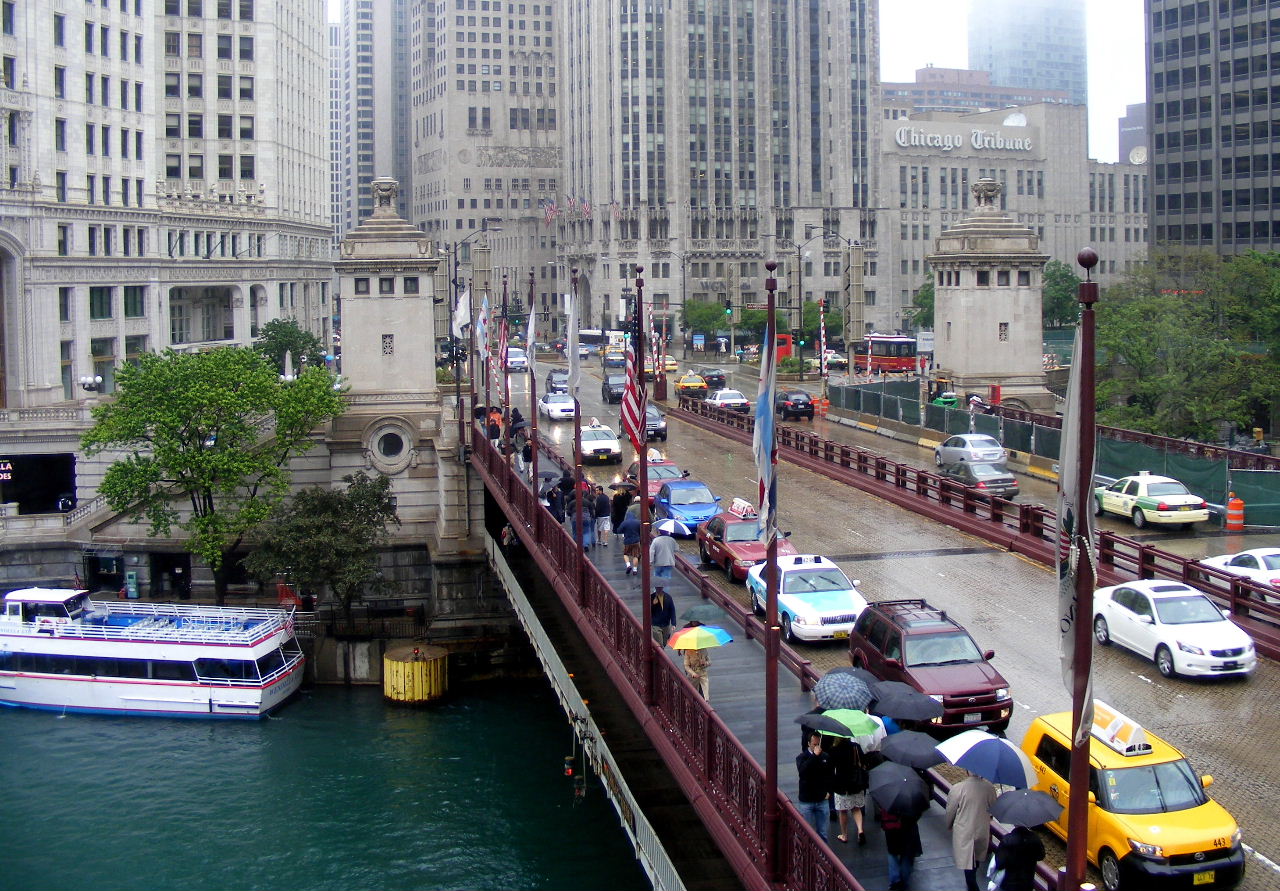
The best part of the museum was the view from the upper-level windows. Here I’m looking north along Michigan Avenue.
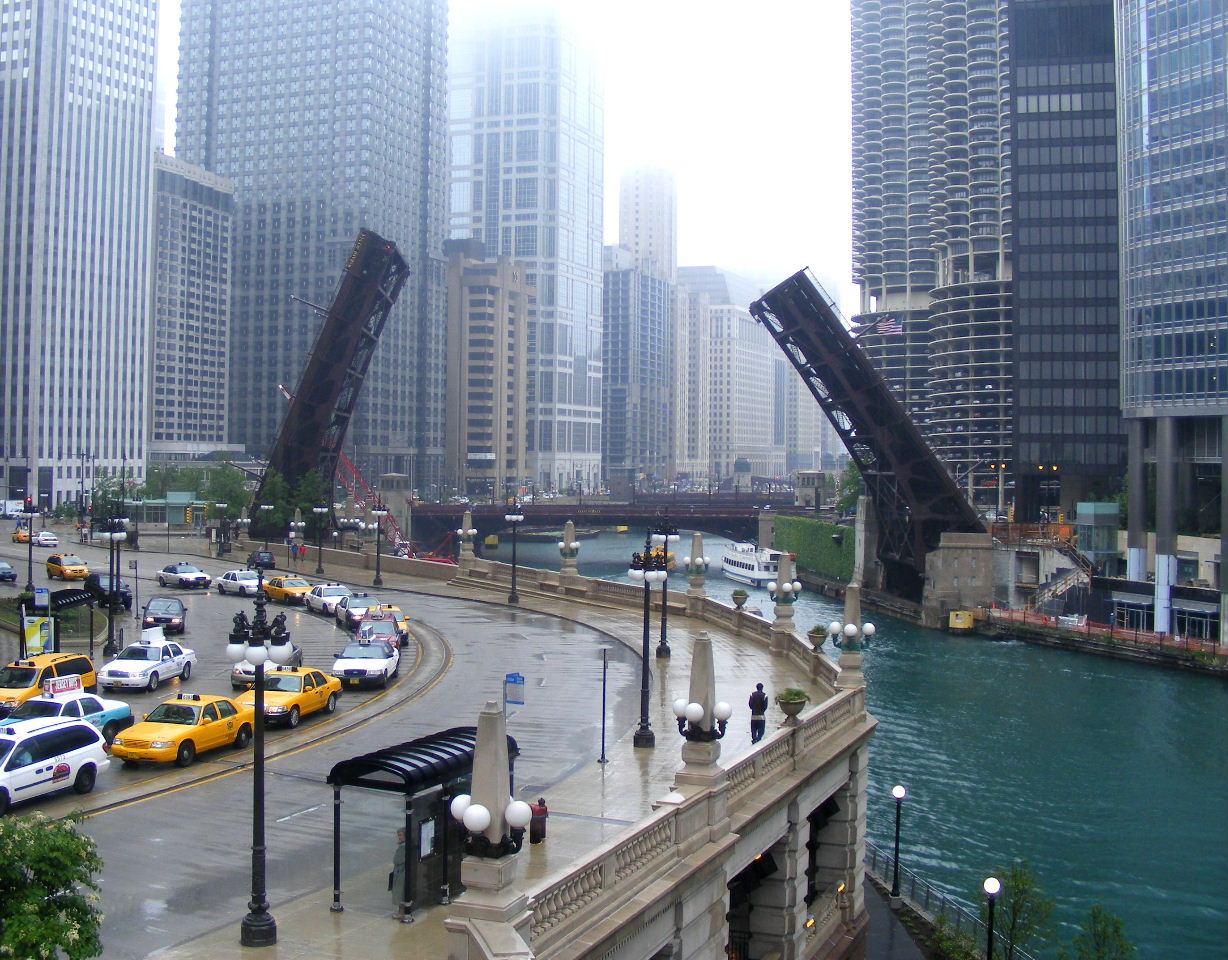
This shot looks west along the river.
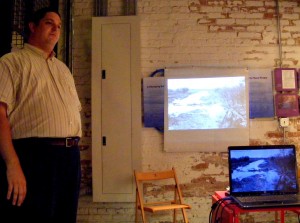
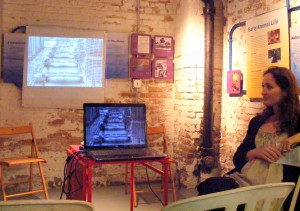
It took me about 25 minutes to see everything there was to see in the museum and out the windows. It was five minutes until lecture time and it was still raining hard, so I decided to stay. I made my way down to the lowest level. There were 10 chairs set up in the tiny space. Three of them were occupied by employees. I was one of three audience members. The lecturer was a history teacher at a local college. One of the main purposes of the lecture was to convince us to join Friends of the Chicago River, the organization that runs the museum. But when they found out that I lived close to the Fox River, that the other guy lived in Iowa and that the woman who sat between us was already a member, they gave up on the propaganda. The guy covered much of the same ground as the displays in the museum, but he was much more thorough and interesting. His slides were informative and he used a lot of humor in his presentation. It lasted a little over an hour, and I was glad I’d stuck around.
Here’s the guy who gave the lecture and another shot to give you an idea of the size of the room. The woman is one of the employees.
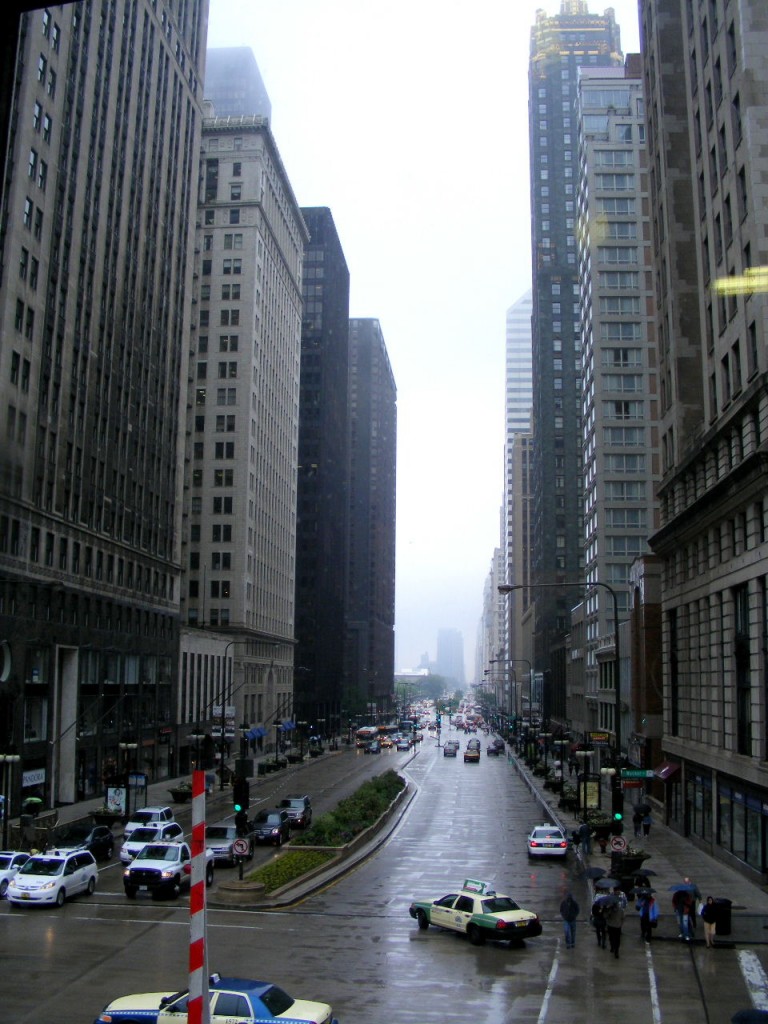
This shot was taken from the upper level looking south along Michigan Avenue. The silver/white area in the left distance is the roof of the Art Institute. When I walked from here to there after lunch, it was teeming and I got as wet as it is possible to get.
On my way out, I asked the girl at the entrance how often they have lectures. She said “about once every three months.”
If you want to learn about the history of the Chicago River, read a book. But if you think it’s cool (as I do) to see the city from some quirky angles and wander about in an interesting building, $3.00 isn’t much to spend for the privilege.


