Bird #445 — Long-billed Curlew

numenius (of the new moon, referring to its bill) americanus (of America)

Monday, October 20, 2008 — 4:56 pm

Rockport Beach Park — Rockport, Texas

Mustang Island was out of the question, and we’d seen what there was to see at Rockport Beach Park. My sister (who had been off on her own photographic adventures) and I headed back for the car for the long drive back to San Antonio. We were about 30 yards away from the car when I spotted a large shorebird foraging on the lawn between the parking lot and the hiking path near the inner bay. I thought it might be a Long-billed Curlew, but its bill was shorter than I’d expected. I took a quick look at my field guide to rule out Whimbrel (which has a striped head and is gray rather than buffy). It confirmed my guess and also informed me that immature Long-billed Curlews have shorter bills. So I had my first lifer of the day.

It wasn’t paying us a lot of attention, but whenever we got too close, it moved away. I took a quick snippet of video, but I was running out of memory, remember …

It moved closer to the shell-shaped Rockport sign seen in my last post. There were some short palms along the edge of the area, so I crept slowly around behind them and got within ten feet of the bird. It acted nervous at first, but then went back to picking at the grass.

Long-billed Curlew - Rockport, Texas

Long-billed Curlew - Rockport, Texas

Long-billed Curlews are the largest North-American shorebird, and full-grown adults can have bills as long as their bodies. I would very much like to see one of those some day, but I still thought this was a very cool bird. It made the whole day worthwhile to me.

As we were pulling out of the parking lot, I was surprised to see a flock of eight or ten Marbled Godwits, which look very much like this curlew, but with the bills curved up! I’ve seen them once or twice before and I was out of memory on my camera again, so I didn’t get any pictures.

We drove back up to San Antonio on the interstate and enjoyed a sunset that was spectacular not so much for the color (which was very nice) but for the massive amount of sky there was for it to be colorful in.

Posted in Wildlife | Comments Off on Bird #445 — Long-billed Curlew

Rockport, Texas

By 2:00 or so, it was evident to me that Aransas was a bust, birdwise. I knew it might be a long time before I returned to south Texas, so I determined to find somewhere else to spend a few hours. I asked the nice lady at the visitor center if Rockport offered any opportunities for birding. She wasn’t sure, but she thought the public beach might be a good place.

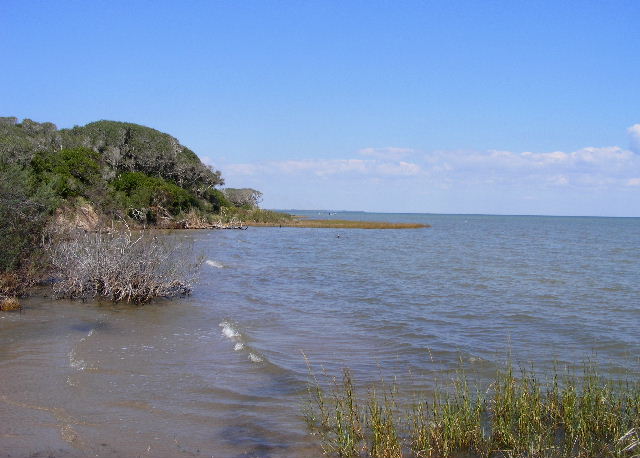
We headed south through the fields and marshes, crossed the bridge over the pass from Aransas Bay into Copano Bay and pulled off into a dirt parking lot at the water’s edge. Essentially, it was just a pullover for truckers, but we got out and walked around a bit. There wasn’t much to see except for a winter-plummaged Laughing Gull that let us all but walk up and pet it.

Laughing Gull - October 20, 2008 - Fulton, Texas

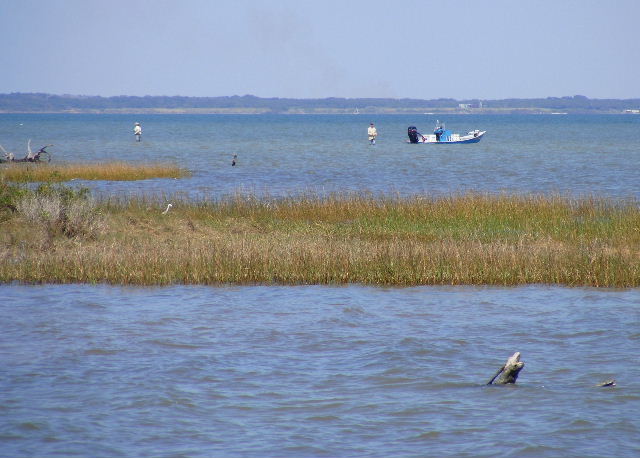
We continued on through Fulton and Rockport and found the place the woman had told us about — Rockport Beach Park. We paid our $4.00 to get through the gate and were given a permit that stated that we were at “Texas’ First Certified Blue Wave Beach.” Whatever that means. The park ran the length of a thin strip of beach between Aransas Bay and a smaller bay to the west.

Things began picking up. I immediately found a flooded area that contained a variety of shorebirds.

OK, let me jump ahead here. About an hour after we got to Rockport, my camera flashed that my memory card was full. On the fly, I had to go back through my pictures and perform photographic triage. It was painful. To begin with, it’s difficult to tell on the little screen on my camera whether a given shot is good or not. In addition, I had some great shots of birds that can be seen in Illinois. It seemed dumb to keep those shots and miss opportunities at birds that can only be seen in Texas. So of all the pictures I took of the sandpipers, the only one I kept was this one of a Dowitcher (and I don’t even know if it’s a Long-billed or Short-billed Dowitcher because in winter plumage the only way to tell them apart is by voice — and it wasn’t saying anything).

I walked on and soon came upon a White Ibis that was walking through the grass and paying no attention to me. Then I found a Great Egret that was much tamer than the Great Egrets up north. This picture almost got triaged. But just before I deleted it, I noticed that I’d captured a fish just beginning its jump out of the bay (upper right). Fish were leaping all over the place, but what’s the chance of catching one on film with a point and shoot camera? 100%, I guess!

Great Egret and fish

On the outer beach, there were jellyfish washed up on shore every few feet. I flipped a few of them over with my shoe and was somewhat surprised to discover they weren’t squishy like I’d always assumed but had more the feel and consistency of a candle. Or something like that. I wasn’t about to touch one to find out for sure.

In the inner bay there was a row of posts sticking out of the water most of which were crowned with a Brown Pelican. A man and woman walked out onto a dock near where I was standing and began cleaning fish. The Pelicans immediately flew over and waited for the scraps that were thrown into the water. They had to be quick because there was also a mess of some kind of saltwater catfish that were grabbing what they could.


I walked out on the pier and chatted with the couple. I asked them if there was any other place close by where I could see birds and maybe dolphins. They suggested we head down to Aransas Pass and take the free ferry out to Mustang Island. I wanted to do it. I so very wanted to do it. But it was already 5:00 and due to get dark in an hour or so — and we had a three-hour drive back to San Antonio.

Brown Pelican

Posted in Texas | Comments Off on Rockport, Texas

Butterfly #40 — White-striped Longtail

chioides catillus

Monday, October 20, 2008 — 1:44 pm

Aransas National Wildlife Refuge, Texas — by the Heron Flats overlook

I was aware of butterflies all day, but I was looking for birds, so I didn’t get many photos. But when we returned to Heron Flats for a last try at something interesting, I couldn’t help noticing several of these distinctive little guys flitting around. One landed on a flower right next to the path, so I stopped for about two seconds and snapped off a quick shot.

White-striped Longtail - October 20, 2008 - Aransas National Wildlife Refuge, Texas

As it turns out, it was my only lifer of any sort at Aransas. Go figure. Anyway, it’s a south Texas specialty, rarely straying north to central Texas.

Posted in Wildlife | Comments Off on Butterfly #40 — White-striped Longtail

Aransas National Wildlife Refuge — Austwell, Texas

There’s a lot about birds in this post, so if you’re not interested, you might want to skip it. But there’s also some stuff about wild pigs and Alligators …

Aransas is the Mecca for birders, primarily because it’s the wintering home of the last remaining wild flock of Whooping Cranes. The population of this bird was down to 15 in 1941, but it’s been slowly increasing and now numbers 266. (There are additional flocks in Florida and Wisconsin, but they aren’t self-sustaining yet and can’t be officially counted.) I’ve long dreamed of getting to Aransas, for the cranes, but also because there are several other would-be lifers on the refuge bird list. In addition, I’ve seen pictures of herds of Javelinas (also known as Peccaries) wandering along the roads. I knew the cranes were a long-shot at this time of year — my visit was a few weeks too early.

We finally arrived around 11:00. We stopped in the visitor center and chatted with a very friendly woman behind the counter. She said the Whooping Cranes hadn’t arrived yet, but had been reported in Nebraska on their way down from their breeding grounds in Canada. A cold front was coming, and she said the cranes might show up at any time. She gave us a refuge map and pointed out the places where we had the best chance to see birds. But, she said, it had been a very dry fall and a lot of the fresh water ponds had dried up.

The entire refuge sits on the coastal flats. We read somewhere that the highpoint is seven feet above sea level. It’s covered entirely by marsh and scrub. The brochure says:

  • Alligators and poisonous snakes are present; watch your step.
  • Stay on trails. Otherwise, you may encounter ticks, bees, chiggers and poison ivy. We recommend insect repellent.

Lovely place. That’s why nobody lives there, but it’s also why a lot of birds do.

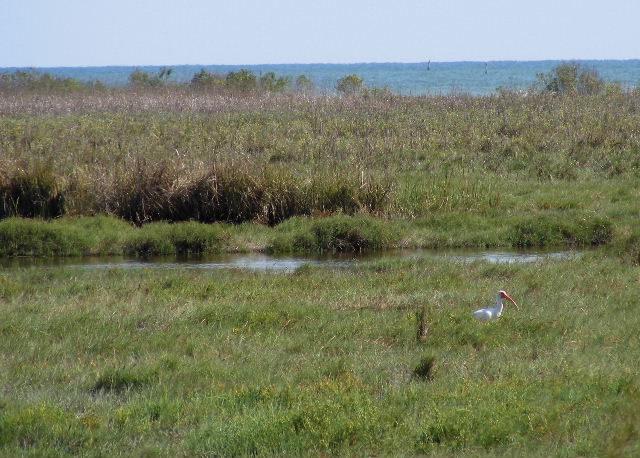
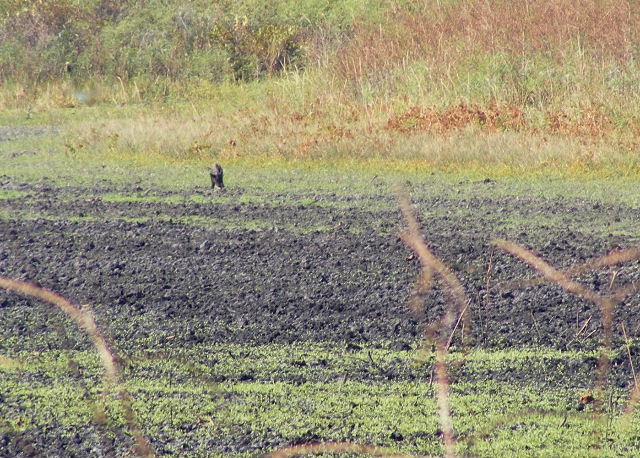
The first bird we saw when we walked out of the building was a Vermilion Flycatcher. We set out on the refuge road and stopped at Heron Flats, right along the Gulf Coast. Several people were there ahead of us, and they pointed out a large, black wild pig that was walking through the grass. We saw herons, ibises and egrets, most of them quite a distance away. Hold your cursor over the photos for more exciting info.

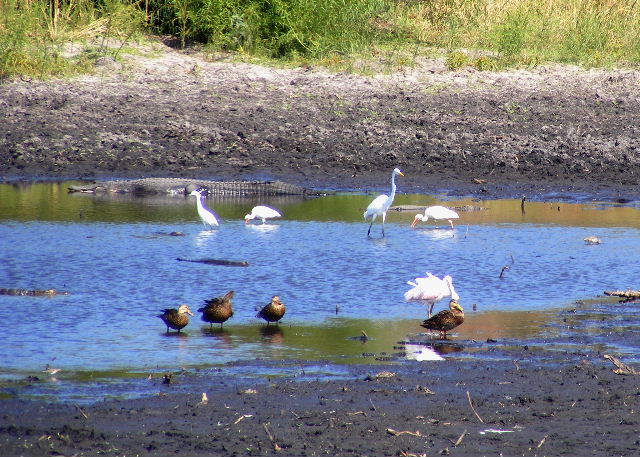
Our next stop was Jones Lake. This was the only bit of fresh water that remained after the stretch of dry weather. The lady at the visitor center told us we were likely to see the most wildlife here. She wasn’t kidding. There was only a tiny bit of water left at one end of a long stretch of mud. A wild pig rooted in the mud at the far end, but our attention was on the water. There were at least 30 Alligators crowded in and around the small pool. Don’t forget to count the ones that just have their eyes and nose poking above the surface.

While we were watching the Alligators and looking at the birds, a woman joined us on the viewing platform. She works as a volunteer guide to the refuge during the crane-viewing season. She was amazed by what she saw — she’d never seen a congregation of Alligators even remotely this large. One of them caught a fish about three feet long and struggled to get it positioned right for swallowing. It made me think how stressful life mush be for whatever fish remained. We were amazed that the birds were swimming and wading right next to the Alligators without paying them any attention.

The plump, pinkish wading bird near the right-hand side of the panorama is a Roseate Spoonbill. You can see it in the video and even better in the photo. It was early afternoon on a hot, glaring day, and the light was awful for photography.

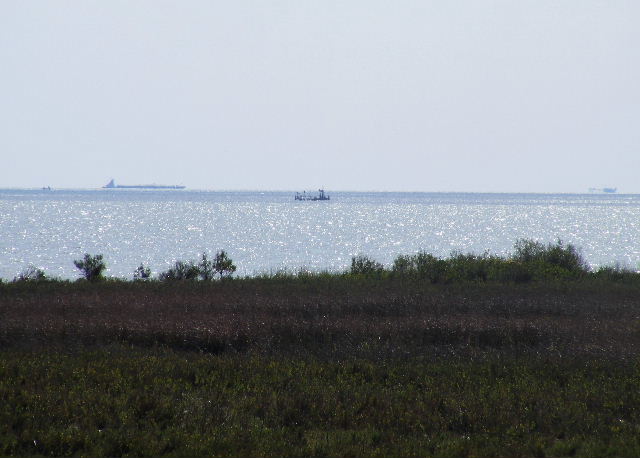
We drove to the observation tower overlooking Mustang Lake, the place where Whooping Cranes are most often seen. I scanned back and forth over the extensive flats, but saw little of interest. We walked along the boardwalk to the shore of the bay, where I took these photos:

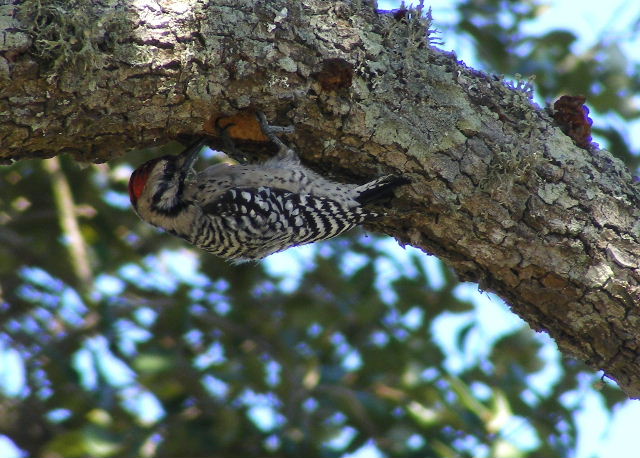
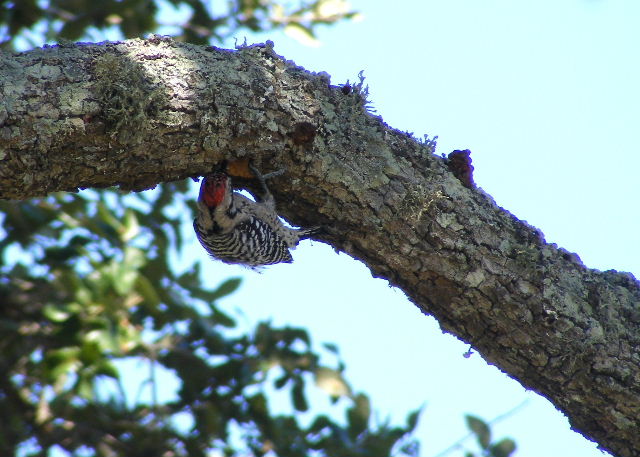
By now, I realized Aransas wasn’t going to be as exciting as I’d always anticipated. Out of desperation, I decided to drive the 13-mile loop trail, but all we saw was dry scrub, dry scrub and more dry scrub. Thirteen miles of dry scrub. We stopped back at the visitor center to buy something cold to drink. I found a Ladder-backed Woodpecker in the parking lot.

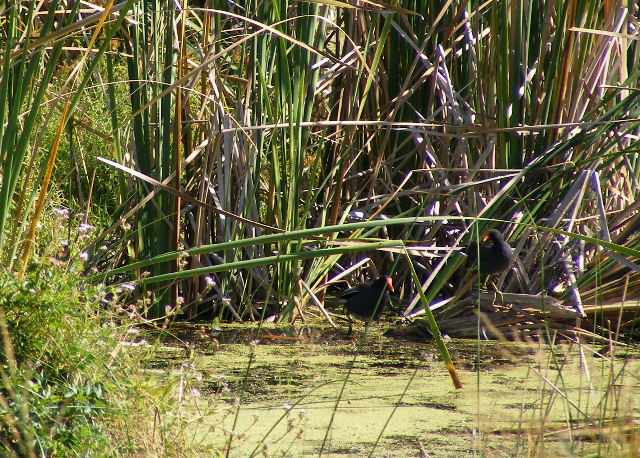
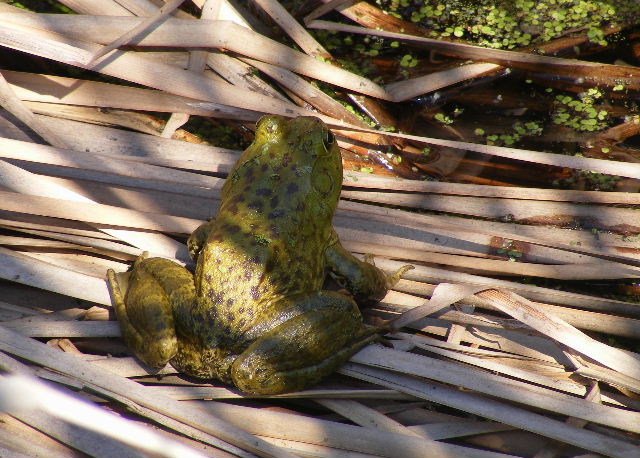
The lady behind the counter asked how we’d done. When I expressed my disappointment that I’d missed several birds I had hope to see, she recommended I try a short trail that started just up the road from the visitor center. My sister decided to find a cool spot in the shade and wait. I promised I wouldn’t be long. Mere seconds after I started on the trail, I was way, way outside my comfort zone. A low, narrow boardwalk cut through a patch of high reeds. Frogs were jumping all over the place, American Coots and Common Moorhens were flapping through the marsh and this guy, all four feet of him, was floating in the water about 10 feet away.
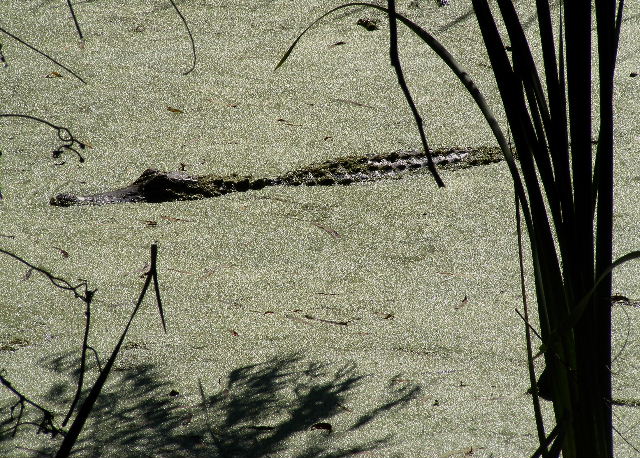
Alligator

Moments after I passed him, something huge went crashing through the reeds making all sorts of noise. I have no idea what that was. In addition, it seemed like prime habitat for Cottonmouths — which were listed on a nearby sign as one species of wildlife “likely to be seen.”

I felt a little more comfortable when the boardwalk ended and I was walking along a mown grass trail. An American Bittern flew out of the reeds. A couple deer ran along the trail in front of me. But I wasn’t seeing anything new. And then I noticed where I was. Right across from the visitor center is an Alligator Viewing Area. A six-foot high fence stretches next to the trail and a large sign reads “Do not climb fence. Alligators will attack” or words to that effect. I was now inside that area. Hmmm.

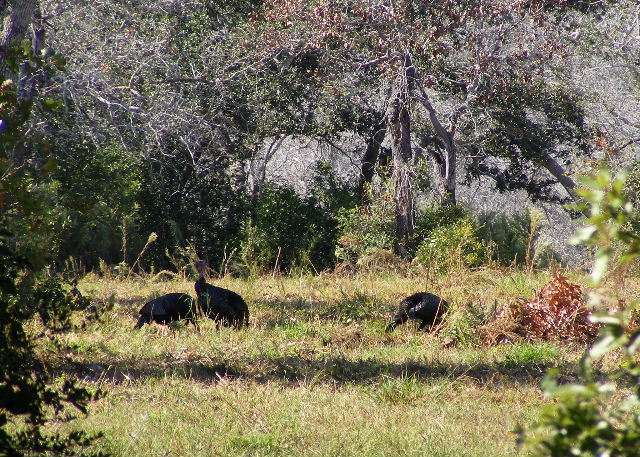
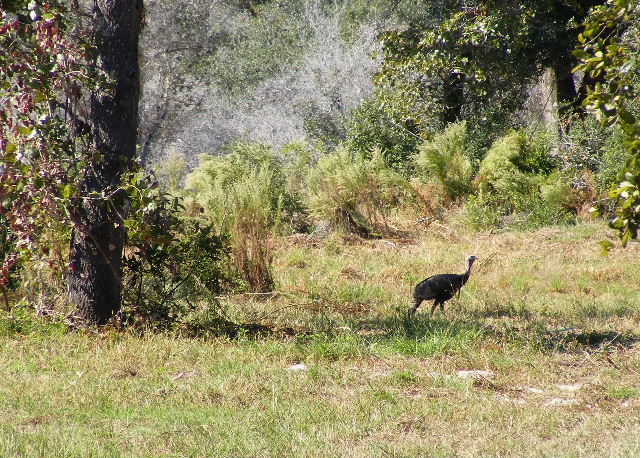
Obviously, I made it back OK. I spotted a flock of Wild Turkeys in a clearing along the road, but that was it. I’d finally made it to Aransas and had seen exactly zero (0!) lifers.

And the Whooping Cranes? We were there on October 20. The first crane of the fall showed up on October 21.

Really.

Posted in Texas | Comments Off on Aransas National Wildlife Refuge — Austwell, Texas

Bird #444 — White-tailed Hawk

buteo (hawk) albicaudatus (from albus, white, and caudatus, tailed)

Monday, October 20, 2008 — 9:36 am

Goliad County, Texas — Route 77A south of Goliad

This was shaping up to be a pretty good day — two lifers and we hadn’t yet gotten close to our destination. The White-tailed Hawk can only be seen in southeast Texas. It’s a large bird and perhaps the most beautiful hawk I’ve seen. We actually saw it because of a mistake — I missed my turn and we were on a slightly-longer alternate route.

I first spotted two immature White-tailed Hawks sitting in a brush pile along the road. I knew what they were, even though I hadn’t seen one before, because they were darker than immature Red-tails and the white patches were more striking. I pulled over and got this photo.

White-tailed Hawks - October 20, 2008 - Goliad County, Texas

Right after I took this shot, the closer one flew off to a more-distant brush pile. We drove on.

Three minutes later, I spotted an adult on another brush pile. There was no mistaking the pure white chest and belly. It sat and watched me as I got out and took several pictures. When it decided I’d gotten enough, it flew about 50 yards and landed on another pile.

White-tailed Hawk - October 20, 2008 - Goliad County, Texas

White-tailed Hawk - October 20, 2008 - Goliad County, Texas

Posted in Wildlife | Comments Off on Bird #444 — White-tailed Hawk