Bird #434 — Pigeon Guillemot

cepphus (seabird) columba (pigeon)

Wednesday, May 7, 2008 — 9:44 am

Cannon Beach, Oregon — Pacific Ocean — Haystack Rock

This seemed to be a day for black and white birds. Every bird I added today was black or black and white with only small bits of other colors.

Pigeon Guillemots were also easy to find around Haystack Rock. A few were sitting in nooks low down near the tide line. Others were swimming close to shore between the surf and the kelp beds. They were about a foot long, deep black with contrasting white wings and bright red feet (visible on one of the swimming birds in one of the smaller photos below). I saw a few flying along the shore during the day.

Posted in Wildlife | Comments Off on Bird #434 — Pigeon Guillemot

Bird #433 — Pelagic Cormorant

phalacrocorax (from phalakros, bald, and corus, raven) pelagicus (of the sea)

Wednesday, May 7, 2008 — 9:40 am

Cannon Beach, Oregon — Pacific Ocean — Haystack Rock

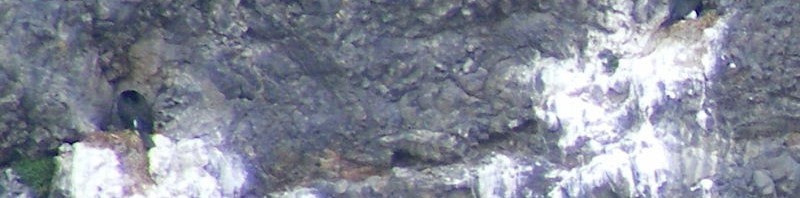
This was a bird I expected to see on this trip. What I didn’t expect was to find it pretty. I see Double-crested Cormorants around Illinois all the time and don’t care much for them. But the Pelagic Cormorants were a glossy blue black with big patches of contrasting white on their flanks (present only during breeding season). They were slimmer and trimmer too, with a very thin neck, head and bill.

They were easy to find on pretty much any ledge that didn’t contain Common Murres, as you can see in the photos below. I often saw lone birds flying around the Haystack Rock area and other places up and down the coast.

I warned you that some of my photos weren’t very good. I had to blow these up considerably to show the birds, but you can get an idea of what they looked like.

Posted in Wildlife | Comments Off on Bird #433 — Pelagic Cormorant

Bird #432 — Common Murre

uria (diving bird) aalge (from Danish for auk)

Wednesday, May 7, 2008 — 9:37 am

Cannon Beach, Oregon — Pacific Ocean — Haystack Rock

This was cool. So far, my lifers had been simply species that I had never seen before. Now I was seeing an entirely different type of bird. The alcids are seabirds — Murres, Guillemots, Auklets, Puffins and a variety of others — and I’d never seen any of them even though some of them are widely thought to be the most numerous species on earth. There’s very little sea around Illinois.

As we walked north up the beach toward Haystack Rock and The Needles, I could see a lot of birds flying around. I knew what I was looking for, and soon picked out some Common Murres on top of one of The Needles.
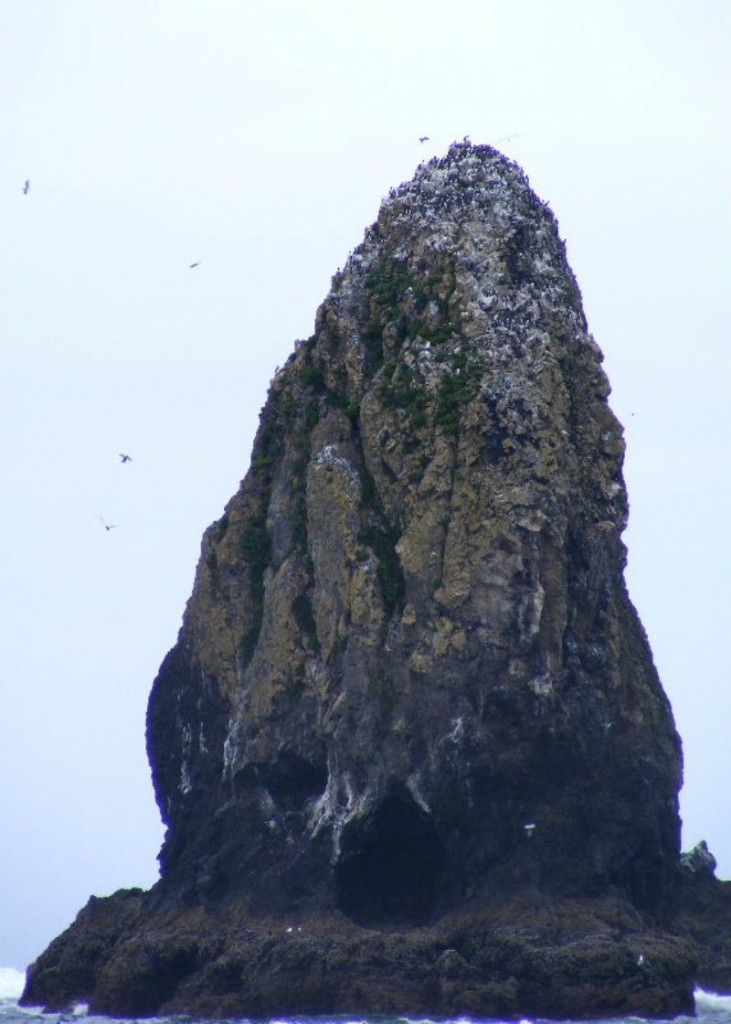
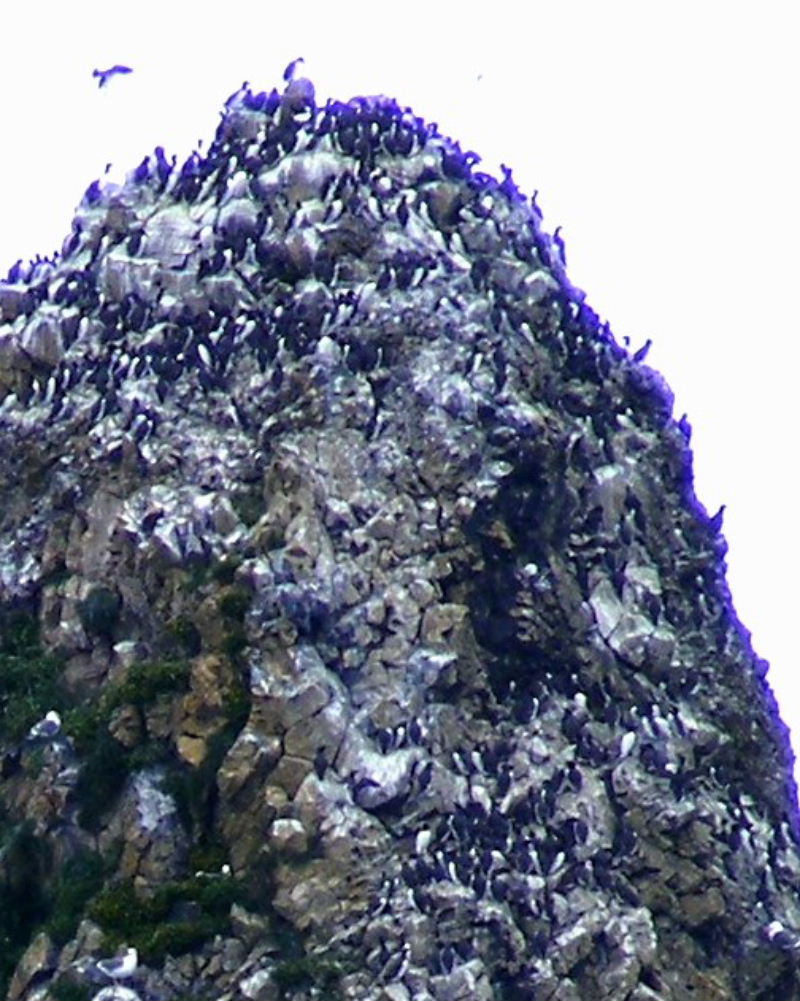
Did I say some? Let’s take a closer look at the top of that rock. (This is a close-up of the same photograph).
Here’s another shot of the same rock from a slightly different angle.
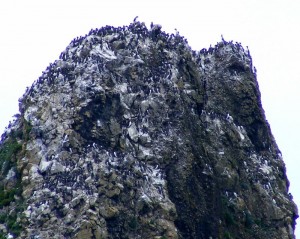
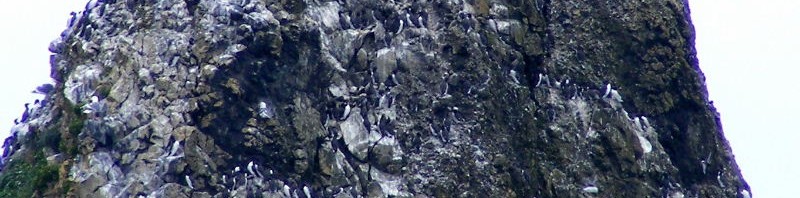
The Murres covered just about every inch of every available surface. Here’s the side of Haystack Rock.
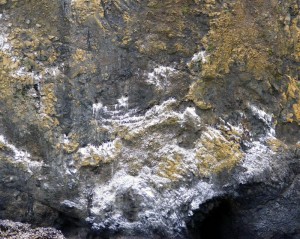
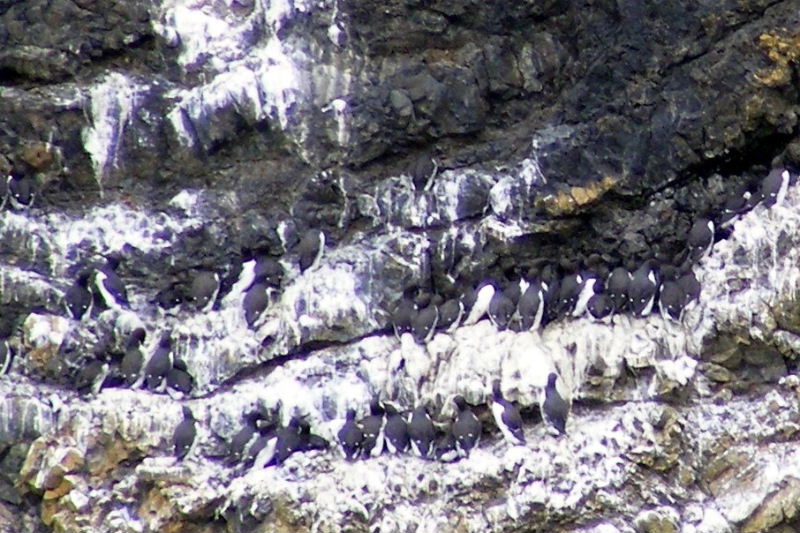
Here’s a close-up of that scene. Murres lay eggs that are fat at one end and narrow at the other so they don’t roll off the narrow ledges. The eggs are laid right on the rock with no nest. The adults stand facing the cliff to keep the eggs protected from the wind.
After lunch, we drove a few miles north to Tillamook Head. In this shot looking south, Haystack Rock is visible on the left.
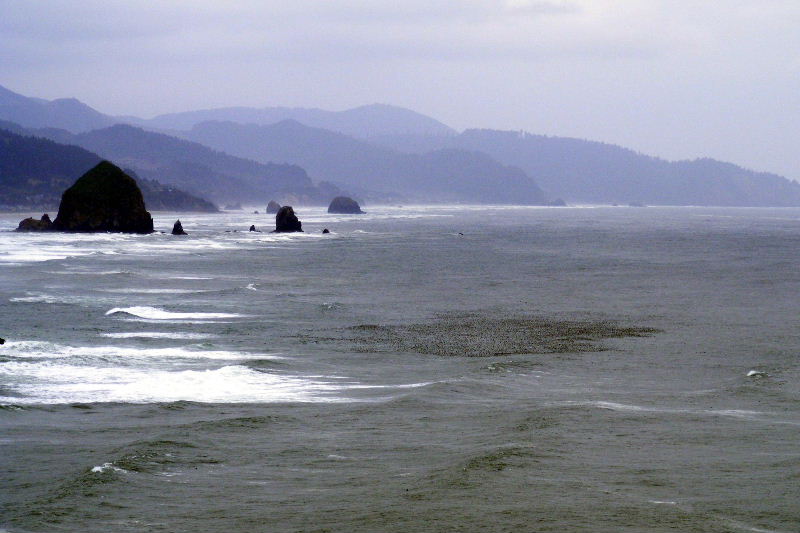
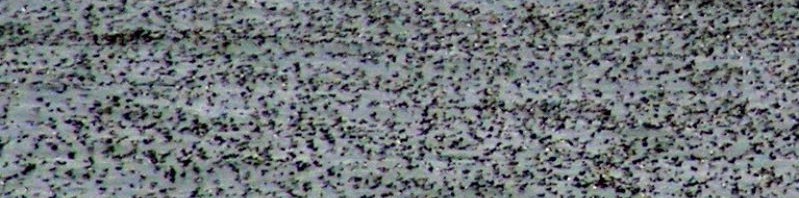
In the photo above, see that black spot on the water that looks like an oil slick? Let’s take a closer look.
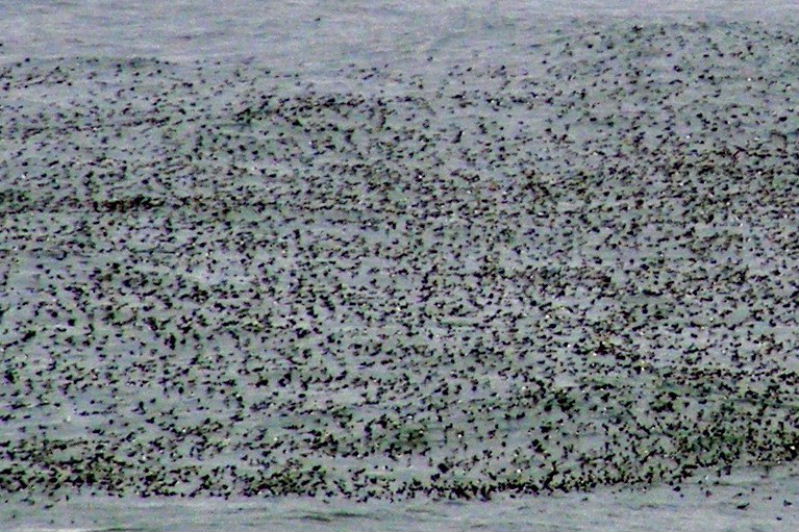
You guessed it — Common Murres. Later in the day we saw a rock off Cape Meares that held an even denser colony. Amazing.

Posted in Wildlife | Comments Off on Bird #432 — Common Murre

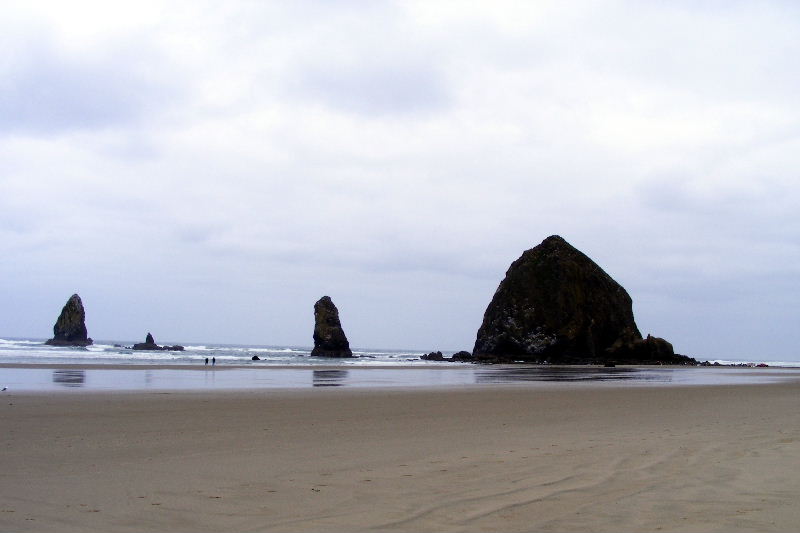
Haystack Rock

On Wednesday, we headed for the Pacific Ocean. With us was a coworker who was also in Oregon for the convention. We headed for Haystack Rock because 1) it’s the most reliable place to see Tufted Puffins, and I wanted to see Tufted Puffins, and 2) at low tide, it’s known for its tide pools and low tide was in the morning.

We parked about a mile south of the rock in the town of Cannon Beach and hiked along the shore. Here are two long-distance shots of Haystack Rock and the rocks next to it (The Needles).

Posted in Oregon | Comments Off on Haystack Rock

Bird #431 — Glaucous-winged Gull

larus (gull) glaucescens (blue-gray)

Tuesday, May 6, 2008 — 7:29 pm

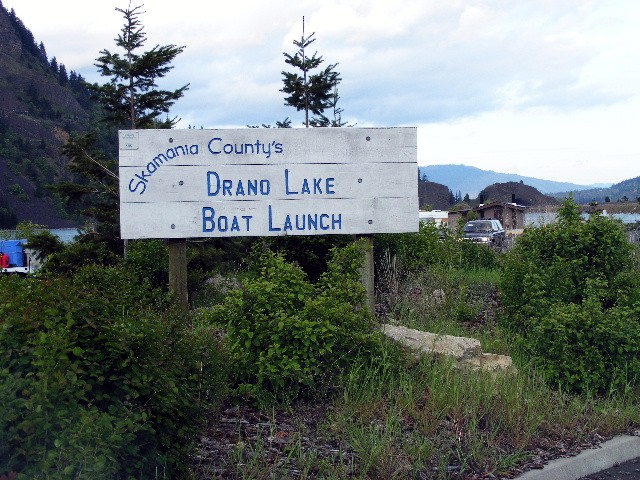
Skamania County, Washington — Drano Lake

We were heading west along the Columbia River through the Gorge when we happened upon Drano Lake. I don’t recall why I pulled into the boat launch lot — maybe it was just to get out and walk around while we were in Washington.

There were about six large gulls swimming close to shore. I should explain that I don’t care much for gulls. It’s not that I have anything against them, it’s just that I don’t enjoy the effort it takes to identify them. There are 17 or so species that regularly occur in North America. Five or six of them have black heads, but otherwise look very similar. The rest have white heads and also look very similar. Most of them don’t reach full adulthood until their third or fourth year, so there are always a lot of immature gulls around, and all of them look exactly identical. I don’t even bother with the immatures. I’ve made the effort to identify the adults in order to add them to my life list, but once I have a particular species on my list, I pay very little attention to it.

Having said that, I knew I had a chance to see Glaucous-winged Gulls on this trip, and these were right there in front of me. They took off shortly after we arrived, but kept circling back around so I could get good looks and a photo. Some gulls have gray wings with black tips. Some gulls have gray wings with white tips. Glaucous-winged Gulls are identified by their gray wings with gray tips.

Glaucous-winged Gull - Drano Lake, Skamania County, Washington - May 6, 2008

Here’s a shot of Drano Lake. You can see a gull flying in front of the hill, but also notice how small a hill that is — and yet it has two tunnels through it. The Columbia River is just beyond the railroad tracks on the right.

Drano Lake - Skamania County, Washington

Posted in Wildlife | Comments Off on Bird #431 — Glaucous-winged Gull