Lexington Green — Lexington, Massachusetts

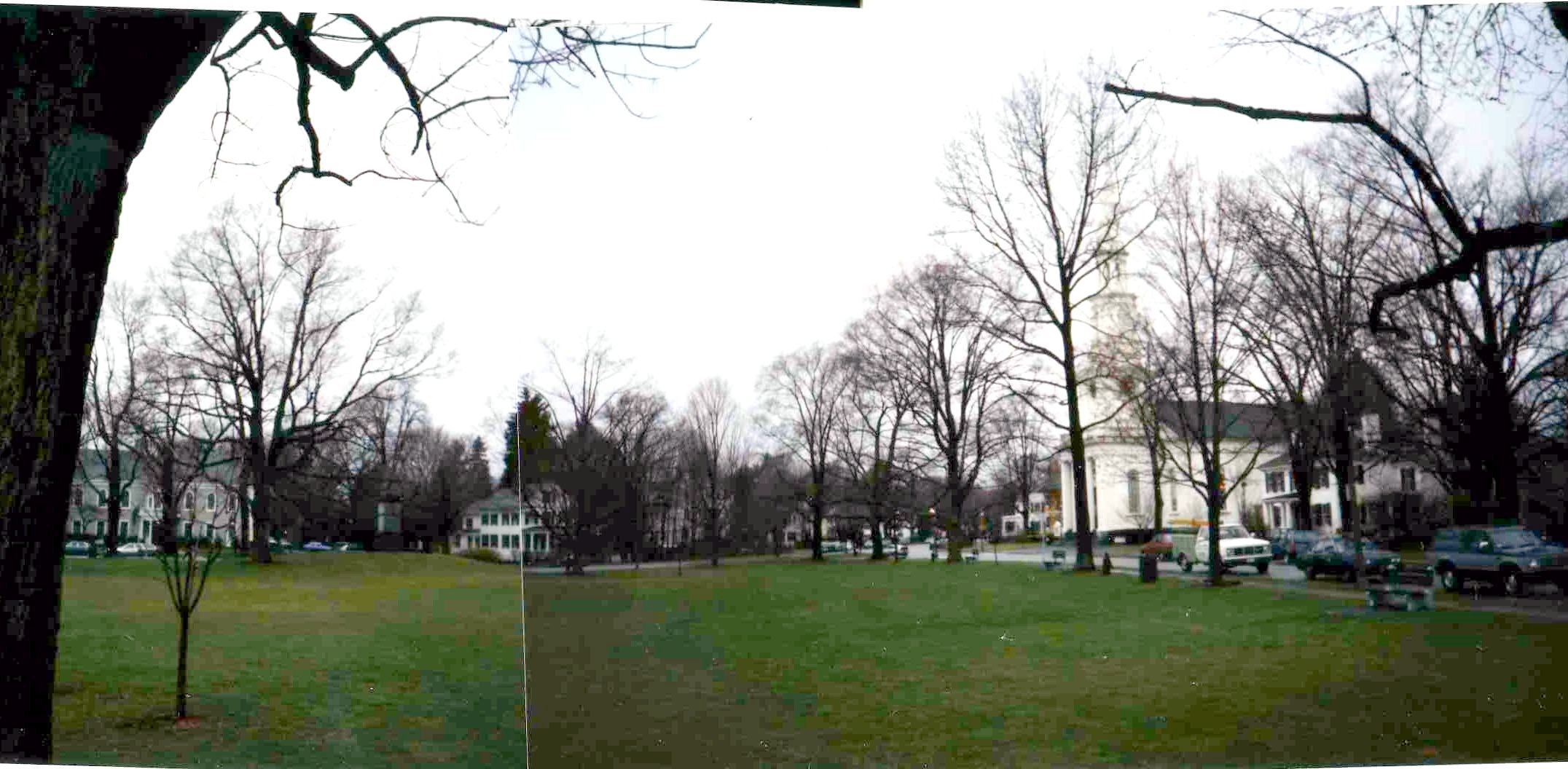
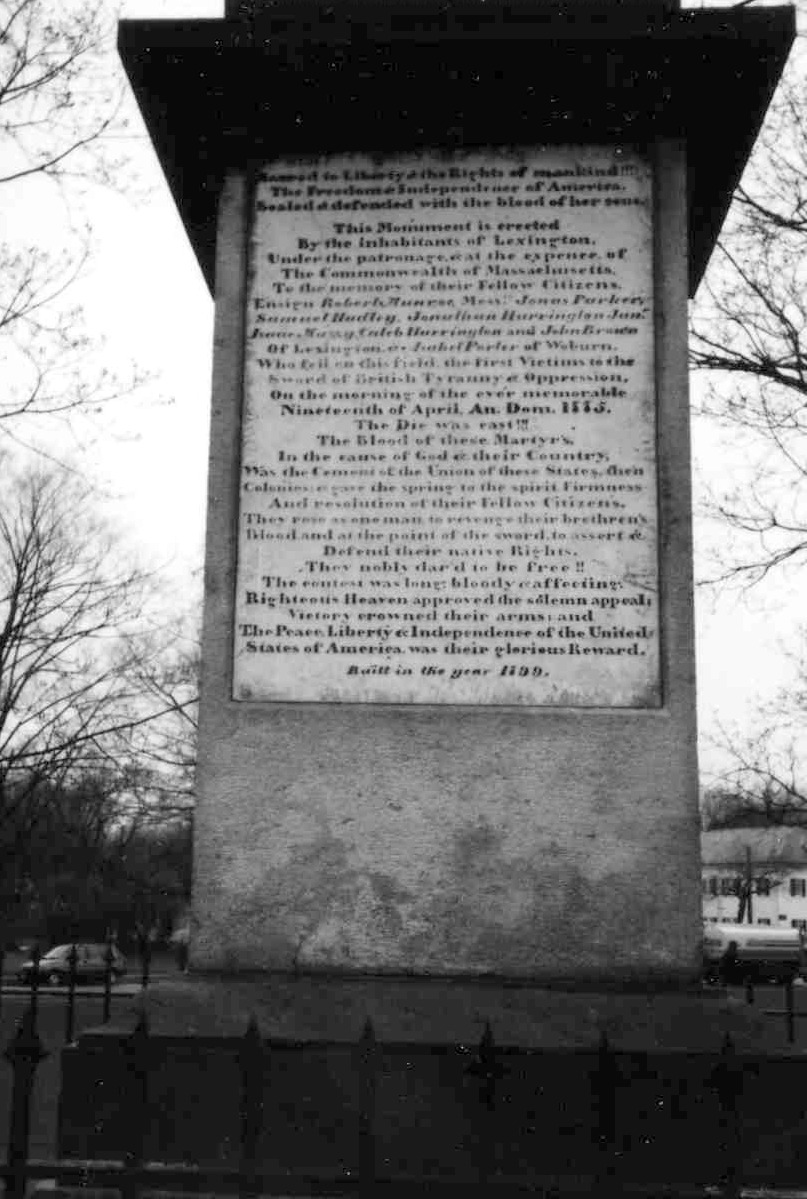
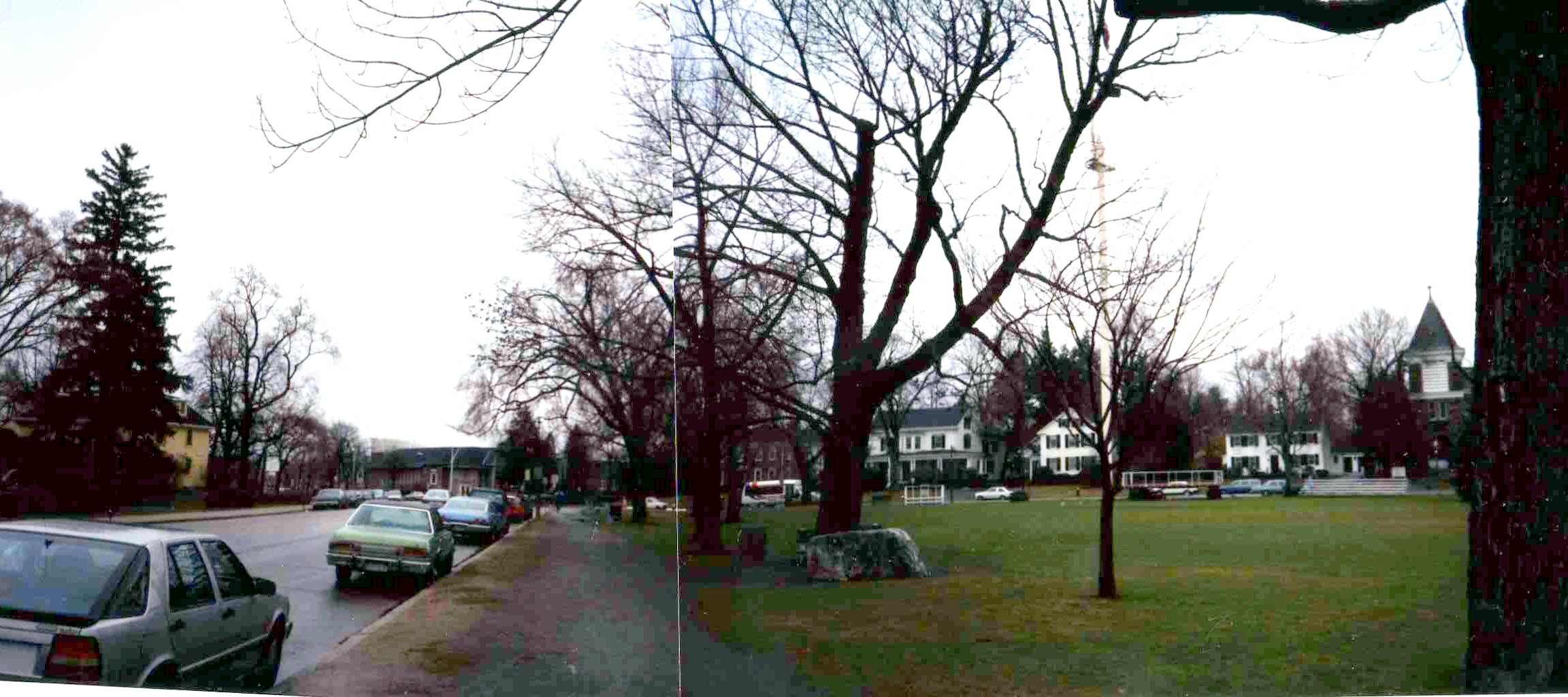
On the way back to Boston, we stopped in Lexington, parking along the famous green. Mom and Dad went looking for a pay phone and a bank. I wandered over to the visitor center which turned out to be nothing more than an anemic gift shop. I wandered around the green for a few minutes. There were a couple of temporary platforms waiting for the festivities on the anniversary of the battle (two days after our visit).

The church in the postcard and in the panoramic shot is the First Parish Church,

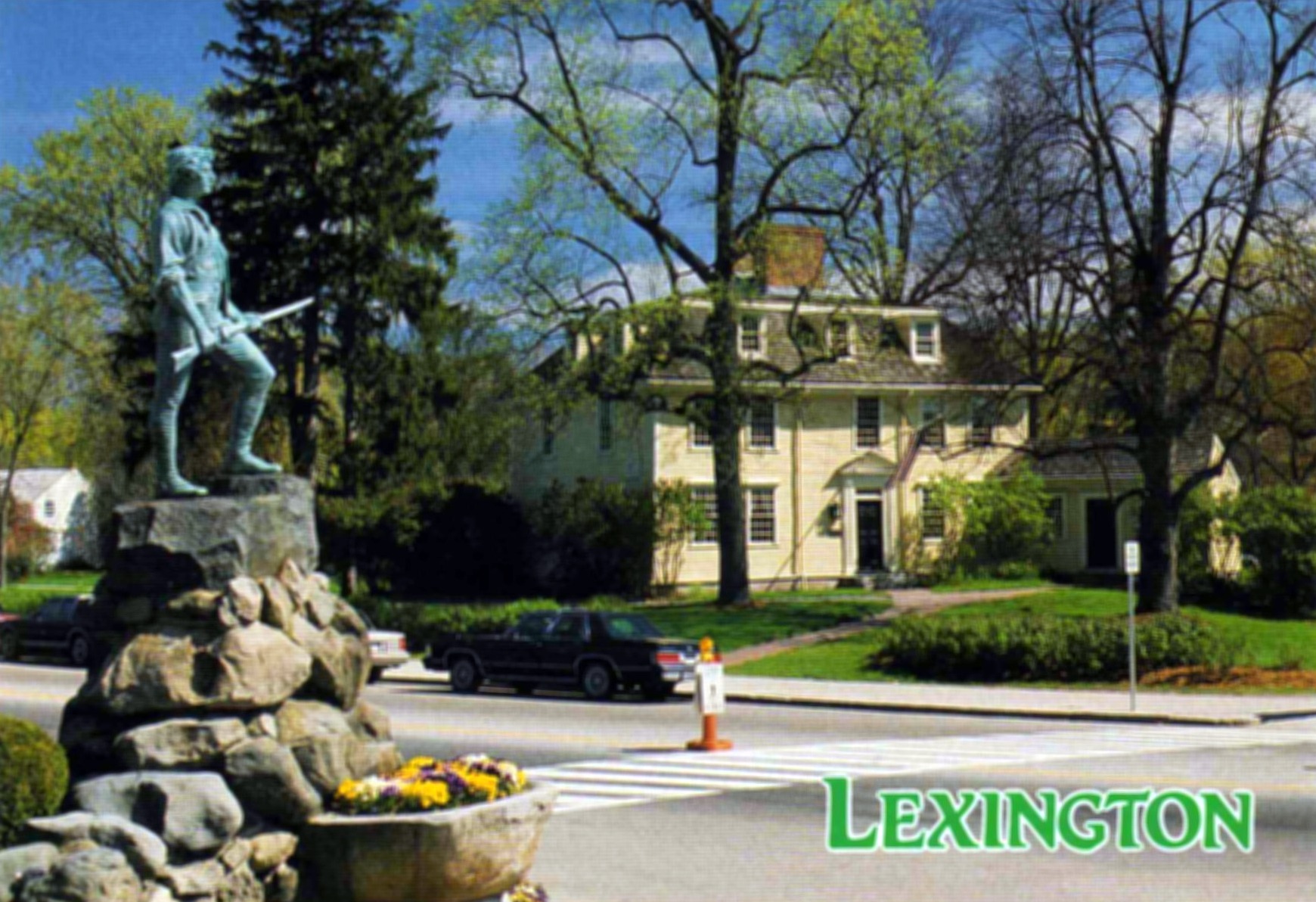
The statue in the other postcard is of Captain Parker, the leader of the 77 Minute Men who stood up to more than 400 British troops on this site.

Buckman Tavern is in the background. The Minute Men assembled in this building before heading out to do battle on the morning of April 19, 1775. It was still cold and damp, and the town was humming with people.

Posted in Massachusetts | Comments Off on Lexington Green — Lexington, Massachusetts

Minute Man National Historical Park — Concord, Massachusetts

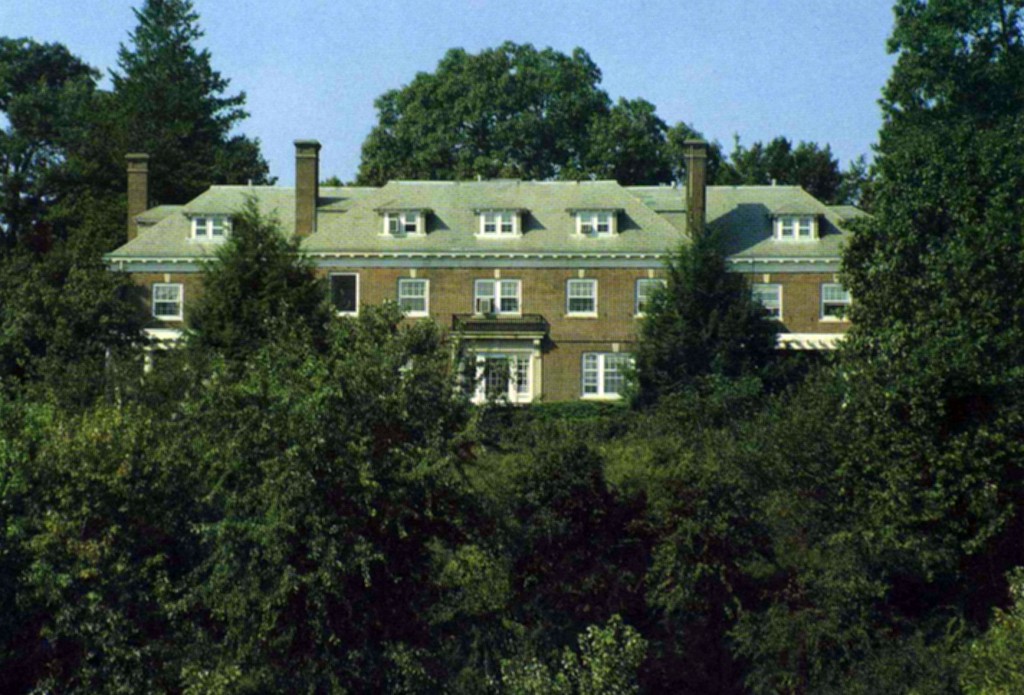
We stopped at a mall this morning, and I bought a point-and-shoot camera to tide me over until I got my good one fixed. We drove to Concord and stopped at the visitor center for Minute Man National Historical Park. The visitor center is located in a mansion built in 1911 by a descendant of one of the Minute Men who fought in the battle.
Across the road was the home of Major John Buttrick, the commander of the Minute Men at the North Bridge skirmish. The only two fatalities among the colonists at the bridge, Isaac Davis and Abner Hosmer, were laid out in the kitchen.
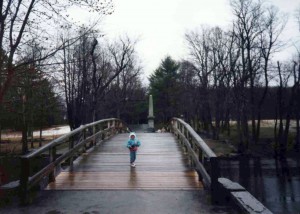
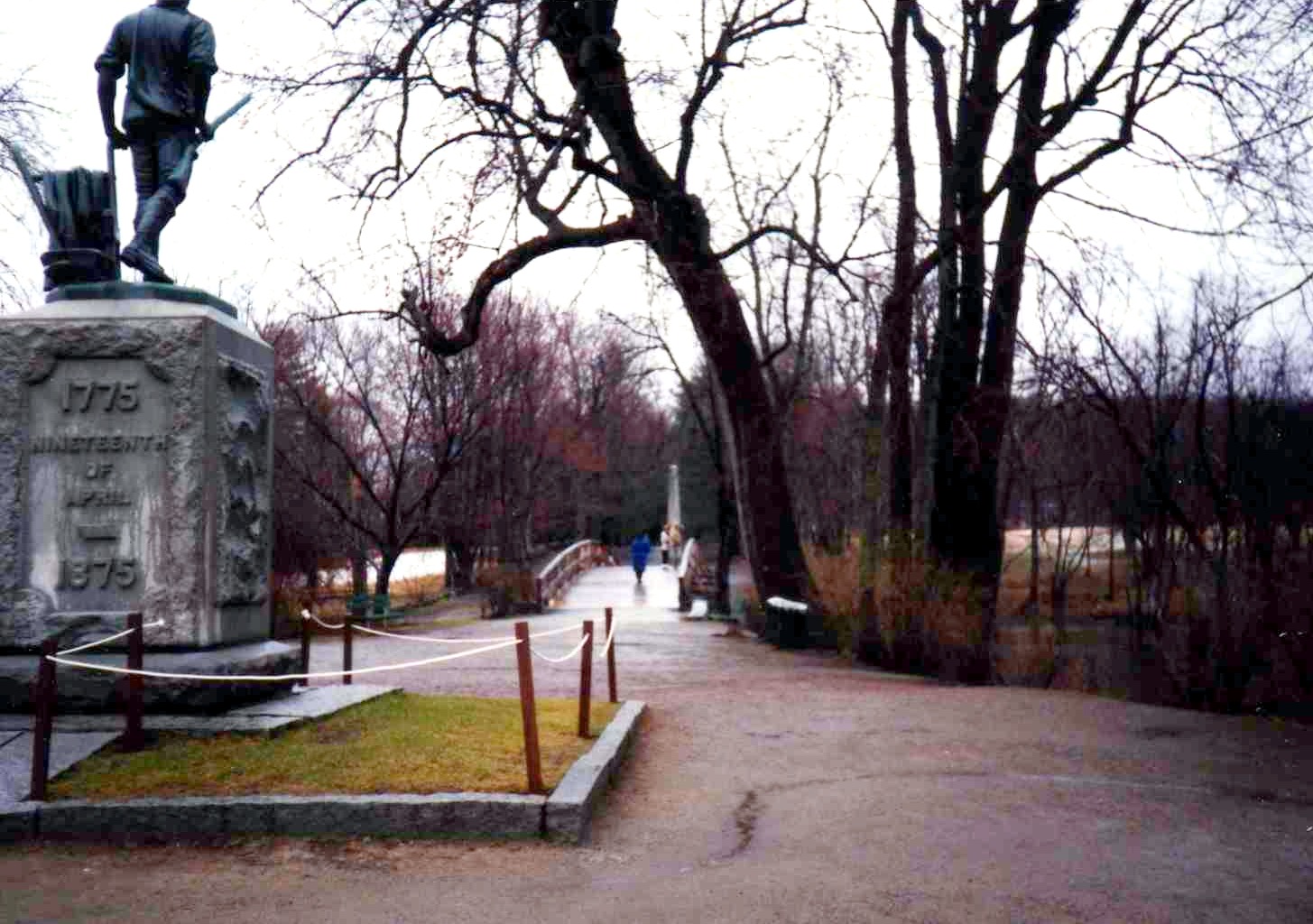
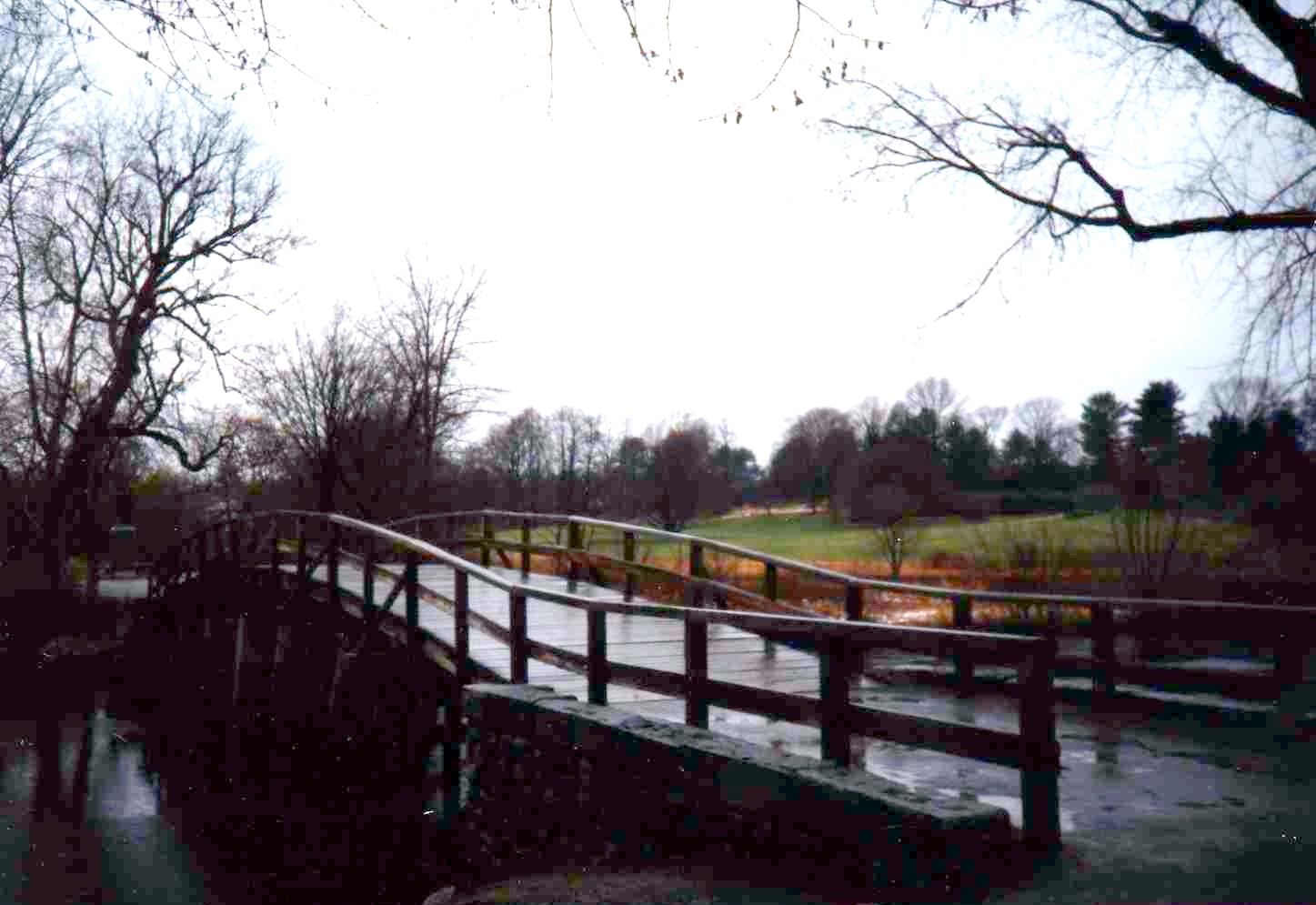
We drove the short distance to the North Bridge parking area and walked in the rain to the bridge. This isn’t actually “the” bridge. In fact, this is the fourth or fifth bridge built on this site since the war. We were the only people stupid or adventurous enough to go out in the rain to see it. I thought it was a pretty spot, in spite of the rain, but we didn’t stay long.
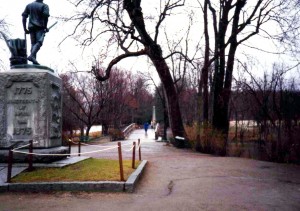
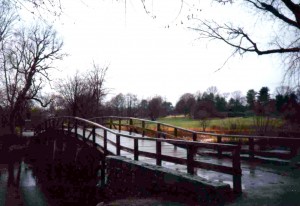
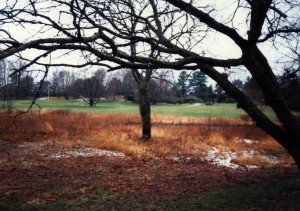
The photo on the upper right and the bottom right were taken from the same spot, looking in opposite directions. The first is looking east across the bridge toward the British approach route. The second is looking up the hill toward the west. It was on this hill that the American forces watched the British approach the bridge. The Minute Man statue, sculpted by Daniel Chester French, was erected on the Centennial of the battle. It stands on the west end of the bridge where the American forces fought.

We drove through Concord, which has done a good job of maintaining an 18th-century atmosphere. I parked near Orchard House, the home of Louisa May Alcott. My family wanted to take a tour. I walked next door and looked briefly at The Wayside, once the home of Nathaniel Hawthorne. I took a short walk on a path through the woods and came upon the foundation of a house that was once owned by a freed slave who fought for the Americans in the war. The others decided not to take the tour — just as they arrived, a bus-load of Japanese tourists, most of whom didn’t speak English, entered the house.
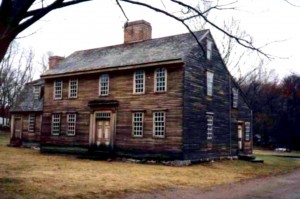
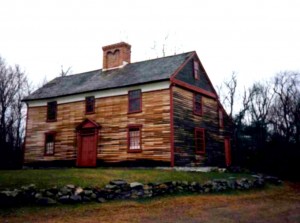
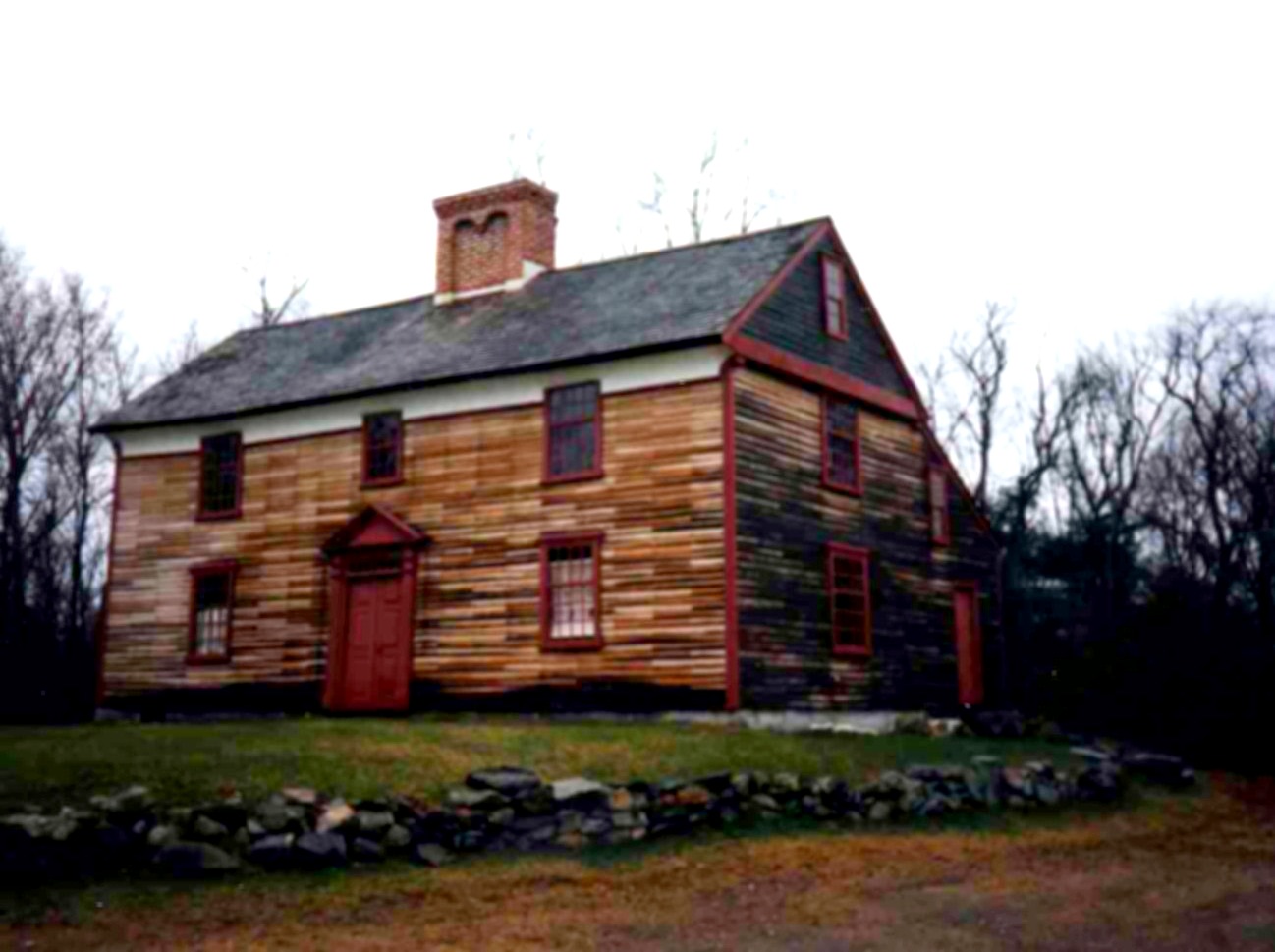
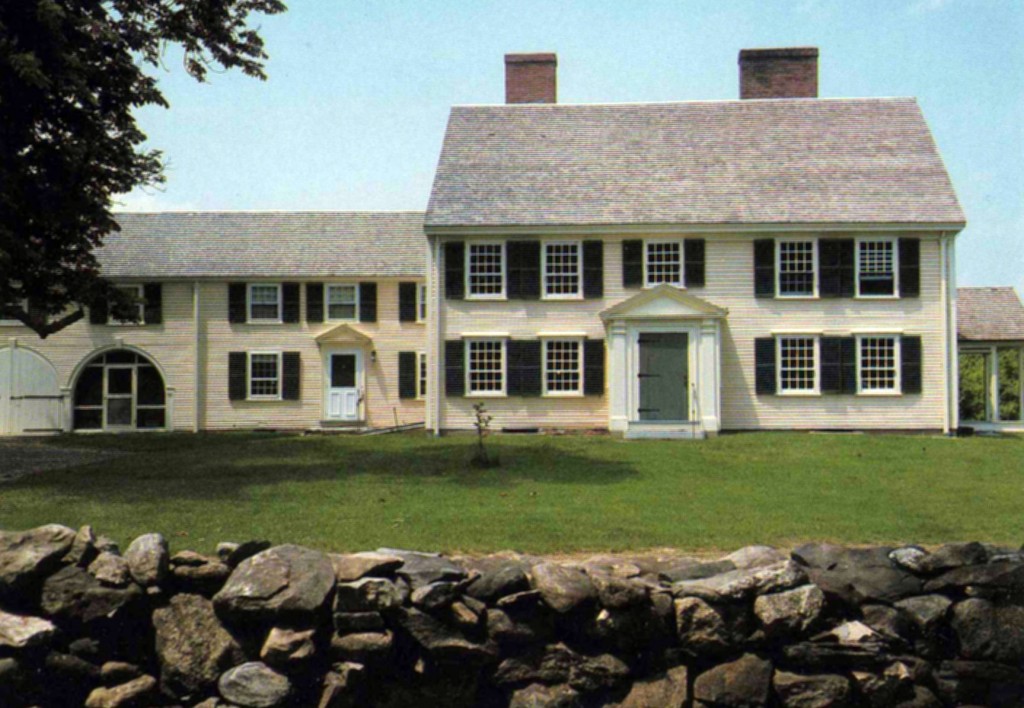
We drove along the Battle Road, stopping wherever there was something to see. The Hartwell Tavern (above, left) was built in 1754 by Ephraim Hartwell. On the day of the battle, the British passed here twice, the second time under heavy fire. It had stopped raining (but it was still cold and damp). We couldn’t go inside because it was only open during summer months, but we wandered around the yard for a short time. This house (above, right) was owned by Captain William Smith, the commander of the Lincoln Minute Men. By this time, I was the only one getting out of the car.
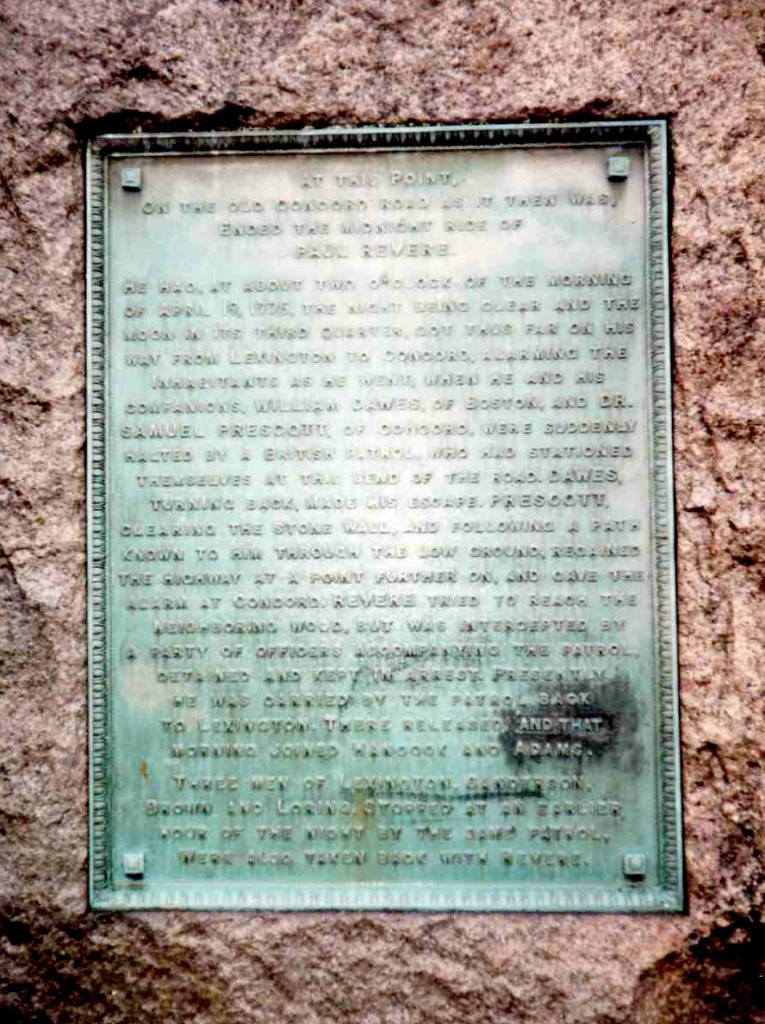
The plaque on this monument reads At this point, on the old Concord road as it then was, ended the midnight ride of Paul Revere. He had, at about two o’clock of the morning of April 19, 1775, the night being clear and the moon in its third quarter, got thus far on his way from Lexington to Concord, alarming the inhabitants as he went when he and his companions, William Dawes of Boston, and Dr. Samuel Prescott, of Concord, were suddenly halted by a British patrol, who had stationed themselves at this bend of the road. Dawes, turning back, made his escape. Prescott, clearing the stone wall, and following a path known to him through the low ground, regained the roadway at a point further on, and gave the alarm at Concord. Revere tried to reach the neighboring woods, but was intercepted by a party of officers accompanying the patrol. Presently he was carried by the patrol back to Lexington. There released, and that morning joined Hancock and Adams. Three men of Lexington, Sanderson, Brown and  Loring, stopped at an earlier hour of the night by the same patrol, was also taken back with Revere.

Fascinating, but it could be better written.
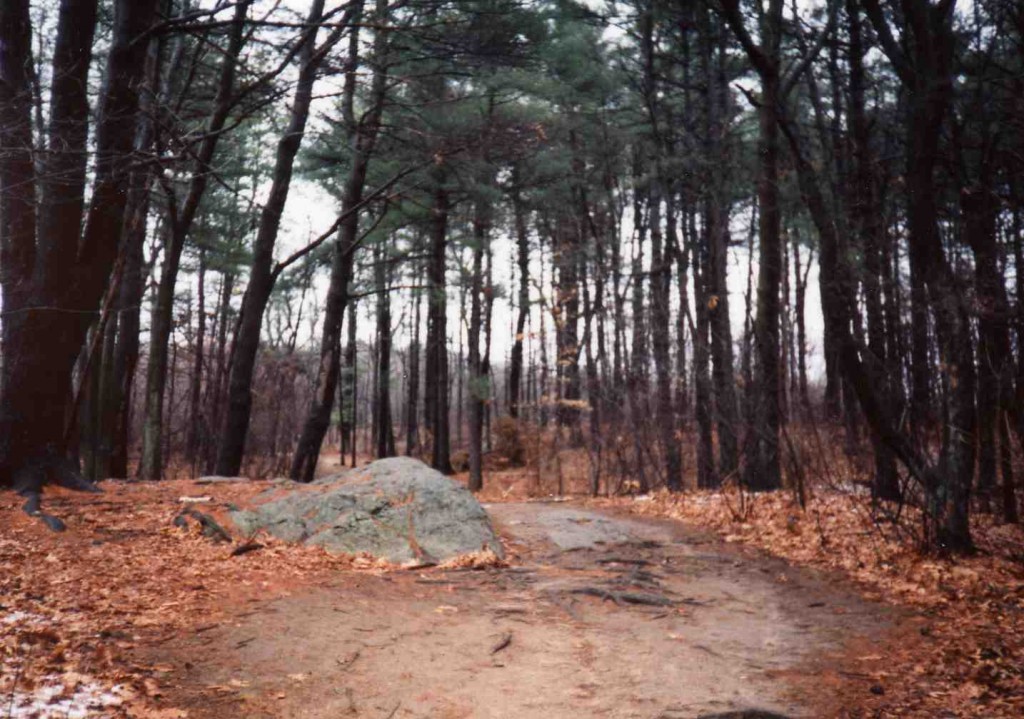
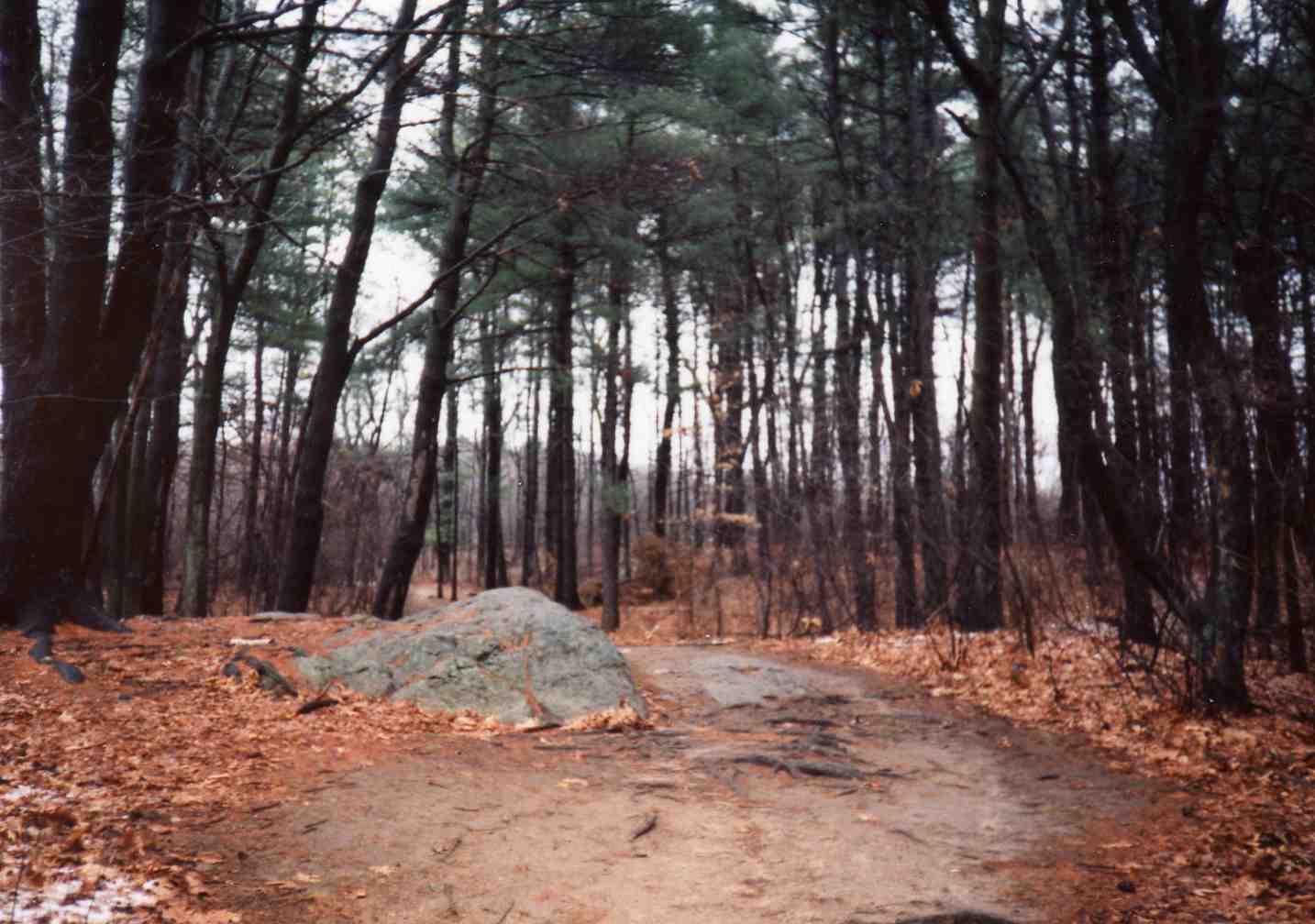
The final tour stop in the park was Fiske Hill where there was intense, close-quarters fighting during the battle. A trail left the parking area and looped around the hill. I would have loved to have walked it, but my family was waiting anxiously in the car. I walked up the trail about 40 yards and took this photo.

Posted in Massachusetts | Comments Off on Minute Man National Historical Park — Concord, Massachusetts

Mayflower — Plymouth, Massachusetts

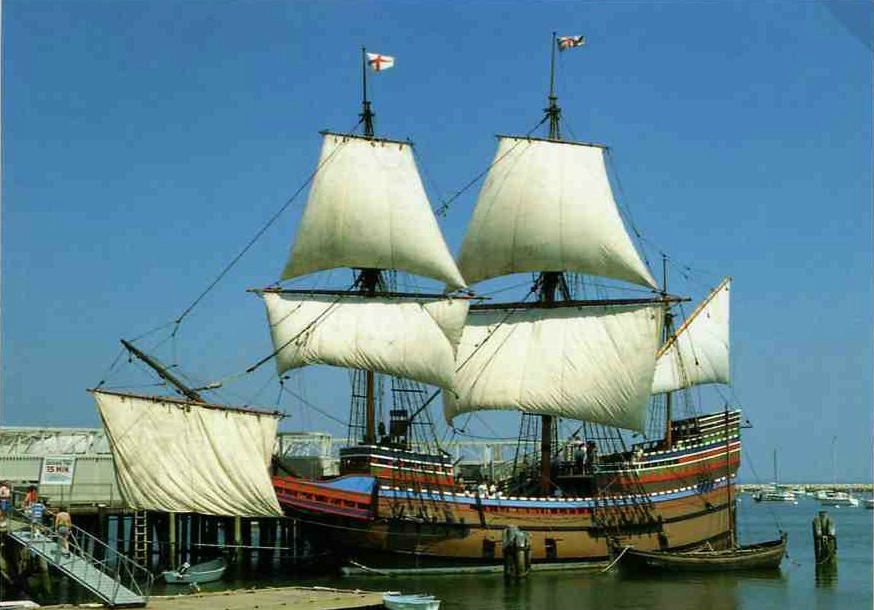
After we toured Plimoth Plantation, and after I made a trip to a camera store to try to get my camera fixed (unsuccessfully), we toured the Mayflower, which was docked just across the road from our hotel.

The original Mayflower is long gone. This reproduction, Mayflower II, was built in England in 1955 and sailed over to Plymouth in 1957. The ship is not large, and on the original voyage it carried 102 passengers. I had no trouble picturing what it must have been like because there were at least that many tourists aboard. There were re-enactors there too, playing the roles of crewmen and passengers in the time-frame of winter 1620/1621, but we didn’t talk to any of them because it was almost too crowded to move. I was impressed by the ship itself and found it difficult to imagine how all those people, with their possessions, could have managed to exist in that little space below-decks for a two-month voyage.

The mood was largely destroyed for me by the maze of plastic and scaffolding that we had to wind our way through on the dock to get on and off the ship. It was intended for crowd control and interpretive displays, but it would be difficult to imagine a more incongruous effect. We spent about 15 minutes aboard, then headed to a Friendly’s ice-cream parlor for supper.

Posted in Massachusetts | Comments Off on Mayflower — Plymouth, Massachusetts

Plimoth Plantation — Plymouth, Massachusetts

When we first arrived at Plimoth Plantation,  I stepped up into the back seat of my parents’ car and smacked the crown of my head into the door frame. Hard. Very hard. Enormously hard. I staggered, let out a yell, and fell inside the vehicle. My heat hurt. Really hurt. Enormously hurt. My family was walking into the visitor center, so I grabbed my camera. At the last moment, I decided to take off the zoom lens and put on my regular lens. In my stupor, I put it on upside-down. It took a considerable amount of twisting and pulling to get it back off. I put it on right and took off.

I caught up with my family just as they found out how much it cost to enter — $15 for adults, $10 for kids. Dad decided not to go in. I decided that we go in together or not at all. The lady behind the counter heard our discussion and said she’d let my daughter in for free. That cinched it, and we all went in.

As we entered the stockade, I decided to take a photo down the main thoroughfare. I pushed the button. Everything flashed, then went black. I thought I was out of film and tried to put in another roll, but I couldn’t advance the frame. It was broken. I was on the vacation of a lifetime, and I didn’t have a camera. I took a lot of video, but I was depressed. And my head still hurt.

Enough complaining. Plimoth Plantation has an interesting gimmick. There are no interpretive signs or displays in the village. Instead, the employees each take on the role of one of the original Pilgrims and play the part. It is the year 1627, and they go about doing what the settlers would have been doing. They speak in English accents and only answer questions in character. If you ask them about anything that took place after 1627, they profess not to understand. At times, this gets a bit silly. I heard one of the “Pilgrims” ask a tourist where she was from. The tourist answered, “I’m from Australia, but of course you don’t know where that is.”

I bought some postcards, but they don’t show the village very well. This one is the best. You can get a good idea of what it was like with one exception — or rather 501 exceptions. To get a real feel, imagine every available space filled with running, screaming, giggling girls between the ages of 10 and 13. Girls from 1992, not Pilgrim girls. The place was a zoo.

Because they were striving for realism, all the houses looked very similar inside and out. The re-enactors were the show, but wherever there was a Pilgrim, there was also a ring of tourists. This rather dulled the realism for me. We wandered through the town looking into the houses while my daughter chased every chicken in sight.

When we had seen about all there was to see, Dad decided to have some fun. We entered one of the houses. (I kept feeling that we, in keeping with the 1627 mentality, should have been knocking before entering.) A young woman was sewing before her fireplace. Dad began asking her questions about dating and courtship, whether her marriage had been arranged by her parents, what the role of women was in the society. Dad was phrasing his questions in such a way that she couldn’t just give facts but had to answer conceptually, drawing on what she knew of Pilgrim life. He was being sneaky and a bit nasty (in a friendly way), trying to trip her up. But she was very good. She kept up with him and never stepped out of character or missed a beat. My wife and I were back in a corner laughing because it was obvious Dad had met his match. He was impressed too, and after a while allowed her to steer the conversation to more standard topics. The discussion went on for maybe 20 minutes, and by the time we left the tiny (15 x 15) house was packed with tourists listening in with fascination.

We left the stockade and walked through the Indian village. The Indians weren’t in character. They’d answer any question about anything that happened prior to 1992. After that, they professed not to know. My daughter wandered into one of the huts and didn’t come back out. I went to find out what she was up to and discovered her just standing there with two Indians. They invited me in, but I politely declined. We stopped in the bookstore and spent a lot of money, then went back into town where we toured the Mayflower and saw Plymouth Rock.

The Rock is one of the sillier historic sites in America. It’s a rock, lying in mud, surrounded by a massive pillared monument. But unlike Plimoth Plantation and the Mayflower, it wasn’t crowded. In fact, we had it all to ourselves. As I gazed upon the rock, I pondered what a remarkable coincidence it was that the Pilgrims landed on the one rock in all of North America that actually had the number “1620” engraved on it. We didn’t stay long.

Posted in Massachusetts | Comments Off on Plimoth Plantation — Plymouth, Massachusetts

Bird #348 — Great Black-backed Gull

larus (ravenous seabird) marinus (of the sea)

Wednesday, April 15, 1992 — 10:40 am

Mystic, Connecticut — Mystic Seaport — Mystic River

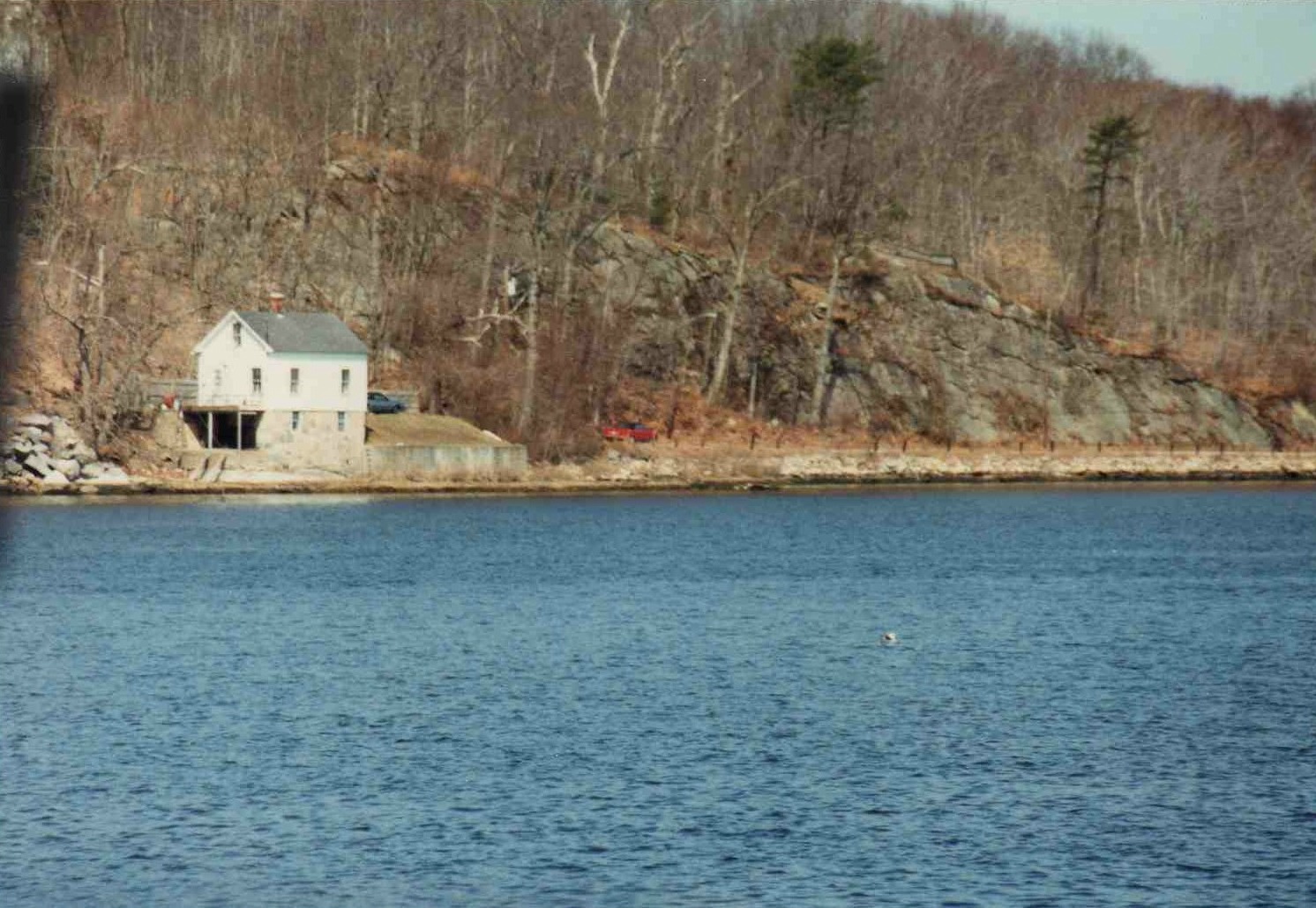
We spent this morning at Mystic Seaport.  We visited the whaling ship, Charles W. Morgan, and I wandered around the deck taking video and enjoying the scenery.  I knew I had a good chance of seeing this gull on the trip and was watching for it.

I spotted two Great Black-backed Gulls out on the river. One was flying over the water, circling about 30 feet above the surface. The other one was swimming near the center of the river channel. Later in the morning I got a better look at one as it sat on a buoy where I had earlier seen a Double-crested Cormorant.

Posted in Wildlife | Comments Off on Bird #348 — Great Black-backed Gull