Adams National Historic Site, Massachusetts

This house was the home of Presidents John and John Quincy Adams and their families, a total of four generations.

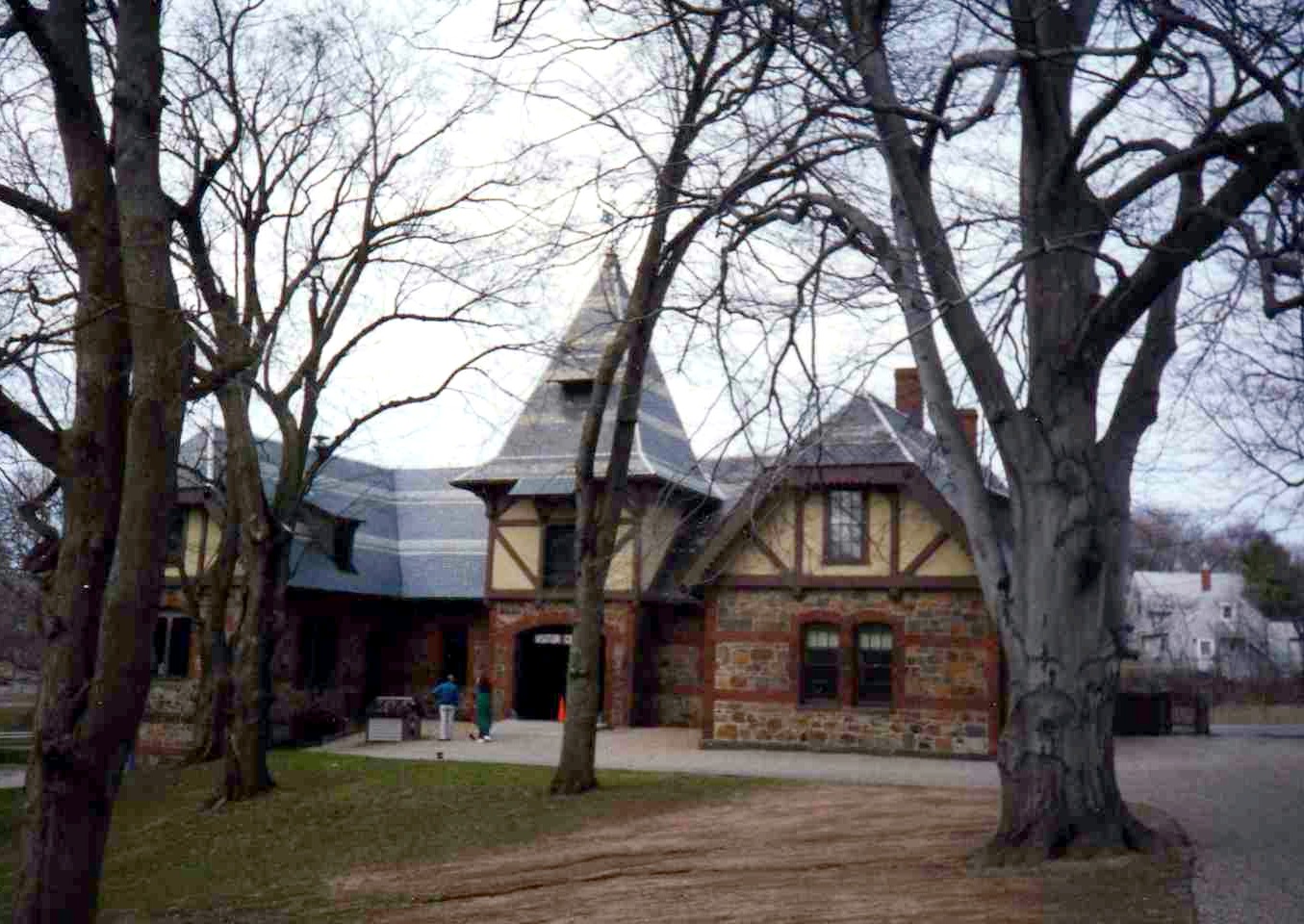
This was one of the can’t-miss places on our vacation, and this was the first day it was open for the season. We got lost looking for it and didn’t arrive until after 4:00. While we waited for a ranger to give us our tour, we browsed through the gift shop and visitor center, located in the Adams’ carriage house.

Dad and I asked if there was a bathroom we could use. We were let up a couple flights of stairs and through a few offices and storage rooms to a tiny decrepit bathroom tucked away in a corner. The ranger left us to find our own way back.

The next available ranger turned out to be a short, elderly woman who spoke very softly. She told us they were short on personnel and much busier than they expected to be. Each tour was only supposed to have 10 people, but ours had about 25.

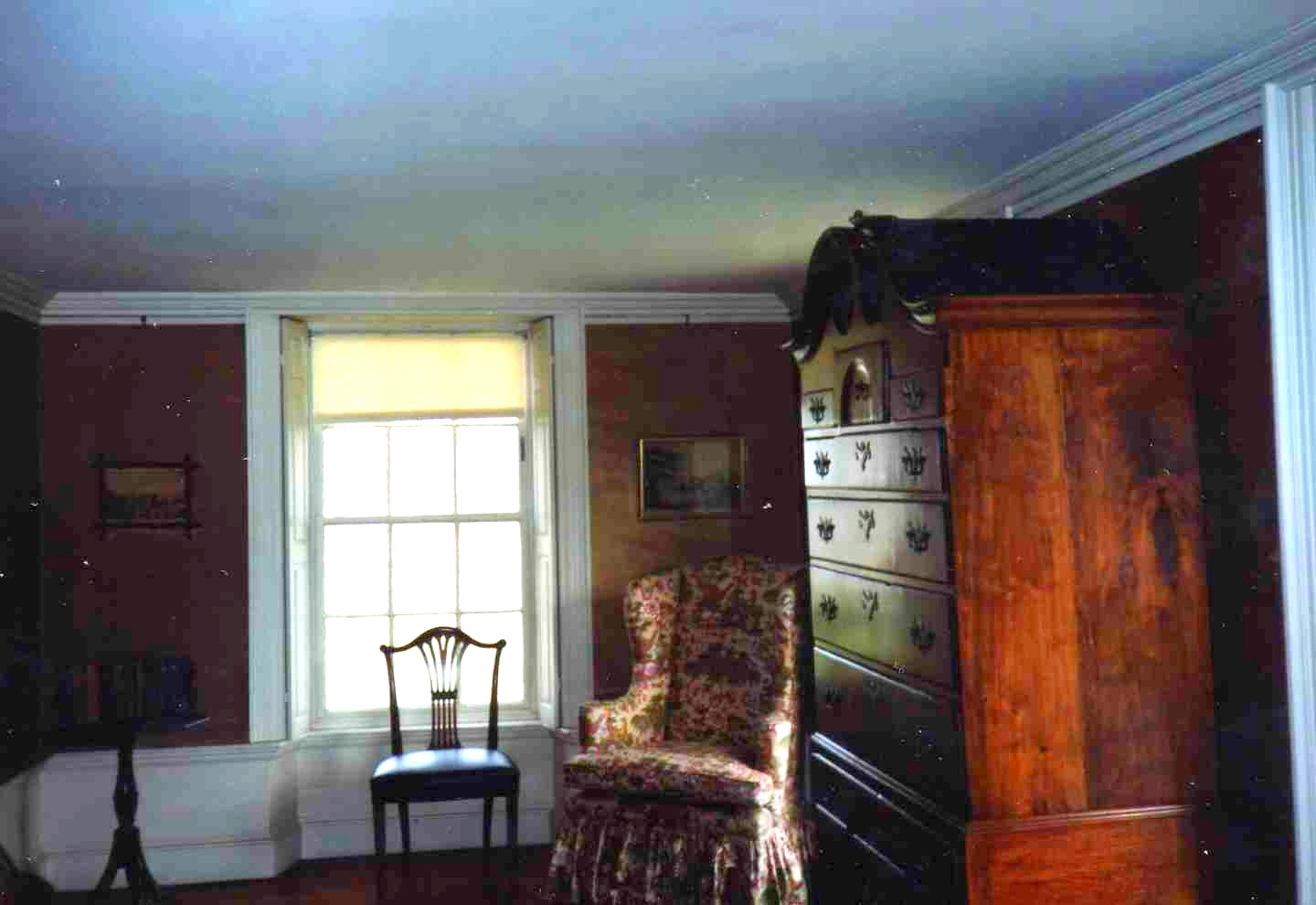
The house was in the Adams family for four generations. Brooks was the last Adams to live there, and he was very aware of the historical significance of his family. He stated in his will that nothing in the house could be rearranged or removed. This made the tour very interesting for us. When we entered the house and looked into the first room, I could easily imagine John and Abigail sitting in front of the fireplace. It made the Adams come alive for me. Because nothing has been moved, and because each tour is only supposed to have 10 people, the area roped off for the public in some of the rooms was very small, and our group was very tightly packed.

Dad had been teaching my daughter the Presidents and First Ladies all week, and she was very familiar with John, Abigail, John Quincy and Louisa. She thought it was pretty cool to see their house, and she kept asking intelligent questions about them all through the tour. When I showed her portraits of each of the Adams, she took long, hard looks and told me she thought Abigail was pretty. I think she enjoyed the house as much as the rest of us did. Mom, Dad and wife all said this was the highlight of the entire vacation for them. My daughter preferred the tunnel on the expressway in Boston.

I wasn’t allowed to take any video in the house, and I wasn’t sure if I was supposed to take photographs. But there were too many of us for our guide to keep track of, so I hung back in one room and took this picture of the chair the John Adams was sitting in when he died.

We spent about half an hour in the house, then went into the garden. It was too early in the season for flowers, but we did see some trees that John Quincy planted. The house was a lot smaller when John and Abigail bought it. In this photo you can see how narrow it originally was.

This is the back of the house as seen from the carriage house. It looks like it’s out in the country, but the park is only eight acres and streets and houses surround it on all sides. The front of the house is only about 40 feet from the road.

From the garden we entered a small stone building next to the house.

This may have been my favorite part of the vacation. It was a library, built in 1870, to house the Adams’ 14,000 books. It is separate from the house to eliminate fire danger. Words can’t even begin to describe it. If I had to spend the rest of my life in one single room, this might be it.

Posted in Massachusetts | Comments Off on Adams National Historic Site, Massachusetts

U.S.S. Cassin Young — Boston, Massachusetts

The Guided Missile Frigate U.S.S. Samuel Eliot Morison was tied up behind the Constitution, and its sailors were giving tours. It is an active vessel, so only 10 people were allowed on each tour. I wanted to see it, but I didn’t have time.

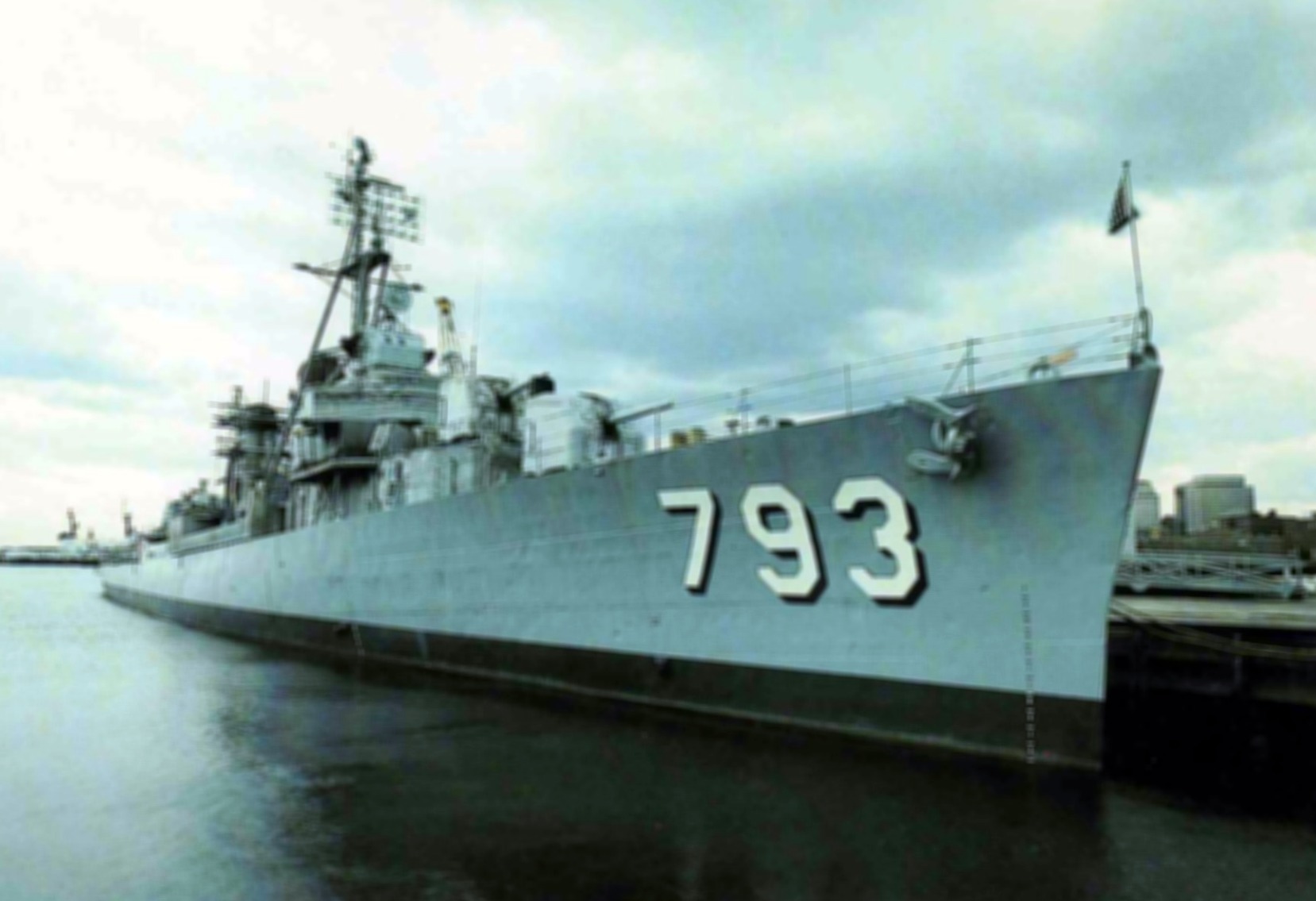
I walked across the wharf and boarded the U.S.S. Cassin Young, a WWII destroyer that has been decommissioned. As you can see from these photos, it wasn’t crowded.

Everything on this ship was metal, and I was very conscious of where my shins were at all times. To enhance the mood, I guess, 1940’s music was blaring through the loudspeakers. The left-hand photo was taken from the bow looking back, the right-hand photo from the stern looking forward.

Posted in Massachusetts | Comments Off on U.S.S. Cassin Young — Boston, Massachusetts

U.S.S. Constitution — Boston, Massachusetts

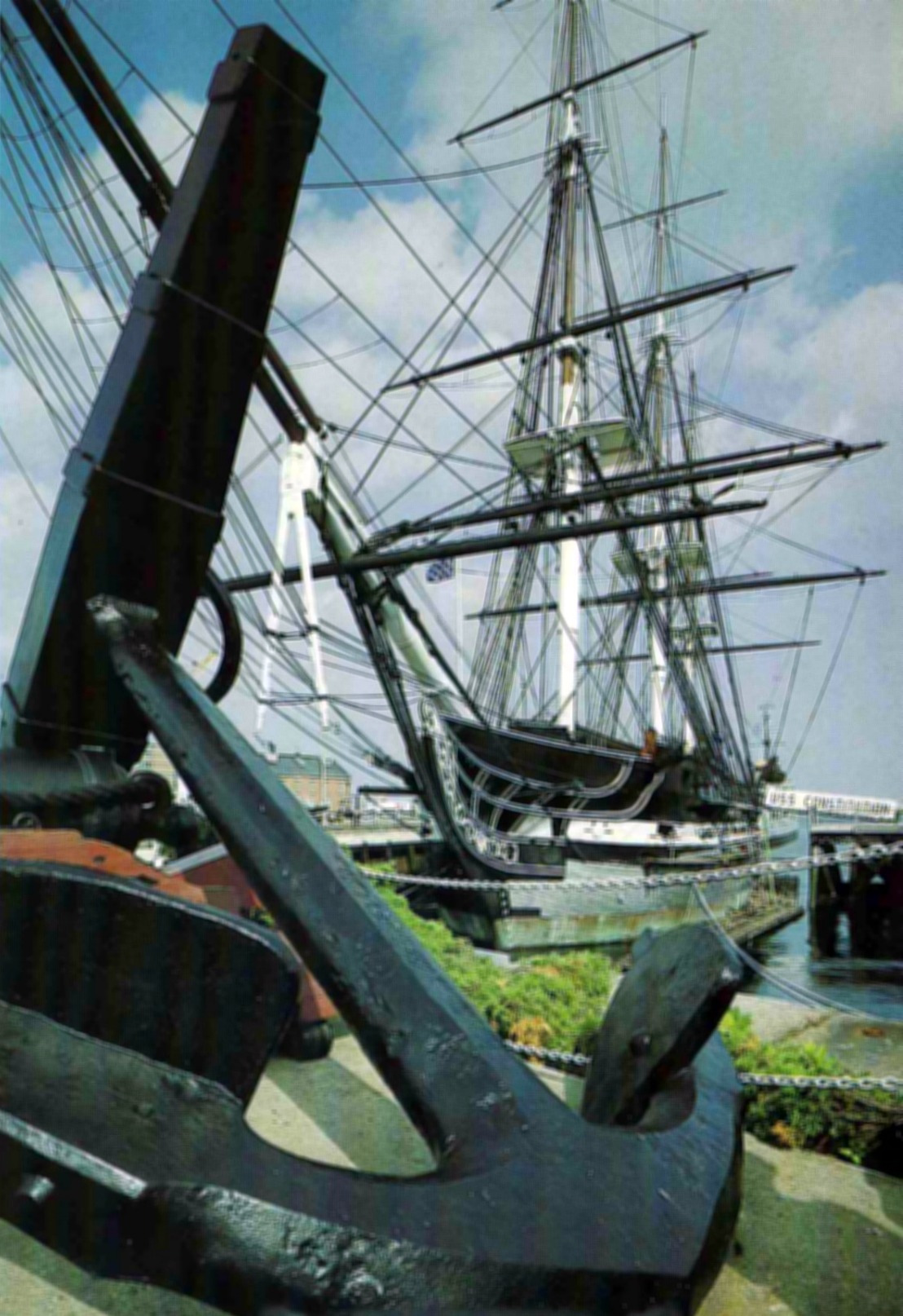
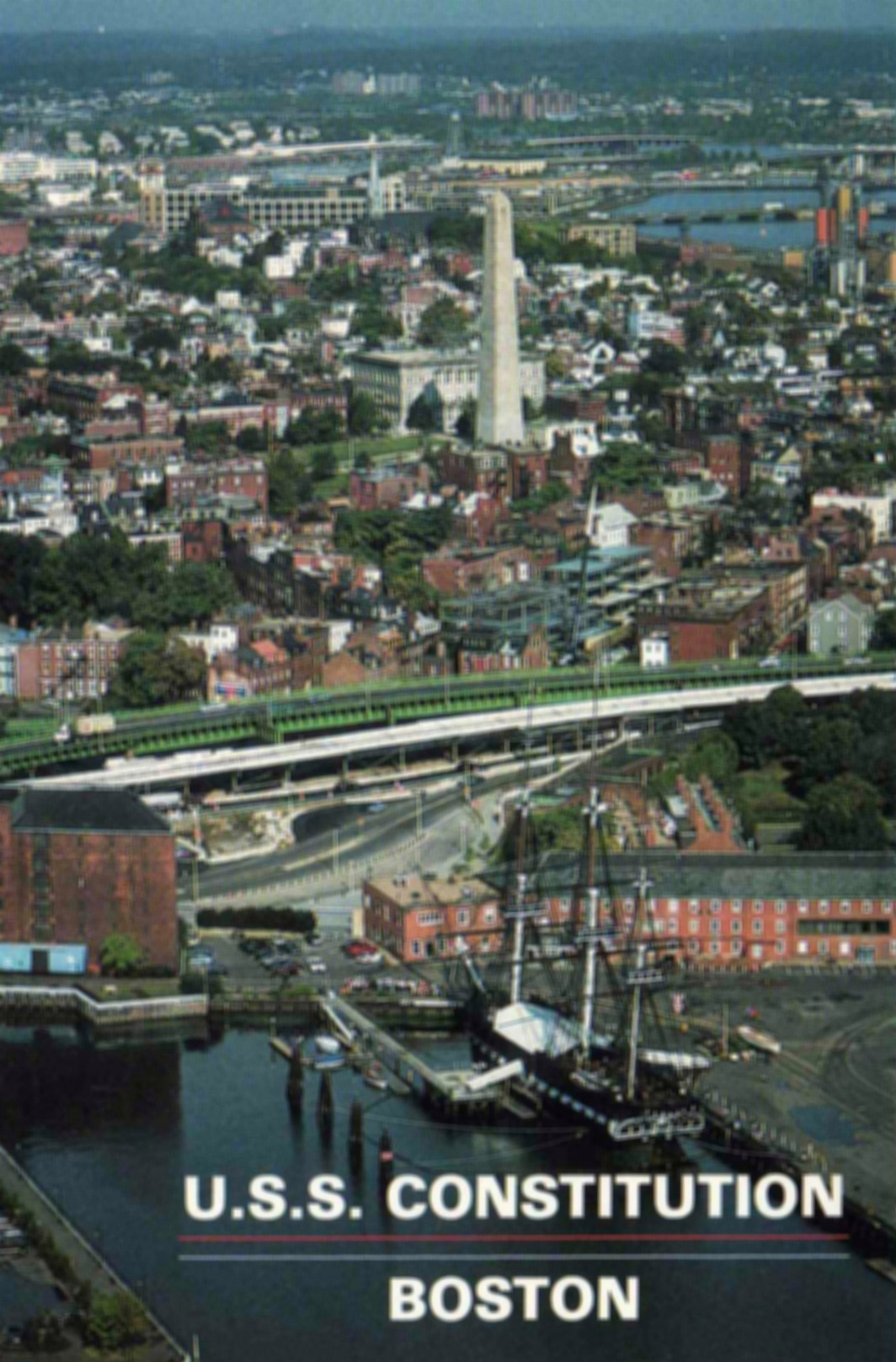
We spent the morning walking the Freedom Trail and ended up in the Charlestown Navy Yard, part of Boston National Historical Park. The main attraction is the U.S.S. Constitution, launched in 1797 and still a commissioned Navy vessel.

We had a 20-minute wait for the next tour. One of the guides, an enlisted sailor, was standing at the boarding steps right next to where we stood. I asked him how he got this particular duty. He said he’d been a radar technician on a submarine for two years and was being re-assigned because he had eye trouble. He’d heard there was an opening, applied, and got the duty for two years. He said there are 16 sailors on board.

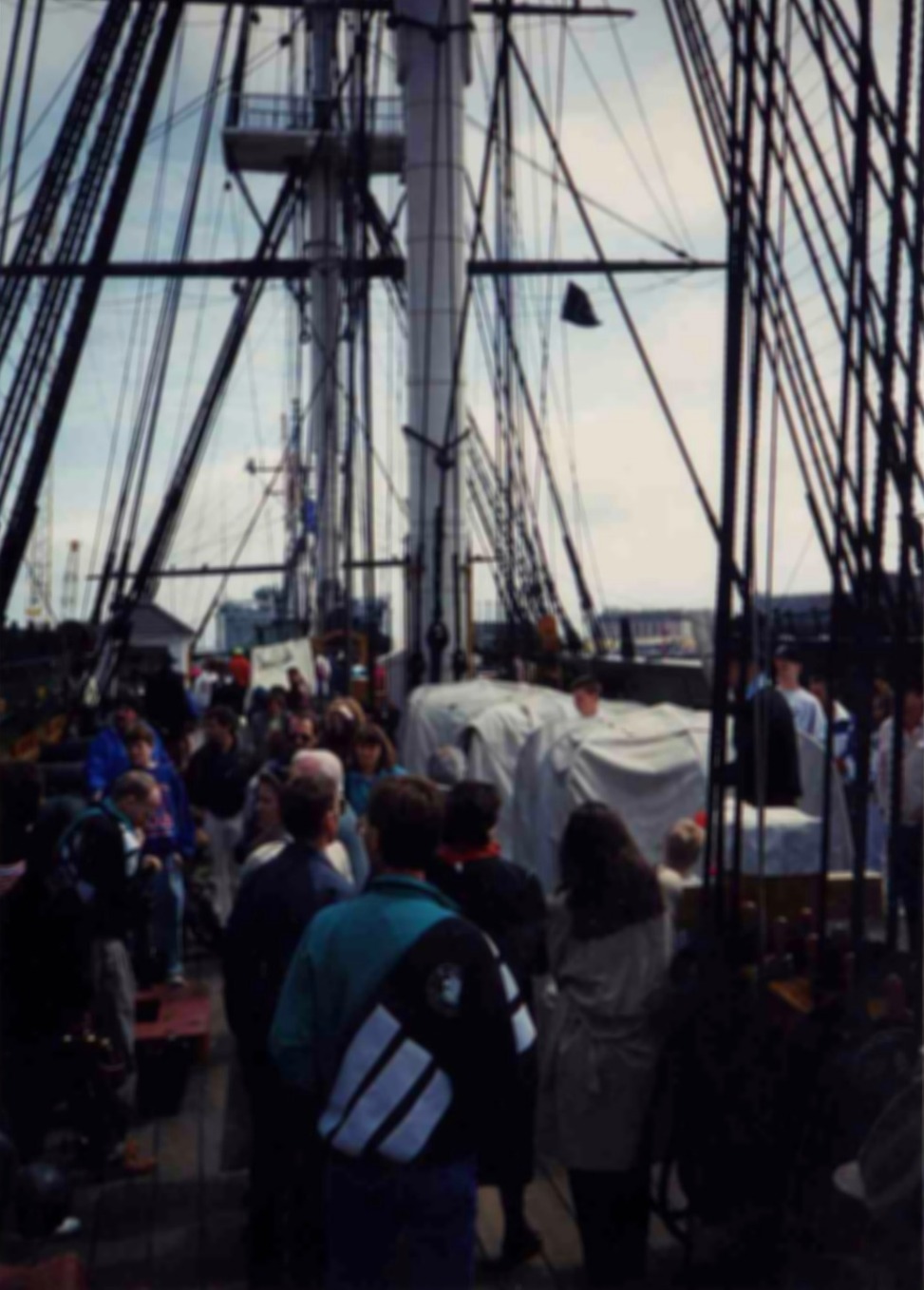
The tour took half an hour and was fascinating. We covered the spar (top) deck, the gun (second) deck and the berthing deck where the crew and officers slept. We didn’t get down into the hold because this is used for storage and for quarters for the current crew. I was impressed by the size and beauty of the ship. It felt powerful and graceful, even though it was moored to the wharf. The guide was excellent and obviously cared about his subject.

Posted in Massachusetts | Comments Off on U.S.S. Constitution — Boston, Massachusetts

Freedom Trail — Boston, Massachusetts

We heard a lot of horror stories about getting around in Boston, so we decided to tour the city on Sunday — Easter Sunday to be exact. It wasn’t at all crowded, but a lot of the sites were closed. I’m not going to detail everything we saw because that could take up a whole other blog. We spent about six hours in the city, and I took about six hours of video, which probably accounts for why I only have a handful of photos.

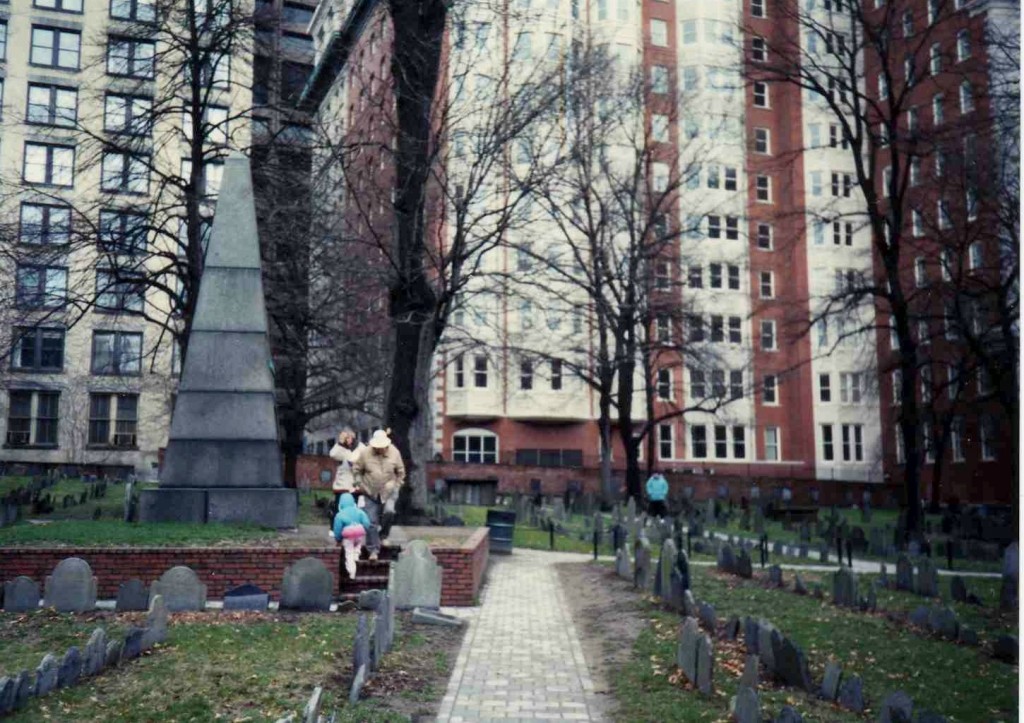
The Granary Burying Ground next to the Park Street Church, is two acres surrounded by buildings. Some tombstones only inches from the walls. Some of America’s most famous people are dead here — James Otis, Samuel Adams, the victims of the Boston Massacre, Paul Revere, Peter Faneuil, and John Hancock. Two things I found interesting:

  1. The gravestones have no relation to the graves. Years ago, someone pulled up all the stones and rearranged them in rows because it looked better that way.
  2. The place hasn’t been vandalized or the stones stolen. We stayed for perhaps 20 minutes and had it to ourselves.

The graves included one of Mother Goose. It’s probably not “the” Mother Goose, just some lady named Elizabeth Goose who died in 1757 and may or may not have told stories to her grandchildren. In the bottom photo is the monument to Benjamin Franklin’s parents, who are also dead.
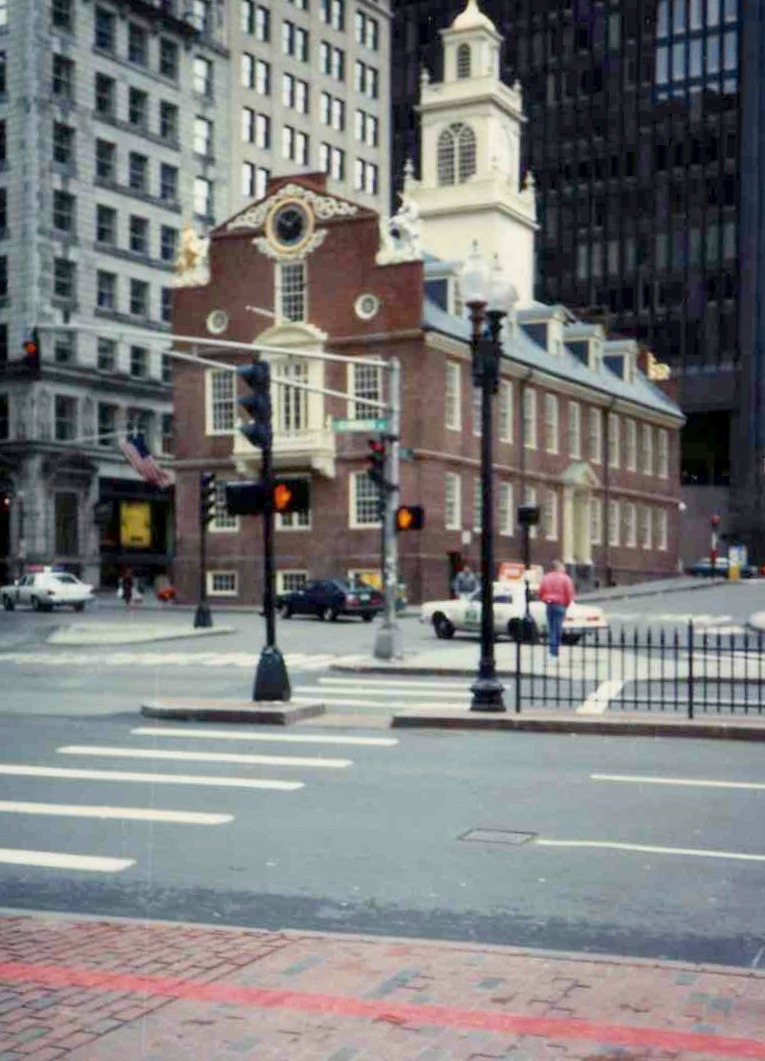
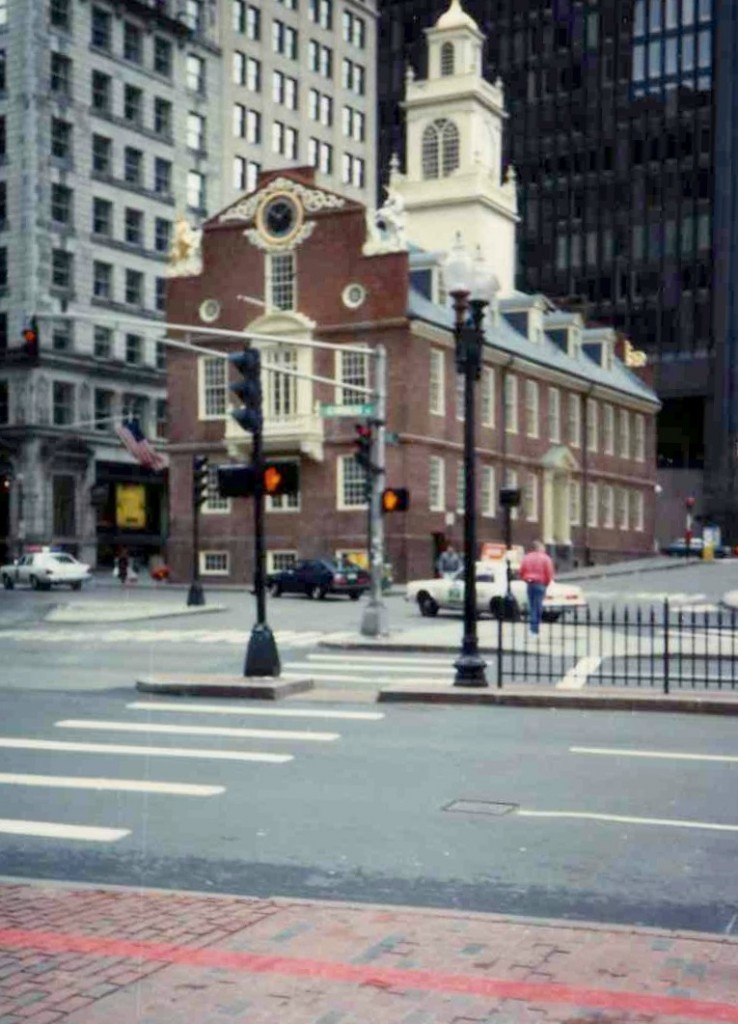
The Old State House. It was closed because the National Park Service had recently discovered that the roof isn’t attached to the walls; it is just balanced up there. They thought they should probably fix it, especially since the walls are bowing outward. I thought it was a very beautiful building, except for the subway entrance that has been built into the side of it. Anyway, in this photo you can see a traffic island in front of the building (right under the flag). This is the site of the Boston Massacre. I’m guessing the police car wasn’t there at the time.
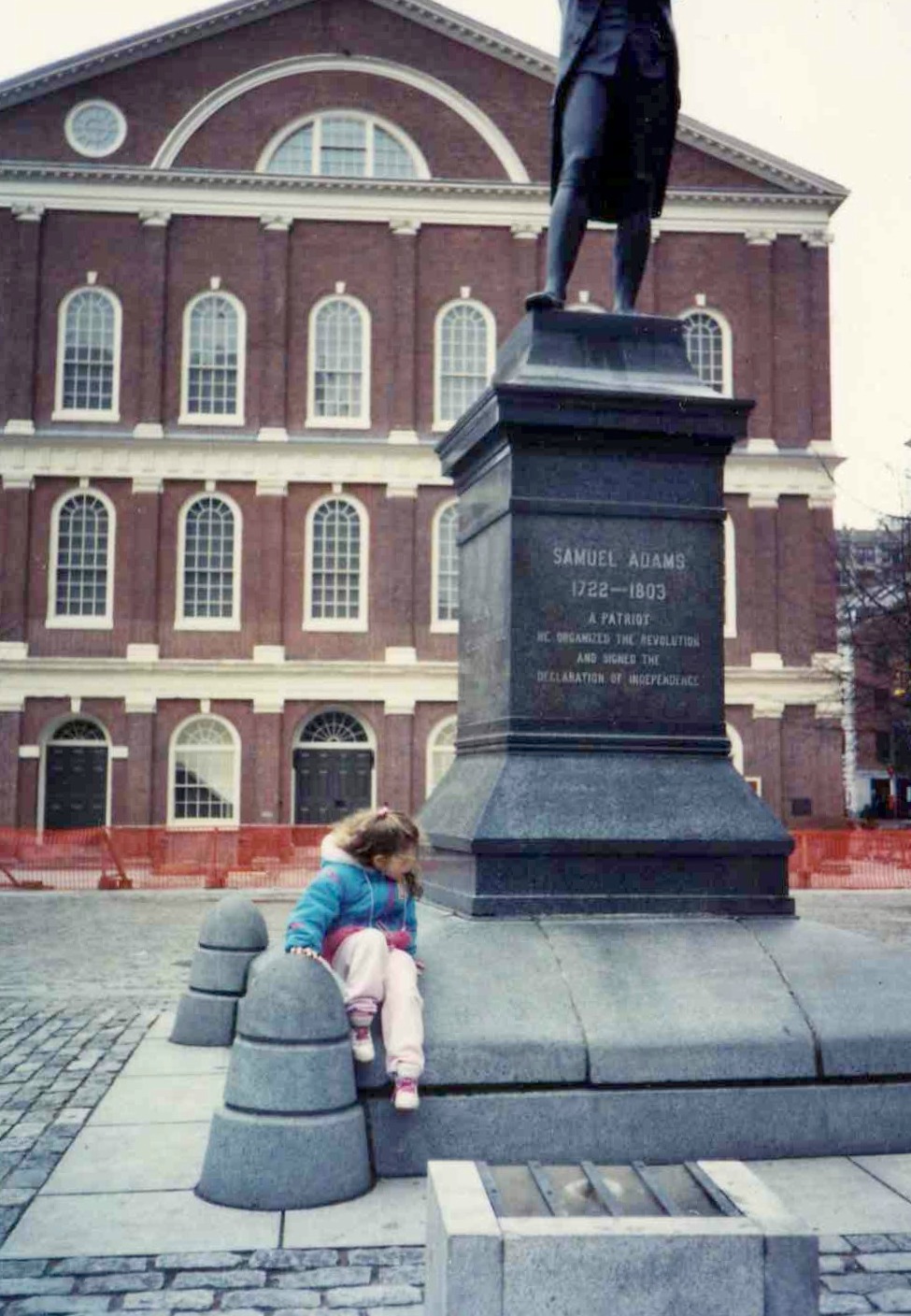
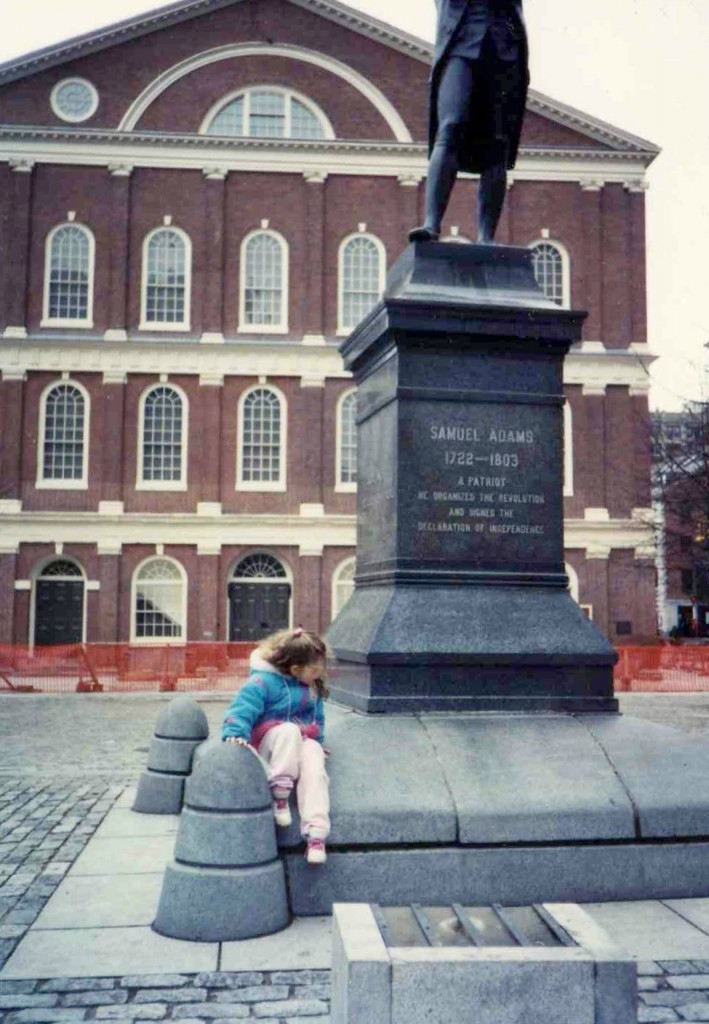
Half a block away was Faneuil Hall, which was also closed. It was built in 1742 as a public market and public meeting hall.
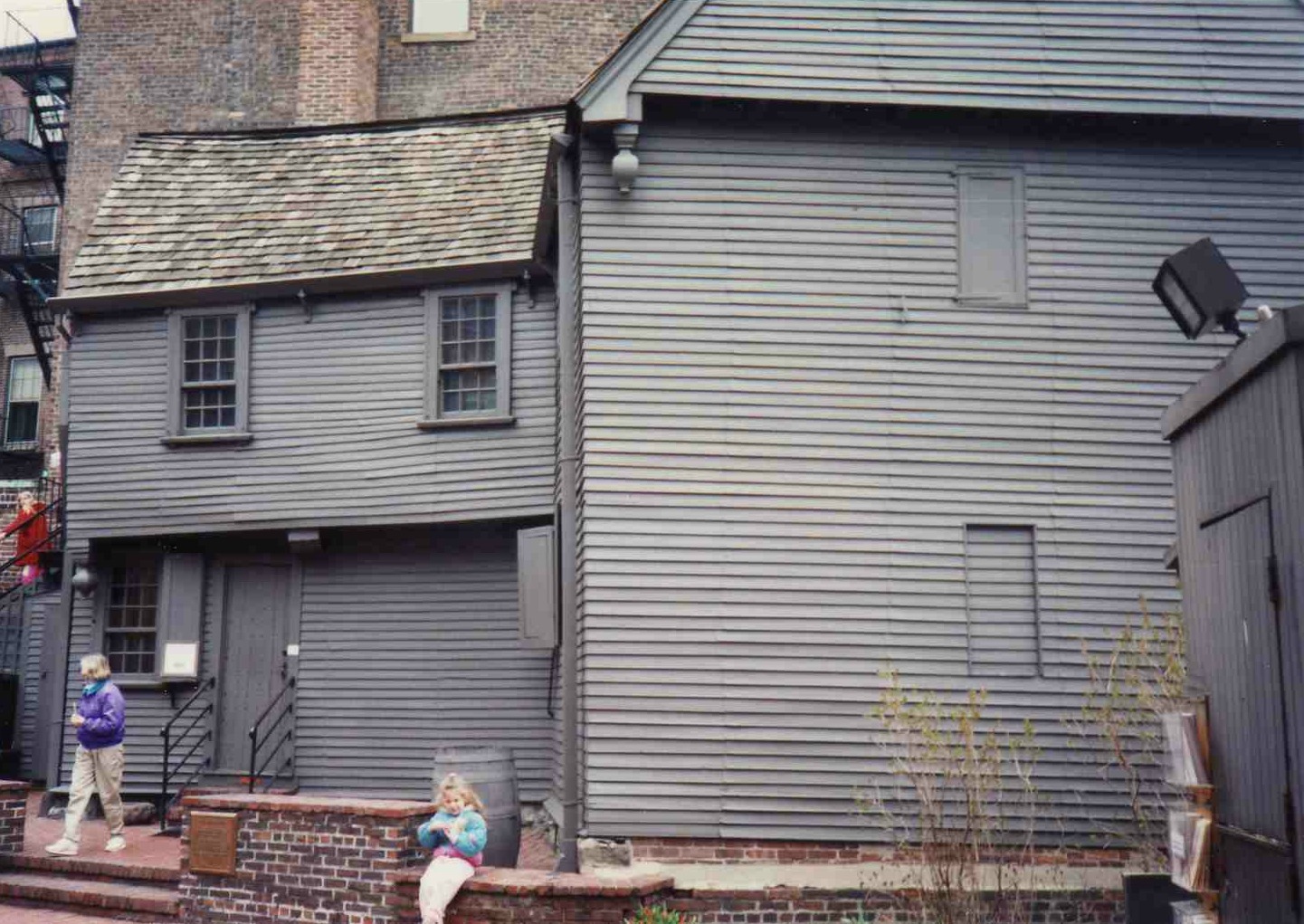
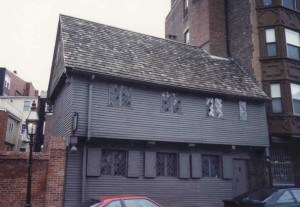
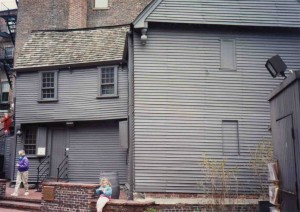
Our next stop was Paul Revere’s house. It’s amazing that it still stands. Over the years it’s been a tenement house and a shop and was in very poor condition, although all along people knew it as Revere’s house and continued to visit it. We hung around in the courtyard in the back for a while until time for our tour. As soon as we entered, some guy yelled at me to turn off my video camera. There was a bell outside that was forged in Paul’s foundry and one or two pieces of his silver, but none of the furnishings were original.
We stopped at the Old North Church. The official name of the church is Christ Church in Boston. It was built in 1723 and is still in use by the same congregation (but different individuals). It was from the steeple of this church that Robert Newman, the church sexton, hung the lantern to warn the countryside that the British were on the march. We wanted to go inside, but the congregation actually had the nerve to be conducting an Easter Sunday service when we arrived. We entered the tiny lobby and looked through the doors, along with a bunch of other tourists. It was a very formal-looking service, with a couple of guys in fancy red, white, and gold robes. Some people were going in and out, looking at the displays in the back of the sanctuary, but we thought that had to be distracting for those in the service, so we didn’t go in. The only photo I have of the church is from a distance, looking back across the river from Charlestown (see below).
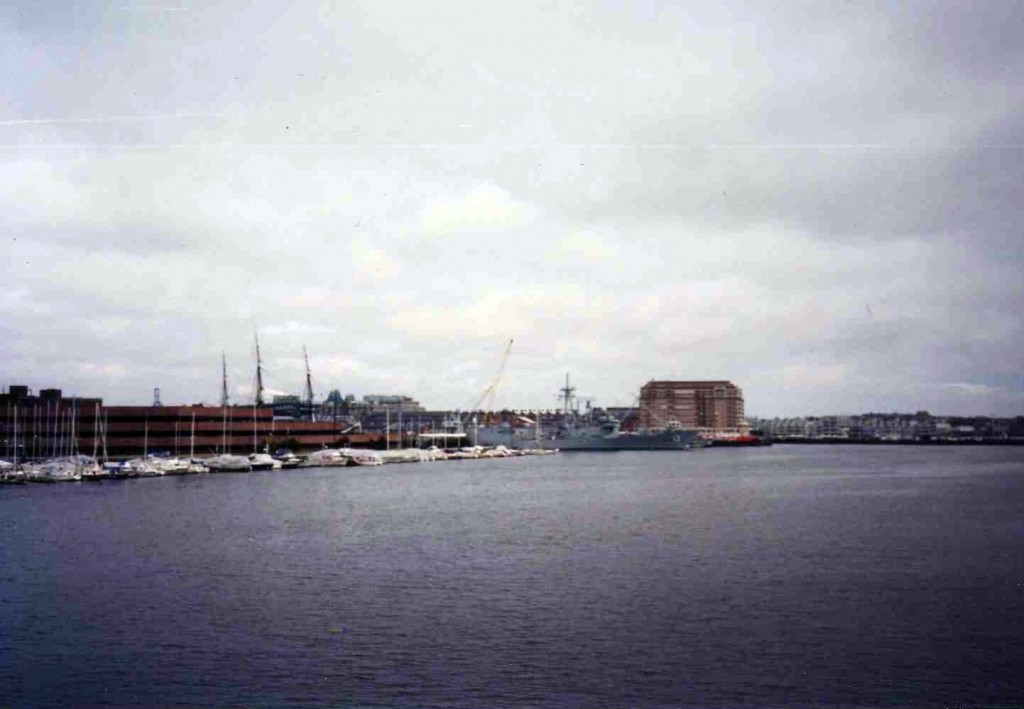
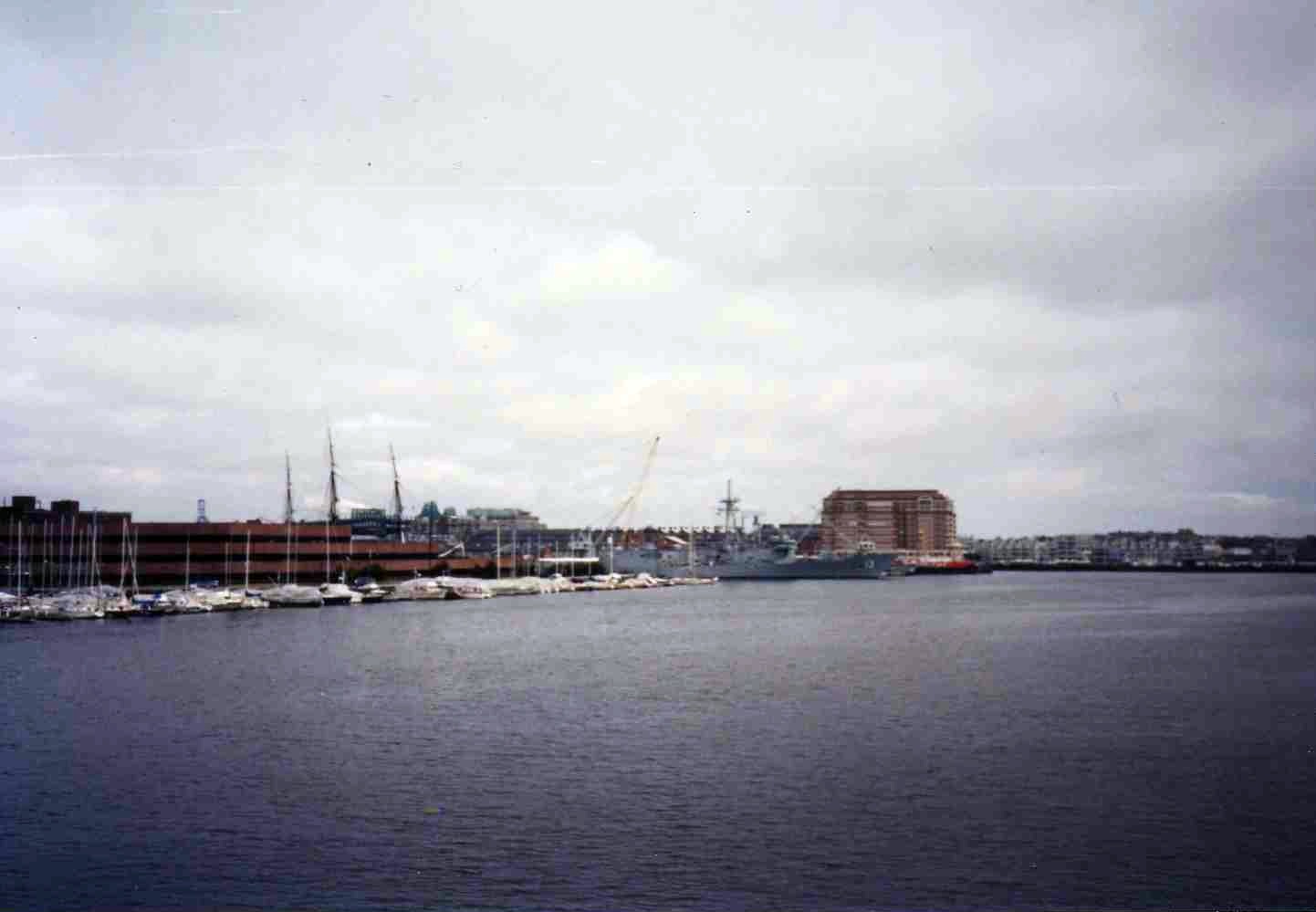
We crossed the Charles River and walked through a construction zone to the Charlestown Navy Yard (seen from the bridge in the photo above).

From the yard we could see the Bunker Hill Monument, but we didn’t go there.
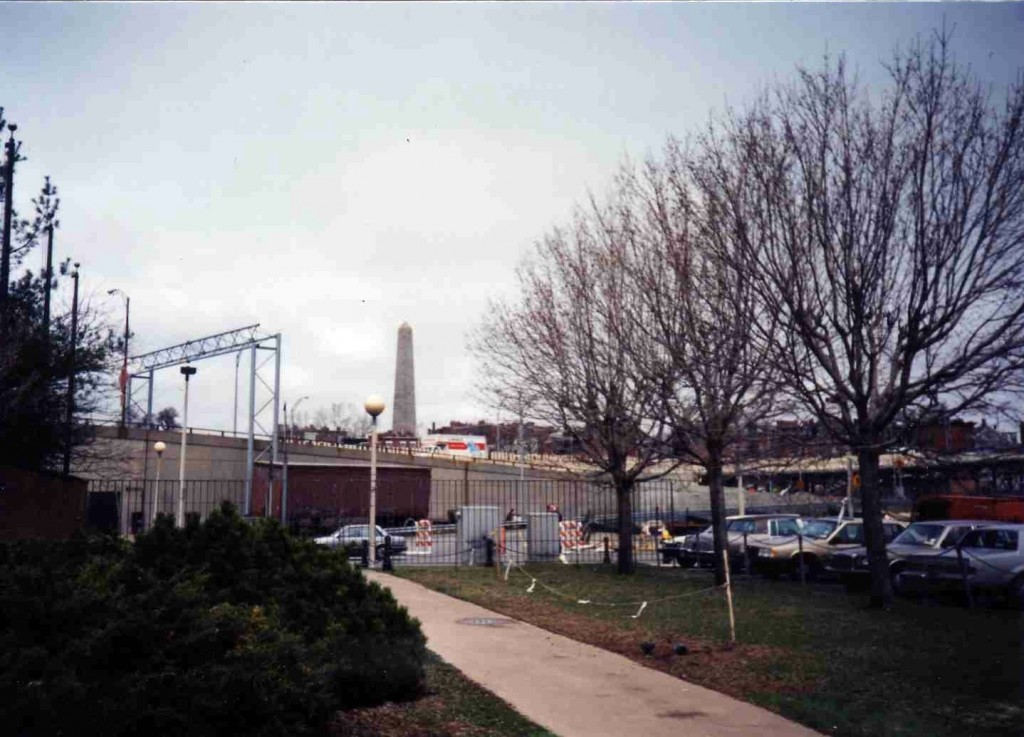
By this time it was early afternoon. We’d walked about three miles and hadn’t eaten a bite since breakfast. I was loving every minute of it, but my family was wearing out. We decided to tour the U.S.S. Constitution, then head back. I’ll cover that tour in a separate post.

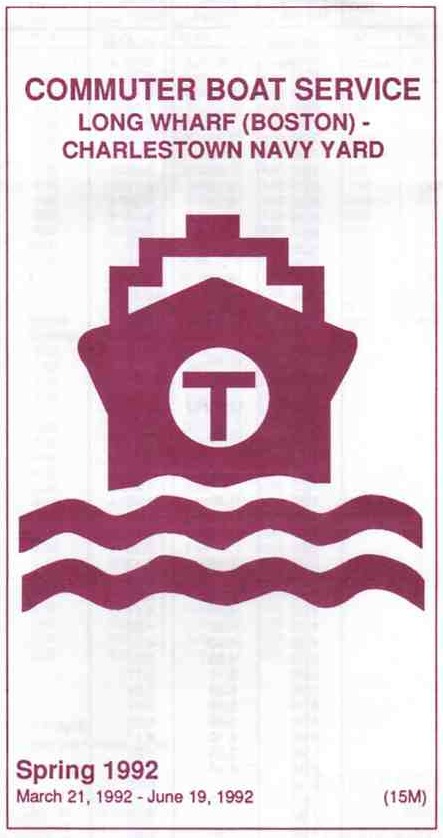
When we finished with the Constitution, I wanted to tour the more-modern ships that were docked nearby, but I was the only one. We hatched a plan: everyone else would start back while I saw what there was to see then run back and met them at the Globe Bookstore. I looked at the other ships, took some video of the Navy Yard, and walked around the visitor center. I overheard the woman behind the counter telling another tourist about an easier way to get back to downtown. I apologized for my rudeness and cut in on the conversation. She told us about a water taxi that left from a pier in the Navy Yard and landed at the Long Wharf, about four blocks from the Globe Bookstore. I thought of my poor family and the long walk they had to endure. I felt a little guilty, but what could I do? If they hadn’t been in such a rush to get back, they could have taken the taxi too. I wasn’t sure where the boat docked, but I found a likely spot and waited. During the 15 minutes before the taxi arrived, I had three separate people, including a guy from Germany who was in town to run in the marathon the next day, ask me where to catch the taxi. I told them that I thought they were in the correct place and hoped I was right. I was.

The taxi had two levels, one with seats down below, and a standing-only area in the back. I chose to stand and video-taped the entire 15-minute trip so my family wouldn’t miss anything. Shortly after we left the dock, a guy came around to collect the fare … are you ready for this? … $1.00. I realized after I got off that I hadn’t taken a picture of it, so I snapped one through a fence.
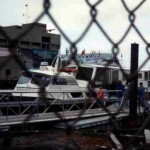

Boston across the Charles River from the Navy Yard. The white steeple of Old North Church can be seen in among the modern buildings.

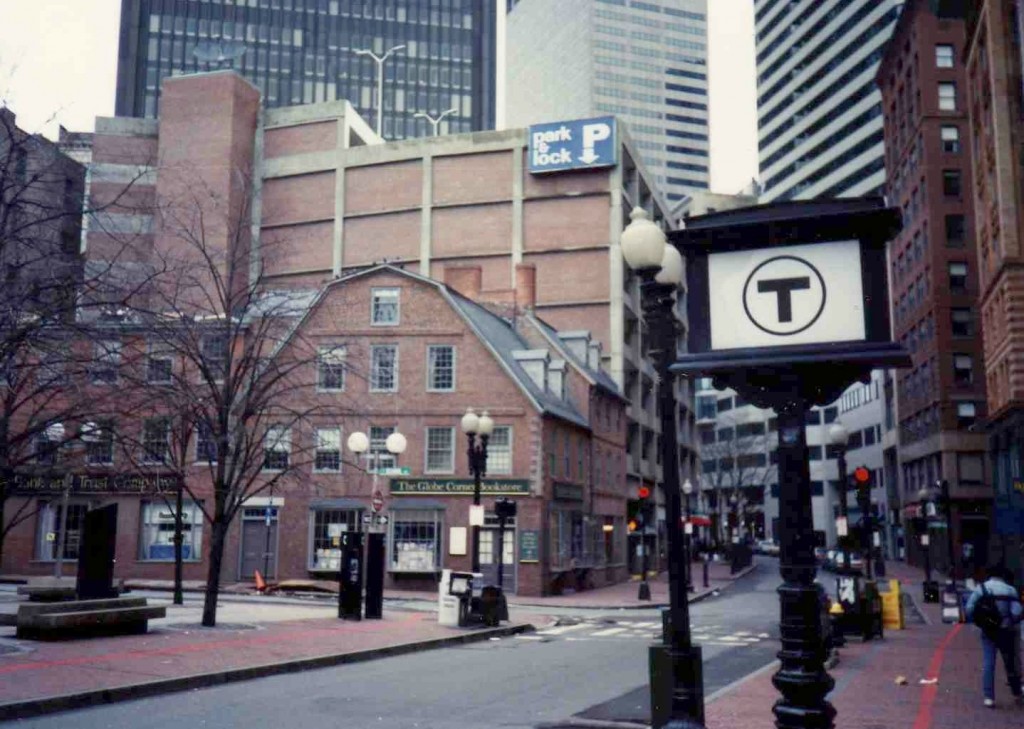
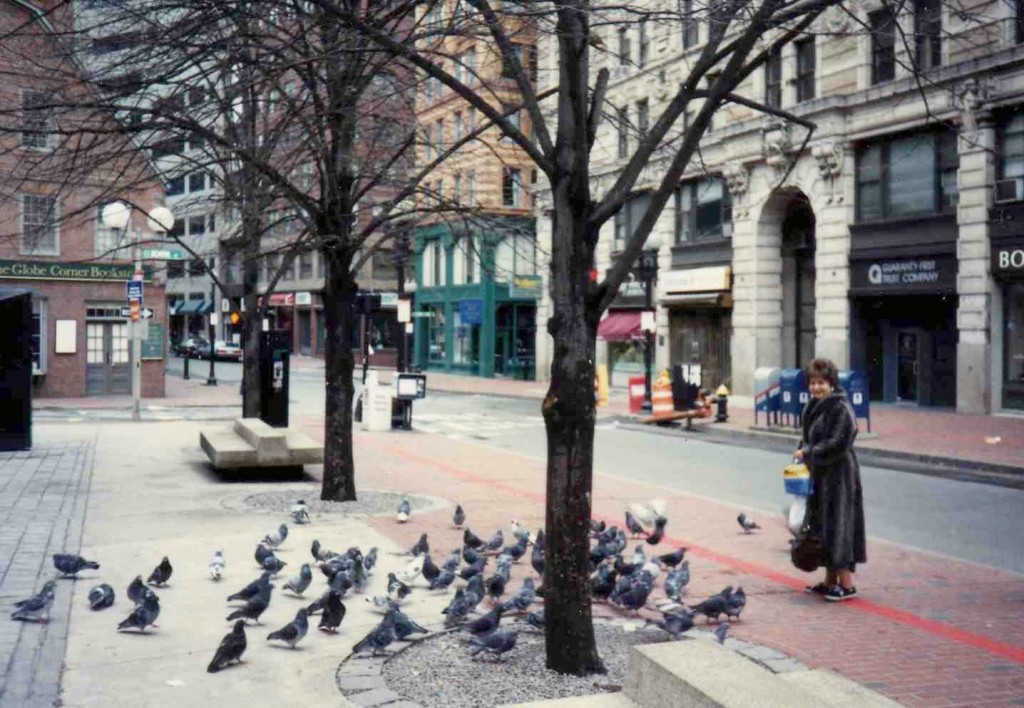
I walked the short distance to the Globe Bookstore and found my family sitting on a bench across the street. They had been worn out when they left me. By this time they were absolutely beat. When they found out I’d taken the water taxi, they were understanding, although I had to look very, very closely to notice it. It was several days before Dad quit hassling me about it. I left them sitting on the bench while I went into the bookstore. I didn’t have the heart to stay more than five minutes, but I did buy a book on old baseball stadiums. When I came out, we took the long walk back to the car. It wasn’t really that long, but it seemed like it. By this time, I was tired — and I had taken the taxi. I took these photos in the morning when we first passed the store. (It hadn’t opened yet.) The woman in the photo was feeding the pigeons. She saw us watching her and said to my wife, “Don’t you feel sorry for them? Nobody cares about them.” We nodded. She departed when her supply of food ran out, and there was nobody left to care about the pigeons except us. Fortunately, Dad had bought an Egg-McMuffin at a nearby McDonald’s, taken a bite, then given the rest to my daughter. She unselfishly shared it with the birds.
Posted in Massachusetts | Comments Off on Freedom Trail — Boston, Massachusetts

Fenway Park — Boston, Massachusetts

Fenway Park? Sure. I saw a rain delay there once.

When our trip to New England was first planned, back in January, I ordered two tickets to a Red Sox/Blue Jays game at Fenway Park. But when it came time to leave the hotel and drive to the park, my wife decided not to go. It was cold and raining hard, and I didn’t blame her a bit. I left at 4:00, in my parents’ car. I made it the first 12 miles, to downtown Charleston, then got stuck in a traffic jam. It took me two hours to go the next five miles. I was listening to a local sports station and expecting to hear that the game had been called.
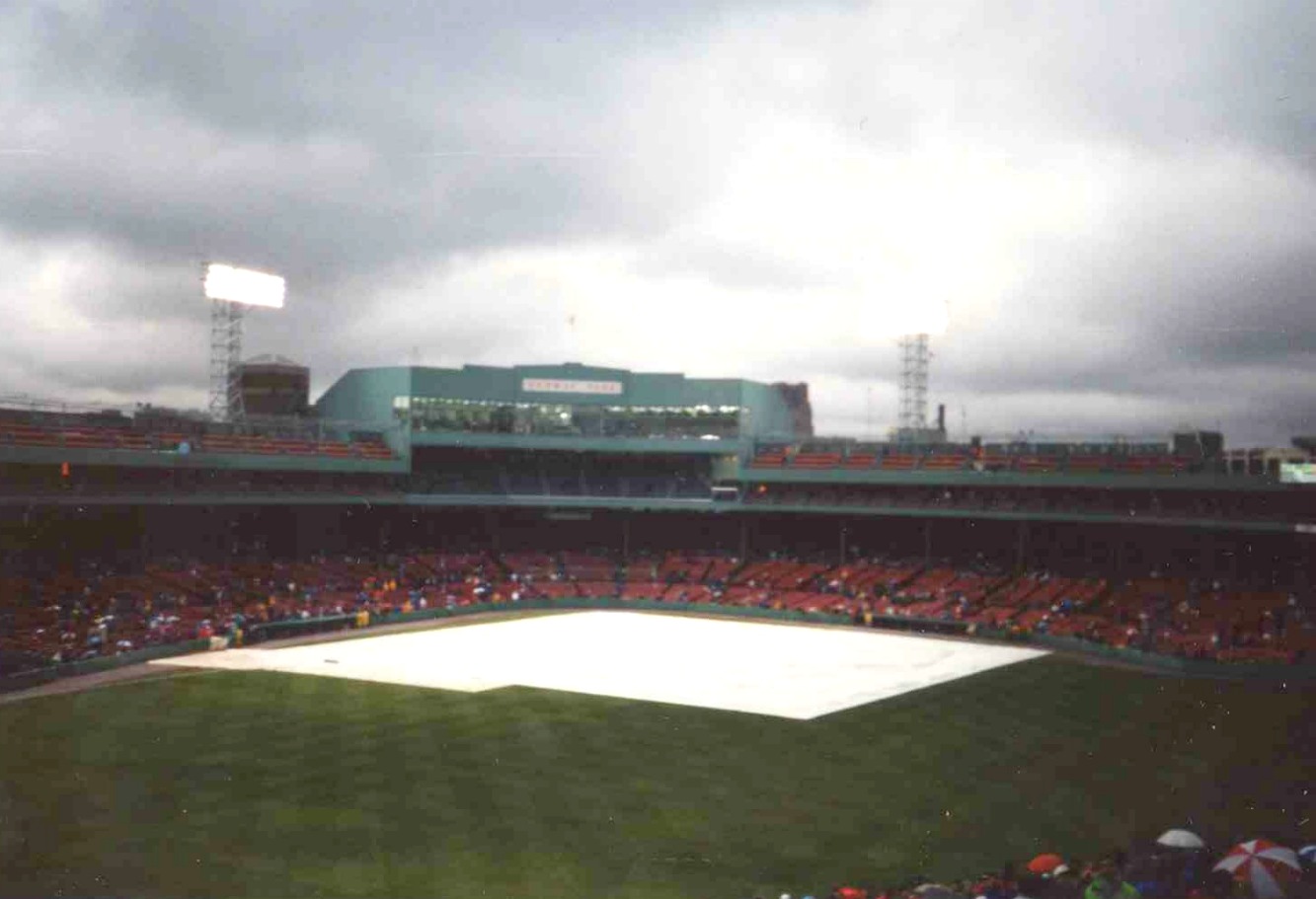
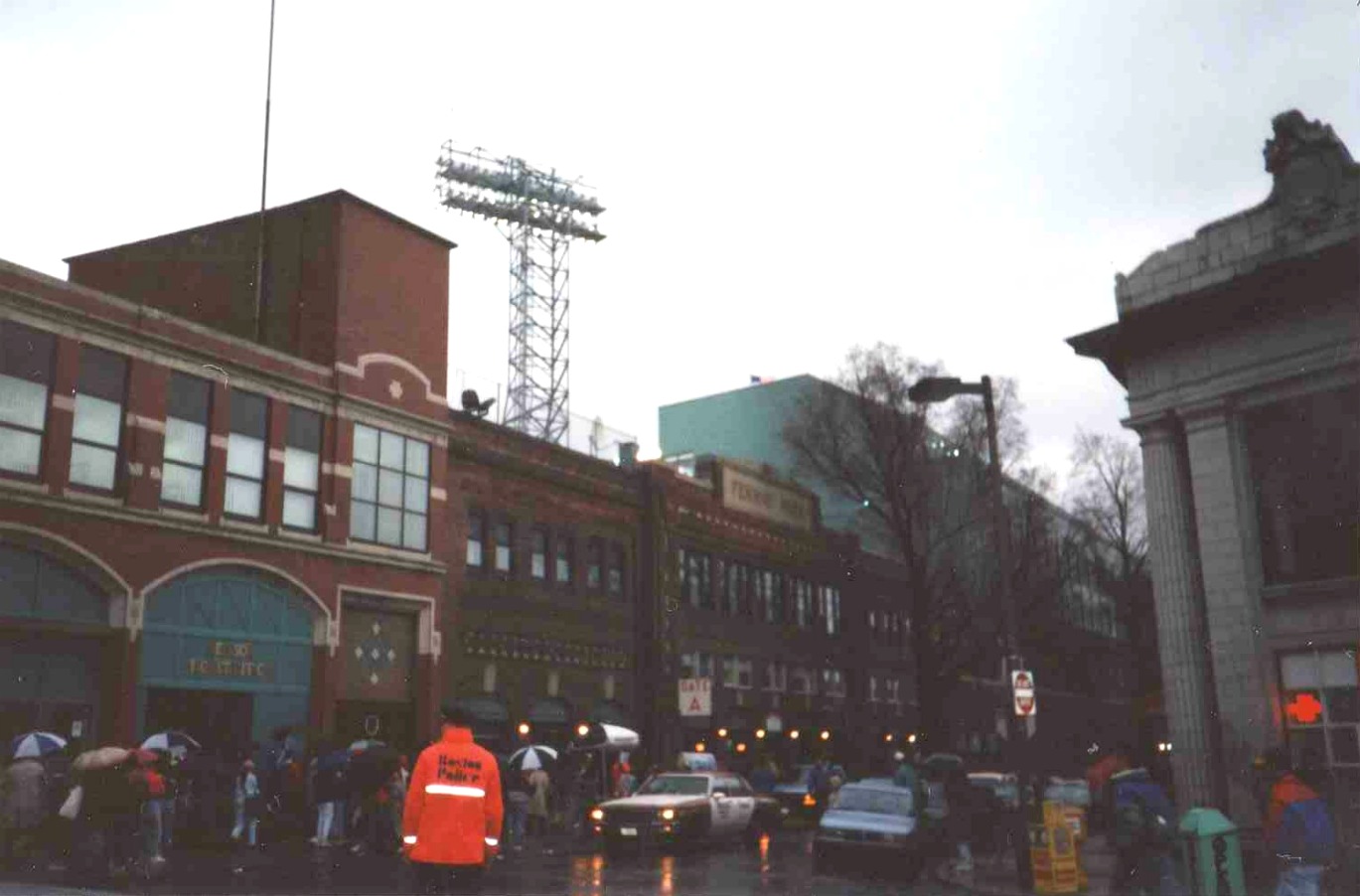
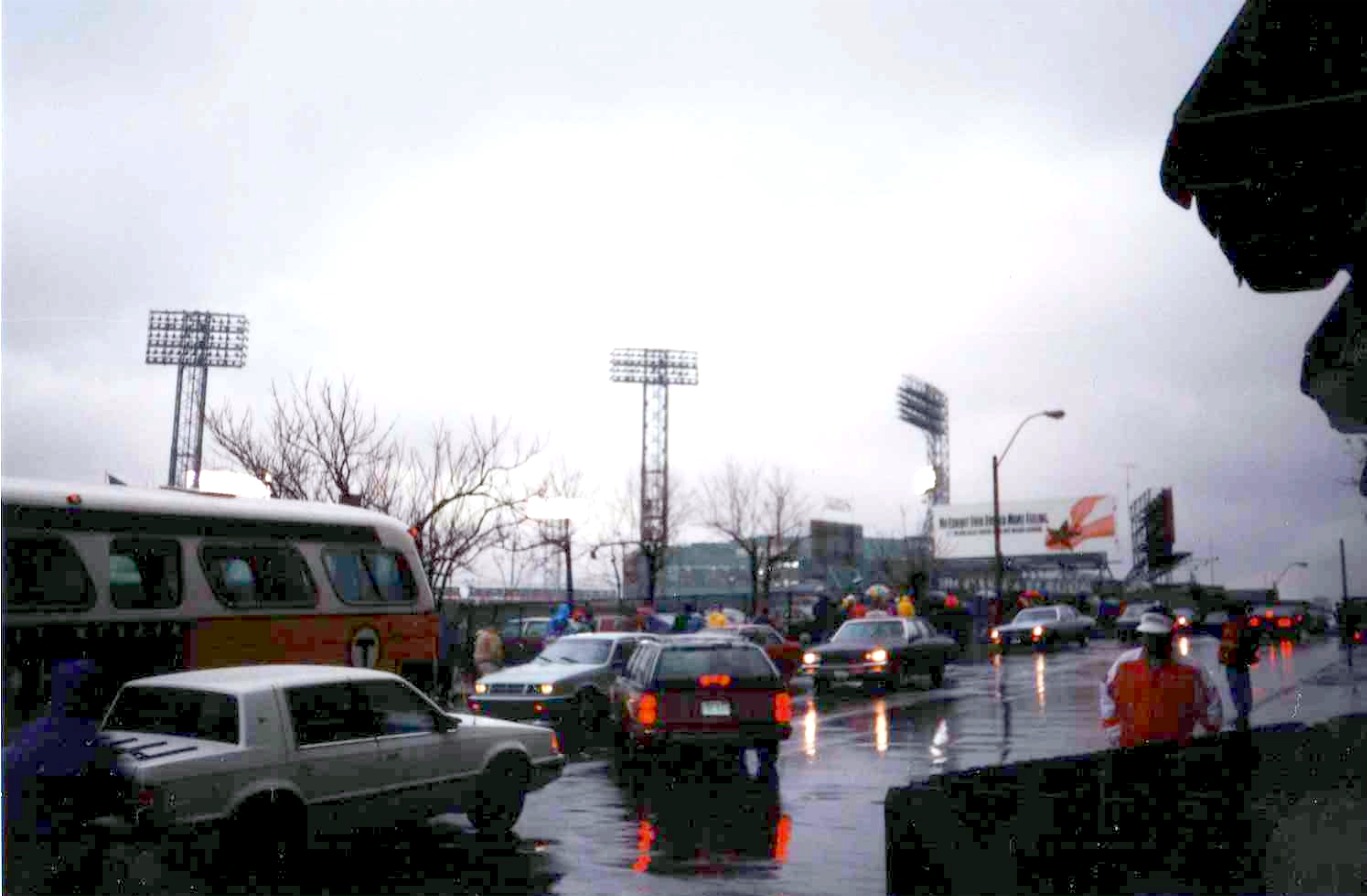
I wasn’t sure of where I was going, and was very happy when I finally saw the park glowing in the evening. But I soon discovered there was no exit nearby. I pulled off about a mile further on, and found myself on a second expressway going back the way I came, right past the park again. I pulled off again and saw a parking lot that advertised ball game parking. I was in a hurry because it was already game time. I pulled in, paid my $5, and took off running for the park — even though I wasn’t sure where it was. After some wrong turns, I finally found it about two miles from where I’d parked. It was raining the entire time, and I was drenched. I circled the outside of the park, taking photos, then went inside.

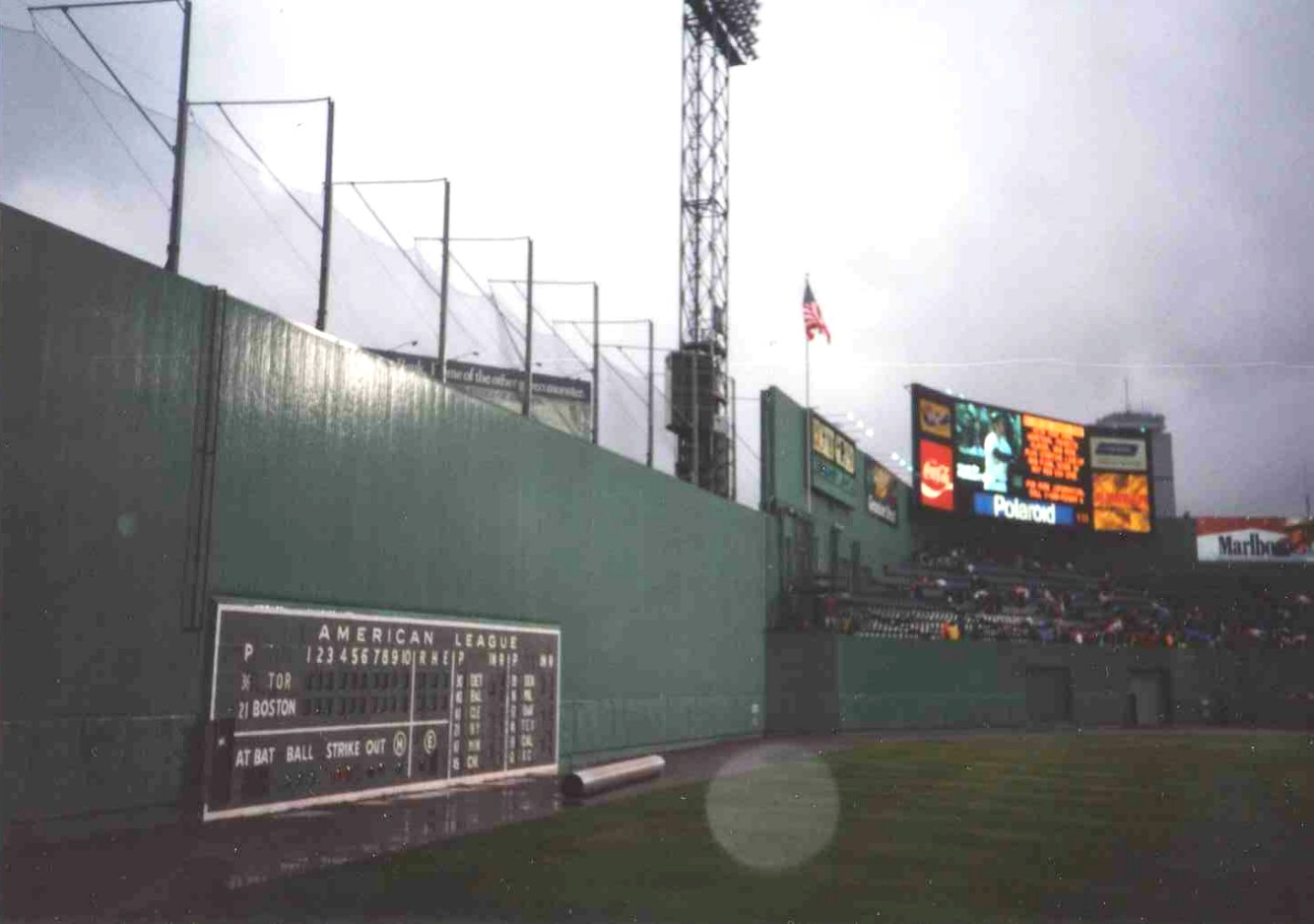
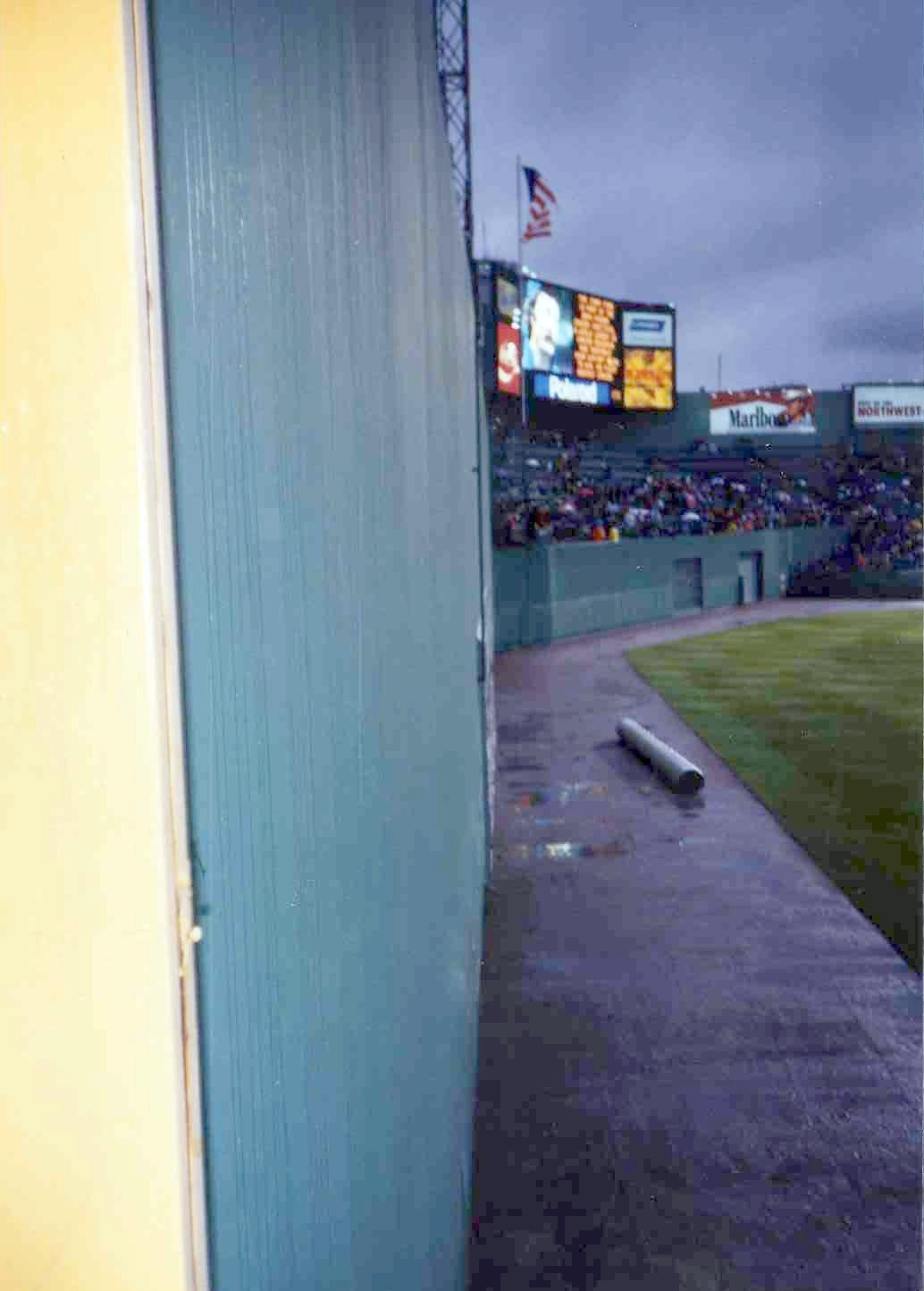
The back of the Green Monster

The tarp was on the field and the crowd was under shelter. I wandered around inside, taking photos from every angle. The video of Roger Clemens’ 20-strike-out game was showing on the scoreboard.

After an hour and a half of this, I began pondering the situation: it was still raining hard; I was cold (38 degrees) and wet; I’d seen the park; my car, if I could find it, was two miles away; I didn’t fancy wandering around a strange city late at night; I had no idea how to get back on the expressway; and I couldn’t remember the name of the hotel. Even if the tarp was removed immediately, the game wouldn’t have ended until after 11:00 at best. I very much wanted to see a game at Fenway Park, but I had serious doubts whether there would be one there on this day. Then I happened upon a park employee who was closing up his concession stand and explaining to another employee that the game had been called. I gave up.

I’d never even found my seat. It would have been a good one — just beyond the right-field foul pole, about 10 seats up from the field.

I found my car without incident and miraculously, almost immediately, happened upon a road I recognized from the map. It took me to the expressway, and I headed back to the hotel. Traffic had cleared and I made it without incident. I got back to our room just as the game began — yes, there was a game. It began at 8:30, two-and-a-half hours late. After four innings, it began raining again, halting the game. It was finally completed, but if I had stayed until the end, I wouldn’t have gotten back to the hotel until 1:30 the next morning. To top off the evening, the TV in our room didn’t get the channel the game was on.

I’m sorry I didn’t see a game there, but that particular game would have been miserable. As it is, I can say I was at Fenway Park. I remember that it was very small. And very wet.

Posted in Baseball | Comments Off on Fenway Park — Boston, Massachusetts