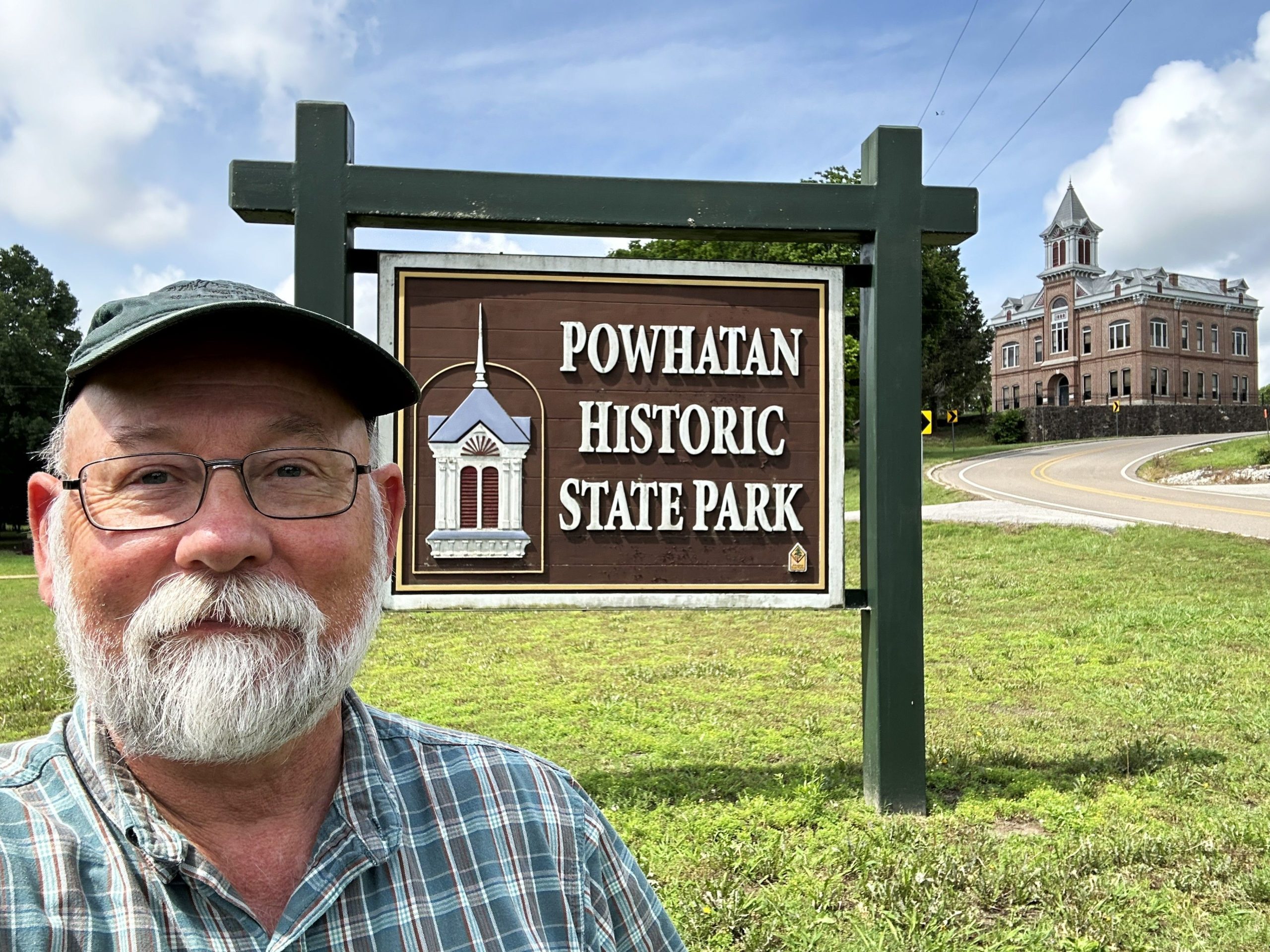
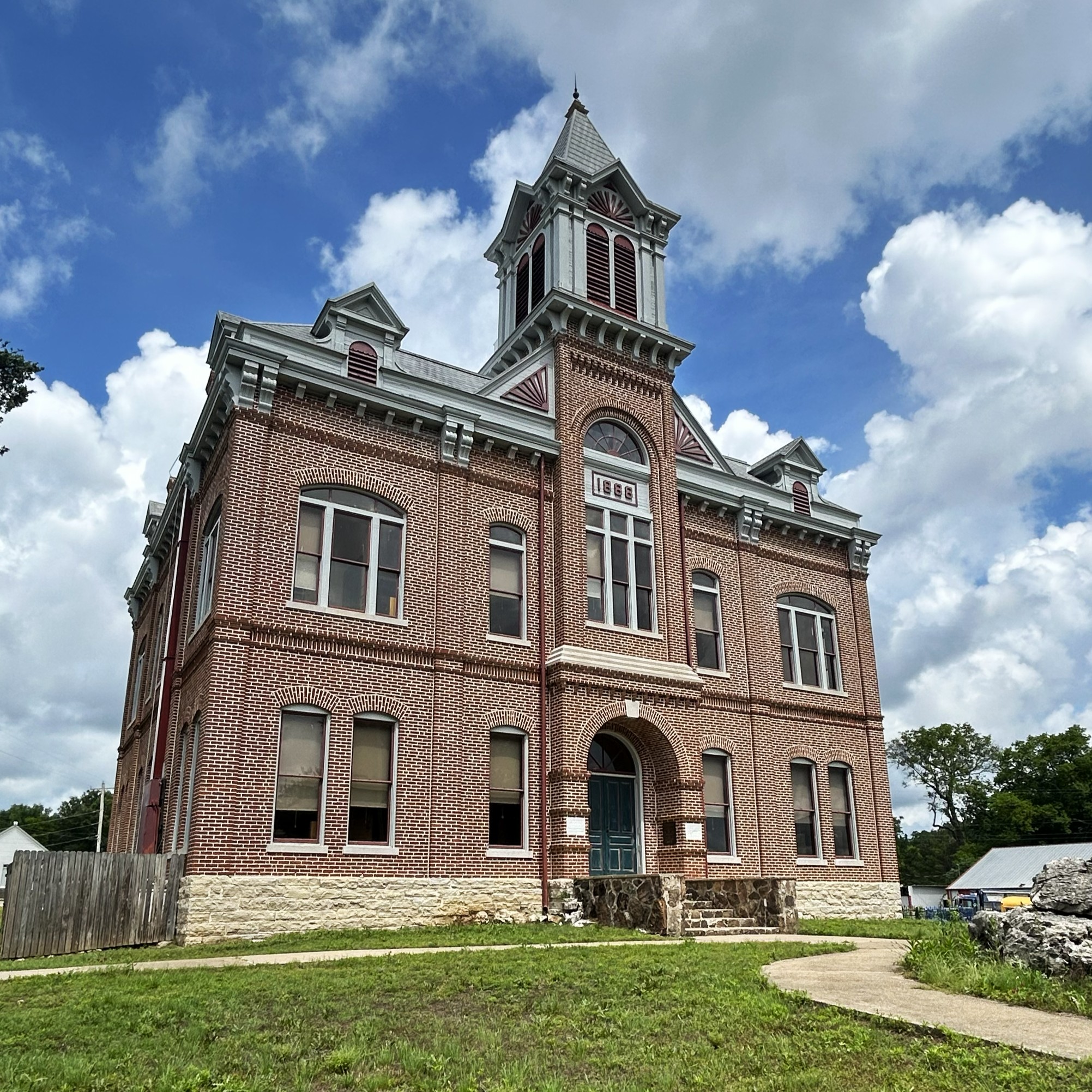
The current population of Powhatan (pronounced “Pow-uh-TAN” and named after the father of Pocahontas) is 104, but from 1869 to 1963, it was the county seat of Lawrence County. Six (or maybe seven, I was never sure about one of them) buildings have been preserved in their original spots. I started in the courthouse, built in 1888.
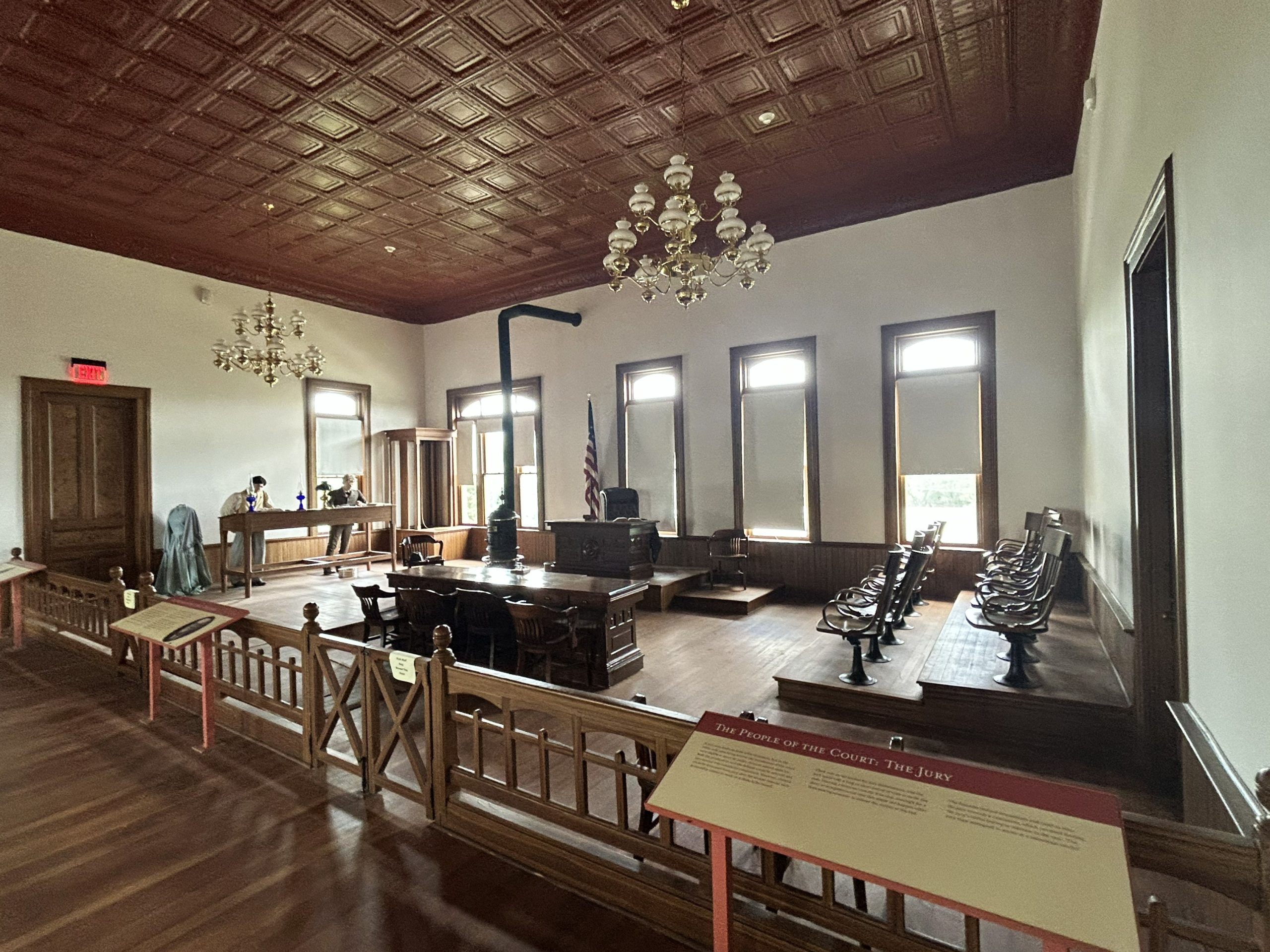
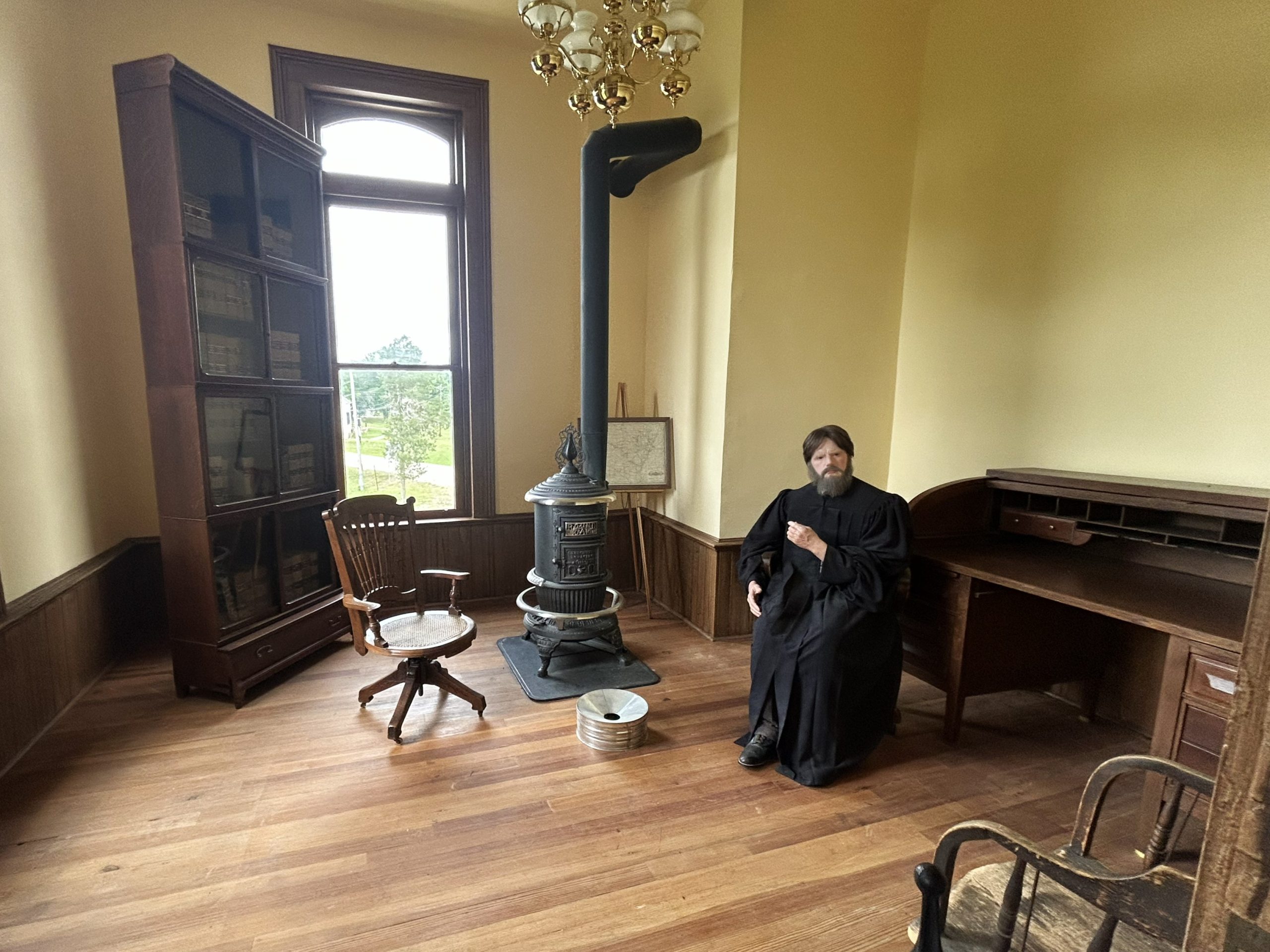
The first floor rooms are filled with generic displays about life at the turn of the century. I didn’t bother reading them. The enthusiastic, talkative ranger came out to greet me and informed me that he was the only person on site so there would be no tours of the other buildings. He warned me that there were lifelike mannequins upstairs in the courtroom and not to be scared.
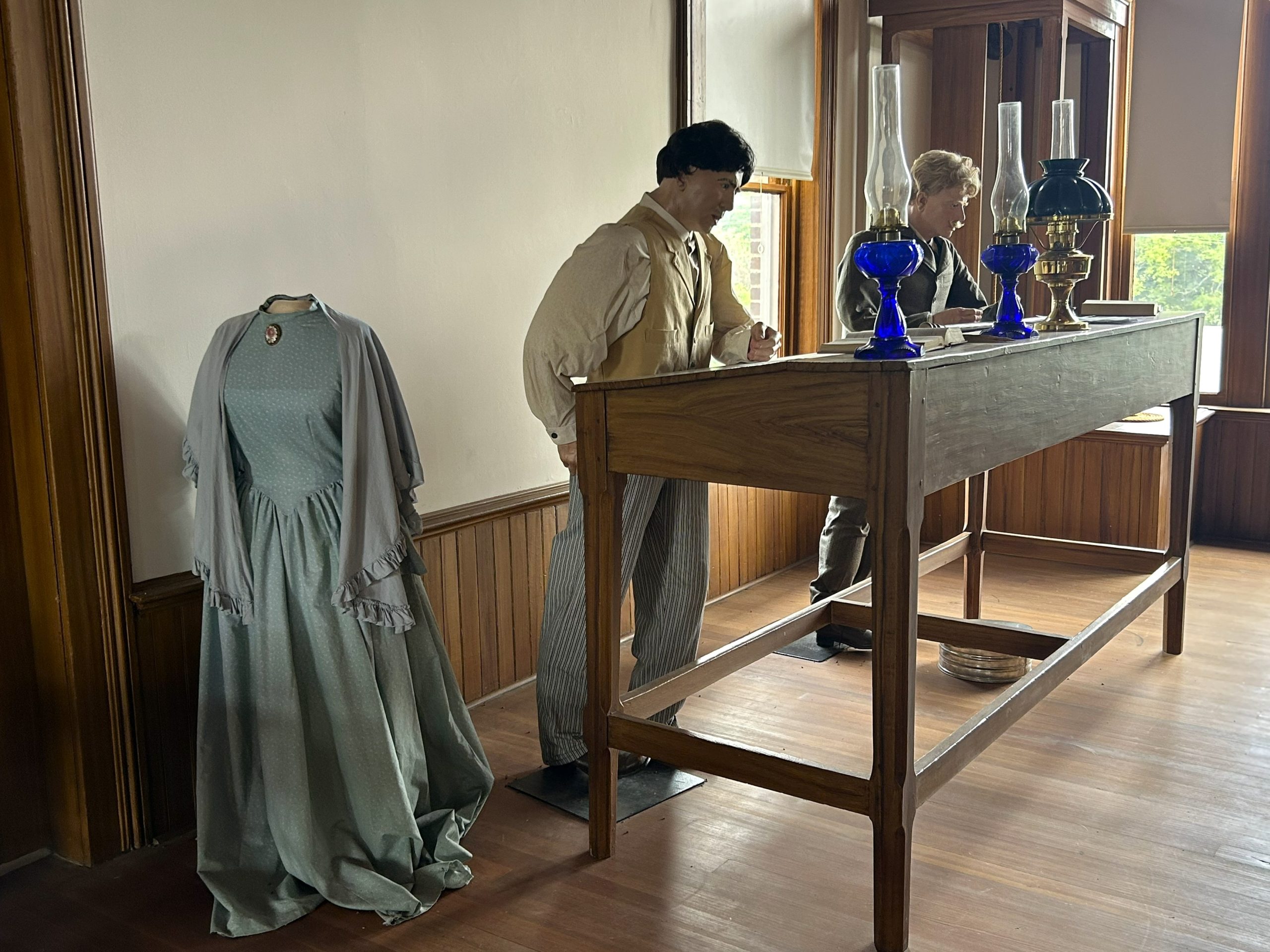
I mentioned to the ranger that the strangest thing about the mannequins was that the two guys behind the desk hadn’t noticed that the woman had no head.
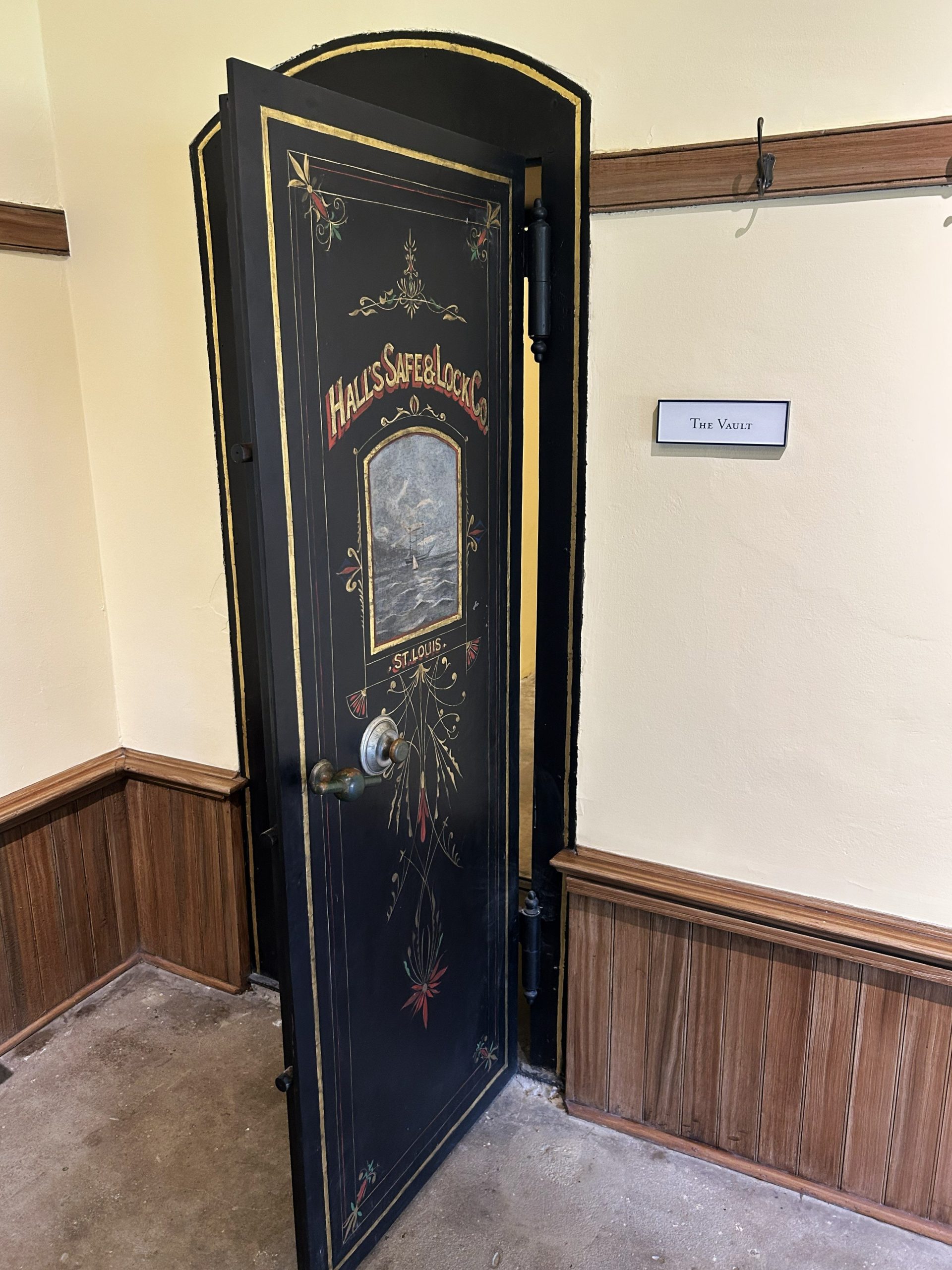
The original courthouse, built in 1873, burned down in 1885. The fire-proof vaults with all the court documents survived and were built into the second courthouse.
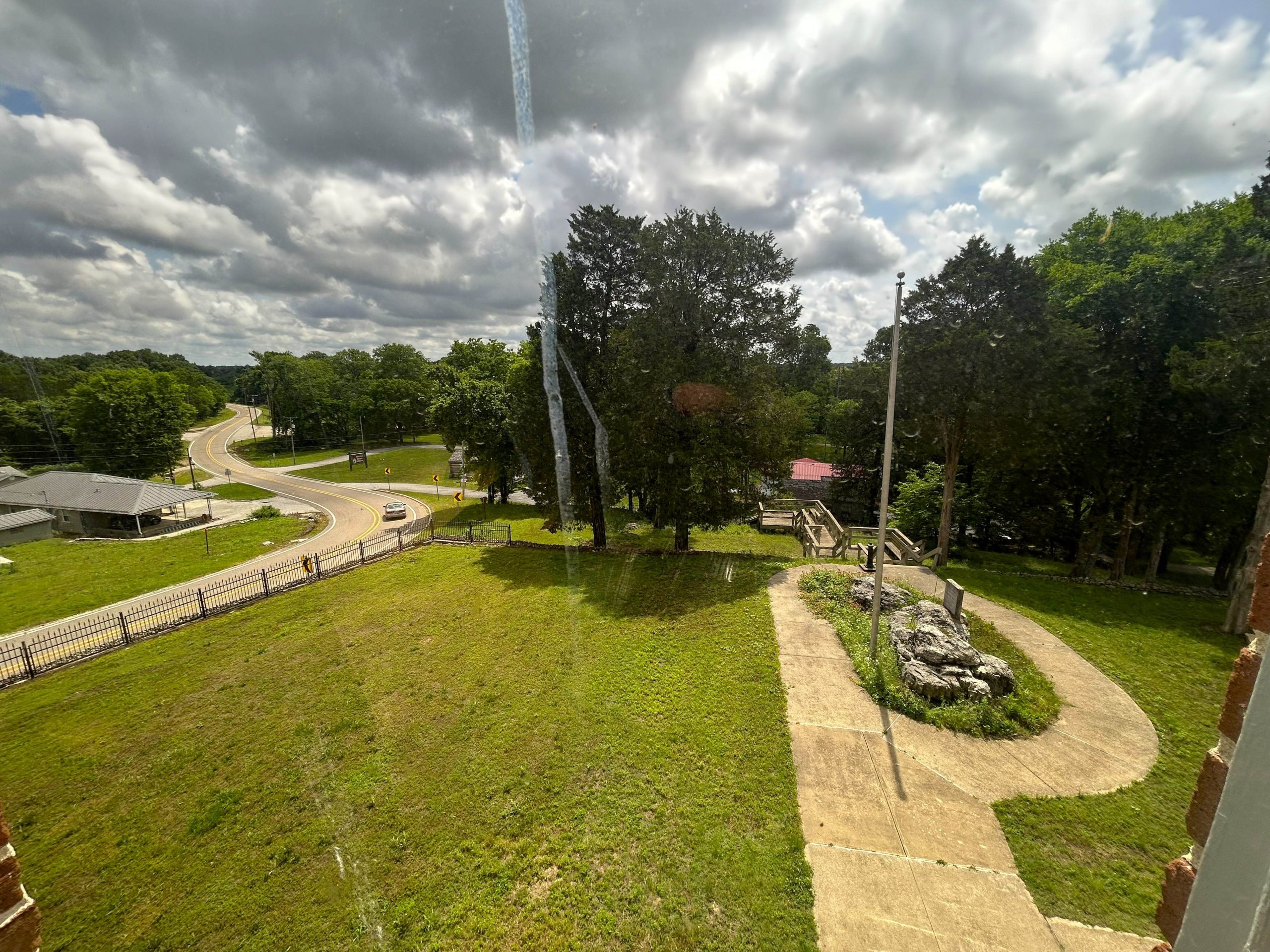
The view toward the Black River from the courthouse. The ranger made a point of telling me that the park was in two geographical regions — the courthouse was in the Ozarks, while the buildings at the bottom of the staircase were in the Delta. He also said that the Delta here — the area between the river and the hill — was only 100-yards wide. I mention it here because he seemed to think it was exciting and I thought you might think so too.
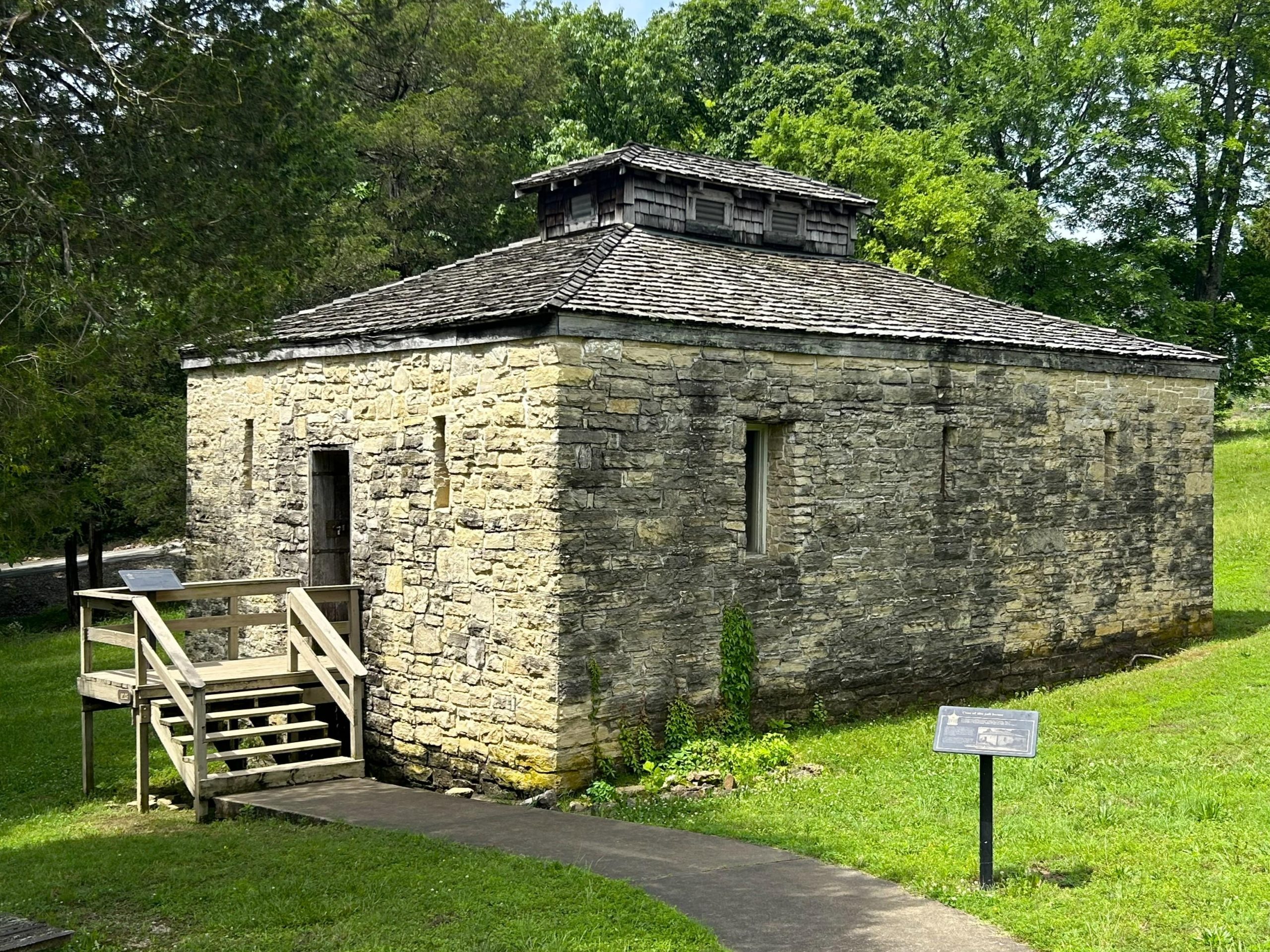
The Jail, built of limestone in 1873. It later was used as a movie theater, a canning kitchen, a honey processing plant, and an auto garage.
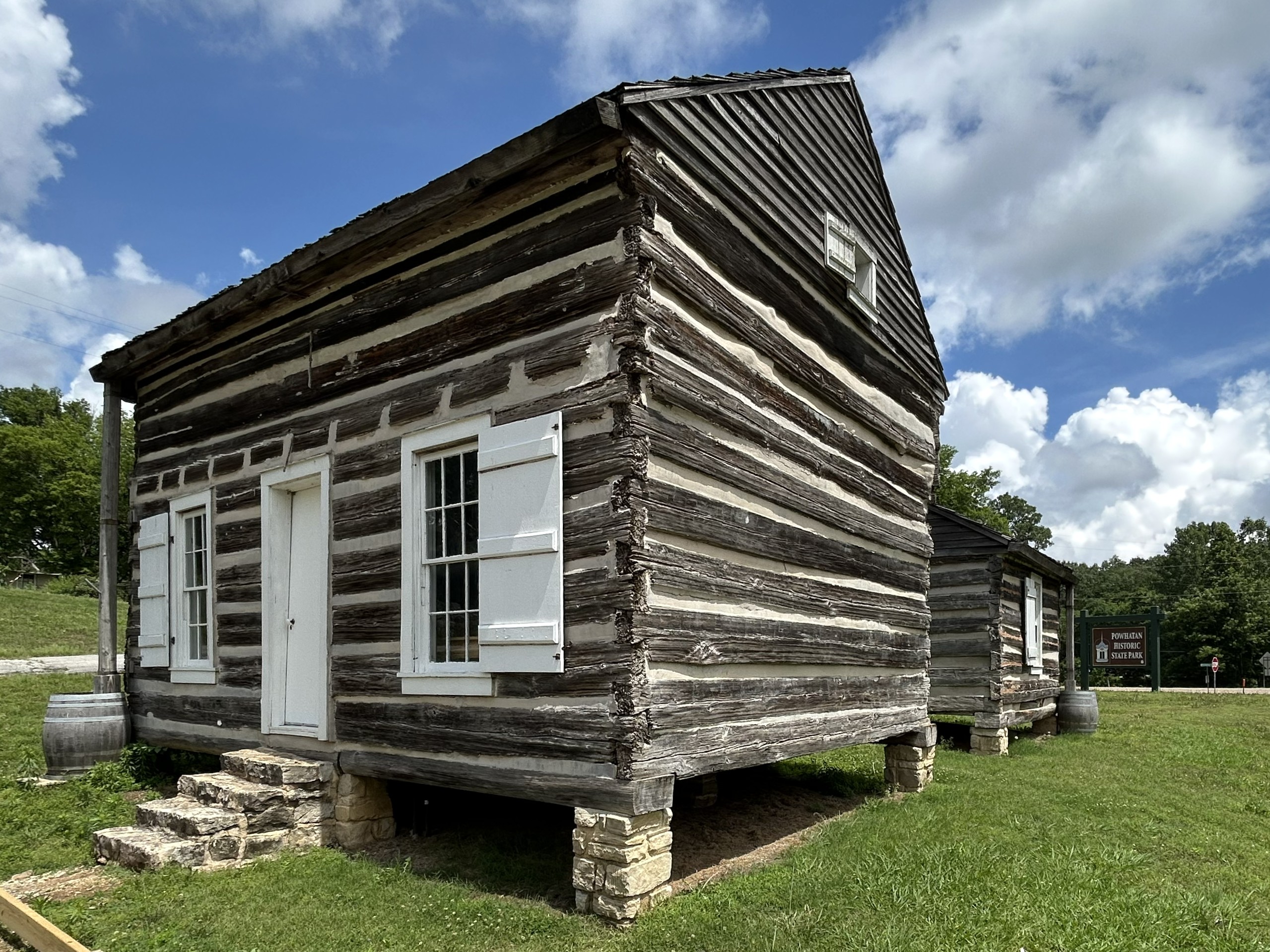
The Ficklin-Imboden House and Kitchen are, I was told, among the ten oldest structures in Arkansas.
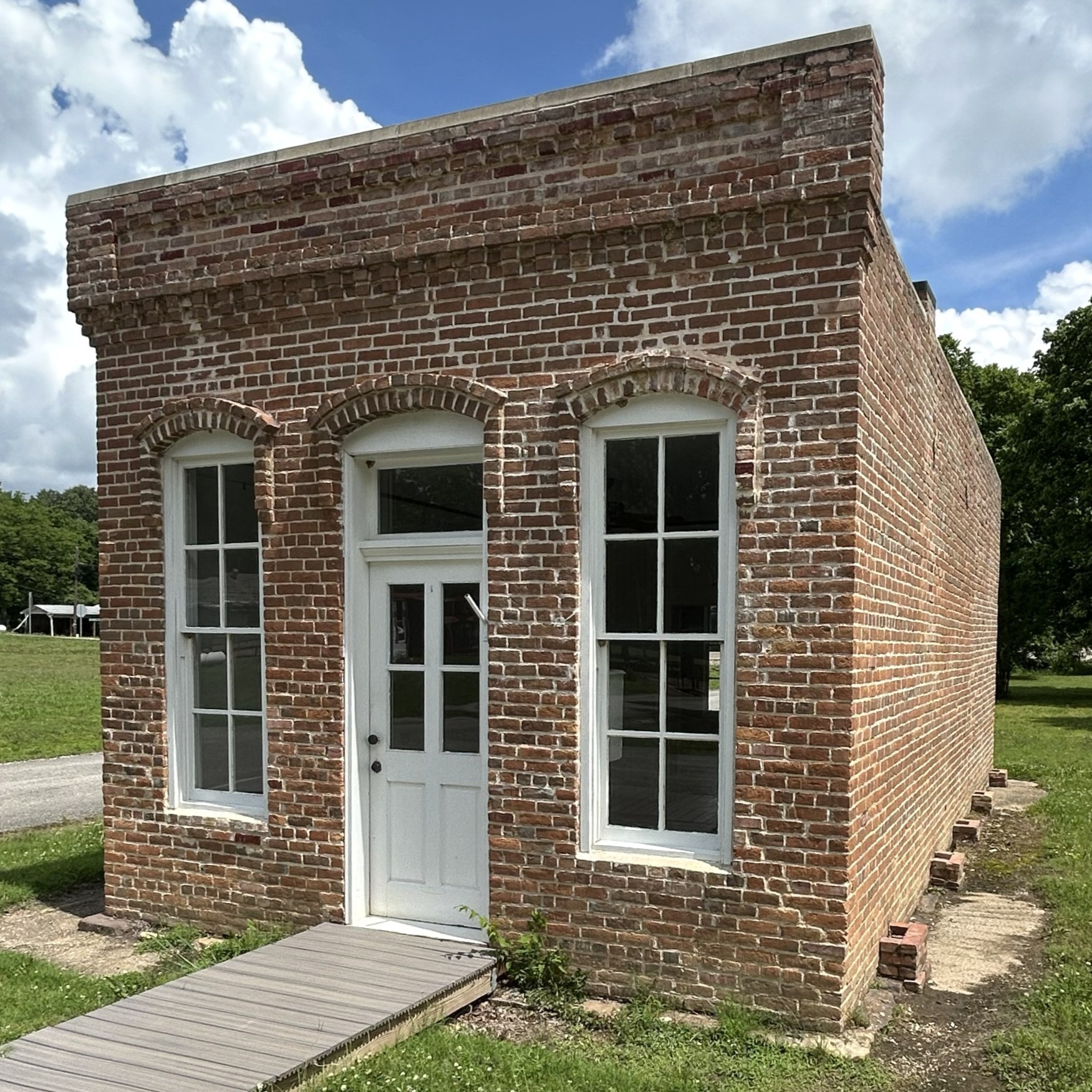
The Commercial Building, built in 1887. It has been used as a telephone exchange, an apothecary, a wagon factory, and attorney’s office, a general store, a residence, and a post office. It’s empty inside because it regularly floods.
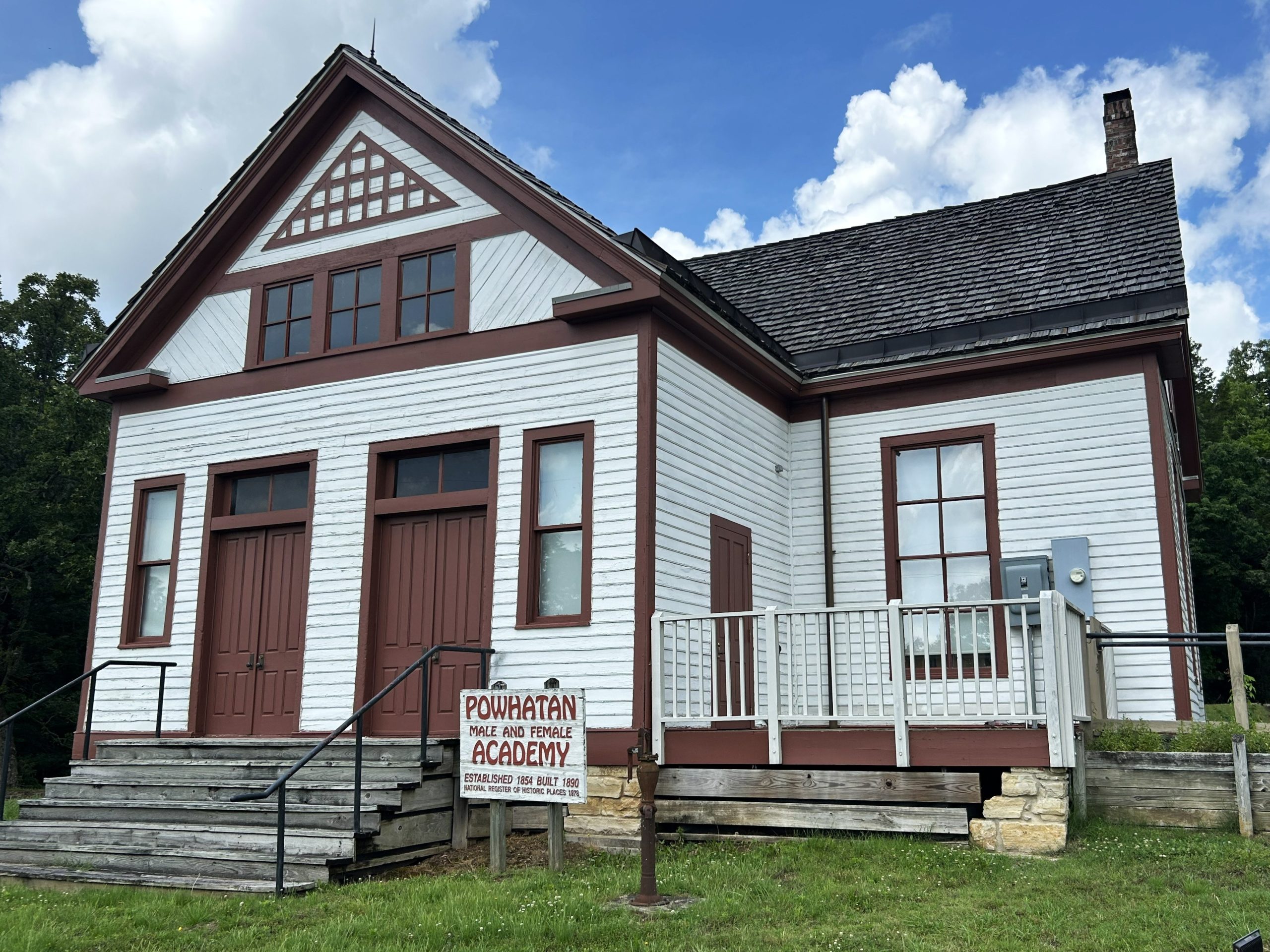
The Powhatan Male & Female Academy was built in 1889. Don’t let the name fool you. It’s just a two-room schoolhouse.
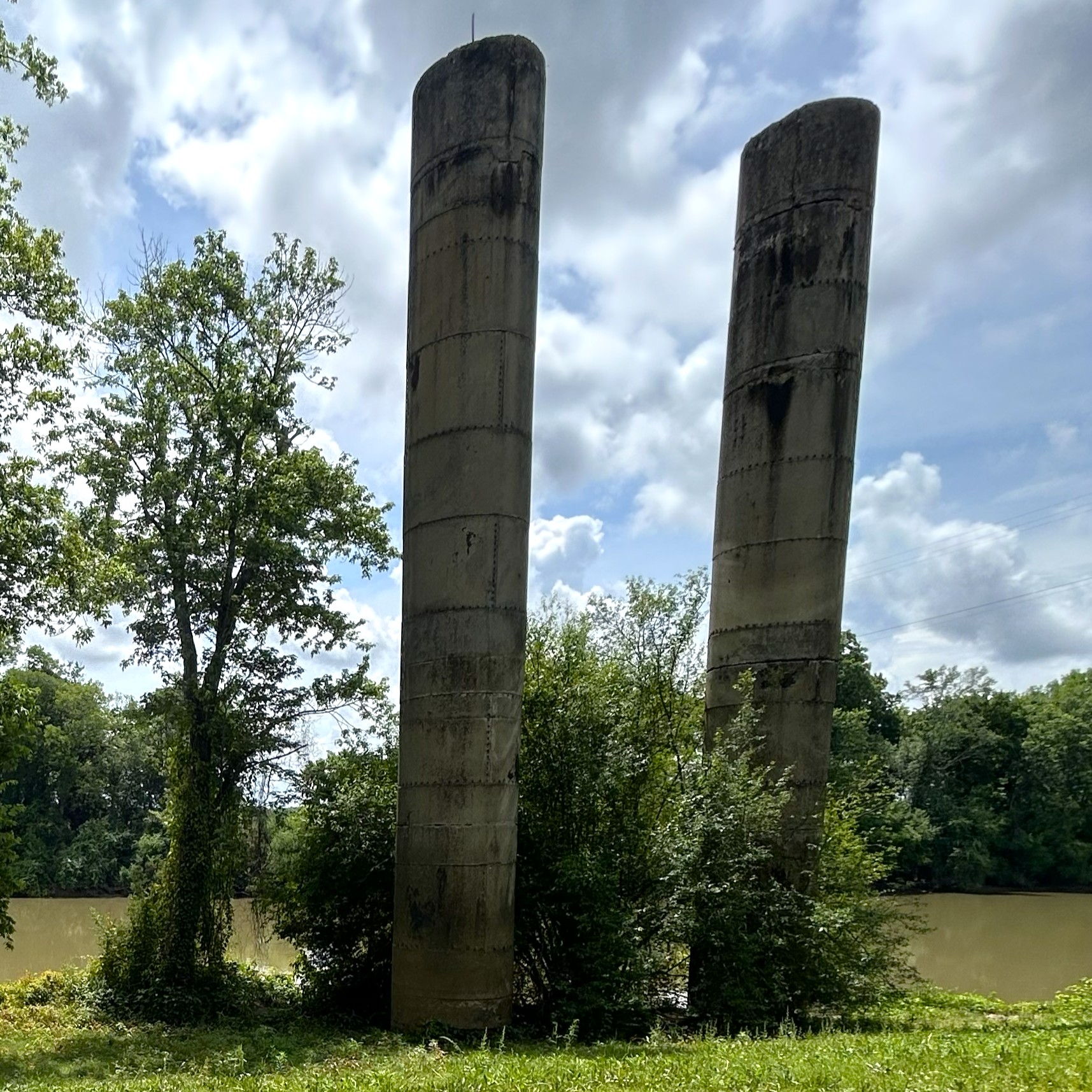
Alas! In 1884, the railroad was routed through nearby Black Rock and took away most of the town’s business. In 1926, the town leaders thought a bridge across the Black River might bring back trade, but since they leveled many of the town’s businesses to build the bridge, the plan didn’t work. The suspension bridge was built high above the river to keep it out of flood waters and so steamboats could pass underneath.
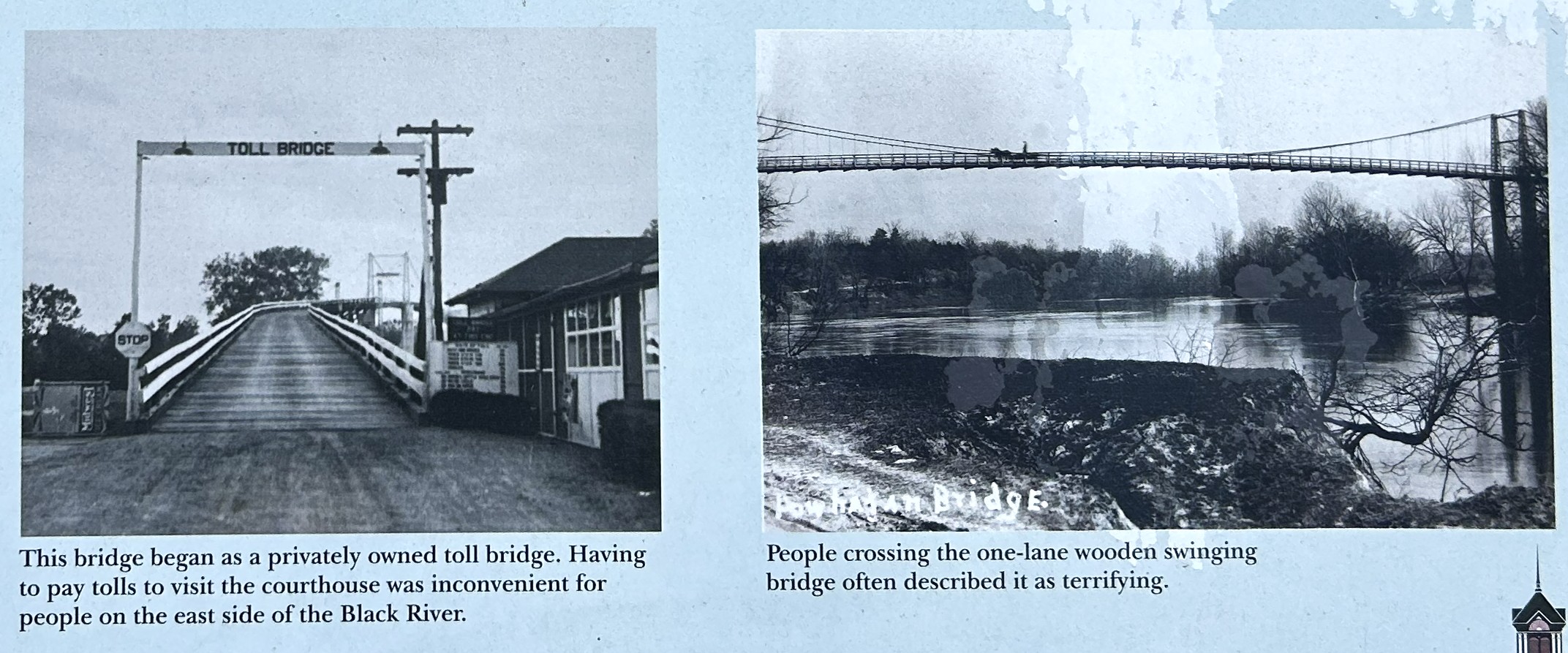
Nothing remains of it but two pillars standing on the bank.
While nothing very exciting ever happened in Powhatan, there was enough to make the park interesting, unlike Davidsonville.