Bird #468 — Nuttall’s Woodpecker

picoides (from picus, woodpecker, and eidos, likeness) nuttallii (named for Thomas Nuttall, English botanist and zoologist)

Sunday, February 15, 2015

Santa Rosa Plateau Ecological Reserve in Murrieta, California

This one was supposed to be easy. Nuttall’s Woodpeckers are common on the Reserve and they’re only going to be found where there are trees. So I went where there were trees and looked and listened. I saw dozens of Acorn Woodpeckers, and heard a Flicker, but that was it.

The sun was setting and my time to look was disappearing. I walked back and forth through the strip of trees along the Vista Grande Trail. If there was a Nuttall’s Woodpecker there, I would have seen it.

I finally gave up on the trail and walked to the picnic grove near the visitor center. I’d been there earlier and noticed a lot of large trees. I wandered about a bit and then decided to cheat. I pulled up the birding app on my cell phone and played the calls of a Nuttall’s Woodpecker.  Immediately, I heard a return call and saw a male fly to the top of a nearby tree. It had a black-and-white striped back with no white patch down the center. The top bar, on the nape of the neck, was thicker. The black markings on the face were thicker than the white markings. And it had a bright red patch on the back of the head.

My view was good but brief. I then had to look away and step off the trail to let a father and his young daughter pass by. He was teaching her the words to the “Hokey Pokey” (really!), and when I looked back, the woodpecker had disappeared. I couldn’t find it again.
IMG_0358

Posted in Wildlife | Comments Off on Bird #468 — Nuttall’s Woodpecker

Bird #467 — Lawrence’s Goldfinch

carduelis (goldfinch) lawrencei (named for George Lawrence, American businessman and amateur ornithologist)

Sunday, February 15, 2015

Santa Rosa Plateau Ecological Reserve in Murrieta, California

Lawrence’s Goldfinch is listed as rare on the Reserve bird checklist, so it wasn’t on my radar. But Charity, the resident naturalist, told me that she was seeing them regularly this winter. This was good news, because this bird can only be seen in California.

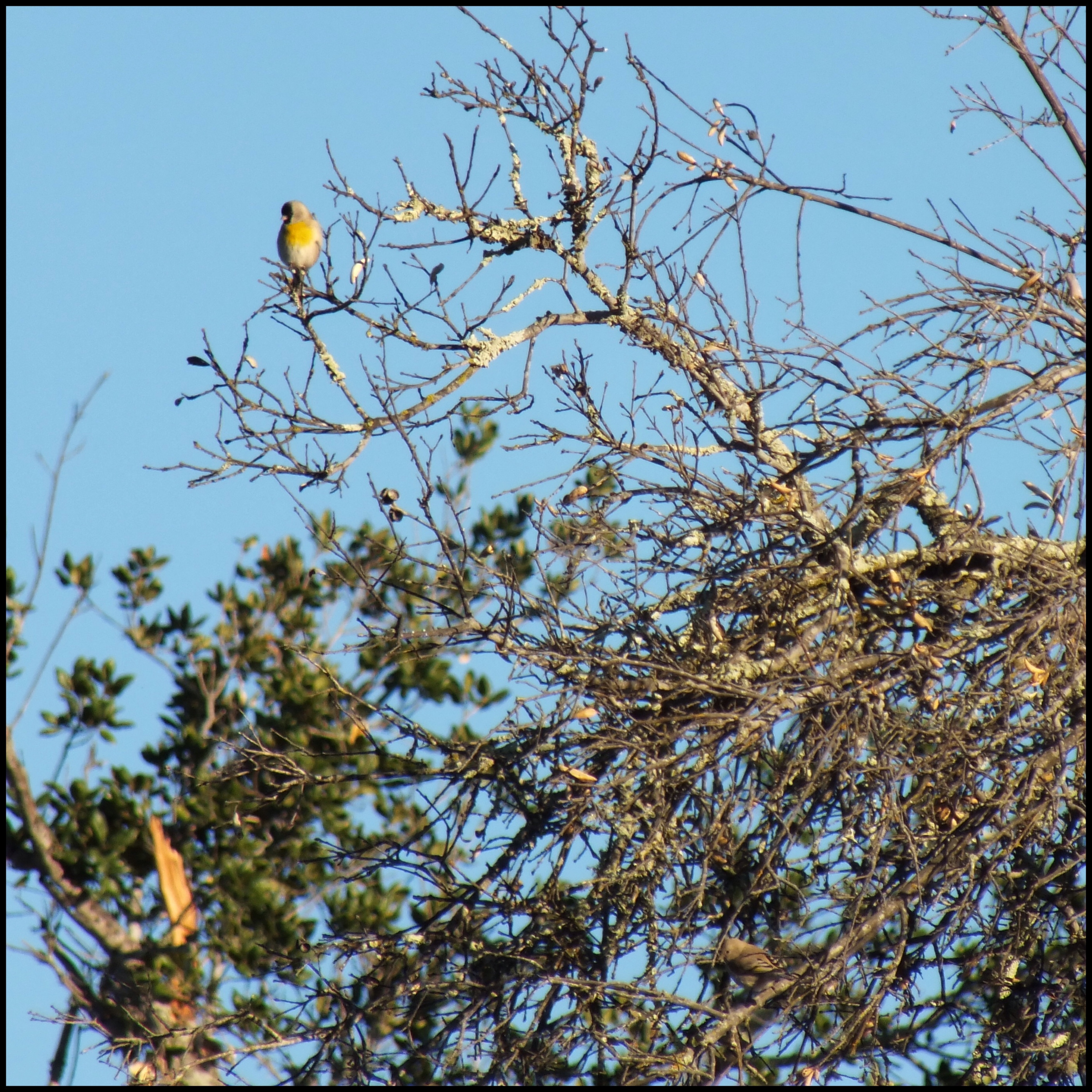
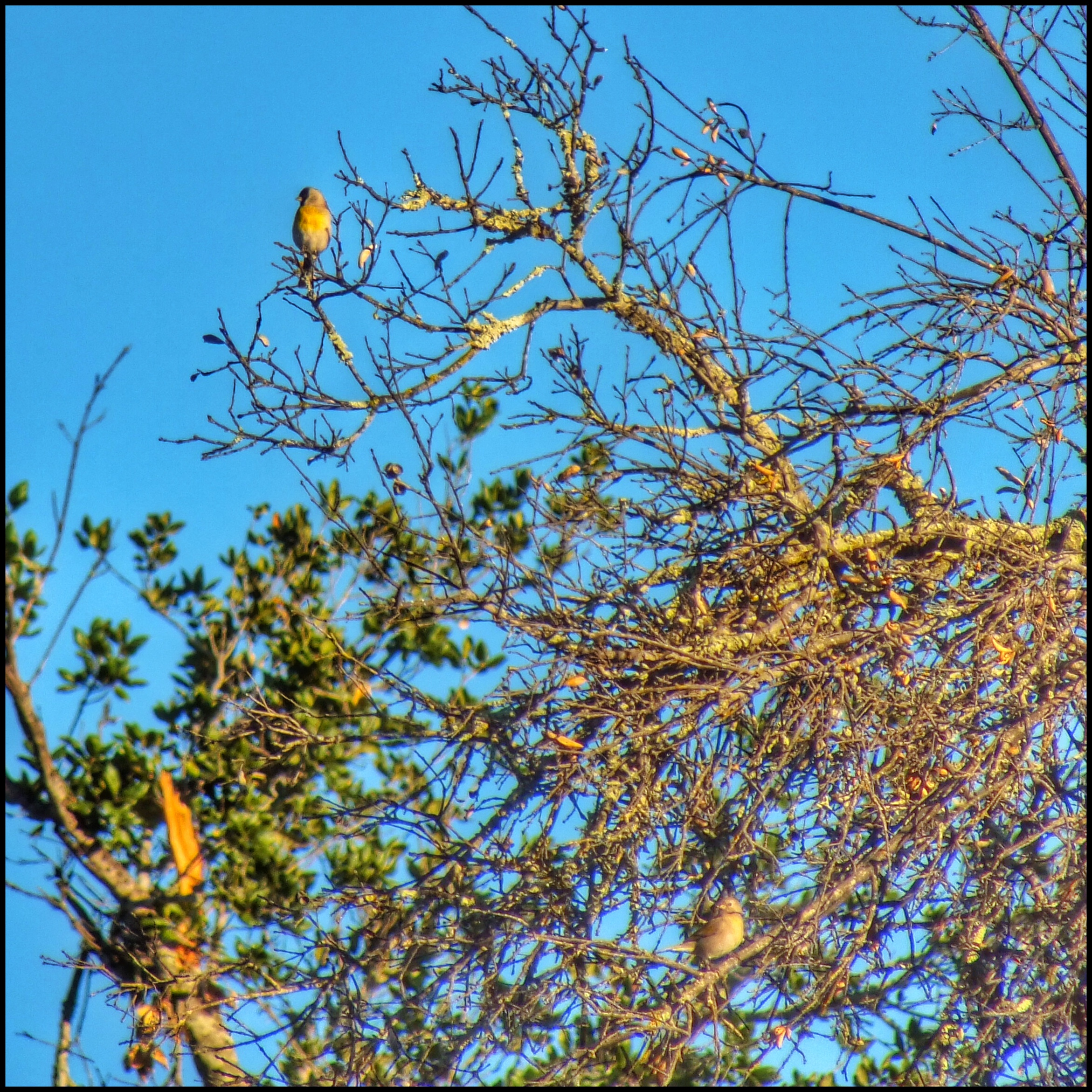
On my first pass by the spring on the the Vista Grande Trail (where I’d seen the Oak Titmouse) I’d heard and gotten brief glimpses of several small birds that sounded and acted like goldfinches. I made my way back to the area as the sun was going down and waited. After ten minutes or so, I saw two small birds land in the top of a leafless tree about forty yards away. One of them was clearly a male Lawrence’s Goldfinch, with a bright yellow breast and black face and cap. The other, which landed further down in the tree, was more drab, with a gray head, but with distinct black, white and yellow wing bars.

IMG_0356

IMG_0357

As I stood there watching and taking photos, a very loud, very rude family — parents and three boys — came barging down the path making as much noise as they could, even after they saw me standing there. They stopped right behind me and watched as one of the boys casually knocked over a portion of a post and rail fence, then clomped away down the trail. The birds left about the same time as the jerks.

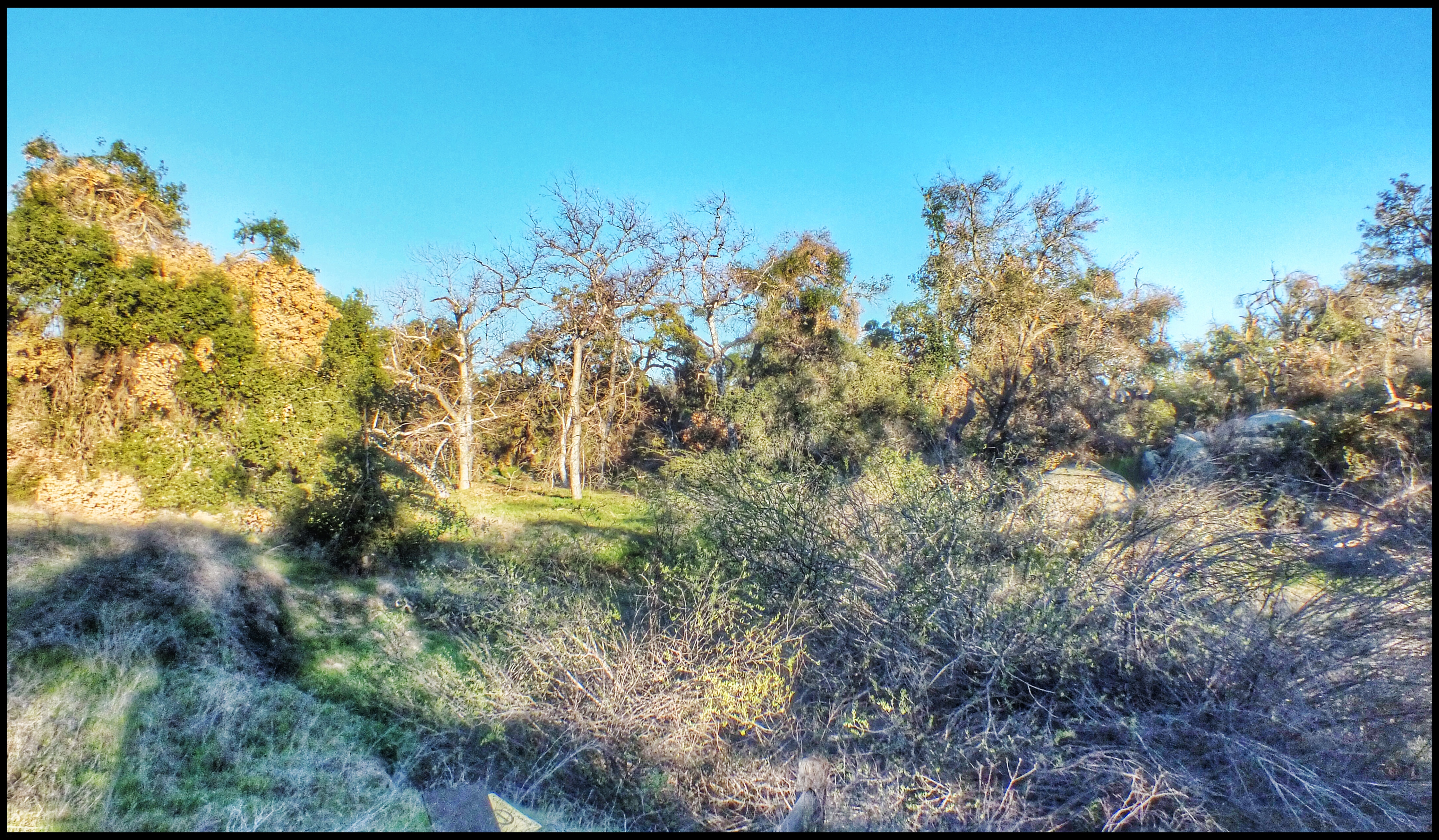
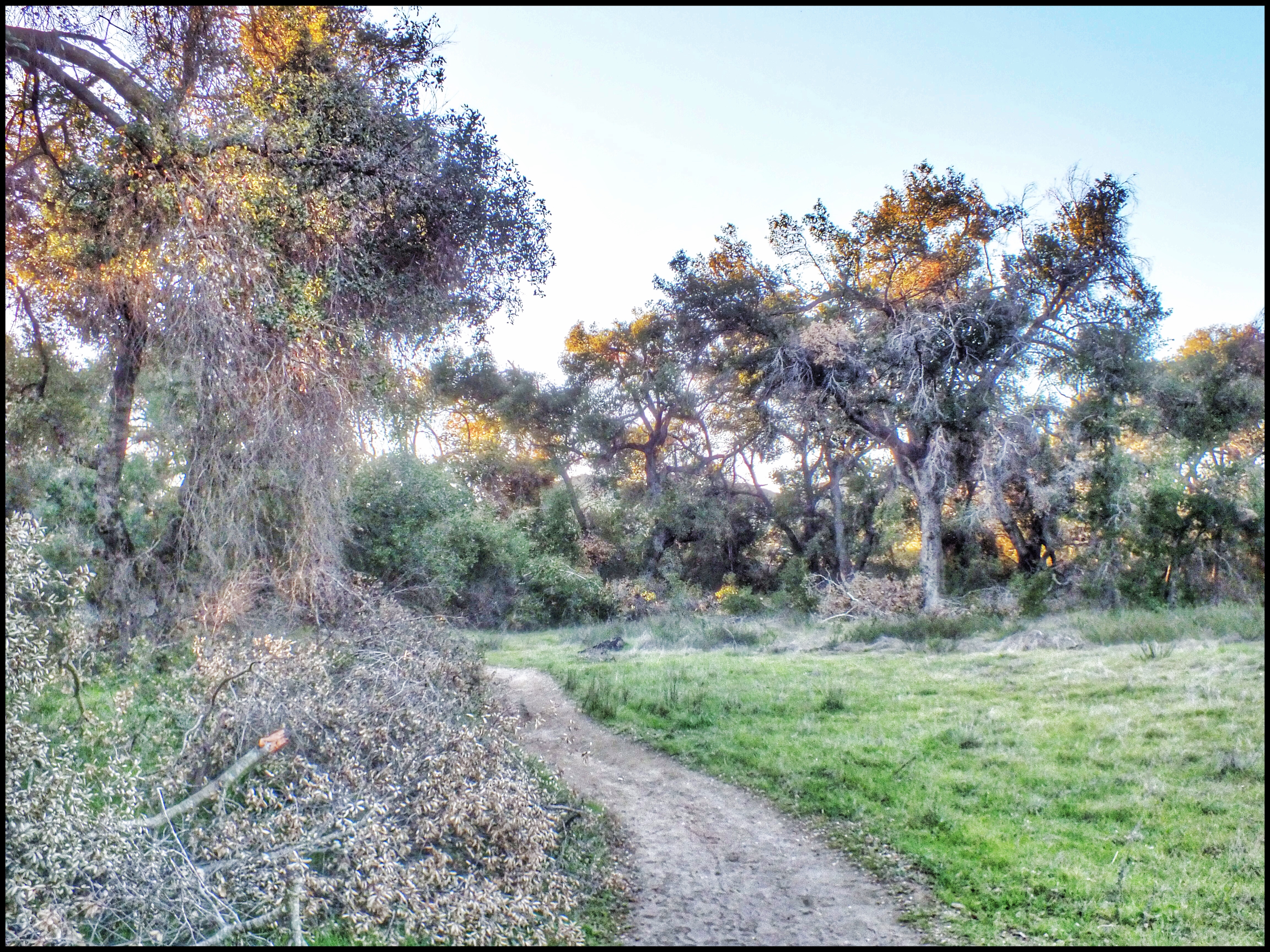
Here’s a shot of the trees from where I stood. The birds were in the bare branches in the center of the photo. You can see I didn’t have a close-up view.

IMG_0355

Posted in Wildlife | Comments Off on Bird #467 — Lawrence’s Goldfinch

Reptile-Amphibian #25 — Western Fence Lizard

sceloporus occidentalis

Sunday, February 15, 2015

Santa Rosa Plateau Ecological Reserve in Murrieta, California

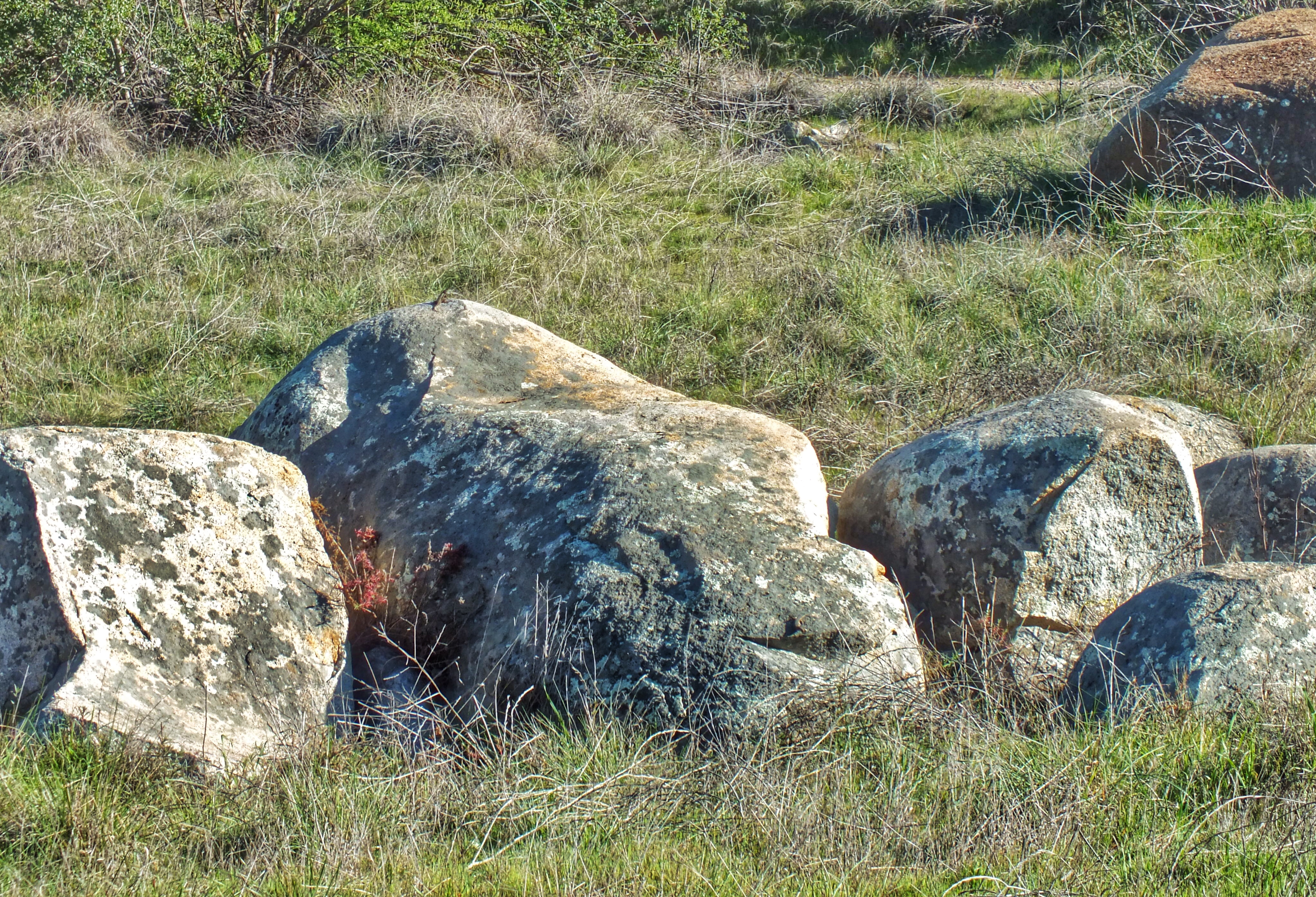
I spotted the first Western Fence Lizard sunning on a large rock in a field.

IMG_0404

A while later, I saw another one on a log in the trees along the dry creek bed. It made no attempt to get away — perhaps it knew it was surrounded by poison oak. I only found this out when a couple walked by and paused to see what I was looking at. I’m not sure they saw the lizard, or at least they didn’t think it worth mentioning, but they did mention the poison oak.

IMG_0406

After they walked on, the lizard strolled confidently to the end of the log, within a foot of where I was standing. It didn’t move even when I bent over and took a close-up. It was about seven-inches long, with scales all over its body.

IMG_0405

Posted in Wildlife | Comments Off on Reptile-Amphibian #25 — Western Fence Lizard

Bird #466 — Band-tailed Pigeon

columba (pigeon or dove) fasciata (banded)

Sunday, February 15, 2015

Santa Rosa Plateau Ecological Reserve in Murrieta, California

The trail I was on soon entered open fields, so I cut over to another trail called the Waterline Road and headed back the way I’d come. In area covered with bushes and scattered trees, I saw three large birds flying in a straight line not far above the treetops. I knew at once they were pigeons, and that they weren’t Rock Doves. They were larger, with longer tails, which gave them more of a stretched-out look.

Unfortunately, they were between me and the sun, so I couldn’t see a great deal of detail. They were slate gray with darker wing tips and paler tails. They continued flying out of my sight and, although I kept looking, I never spotted any more.

IMG_0354

Posted in Wildlife | Comments Off on Bird #466 — Band-tailed Pigeon

Bird #465 — Oak Titmouse

baeolophus (from baio, little, and pogon, beard)  inornatus (without adornments, plain)

Sunday, February 15, 2015

Santa Rosa Plateau Ecological Reserve in Murrieta, California

I explained to the woman who took my entrance fee in the visitor center that I was looking for four specific birds. She introduced me to Charity, the staff naturalist who is also a birder. I told Charity that I only had that afternoon to spend birding and asked if she could direct me to the best places to look. She pulled out a map and told me my chances were good for three of the four (California Quails are often tough to find). She recommended that I make my way down into the woods along the Vista Grande Trail and walk slowly.

I wasn’t seeing very many birds, but it was the heat of the day (about 80 degrees, which is a little warm for mid-February, even in southern California). When I came upon a small pool I stood still for a couple minutes listening and watching. I heard some very chickadee-like sounds coming from a nearby tree and soon spotted an Oak Titmouse. It was about 10 feet off the ground, calling, and moving about rapidly. I saw it again, or another one, in the same tree about two hours later and heard it’s titmouse-like two-syllable song.

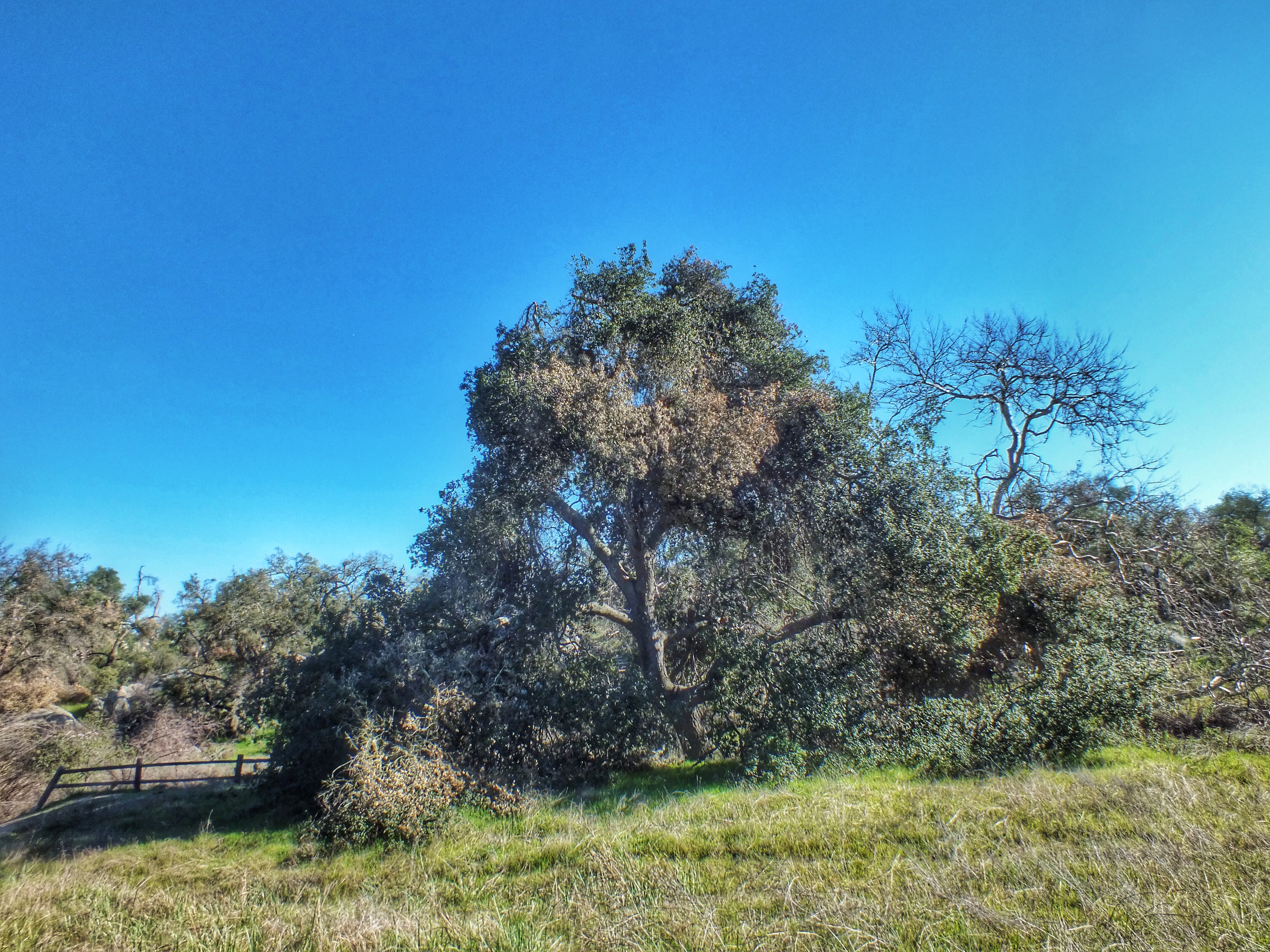
It was brownish gray and very plain with a small crest. I tried for photos but it was moving too quickly for me to find it and focus on it. Here’s the tree where I saw it.

IMG_0396

Posted in Wildlife | Comments Off on Bird #465 — Oak Titmouse