Whale Seeking Cruise

In mid-February, I flew to San Diego to work at a conference. Five of us took an early flight so we could get to the coast in time for a three-hour whale watching cruise.

After a quick lunch at a closed Einstein Bros. Bagels (the lights were off and the store had been closed for half an hour, but they were willing to serve us from the stock they had left) we got to the cruise dock in plenty of time. Everything I read on the Internet, and the statements made by the people at the dock made me think we had a good shot at seeing whales, but once we were on the boat and it was too late to turn back, the message subtly changed to “we’re between migrations right now.”

Our boat was the Privateer. Here it is backing into the dock.
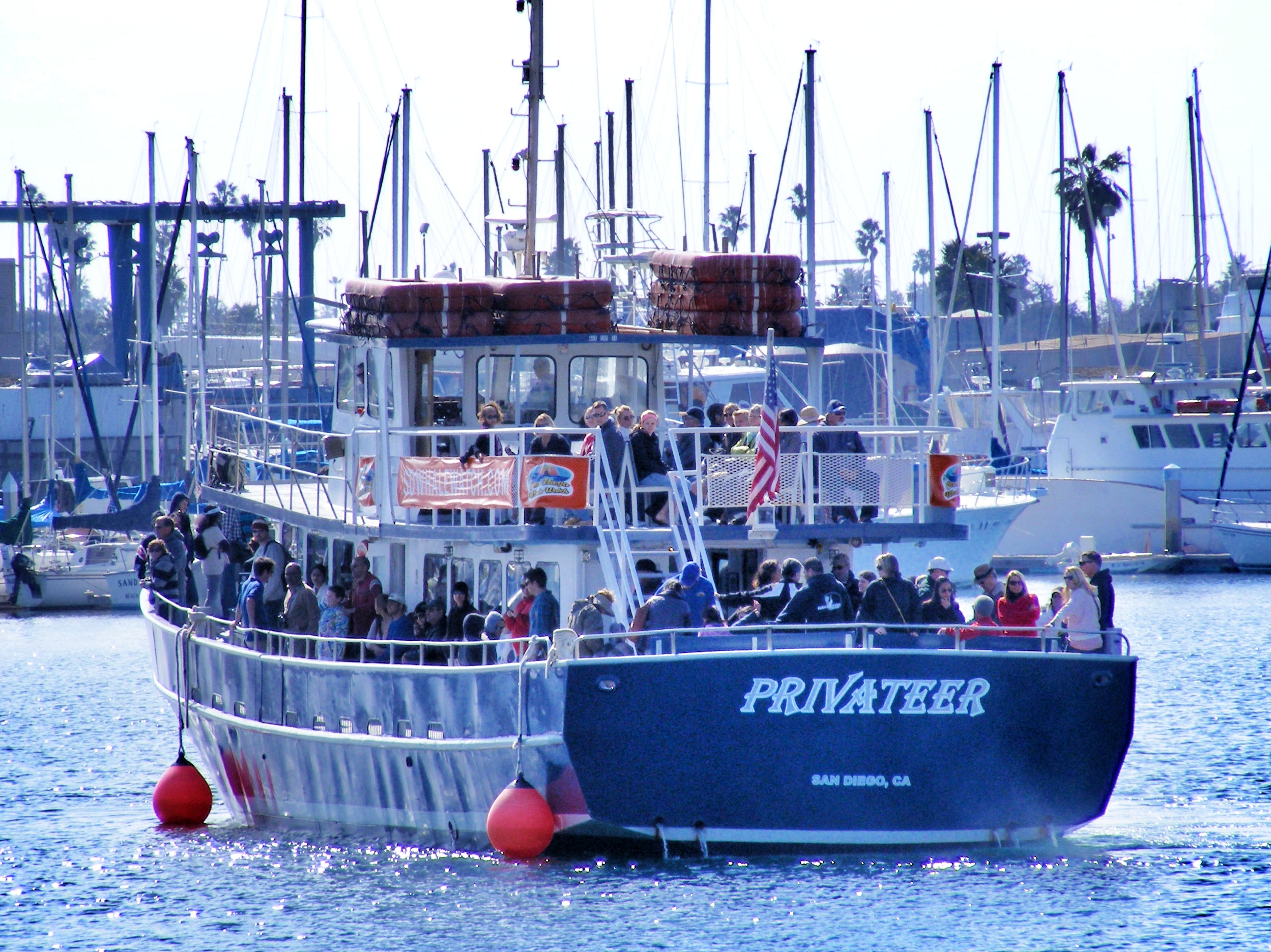
Privateer

We watched the crowd disembark from the previous cruise and attempted to determine if they looked like people who had just seen a whale. I was thinking that they didn’t, and we confirmed this by asking one of them. They had seen a huge pod of dolphins, however.

As we headed out of Mission Bay, the marine biologist got on the intercom and told us what we were looking for. We passed a floating dock in the harbor, and she pointed out the wildlife resting on it.

Snowy Egrets

Snowy Egrets

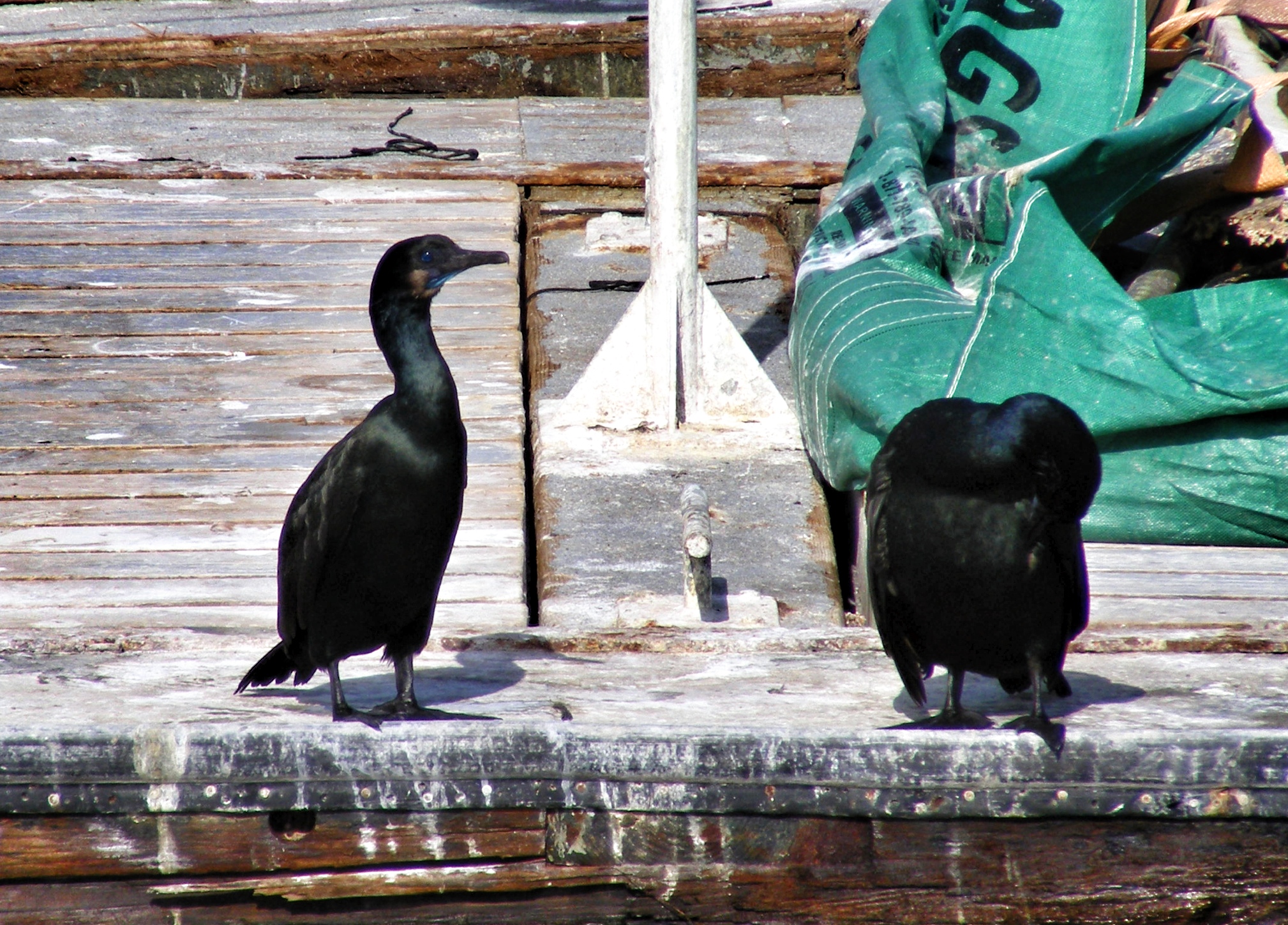
Brandt’s Cormorants

Brandt's Cormorants

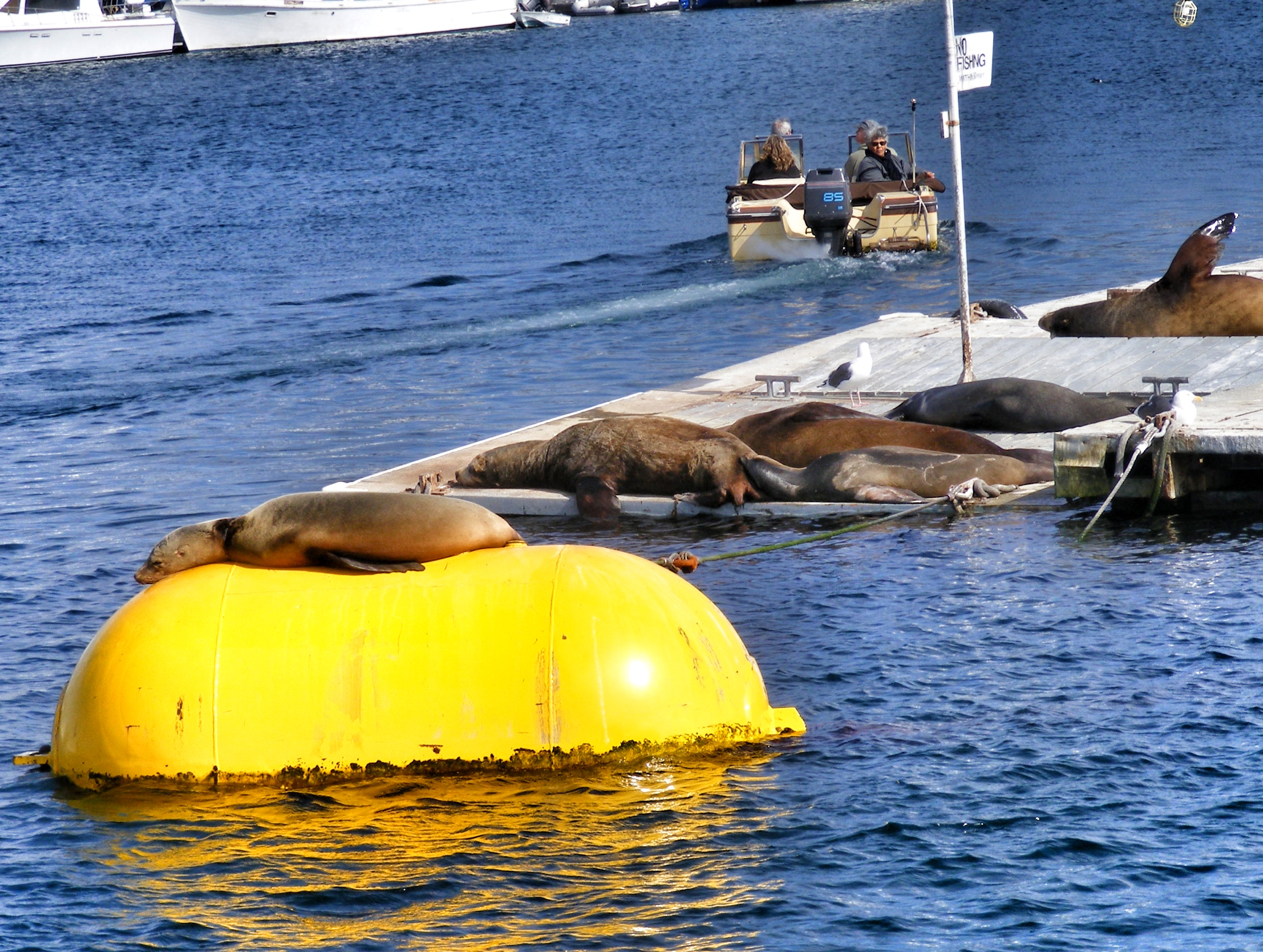
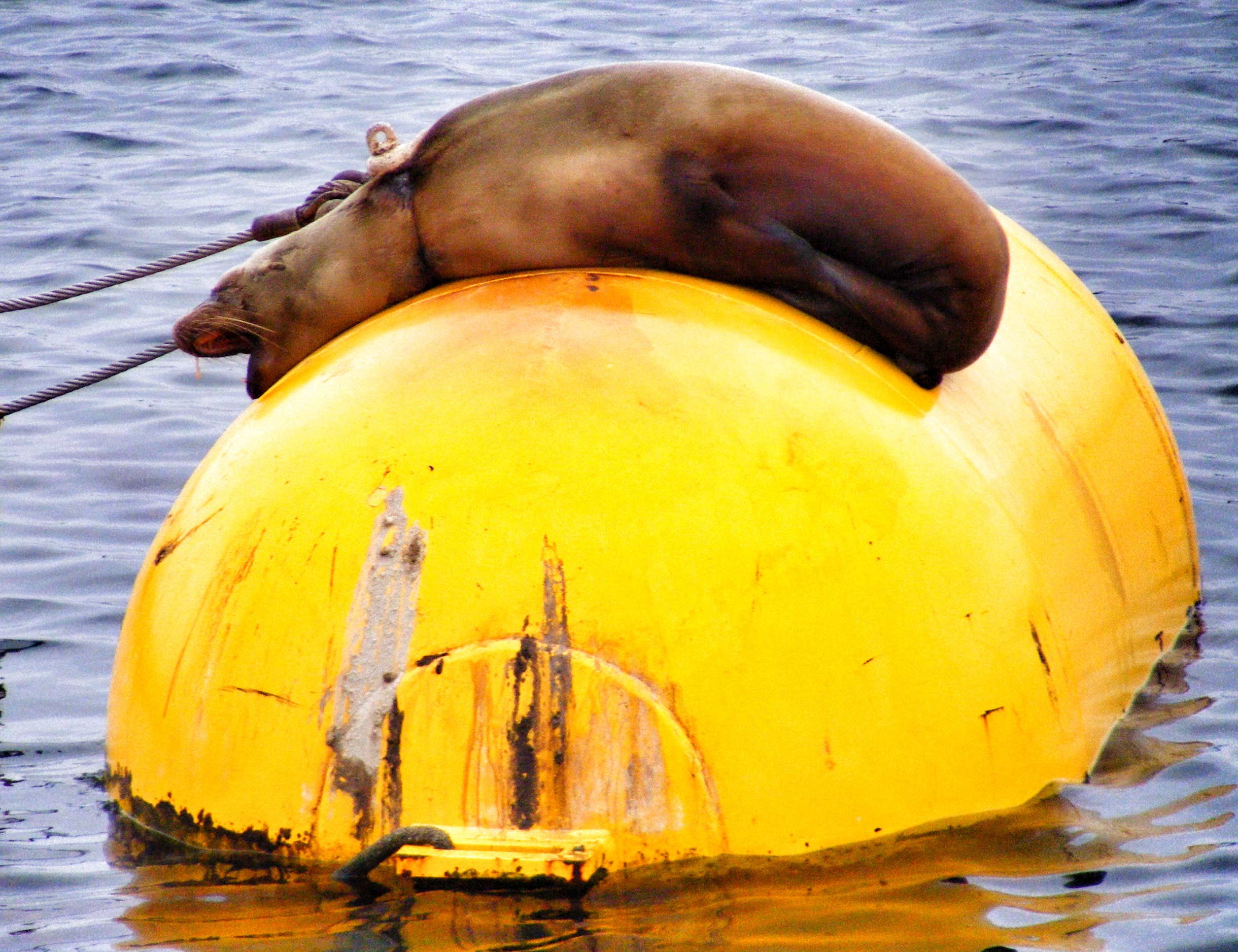
California Sea Lions

California Sea Lions

I very much wanted to see whales and dolphins, but this was also the closest I’ve ever come to a pelagic birding cruise, so I was excited about the new birds I could see too. I found a spot near the bow and didn’t sit down or go inside the cabin once.

There were many birds around — Great Blue Herons, Brown Pelicans, Common Loons, Western Grebes, Western Gulls. We chased up a small flock of Brant as we left the harbor mouth.

Brant

It had been a beautiful morning, but was we headed out into open water, the sun disappeared and a cool wind picked up. Many people who had rushed for seats in the bow soon headed inside.

It wasn’t long before I started seeing birds I couldn’t identify. I had my old binoculars, and they were useless with my glasses on and near-useless with my glasses off. I quickly resorted to birding by taking photos with my old point-and-shoot camera at maximum zoom and then trying to identify the bird in the photo. This is not satisfying. This was one of many mystery birds. It didn’t fly like a gull, and I think it might be a shearwater, but I have no idea which one.
shearwater?

One of the crew came by and I asked him about some smaller birds I’d been seeing. He told me what he knew, then went to ask the biologist for more information. I was hoping she would start announcing the birds as they went by, but she didn’t.

We were told to watch for splashes — a sign of whales and dolphins. As we got further and further out, more and more people quit looking and went inside. Here’s the captain searching for whales. We were told there was a whale four miles away, but there were already six boats hovering around it and the legal limit for one whale is four boats, so we stayed in our area.
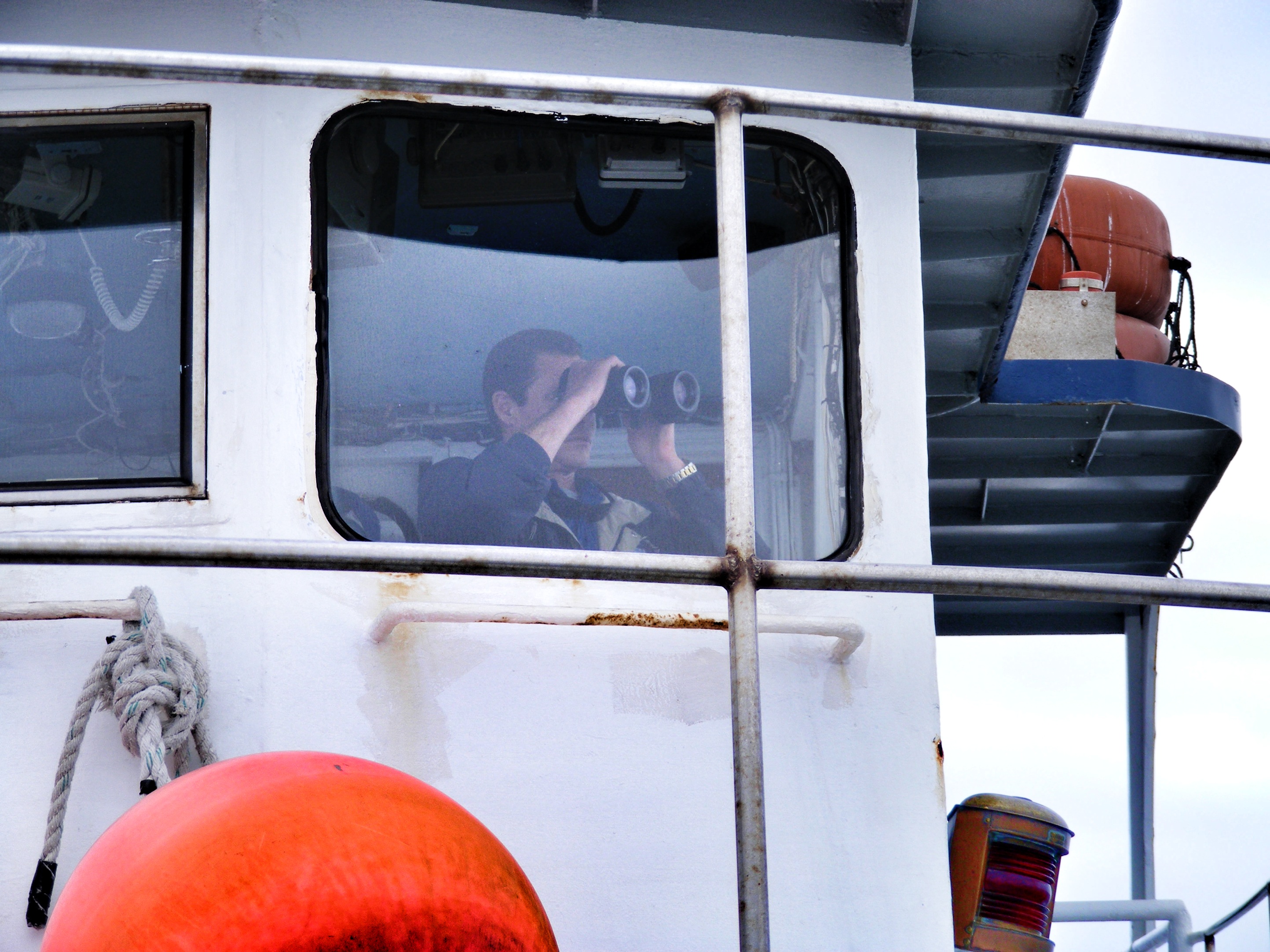
Captain Rick

When we turned and headed back toward shore, I personally gave up on whales and determined to identify some of the smaller birds we’d come fairly close to.
Heading back in

I wasn’t having a lot of luck. It was this bird that finally made me change my strategy.
Mystery bird

I climbed to the upper deck and knocked on the cabin. The biologist, Melissa, came out and I showed her the photo. She said it was a jaeger, but I think it’s more likely it was a shearwater. We talked for about 15 minutes about birds and whales and how she got this job. She was very pleasant and helped me identify two lifers — the smaller birds that swam nearer to the boat — Scripp’s Murrelet and Rhinoceros Auklet (next posts).

Everybody had given up all hope. I had returned to the lower deck to chat with a friend when the boat turned and I saw a large flock of birds in the distance. I knew it was something interesting, so I dashed back top and found a good place on the railing just as Melissa came over the intercom and reported that they’d found a pod of Common Dolphins. We could see them surfacing in the distance, and as we raced toward them, they raced toward us.
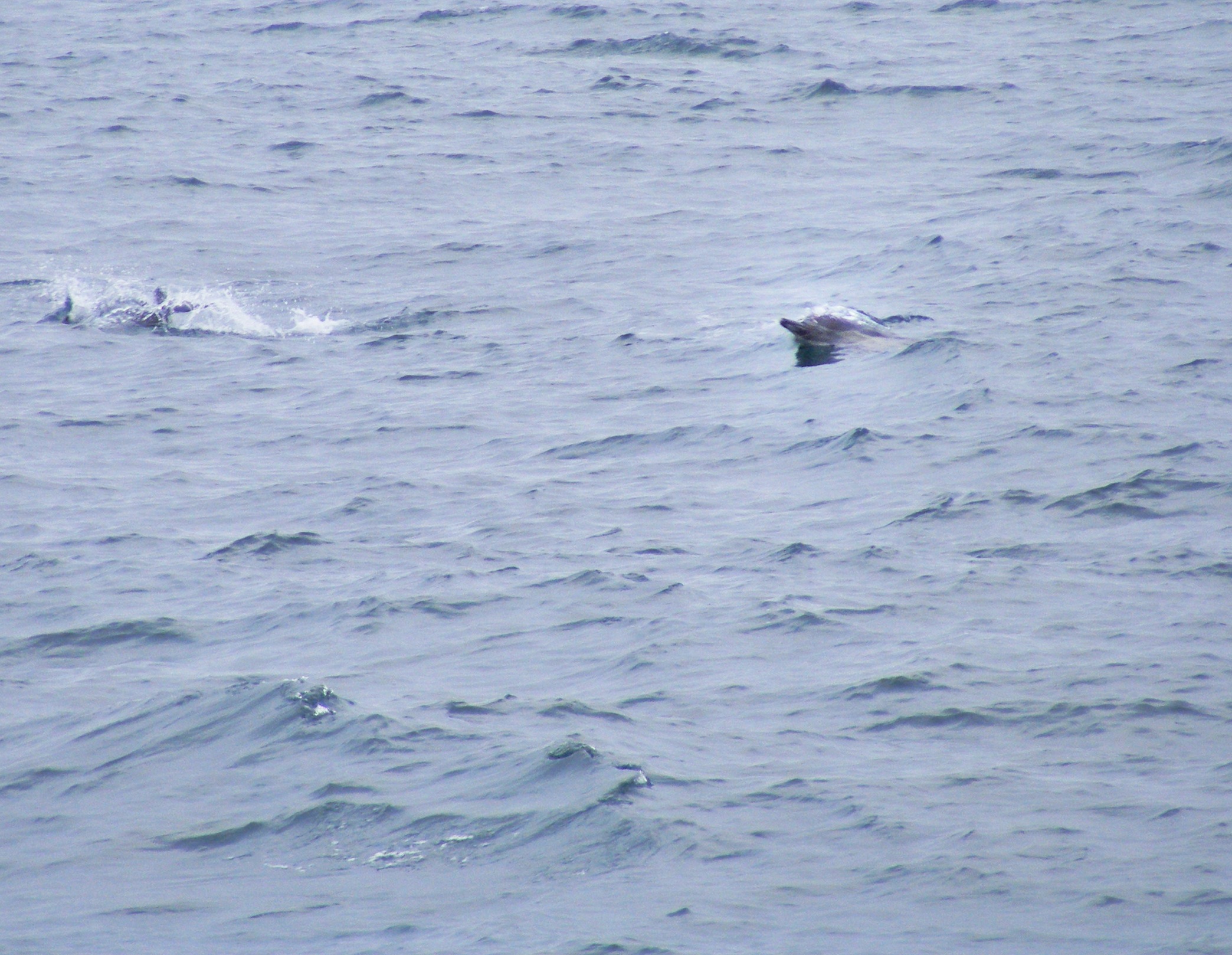
Dolphins

We headed into Mission Bay, mollified that we hadn’t been completely shut out.
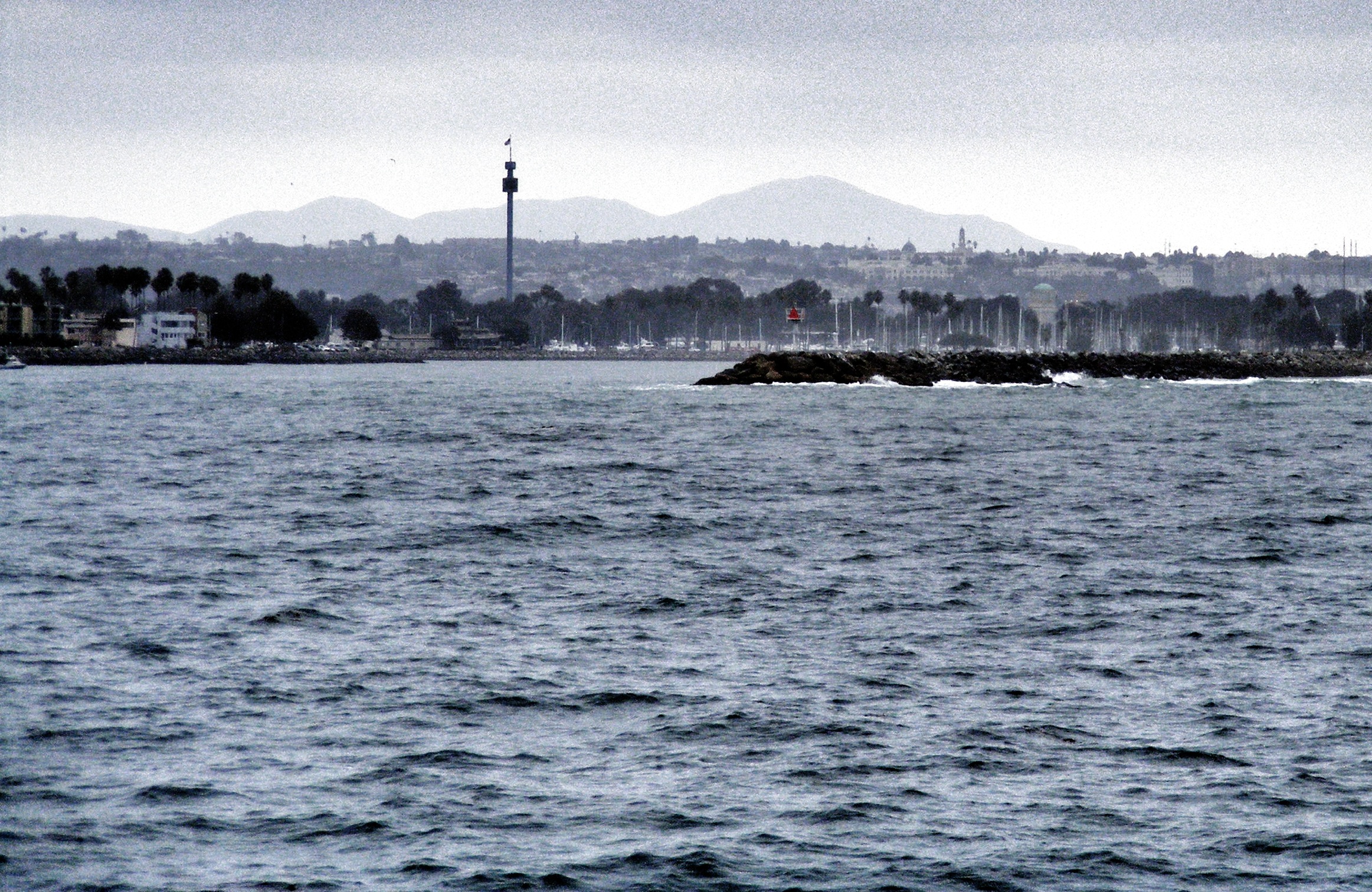
Entrance to Mission Bay

A Harbor Seal (I think) followed us down the channel for a couple hundred yards, but he couldn’t keep up and finally quit.
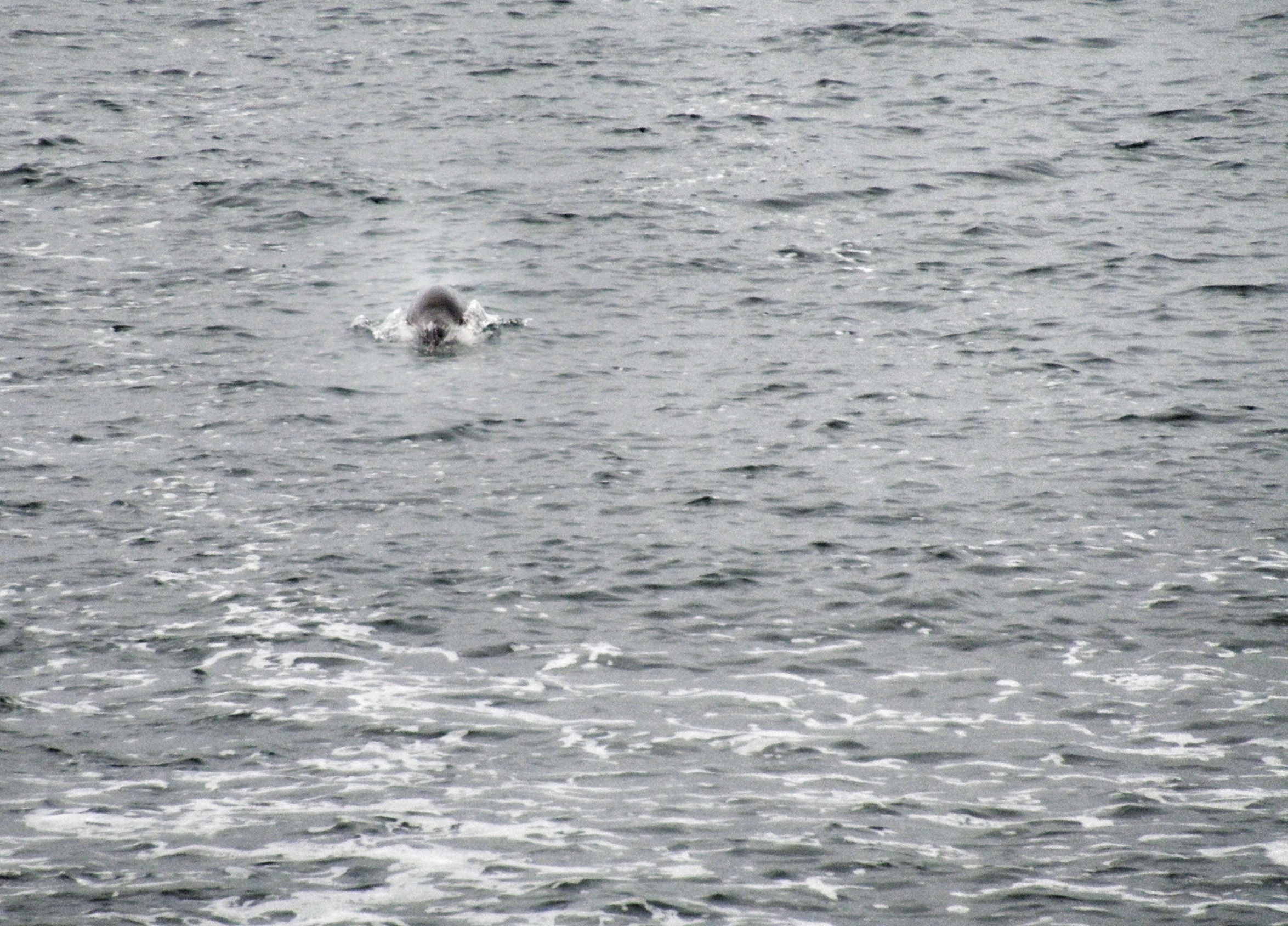
Seal in Mission Bay

The sea lions were still in the same spot on the floating dock.
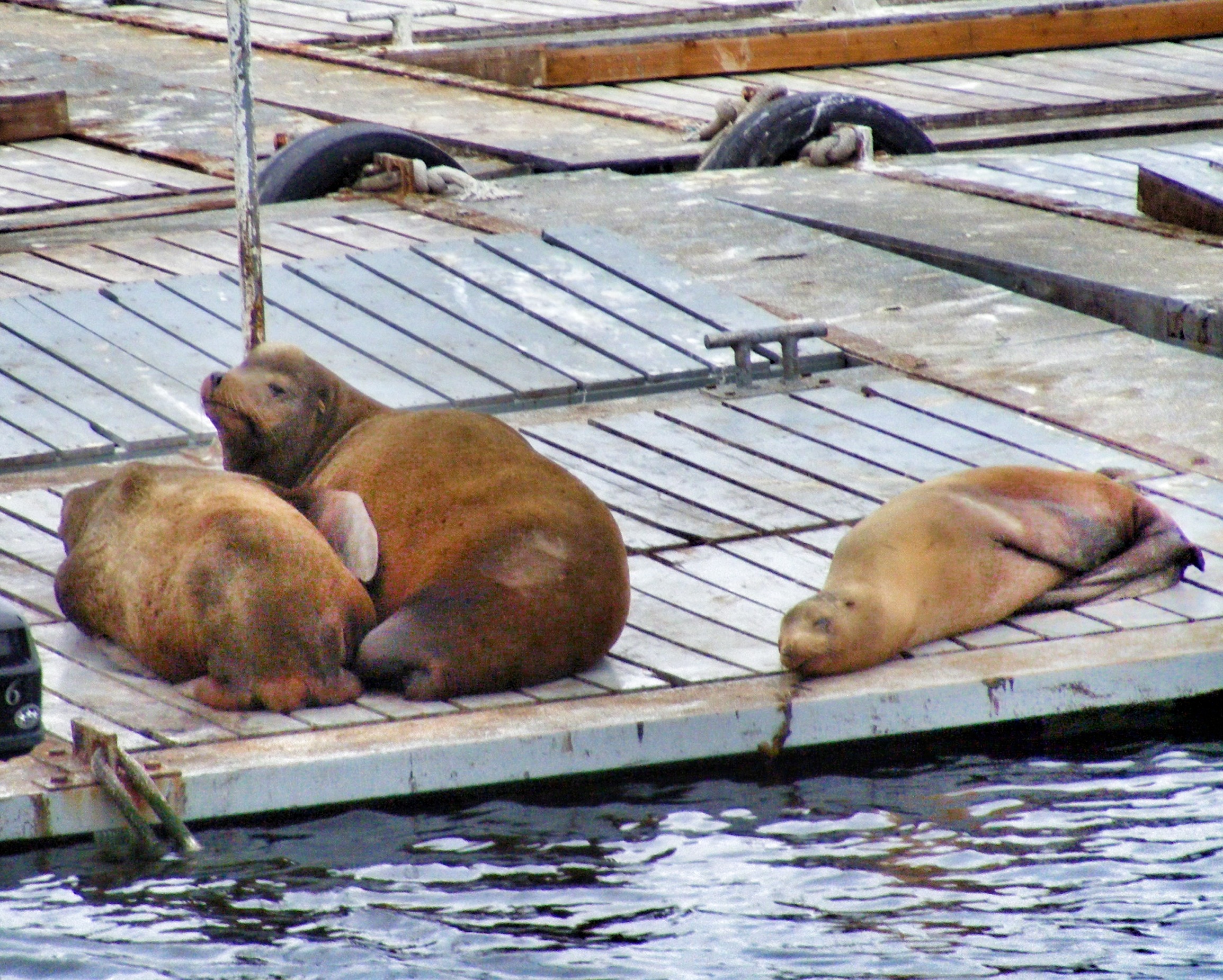
sea lions

sea lions

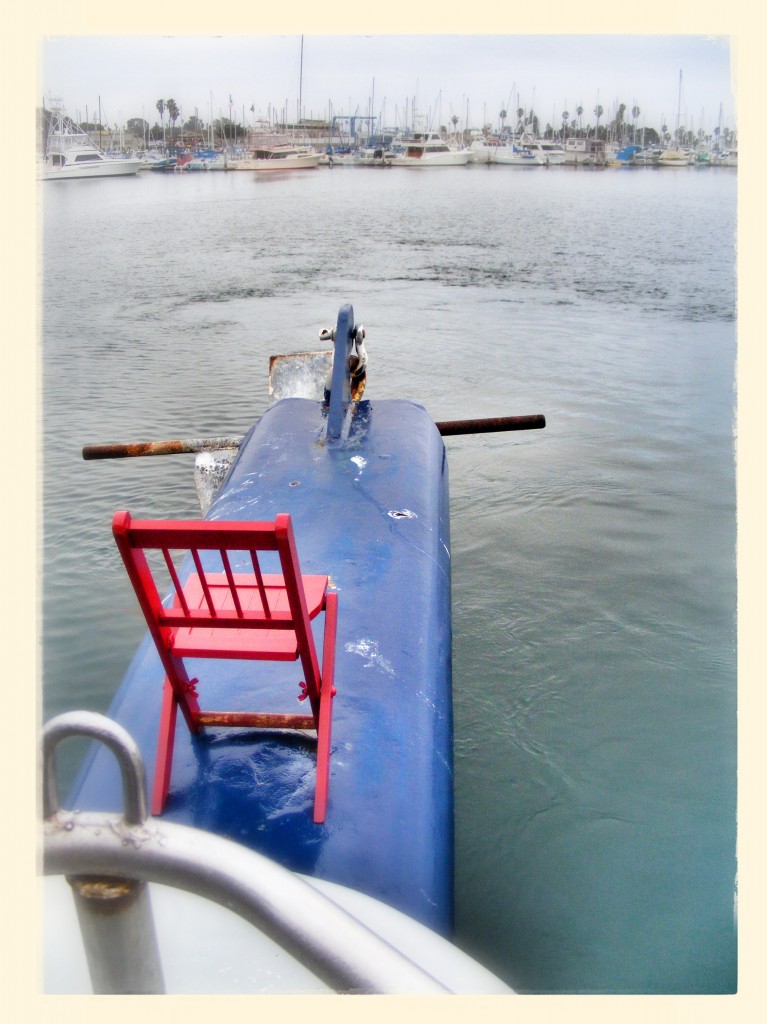
photo-001-767x1024

We were told this was the least-productive cruise, whale- and dolphin-wise since November. As we filed off the boat, we were given free passes for another cruise, which didn’t do those of us from Illinois much good. But I did see some dolphins and get two lifers. I felt bad for my four friends whom I talked into spending $44 for the trip, but they all professed to have had a good time. As we walked down the dock, A Black-crowned Night Heron flew in and landed on a yacht in the harbor.

Black-crowned Night Heron

Posted in California | Comments Off on Whale Seeking Cruise

Please Remain Seated

photo-74

I boarded late, but my friend was kind enough to save a seat for me on the aisle near the back of the plane. When we got the message that it was OK to turn on our electronic devices, I pulled out my phone and the chair.

A mom was sitting across the aisle with two young kids. She was holding a large stuffed bear on her lap. As I put the chair on the floor, she pointed it out to her children, then asked me if I wanted the bear to sit in the chair. It would have overwhelmed it (you can see part of its leg on the left), so I asked if she had anything smaller. Moments later, she handed me this well-loved monkey, and I had one of my favorite shots of the trip.

Posted in Photos | Comments Off on Please Remain Seated

Back to Midway

I was off again on a Sunday morning to another conference, this time in San Diego. Five of us headed out early to do some sightseeing. Our flight left around 8:40, so we had to get to Midway Airport by 7:00. While the others were getting their luggage out of the trunk, I took this quick shot.

Like most limos I’ve been in, this one was fixed up fancy with glasses and napkins and colored lights — all for show. Upon occasion, I’ve struck up conversations with drivers. They own their own cars and contract with a service that connects them with passengers. For most of them, the car is their chief investment in the world and they take great pride in making them look good.

photo-002

Midway Airport was named in honor of the WWII Battle of Midway in which planes flying from U.S. carriers attacked and sank four Japanese carriers and altered the momentum in the Pacific Theater.

There’s an exhibit on the battle in the airport that includes an SBD Dauntless Dive-Bomber hanging from the ceiling. This type of plane was used during the battle, although this particular one crashed in Lake Michigan during training exercises during the war and remained in the lake until it was recovered in 1991.

I was intending to find an angle for a red chair picture that showed the plane in the background, and I did somewhat — you can see part of it at the top of the photo. But I was drawn to the bizarre statue against the wall. It appeared to be a cross between a ballet dancer and a professional wrestler, dressed as an auto mechanic. On the Midway Airport site, I discovered that it “is a 9-foot tall bronze depiction of a military man during World War II” and that it’s titled “America.”

OK.

It’s still bizarre, and it was screaming for a red chair shot.

Snapseed-811

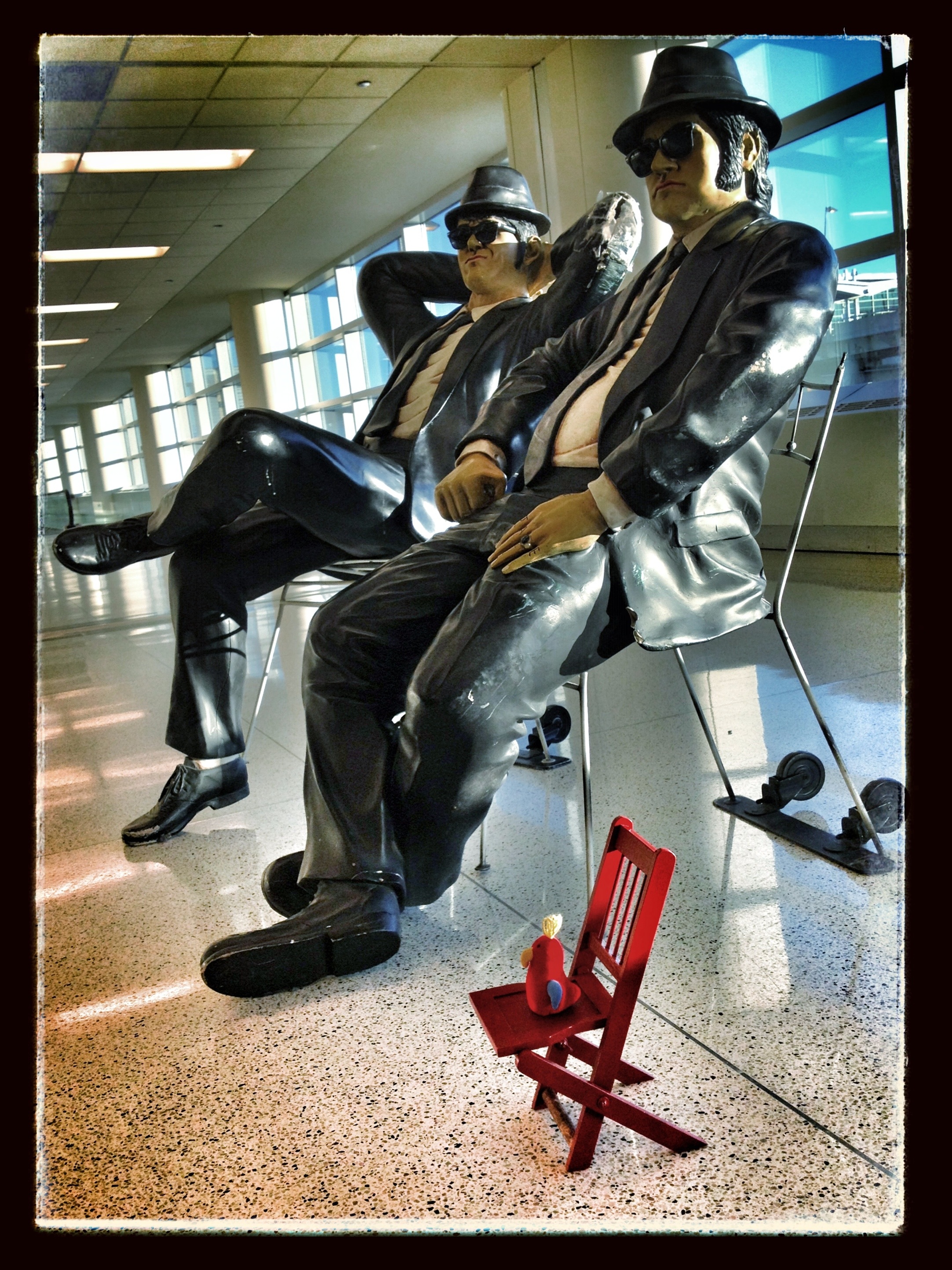
House of Blues has a gift shop in the concourse at Midway Airport. On either side of the shop there are well-worn statues of Jake and Elwood Blues, equipped with wheels for easy transport.

Snapseed-97

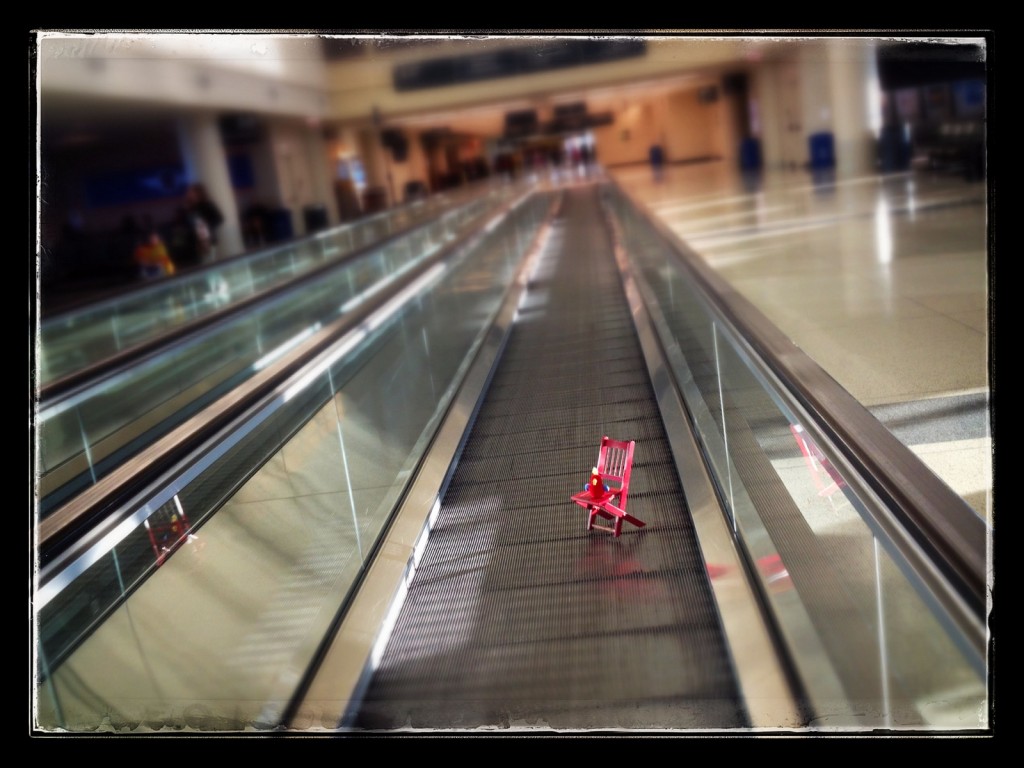
The concourse at Midway is split by moving walkways. As you walk along, a robotic voice endlessly repeats, “The walkway is ending. The walkway is ending. The walkway is ending.”  The sound got inside my head and stayed there for hours.

Snapseed-9-1024x768

There’s another intercom message at Midway that cracks me up every time. About once every five minutes, a guy comes on and says, “Attention, passengers.” The way he says “passengers” is a marvelous example of the extreme Chicago accent.

Posted in Illinois | Comments Off on Back to Midway

Bird #462 — Hoary Redpoll

carduelis (goldfinch) hornemanni (after Jens Hornemann, a Dutch botanist)

Friday, February 1, 2013

Cary, Illinois — home

We haven’t been putting out thistle seed for the past couple years because it’s been expensive to buy and money has been tight. When our local bird seed store went out of business in December, we discovered seed is cheaper at Farm & Fleet, so we bought some again.

The goldfinches discovered it right away and have been testing our resolve to continue offering it. But this week our investment paid off. I was home sick on Tuesday and noticed two Common Redpolls on the feeder. We were both at work on Wednesday, but on Thursday, when my wife was home, I encouraged her to watch out for them. She saw many, including one that she noticed right off was much lighter in color than the others. When I got home from work, I got a couple good looks at the flock and also noticed the lighter one. I saw enough to make me spend much of the evening researching the differences between Common and Hoary Redpolls.

Hoary Redpolls have been one of my nemesis birds. I’ve chased down reports of them on several occasions. I once spent about four hours standing on a sidewalk in a residential neighborhood in Evanston looking down the narrow space between two houses at several thistle feeders covered with redpolls but never saw the Hoary that supposedly had been seen in the area. Other trips to forest preserves and the Chicago Botanical Gardens have also been fruitless. Could there possibly be one in my own yard?

The consensus on the Internet is that they’re probably under-reported because people are so cautious about separating them from Commons. But I did my research and had my camera and binoculars standing by on Friday.

Every half hour or 45 minutes, the redpoll flock would show up — sometimes three or four birds, sometimes as many as 20 — for about 10 minutes. Then they’d flit off suddenly and disappear for a while.

Off and on during the morning, I saw a bird that I thought might be the pale one I was looking for, but the light was bad and I was never sure. I gave up for a while, but when the afternoon sun got into the best position for lighting our feeders, I looked again.

There was one female that was definitely lighter, with a much less-streaked, paler neck and back, thinner and fewer streaks on her flanks, just a few marks on her undertail coverts, and a pale rump. Her bill also looked stubbier.

The birds kept chasing each other off the prime spots on the feeder, so it was hard to keep track of one given bird, but there were a couple times when the light female was positioned where I could see her well. I took a ton of photos and checked all the field marks as carefully as I could.

What finally convinced me was the one time the pale bird flew down to the ground. Other redpolls had been feeding on fallen seed all day whenever the flock was in the yard, but I’d never seen the pale one down there. She only stayed for a split second this time, but it was long enough to see the marked contrast in the color of her back.

After looking carefully at my pictures and comparing them with my field guides and photos and guides on the Internet, and, for good measure, having my wife sort through all the evidence with me, I am convinced I had a female Hoary Redpoll on my feeders.

The Hoary is on the left. You can see how much more fine the streaks on her flanks are compared to the Common on the right. There are also fewer and finer marks on the undertail coverts.

Hoary (left) and Common Redpolls

Hoary (left) and Common Redpolls

In this shot, you can see how much paler she is on the back and hind-neck.

Hoary (bottom, left) and Common Redpolls

In this next photo, that’s a male on the upper right with the pink chest. You can also get a good look at the streaks on the rump of the top bird to compare with the rump of the Hoary in a photo further down.

Hoary (bottom, left) and Common Redpolls

A good comparison of side and undertail streaks — and of how pale the Hoary is on the back.

Hoary (left) and Common Redpolls

In this next photo, she’s feeding on the back side of the feeder, giving a good shot of the undertail area to compare with the Common right above her.

Hoary (bottom, left) and Common Redpolls

A back shot to compare with the backs of the Common Redpolls in earlier photos.

Hoary Redpoll

A side view, showing how light her flank streaks are. That’s a male House Finch below her.

Hoary Redpoll (top) and a House Finch

One of the few times I was able to follow her after she flew off the feeder. I saw her white, lightly-streaked rump a couple times, but this was the only time I was able to photograph it. In many of these photos, she also seems to have a shorter bill than the Commons.

Hoary Redpoll

It’s been a very long time since I got a lifer out the window of my own home — more than 32 years, in fact. The thistle seed was well worth the price.

The redpoll flock comes and goes in various numbers, and the Hoary Redpoll isn’t always there. One morning, about a week after I took the photos above, the feeder was empty and the entire flock was on the ground foraging for scraps. The Hoary was right in the middle and was immediately noticeable. I took a quick, crummy photo with my iPhone, but it’s good enough to show the difference. The Hoary Redpoll is just below the clump of snow. There’s a female House Sparrow right below it, but all the other birds in the photo are Common Redpolls.

Redpolls, with a Hoary in the middle of the flock

Update: In 2024, the powers-that-be decided the Hoary Redpoll and the Common Redpoll are the same species, so all this was for naught.

Posted in Wildlife | 3 Comments

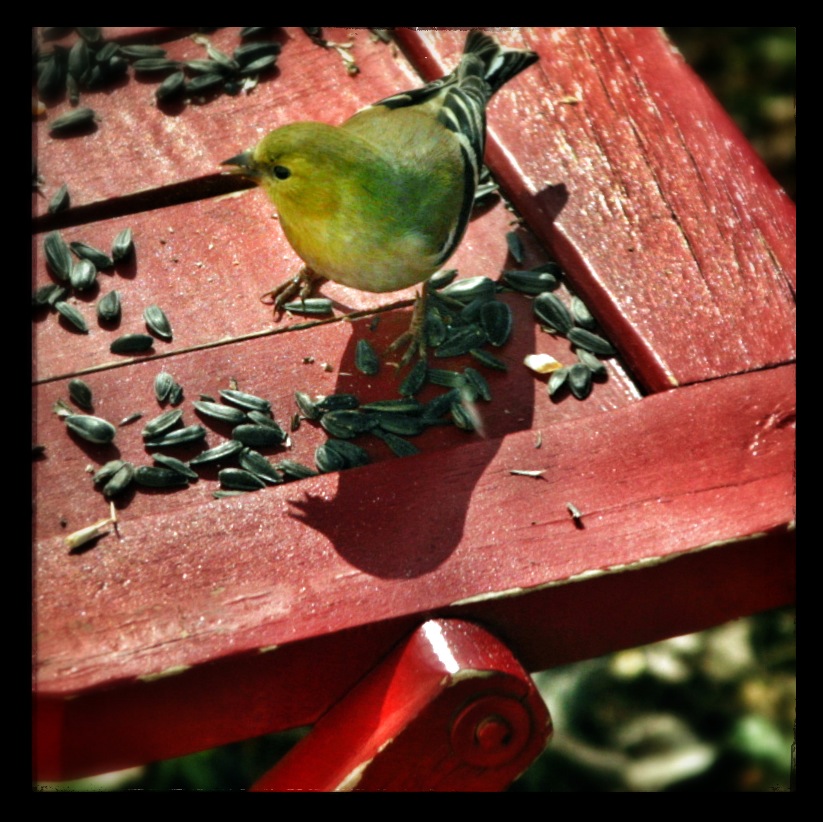
American Goldfinch

Snapseed-75

Shot in my backyard

Posted in Wildlife | Comments Off on American Goldfinch