Bird #332 — Glossy Ibis

plegadis (scythe, sickle) falcinellus (a small hook)

Saturday, July 21, 1990 — 3:40 pm

Savannah National Wildlife Refuge, South Carolina — Laurel Hill Wildlife Drive

As this trip approached, I envisioned huge flocks of waders clogging up the pools along the road. But except for an occasional Great Blue or Little Blue Heron, I wasn’t seeing much.

I finally found a large flock about 100 yards off the road. There was a row of shrubbery and a water-filled ditch (complete with Alligators) between the birds and me. I pulled over and spent a half hour looking over the flock.

The Glossy Ibis flew in, probably from the other side of the pool, and landed among the other waders. It began wading about in two or three inches of water, picking at the surface. Some of the pool was open water, but much of it was covered with short grass.

Later, when I drove the wildlife drive a second time, there were at least three Glossy Ibises in the flock.

Posted in Wildlife | Comments Off on Bird #332 — Glossy Ibis

Bird #331 — Anhinga

anhinga (Amazon Indians name for the bird) anhinga (ditto)

Saturday, July 21, 1990 — 2:00 pm

Savannah National Wildlife Refuge, South Carolina — Route 17

I left the pull-off where I’d seen the Purple Gallinules and continued down Route 17. I hadn’t gone more than a quarter mile when I spotted an Anhinga perched in a lone tree in the marsh along the road. I pulled over at the next pull-off to look.

The Anhinga was a female  It was perched in an upright position near the top of the tree. It held its neck in a loose S and regularly turned its head from side to side. The bill was pointed upward and open slightly, and the skin on its throat was quivering rapidly in and out.

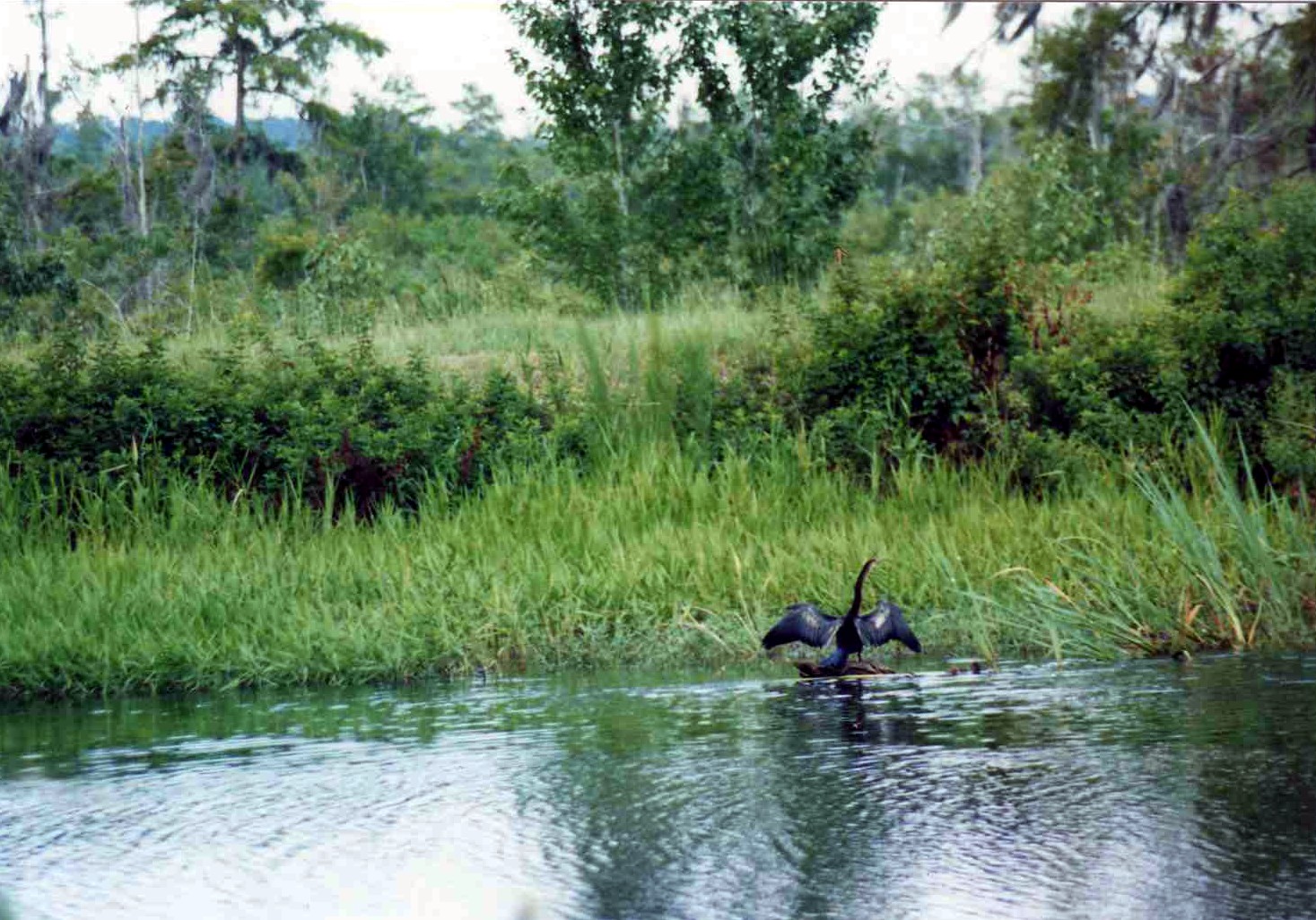
Later, along the wildlife drive, I saw a few more. I took a picture of a male perched on a log about 15 yards from the road.He stood there with his wings spread, watching me nervously. Shortly after I took his picture, he took off, flying very low over the water with laborious wing beats and neck extended straight out.

Posted in Wildlife | Comments Off on Bird #331 — Anhinga

Bird #330 — Purple Gallinule

porphyrula (red, brown, purple) martinica (of the island of Martinique)

Saturday, July 21, 1990 — 1:55 pm

Savannah National Wildlife Refuge, South Carolina — Route 17

I left my family at the hotel and drove over the Savannah River into South Carolina. There were small pull-offs along the road. I picked one at random, got out of the car and scanned the marsh with my binoculars.

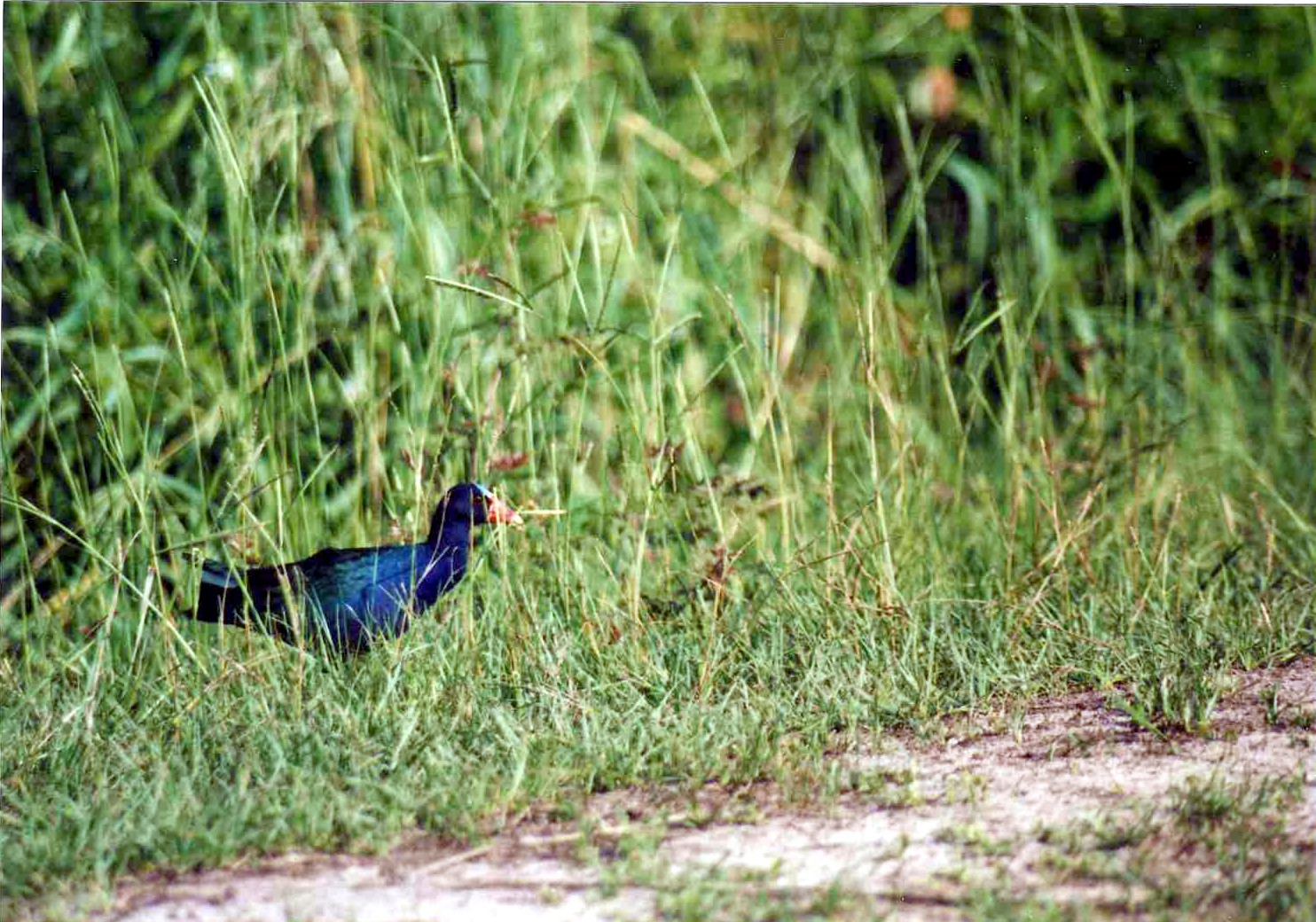
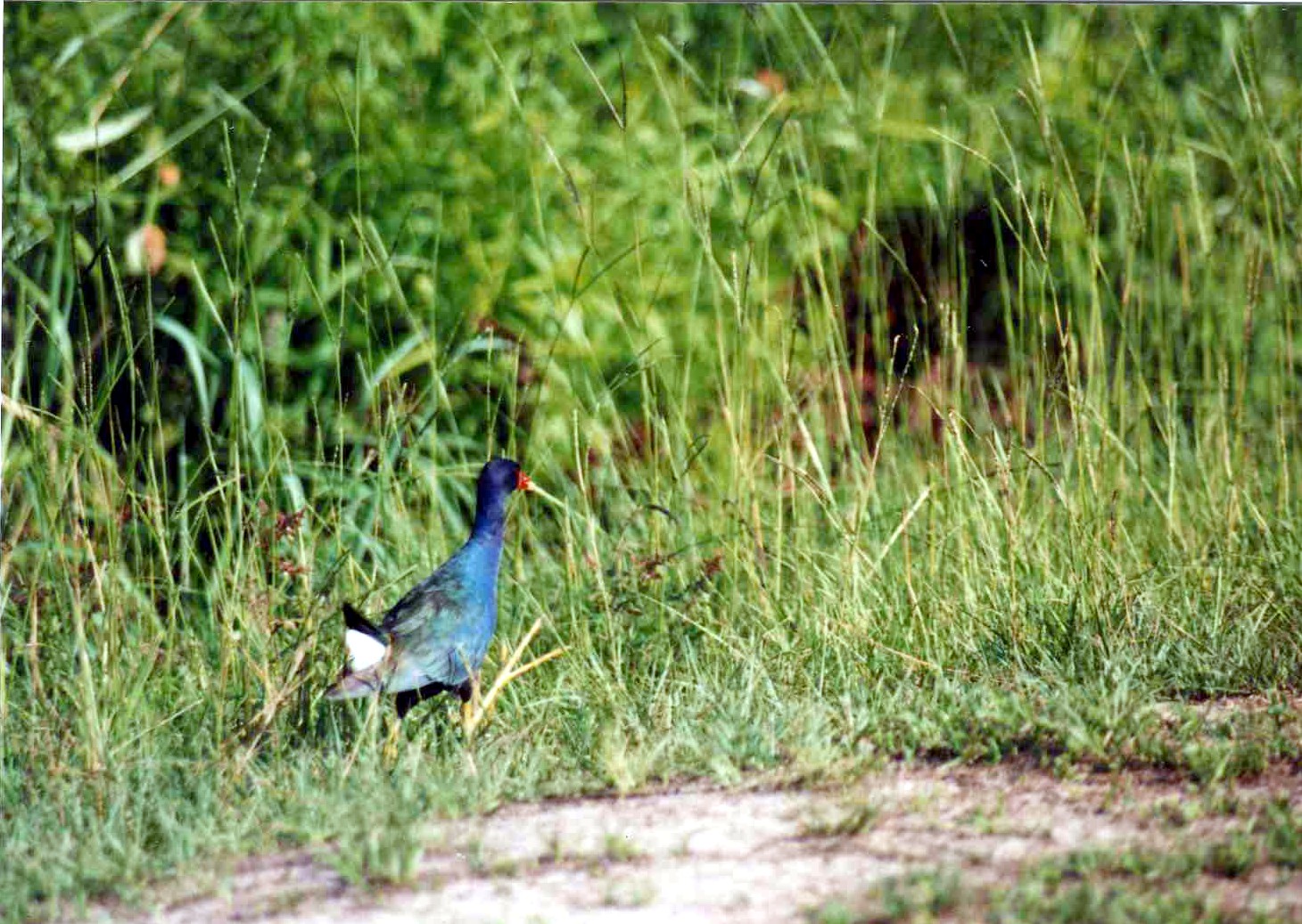
About 30 yards in front of me I saw an adult Purple Gallinule with two chicks. The adult was hopping about actively on the large lily pads that almost covered that part of the marsh. It foraged quickly about, often holding its wings aloft briefly after a hop. Where the pads were further apart, it strode quickly with long steps. It moved as much as 25 feet away from the chicks that were moving slowly about in a small area near the reeds.

As I was watching, a second adult flew in over the heads of the chicks and landed in the reeds. It could occasionally be seen foraging about through the grass.

I made the circuit around the wildlife drive without seeing any more. I contemplated how lucky I had been, stopping at the one place where they could be seen. But on the second time around, I came across two of them picking in the grass next to the road. I pulled up slowly in the car and got within 10 feet. They didn’t pay any attention and continued moving about as I took pictures. When another car came by, they wandered off into the reeds along a water-filled ditch.

Posted in Wildlife | Comments Off on Bird #330 — Purple Gallinule

Bird #329 — Sandwich Tern

sterna (tern) sandvicensis (of Sandwich, Kent, England, where type specimen was taken)

Friday, July 20, 1990 — 7:15 am

Tybee Island, Georgia — north end, near Fort Screvens — Atlantic Ocean

I was thoroughly enjoying myself as I scanned the large mixed flock of birds on the beach at the water’s edge. I figured I had plenty of time, but after I was there maybe 20 minutes, it began to rain. I tried not to let it bother me and continued looking.

The flock contained about 400 birds. Most were Common Terns, Royal Terns, and Laughing Gulls. A few Ring-billed Gulls and Black Skimmers were hanging around. On the outskirts of the flock, but still in the immediate area were Least Terns, Willets, and some smaller sandpipers I never got around to identifying. For a short while, an immature Brown Pelican stopped by. Three Snowy Egrets waded in the surf a bit further up the beach.

I was looking for Gull-billed and Sandwich Terns. After being confused by Common Terns for a while, I finally spotted a Sandwich Tern in the middle of the flock. It was walking amidst the other terns, often hidden from my view. It flew up and landed at the other end of the flock, about 30 feet away. I watched it land and noticed another one nearby.

I wanted to continue looking at them, and to scan the flock more carefully, but it was raining harder, and I was getting wet. When it started to thunder, I left.

Posted in Wildlife | Comments Off on Bird #329 — Sandwich Tern

Bird #328 — Black Skimmer

rynchops (beak and face) niger (black)

Friday, July 20, 1990 — 7:05 am

Tybee Island, Georgia — north end, near Fort Screvens — Atlantic Ocean

I stood on the beach about 40 yards from a large mixed flock of birds. Many of them were Royal Terns, a lifer for me. I was looking for other things, but I was in a bit of a panic. A lady was jogging up the beach behind me. I figured she would see what I was doing and head the other way. She kept getting closer, and I was getting mad. Surely she wouldn’t be so rude as to scare the birds … She jogged past me, not five feet away, and even said “Hi” as she went by. I was livid. She jogged right toward the birds, passed them, and disappeared up the beach. The birds never moved.

Oh. OK.

I picked up my scope and moved to within 20 feet. I had just started looking again when a bird passed me on the land side, about 10 yards away. It was a Black Skimmer. It flew over the flock and out over the ocean a short way. It then turned and skimmed the water with its bill below the surface for a few feet right at the water’s edge. It landed in the middle of the flock and stood there. I was surprised at how large it was compared to the terns. For some reason, I had in mind a much smaller bird. As I scanned the flock, I noticed a few more standing with the flock.

Posted in Wildlife | Comments Off on Bird #328 — Black Skimmer