
I-65 in Northern Indiana, heading north toward Chicago. It looked scarey, but except for three minutes of intense downpour near Crown Point, we managed to slide in just behind it.
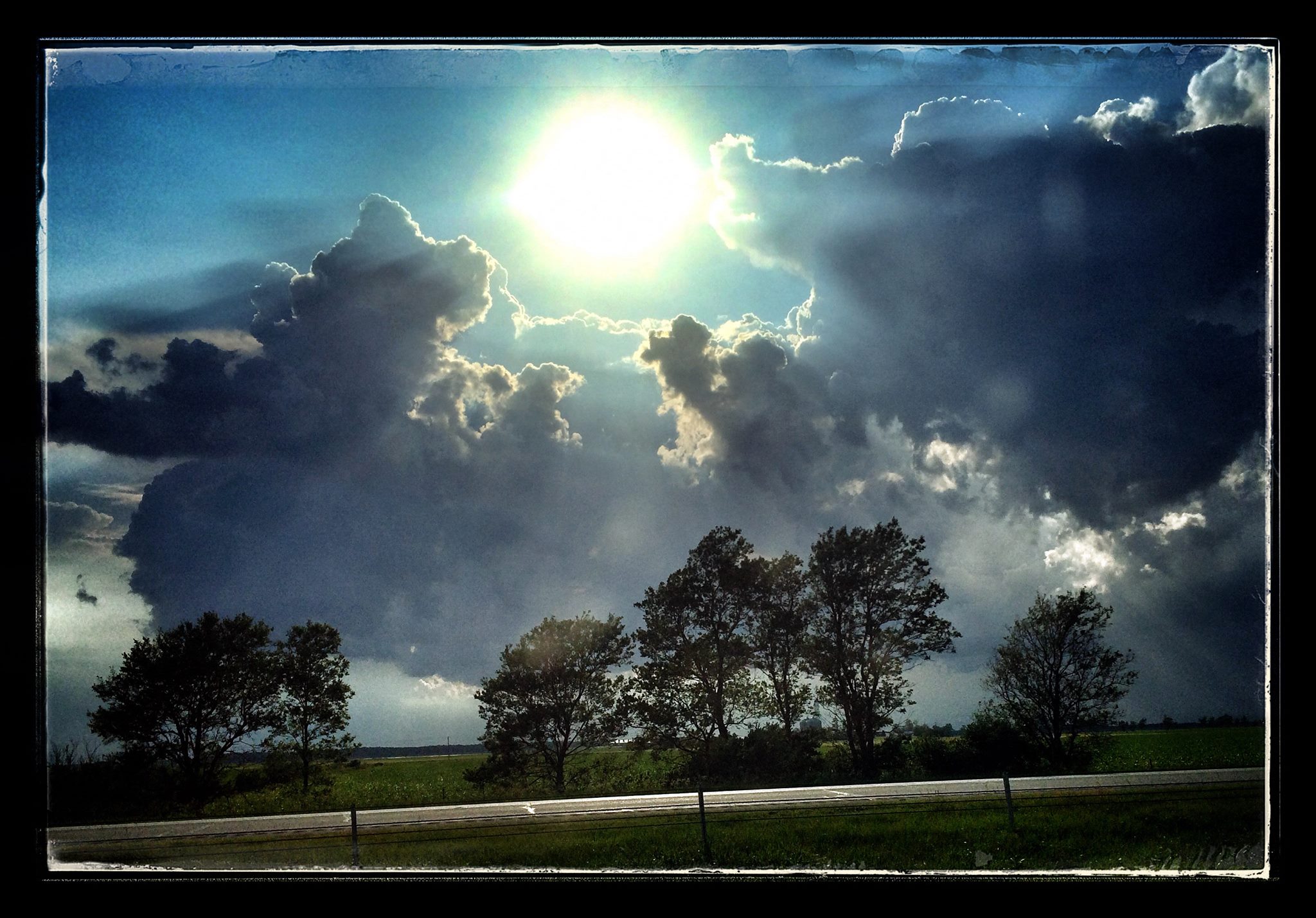
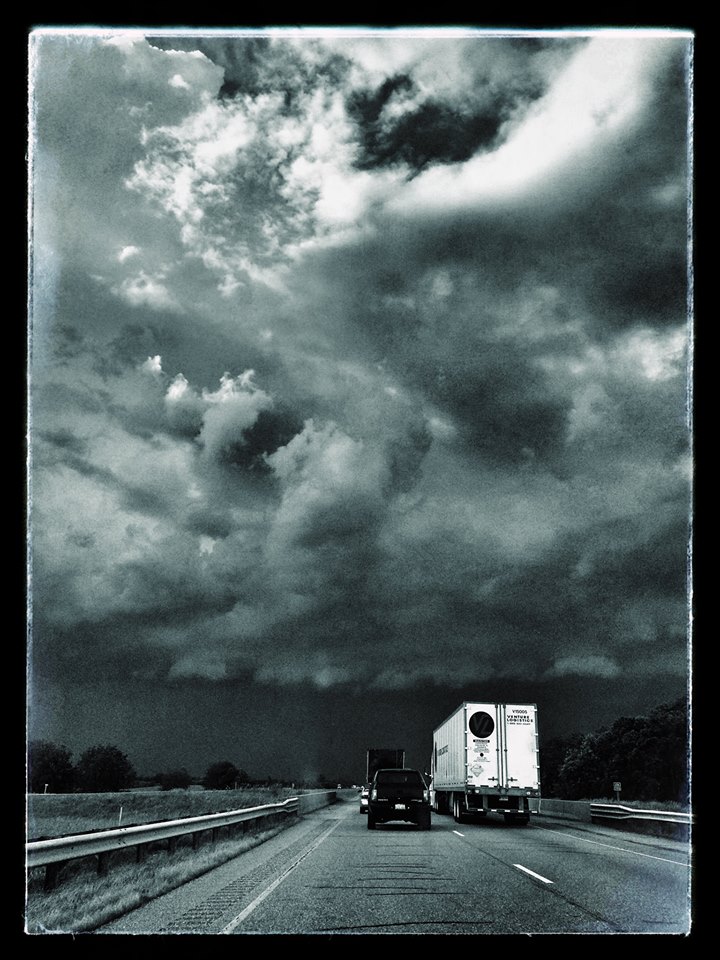
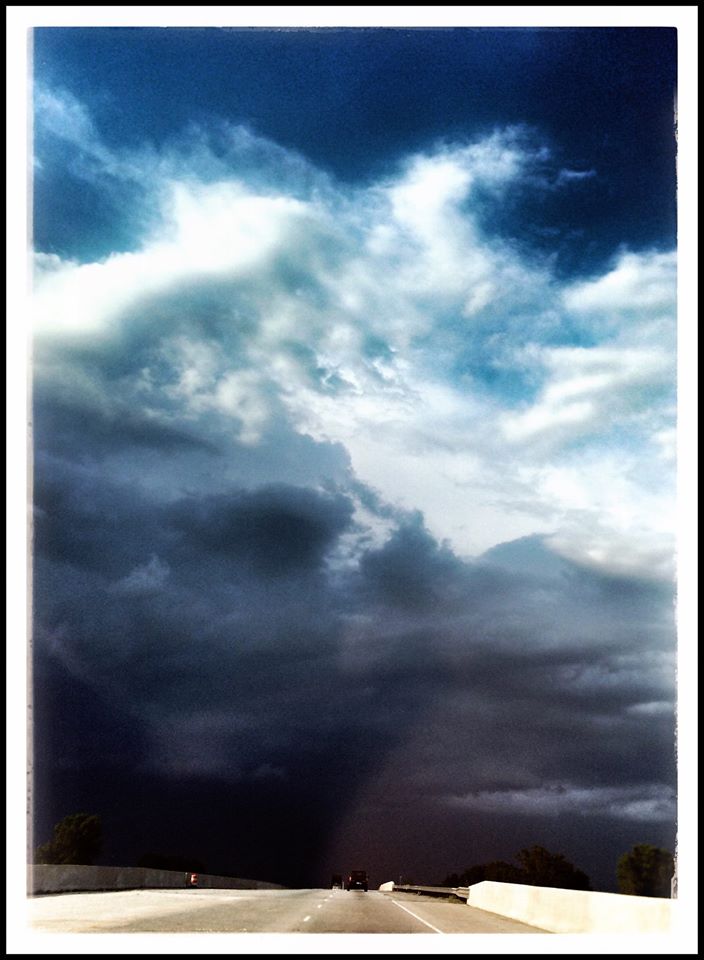
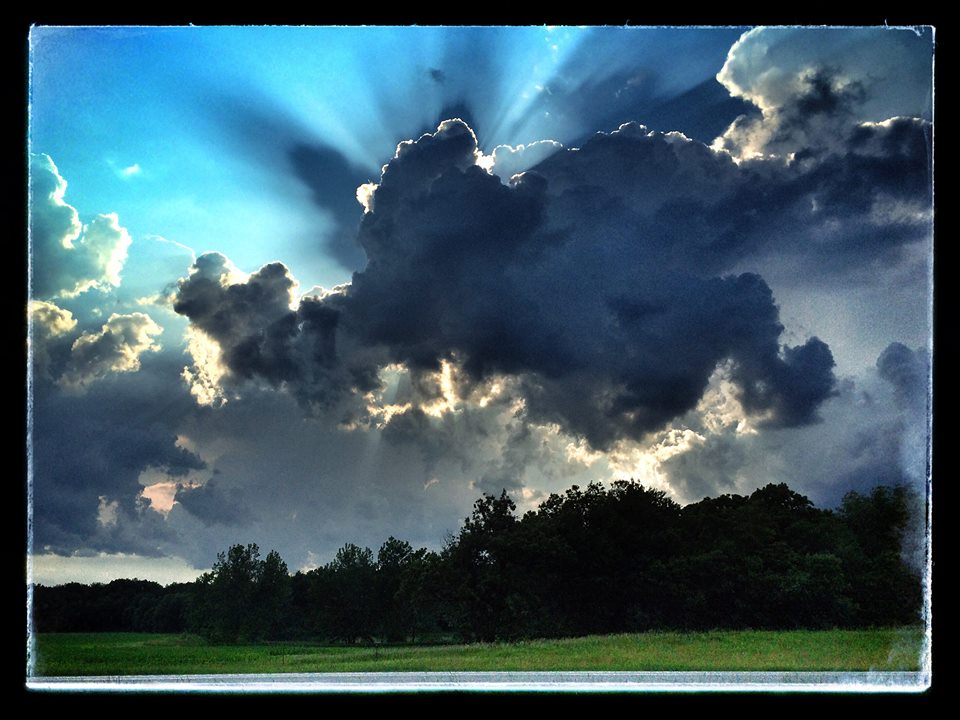

I-65 in Northern Indiana, heading north toward Chicago. It looked scarey, but except for three minutes of intense downpour near Crown Point, we managed to slide in just behind it.
After my circumperambulation of the Ohio state capitol, I wandered inside. The lower level, or at least those parts of it I had access to, were given over to displays and artifacts related to Ohio history.
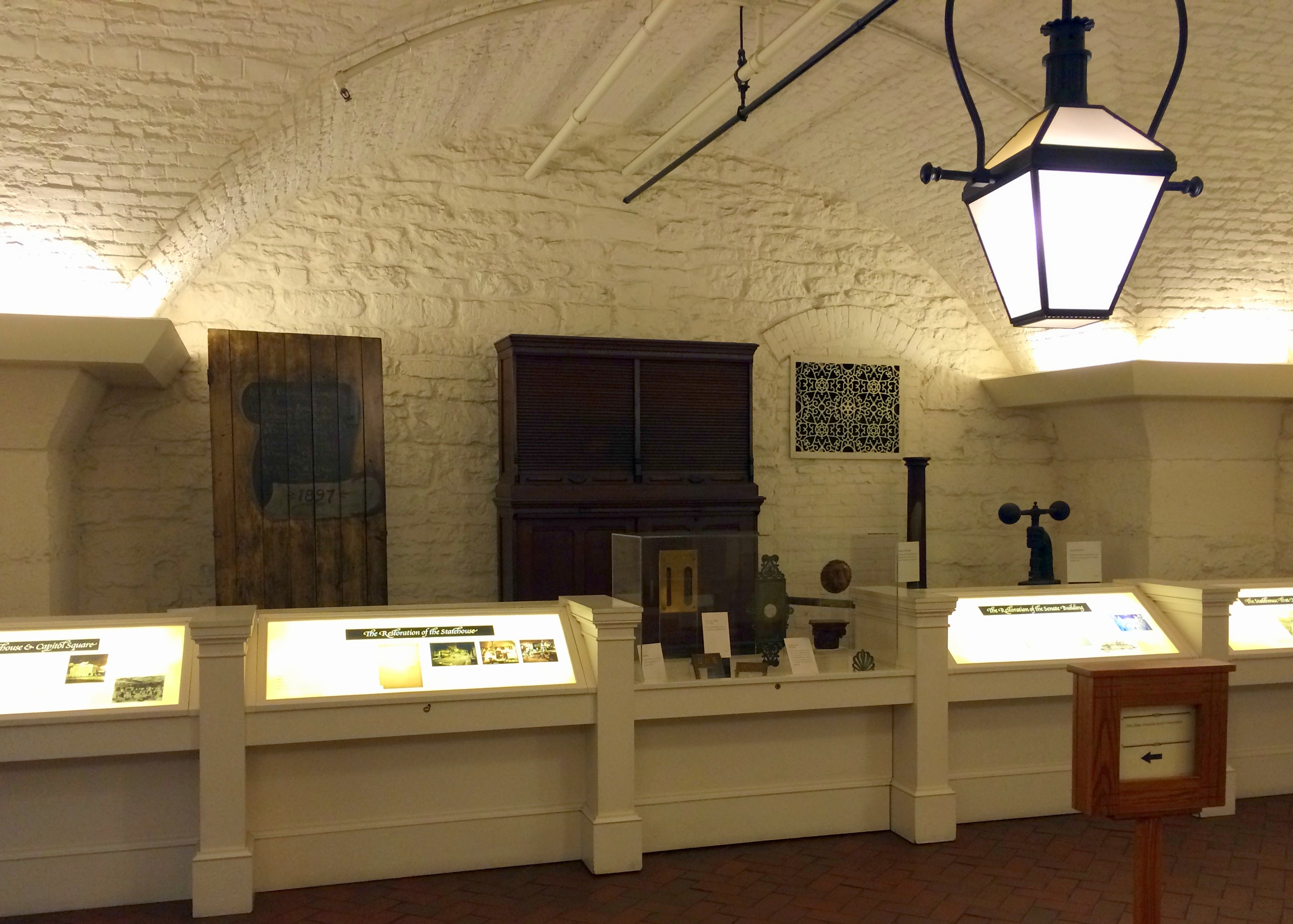
The first room had a county map of the state on the floor.

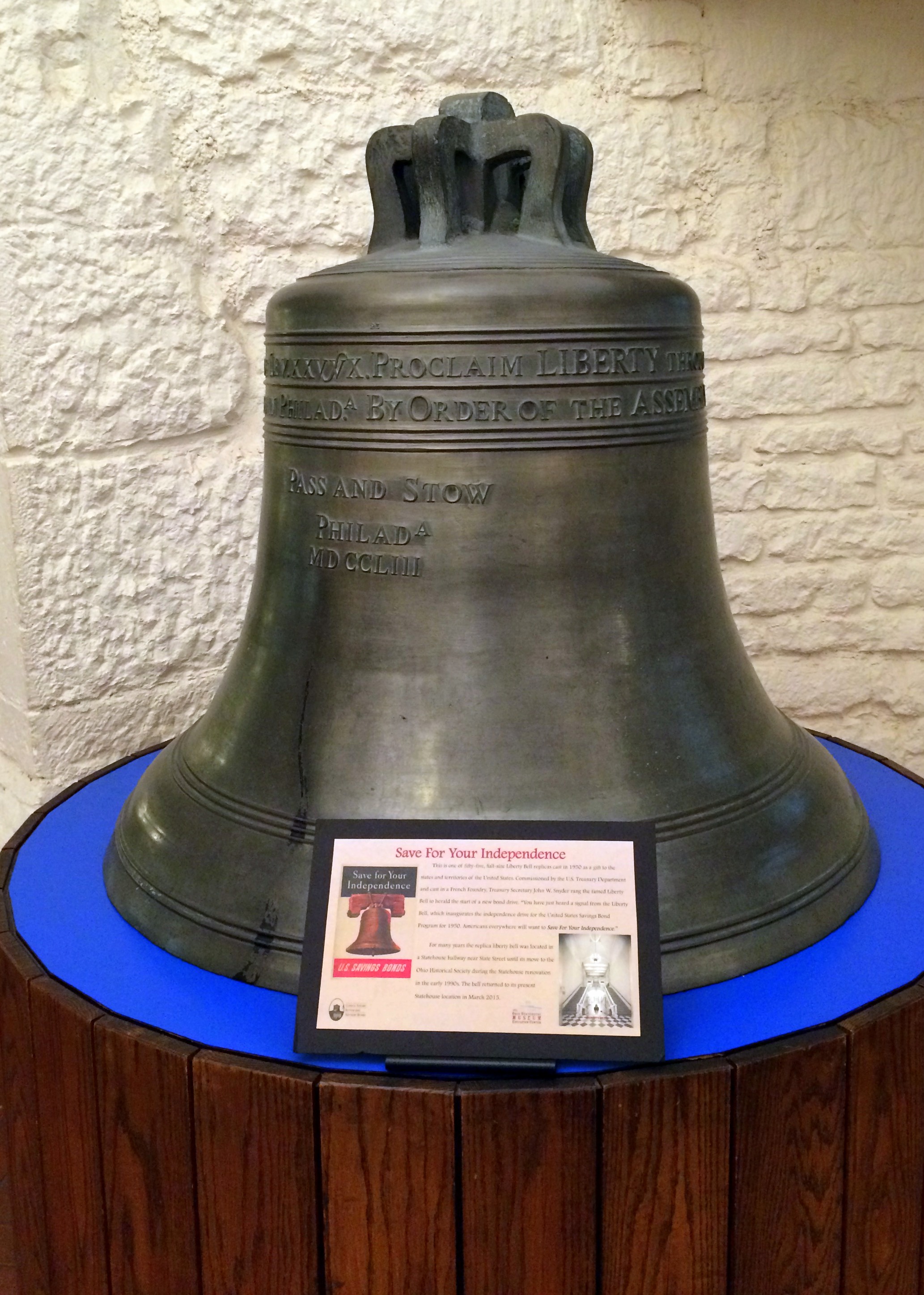
A replica of the Liberty Bell.
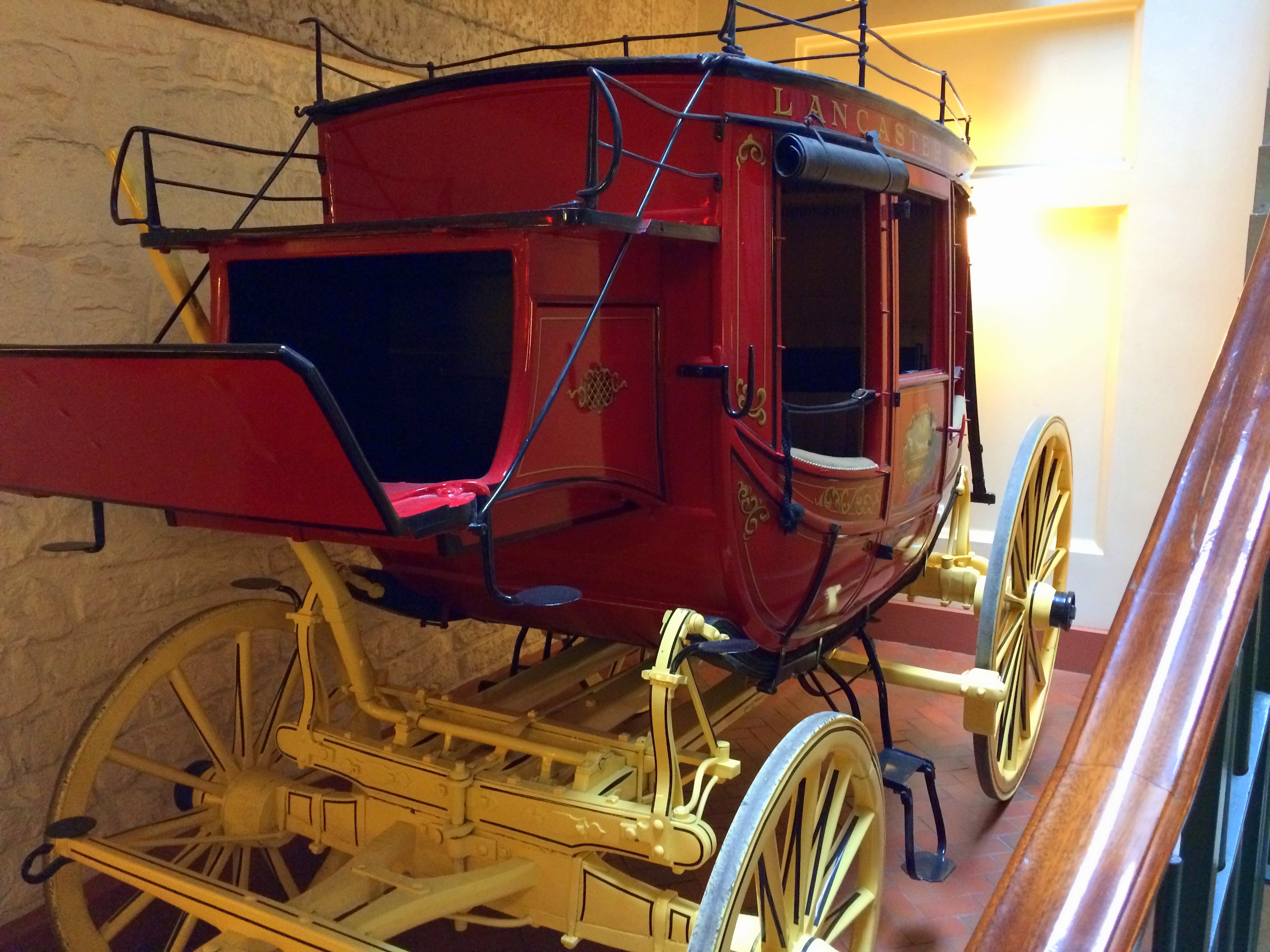
A stagecoach was tucked in a corner next to a stairwell to represent the way people traveled to the capital when the statehouse was first built.
I took the elevator up a level to the rotunda. This is the rather odd skylight in the weirdly-abbreviated dome.

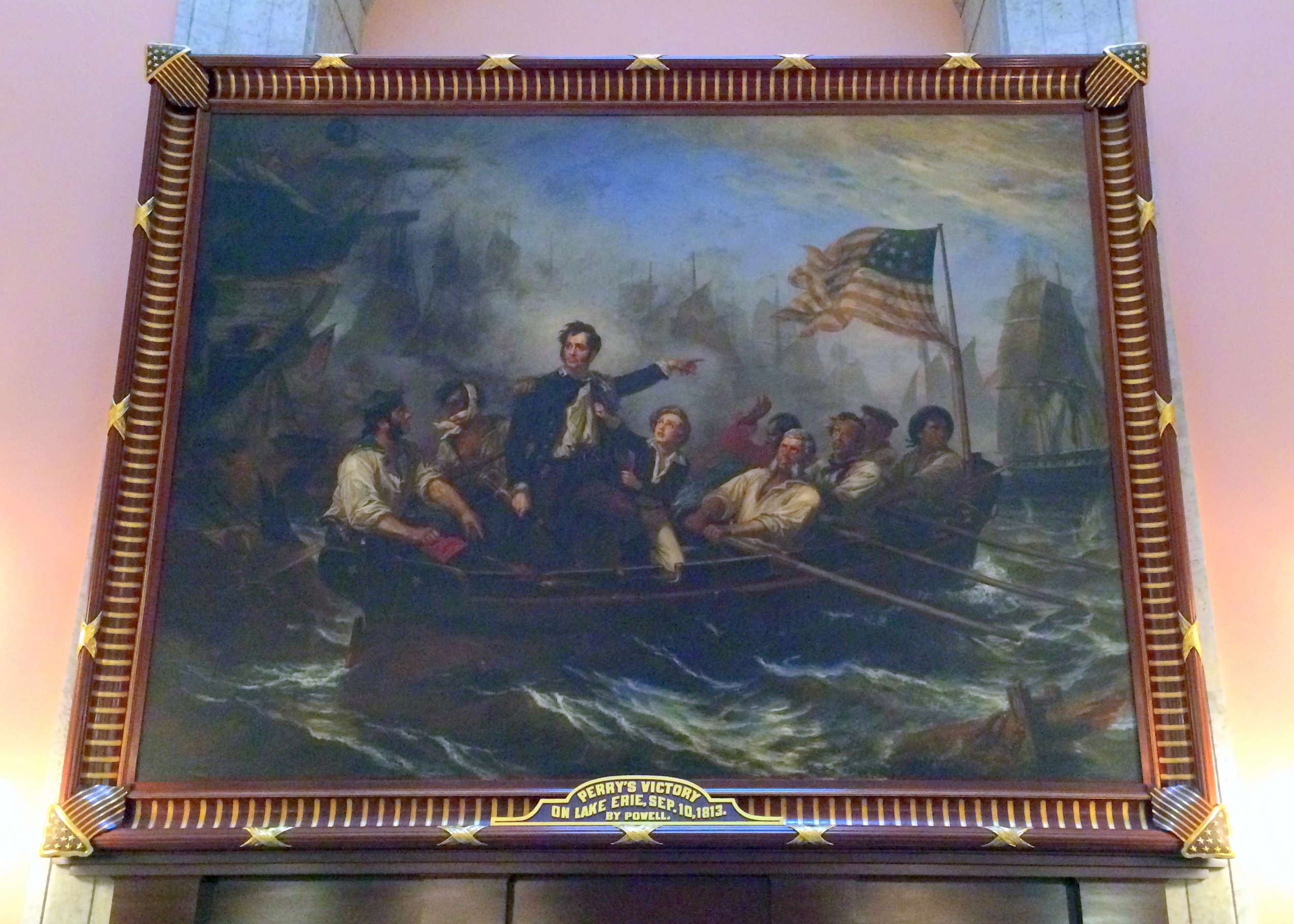
There were several giant paintings, most of which looked vaguely familiar. The top one is The Battle of Lake Erie — Perry’s Victory.
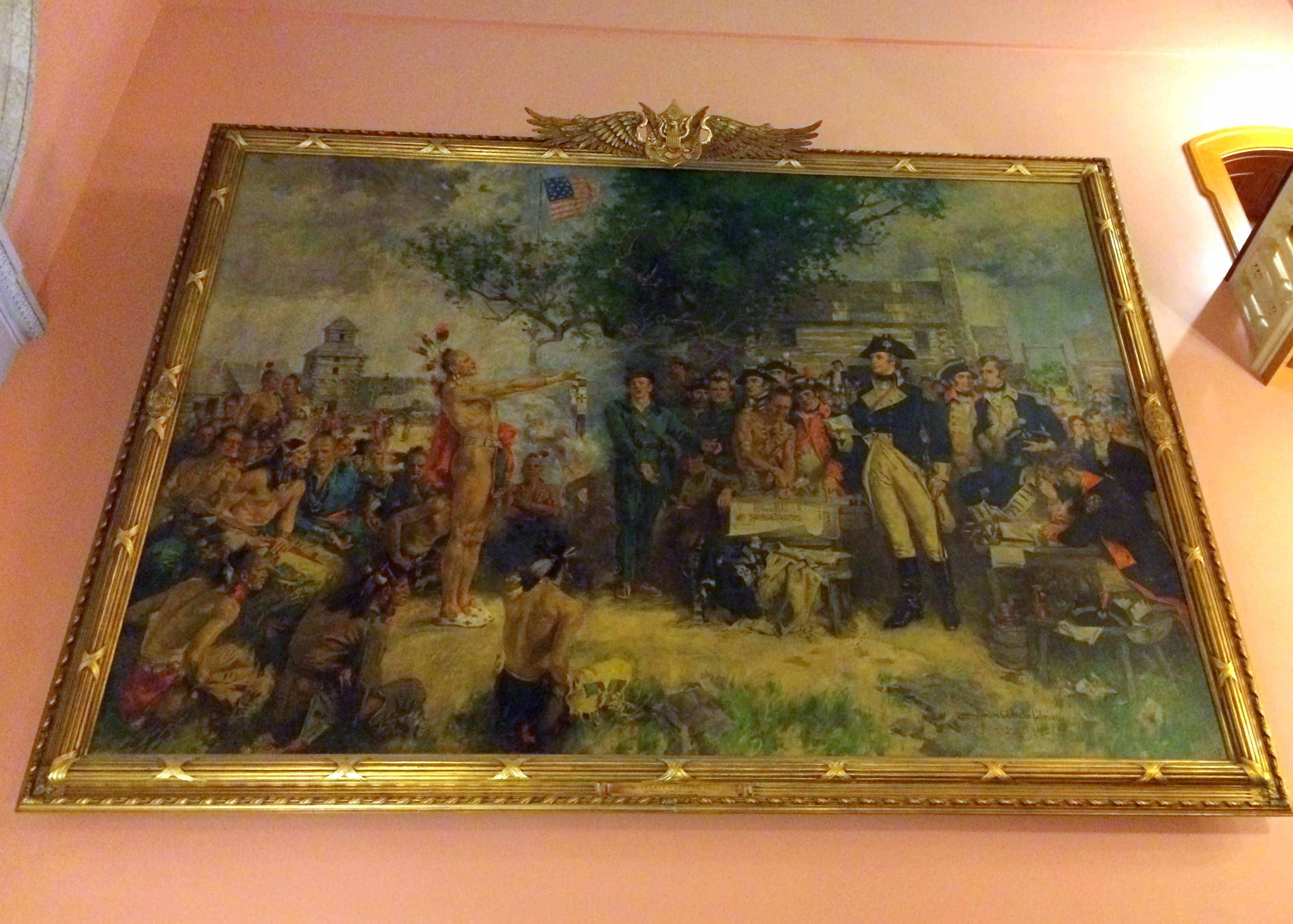
The Treaty of Greene Ville
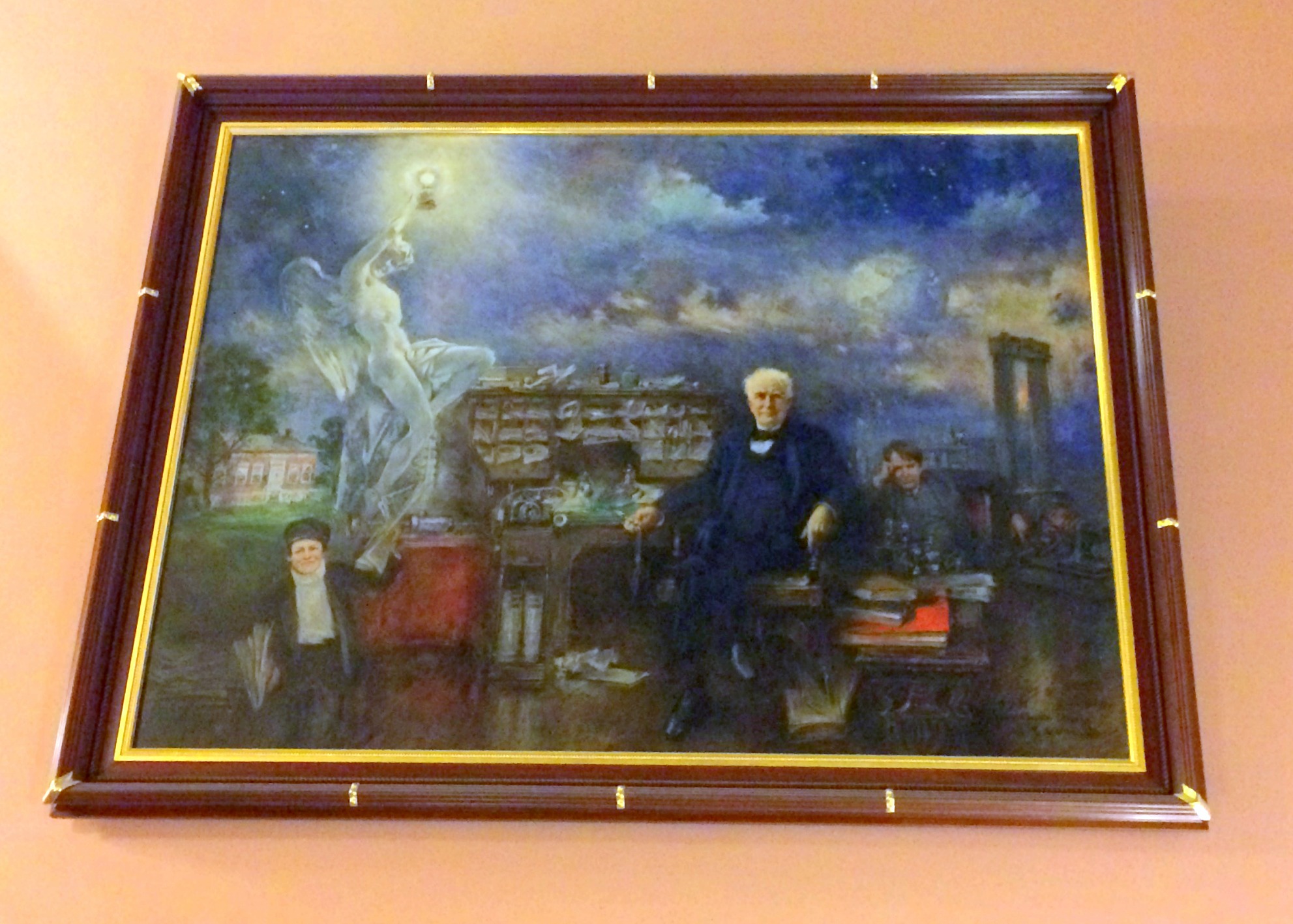
Dawn of a New Light
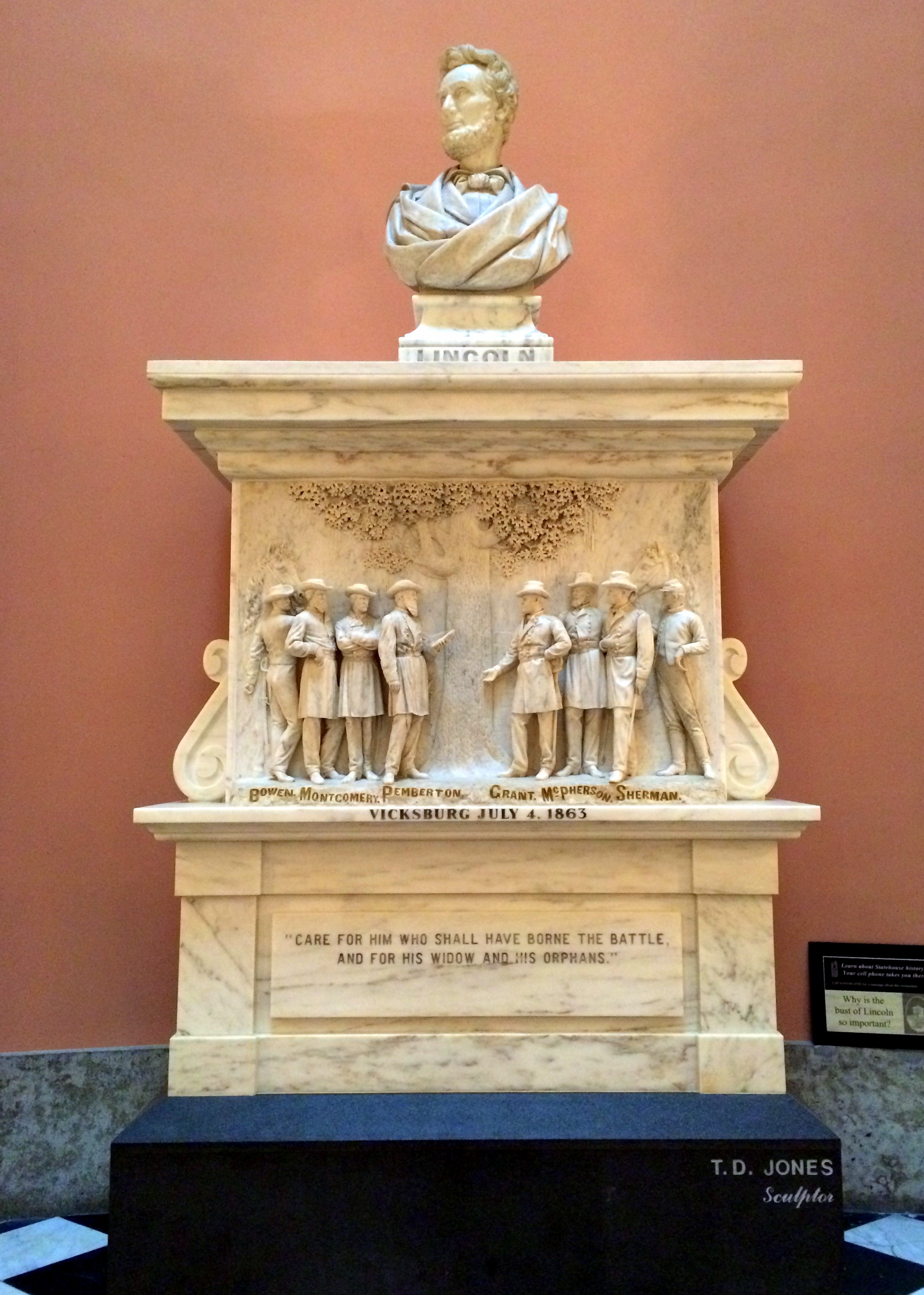
The Lincoln-Vicksburg Monument, commemorating the 1863 Civil War battle with a phrase from Lincoln’s second inaugural address.
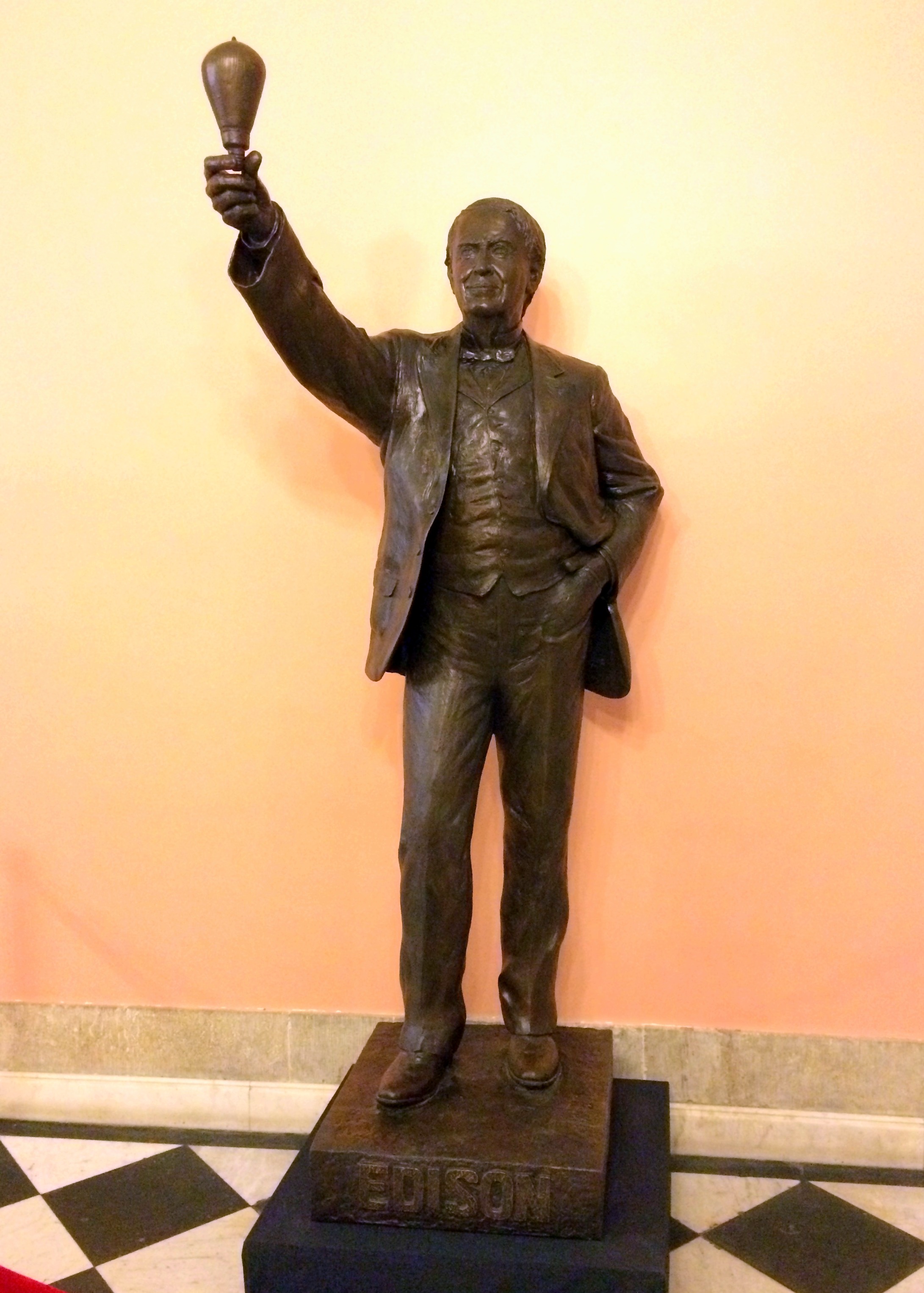
A statue of Thomas Edison which will be moved to the National Statuary Hall in the United States Capitol in October, 2015 to take its place with other statues of great Americans.
There was much more of this type of thing, and it was fun to wander around and look, but I didn’t have time to take the guided tour.
I spent an hour and a half on a rainy Monday morning exploring outside and inside the Ohio Statehouse in Columbus. Here in the approximate order in which I happened upon it, is what I saw.
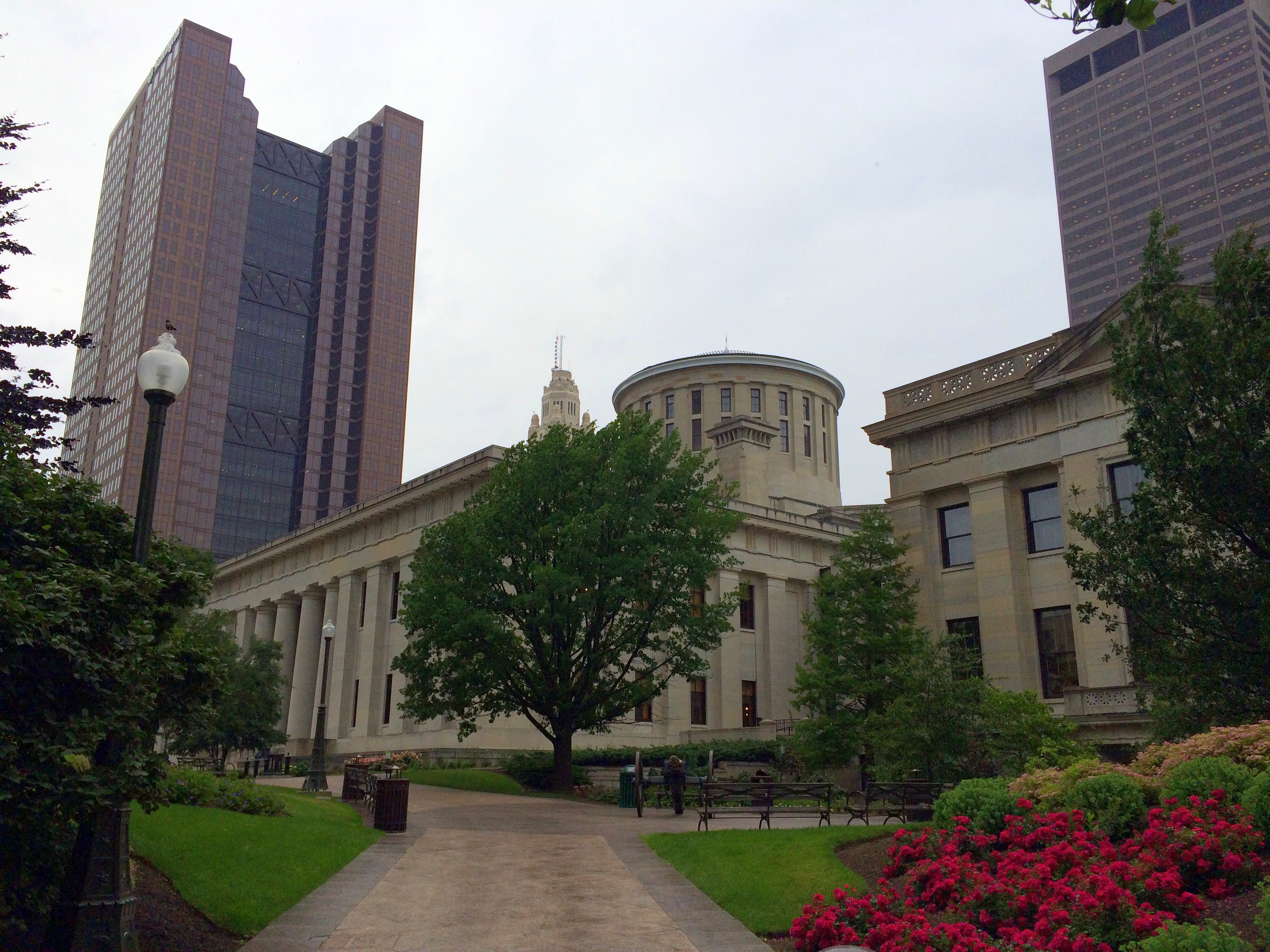
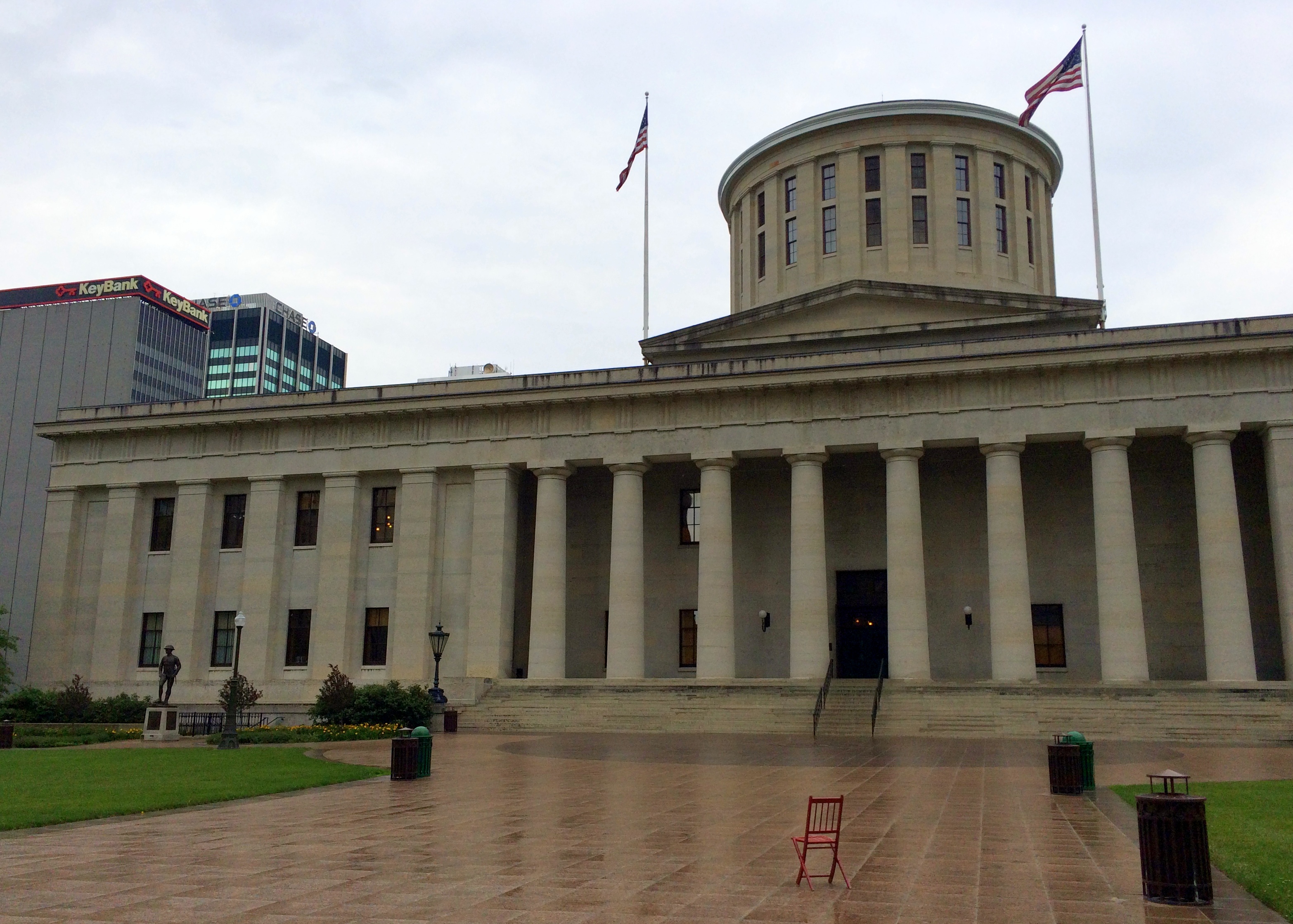
I parked on the street about half a block away, and approached from the southeast. This was my first view of the weird abbreviated dome.
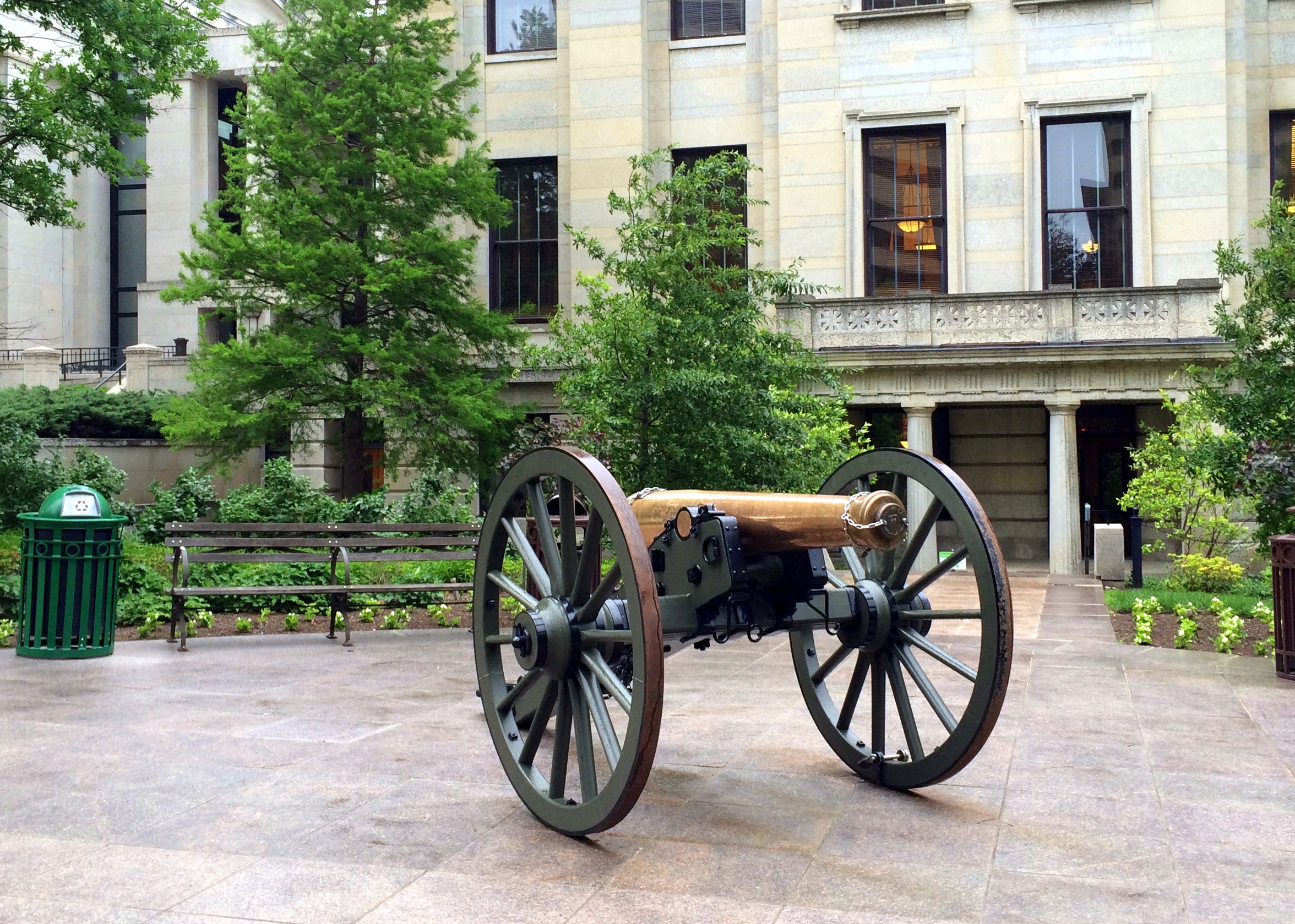
There’s a Civil War cannon at each corner of the plaza.
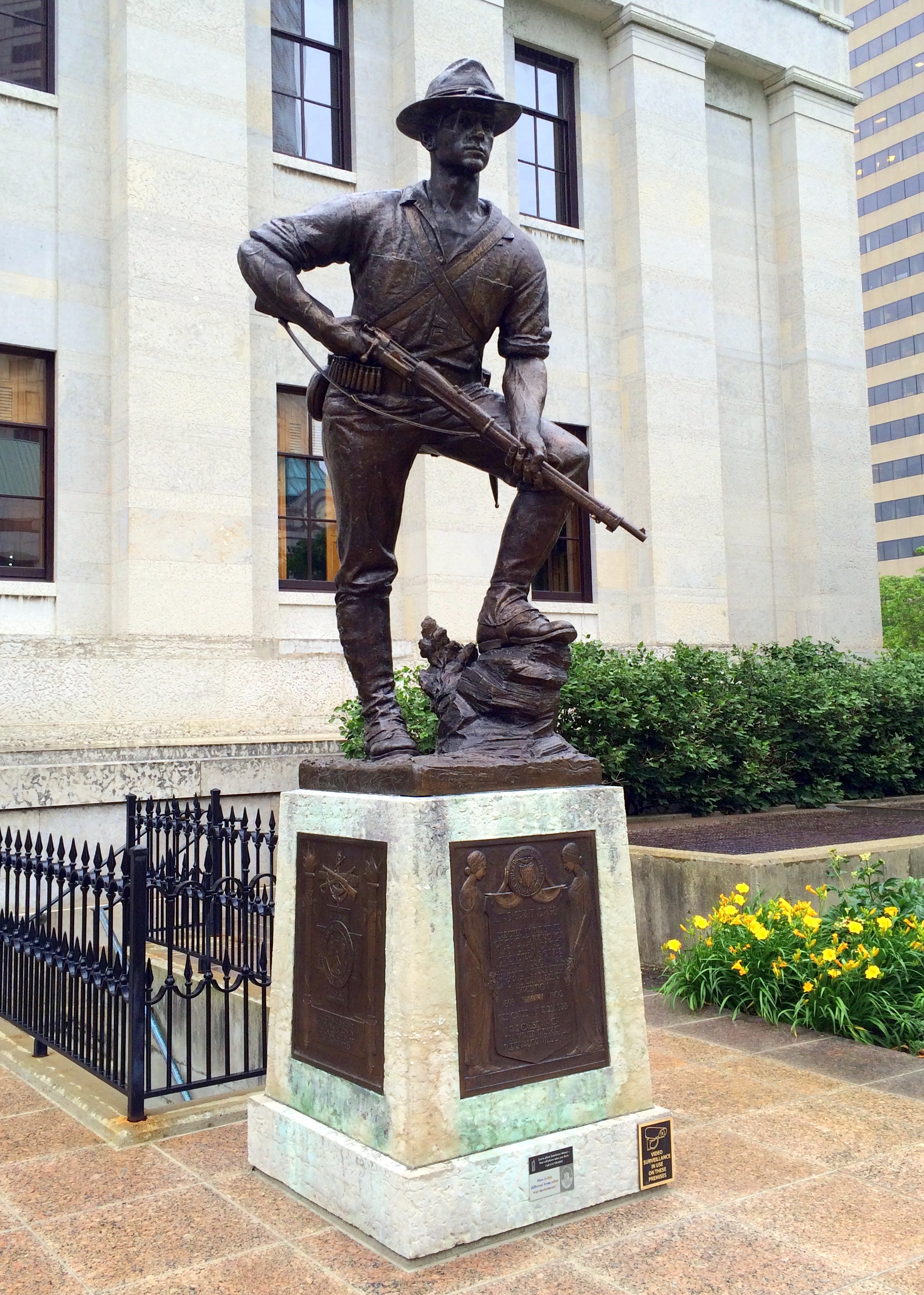
Monuments to soldiers of (left) the Spanish-American War, the Philippines Insurrection and the China Relief Expedition and (right) World War I.

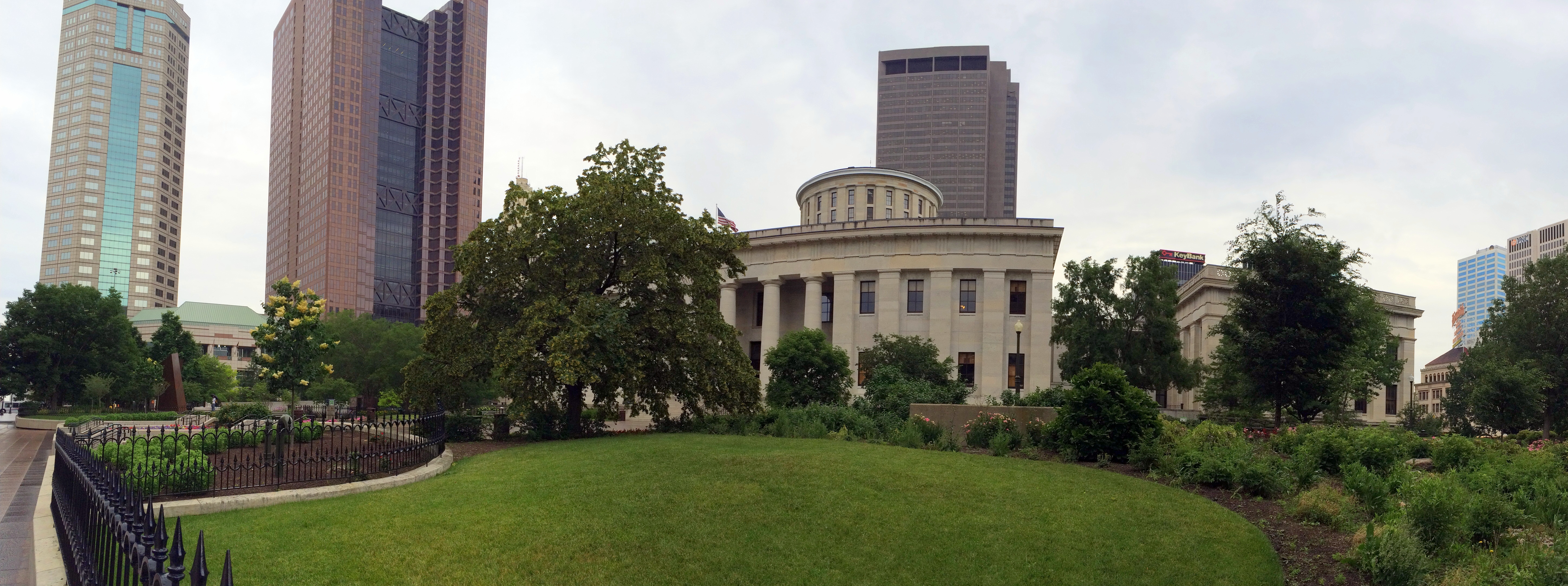
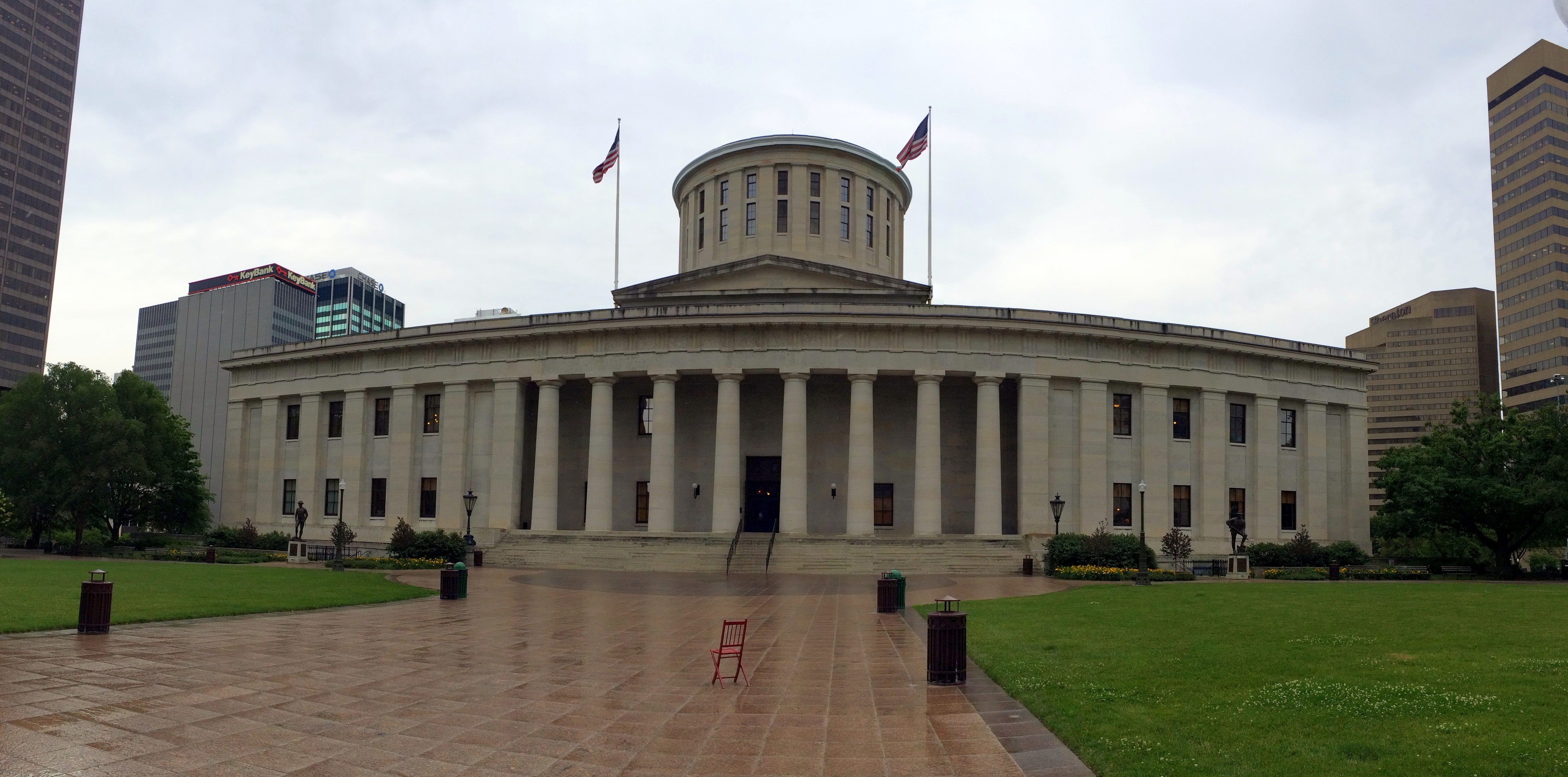
The west side. I still think (and always will) that the cupola without a dome looks unfinished and weird.
President William McKinley Memorial. McKinley was a native of Ohio and governor of the state from 1891 until 1896 when he became President. When McKinley was in Columbus, he and his invalid wife Ida lived in the Neil House Hotel across the street from the Statehouse. As William walked across the road to work, he would stop at this spot and wave his handkerchief to his wife who was watching out the window.
The statues on the sides represent peace and prosperity, both with children who represent future generations.


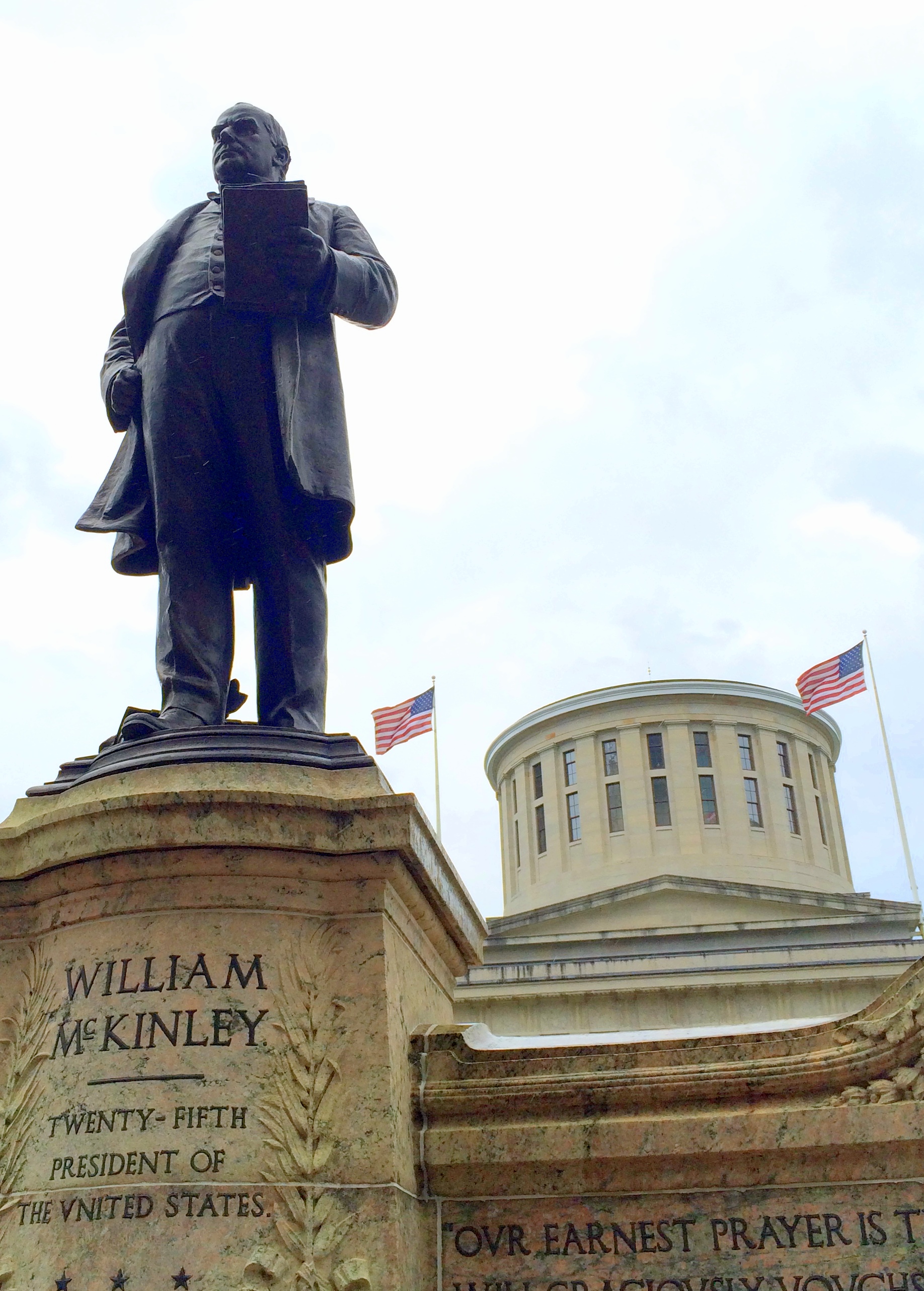
The quote is from the speech he made in Buffalo, New York just before he was assassinated.
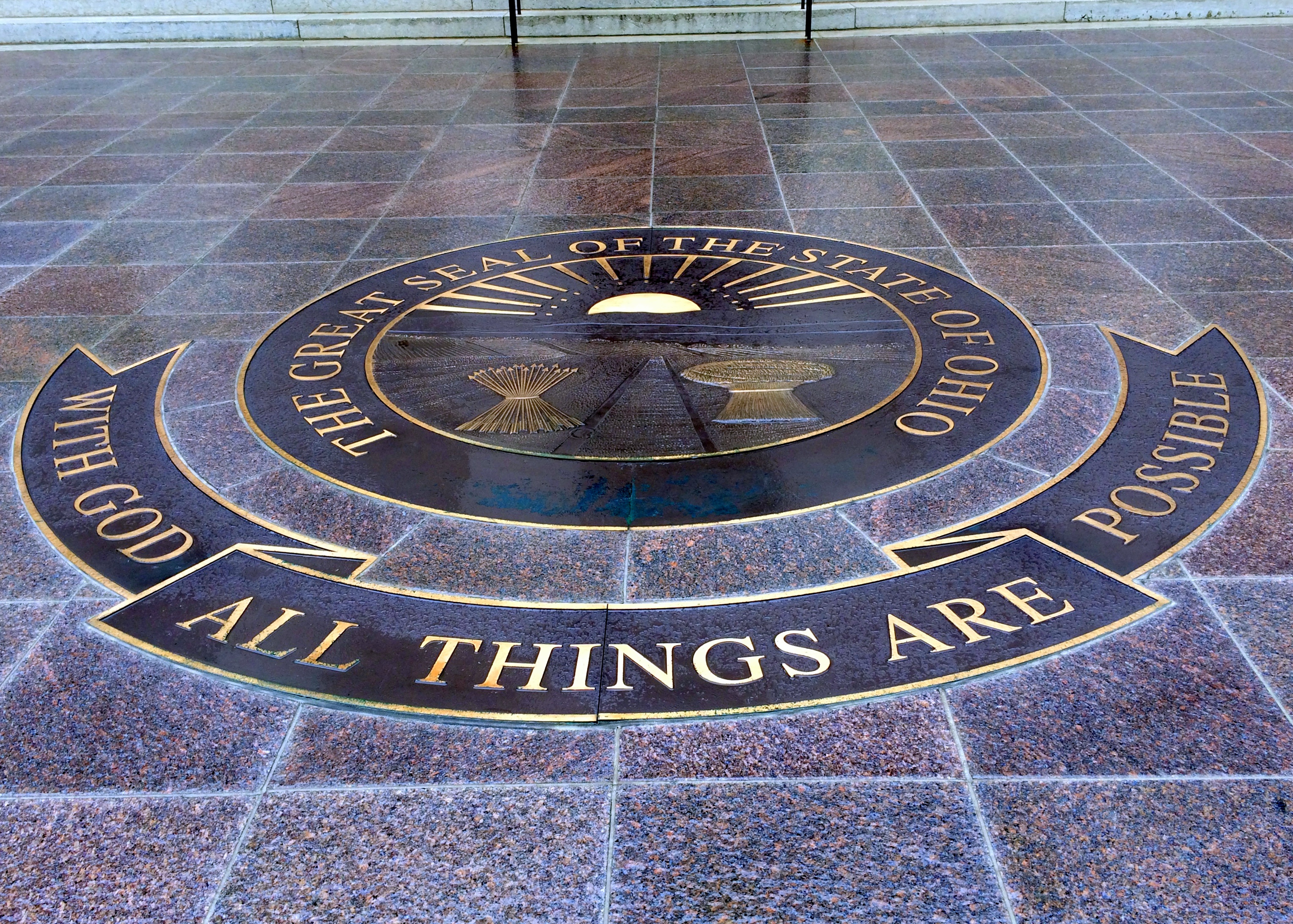
The state seal of Ohio
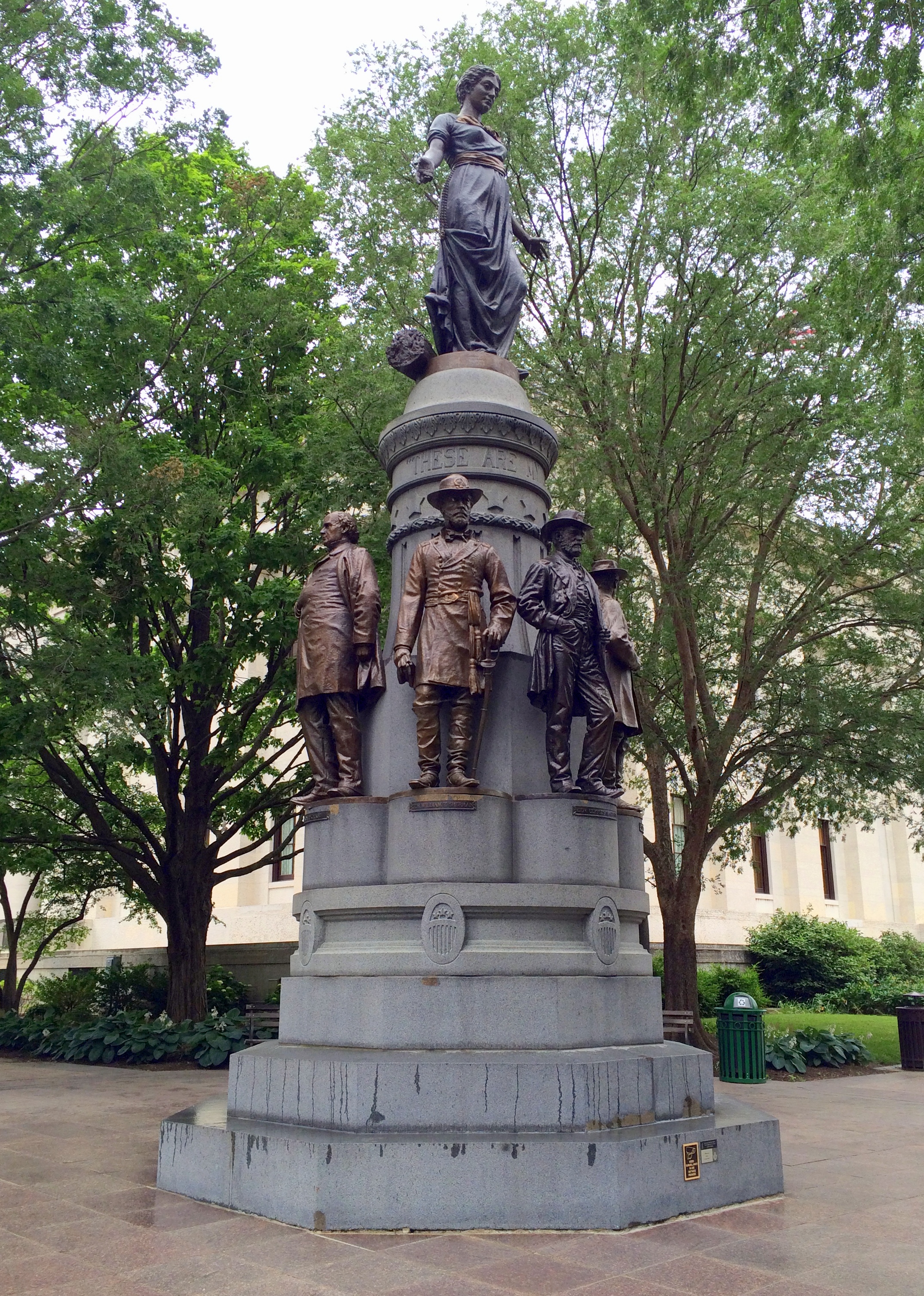
This statue is called “These Are My Jewels” referring to a legend about a Roman woman named Cornelia who, when asked where her jewels were, returned with her sons. The seven men around the base are seven natives of Ohio who were active for the Union during the Civil War. They are Generals Ulysses S. Grant, William T. Sherman and Phillip Sheridan; Generals and Presidents James A Garfield and Rutherford B Hayes; Secretary of the Treasury Salmon P. Chase; and Secretary of War Edwin Stanton. It was created for and displayed at the World Columbian Exposition in Chicago in 1893.
James Thurber, a native of Columbus, wrote the statue into a short story titled The Day the Dam Broke. He described a mob of women climbing onto the shoulders of the Jewels to escape an imaginary flood.
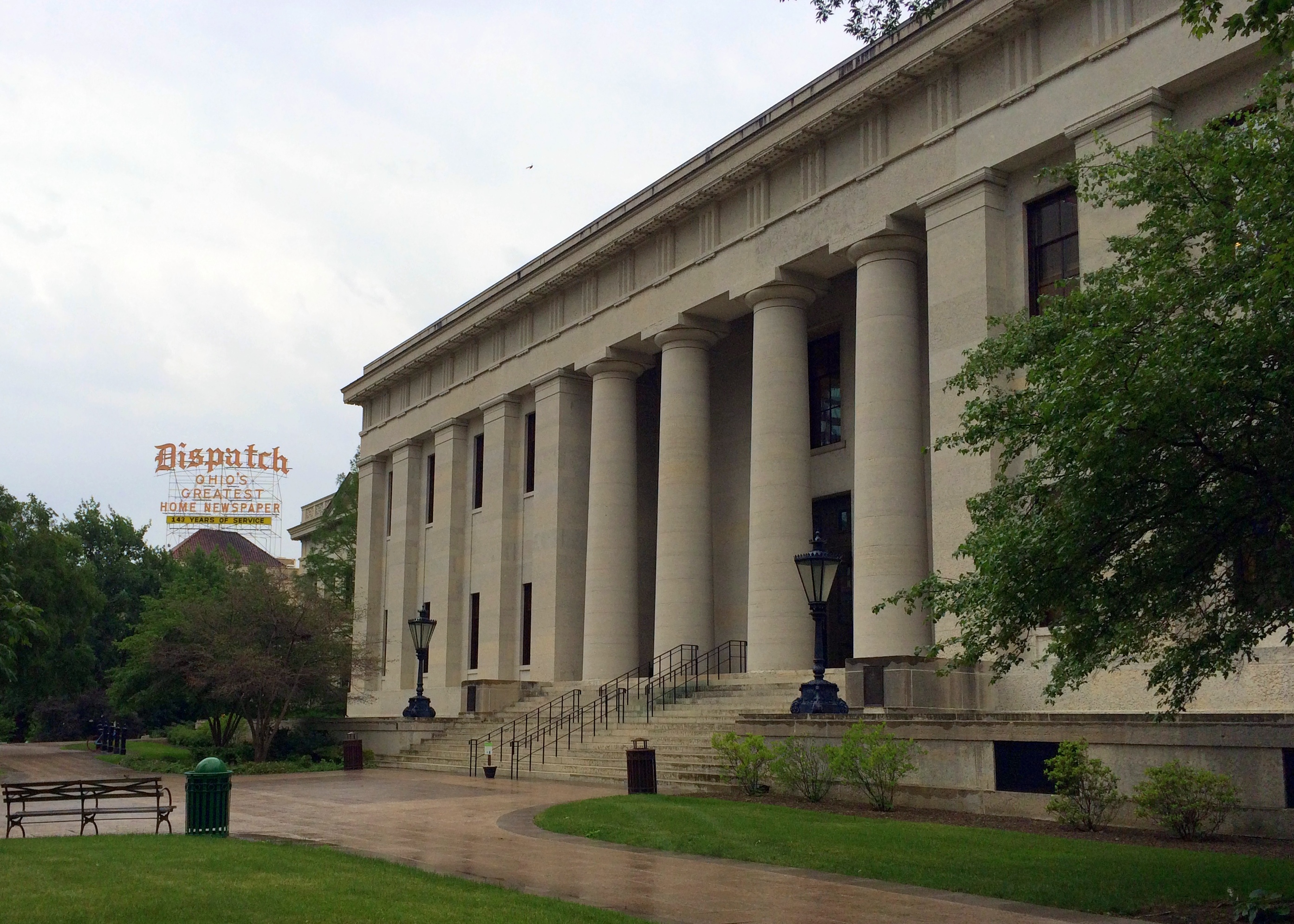
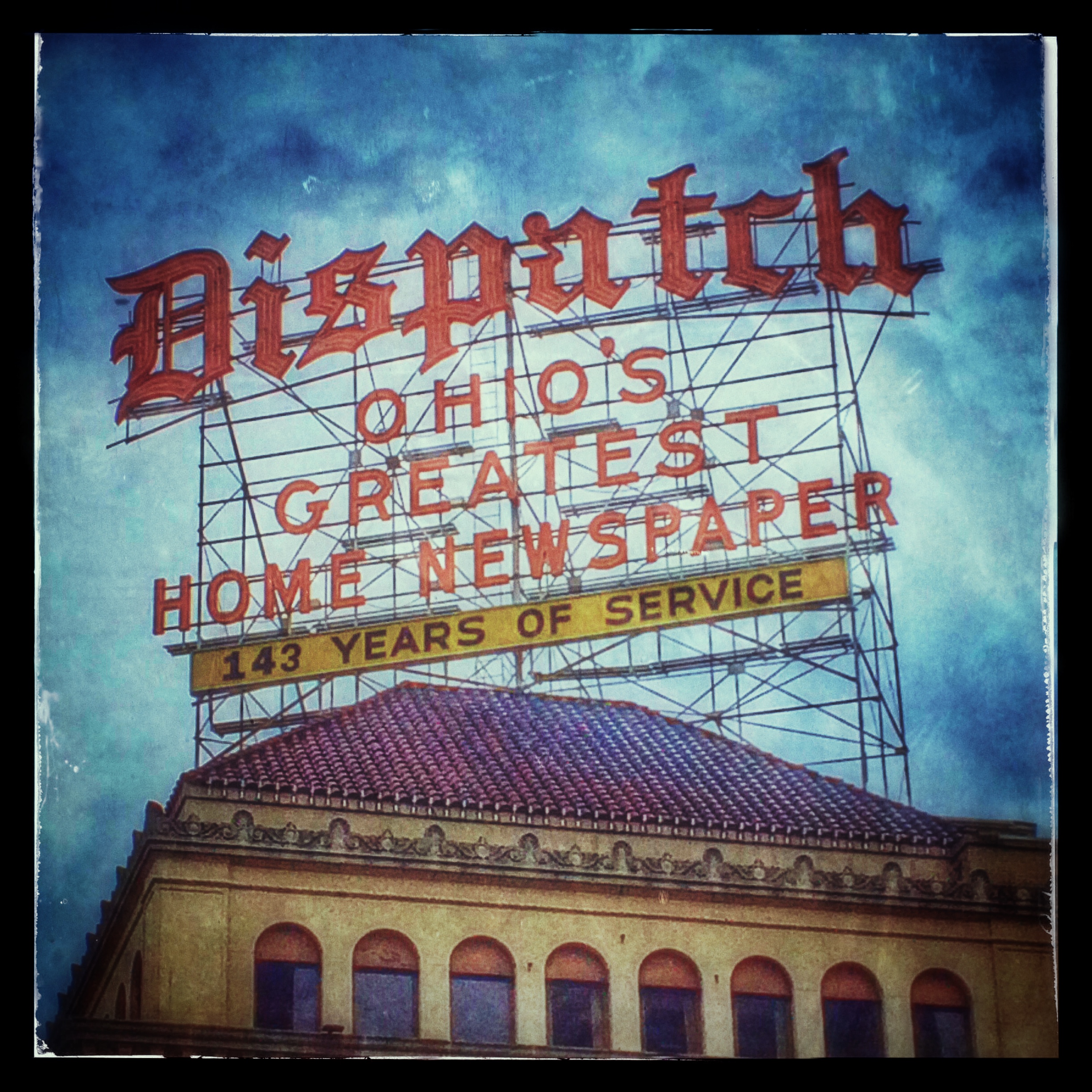
The north side. The Columbus Dispatch sign advertises the local newspaper which has been published since 1871.
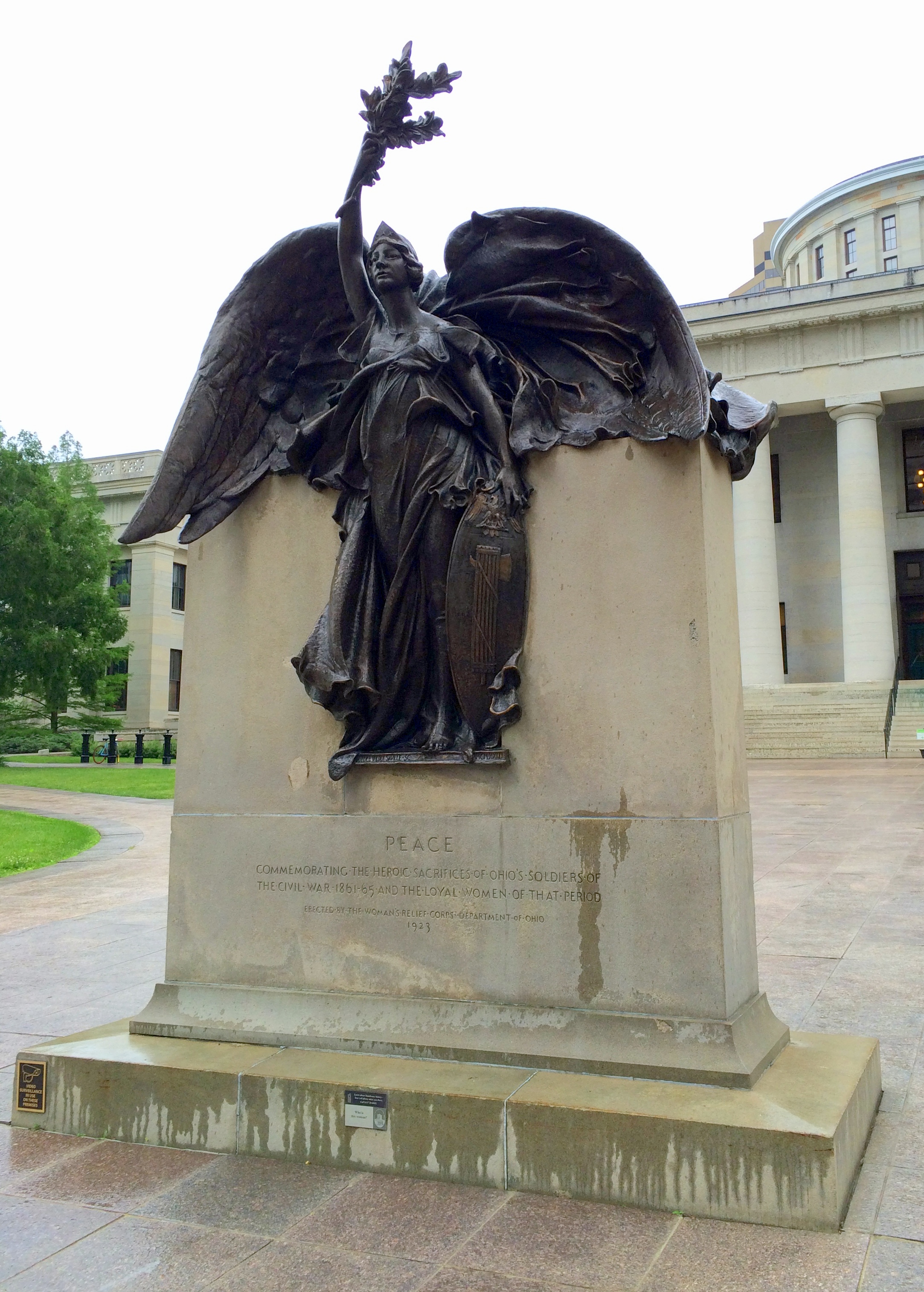
Peace, in honor of Civil War soldiers.
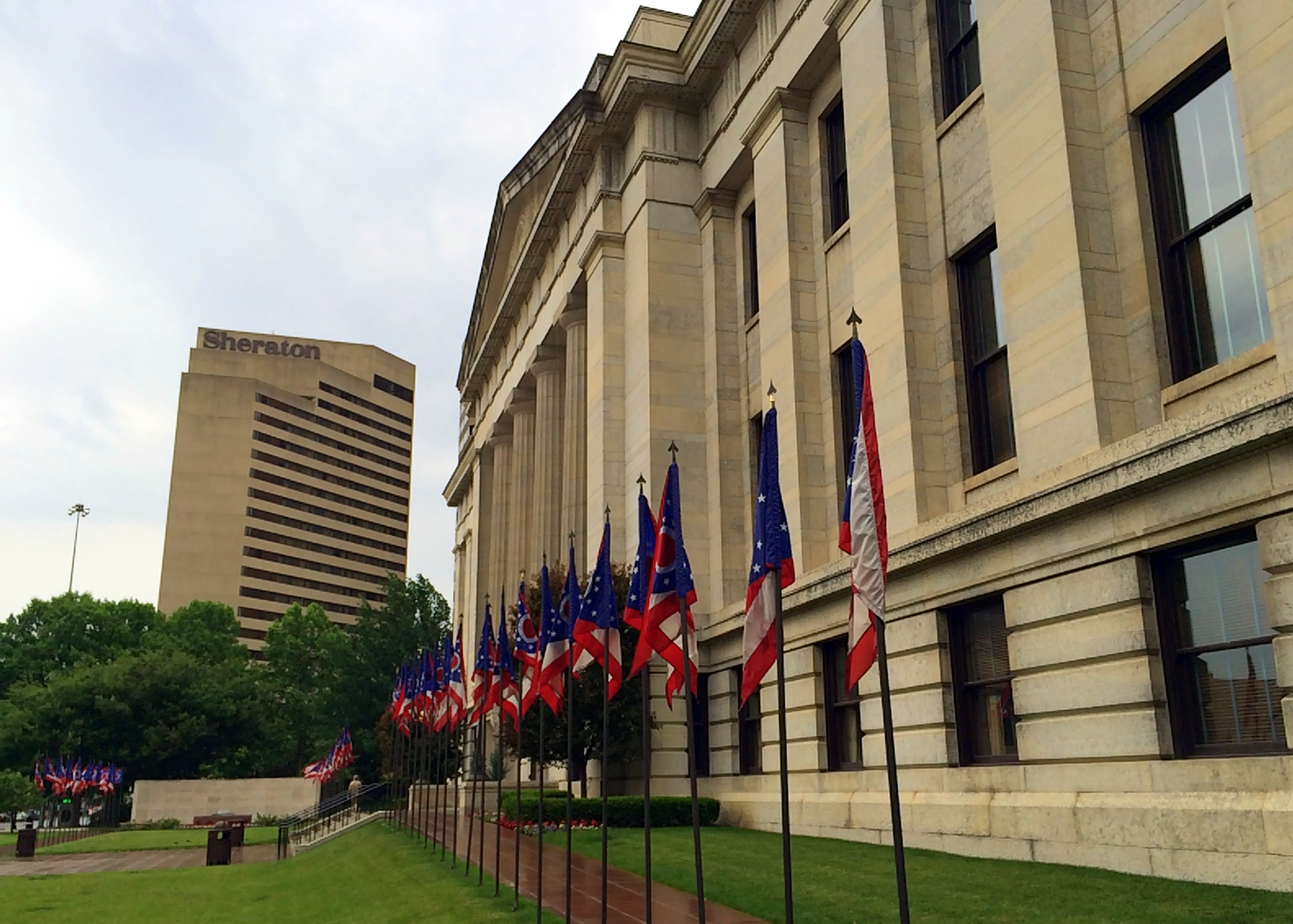
The east side, with flags for each of the counties in the state. They, and the curved white walls at each end of the plaza, commemorate the soldiers of World War II and wars since then.

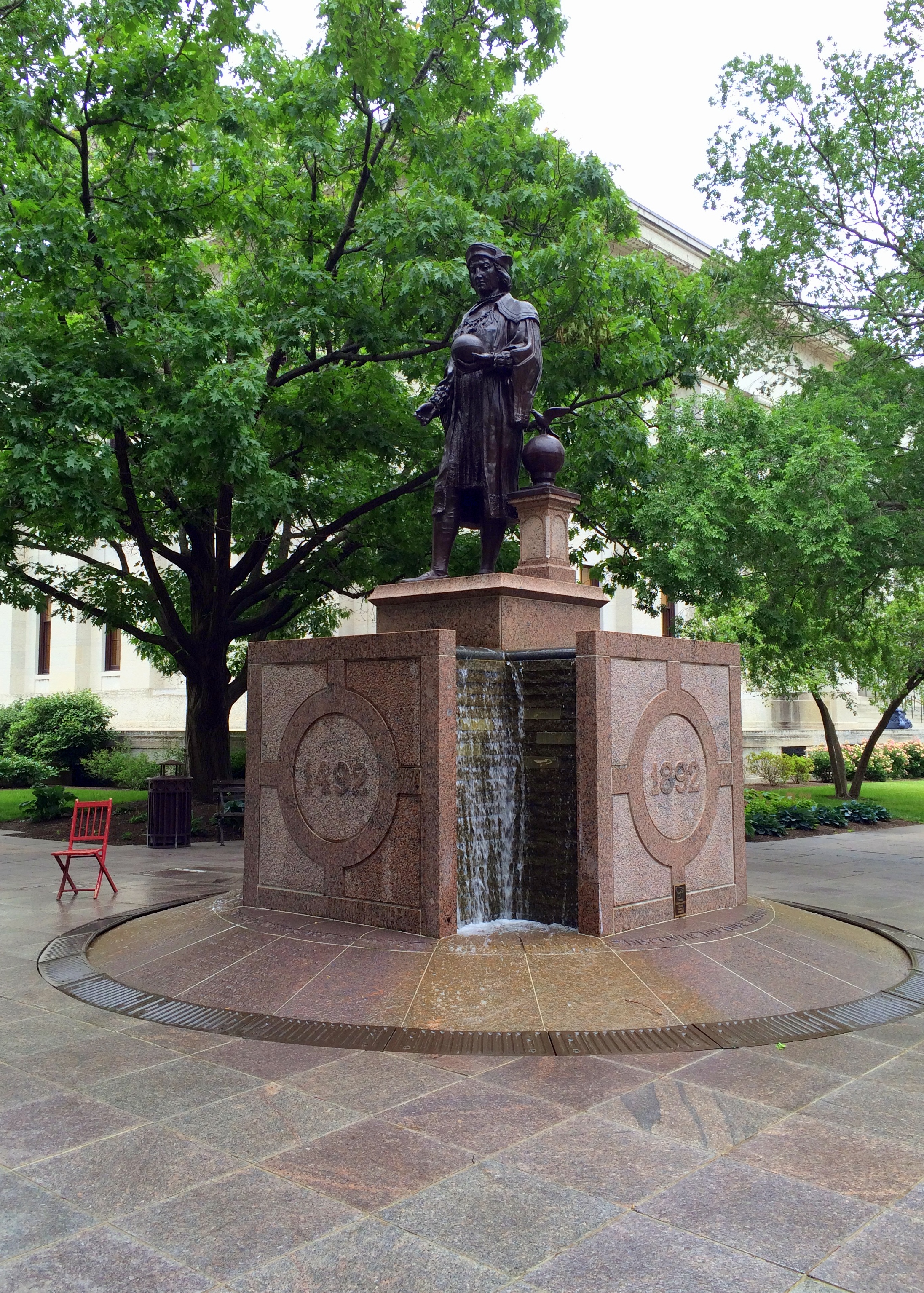
Christopher Columbus Discovery Monument. The city is named after Columbus. The statue was created in 1892, on the 400th anniversary of his founding of America. It was moved to the capitol in 1932. The base was created in 1992, on the 500th anniversary.
We were driving through Akron, looking for Stricklands Frozen Custard when our view was suddenly blocked by a huge blue building. The shape was a give-away — it could only be an airship hanger. It turned out to be the most famous airship hanger, built in 1929 by the Goodyear-Zeppelin Corporation and used to build airships until 1960.

It’s 1,175 feet long and 325 feet wide — enough space for eight football fields side-by-side.
It’s not open to the public, but we drove around the field until we found a good vantage point.


The town of Moreland Hills, where Garfield was born in 1831, is only eleven miles from Lakeview Cemetery where he is buried. The town has constructed a log cabin behind city hall. It isn’t spot where Garfield’s cabin was located, but it looks very similar to what the Garfield cabin might have looked like. He was the last president born in a log cabin. His father died when he was two and he spend his childhood in poverty.


There’s a statue of Garfield as a boy by the cabin.
