Battle of Piqua

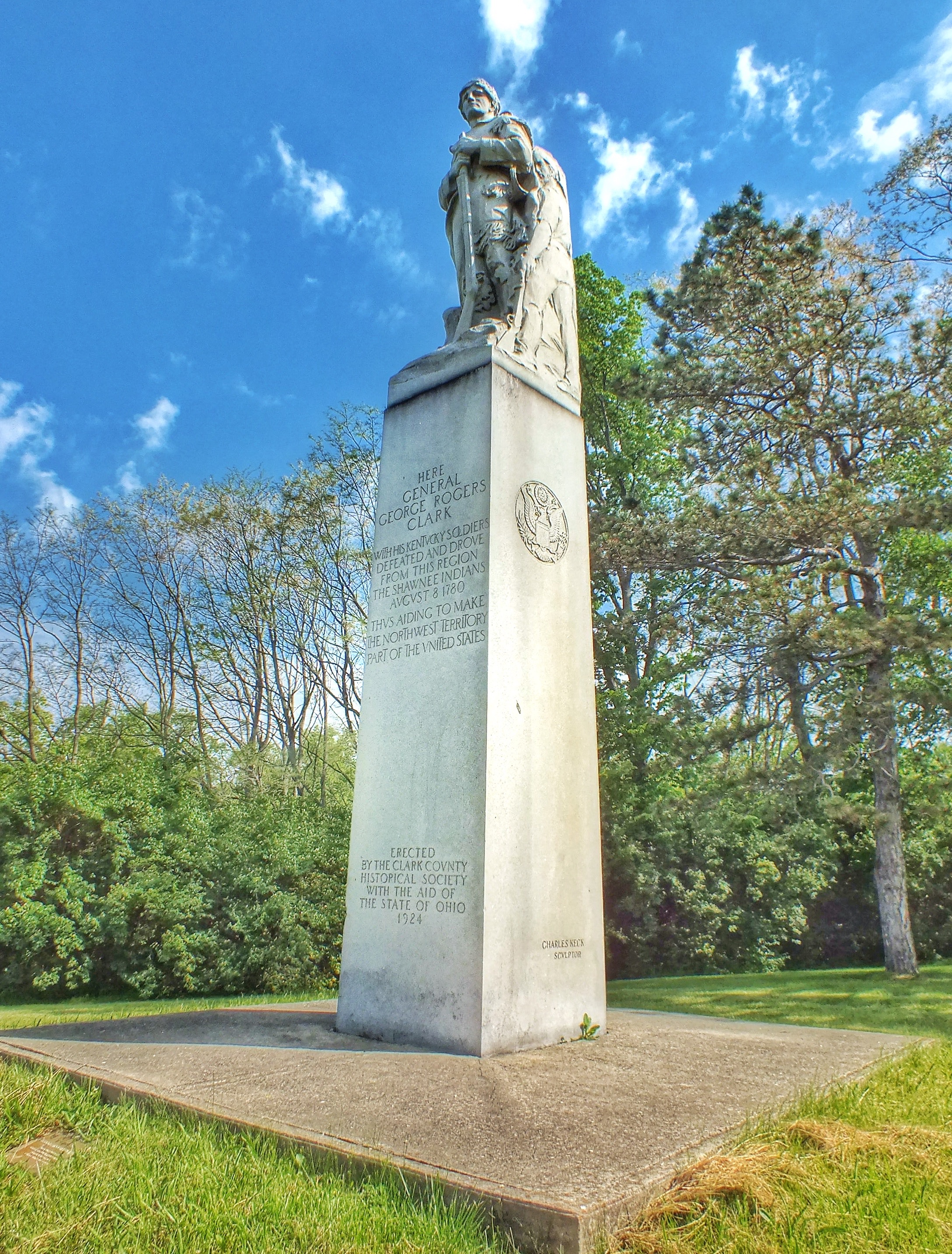
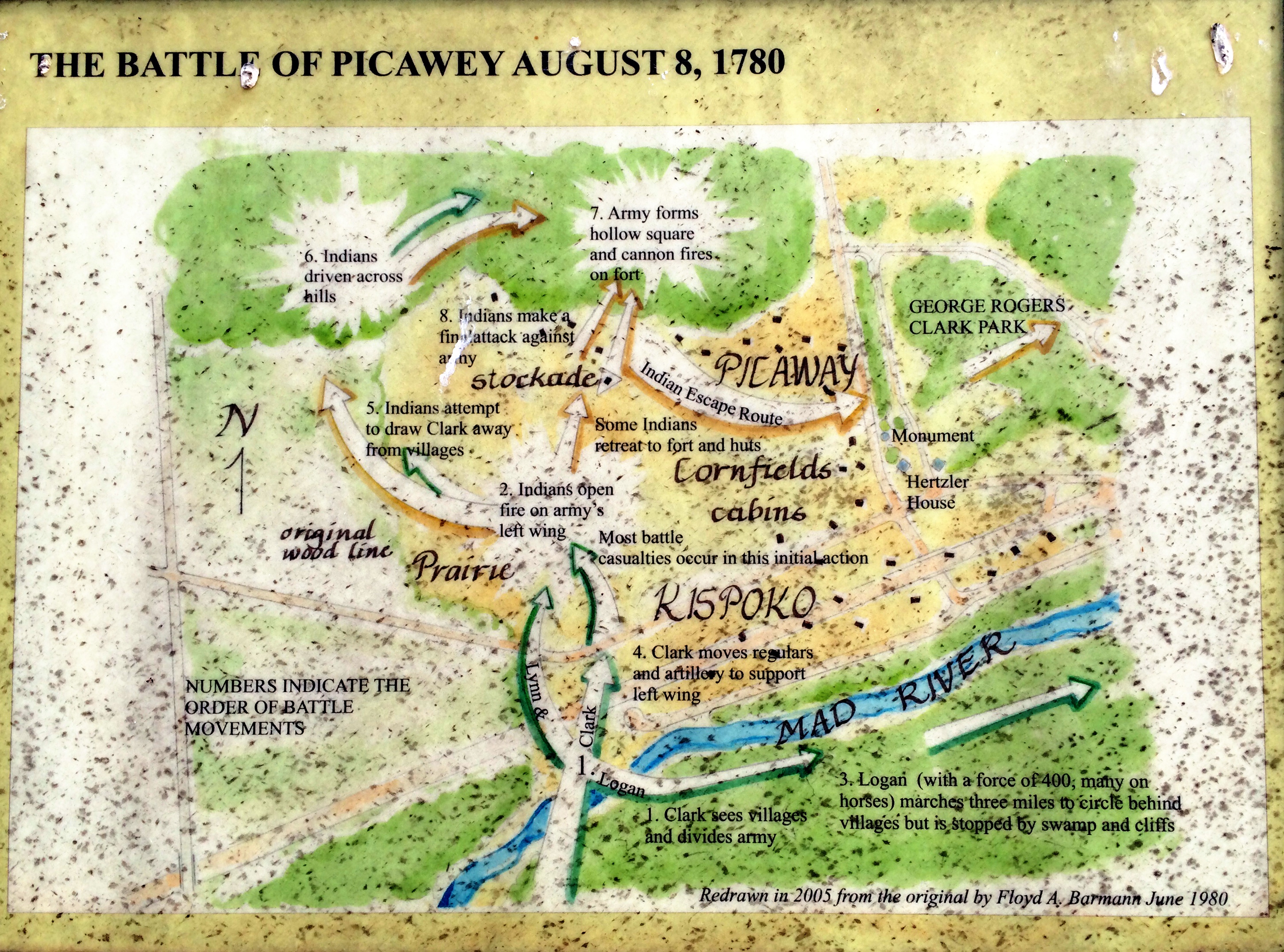
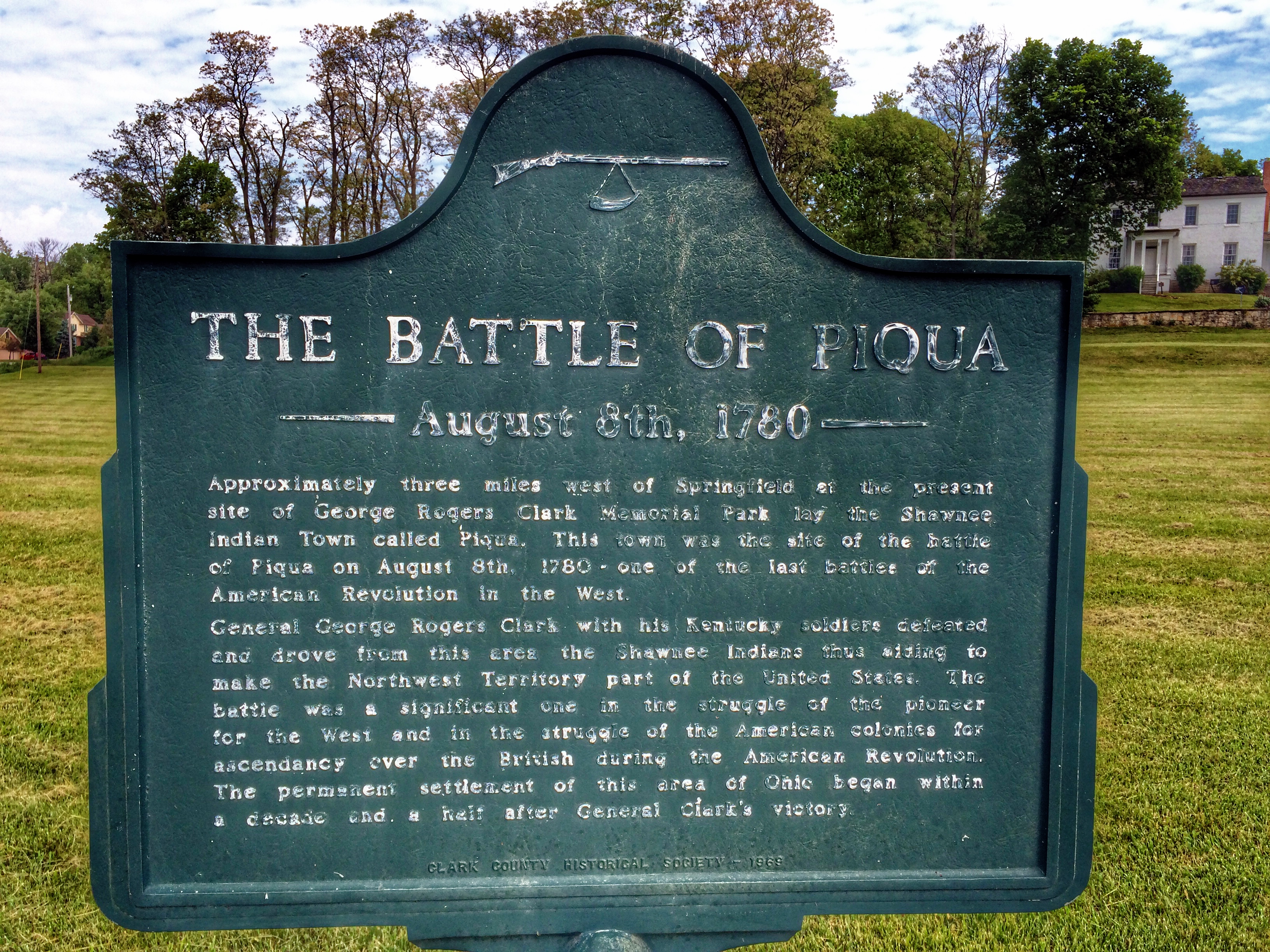
In the summer of 1780, during the Revolutionary War, George Rogers Clark led a band of 1,000 men across the Ohio River into what is now Ohio. Their objective was a series of Shawnee villages. The Indians, allied with the English, were raiding American settlements in Kentucky. The Shawnees retreated before Clark’s force until they reached this spot, the village of Piqua, where the British had built a triangular fort. On August 8, the Americans crossed the nearby Mad River and attacked the village. Fighting continued until Clark brought up his artillery to shell the stockade. The Indians were able to escape because the men who were sent up the river to cut off their route were unable to find a way through a swamp in time.
IMG_4074

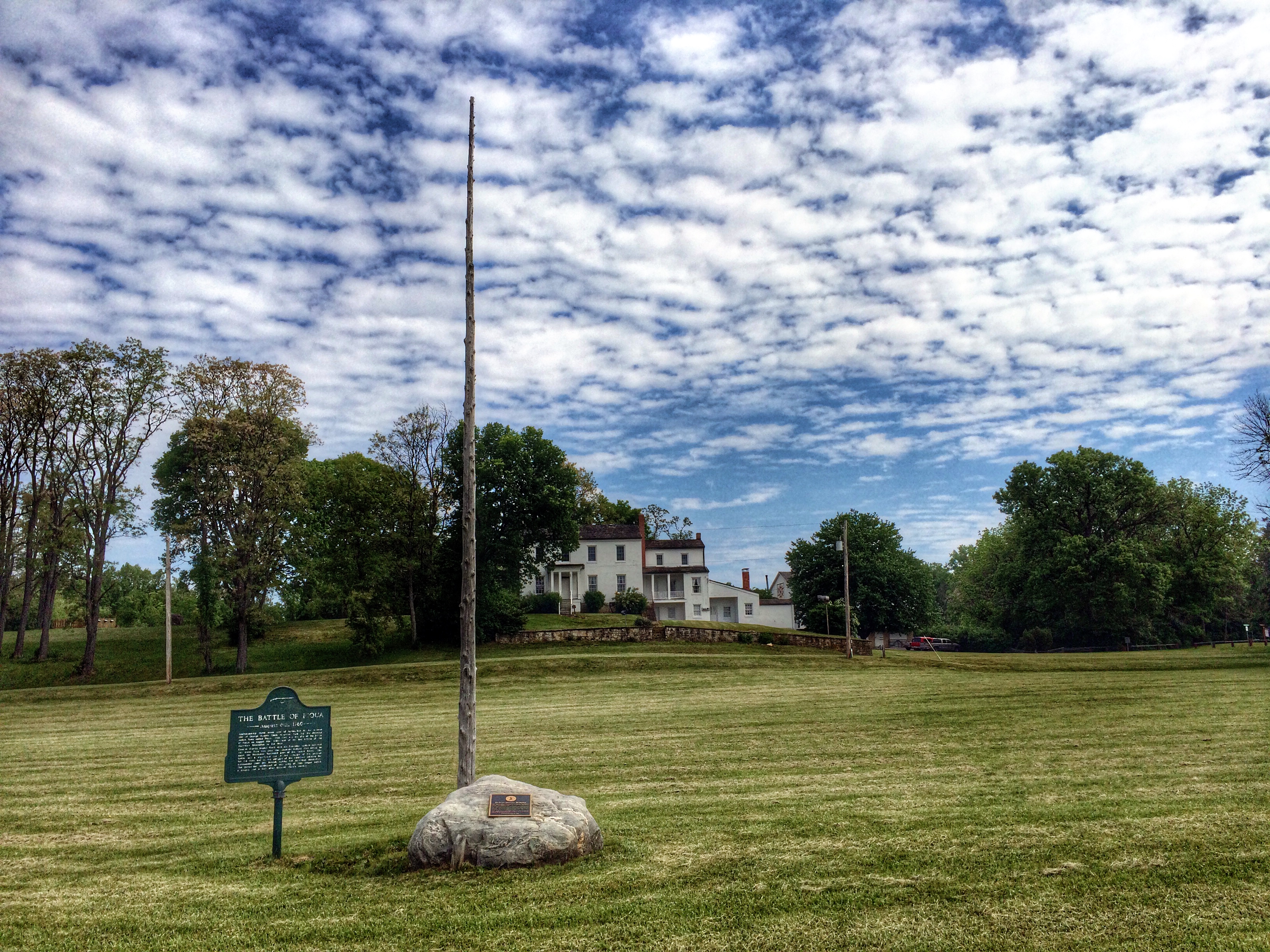
The village, and much of the fighting, took place in the field beyond the rock.

IMG_2383

IMG_2386

IMG_2382

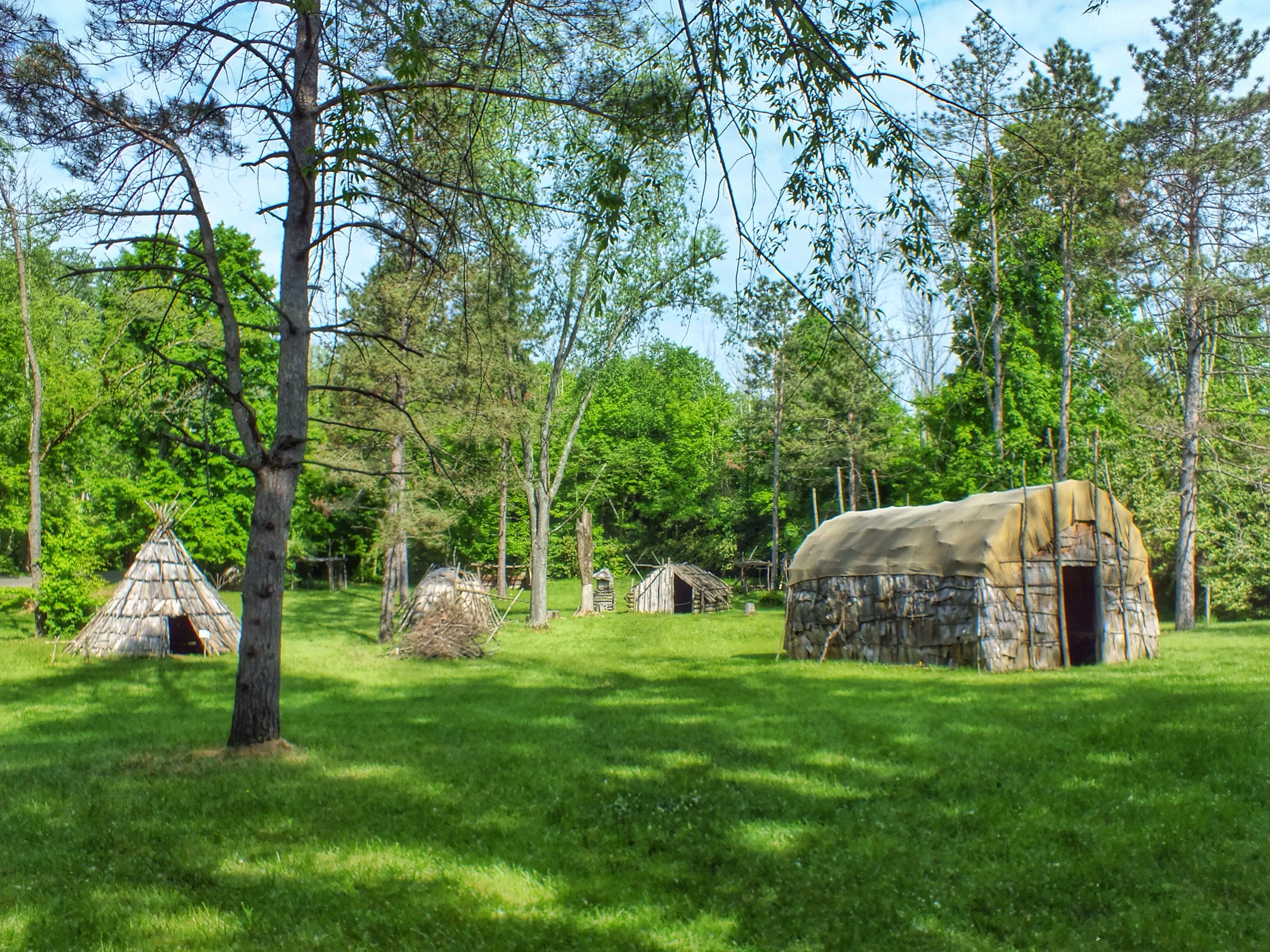
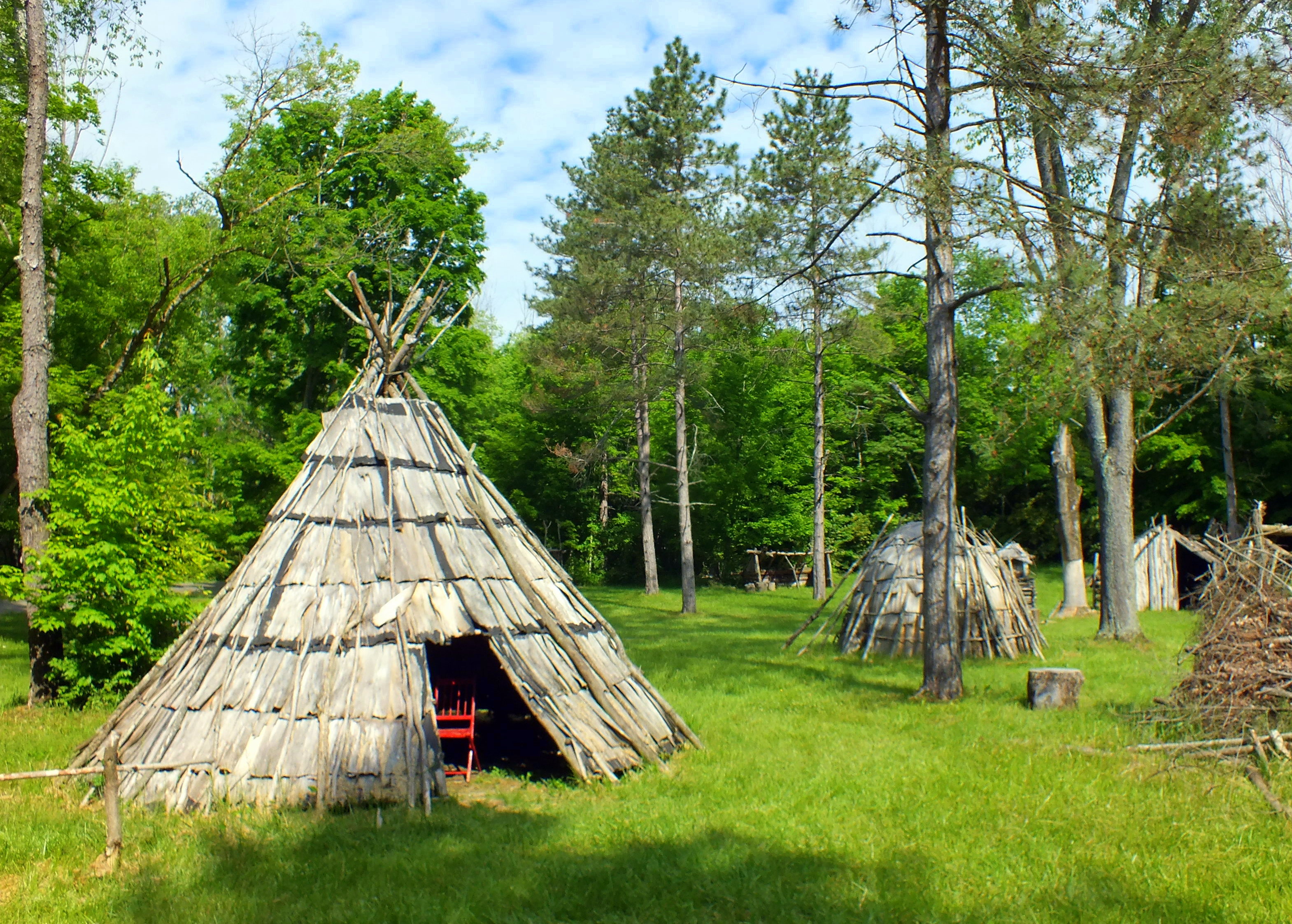
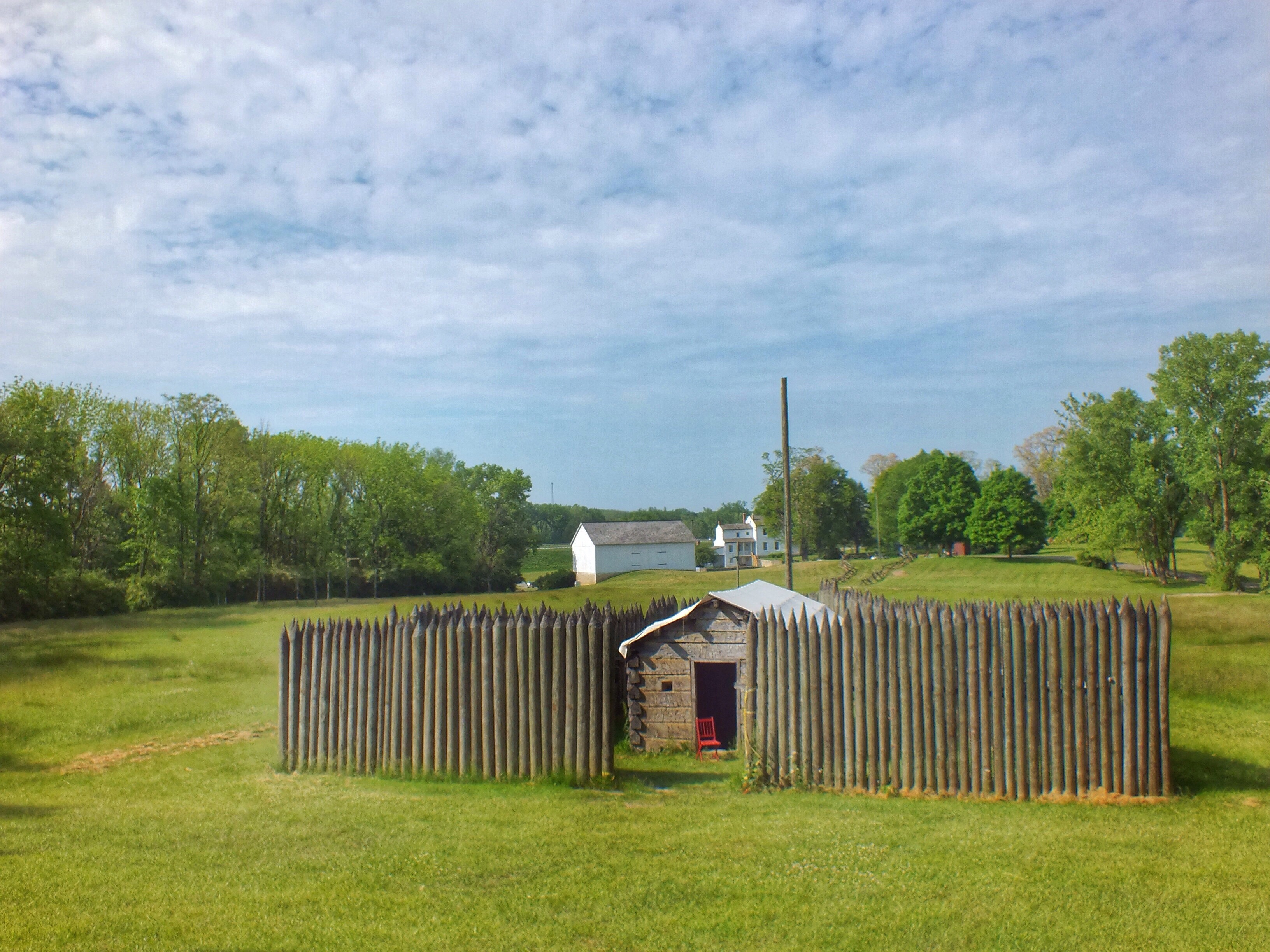
The Indian warrior Tecumseh was born in Piqua. The back of Clark’s monument commemorates him. The fort and Shawnee village have been rebuilt on the hill above the battlefield.

IMG_2385

IMG_2387

IMG_2384

wigwam

wigwam1

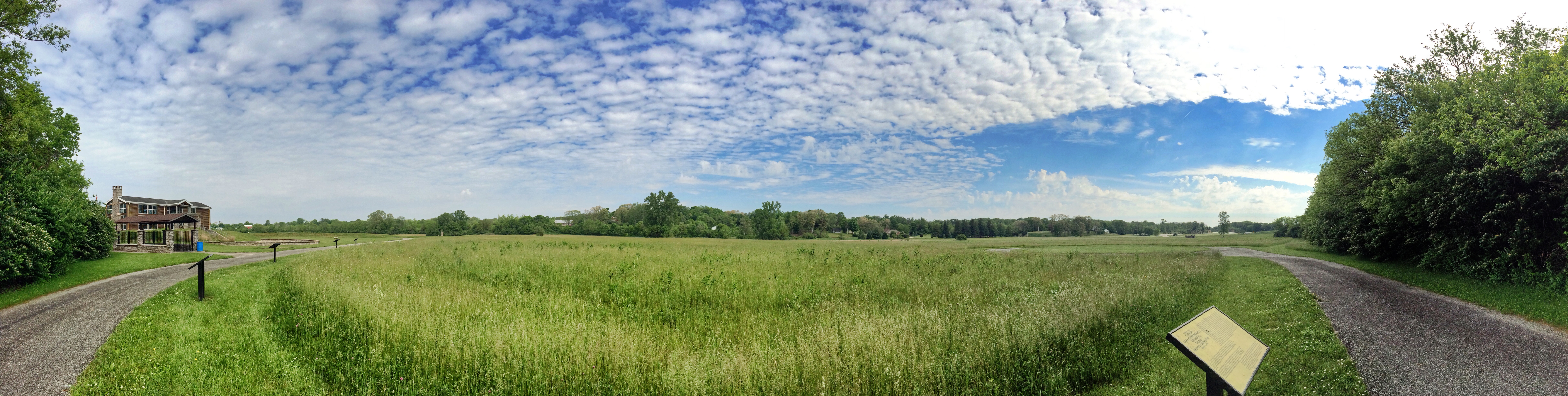
There’s a visitor center on the other side of the battlefield, but of course it was closed on the day we were there. We wandered by and looked around. Here’s a shot of the battlefield from near the building. If you enlarge it, the Clark monument can be seen on the hill in the right distance.
IMG_4075

IMG_4078

Here’s a close-up of the plaques in the above photo. (The white building visible in several of these photos is the Hertzler House, open for tours but not on this day. Of course.)
IMG_4076  IMG_4077

Posted in Ohio | Comments Off on Battle of Piqua

Piatt Castles — Mac-A-Cheek

qIMG_3925

Donn Piatt’s brother, Abram, also built a large house on the family land in Ohio. He was also a publisher, Civil War soldier and politician. And he also had two wives — the first, Hannah, died in 1861, leaving behind eight children. The second wife was named Belle.

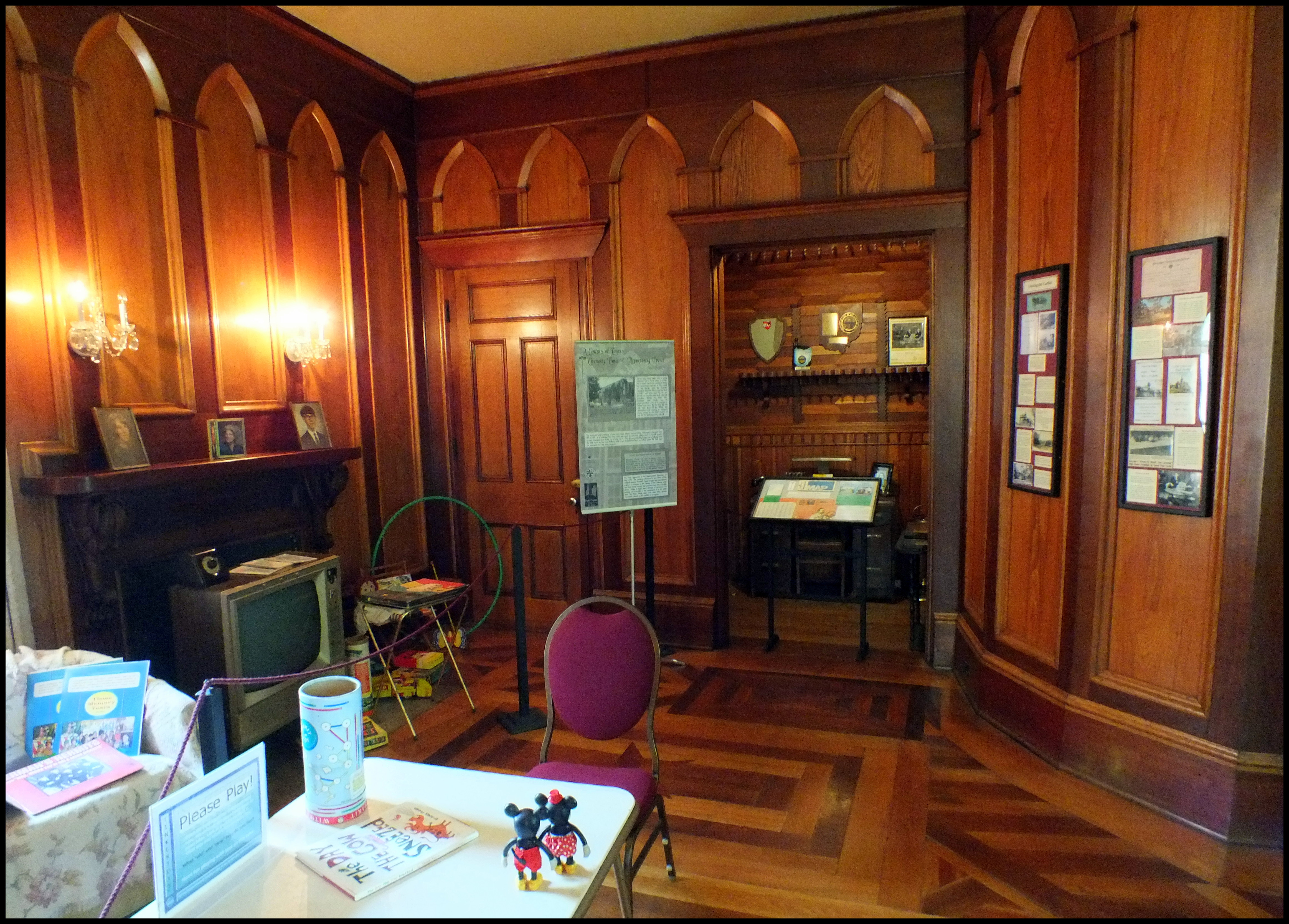
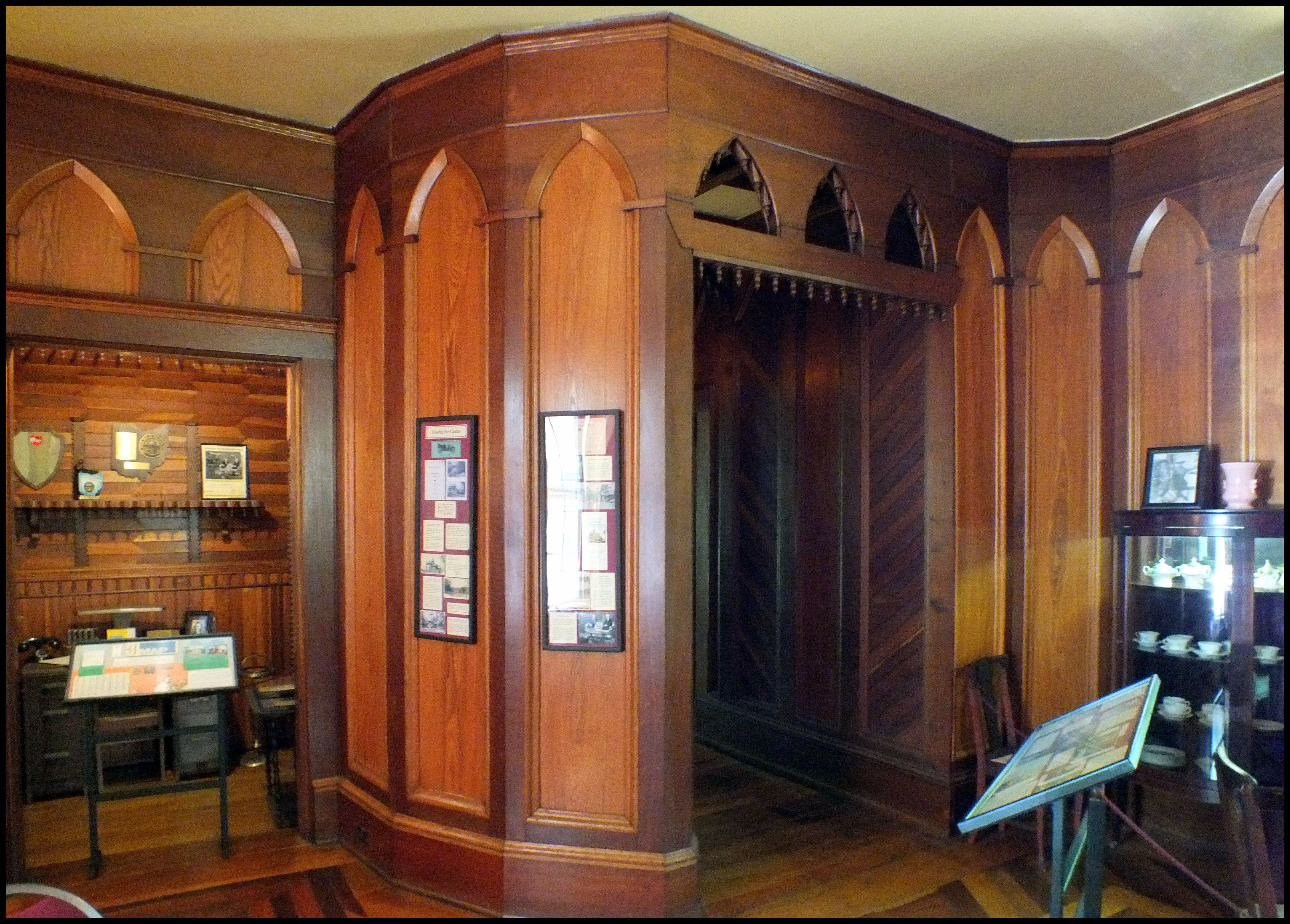
Mac-A-Cheek is about a mile from Mack-O-Chee. It’s in much better shape, but we didn’t like it as much. The woodwork throughout repeated the theme of triangles and arches, and it was a bit overdone.

qDSCF3154

qDSCF3151

qDSCF3147

qDSCF3142

As at the other house, a young woman gave us an introductory talk. We had to chuckle because in her five minute speech she repeated the phrase, “and they were pretty happy” about eight times.

qDSCF3077

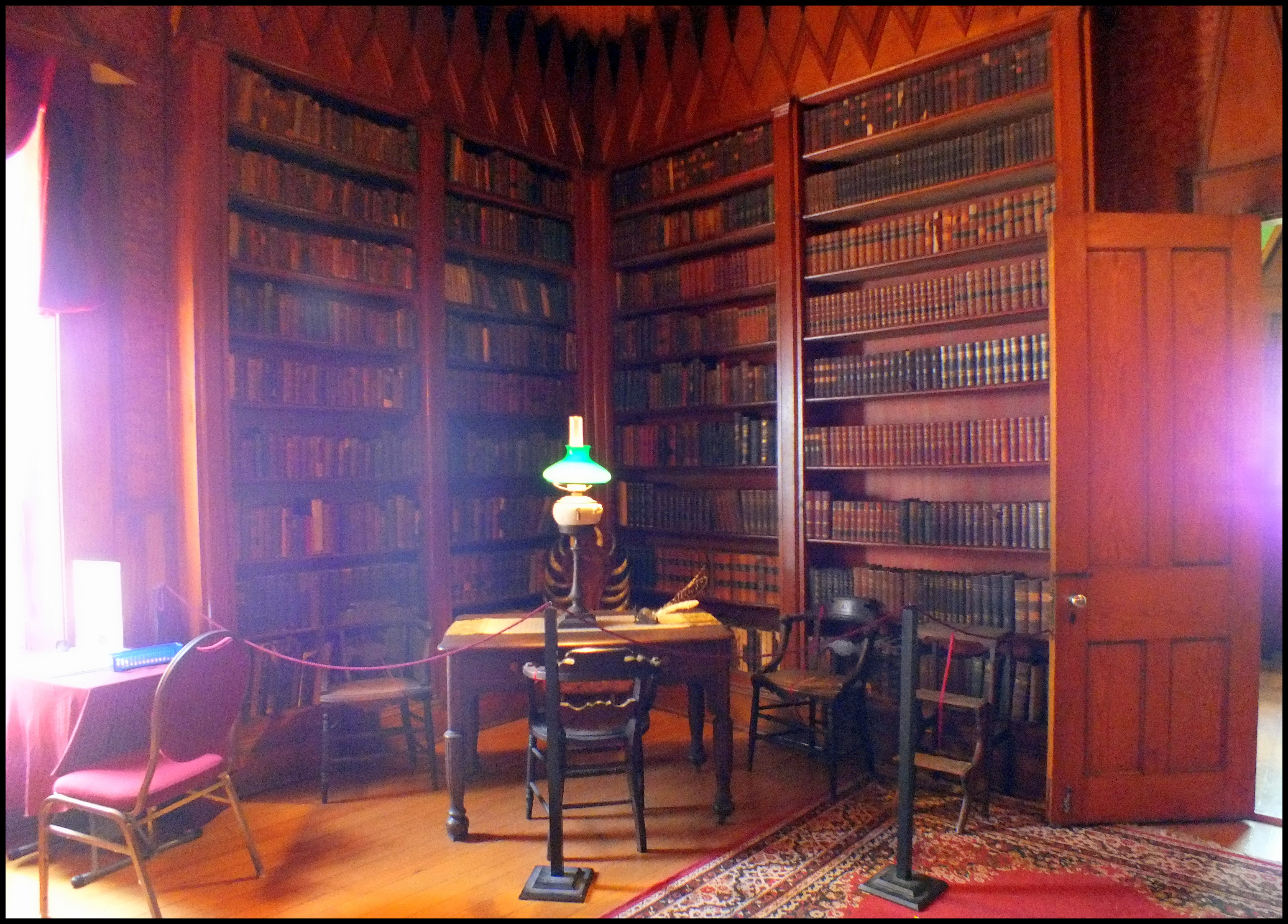
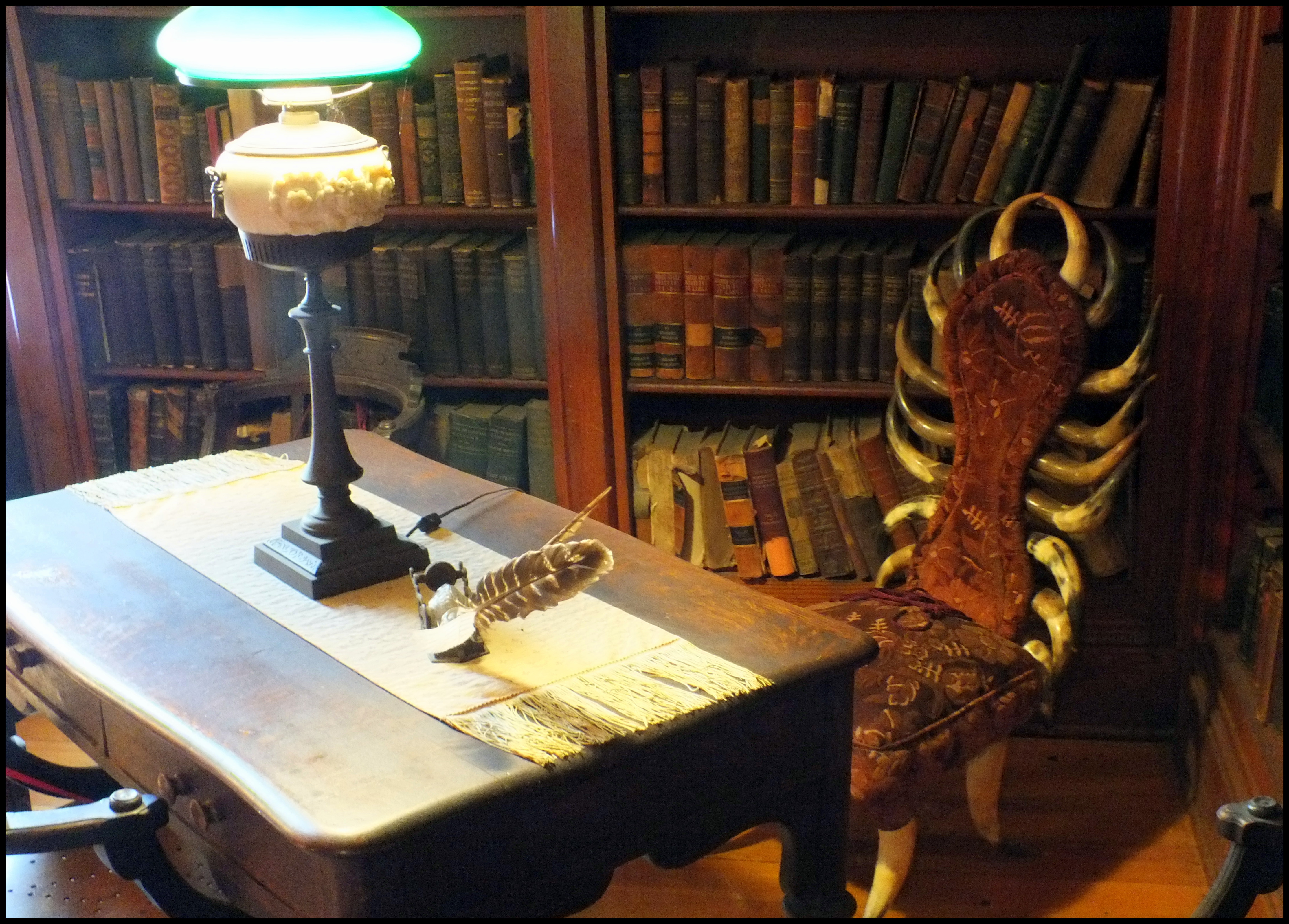
The library

qDSCF3065

qDSCF3068

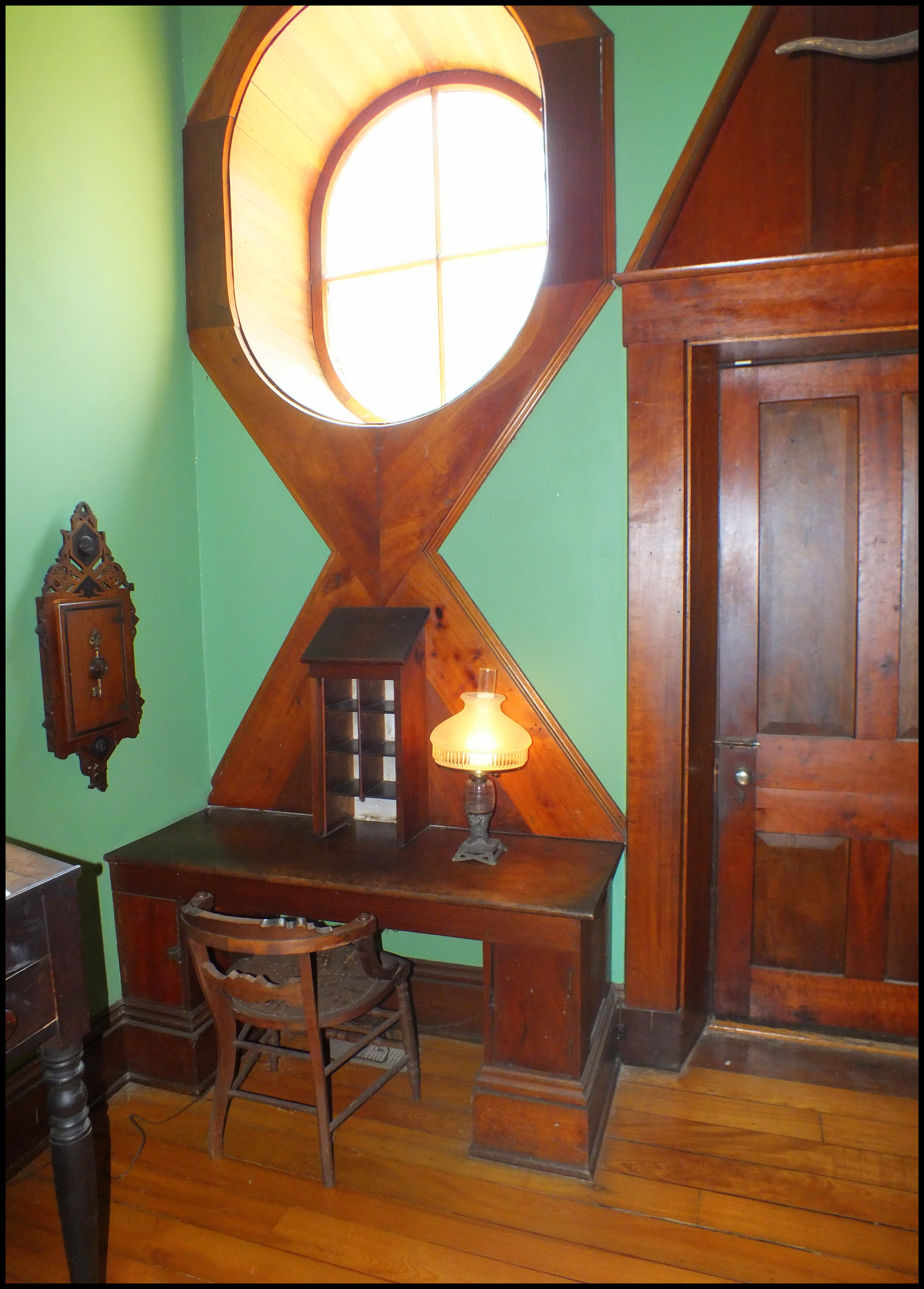
Abram’s farm office

qDSCF3080

The downstairs hallway

qDSCF3085

qDSCF3089

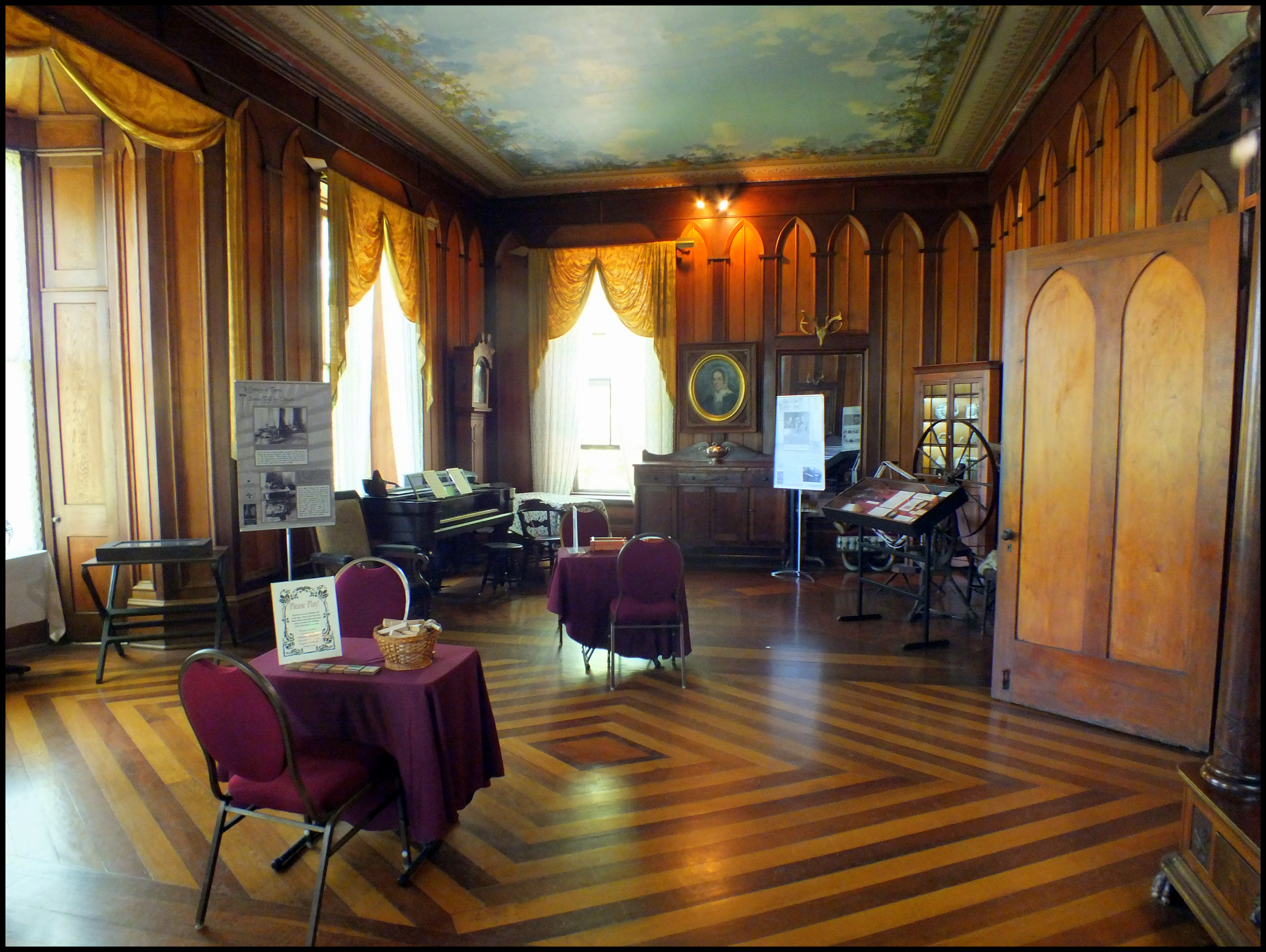
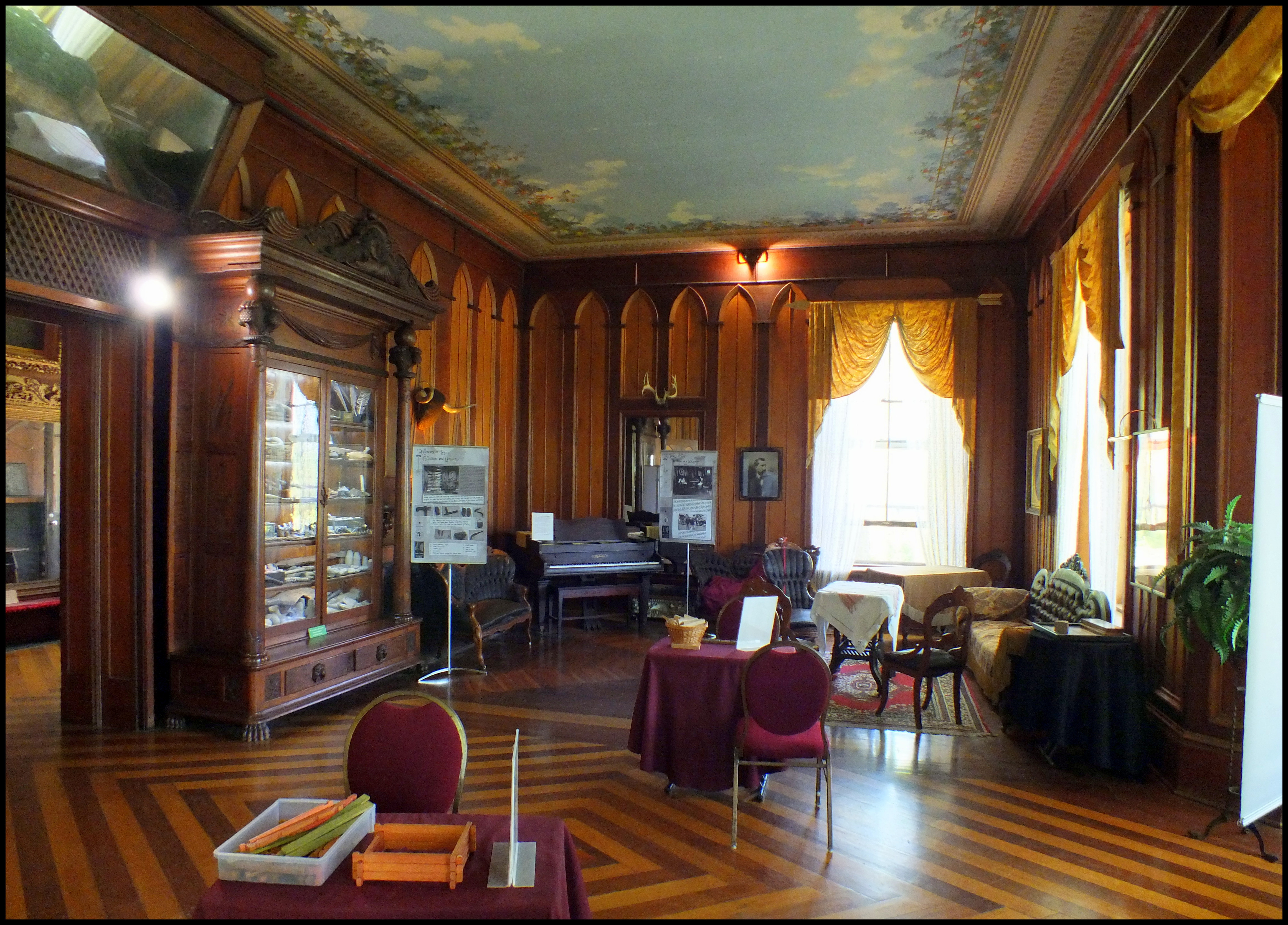
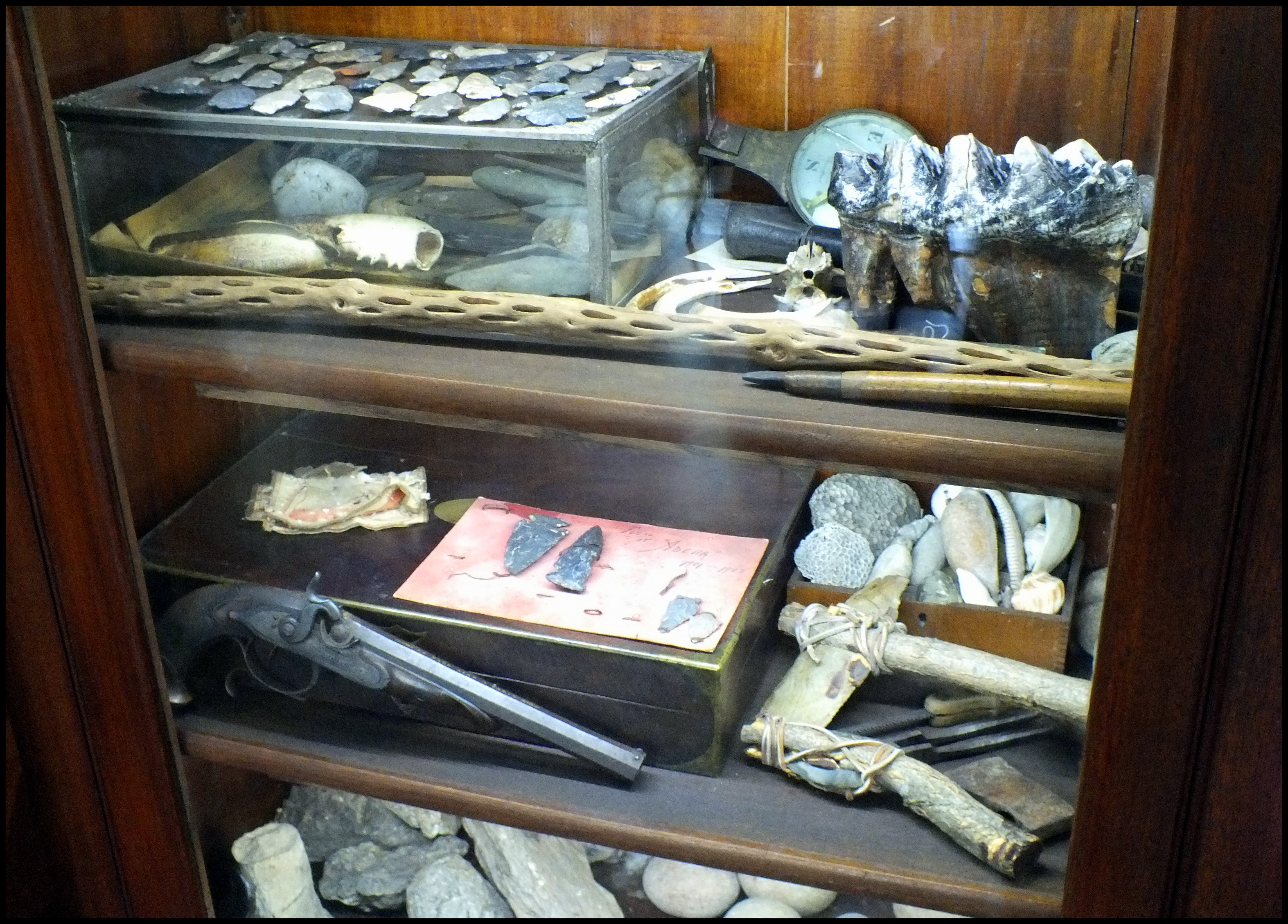
The parlor, with display cases filled with Abram’s collections.

qDSCF3097

qDSCF3103

qDSCF3095

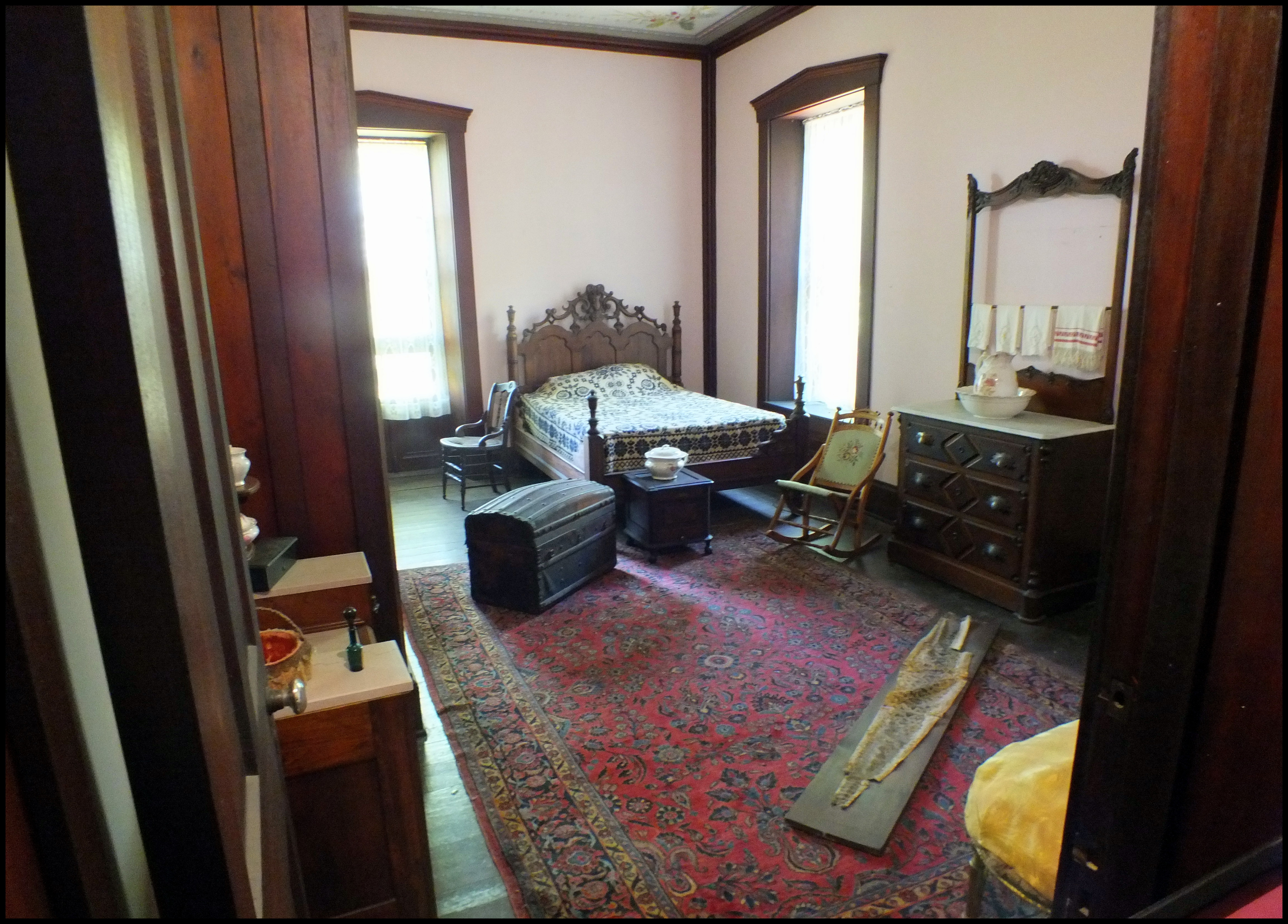
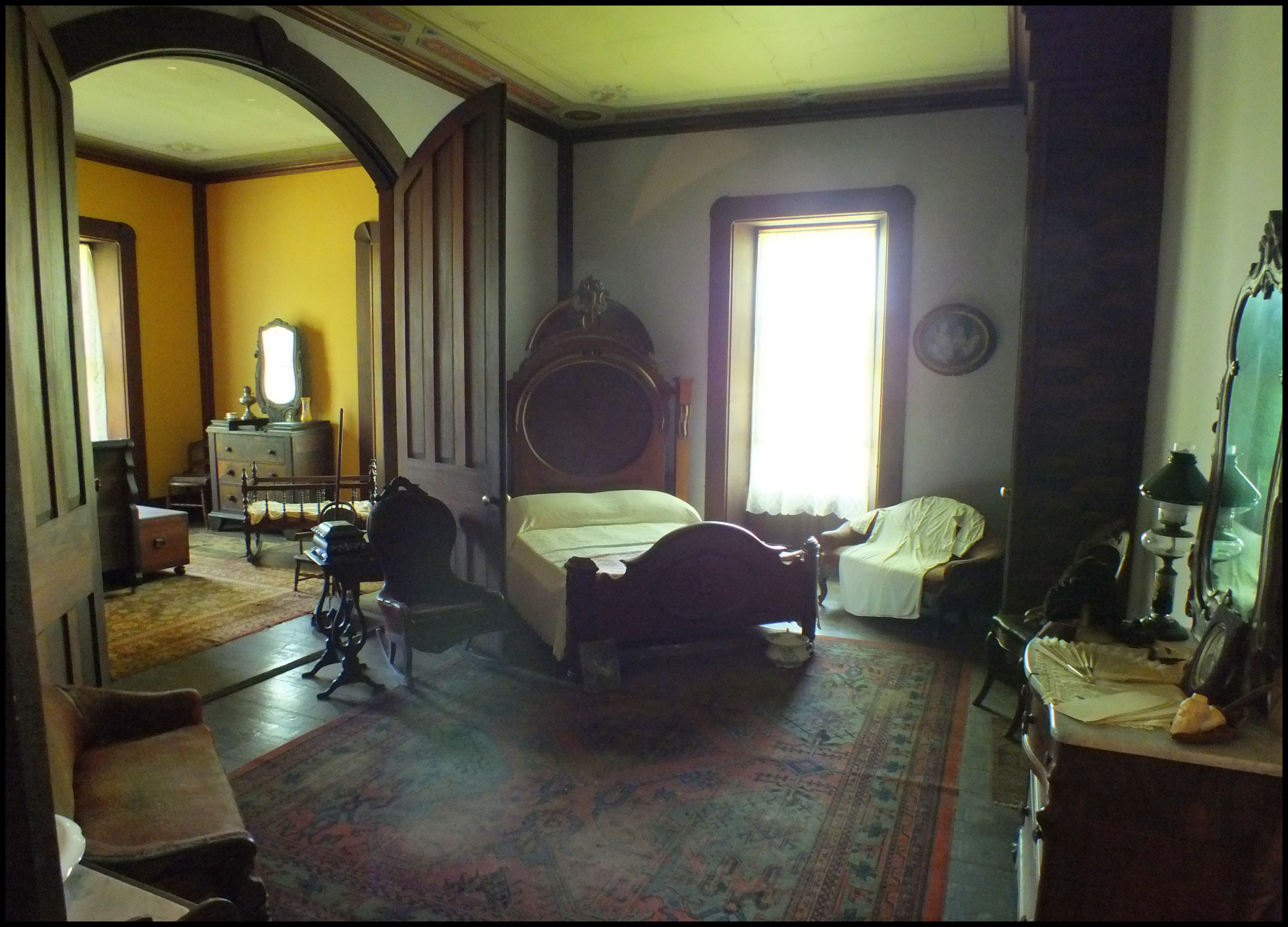
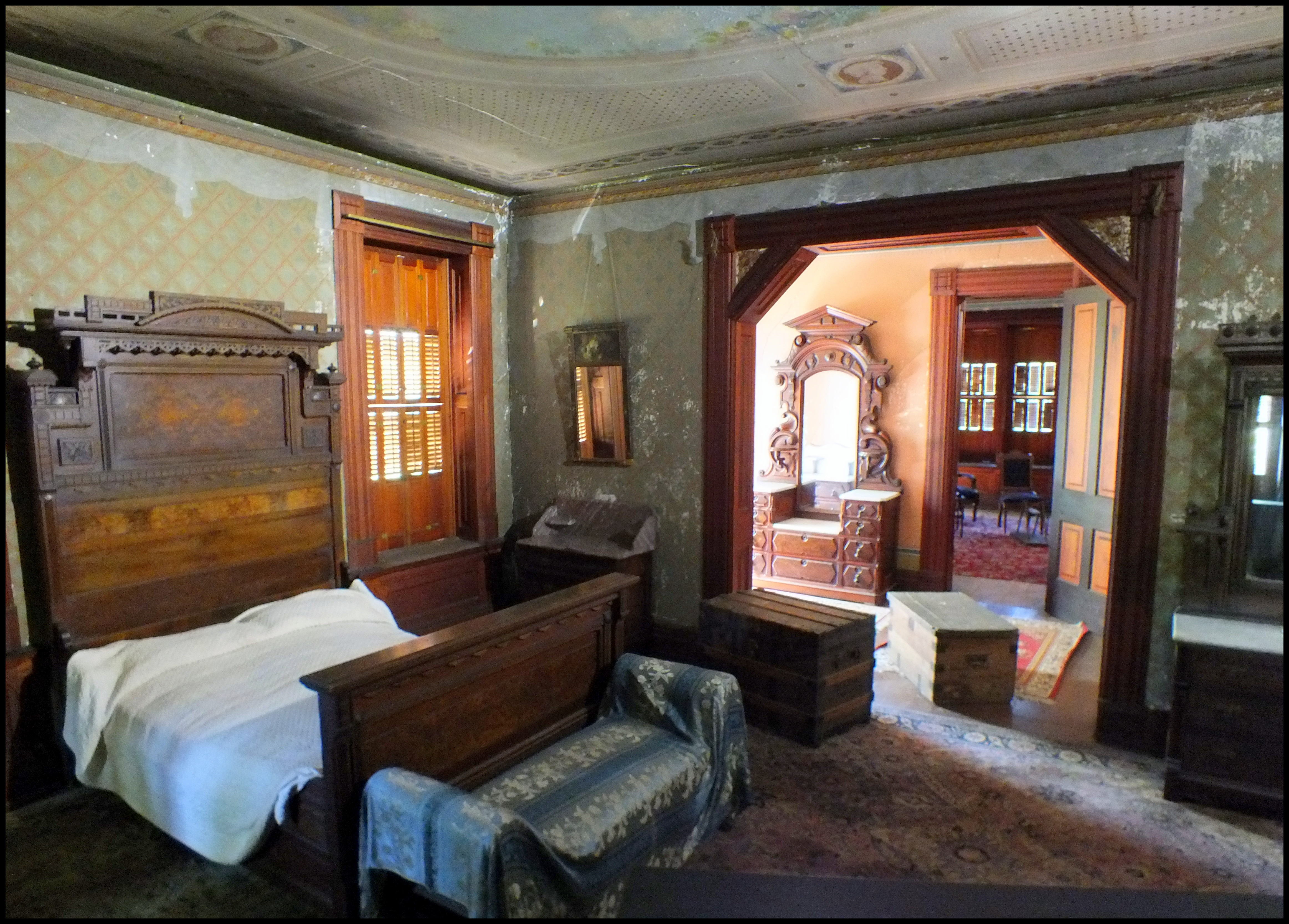
Upstairs bedrooms. That’s a rattlesnake skin on the floor, for some reason.

qDSCF3116

qDSCF3126

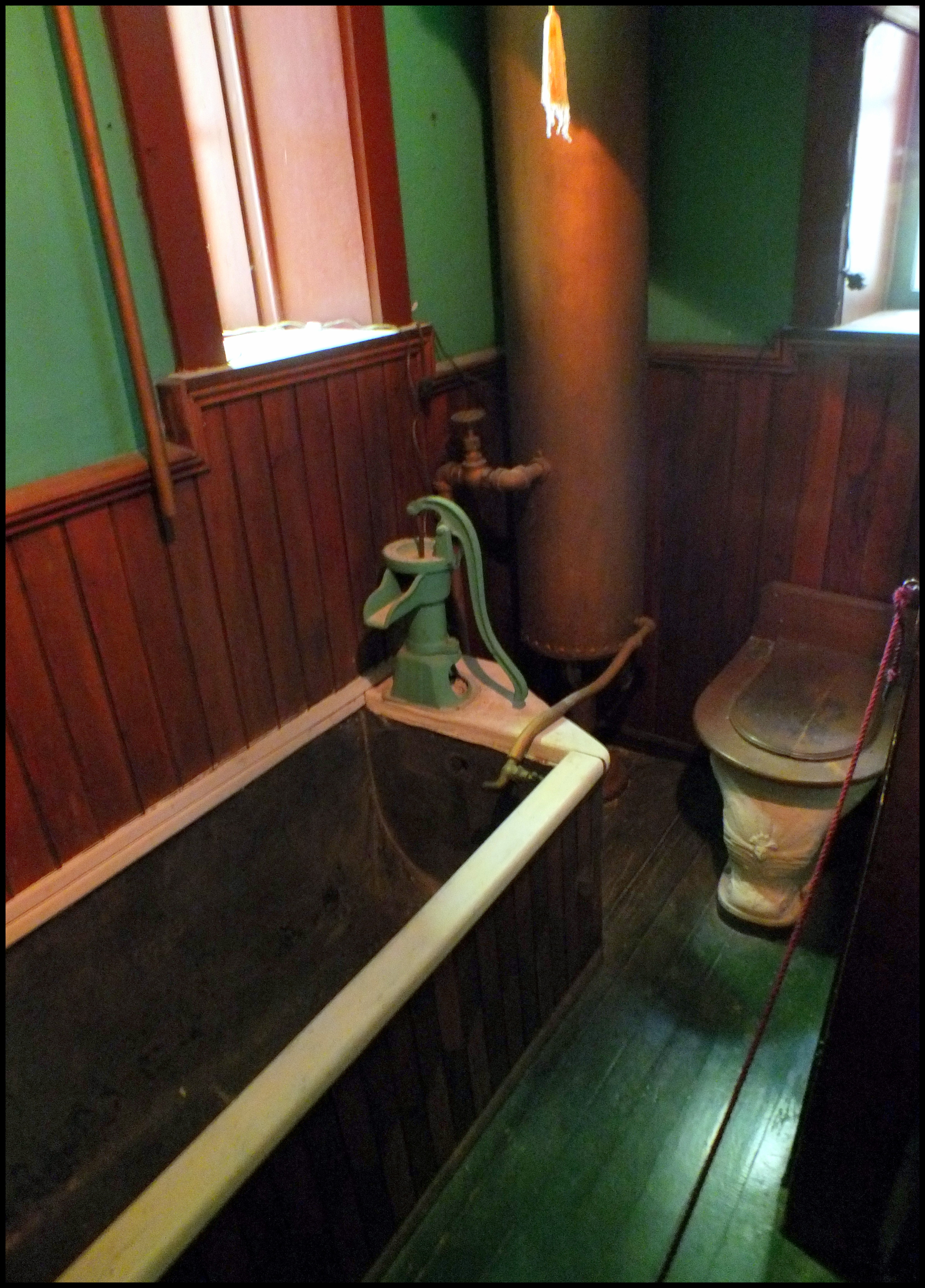
The bathroom isn’t original. It was stuck in later under a stairwell.

qDSCF3128

I’m not sure what this room was originally. It’s decorated to reflect the later generations of the Piatt family who lived in the house until fairly recently.

qDSCF3130

qDSCF3133

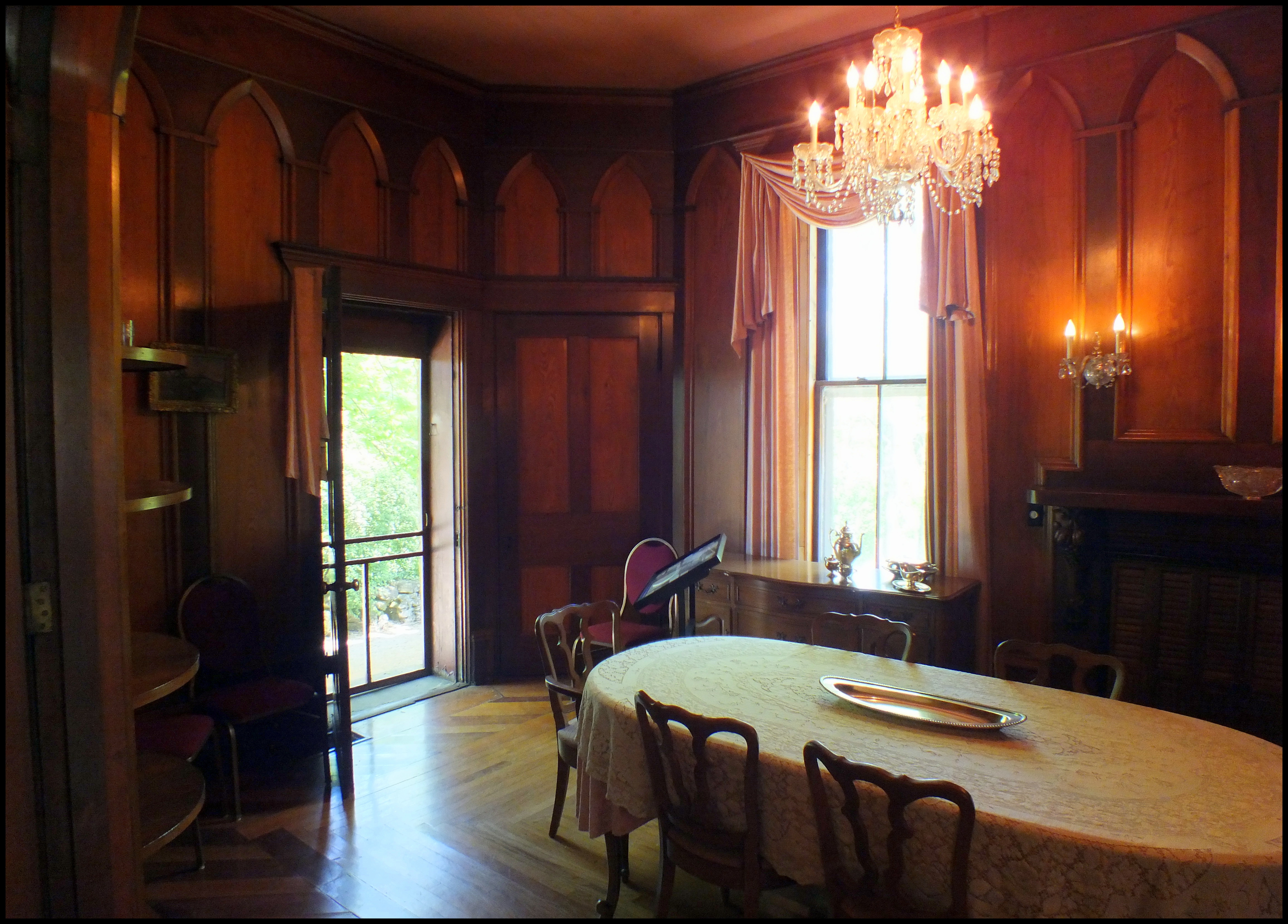
The dining room

qDSCF3132

Both houses were interesting, as was the family history. But we thought the $50 ($25 each) we had to pay to see both houses was a bit steep.

Posted in Ohio | Comments Off on Piatt Castles — Mac-A-Cheek

Somebody’s Farm

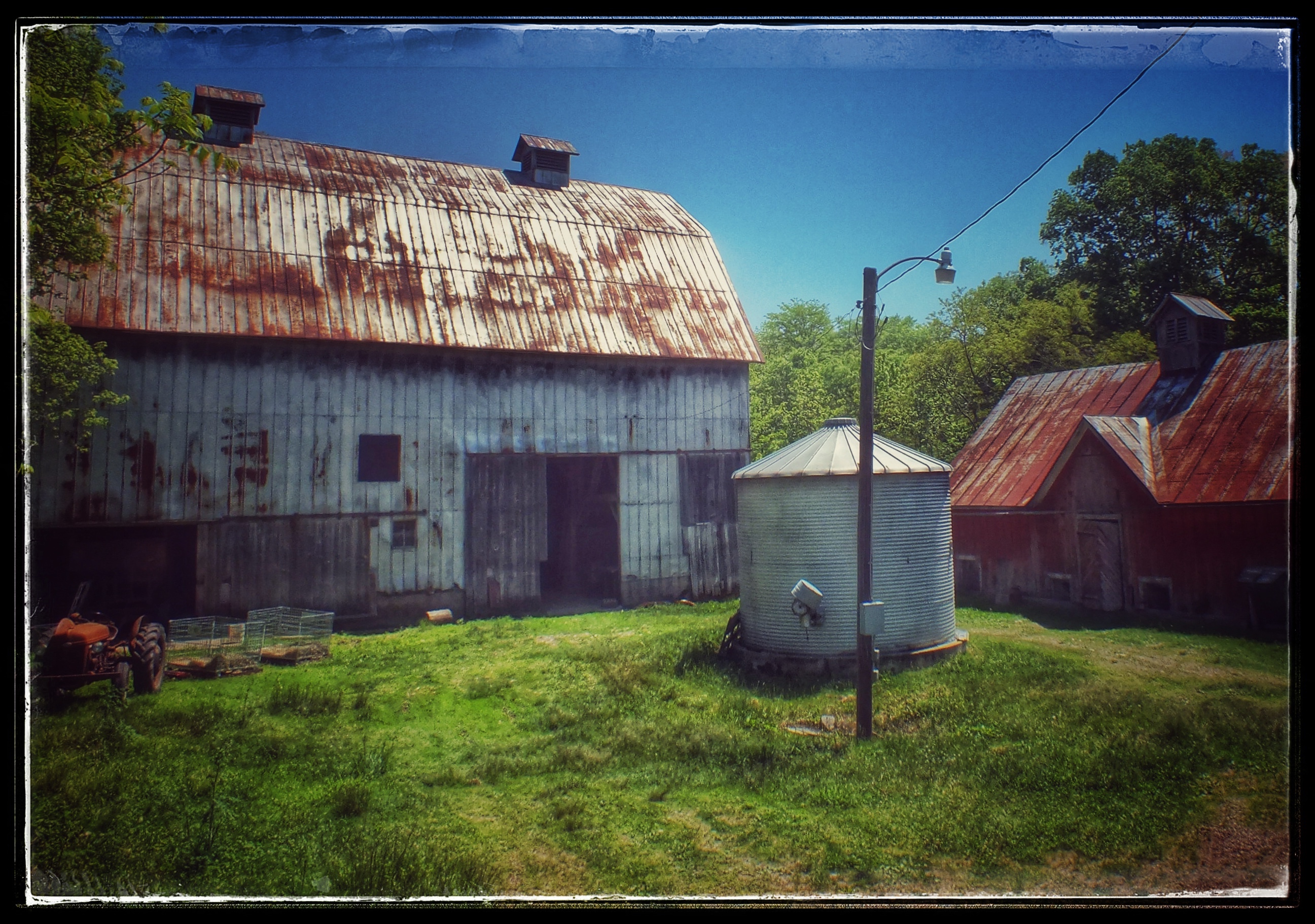
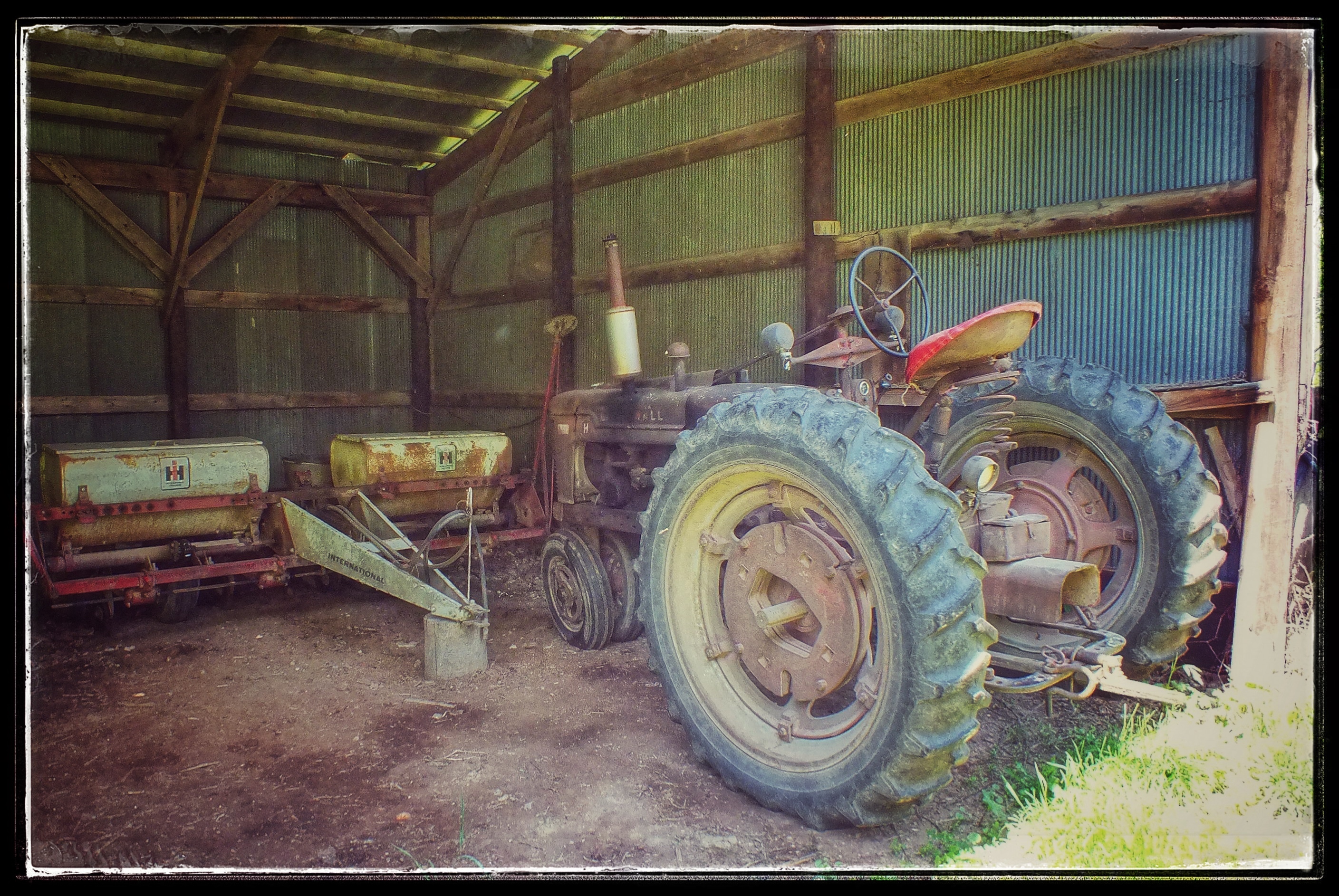
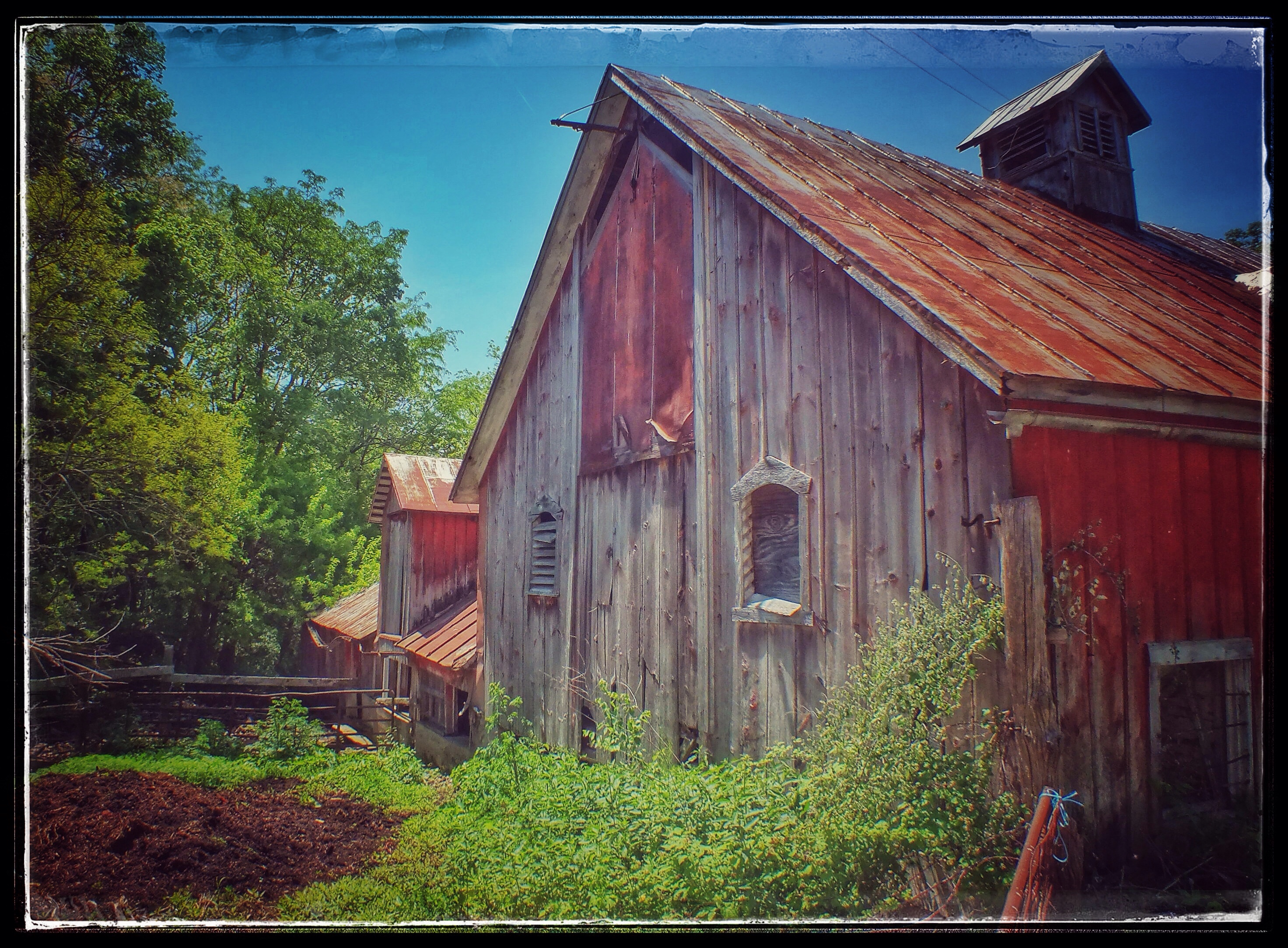
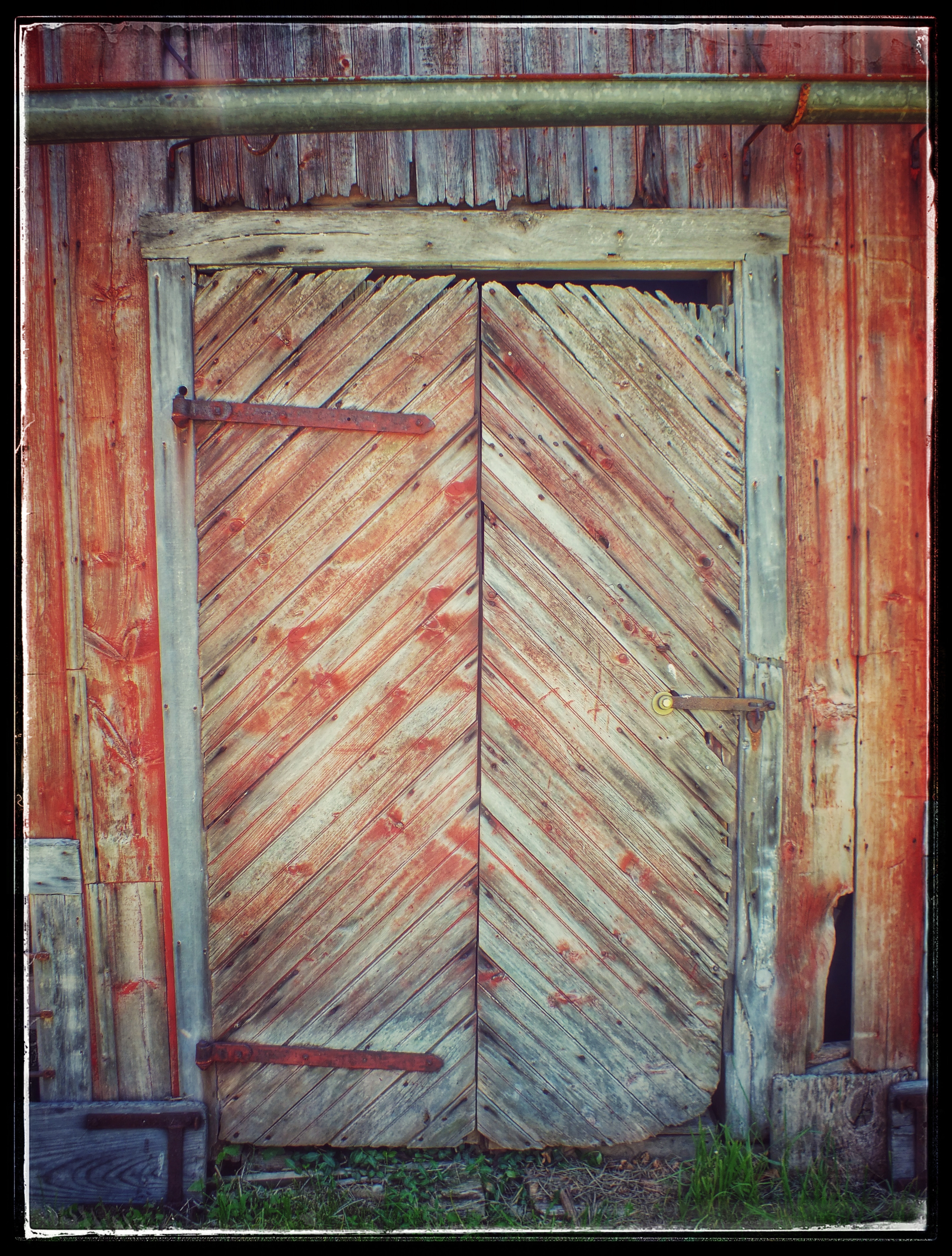
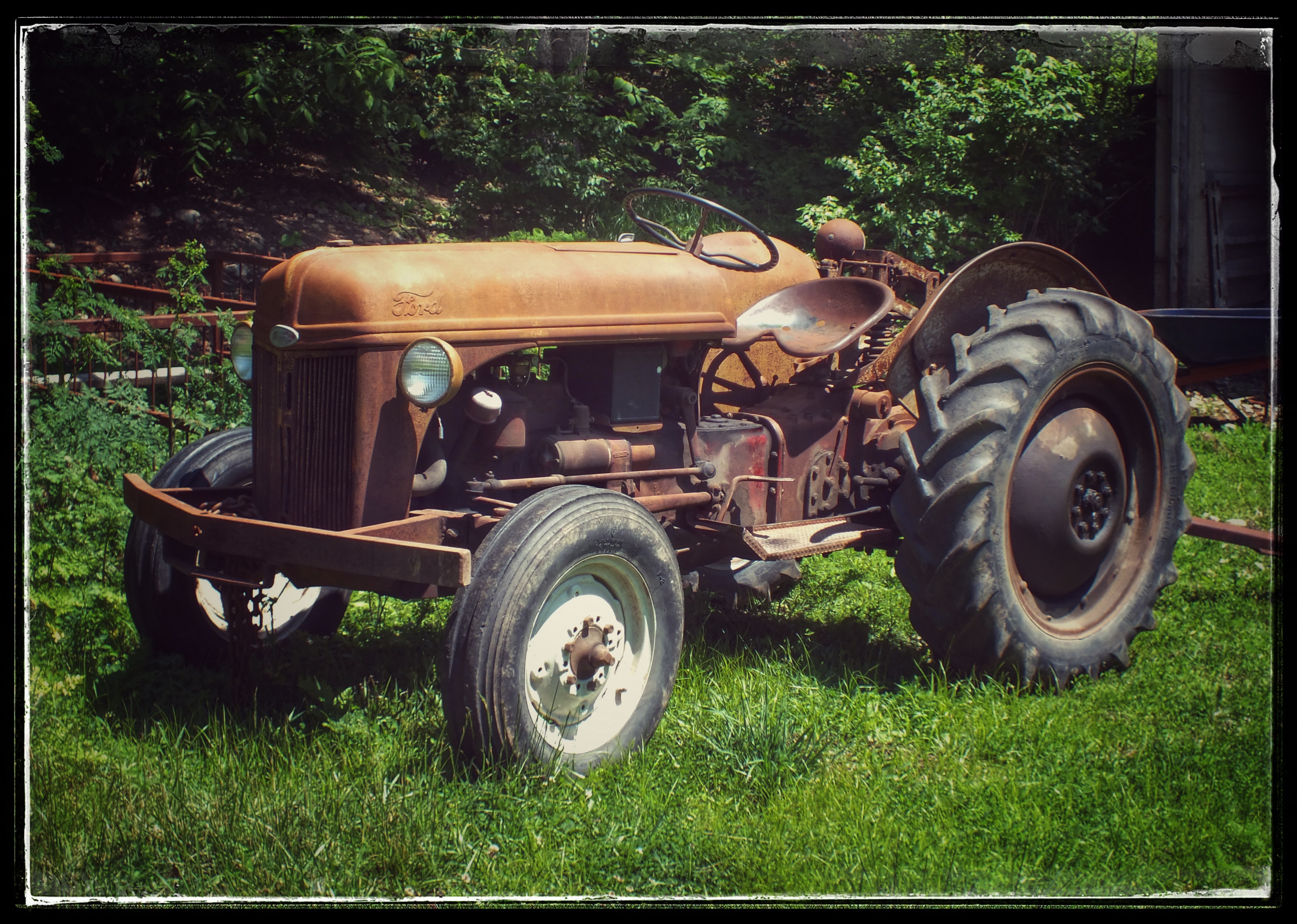
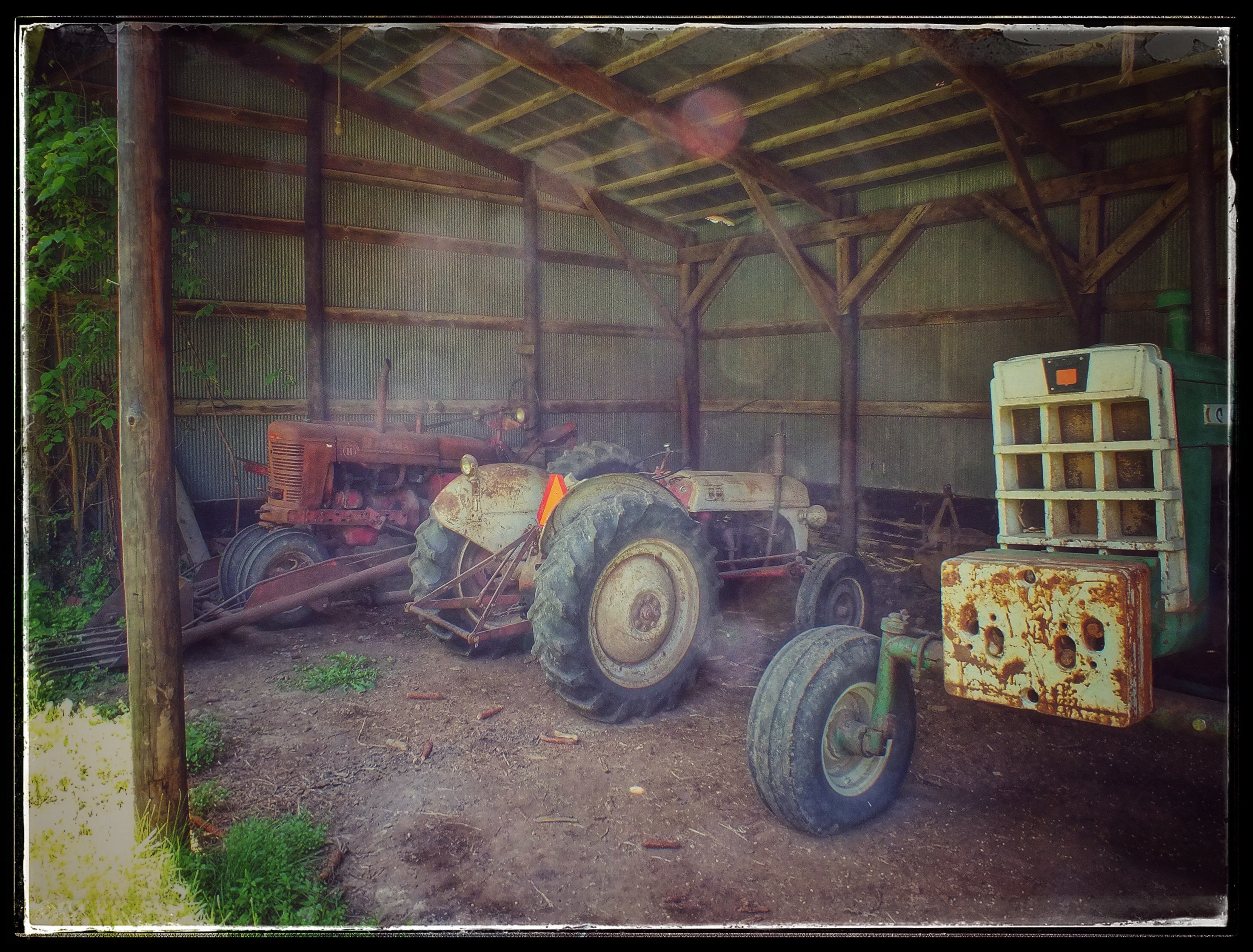
As I was walking around outside the Mac-O-Chee house, I happened upon a grassy lane that led back into the woods. I followed it a short way and came upon a collection of farm buildings. I’m sure they were connected to the house, but there were no signs to that effect. There were also no signs telling me I couldn’t wander around back there, so I did.

IMG_2379

IMG_2381

IMG_2380

IMG_2378

FullSizeRender-7

FullSizeRender-6

FullSizeRender-5

FullSizeRender-4

FullSizeRender-3

FullSizeRender-2

FullSizeRender-1

Posted in Photos | Comments Off on Somebody’s Farm

Piatt Castles — Mac-O-Chee

Donn Piatt grew up in rural Ohio on land his father called Mack-O-Cheek from a local Indian word. He was a journalist, lawyer and secretary to the American legation in Paris. He dabbled in politics and got to know many of the prominent politicians of the times, including Lincoln.  He joined the Union Army during the Civil War and rose through the ranks until he got in trouble by attempting enlist slaves. He resigned his commission and returned to Ohio, with his wife Louise. They began construction on a Gothic-style house in the country, but Louise died before it was completed.

A short time later, Donn married Louise’s sister, Ella, who had lived with the couple in Paris. They moved to Washington where Donn worked as a correspondent for a Cincinnati newspaper. His written attacks on politicians got him in constant hot water. He finally returned to Ohio and built a large chateau on the front of his former home where he lived until his death at 72 in 1891. He has been described as a gadfly, a person who prompts others to act by annoying them. And while he wasn’t a major player in history, he certainly hovered around the edges of many historical people and events.

pIMG_3924

His house is still owned by the Piatt family and is open for tours. We arrived a few minutes early and waited on the side of the road outside the gates.

pDSCF3059

pDSCF2909

pDSCF2910

The white portion in the back is the original house.

pDSCF2915

pDSCF3019

pDSCF2919

pDSCF2947

A young woman gave us a short talk on the family and then left us to our own devices. We wandered around the house, reading informative signs and hoping we didn’t fall through the floor. The place isn’t in very good repair. Walls are peeling, floors creak — a sign outside one room warned us not to enter because the floor wasn’t safe.

But it is impressive, with painted ceilings and walls and amazing woodwork. Very little of the furniture belonged to the family.

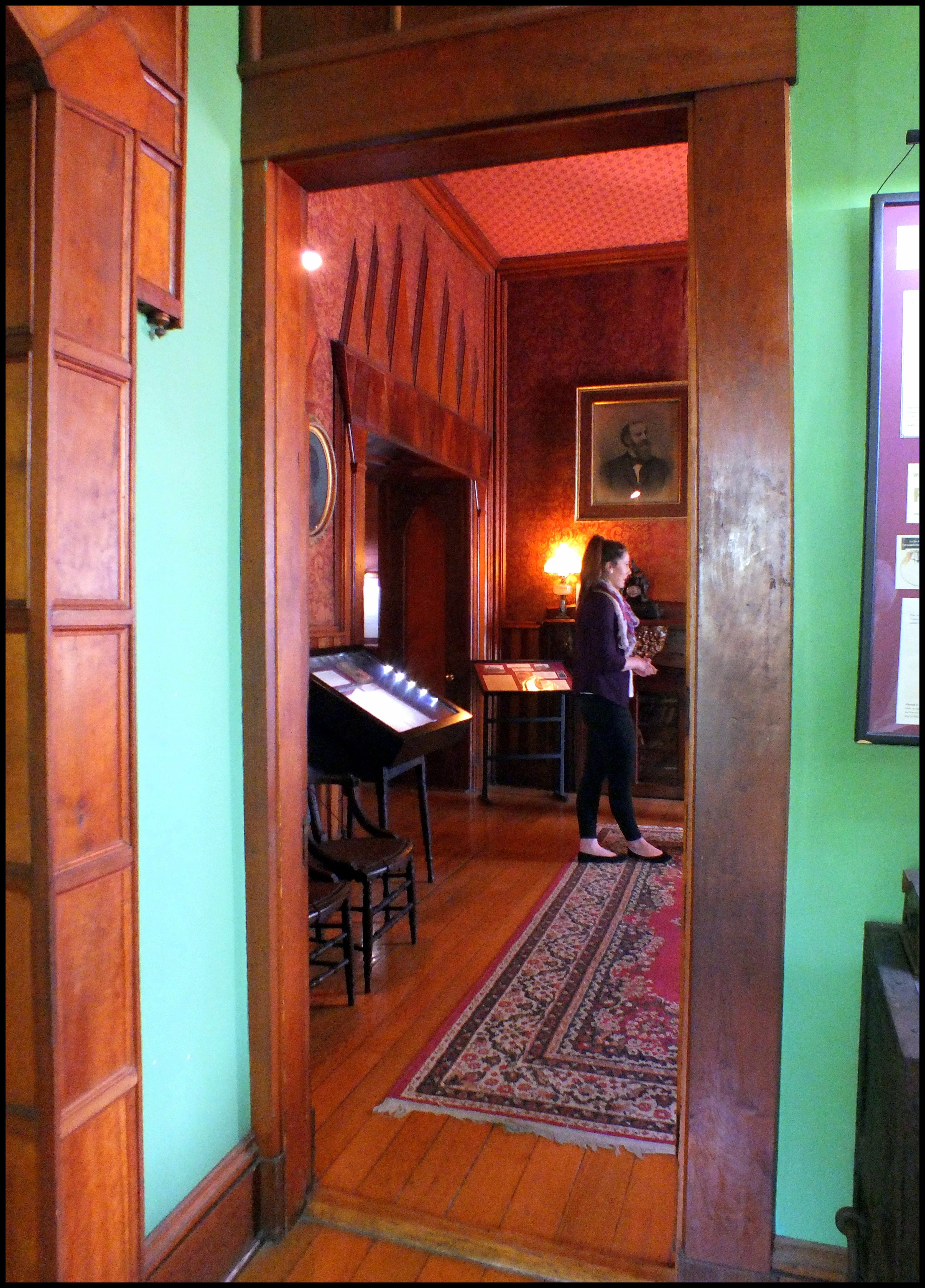
The room through the opening is the kitchen. I’m not sure what this room was.

pDSCF2930

The back stairs.

pDSCF2931

Ella’s sitting room. The contraption in the middle is a physical therapy device built to help Ella with leg paralysis brought on by a train accident. In time, she was able to walk with a cane.

pDSCF2950

pDSCF2954

The master bedroom, with Ella’s sitting room in the background.

pDSCF2956

I thought the large window from the master bedroom into the bathroom was an interesting touch.

pDSCF2958

pDSCF2960

The top, and bottom of the main staircase.

pDSCF2965

pDSCF2986

The next two photos are the guest bedroom. Note the alcove for the bed.

pDSCF2968

pDSCF2969

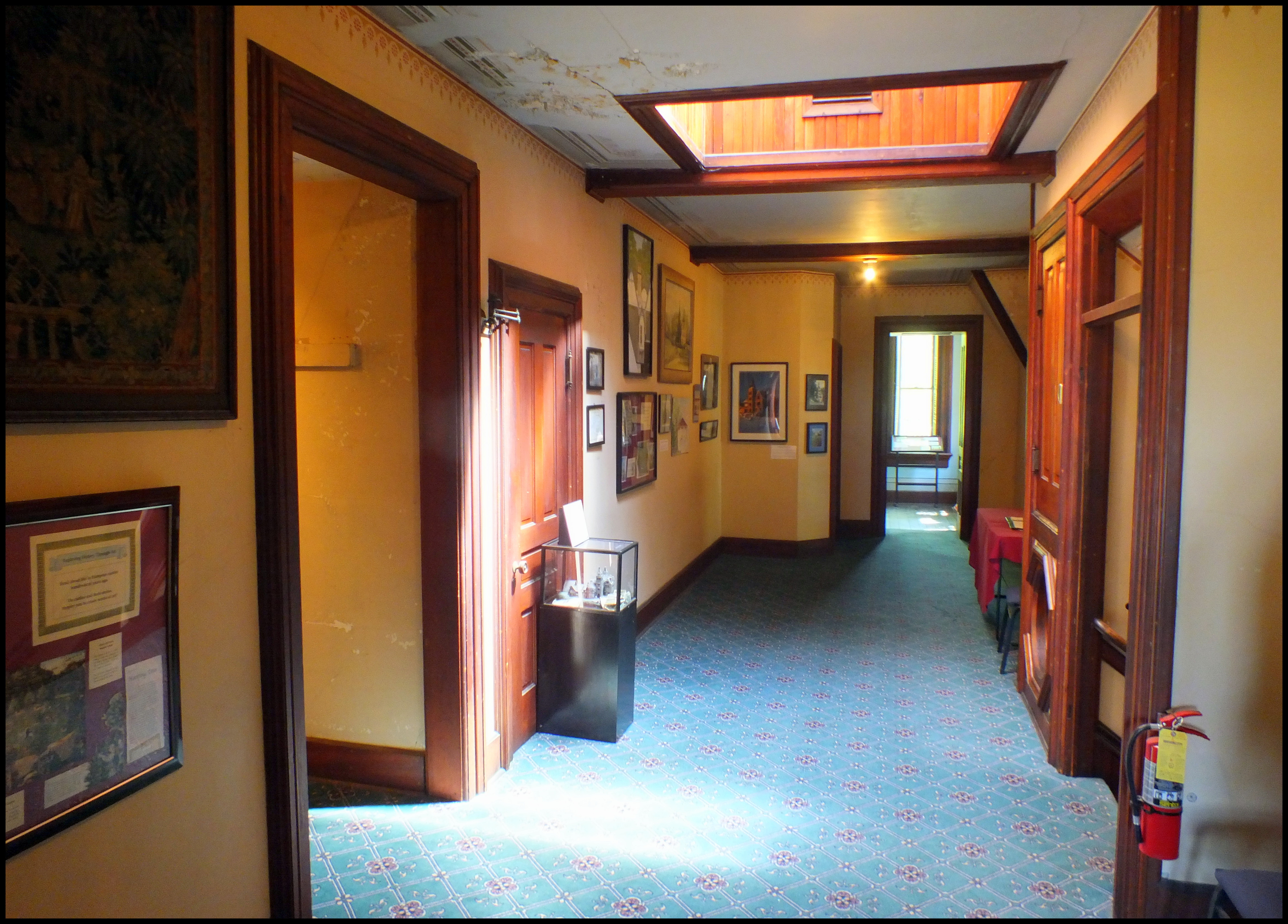
The second-floor hallway.

pDSCF2971

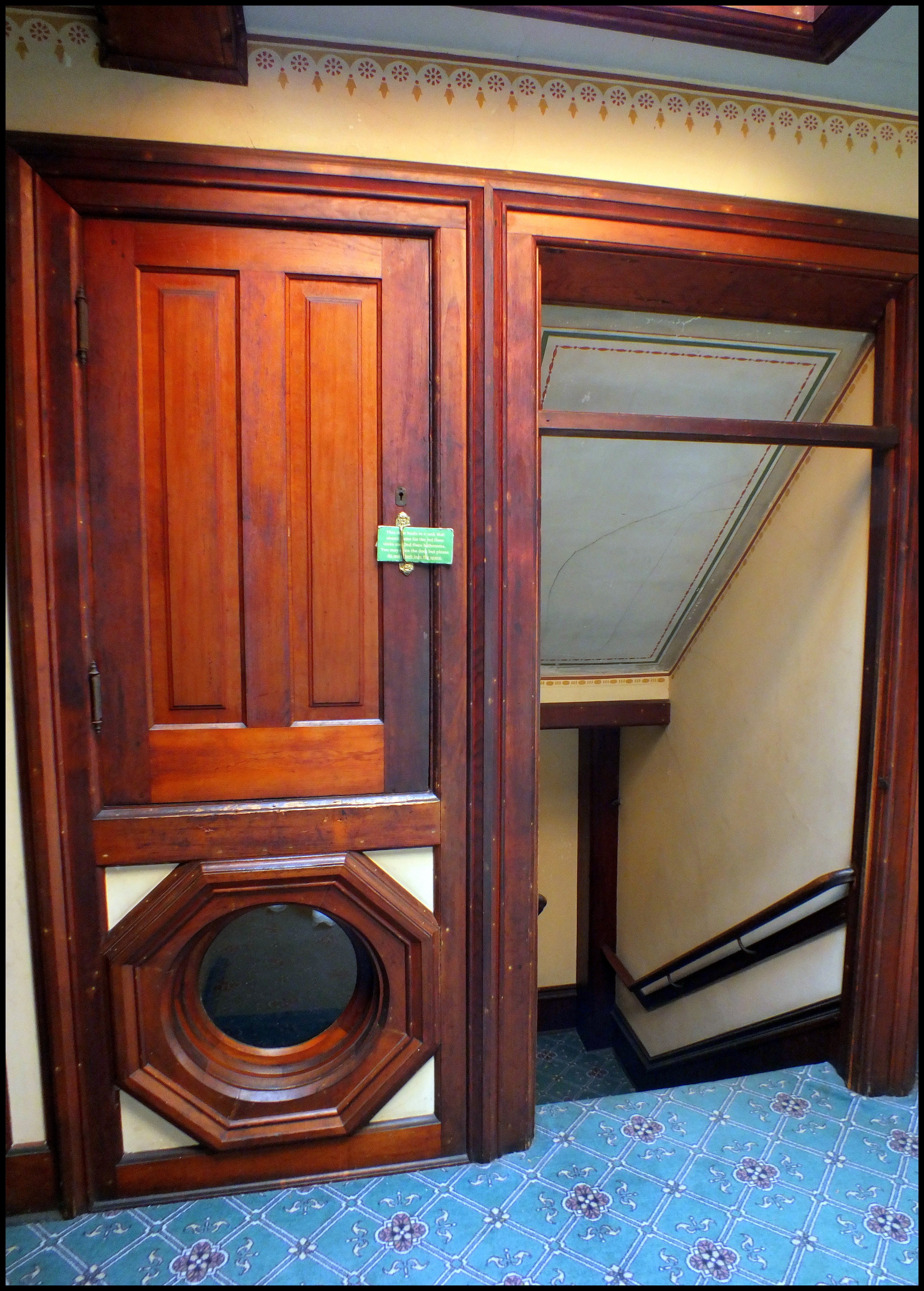
Another odd window, this one to cast light into a stairway.

pDSCF2974

Paintings in an upstairs bedroom.

pDSCF2977

The parlor

pDSCF2993

Donn’s study. Note the built-in filing cabinet.

pDSCF2994

pDSCF2998

The dining room

pDSCF3014

pDSCF3016

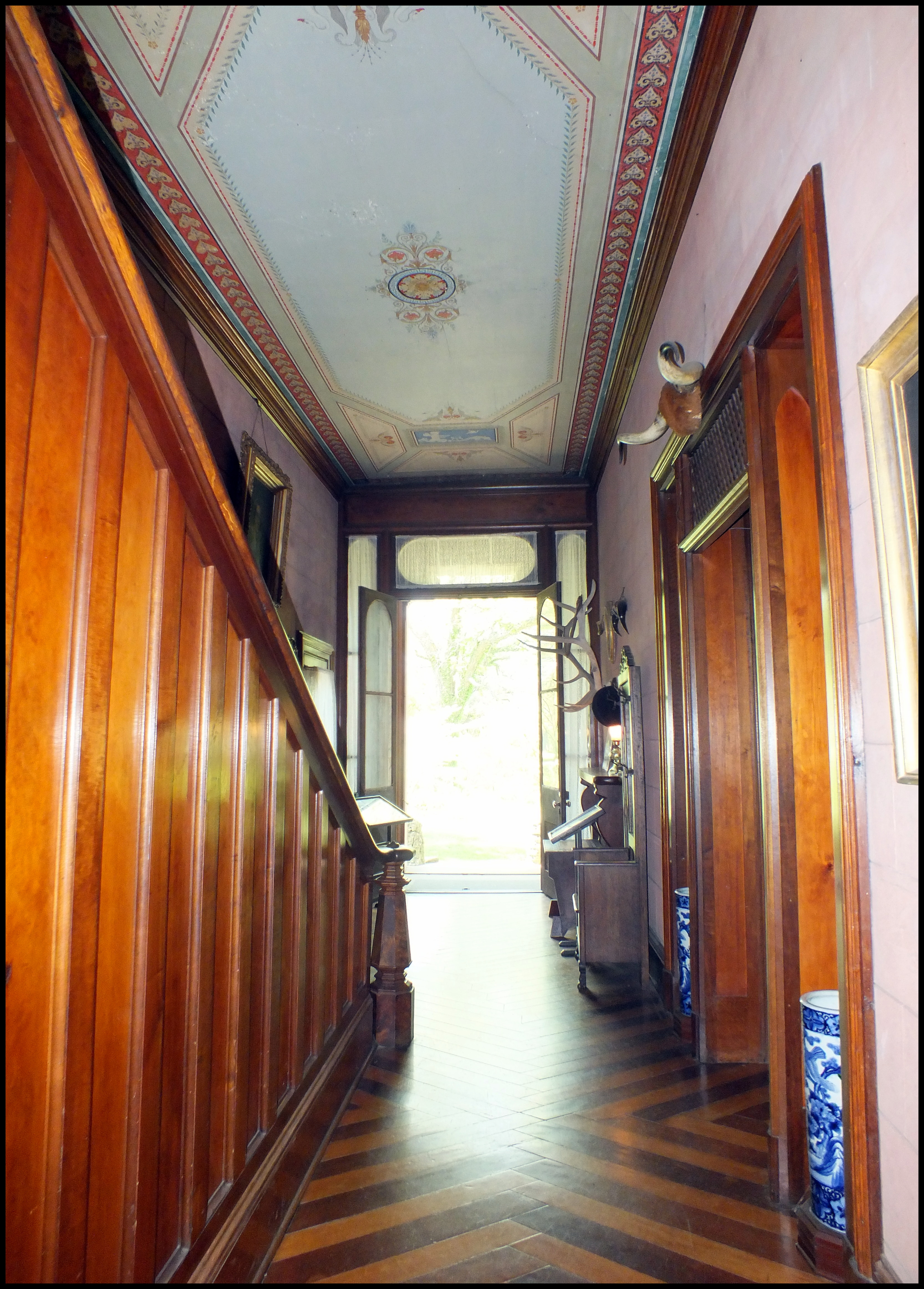
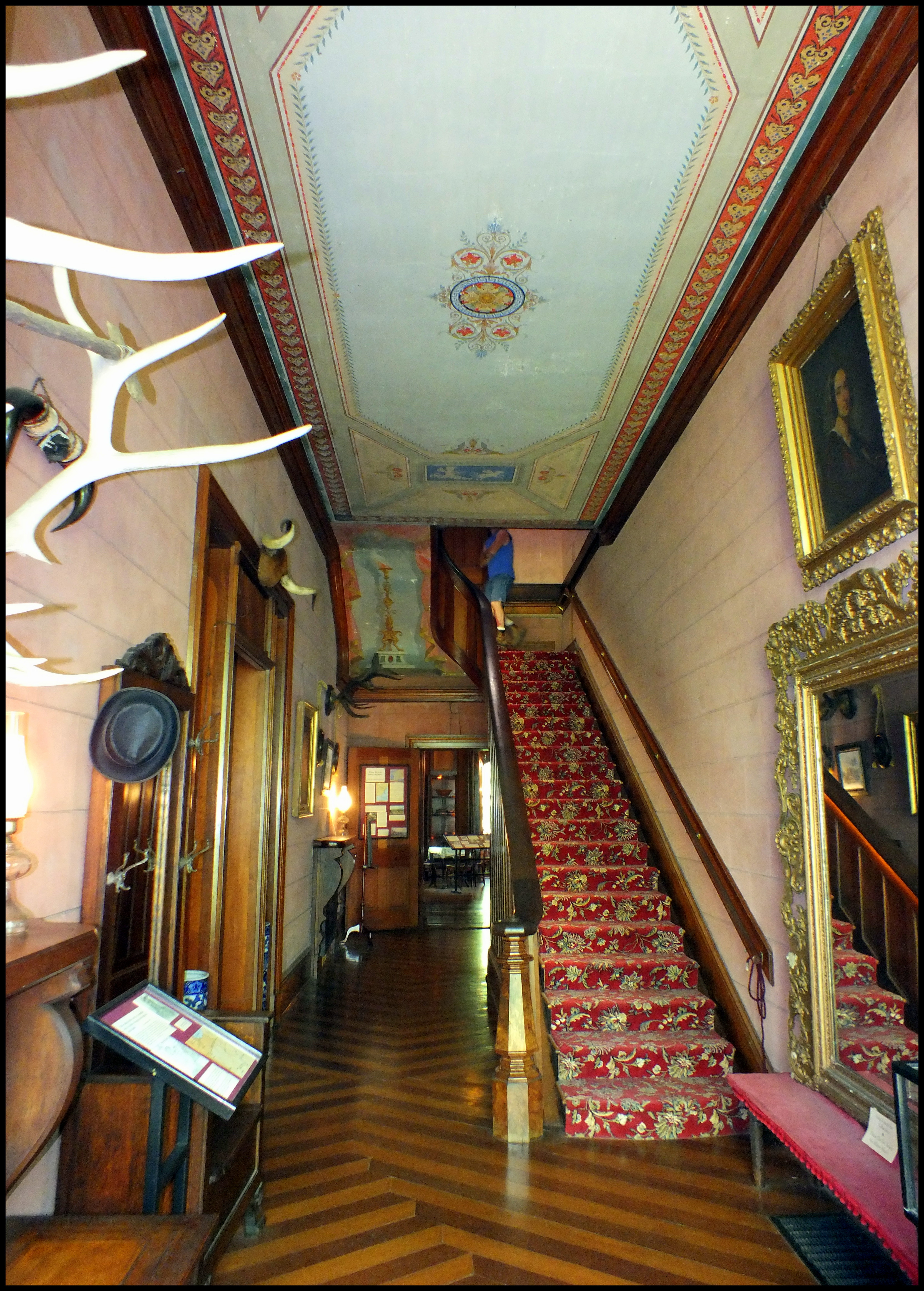
The downstairs entrance hallway

pDSCF3017

Posted in Ohio | Comments Off on Piatt Castles — Mac-O-Chee

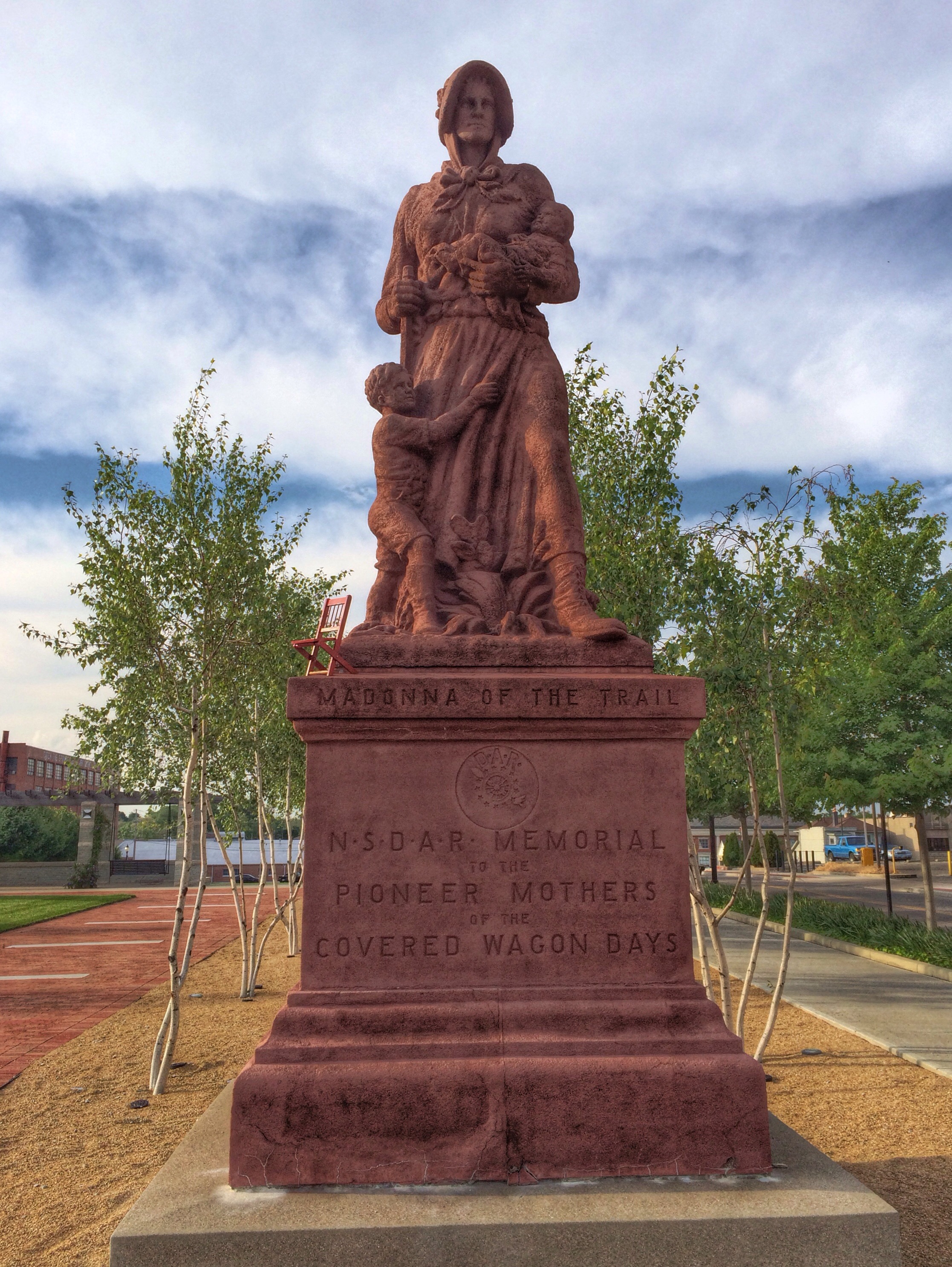
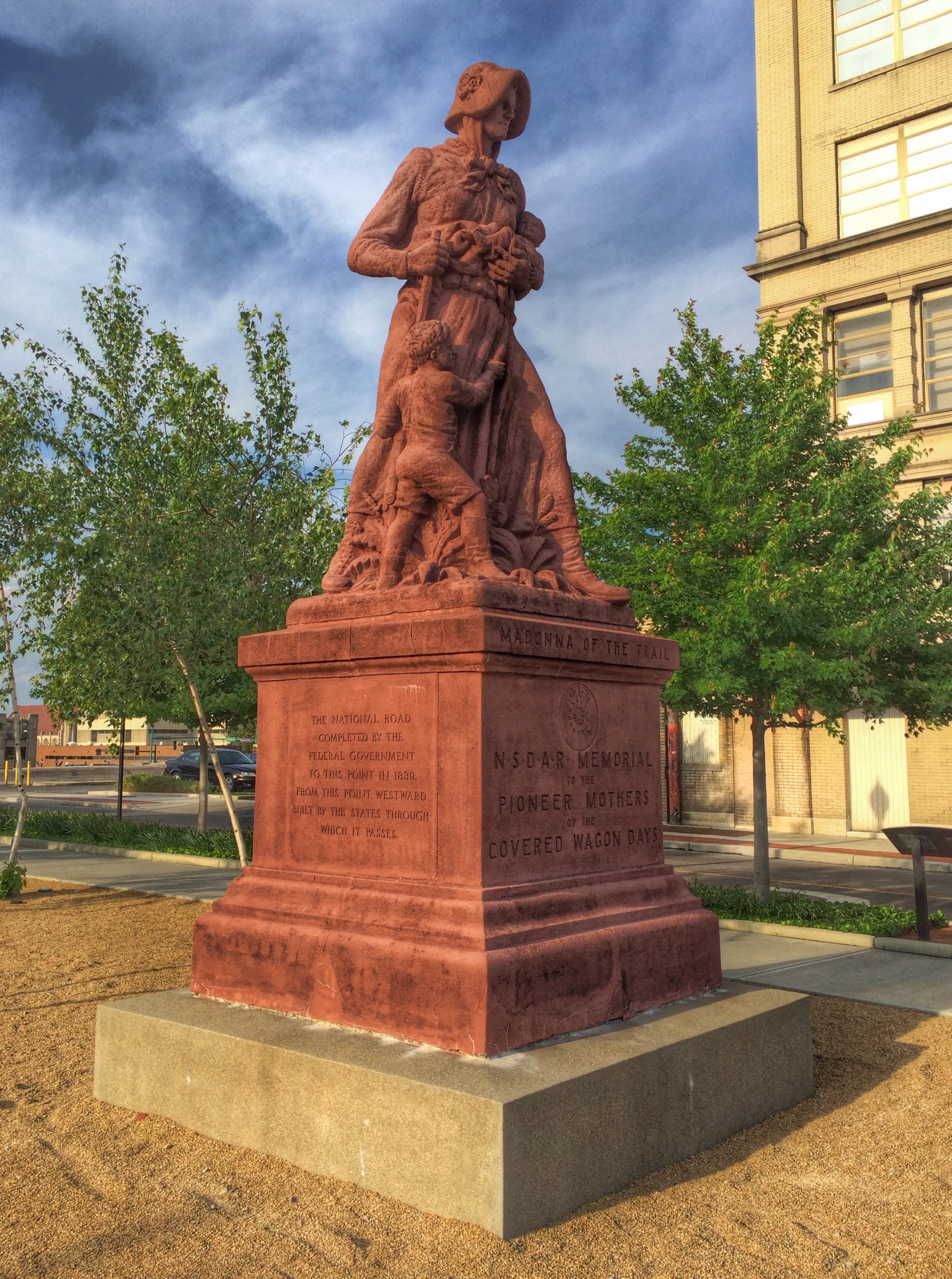
Madonna of the Trail

In 1928, the Daughters of the American Revolution commissioned 12 identical statues, one for each state along the route of the National Old Trails Road. The monuments are intended to celebrate the spirit of pioneer women.

According to the Internet, “The statues feature a pioneer woman clasping a baby with her left arm while clutching a rifle with her right. Her young son clings to her skirts. The figure stands ten feet high and weighs five tons.” The sculptor said, “The idea I had, when I modeled the design was this: The pioneer mother with her children was waiting for the father at their blockhouse in the wild West, for the father did not come home as he had promised. She, believing him to be in danger, put her little child in a blanket, grasped the gun and with the boy ran out in the field to look for the father. The gun is sketched from the gun of Daniel Boone, with his carvings on the shaft. On the ground is prairie grass and cactus brushes, also arrowheads, and on one side in the shadows, there is visible in the original, a rattlesnake, partly covered by grass.”

This one, in Springfield, Ohio, was the first one erected — July 4, 1928.

IMG_2370

IMG_2369

Posted in Ohio | Comments Off on Madonna of the Trail