Wyandot Popcorn Museum

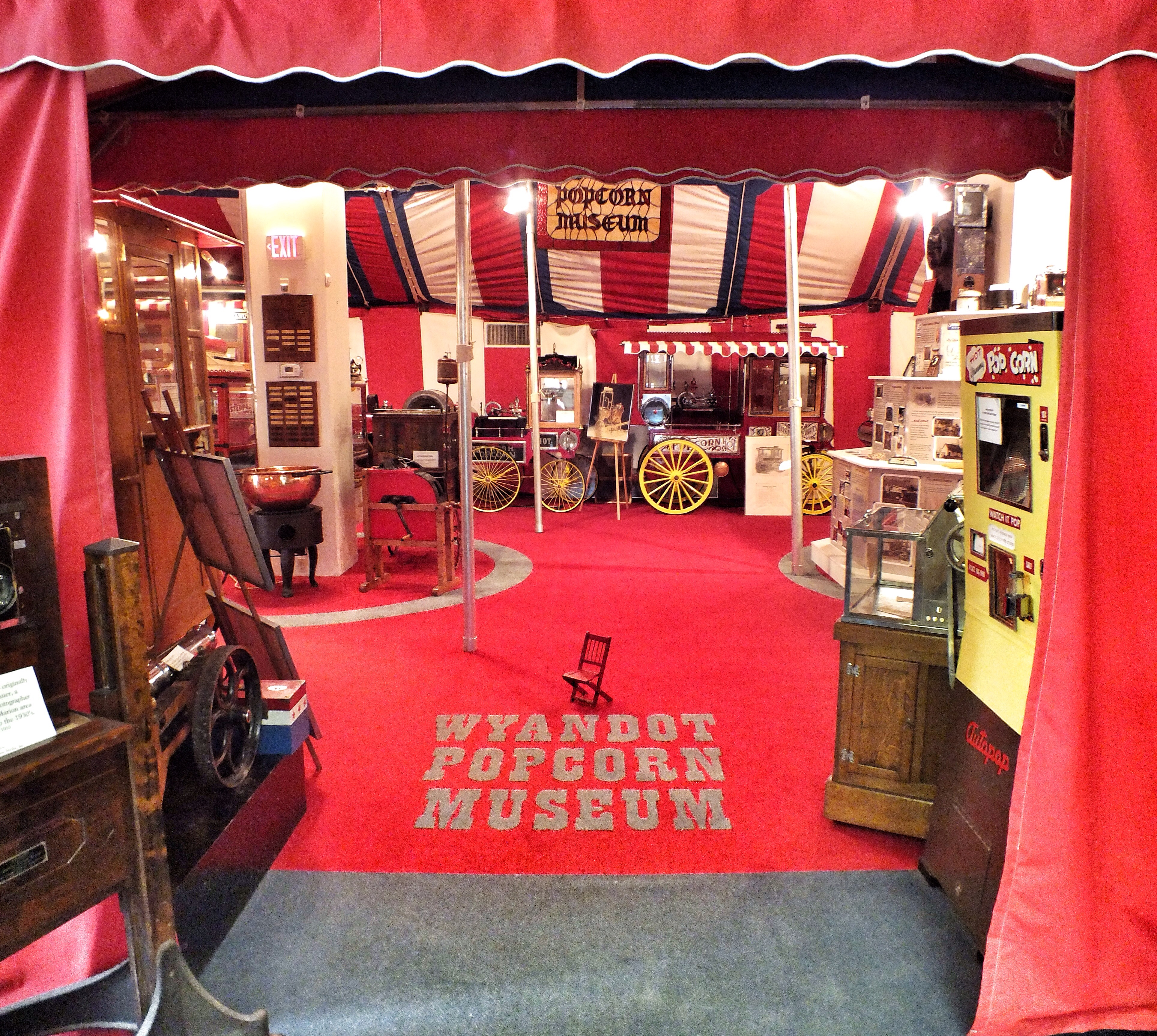
A huge draw for my wife in the city of Marion was the Wyandot Popcorn Museum. It was located in a room in Heritage Hall, the museum located in the old post office building.

IMG_2082

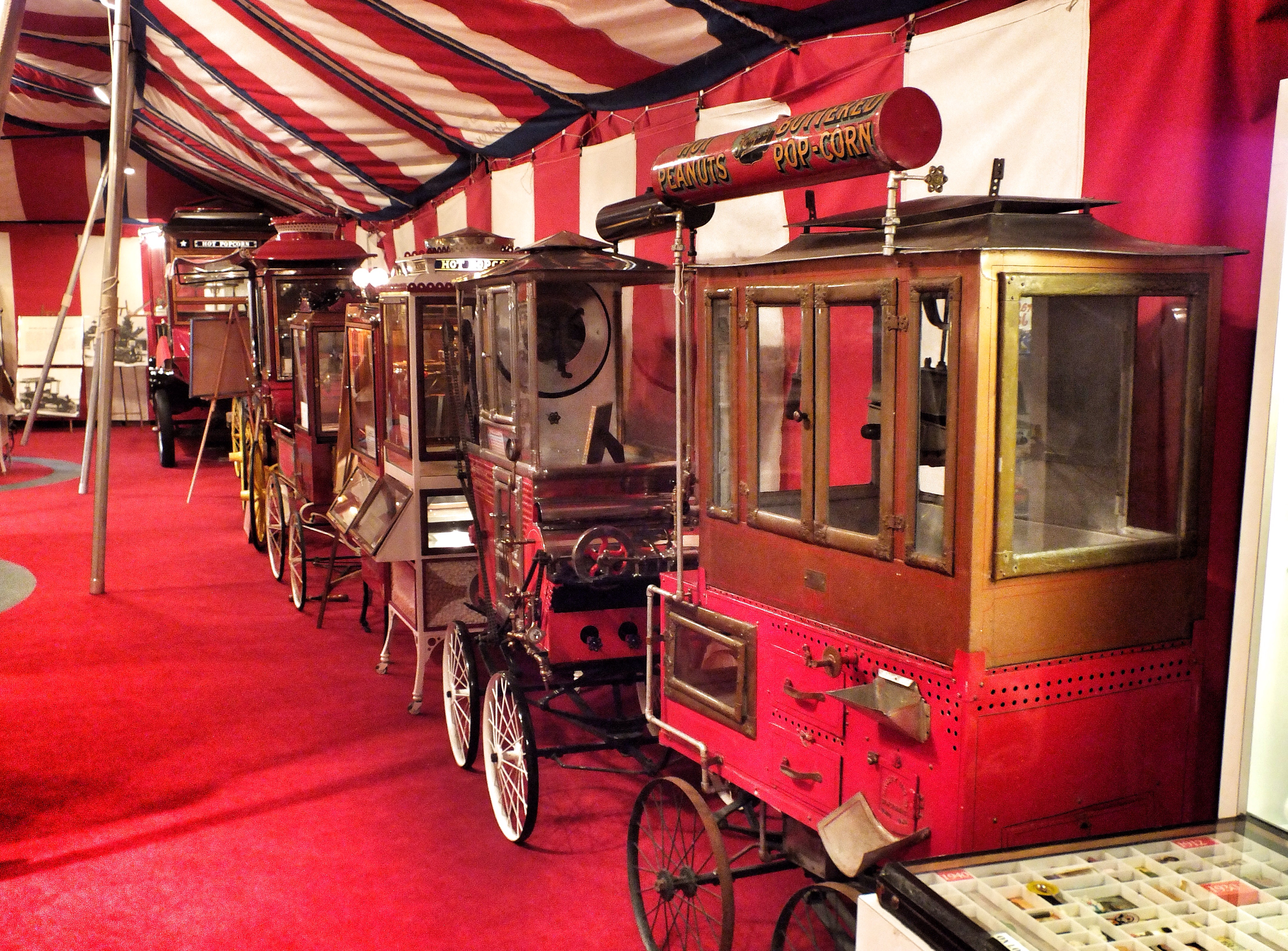
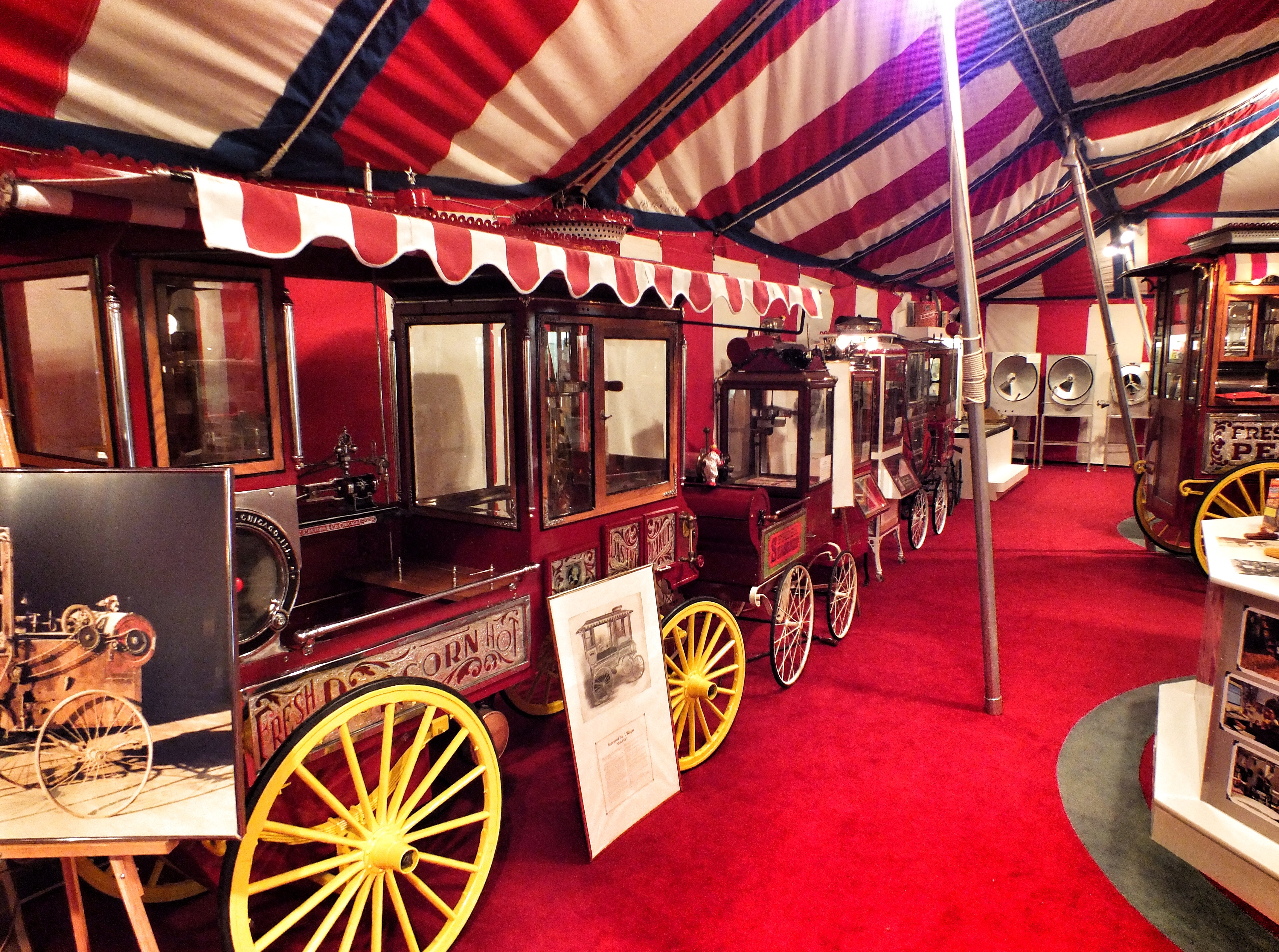
There were probably 50 popcorn machines in the room, of all sizes from trucks and wagons to table-top varieties. There were also displays about the history of popcorn as a snack, about popcorn packaging and, of course, about Wyandot Snack Company, the local popcorn company that owns the museum machines.
IMG_2192

IMG_2182

IMG_2180


IMG_2179

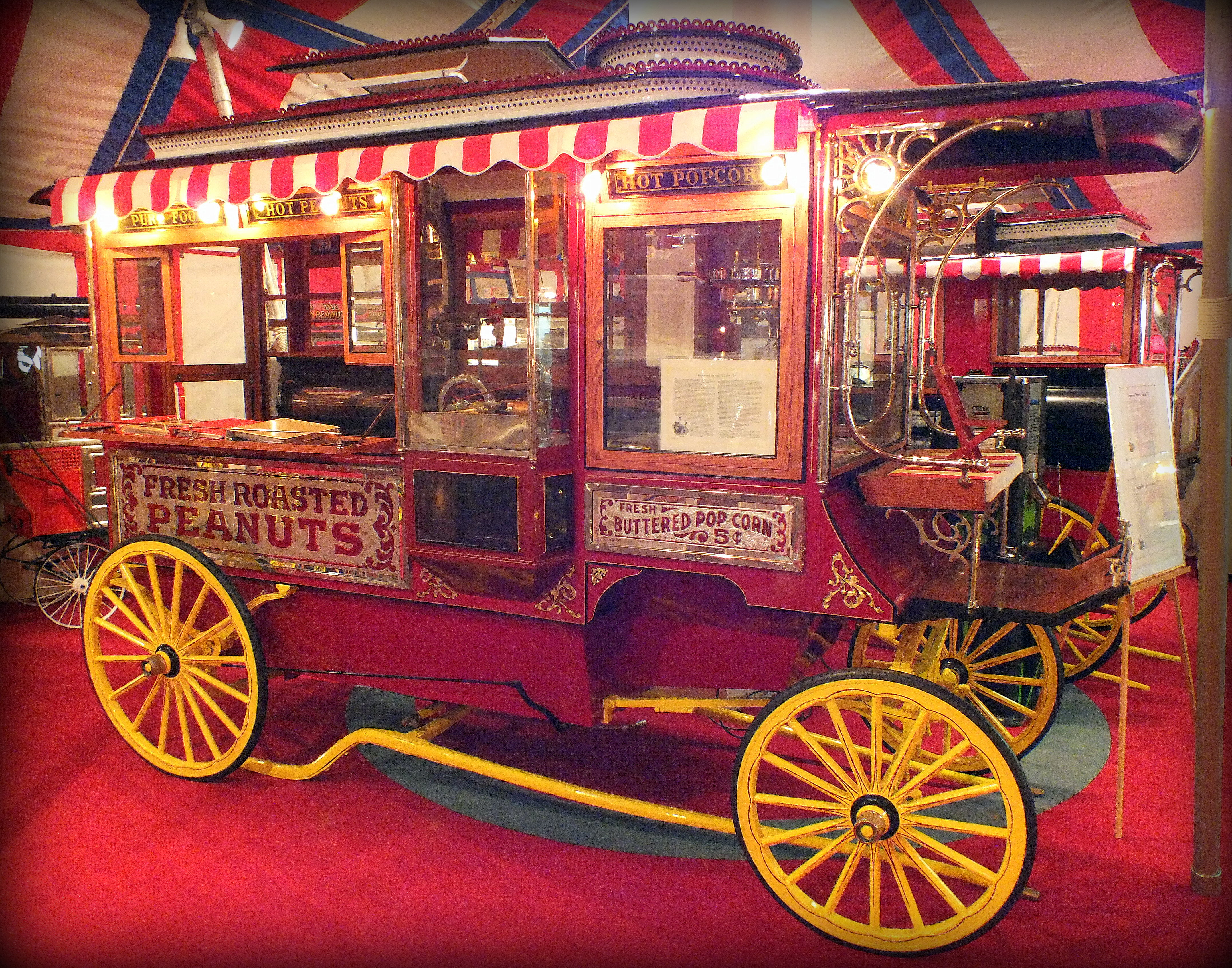
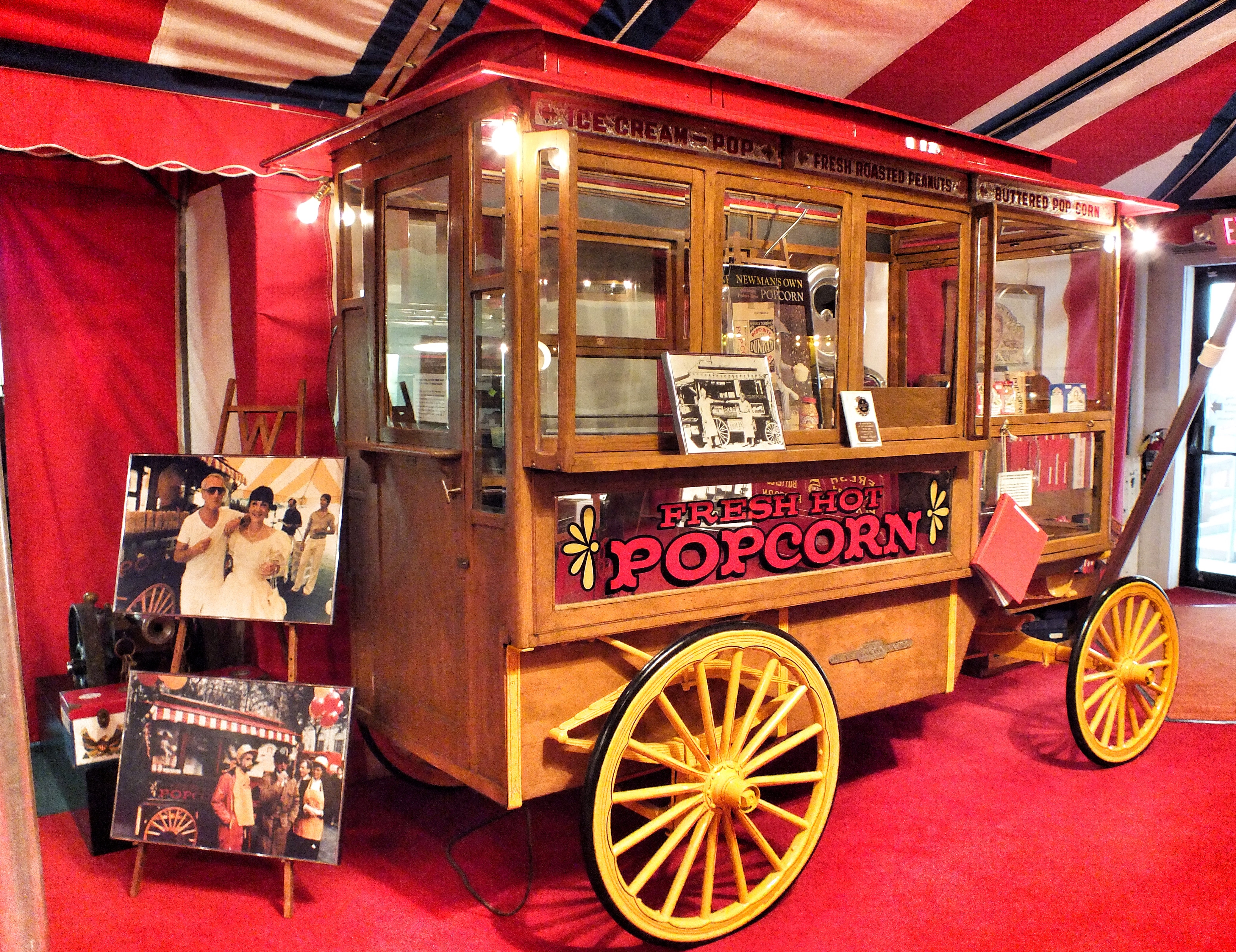
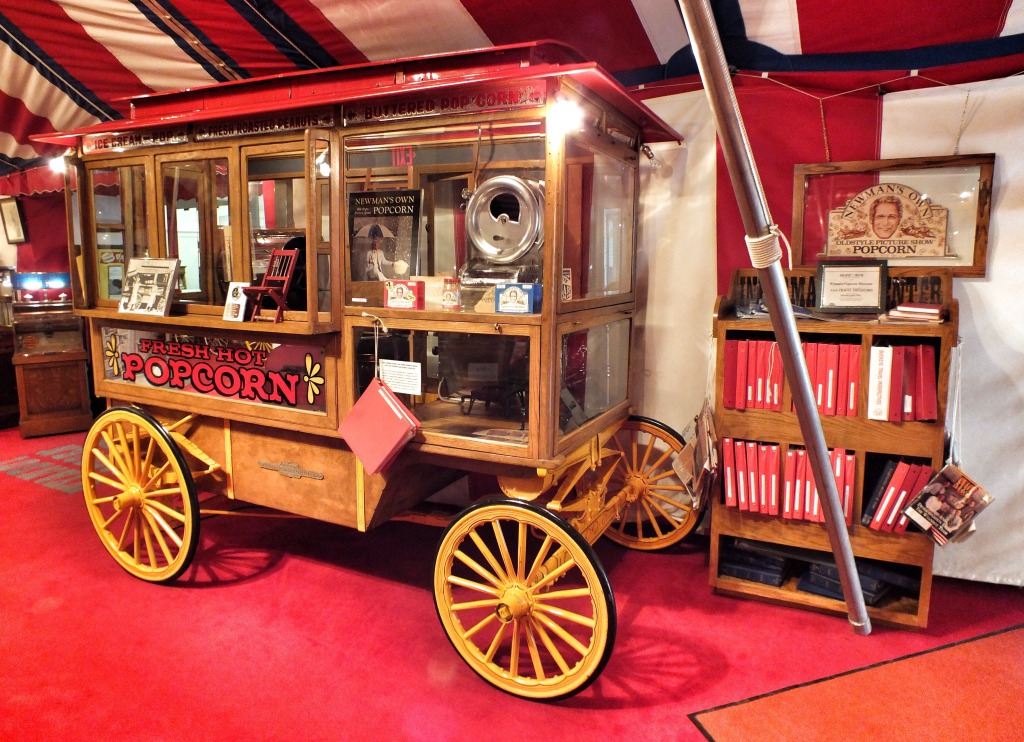
1909 Dunbar Horse-drawn Wagon formerly owned by Paul Newman to promote his Newman’s Own Popcorn.
IMG_2086

IMG_2083-1024x742

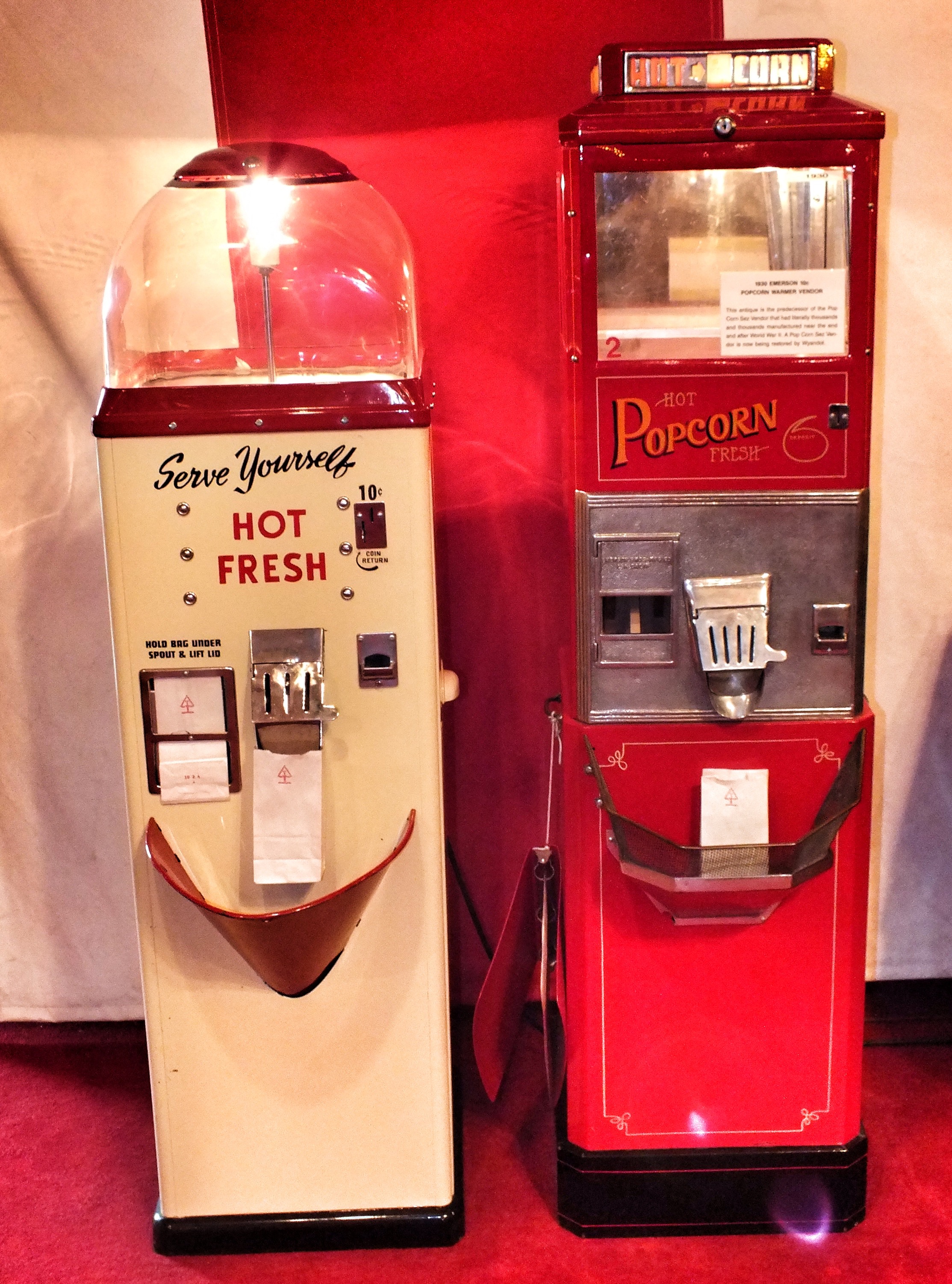
The machine on the right is a 1930 Emerson.
IMG_2084

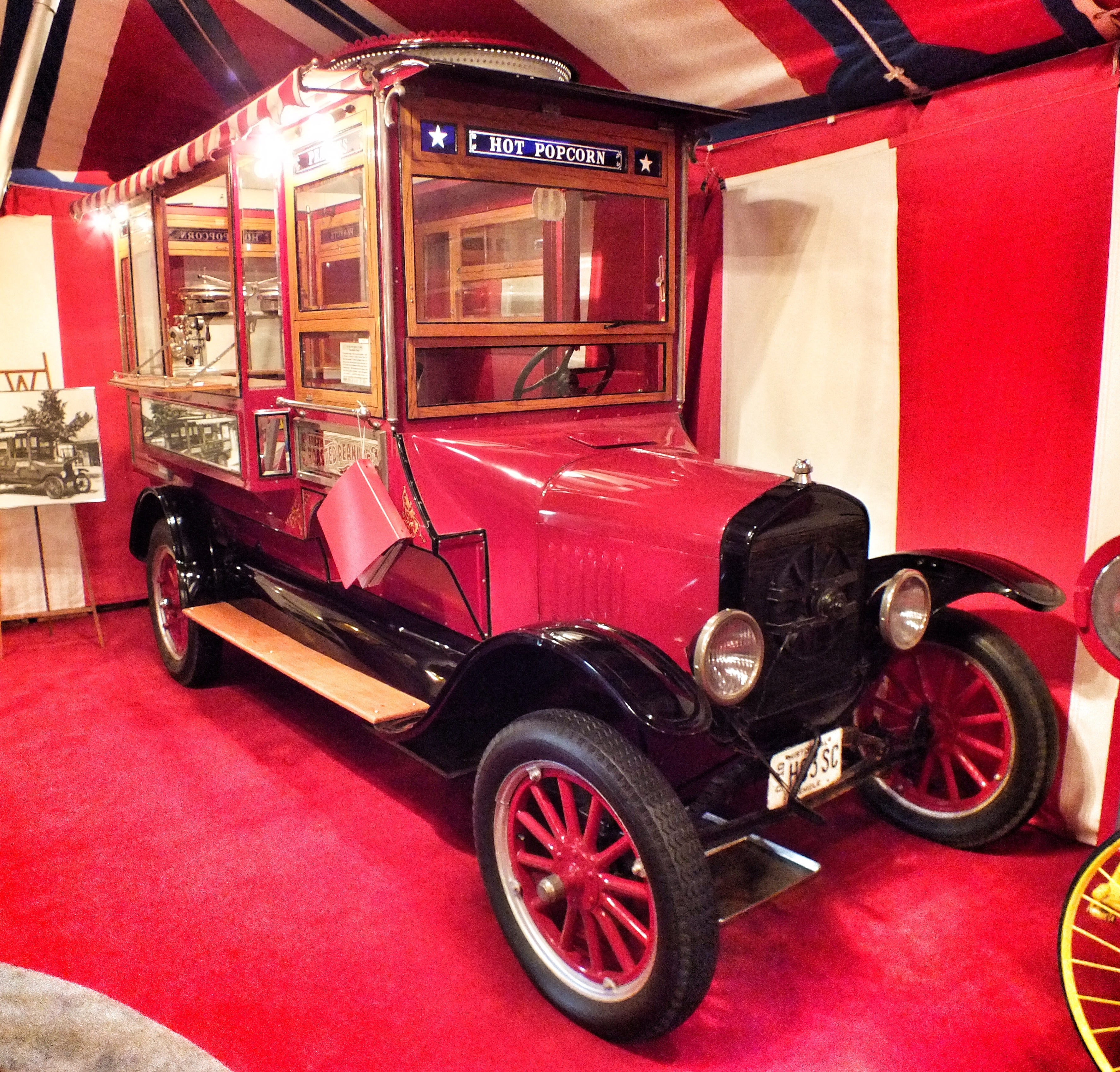
1927 Model T Cretors Popcorn Truck. It originally ran on white gas to drive the steam engine, pop the corn and operate the peanut roaster. There are only seven of these still in existence.
IMG_2085

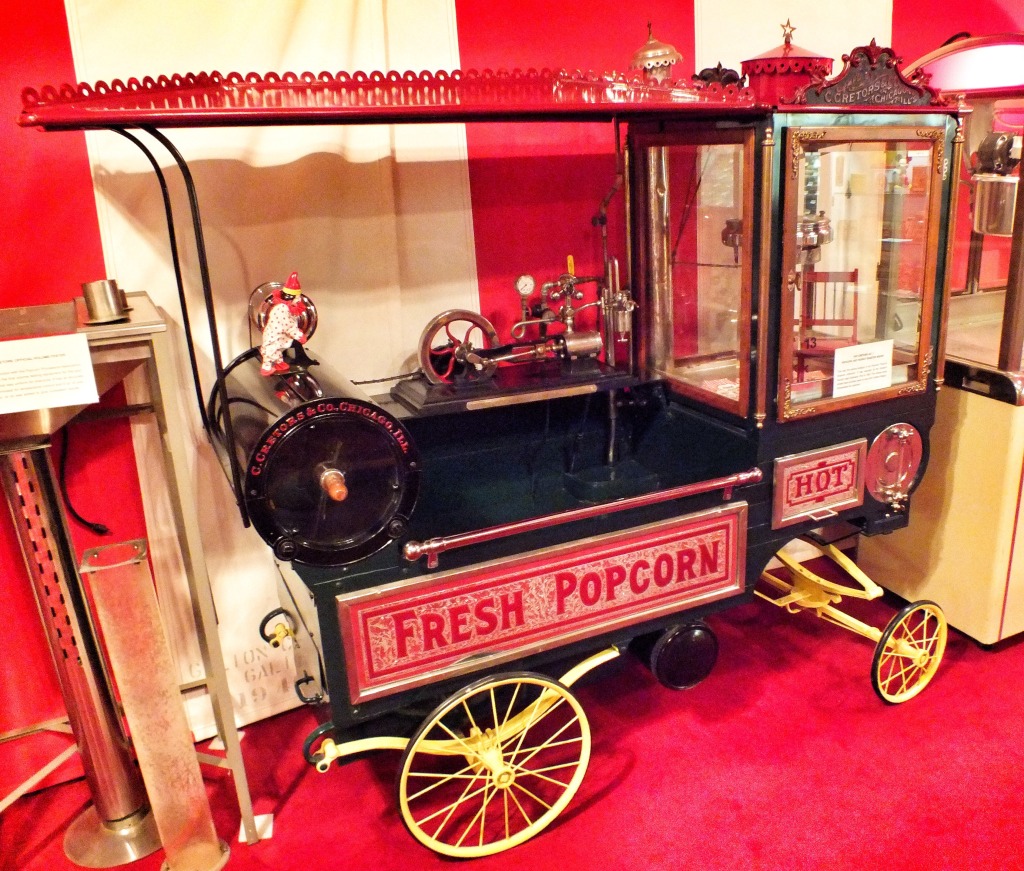
Several of the machines had little clowns like this one that “turned” the crank. Some of them were inside the cases, and I have no idea how the operator kept them from getting saturated with oil.

IMG_2099

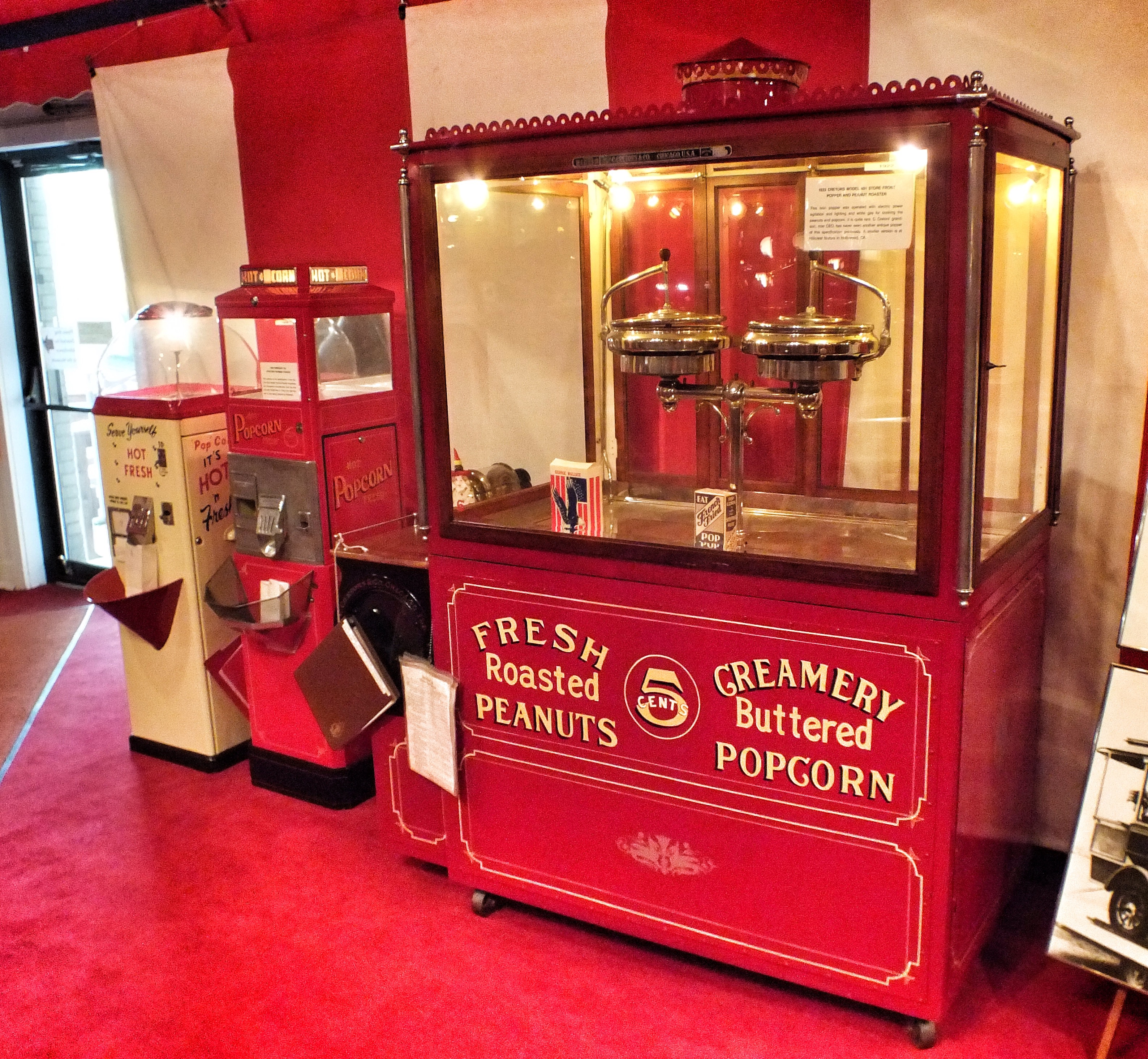
1922 Cretors Store Front Popper and Peanut Roaster. The clown in the photo (above) stands on this machine.
IMG_2100

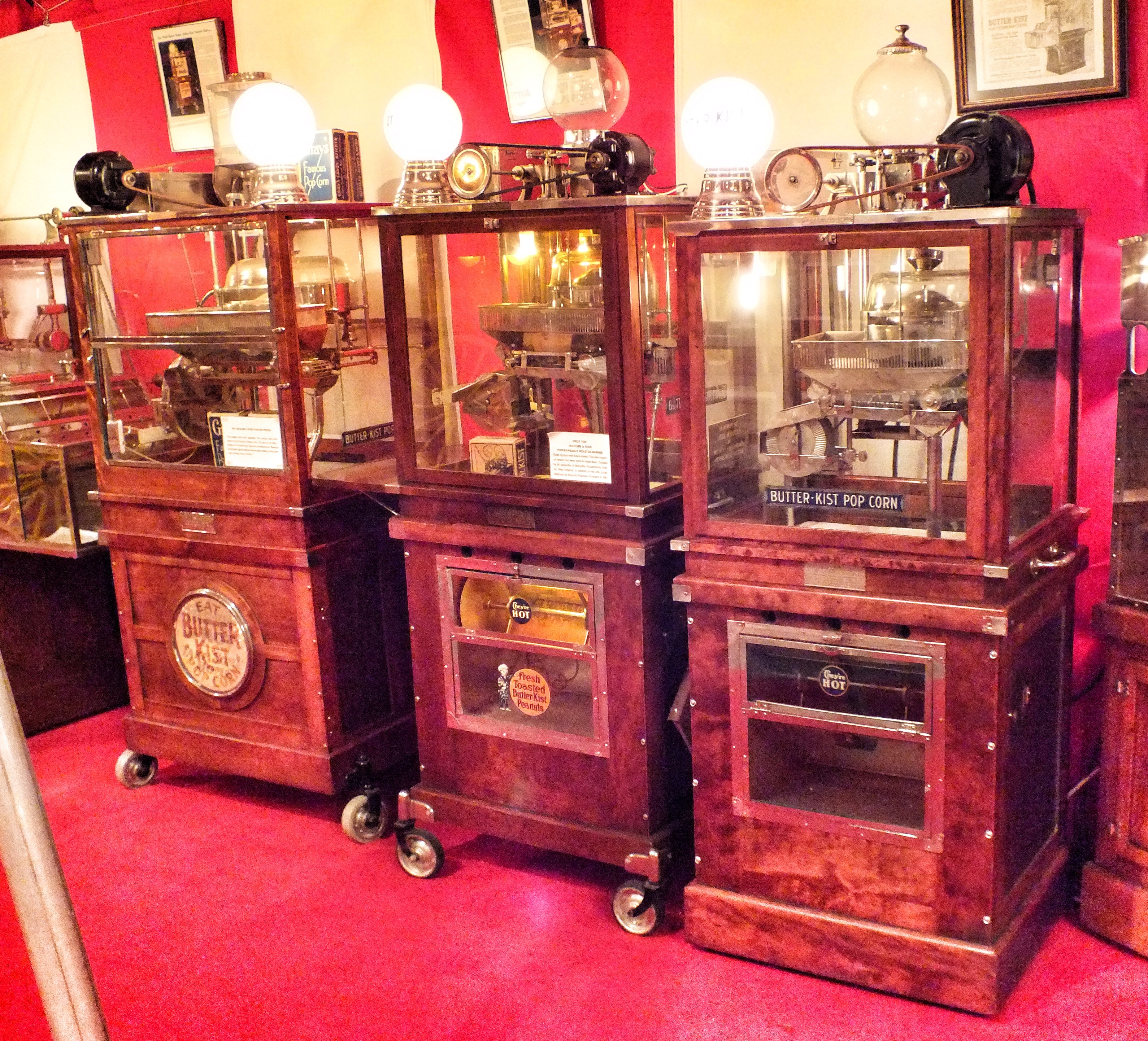
The machine in the middle is a 1930 Holcomb & Hoke. The one on the left is a 1918 Holcomb & Hoke. It was very complicated and required weekly maintenance. The 1930 machine is a simplified version. The video is of the 1918 model.
IMG_2128

IMG_2132


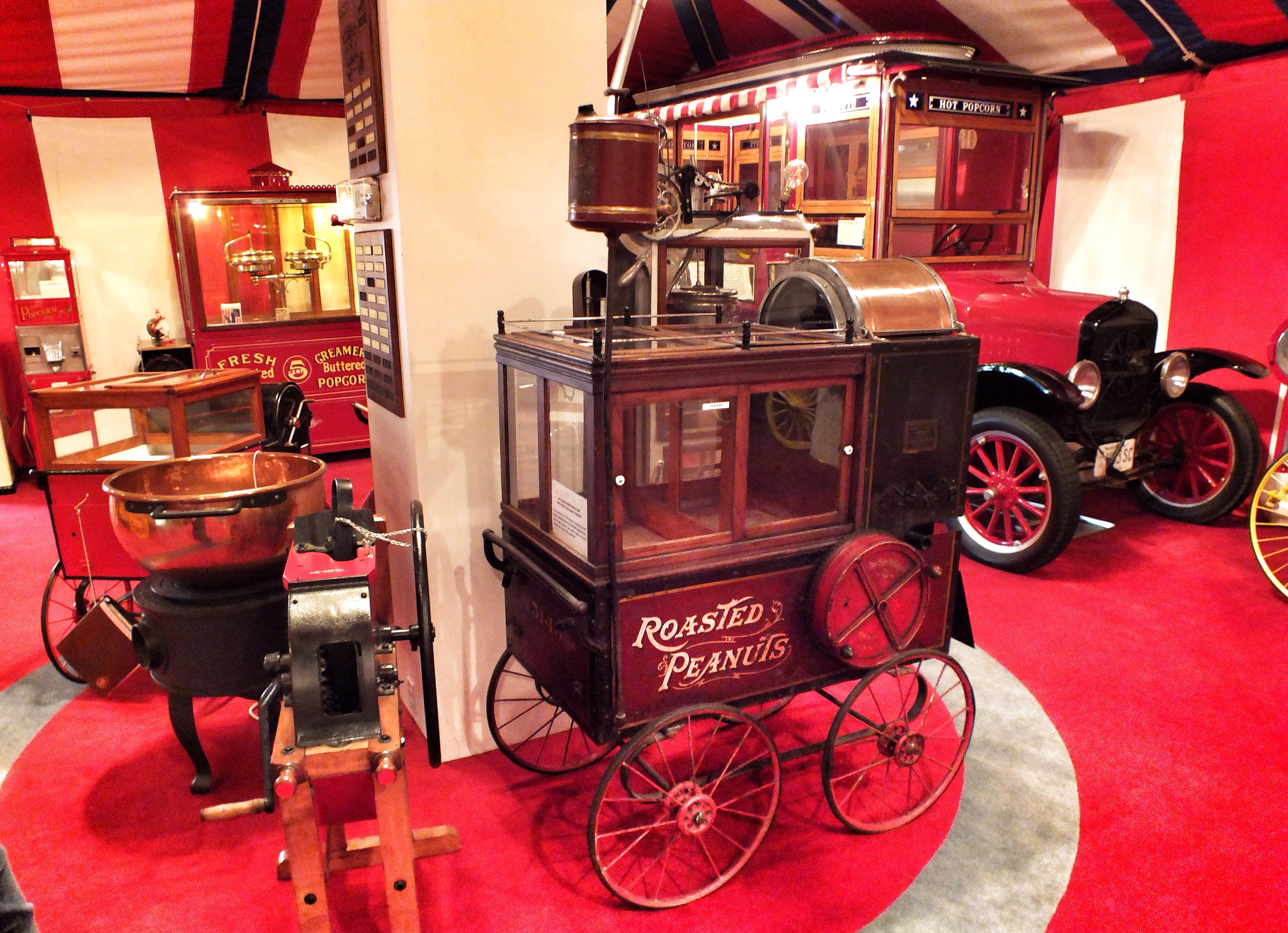
The machine in the right foreground is a 1910 Bartholomew. This machine has never been restored.
IMG_2129

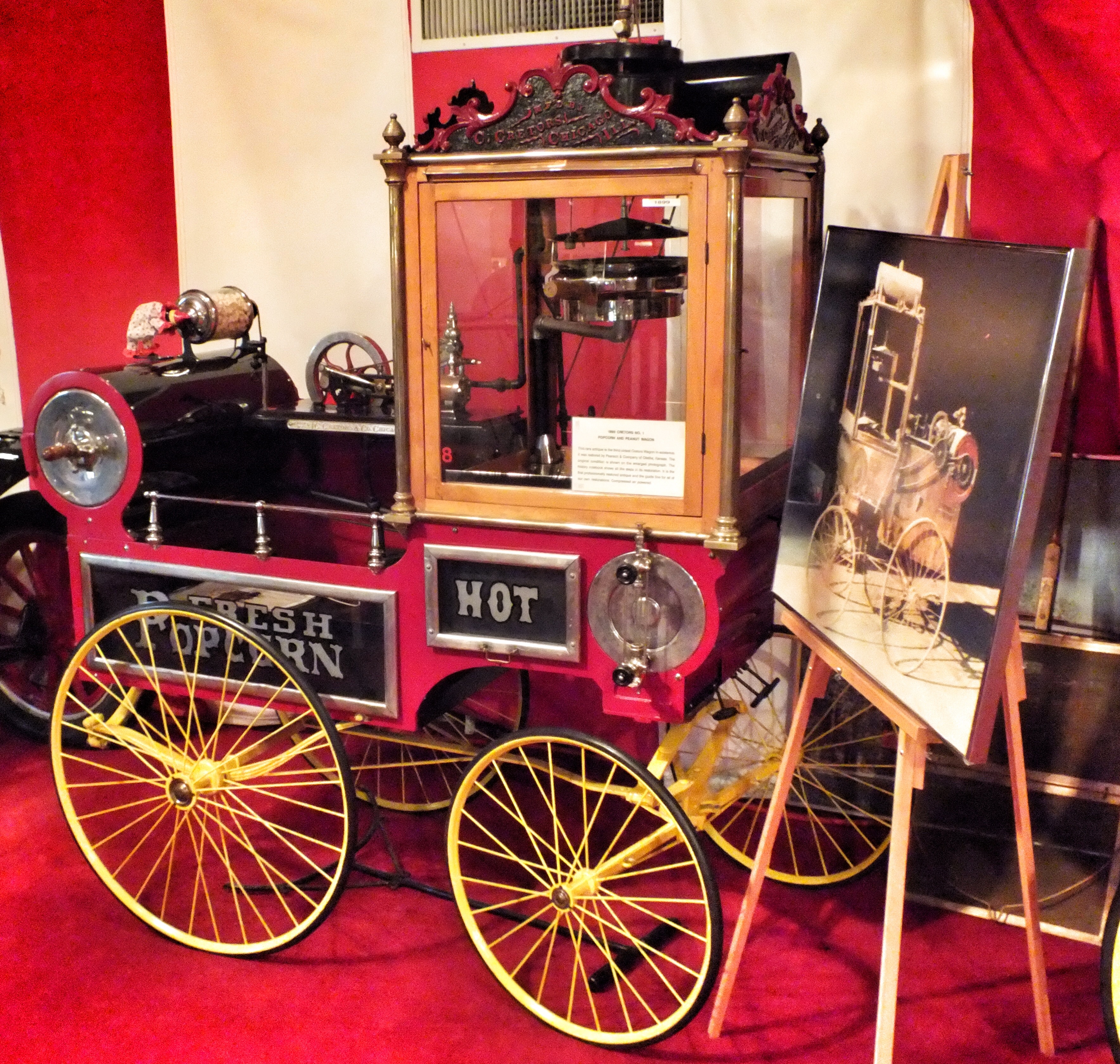
1899 Cretors Wagon. The photo shows what it looked like before it was restored.
IMG_2130

On the right on the counter is a 1910-1920 Holcomb & Hoke economy model. The side storage compartments are mini-rolltops.

IMG_2131

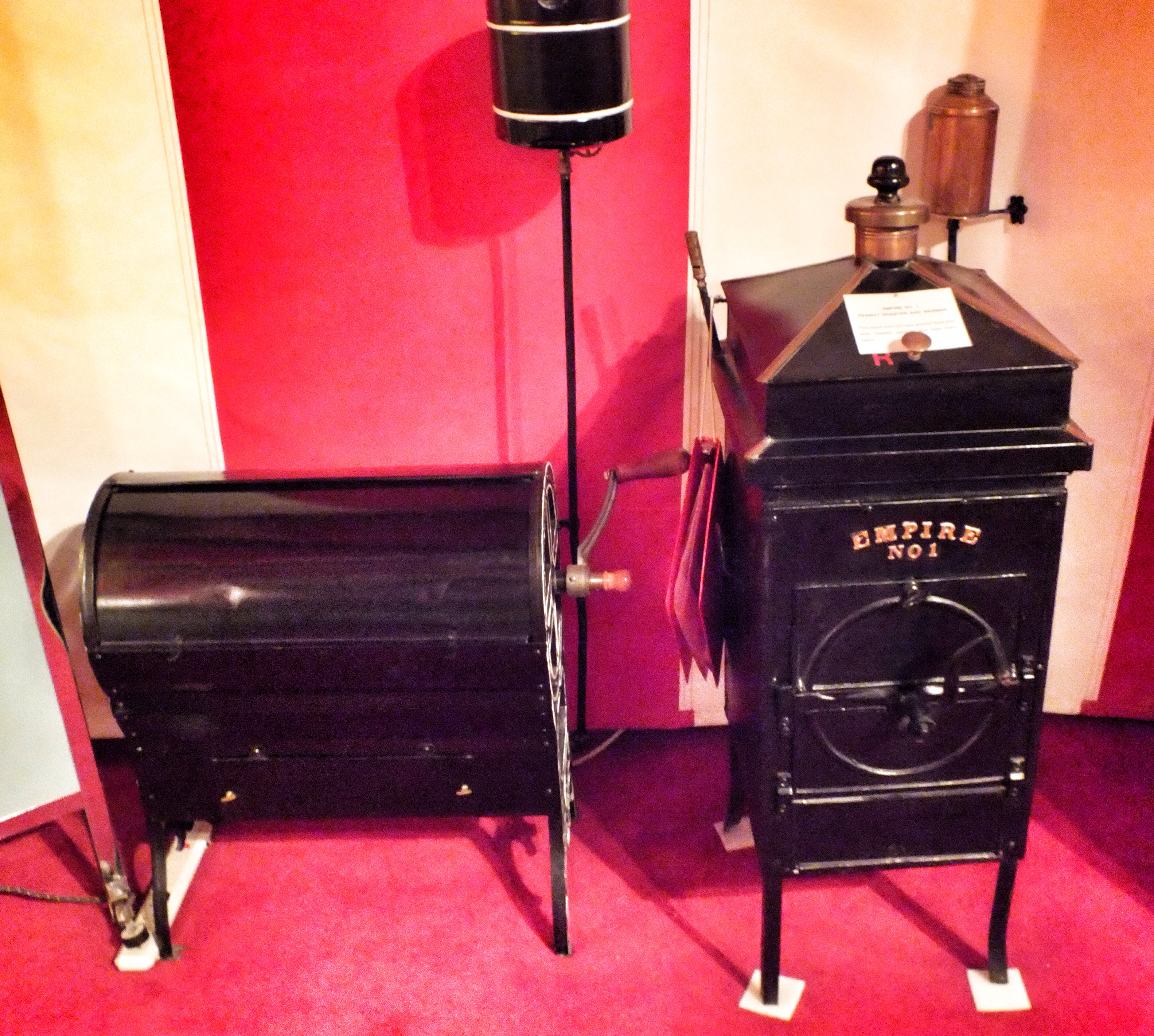
On the right is an Empire Peanut Roaster and Warmer. It operated on alcohol.
IMG_2148

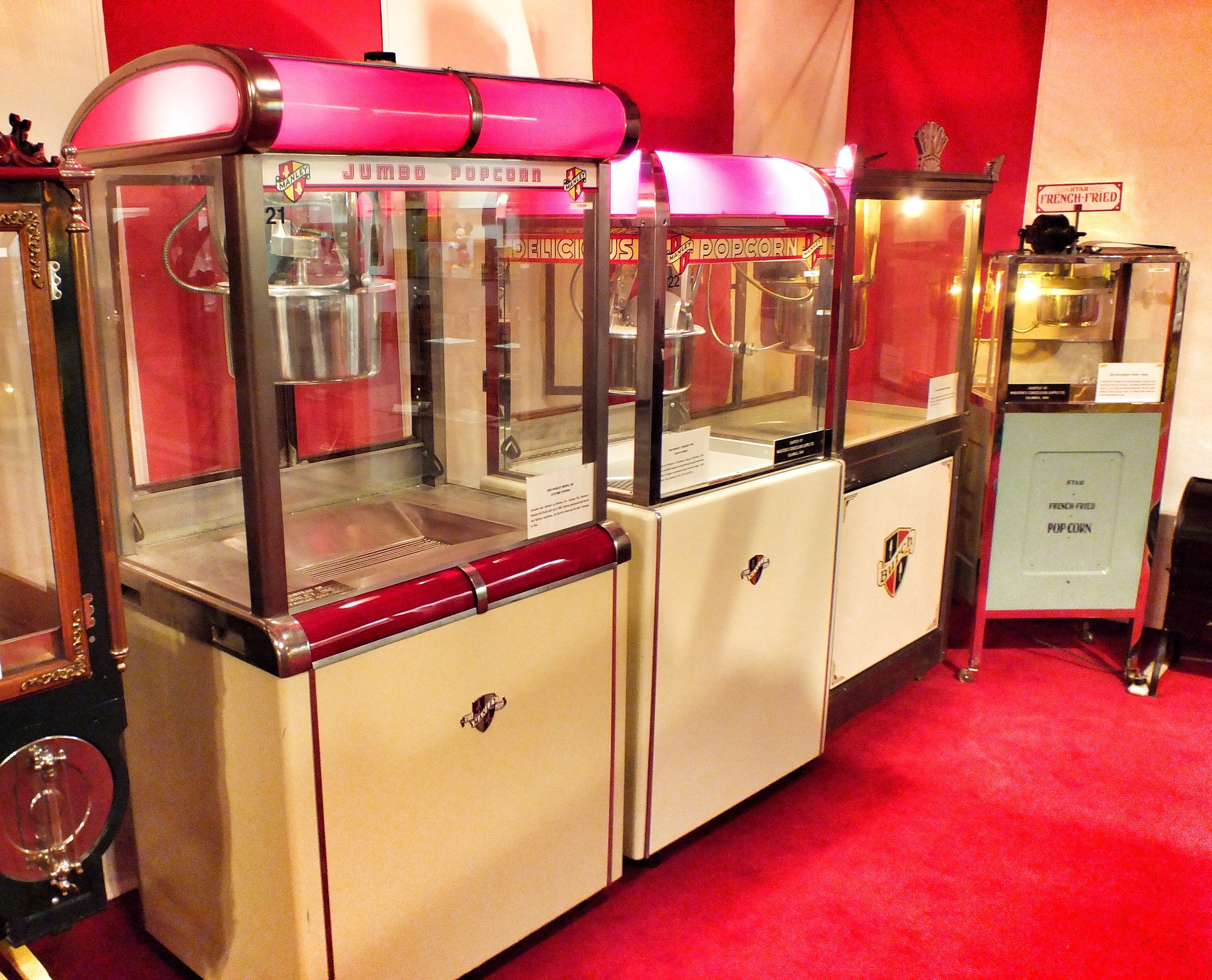
The blue-fronted machine on the right, a 1928 Star Advance “Profit” model, advertises “French-fried Popcorn.”

The one on the left is a 1939 Manley Lifetime Popper.
IMG_2150

IMG_2151-1024x871

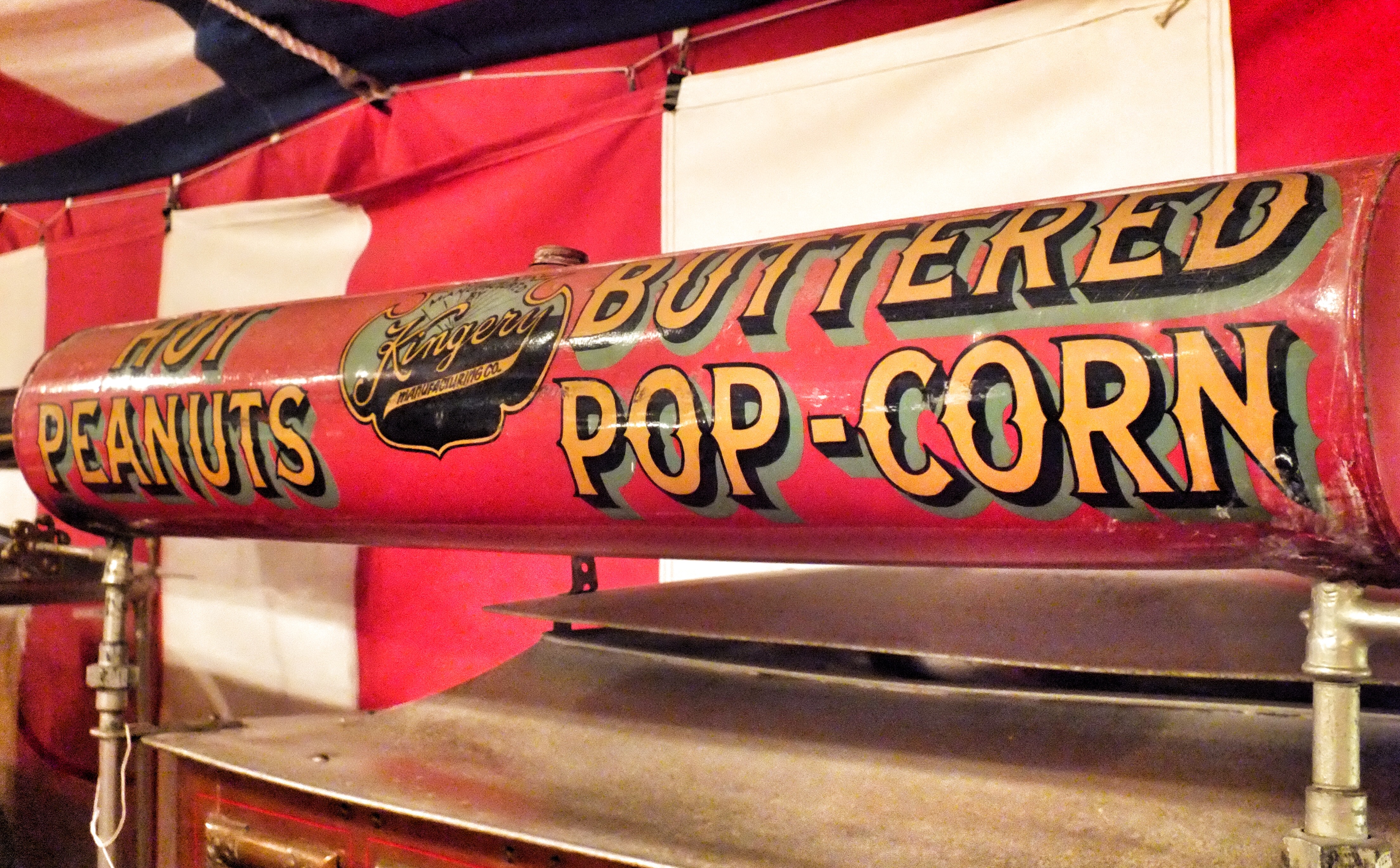
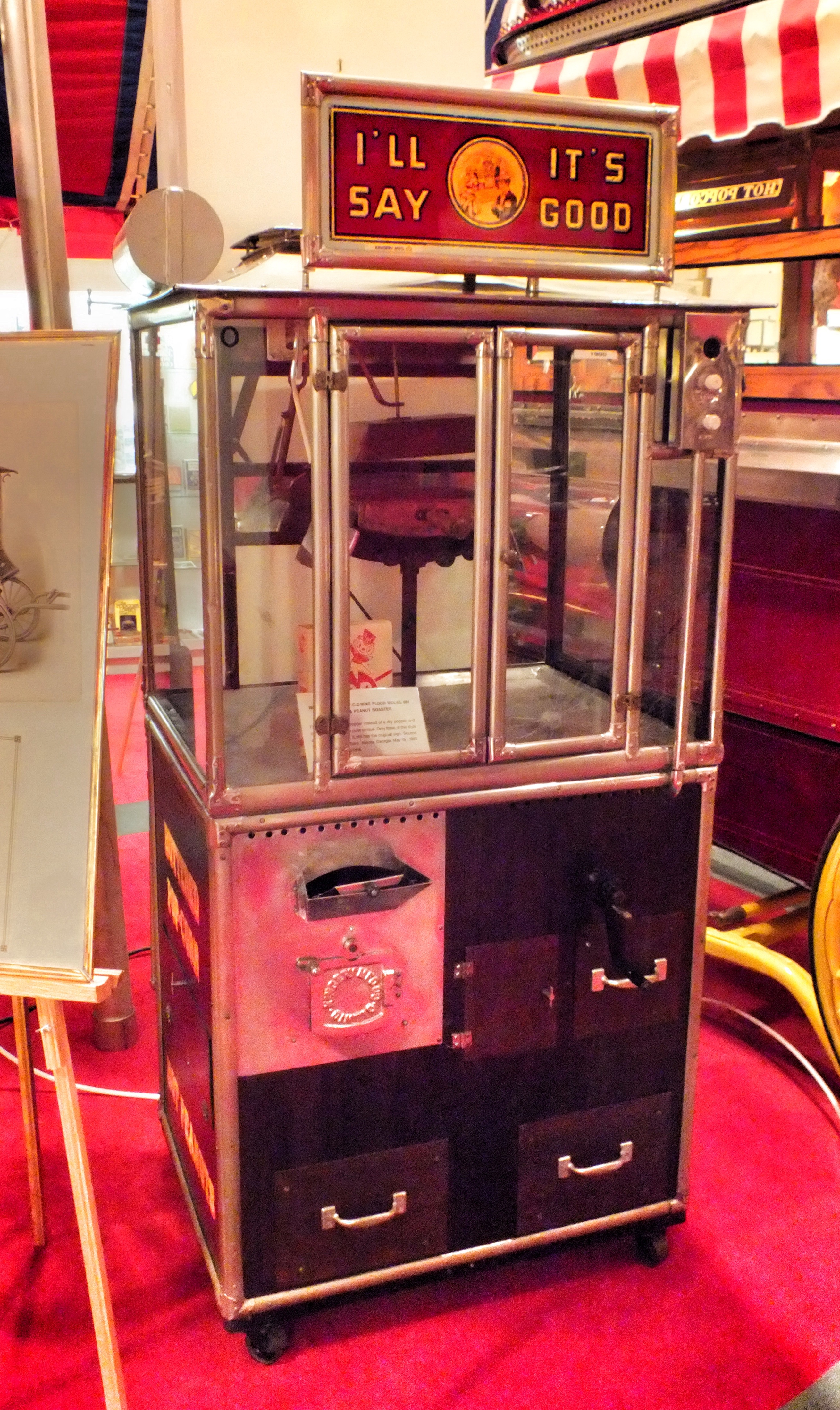
This one was my favorite, although I’m not sure I can tell you why. It’s a 1905 Kingery wet popper. The sign is original.
IMG_2153

IMG_2181

cracker6

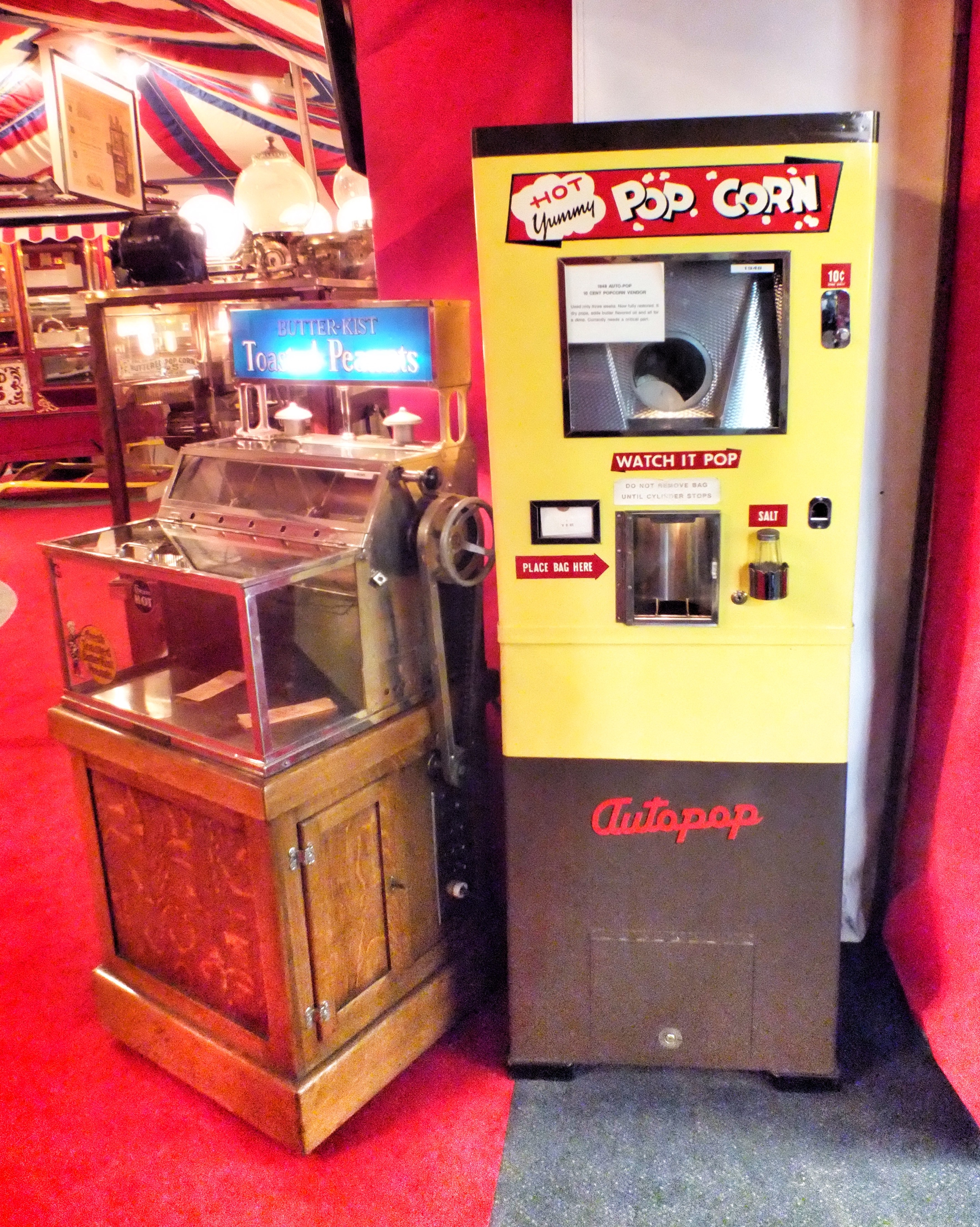
A 1948 Auto-Pop 10-cent Popcorn Vendor, used for only three weeks.
IMG_2190

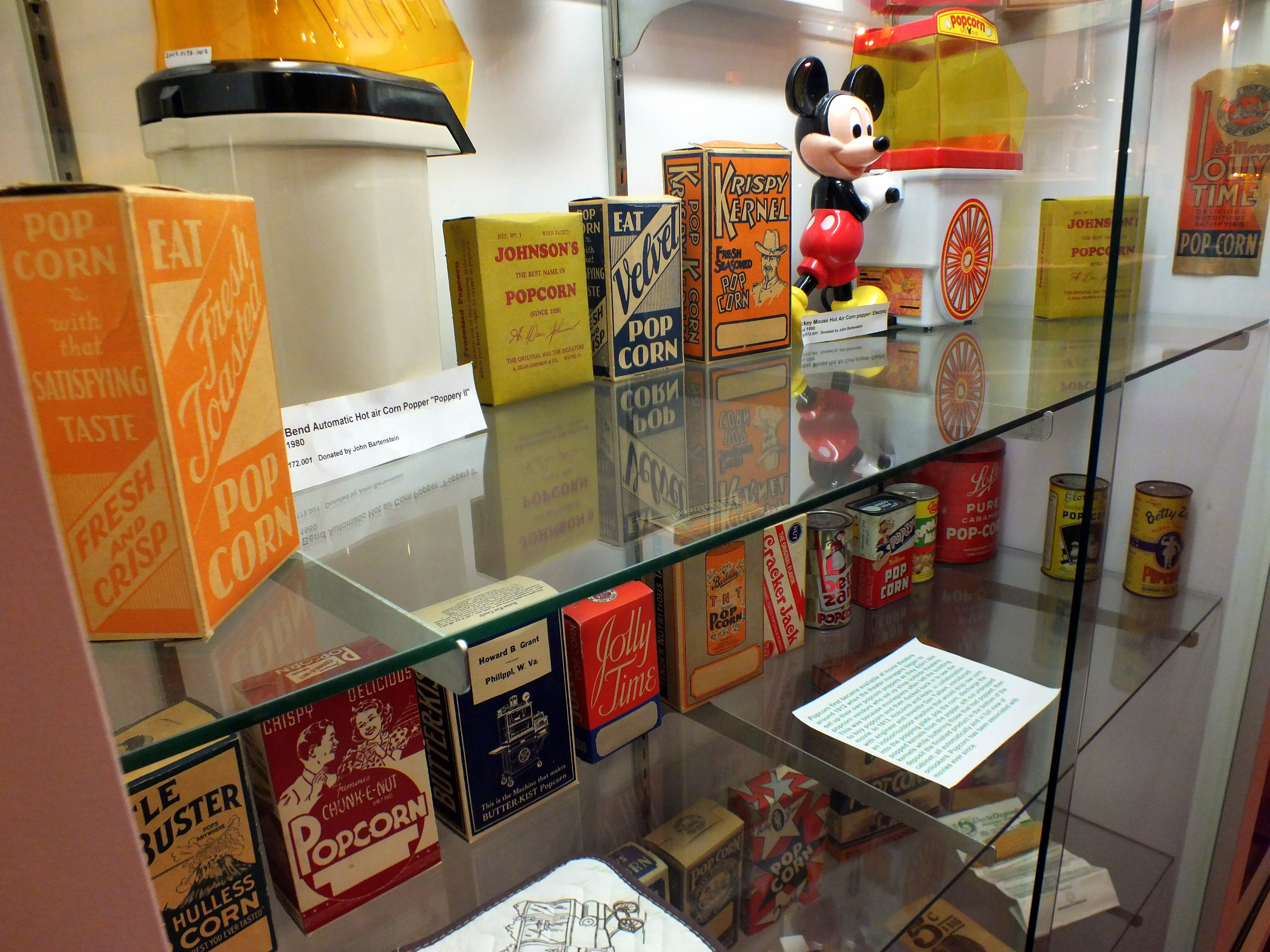
We had a hot air popper much like the one on the left in this next photo. It made popcorn with no taste whatsoever and with the texture of Styrofoam.
cracker11

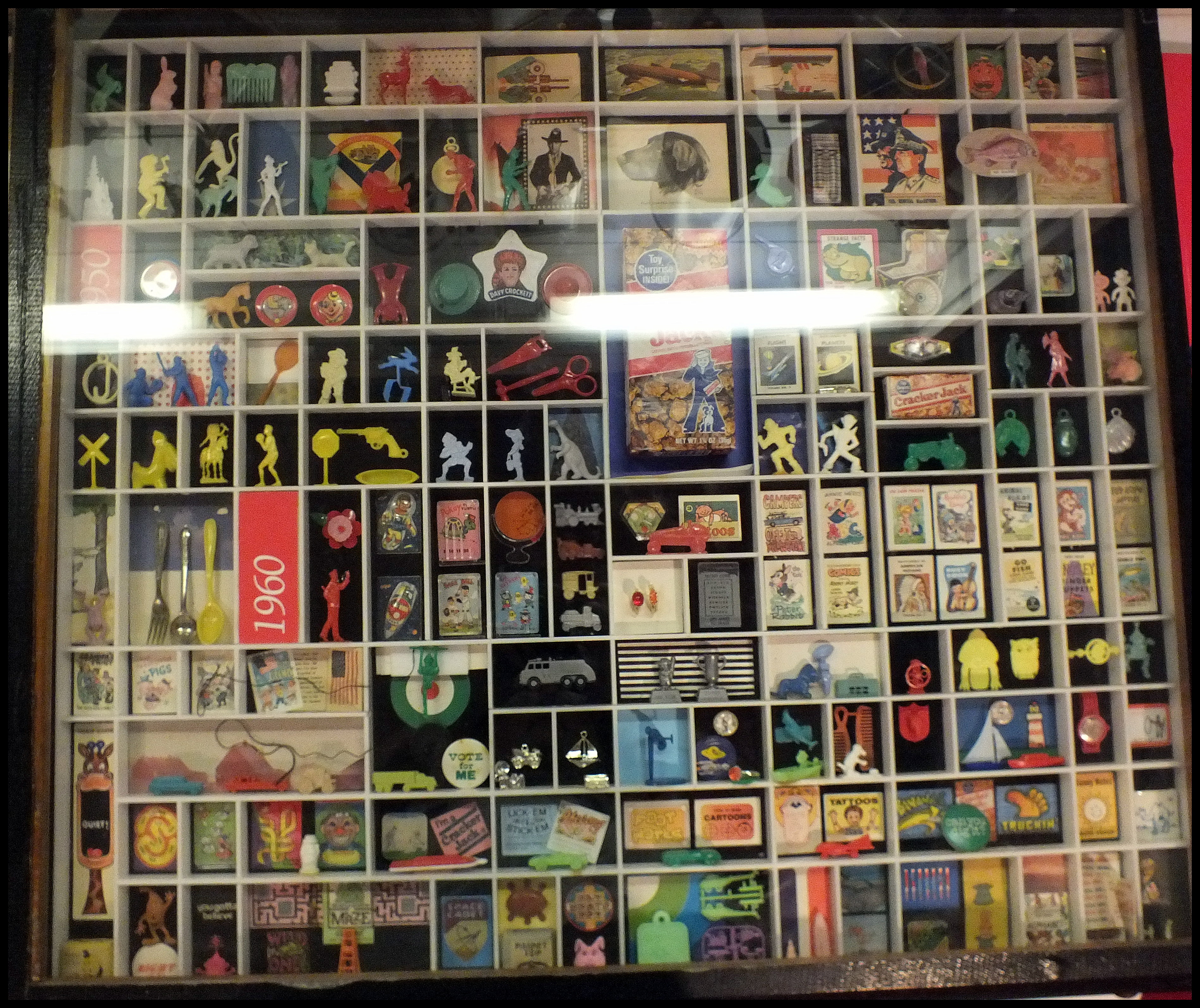
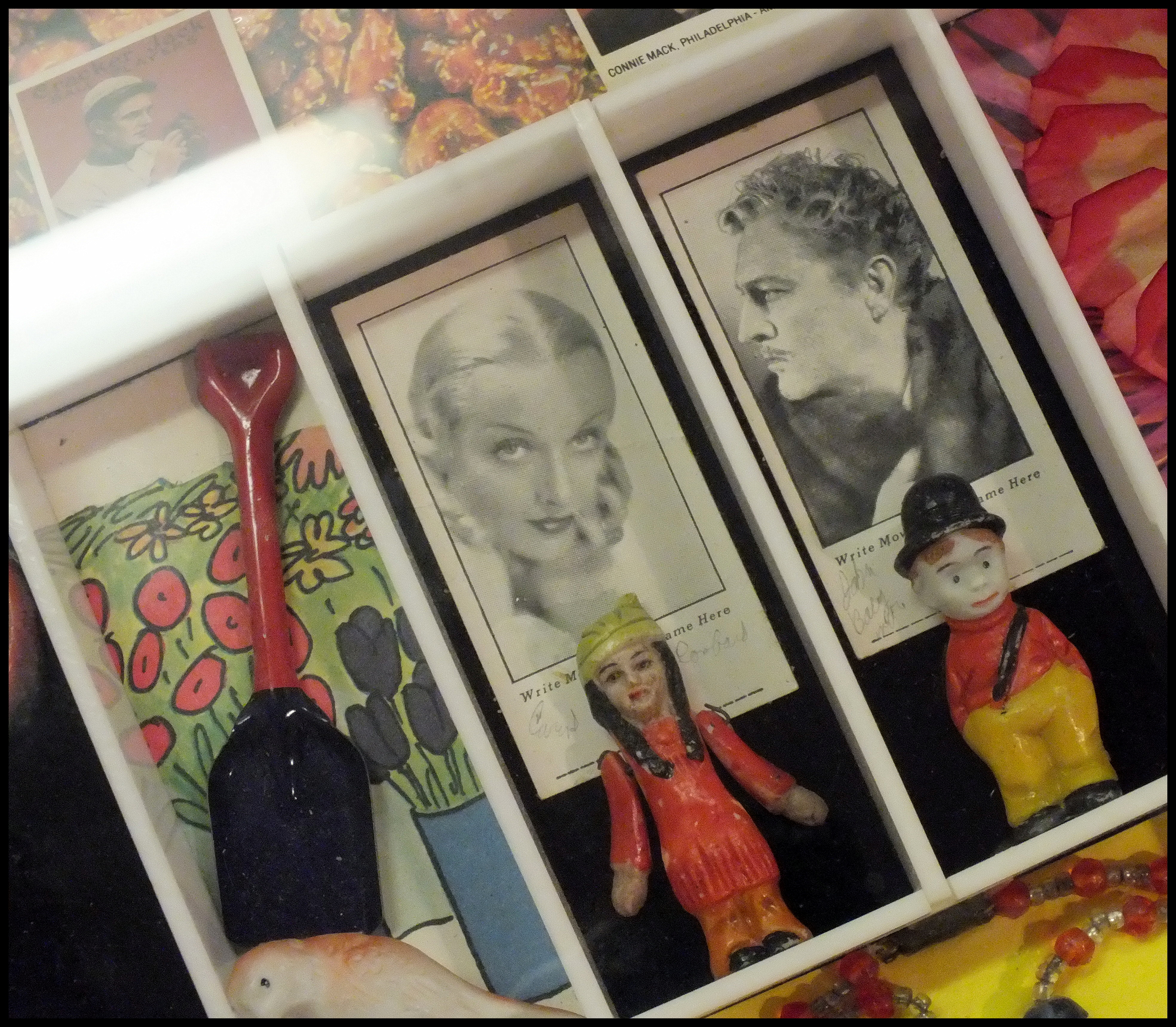
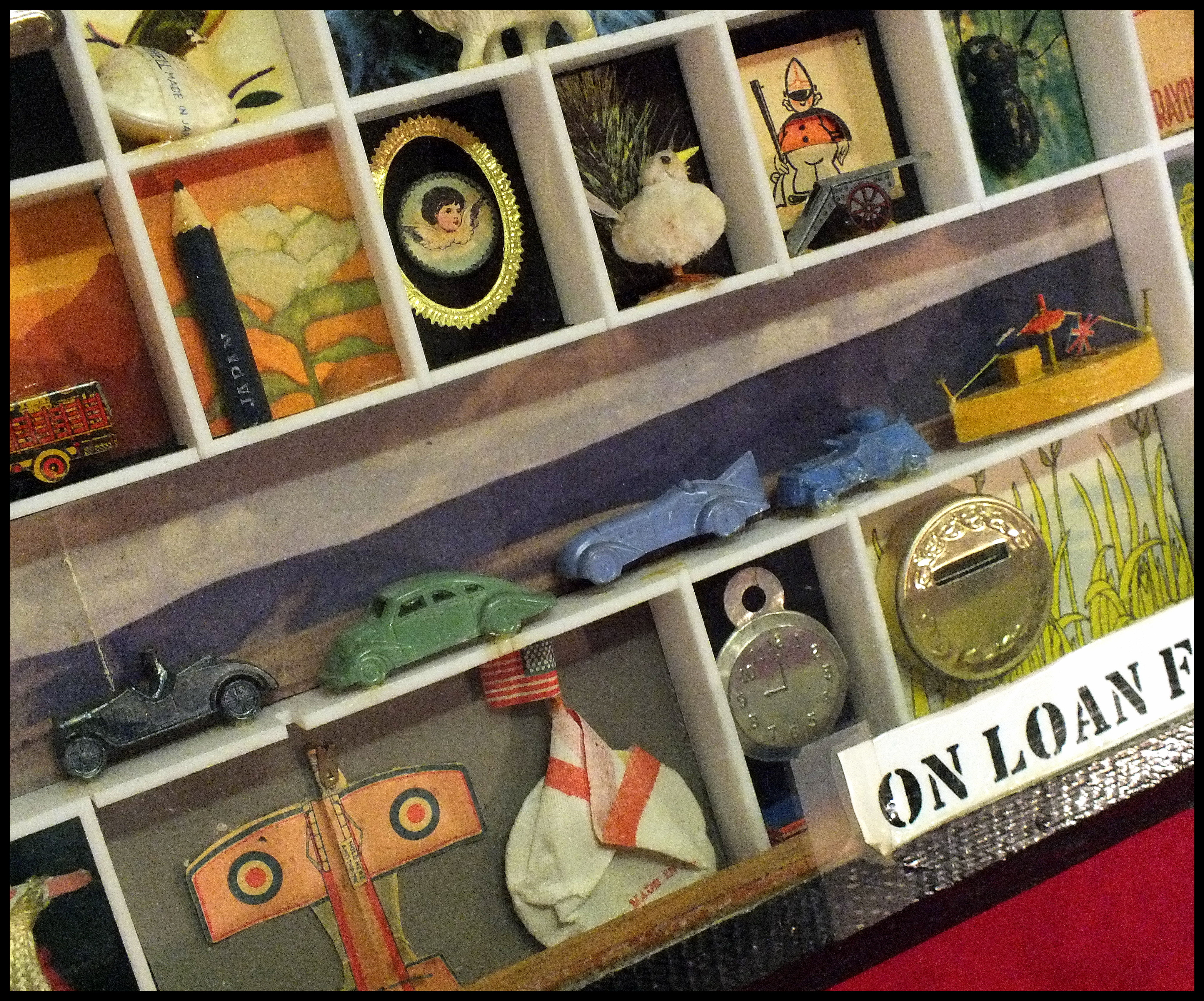
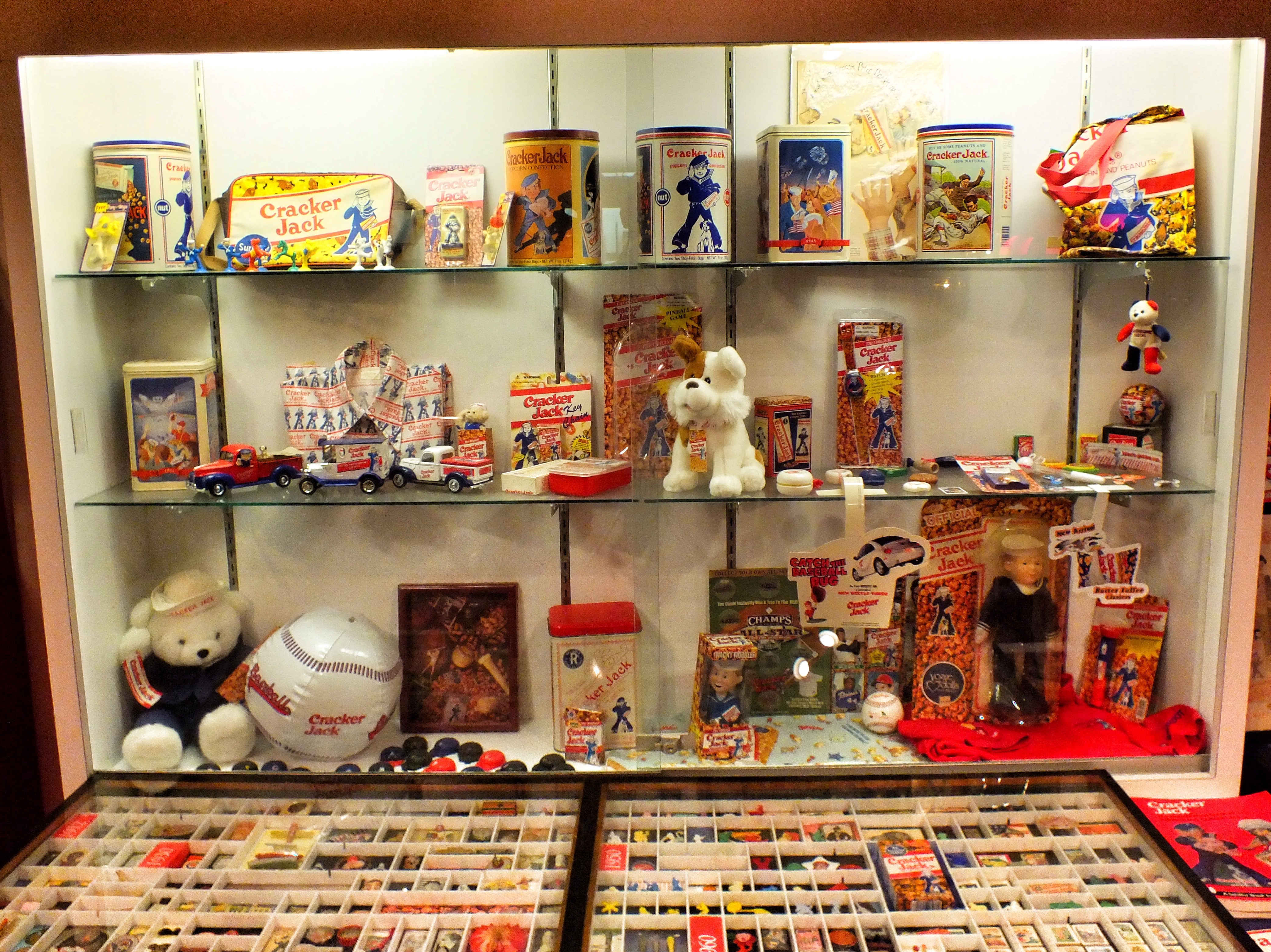
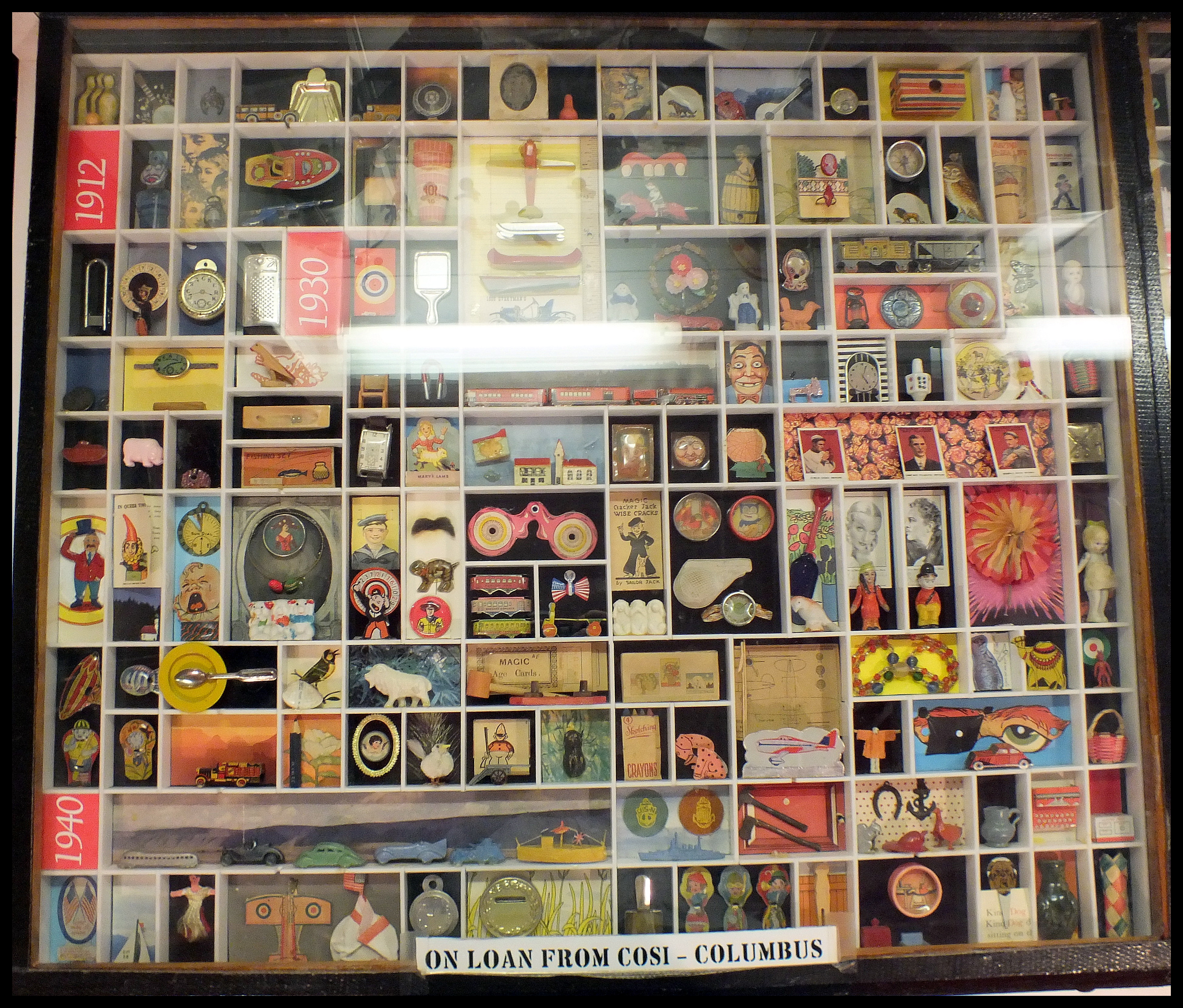
The museum also featured an exhibit on Cracker Jacks, with a display of prizes given away in boxes over the years.
IMG_2149

cracker2

cracker1

cracker5

cracker4

cracker3

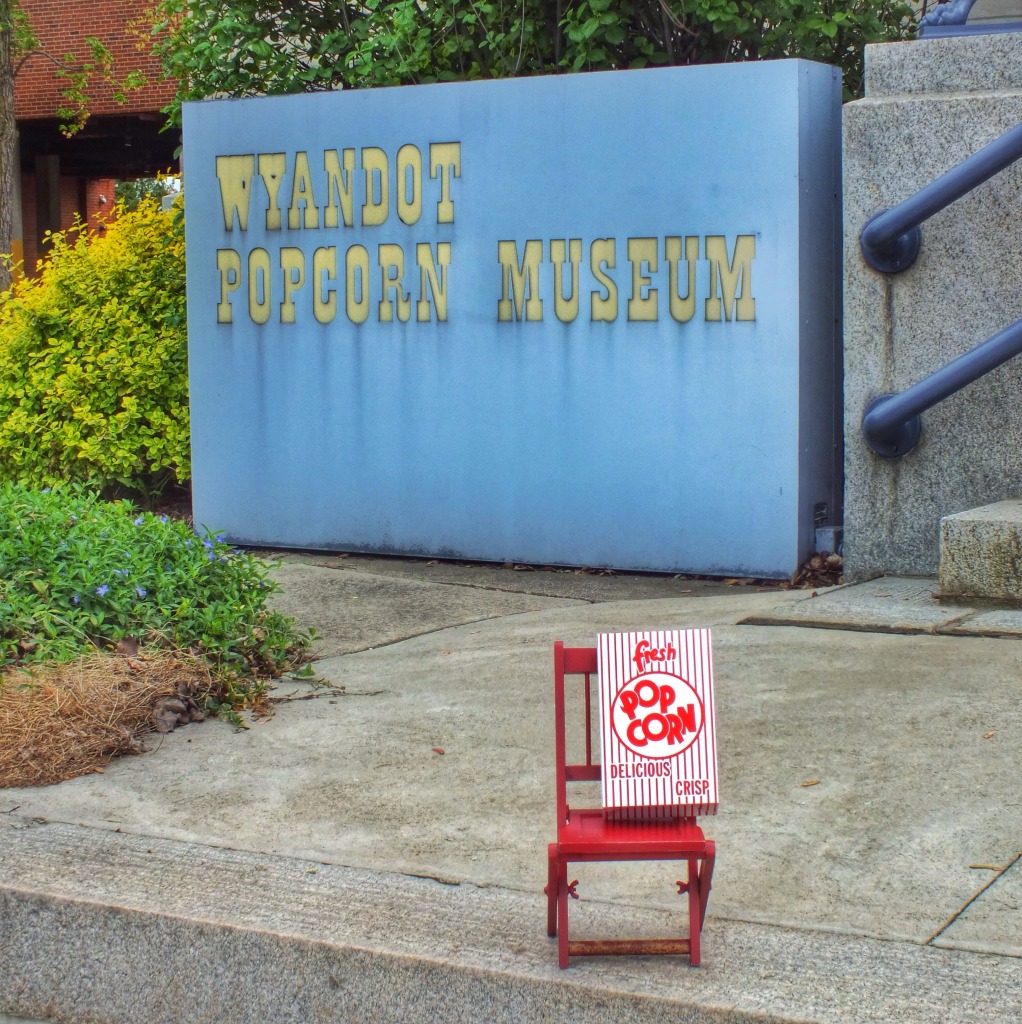
On our way out, they gave us each a box of stale popcorn to go.
IMG_2199-1022x1024

Posted in Ohio | Comments Off on Wyandot Popcorn Museum

Harding’s Home

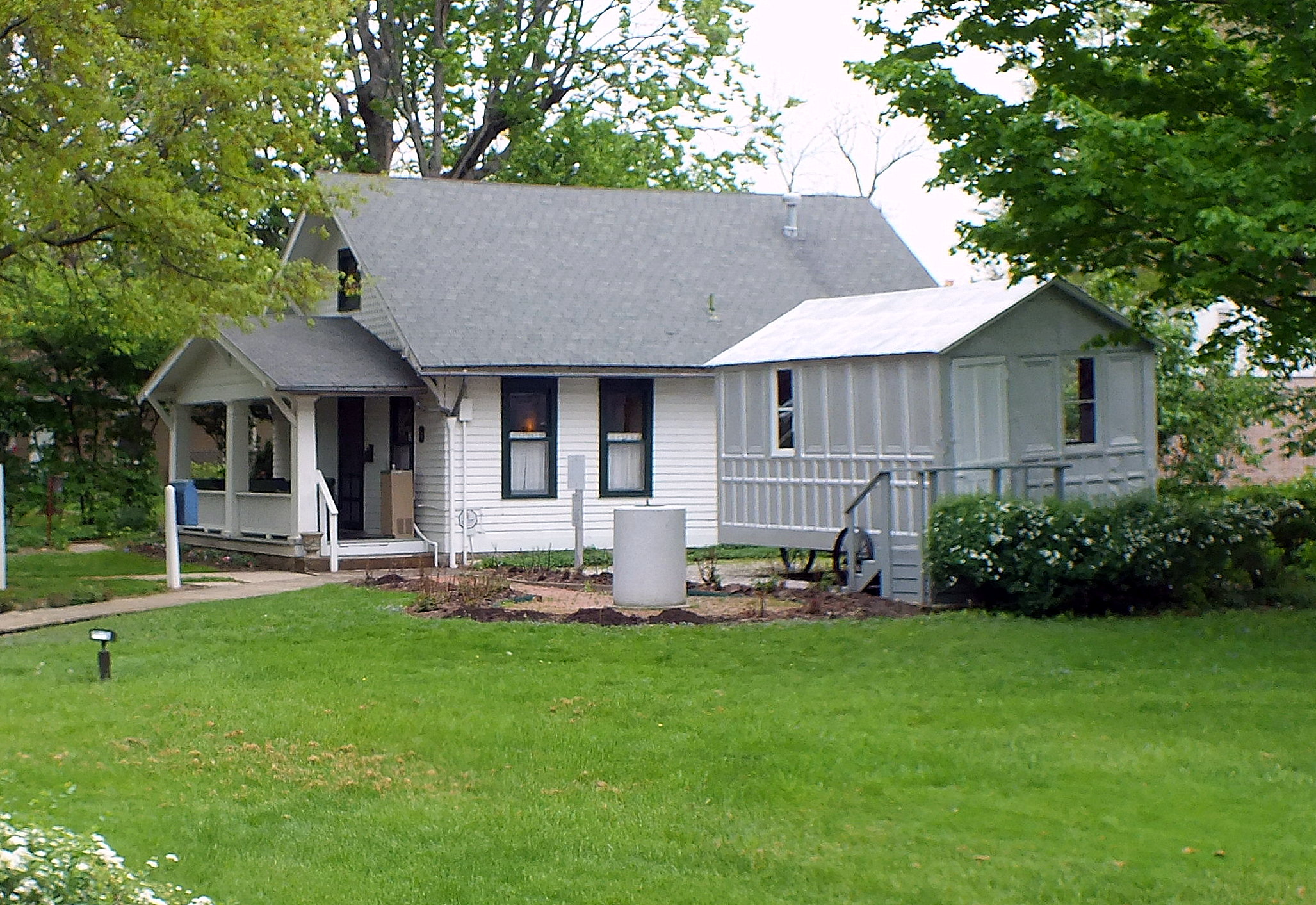
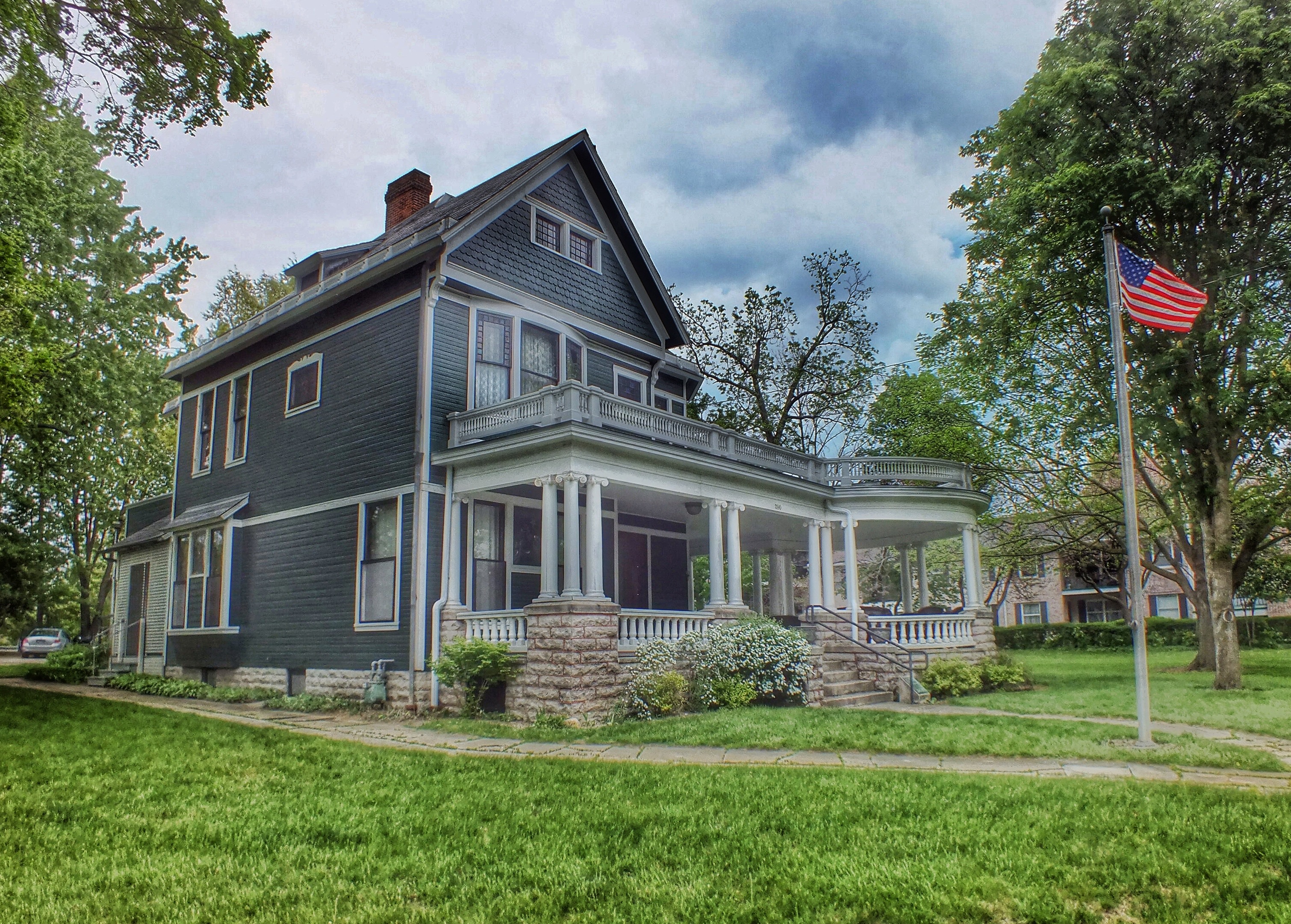
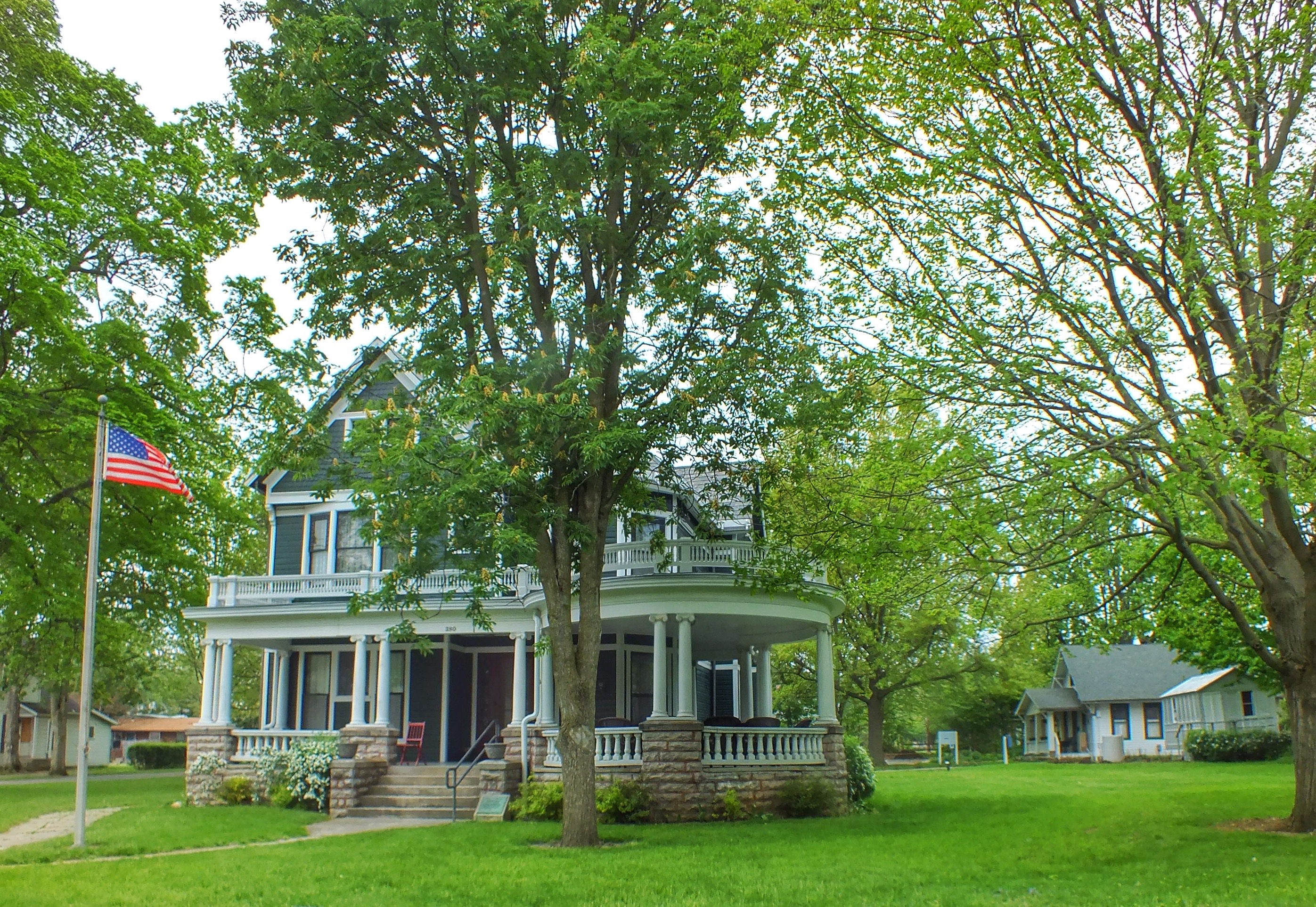
The visitor center for Harding’s home is a small cottage in the backyard. Harding had it assembled from a kit for the use of reporters who were covering his Presidential campaign in 1920.

cracker9

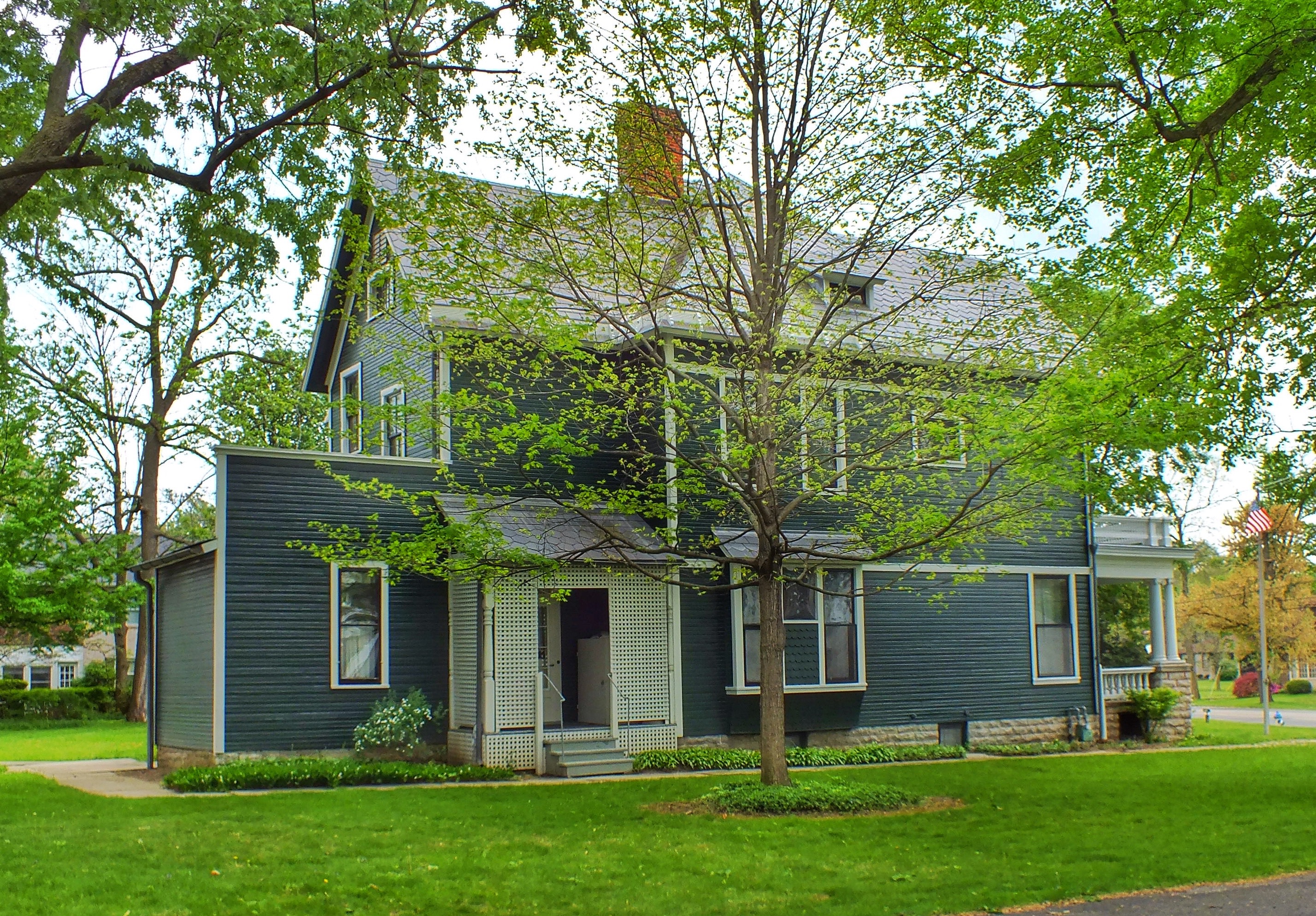
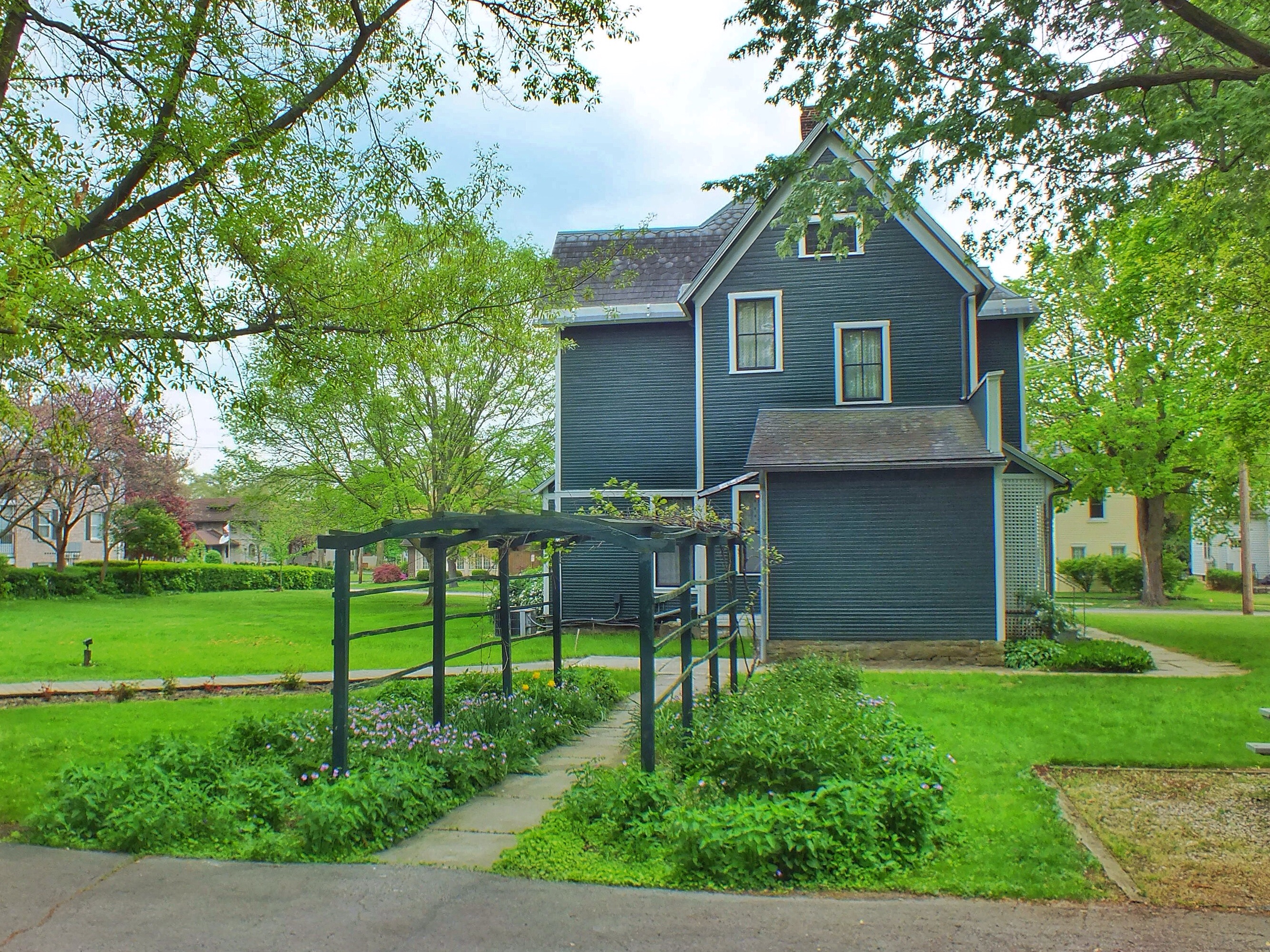
Harding had the home itself built in 1890 as a wedding present to Florence, a divorcee five years his senior.

IMG_2052

The couple lived there until they left for the White House. They never had children — Florence had a son by her first marriage. The boy was raised by Florence’s father, who was a wealthy tyrant who disowned his daughter twice — after each of her marriages.

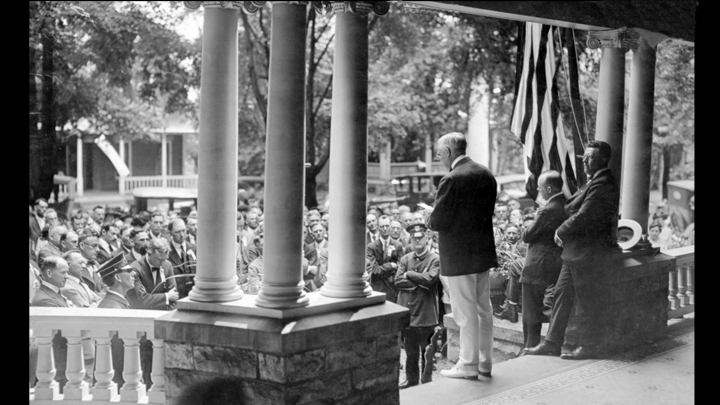
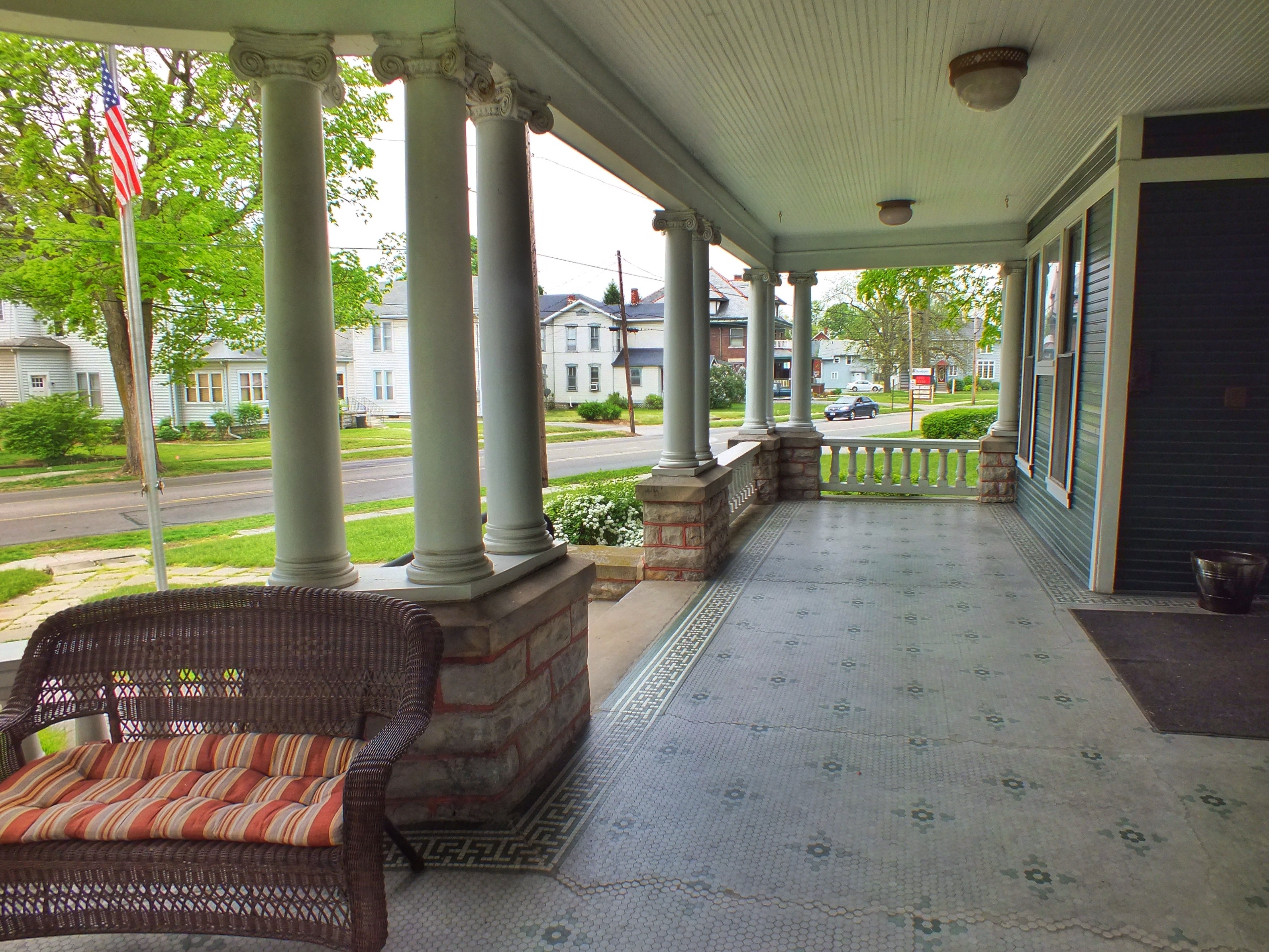
We watched a video in the visitor center and looked at the few displays. A woman then sent us up to the house and asked us to wait for her on the front porch. This is the famous front porch from which Harding conducted his “front porch campaign” the last such in history. Crowds of people would come to stand in his yard and in the street to hear him give speeches.

IMG_2026

IMG_2051-1024x768

harding

Notice how the houses across the street are at an angle. The street itself doesn’t run true north to south or east to west, but the houses were still aligned that way. We’ve also noticed this on some streets in Columbus. I’m not sure why they were built this way.

IMG_2024

IMG_2022

Shortly after our tour guide arrived, a family of five showed up. They knew the tour guide — she greeted them with hugs. At first, she seemed rather acerbic, but we warmed up to her as the tour went along. She knew her stuff, took her time and answered all our questions.

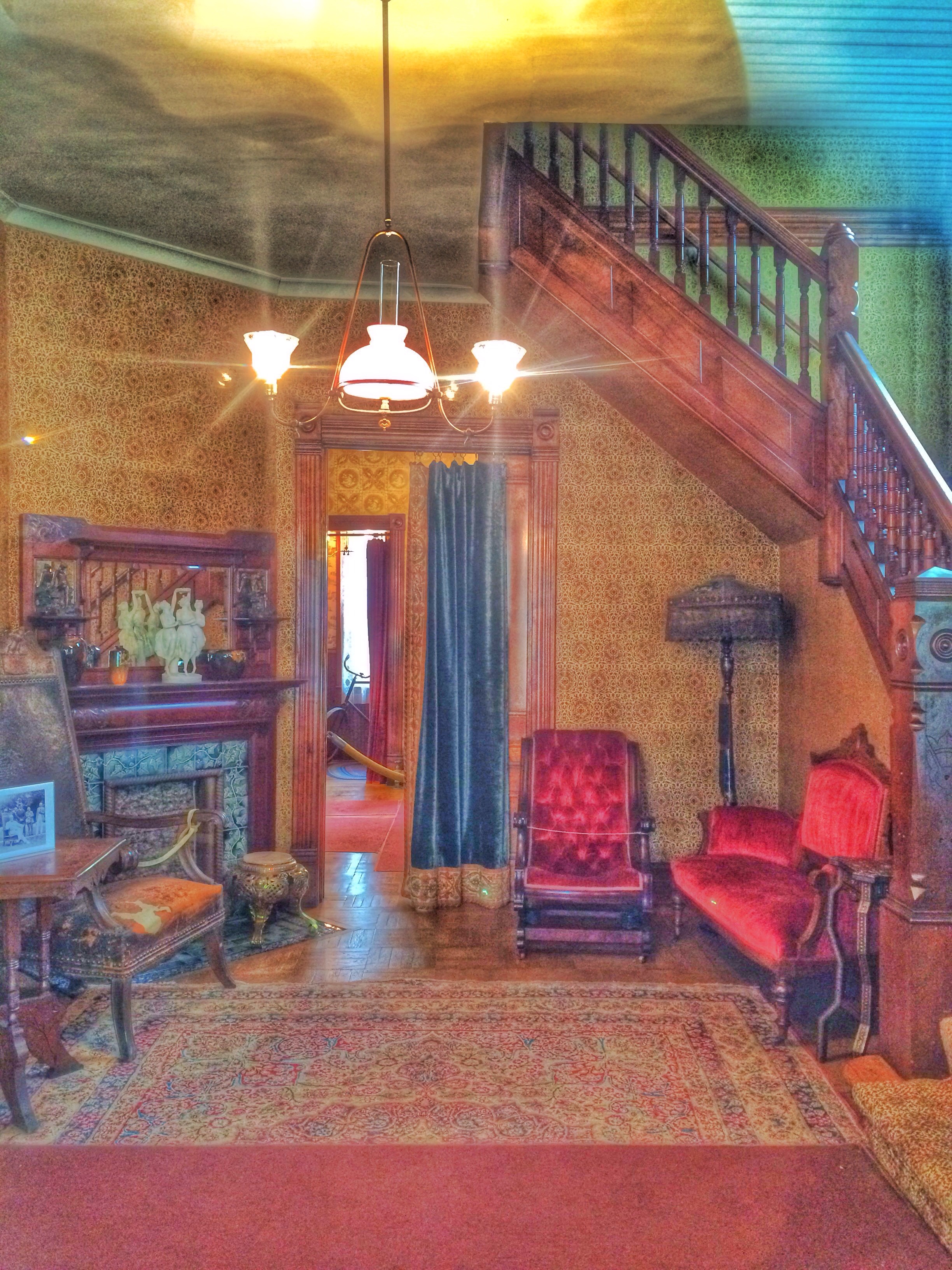
I wasn’t allowed to take photos in the house. But after our tour, I held my camera up to the cut glass panels alongside the front door and got these two photos of the entrance hall. Warren and Florence were married in this room, at the base of the steps visible on the right in the first photo.

IMG_1958

IMG_1959

I also bought two postcards in the gift shop. This is the master bedroom. Harding wore the tuxedo on his inauguration on March 4, 1921.

IMG_0884

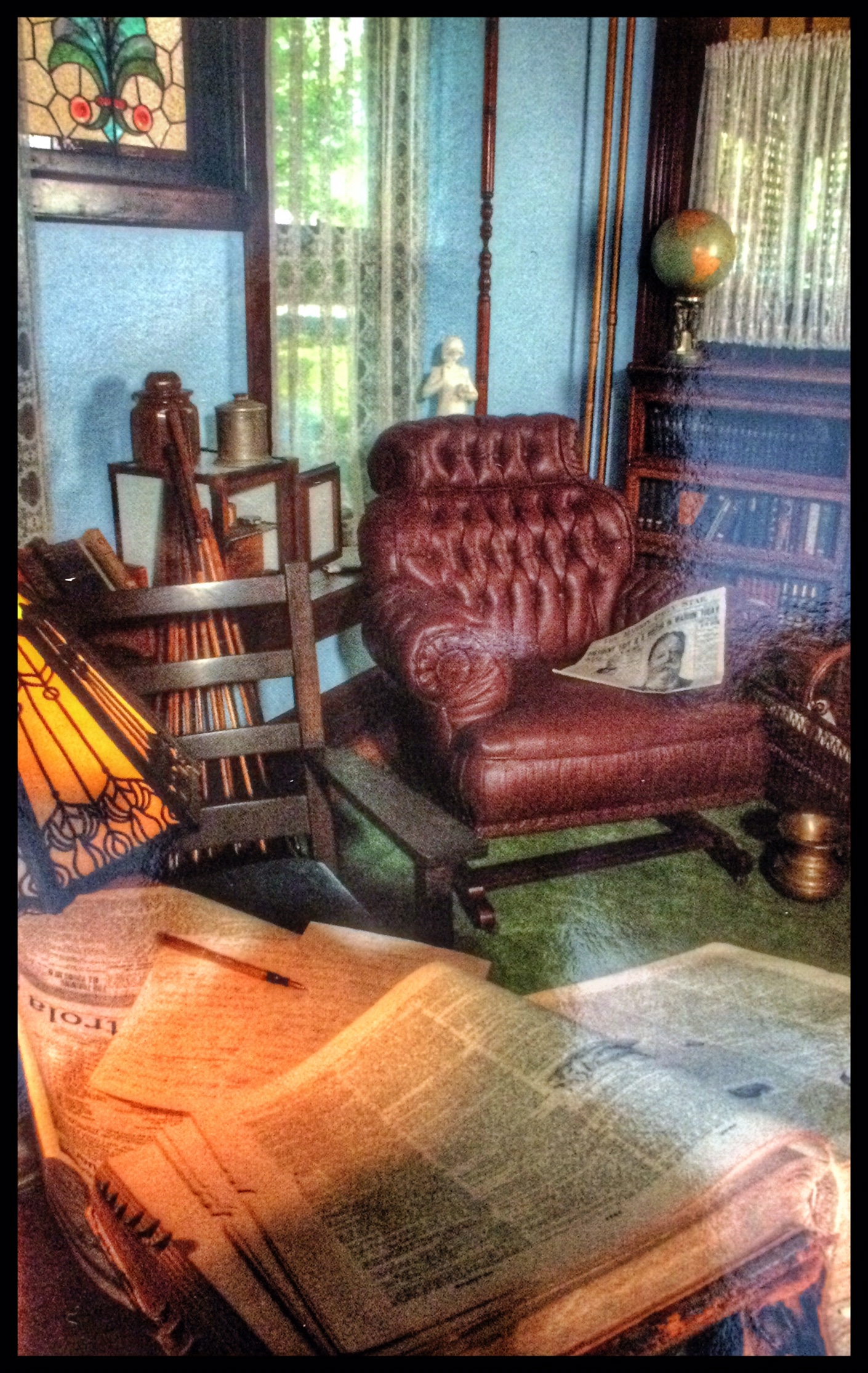
The library, where Harding wrote his speeches.

IMG_0885

Over 90 percent of the furnishings are original to the Hardings — the house was made into a museum just a couple years after Harding died. It isn’t a large house. The main floor has five rooms, the parlor, the library, the dining room, the entrance hall (above) and a kitchen. At the time of our visit, the kitchen was torn apart in the process of reconstructing it to look as it did when the Hardings lived there.

The second floor has three family bedrooms, a maid’s room and a bathroom.

After our tour, I walked around outside and took these photos.

IMG_2048

IMG_2055

IMG_2056

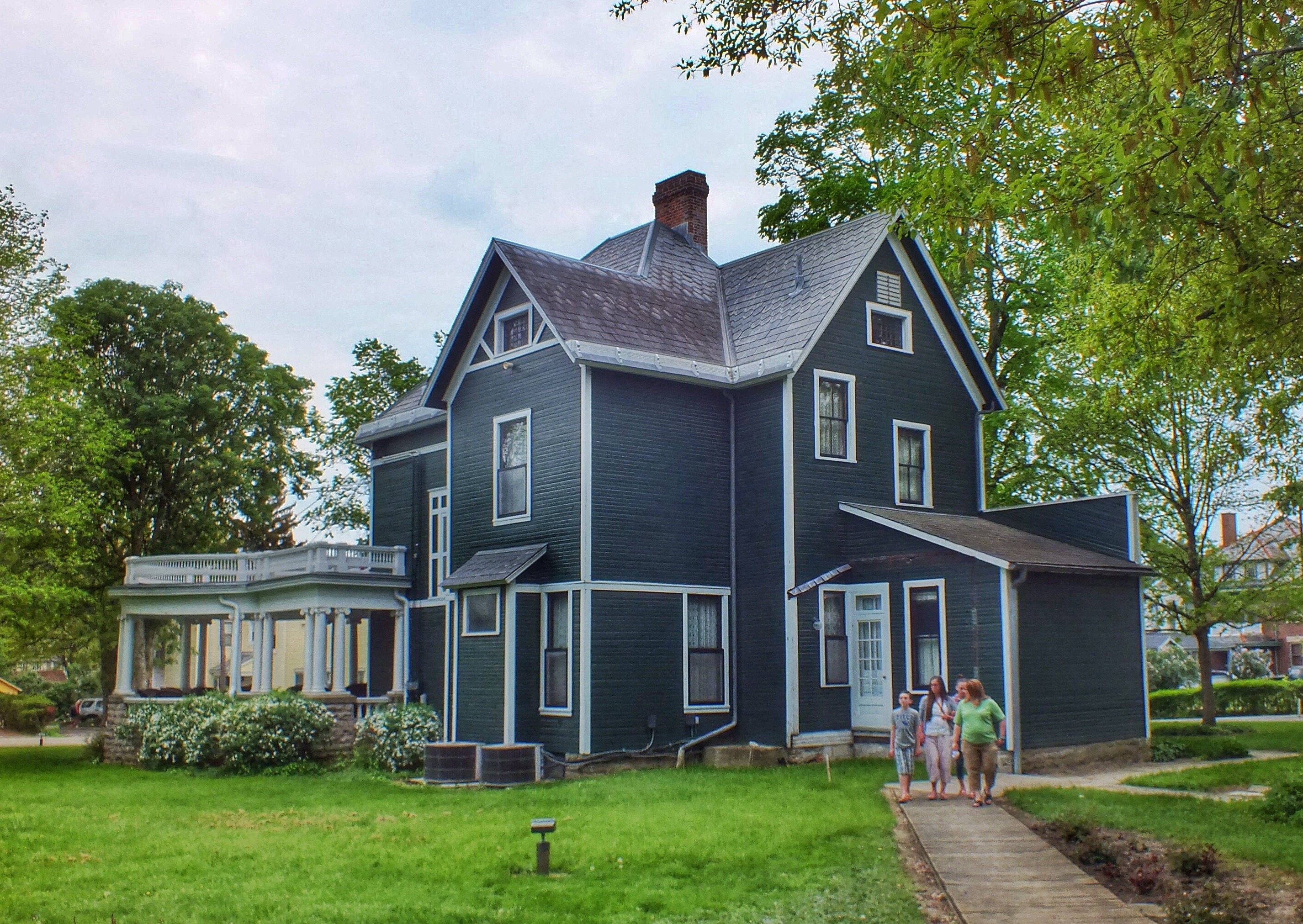
Our tour guide is in the green shirt.

IMG_2049

IMG_2053

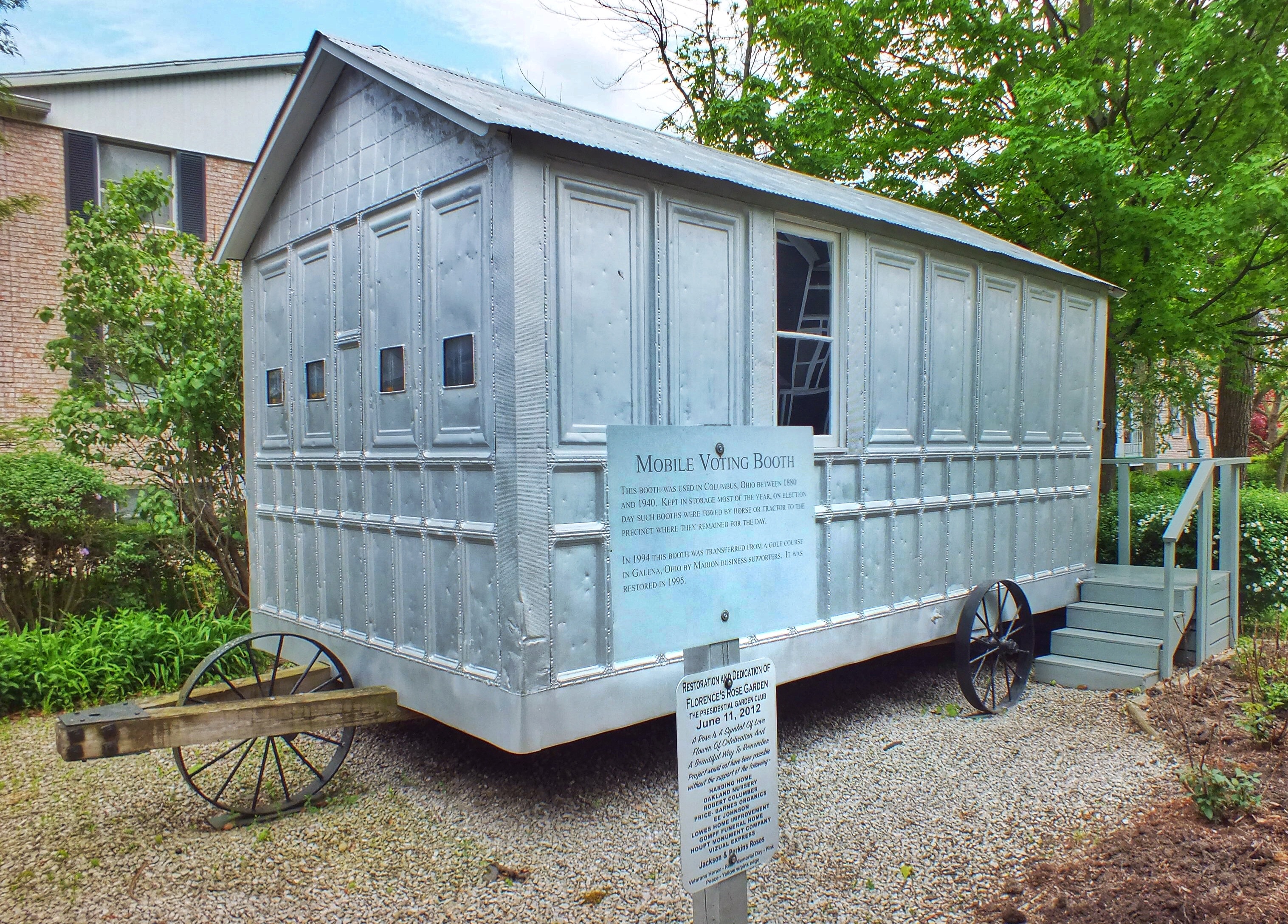
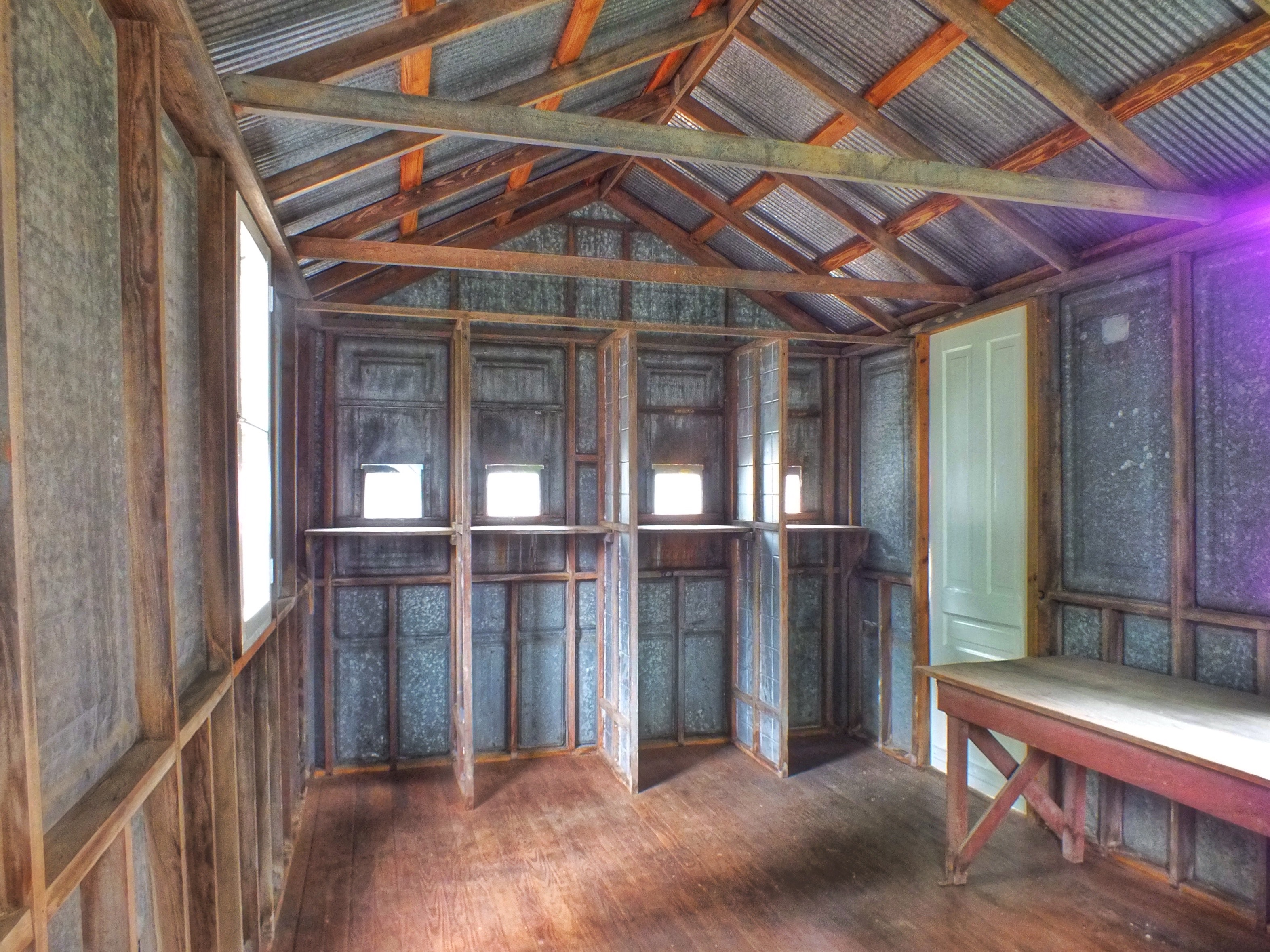
Next to the visitor center was a mobile voting booth, used in Columbus from 1880 to 1940.

IMG_2047

IMG_2025

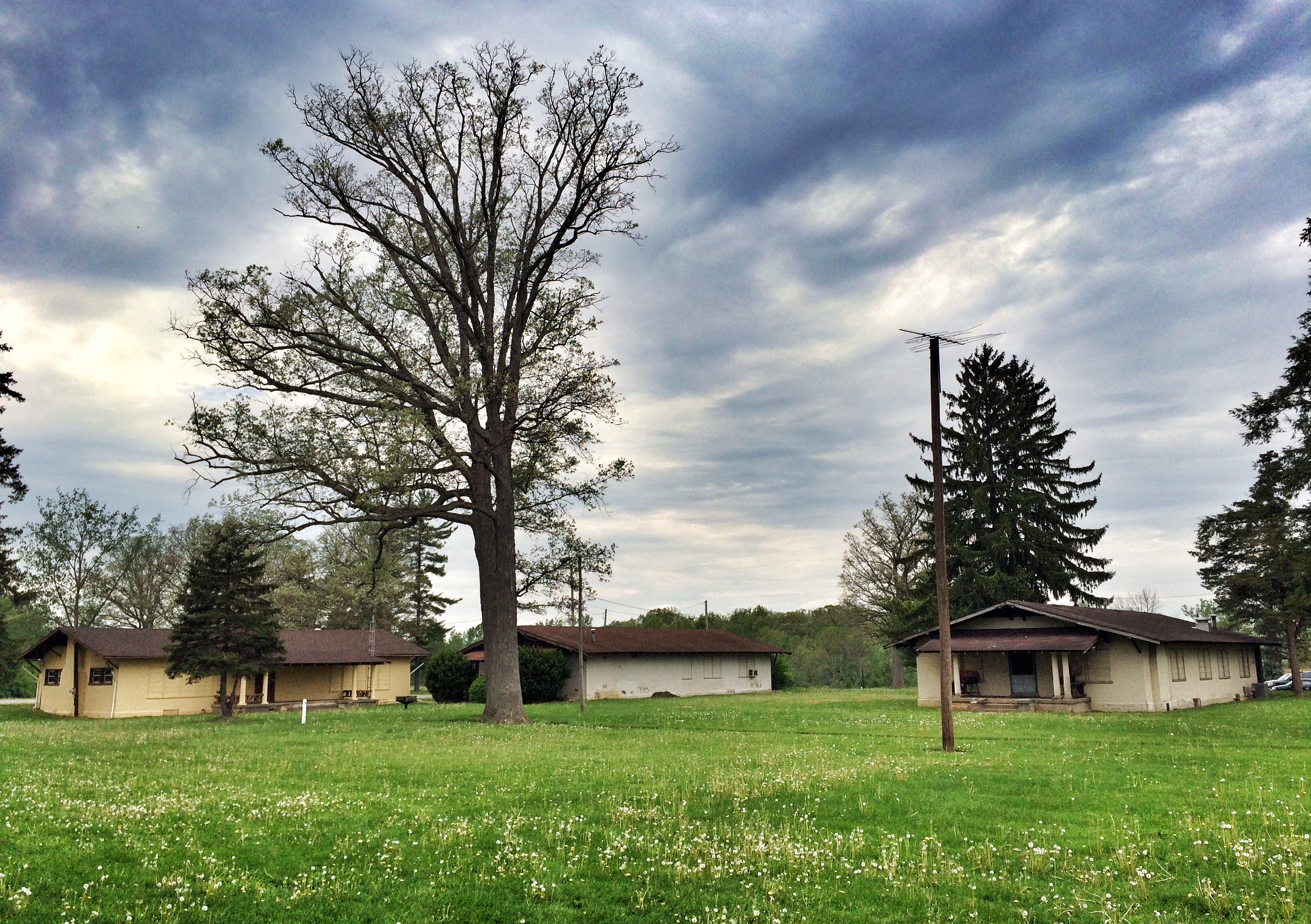
After Harding died, Florence moved back to Marion and took up residence at the White Oaks Sanitarium, operated by Charles E. Sawyer, the incompetent local physician who served as Harding’s doctor in Washington and whom, according to many, completely misdiagnosed and mistreated the President and so was, in part, responsible for his early death. Florence died at the Sanitarium in November, 1924, just 16 months after Harding. A few of the sanitarium buildings, although not the one that Florence occupied, are still in existence, squatting in the middle of a poorly-maintained park on the outskirts of Marion.

IMG_2208

Posted in Ohio | Comments Off on Harding’s Home

Harding Memorial

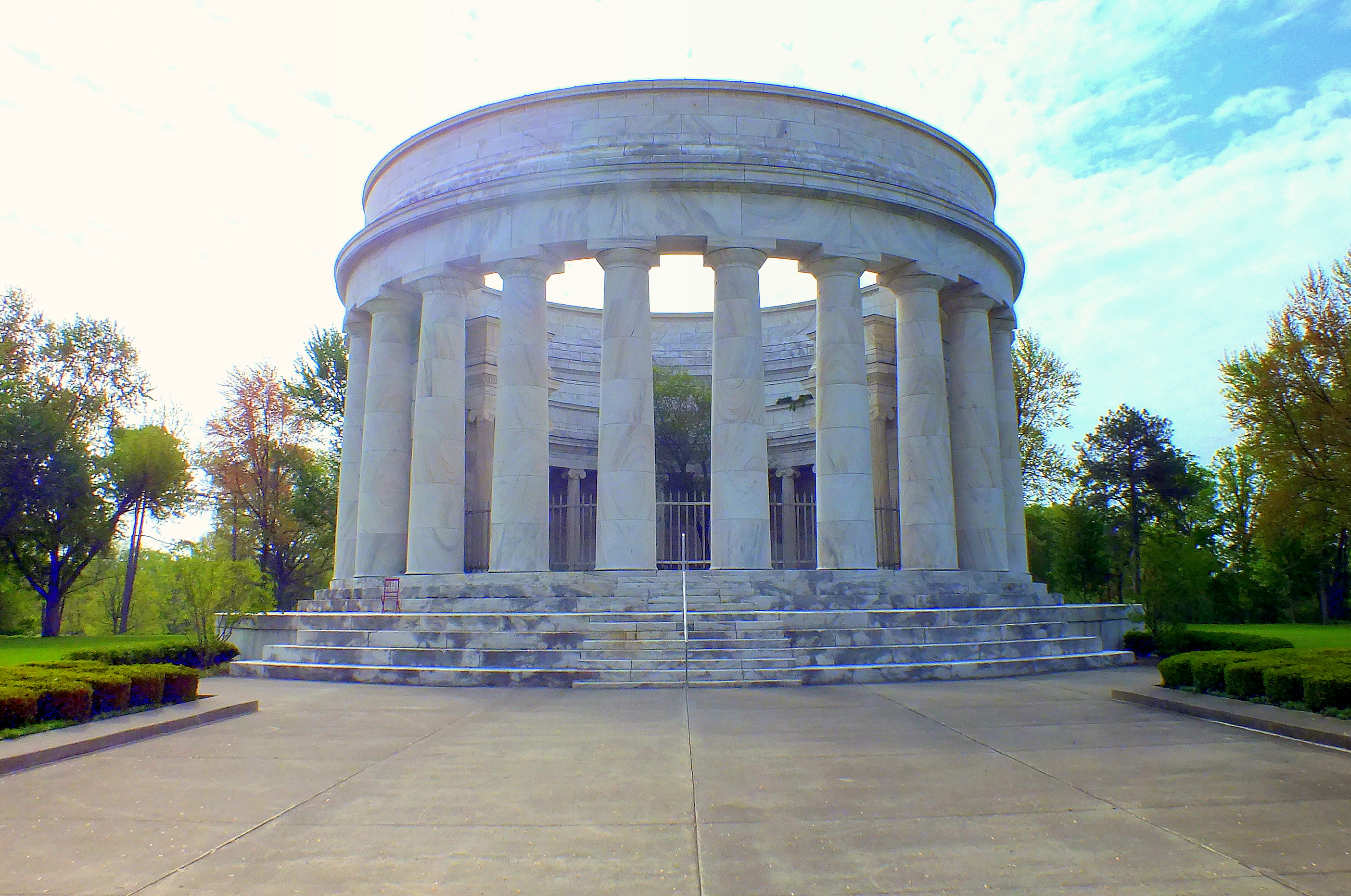
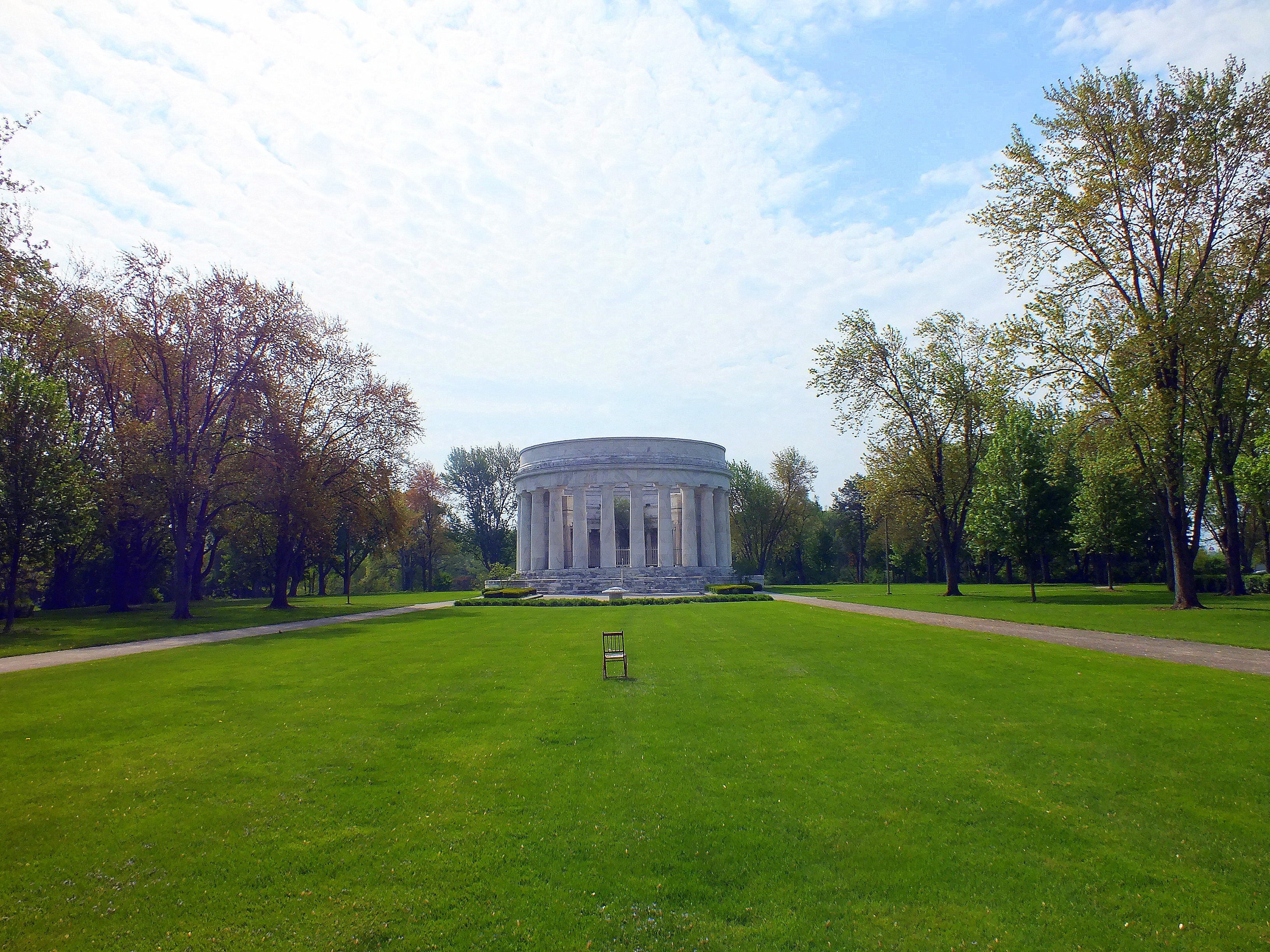
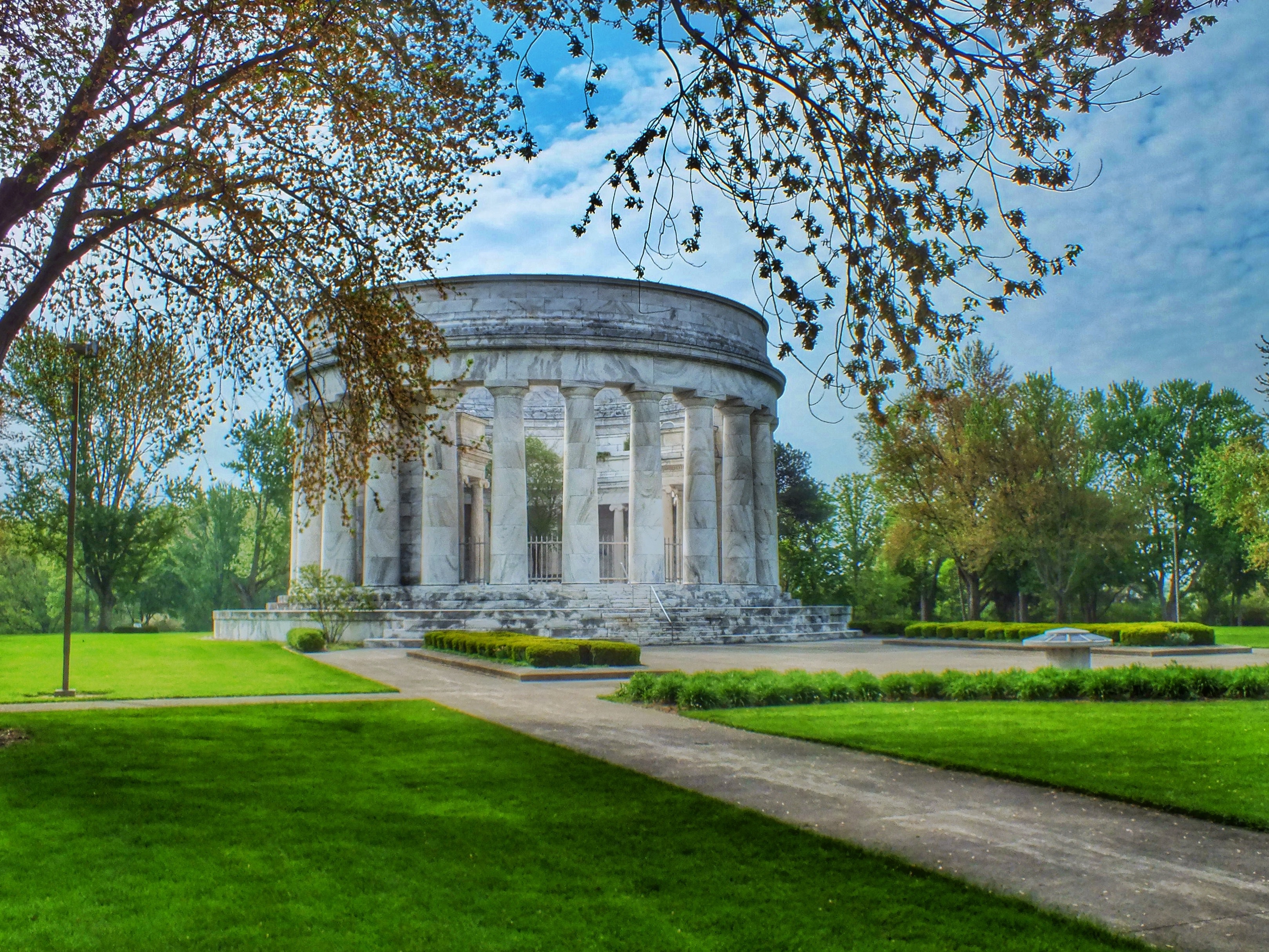
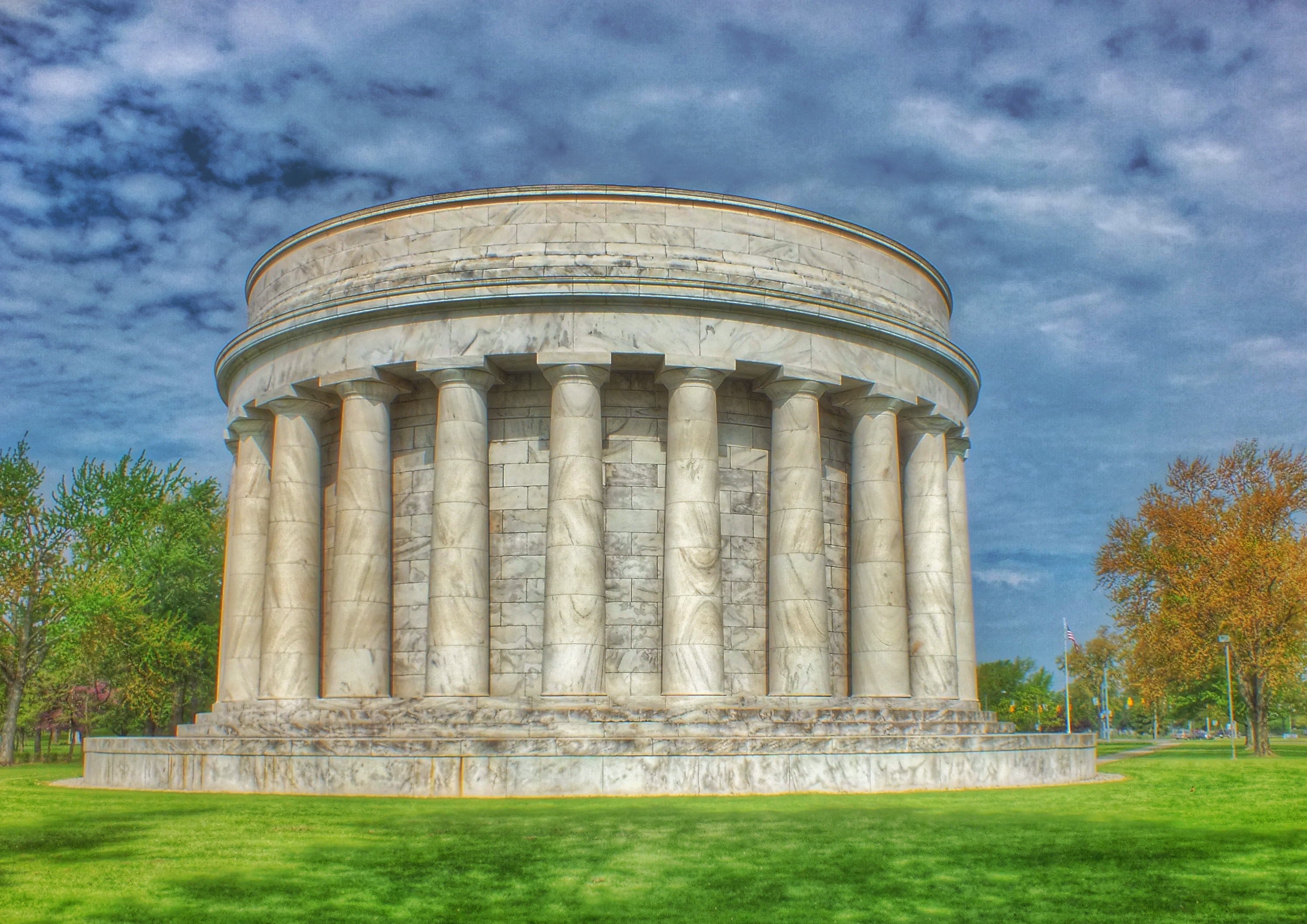
Warren G. Harding died of a heart attack in August, 1923 while on a trip to the West Coast. His hometown of Marion, Ohio, immediately began collecting money for a memorial to him. It was finished in 1927, and Harding’s body was moved there along with the body of his wife, Florence, who died in 1924.

Harding grew up in central Ohio and bought a newspaper in Marion which got him involved in politics and eventually the presidency when the Republicans couldn’t decide on one of the major candidates.

The town is very proud of Harding and has nothing but good things to say about him. “Yes, there was the Teapot Dome scandal, but that involved wrongdoing by Harding’s cabinet members and the President knew nothing about it until just before he died. Yes, he did have an affair, maybe several affairs, but we don’t want to talk about that. Let’s concentrate on what he accomplished — he dedicated several memorials, he started the veterans hospitals and he kept every promise he made during his candidacy.” Whatever that means. Little mention is made of the fact that he is widely considered to be the worst president in history.

The memorial is impressive.

cracker7

cracker8

IMG_1903

Snapseed(1)

IMG_1906

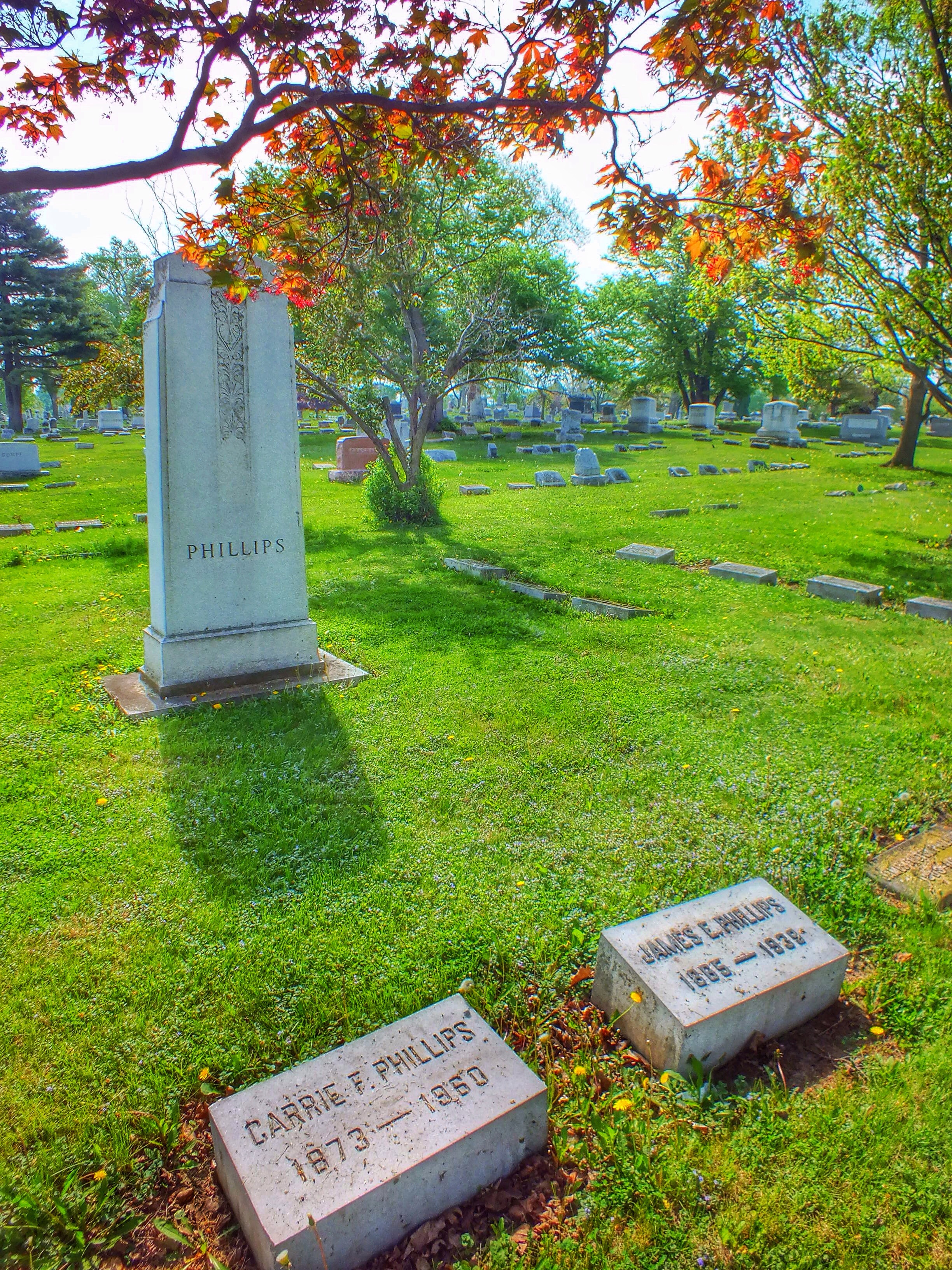
The grave of his one acknowledged mistress, Carrie Phillips, is in the same cemetery, across a road and perhaps 300 yards away.

IMG_1905

Posted in Ohio | Comments Off on Harding Memorial

Hostetler’s Hudson Auto Museum

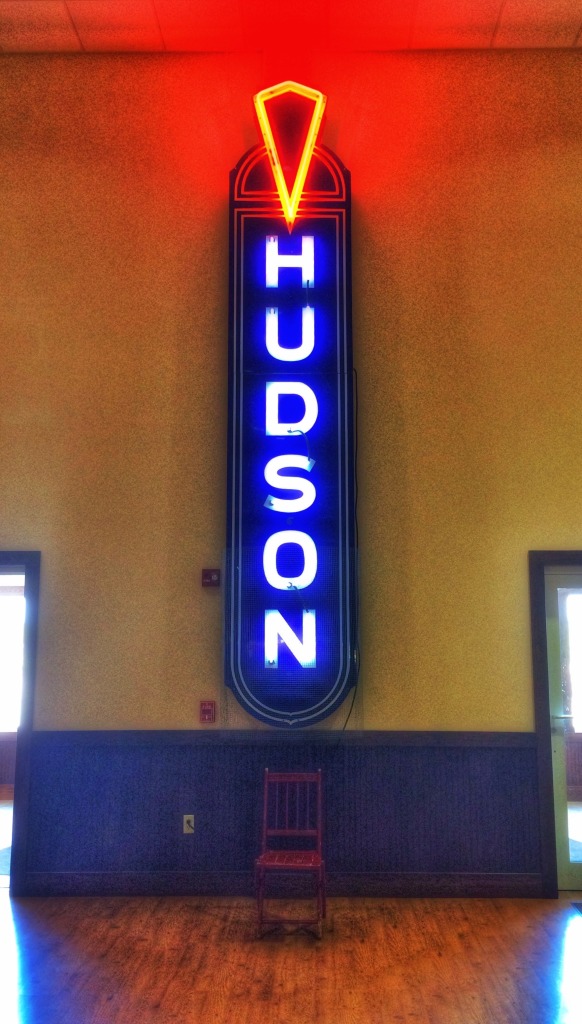
While my wife shopped in downtown Shipshewana, I searched for something more to my taste. I discovered an antique auto museum tucked into a corner of an event center. When I arrived, it was only 45 minutes to closing, but I was just passing the time anyway, so it didn’t matter. As it turned out, it was one of the most enjoyable museums I’ve ever visited.

IMG_2033-582x1024

IMG_2034

IMG_2141

The cars were stunning. I took photos of almost every one, but I’ll only post my favorites. Even so, this will be a long post if you’re not into old cars.

1910 Hudson Touring Car.

IMG_1883

1915 Hudson Six-40. Blue was the only color available.

IMG_1880

1928 Hudson 4-Door Town Car. It was custom built for the wife of a patent medicine maker in Columbus, Ohio and was only driven by a chauffeur.

IMG_1887

IMG_1889

1929 Hudson Essex Speedabout, Boat-tail. This is one of my favorites in the museum. The body is aluminum and only five were made.

IMG_2138-1024x847

IMG_1915

1929 Hudson R Convertible Coupe.

IMG_1914

1929 Hudson Dual Cowl, Four Door, Sport Phaeton. I’m not a big fan of of the color scheme, but the lines are beautiful. Only seventeen were produced and only seven are left.

IMG_1916

IMG_2092

1929 Hudson L Club Sedan. This is the longest and heaviest car Hudson ever made. The company that built the body, Biddle & Smart, specialized in horse-drawn hearses.

IMG_2096

IMG_2093

1931 Hudson. This is another of my favorites. This particular car was given to President Herbert Hoover by Hudson president Roy Chafin (who was Secretary of Commerce at the time) to use in Panama during a conference with Latin American leaders. The car was left in Panama and used as a taxi for several years before being returned to the United States and restored.

IMG_2094

IMG_1995

IMG_1997

IMG_1994

1931 Hudson T Sports Roadster. Another boat-tail model with a rumble seat.

IMG_1993

IMG_2062

1933 Hudson Terraplane Convertible. This model set several hill-climbing records.

IMG_2065

IMG_2064

1933 Hudson Terraplane Flower Car.

IMG_1951

IMG_1950

1936 Hudson Series 65 Convertible Coupe. I hate the color but found the styling impressive. The front-opening doors were called “suicide doors.” I’m not sure why.

IMG_1926

IMG_1922

IMG_1924

IMG_1925

1937 Hudson Terraplane Four Door Sedan. This model got 21.08 miles per gallon at an average speed of 86.54 mph. And it had a “bubble trunk.”

IMG_1933

IMG_1935

IMG_1934

IMG_2222

1937 Hudson Custom Eight.

IMG_2223

IMG_2225

1937 Railton with a Hudson Eight-Cylinder Chassis. Railton was a distributor of Hudson cars in England. The body was made by Ranalah Coachworks in Wimble, England.

IMG_2120

1937 Hudson Terraplane Pick-Up Express. The bed would hold a 4’x8′ sheet of plywood.

IMG_2006

IMG_2005

IMG_2008

1940 Hudson Traveler Business Coupe. Another of my favorites. Note the truck body that slides out of the trunk.

IMG_2118

IMG_2117

1942 Hudson Wood-bodied Station Wagon. This particular car was discovered moldering on a mountain top above Death Valley, California. A bulldozer had to be used to cut a path to bring it down. It needed extensive restoration.

IMG_2119

IMG_2226

An unrestored Woody Wagon for comparison.

IMG_2227

1946 Hudson Super Six Brougham Convertible.

IMG_2228

IMG_2163

1947 Hudson Super Six Two-Door.

IMG_2159

1948 Hudson Super Six Four Door. It featured a “step down” design which means that the car was built inside the frame instead of on top of it. All cars are now built this way. This car was featured in one of the earliest TV advertisement campaigns.

IMG_2161

IMG_2162

IMG_2160

1951 Hudson Broughman Convertible Parade Car. I think they got a little carried away with the hood ornament and the rear bumper.

IMG_2072

IMG_2073

IMG_2076

IMG_2074

1951 Hudson Convertible. Only 550 of these cars were manufactured.

IMG_1943

1953 Hudson Super Wasp Hollywood.

IMG_1941

IMG_1940

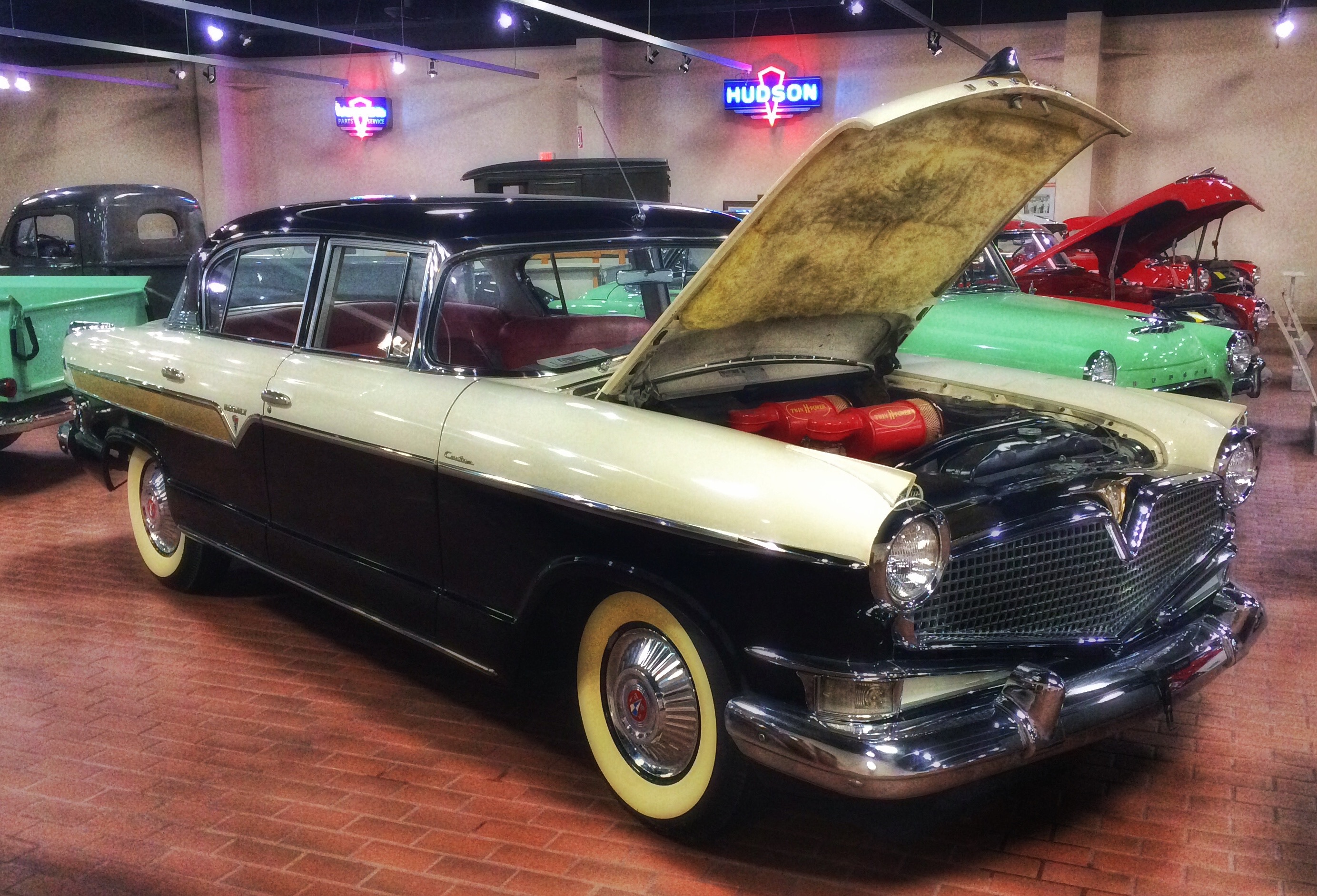
1956 Hudson Hornet Sedan. In 1953, Hudson and Nash combined to form American Motors. The Hudson name was dropped in 1957.

IMG_1985

An overview of the museum. The three vehicles closest to the camera are a 1947 Hudson Pickup Long Boy, a 1952 Hudson Hornet Pickup and a 1927 Hudson Fire Engine built on a limousine chassis.

IMG_2139

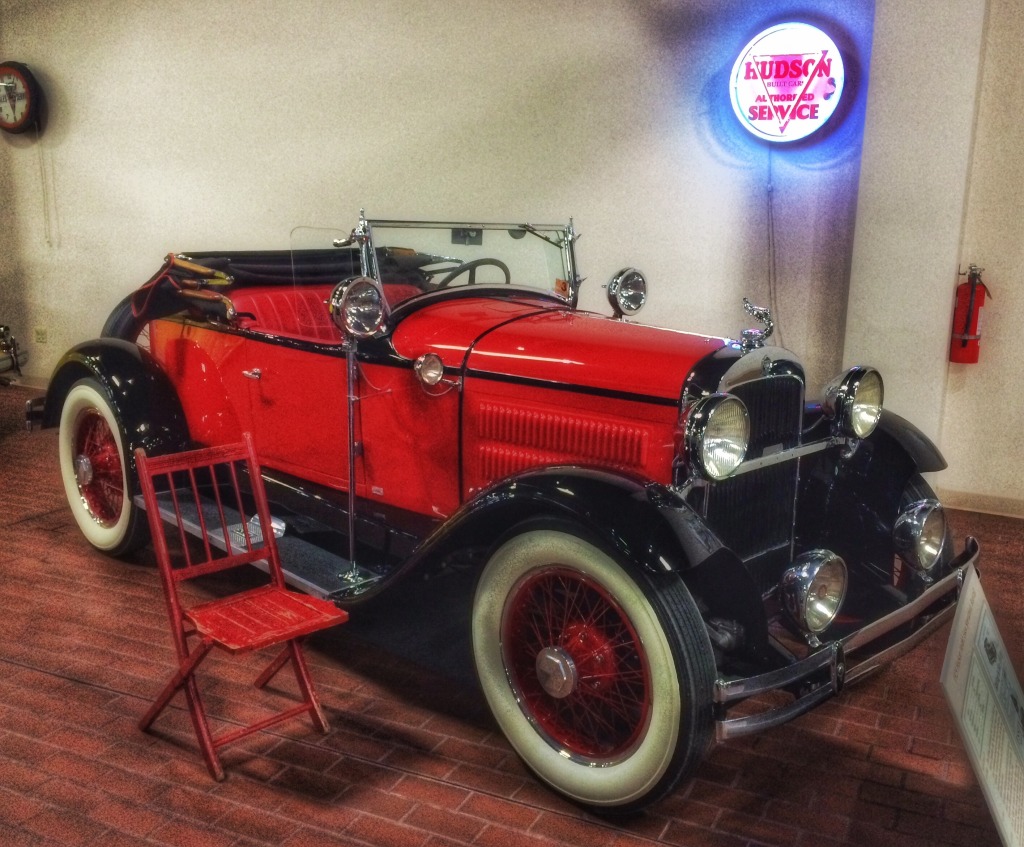
For most of my visit, I had the museum to myself. Another couple came in shortly before closing time. When I left, the doors were locked, but the woman behind the counter graciously allowed me to go back in with the red chair and take a few more photos.

Posted in Indiana | Comments Off on Hostetler’s Hudson Auto Museum

Shipshewana

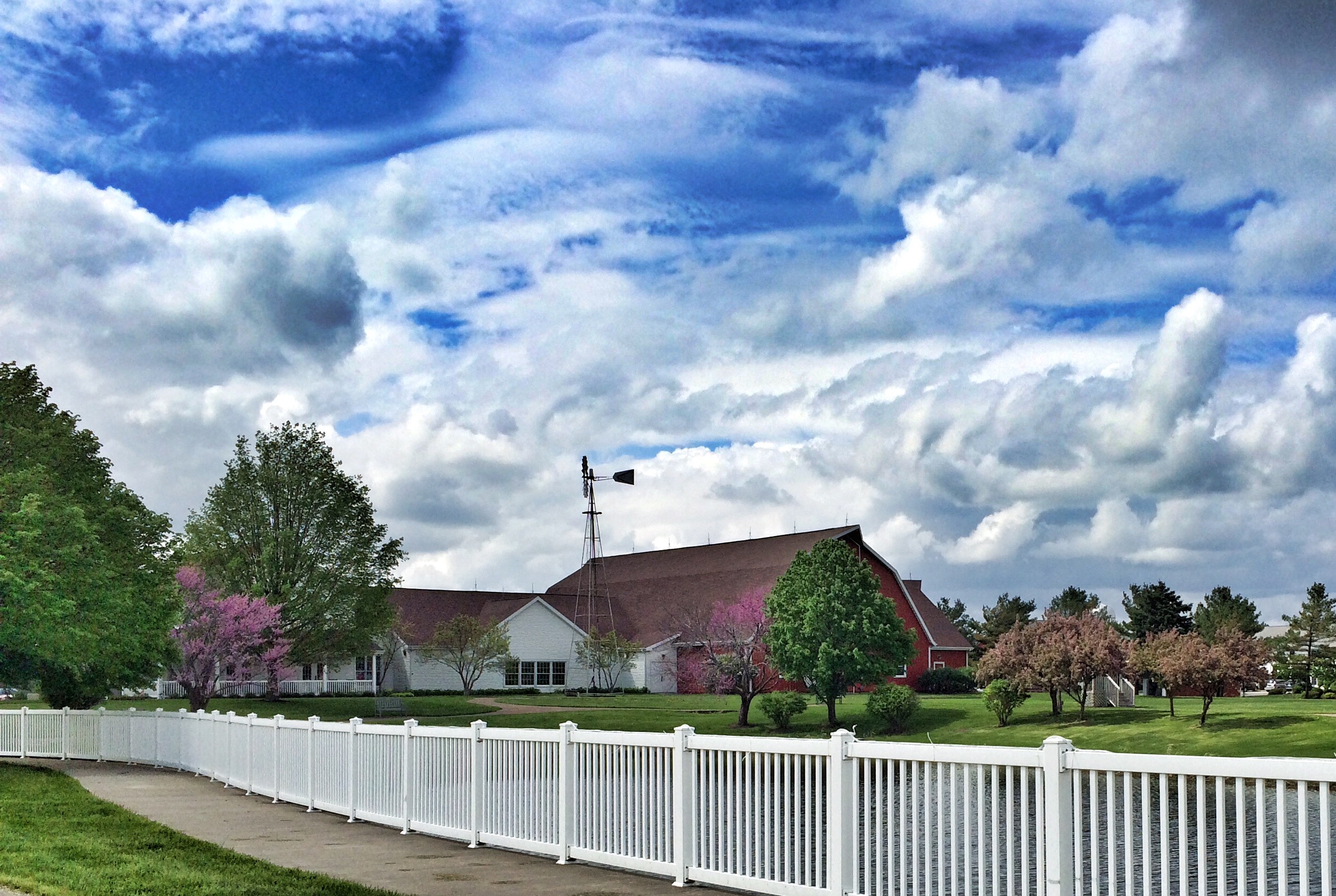
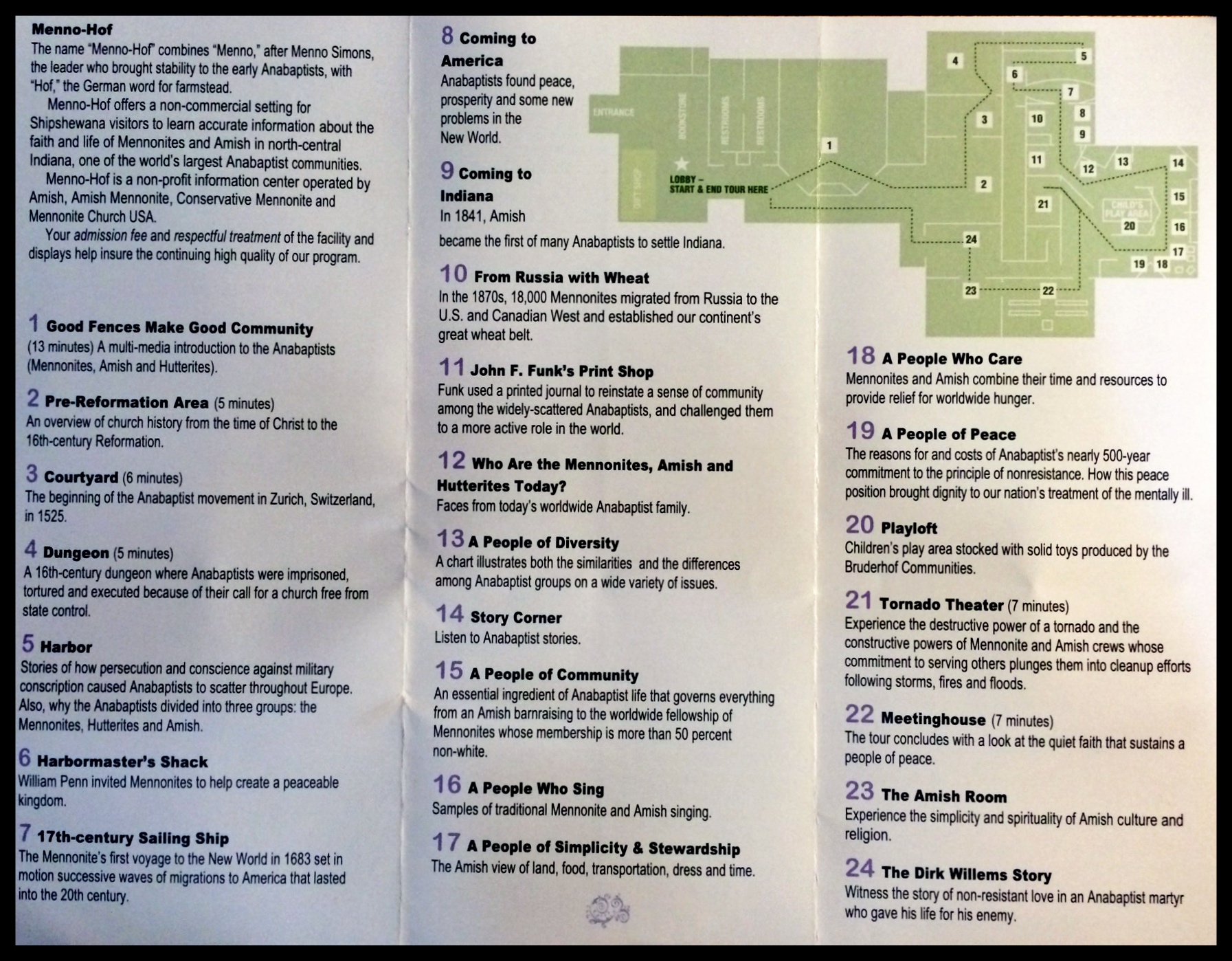
My wife has a friend who keeps insisting that she has to visit Shipshewana. So we did. Our first stop was the Menno-Hof, a museum about the Amish and Mennonite people, created and operated by Amish and Mennonite people. We went expecting to be preached at. What we didn’t expect was to be preached at for two hours and 15 minutes. It threw off our whole day’s schedule and got rather annoying before it was over.

IMG_1886

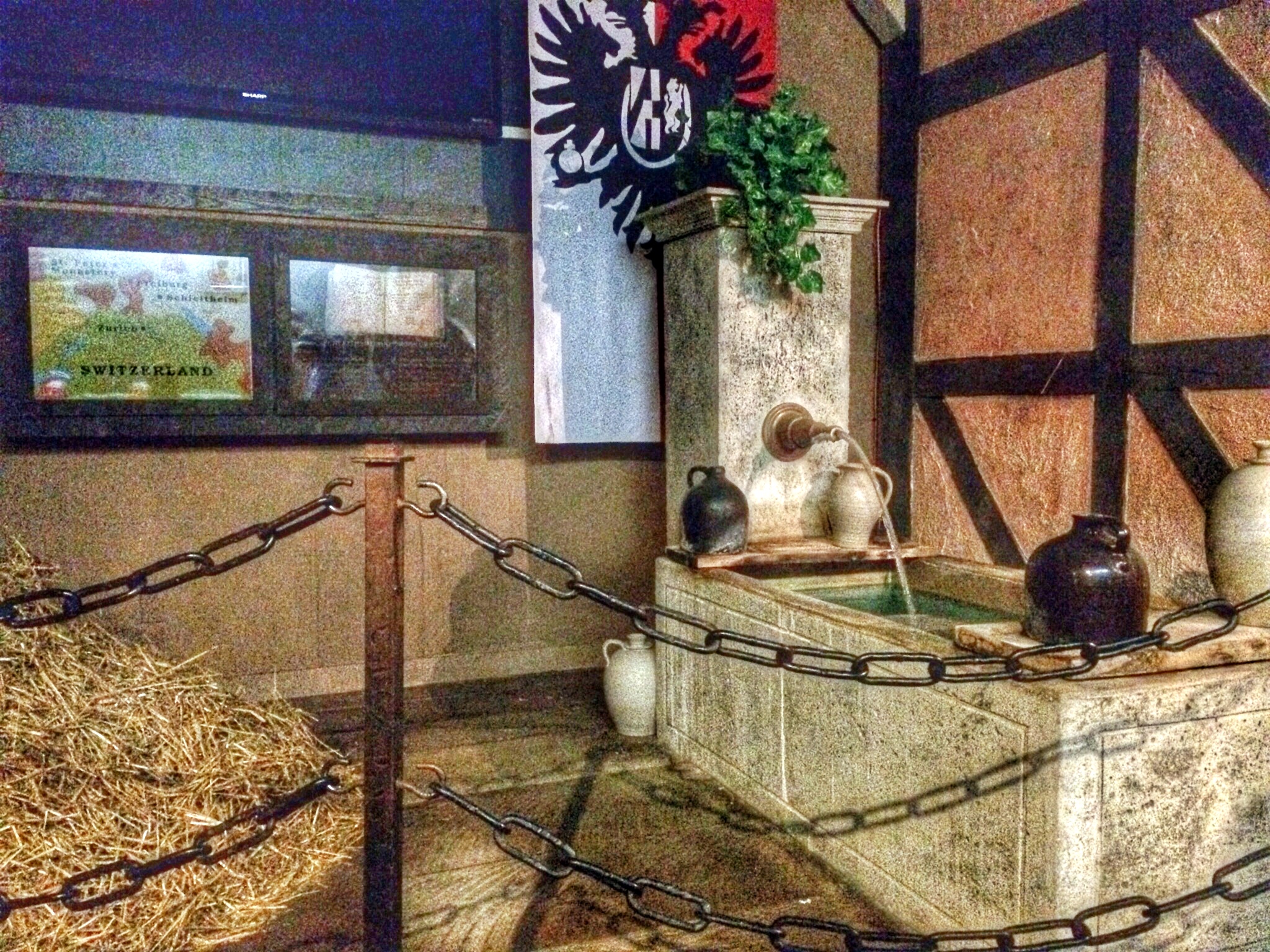
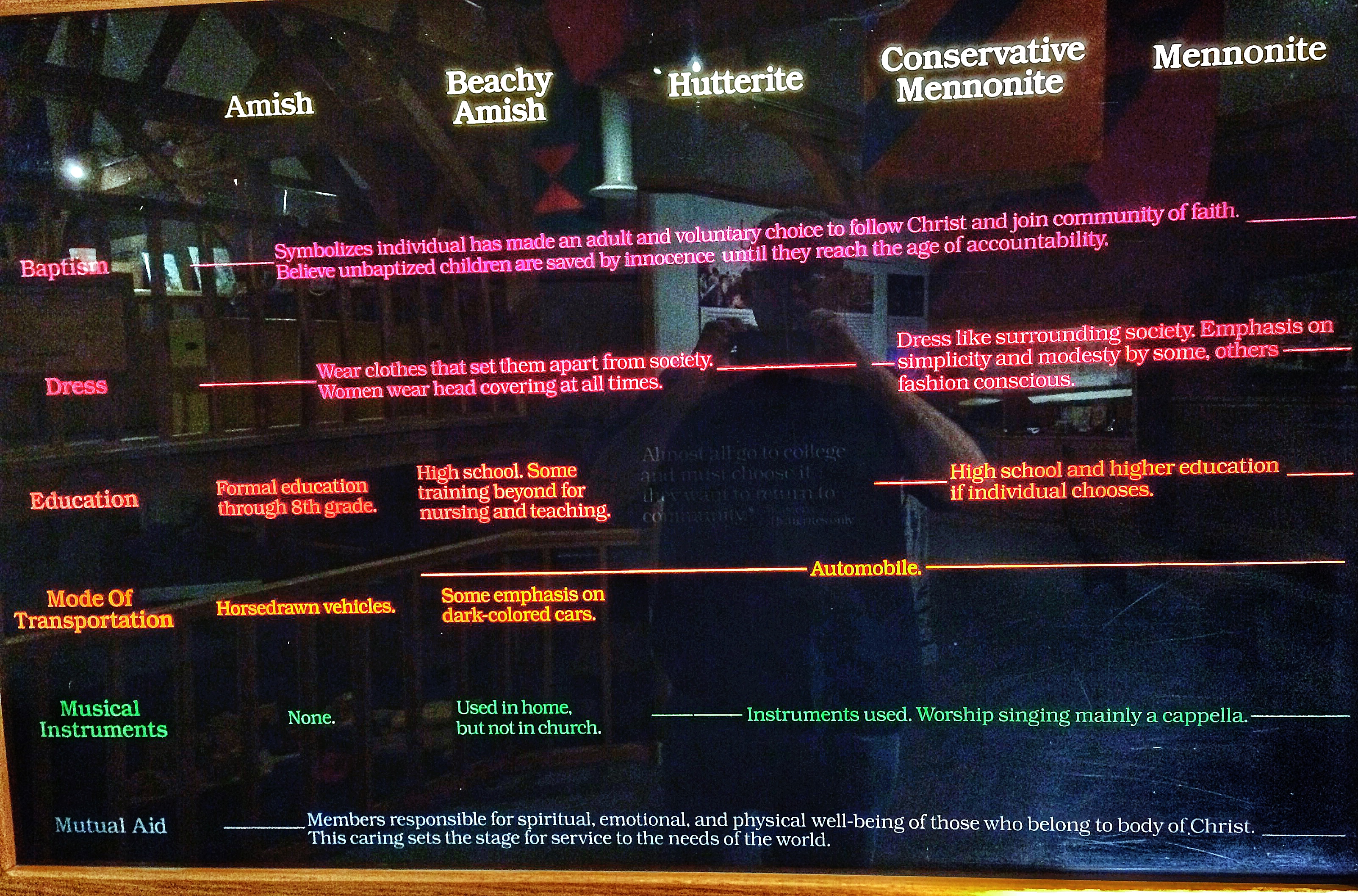
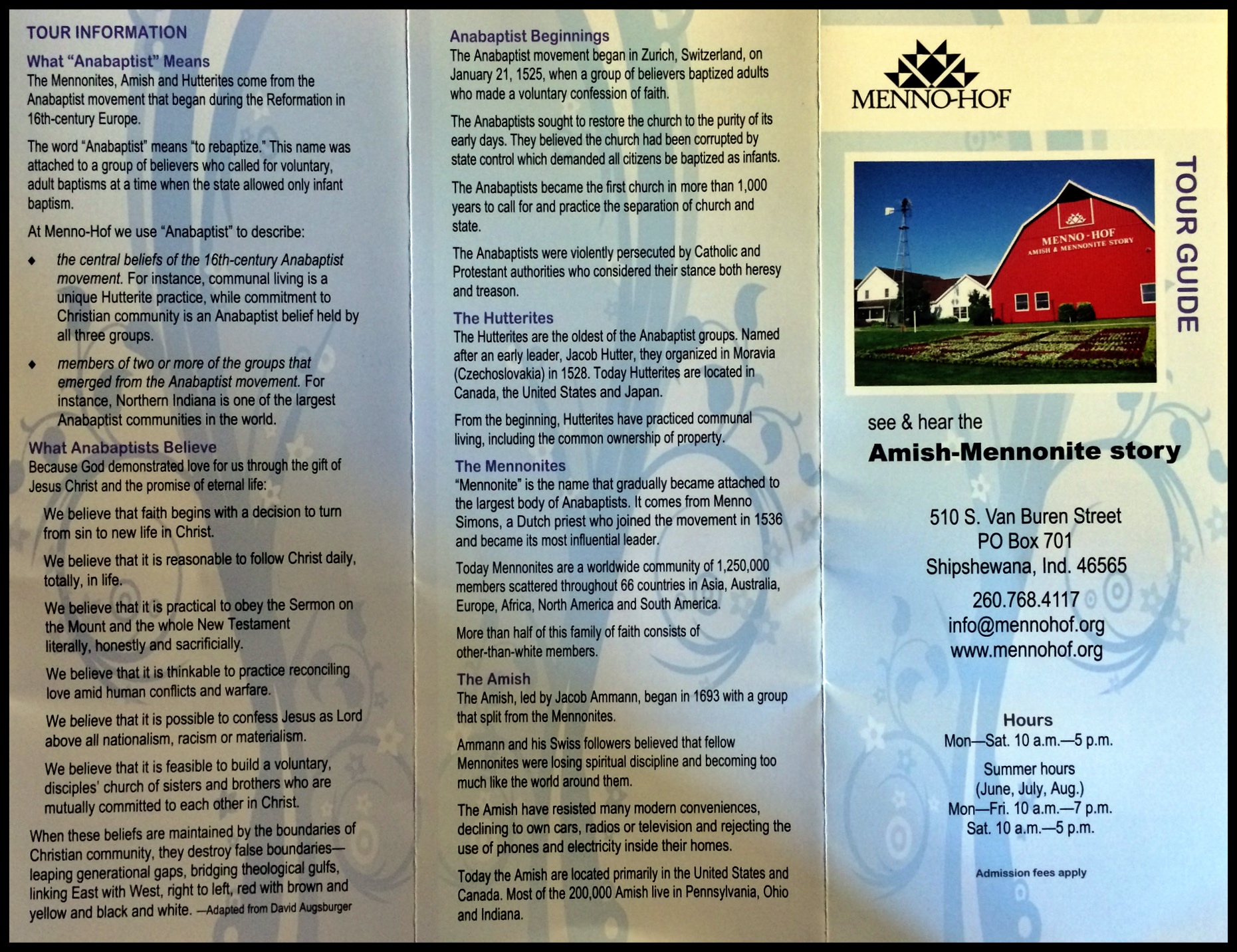
The museum consists of a series of small rooms to which we were conducted by a guide and in which we saw videos and other displays about the history of the Anabaptists. In short, these were people who broke away from the main line churches because they didn’t believe in infant baptism. Down the road of history, the group splintered into the Amish, the Hutterites and the Mennonites.

IMG_3759

The video rooms were followed by a self-guided section that repeated a great deal of what we’d just seen and heard, and then repeated it again.

IMG_3760

At the end of this room, we were met by another guide who proceeded to give us a 10-minute lecture on the making of a quilt that featured squares from all the various countries in which the Mennonites have missionaries. Then we went to the “Tornado Room,” which gave a brief history of a tornado that hit the Shipshewana area in 1965 and and endless recitation of all the different places hit by disasters to which the Mennonites have sent relief. This was followed by another room in which a Mennonite church service was demonstrated. We were finally let out into a self-guided area about a famous Amish dude, but we walked straight through it and left as quickly as we could.

Bottom line, these fine folk are no doubt sincere and saved. But they have no understanding of progressive revelation and seem to have substituted the tyranny of the pope for a subtler tyranny by the elders. They don’t come right out and say that you have to do works to be saved, but they do say that you have to be a committed member of a local church, which involves obedience to the elders.

IMG_0886   IMG_0887

IMG_2035

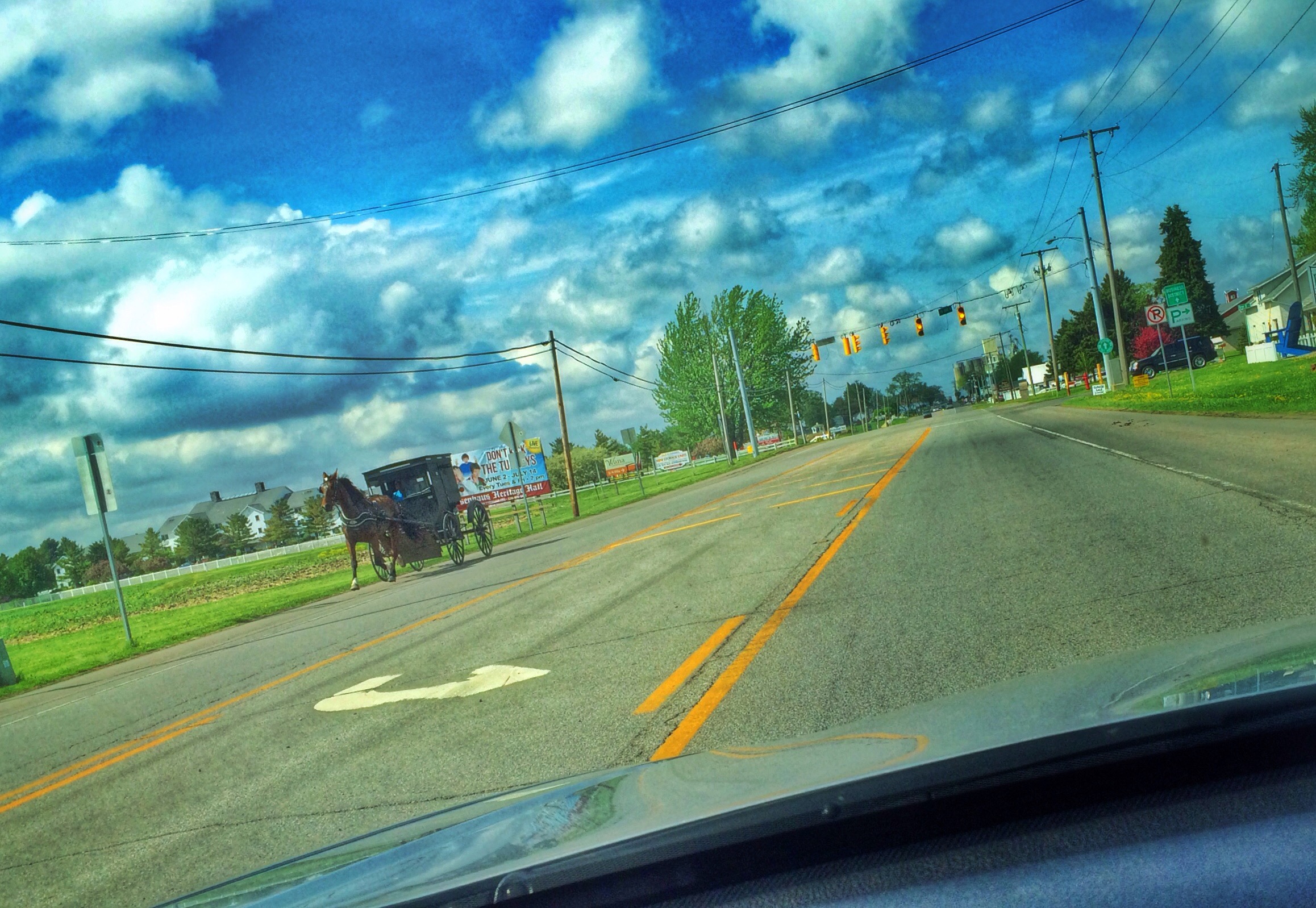
I’m a bit unclear on where they draw the lines. We spotted two teenage girls in full Amish get-up sitting in a buggy looking at at cell phone, and I saw an Amish guy texting while driving his buggy down the road. But the main issue I have with them is that they claim to be living separated lives while at the same time deliberately making of themselves a tourist attraction to make money.

And that’s what Shipshewana is. An Amish tourist trap. The stores sell Amish-made furniture, the restaurants serve Amish food. You can even take a ride in an Amish-style buggy driven by a guy wearing Amish-style clothing which will take you to an Amish home for an Amish dinner. We passed.

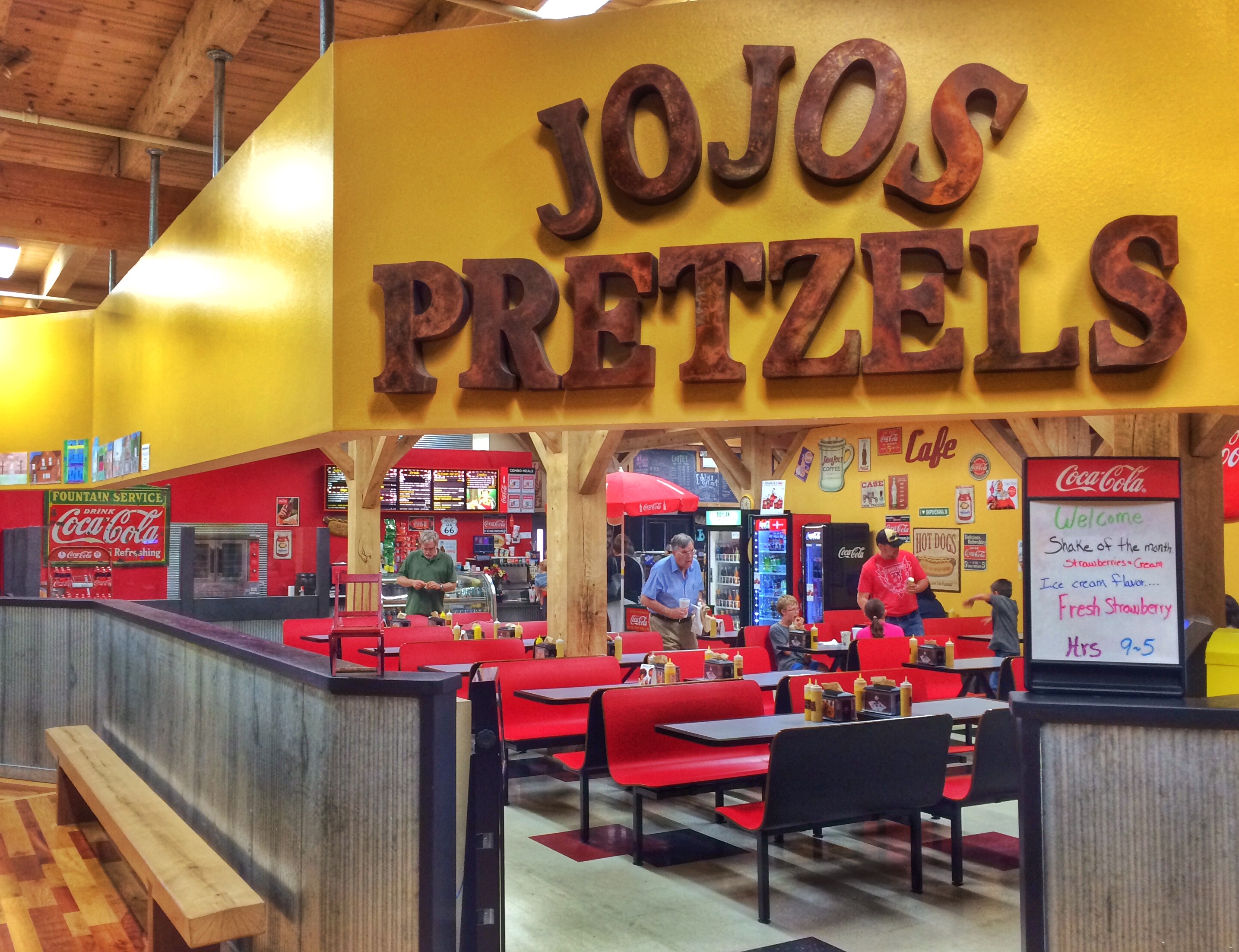
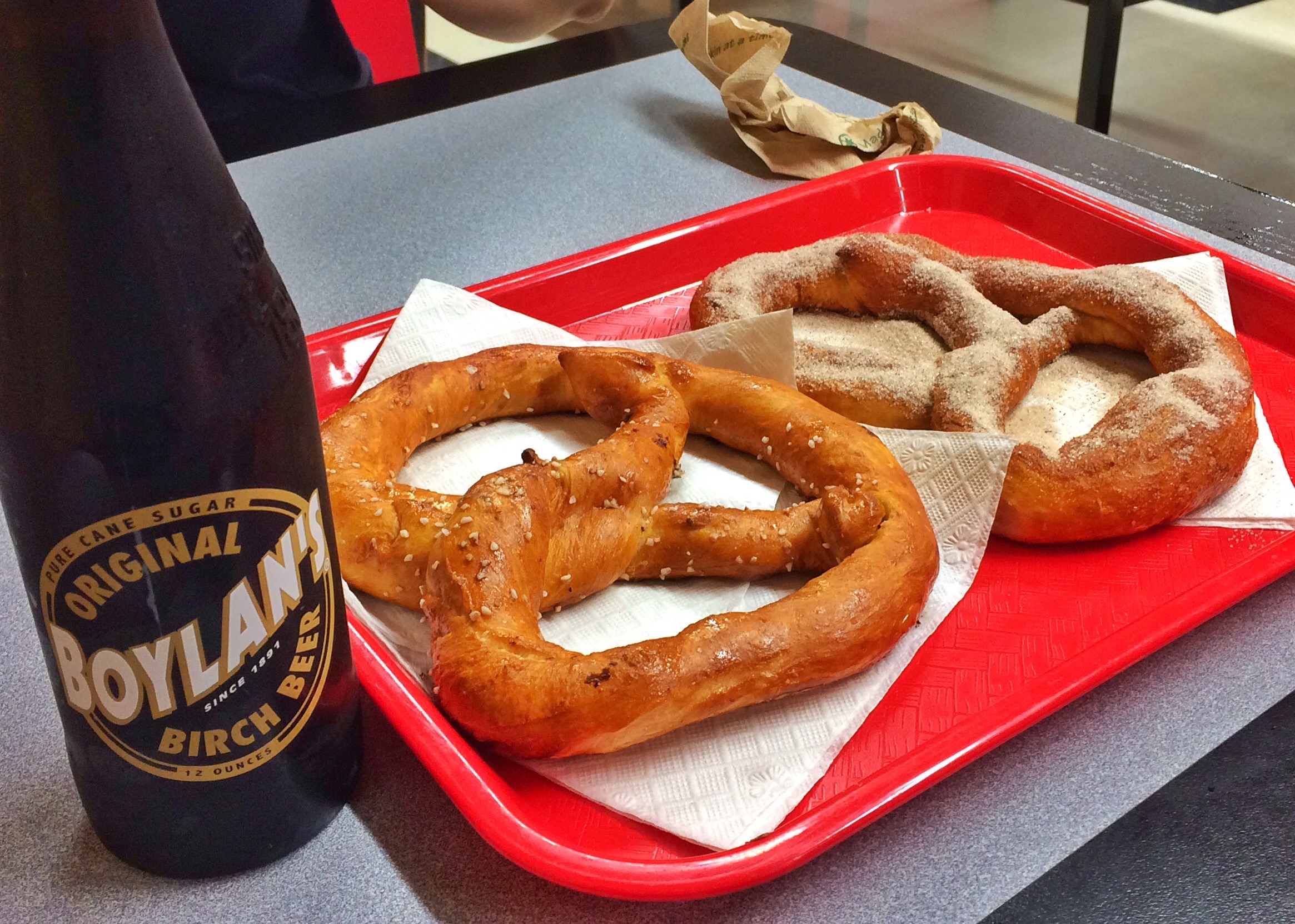
My wife shopped for birdhouses in the cutesy downtown shopping area. I went to the event center and toured an antique car museum (next post). We met up after an hour to get pretzels. And let me tell you — the pretzels are worth the trip all by themselves.

IMG_2261

We bought one with cinnamon and sugar and one “original.” The cinnamon and sugar was very, very good. The original was the best pretzel I’ve ever had and probably makes the list of 100 best foods I’ve eaten. If I had such a list.

IMG_2255

We might have stuck around a bit longer and looked around more, but the whole town closed at 5:00 and, thanks to the interminable visit to the Menno-Hof, it was already that late.

We took back roads out of town and passed by an Amish softball game and several other community get-togethers.

Posted in Indiana | Comments Off on Shipshewana