Sometimes It Only Takes a Second to Make A Friend

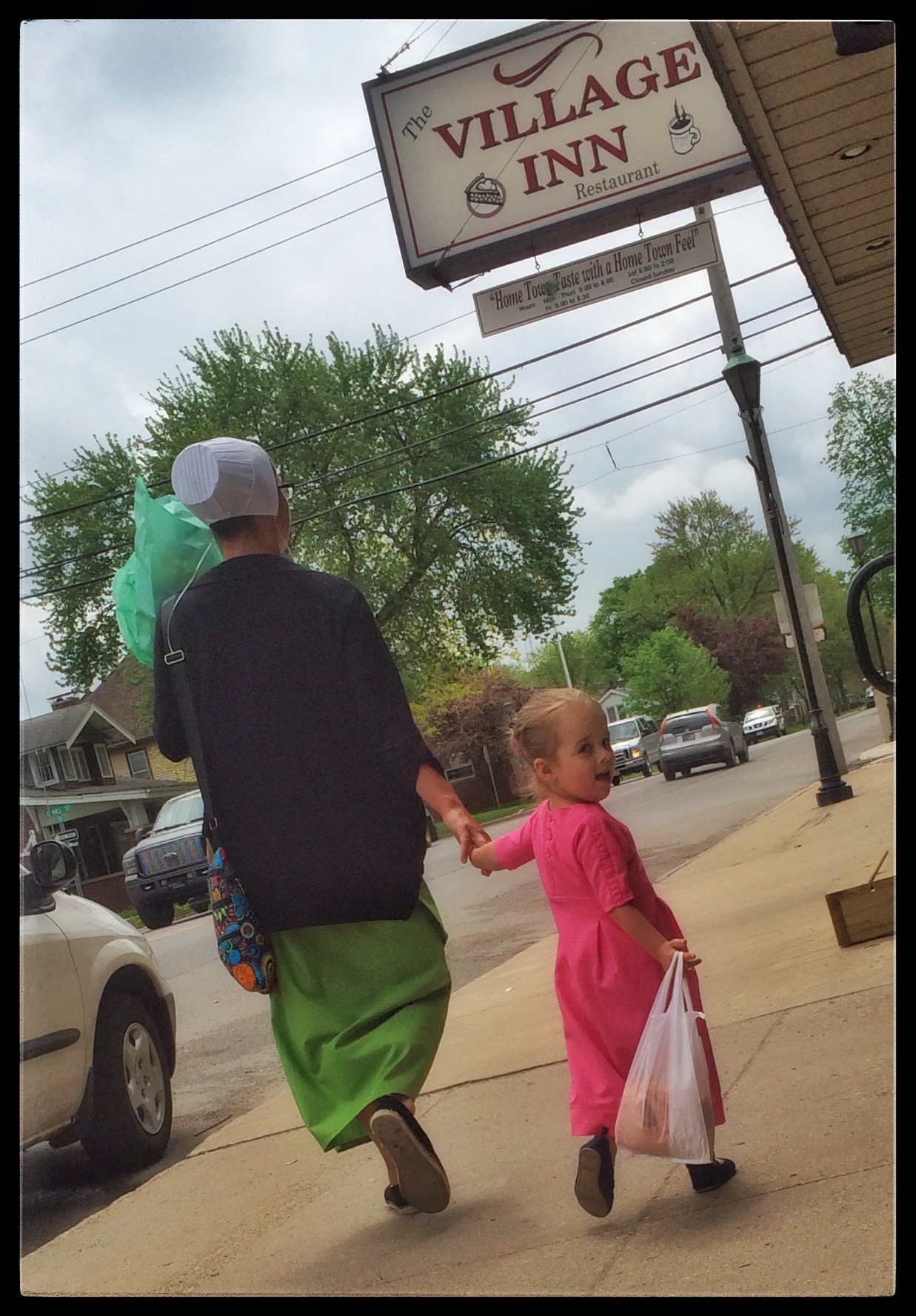
We stopped for lunch in Middlebury, a town in the heart of Indiana’s Amish region. After we ate, my wife went into a store to look around. I had the red chair with me and sat down outside on the sidewalk to wait. An Amish woman and her young daughter walked by. Because I was leaning forward, my eyes were on a level with the girl’s and only about two feet away. We made instant eye-contact, and I slowly smiled. Her return smile was even slower, but it crept inexorably onto her face — first with her eyes and, finally, with her whole body. By this time, she was past me, but she held my gaze as long as she could. I just had time to grab my phone and take one photo.

IMG_1877

Posted in Photos | 1 Comment

Campbell Hill

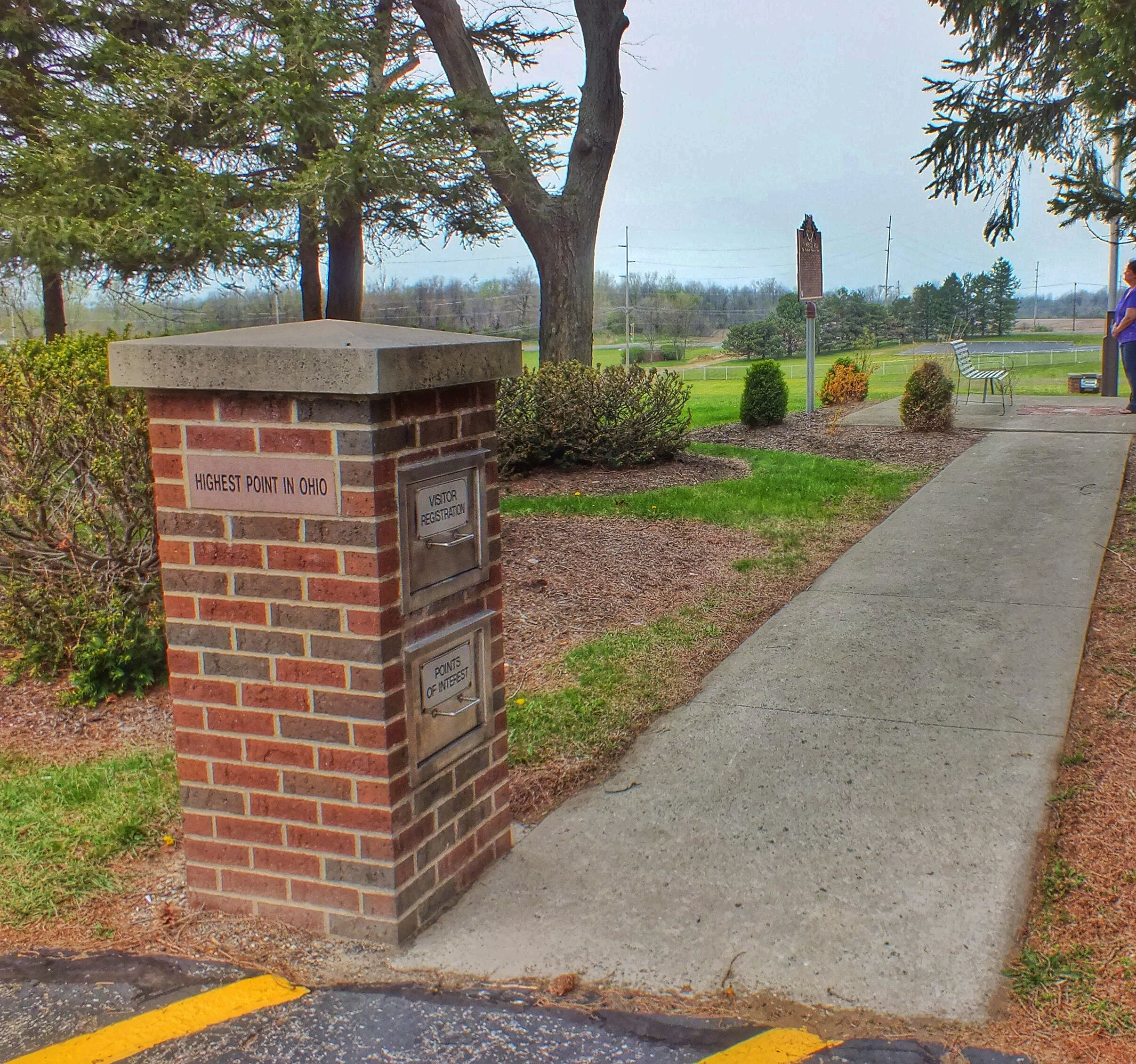
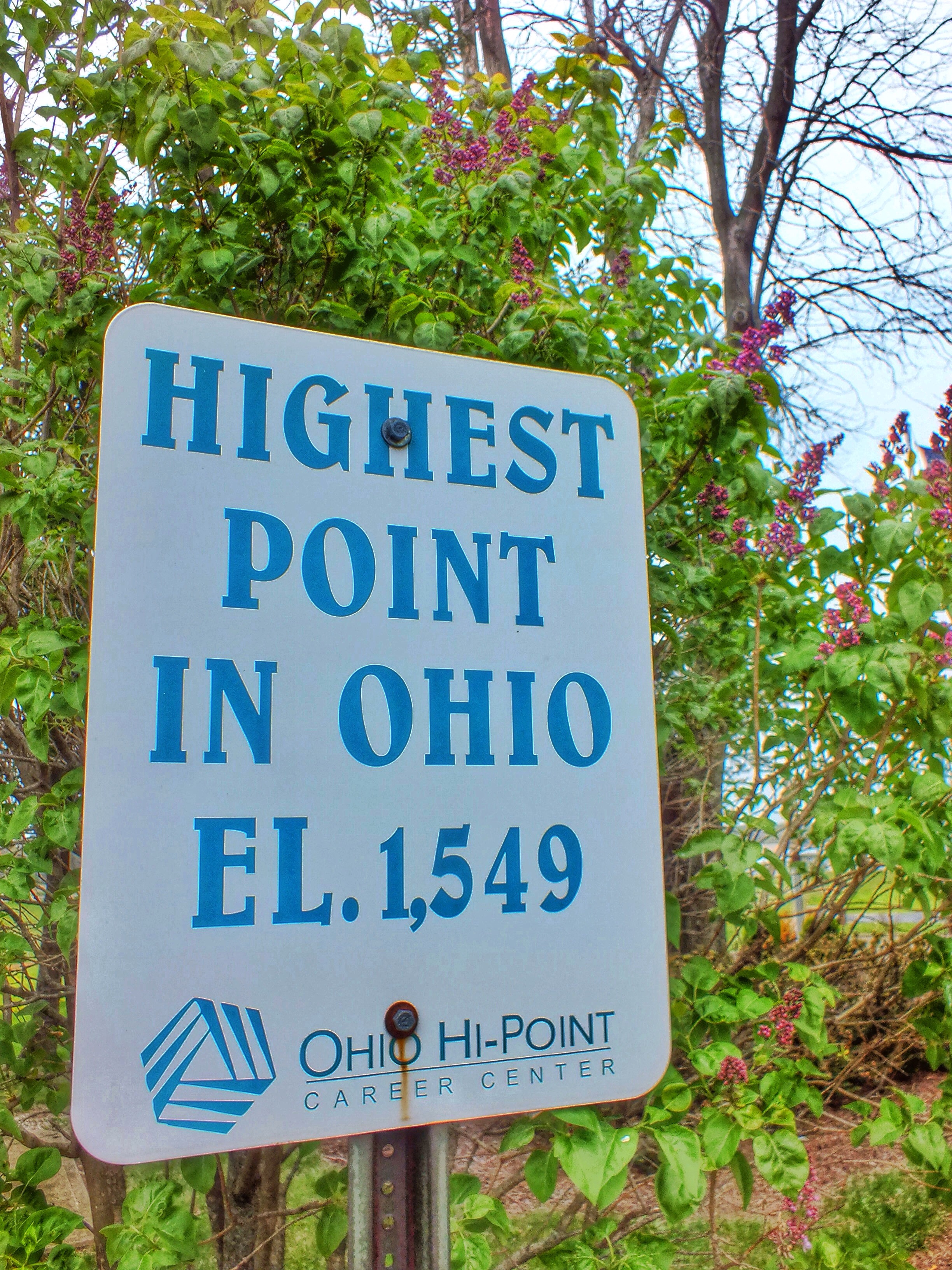
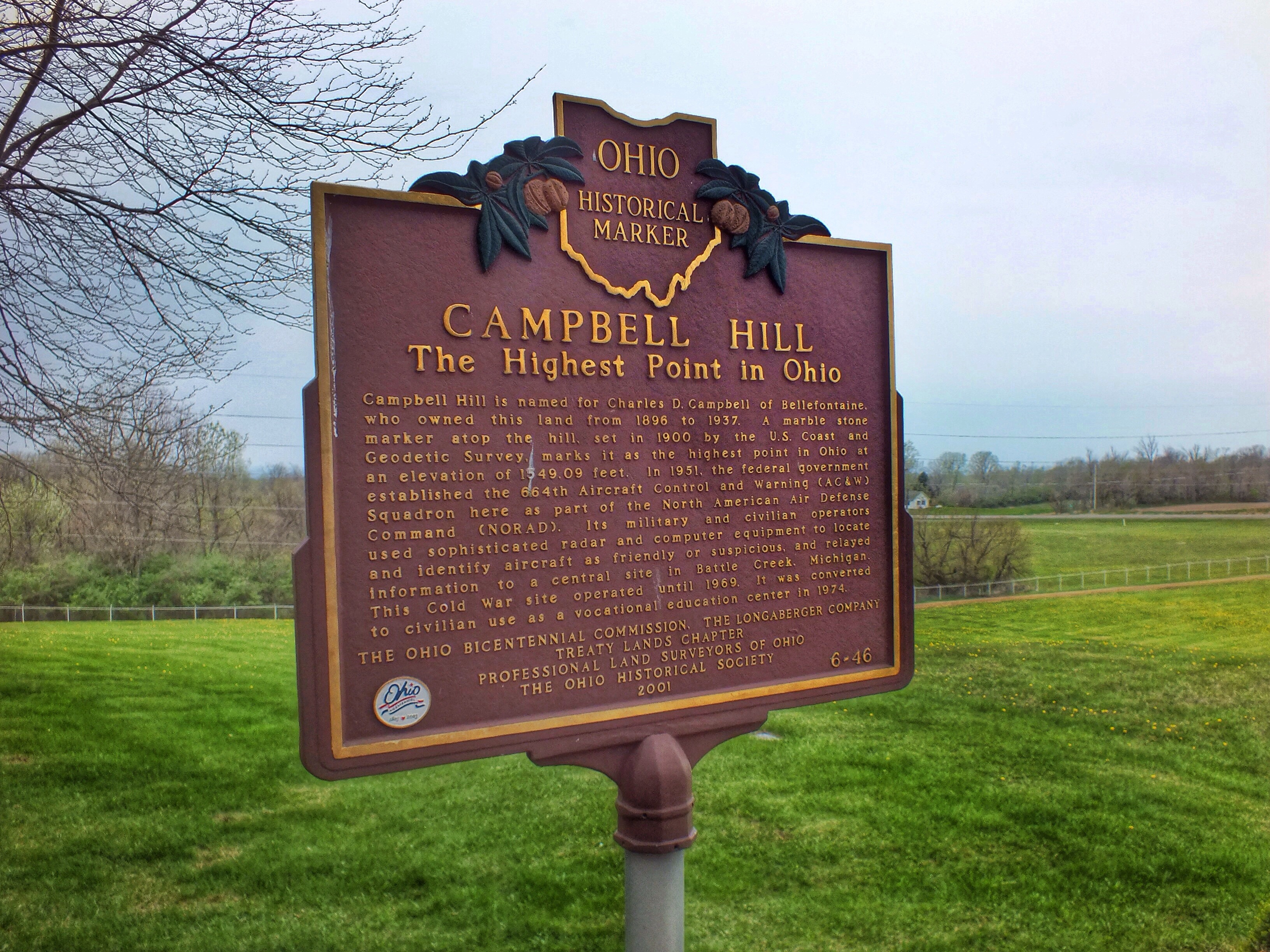
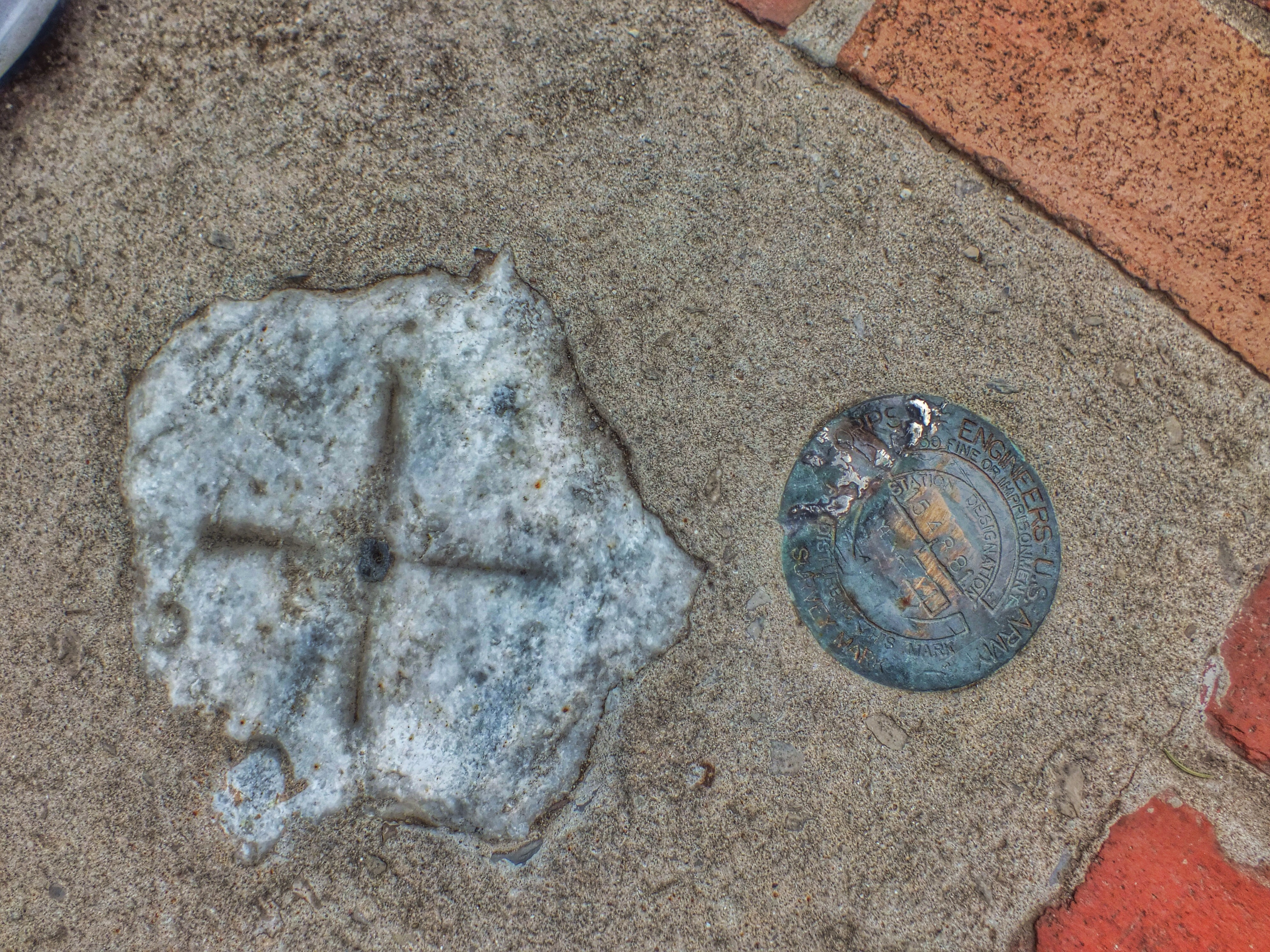
The highest point in Ohio, Campbell Hill outside Bellefontaine, may be more interesting than the highest point in Indiana, but just barely. At least, when you stand on the spot, you get the sense that you’re higher than something. The marker is on the campus of Hi-Point Career Center. We timed things just right. Literally seconds after we got back in the car, it began raining.

IMG_1849

IMG_1850

IMG_1853

IMG_1851

IMG_1857

IMG_1856

Posted in Ohio | Comments Off on Campbell Hill

Mid-America Windmill Museum

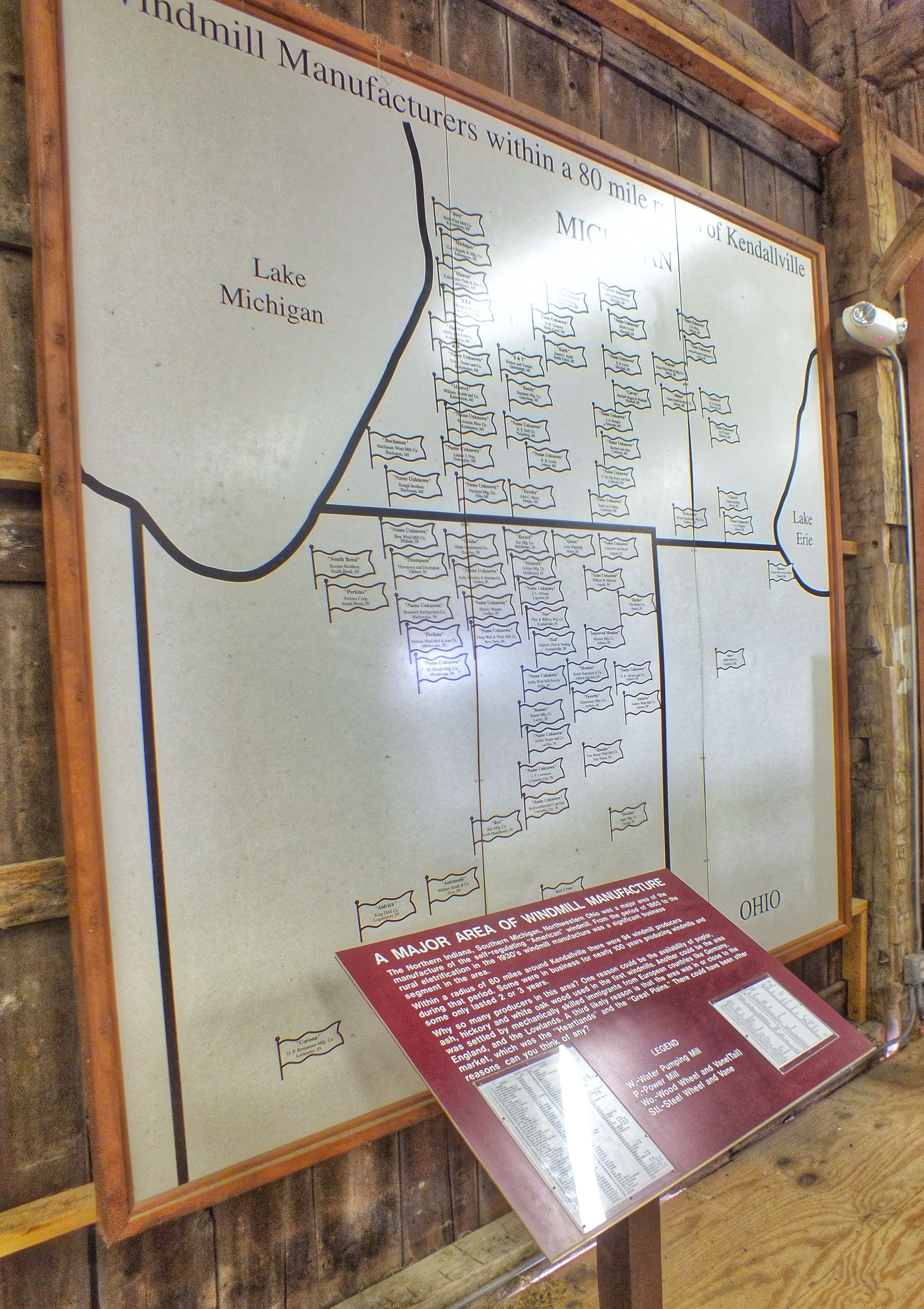
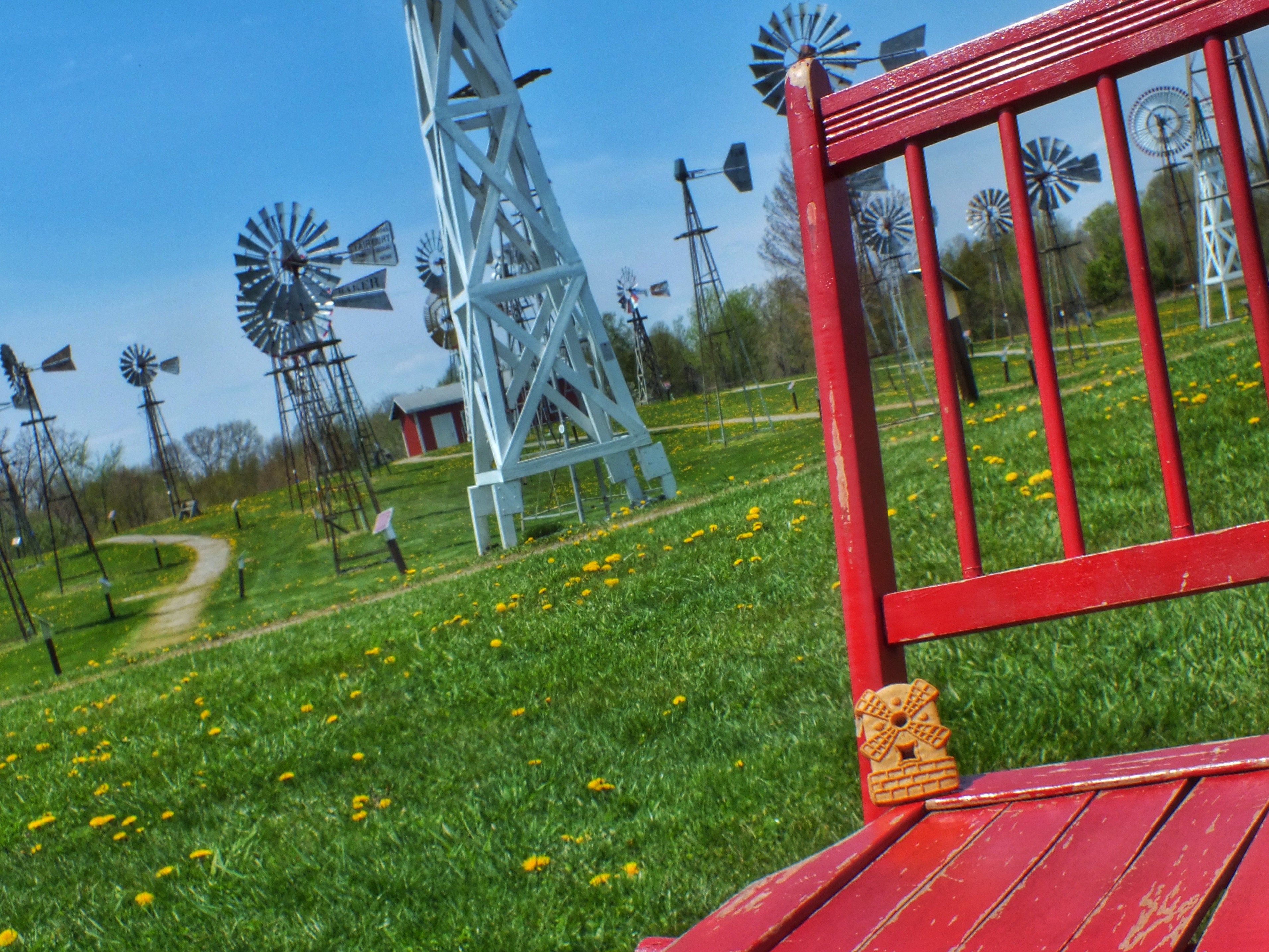
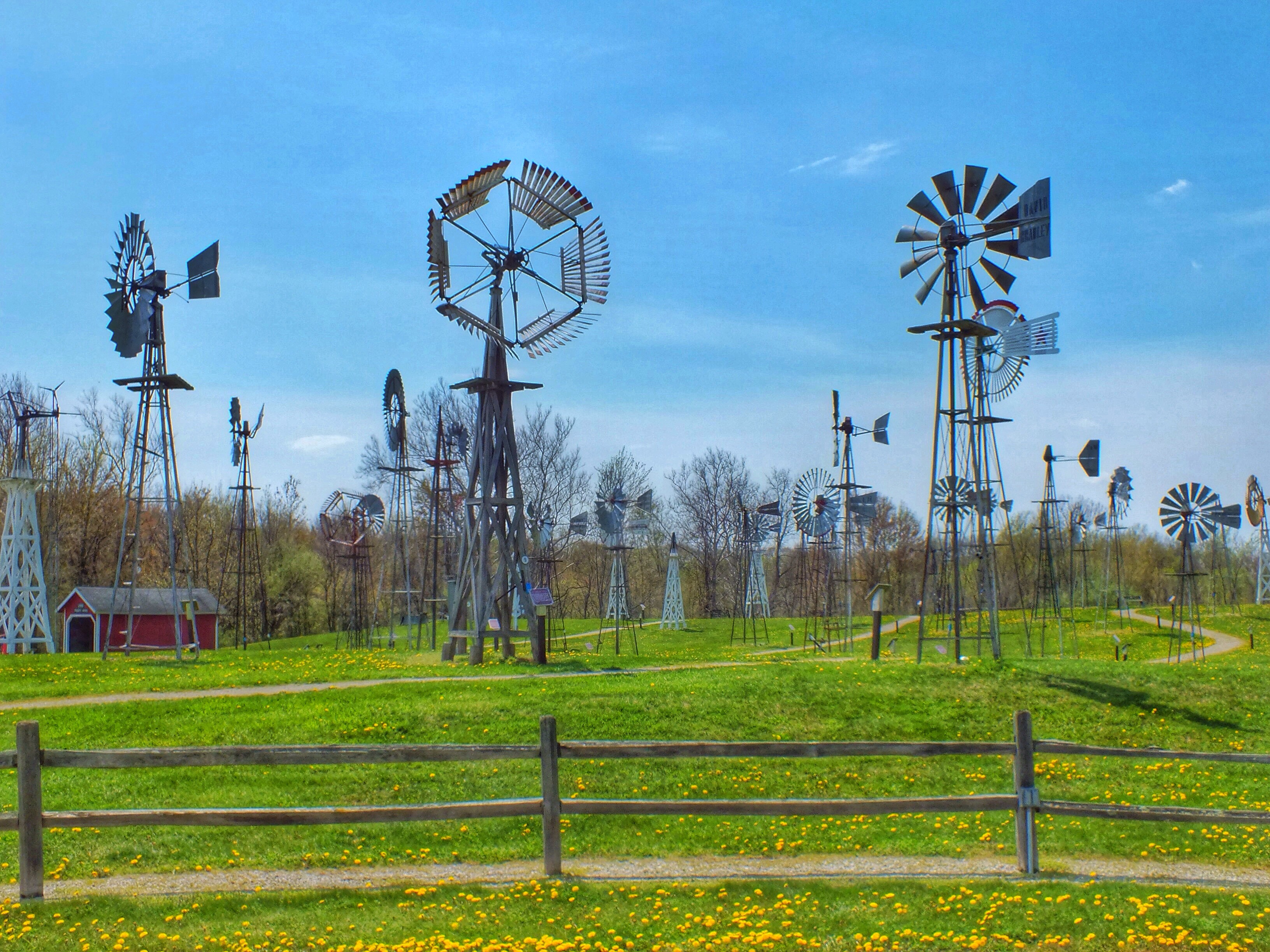
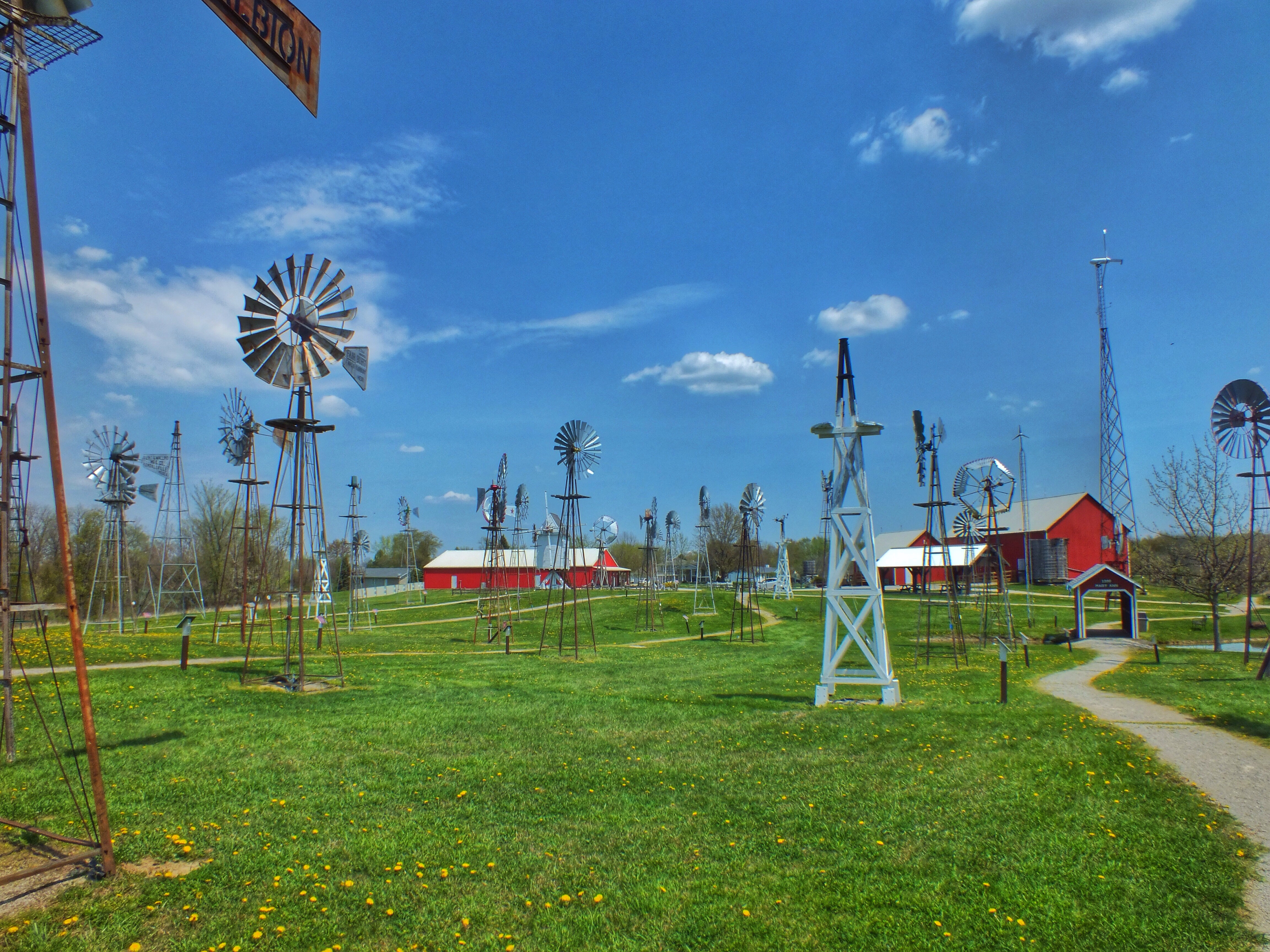
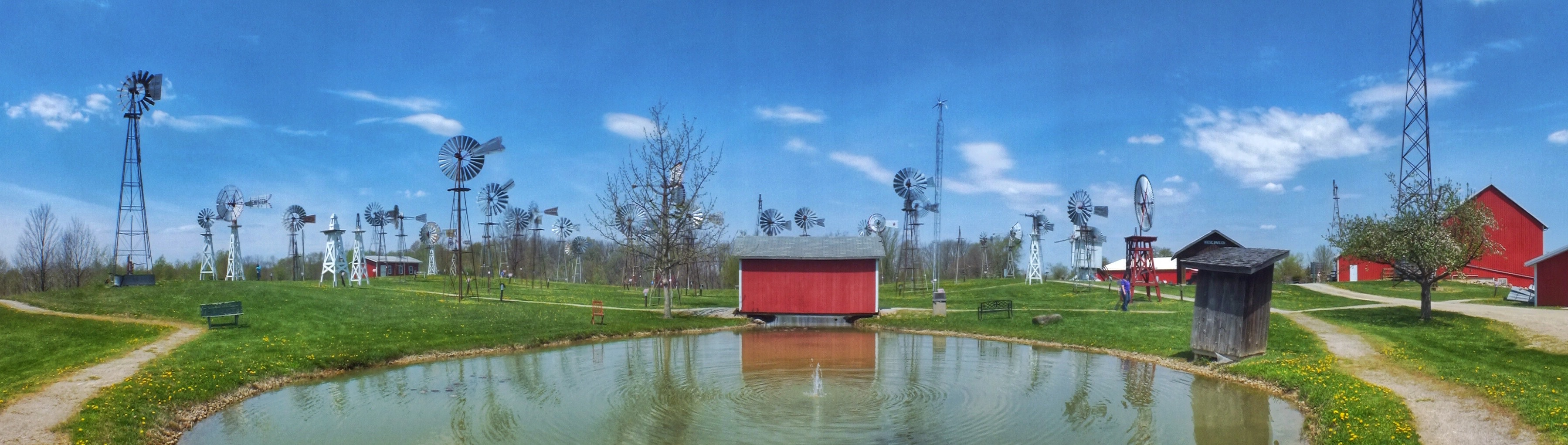
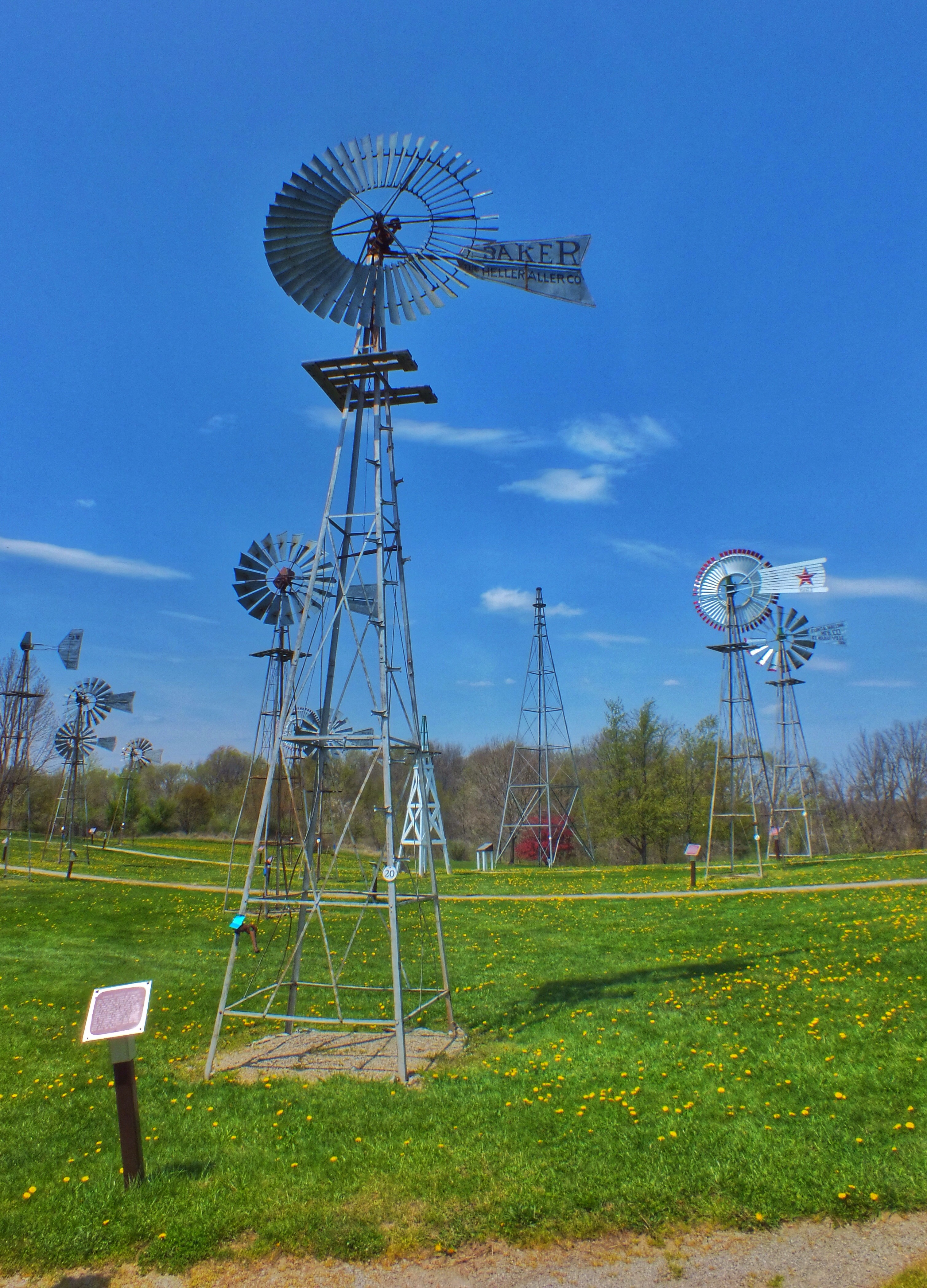
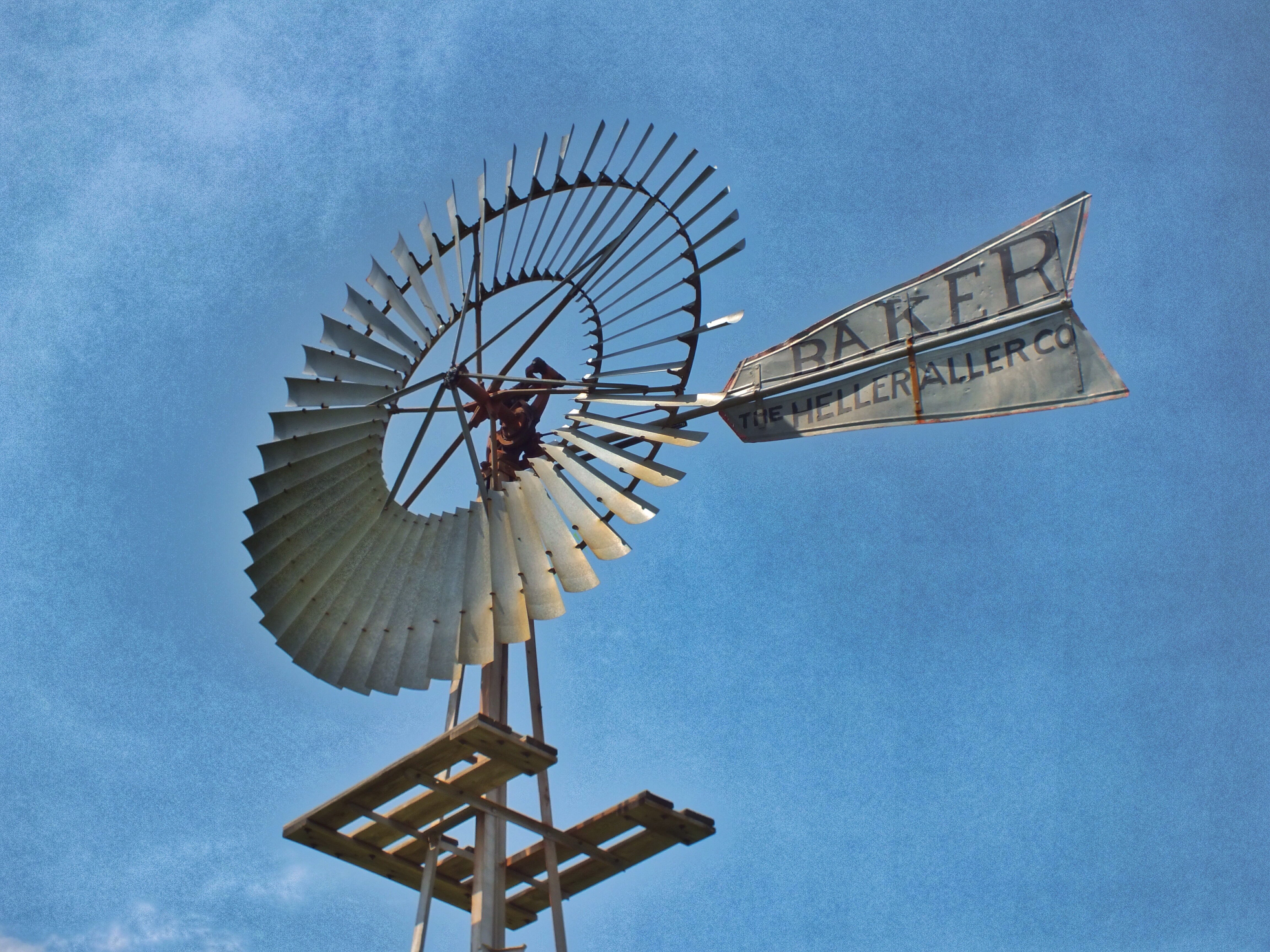
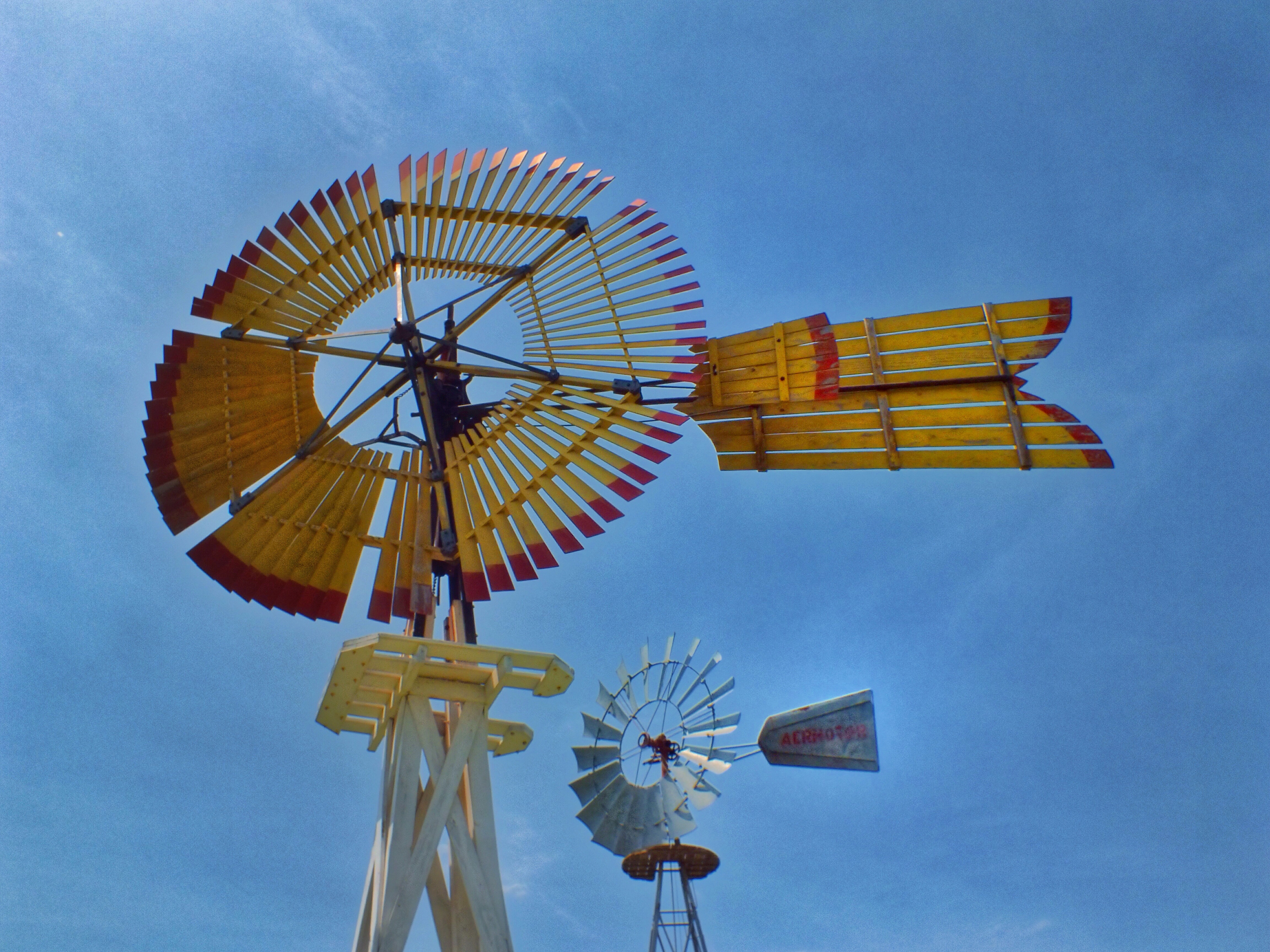
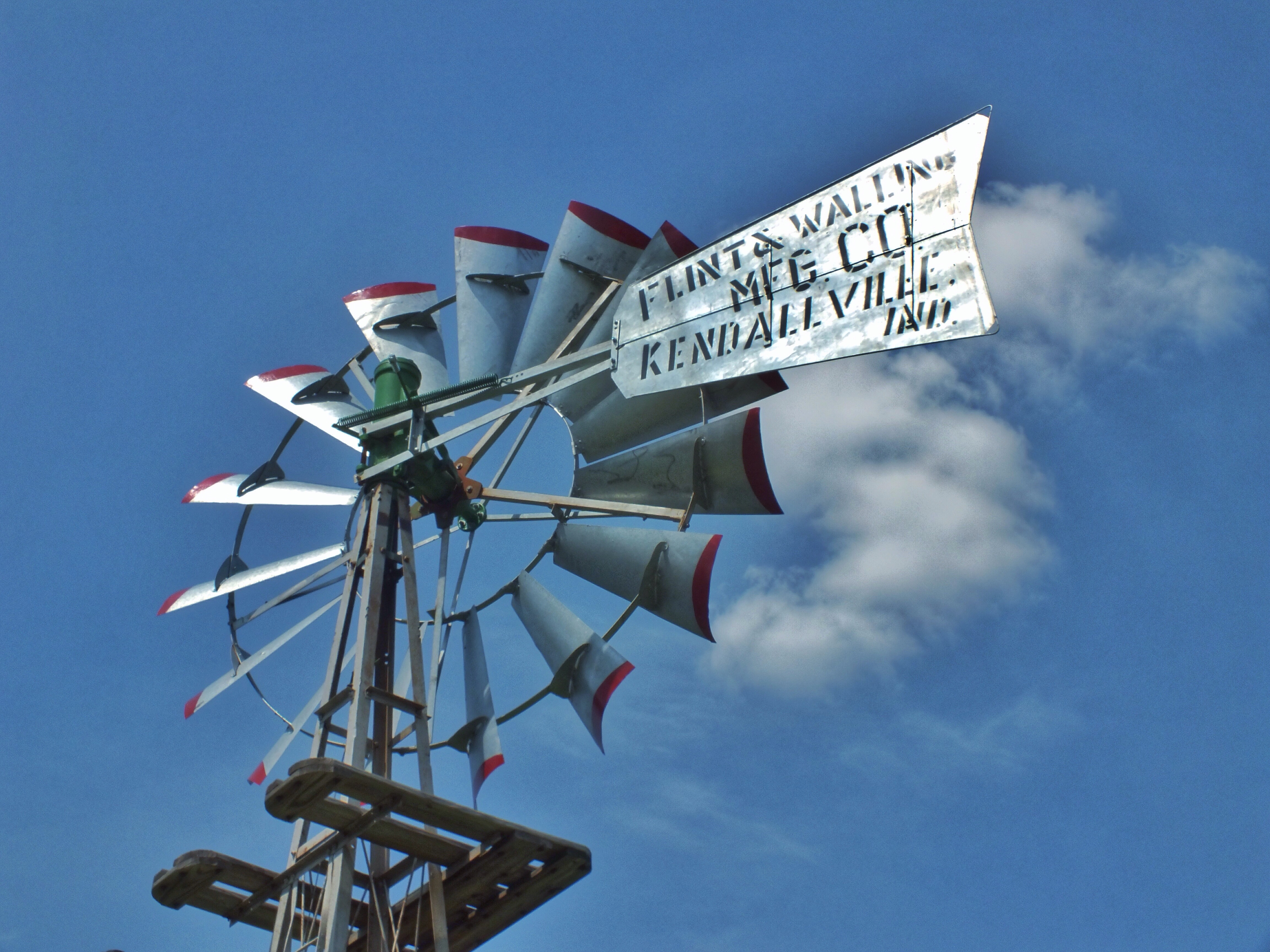
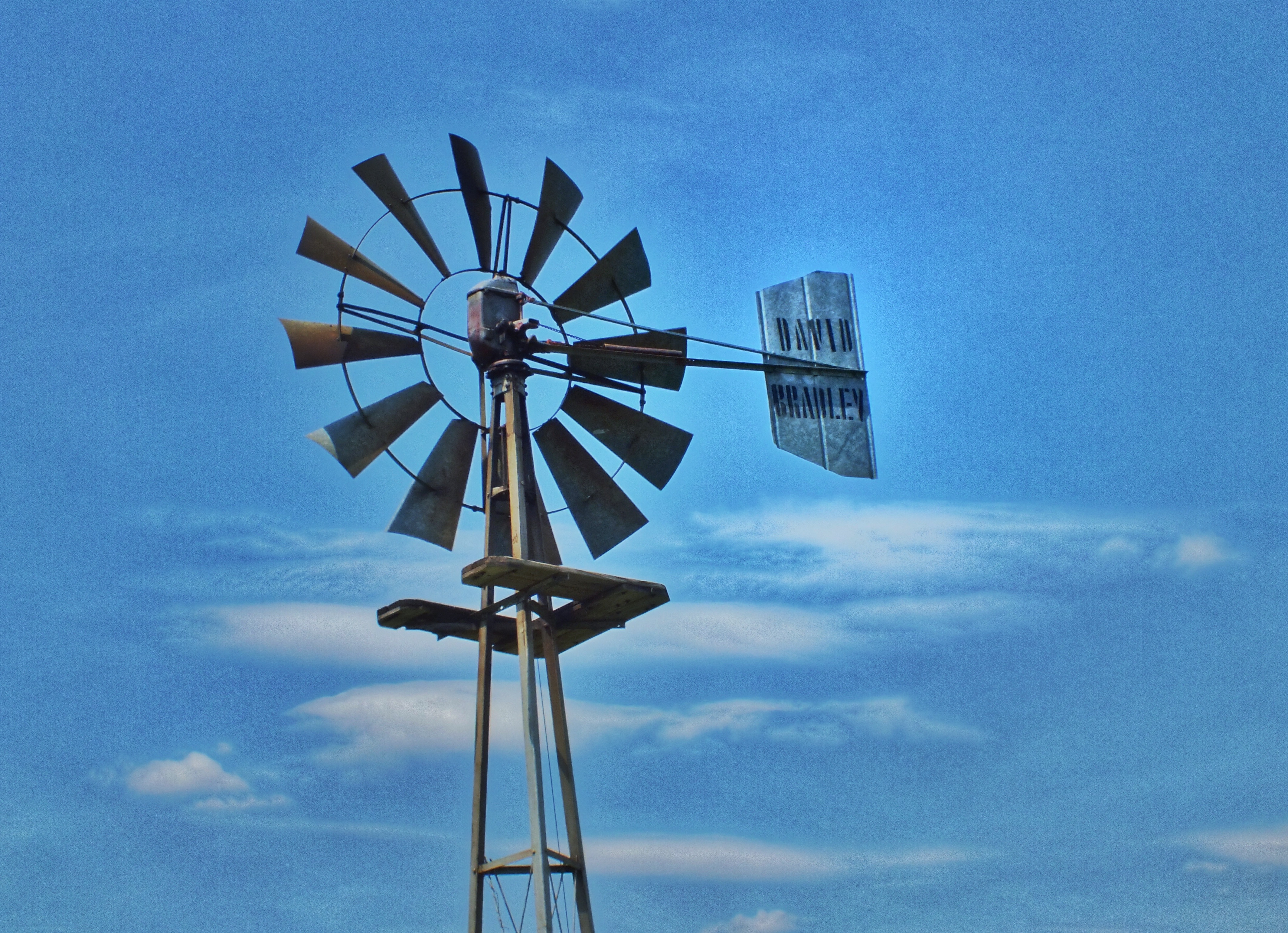
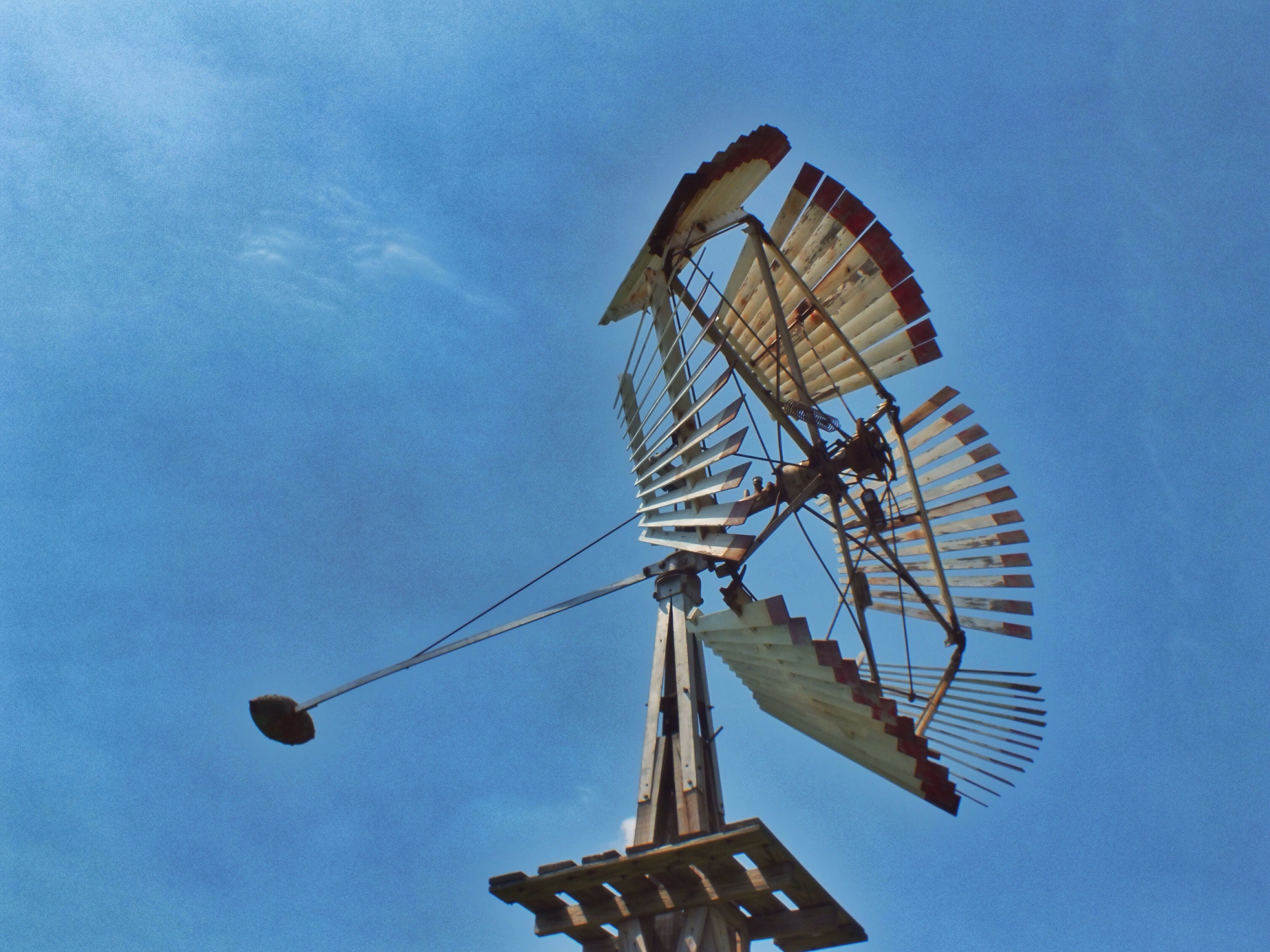
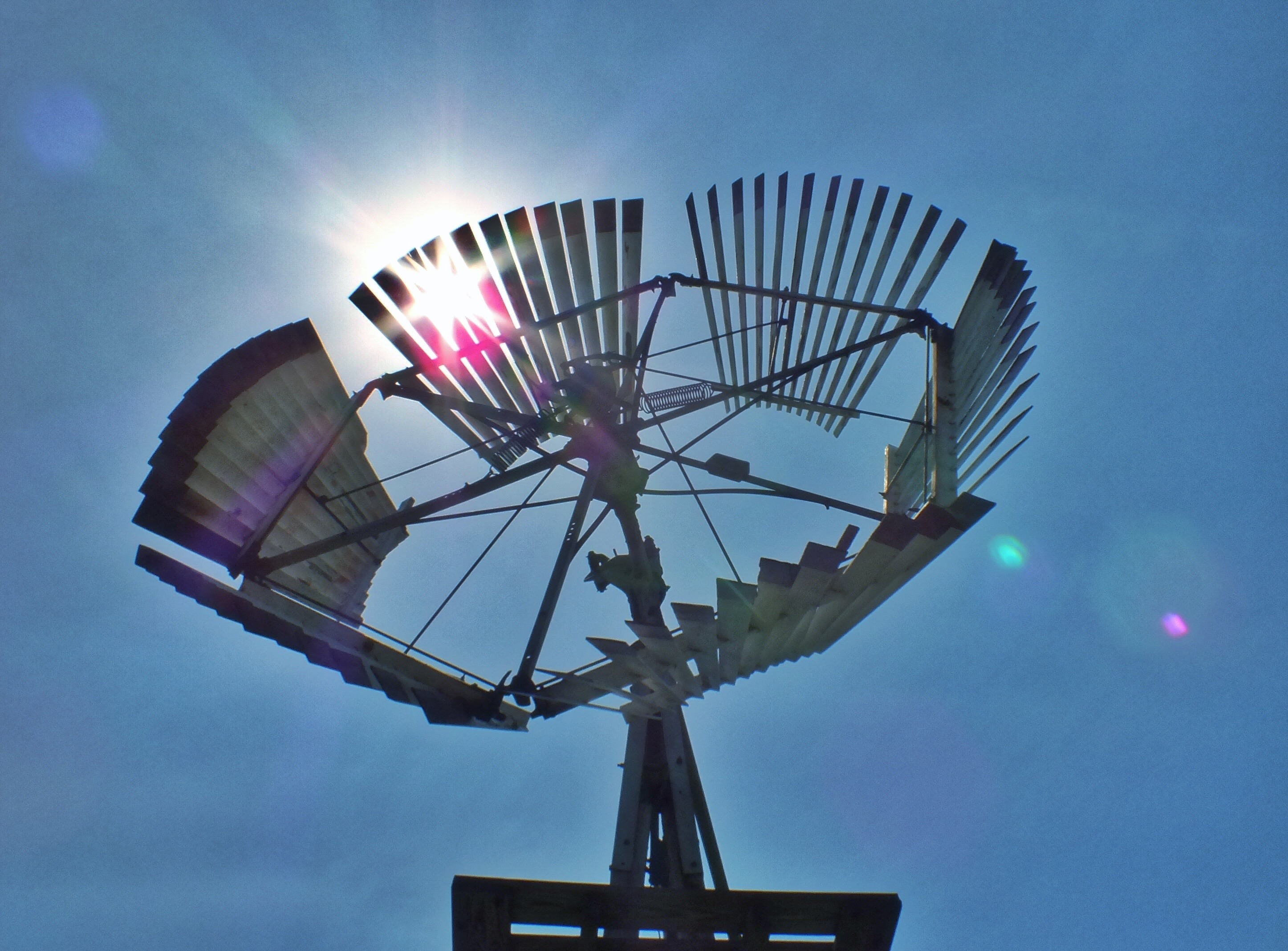
Right outside the small town of Kendallville, Indiana there’s a field full of windmills. Not the huge ones like they have in Holland but small ones, like you see on farms. It so happens that windmills were manufactured in Kendallville and in dozens of other small towns in Indiana, Michigan and Ohio.

IMG_1831

They all had signs written by windmill enthusiasts for windmill enthusiasts that said things like “The mill was self-oiling with bronze bearings in place of Timken roller bearings and a single back-gear in place of the normal two gears.” But we read most of them anyway and even figured out what some of them meant. I’ve included descriptions for a couple of them.

IMG_1729

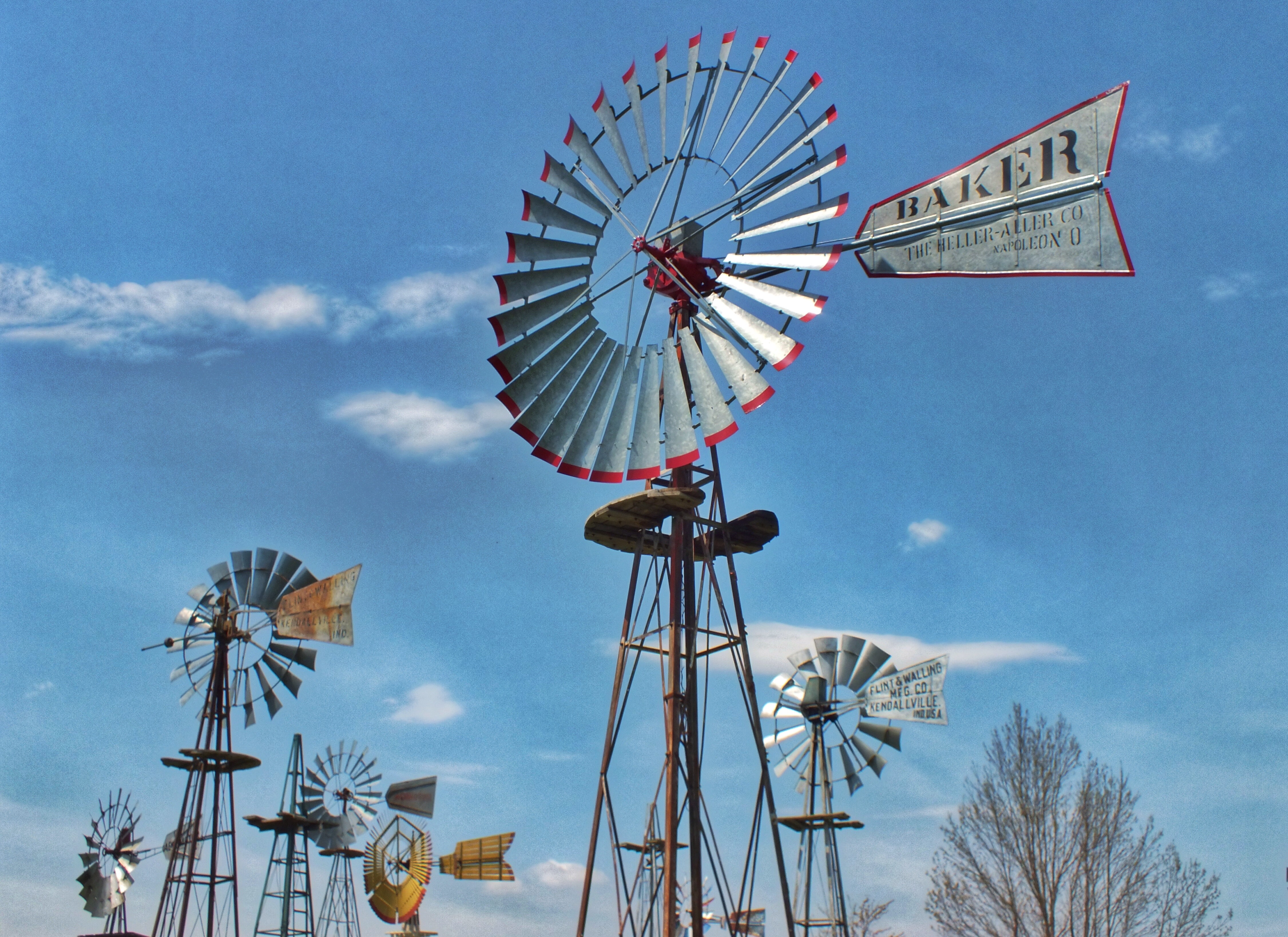
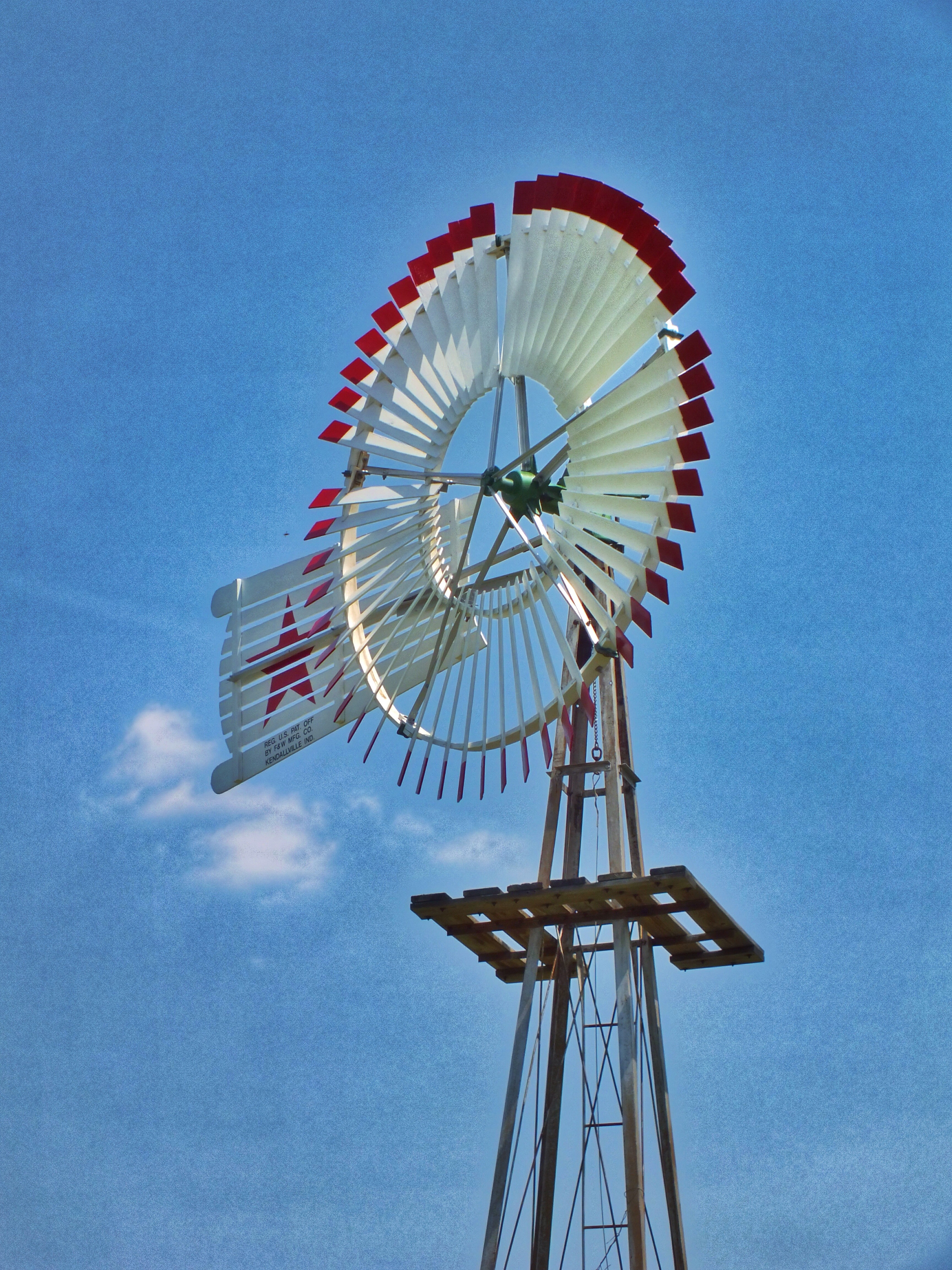
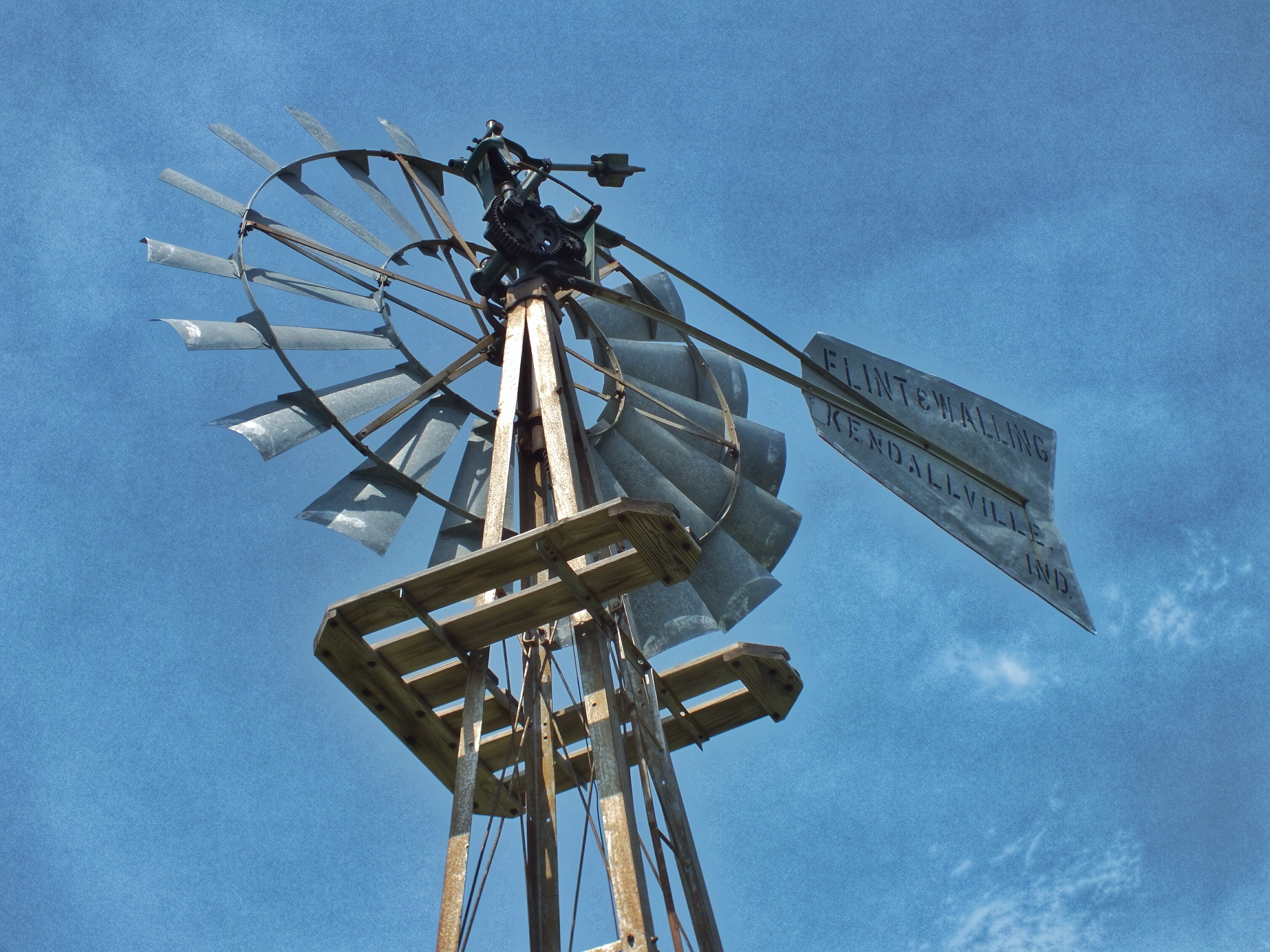
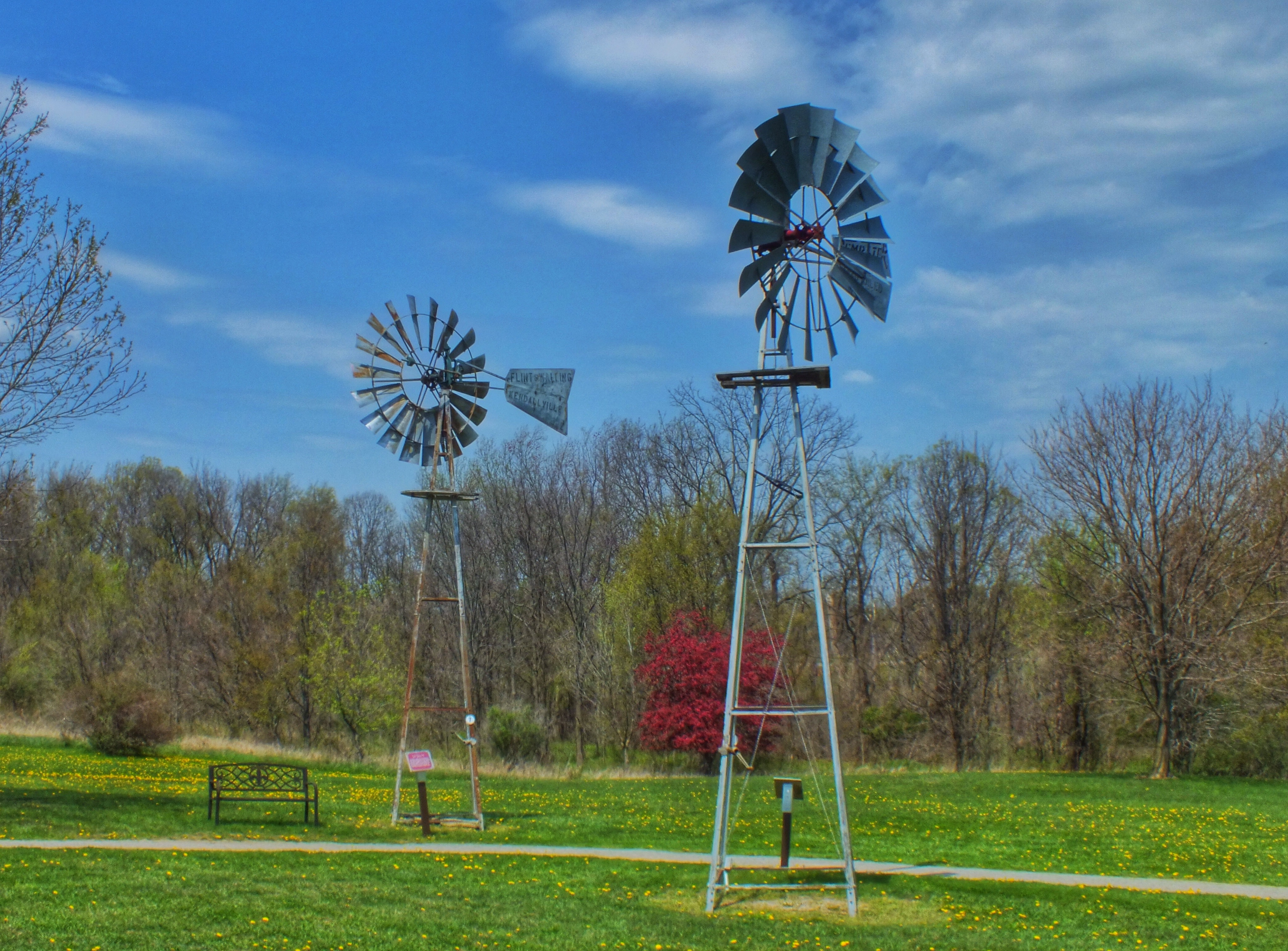
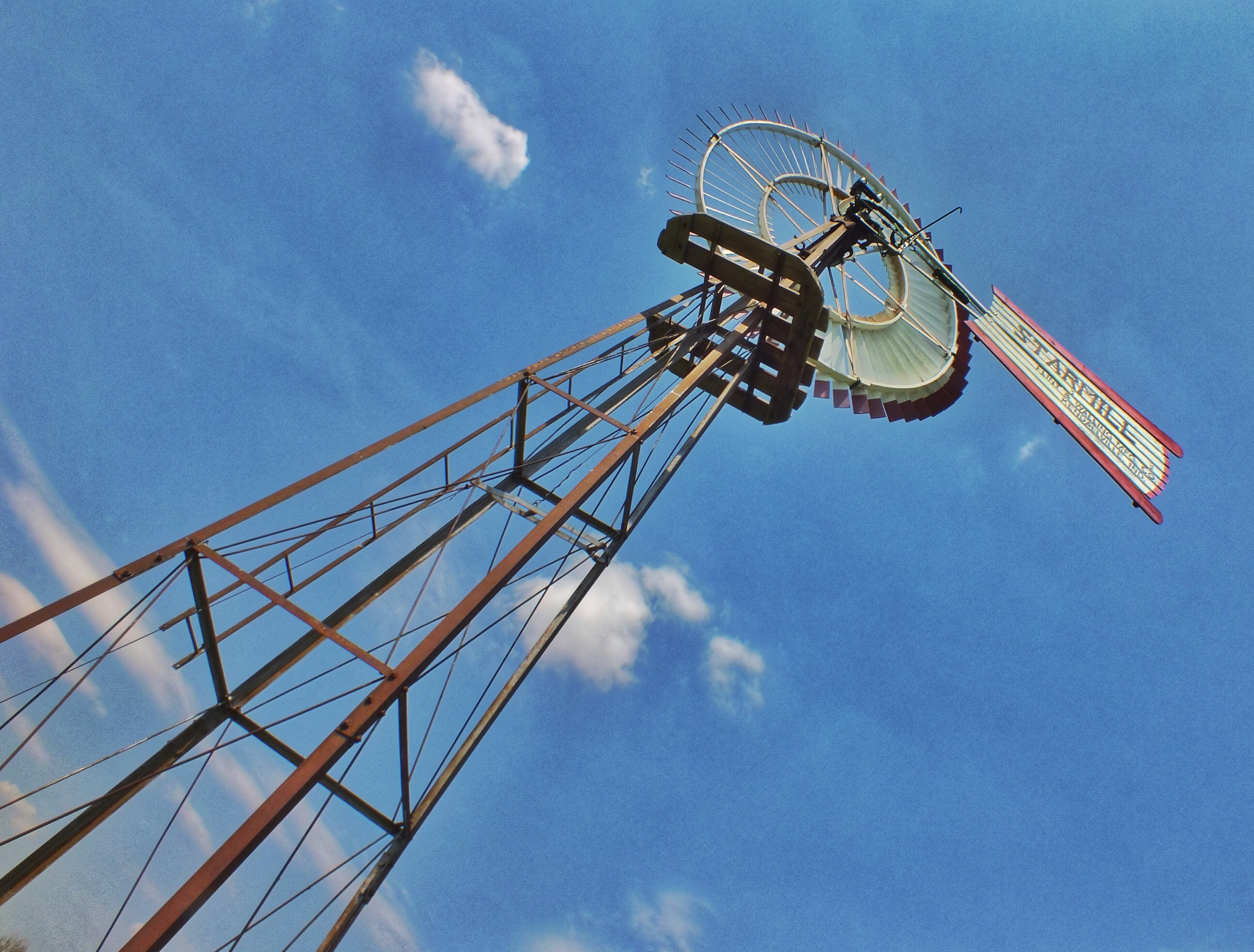
For me, the main appeal was the history and the spectacle of dozens of windmills in one small field. Here, in no particular order, is what we saw.

IMG_1821

IMG_1800

IMG_1810

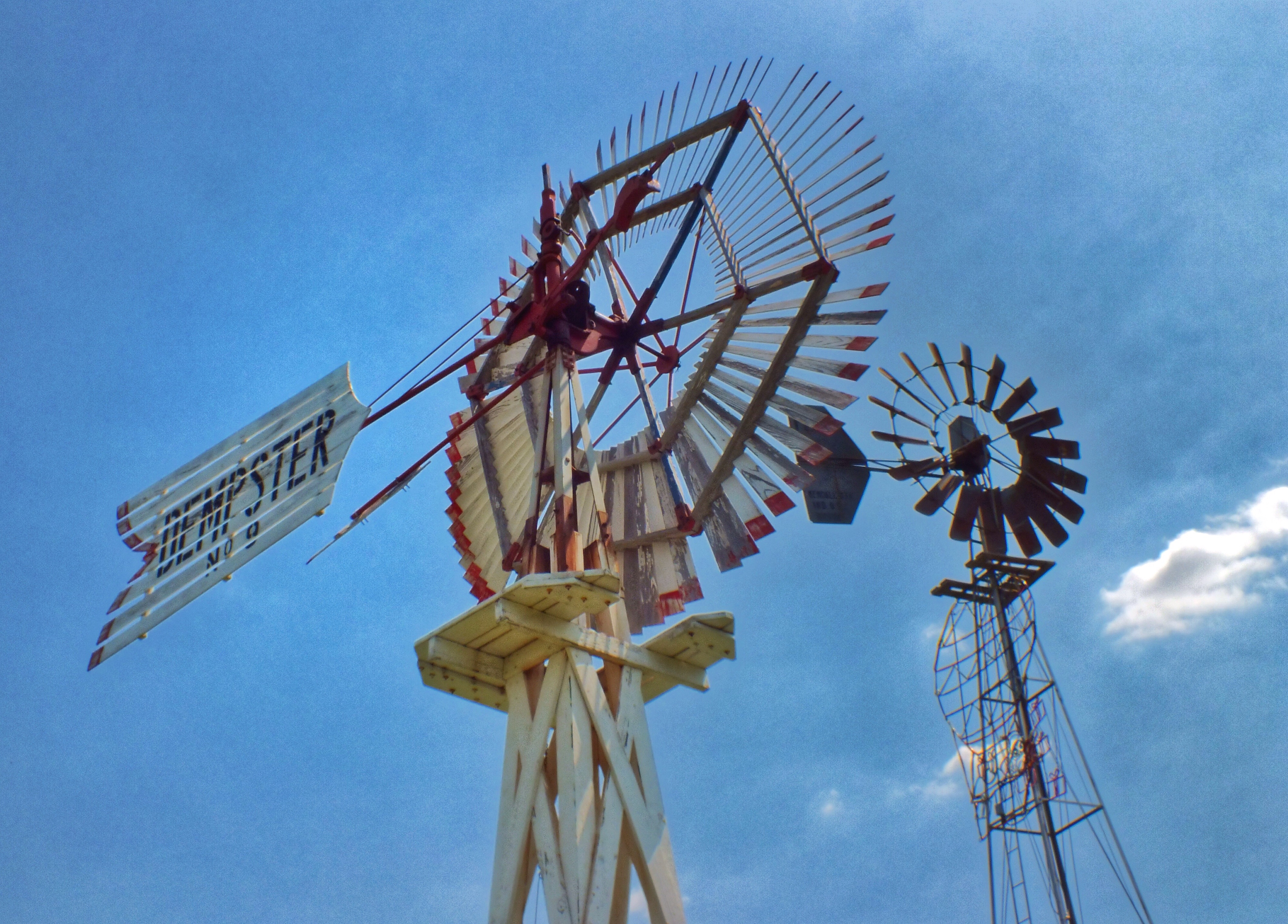
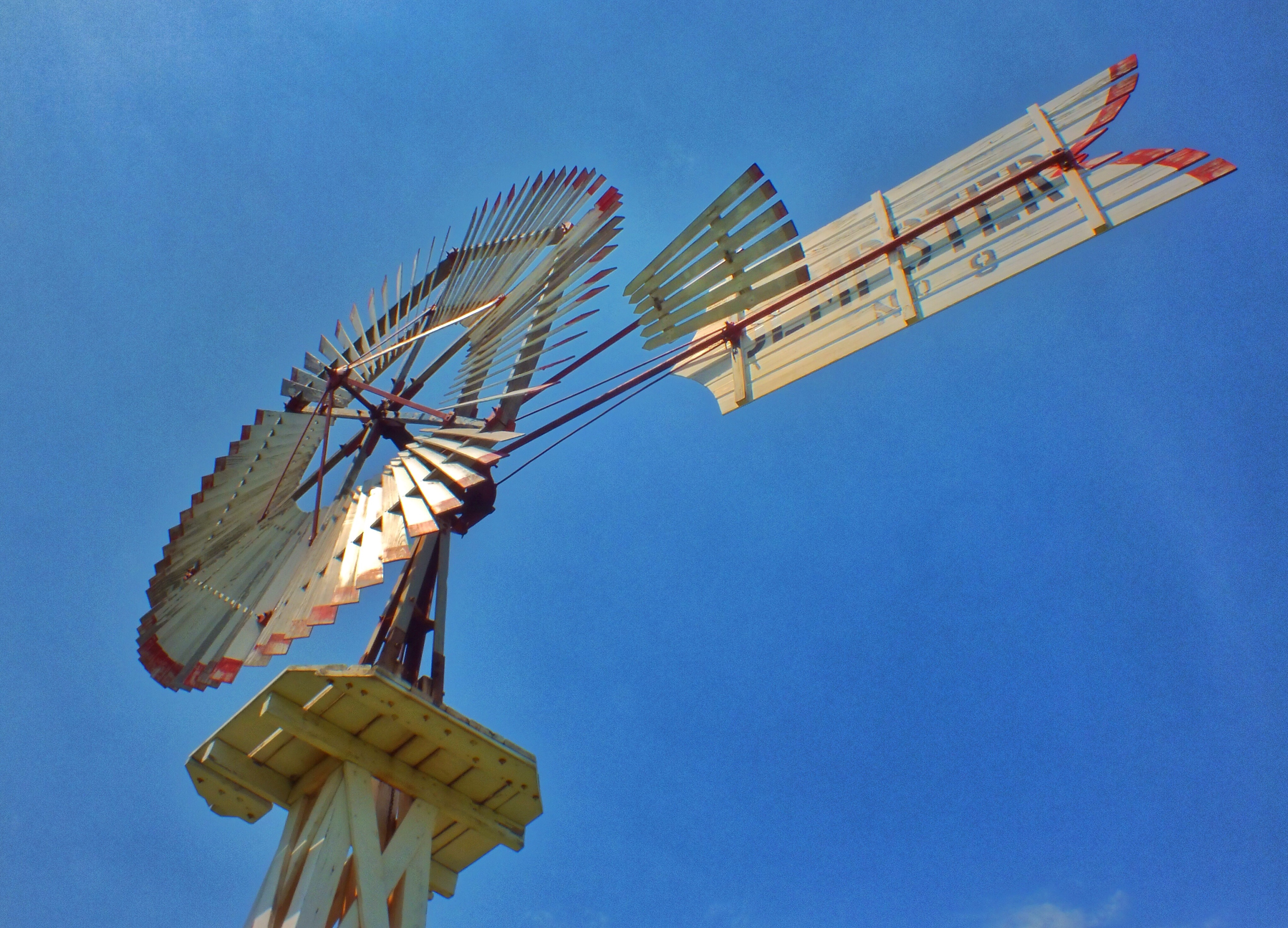
The next two photos are of the Dempster Eclipse Model No. 9, built between 1908 to 1925.

IMG_1801

IMG_1802

IMG_1799

IMG_1798

IMG_1781

IMG_1780

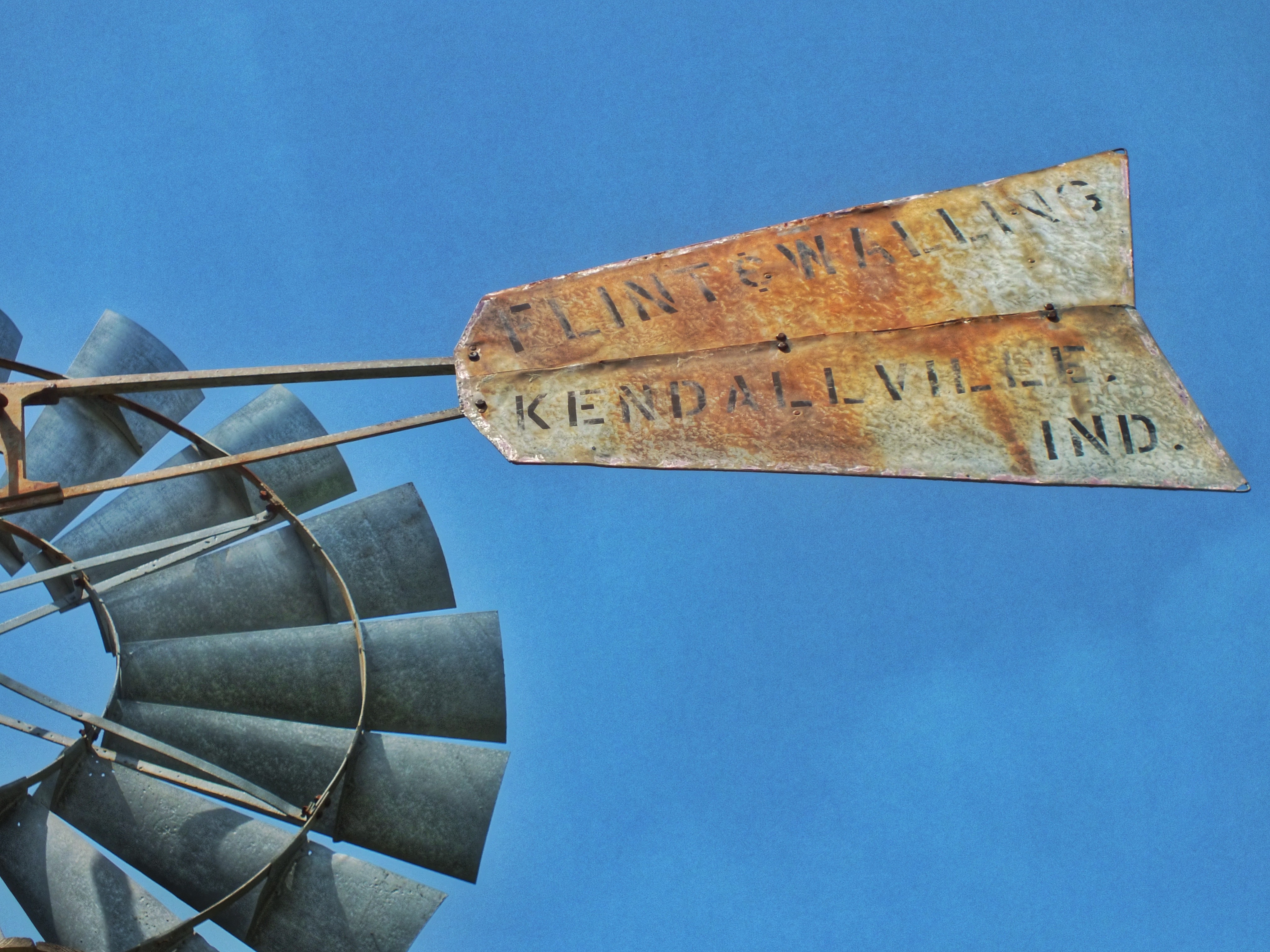
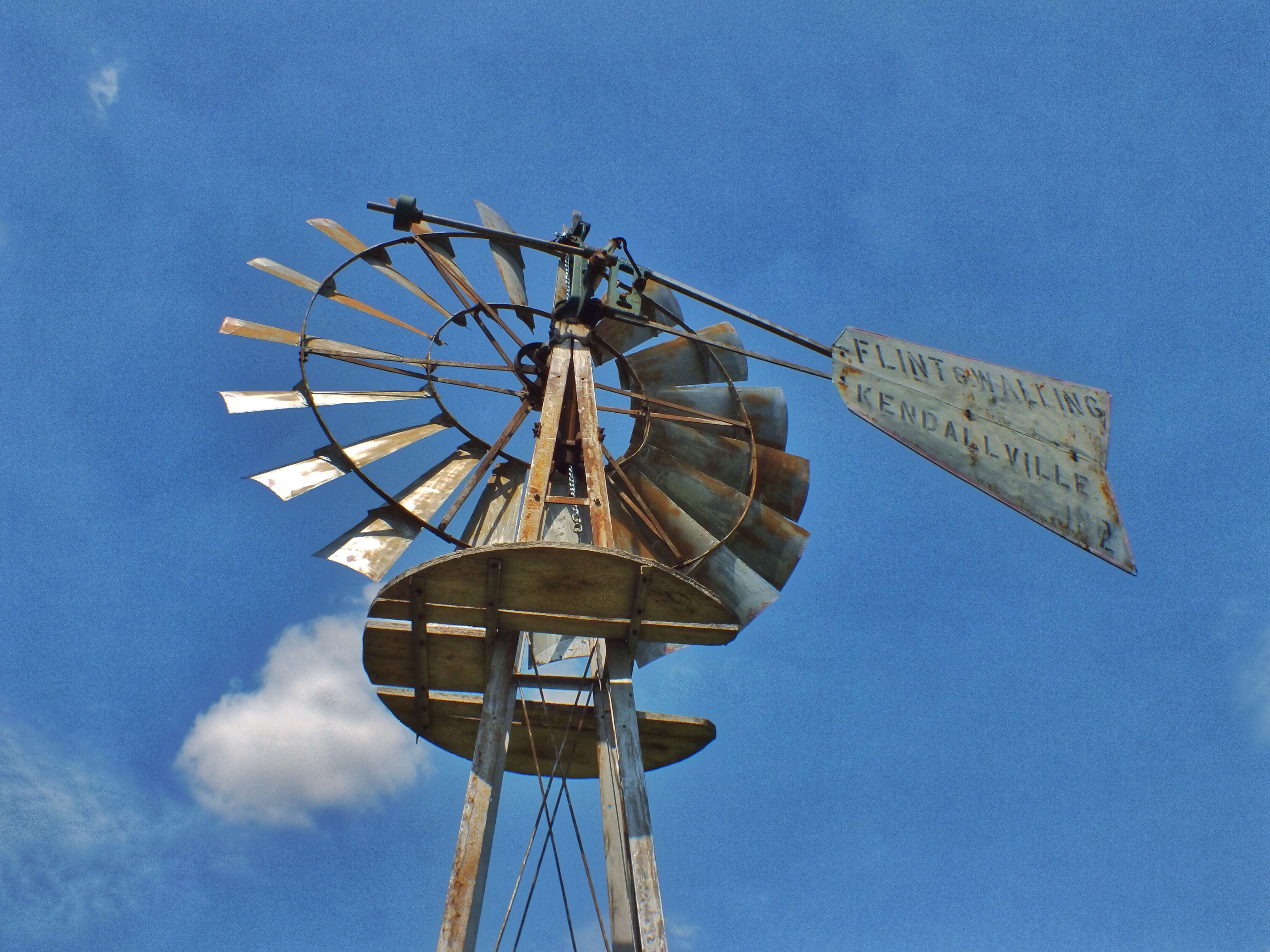
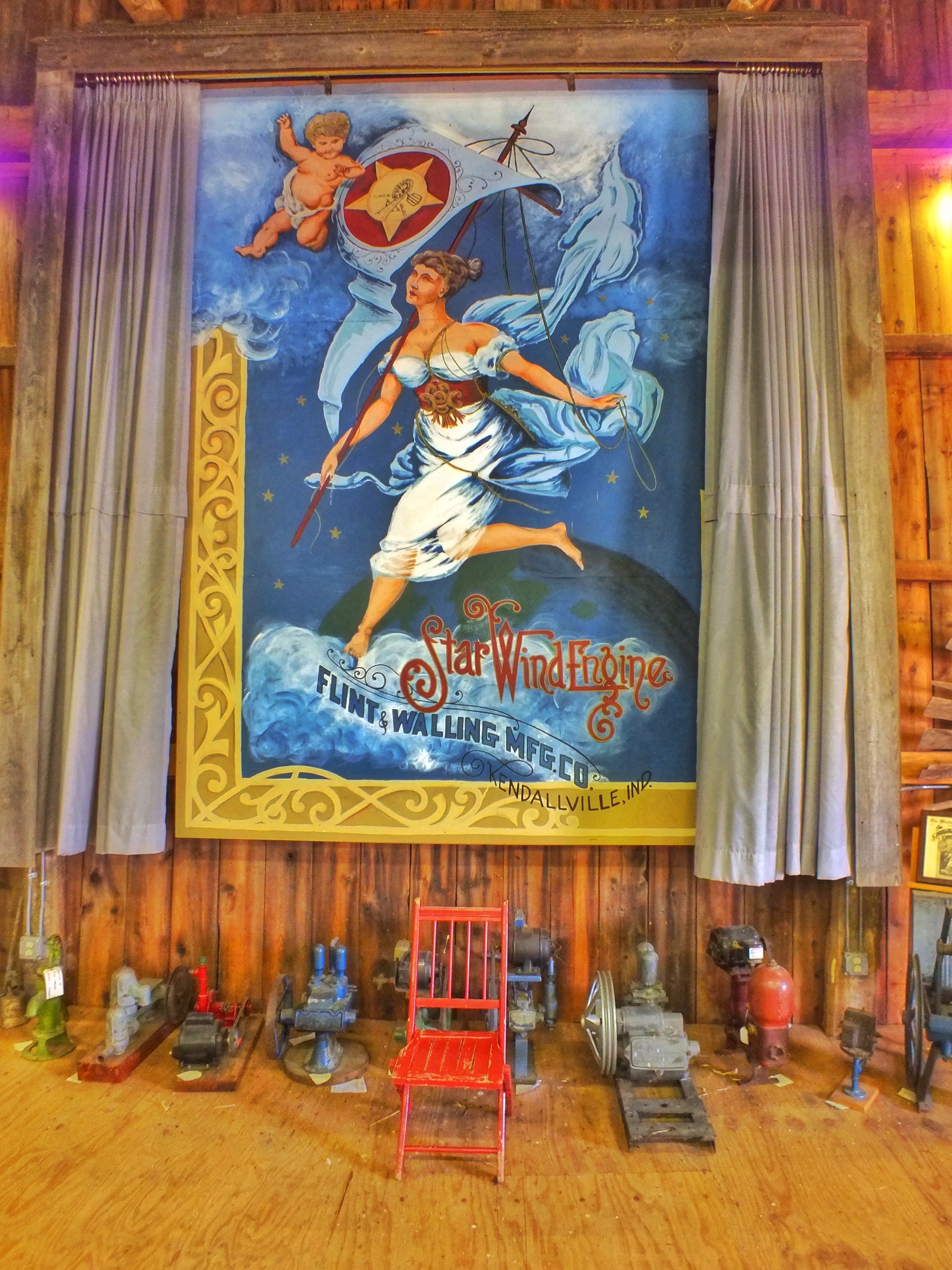
The next mill is the Flint & Walling Model 26, built of wood for farmers who didn’t like the noise made by metal mills.

IMG_1779

IMG_1778

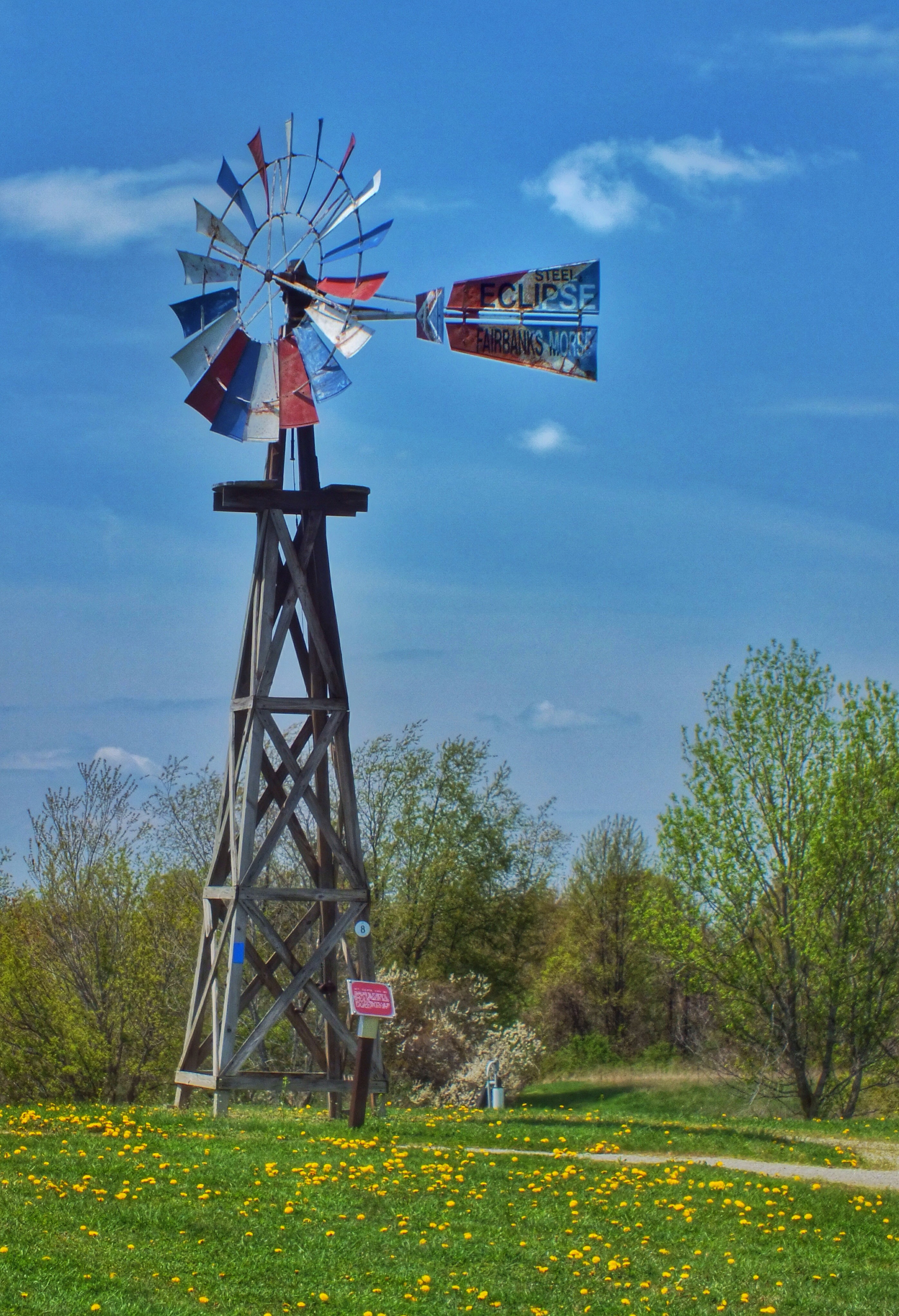
The red, white and blue mill is the Fairbanks Morse Eclipse Type WG, built from 1926 to 1935.

IMG_1777


IMG_1755

IMG_1754

IMG_1753

The yellow and red windmill is the Fairbanks Morse Eclipse, invented in 1867 by a reverend. It was the most common windmill before metal ones were manufactured.

IMG_1752

IMG_1751

IMG_1733

IMG_1732

IMG_1731


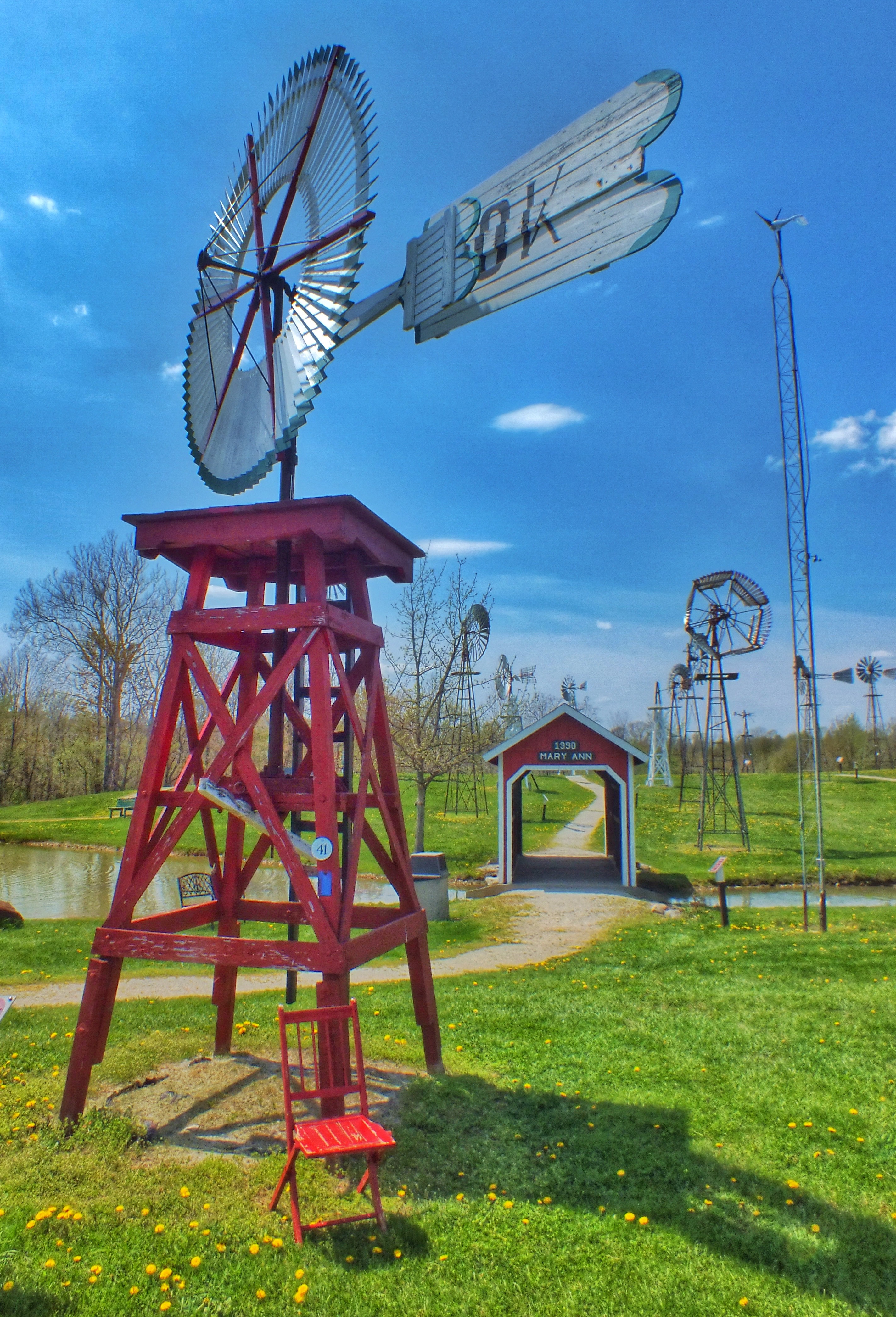
The Challenge OK, built by the Challenge Windmill and Feed Company of Batavia, Illinois before 1914.

IMG_1811

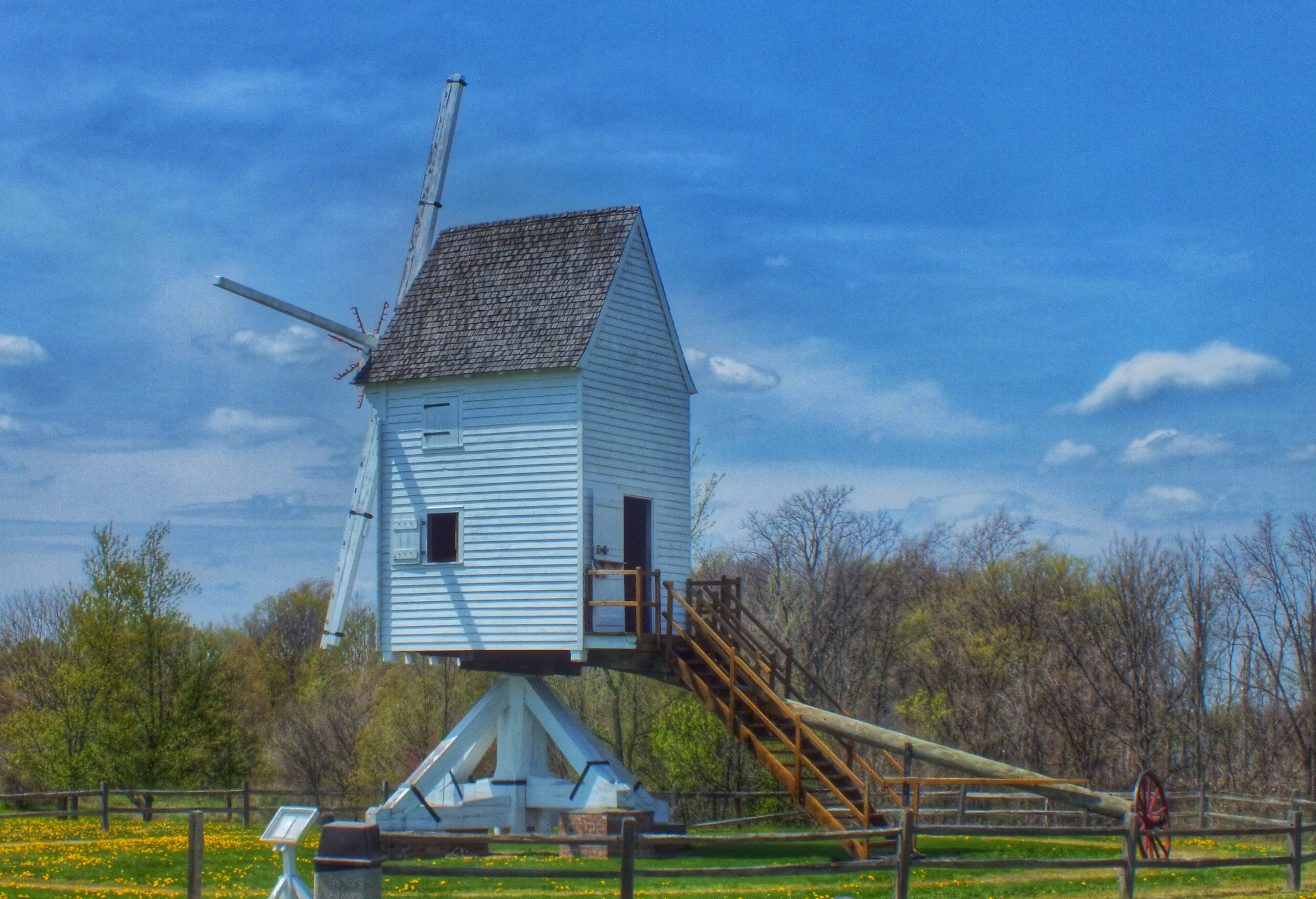
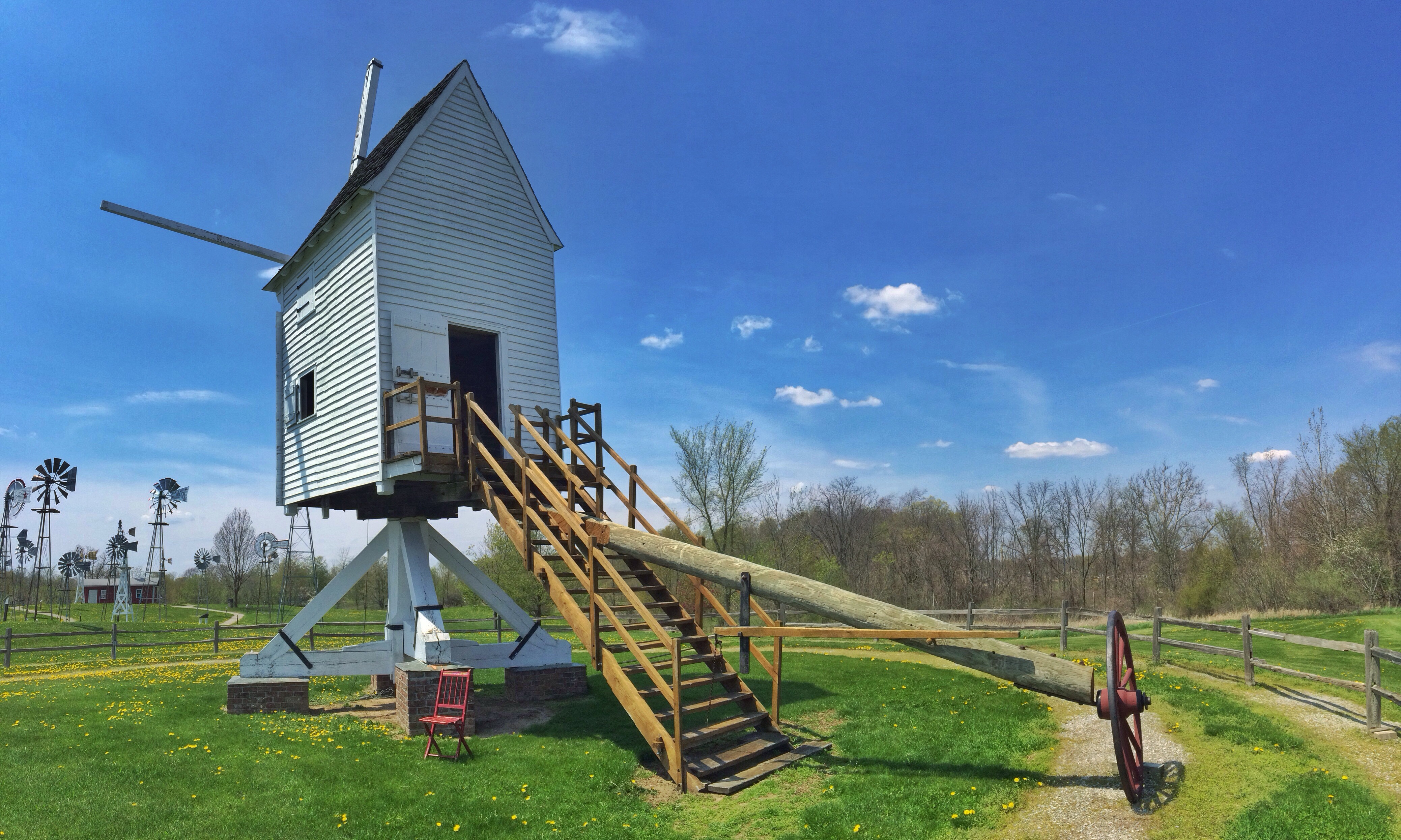
This next one is a reproduction of a Robertson Post Windmill based on plans of a 17th-century mill in Cambridgeshire, England. Mills of this type were used in the Mid-Atlantic states. The mill was turned into the wind by pushing a sloping tail pole that extends from the rear of the cabin.

IMG_1847

IMG_1741

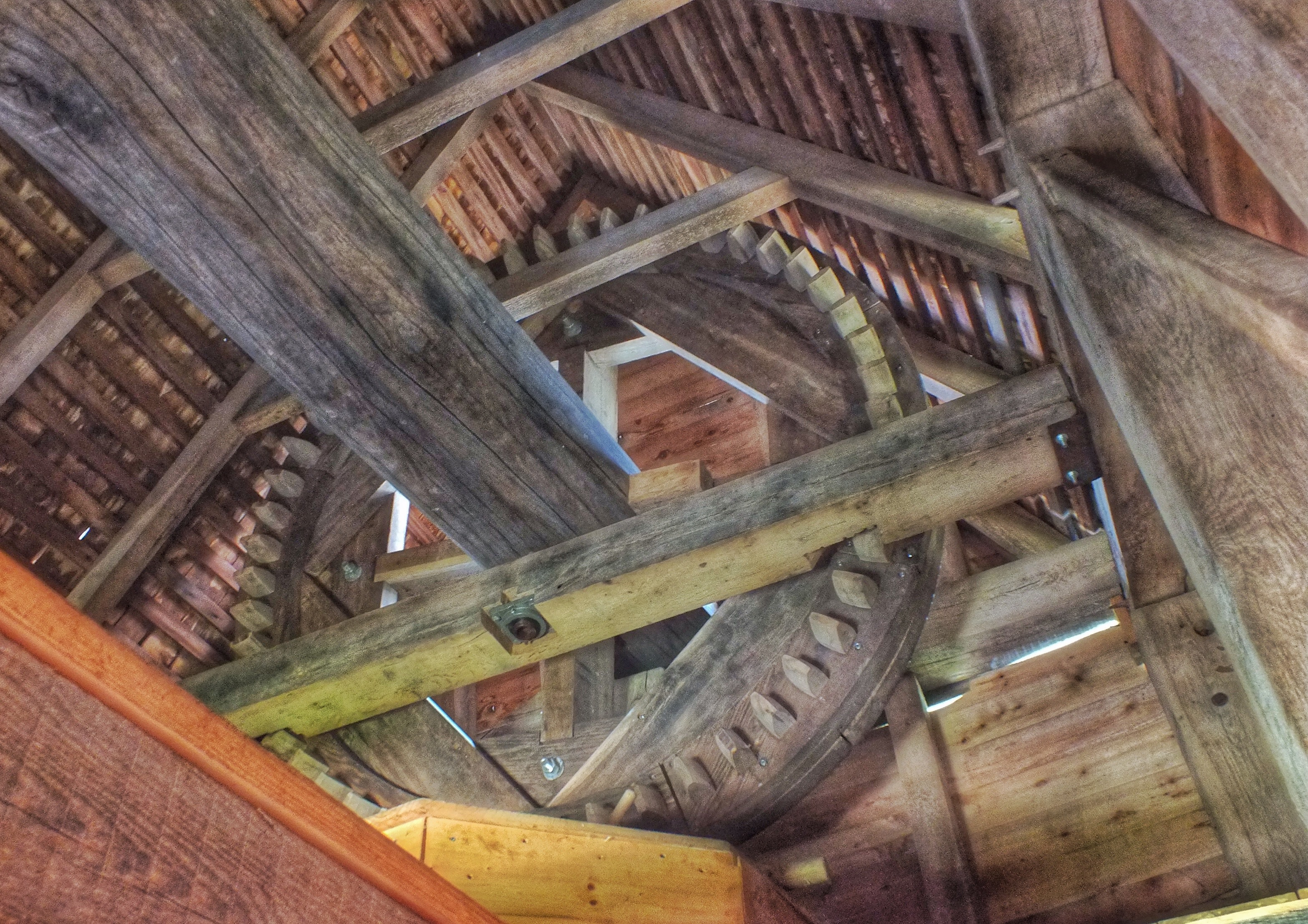
Inside the Robertson Post Mill.

IMG_1819

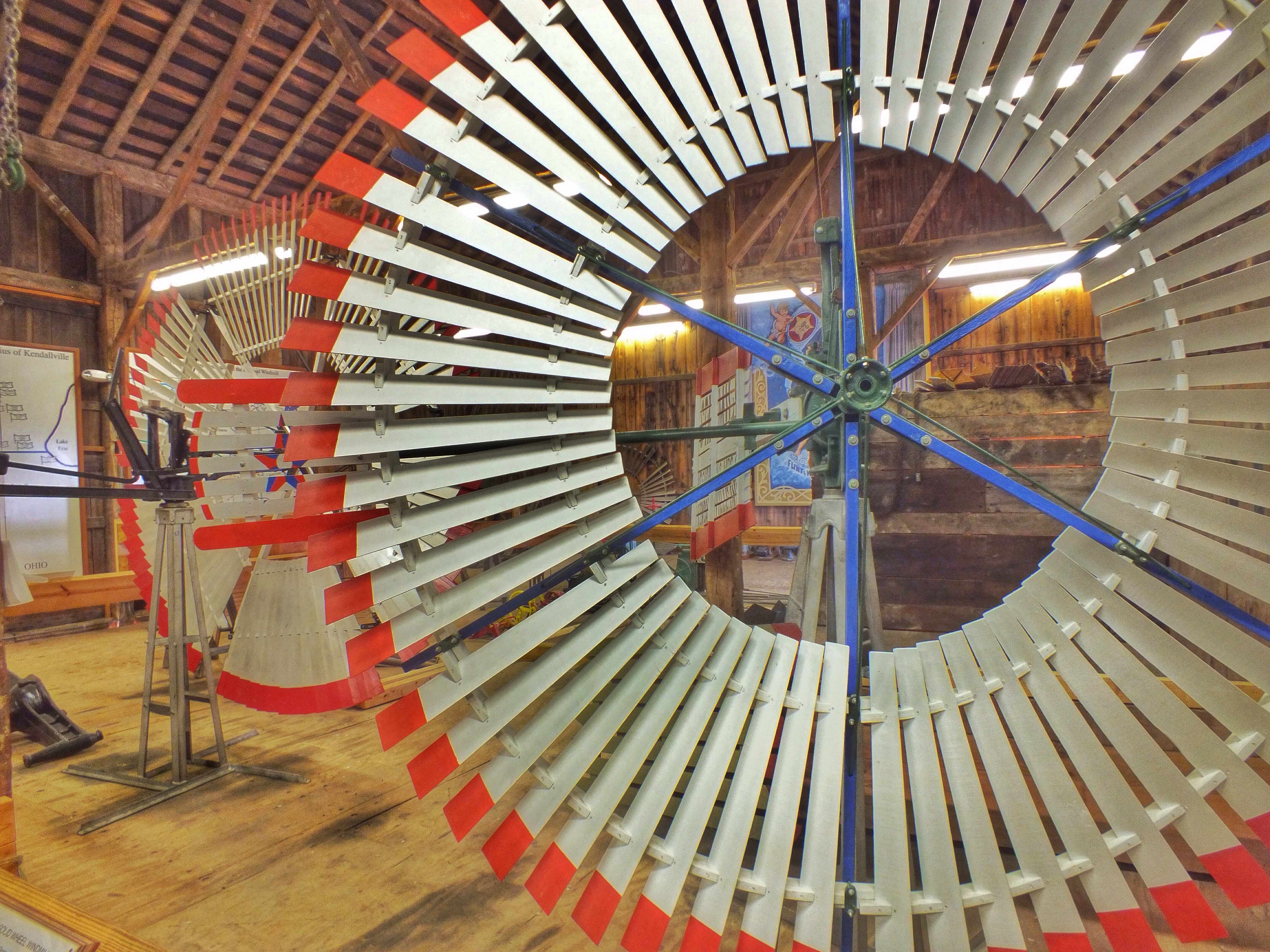
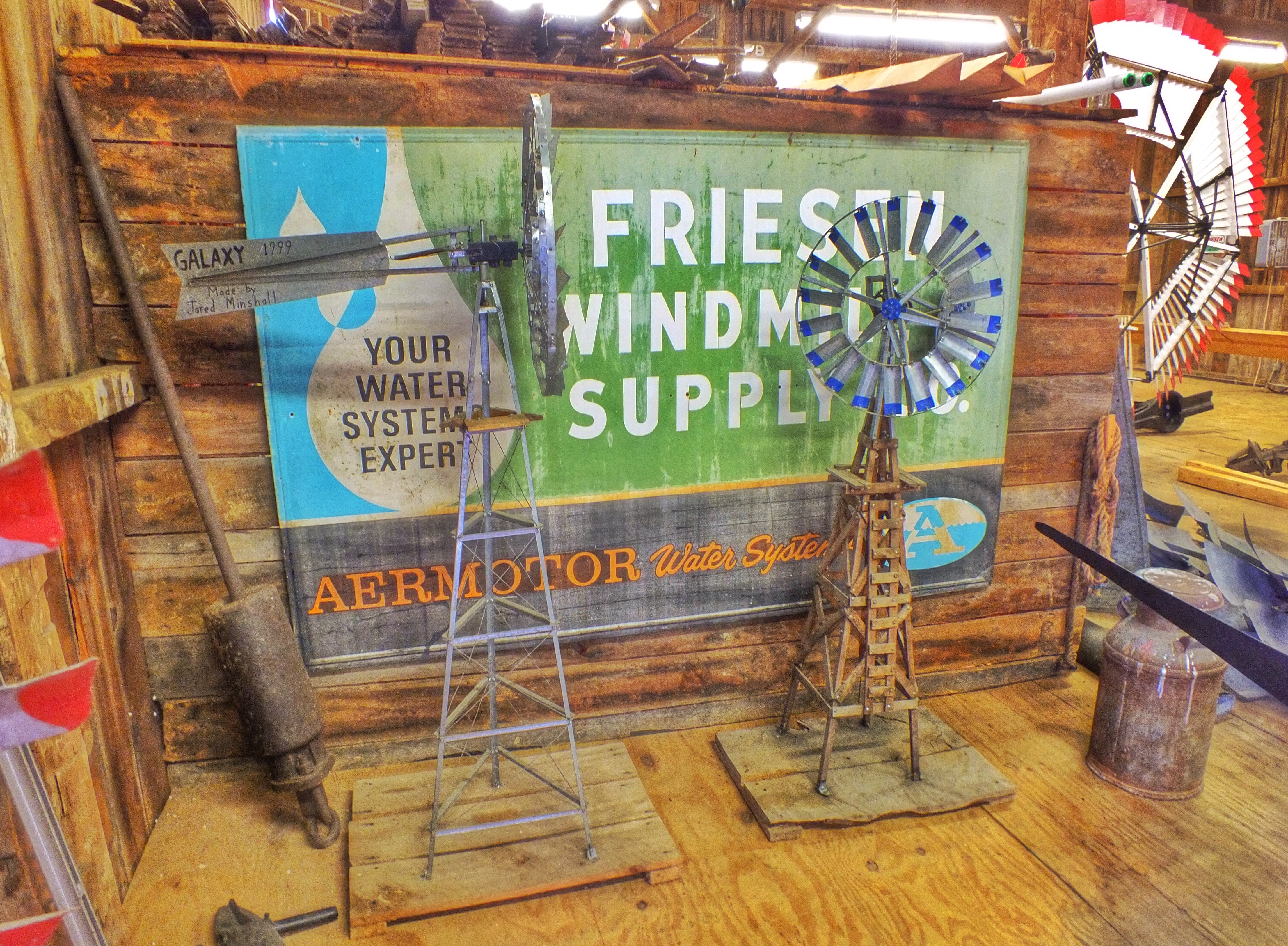
There were a few more displays inside the barn/visitor center.

IMG_1830


IMG_1832

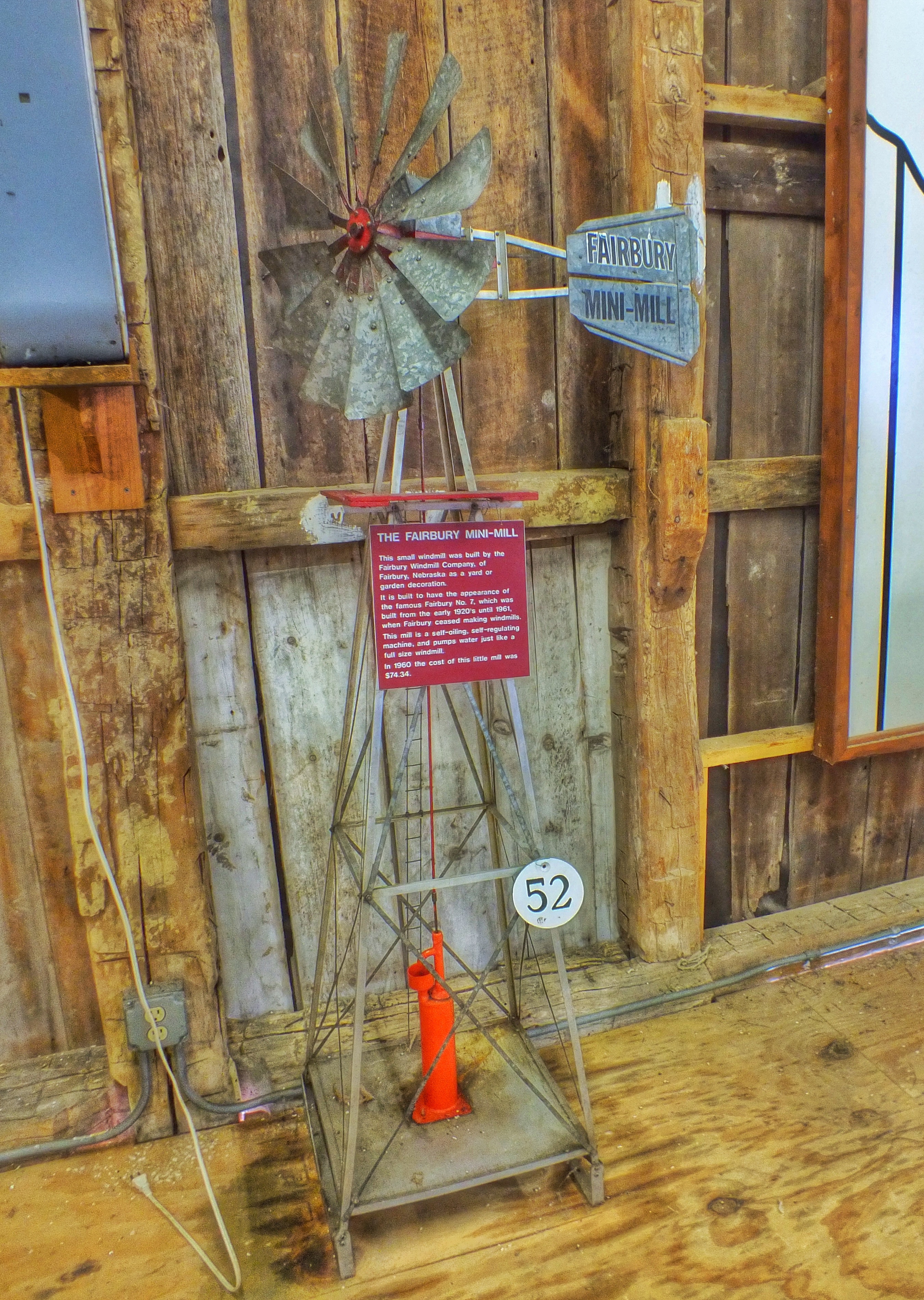
The Fairbury Mini-Mill was built as a yard or garden decoration. It was a working windmill that pumped water just like a regular windmill. They were made until the early 1960s and cost $75.

IMG_1828

IMG_1829

We had a bit of hard time leaving. The older gentleman who was volunteering in the office was very enthusiastic and wouldn’t let us leave until he pointed out each picture on the wall and each display in the barn. He had us watch a goofy video that was mostly about water mills and only briefly mentioned the type of windmills on display at the museum, even though the video was made exclusively for the museum. It goes to show that there isn’t anything that somebody doesn’t find fascinating, and this specialty museum was much better presented than most.

Posted in Indiana | Comments Off on Mid-America Windmill Museum

HoneyDip Donuts

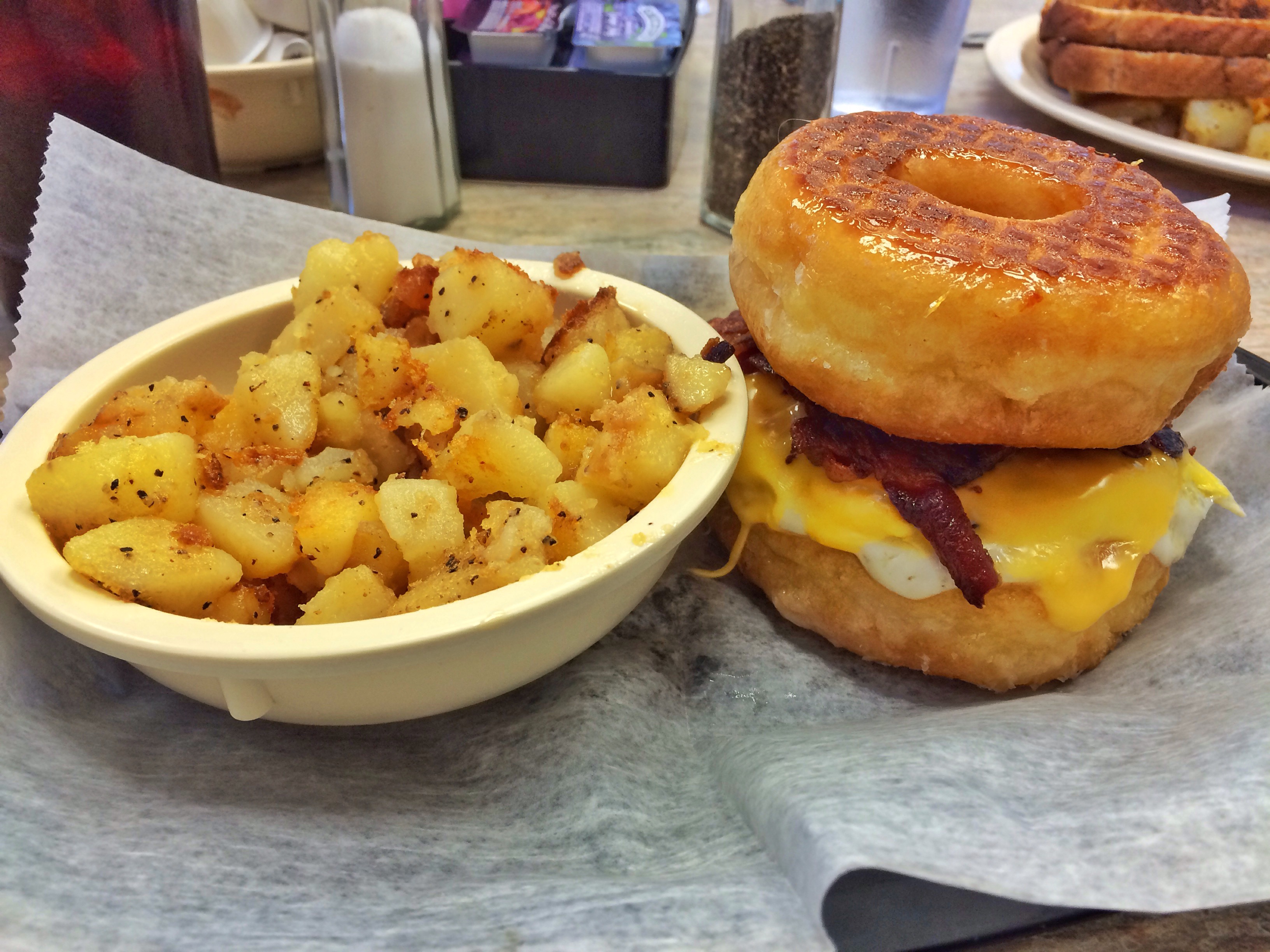
I’m always up for a good donut. And when I saw that this place offered breakfast sandwiches with honey-dipped donuts as bread …

IMG_1678

IMG_1712

The sandwich was weird, but good. If I ever make it back, I might try the cheeseburger on donut sandwich. The thing I most enjoyed about the place was the decor. The walls were covered with photos and magazine covers all having something to do with donuts. Genius.

IMG_1714

IMG_1711

IMG_1713

Posted in Ohio | Comments Off on HoneyDip Donuts

Billy Ireland Cartoon Museum

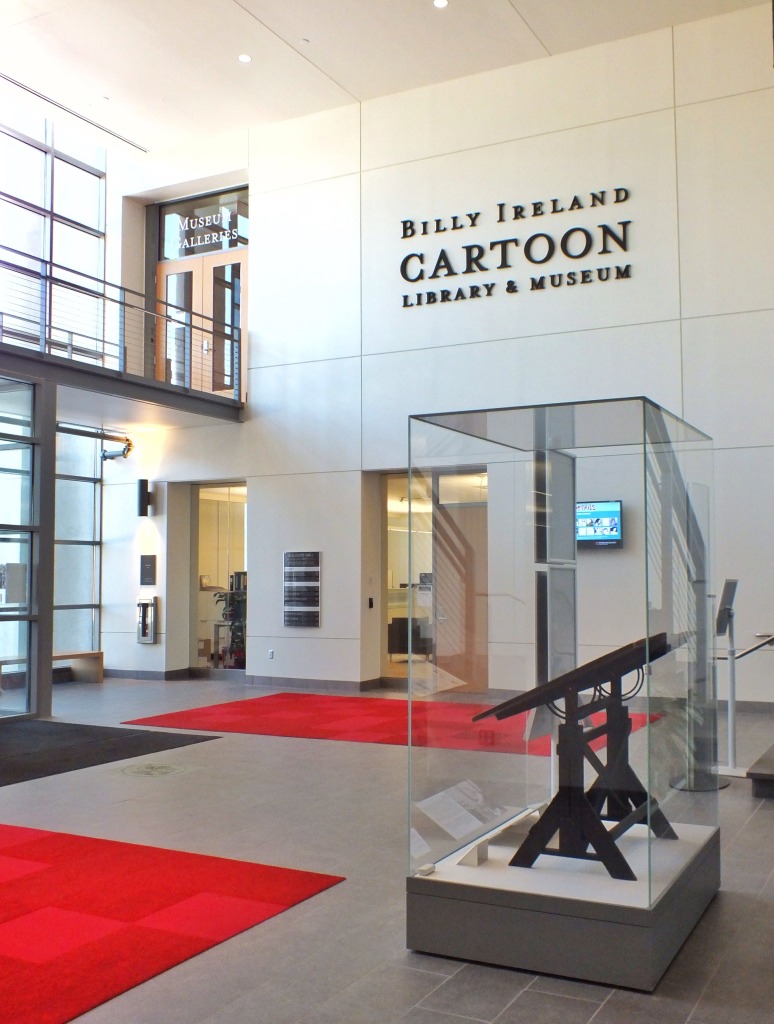
We stopped by to tour the Billy Ireland Cartoon Museum on the campus of Ohio State University.
IMG_1722.JPG

IMG_1659

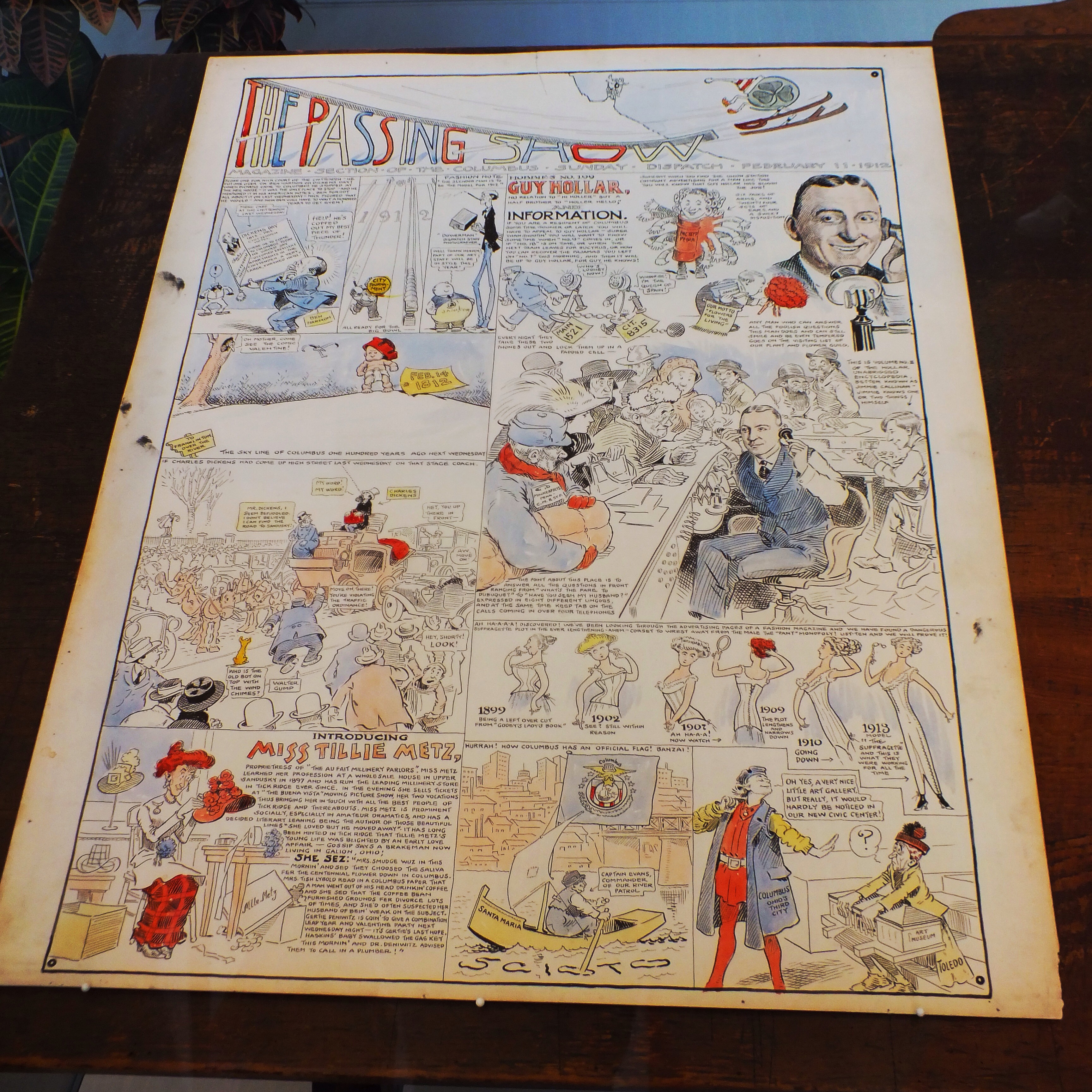
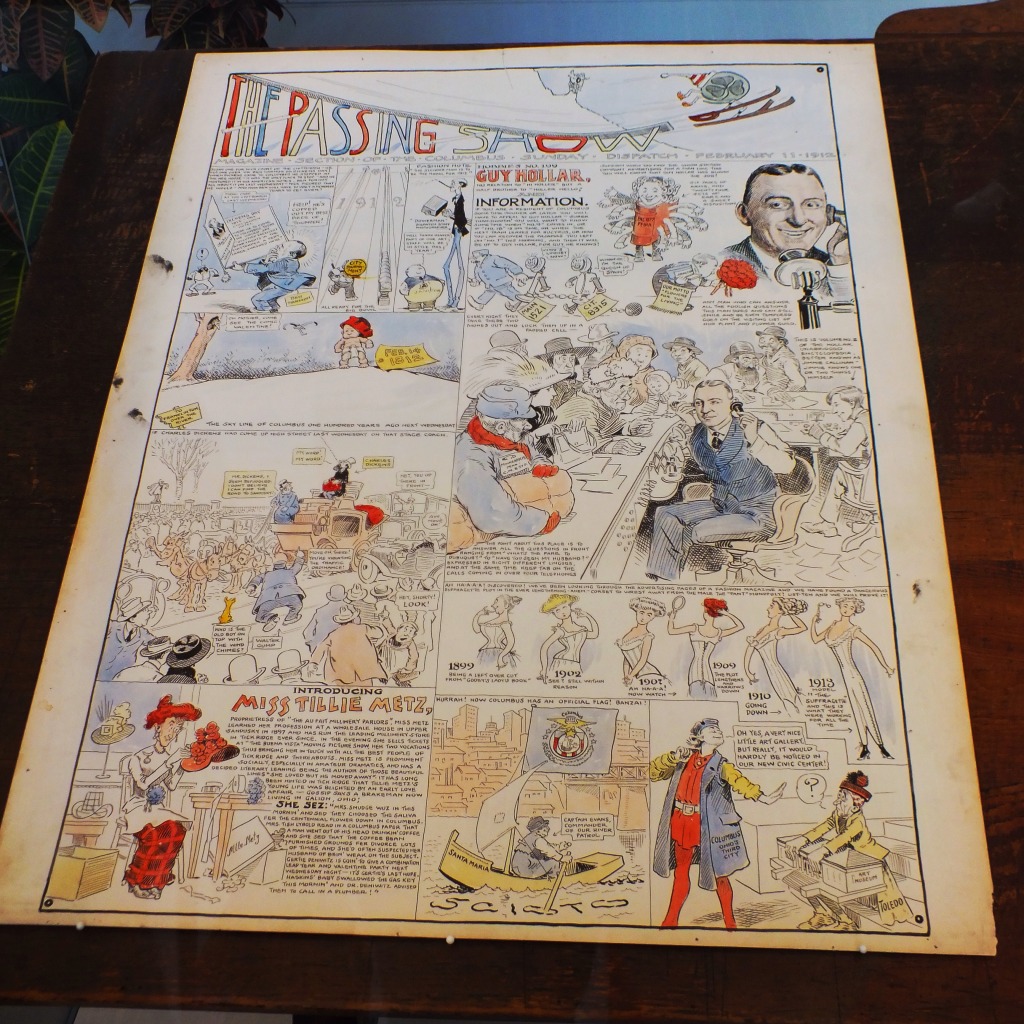
Ireland was a local cartoonist who drew “The Passing Show” for The Columbus Dispatch from 1908 to 1935. That’s his drawing board in the photo of the lobby above.
IMG_1648

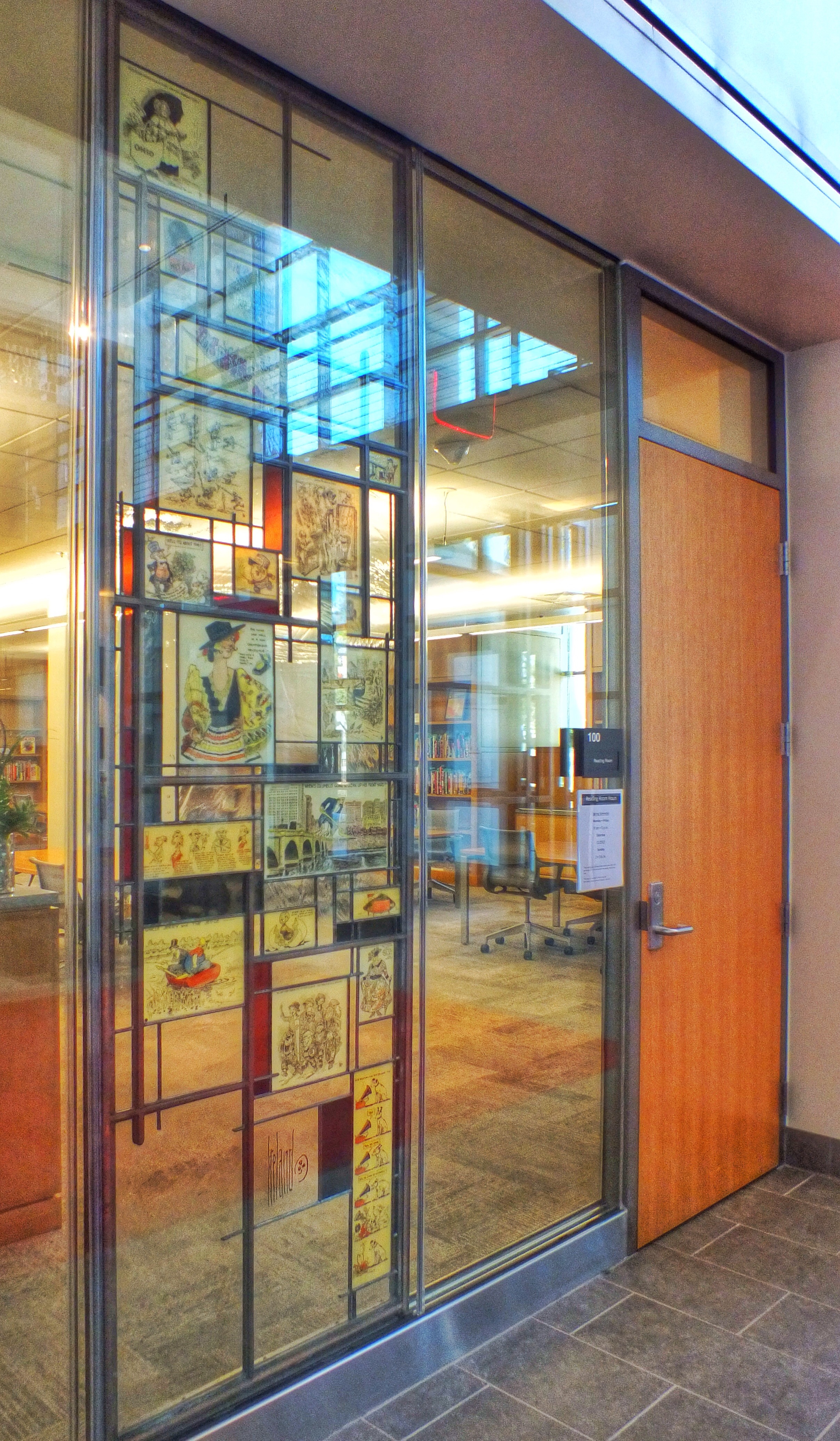
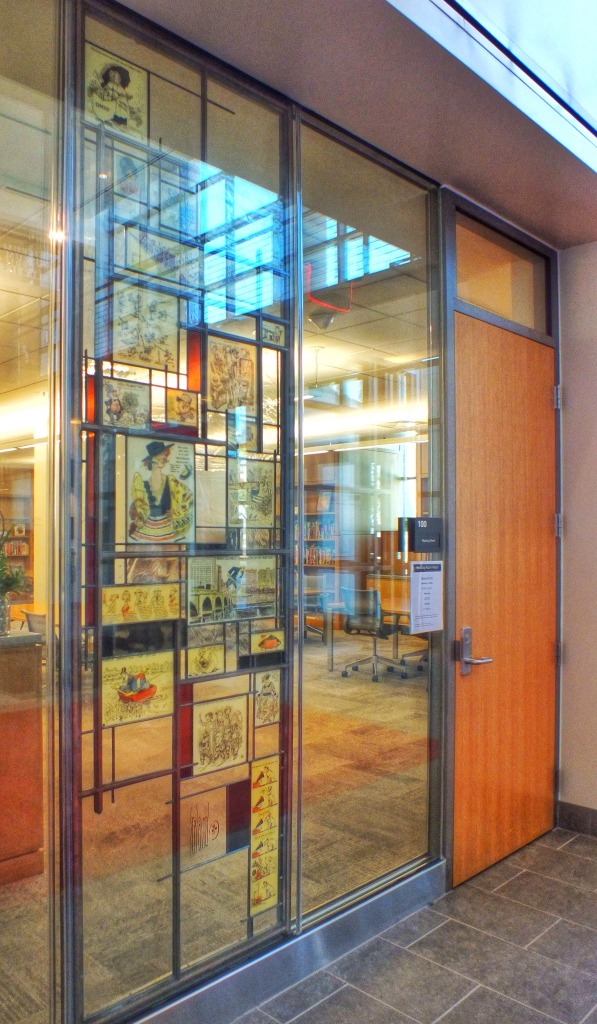
There’s a library too. We didn’t go in, but I did stop to appreciate the cartoons worked into the “stained glass” window.
IMG_1658

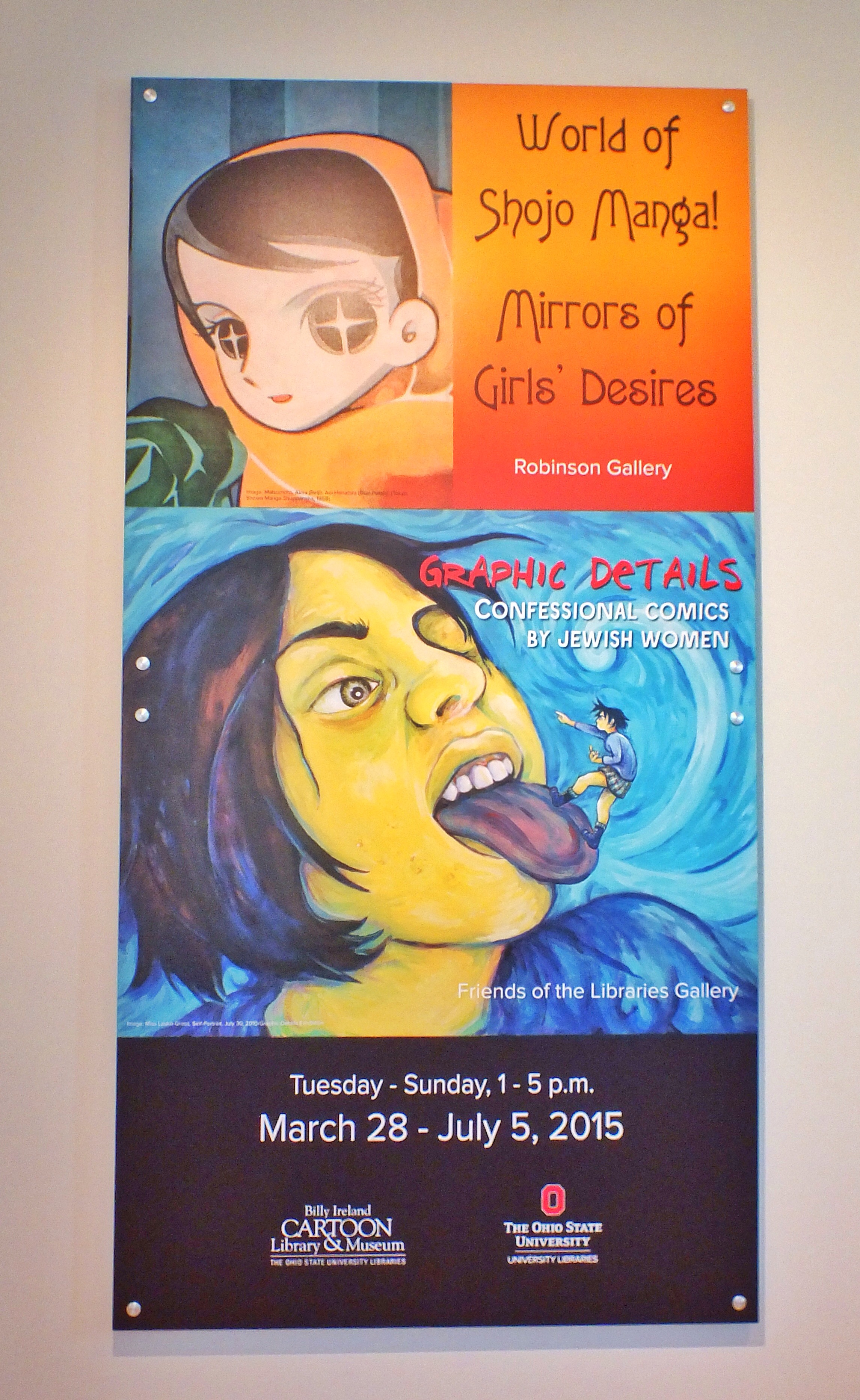
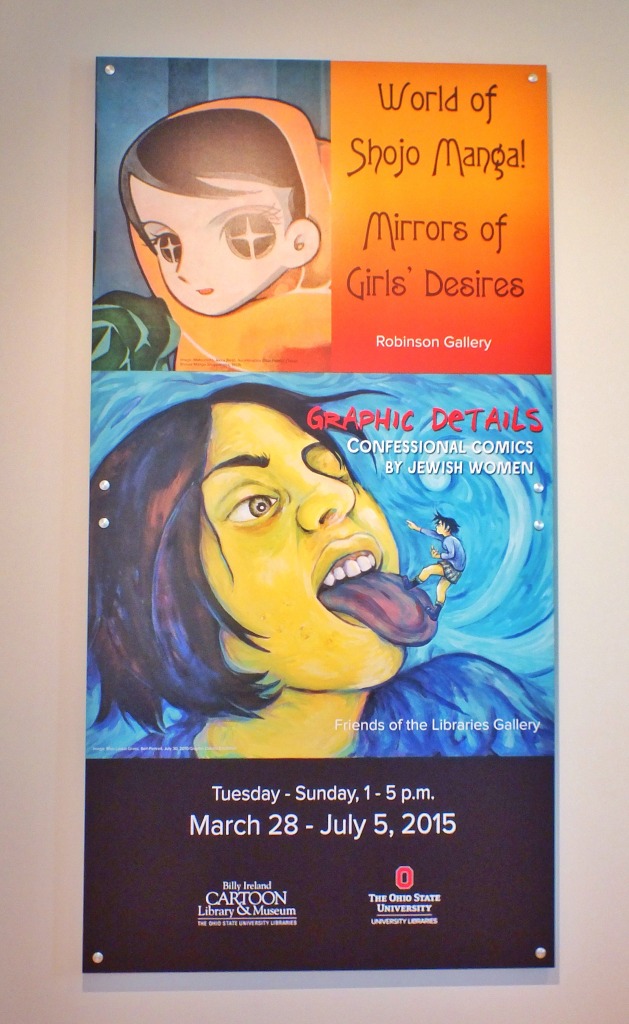
Not long ago, they had a special exhibit on Calvin and Hobbes. I wish I could have seen that one. The special exhibits this time didn’t hold a lot of interest for me.
IMG_1647

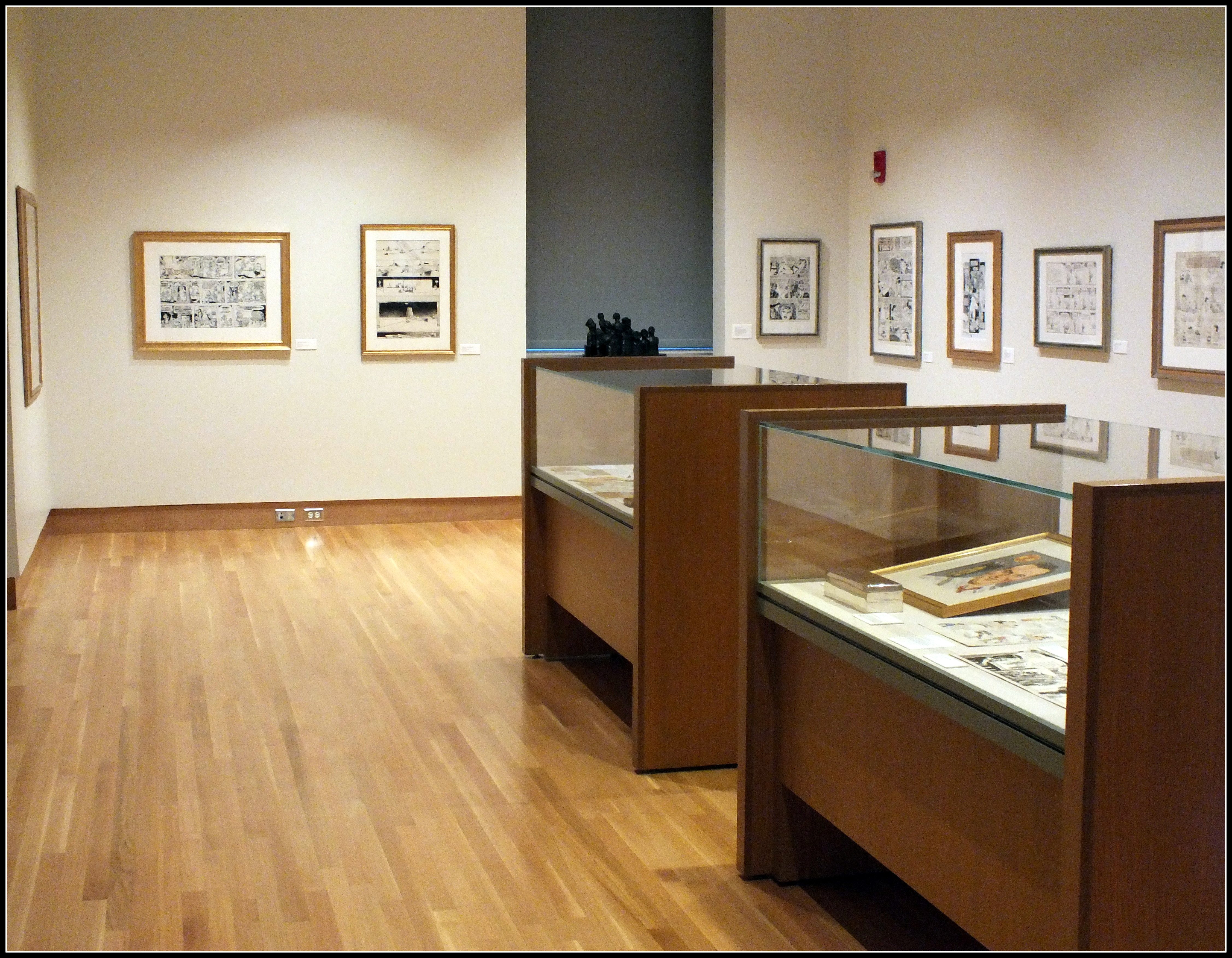
There was one room, however, that I found fascinating.

Room

Here, in no particular order, is what we saw there.

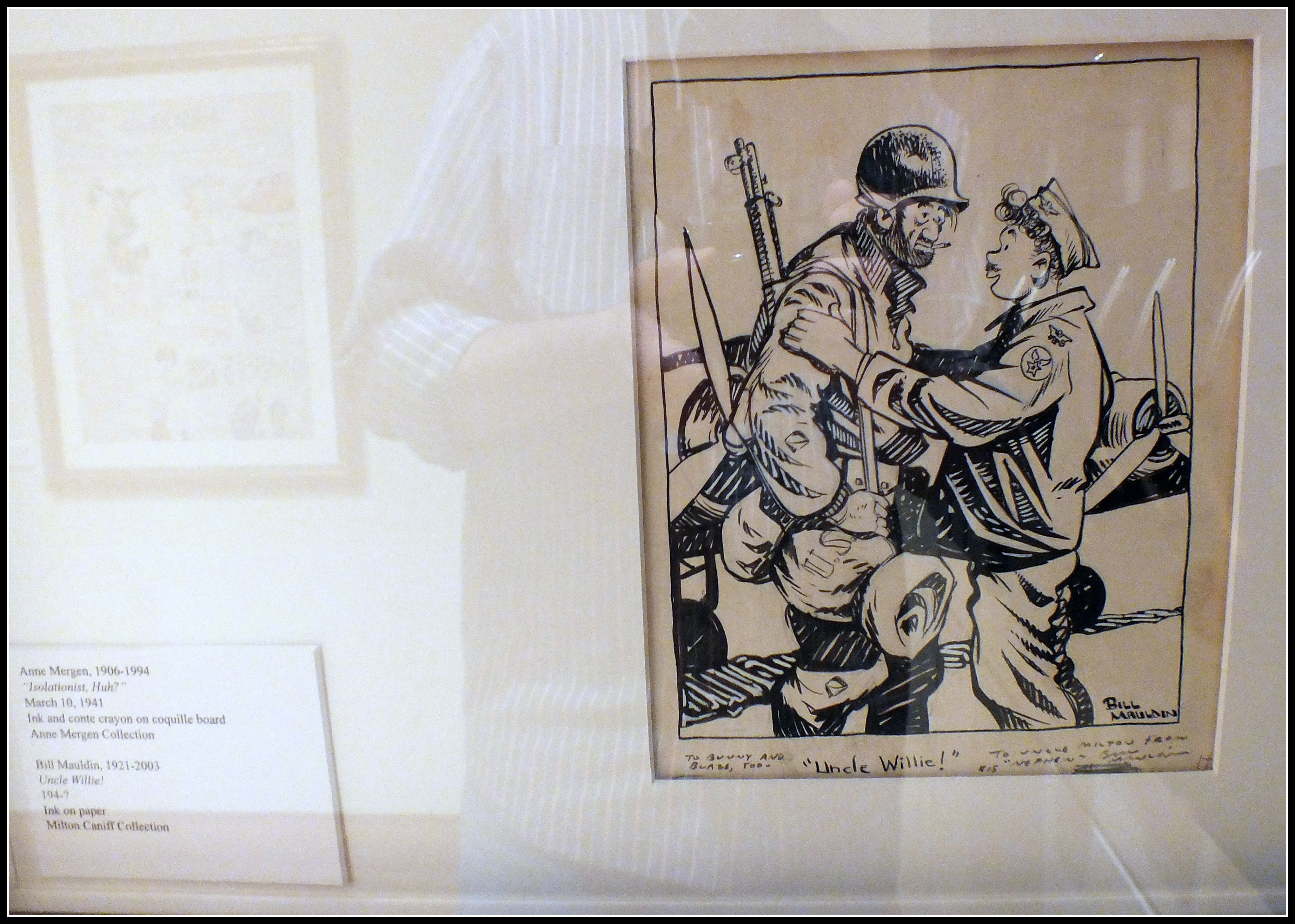
Bill Mauldin

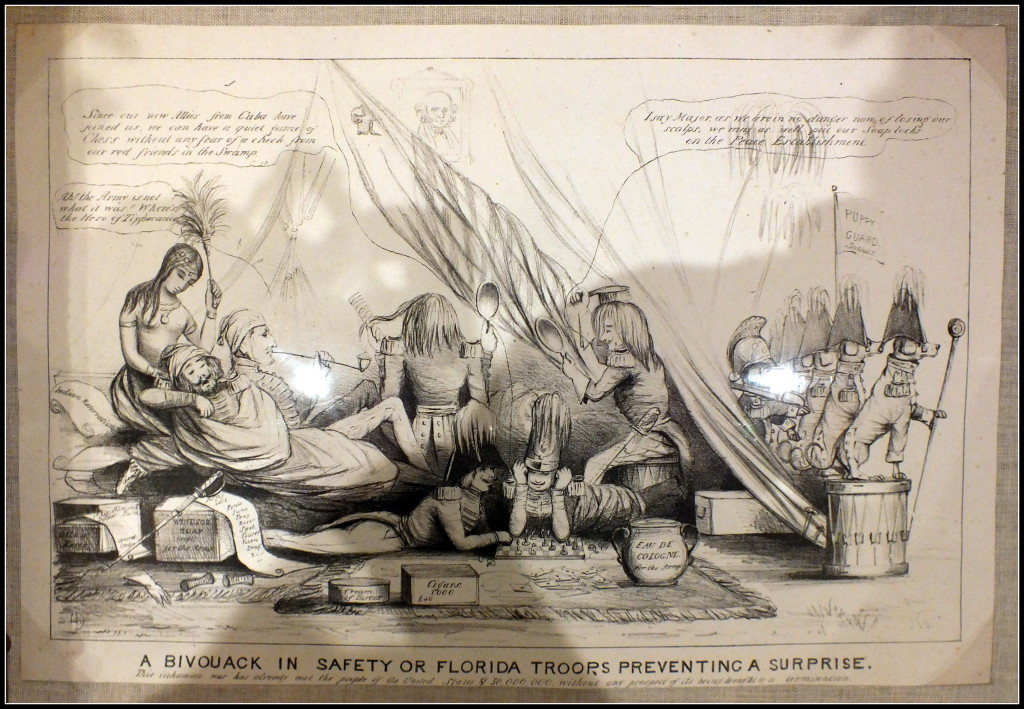
1840 — A spoof of the Van Buren administration’s efforts to end the Second Seminole War in Florida. The War Department was criticized by Congress and the public for cruelty, waste and incompetence, and for using Cuban bloodhounds to hunt for Seminoles.
Bivouack

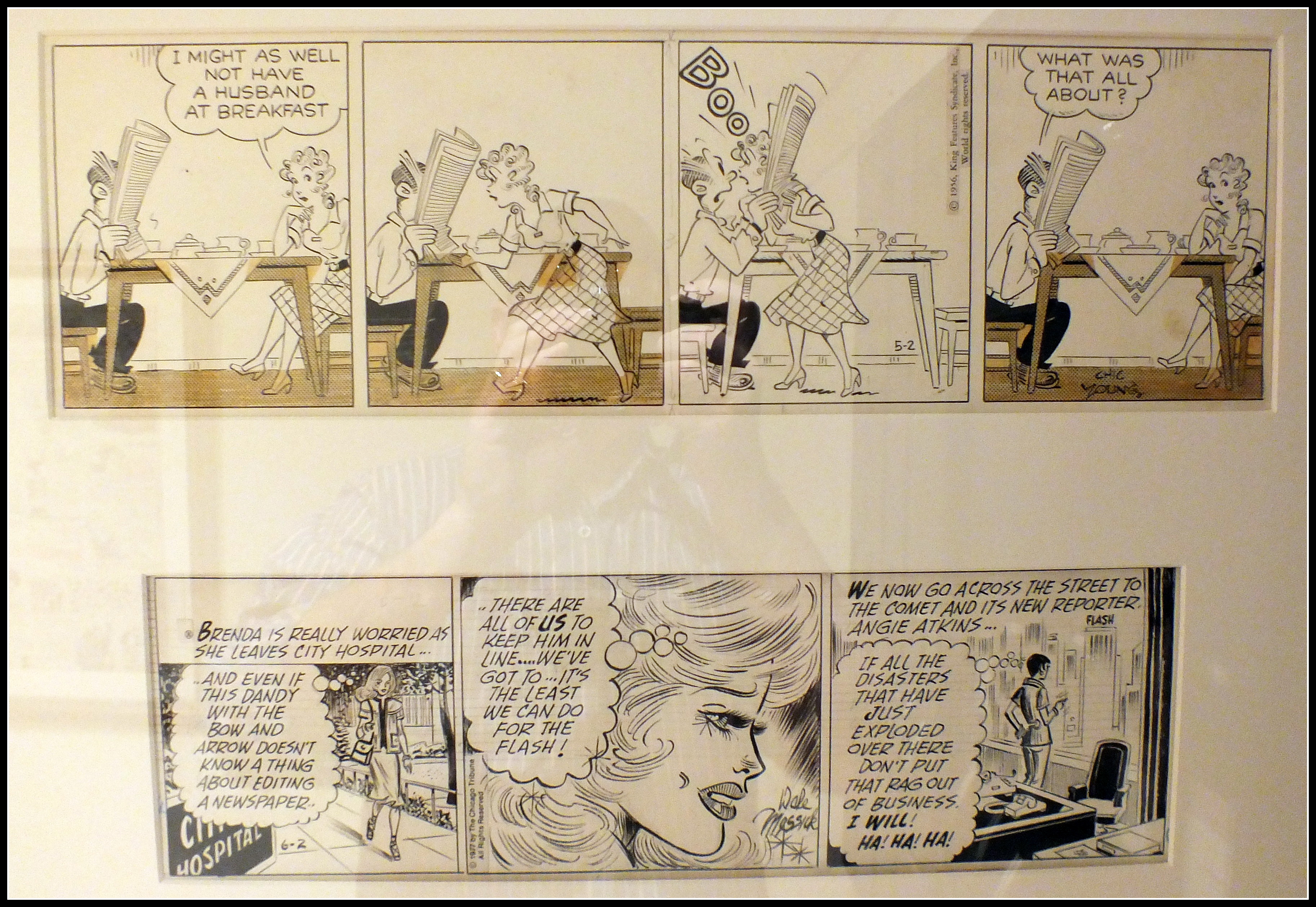
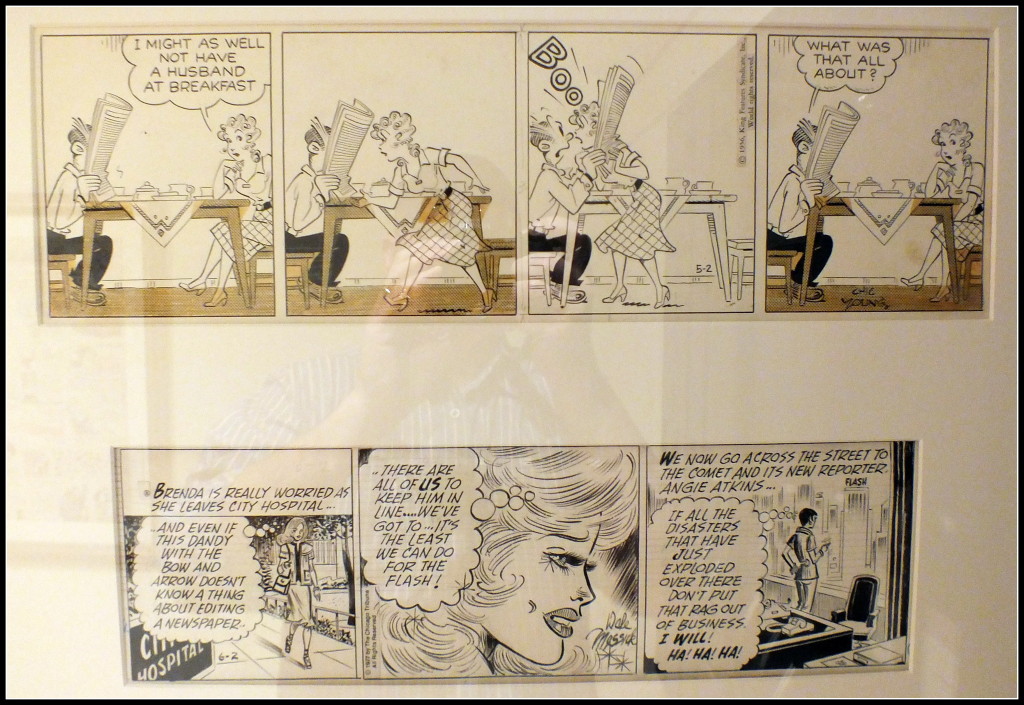
Blondie, by Chic Young, May 2, 1956 and Brenda Starr, by Dale Messick, June 2, 1977
Blondie

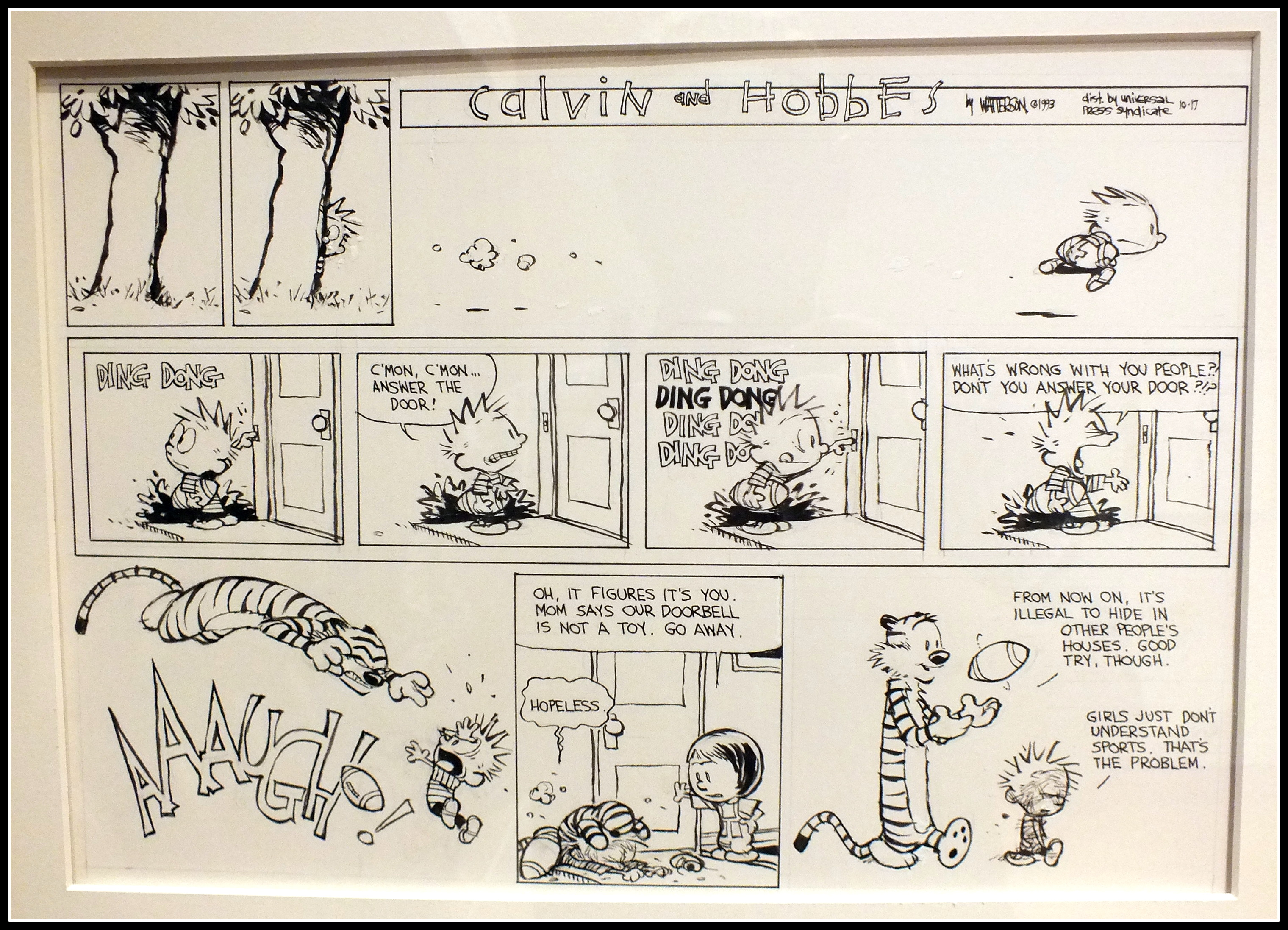
Calvin and Hobbes, Bill Watterson, October 17, 1993
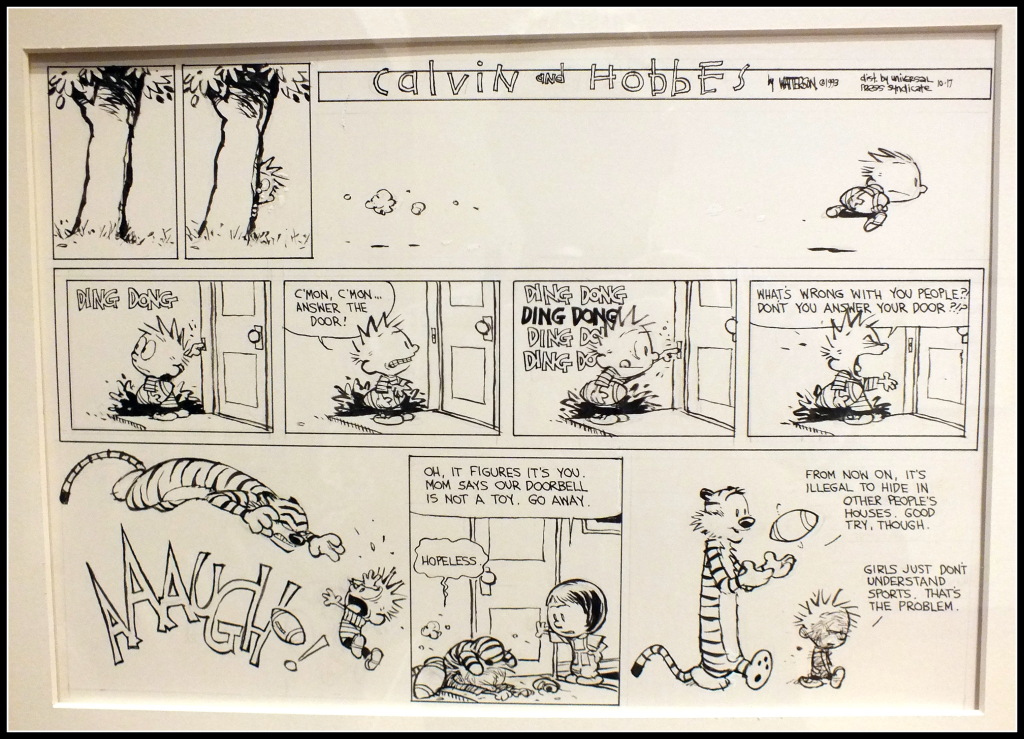
Calvin and Hobbes

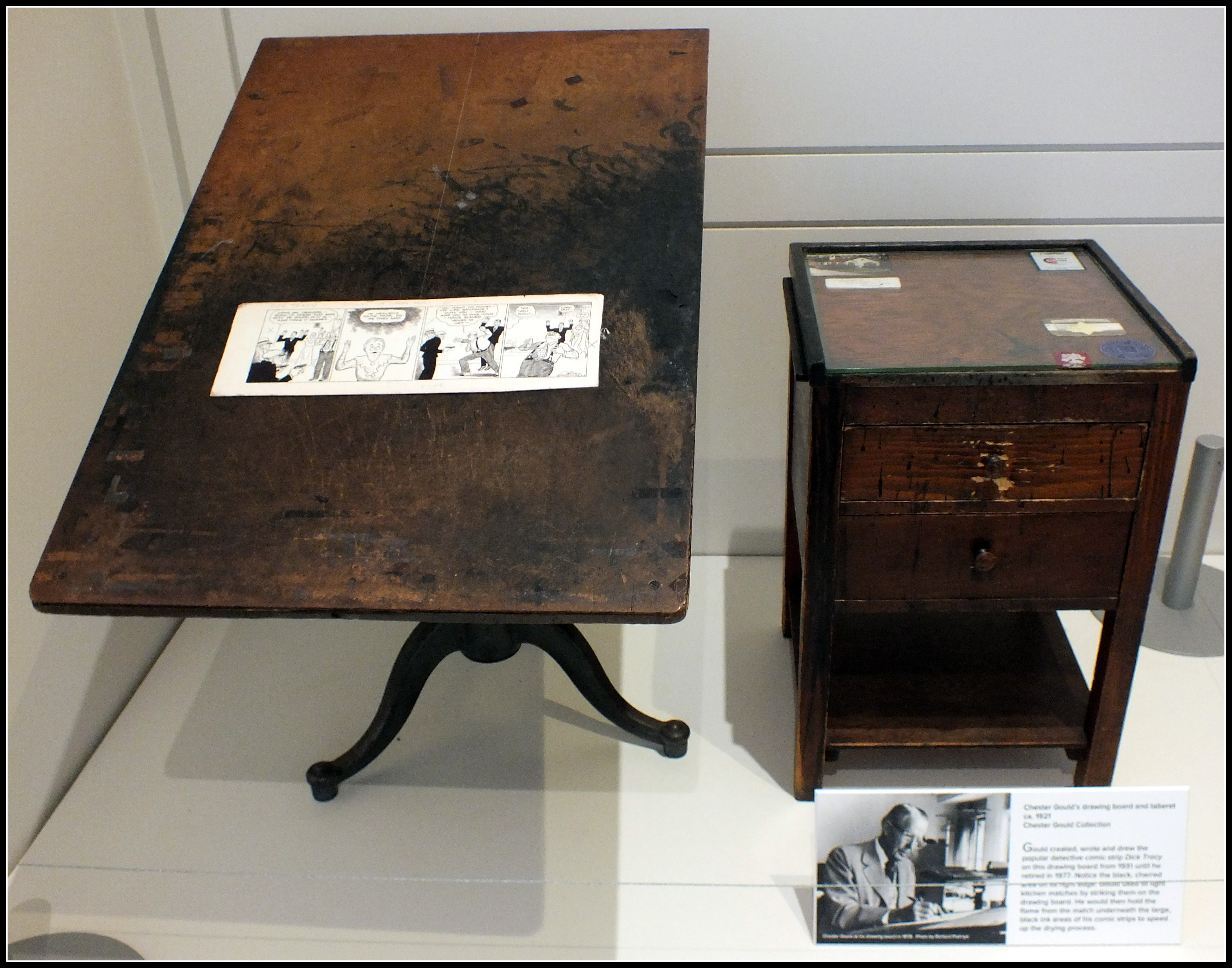
Chester Gould’s drawing board and taberet. Gould created, wrote and drew Dick Tracy on this drawing board from 1931 until his retirement in 1977. The black, charred area on the right edge of the drawing board is where Gould lit kitchen matches by striking them. He would then hold the flame from the match underneath the large, black ink areas of his strips to speed up the drying process.
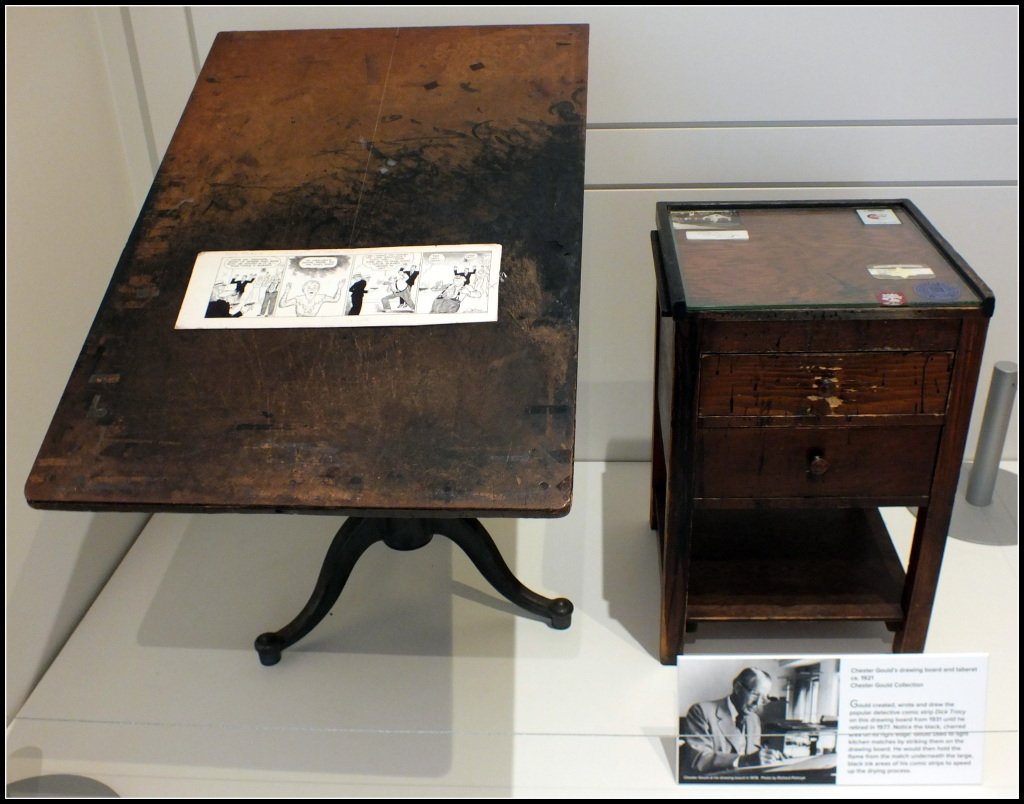
Chester Gould

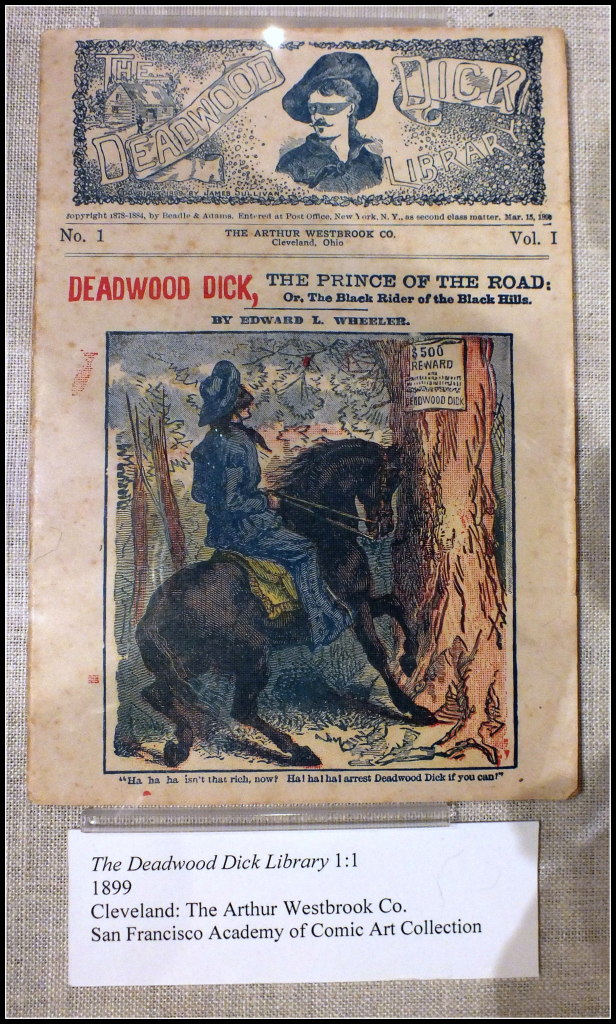
Deadwood Dick

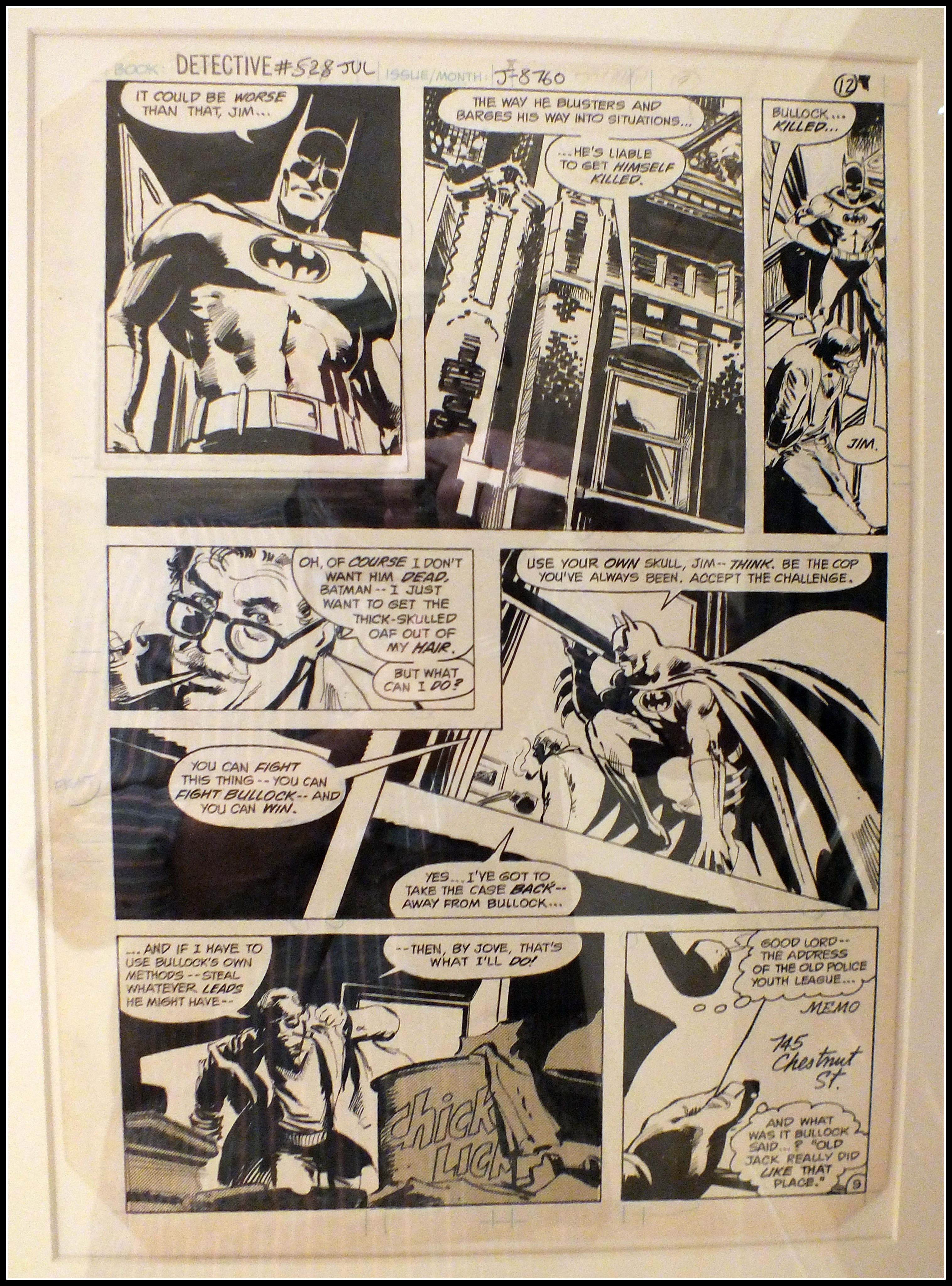
From “A Requiem for Skulls” in Detective Comics #528 by Gene Colan, July 1983
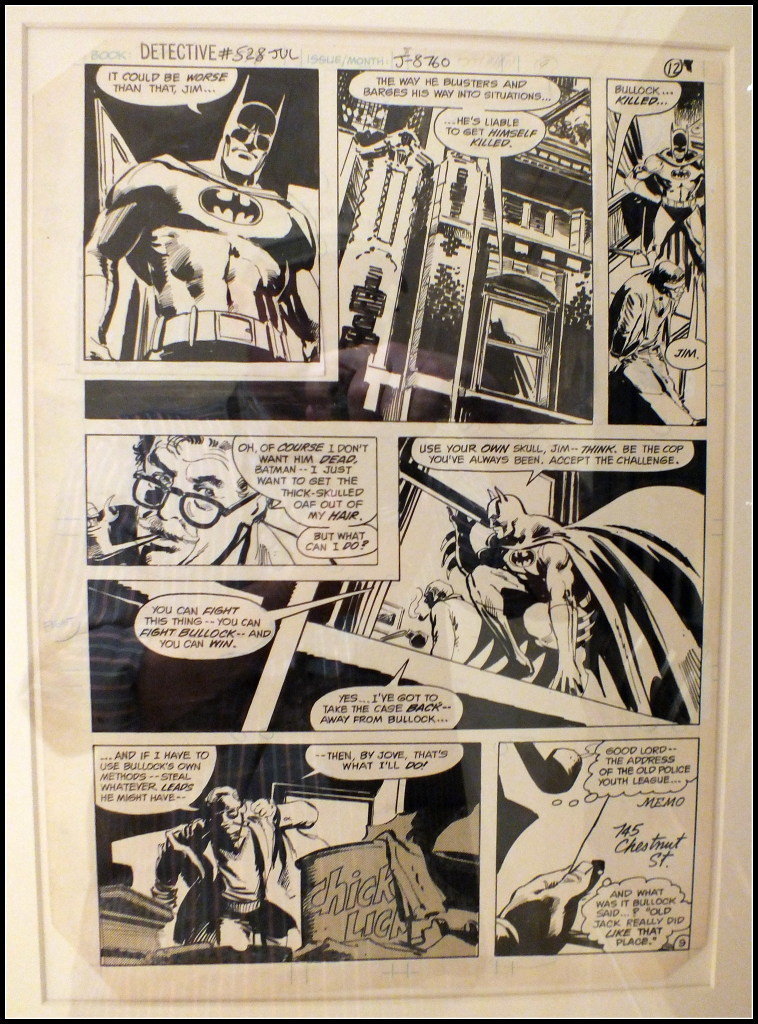
Detective Comics

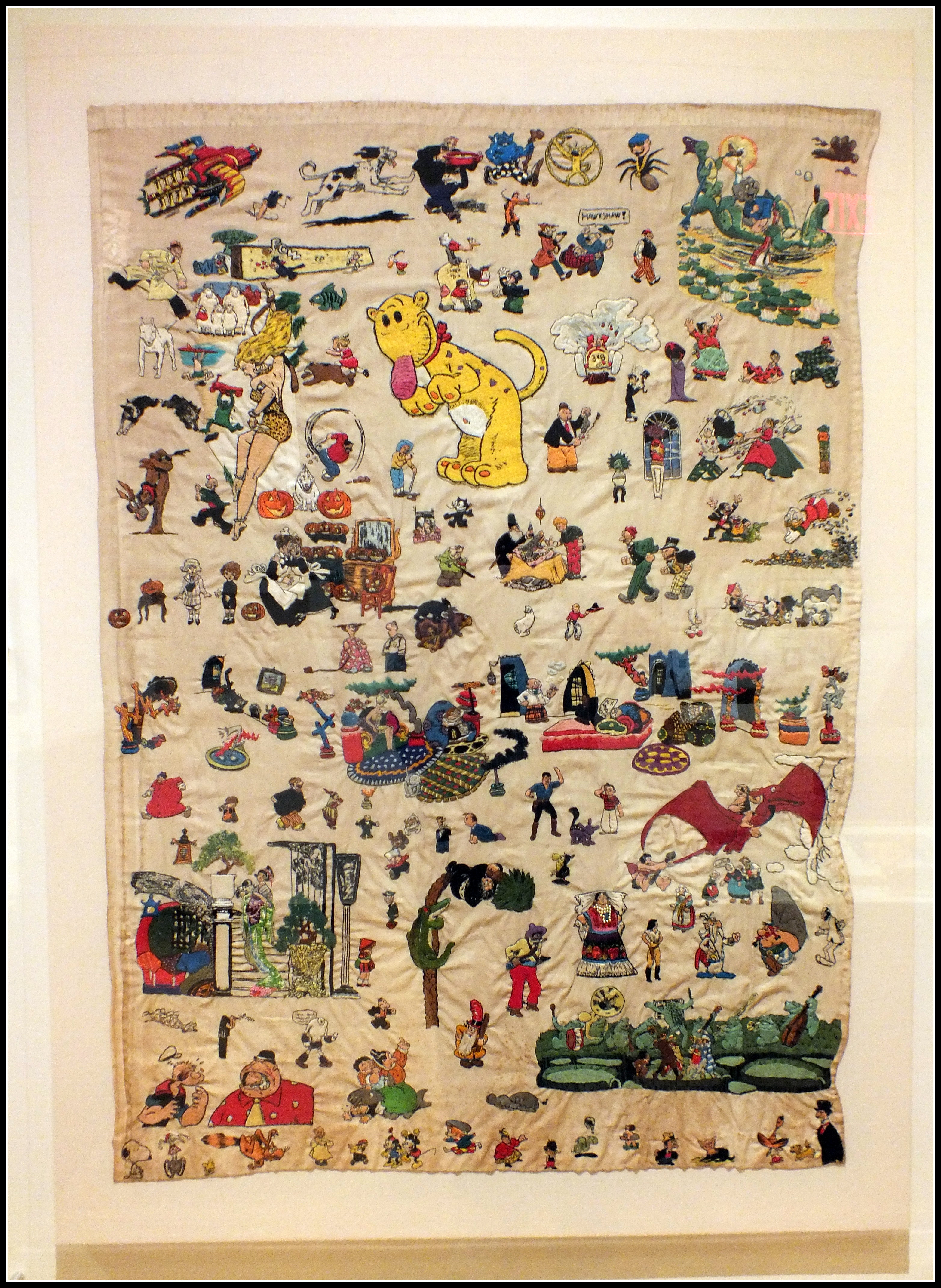
An anonymous artist embroidered more than 100 comic strip characters on this piece.
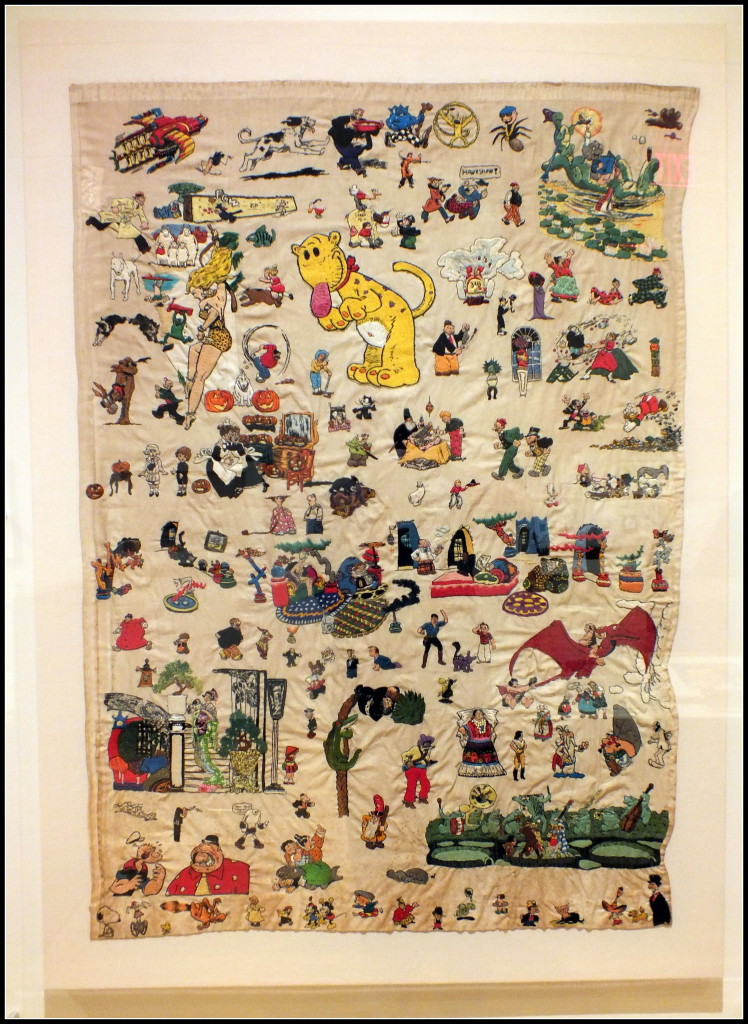
Embroidery

Family Circus, by Bil Keane, September 16, 1964.
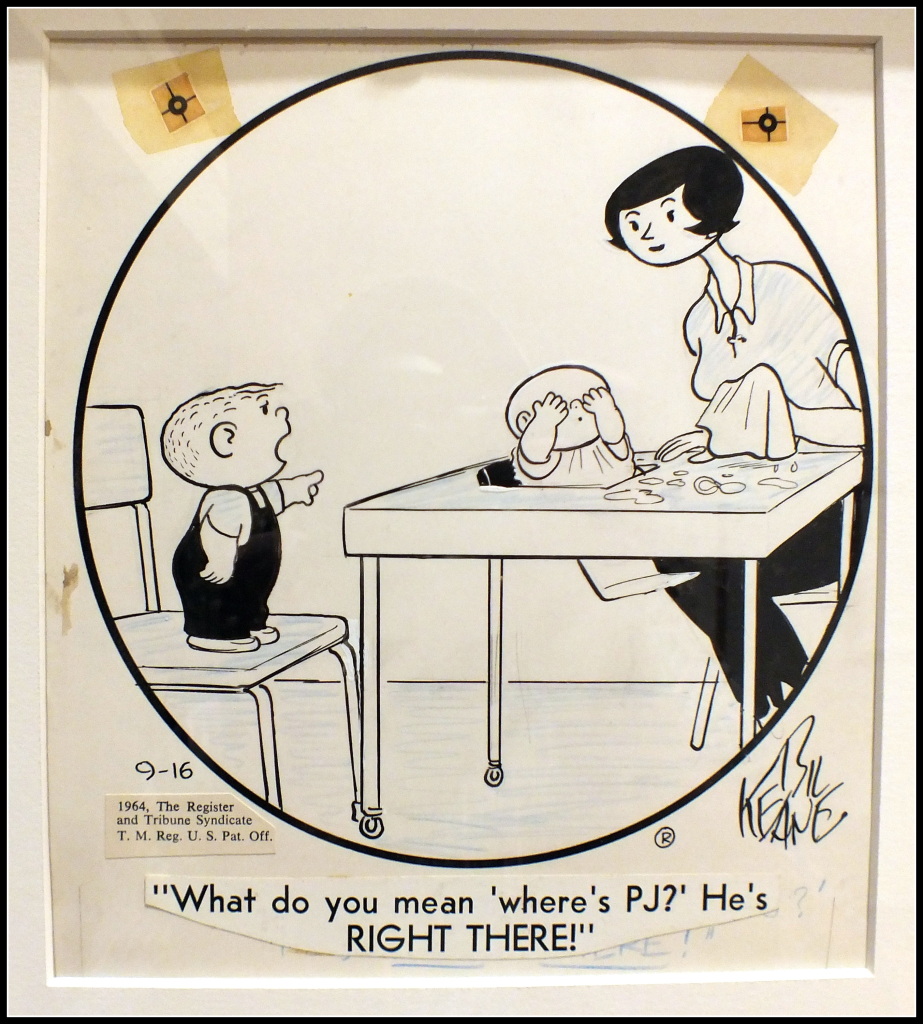
Family Circle

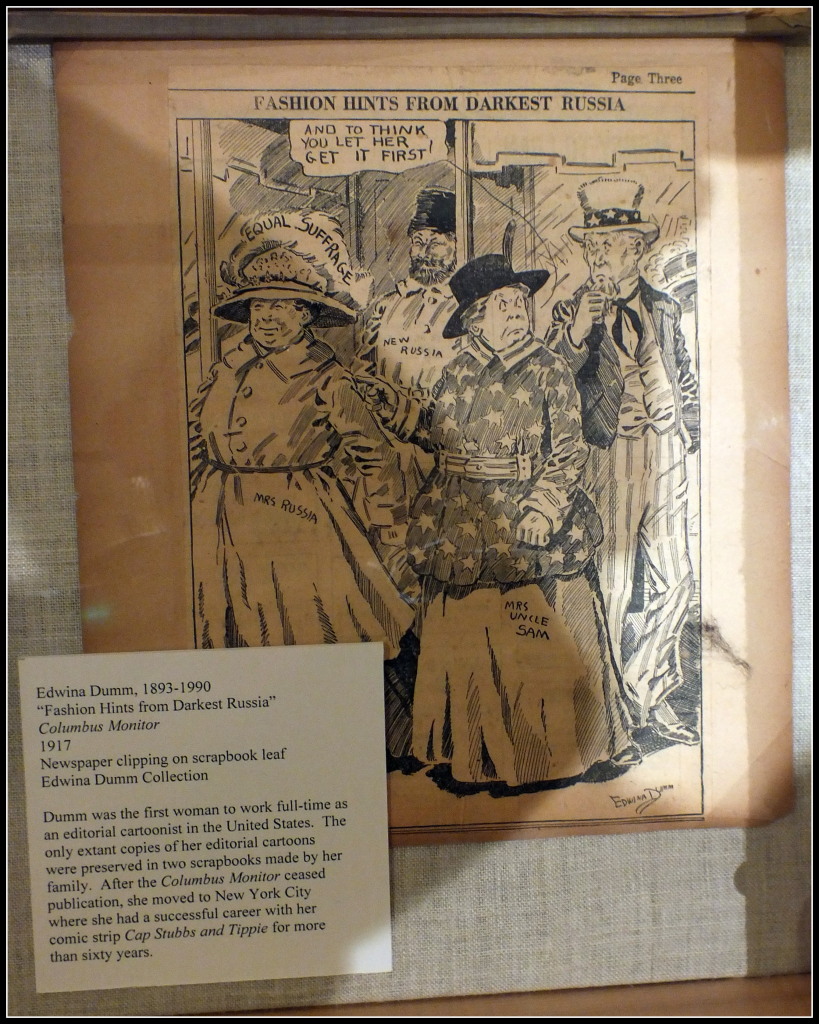
Fashion Hints

The First of May 1865 or General Moving Day in Richmond Va. President Jefferson Davis is shown here with the bricks of the Southern States tumbling from his back. His cabinet is evacuating Richmond, the capital of the Confederacy in April 1865. A freed slave is shown thumbing his nose at the exiting dignitaries and the C.S.A. Treasury box, labeled ‘waste paper’ is being urinated on by a dog.
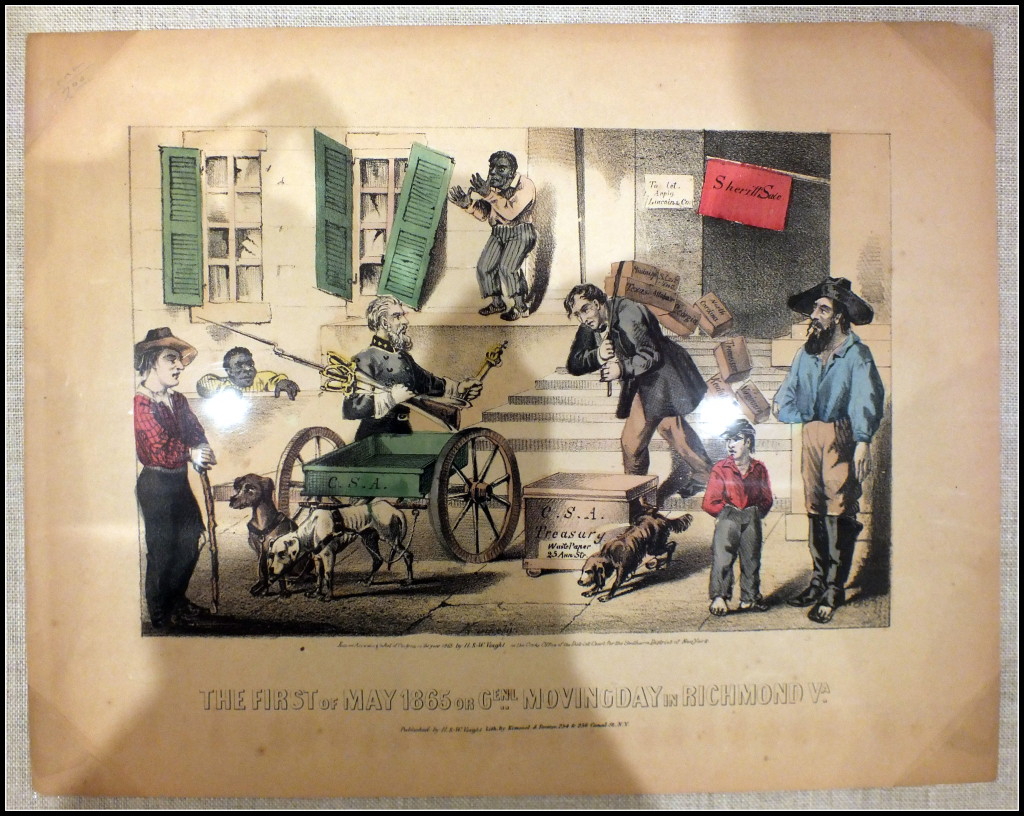
First of May

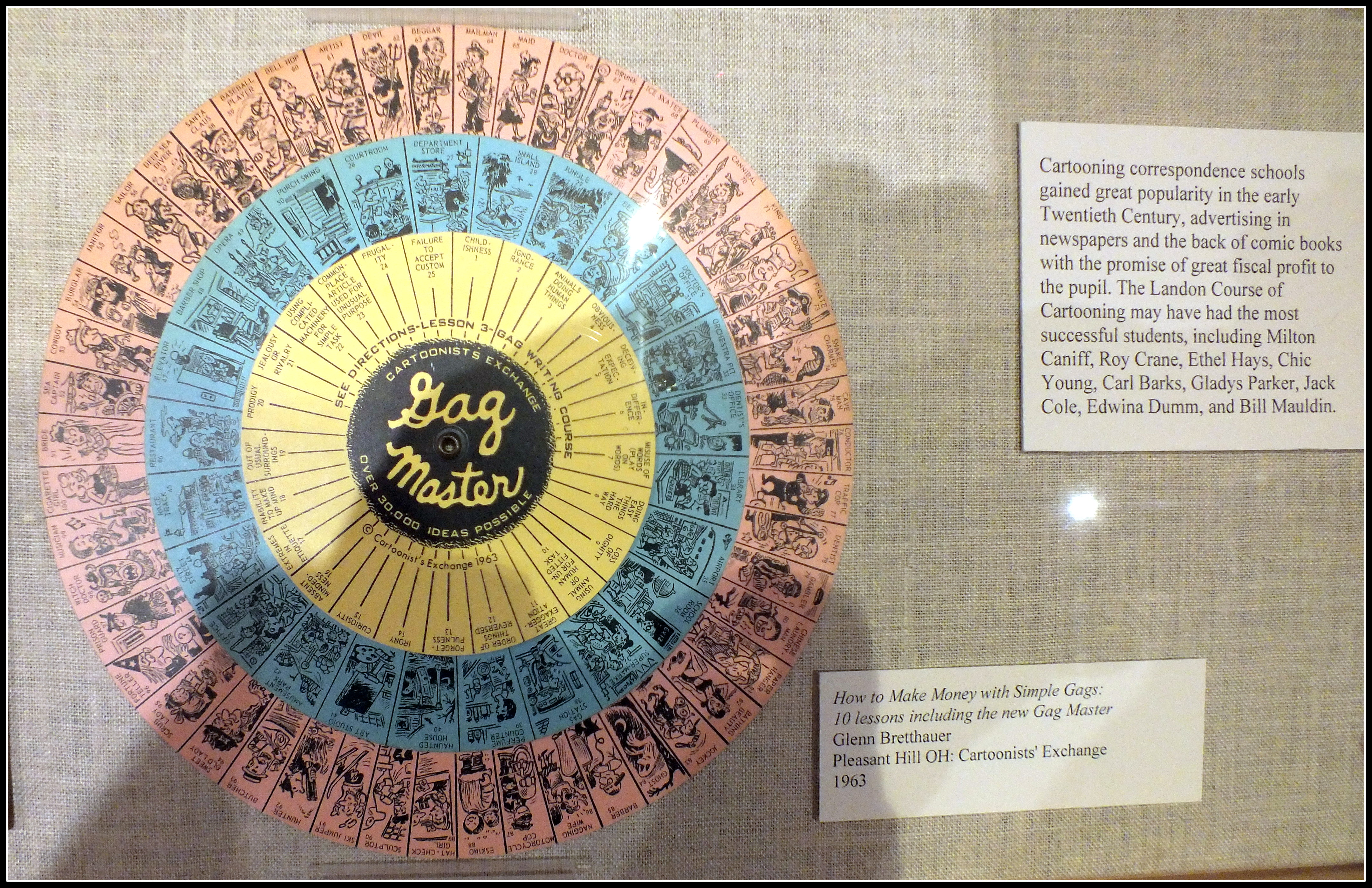
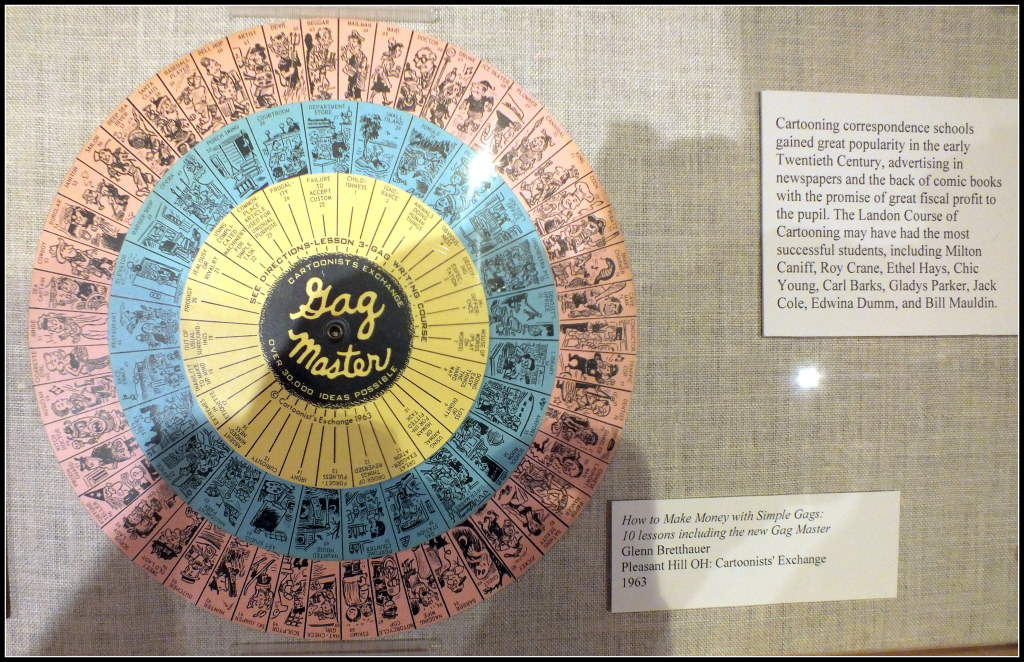
Gag Master

Gasoline Alley

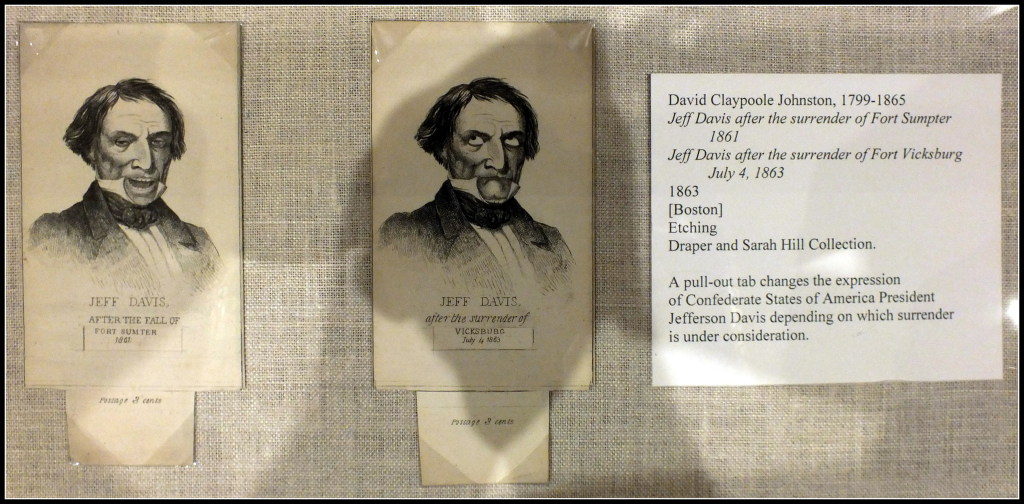
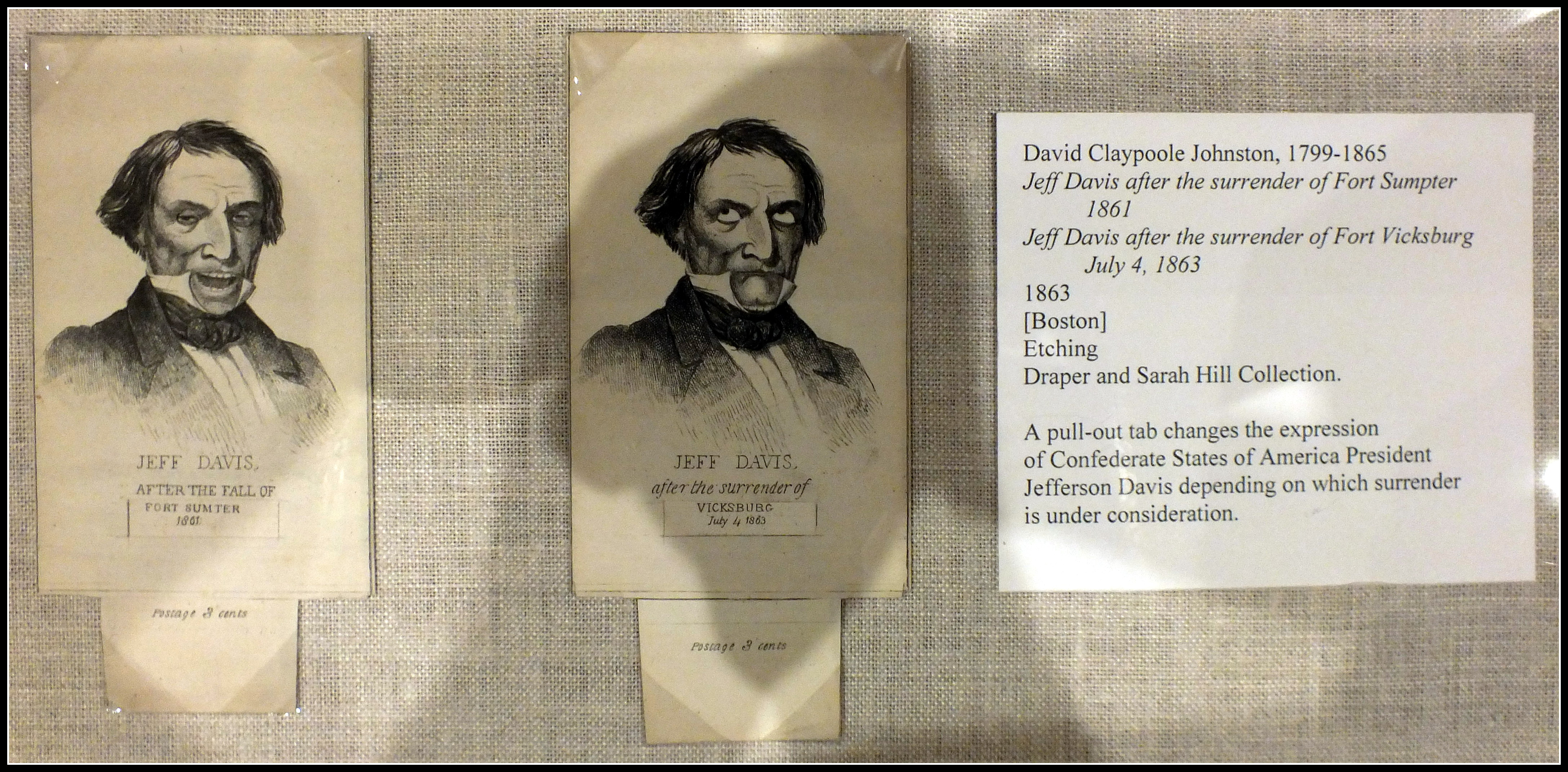
Jeff Davis

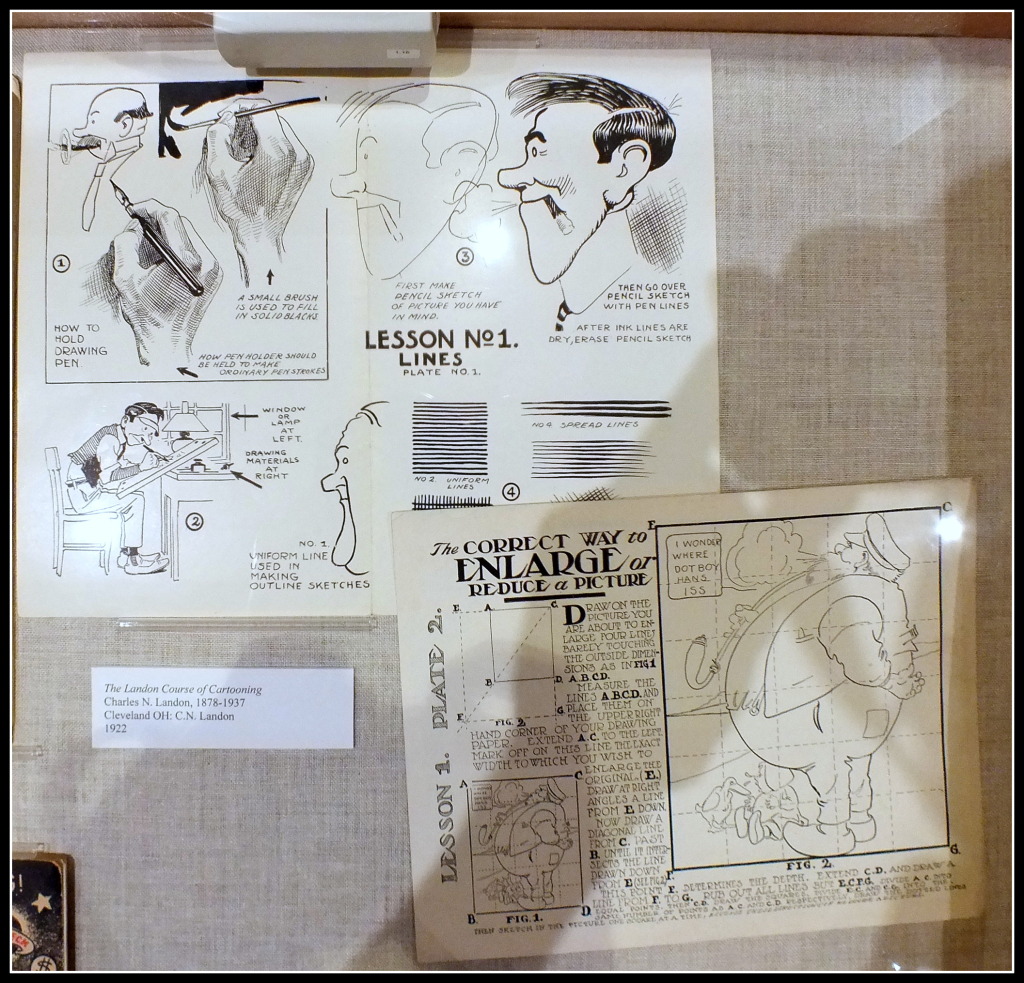
Lessons

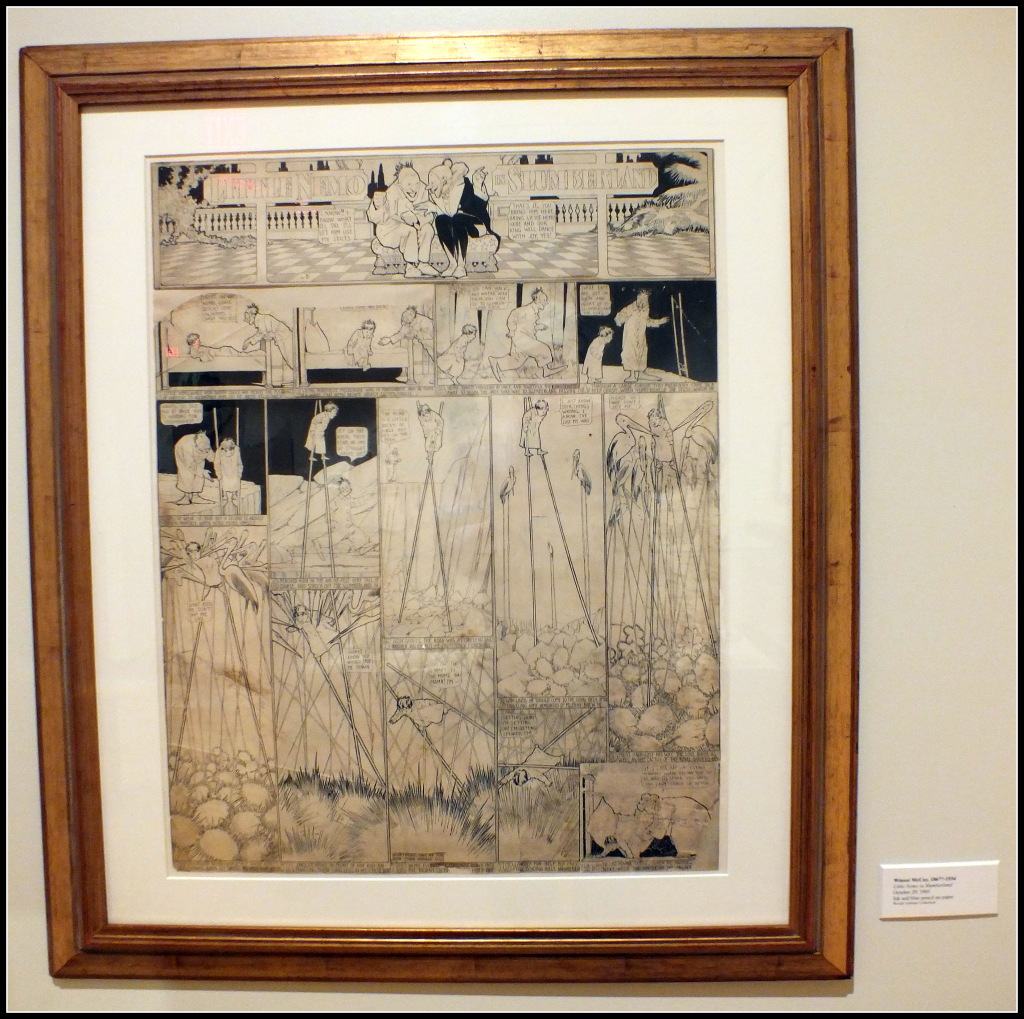
Little Nemo

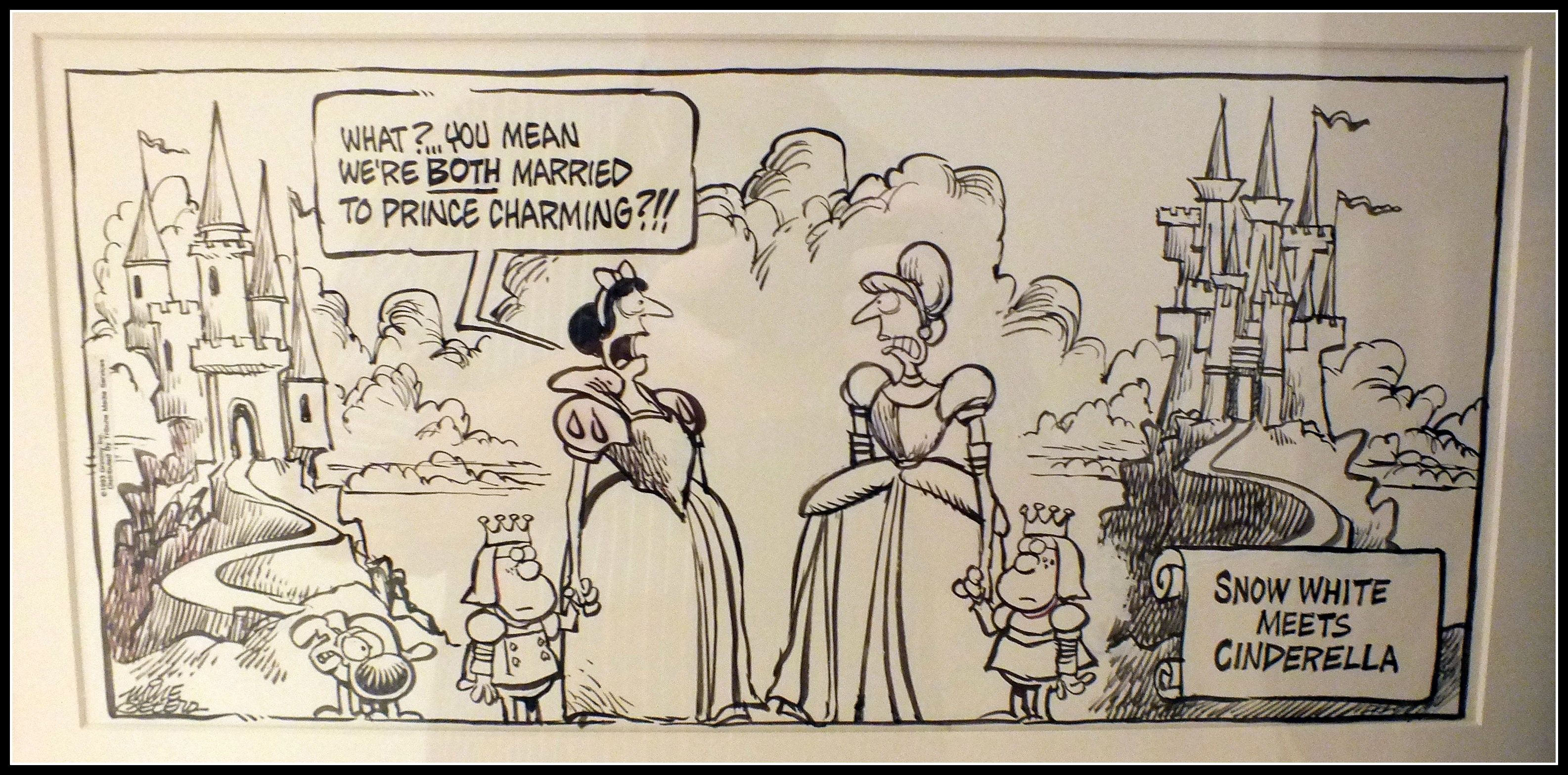
Mother Goose and Grimm, by Mike Peters, June 13, 1993
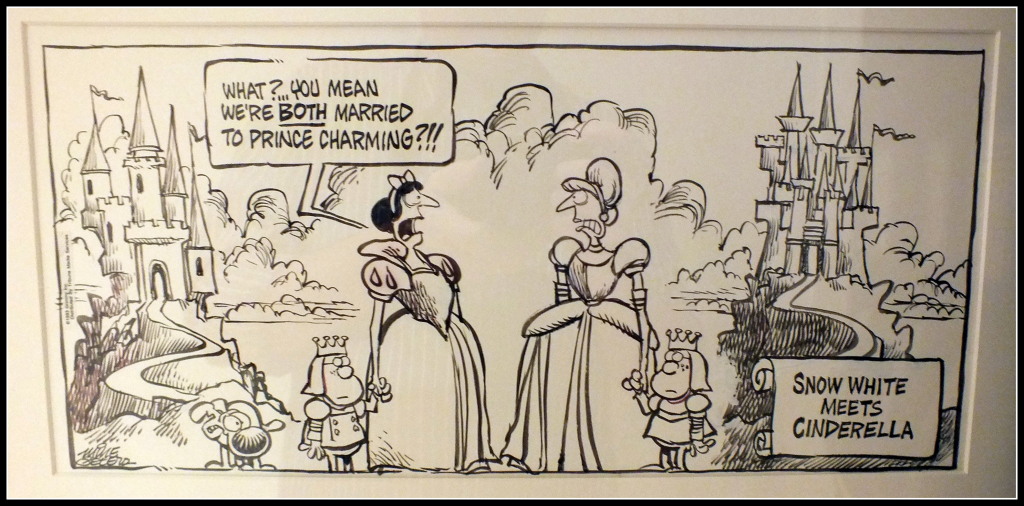
Mother Goose

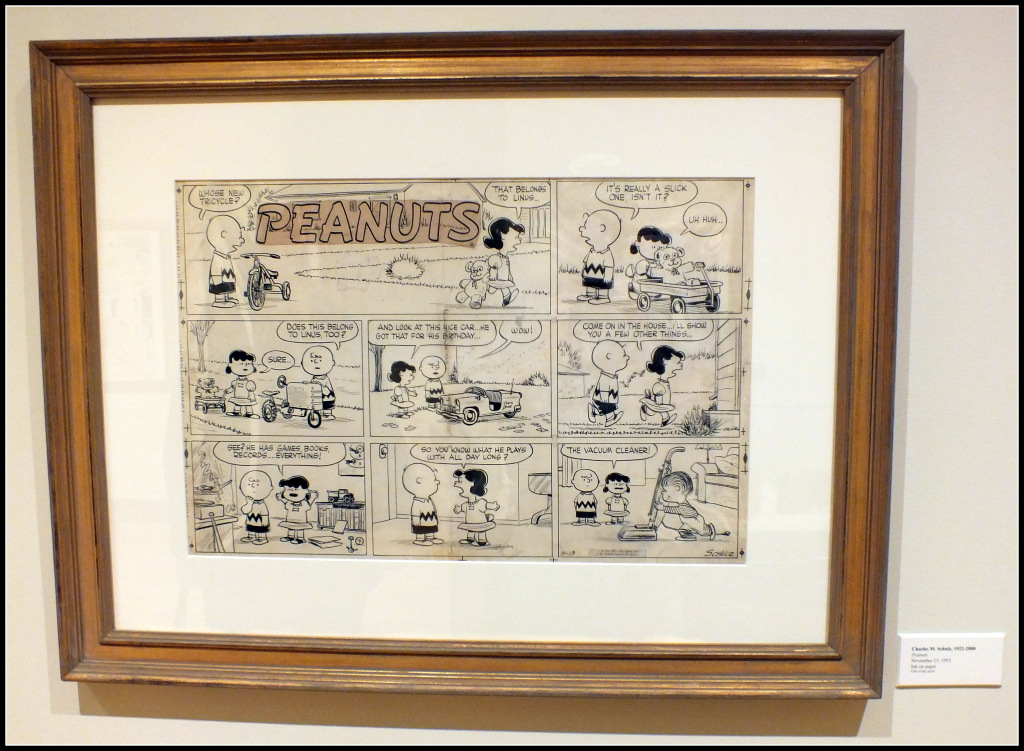
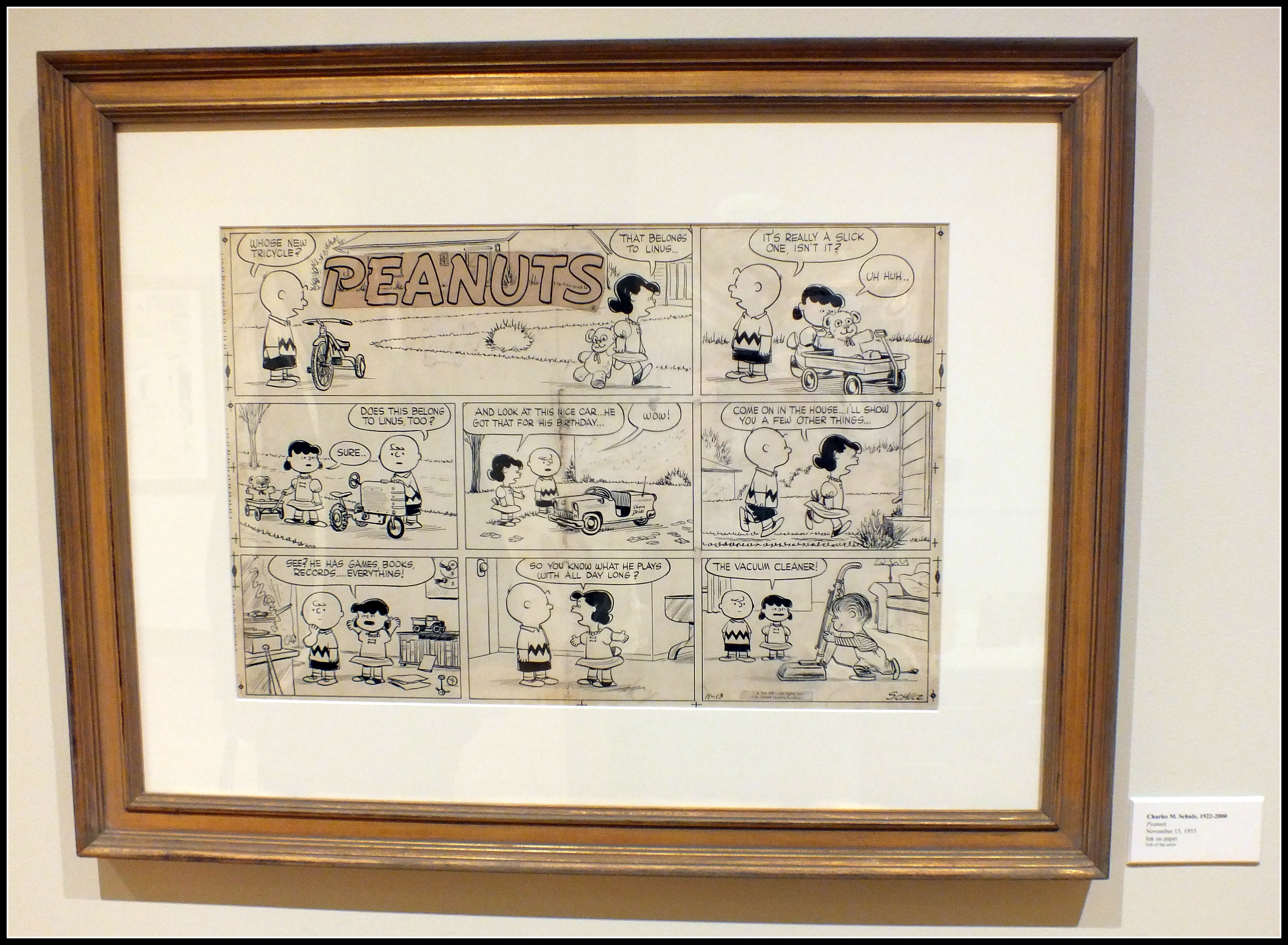
Peanuts

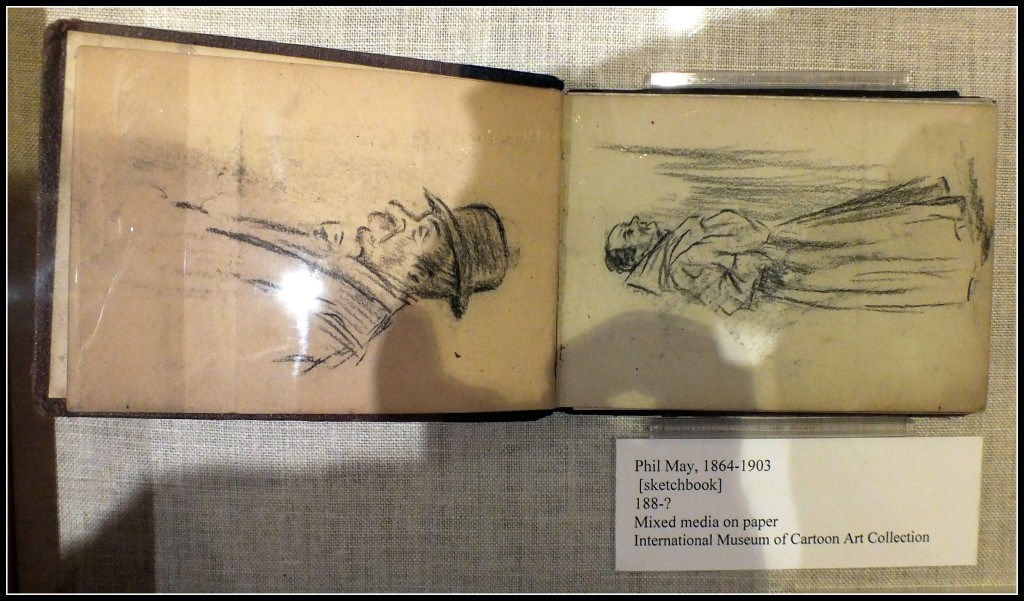
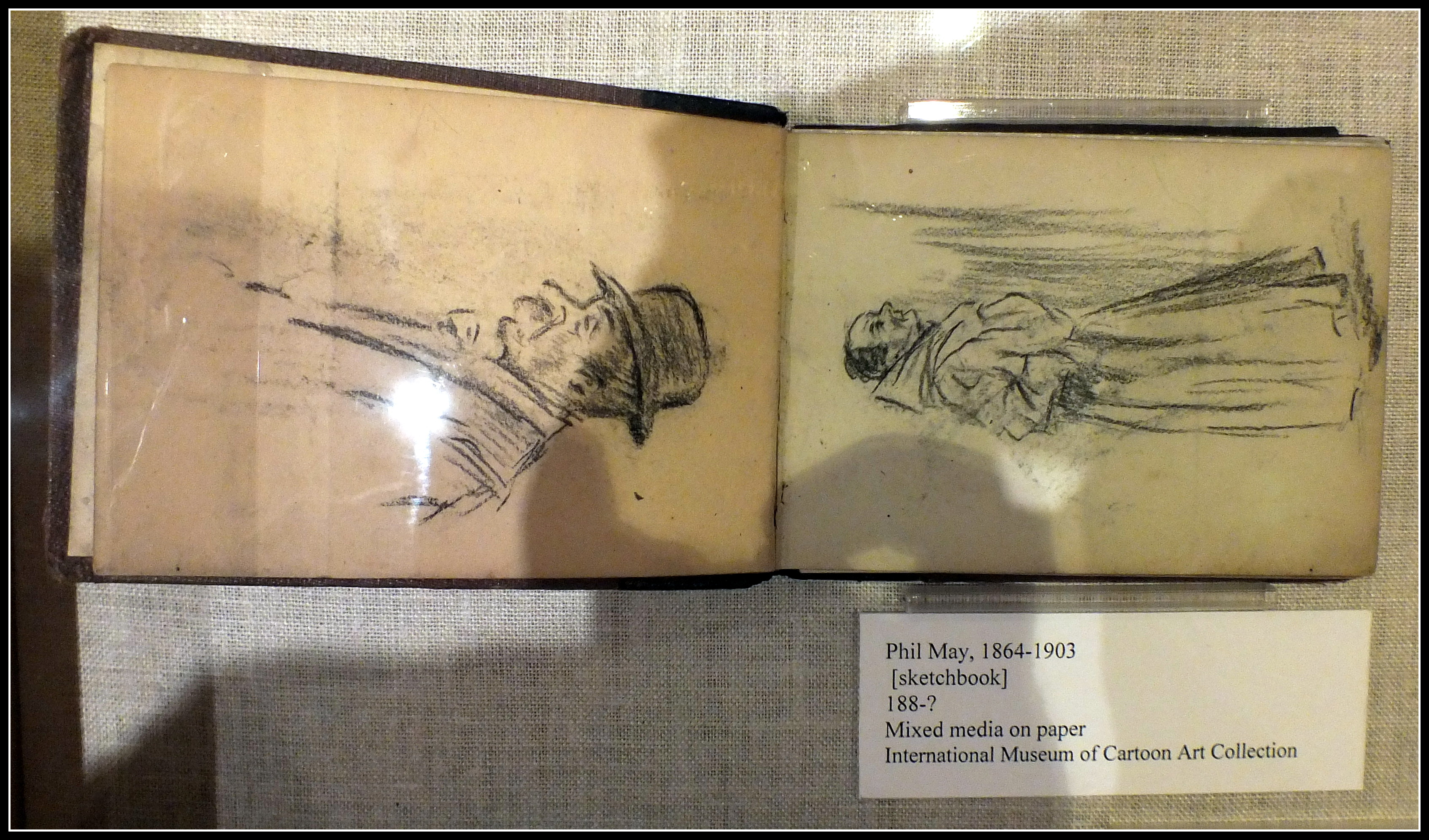
Phil May

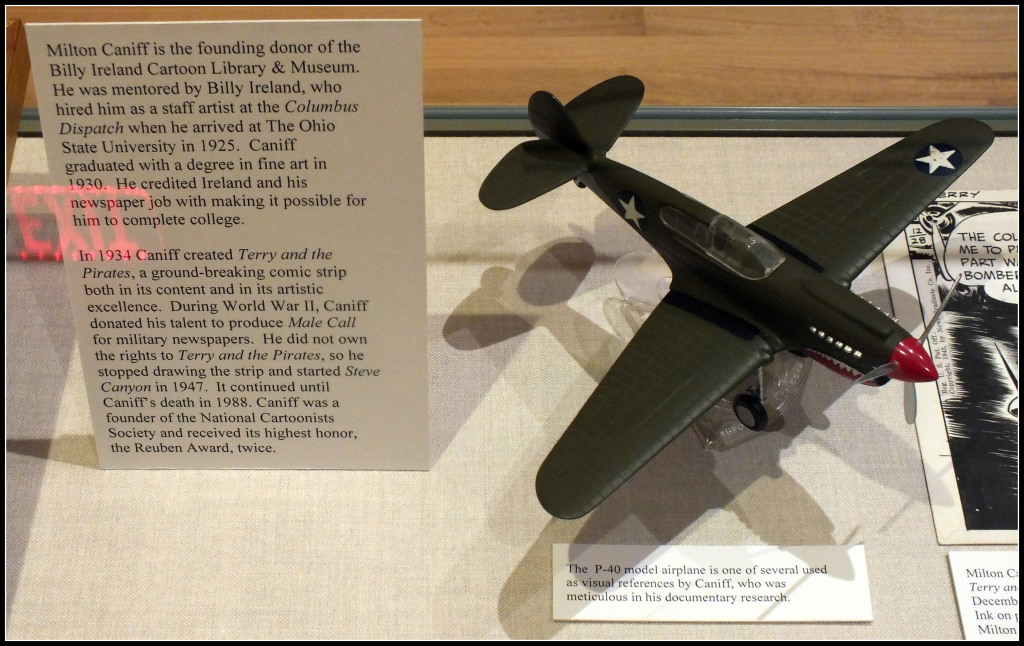
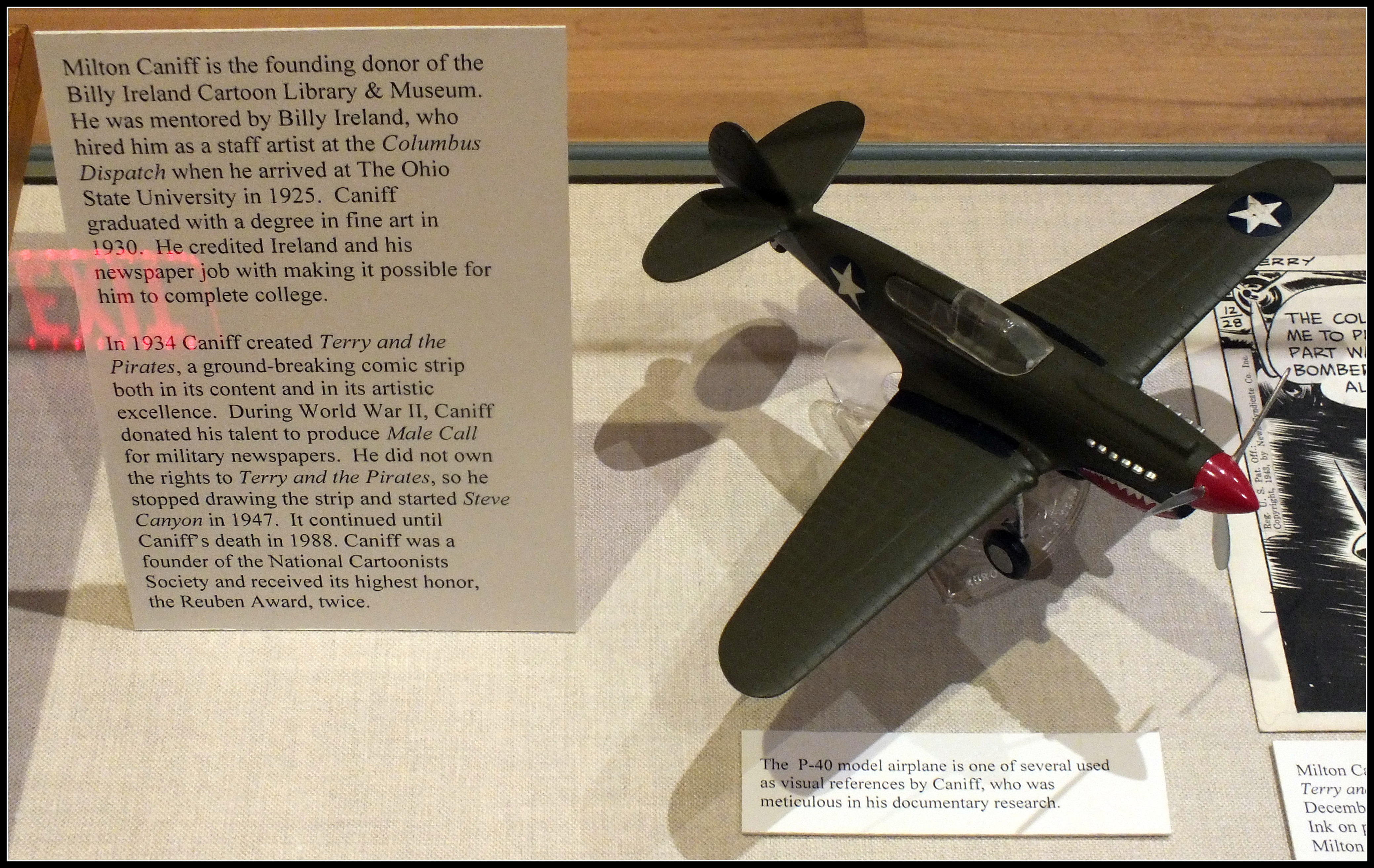
Plane

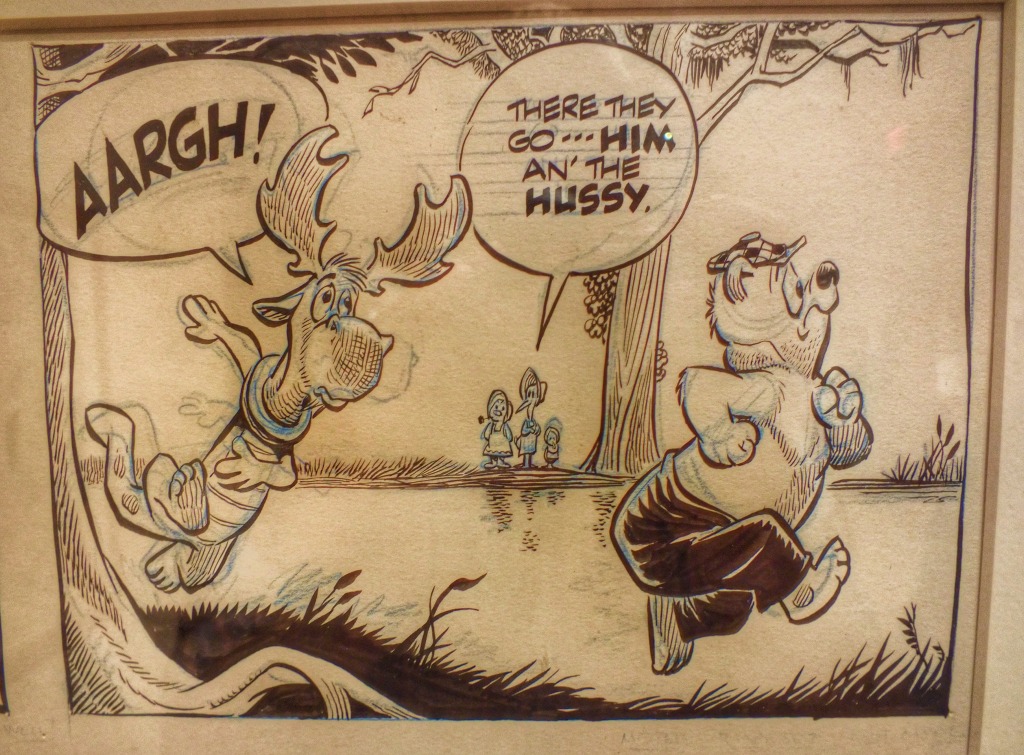
Pogo

IMG_1661

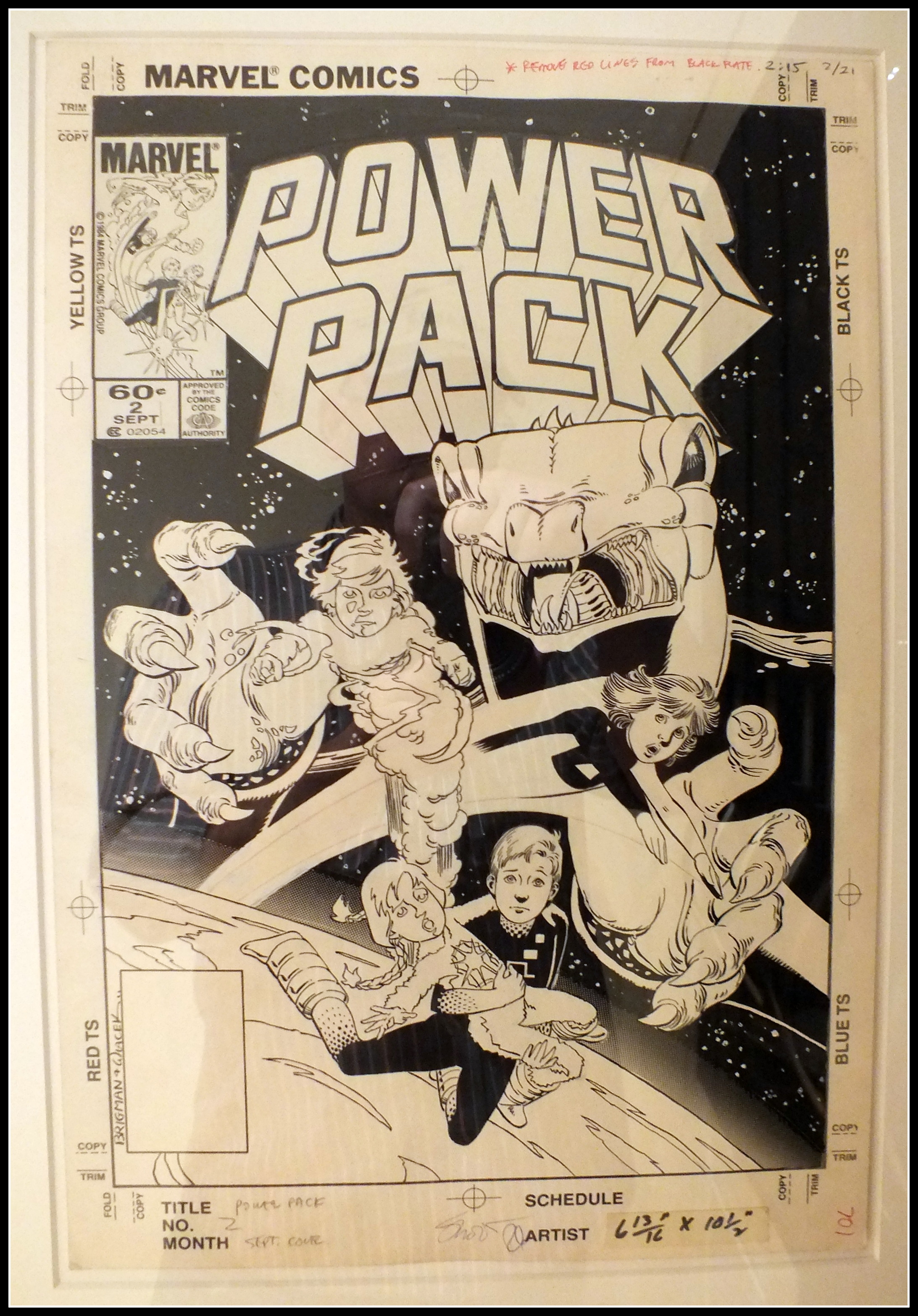
Power Pack, by June Brigman, September 2, 1984. Once upon a time, I owned this comic.
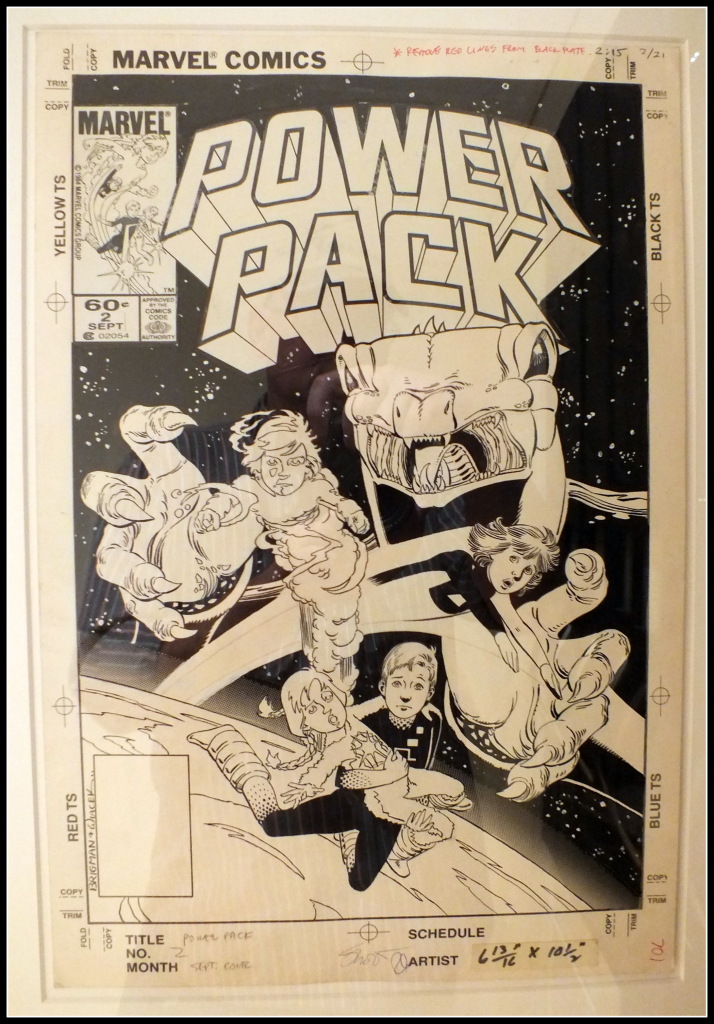
Power Pack

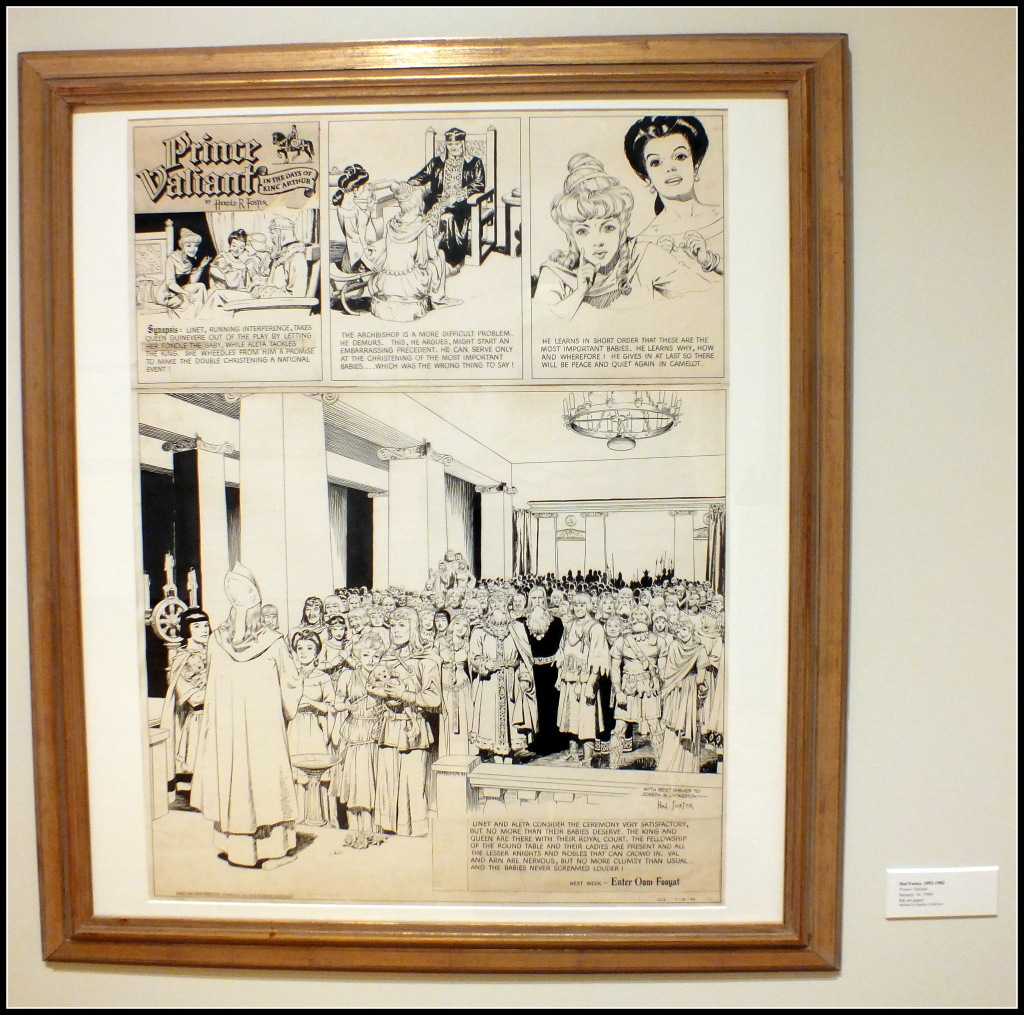
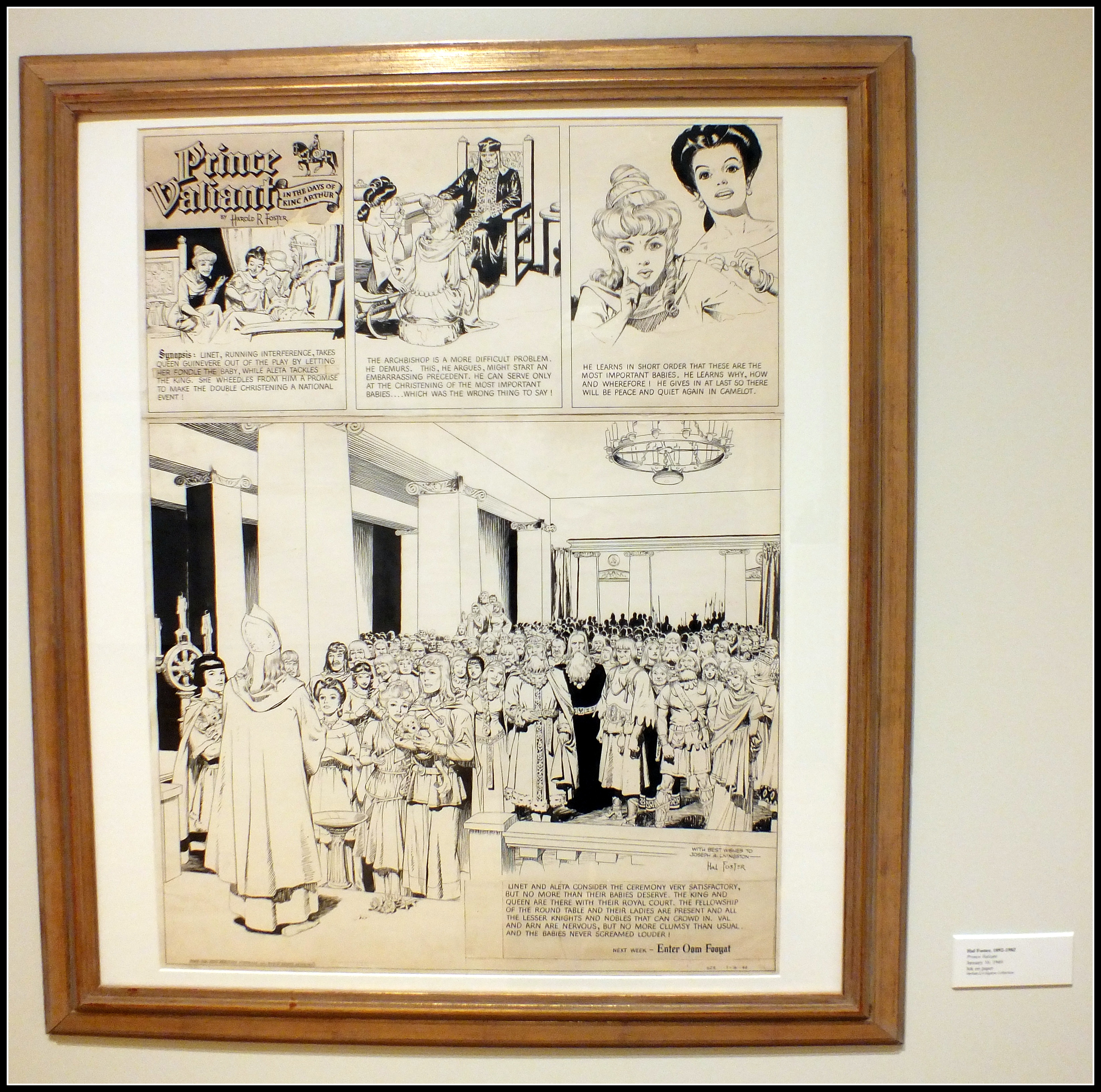
Prince Valiant

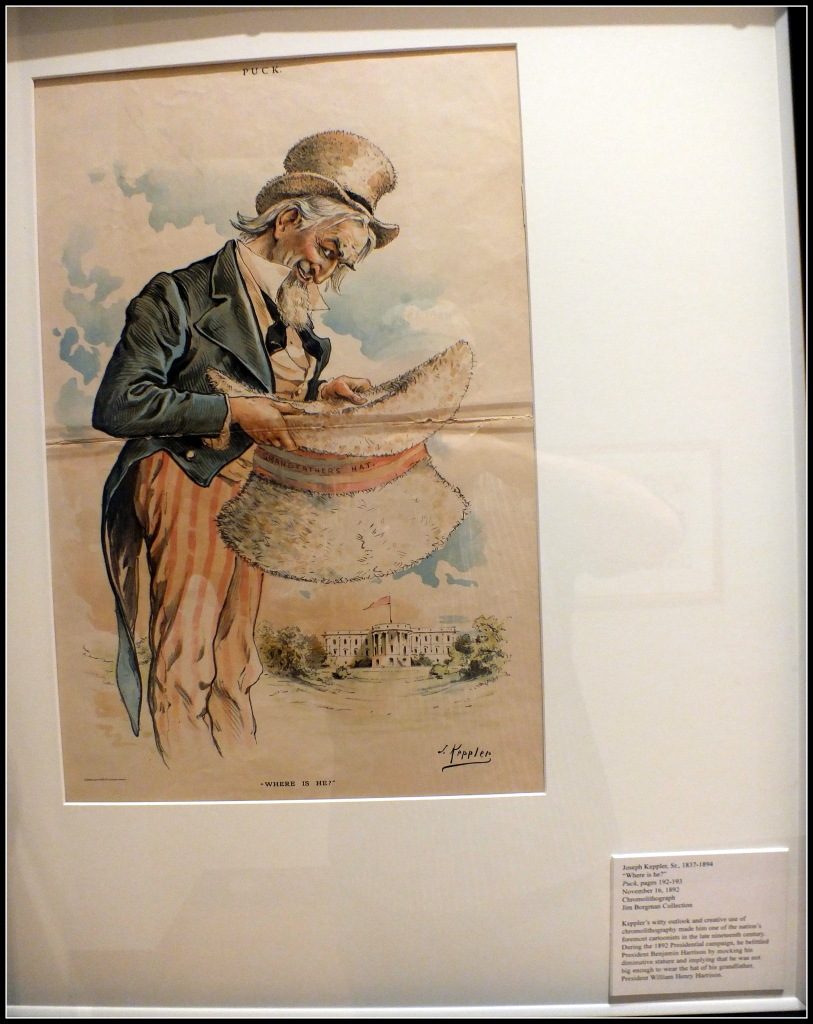
Puck Uncle Sam

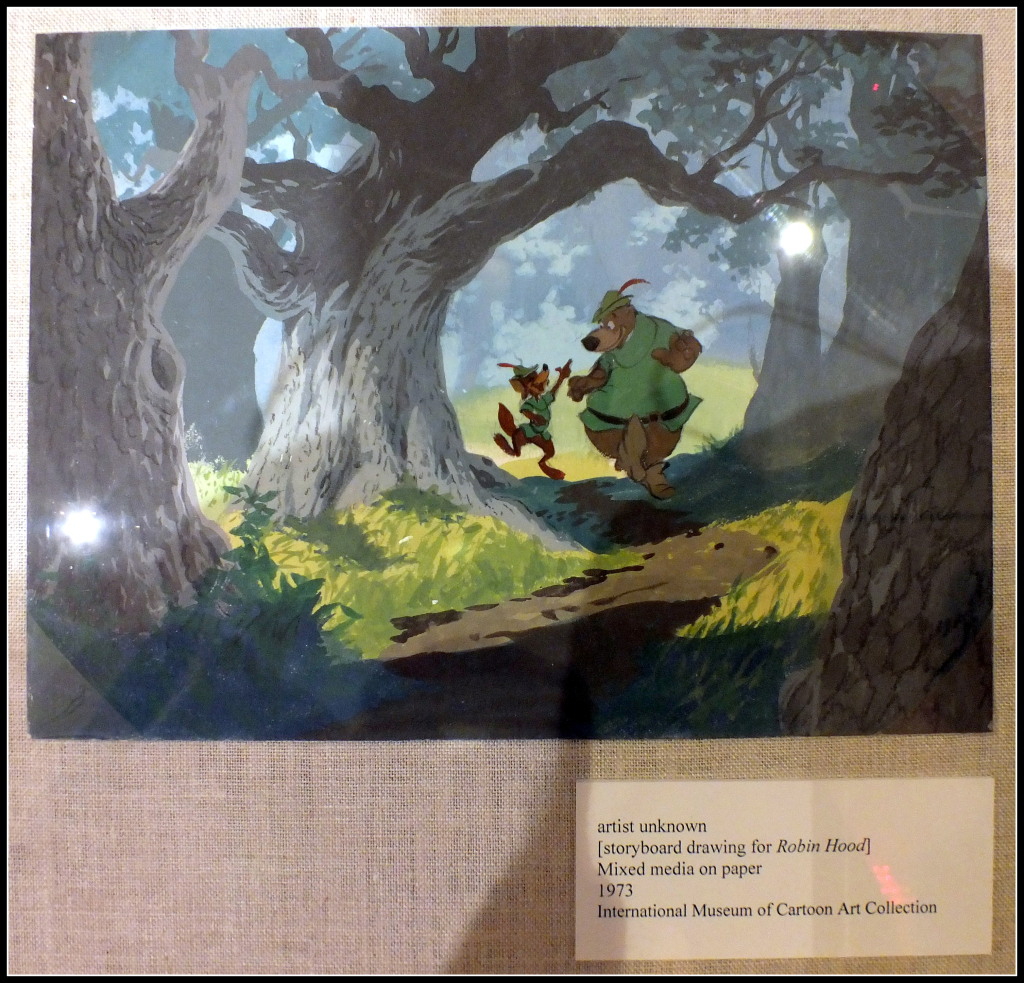
Robin Hood

Shoe

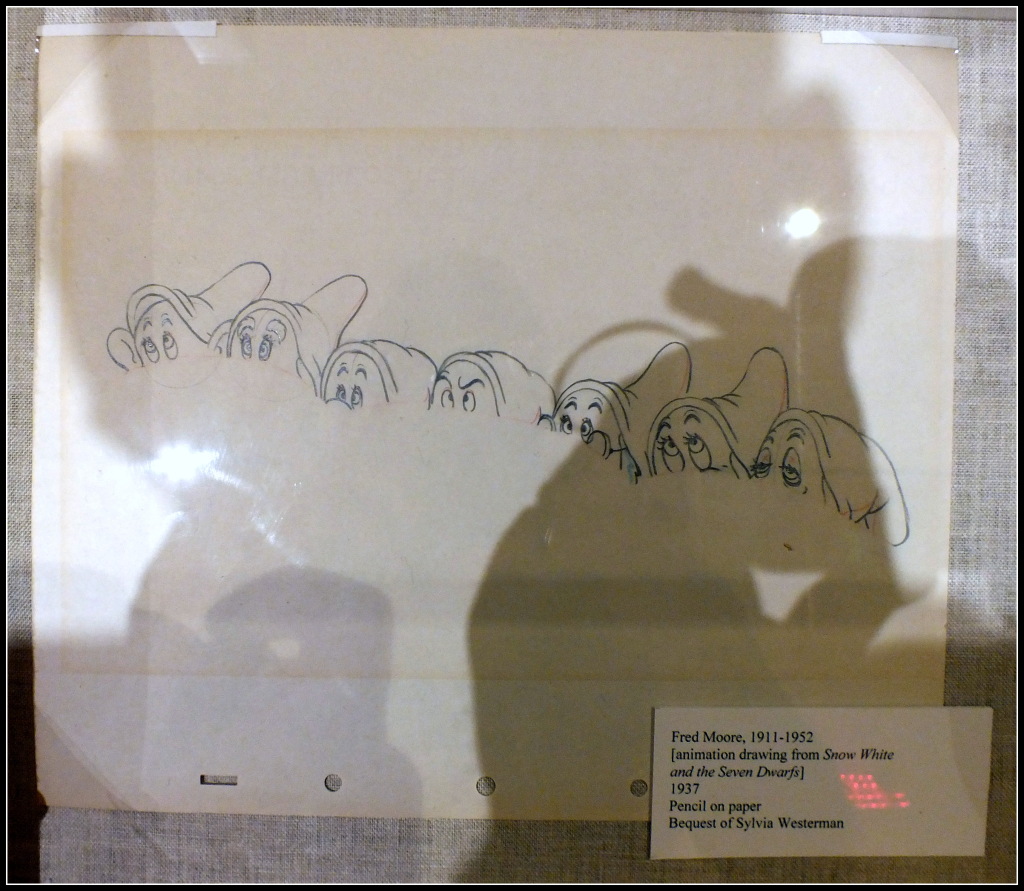
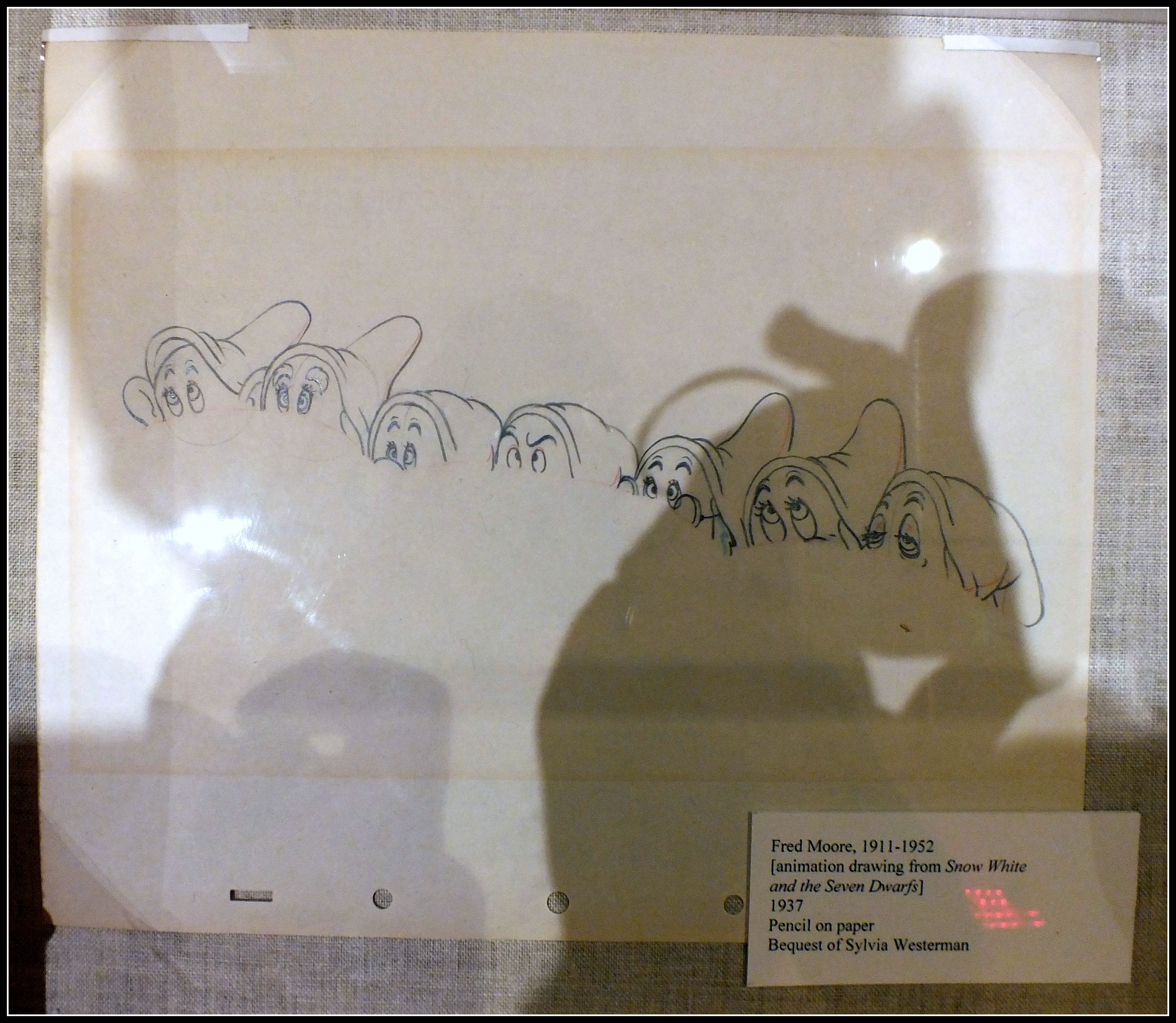
Snow White

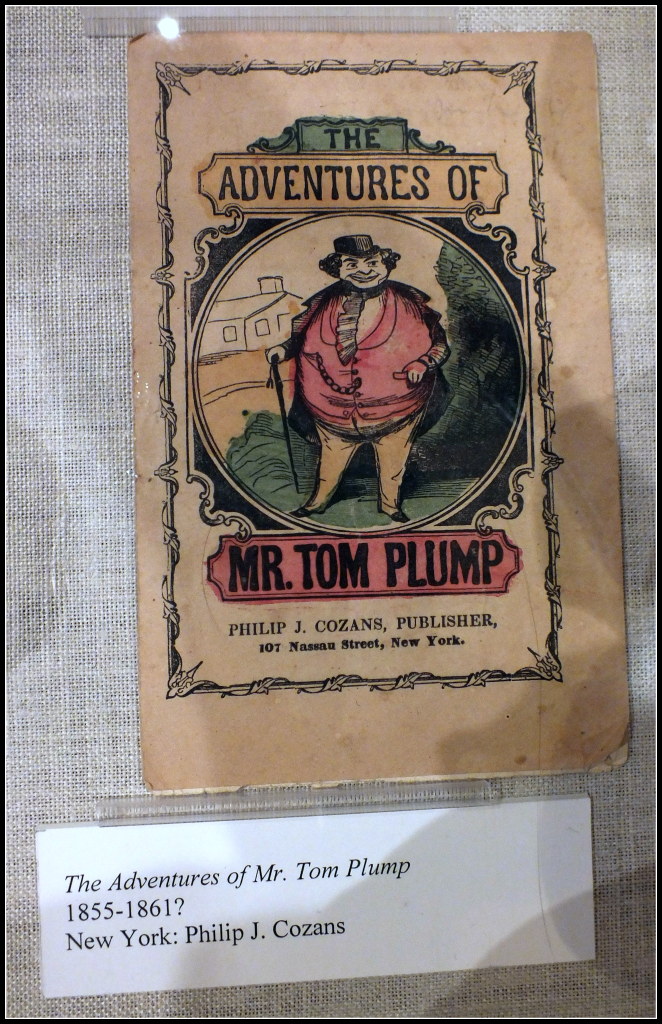
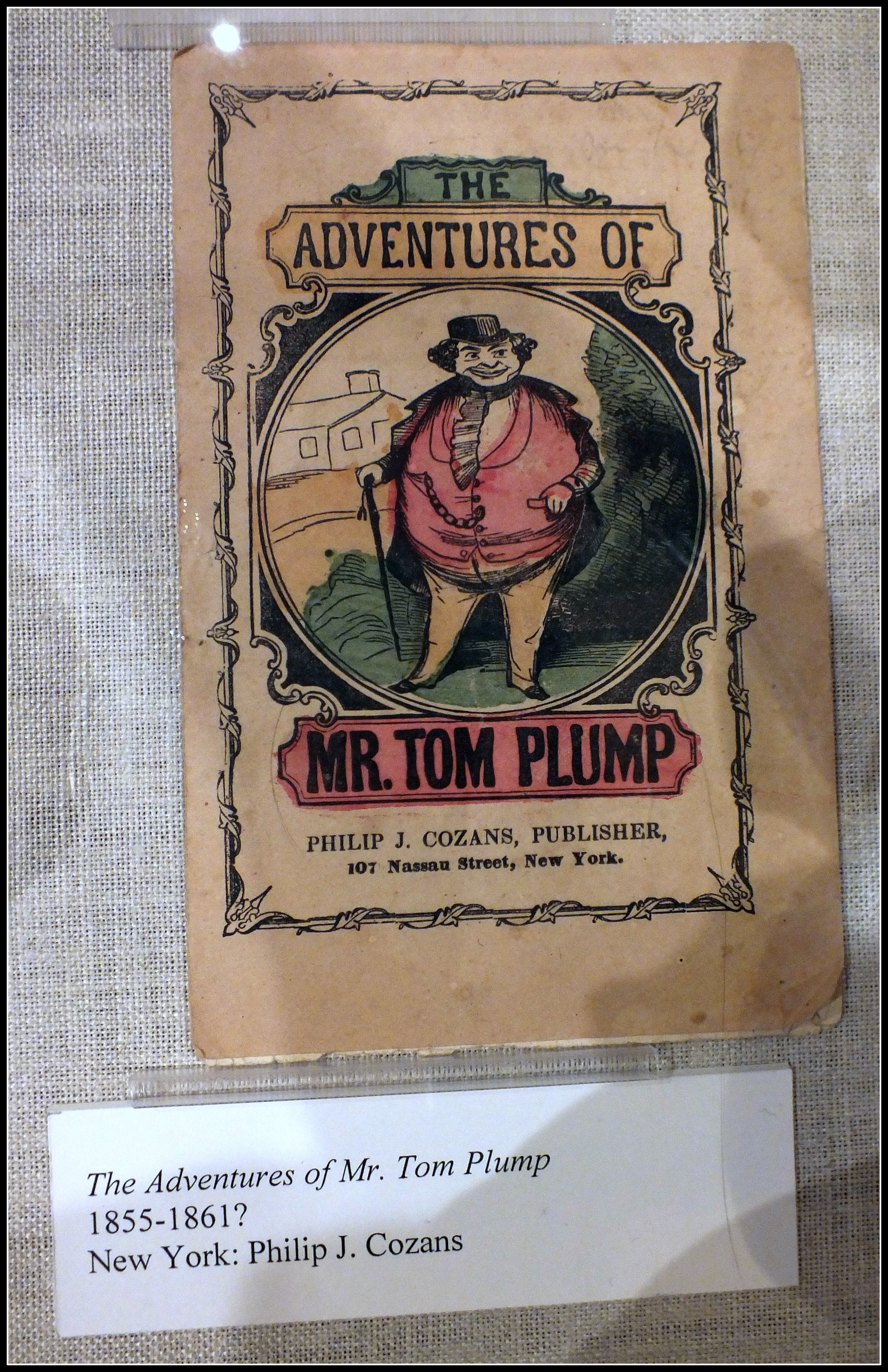
Tom Plump

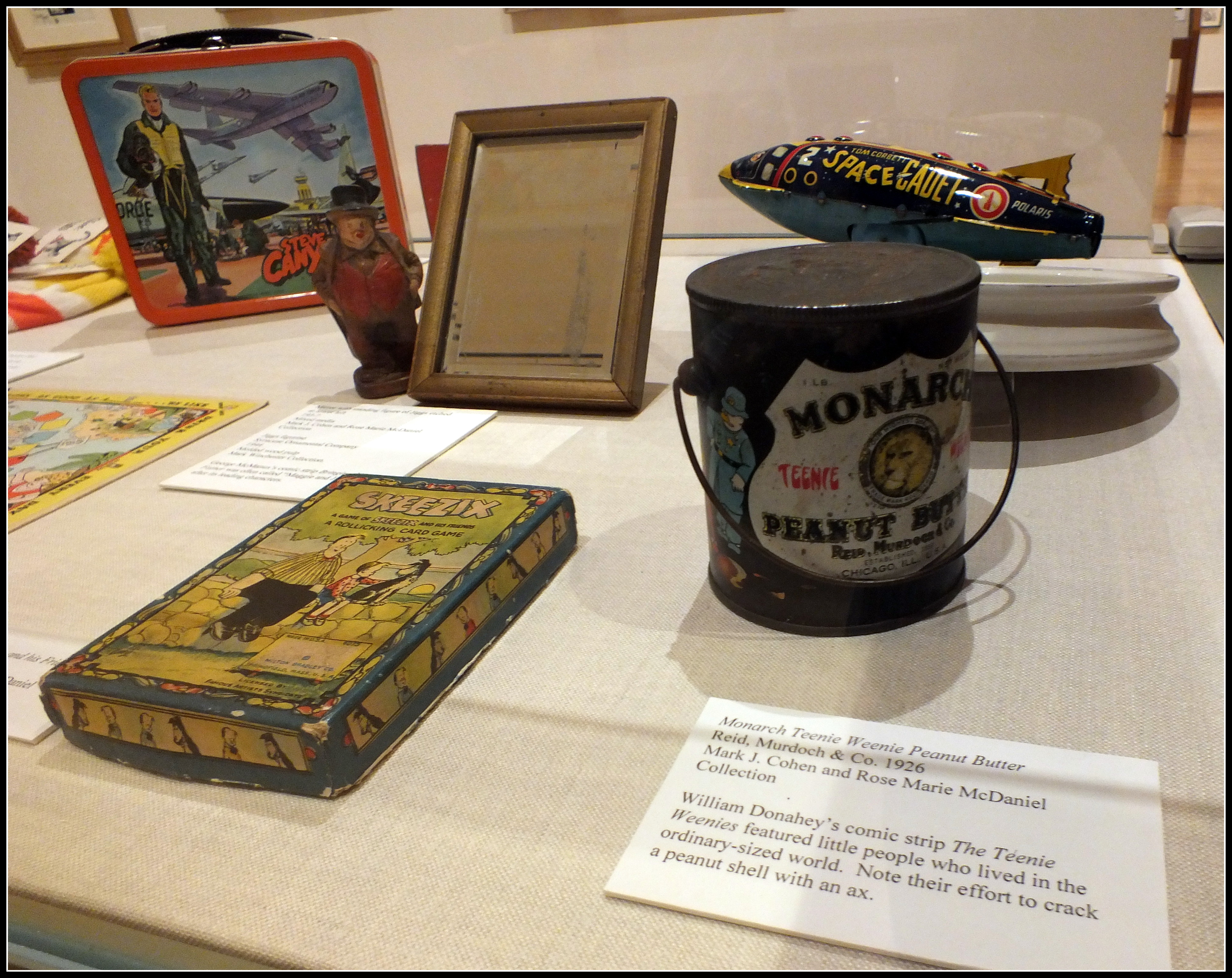
Toys

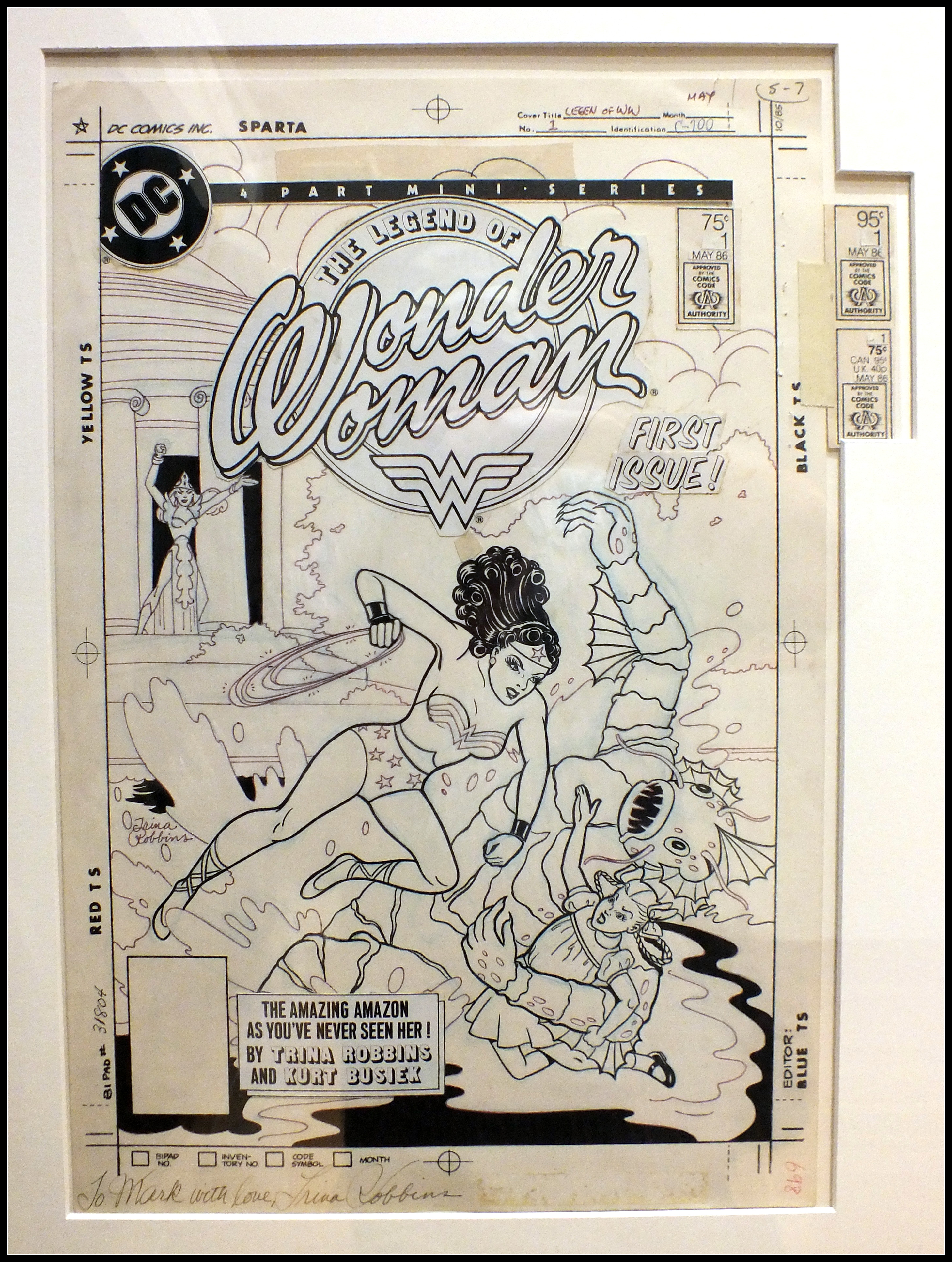
The Legend of Wonder Woman, by Trina Robbins, May 1986
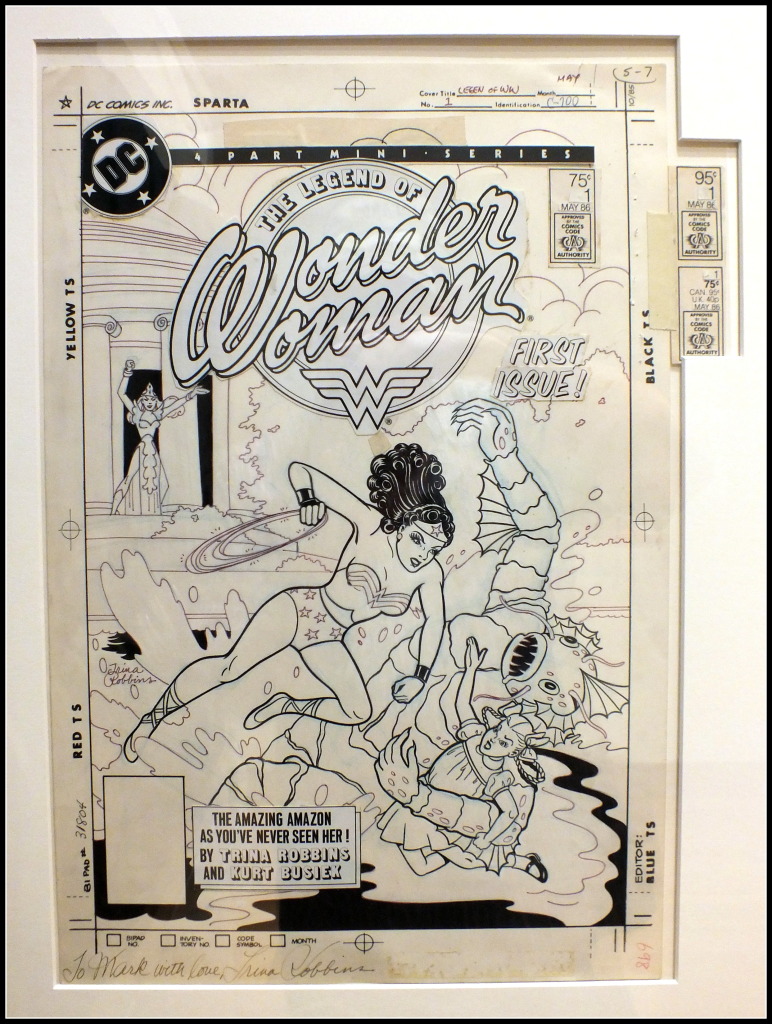
Wonder Woman

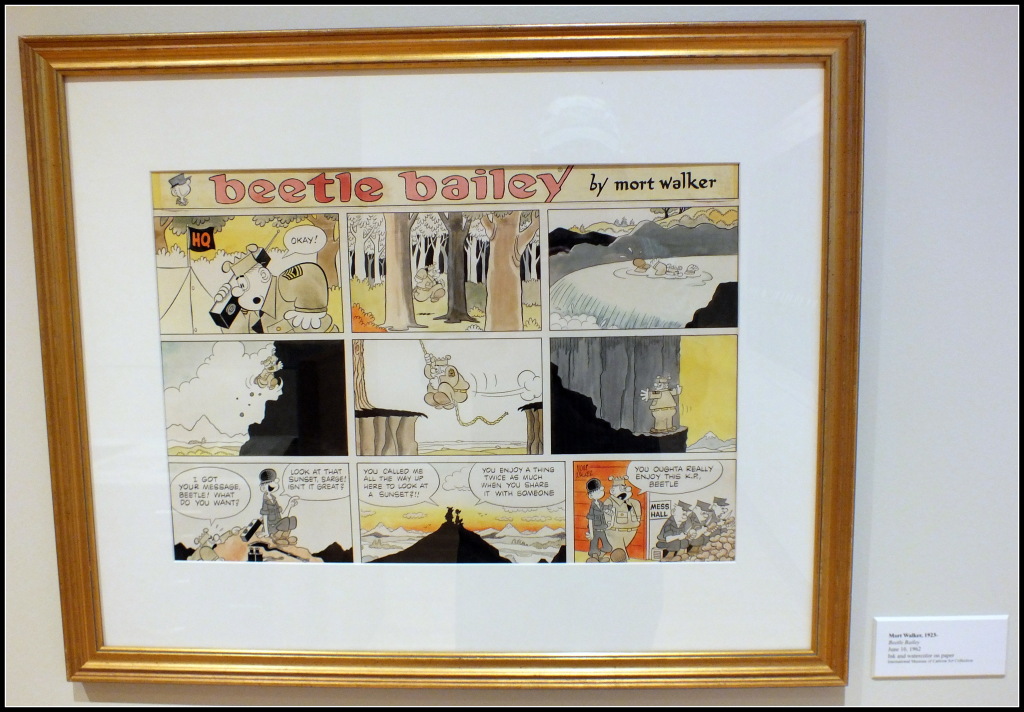
Beetle Bailey

Posted in Ohio | Comments Off on Billy Ireland Cartoon Museum