
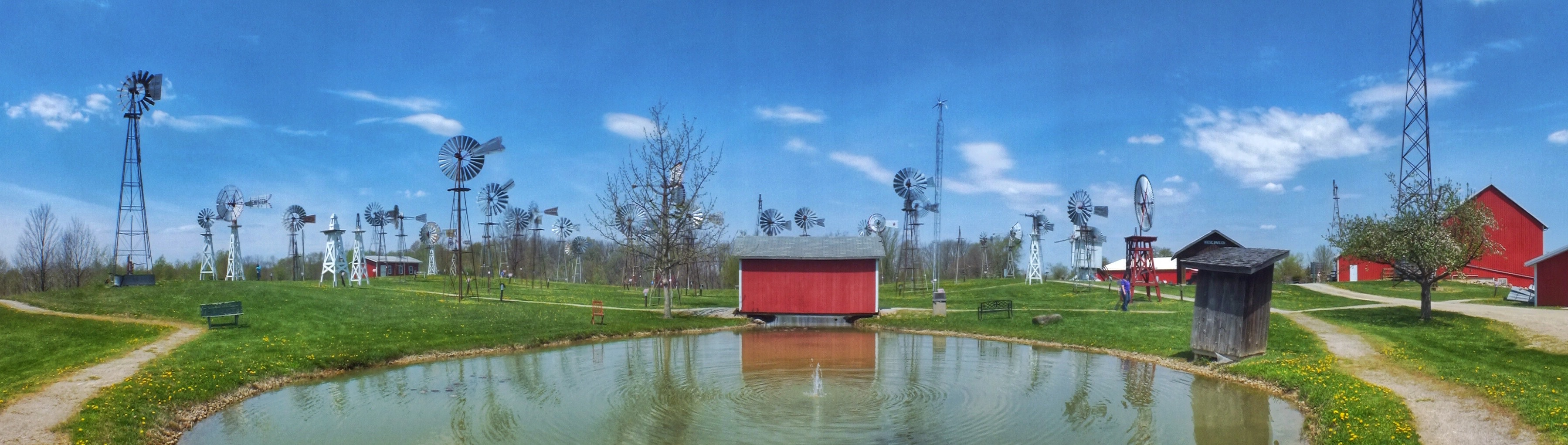
Right outside the small town of Kendallville, Indiana there’s a field full of windmills. Not the huge ones like they have in Holland but small ones, like you see on farms. It so happens that windmills were manufactured in Kendallville and in dozens of other small towns in Indiana, Michigan and Ohio.
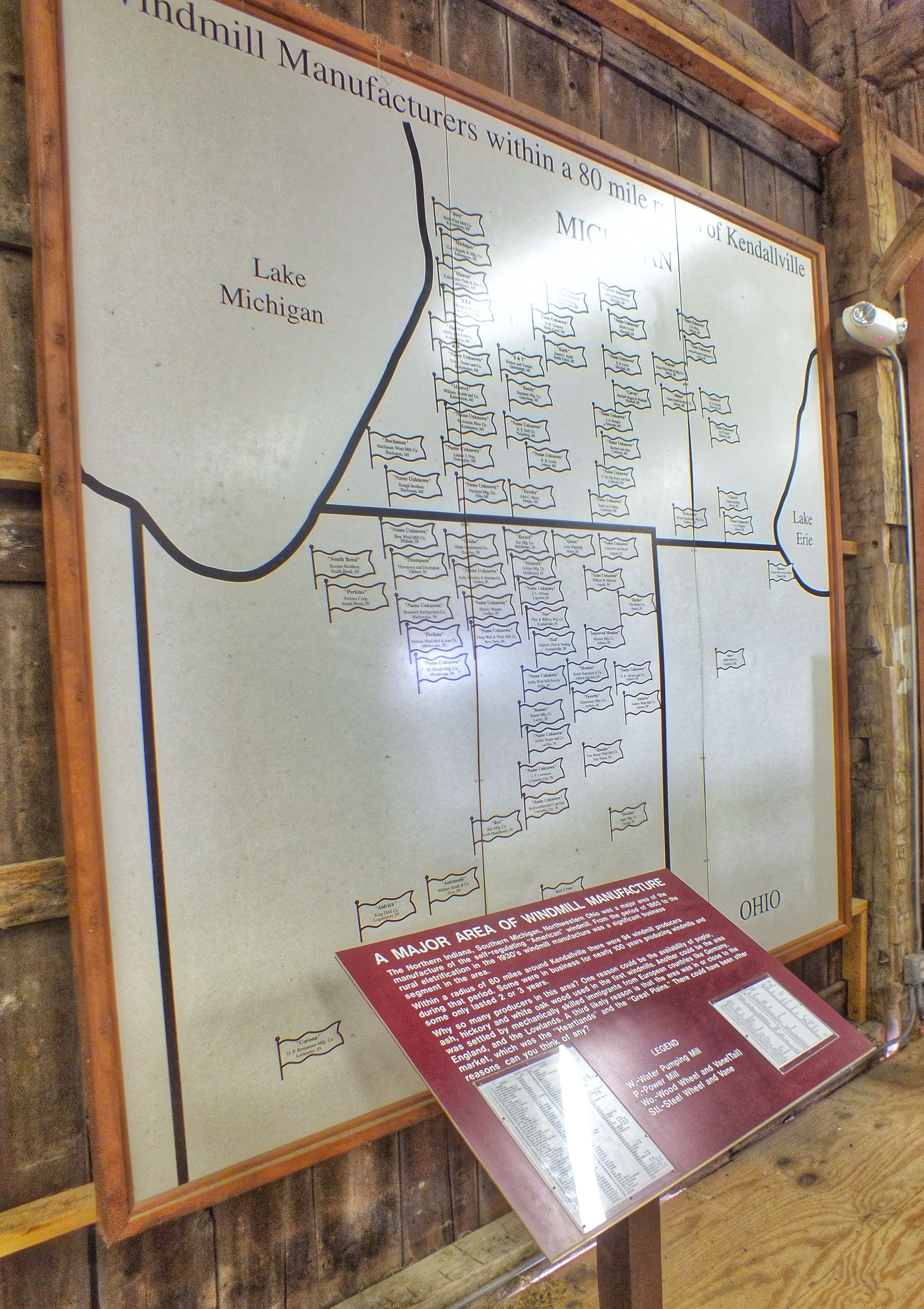
They all had signs written by windmill enthusiasts for windmill enthusiasts that said things like “The mill was self-oiling with bronze bearings in place of Timken roller bearings and a single back-gear in place of the normal two gears.” But we read most of them anyway and even figured out what some of them meant. I’ve included descriptions for a couple of them.
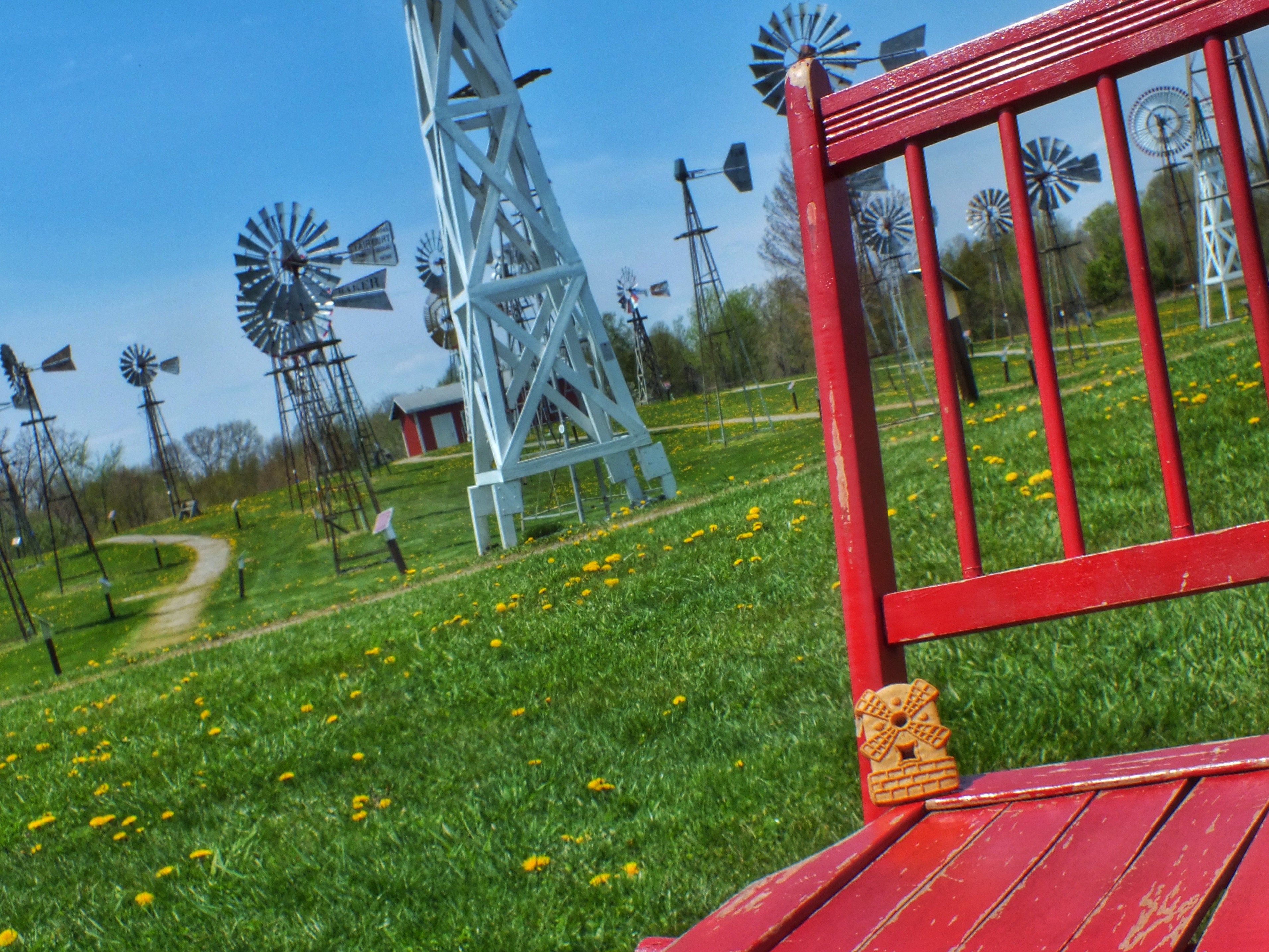
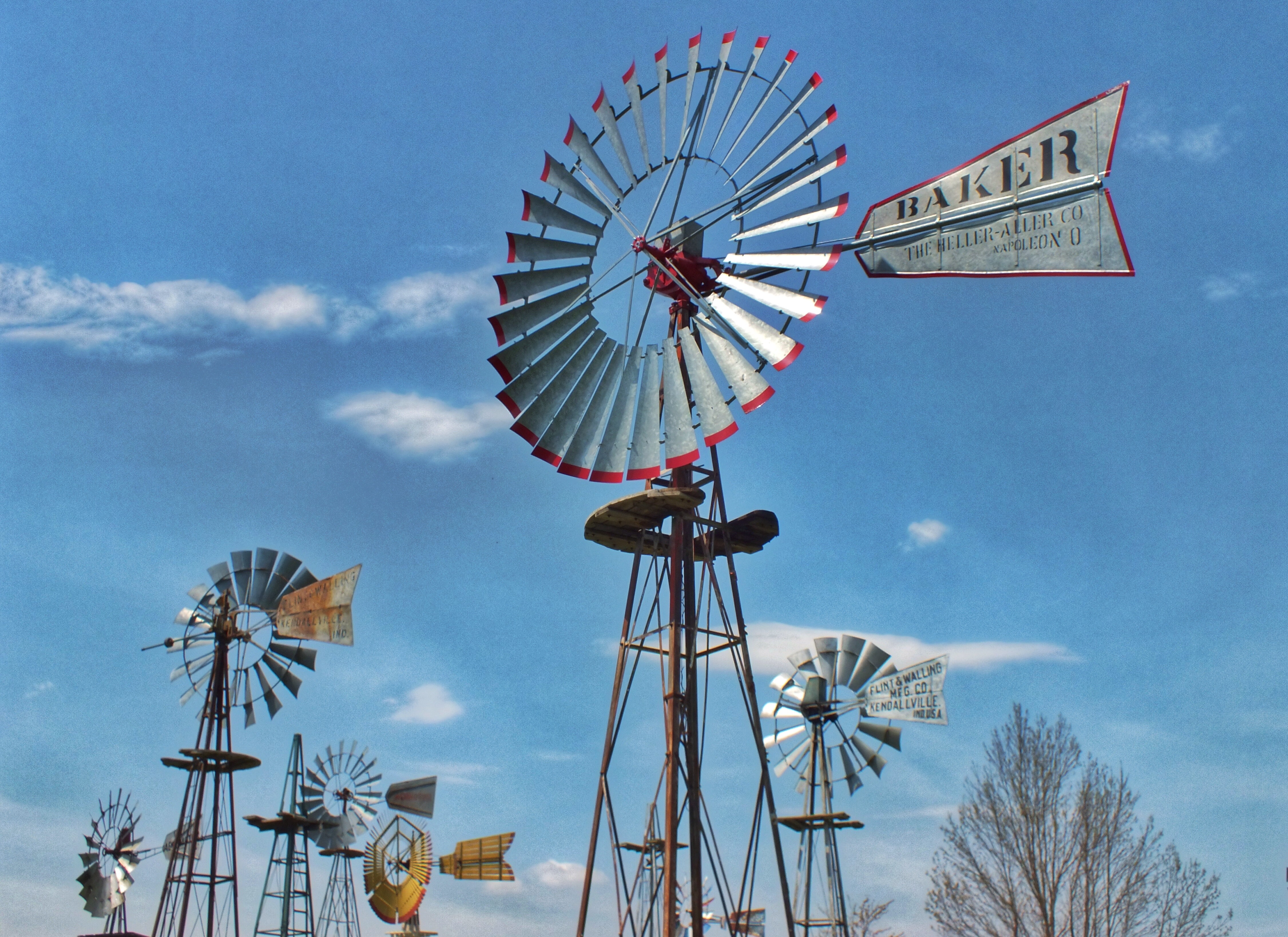
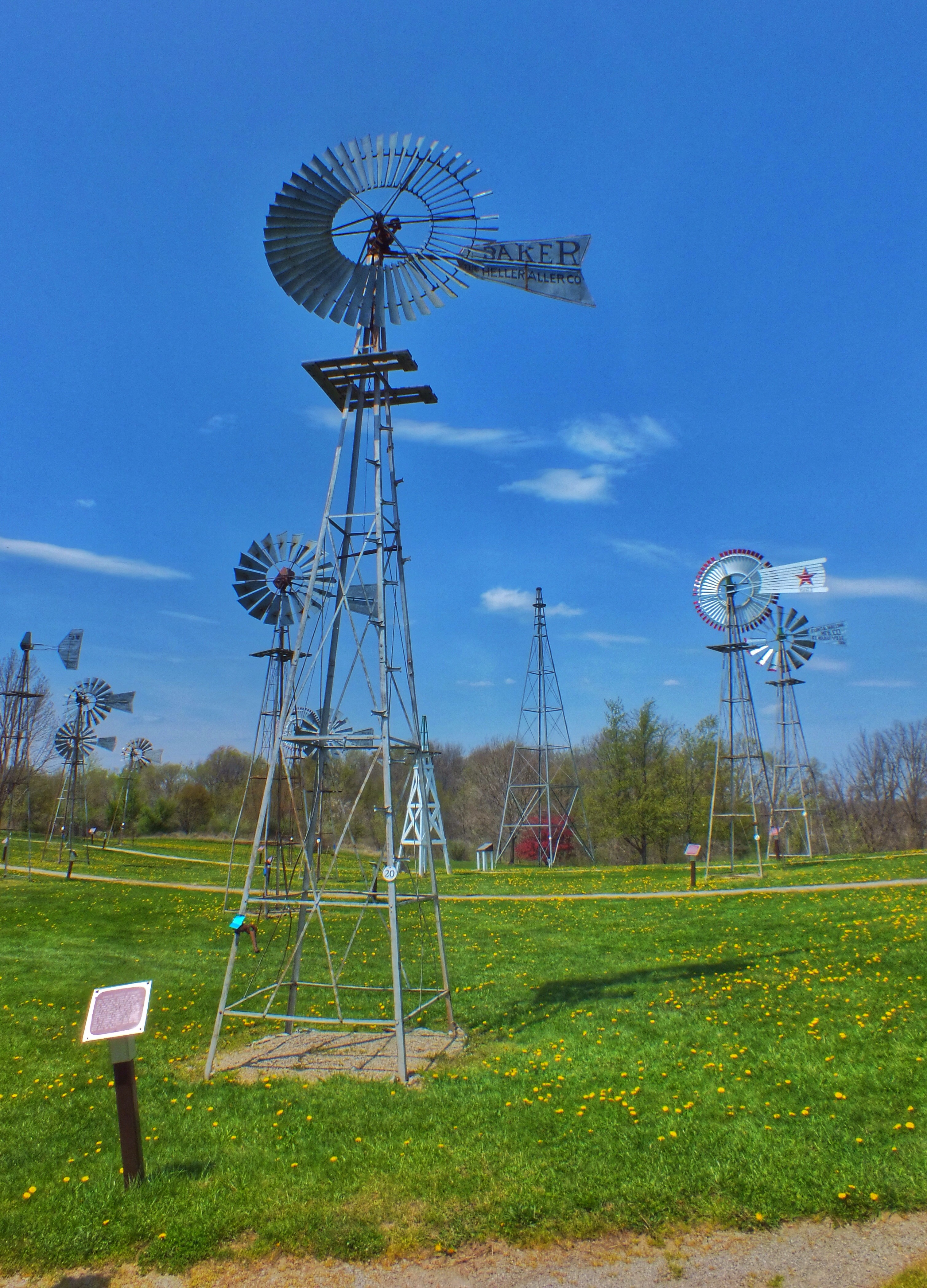
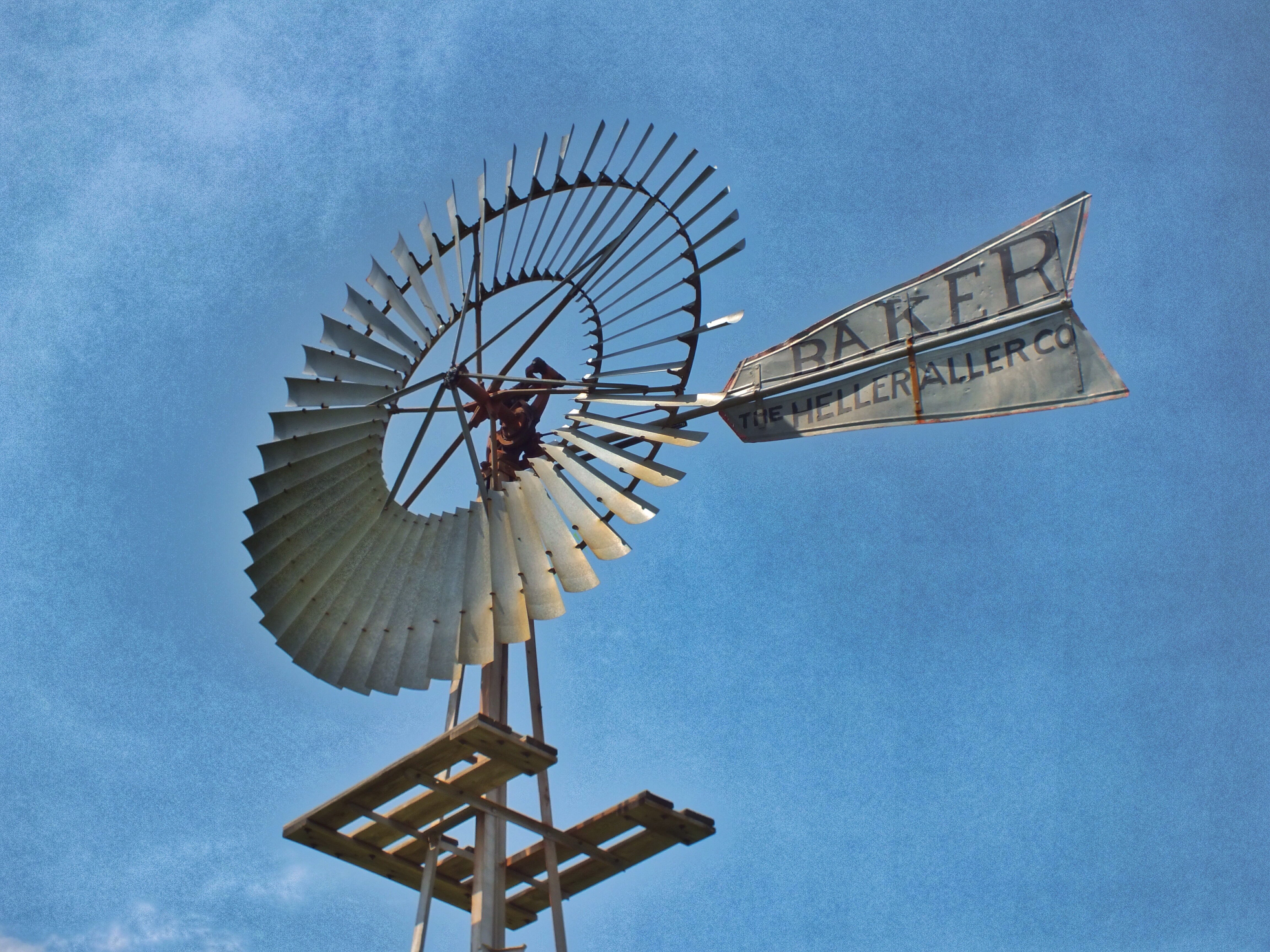
For me, the main appeal was the history and the spectacle of dozens of windmills in one small field. Here, in no particular order, is what we saw.
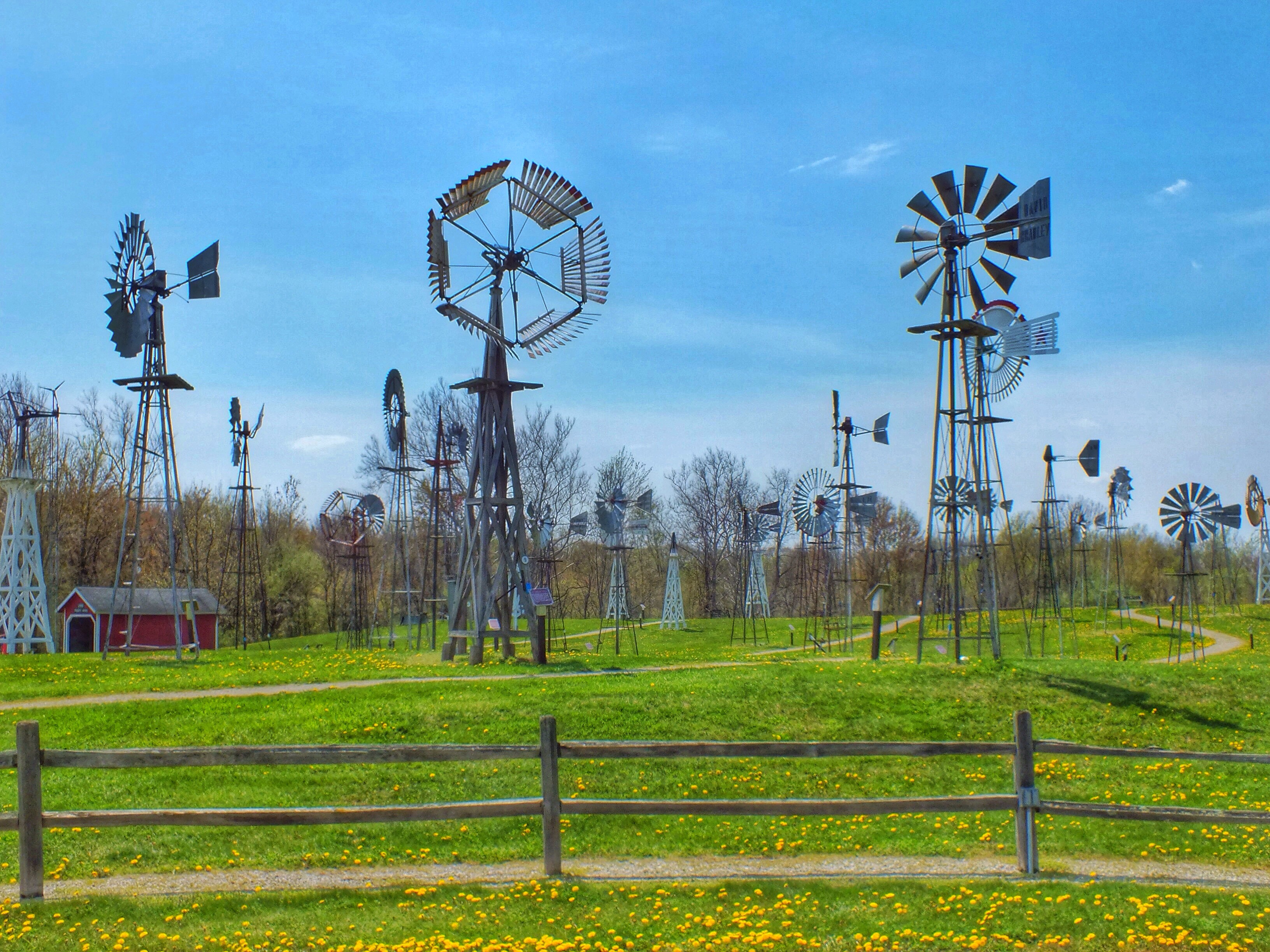
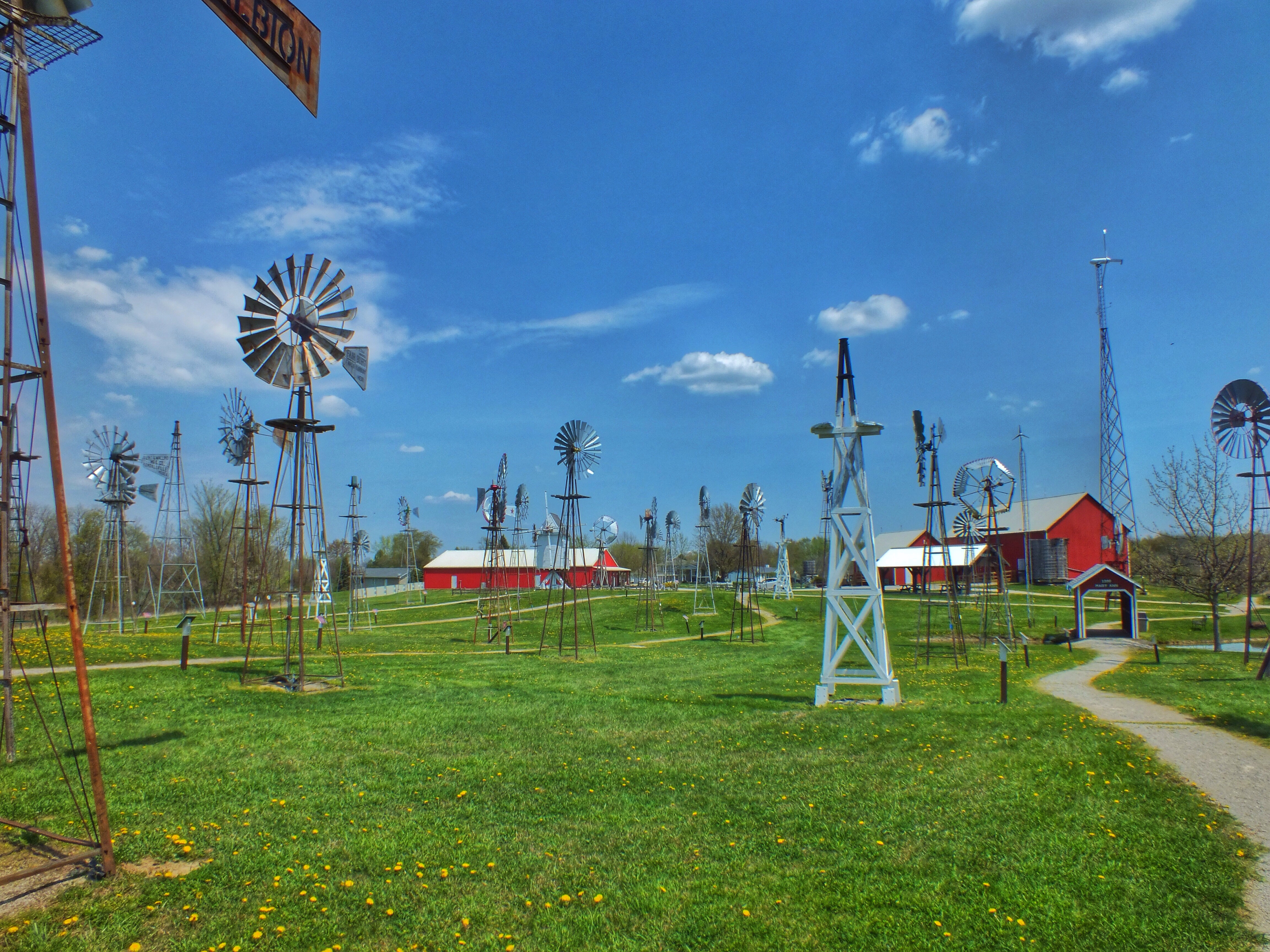
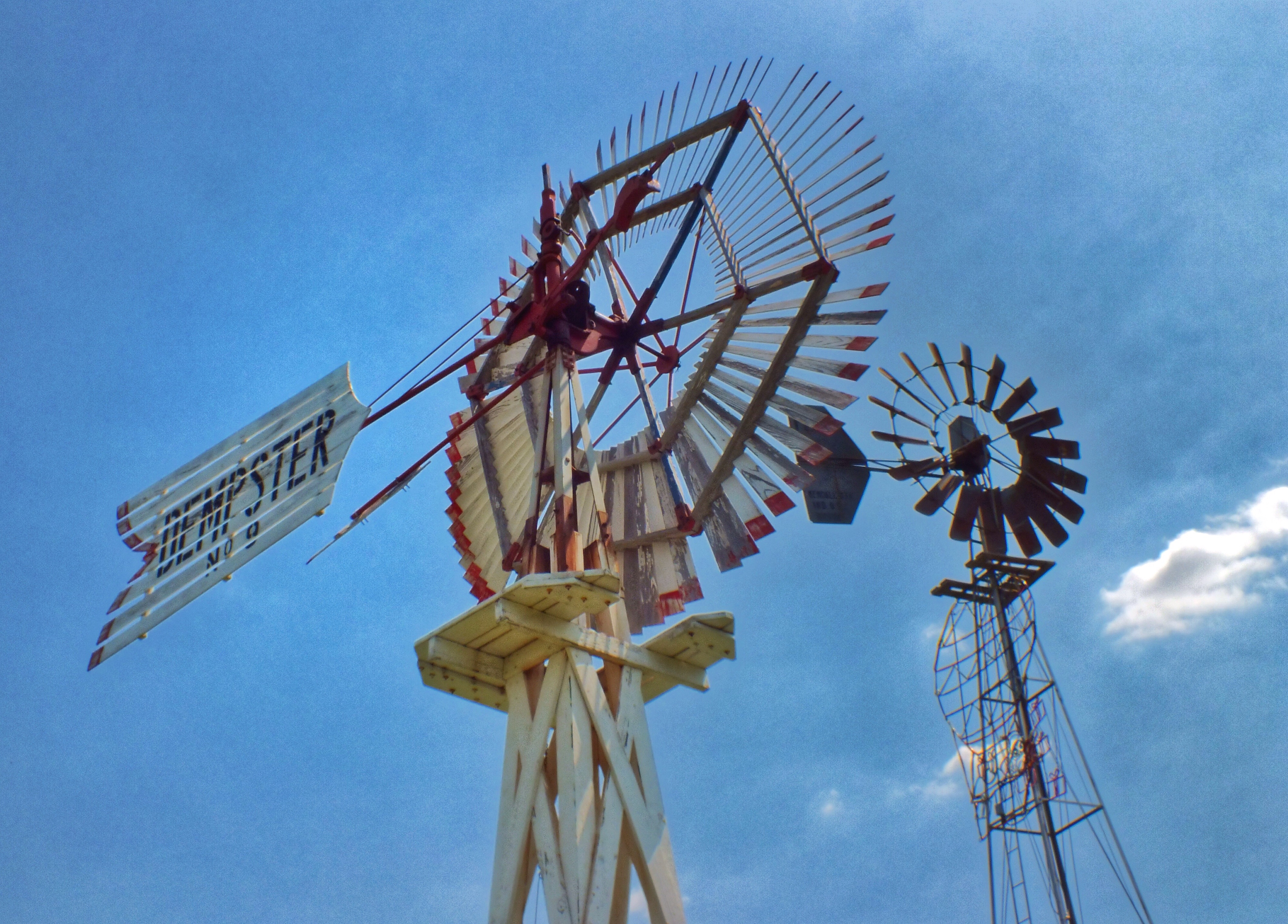
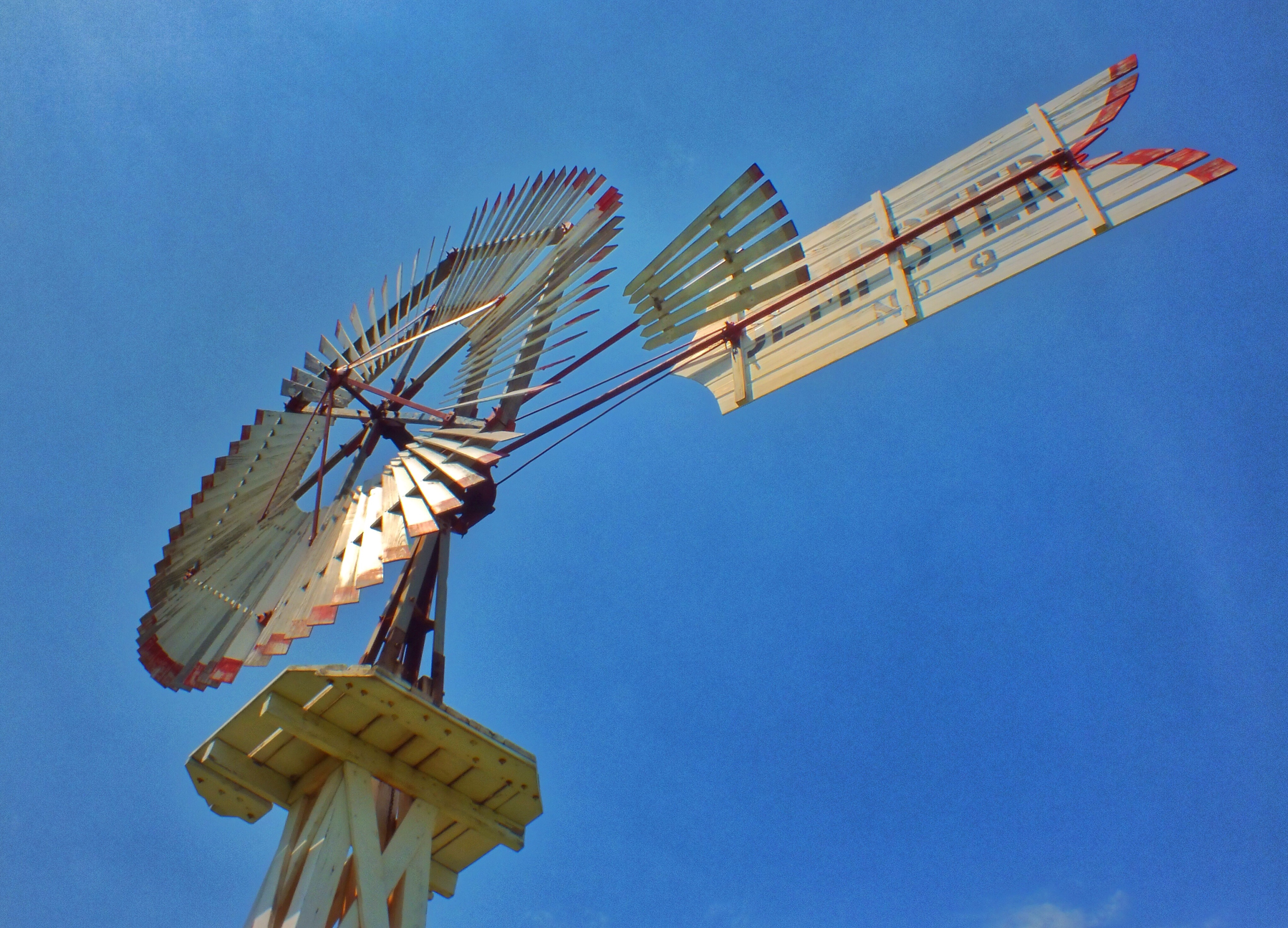
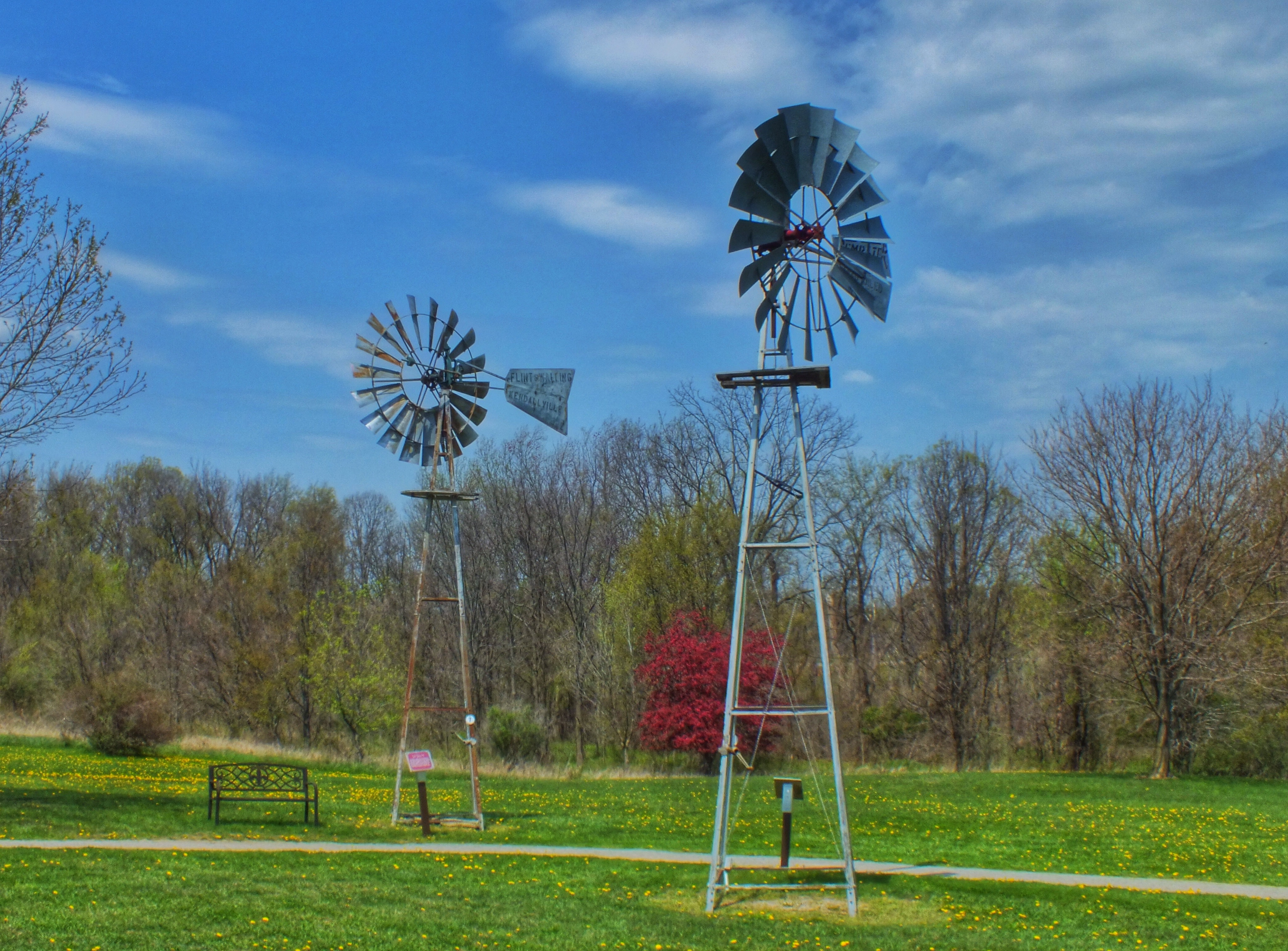
The next two photos are of the Dempster Eclipse Model No. 9, built between 1908 to 1925.
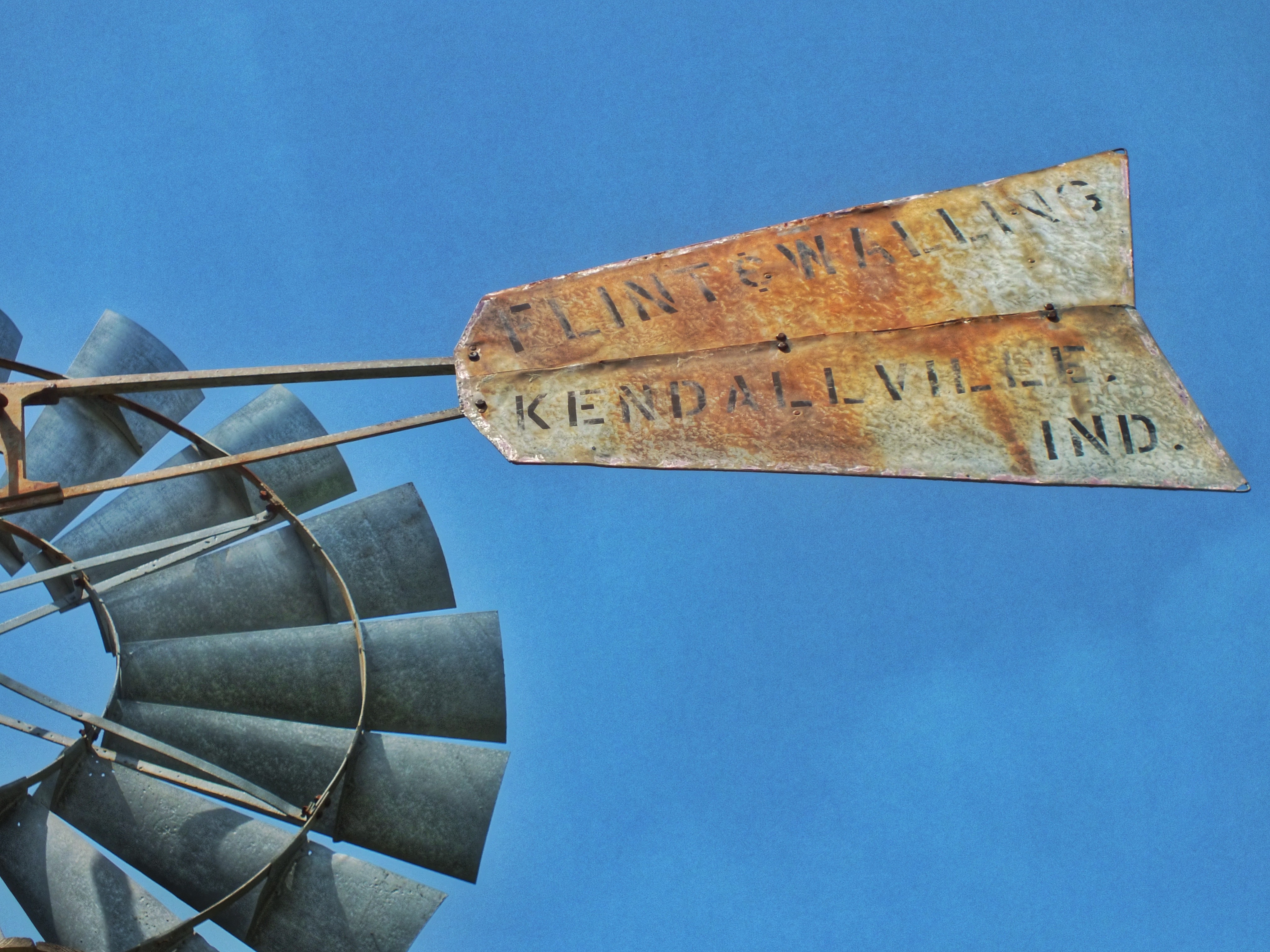
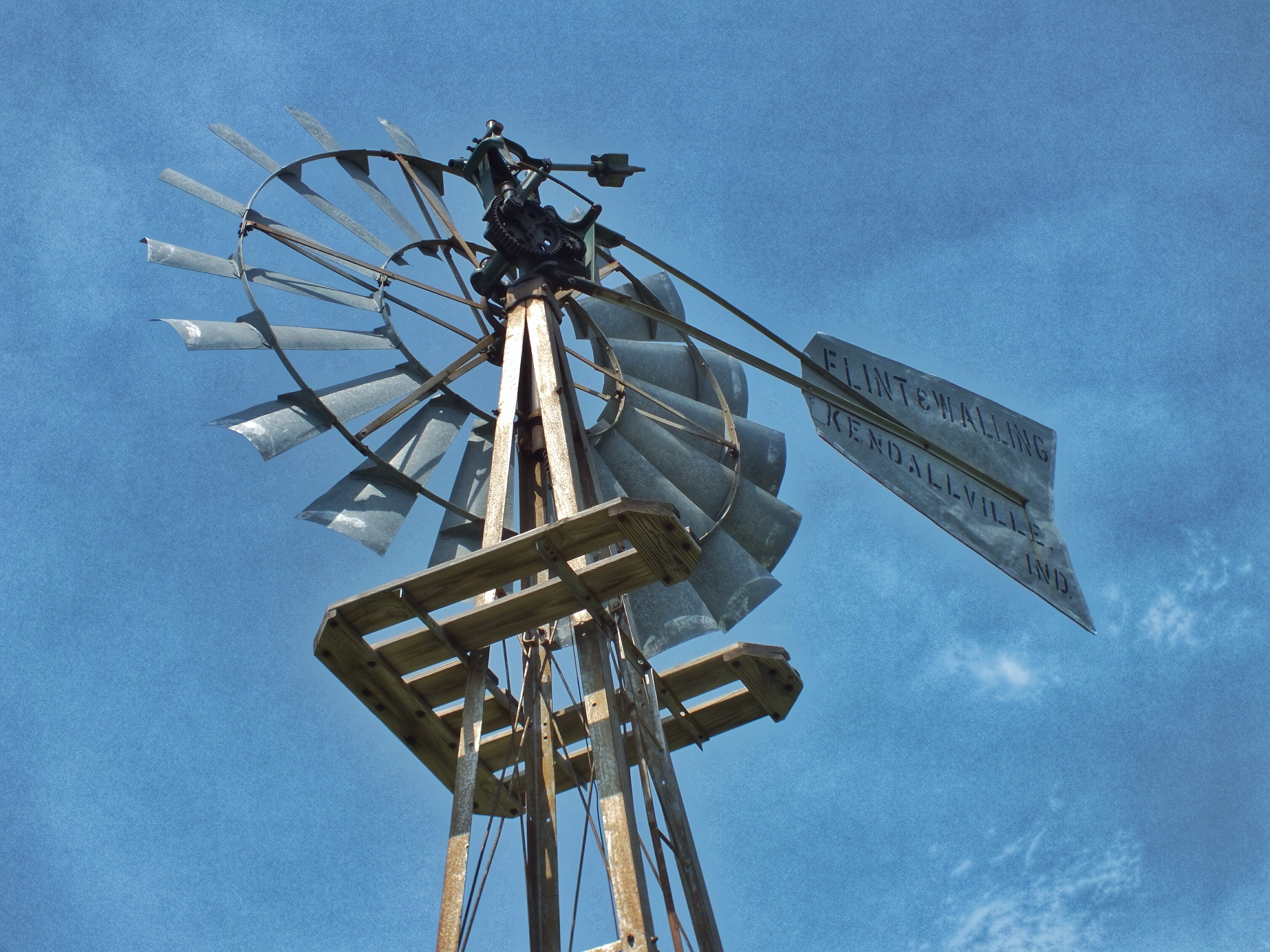
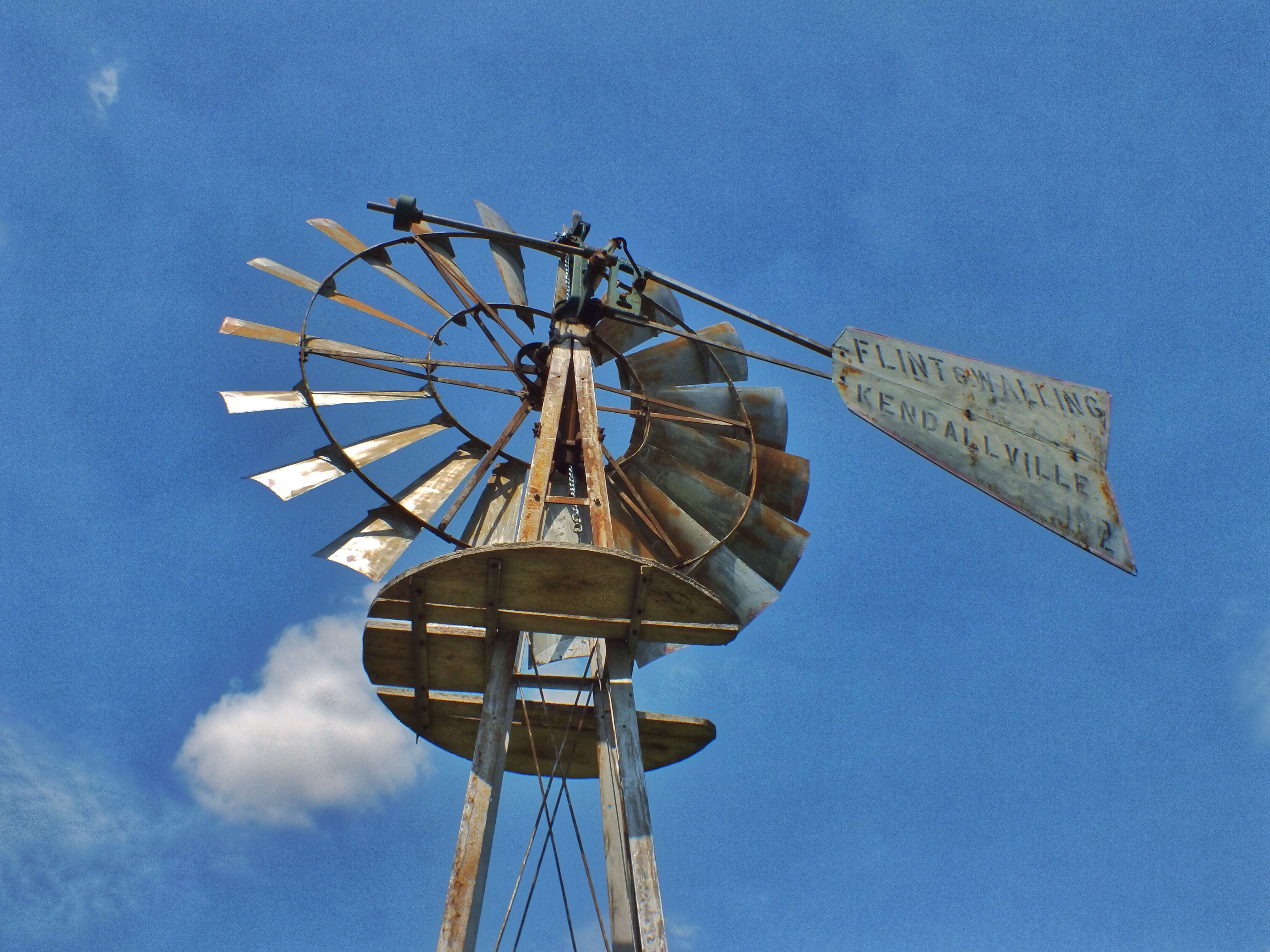
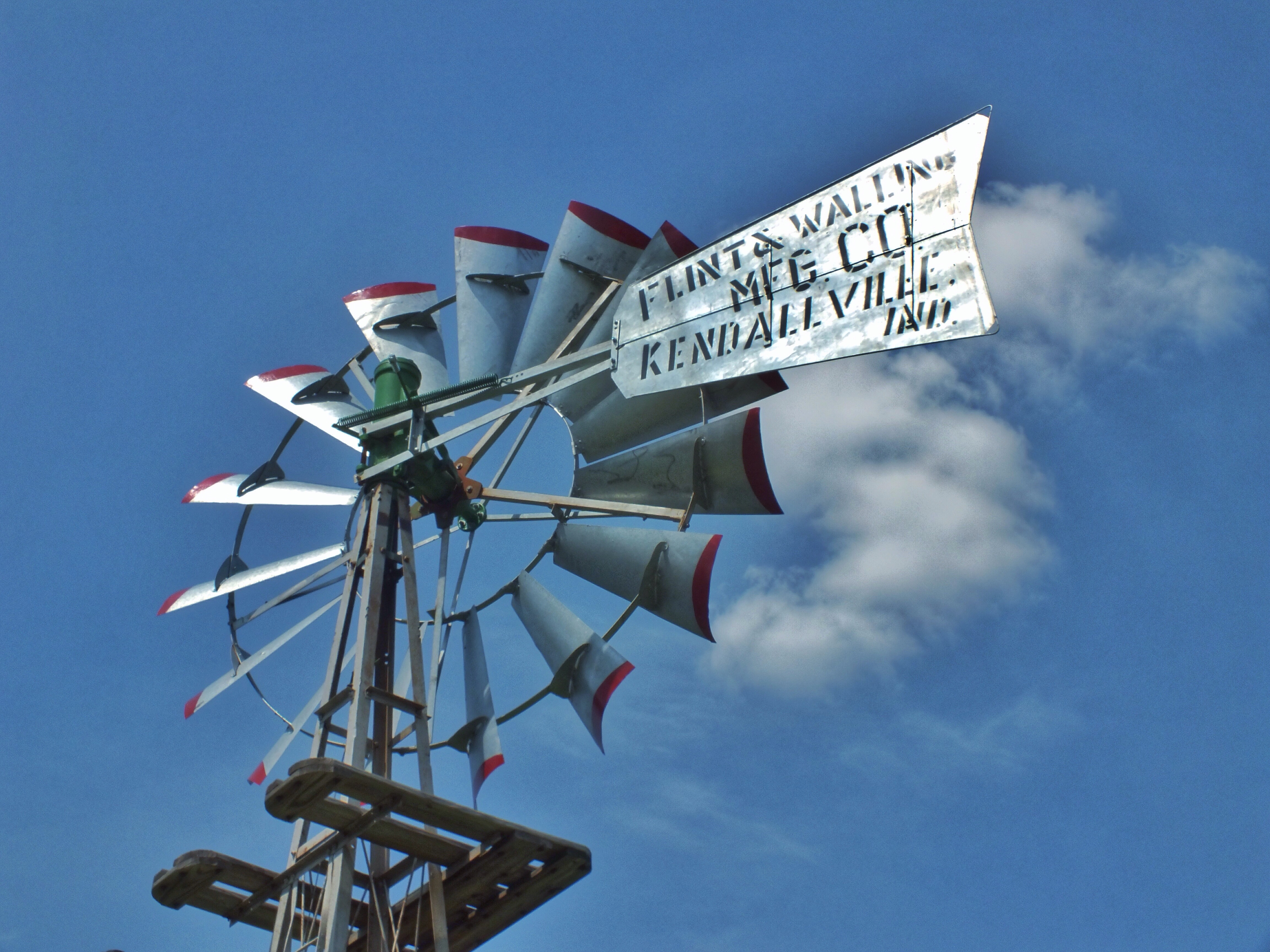
The next mill is the Flint & Walling Model 26, built of wood for farmers who didn’t like the noise made by metal mills.
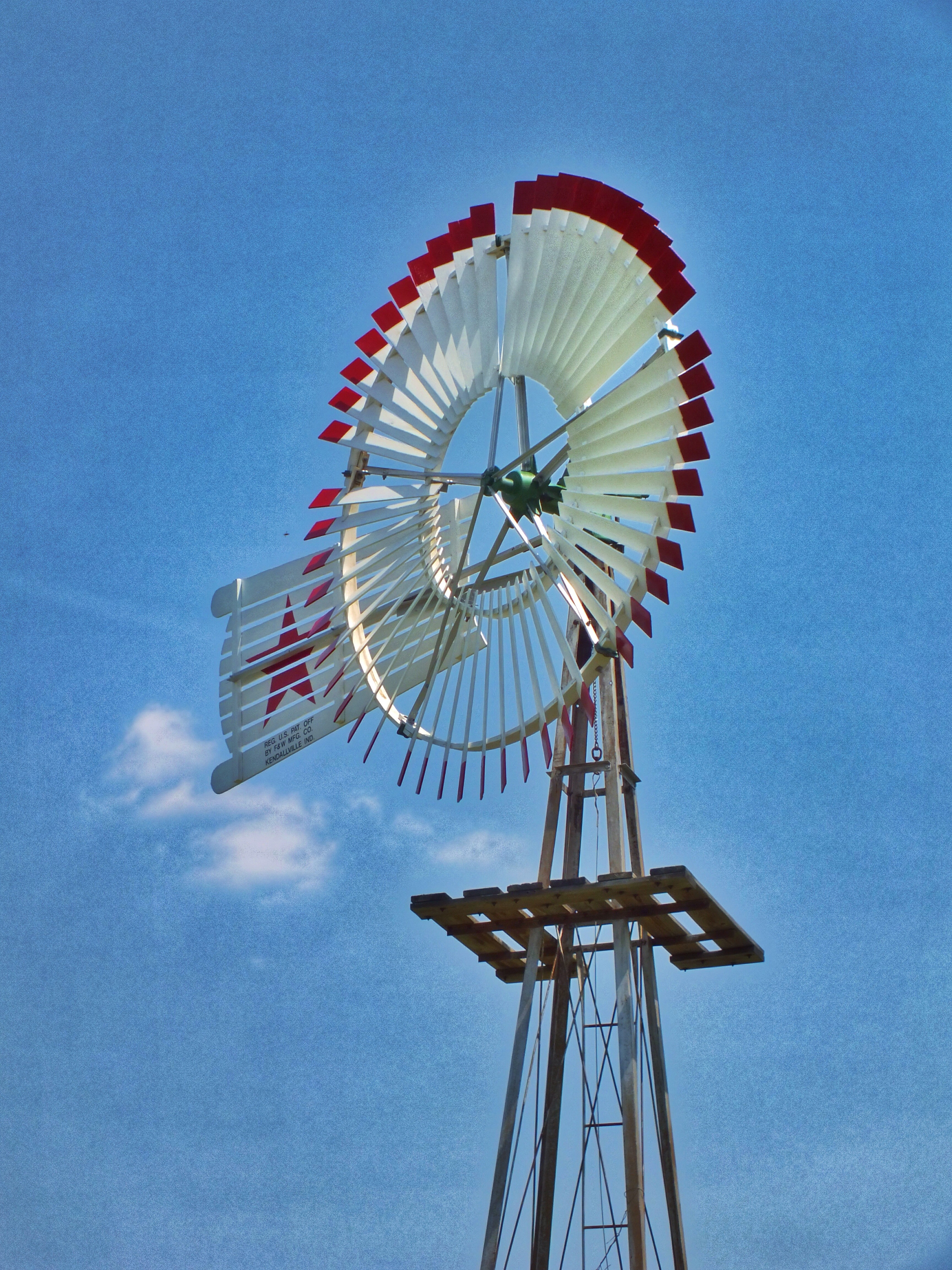
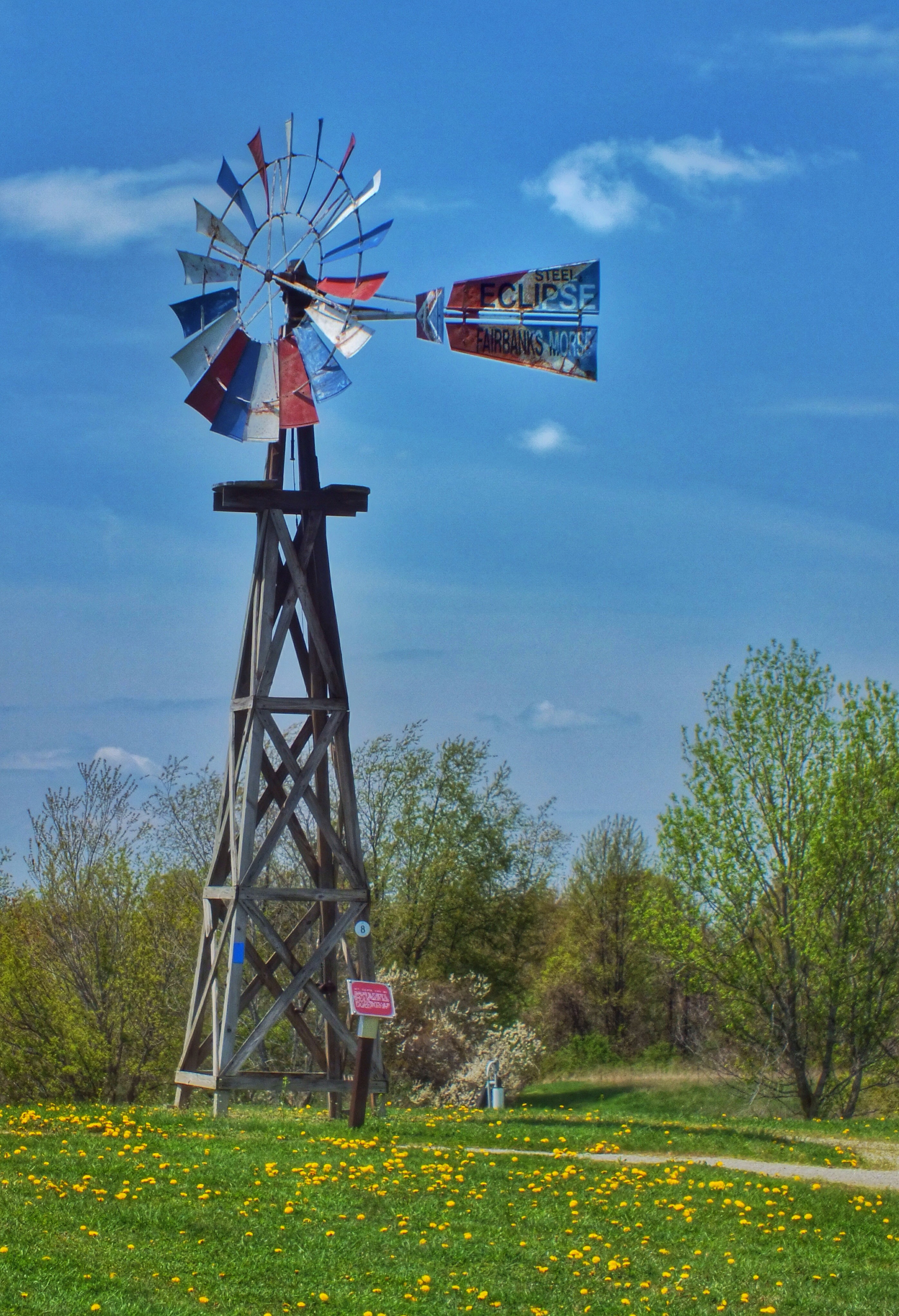
The red, white and blue mill is the Fairbanks Morse Eclipse Type WG, built from 1926 to 1935.
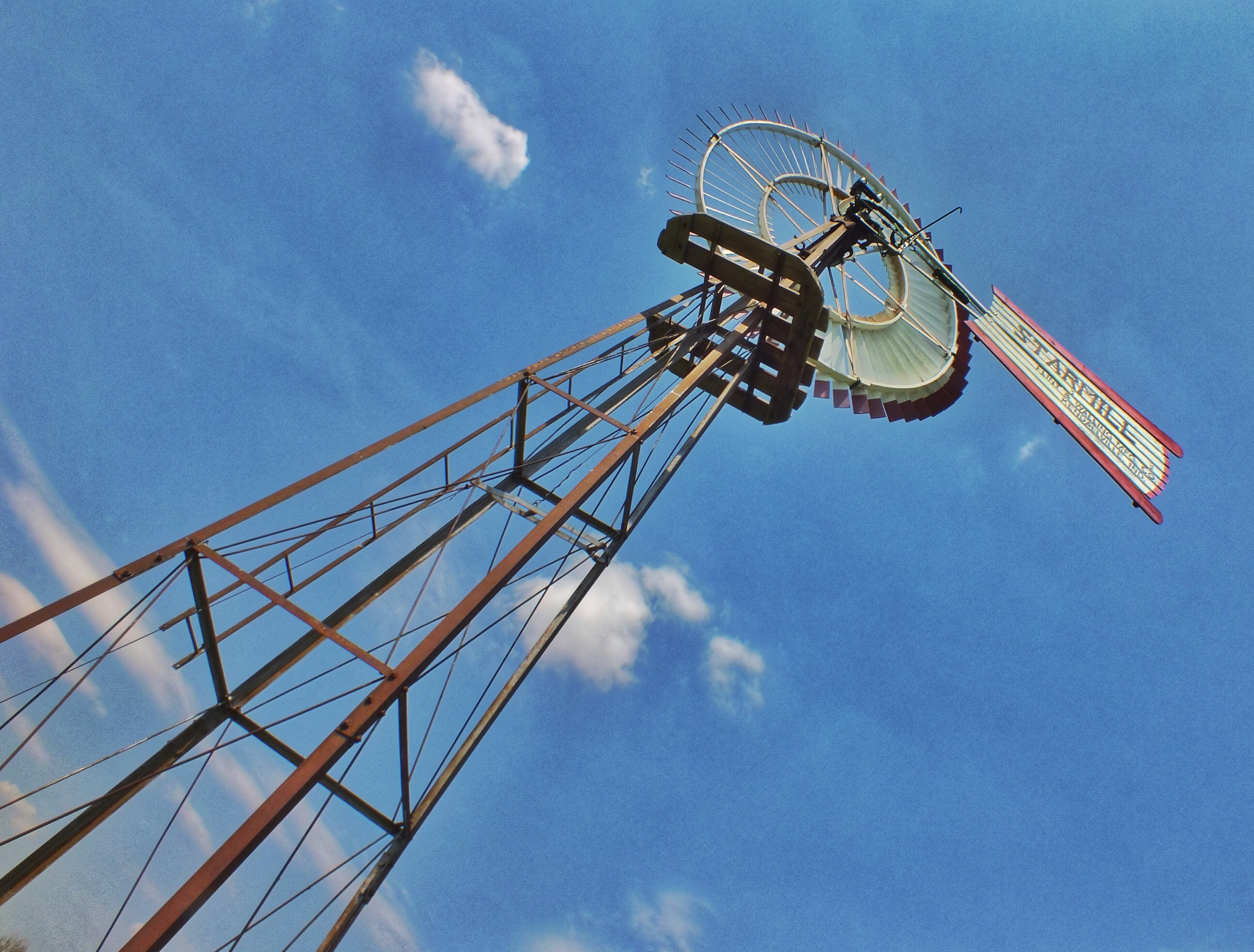
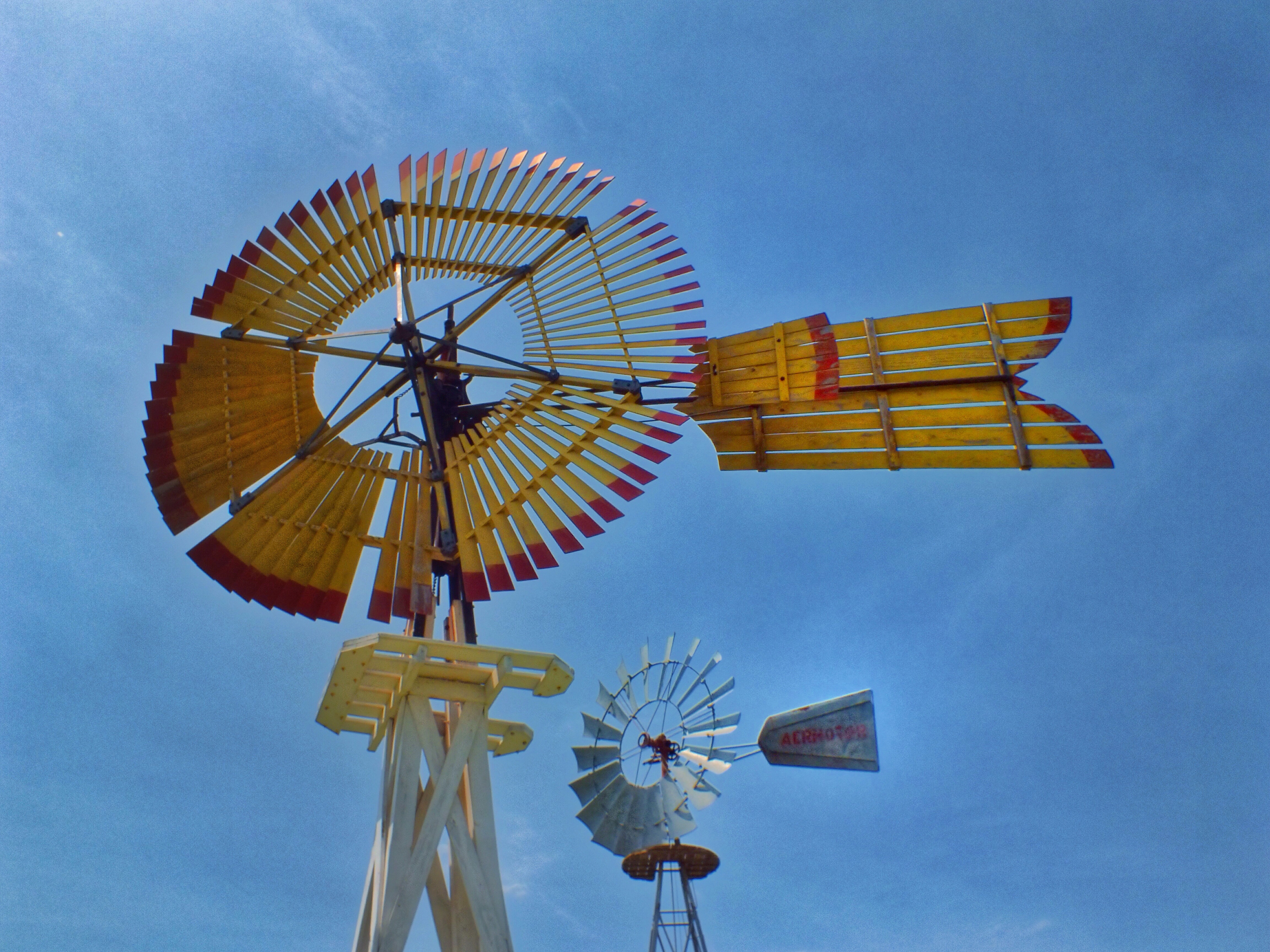
The yellow and red windmill is the Fairbanks Morse Eclipse, invented in 1867 by a reverend. It was the most common windmill before metal ones were manufactured.
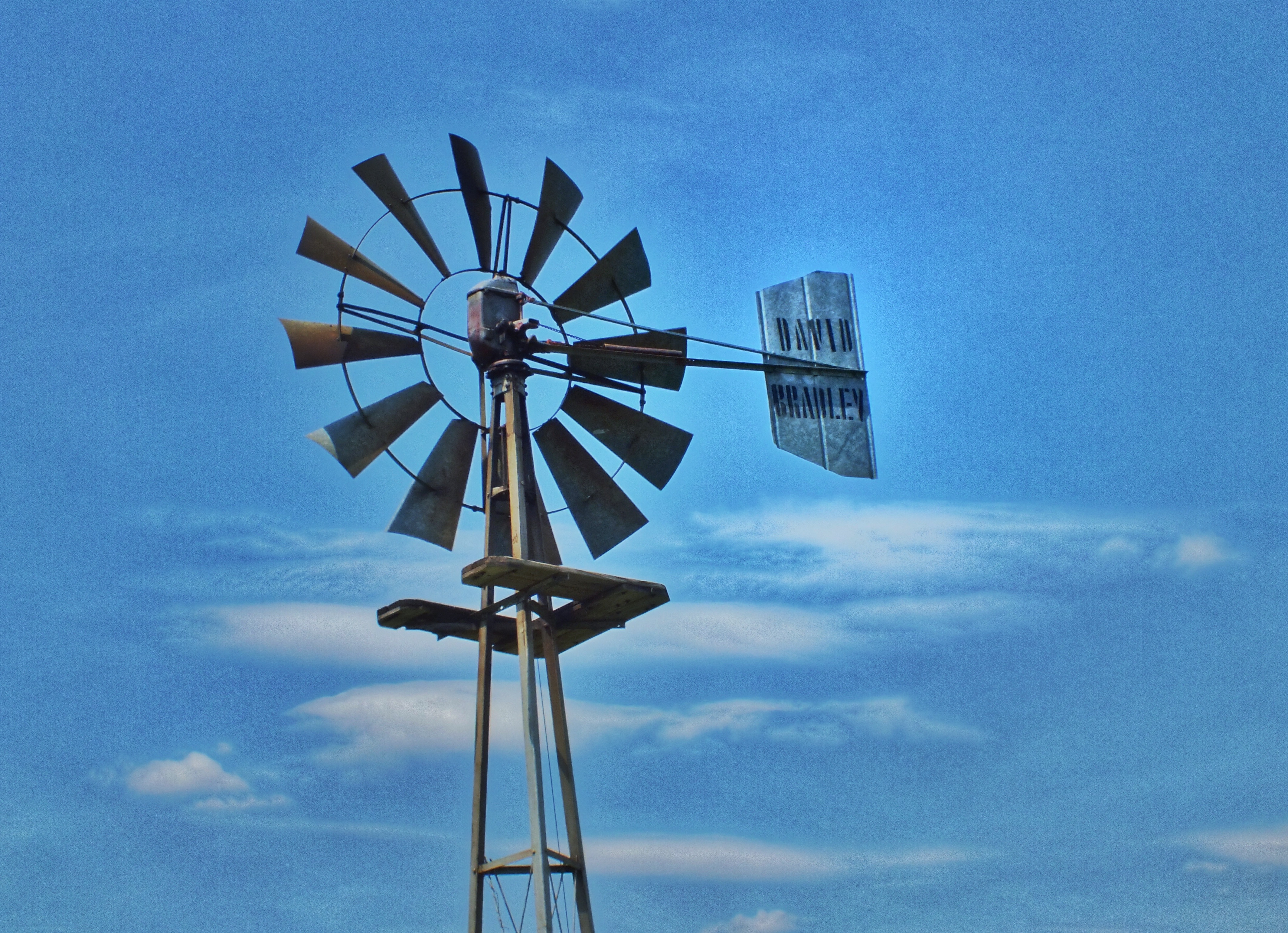
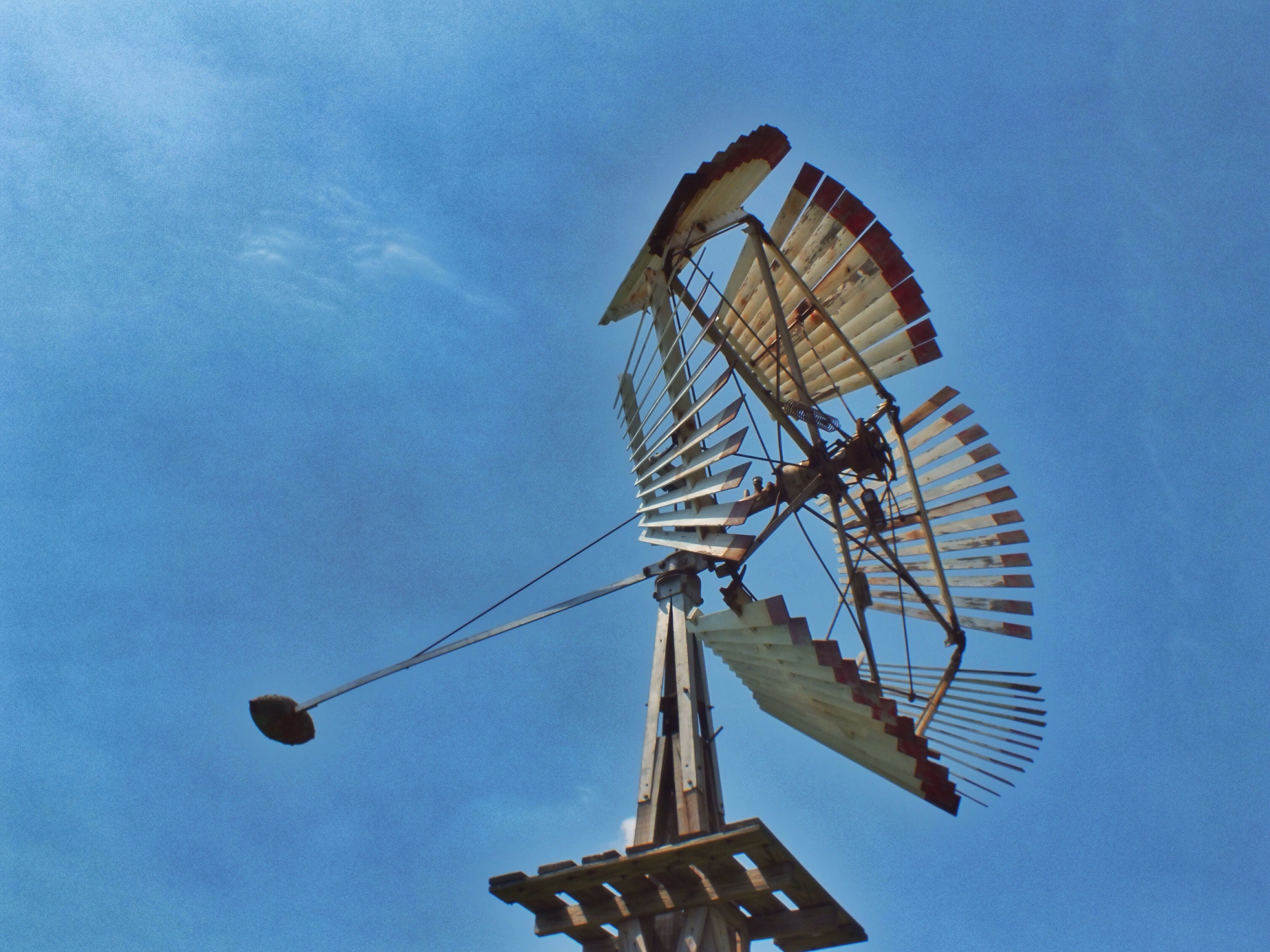
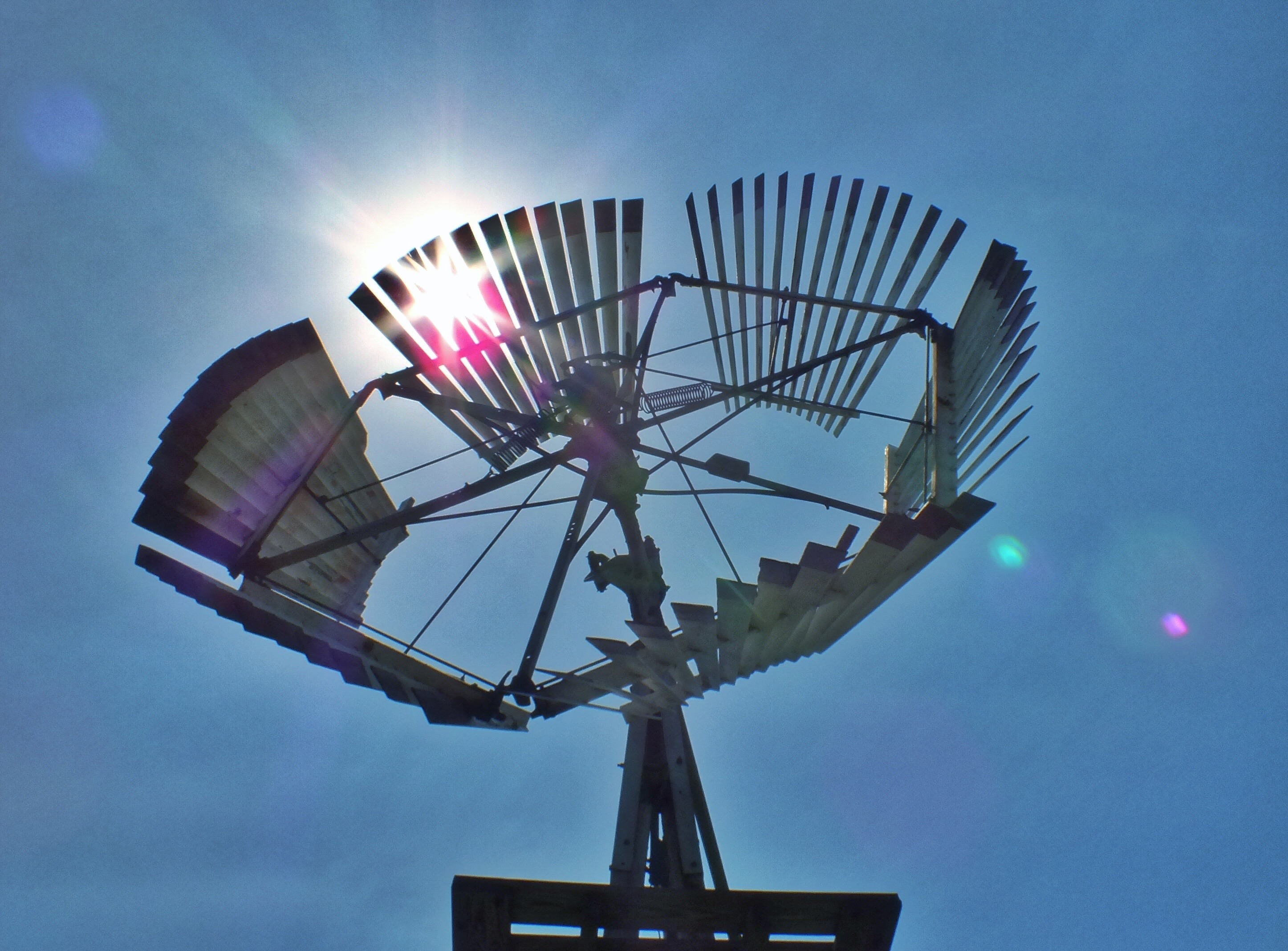
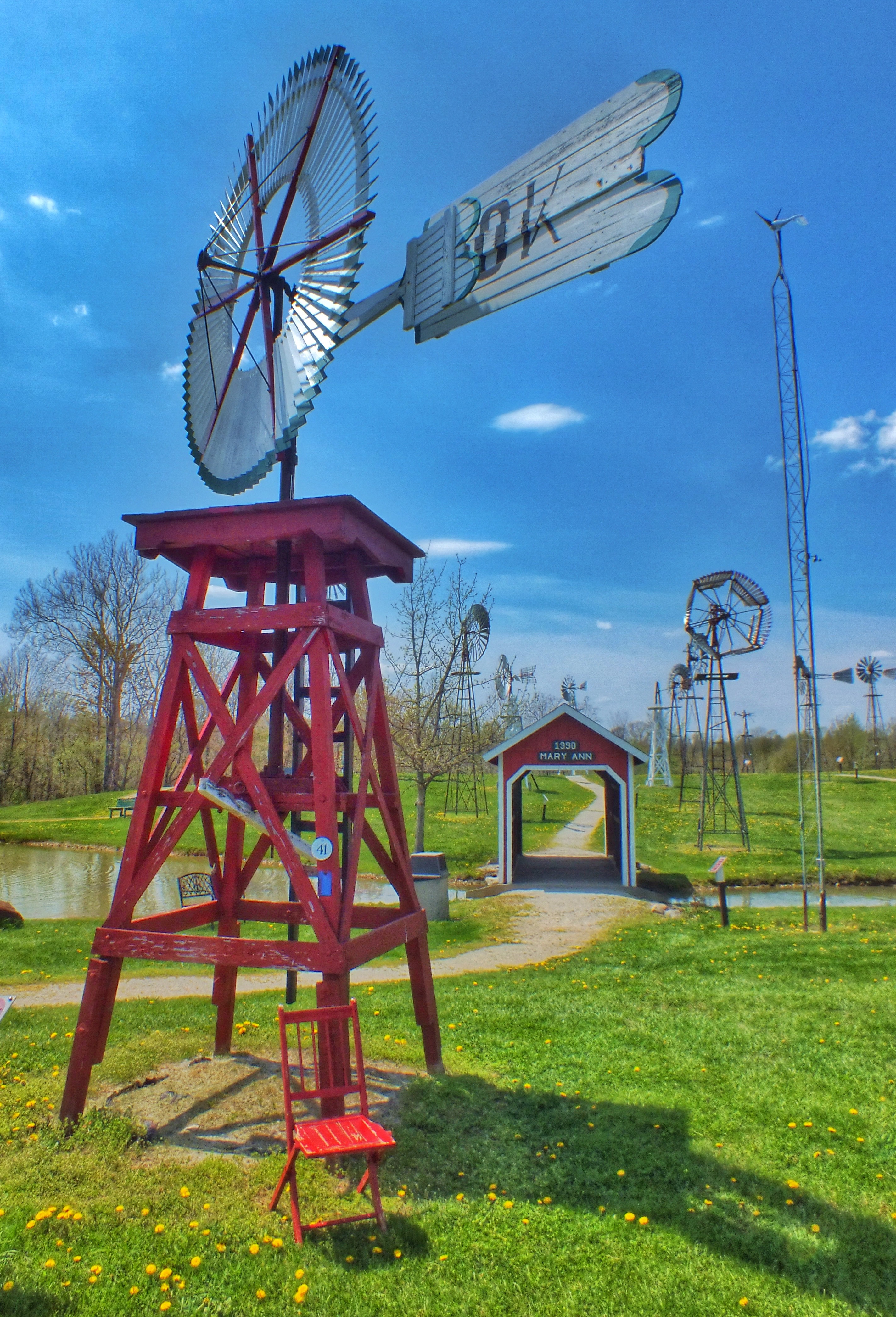
The Challenge OK, built by the Challenge Windmill and Feed Company of Batavia, Illinois before 1914.
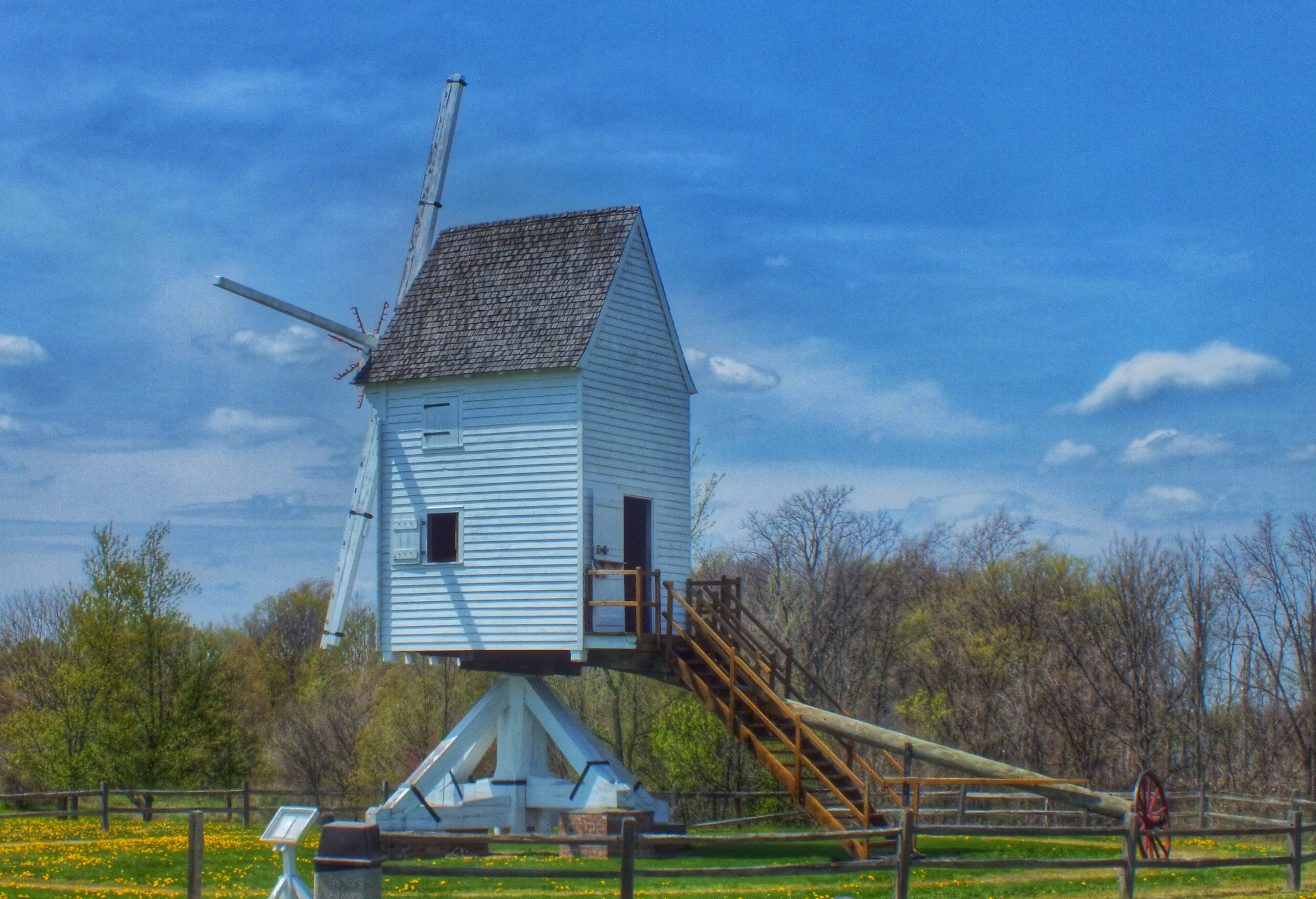
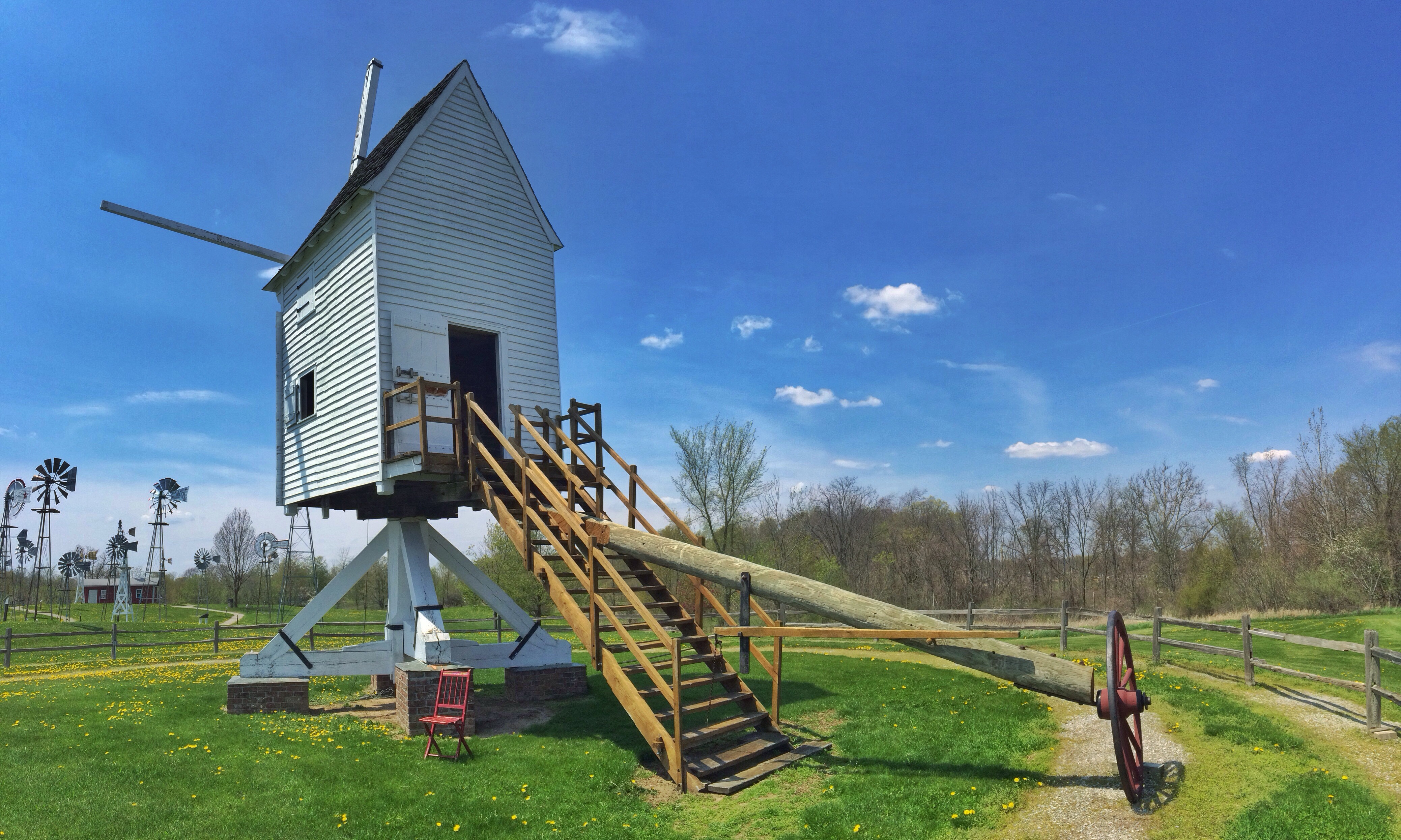
This next one is a reproduction of a Robertson Post Windmill based on plans of a 17th-century mill in Cambridgeshire, England. Mills of this type were used in the Mid-Atlantic states. The mill was turned into the wind by pushing a sloping tail pole that extends from the rear of the cabin.
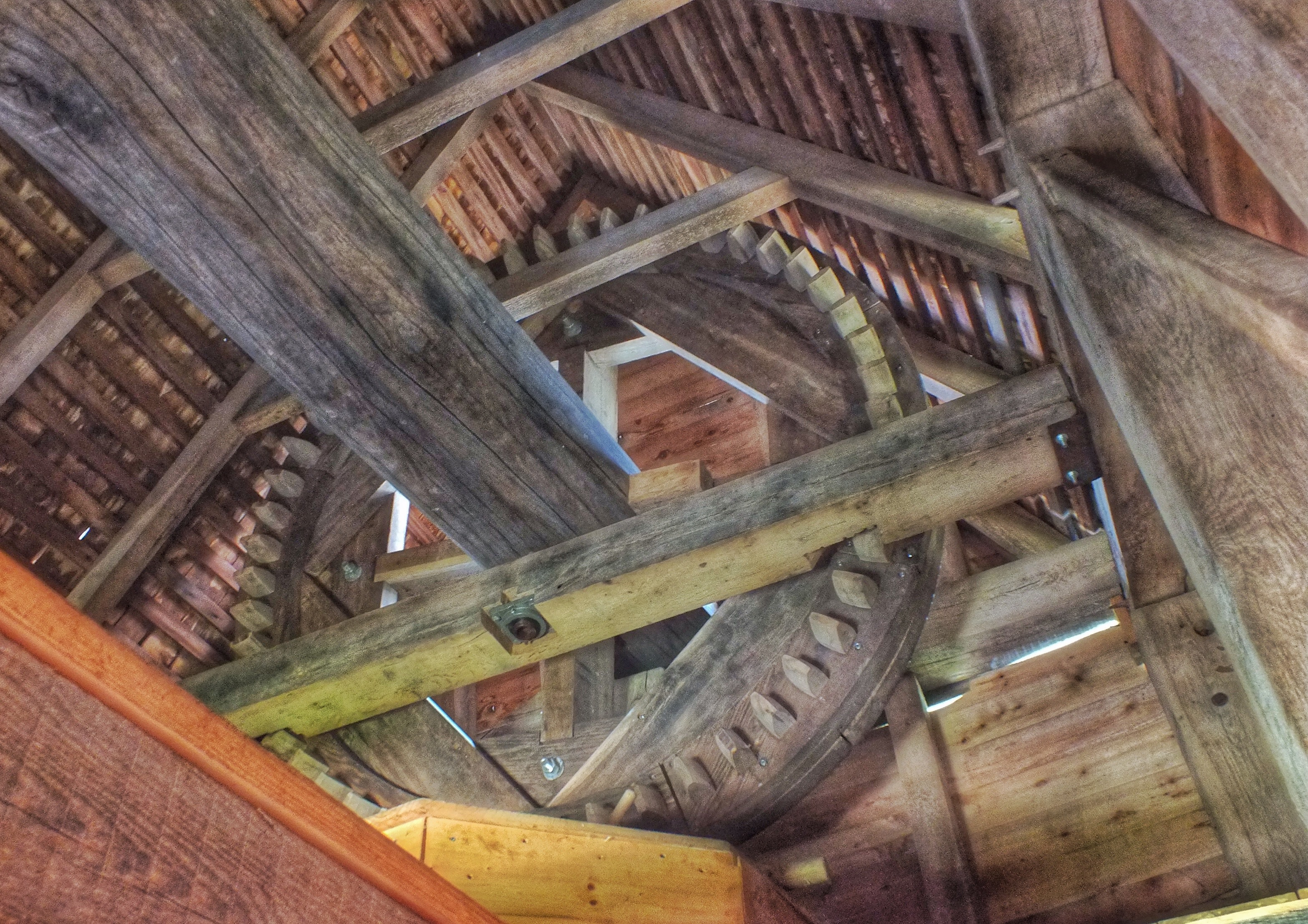
Inside the Robertson Post Mill.
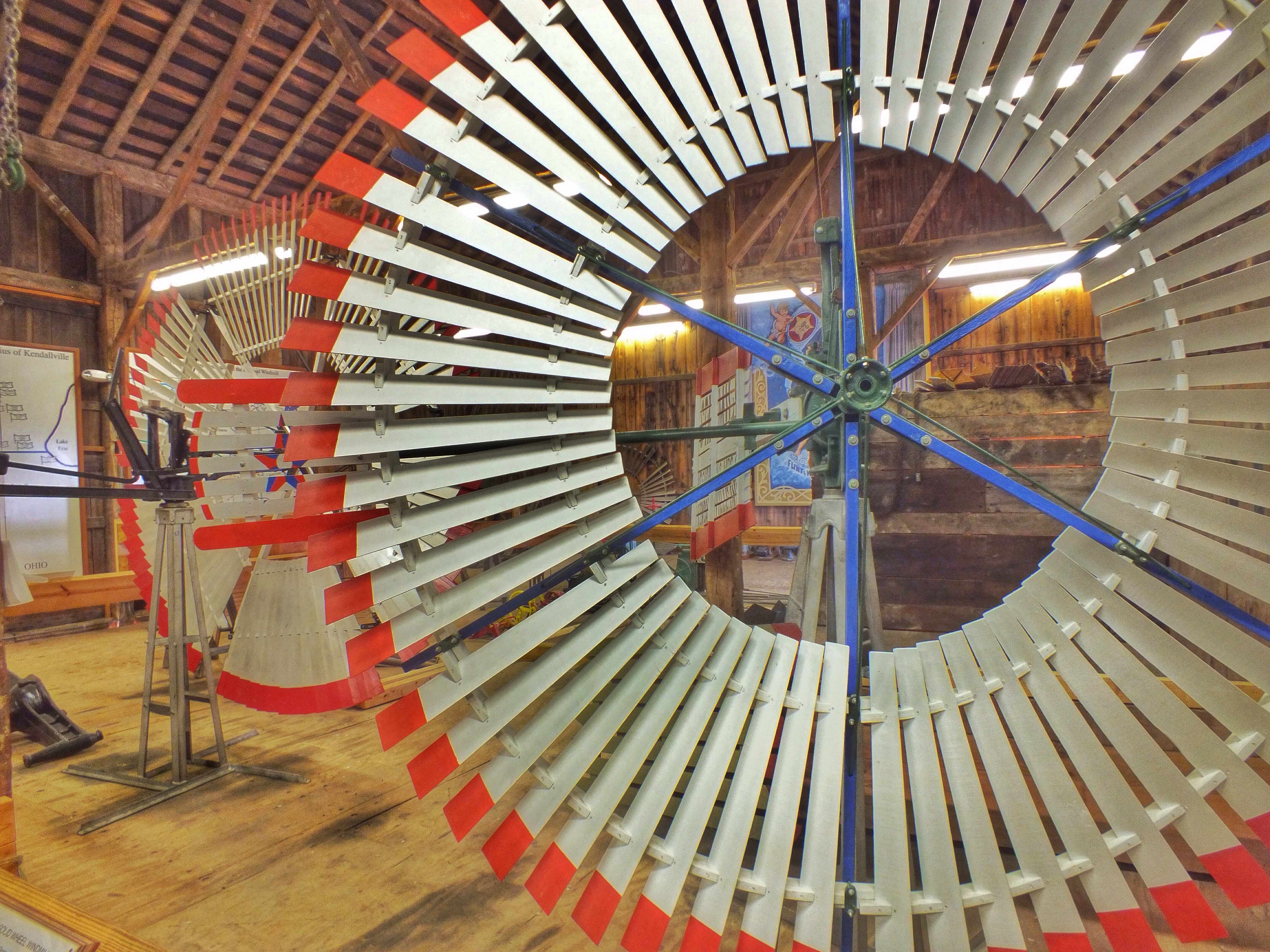
There were a few more displays inside the barn/visitor center.
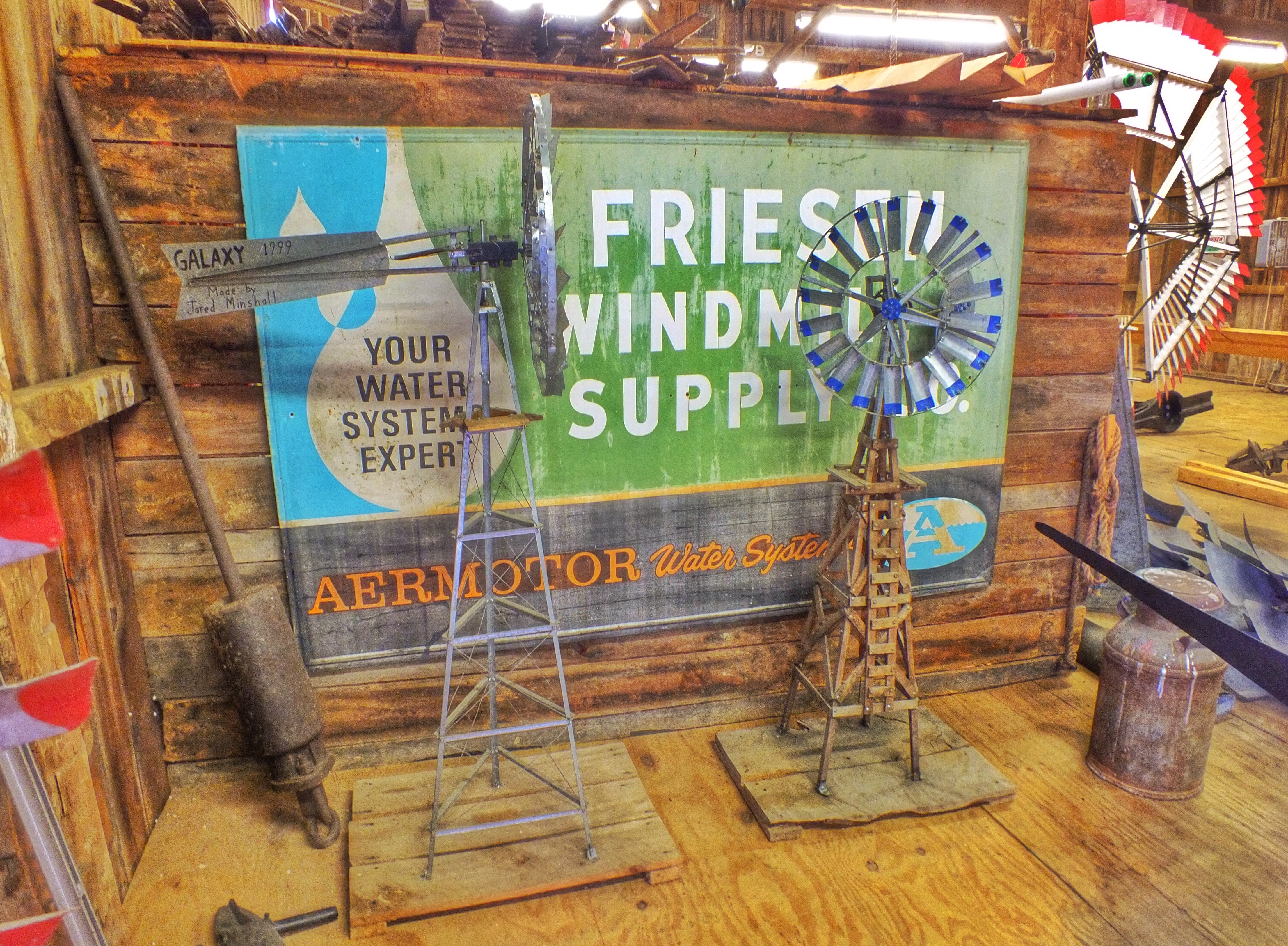
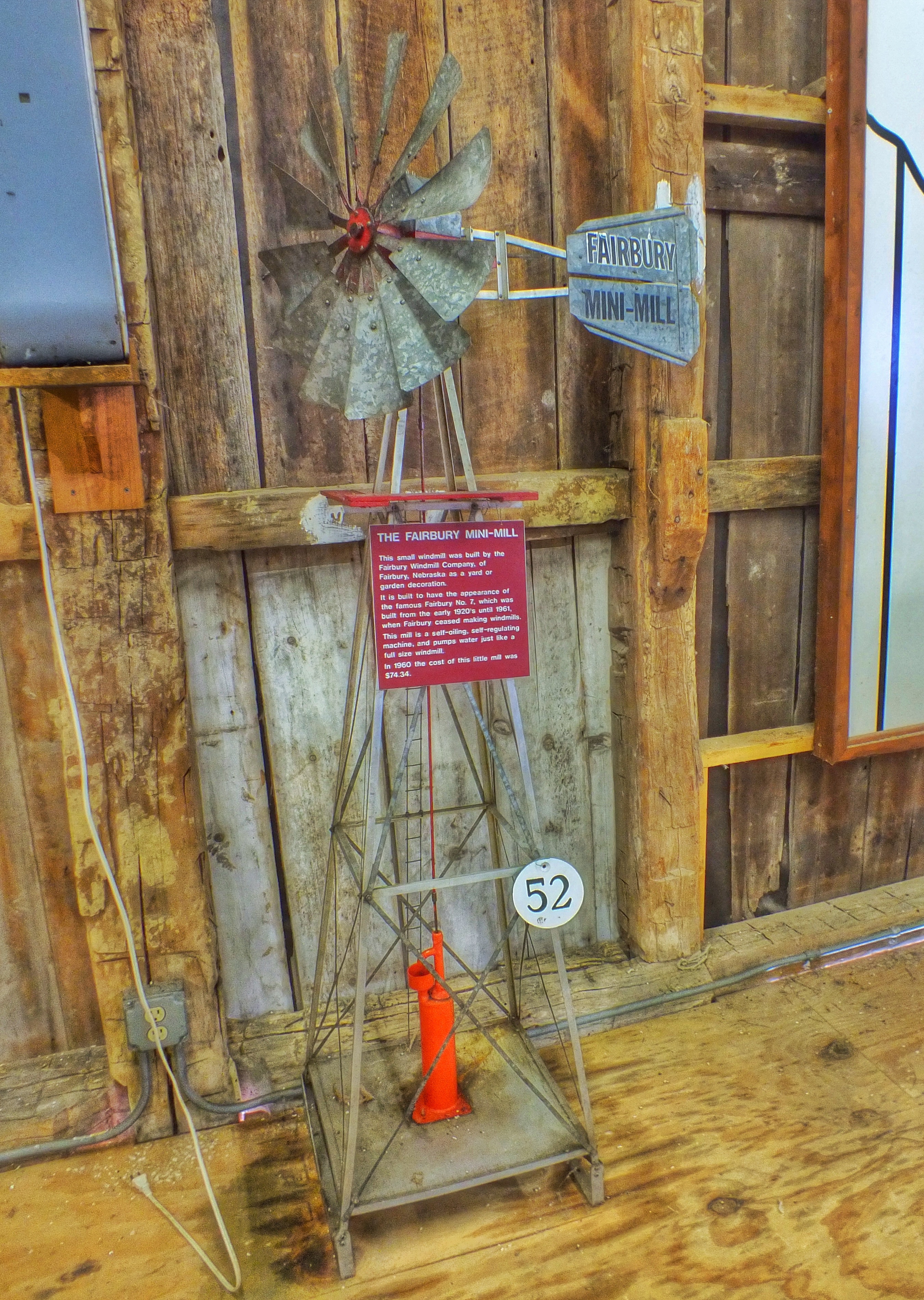
The Fairbury Mini-Mill was built as a yard or garden decoration. It was a working windmill that pumped water just like a regular windmill. They were made until the early 1960s and cost $75.
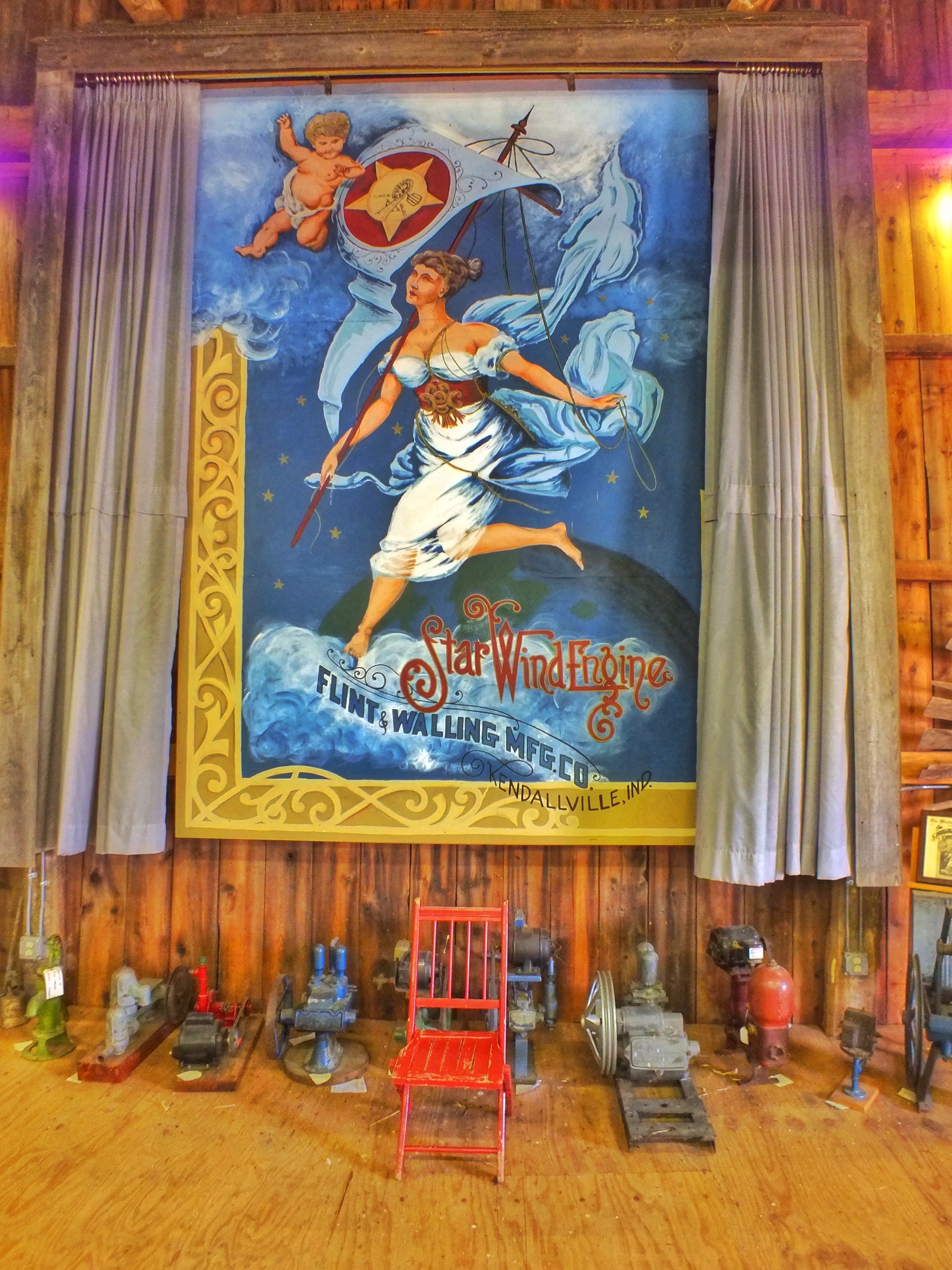
We had a bit of hard time leaving. The older gentleman who was volunteering in the office was very enthusiastic and wouldn’t let us leave until he pointed out each picture on the wall and each display in the barn. He had us watch a goofy video that was mostly about water mills and only briefly mentioned the type of windmills on display at the museum, even though the video was made exclusively for the museum. It goes to show that there isn’t anything that somebody doesn’t find fascinating, and this specialty museum was much better presented than most.