Chickamauga and Chattanooga National Military Park, Georgia

As I approached the park, I began to wonder. I was in the middle of town, with all sorts of businesses lining both sides of the street. There was an intersection, and then suddenly I was in the park. The main road cut right through the middle of the battlefield, and traffic was cruising through at high speed. I stopped at the visitor center, and it was crowded too.

The battlefield wasn’t that interesting. During the fight (on September 19-20, 1863) the two armies faced each other on a long front that ran through woods and fields. Today, all along the front, there is a long line of monuments and statues.

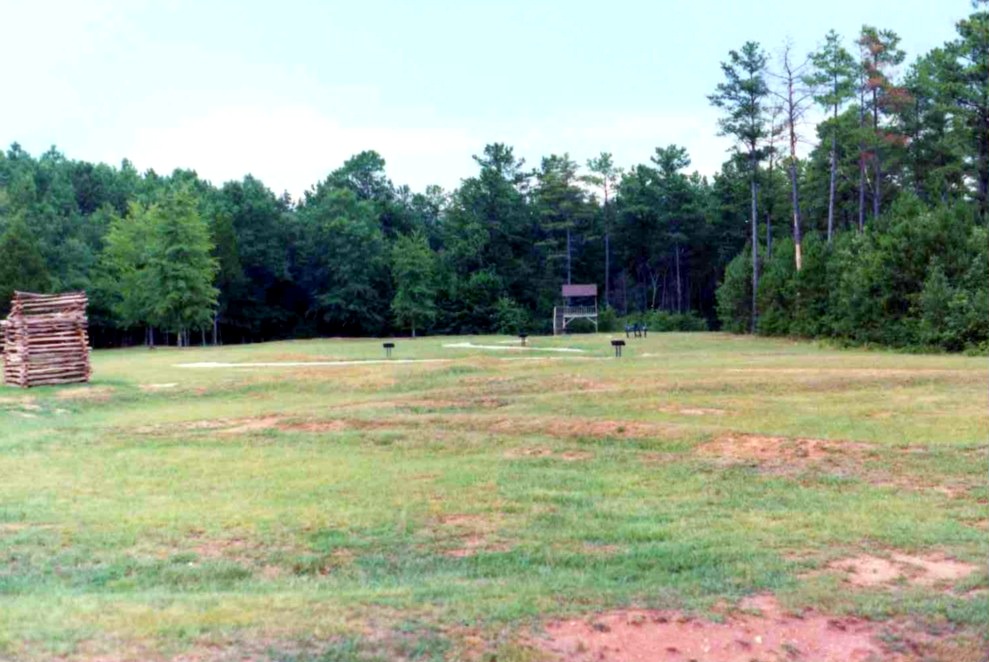
The tower in this postcard is the Wilder Tower, built on the site of Union counterattack.

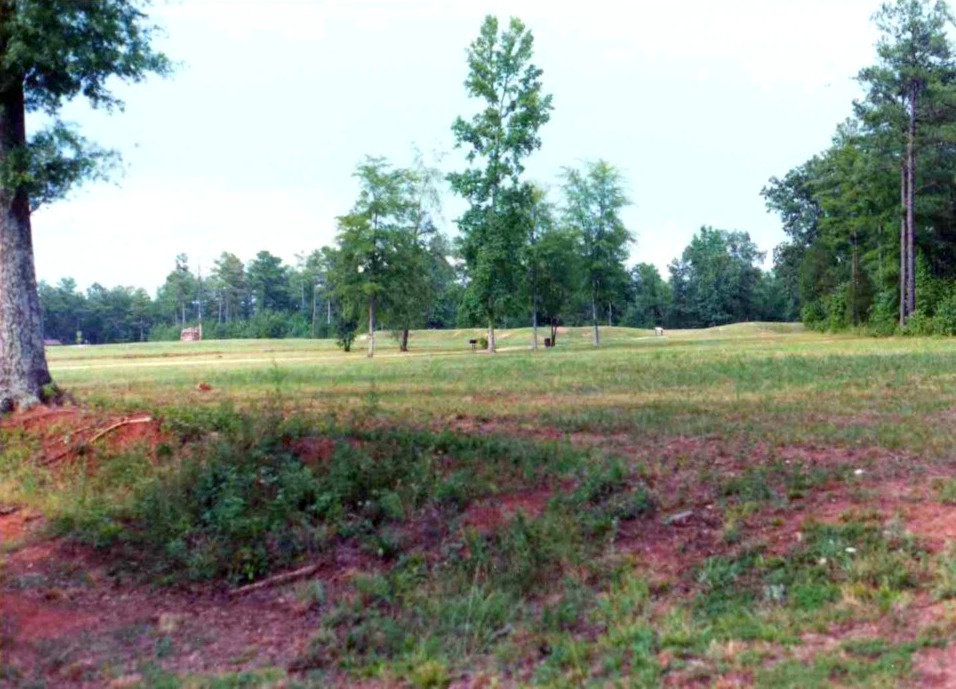
This is the Brotherton Cabin, the site of an attack by Confederates under General Longstreet. Two of the Brotherton sons were in the Confederate Army. Longstreet’s forces broke through the Union lines and caused a frantic retreat. It all looks very peaceful and serene in this postcard. What you can’t see is the steady stream of 50-mph traffic, including a lot of trucks, flying by just to the left of this shot.

I cruised through this part of the park with just a few quick stops. I wished I had more time to spend, but I had it better off than another guy I saw. He pulled off at two or three stops just as I did. He could get out of the car with his video camera and start shooting. His wife sat in the car looking sullen. His two kids ran back and forth from him to the car yelling at him to hurry up because mom wants to leave.

The one place I did get out and walk around was Snodgrass Hill, where Union General Thomas held off the attacking Confederates and saved his army.

The Snodgrass cabin

This is the monument to the 82nd Indiana Regiment. In the woods just behind it, I had an incredible five minutes of birding. I stood in one spot and watched as a parade of birds foraged by. I saw the following: Tufted Titmouse, Blue Jay, American Robin, Downy Woodpecker, White-breasted Nuthatch, Pileated Woodpecker, Red-headed Woodpecker, Red-bellied Woodpecker, and Yellow-billed Cuckoo.

I hiked around the hill for a while, then stopped at the visitor center again to buy postcards. I left the park shortly after 4:00. I bought supper at Wendy’s and ate it while I drove toward Atlanta. It was a hot day, and as I ate my hamburger, my Frostie melted. I took a sip of it and, as I lowered the cup, the still-frozen middle sloshed down into the melted portion and sent up a geyser of chocolate that covered my shirt and my face, including my sunglasses. I had to whip them off to see the road. I cleaned off as well as I could at 70 mph, but the shirt was ruined. For some reason, that morning I had thrown an extra clean shirt in the back seat, something I’m not in the habit of doing. It came in handy.

Posted in Georgia | Comments Off on Chickamauga and Chattanooga National Military Park, Georgia

Ninety Six National Historic Site, South Carolina

It took me just under two hours to drive from Cowpens to Ninety Six, even with the series of thunderstorms moving through the area. In the thriving burg of Mountville, a storm had knocked a large branch onto the electric wires. The entire town had turned out to deal with the crisis. A bunch of old ladies in ponchos were standing in the center of the road directing traffic. Another large group was crowded around the branch while some town folk sawed the branch. Everyone else in town was standing on their porches watching the excitement. It was probably the most exciting thing to happen in the town since the Revolutionary War.

I got to Ninety Six at 4:15, and had the place to myself. I watched the video in the visitor center and struck up a conversation with the ranger on duty. He was jealous of the visitor center at Cowpens. Ninety Six, named for its distance from the Cherokee village of Keowee, was the location of a village before and just after the Revolutionary War. The British Loyalists built a fort here. It was besieged by American forces under Nathanael Greene in June 1781. The attack did not succeed, but the Loyalists abandoned it shortly thereafter.

I walked the trail slowly watching birds and watching out for thunderstorms that were still in the area. I noticed the ranger I had talked with driving around the park in his pickup, but I didn’t think anything of it. A few minutes later, while I was having a conversation with a Barred Owl, the ranger drove up. He said he was leaving for the day (the visitor center closed at 5:00, but the grounds stayed open). He’d noticed that I’d left my lights on and didn’t want me to be stranded. I hopped into his truck and he drove me back to the parking lot. I asked him how long he’d been working there. He said two months. He’d just gotten out of the army and was attending college to learn computers. He was married, and his wife was putting him through school. I asked if he was a history buff. He said no — he needed a part-time job to supplement their income and a buddy told him about the opening at the park. I’d love a part-time job like that. Some guys got it good and don’t even know it.

Anyway, I couldn’t get my car started. The ranger went into the visitor center to look for jumper cables. Just then a local guy drove up with his dog and asked if there was a problem. He told me not to worry. If the park didn’t have cables, he’d try to push start it with me. If that didn’t work, he only lived four miles away and would scoot home and get his cables. Meanwhile, a second ranger showed up and found some cables in the storage shed. A third ranger (I don’t know where they all came from) drove up in a Blazer and parked next to me. They hooked up the cables, then the four of them stood and watched as I started my car. I got it going and got out to thank them and shake hands all around. They told me to drive it around for a bit to recharge the battery. I headed up the road a ways. When I got back, I had the entire park to myself.

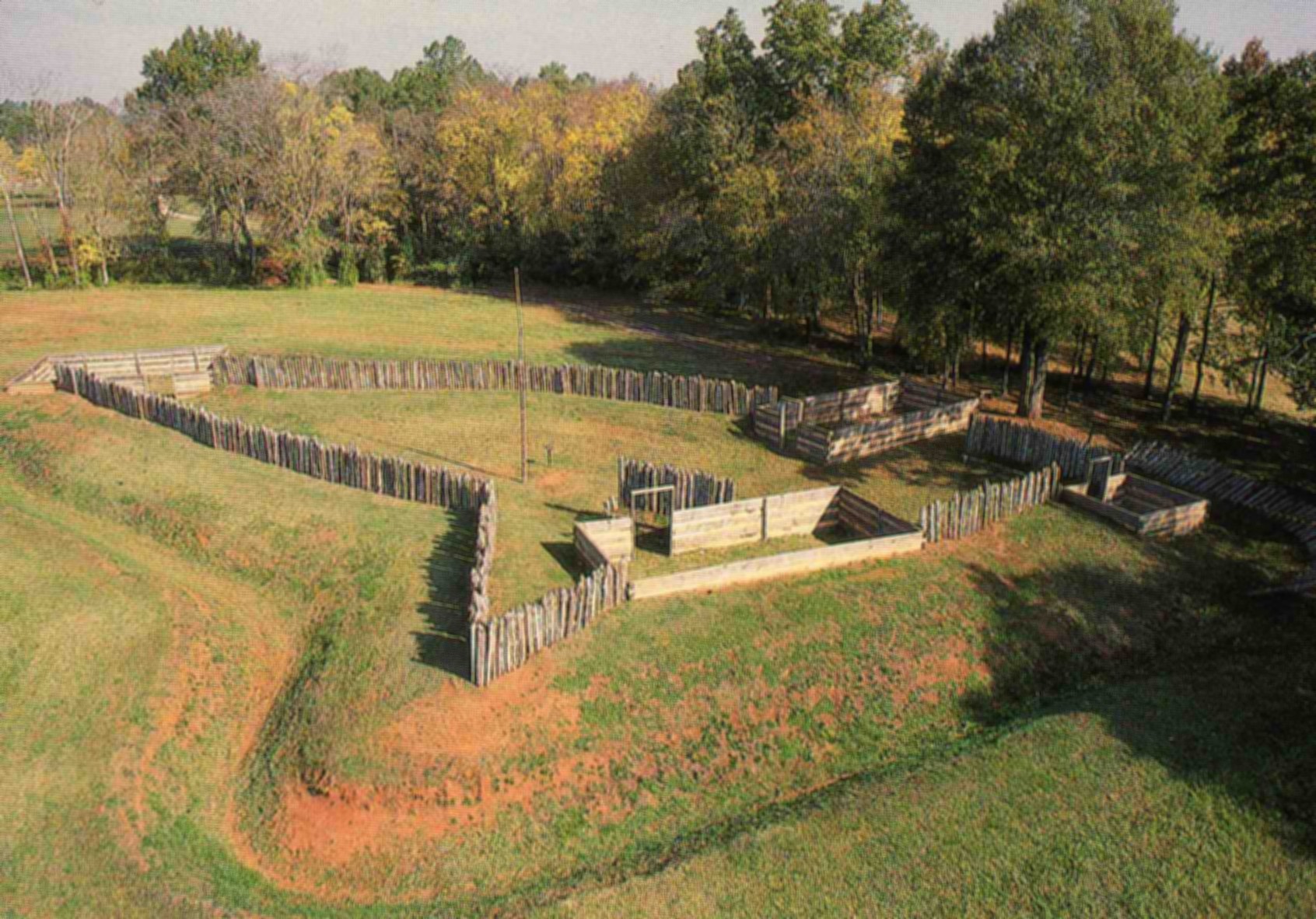
I headed out on the trail again. There were two forts on the site. The Star Fort was the one besieged by Greene.

The other one was built around the farm of Loyalist James Holmes to protect the principal water source. It was attacked by “Light Horse” Harry Lee and abandoned.

The Island Ford Road, worn down by wagon traffic and animal hooves.

Looking from the wall of the Star Fort toward the siege trenches, still visible zig-zagging across the field.

I took this shot from the tower visible in the distance of the previous photo. The path follows the zig-zag trenches. The Star Fort is in the distance. The blocky log-thing in both photos is a reproduction of a tower Greene’s army built so the soldiers could shoot into the fort.

Looking through the site of the old village of Ninety Six toward the Star Fort. The trenches are in the left distance.

Another shot of the second fort …

Posted in South Carolina | Comments Off on Ninety Six National Historic Site, South Carolina

Cowpens National Battlefield, South Carolina

I drove from Kings Mountain to Cowpens, the battlefield where Daniel Morgan defeated an army of British regulars on January 17, 1781. I didn’t have Cowpens entirely to myself, but almost. The visitor center had a slide show and a lighted battle-map display.

I walked the trail slowly, birding, and studying the signs. I’ve been to a lot of Civil War sites, but the idea that actual British troops, complete with red coats and all, fought here made this place even more fascinating to me.

This monument  was erected in 1856 (five years before the Civil War) in honor of  Colonel William Washington’s Light Infantry.

Looking from the American lines toward the British approach.

The scene as the British saw it. The National Park Service is restoring the area to the way it looked during the battle, with scattered large trees but little undergrowth. It was called Cowpens because early settlers grazed their herds here.

Looking up Green River Road toward the British advance. The American Regulars were posted in this area.

After the walking tour, I took the driving tour around the site. I stopped in the visitor center and got directions to Ninety Six, my third battlefield of the day.

Posted in South Carolina | Comments Off on Cowpens National Battlefield, South Carolina

Bird #322 — Worm-eating Warbler

helmitheros (worm-hunter) vermivorus (from vermis, worm, and vorare, to devour)

Tuesday, July 17, 1990 — 9:50 am

Kings Mountain National Military Park, South Carolina

I was on the battlefield trail about one quarter of the way around the base of the mountain. I’d been watching my lifer Louisiana Waterthrush scolding me from a perch above a creek when I became aware of another bird. I checked it out and … another lifer! A Worm-eating Warbler was foraging through the leaves on a branch about 10 feet above the trail and about 20 feet in front of me. I got a good look before it was chased away by another small bird. They flew through the woods and out of sight. I spent about 20 minutes in the area and finally found the warbler again. It was foraging in the brush around the base of a large tree immediately next to the creek. The woods in the area were mostly deciduous, with a sprinkling of pines.

Several years ago, my wife bought me a micro-cassette for my birthday for me to use while birding. I brought it on this vacation and recorded my observations into it. When I was back home transcribing my notes, I noticed a marked lack of enthusiasm while I was watching these two lifers. I would have expected my voice to be laced with excitement, but no. I was just whispering in a dry, slow monotone with no hint of thrill. And then there is a pause … “Oh baby, this is awesome!” I managed to convey, in those five whispered words, all the excitement that makes birding worth the trouble. The heat, the cold, the travel, the birds, the time, the shattered anticipation, all become worth it when a moment like this comes along.

Posted in Wildlife | Comments Off on Bird #322 — Worm-eating Warbler

Bird #321 — Louisiana Waterthrush

seiurus (from seio, to shake, and oura, tail) motacilla (water wagtail)

Tuesday, July 17, 1990 — 9:50 am

Kings Mountain National Military Park, South Carolina

I watched the film in the visitor center, toured the museum, then walked the path around and over the mountain where the Revolutionary War battle took place.

I’d walked about a quarter mile around the mountain, reading the trail-side signs, and birding as I went. The woods were fairly thick, mostly deciduous with an occasional pine sprinkled in. A tiny brook flowed through the valley nearby. I know I was the first person on the path that day because I kept removing spider webs with my face.

I heard an Acadian Flycatcher in the woods and was stalking it when another bird popped out of the vegetation and started calling incessantly. I tried to ignore it and find the flycatcher, but the other bird perched on an exposed branch about 20 feet from where I stood and scolded me. I gave it a glance and … lifer. I knew immediately it was a Louisiana Waterthrush. And it was very cooperative. It stood on the branch and yelped at me while I recorded field marks into the mini recorder I was carrying. I had my camera along, and when I’d gotten my fill of looking at it, I tried for a picture. I had the bird framed in my zoom lens and in focus. I pushed the button and … that’s when I discovered I was out of film. I had another roll in the car, but that did me no good. And the bird still stood there, looking right at me. I might still be looking at it if I hadn’t been distracted by another bird … my lifer Worm-eating Warbler.

Posted in Wildlife | Comments Off on Bird #321 — Louisiana Waterthrush