I’m developing a theory. It goes like this — you can tell how interested someone is in buying your house by seeing how far they walk into the bedrooms.
But I’m getting ahead of myself. We decided to put our house on the market a few months ago. The realtor came out and took a look. Then we had to make an appointment to go to her office so she could show us fancy graphics that picture all the things she would do to sell our house. (She’d already told us all these things during her visit, but they were very nice pictures.) Then we signed a contract.
The next morning there was a “For Sale” sign on our front lawn. We weren’t ready to show the house yet, but the sign was there to constantly nag us to do the things we had to do.
For example, we had to make an appointment with a “stager.” We’ve sold two houses in the past, and we never had to use a stager. But apparently stagers are the thing now. You can’t show your house until you’ve met with a stager. So the stager came out and, for $400, spent an hour walking around our house to tell us that we decorated very nicely and didn’t really need to do anything. Except maybe move the fish tank off the kitchen counter to make it look less cluttered. And replace the upstairs carpeting.
That the carpeting needed to be replaced really wasn’t news. It was awful. It’s been in the house as long as we have. It may have been original with the house. It may have even been here longer than that.
So we dashed over to Home Depot and bought some lovely carpeting. I then spent a week packing up my books and cleaning closets and moving everything except the very few largest pieces of furniture. I carried everything downstairs so the carpet guys could come so I could carry it all back upstairs so we could stage the house to sell its so I could carry it all back downstairs to move.
Finally it was time to show the house. We had a day’s warning for our first showing, so we made everything perfect. I vacuumed the new carpeting. We packed our cats into their cages, piled into the car and ran some errands. When we got back to the house, I noticed that I could trace exactly where the potential buyers had walked by looking at their footprints on the carpeting. They had walked into all the bedrooms, checked out the closet space, looked out the windows. When we got the report the next day, we learned that they were somewhat interested in our house but still looking.
Three days later, we had another showing. This time my wife was at work. I was at home without a car. I cleaned the house, packed the cats into one cage this time (since I was on foot), and walked outside into a driving rain. I grabbed an old coat to cover the cats and walked next door and sat on a bench on my neighbor’s front porch.
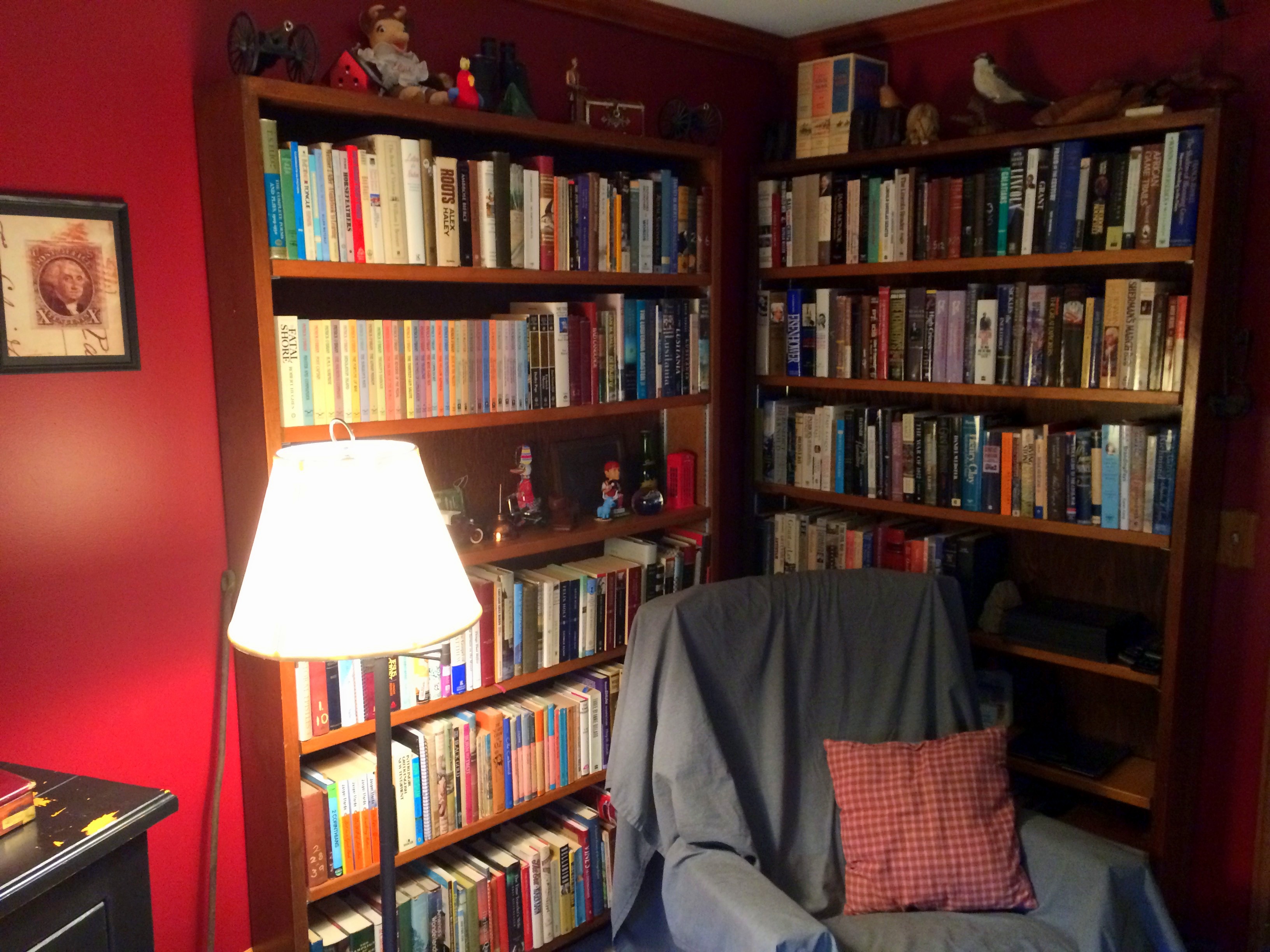
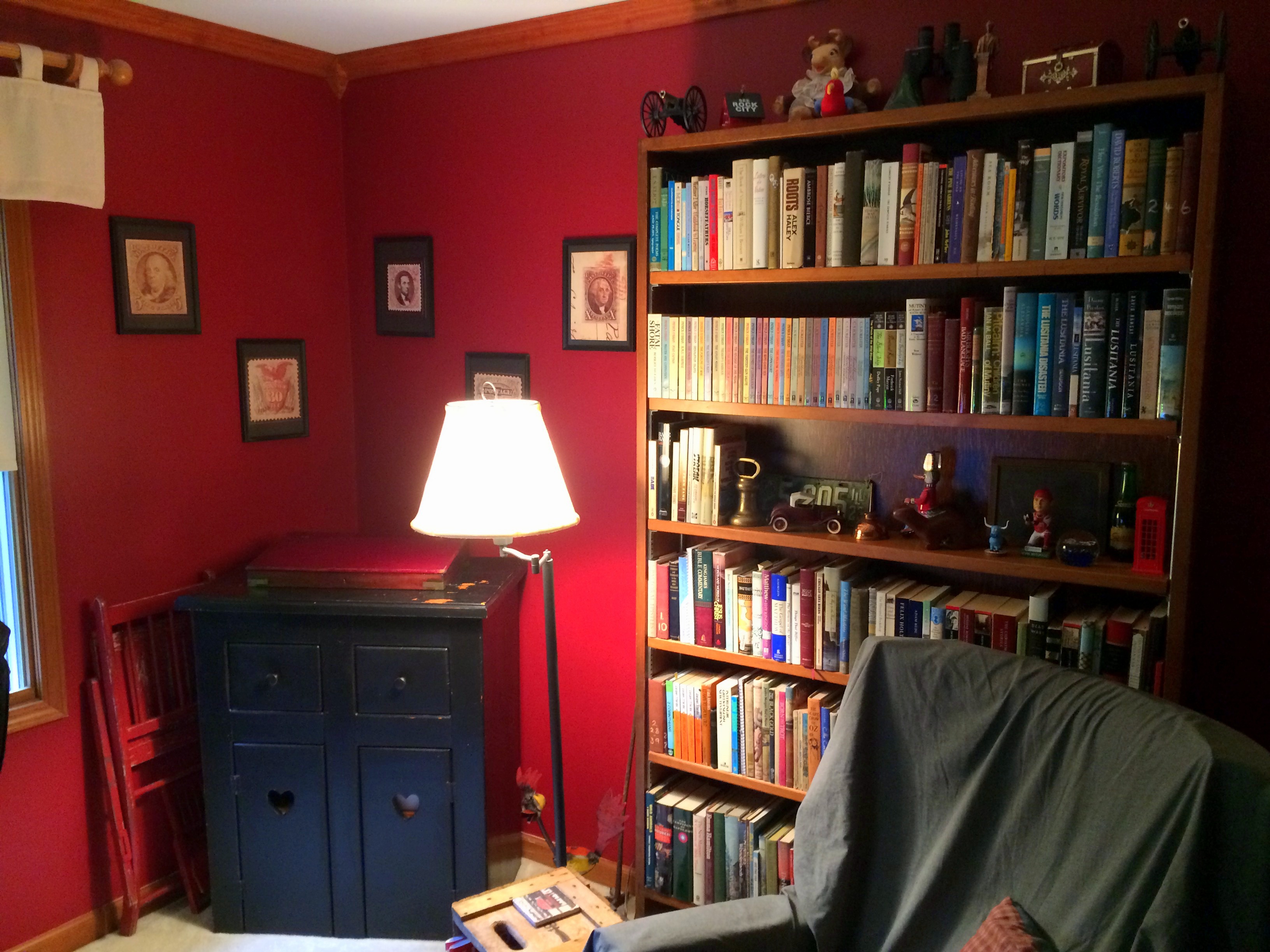
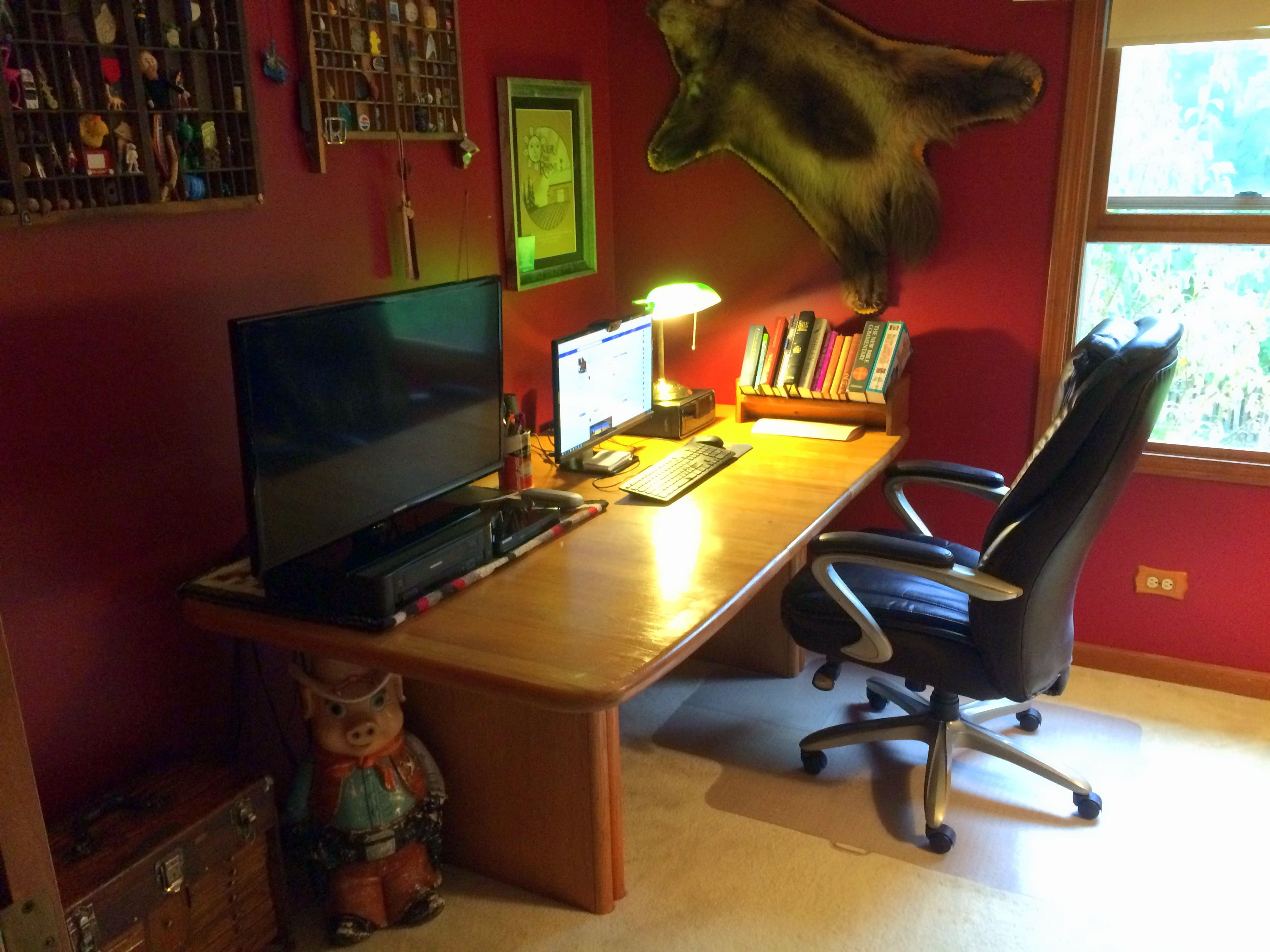
The potential buyers didn’t stay long. When I went back inside, I saw that they hadn’t entered three of the bedrooms and only made a quick trip inside the fourth. That didn’t bode well. The report stated that they weren’t interested. They said the house “felt dated” because of the way it is decorated. We decorate with antiques. We’re going to take them with us. The new owners don’t have to decorate the same way.
Something I’ve learned during this process is that a lot of people — maybe even most people — can’t see past your stuff. They can’t see the space for what it is. They can’t imagine what the house will look like with their stuff in it. This is a real thing. People this unimaginative really go house shopping. When they do buy a house, I wonder if they’re surprised that the former owners didn’t leave all their things. “Wait,” I imagine them crying, “this isn’t the house we looked at! Where are the modern-looking decorations that were in this room?”
Then came this past Friday. I was planning on leaving home at 3:00, picking up my wife at work and then heading down to my mom’s to celebrate her 95th birthday. At 2:30, I got an email requesting a showing at 6:30. We have to sell the house, so we don’t want to turn down any showings. I called my wife and told her I’d be late. Then I scurried around and cleaned the house. I vacuumed the carpet. I packed the cats into their cages and took off. It wasn’t part of the plan to take the cats to my mom’s, but I couldn’t come up with a better plan.
I was about a third of the way when the car began to stink. I turned around in time to see Lucy depositing a pile on the towel in the corner of her cage. I didn’t think cats did this. But she was doing it. I was just about overcome with the odor. I opened the windows and continued on. I drove carefully. Lucy was being very careful to stay at the opposite end of the cage, and I didn’t want to make any sudden moves that threw her onto the pile.
My wife got in the car and immediately sensed that there was a problem. We drove to a nearby dumpster and tossed the towel. Fortunately things were contained and the problem was solved.
Or not. The smell lingered. Then my wife noticed that Millie had also deposited a pile in her cage. But not in the corner — right in the middle. And she either couldn’t, or just didn’t, avoid it. She was coated with gunk. I pulled into a Walgreen’s and went inside for wipes and paper towels. I did my best to hold the cat out while my wife cleaned her off. But this was a kitten who was already stressed and wasn’t enjoying any of this. By the time we’d done all we could do, the cat was still a mess, the car seat wasn’t much better, and both of us were wiping spots off our clothes.
We just wanted to go home. But the showing was scheduled for about the time we would get there. And my mom doesn’t have 95th birthday parties every day. So we drove on. I carried Millie in her cage into my mom’s bathroom and put her in the tub. I poured about two inches of warm water into the tub and let her out. Fortunately, she’s one of those cats who doesn’t hate water, so she was remarkably patient while I scrubbed her as best I could. Once in a while, she would lift one of her paws out of the water and shake it, showering me with drops of I-don’t-want-to-think-about-it. I finally got her and me as clean as we were going to get. The rest of the party went fine.
And the showing?
The bedrooms had hardly been entered.