Lincoln’s New Salem State Historic Site, Illinois

After touring Lincoln’s home and tomb, we visited New Salem. The parking lot was jammed, including 15 buses. There was a McDonald’s in the visitor center, and the building could not have held another person. Kids were everywhere, yelling, screaming and generally being obnoxious.

We walked into the village and found that just as bad. Waves of kids, sometimes eight kids wide and 400 kids deep, were passing by. We couldn’t get near the buildings. It was awful. I was tempted to leave, but I noticed that most of the crowd was heading toward the exit. We walked to the far end of the park, then made our way back through the town. It was still busy, but not nearly like it had been. We saw eventually saw everything there was to see and were thoroughly exhausted when we finished.

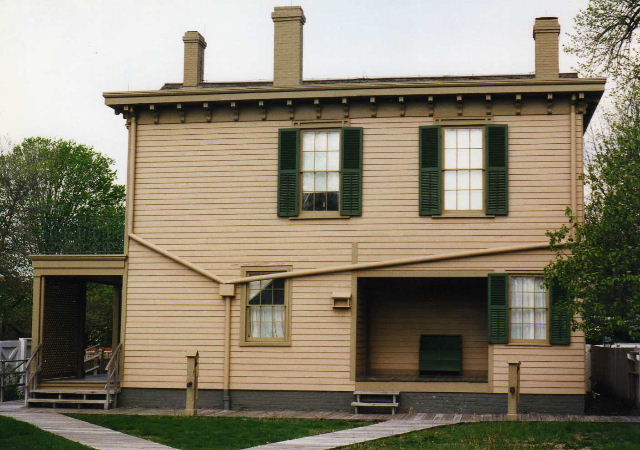
This is the Henry Onstot Cooperage with Onstot’s house behind it. The cooperage is the only original building in the park — the rest are reproductions.

The second Berry-Lincoln Store with the Hill-McNamar house to the right.

The Rutledge Tavern where Lincoln stayed for much of the time he was in New Salem.

Posted in Illinois | Comments Off on Lincoln’s New Salem State Historic Site, Illinois

Lincoln Tomb State Historic Site — Springfield, Illinois

After touring Lincoln’s home, we drove to his tomb. We saw the slab, walked around the monument and let the girls rub the nose of the Lincoln bust in front. This is supposed to bring good luck, and so many people have done it that the nose of the bronze statue shines bright gold. As I was lifting the girls up, a guide came to the door of the monument and stared at us. I didn’t know if we were being bad, so I asked him if this was the statue that was supposed to bring good luck. He reluctantly answered “So I’ve been told.” I asked him if it worked for him. He said no, tried unsuccessfully to suppress a smile, and walked back inside.

While we were there, I walked down the hill a little ways to see the site (the gray stone in the photograph) of the temporary vault where Lincoln’s body was kept until the monument was completed.

The plaque says:

“It stood on the brow of the hill, about fifty yards northwest of the monument. It was removed late in the autumn of 1871, and the site where it stood graded down about fifteen feet.” — John Carroll Power, 1889. Custodian of the Lincoln Tomb 1874-1894.

The temporary vault held the bodies of President Abraham Lincoln and his sons, Eddie and Willie, from December 1865, until they were moved to the partially completed tomb in September 1871.

The granite marker indicates the site of the temporary vault.

Posted in Illinois | Comments Off on Lincoln Tomb State Historic Site — Springfield, Illinois

Lincoln Home National Historic Site — Springfield, Illinois

We stopped in Springfield on the way home from a vacation. Our first stop was Lincoln’s home. We were on the second tour of the day. The guide was very reluctant to tell us much, and the tour didn’t last long. He refused to point out any of the (few) pieces of furniture that actually belonged to the Lincolns — except for the heavy stove in the kitchen. He wouldn’t even admit that the rooms were decorated “like” the Lincoln’s had them. Afterwards, in response to a direct question from me, he said the decor was based on pencil sketches of the house when Lincoln lived there.

It was a good thing we were early — several school groups arrived as we exited the house. We wandered about the restored neighborhood and visited the small display on Lincoln’s life in Springfield that was located in a restored house across the street.

Posted in Illinois | Comments Off on Lincoln Home National Historic Site — Springfield, Illinois

Floating the Buffalo

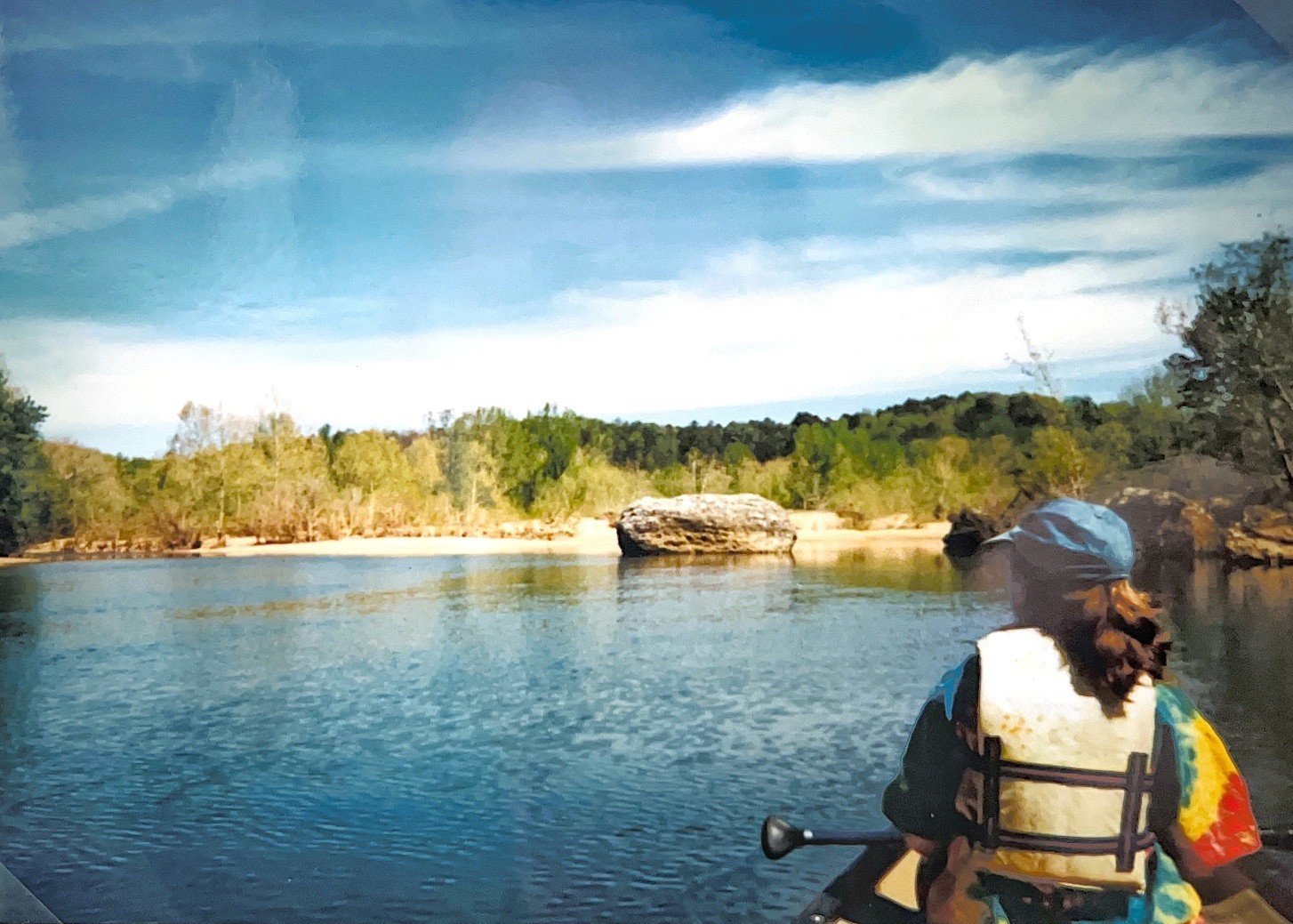
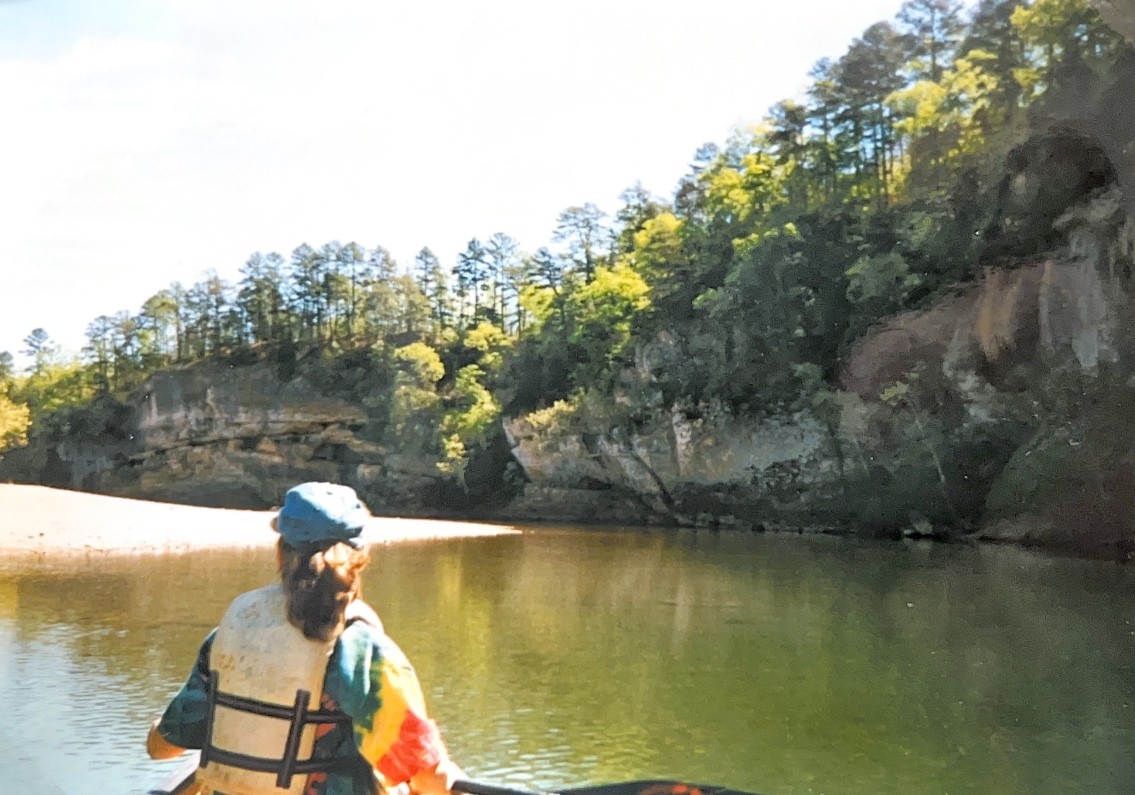
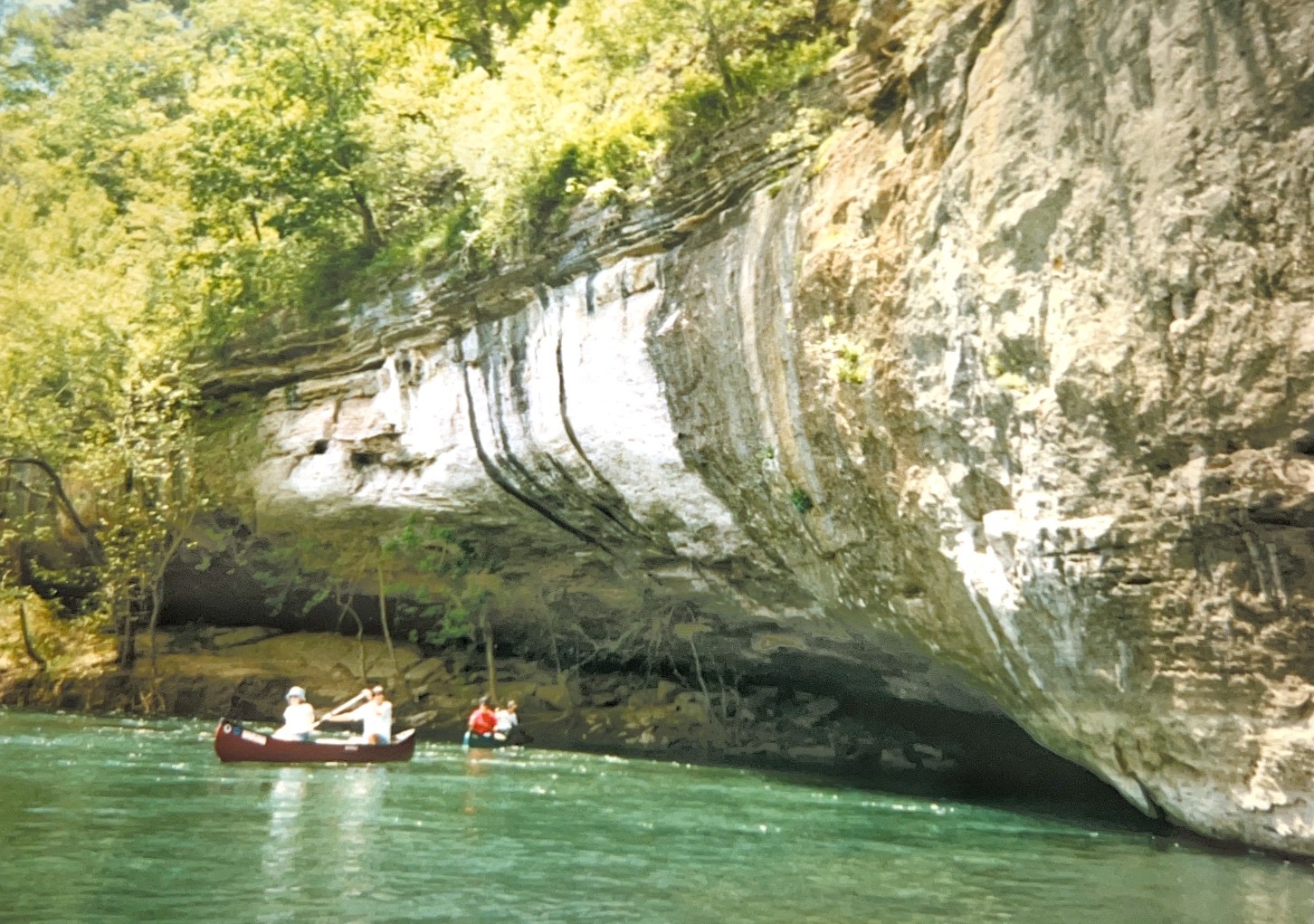
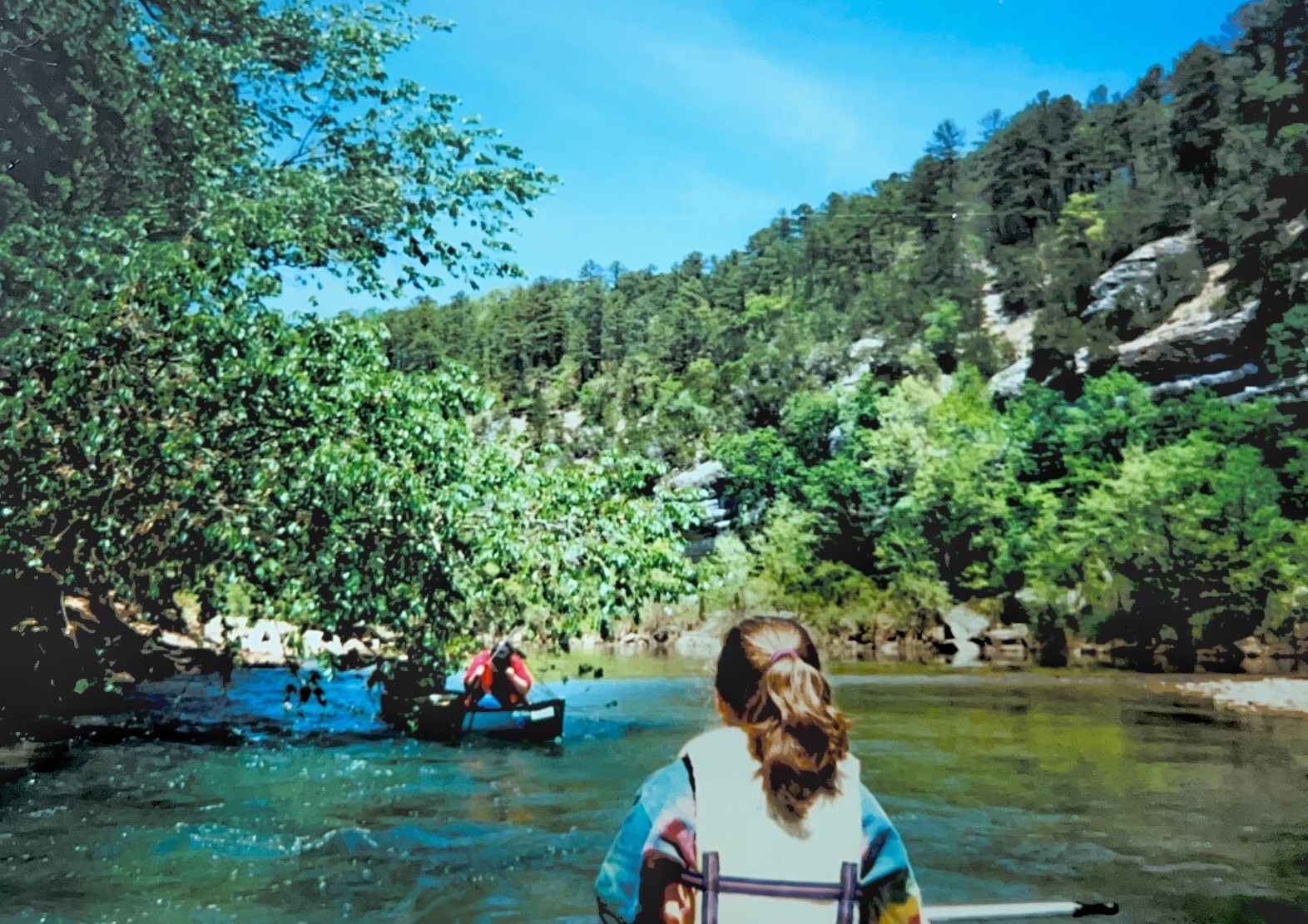
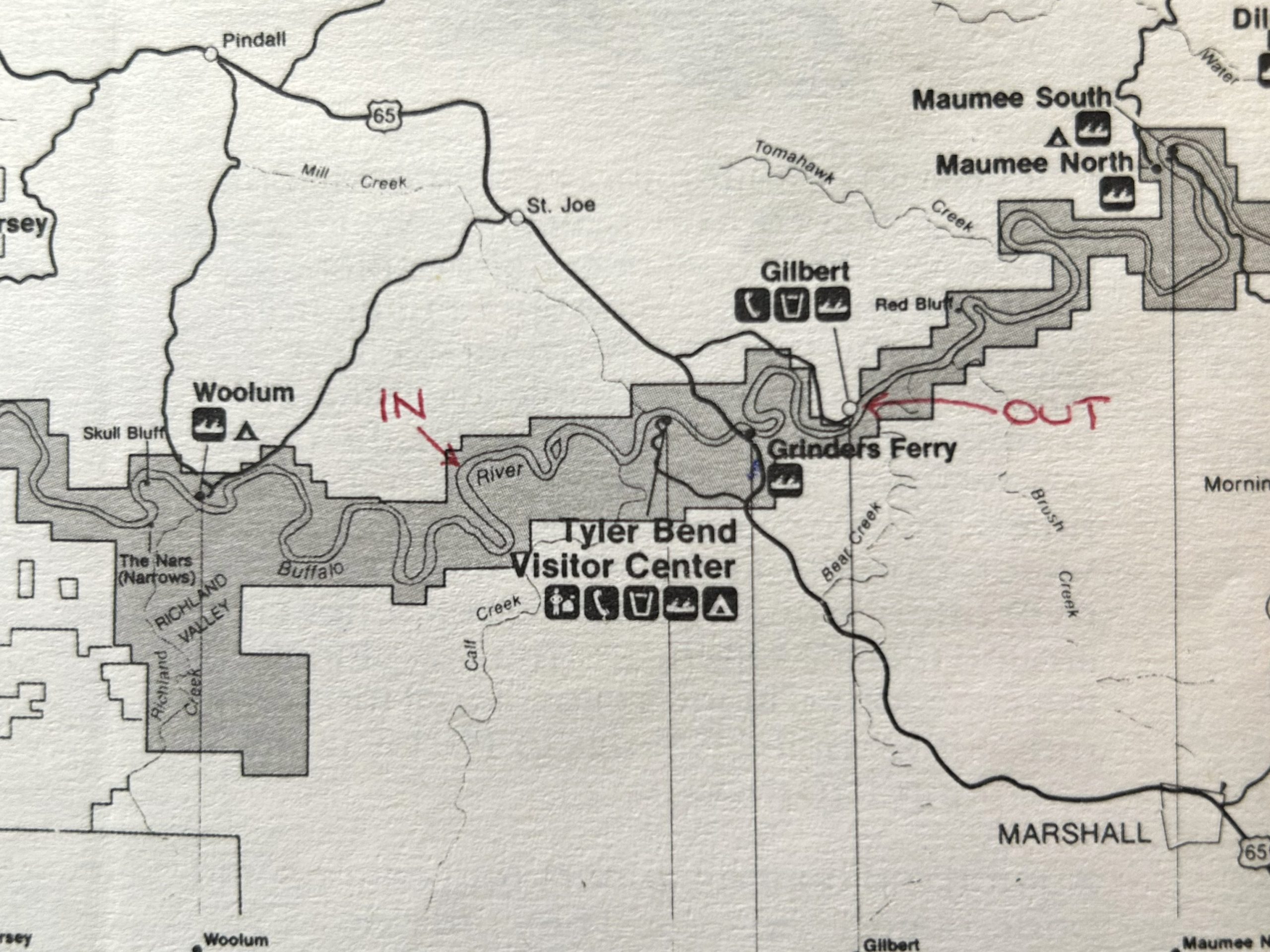
On a pleasant spring Thursday, I took a 10-mile canoe trip down the Buffalo National River with my wife and daughter, two brothers-in-law, and a sister in law. We rented three canoes. The outfitter took us down 20 miles of increasingly rustic roads — at one point, we had to stop and open a gate that had been erected by a crotchety old man who resented that the county road crossed his farm.

The river was harmless, with just the occasional ripple. We started off quickly, but then saw the outfitter putting some other canoers in the river further along. He told us we were making “incredible time.” After that we slowed down and let the current take us. We saw three other canoes and a few people along the shore, but otherwise, we were alone with the birds and the turtles. There were a lot of turtles.

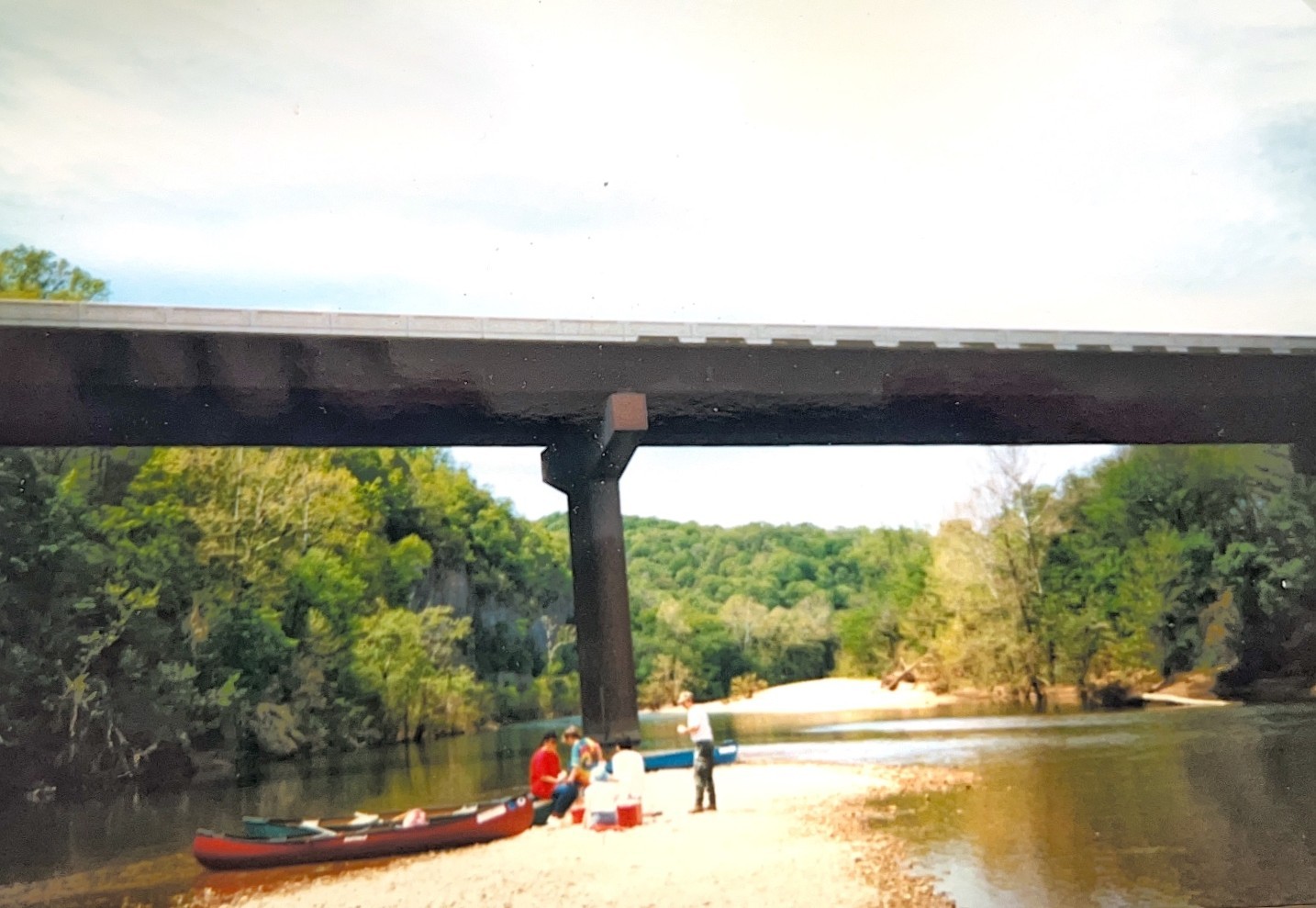
Around noon, we decided to stop for lunch. Our first choice, a nice, shady sandbar, turned out to be ankle-deep mud. Our second choice, a rock shelf at the base of the cliff, was too hard to reach because the current was too fast. We finally settled on a gravel bar in the middle of the river, right underneath the Highway 65 bridge — the only sign of civilization we’d seen. It wasn’t even a nice gravel bar —it was fully exposed to the sun, and there was nowhere to sit.

We brought no sun protection, and we paid. When we reached the pull-out, we wandered up the road to an old-fashioned general store and called the outfitter to come get us. We bought ice cream and walked back down to the canoes to wait. It was a good time, and we were sorry when it ended.

Posted in Arkansas | Comments Off on Floating the Buffalo

Bird #354 — Baird’s Sandpiper

calidris (speckled water bird) bairdii (given by Elliott Coues in 1861 for Spencer F. Baird, 19th-century American zoologist, writer and scholar)

Wednesday, April 30, 1997 — 5:10 pm

Holla Bend National Wildlife Refuge, Arkansas

In the morning, I had seen my lifer Yellow-throated Warbler at Devil’s Den State Park in extreme western Arkansas. On the way back east, I stopped at Mt. Nebo State Park and saw a couple of Bewick’s Wrens. I then headed for Holla Bend in hopes of seeing Painted Buntings and Bell’s Vireos. I had the entire refuge to myself, but I wasn’t seeing anything except for Dickcissels and Savannah Sparrows on every other grass stalk. I drove along slowly, looking for anything that could survive the gale of wind.

In a large field, planted with some kind of grain crop, not too far from the observation tower along the old channel, there was a large puddle. It looked empty, but I wasn’t seeing anything anywhere else, so I stopped and looked though my scope. A lone buffy-looking sandpiper was wandering along the muddy edge of the puddle, picking in the mud. It looked like a peep. I had been studying sandpipers a lot in preparation for this trip, so I looked closely to see if the wings extended beyond the tail. It looked as though they did, and the bird seemed a bit larger and longer than the peeps I’d seen. It didn’t act like it was about to go anywhere, so I pulled out my field guides and rechecked the marks. I got out of the car and set up my scope. The bird was about 75 yards away, and I couldn’t see a great deal, but I did see enough to get me excited. I started across the field, and when I got within 40 yards, I began stopping every ten yards to check it out. It had a buffy wash on the head and breast with streaks on the breast that did not extend onto its sides. The wings definitely extended beyond the tail. The head was pale, with a slightly darker patch on the cheek. It had black legs and a black bill that seemed fairly long for the bird’s size. I began to think Baird’s, but not being familiar with the bird, I couldn’t rule out White-rumped.

The bird was quite tame and allowed me to approach within 10 yards without paying me any attention. When I got that close, it waded out into the water up to its breast and took off out over the puddle. It flew past where I stood and landed behind me. As it flew, it gave four rolling trills that I immediately tried to memorize by thinking, “breep, breep, breep — breep.”I didn’t get a good look at its rump because it flew by too close to follow with my binoculars. I walked back toward it and the process was repeated. It allowed me to get about 10 yards away, waded out into waist-deep water, then took off past me giving its rolling call. It landed about where I had flushed it from the first time. I still couldn’t follow it enough to see the rump. I didn’t want to bother it, but I knew by this time it was a lifer and I wasn’t about to miss it. I followed again and the bird repeated its reaction. On the fourth pass, I didn’t try to see it through binoculars. With my bare eyes, I clearly saw the black rump. I figured that I had bothered it enough, so I went back to the car. I rechecked the books. Earlier, I hadn’t paid any attention to its call, but now I saw that what I heard had been diagnostic. The guide says its call is a low, rolling, “kreep,” often repeated. The call of the White-rumped is a thin, insect-like trill, totally unlike my bird. I watched it for a little while longer from a distance. I had my bird, one I hadn’t expected, and one that isn’t on the Holla Bend list, although A Birder’s Guide to Arkansas says they are uncommon but regular in Arkansas in the spring. Earlier, as I began walking toward the puddle, I saw a Lesser Yellowlegs and a Wilson’s Phalarope foraging together opposite the Baird’s Sandpiper. When I finished with my bird, the other two were gone. I don’t know where they went, or when.

Posted in Wildlife | Comments Off on Bird #354 — Baird’s Sandpiper