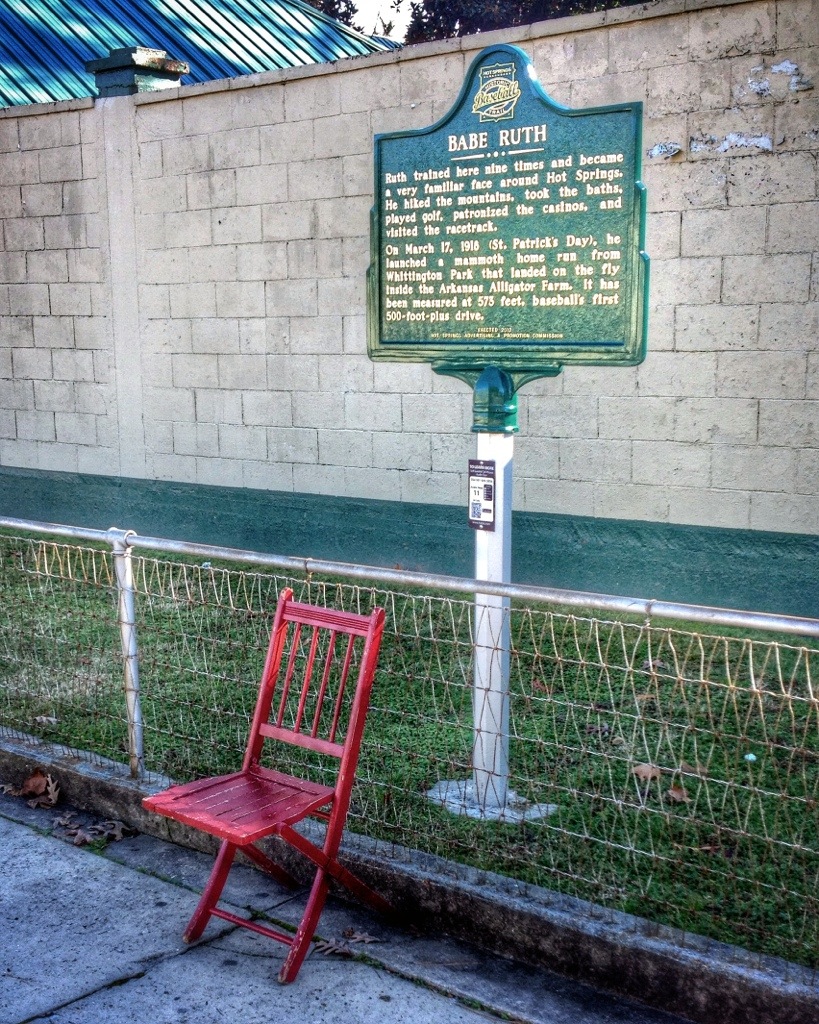
On the day after Christmas, several family members drove down to Hot Springs. We toured a bathhouse and walked the Grand Promenade and drove back and forth across town several times in search of a BBQ restaurant. And we went to the Arkansas Alligator Farm. It wasn’t a large place, and the $9 admission seemed steep. But I enjoyed it because it felt like it hadn’t been updated in 70 years.
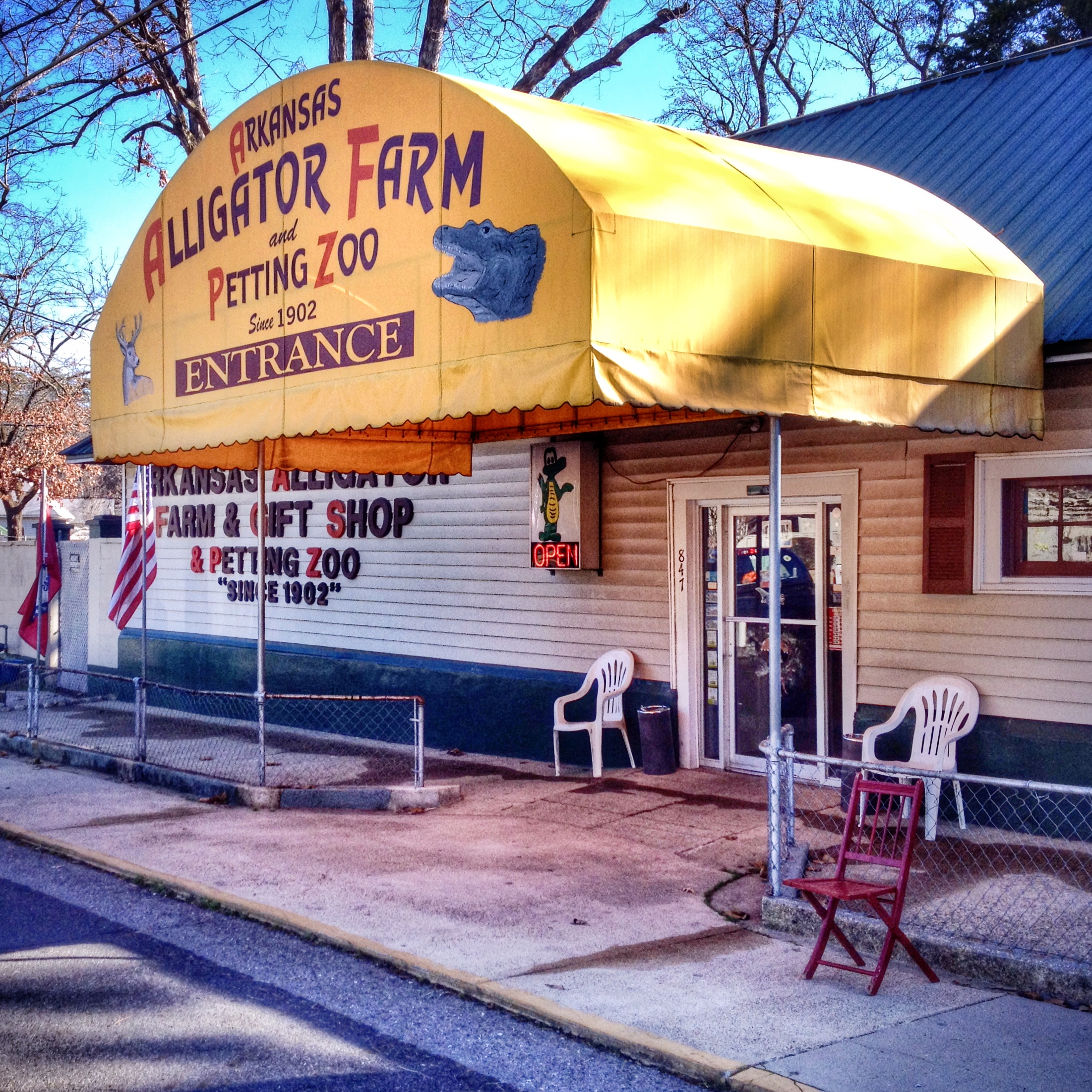
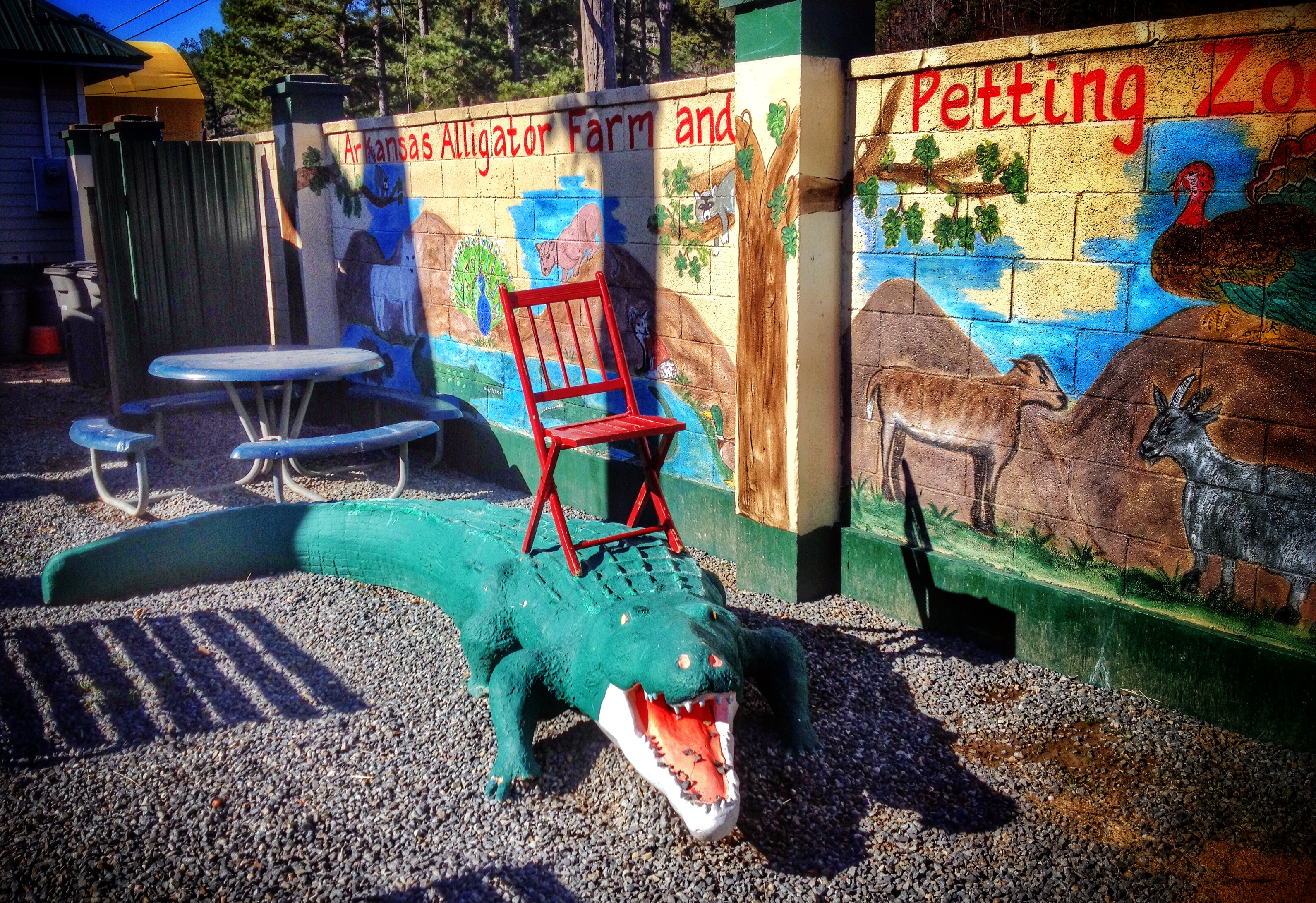
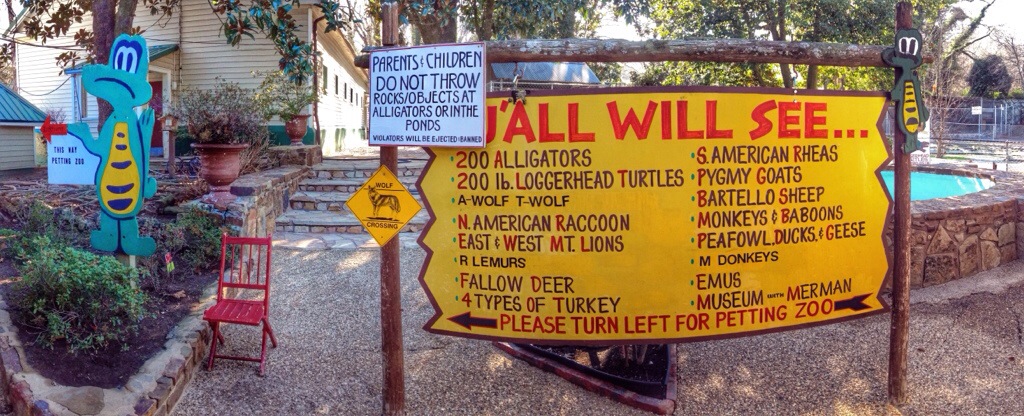
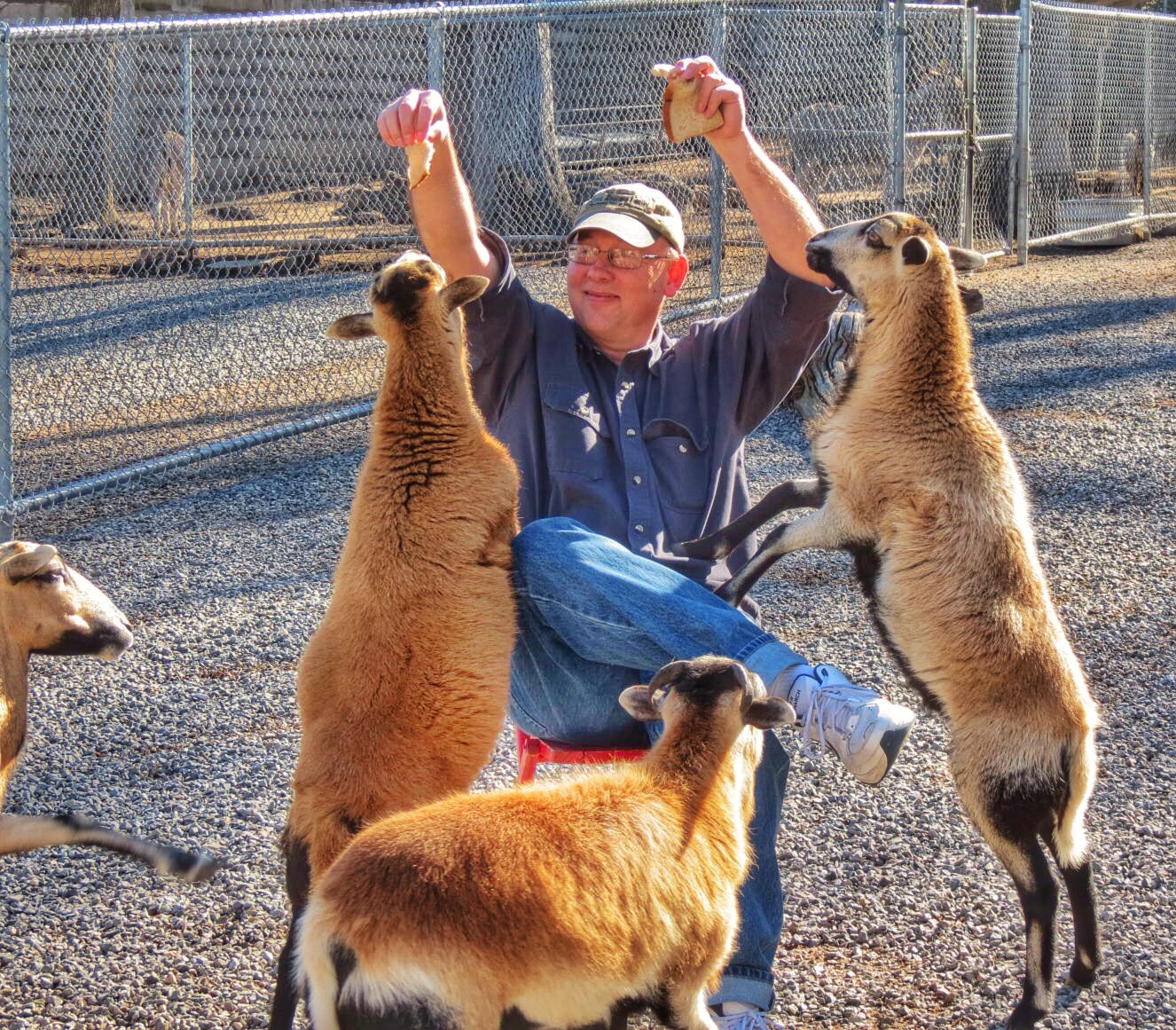
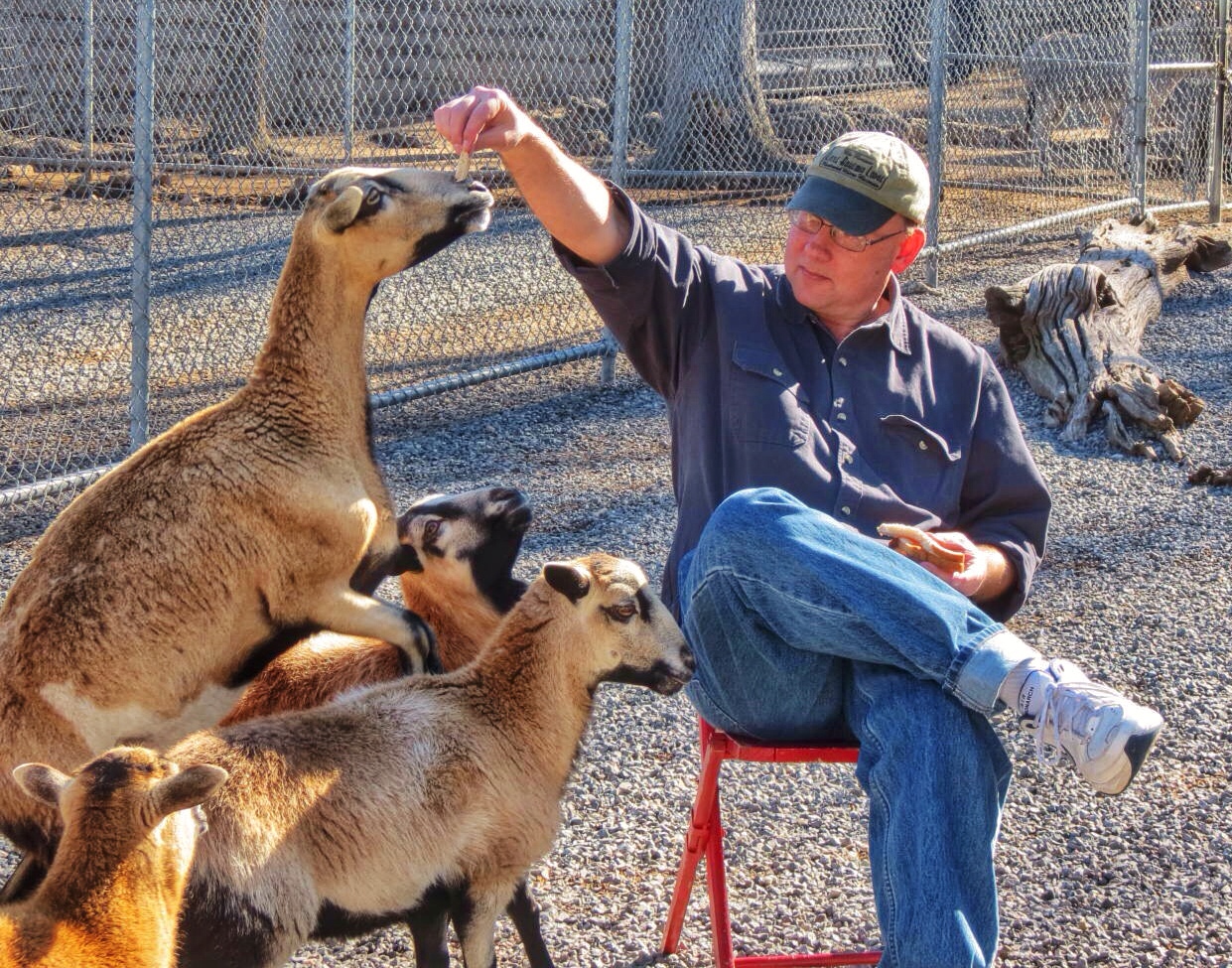
The guy at the desk gave us a loaf of bread for the petting zoo. The only pen we could go into had a flock of sheep. We had to feed the other animals though the fence.
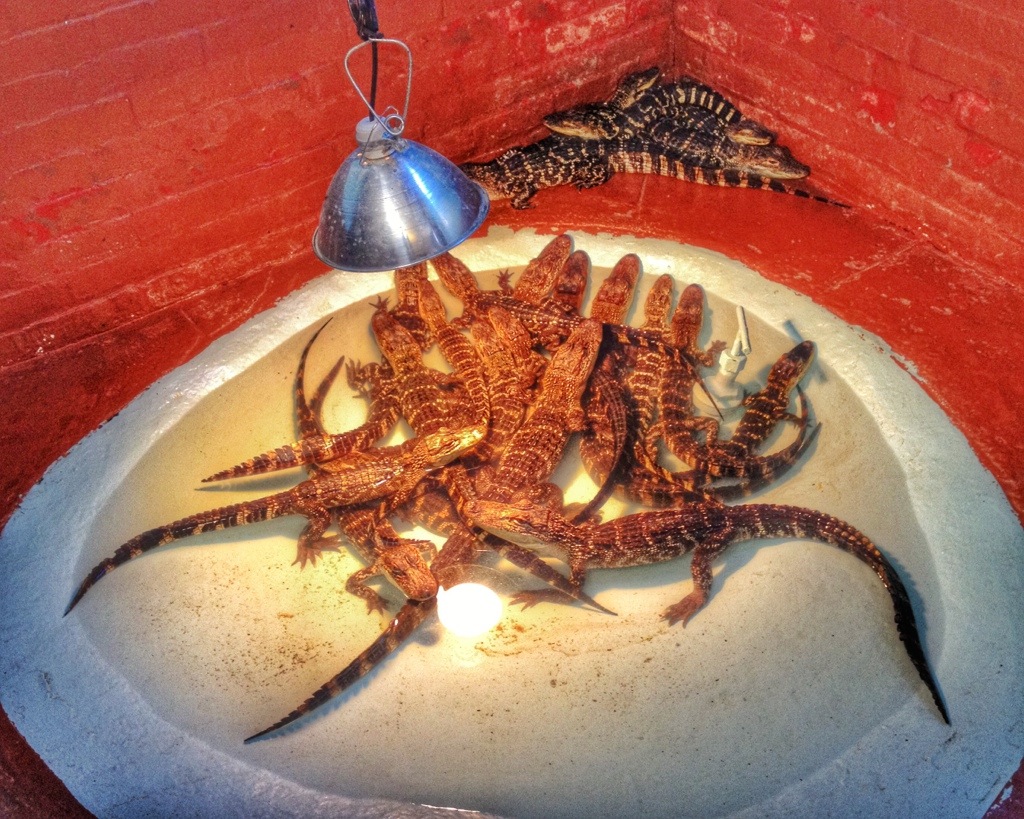
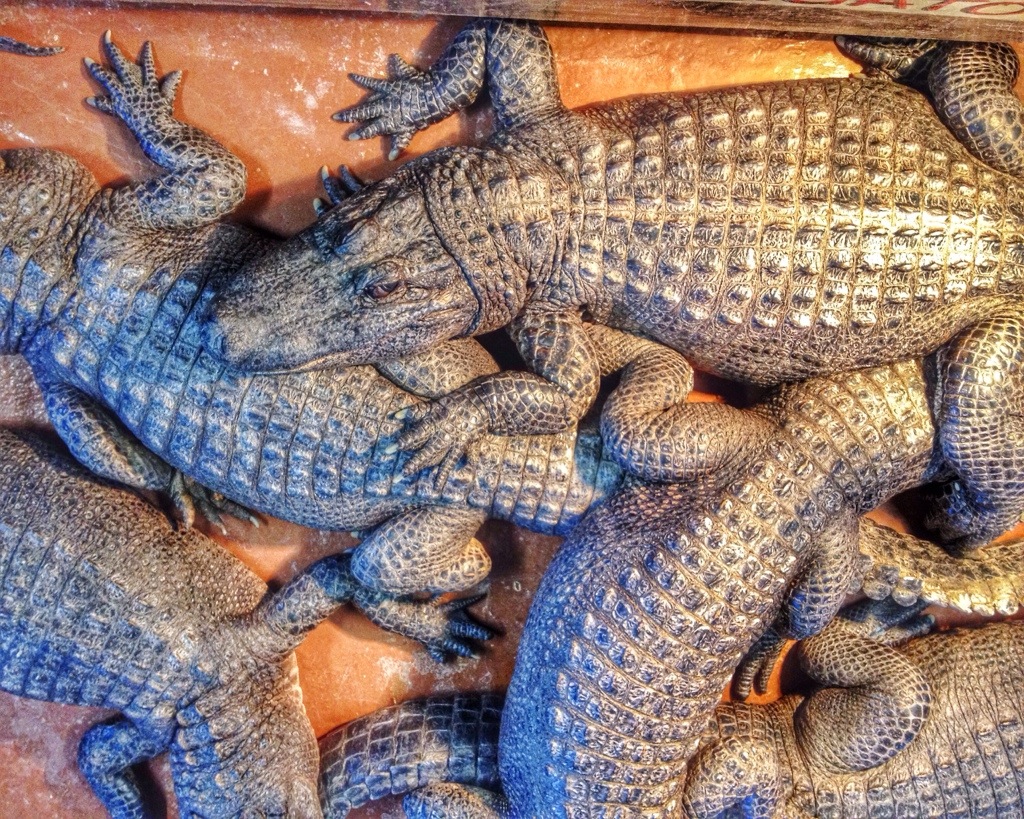
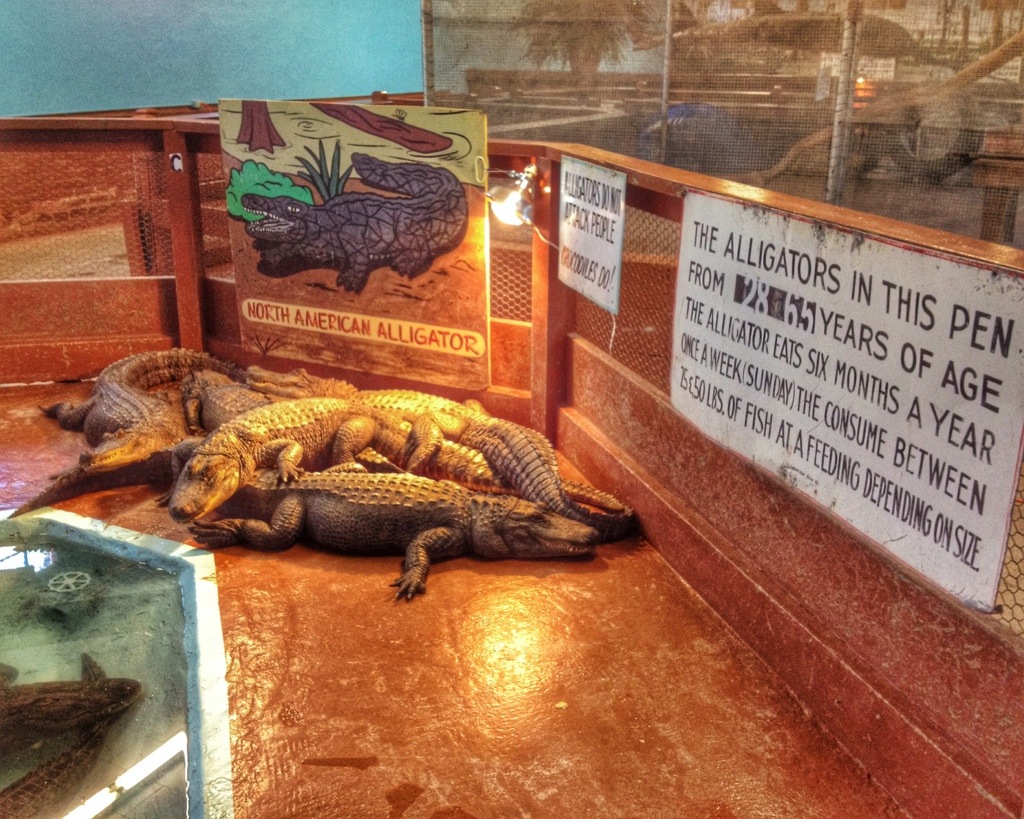
The alligators were inside for the winter. The building had four pens in which the alligators were separated by size and age. This is the pen for the young ones.
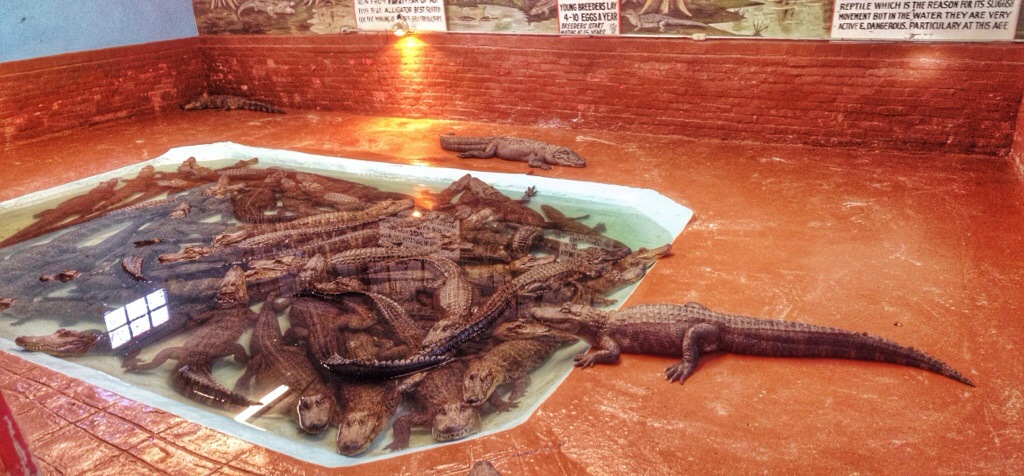
And here are the biggest ones.
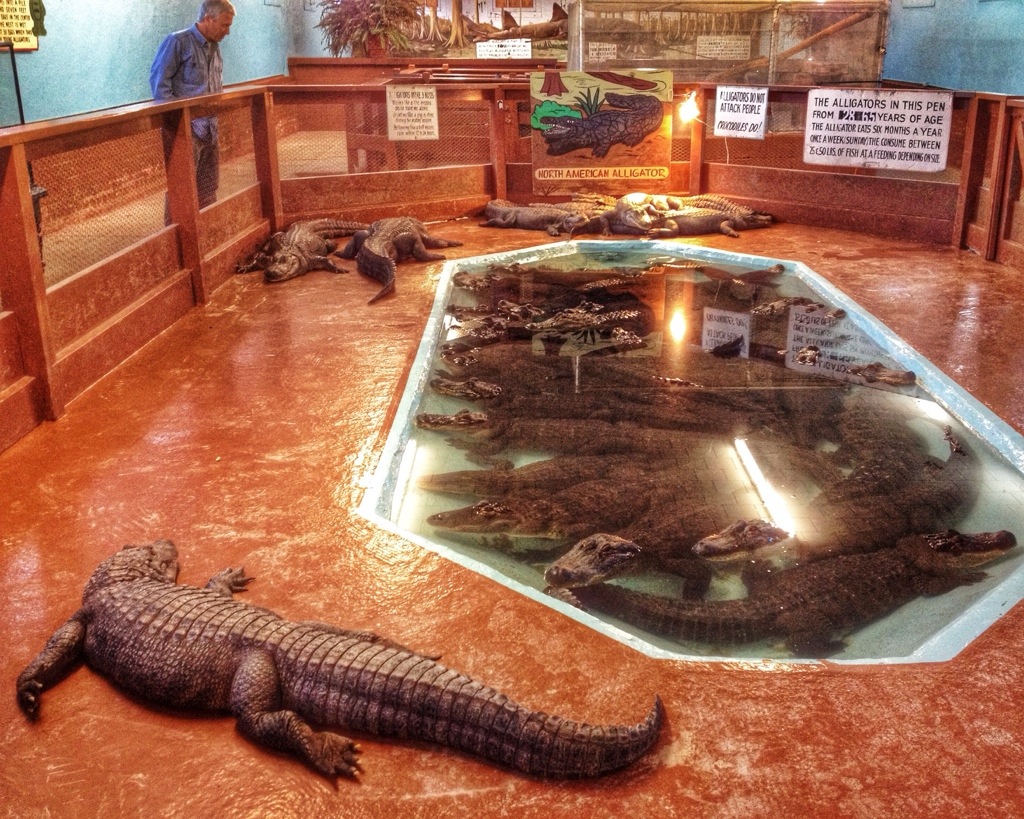
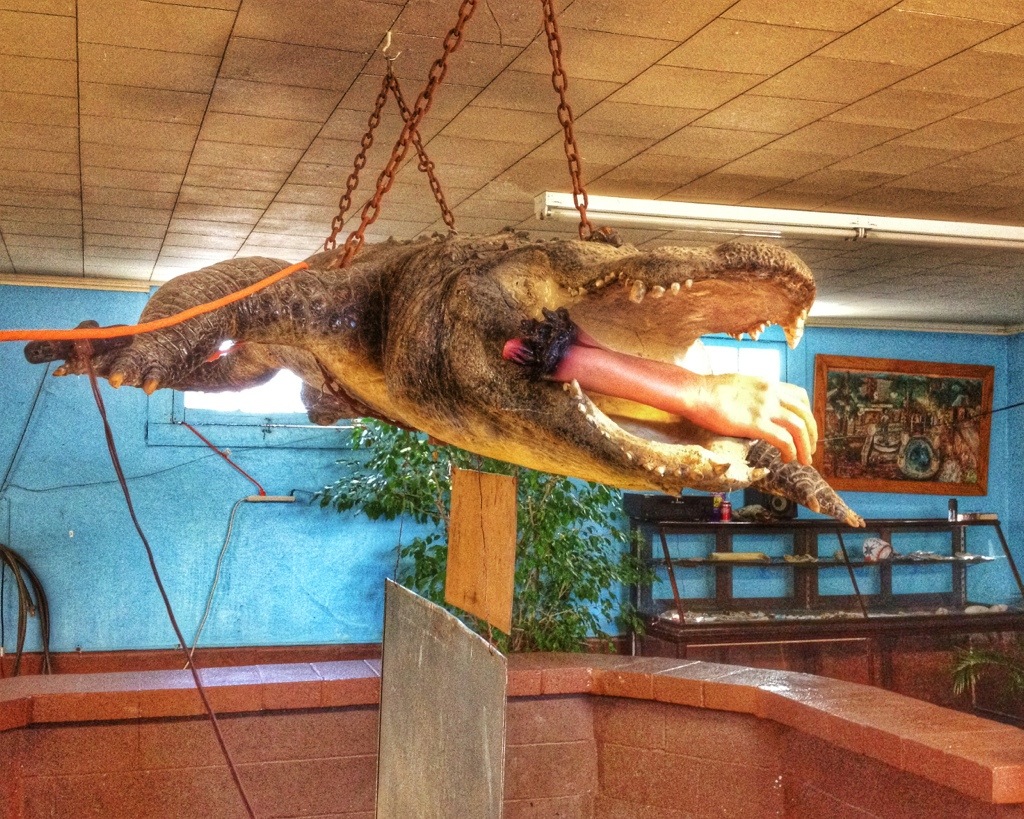
There was a sign in the pen that read “Alligators do not attack people. Crocodiles do!” And hanging nearby was this …
The pens were surrounded by low fences made of chicken wire. It would have been very simple to reach over and touch one or poke one through the wire or even to hop into the pen. We did none of those things. We did spend a lot of time looking for signs of life, which were few. Most of the alligators were piled like firewood, looking for every bit of warmth they could find.
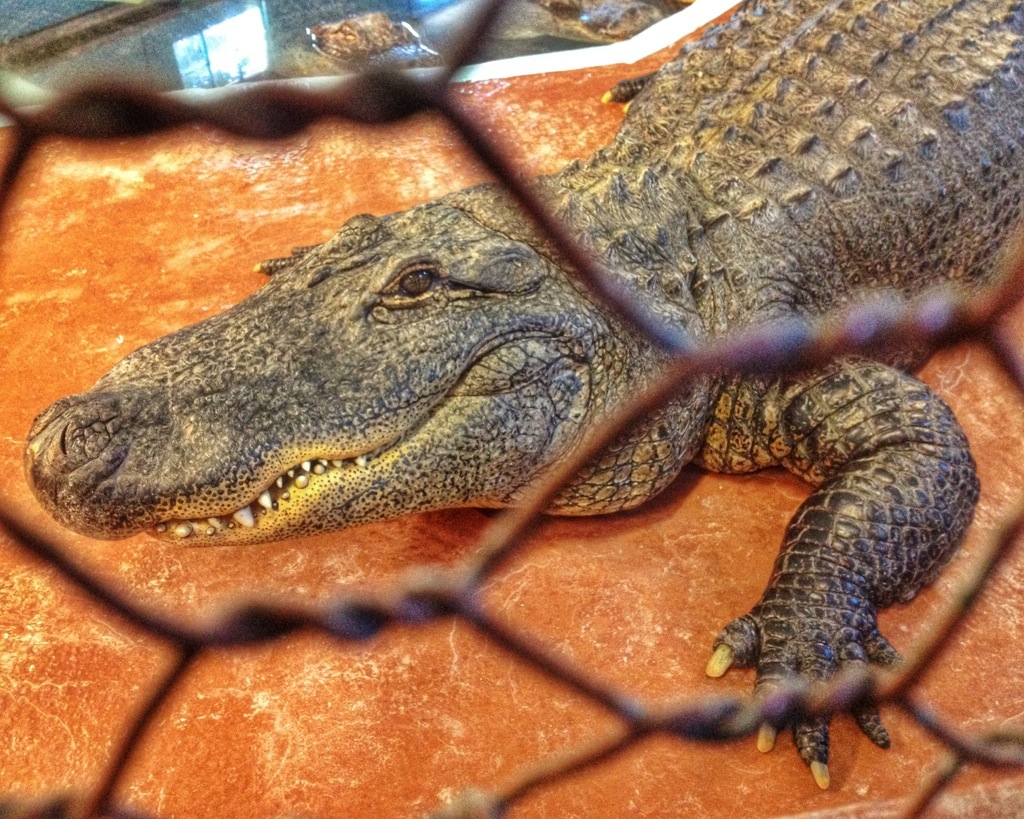
This big one was lying dormant when we first entered, but when several of us gathered near it, it started hissing, which, according to the sign is an indication that it wanted to be left alone.
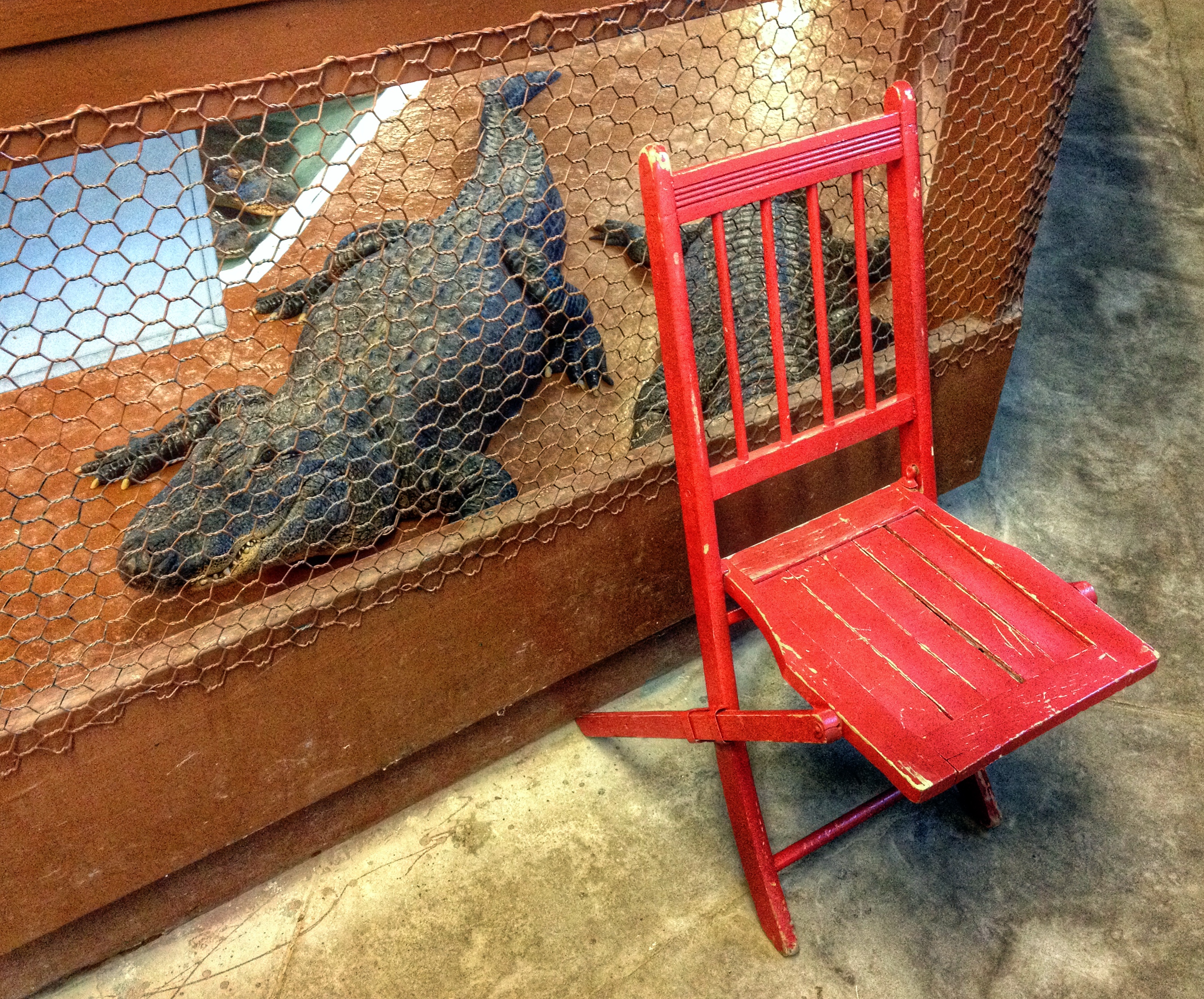
Here’s the pen for the second smallest ones. They were a bit more active than the others.
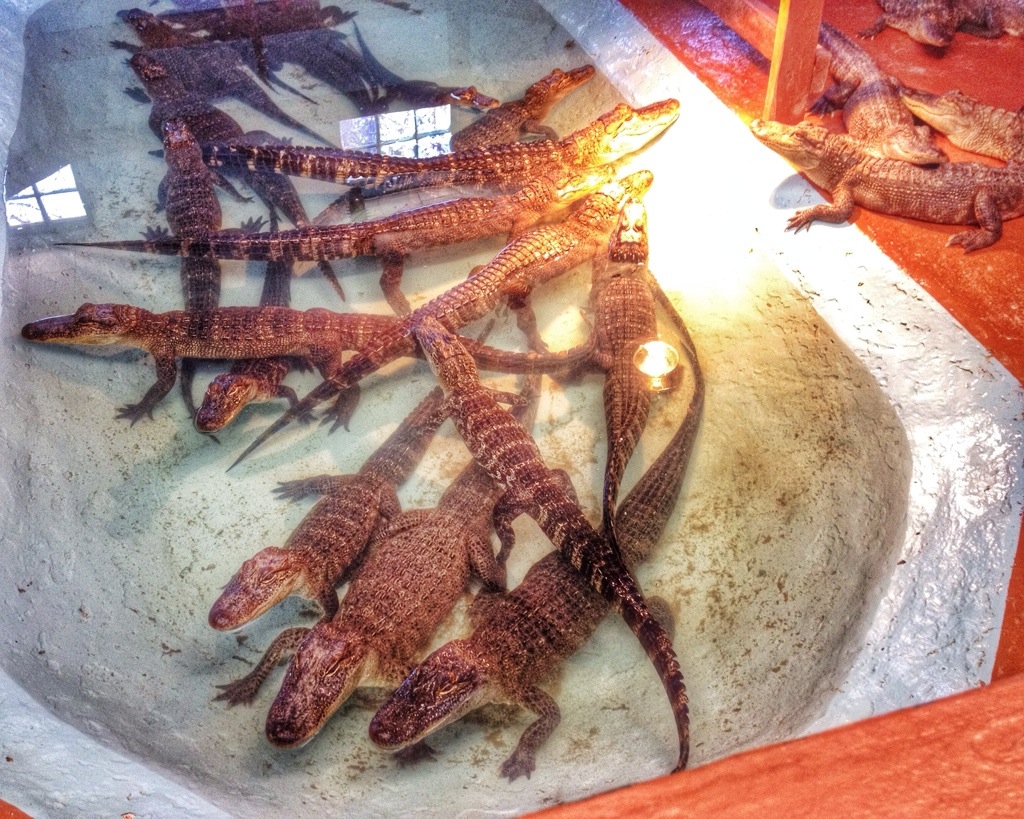
And the third pen.
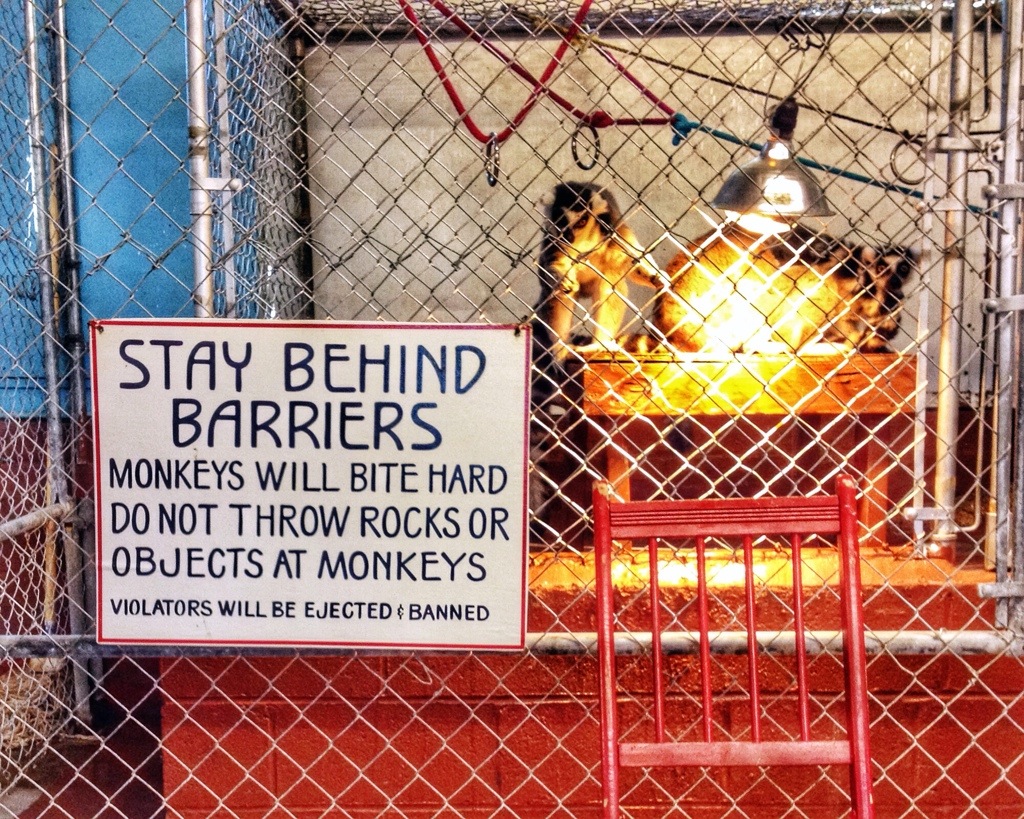
There were a few other exhibits in the building, including two cages of monkeys that mostly gathered under the lights in their cages for warmth.
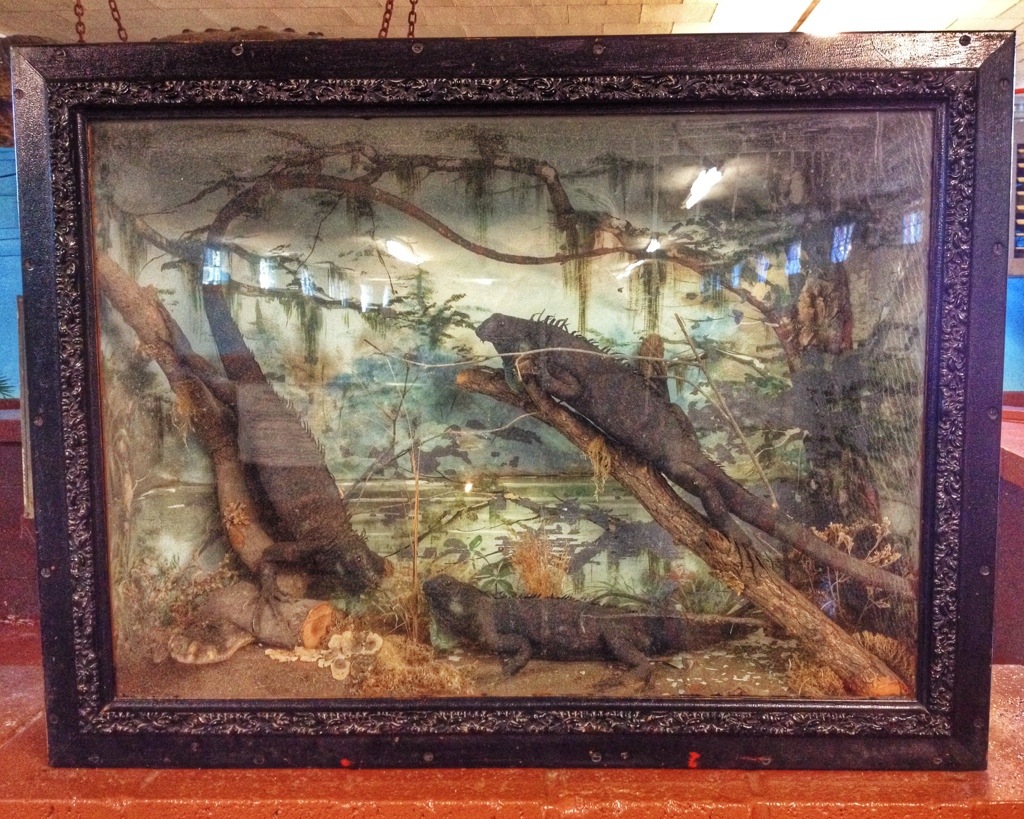
And this diorama of stuffed lizards that is probably 100 years old.
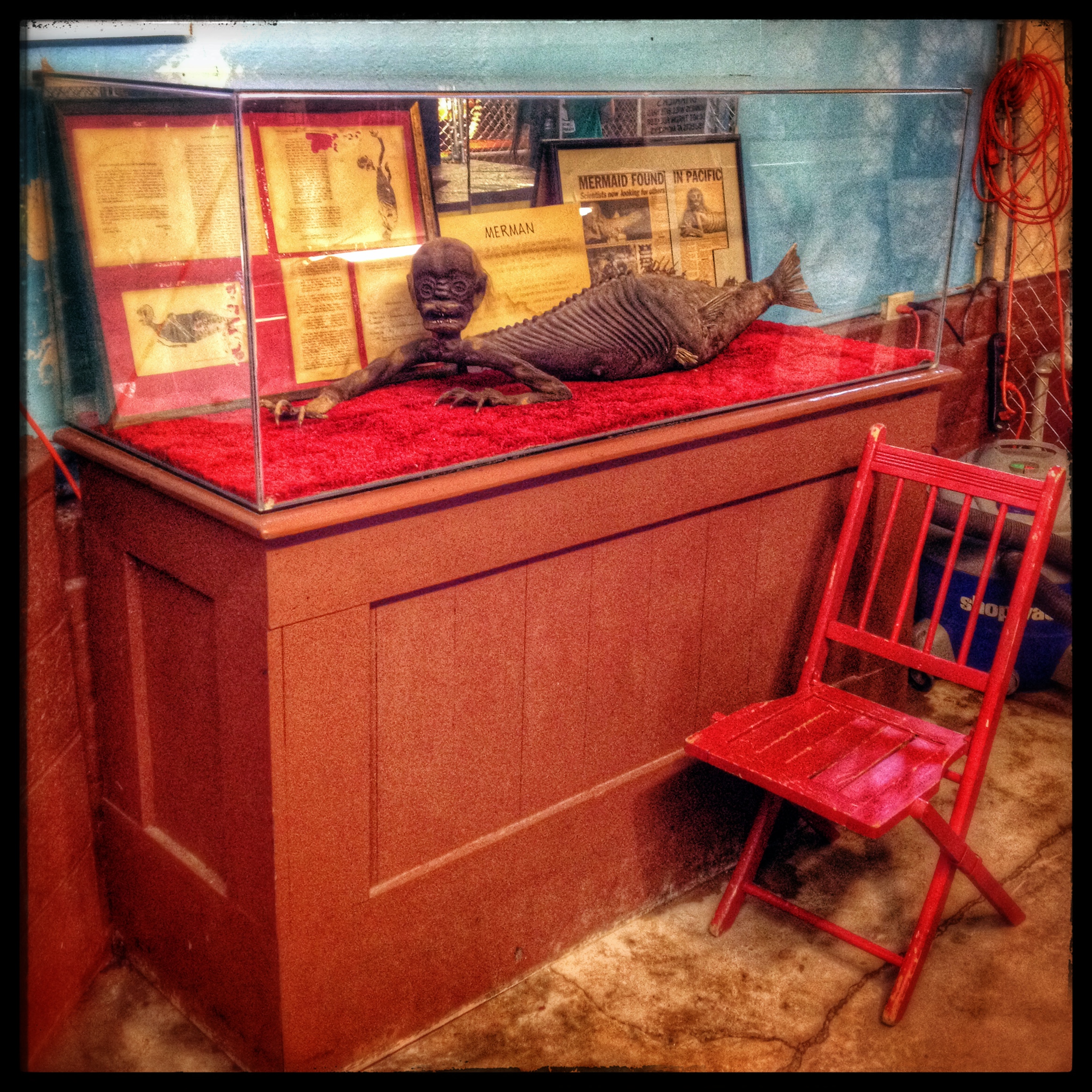
And, of course, just to add an air of authenticity to the place, a merman. The faded and stained sign in the display explains that this is an example of a species that once lived in the China Sea but is now extinct. This particular specimen was purchased from the National Museum of China.
I’m skeptical.
There were a few other cages outside — two wolves that looked to me to have a lot of dog in their DNA, three cougars, one of which was so fat it could hardly move and a bunch of birds.
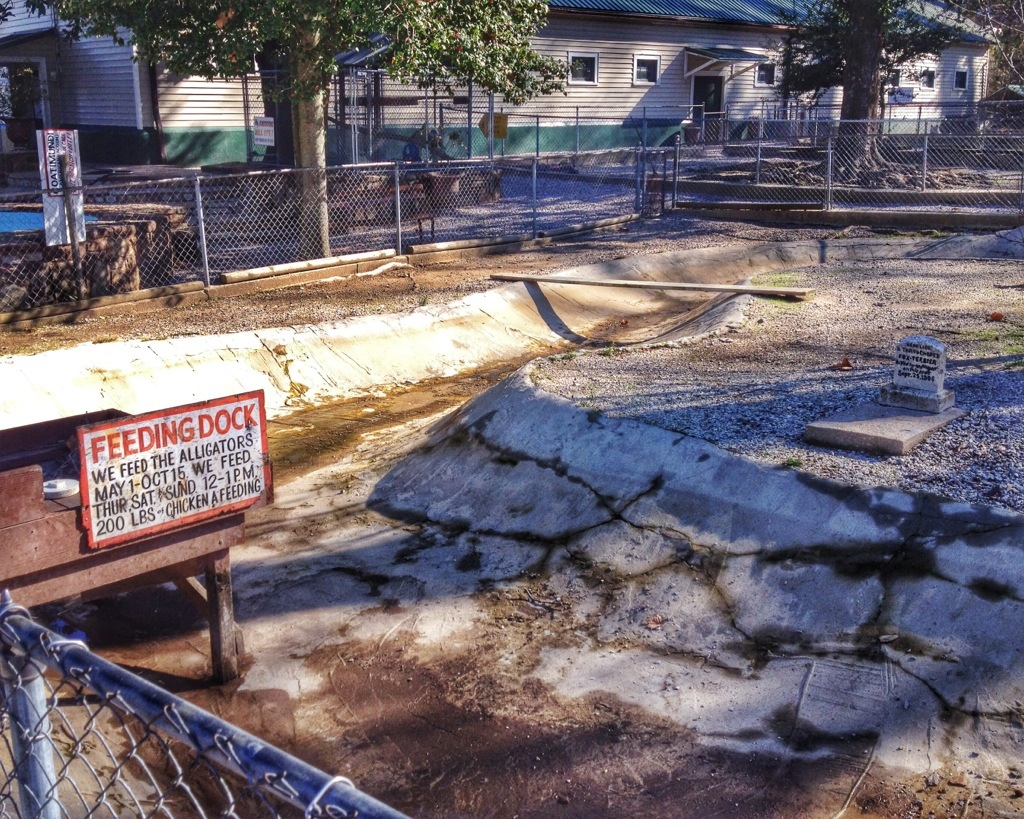
Here’s where the alligators are kept in the summer. The tombstone marks the burial site of a “throughbred [sic] Fox Terrier killed by alligators on this spot September 25, 1906.”
When we entered, I asked the guy who took our money if it was OK to bring the chair in with me. He nodded and seemed unimpressed. As we neared the gift shop after our tour, he came out and told me to put the chair down. He plopped a small alligator — mouth held closed with a rubber band — on the seat.
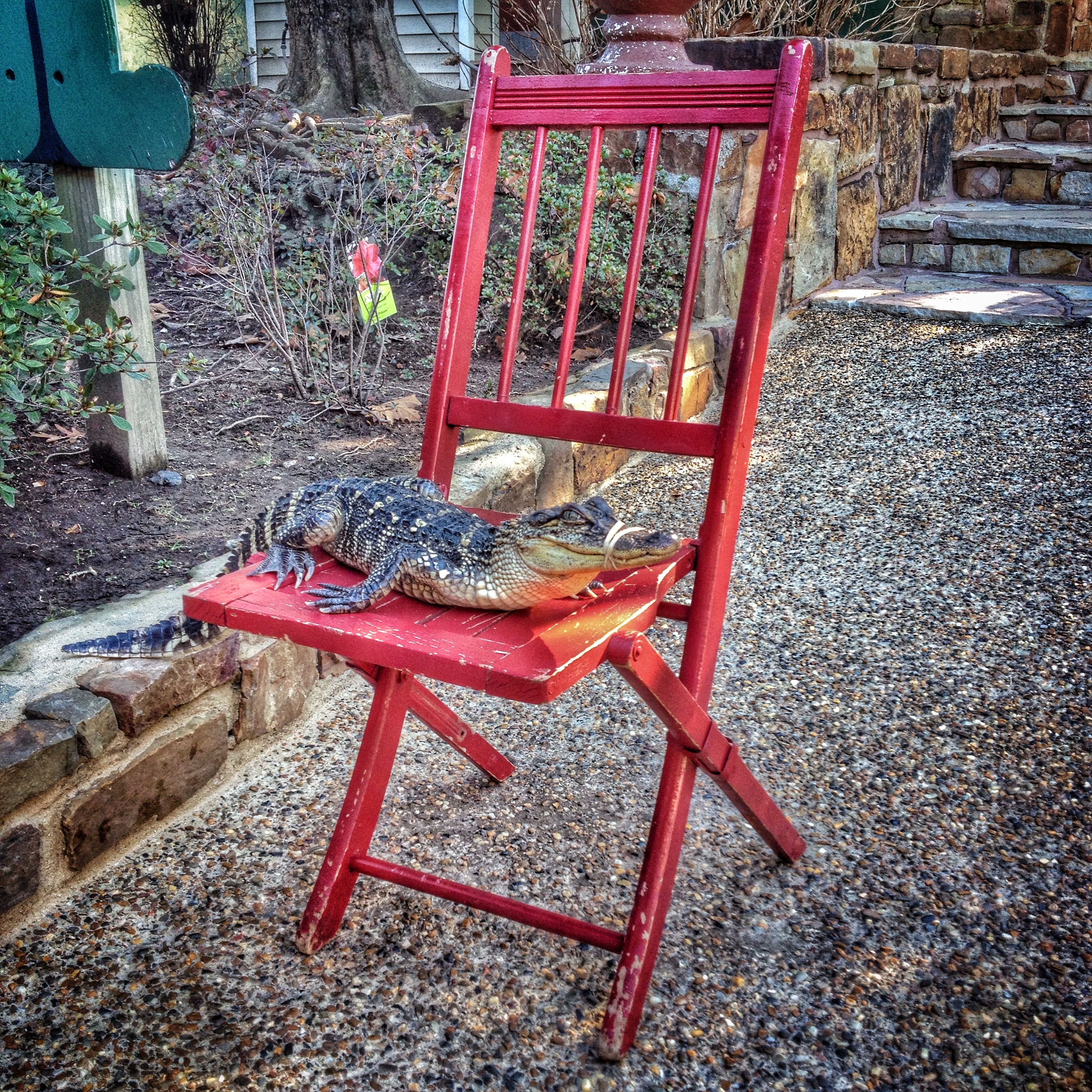
Inside the gift shop, he let us all hold it, although I was busy taking photos and never got around to it myself.
This sign sits outside the Arkansas Alligator Museum. It reads:
Ruth trained here nine times and became a very familiar face around Hot Springs. He hiked the mountains, took the baths, played golf, patronized the casinos, and visited the racetrack.
On March 17, 1918 (St. Patrick’s Day), he launched a mammoth home run from Whittington Park that landed on the fly inside the Arkansas Alligator Farm. It has been measured at 573 feet, baseballs’ first 500-foot-plus drive.
Several Major League teams trained in Hot Springs in the early days of the league, and the city is trying hard to make a tourist attraction out of this history.