
On a gloomy Monday in March, I decided to head for Pulaski County to bird. I’ve set myself the goal of finding 100 birds each month, and I thought Lake Maumelle might be a good spot for some late-lingering ducks.
My first stop, at Vista Point, resulted in so few birds that I didn’t bother making a list. My next stop, at Loon Point, offered 12 loons and a smattering of other expected birds. The third and final stop on the lake, Bufflehead Bay — one that usually isn’t terribly productive — came through on this day. There were 42 Common Loons in sight, and some of them occasionally hooted or yodeled, which is worth the trip by itself. Then I found a Pacific Loon and even managed to get a photo that showed a trace of its chinstrap, something I’ve never been able to capture before.
And then I saw a black-and-white grebe. It was a long way off, but I could tell it wasn’t a Horned Grebe. Western Grebes are seen in Arkansas from time to time, so that’s what I called it. It drifted closer, and I got some lousy photos and sent out a notice to the rare bird email group.
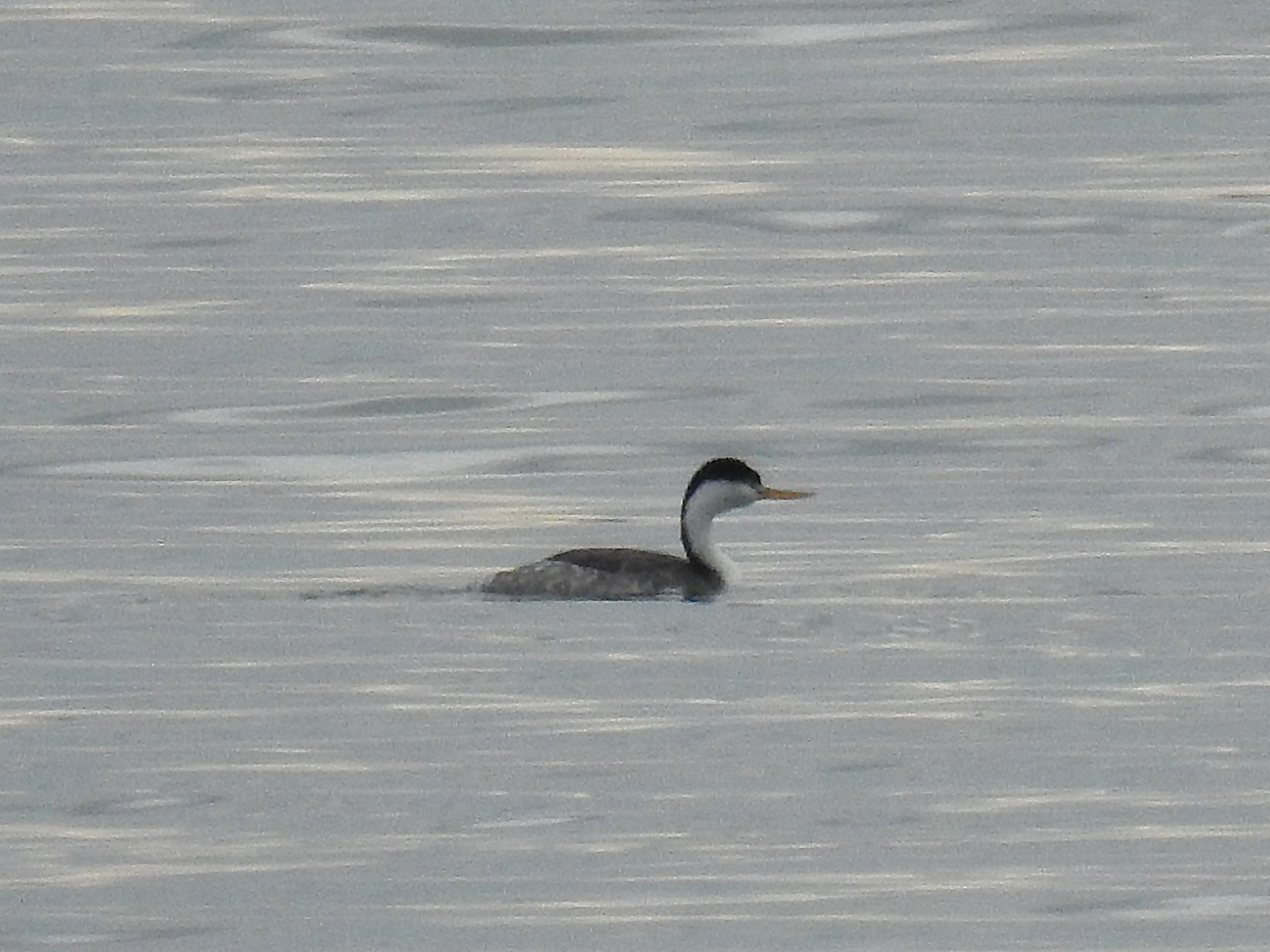
Because it’s rare, my checklist and photo were also sent to any birders who subscribe to eBird’s Arkansas notifications. Apparently, a couple people who saw my photo thought the bird might be a Clark’s Grebe, a close relative of the Western Grebe, and contacted Kenny N., who is generally considered Arkansas’ top birder.
Kenny and his wife went to Lake Maumelle the next day and saw the grebe from a distance. They were convinced that it was a Clark’s because of the pale sides and restricted amount of black on the head. I still thought it was a Western because the Clark’s Grebes I’d seen in Colorado and Wyoming looked like this. Obviously, this bird isn’t just pale on the sides — it’s white. And it’s eye is obviously set apart from the black cap. Neither of those marks were obvious in my photo of Lake Maumelle bird.
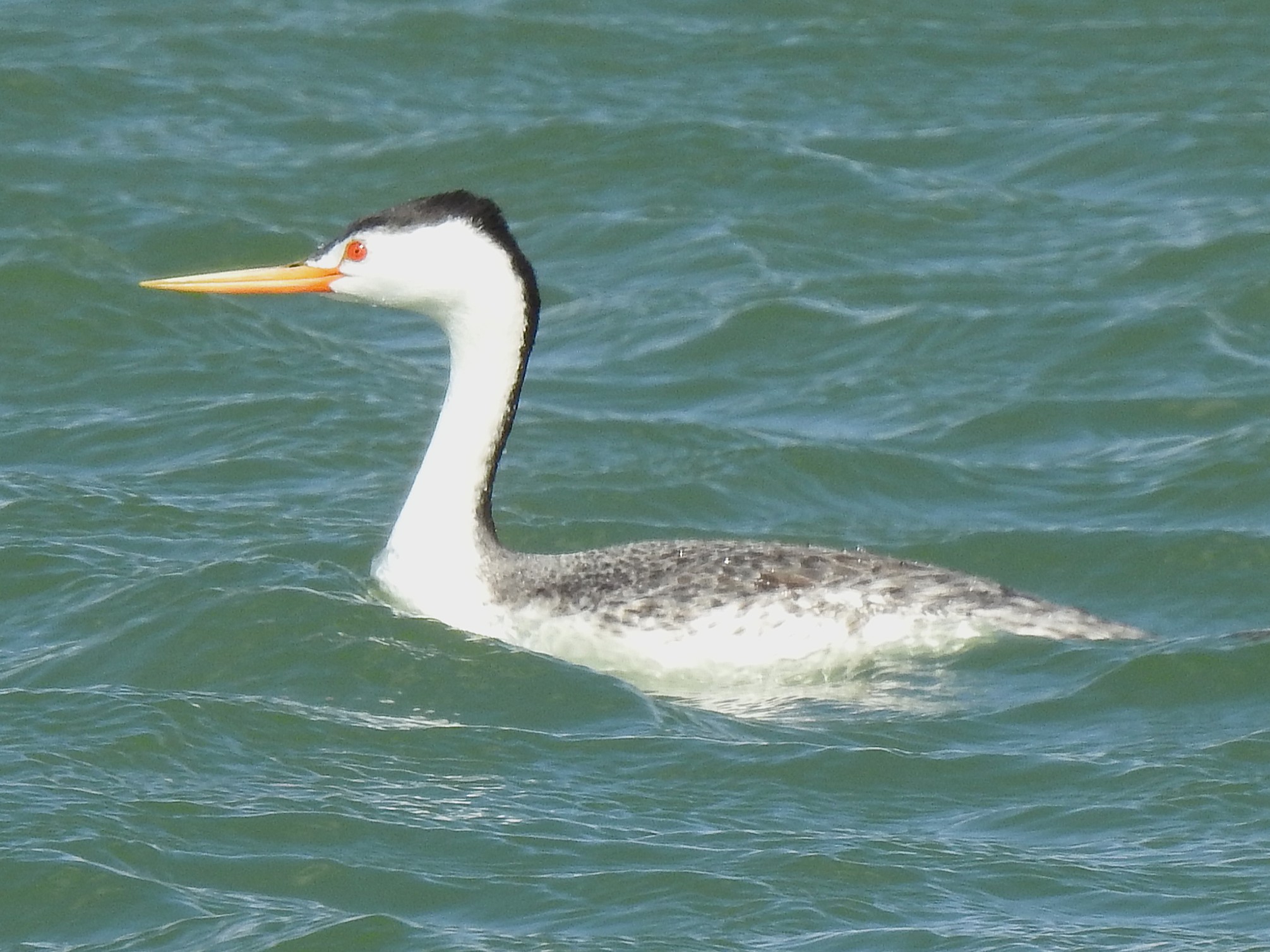
I went back on Thursday for a better look on a sunny day. The grebe was still there, and this time drifted fairly close to where I could get better photos. The key marks were more obvious and I began to be persuaded.
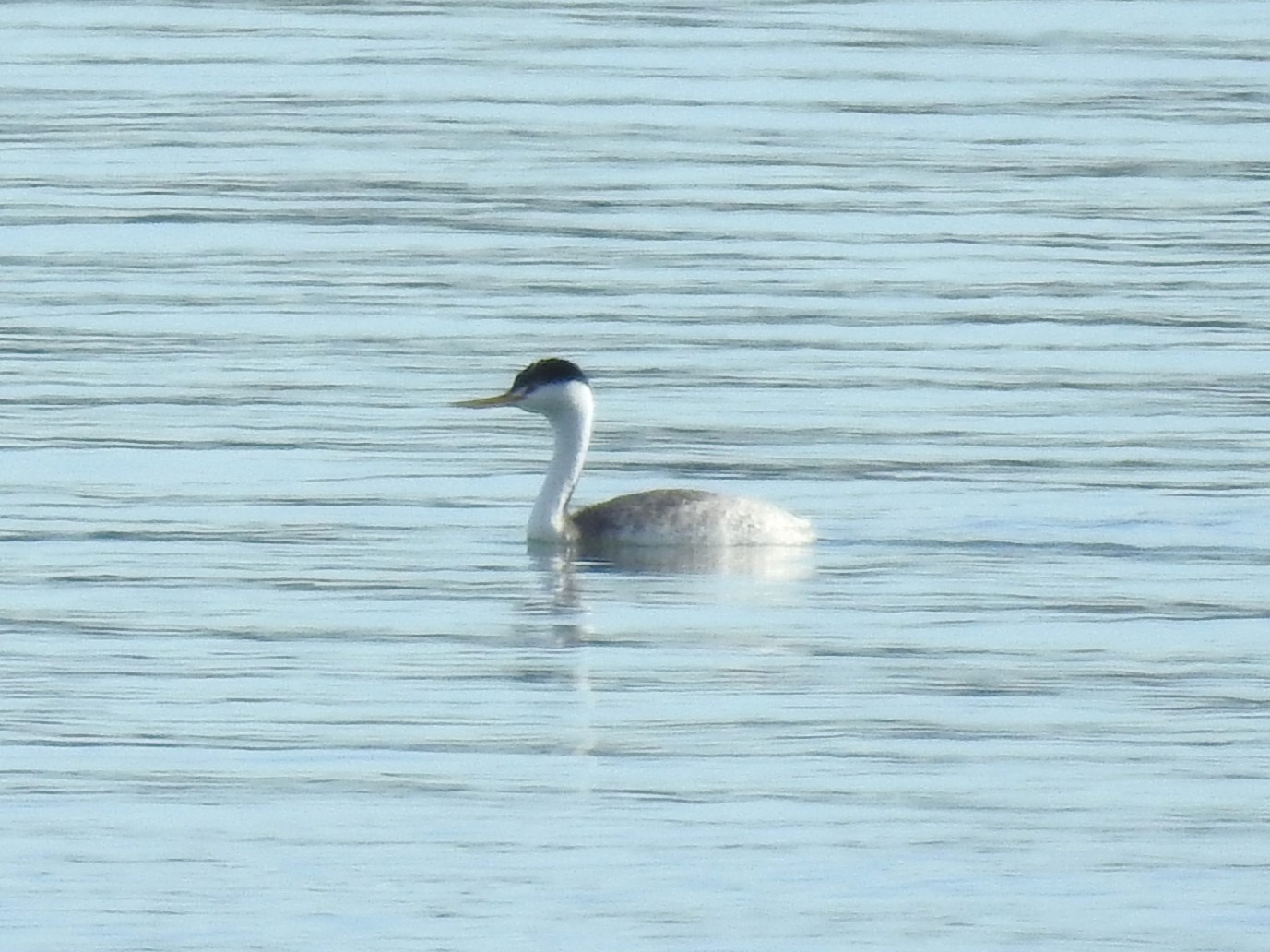
I was there about an hour when Kenny and his wife showed up along with Michael and Patty, two other local birders. By this time, the grebe had drifted a mile away to the far side of the lake. We flagged down a passing fisherman and convinced him to take Michael — because he has the best camera — across the lake for a better look. While we yelled confusing instructions into a phone, Michael and the boater tried to find the grebe. It all got a little frustrating and hilarious before it was over, but Michael got several definitive photos that prove it was indeed a Clark’s Grebe.
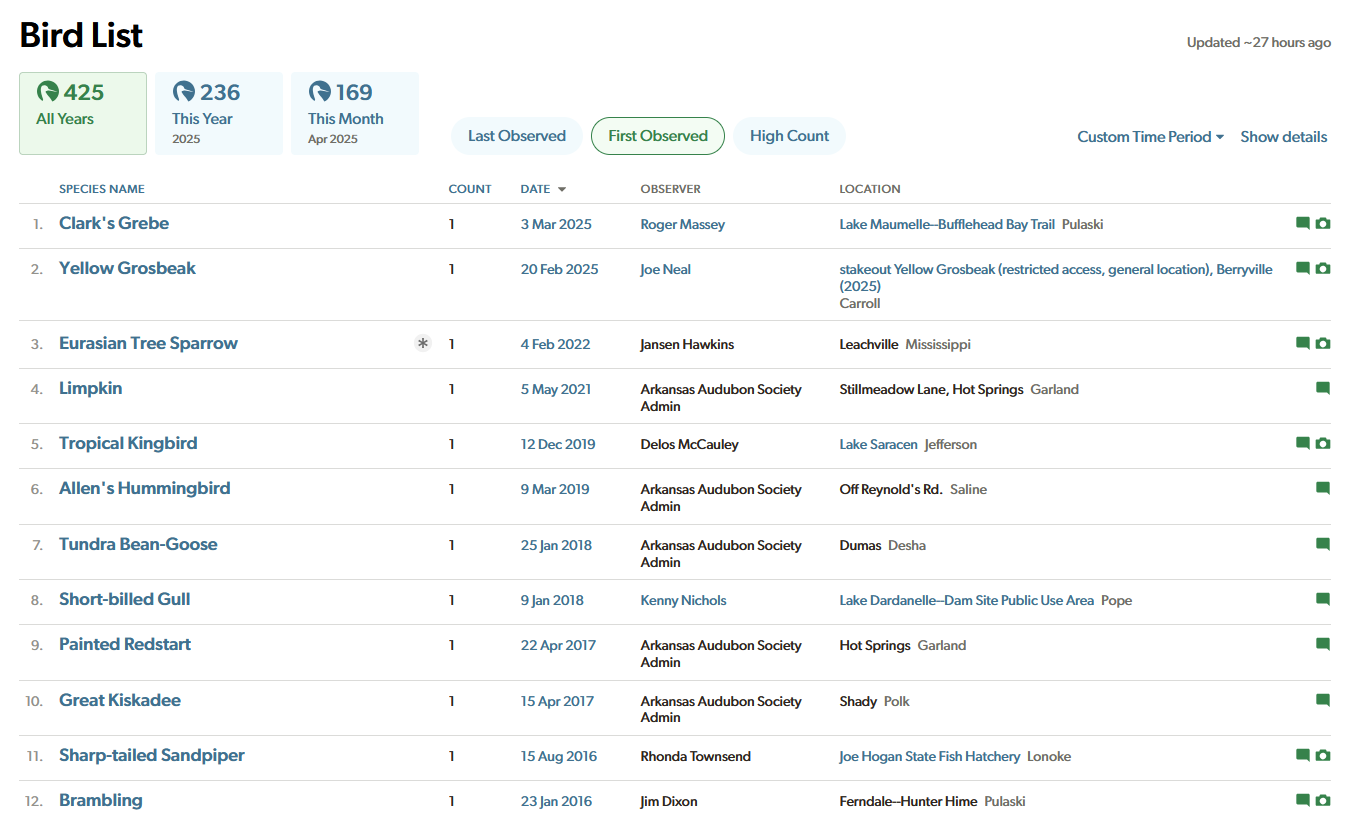
Nobody had seen a Clark’s in Arkansas before, so my name will go down in history as the the finder of the first one in the state — the 425th species all time.
Of course, it would be more impressive if I’d actually identified it correctly, but I’m developing a reputation for finding rare birds and misidentifying them as something more common. That’s definitely a skill — lots of people find common birds and misidentify them as something rare. I do have this distinction — except for the ones Michael got from the boat — my photos are definitely the best ones taken. I went back a third time the next Thursday and got even closer. If I had gotten these photos on the first day, I would definitely have called it correctly.
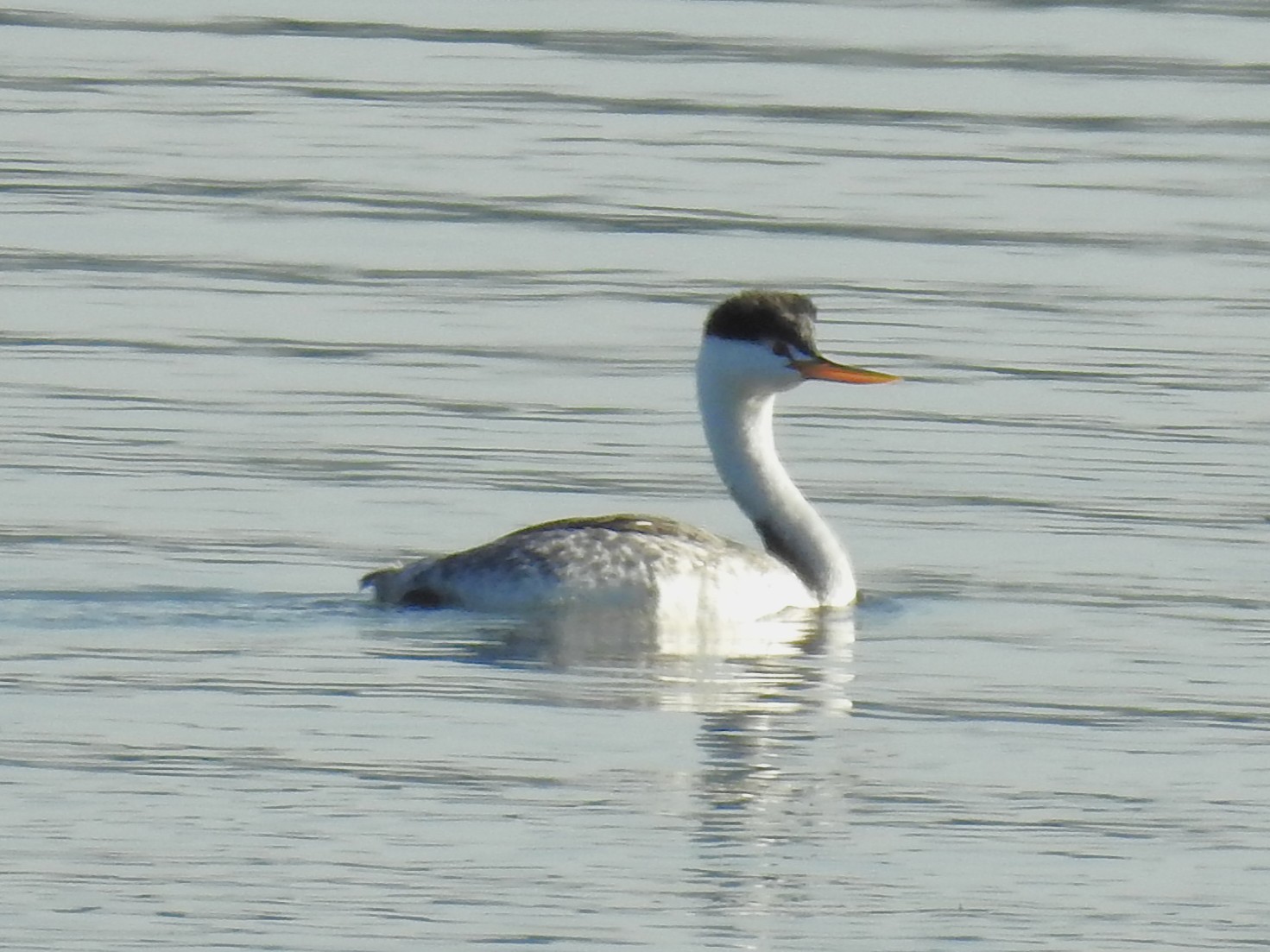
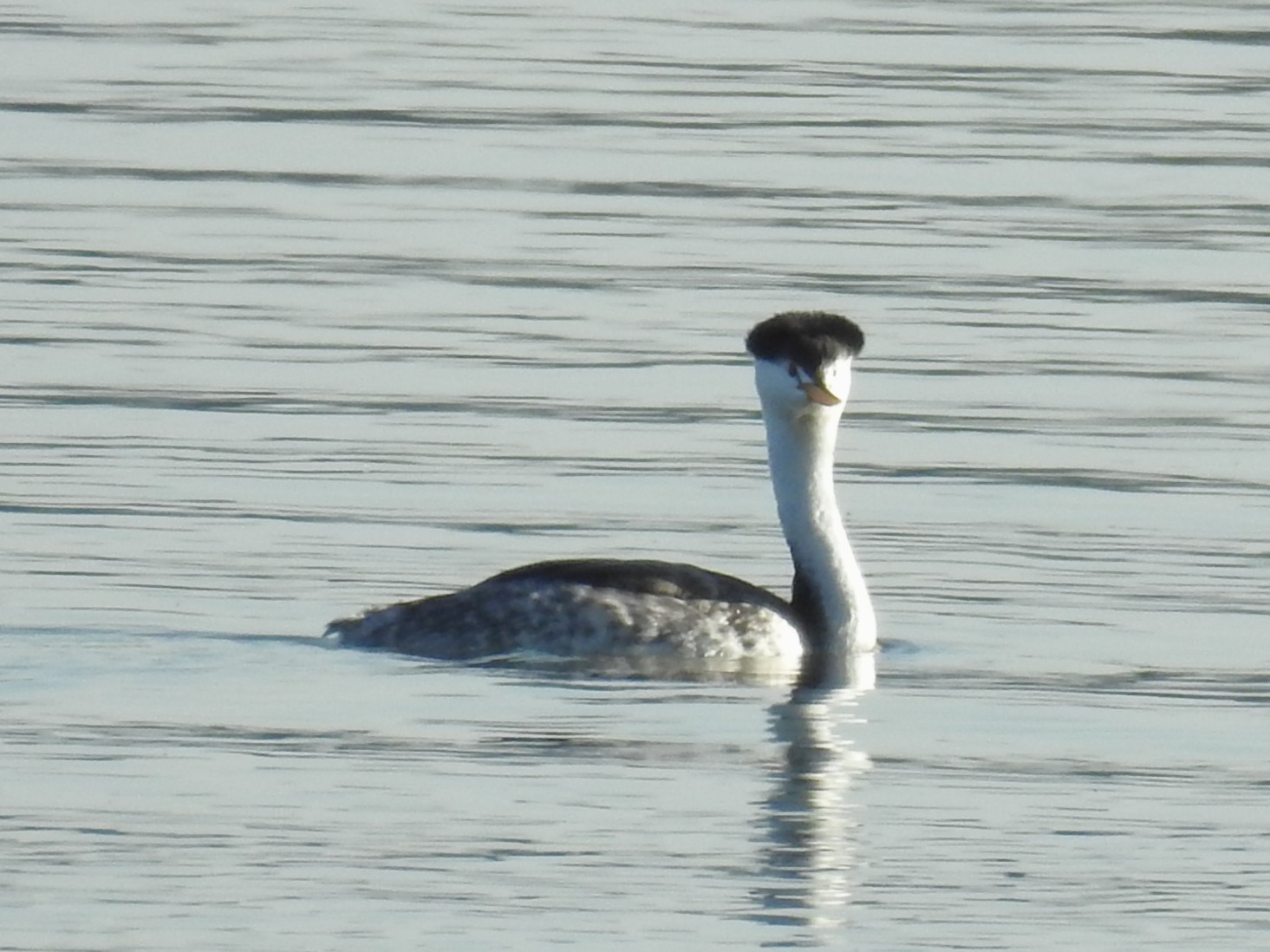
The bird hung around for 12 days, giving almost all the serious birders in Arkansas a chance to see it. On one of my visits, I met three birders from Pennsylvania who had stopped by to find it. In exchange, they pointed out a Little Gull far out over the lake, another very rare bird that didn’t stick around for anyone else to see.
One last note — on the sixth, the day we confirmed the i.d. of the grebe, there were three loons in the area — Common, Pacific, and Red-throated — and five grebes — Clark’s, Horned, Eared, Red-necked, and Pied-billed. There aren’t too many people who have seen all of those in one spot in one day.