
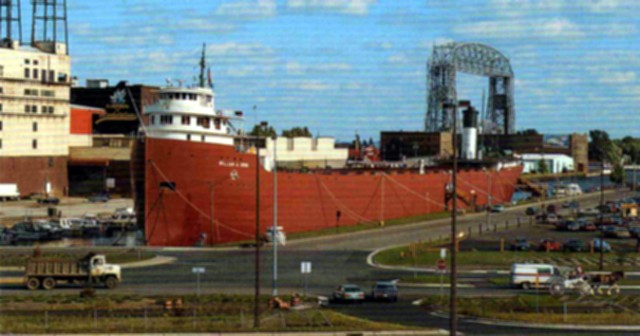
We took a day trip to Duluth. We spent the morning in a railroad museum, then split up. The rest of the family went out to lunch while my daughter and I toured the William A. Irvin, a Great Lakes tanker that was built in 1936 and decommissioned in the early 1970;s because the Sault Ste. Marie locks were rebuilt to handle larger ships — even though the Irvin is the length of two football fields.
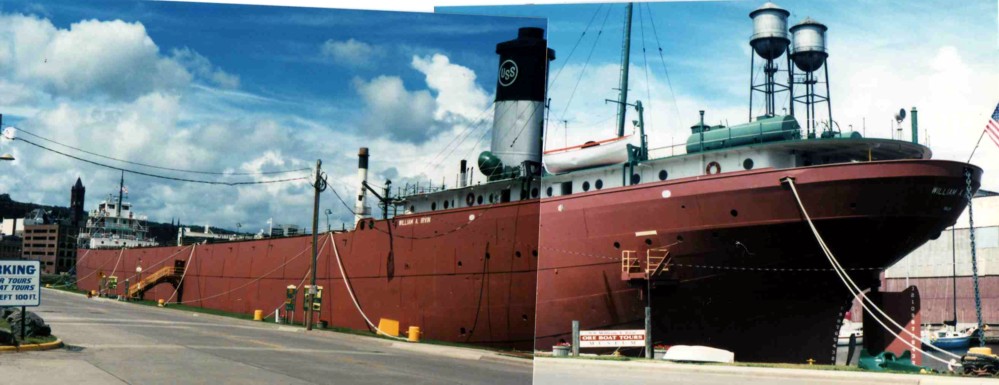
Our tour was led by Captain Bob, a nice old guy who used to sail on tankers. There were about 25 people in the tour, including one boy about 10-years old who was desperately in need of a spanking. Captain Bob tried to befriend him in an attempt to control him, but the kid’s response was to poke Captain Bob in the neck. His father pulled him away and spoke to him in a whisper. The kid jerked away from his father, walked over to his mother and said in a loud voice, “Mom, keep Dad away from me.” The mother shrugged.
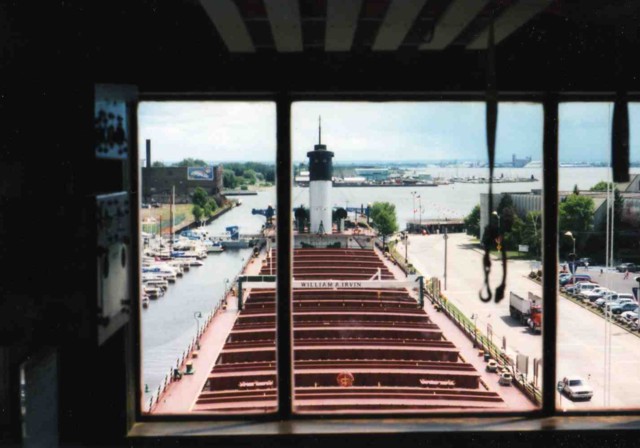
This view is looking down the length of the ship from the wheelhouse.
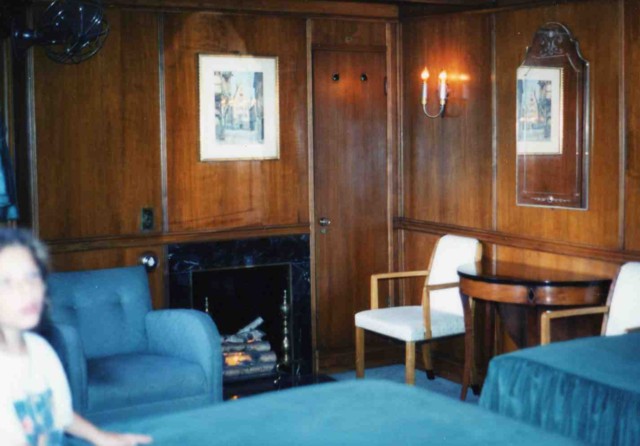
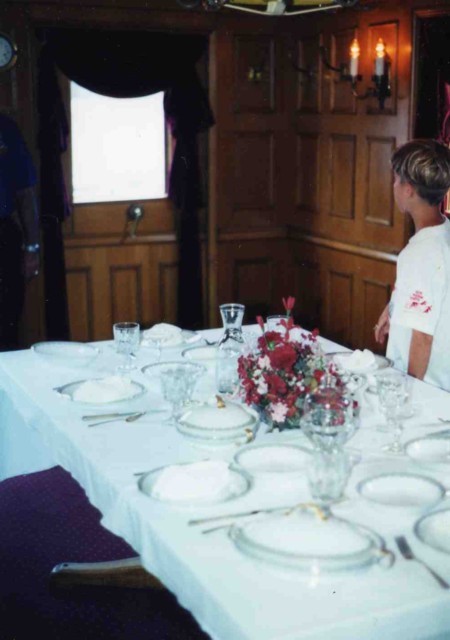
The Irvin was the flagship of the fleet, which meant that company big shots would occasionally travel on board. For this reason, there were four fancy staterooms and a passenger dining room. The mirror in the stateroom was tinted pink to offset the yellow pallor of seasick passengers. This made them look, if not feel, healthier.
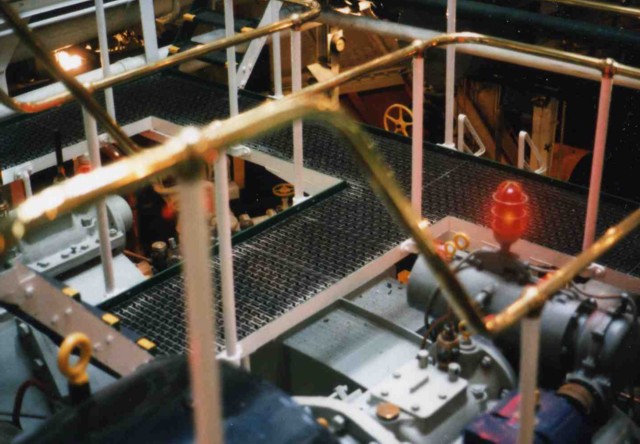
The staterooms weren’t the only fancy part of the ship — the engine room had brass railings to impress the company celebrities. In the other ships in the fleet, the railings were painted. It looked impressive, but must have been a pain to keep polished. The engine room was a four-story maze of walkways, engines, dials, pipes, lights, bells, etc. I found it fascinating.
Here’s Captain Bob explaining things in the engine room (above right). The ship is kept in operating condition, and all the bells and whistles work. Captain Bob operated all of them and explained what they meant.
The word “left” is painted on the wood above the windows in the pilot house. In the late 1960’s, the U.S. Congress decided that sailors were stupid and passed a law that “port” and “starboard” could no longer be used on the Great Lakes. Every ship had to have “right” and “left” painted on the corresponding sides in the wheelhouse. Of course, all the sailors ignored the law and used the nautical terms. The knob dangling from the ceiling is attached the the ship’s bell and was pulled a various number of times to give signals to the crew. The large brass contraption contained the compass in case the electrical navigation failed.