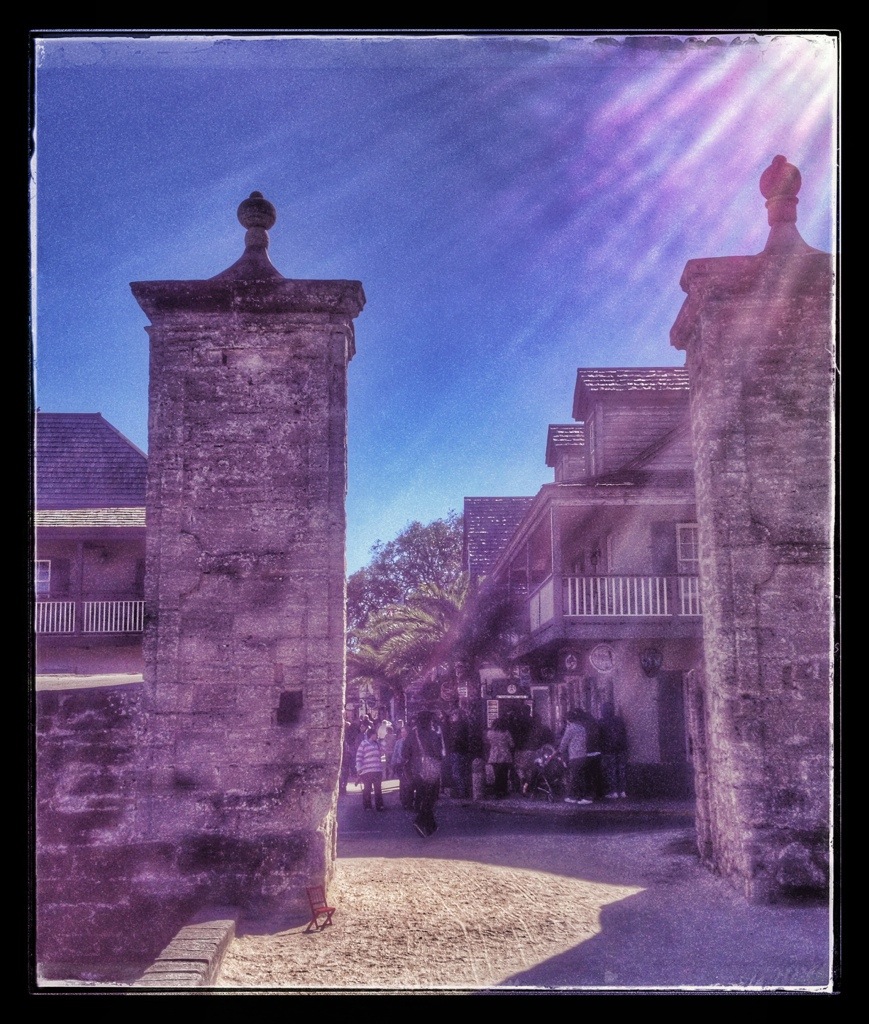
After the British burned St. Augustine in 1702, the Spanish built a line of fortifications to protect the town. This wall was rebuilt and repaired many times over the next century. The final construction took place in 1808. These gates, near Castillo de San Marcos, are the only original remnants (other sections have been reconstructed).
The words on the base of this monument read: “The discoverer of Florida Juan Ponce de Leon landed near this spot 1513.”
He must have been short because the statue is 4’11″ and is said to be life-sized.
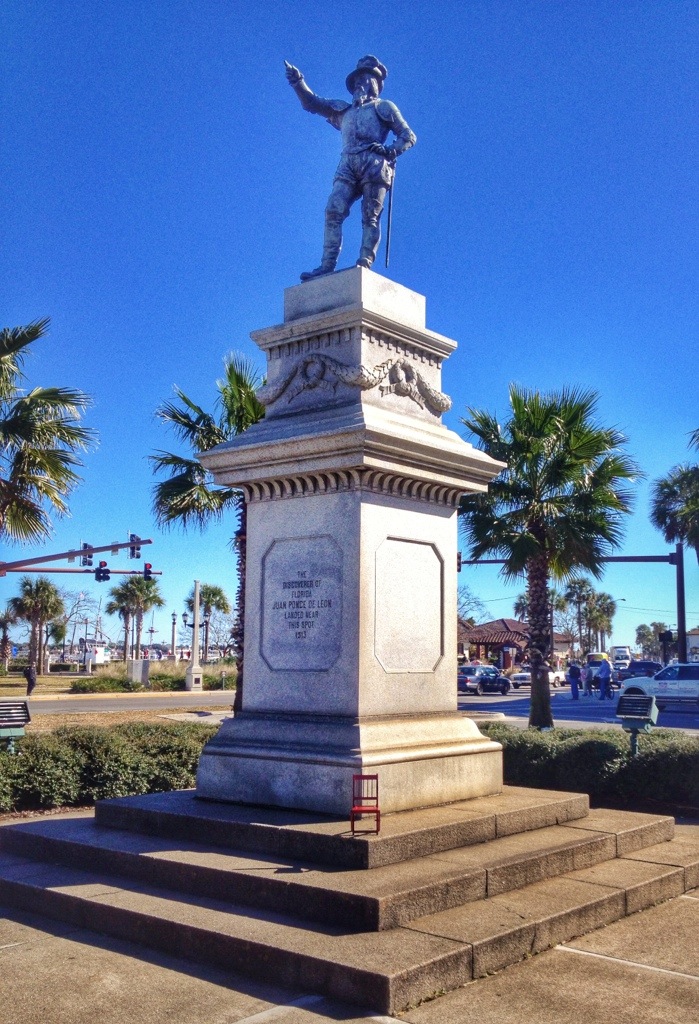
The guy who donated the statue to the city also donated the lions at the end of the Bridge of Lions.
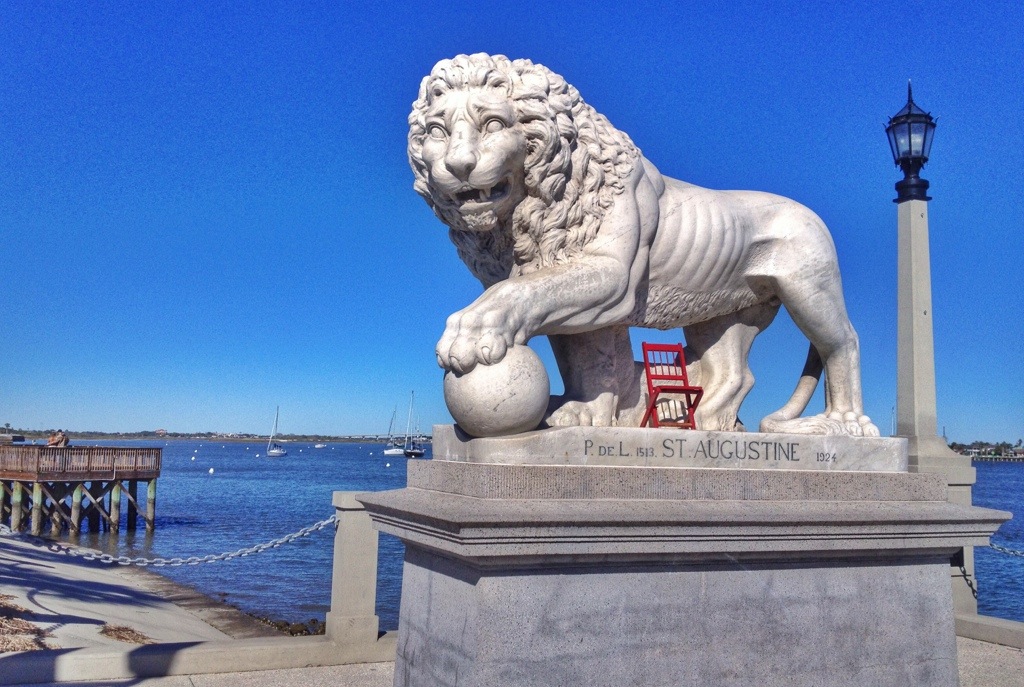
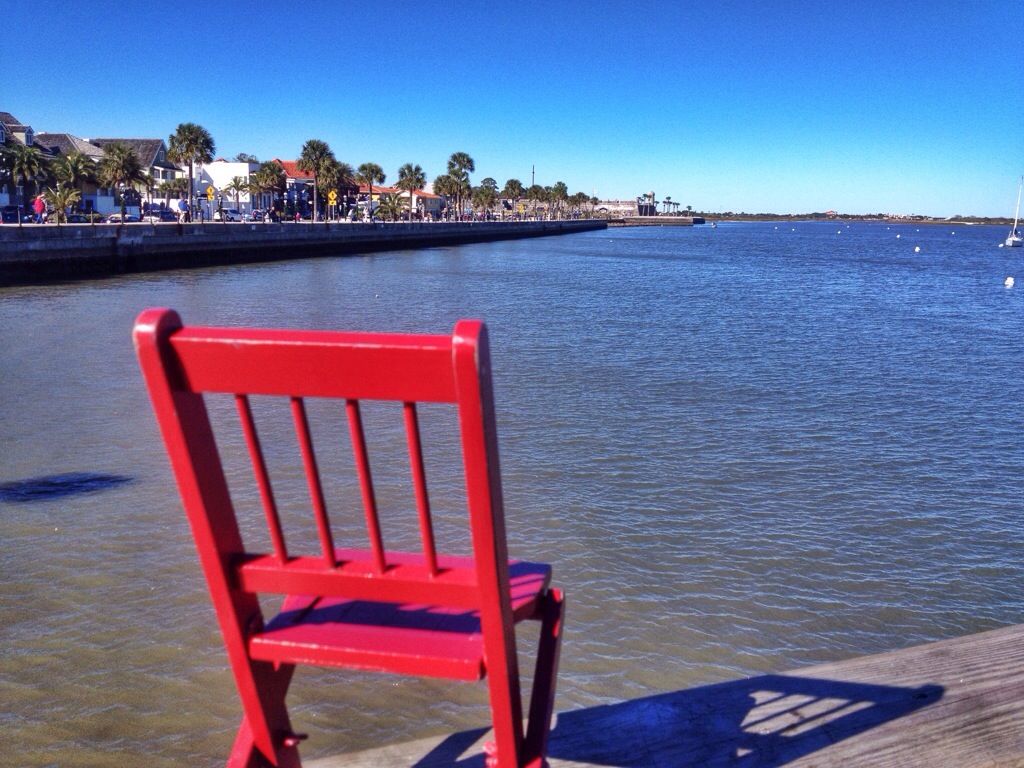
See that deck in the left background? Here’s the view from that deck looking north with Castillo de San Marcos in the background.
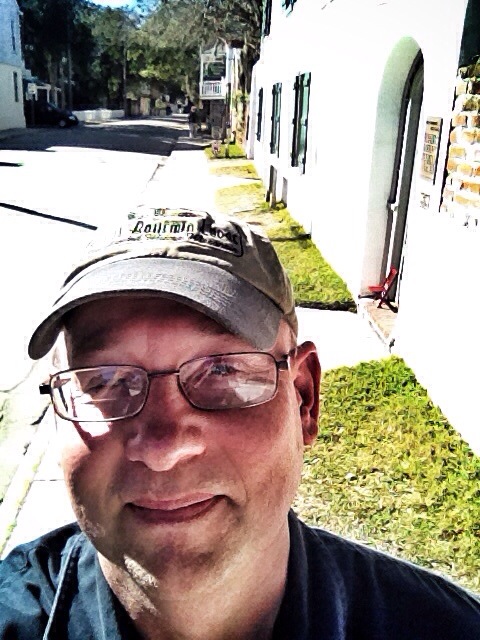
Somewhere in the family archives, there’s a photo of me standing in front of this house when I was about 13. It was taken by my mother. I couldn’t visit St. Augustine without a return trip to the house. There was nobody to take my picture this time, so this is the best I could come up with.
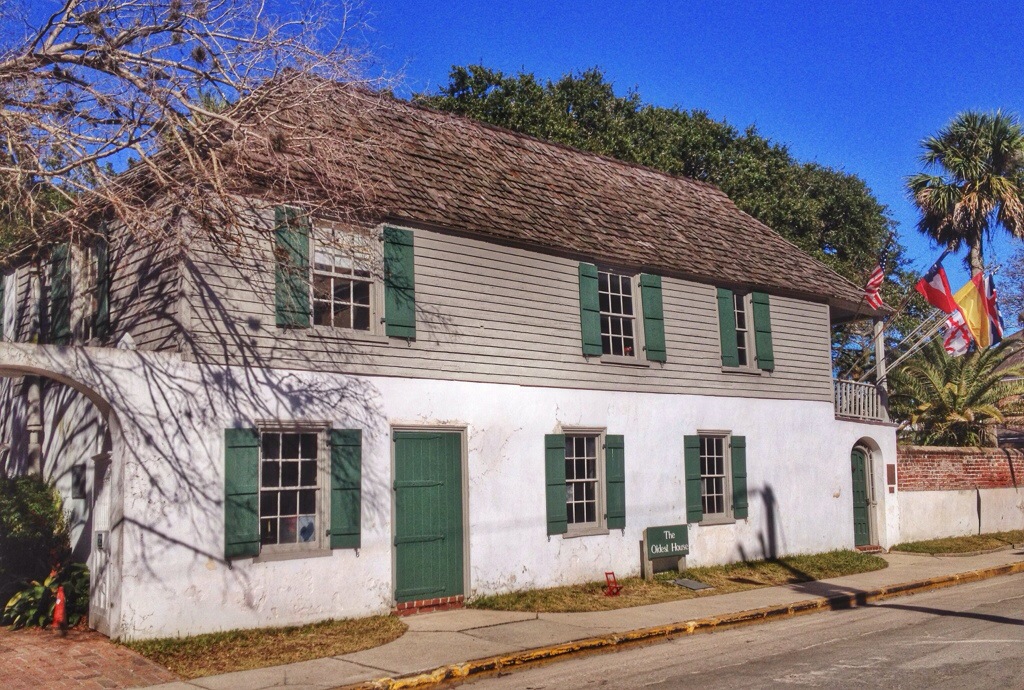
The Gonzalez-Alvarez House is thought to have been built shortly after the British burned the town in 1702. I believe it used to be called the oldest house in America, but no more. It’s now just the oldest house in St. Augustine which, in turn, is the oldest continuously-occupied European settled town in America.
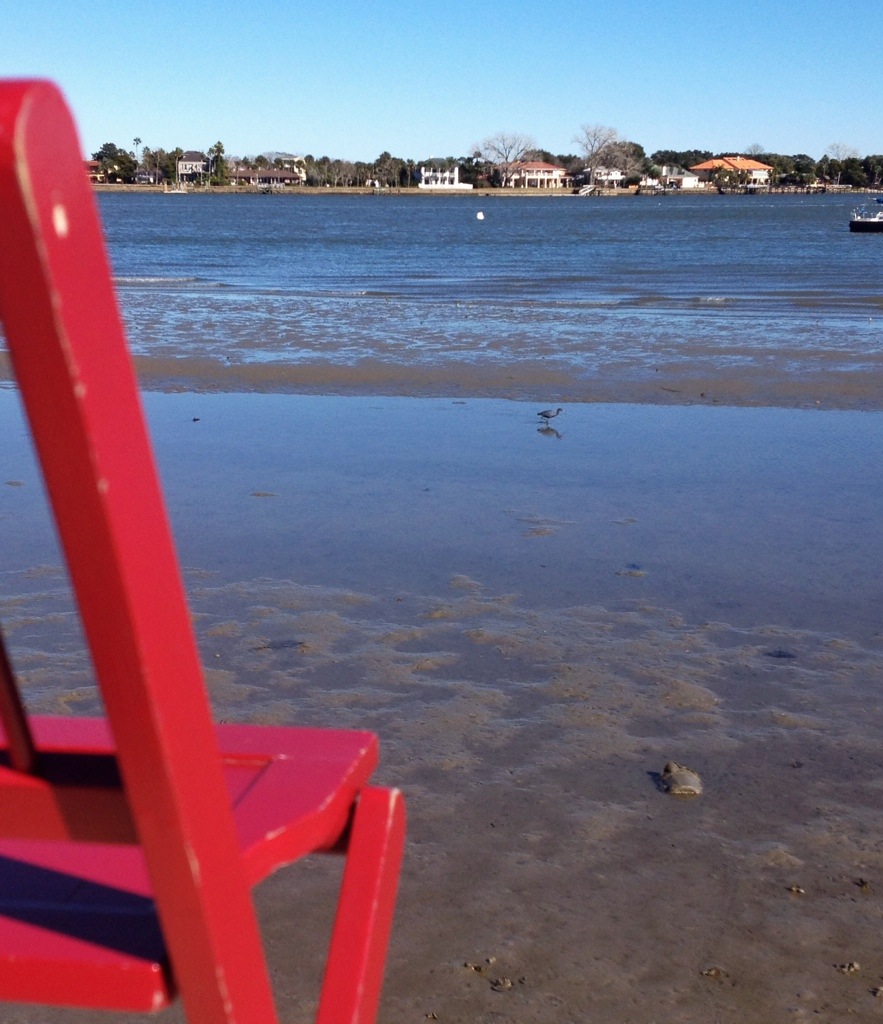
Looking across the Matanzas River to Anastasia Island, with a Little Blue Heron wading in the tidal flats. The chair is on the sea wall. The Bridge of Lions is about 200 yards off to the left.