
ursus (Latin for bear) arctos (Greek for bear)
Nine Mile Trailhead – Yellowstone National Park, Wyoming
Tuesday, June 18, 2024 – 6:13 pm
We spent the entire day in the park looking at waterfalls and geysers and boiling ponds. We didn’t concentrate on seeing wildlife, but we kept our eyes open — especially for lines of cars pulled over along the road.
We had just passed Yellowstone Lake on the East Entrance Road when we saw a line. I slowed down next to a car with a young boy sitting on the windowsill. I asked him what he was looking at, and he said he didn’t know. I pulled forward into an open spot next to some orange cones and asked the three or four people there what they were seeing. A guy told me it was a bear.
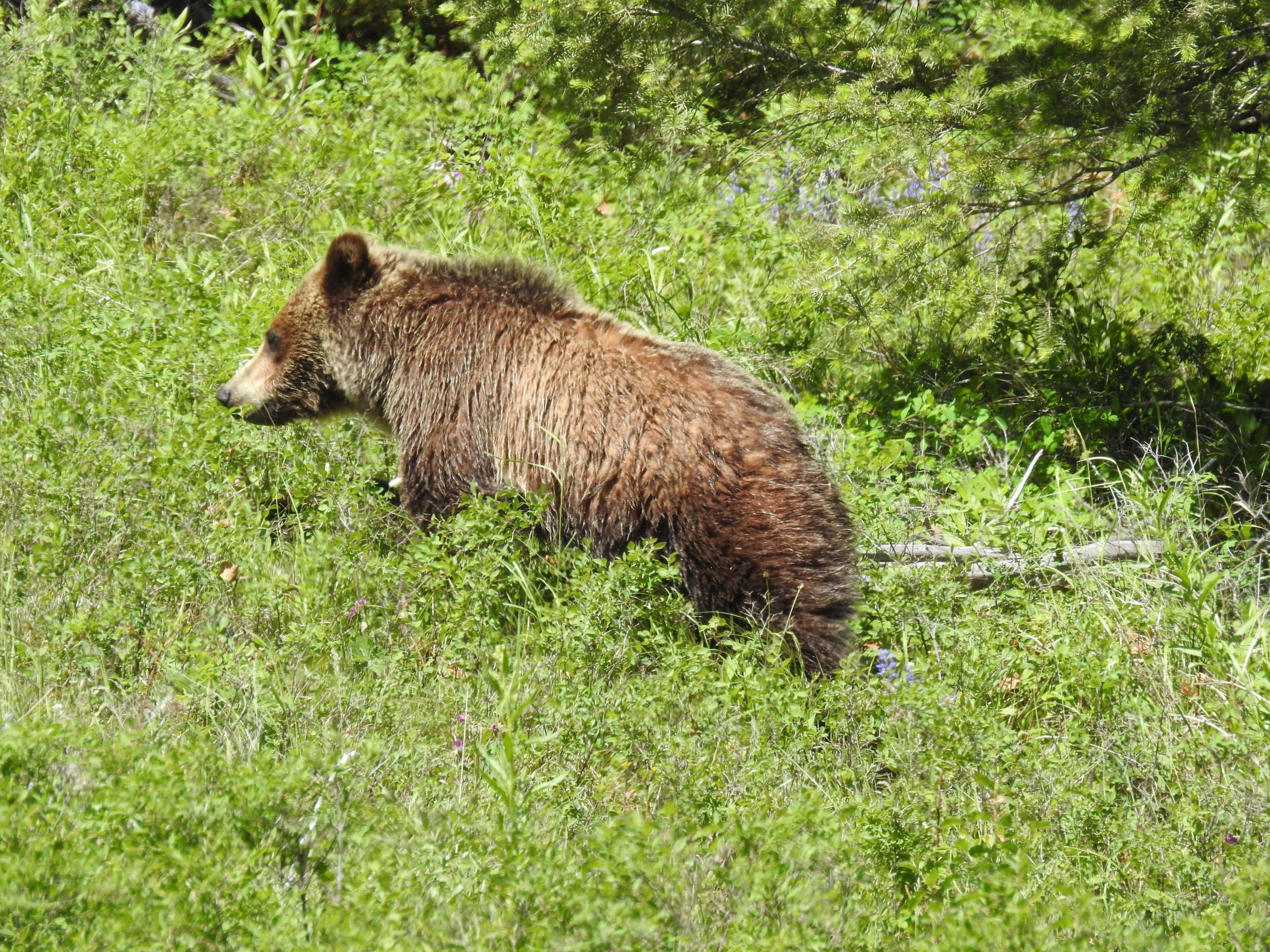
I looked down into an area along the lake that had recently been burned. Many of the trees were down. Not far off, I could see a brown bear nosing along the ground.
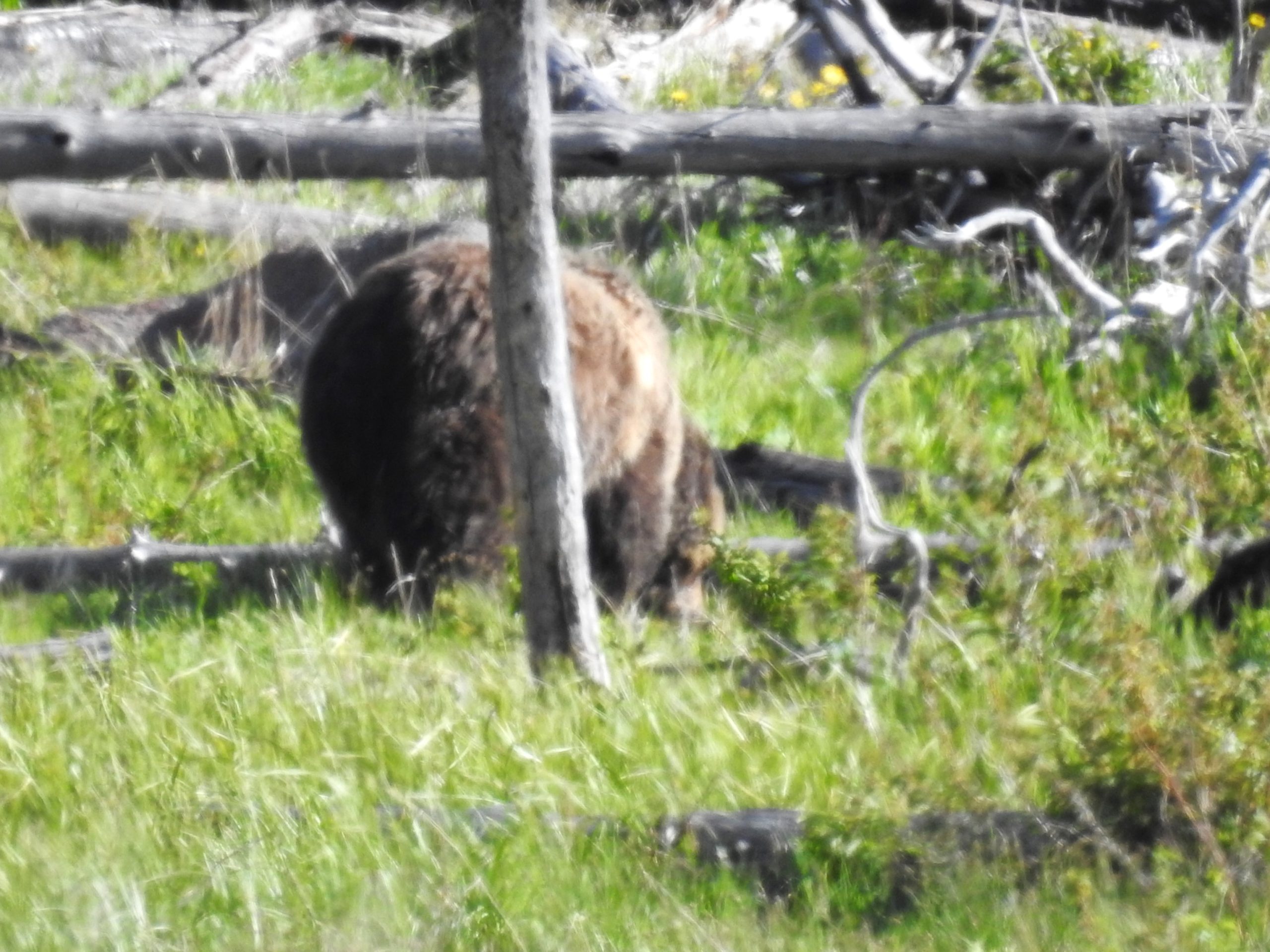
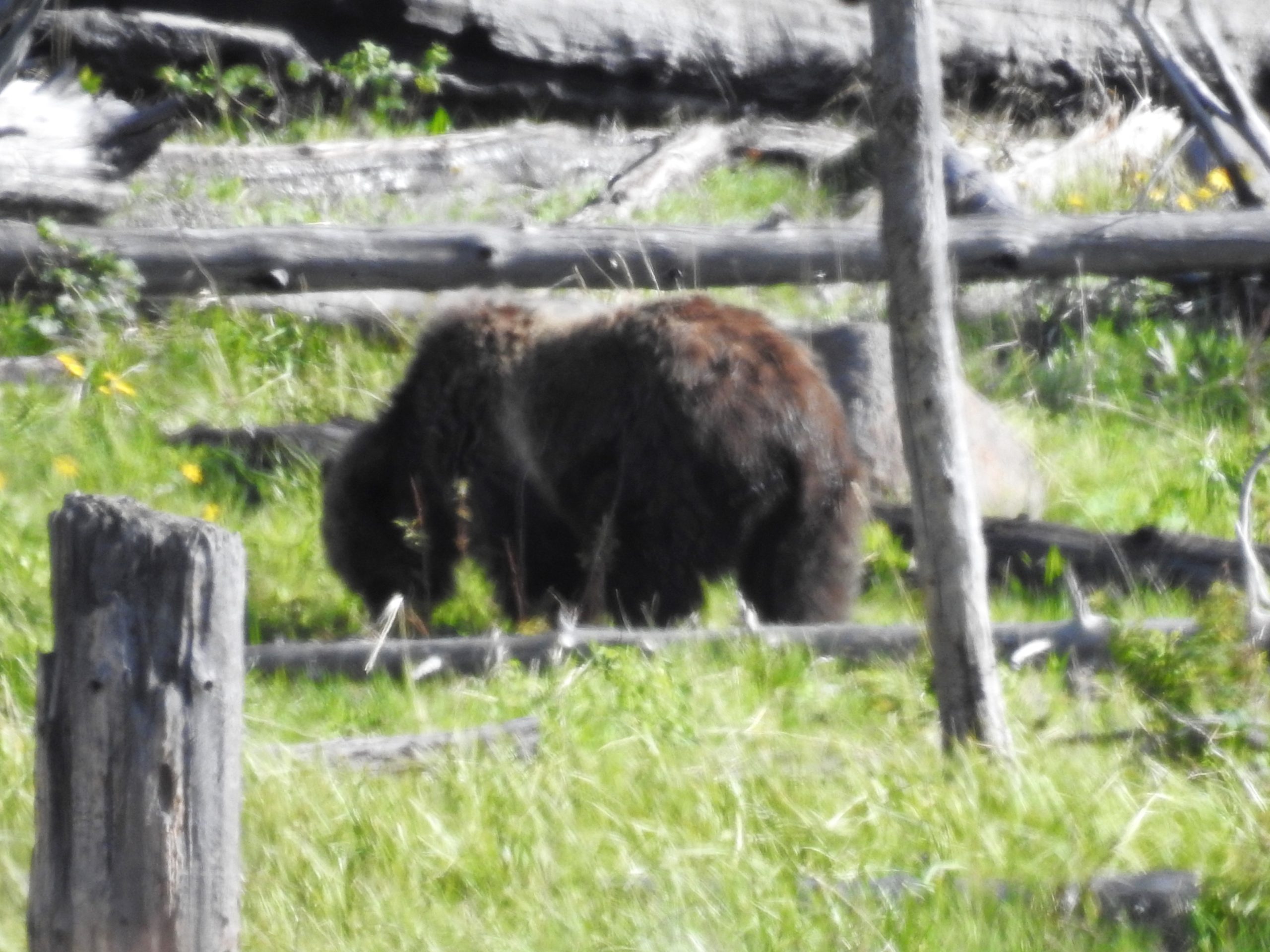
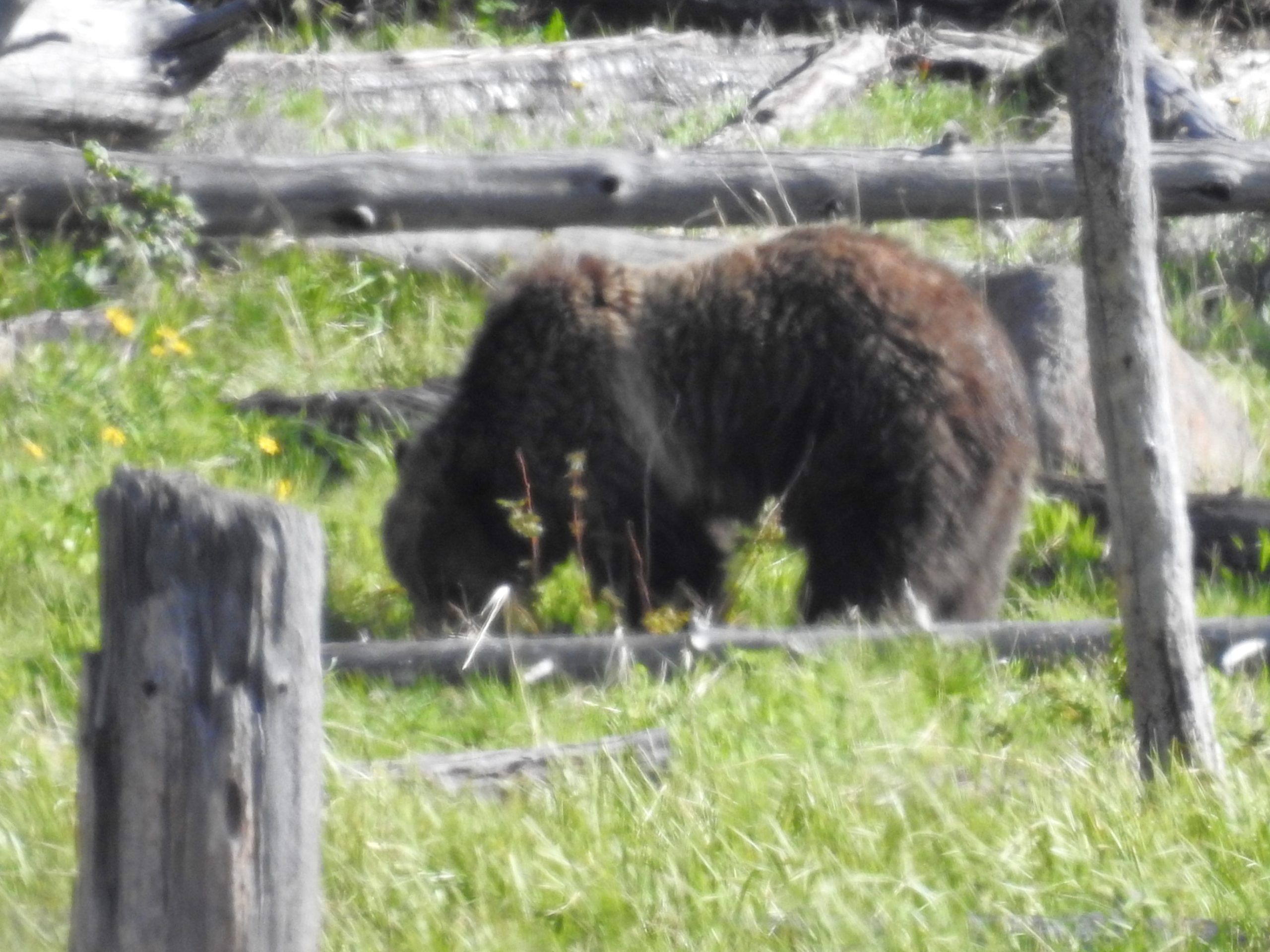
I hadn’t done a lot of planning for this trip, which meant that I had no idea what I was most likely to see. I thought Black Bears were the obvious bears in the park, and that Grizzlies kept out of sight. So I assumed this was a Black Bear. Then I noticed the hump.
About this time, a ranger drove up. He yelled at a couple people who had gone beyond the orange cones. It turns out that they were there to warn of bears in the area. My guess is that the bears are electronically tagged and that the park keeps pretty close tabs on where they wander. I asked him, and he confirmed that it was a Grizzly. He said the Grizzlies were much more likely to be seen in open areas like this and that Black Bears keep to the woods.
The bear didn’t really do much, just moved slowly while foraging among the downed trees. We stayed perhaps five minutes, then headed back to our hotel in Cody.
The next day we went to Lamar Valley to look for wildlife. A tour guide was showing his group a sow Grizzly with two cubs way up on a mountainside. I could see them through my binoculars, but it wasn’t a very satisfactory view.
The real action happened later in the afternoon, after we had actually left the park. Three or four cars were parked along the North Fork Highway. Six or seven people were standing there looking at two young Grizzlies about 20 yards up the hillside across the road. We were really too close. One of the guys said that was about as close to a Grizzly as he wanted to get. They were partly hidden in the grass at first, then they walked up the hillside into the woods. The first one didn’t stop, but the second one paused and gave us a good looking-over before he followed his friend. I don’t know how old they were, but they certainly weren’t as big as the one I’d seen the day before, or anywhere near as big as they can get.
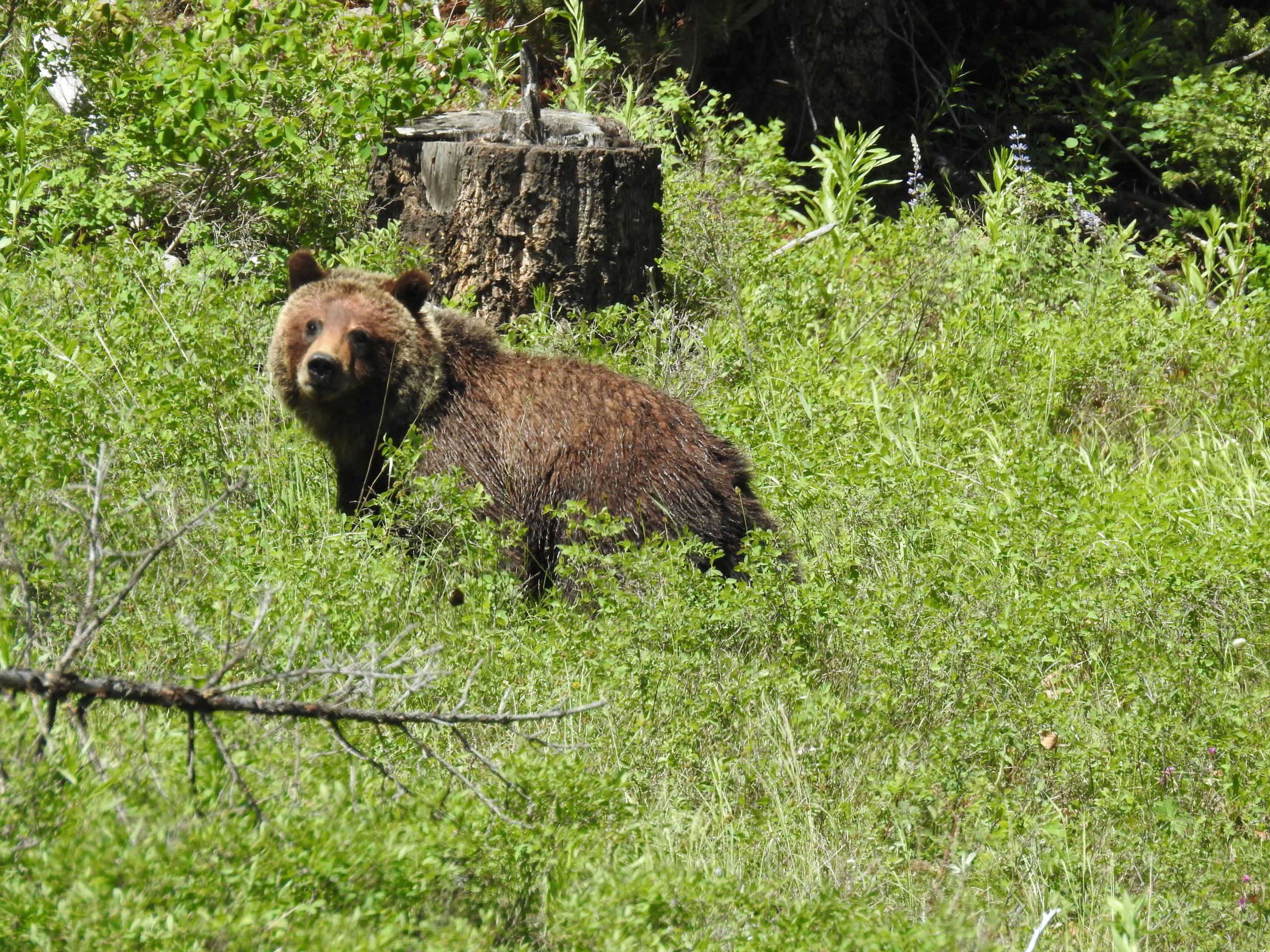
I stopped a little way further up at a pullover to look for Dippers in the creek that ran along the road. Sally took over the driving, and we’d only gone a short way when I spotted yet another Grizzly right along the road on the other side. I had Sally pull over, and while she yelled at me to stay in the car, I got out and began taking photos — making sure the car was between me and the bear. It was a small bear, even smaller than the two others I’d just seen.
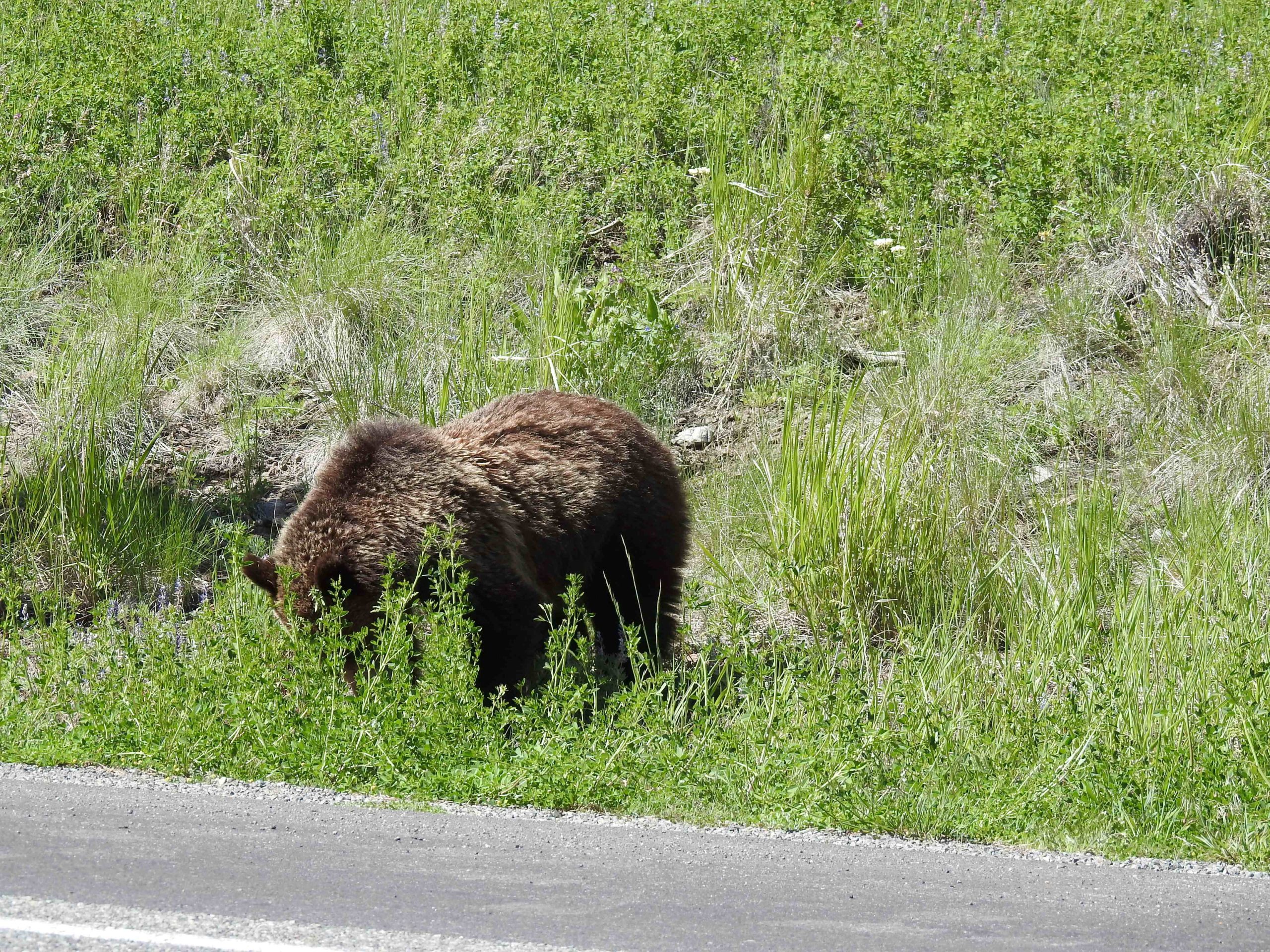
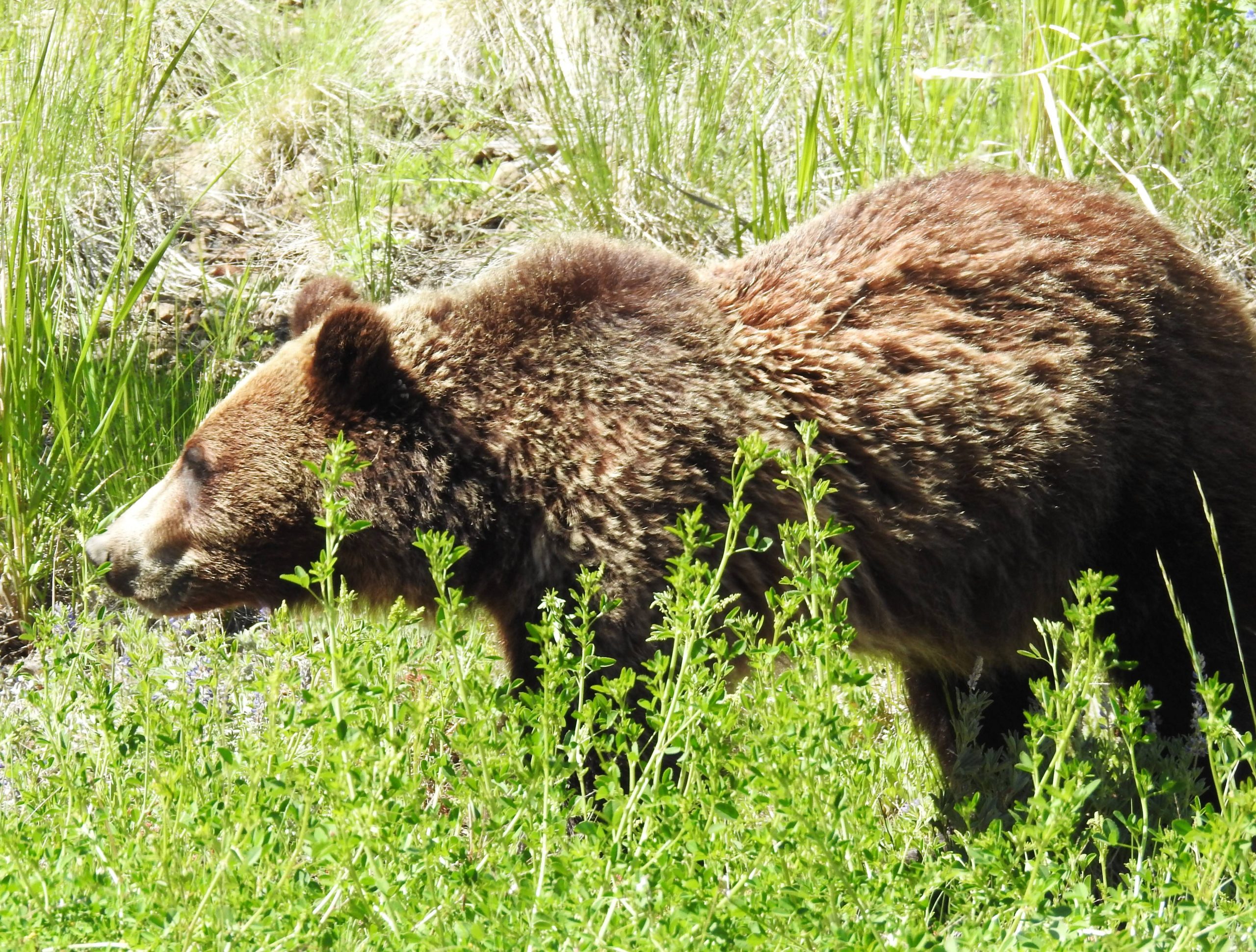
I had only taken a couple shots when it started across the road. I suddenly found myself 15 yards from a wild Grizzly Bear with no car between us. I took one last photo and scrambled into the car. (I’d kept the door open.) Because of my bum knee, my scramble wasn’t swift or graceful. I looked in the mirror to see how narrow an escape I’d had, only to see the Grizzly make a fast dash at an angle away from me and into the woods.
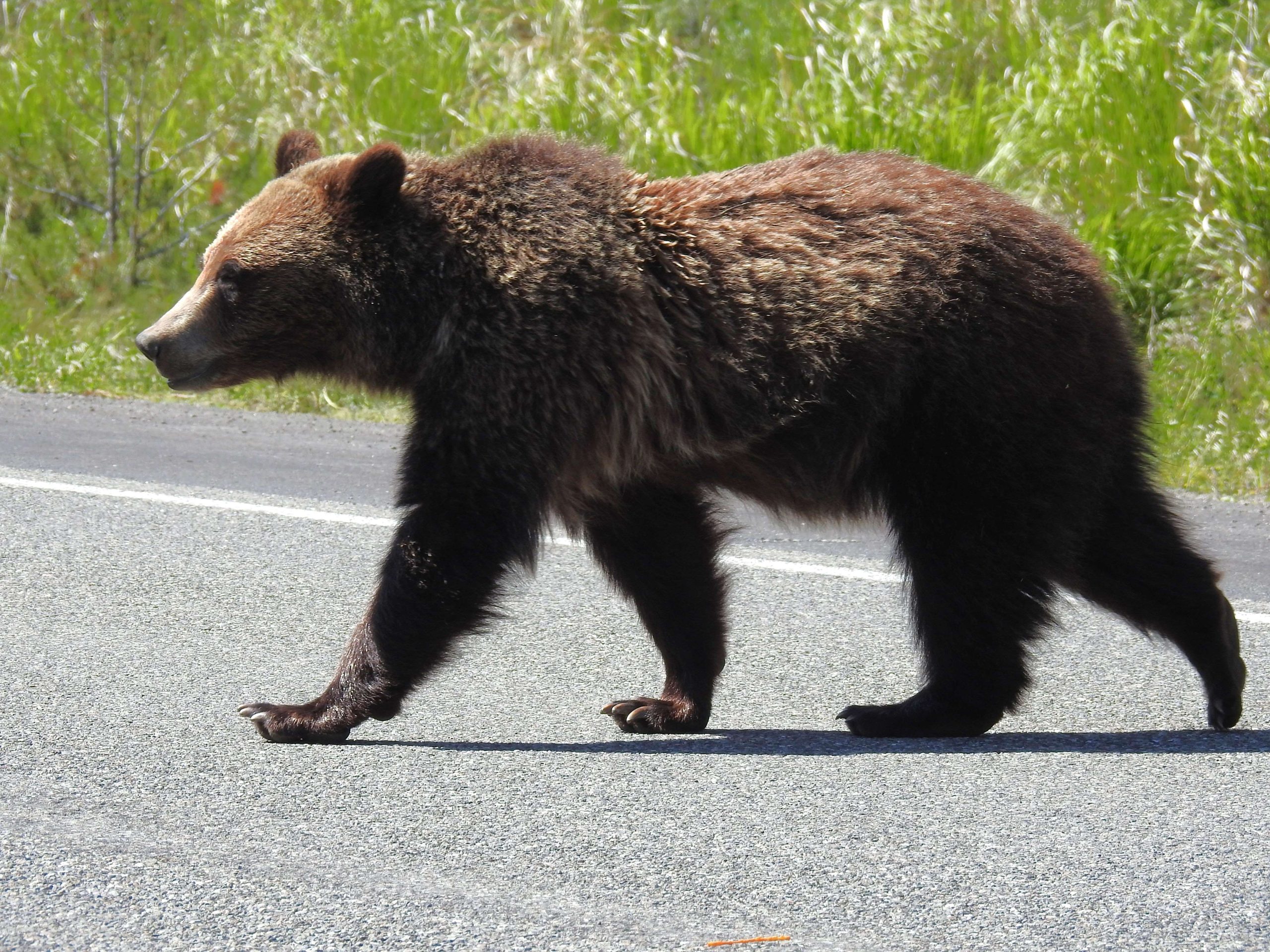
I saw a total of seven Grizzlies. There are close to 1,000 in the greater Yellowstone area, with perhaps as many as 200 living in the park full-time. We also saw two Black Bears.