
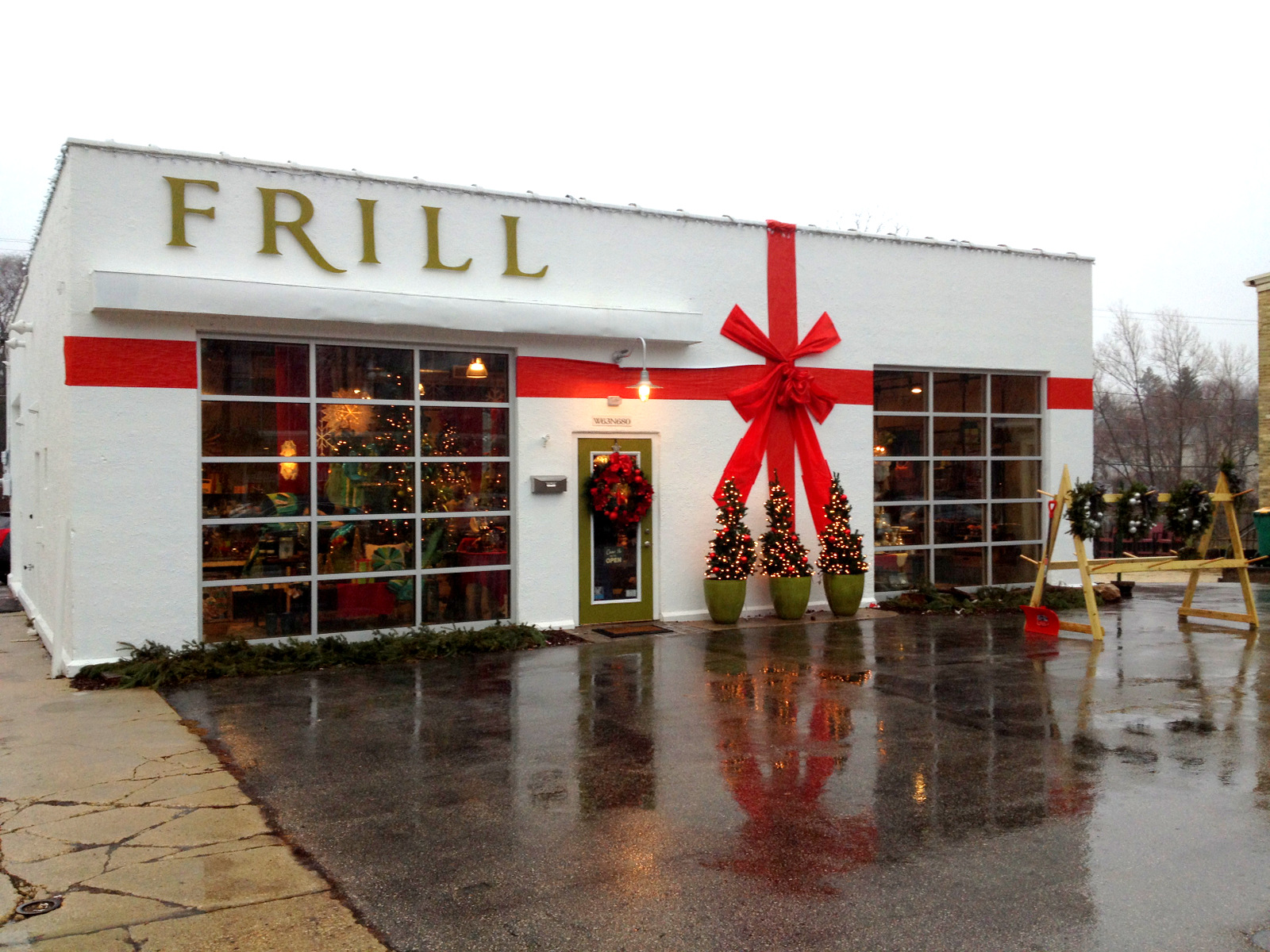
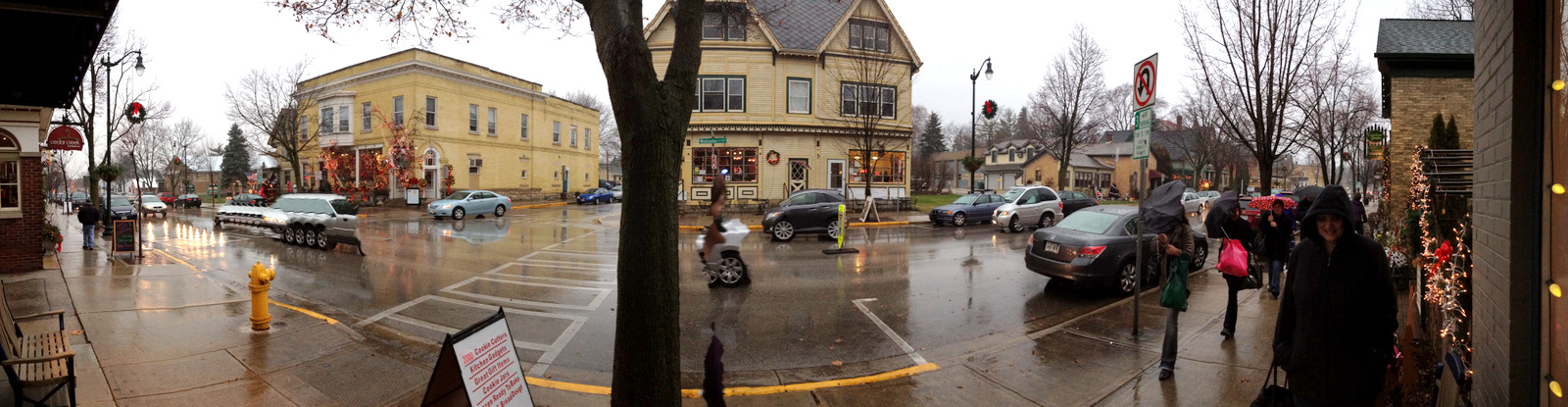
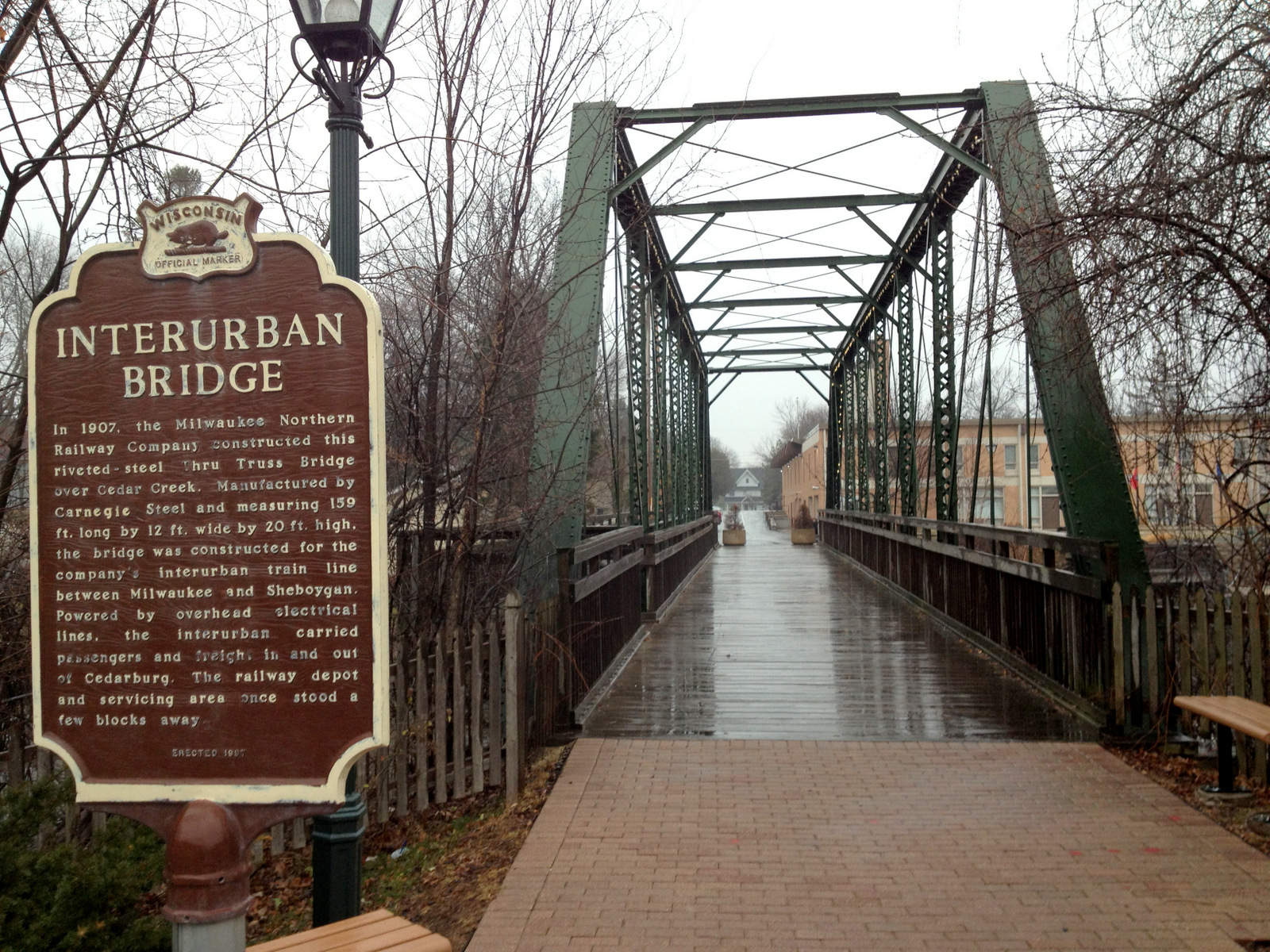
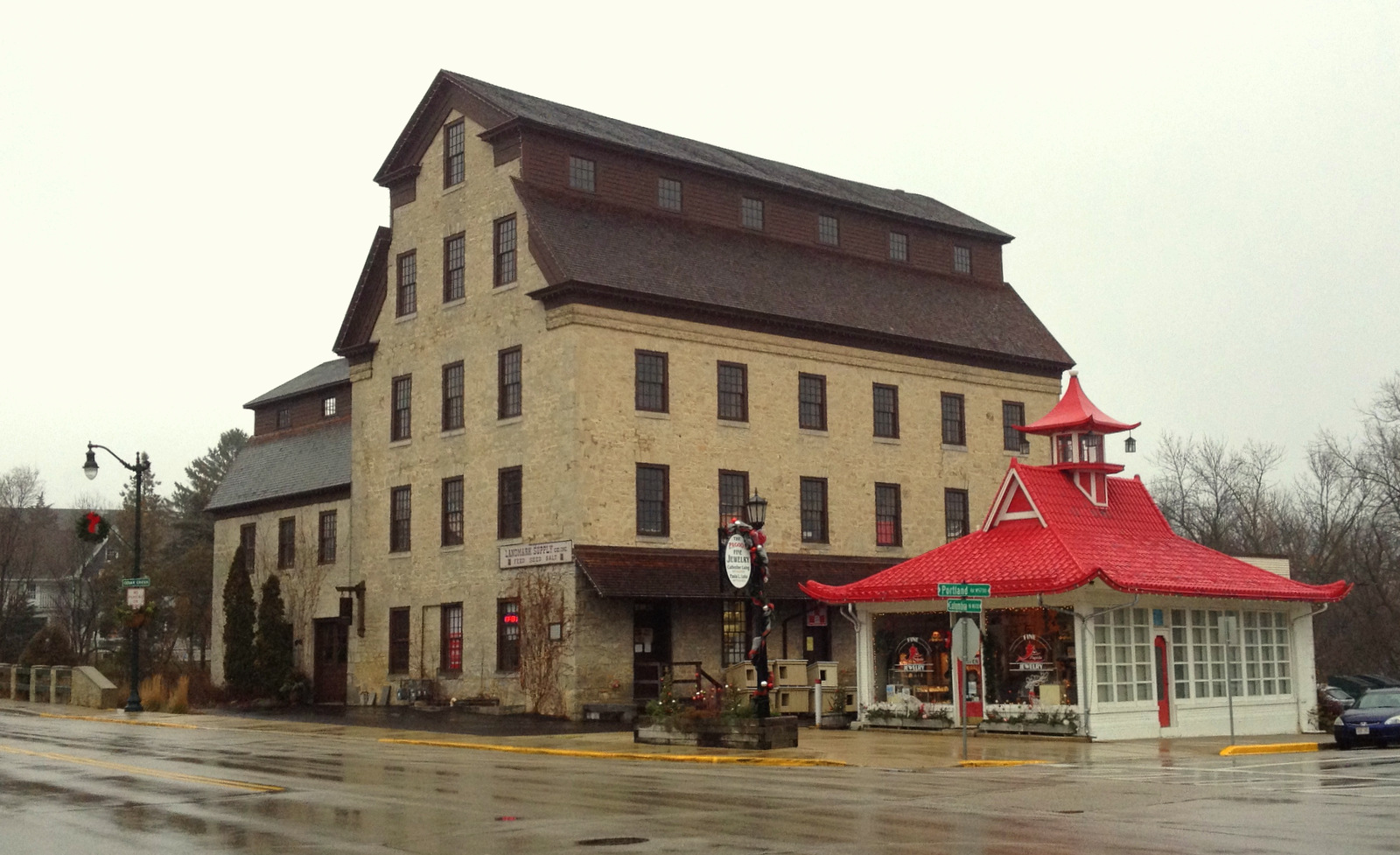
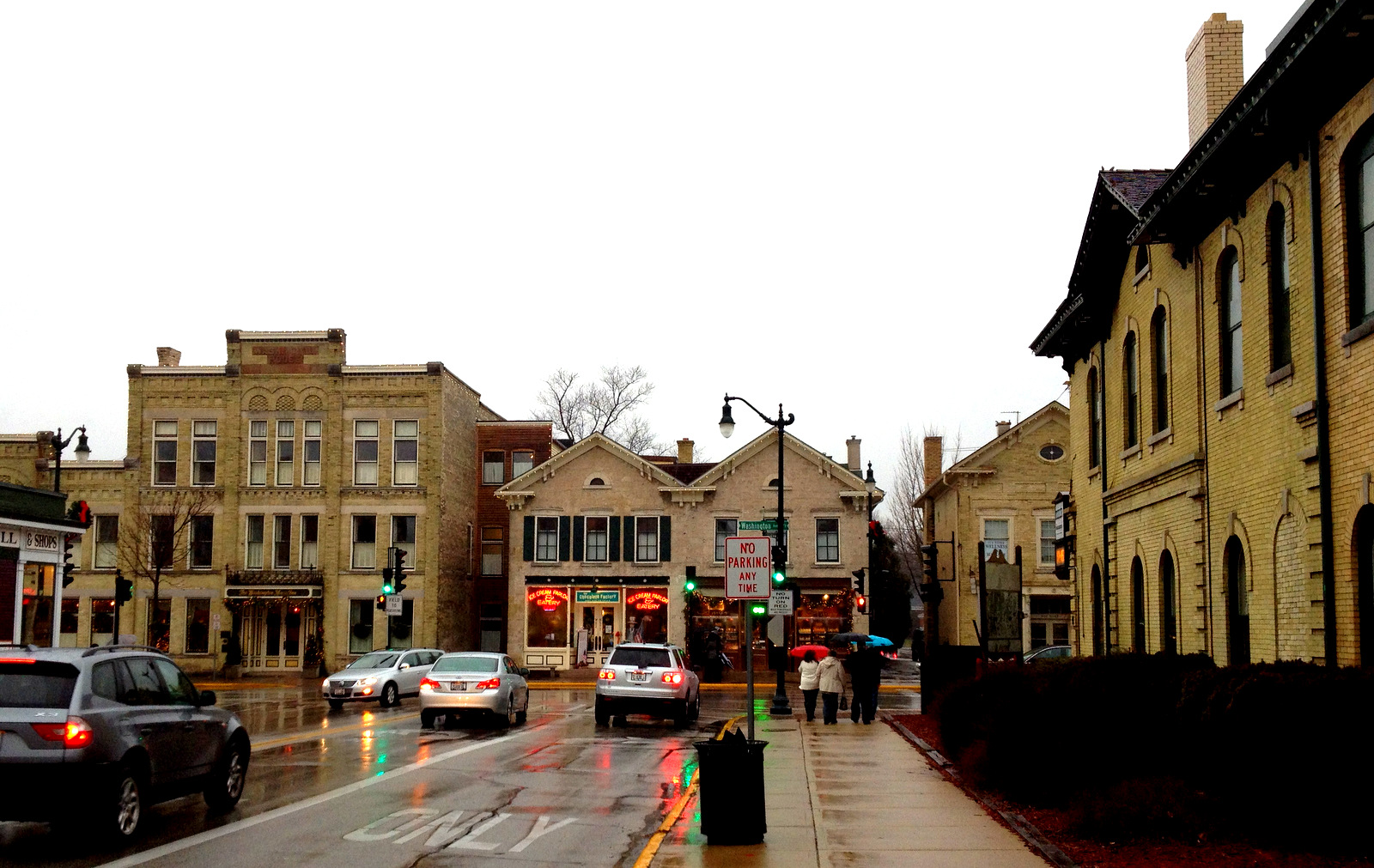
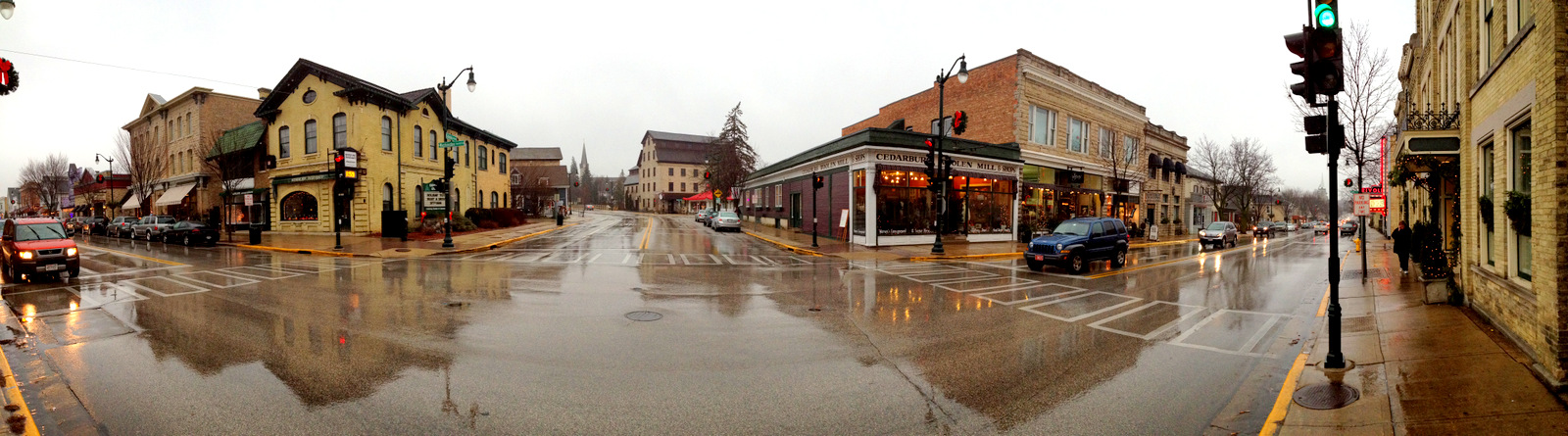
The stone buildings in Cedarburg are beautiful, as is the town’s setting along the banks of Cedar Creek. The extent to which it has been made quaint is very impressive. Cedarburg has accomplished what Long Grove, even in its heyday, only dreamed of being. Every storefront is occupied and all the stores we went into were flourishing, even those that were oddly specialized — like the one that just sold cookie dough and cookie cutters. We walked up one side of the main street and back down the other, going inside whenever a store caught our attention or the rain came down hard enough to be annoying.
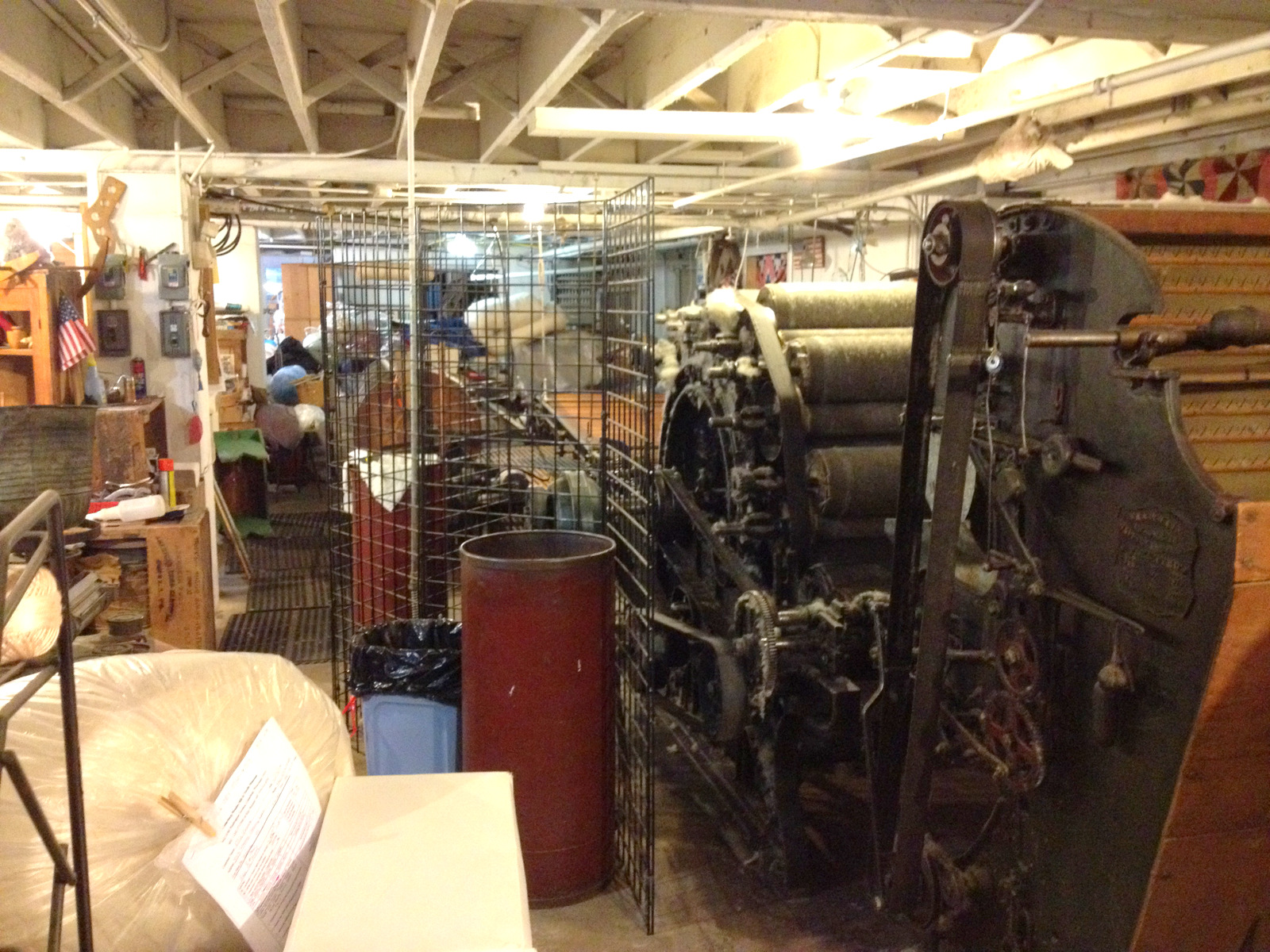
One store advertised that there was a Woolen Mill Textile Museum in the basement. We wandered down and found a lone woman in a room full of bales of wool and a carding machine she told us had been brought over from the Settlement. Carding is still done on it, but it wasn’t in action on this day.
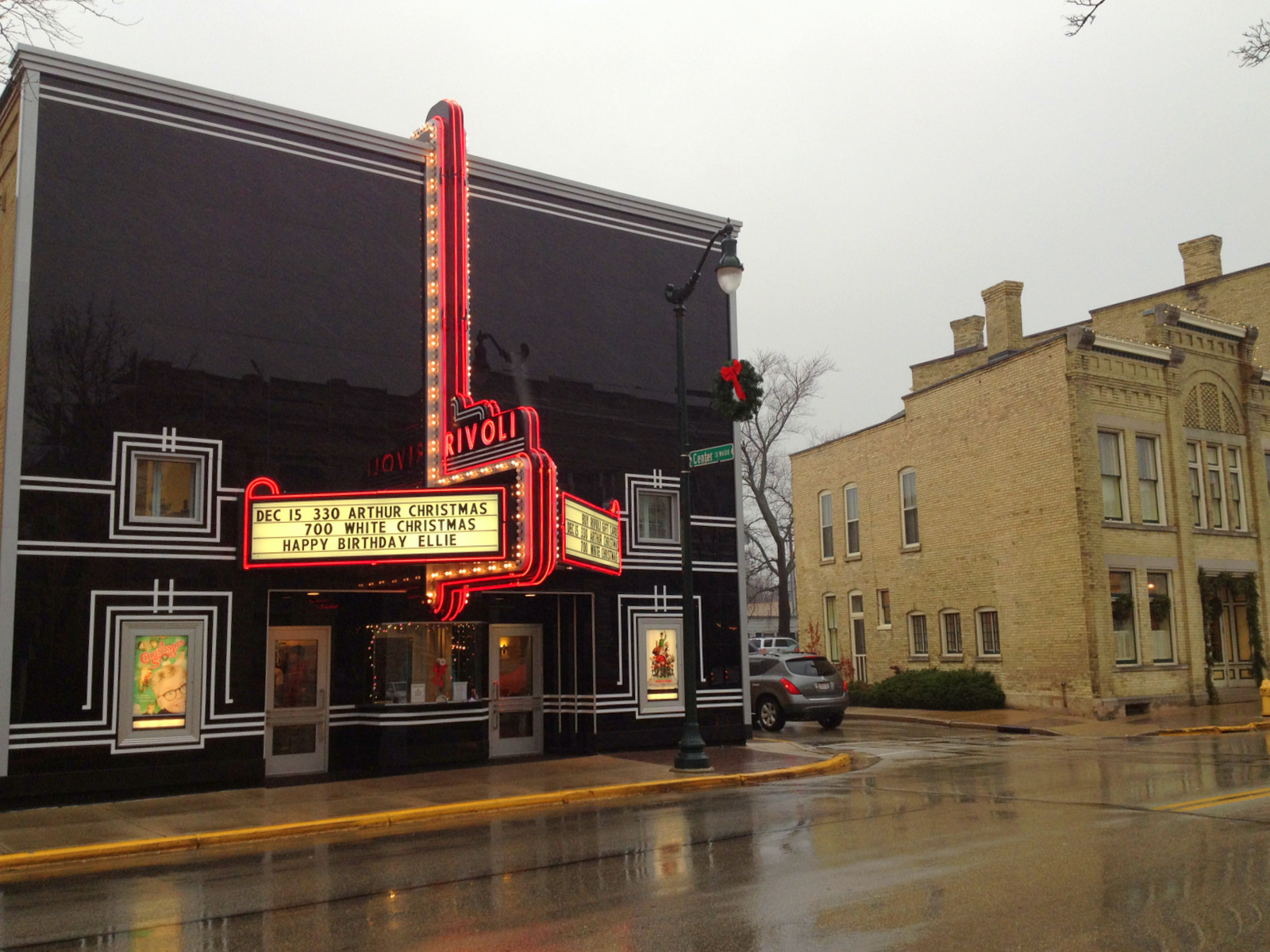
The theater was playing Christmas movies, and we might have been tempted if the next showing wasn’t Arthur Christmas.
We stopped for a break in The Chocolate Factory, the ice cream parlor with the two red neon signs in the window three photos up.
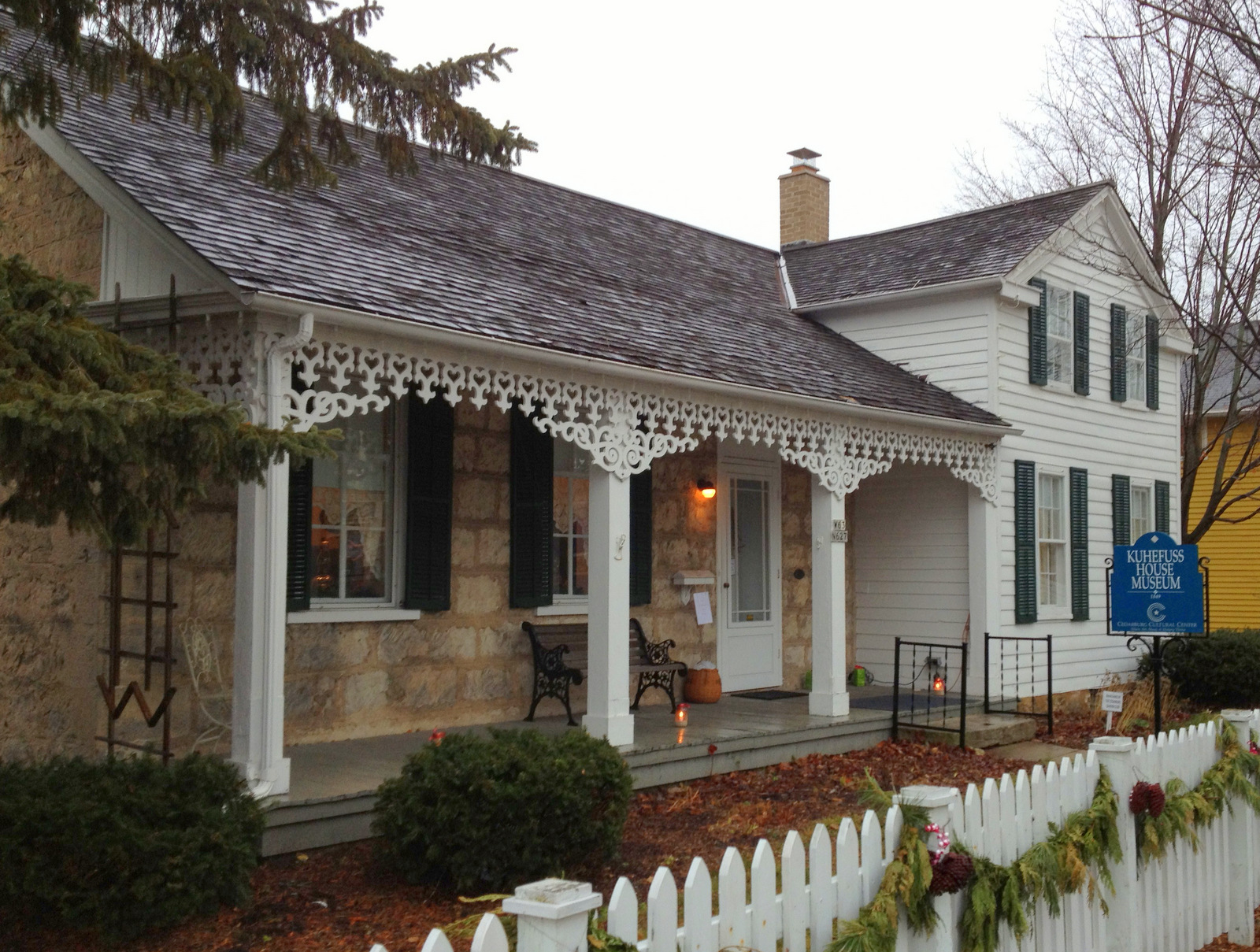
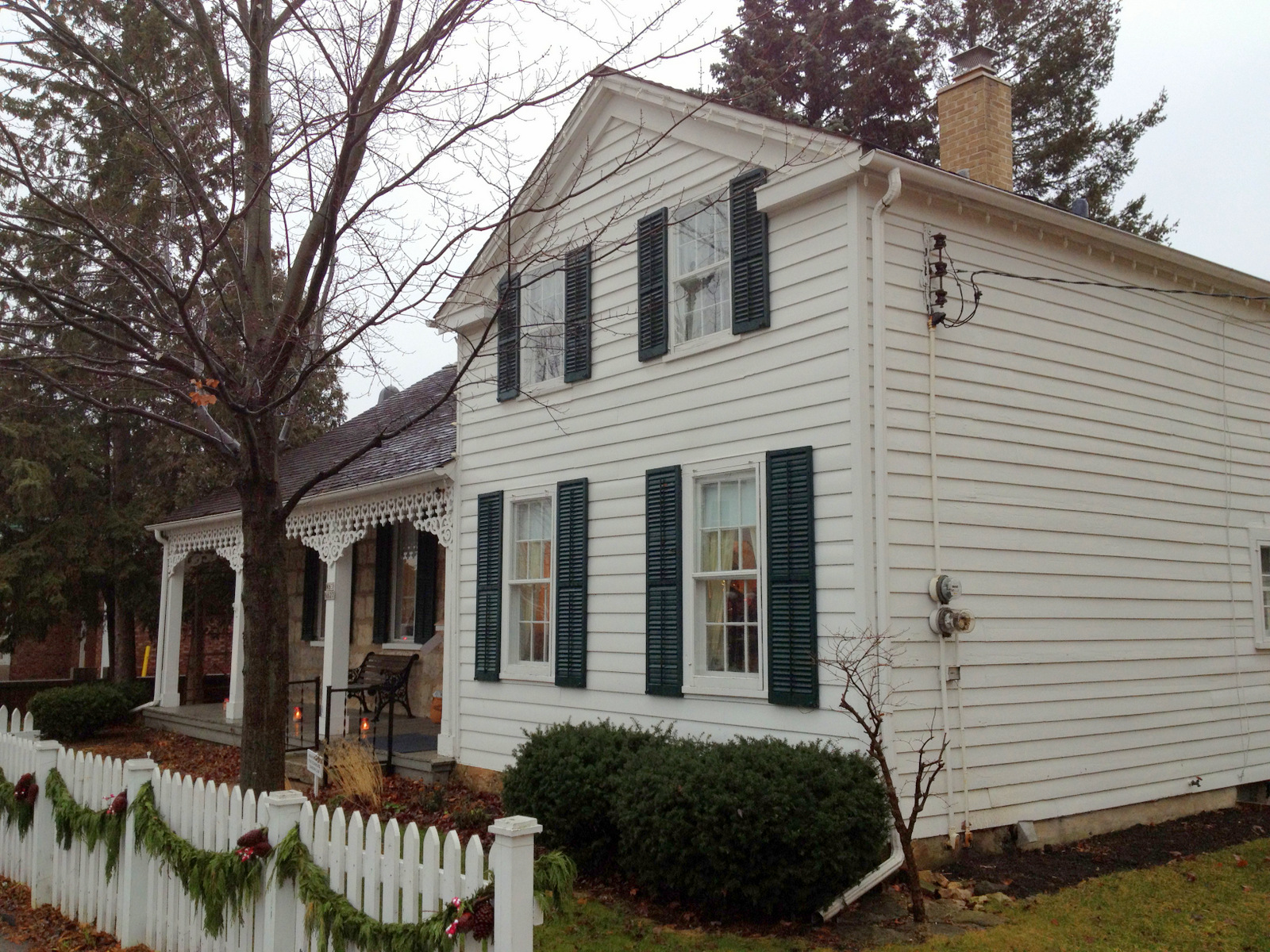
We happened upon the Kuhefuss House Museum. There was a sign out front advertising free tours, so we went inside. A woman in Victorian dress greeted us in the parlor and gave us an interesting talk on German Christmas traditions. I asked her if I could take photos and she said no because, “we’ve been designated a museum.” She then ushered us into the dining room where an enthusiastic chap showed us old photos of the town and a 19th-century artificial Christmas tree made from wire and goose feathers.
The docent upstairs was equally enthusiastic if less well informed. On several topics dealing with antiques, we knew more than she did. Our final stop was the kitchen where a woman was pretending to cook. She gave a talk about plum pudding with a sample that looked like it was made 10 years ago and then pulled a plate of store-bought cookies out of the cold stove and offered us one. Still and all, the tour was worth the price.
The original section of the house was built in 1849. The most noteworthy owners were the Blanks. One of the Blank daughters married a man named Kuhefuss, which gives the house its current name. I guess “Blank House Museum” didn’t sound appealing.
Several of the stores had wares for sale outside in alleys and yards. My wife purchased a garden decoration in one while I wandered into the backyard to a gazebo along the river.
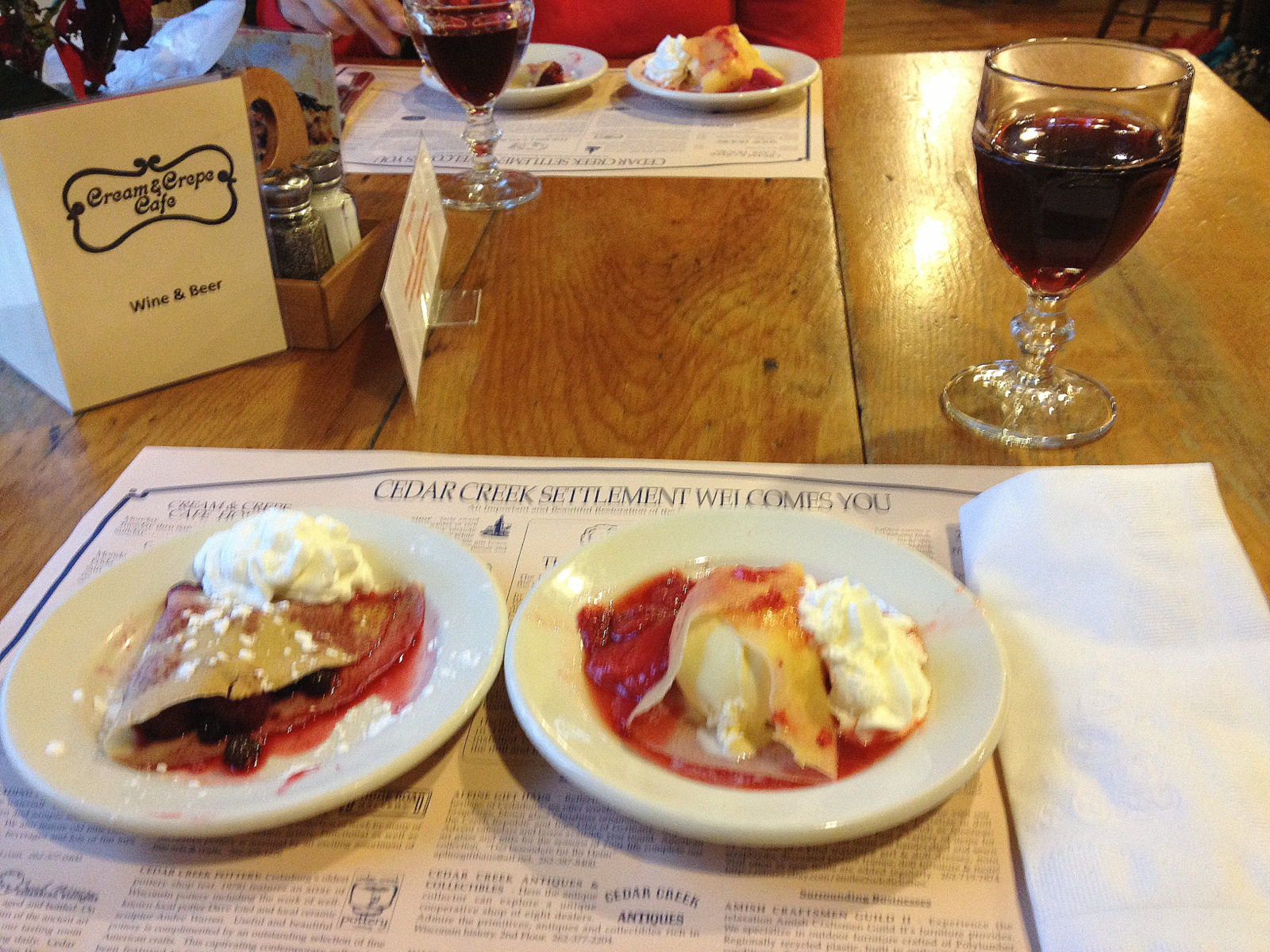
We got back to the Settlement where our car was parked around 3:00. We went inside to the Cream & Crepe Cafe and ordered two dessert crepes — one with mixed berries and one with strawberries and ice cream. (Yes, we’d already had ice cream, but we figured we wouldn’t be in Cedarburg again anytime soon and this was the highest-rated restaurant on Yelp.)
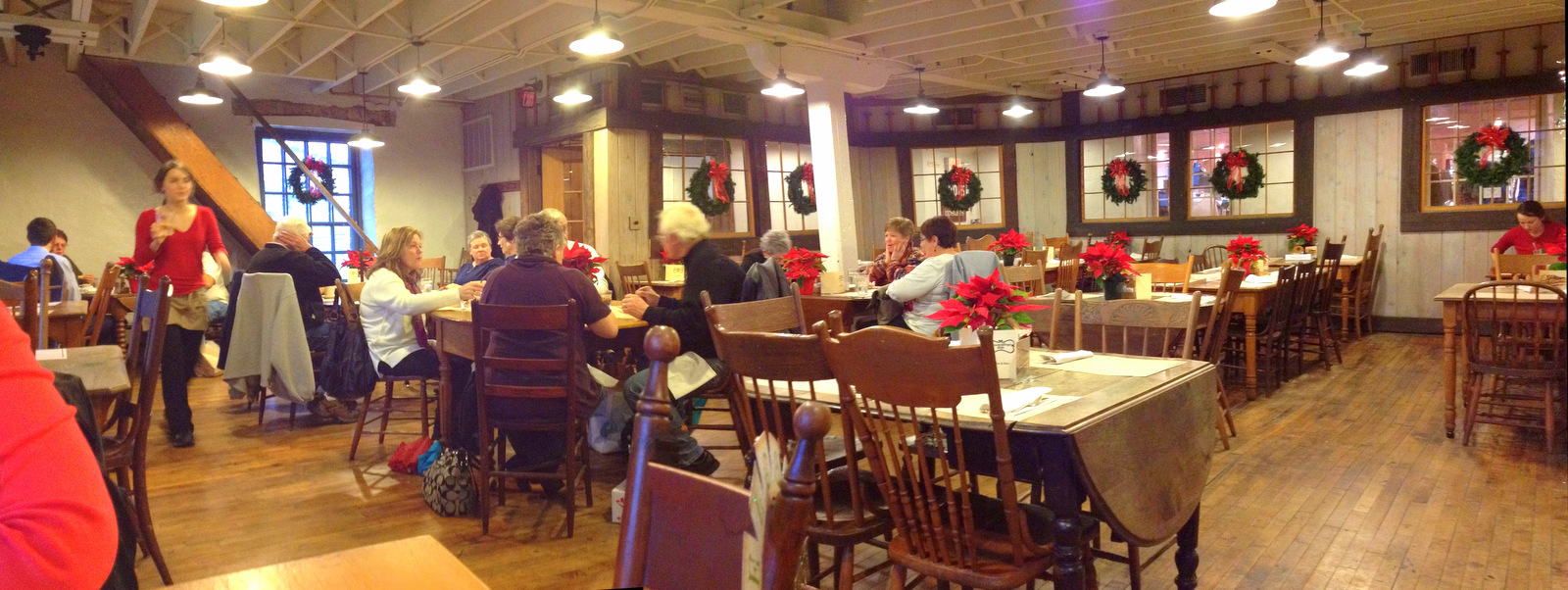
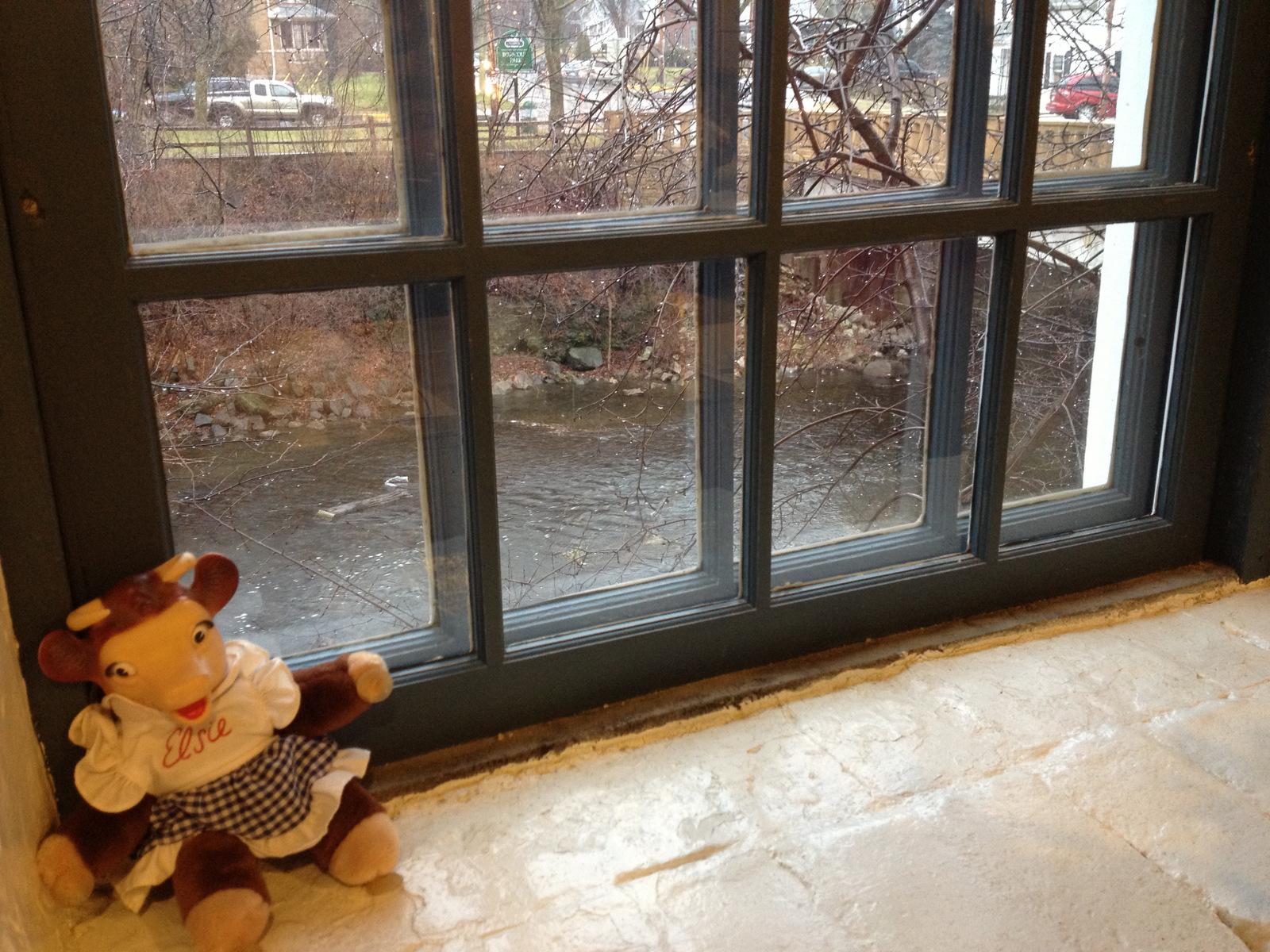
Our table was by a window looking out on the creek.
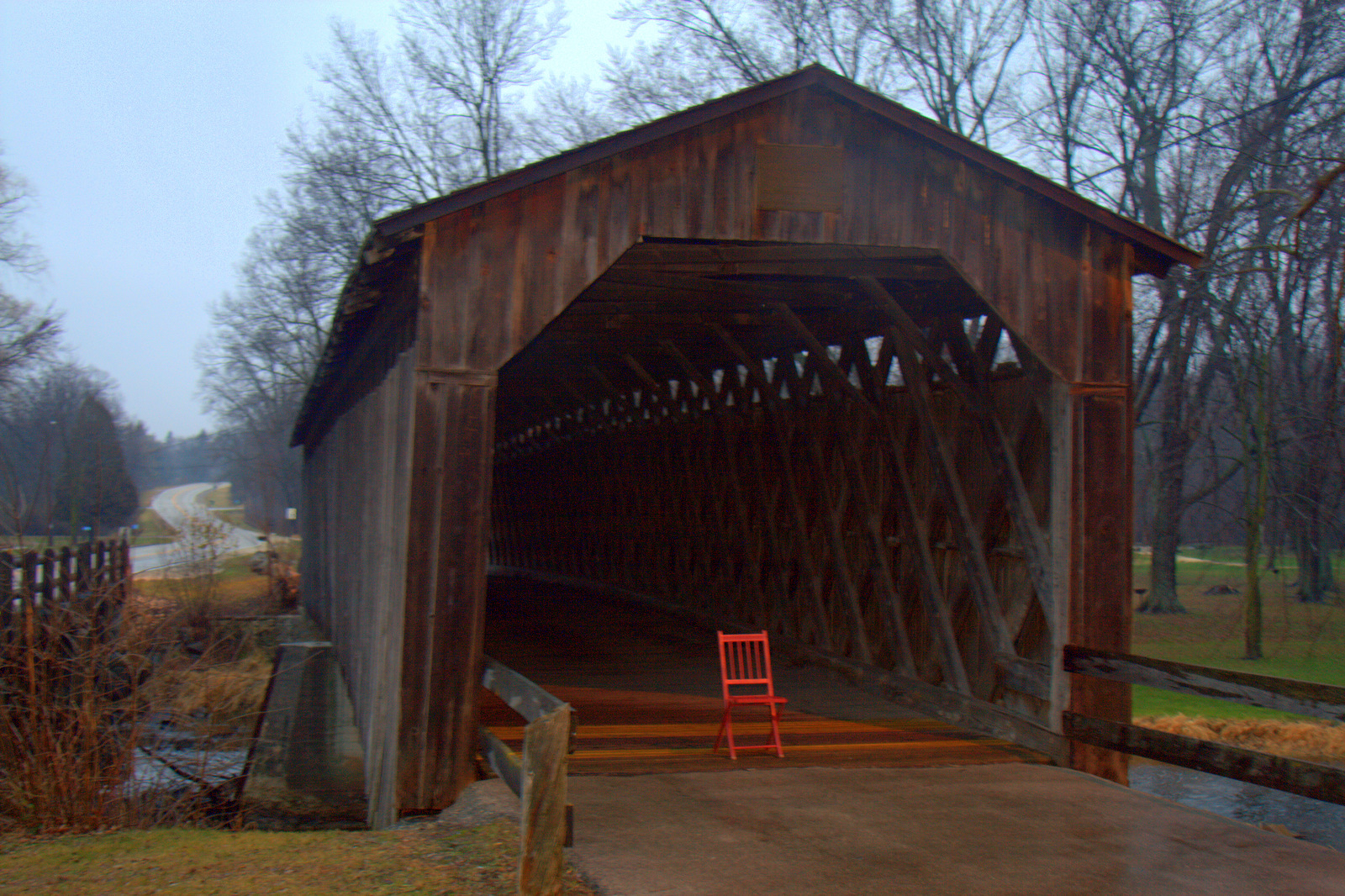
We had one more stop to make — the Cedarburg Covered Bridge, the only remaining original covered bridge in Wisconsin. The woman in the kitchen of the Kuhefuss House gave us directions, but she steered us wrong. When I’d gotten about five miles north of town, I asked my iPhone, which directed me to a park about six miles east of our current location. When we got there, we found a golf course. I tried again and finally found the bridge about halfway between the two points and a bit to the south. By this time, it was dusk and I was forced to take photos of a gray bridge against gray woods late on a very gray day.
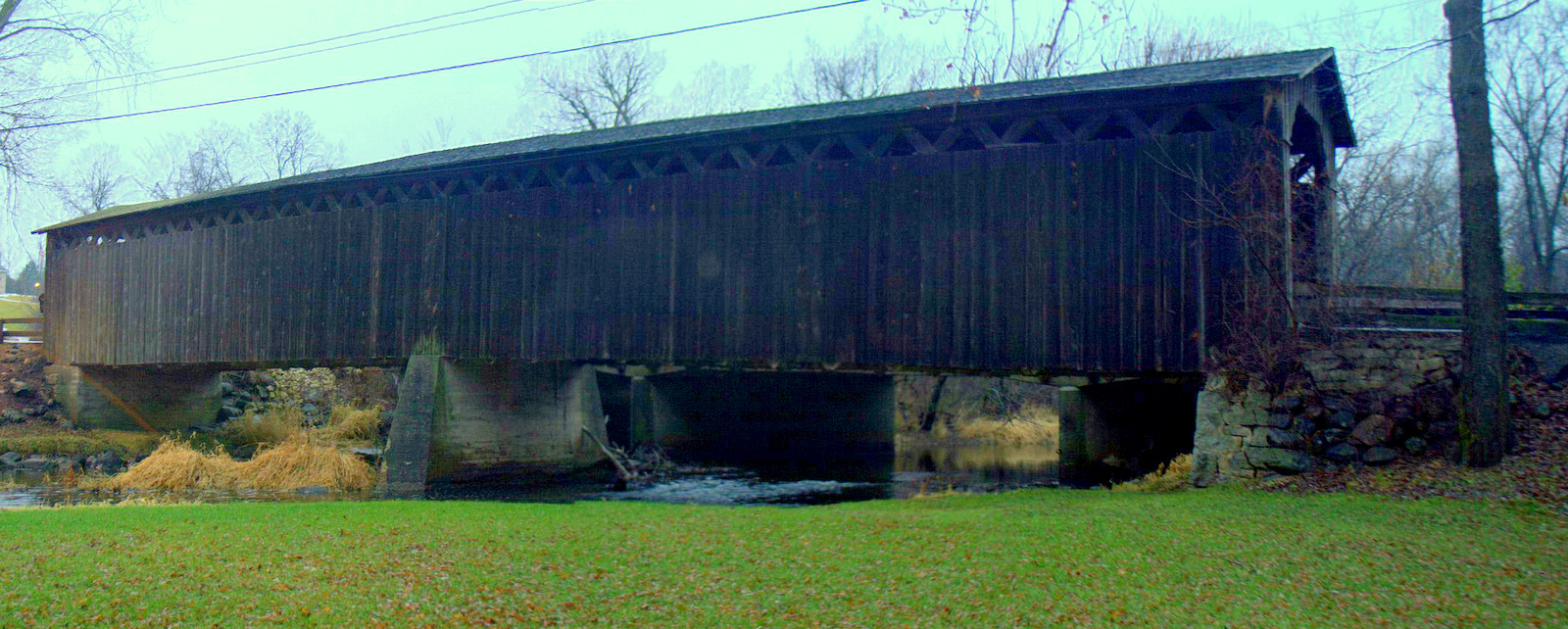
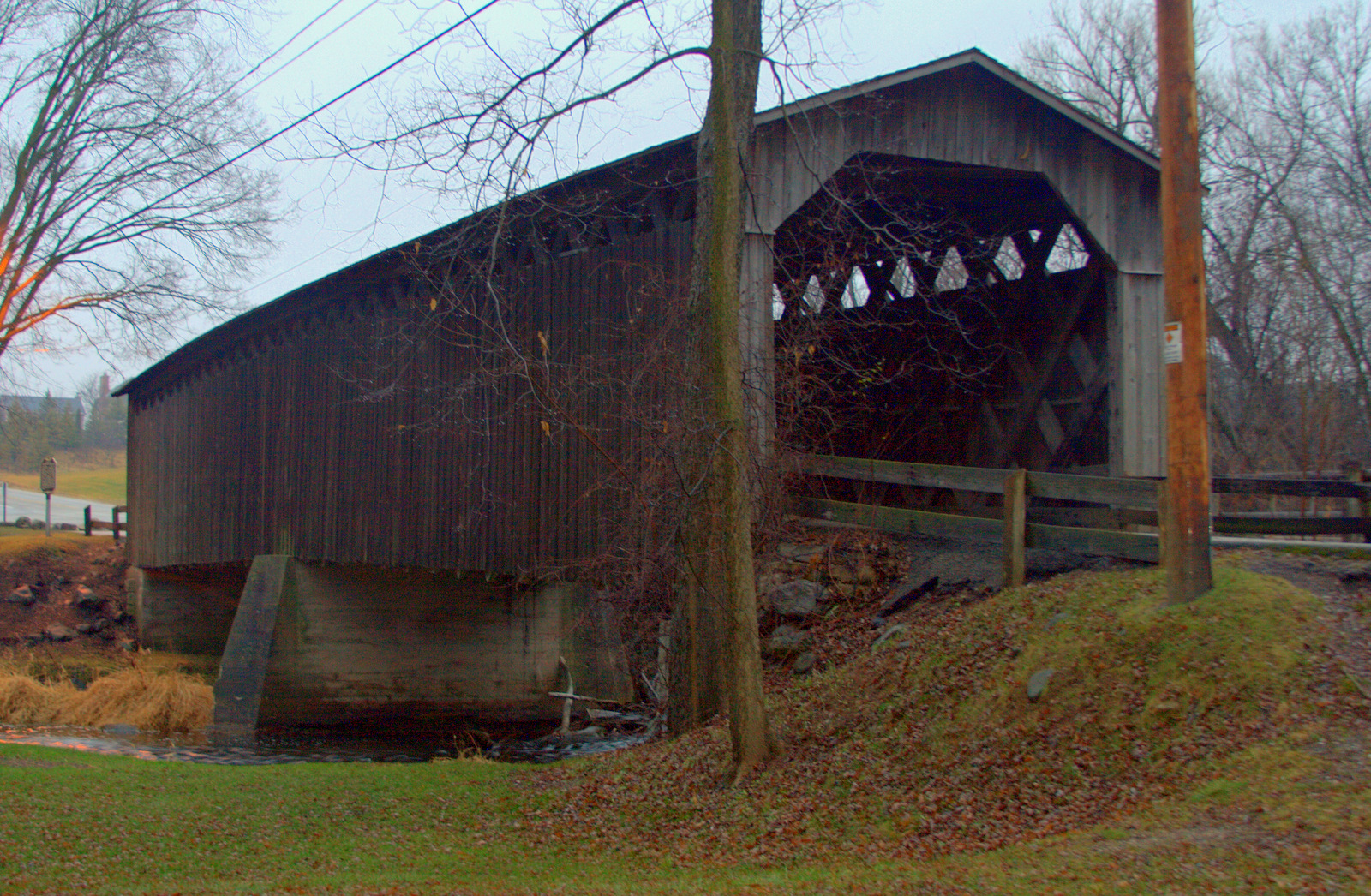
The bridge was built in 1876 and is 120-feet long. The light from a streetlamp aided me in this red chair photo, the best I could get under the circumstances.
We’d seen what we’d wanted to see and done what we’d wanted to do. We headed for home, arriving around 7:15 after a relaxing, enjoyable day. The only other item of note is that the 20-something guy in the gas station where we stopped on the way home called me “Bub.”
Recommended town slogan for Cedarburg — A Superfluity of Quaintness