
On Monday, we hung around our hotel for just about as long as we could stay in the room. We then drove west through Pensacola Beach and Pensacola, staying as close to the Gulf as we could. After checking into our hotel in Gulf Shores, Alabama (about a mile and a half from the shore and A LOT less expensive), we drove down 20 miles down the peninsula to Fort Morgan State Historic Site. The location has been a military instillation of one sort or another, beginning during the War of 1812 and continuing through 1924. It served as a WPA camp in the 1930s and briefly as a protection against German submarines during WWII. I took the photo below from the Fort Morgan – Dauphin Island Ferry the next morning.
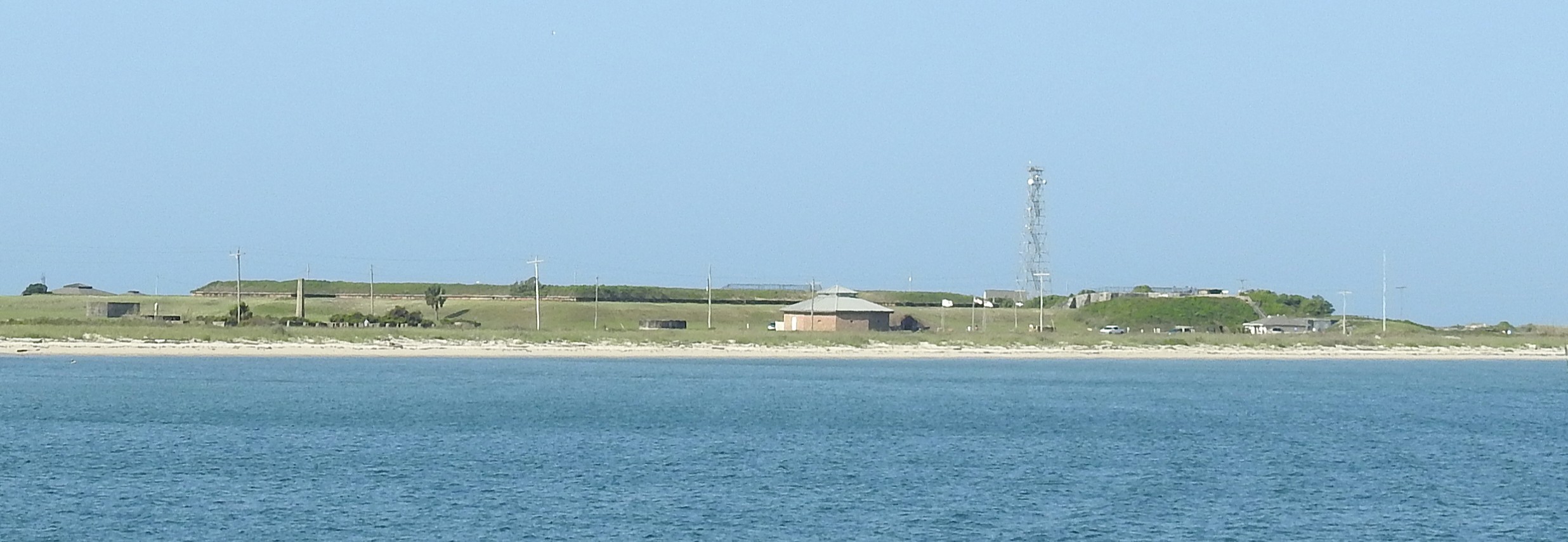
A log and sand fort called Fort Bowyer was first built here in 1813. The British attacked it twice. The first time, they were driven off. The second time a much larger force captured the fort, but when everyone found out the war had been over for a month and a half, the British left.
Construction on Fort Morgan began in 1819 and lasted 15 years because the location was so isolated. It was manned by the U.S. Army for the next 28 years. In 1861, the Confederates took possession and kept it until mid-1864. Most of the entrance into Mobile bay was blocked, with only a narrow passage, guarded by the fort, remaining open to shipping. It was the last coastal fort to remain in Confederate hands. In August, 1864, the Union navy under Admiral David G. Farragut forced its way past the fort, losing one ship in the process. That ship, the Tecumseh, struck a mine (known then as a “torpedo.” It was during this battle that Farragut, when warned about the torpedoes, uttered his famous line, “Damn the torpedoes. Full speed ahead.” Once the Union forces entered the bay, they were able to cut off provisions to the fort, and two weeks later, the Confederates surrendered.
Beginning in 1898, at the time of the Spanish-American War, large concrete batteries were placed around Fort Morgan, some of them actually within the fort’s walls. These ugly concrete structures totally destroy the aesthetic of the older brick structure. They have never fired a shot in battle. The fort was an artillery training base during WWI an a ordnance depot during WWII. The state of Alabama took possession as a historic site in 1946.
We walked through the small but interesting museum, then through the fort itself. There was a breeze coming off the Gulf, but inside the fort, it was sunny and warm — not nearly as bad as I’m sure it is mid-summer, but warmer than any other point on our trip.
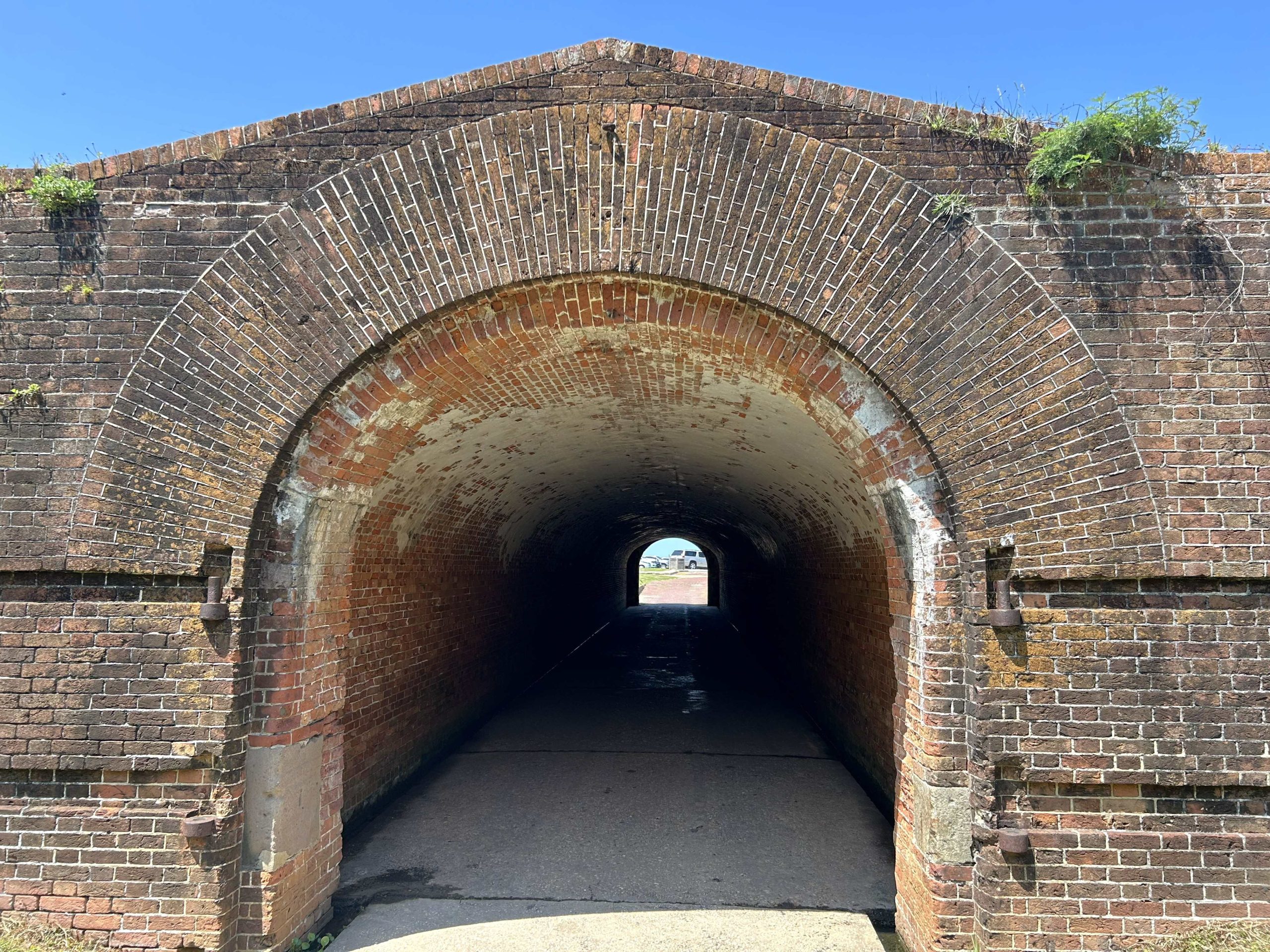
We entered through a tunnel through the glacis, an earthen slope constructed around the fort to protect the brick walls.
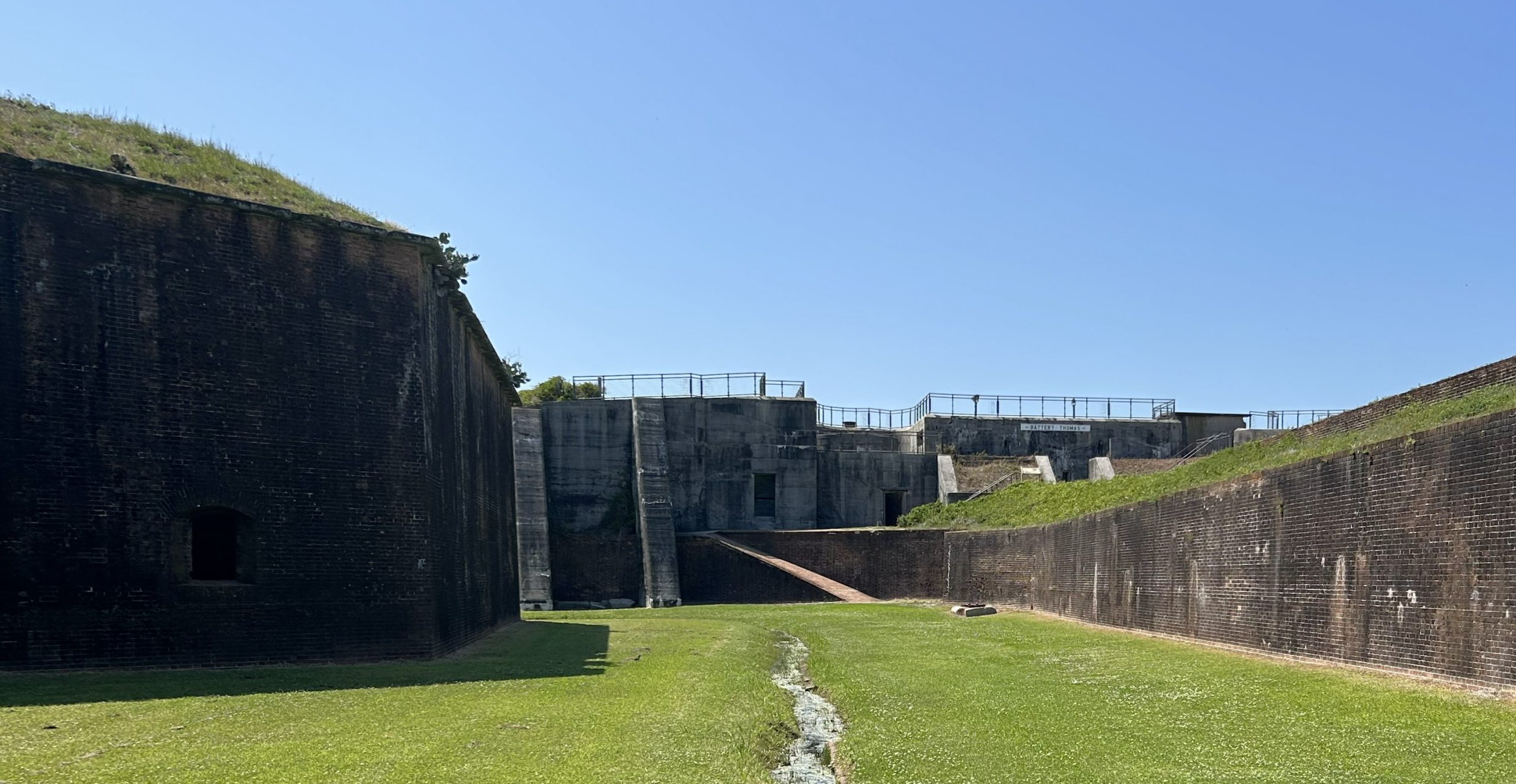
The dry moat between the glacis and the wall. Battery Thomas, one of the later concrete batteries, fills the gap at the end.
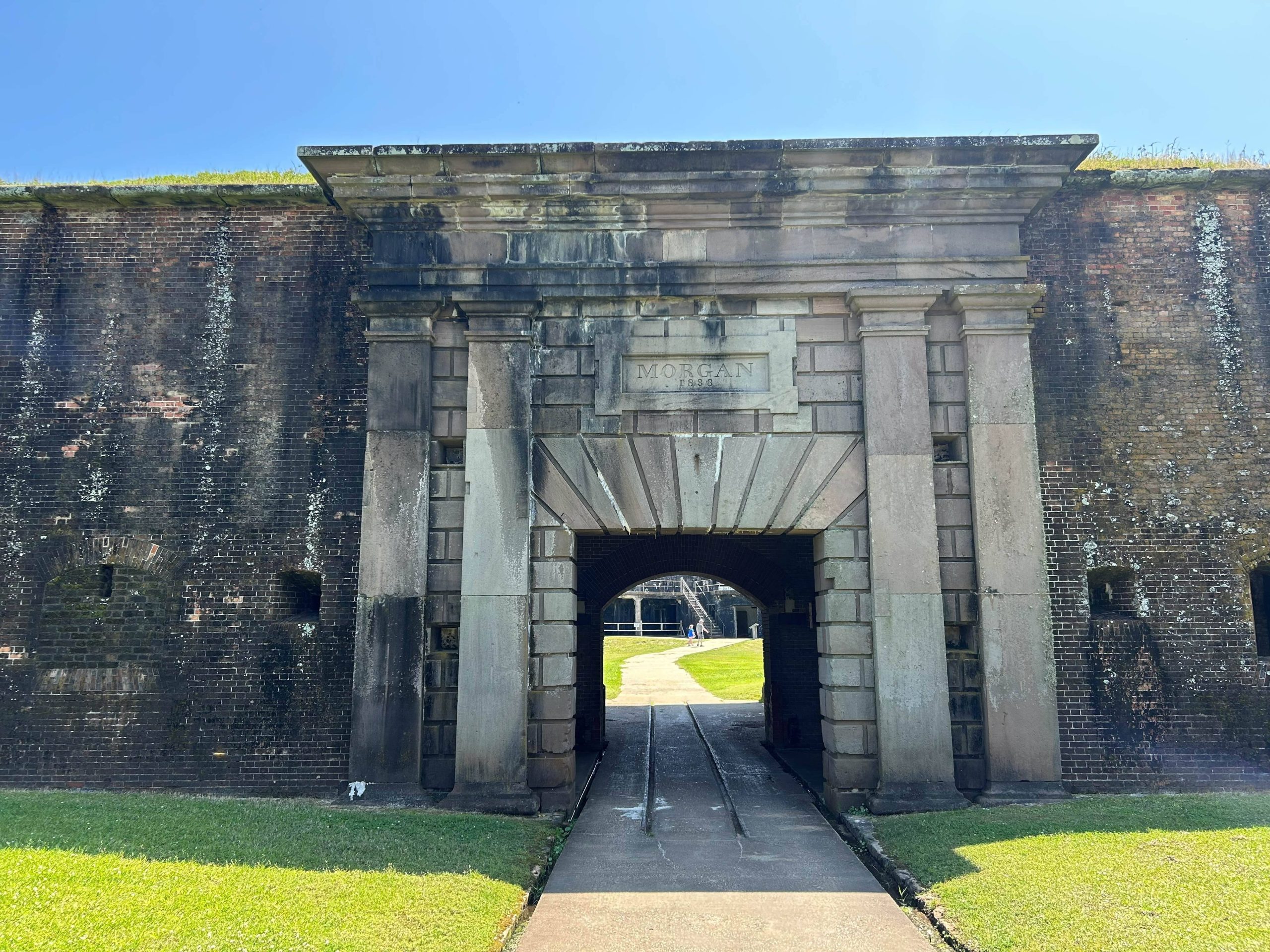
The Sally Port, the main entrance through the walls.
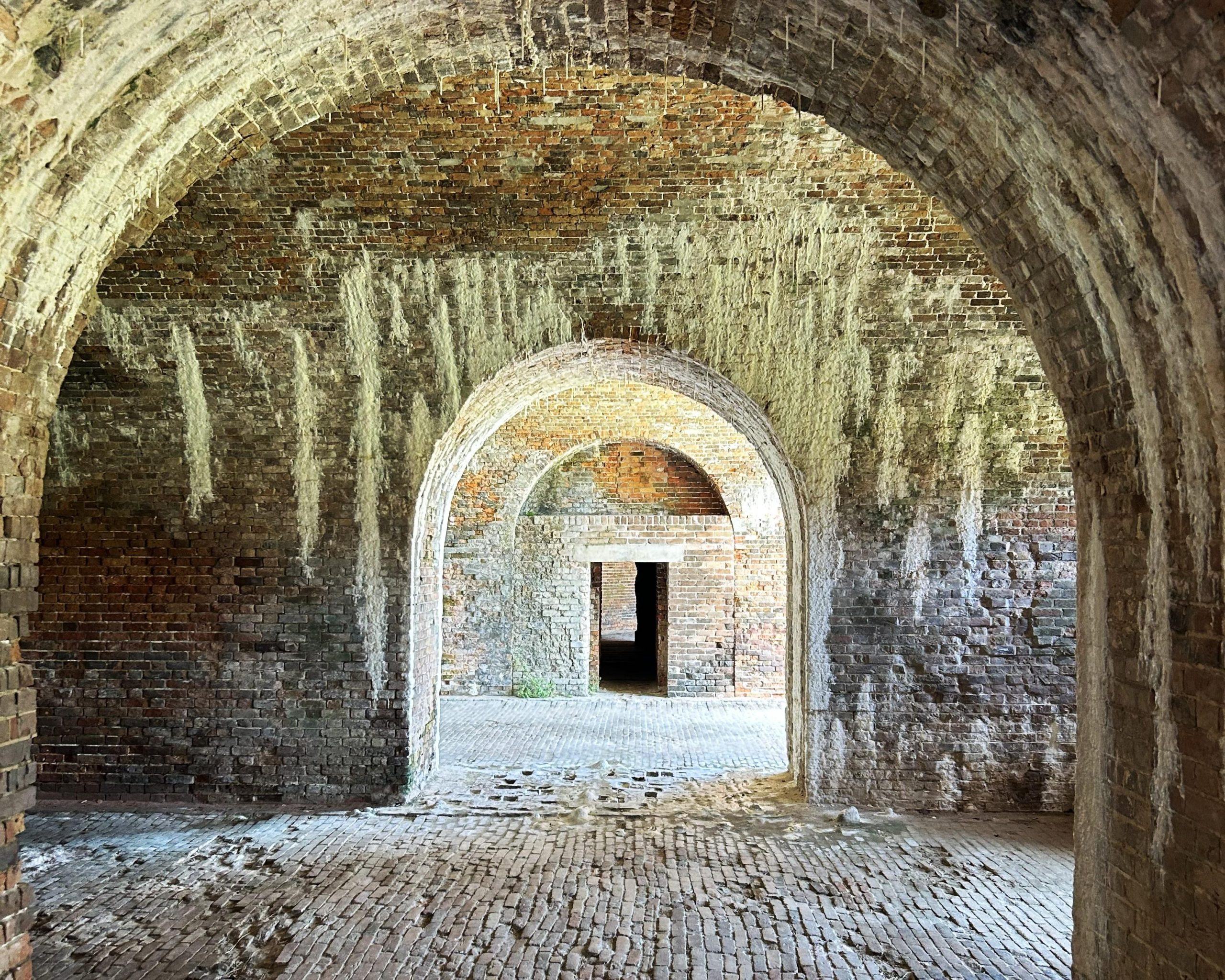
Inside the casements which line the inside walls of the fort.
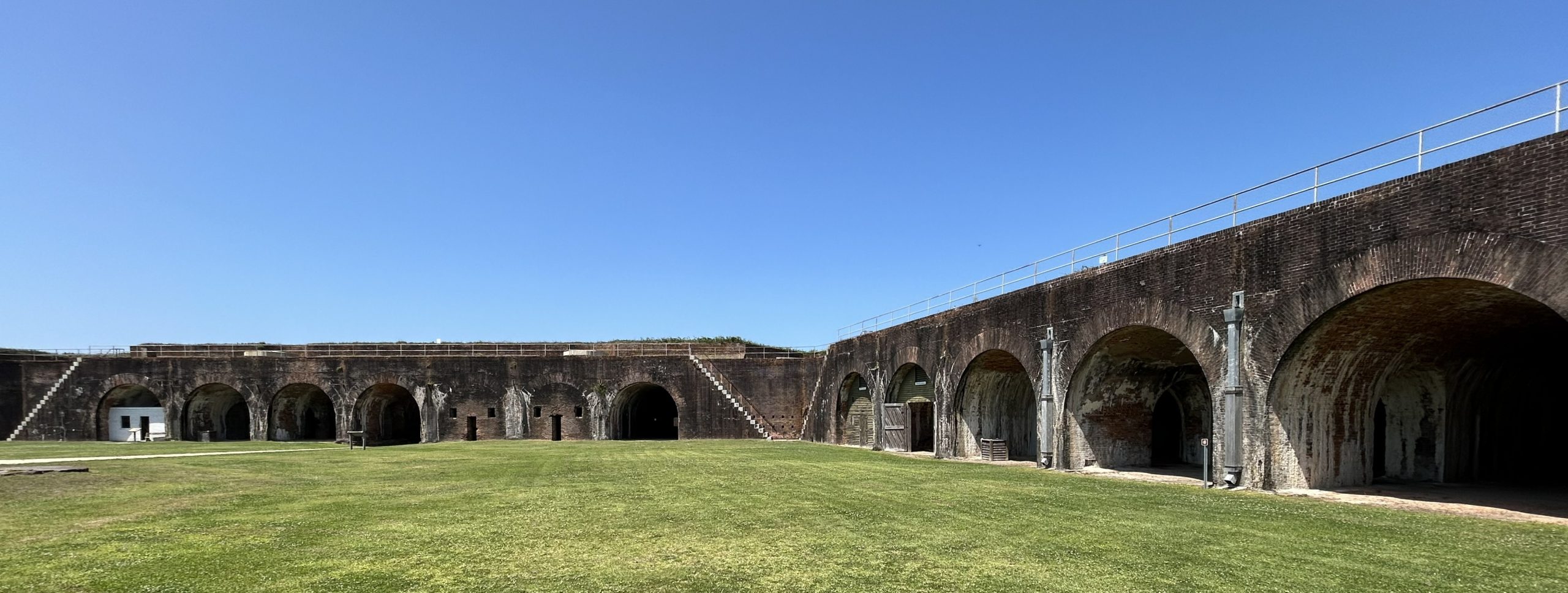
Looking across the parade ground at the older part of the fort.
And looking the other way at the newer, concrete part of the fort.
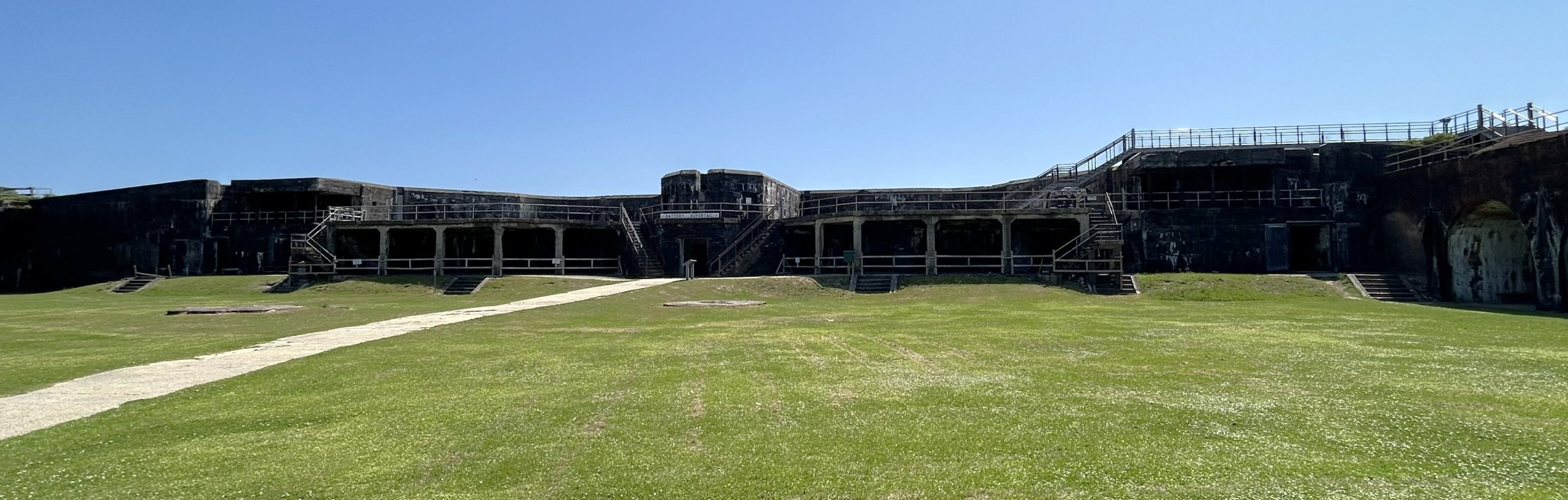
In addition to being ugly, this structure, which pretty much divides the old fort in half, is falling apart. We were able to walk up some steep steps to the platform on the right to look out over the Gulf and Mobile Bay.
After we finished our tour, which took maybe 15 minutes, we drove around the grounds. Then I did about an hour of birding while my wife sat near the shore. We also strolled a ways down a narrow beach, picking up shells and looking at birds.