I have not been idle in my ongoing quest to become educated, artwise. I’ve continued reading Art History for Dummies and have made it into the twentieth century.
I have also purchased my own copy of 1001 Paintings You Must See Before You Die, by Stephen Farthing. Say what you will about determining a set number of good paintings and I will agree with you. It turns out that the author agrees too — that’s why he lists 1,001 and not just 1,000 — to indicate that the list goes on. But I figured (correctly) that most of the really famous artists and paintings would be included and thought this would be the easiest way to make my way through them. I’ve decided not to read about more than six paintings each time I pick up the book so that I have some chance of keeping them distinct from each other. Occasionally, when I get to a painting that I find appealing or interesting, I’ll blog about it. I fully realize that the only way to view a painting is in person, but that’s not going to happen. Even if I had the financial resources to visit museums all over the world, that’s not how I’d choose to spend my money. So what I will do is, when I find an interesting painting in the book, I’ll look on the Internet or in books for the best reproduction of it I can find.
I’ve also had several fascinating conversations about art with artistic friends and have come to a few conclusions:
- Art is subjective. I’m not required to like any work, no matter the consensus of the experts.
- Art does not have value in and of itself. It’s value comes from the impact it has on the artist and the viewer. But I haven’t totally settled in my mind what the impact should be which leads me to my next point …
- Many people believe that, to be art, a work must create a response in the viewer — change him in some way. They believe that if it doesn’t do this, it isn’t art but simply decoration. I’m not sure I agree. I think God created some things purely for our enjoyment and gave us the ability to do the same for others. I hesitate to devalue something because its appeal is aesthetic.
- As someone with a biblical perspective, I have the right, and even more the obligation, to reject art that is disrespectful toward God or His creation, including humanity. Evil might be art, but it’s bad art.
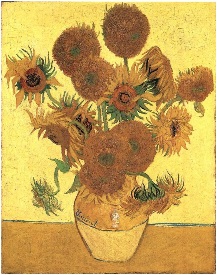
- And, on a lesser note, I believe that many of the most valuable works of art are such because of the fame of the artist or the work and not because of the appeal of the piece itself. Van Gogh’s Still Life: Vase with Fifteen Sunflowers is, in my opinion, a classic example. It sold, in 1987, for almost $40 million. (And many experts think it’s a forgery!) Personally, I wouldn’t hang it in my house, or even in my garage. What do you think?