Jenkins Ferry Battleground State Park

In search of something to do, I drove an hour and a half down into Clark County and saw the sights. My first stop was Jenkins Ferry, one of three southern Arkansas Civil War battlefields preserved by the state. At none of them is there much to see. Jenkins Ferry consists of a picnic area in a swampy woods along the Saline River. I hung around for 45 minutes looking for birds, but there weren’t many of them to see either.

In April, 1864, a Union army … you can read about it on the sign.

There was also this monument, which gives some idea of how well the battlefield is maintained. It reads, “Erected in memory of the soldiers of the Confederacy, who gave their lives for the cause at the battle of Jenkins Ferry, April 30, 1984. Dedicated September 19, 1938, by the James F. Fagan and Jenkins Ferry Chapter of the United Daughters of the Confederacy. We honor their valor and sacrifice.”

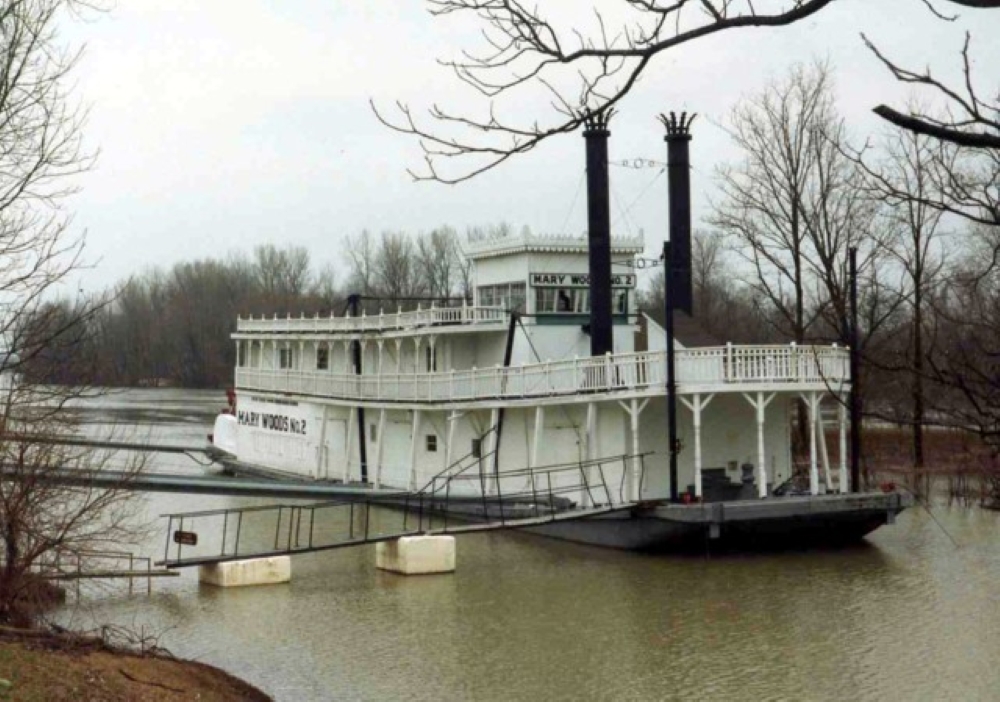
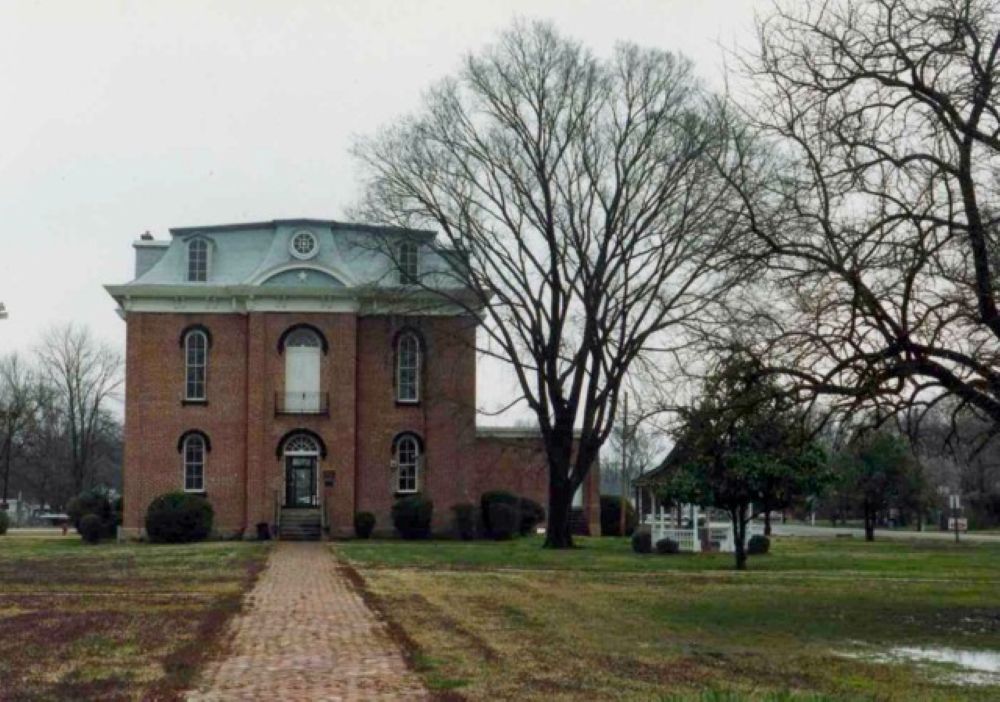
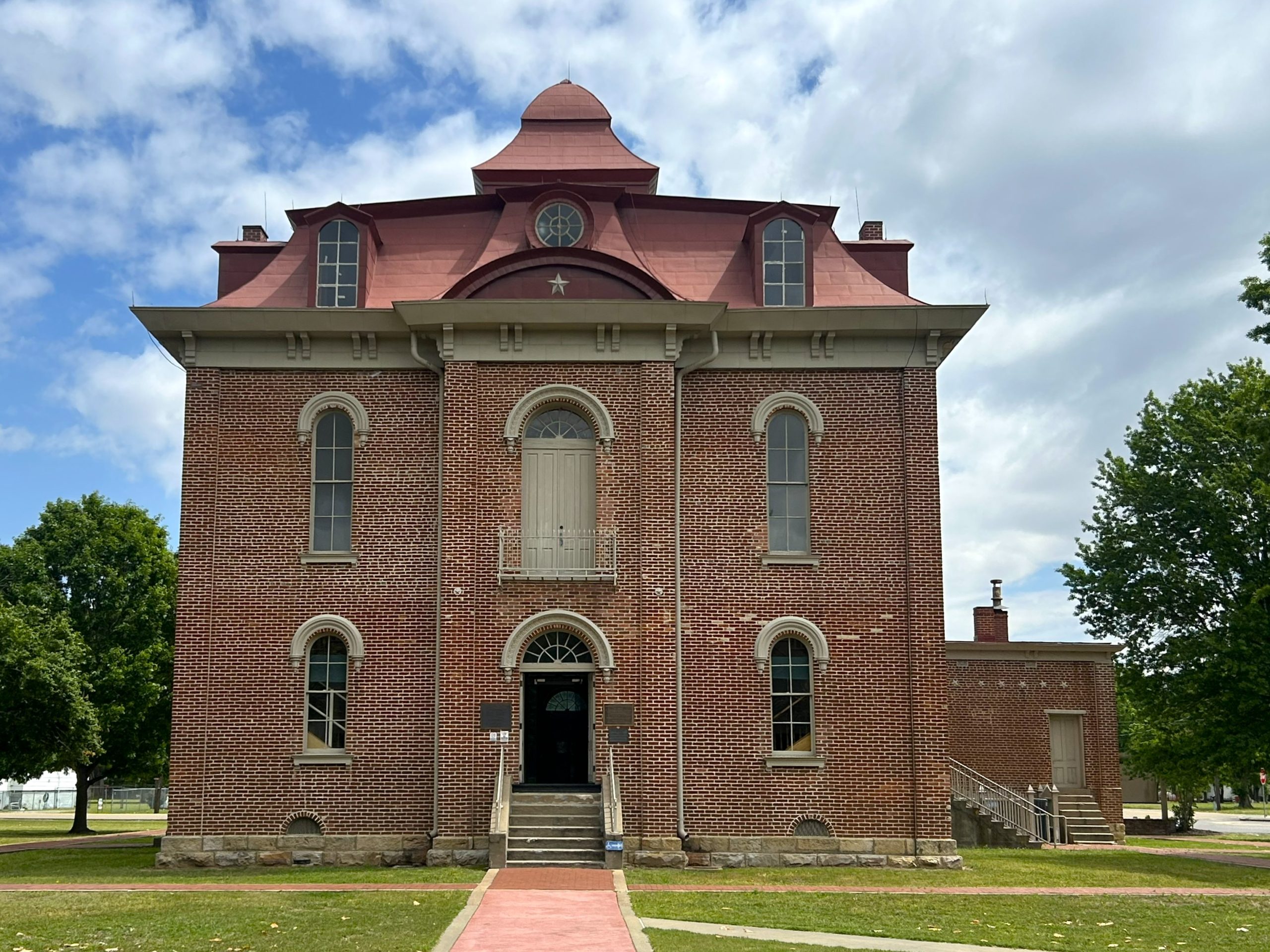
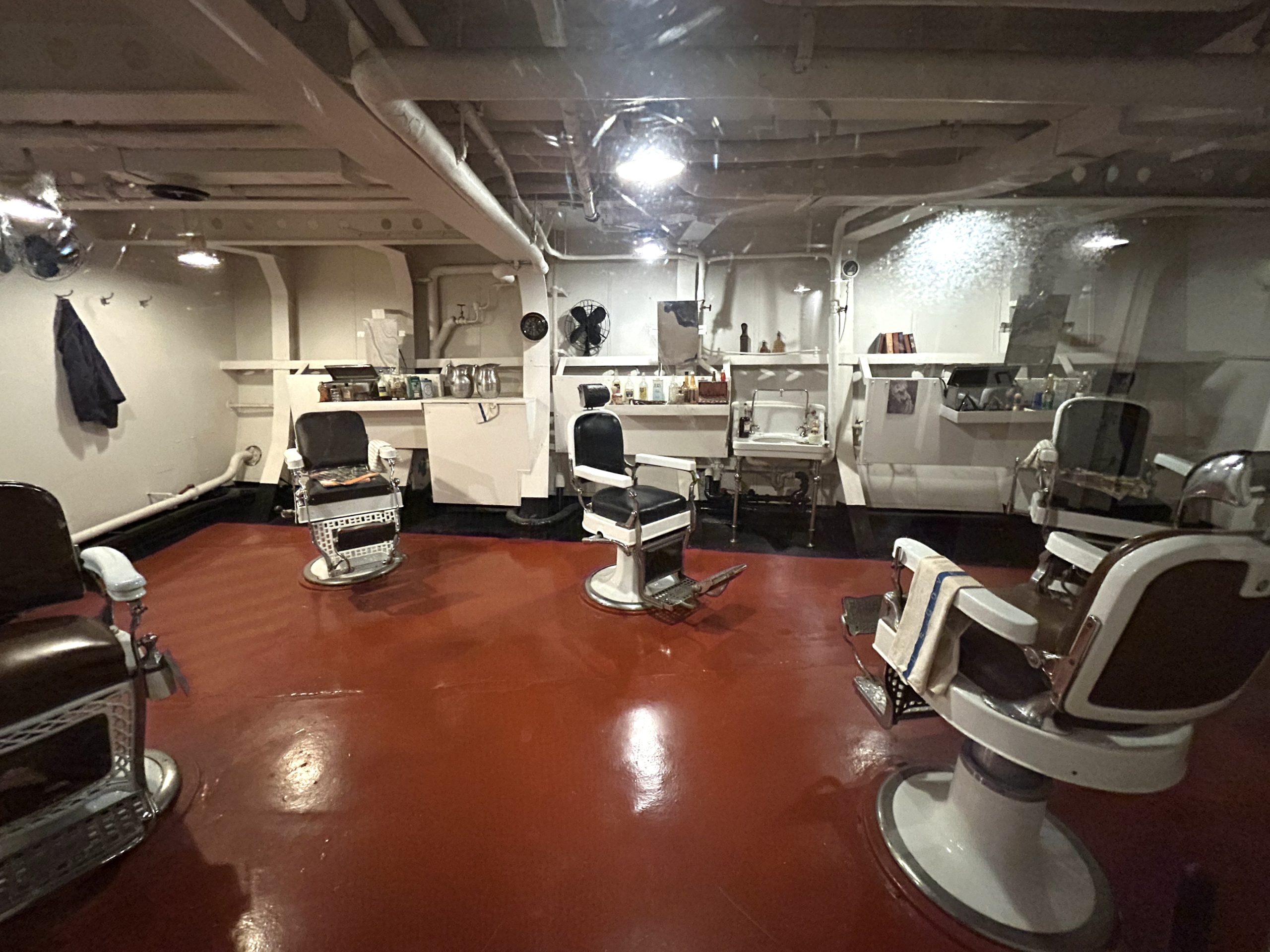
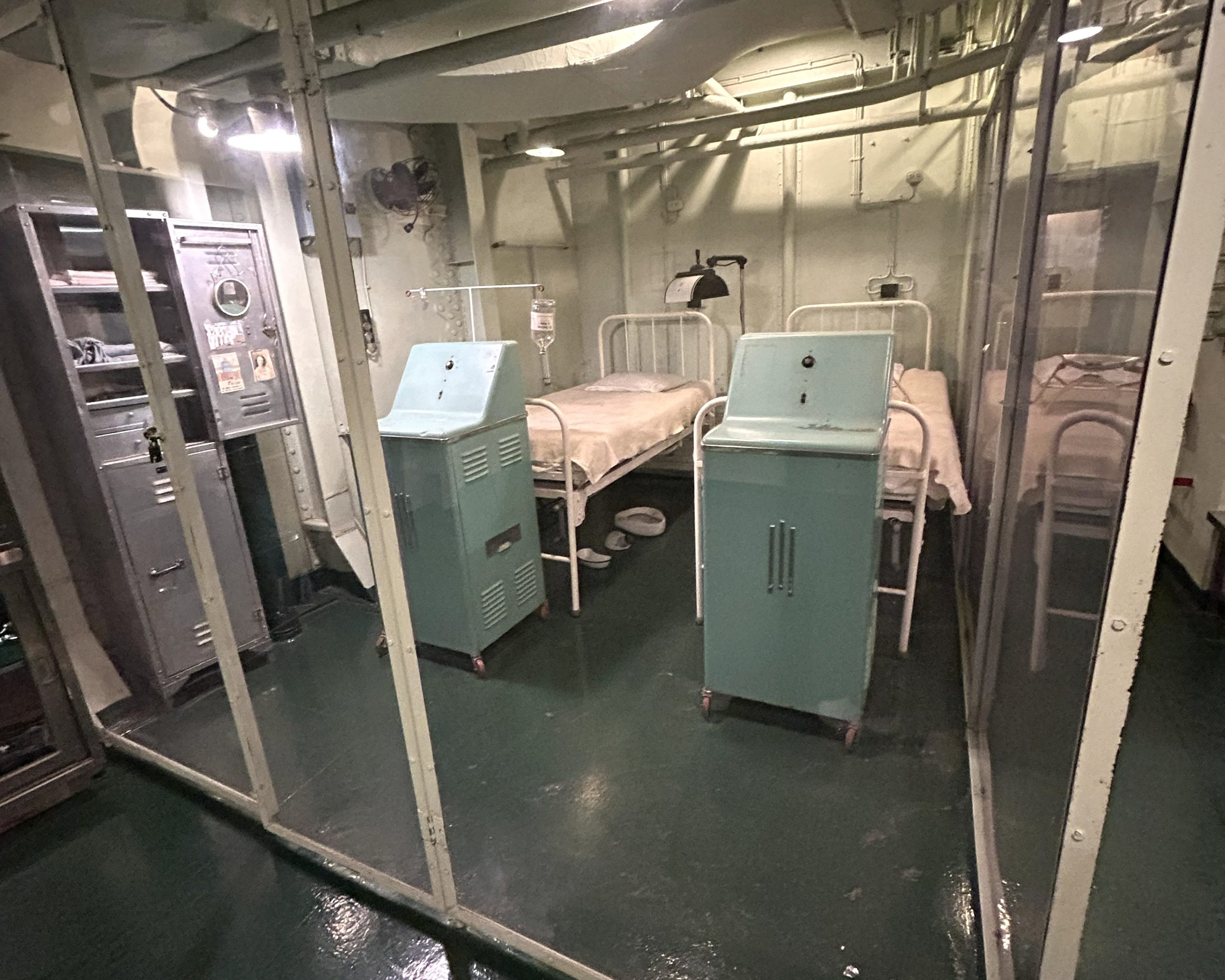
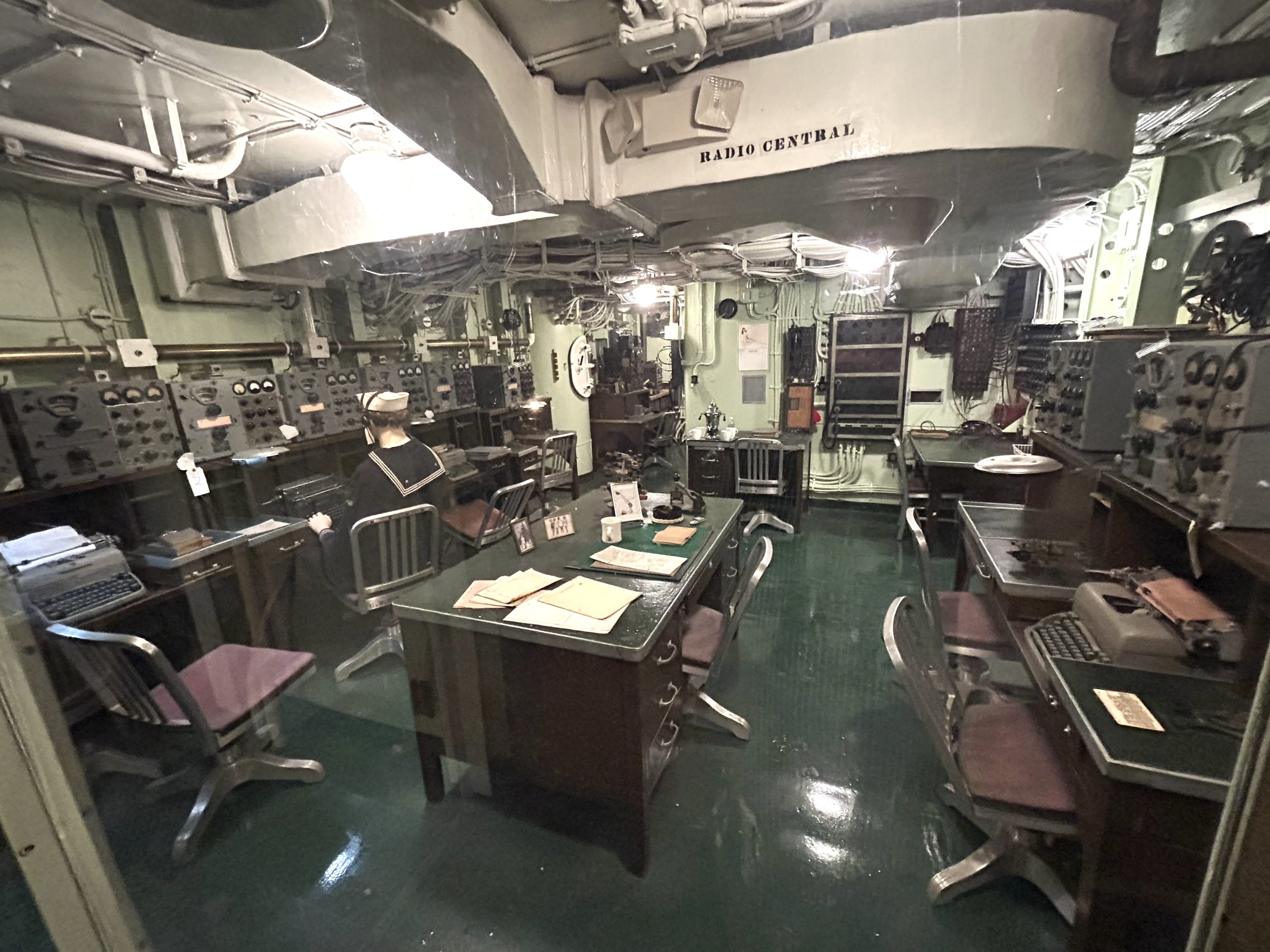
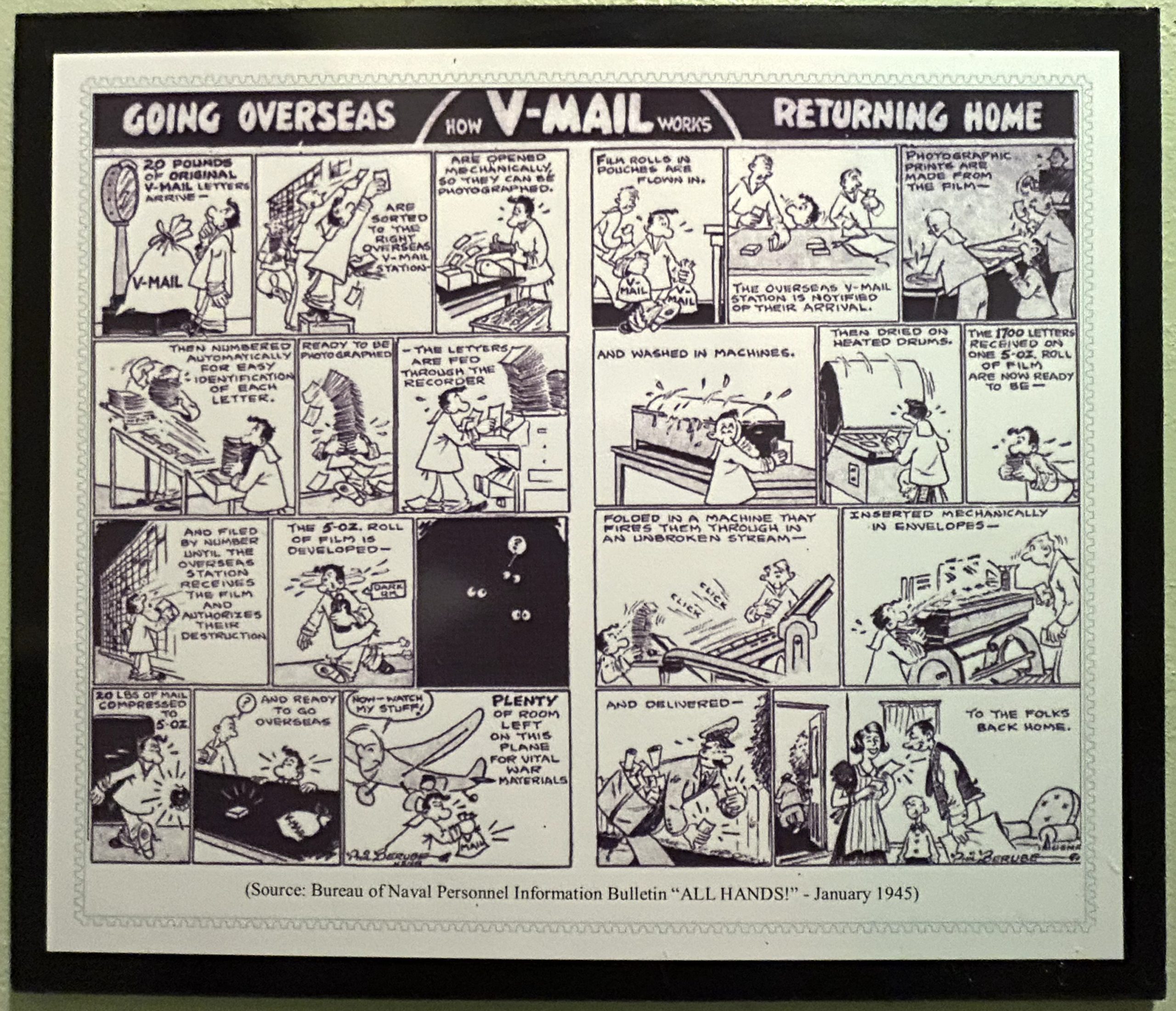
From the battlefield, I went to the Clark County Historical Society Museum in Sheridan. It’s a typical local historical museum, filled with random old stuff donated by local citizens, although this one had some cool displays and a “village” of old buildings that could have been interesting if taken care of. As is, the whole place feels likely to rot away within a few years. In the museum, I found this photo of Jenkins Ferry. I don’t know when it was taken.

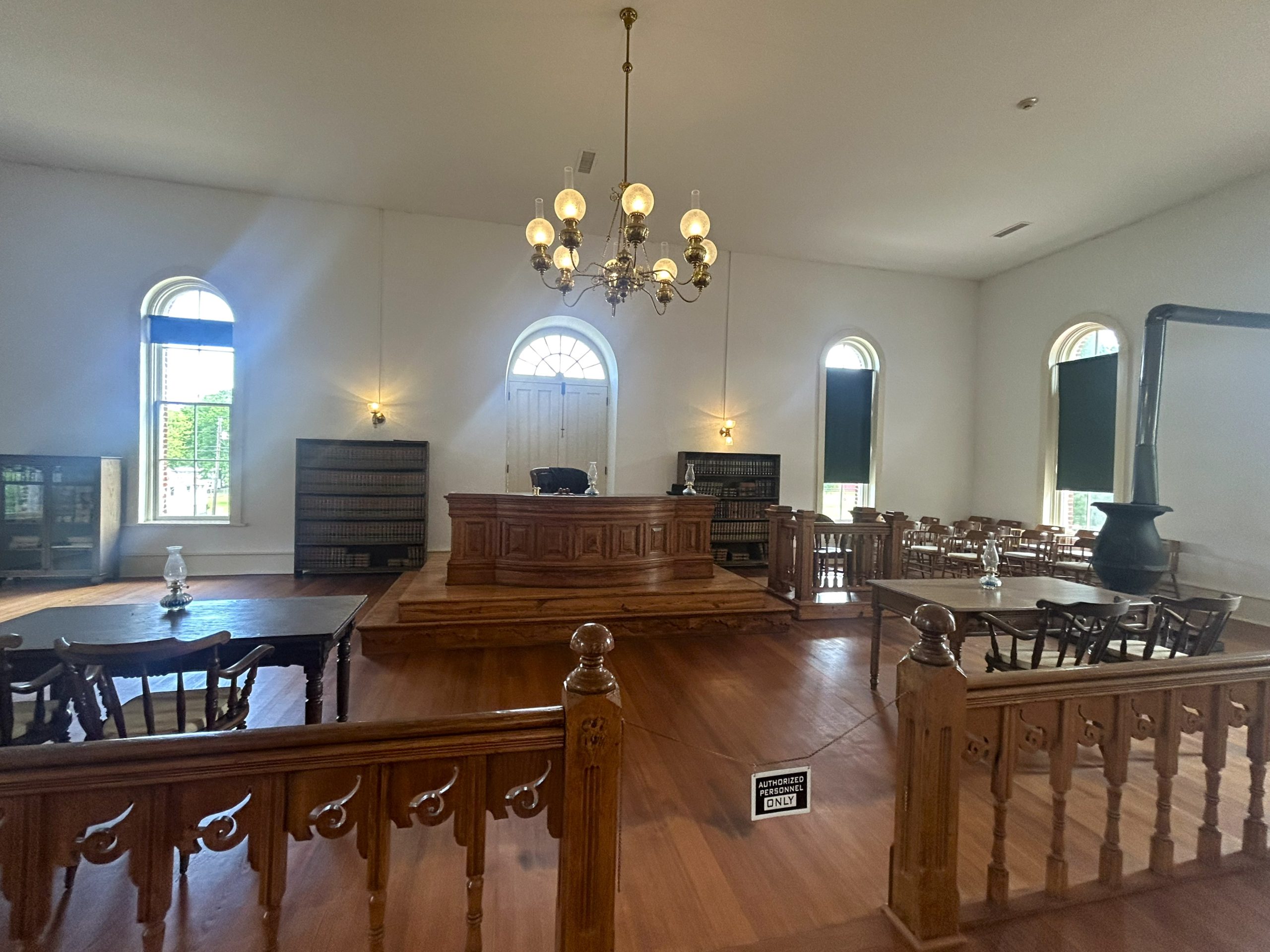
Here are a few other random shots from the museum.

Posted in Battlefields | Comments Off on Jenkins Ferry Battleground State Park

Arkansas Travelers vs. Northwest Arkansas Naturals

On a whim, I contacted the Kleins, friends from Illinois with whom we often went to baseball games. My purpose was just to say hi, but it turned out they were coming through Little Rock and planned on seeing a game. We met them downtown and had a good time catching up at Dickey-Stephens Park.

Our seats were on the first base side, between home plate and the dugout. The Travelers were playing as the Diamantes de Arkansas in an attempt to be relevant to Spanish-speaking fans and sell more stuff. There was nothing else about the game that was Spanish or Hispanic in anyway, so it seemed odd. Here’s the view from our seats.

The game began with a string of lucky hits and wild pitches, and the Travelers gained an early 7-0 lead. They scored two more in the fourth. The Naturals, who didn’t seem like a very good team, scored three meaningless runs in the last two innings and lost 9-3, but we weren’t around to see it. It had rained hard all day — to the point where we really thought the game would be called — and started up again in the eighth, so we left.

I wasn’t into the game much and didn’t care which team won. But we had fun with the Kleins talking about baseball and old days.

The highlight for me was when I noticed that the Traveler’s pitcher was named Woo. I immediately thought of the old term for flirting, “pitching woo,” but when I cracked the joke, nobody got it. I took a photo of the scoreboard and sent it to several people, but none of them had ever heard the term either. Still, I got a kick out of it. And he pitched a perfect game through six.

It was our first visit to this ballpark. It had a nice view of downtown Little Rock over the right field wall, for what that’s worth, but otherwise was a pretty conventional AA stadium.

Our tire light was on when we got back in the car. I checked quickly to make sure none of the tires was already flat and made it home OK. the next morning the tire was flat. There was a nail in it, so I had to put on the donut and take it in for a patch.

Here’s a news article on the game.

The Arkansas Travelers (19-11) scored seven runs in the first two innings Thursday while starter Bryan Woo carried a perfect game through six innings of a victory over the Northwest Arkansas Naturals (15-15) in front of an announced crowd of 4,028 at Dickey-Stephens Park in North Little Rock.

The Travelers scored three runs in the first inning on an RBI double by Robbie Tenerowicz, who along with Spencer Packard scored later in the inning on wild pitches from Naturals starter Jonathan Bowlan. Packard added a two-run single in the second inning and the Travs got RBI singles from Jonatan Clase and Robert Perez Jr. to push the lead to 7-0.

Tyler Tolbert broke up the perfect game bid in the top of the seventh inning with a single on an 0-1 pitch. Tolbert and Tyler Cropley both hit RBI singles in the eighth inning to account for two Naturals runs, with the other coming on a Jeison Guzman solo home run on a full-count pitch in the top of the ninth inning.

Further note: Less than a month after this game, Woo was called up to the Seattle Mariners.

Posted in Baseball | Comments Off on Arkansas Travelers vs. Northwest Arkansas Naturals

Reptile/Amphibian #37 – Copperhead

agkistrodon contortirx

Sunday, May 7, 2023 – 10:47 am

Faulkner County, Arkansas – Bell Slough Wildlife Management Area

I was out birding and had just crossed over the dam on Lake Conway. On the narrow trail that leads back into the woods, I saw a Copperhead. It was stretched out, with its head in the vegetation along the trail but most of its body on the trail. I knew immediately what it was. It was perhaps 18 inches long. It never moved as I gingerly approached and took some photos.

It had the classic fat body and wedge-shaped head of a pit-viper. I was surprised at how nonchalant I was about it. I took the photos, but there wasn’t much else to do since the snake wasn’t moving. I actually walked past it on the trail, coming within six inches of its tail. It never moved. I continued on birding, but also watching where I stepped. Twenty minutes later, when I went back along the section of trail where I’d seen the snake, it was gone.

Posted in Reptiles, etc. | Comments Off on Reptile/Amphibian #37 – Copperhead

Bird #598 – Couch’s Kingbird

tyrannus couchii

Clark County, Arkansas – Alcoa Bottoms – Hasley Road

Tuesday, April 25, 2023 – 7:55 am

This bird was discovered near Arkadelphia last week but not entered on eBird until yesterday. I was birding in Little Rock when the email came through yesterday. It would have taken me less than an hour to dash down and see it in the beautiful afternoon weather. But like a moron, I mistook Arkadelphia for Texarkana, which is considerably further away, and I mistook Couch’s Kingbird for Cassin’s Kingbird, which I’ve seen several times in Arizona and Colorado. So I didn’t go. It wasn’t until I got home and my brain kicked in that I realized Couch’s would be a lifer — and one that was fairly easy to get to.

I got up at 5:30 on Tuesday and headed south in the dark. It was an overcast day with rain in the forecast. I arrived at the reported location around 7:45. If this had been Illinois or Colorado, there would have been a clump of birders there already, either looking at the kingbird or looking for it. But this is Arkansas, and there was nobody around.

The reports said the bird was seen north of the bridge on Hasley Road, but the coordinates that were given were south of the bridge. (I later realized there were two bridges and the bird was located between them.) I started walking the wrong way, but soon decided to trust the coordinates and turned around. I spotted the bird almost immediately. It was about 80 yards away, perched on a roadside wire next to a dense thicket of small trees. (You can see the bird as a dot in the upper left of the photo, although when I first saw it, it was down further, close to the pole.)

It was so gloomy that the bird was just a silhouette against the sky. I could see that it had the basic shape of a kingbird and that its belly was yellow, but that’s all. Before I could get any closer, it flew off over the trees. I walked slowly down the road in that direction. After perhaps five minutes, I heard four or five sharp “cheeps” from the thicket. A few seconds later, the kingbird flew out of the thicket at about head height and landed on the wire (where it is in the photo above). It had a large insect in its bill. It proceeded to beat the insect repeatedly against the wire, until, I imagine, it was dead. The bird then spent about a minute positioning the insect for swallowing, including throwing it up in the air and catching it a couple times.

After the meal was over, the kingbird stayed in the same spot for another couple minutes. It was looking about alertly as though searching for more insects. I took a few steps closer, and it flew off and landed in a snag at the top of a tree on the other side of the road.

I later realized I’d had my camera on the wrong setting, which is why (coupled with the gray conditions) the pictures are so bad. By the time I figured this out, it was raining too hard to get better shots.

The bird flew off to the south, and I walked back and forth along the road to see what else there was to see. A road grader came along, and the driver stopped and asked me “Have you seen it today?” I established that he was talking about the kingbird and told him I had. I answered some questions about it and told him where it’s normal range is. He said “The world is changing,” and proceeded to explain that the bird was here because of global warming. I didn’t bother arguing with him.

It began raining, so I returned to my car and drove further down the road. When I drove back through the same stretch, the kingbird was back on the wire, south of the pole this time. It was raining hard and I couldn’t see anything but a shape. As I passed, it flew off over the thicket, and I headed for home.

The Couch’s Kingbird is native to Mexico. It summers in south Texas, but is rare this far north. So far as I can tell from eBird, this is only the second one ever found in the state. It looks almost identical to the Tropical Kingbird (which I saw near Pine Bluff — also a rarity — in December, 2020, and down in Arizona in 2022), but the calls of the two birds are very different. I heard the Couch’s call four or five times in the thicket before it emerged with the insect, so I don’t have to rely on the testimony of others for confirmation.

Posted in Birds | Comments Off on Bird #598 – Couch’s Kingbird

Highlights from Recent Reading

There is a time in every man’s education when he arrives at the conviction that envy is ignorance; that imitation is suicide; that he must take himself, for better or for worse, as his portion; that through the wide universe is full of good, no kernel of nourishing corn can come to him but through his toil bestowed on that plot of ground which is given him to till.

Ralph Waldo Emerson, from A Third Treasury of the Familiar, ed. Ralph L. Woods

__________

One of the things we have to be thankful for is that we don’t get as much government as we pay for.

C.H. Kettering, from A Third Treasury of the Familiar, ed. Ralph L. Woods

__________

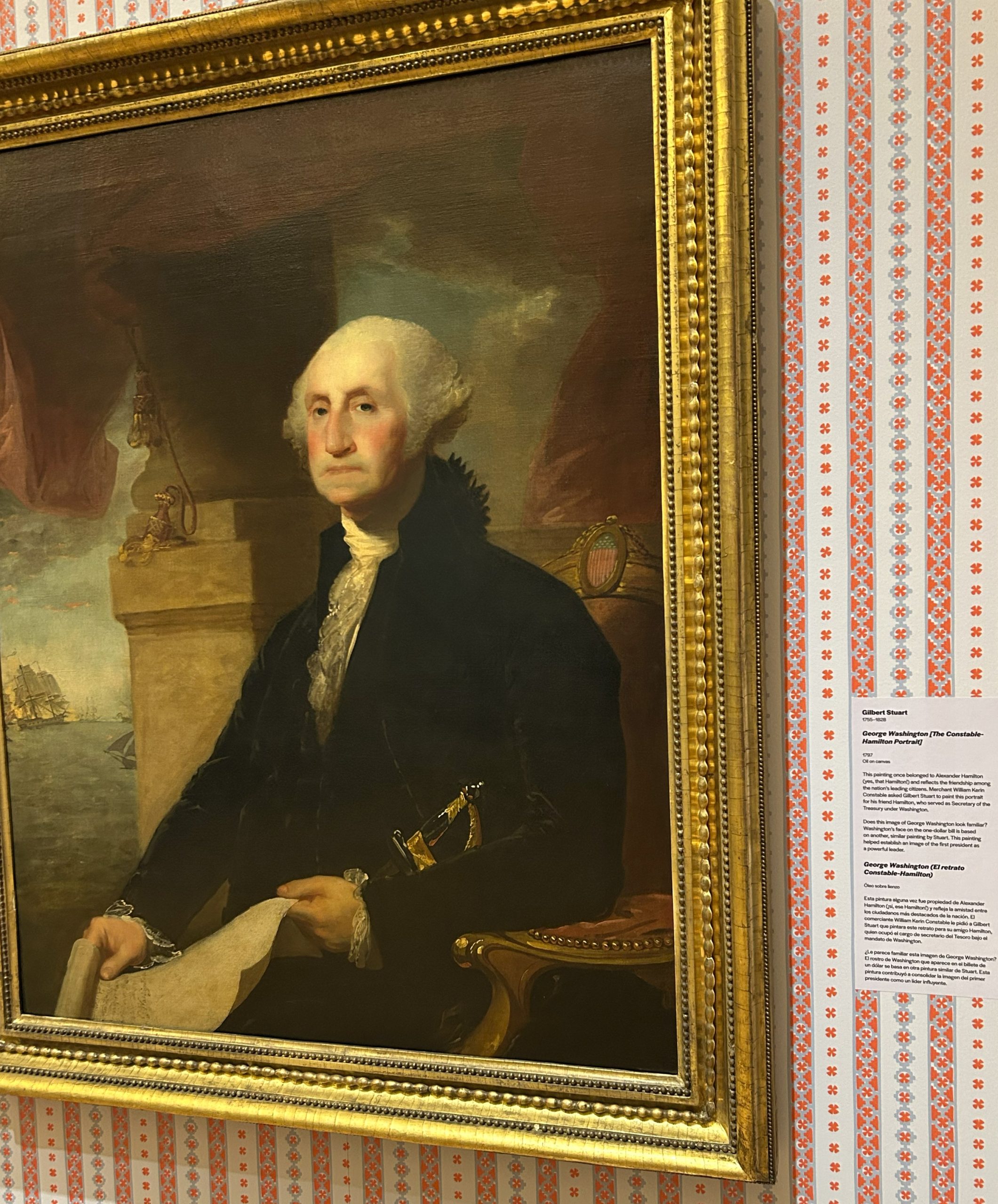
[In his farewell address, George Washington said,] “The name of American, which belongs to you in your national capacity, must always exalt the just pride of patriotism more than any appellation derived from local discriminations. With slight shades of difference, you have the same religion, manners, habits, and political principals.” In other words, if this country of different states was going to stay together, people needed to focus on what they had in common, not their differences. “There will always be,” he said, “reason to distrust the patriotism of those who in any quarter may endeavor to weaken [the Union’s] bands.

What worried Washington more than anything else was what might happen if a president’s chief priority was to divide rather than unite the American people: “It serves always to distract the public councils and enfeeble the public administration. It agitates the community with ill-founded jealousies and false alarms, kindles the animosity of one part against another, foments occasional riot and insurrection. It opens the door to foreign influence and corruption, which finds a facilitated access to the government itself through the channels of party passions. Thus the policy and will of one country are subjected to the policy and will of another.”

from Travels with George: In Search of Washington and His Legacy, by Nathaniel Philbrick

__________

Once in Paris I consented to pose for a young man who called himself an abstractionist or a sur-realiste, or possibly it was an abolitionist. … For five afternoons I sat for him. One might have surmised that he was executing a photographic miniature in which every hair is depicted, so exacting was he, demanding that I stay still as marble and studying me with a piercing scrutiny while he refused to let me see the canvas until it was completed. When he finally bade me look, I was considerably taken aback to confront a picture of a purple chick coop resplendent under a yellow crescent moon. I apparently gasped, for the young man asked me if I could fail to understand it. To my feeble reply that I didn’t realize I looked quite like that he explained, with contempt, that it was a portrait of my soul. Which led me to conjecture what a curious-looking place Heaven was going to be.

from Excuse It, Please! by Cornelia Otis Skinner

__________

The modes or presentation that work best for TV — stuff like “action,” with shoot-outs and car wrecks, or the rapid-fire “collage” of commercials, news, and music videos, or the “hysteria” of prime-time soap and sitcom with broad gestures, high voices, too much laughter — are unsubtle in their whispers that, somewhere, life is quicker, denser, more interesting, more … well, lively than contemporary life as Joe Briefcase knows it. This might seem benign until we consider that what good old average Joe Briefcase does more than almost anything else in contemporary life is watch television, an activity which anyone with an average brain can see does not make for a very dense and lively life. Since television must seek to attract viewers by offering a dreamy promise of escape from daily life, and since stats confirm that so grossly much of ordinary U.S. life is watching TV, TV’s whispered promises must somehow undercut television-watching in theory (“Joe, Joe, there’s a world where life is lively, where nobody spends six hours a day unwinding before a piece of furniture”) while reinforcing television-watching in practice (“Joe, Joe, your best and only access to this world is TV”).

from the essay E Unibus Pluram in the book A Supposedly Fun Thing I’ll Never Do Again, by David Foster Wallace.

__________

One might supposed that with cultural influence so thick in the [newspaper] local room all copy would have been free from error, every edition a masterpiece of clear, classic English and typographic excellence. But, alas, it wasn’t. That was why the style sheet decreed that no reporter, rewrite man or copyreader should ever refer to a ship as a “she.” Whatever a ship might be elsewhere she was “it” in Mr. Eastman’s paper. And the reason, yellow and crumbling, was pasted on the bulletin board where all might see … a paragraph out of a society column that in hasty make-up had become mixed with a piece of shipping news:

“Mrs. Henry Garland of the Chicago Beach Hotel writes that she has had a pleasant summer visiting friends in the East. She went first to Bar Harbor, thence to Kennebunkport, Maine. — “After encountering heavy weather off the Virginia capes she put into Hampton Roads to have her bottom scraped.”

from Such Interesting People, by Robert J. Casey

__________

[Instructions from a newspaper editor to his staff about a minor story] “Not much on this,” he ordered. “Give me half a paragraph.”

from Such Interesting People, by Robert J. Casey

__________

Once the pundits decided that no story in the Examiner should begin with A, An, or The. And shortly after the promulgation of the rule Mr. Avery was called upon to write a piece about the finding of the body of an unidentified woman in the river. That did not bother Mr. Avery.

“Hello everybody,” he wrote. “Take a look at this! The body of an unidentified woman … etc.” That got into type, and the rule was changed the next day.

from Such Interesting People, by Robert J. Casey

__________

We always had an information clerk, principally to keep cranks from wandering into the local room. But we never had one that functioned. One of them stopped me every morning for two weeks asking me my business. I would always ask to see myself. He’d go to get me and I’d follow him into the room. It puzzled me not only that he should have failed to recognize me after repeated experiences but that he should have failed to recognize the pattern of the gag.

from Such Interesting People, by Robert J. Casey

__________

My mother would say, “You know, if you make one wall of a room a mirror people think you have an entire other room.” …

My parakeet would fall for this. I would let him out of his cage. He would fly around and he would go “BANG” right into the mirror. …

Even if he thinks the mirror is another room, why doesn’t he at least try and avoid hitting the OTHER parakeet?

from Is This Anything?, by Jerry Seinfeld

__________

We go to the beach, go in the water, put your wallet in the sneaker.

Who’s going to know? What criminal mind could penetrate this Fortress of Security?

“I put it down by the toe. They  never look there. They check the heels, they move on.”
from Is This Anything?, by Jerry Seinfeld

__________

Some products are really very candid about their nutritional quality. Certainly those Oscar Mayer cold cuts labeled simply “Luncheon Meat” fall into this category.

Here you have a product where it seems even the manufacturer is not quite sure what it is.

All they’re telling you is “It’s some kind of meat and you should eat it … around noon.”

from Is This Anything?, by Jerry Seinfeld

__________

It’s hard to imagine being the head of a household when my life at this point consists mostly of wandering around my apartment, kicking underwear up in the air and trying to catch it.

from Is This Anything?, by Jerry Seinfeld

__________

I saw a study that said, the number one fear of the average person is public speaking. Number two is death.

Death is number two! How in the world is that?

That means to most people, if you have to go to a funeral, you would rather be in the casket than doing the eulogy.

from Is This Anything?, by Jerry Seinfeld

__________

There is a certain critical line of sports enthusiasm where it can get a little uncomfortable … Where people start to act like they are in the game. They say things like, “We won! We won!”

“No, they won. You watched. Just calm down. I saw the whole game. You did not play. It’s one of the main reasons they won.”

from Is This Anything?, by Jerry Seinfeld

__________

Players go to different teams. Teams move from city to city. The uniform is the only constant. … We just want our clothes to beat the clothes from the other city.

We’re rooting for laundry.

That’s really all sports is. If a player leaves your team, then comes back and plays against your team? The hostility. “Booo … Different shirt.” Exact same human being. “I hate this guy. He’s in a different shirt.”

from Is This Anything?, by Jerry Seinfeld

__________

Went to the track to see some horse racing. …

Do the horses even know that its a race? … I mean, I’m sure the horses have some idea of what’s going on. They probably know that, “This guy on my back is in a huge hurry.” …

But the horse must get to the end and go, (out of breath) “We were just here! What was the point of that? This is where we were. That was the longest possible route you could take to get where you wanted to be. Why didn’t we just stay here?
We would have been first …”

from Is This Anything?, by Jerry Seinfeld

__________

The tattoo trend seems like the last gasp of a dying culture, doesn’t it?

So bored now, we’re just doodling on ourselves.
from Is This Anything?, by Jerry Seinfeld

__________

A lot of wives complain that their husbands do not listen …

I’ve never heard my wife say this … she may have …

I don’t know.

from Is This Anything?, by Jerry Seinfeld

Posted in Books and Literature | Comments Off on Highlights from Recent Reading