Arkansas Post Museum

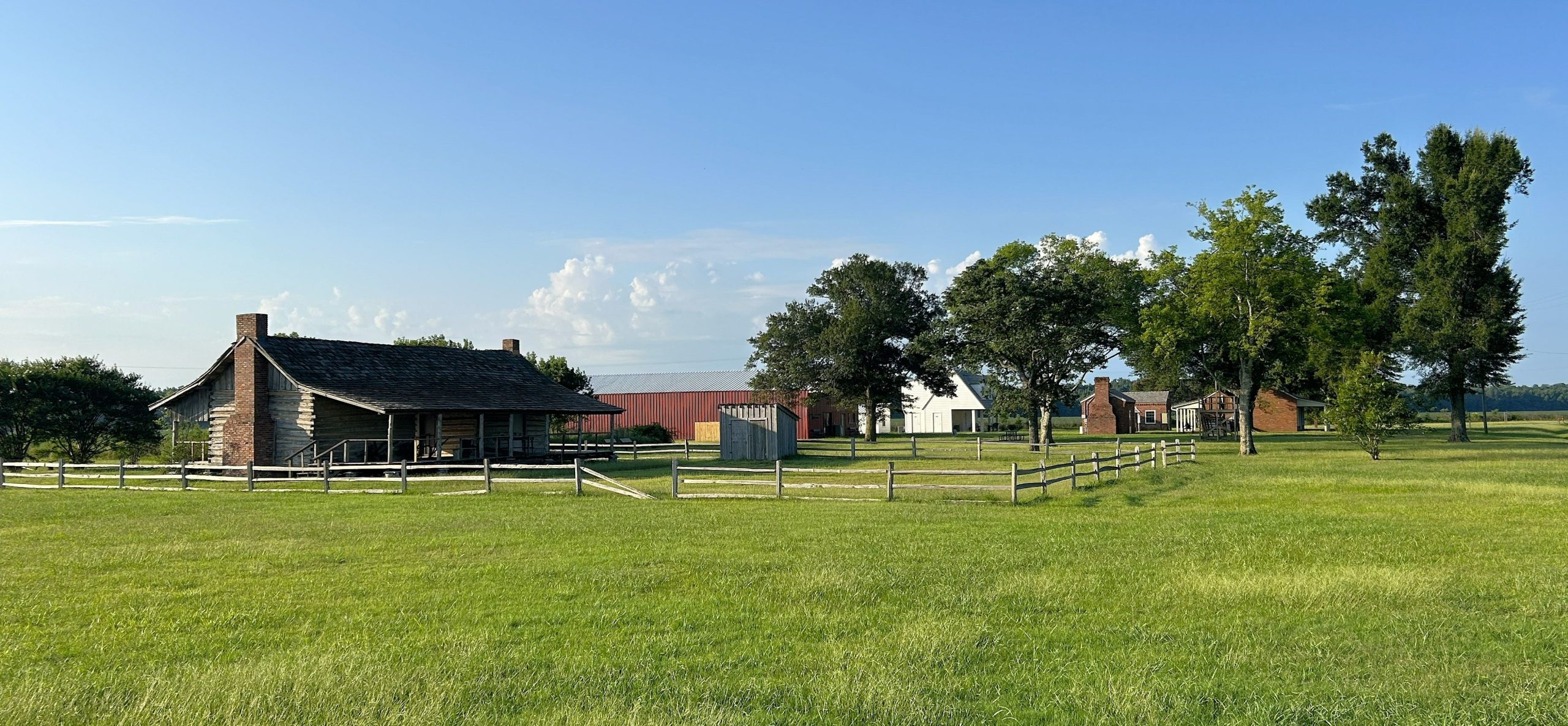
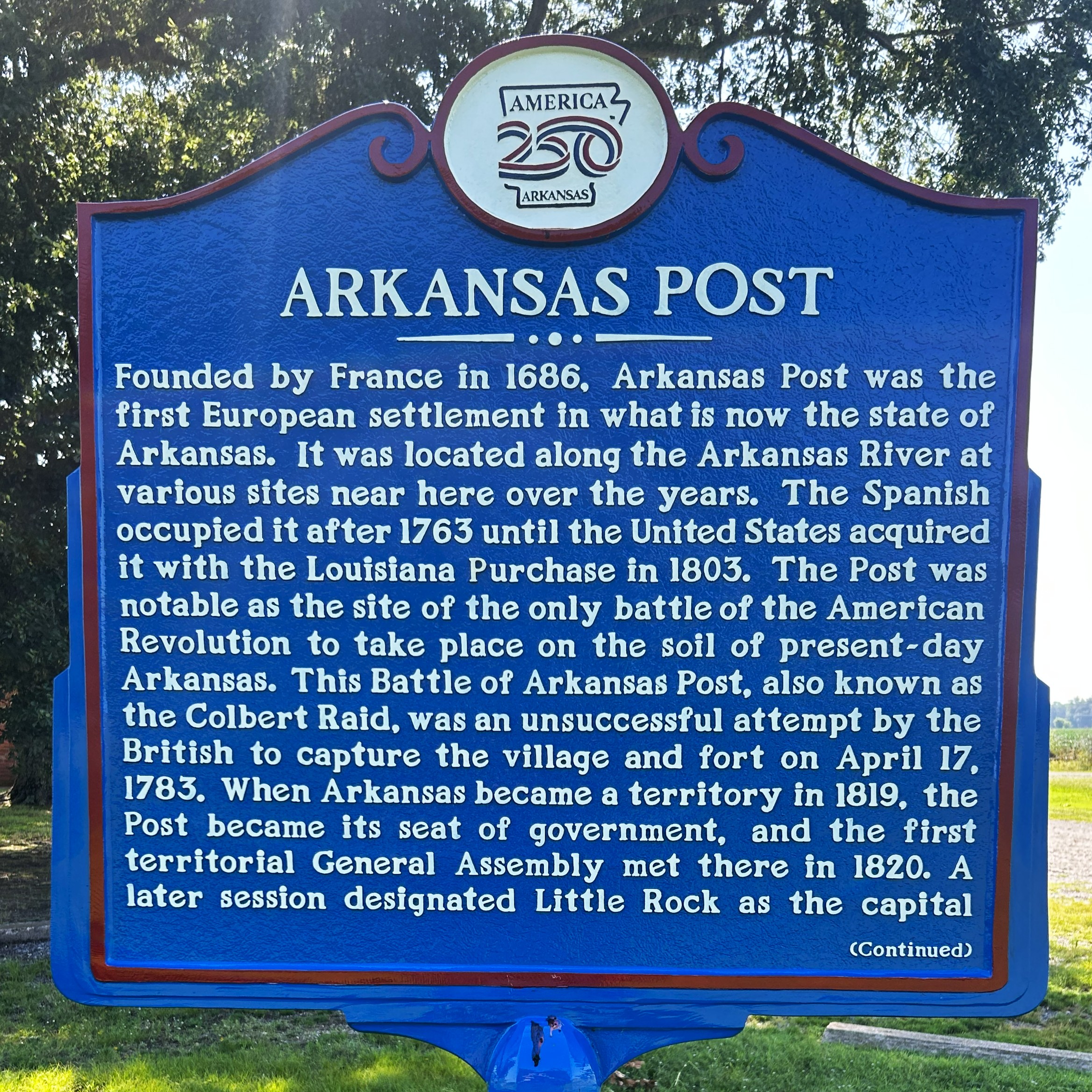
This museum and its artifacts were once the Arkansas County Museum until the state took it over. Like any county museum, it has it dresses and uniforms donated by locals, a mock-up of a doctor’s office and general store, antique housewares, and, of course, Indian pottery. But as a state park, the things are arranged nicely.

The park sits on a wedge of land by the turnoff to Arkansas Post National Memorial.

I stopped in once before a year or so ago, before I was collecting passport stamps. On that visit, the sole employee was painting a door. Today, the sole employee was replacing vent filters in the visitor center. On both occasions, I was the sole visitor.

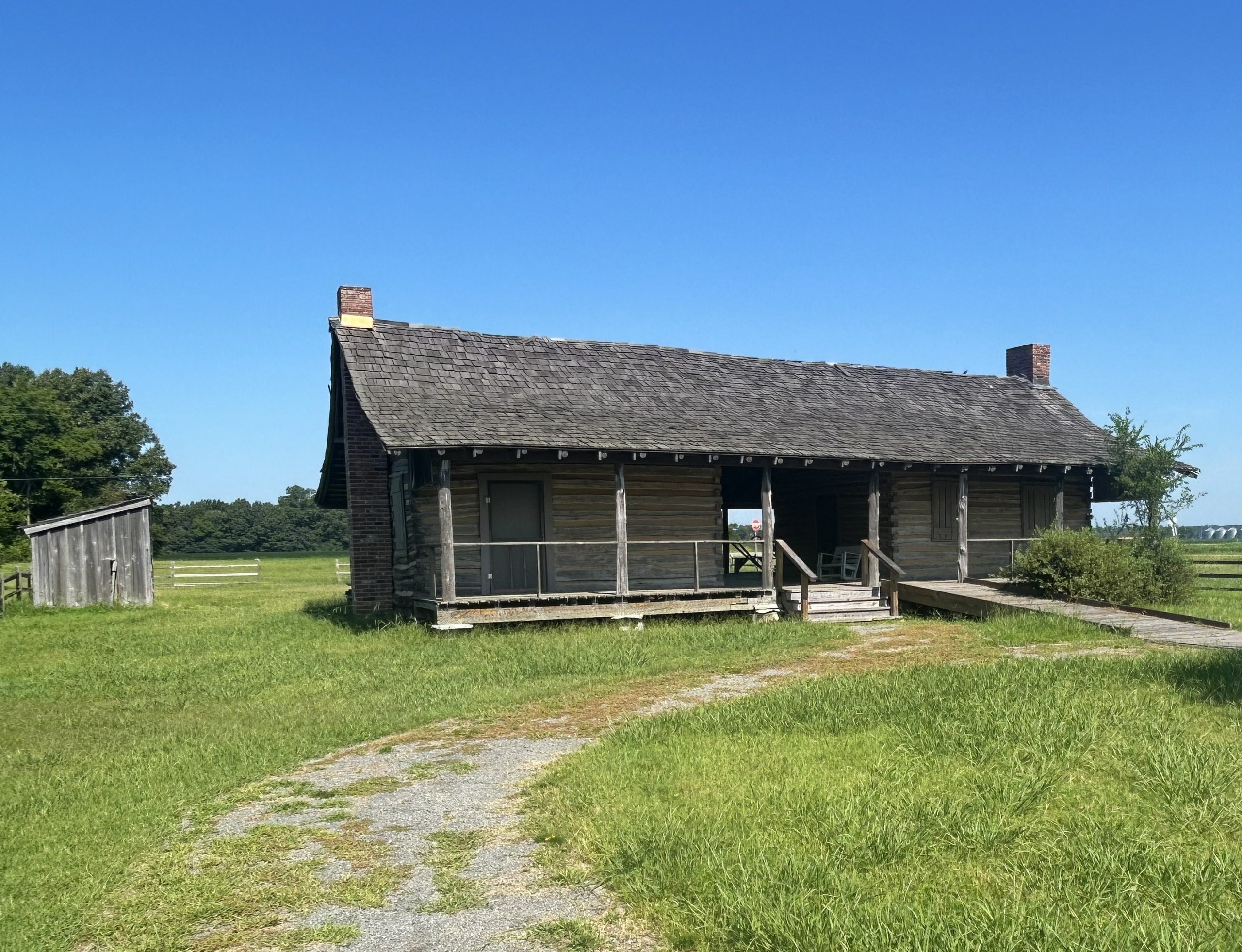
The Refeld-Hinman Log House is the only original structure. It was built in 1877 about half a mile from where it now sits — presumably without the wheelchair ramp. It was constructed without nails.

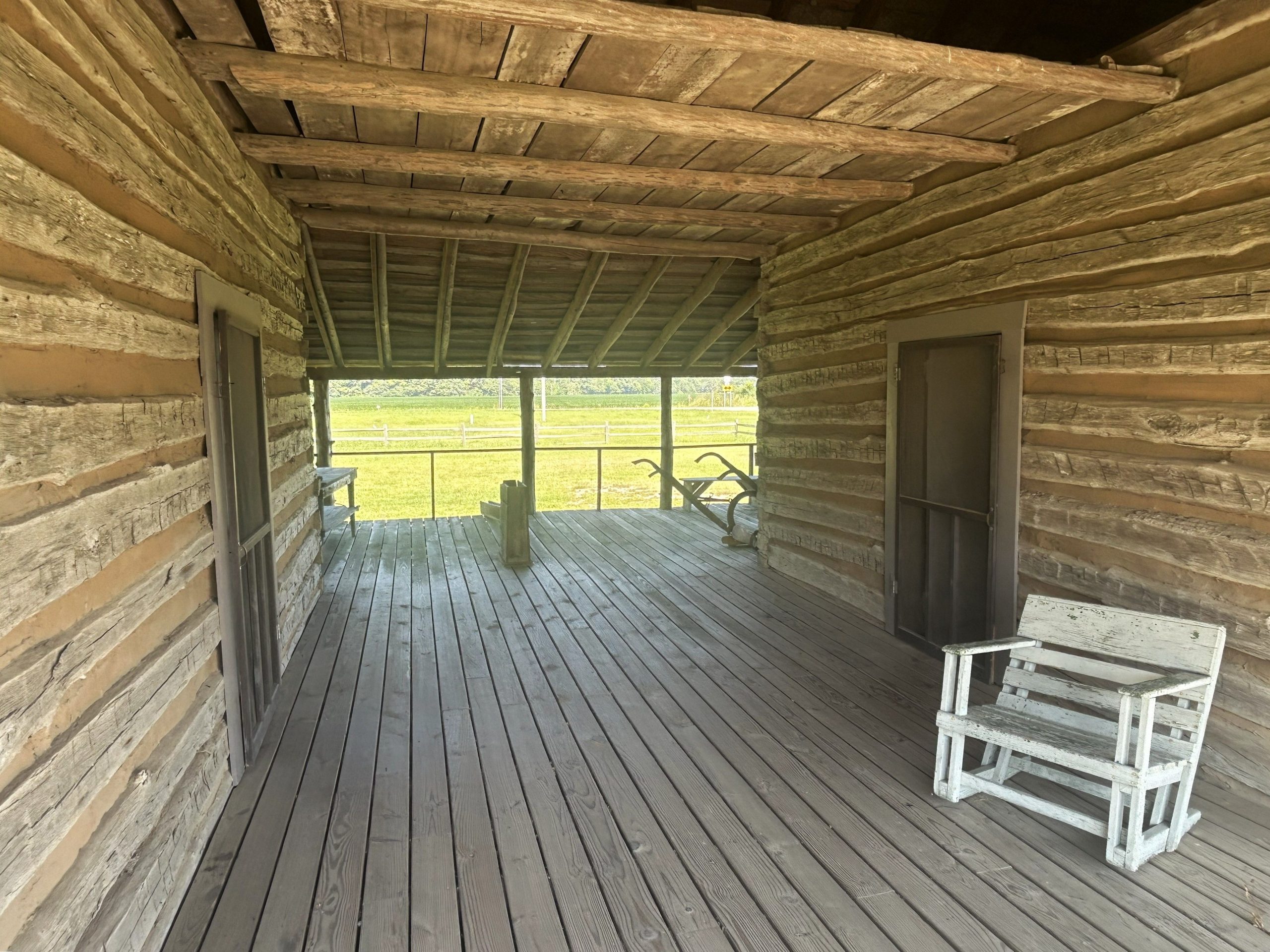
It’s a dog-trot cabin, which means the two halves of the house are separated by an open section in the middle where much of the family activity took place. I think it’s a great idea.

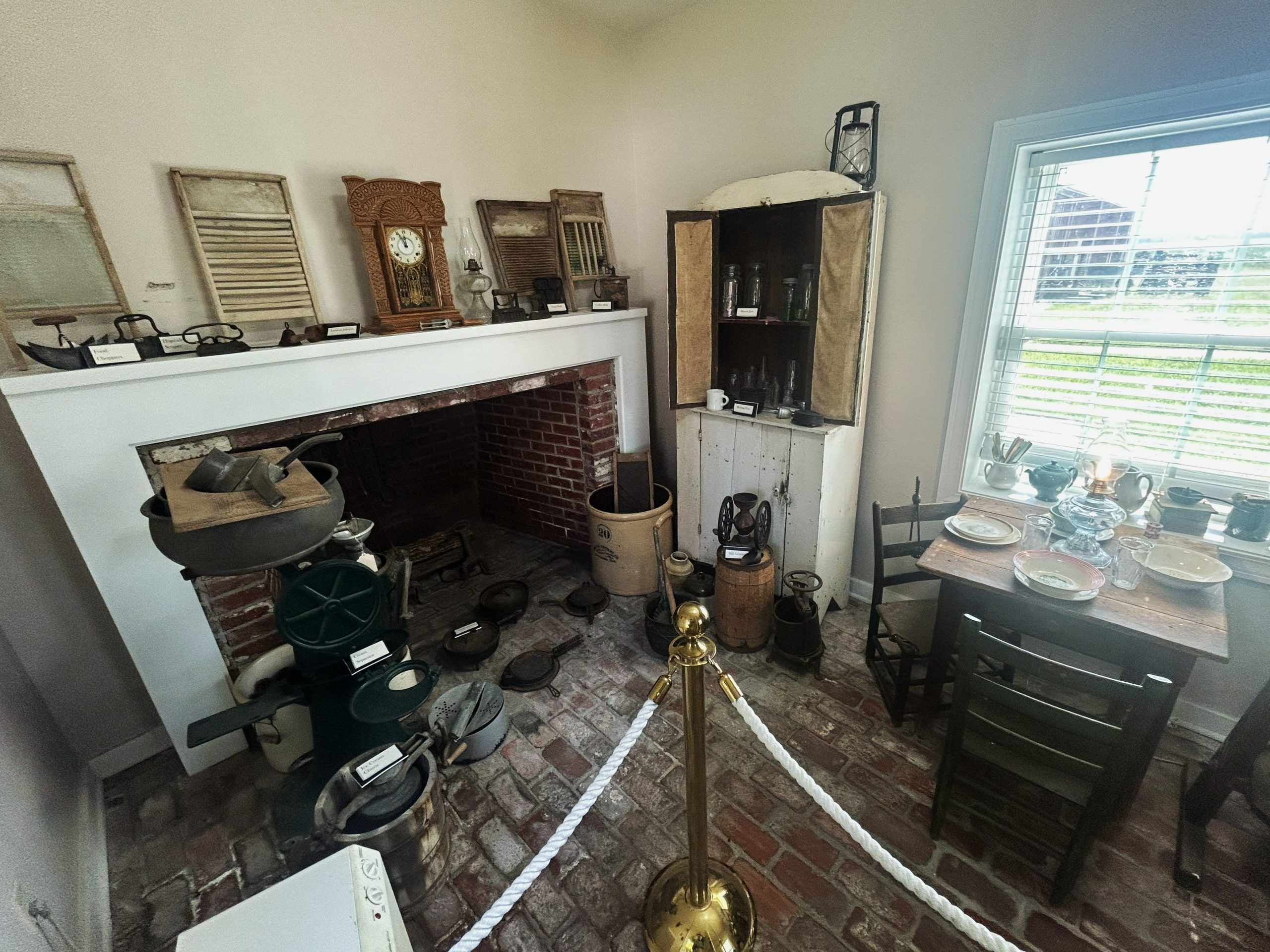
The visitor center was built to look like a southern-style house. There’s a display of women’s fashions inside, and a room made up like a parlor. Next to it is the summer kitchen building.

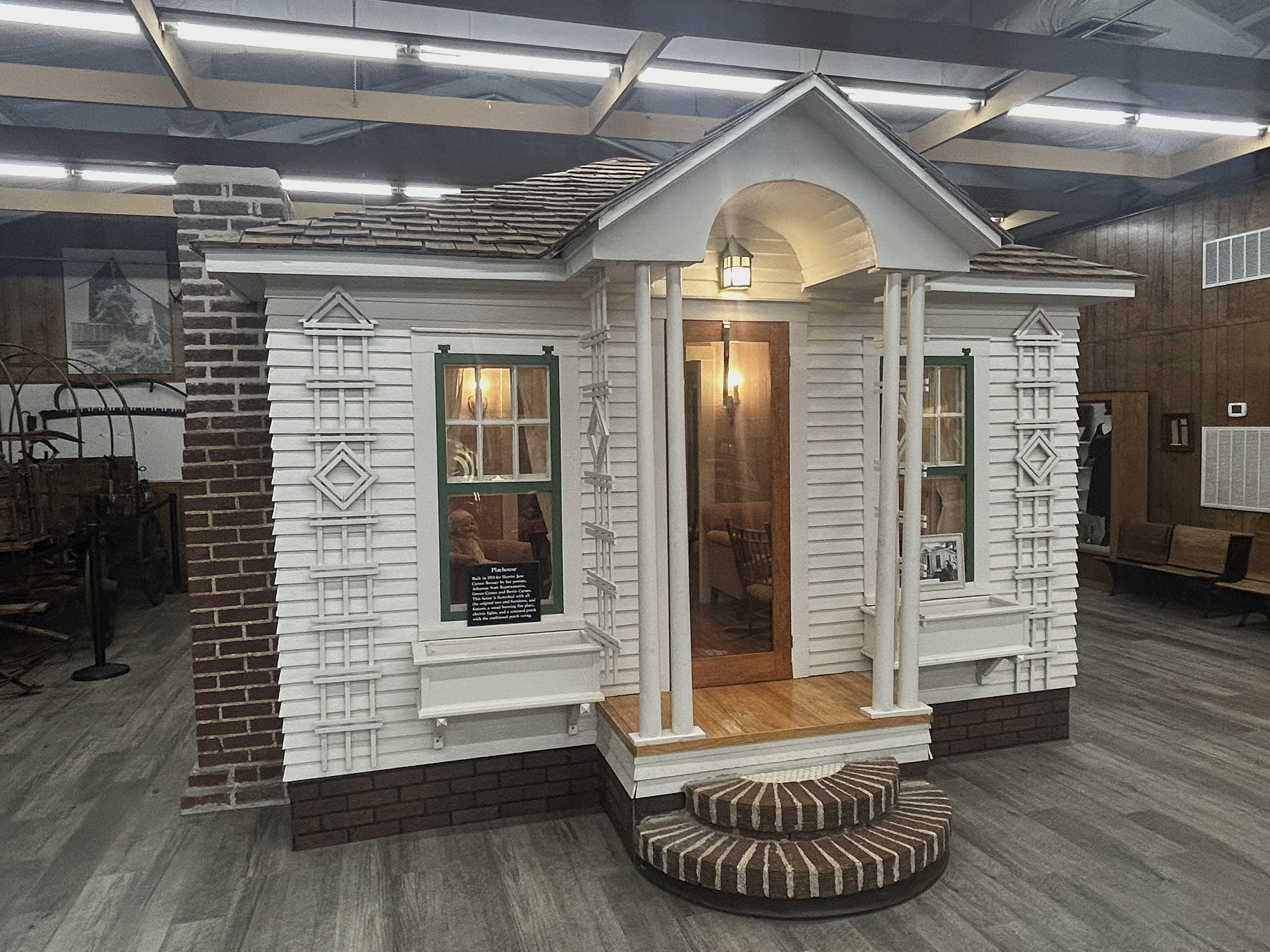
The filter-changing lady told me there were two original buildings. The cabin was one, and the other is a playhouse on display inside the main exhibit building. I guess it’s a building …

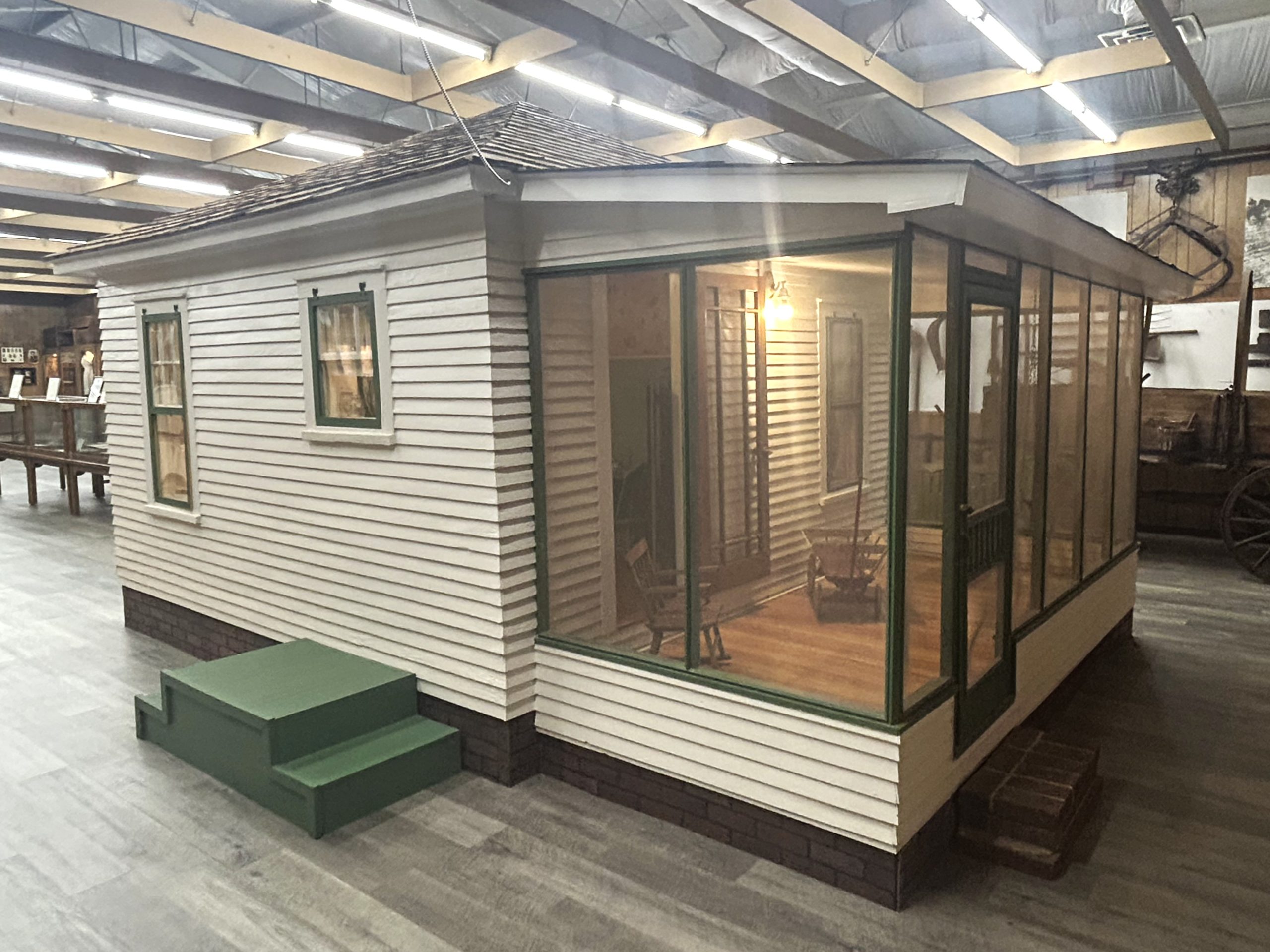
It was built in the 1930 by a state congressman for his daughter. It has a wood-burning fireplace, electricity, and a screened back porch.

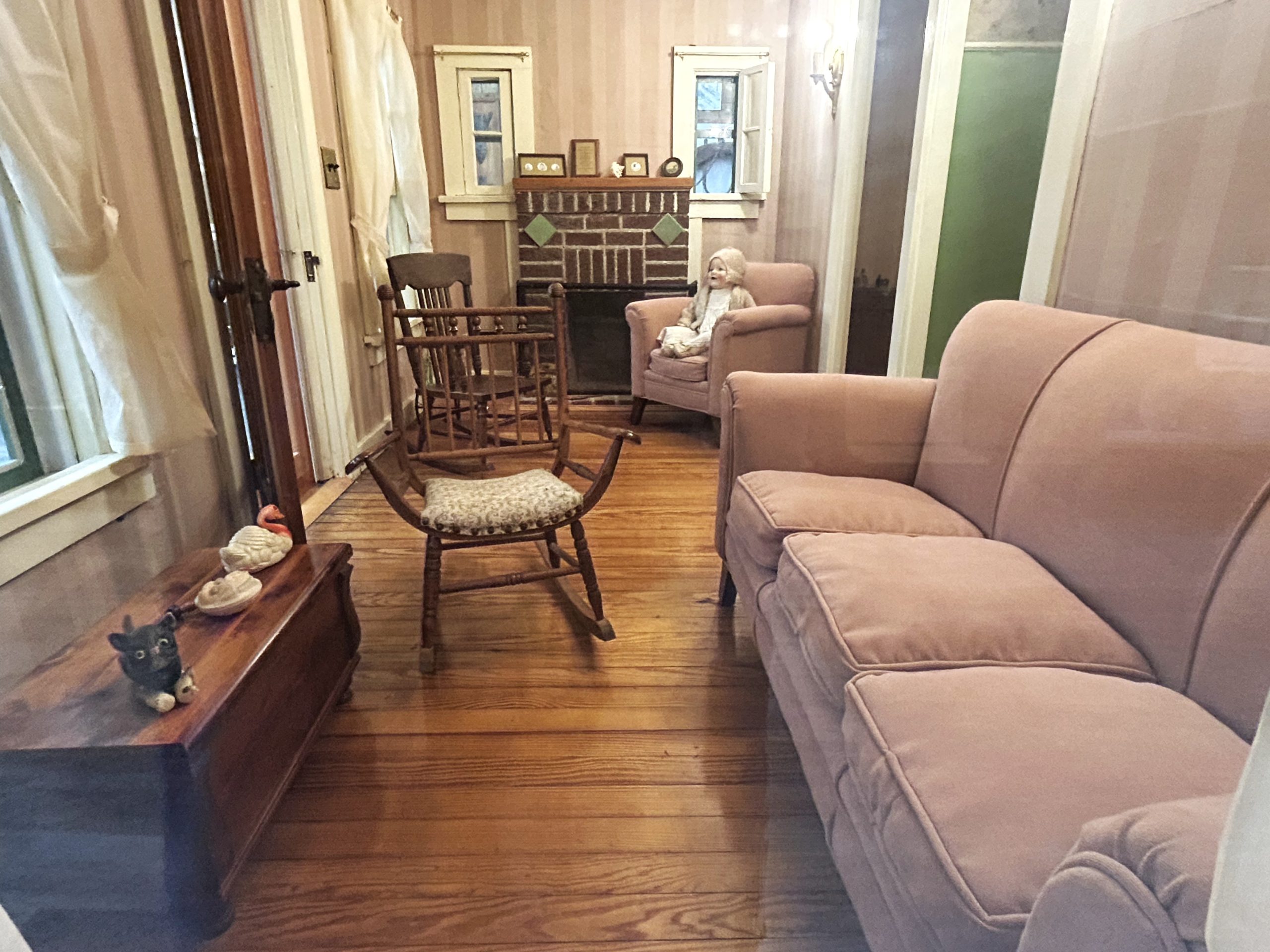
The inside is furnished with kid-sized furniture in the living room, kitchen, and bedroom.

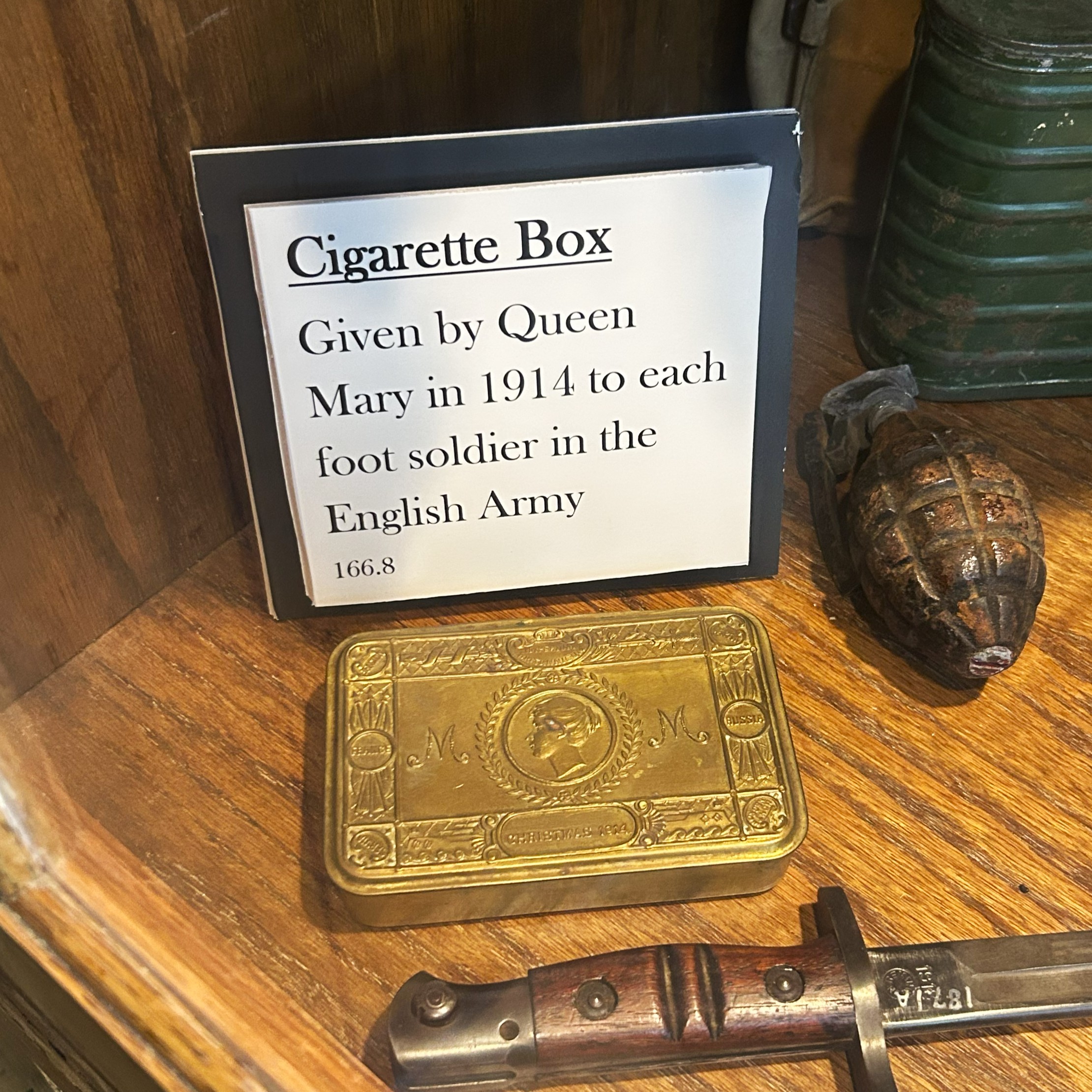
Other exhibits in the building include this cigarette box from WWI. The story of how it found its way to rural Arkansas may be the most interesting thing about it.

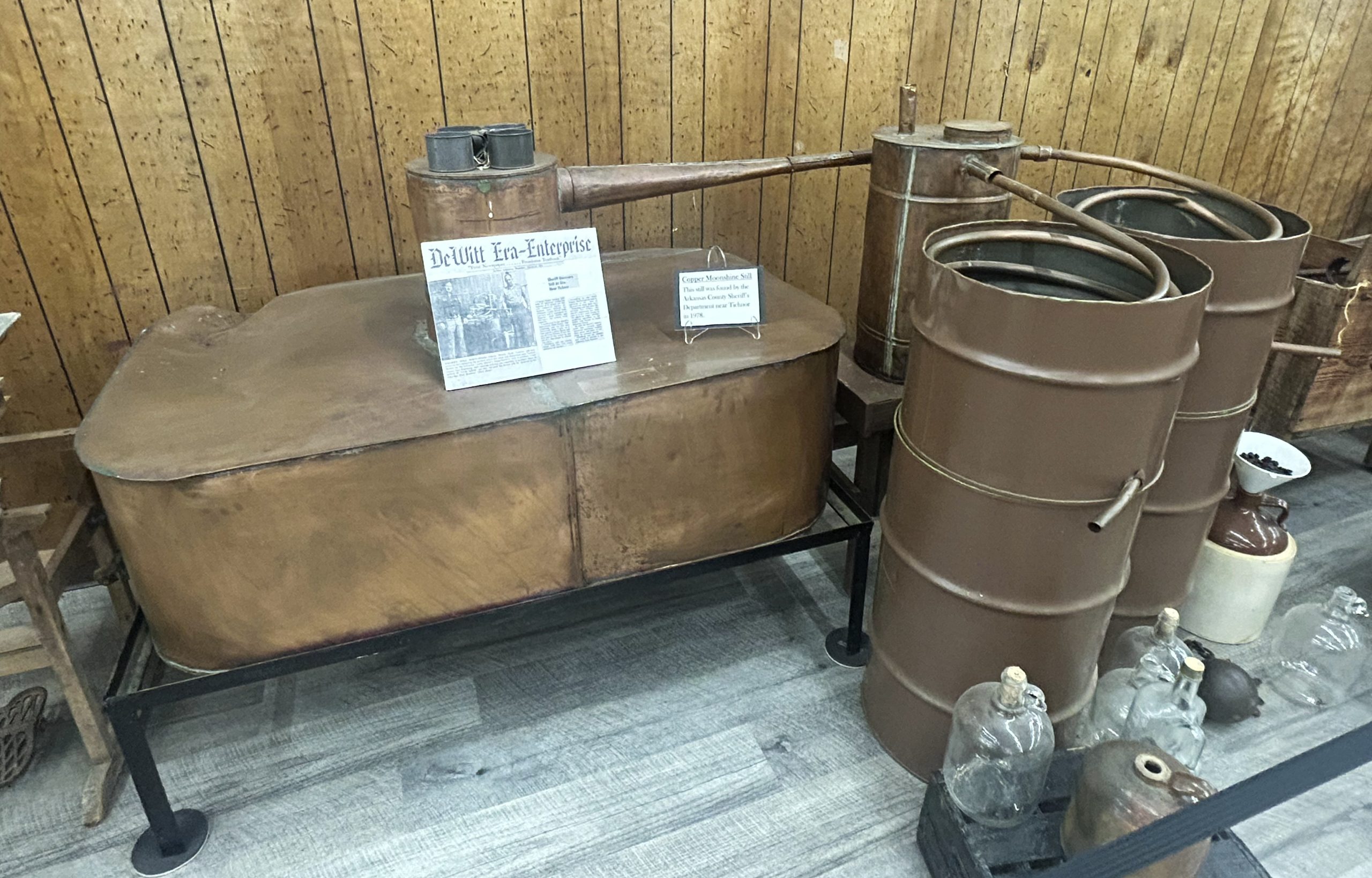
This moonshine still was discovered and confiscated in 1978 near Tichnor, Arkansas. It could produce 50 gallons a day.

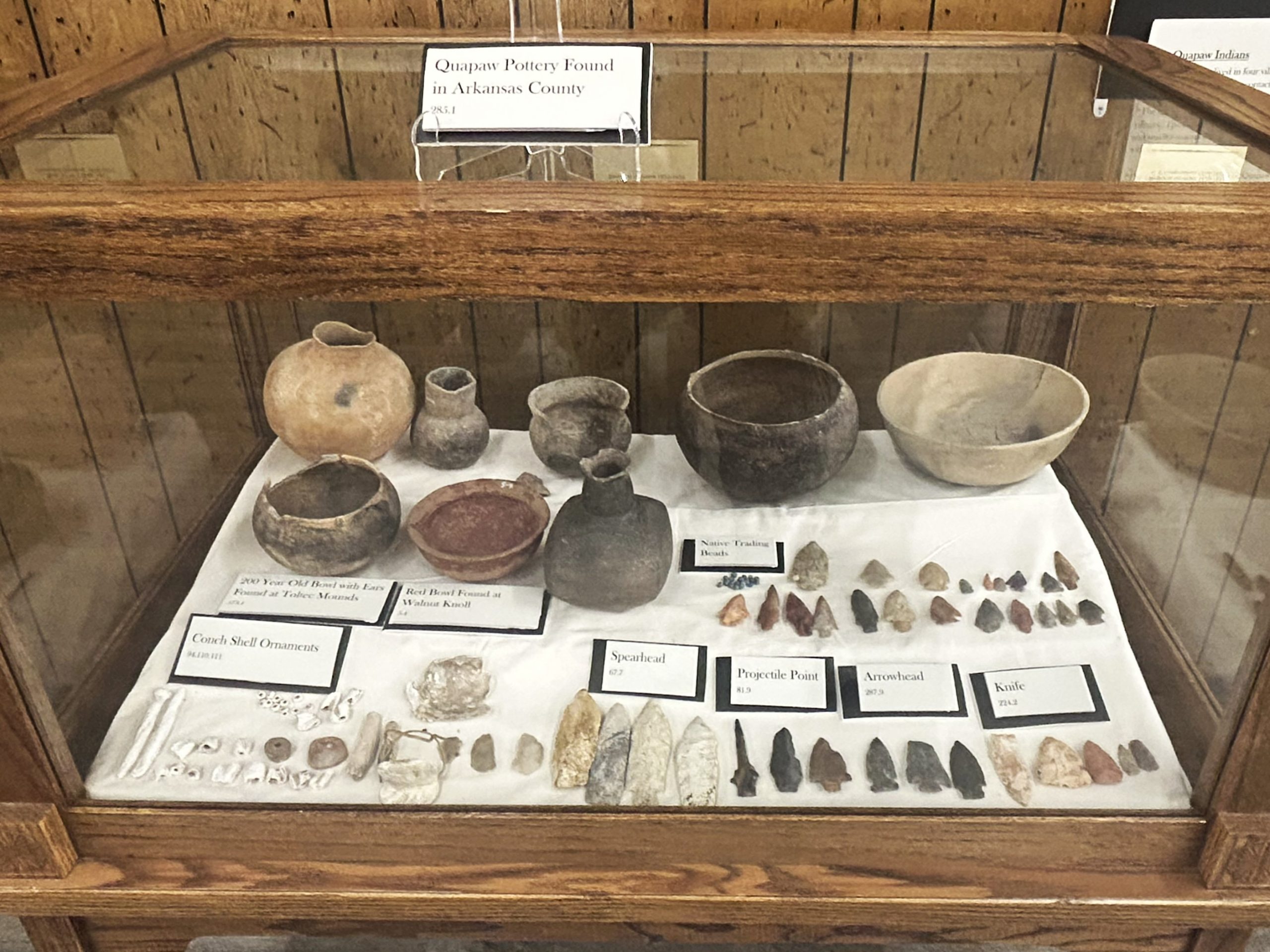
And of course Indian pottery. You can’t have a  museum in Arkansas without Indian pottery.

I looked at everything there was to see, and even read most of the signs, and I don’t think I was there half an hour.

Posted in Arkansas | Leave a comment

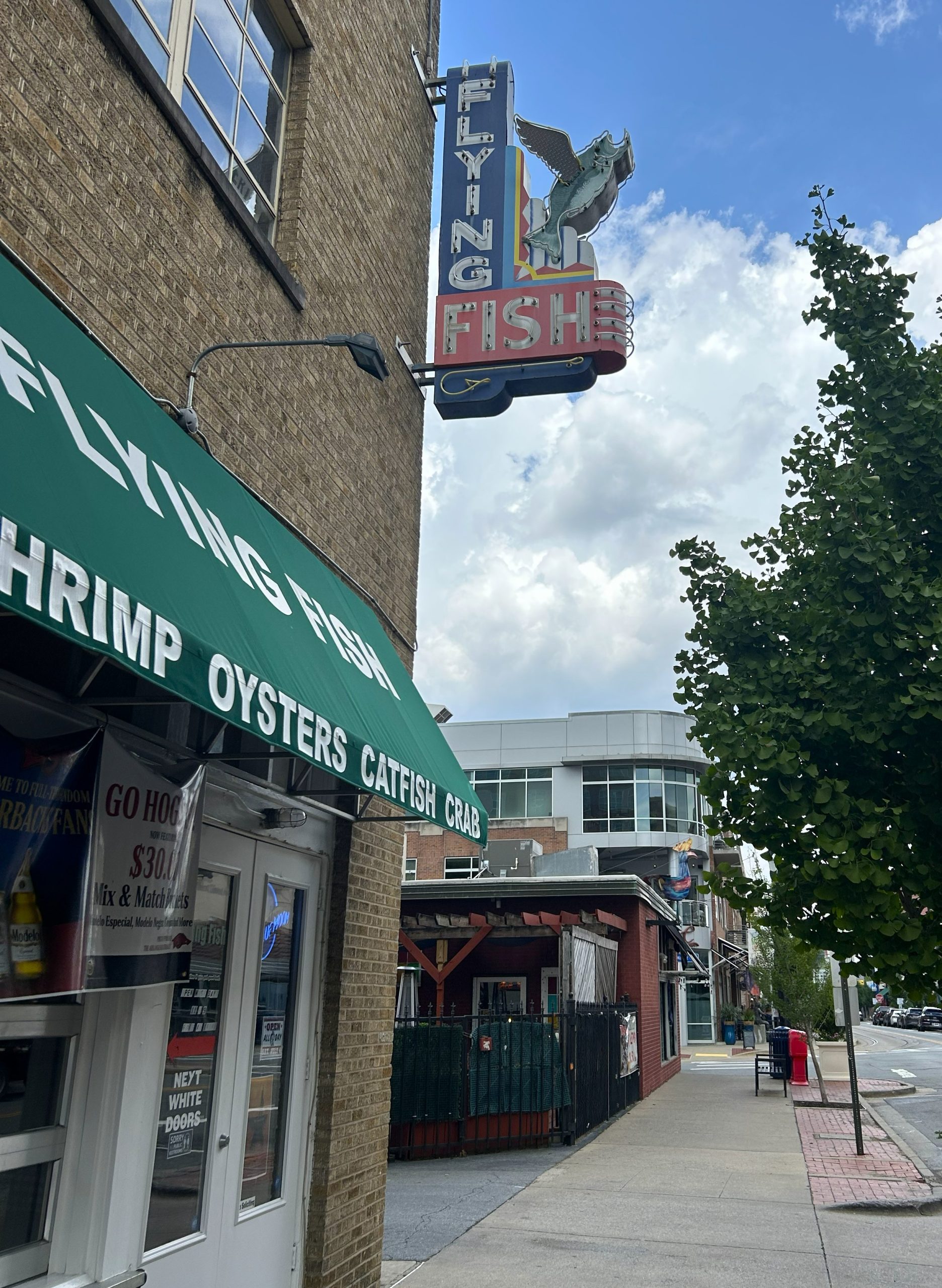
Flying Fish

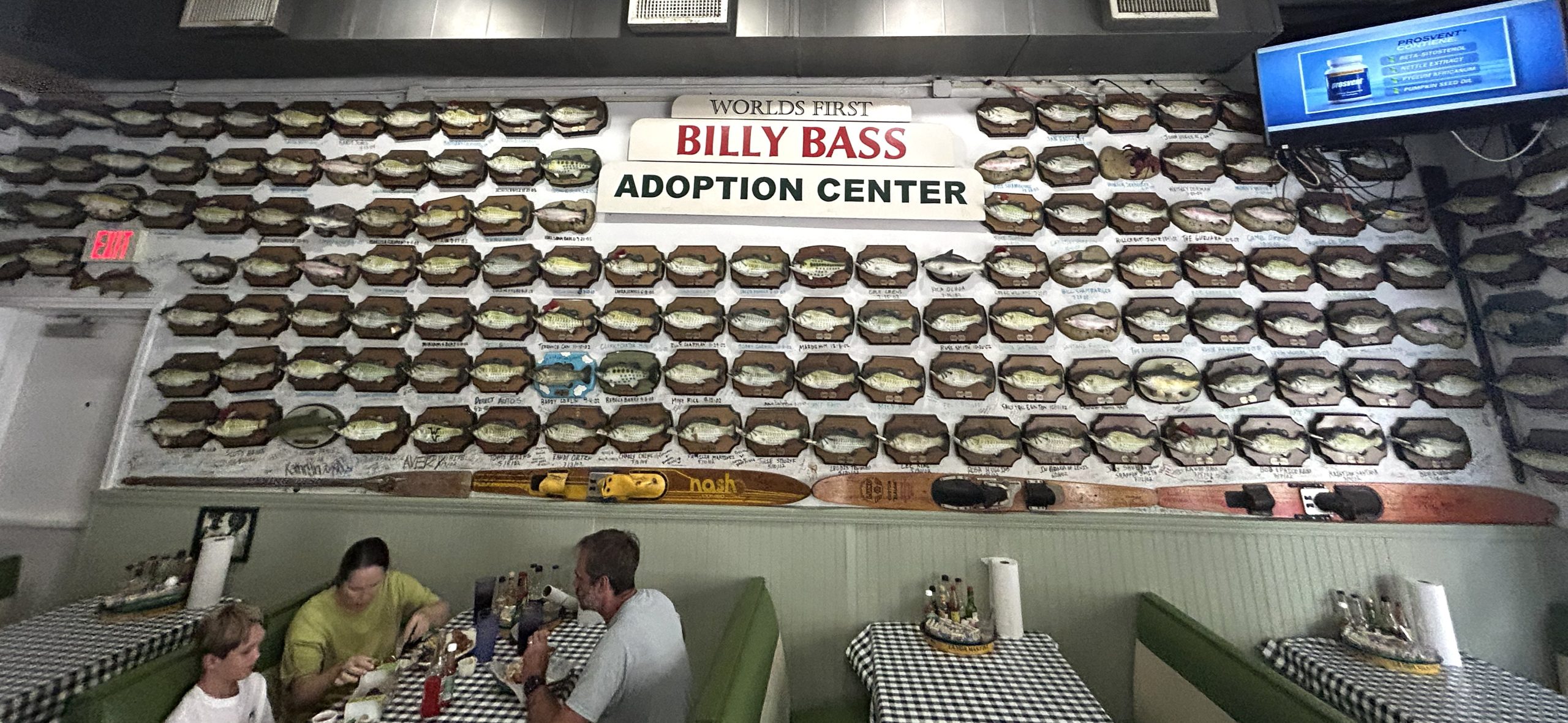
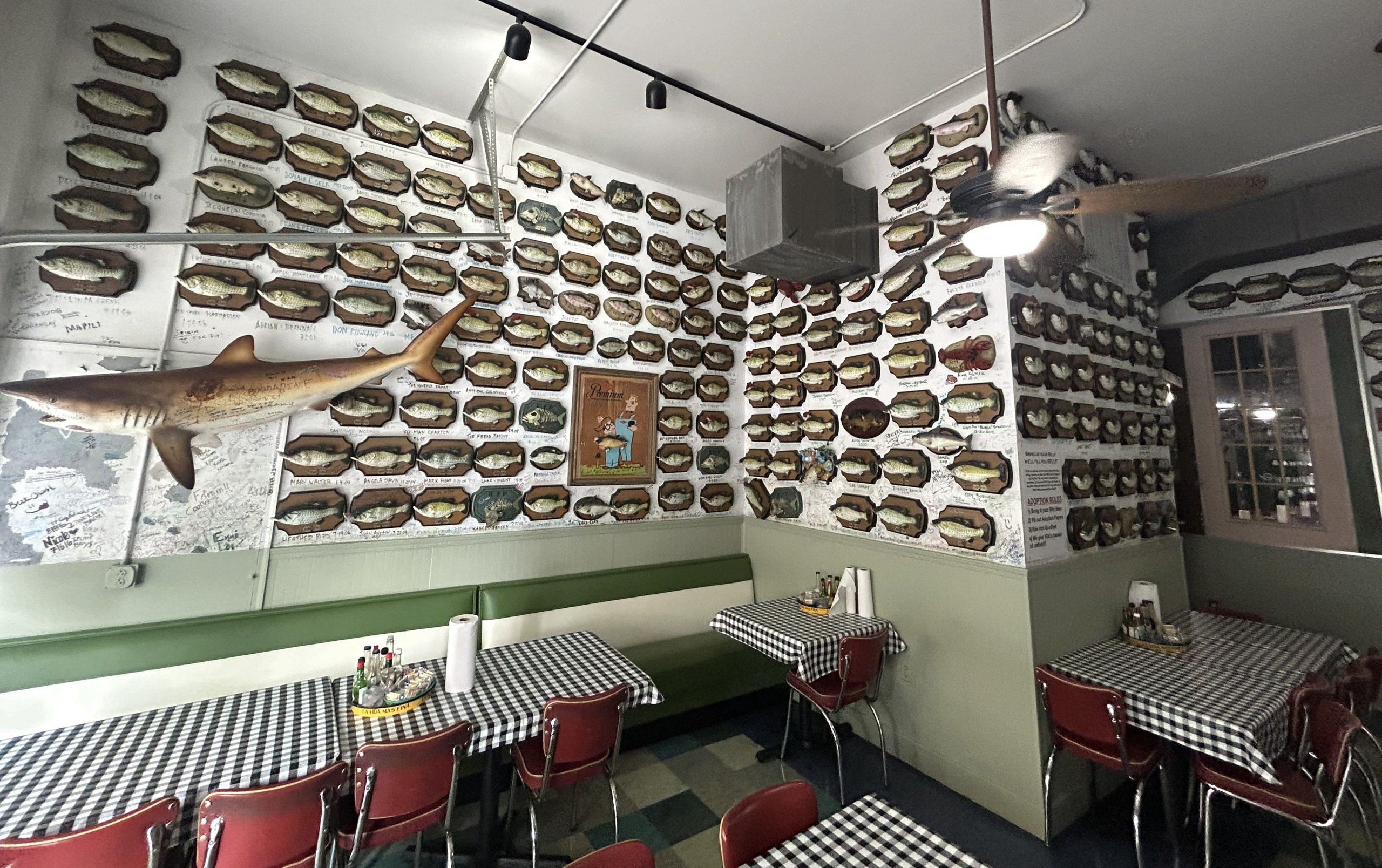
I discovered this place on Roadside America, which included it because it’s the official adoption center for Big Mouth Billy Bass. These were novelty gifts in the early 2000’s, which consisted of an animatronic bass on a wall plaque that had a motion sensor. Set it off, and it would sing “Take Me to the River,” “Don’t Worry, Be Happy,” and “Sea Cruise.” It was amusing for about the first three-and-a-half minutes and then just got annoying. I don’t think anybody bought one for themselves — they were all gag gifts, I’m sure. There were all sorts of variations, including one with a Santa hat. (They’re still around — you can buy one online if you’re interested.)

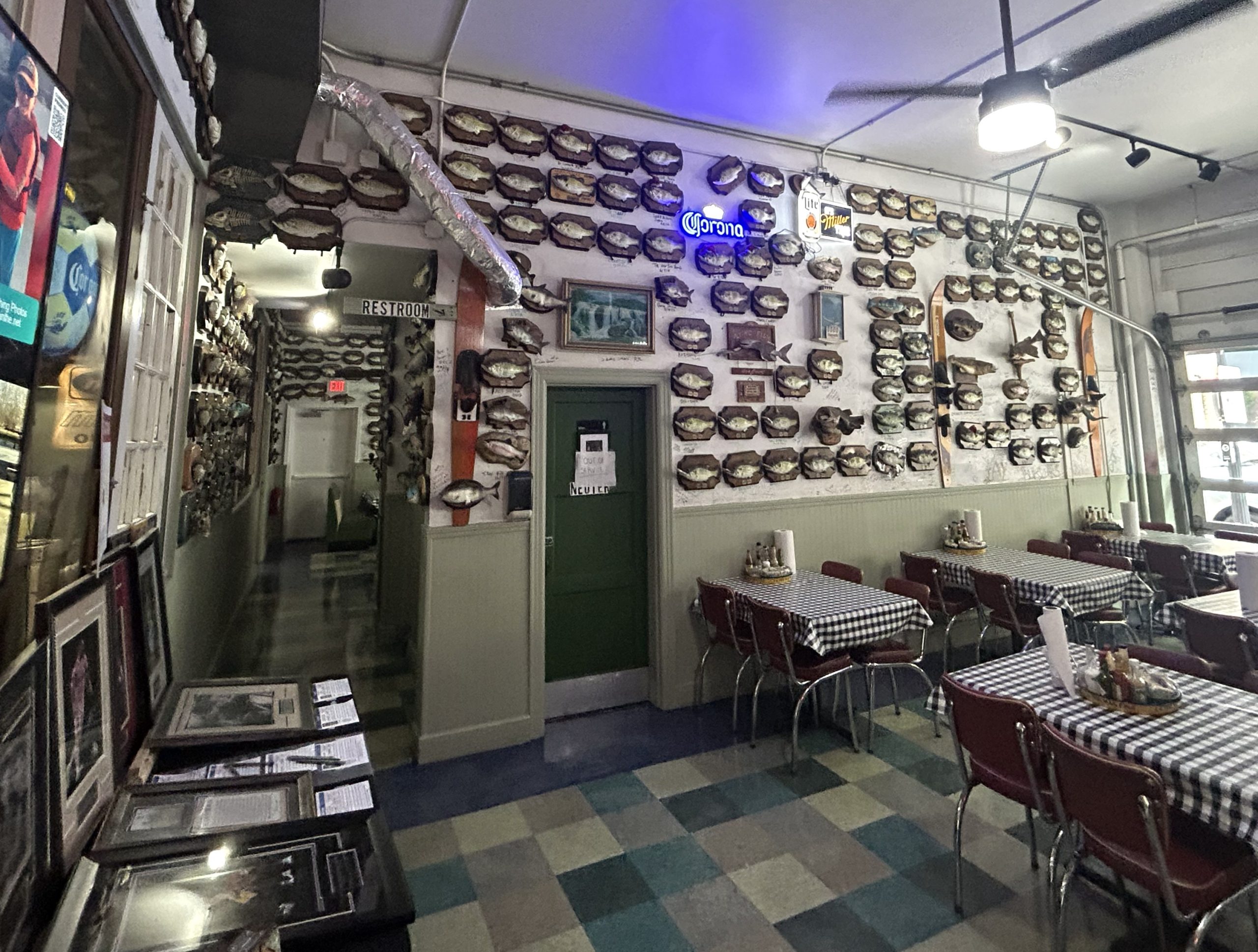
What to do when you got sick of it after 10 minutes? One option is to donate it to Flying Fish restaurant in Little Rock. They have a lot of them.

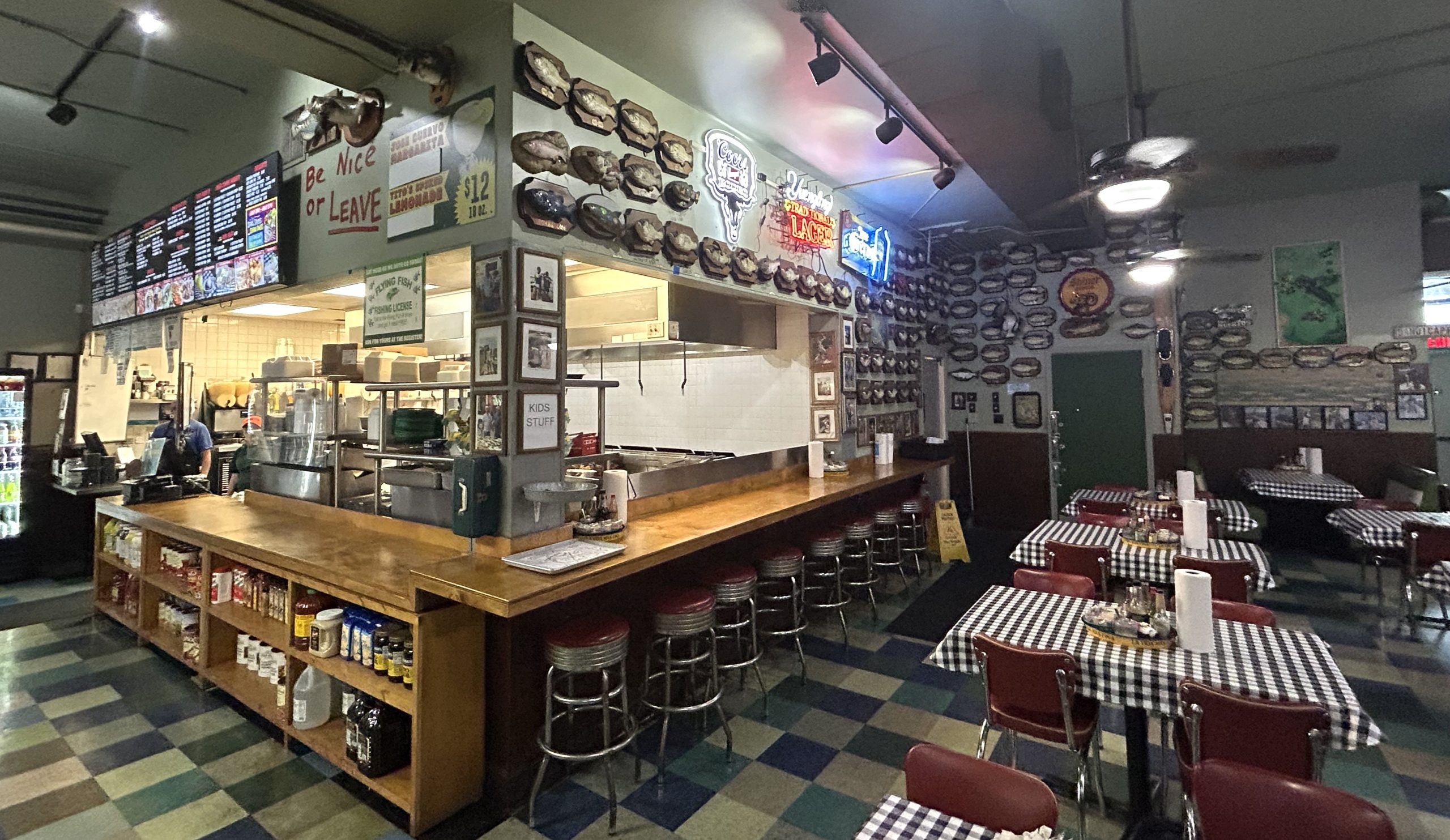
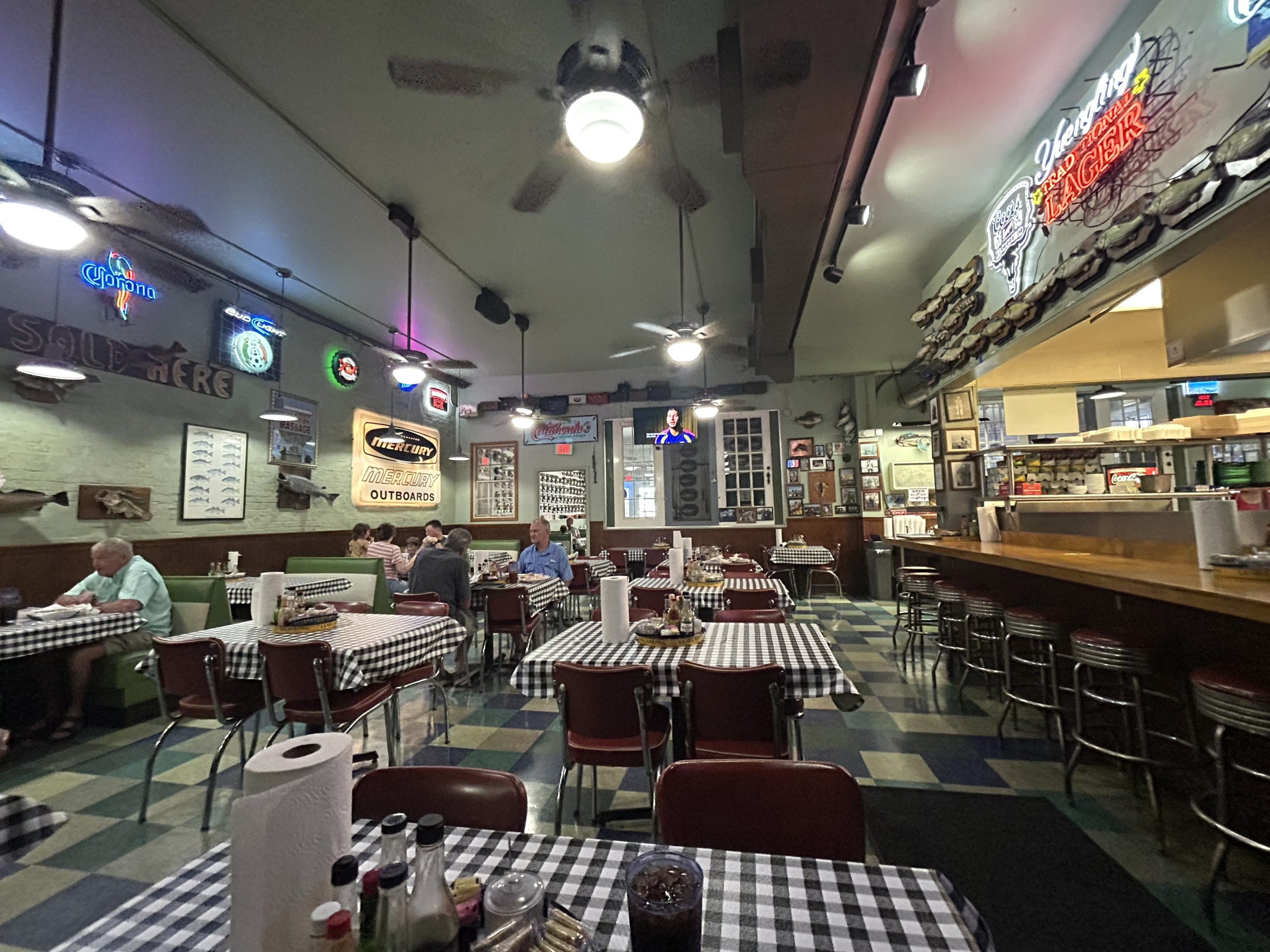
The restaurant is on the main drag in Little Rock, not far from Junction Bridge, so I headed there for lunch.

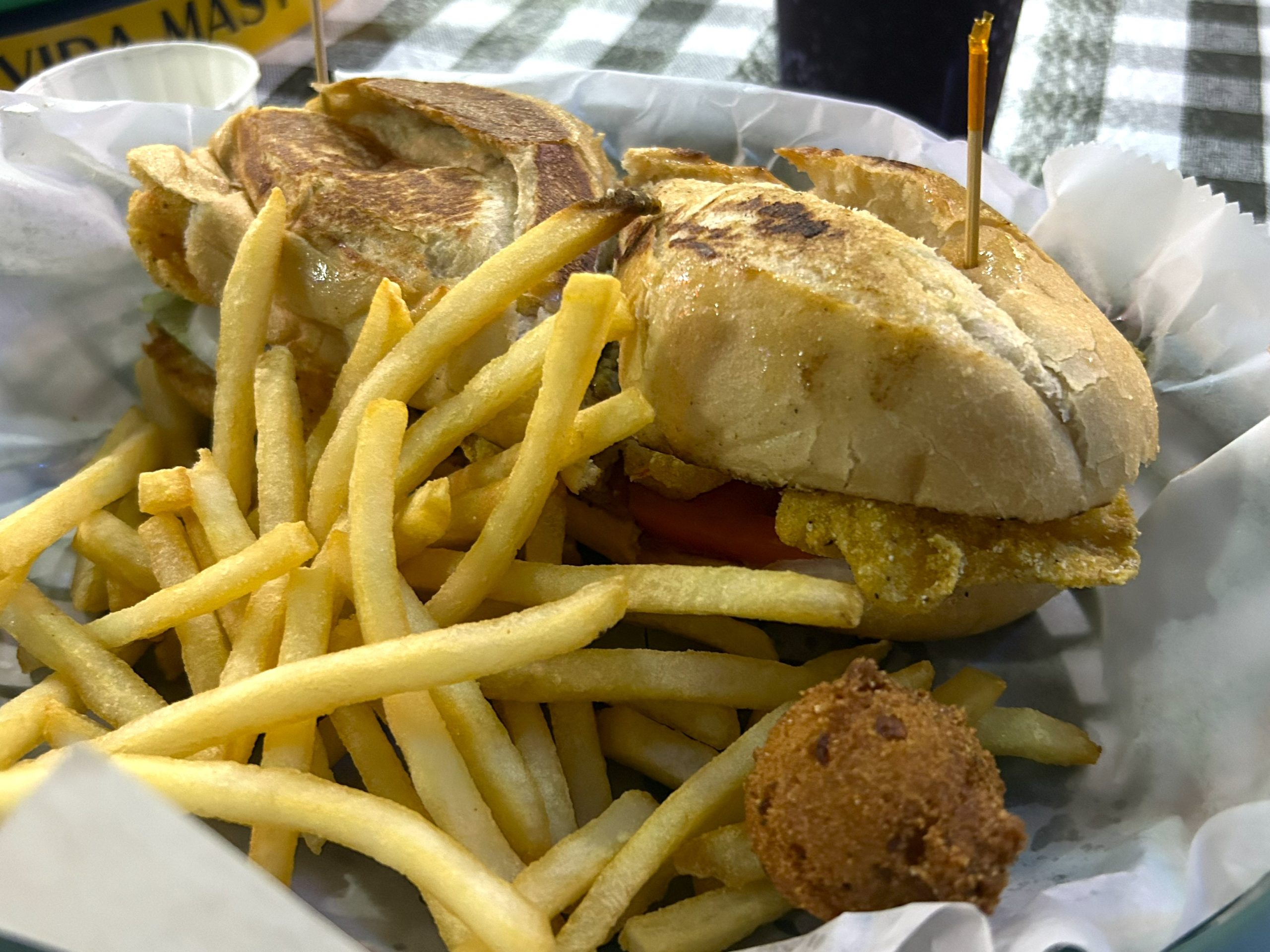
I ordered the fried shrimp poor boy loaf because I couldn’t remember ever having a poor boy and because it was relatively inexpensive.

It was good, much better than I’d expected. As you can see, the shrimp was flattened. By the time I’d finished, I’d had plenty — the last few bites were something of a chore.

I sat back in a corner. While I was eating, a guy came by to show his friend the Billy Bass his daughter had donated. Her name was written on the wall below a Santa bass.

That concluded my adventure in Little Rock.

Posted in Arkansas | Leave a comment

Arkansas Inland Maritime Museum

This floating museum on the Arkansas River in North Little Rock consists of a small exhibit room on a barge and two vessels — USS Razorback submarine and USS Hoga, a tugboat.
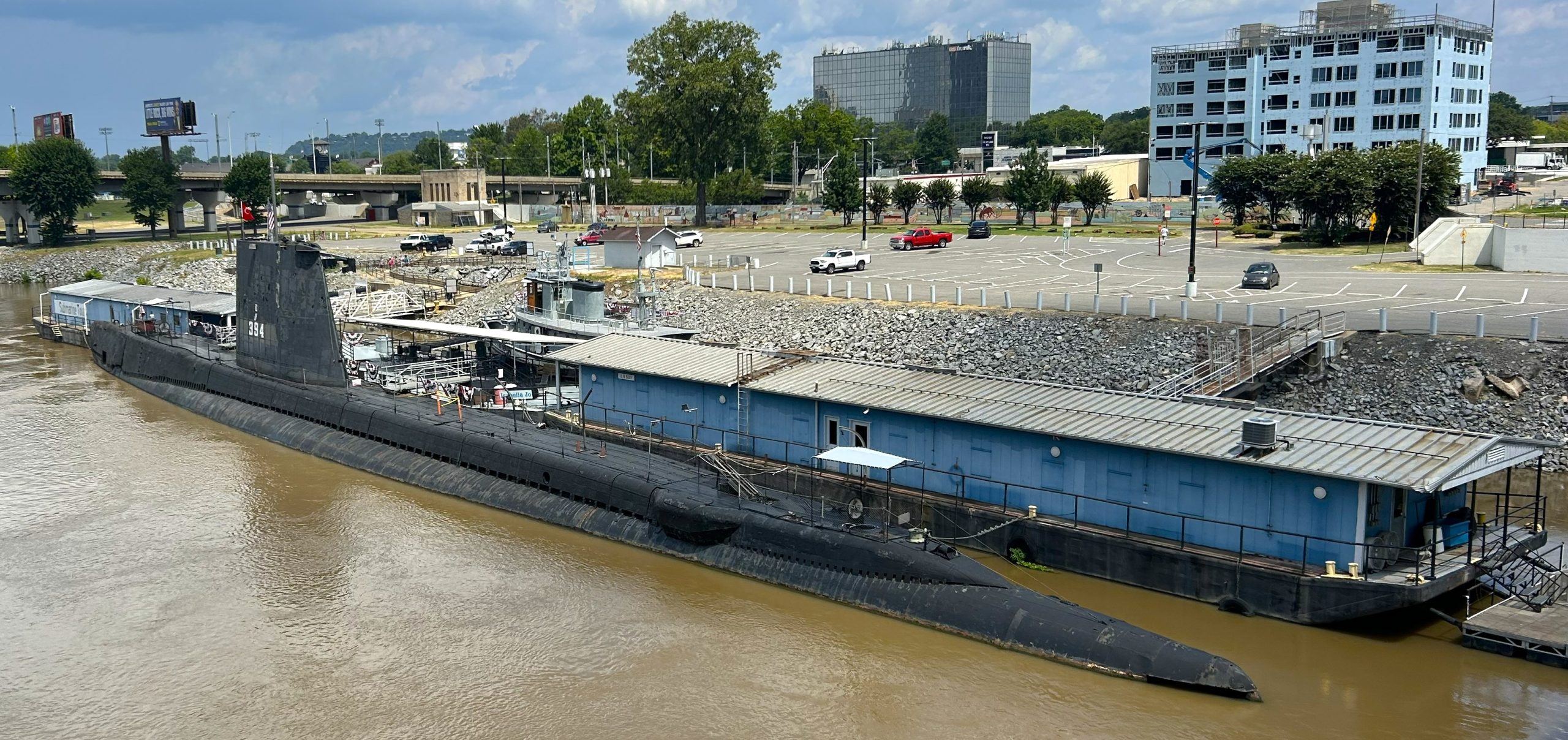
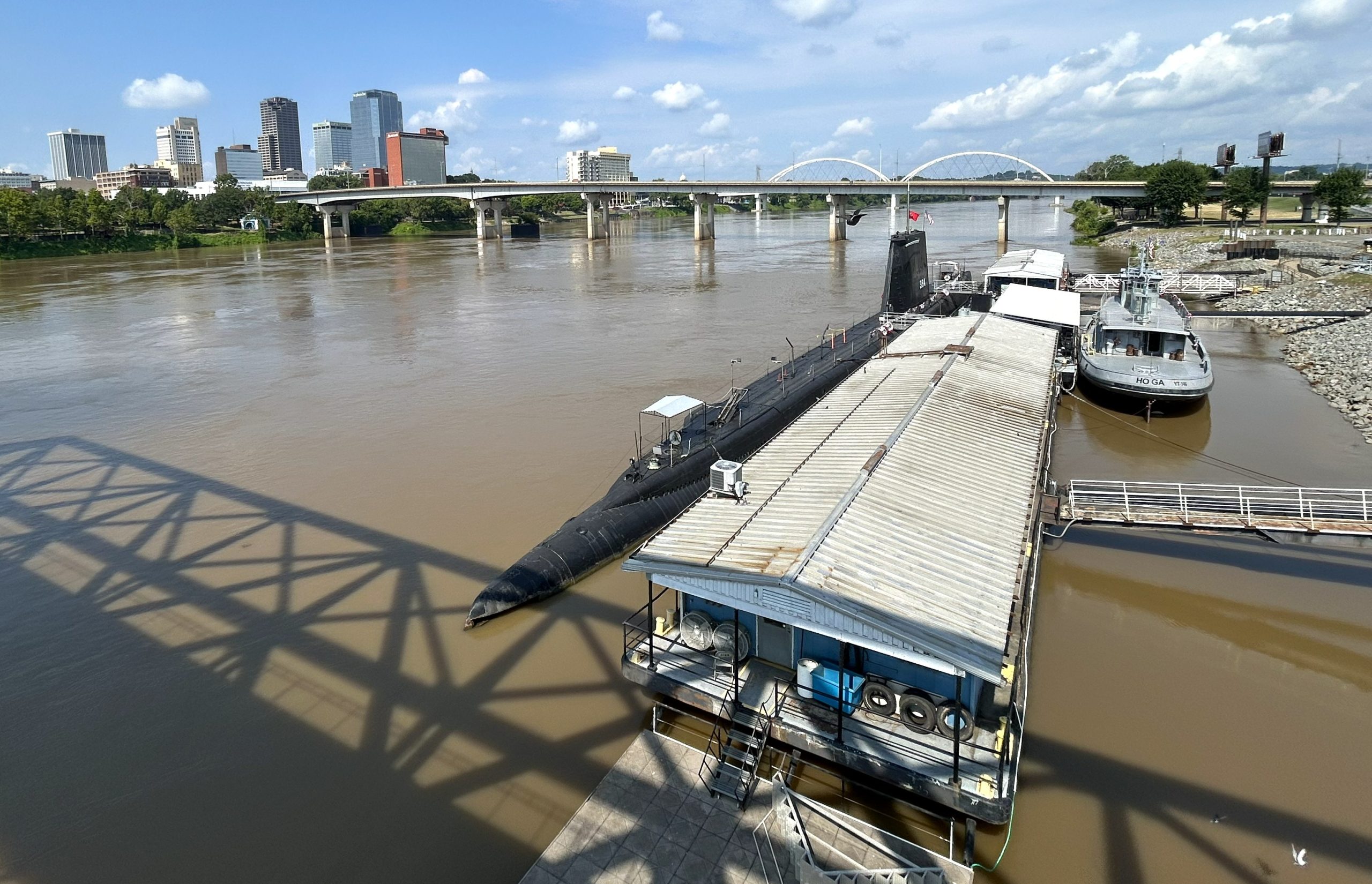
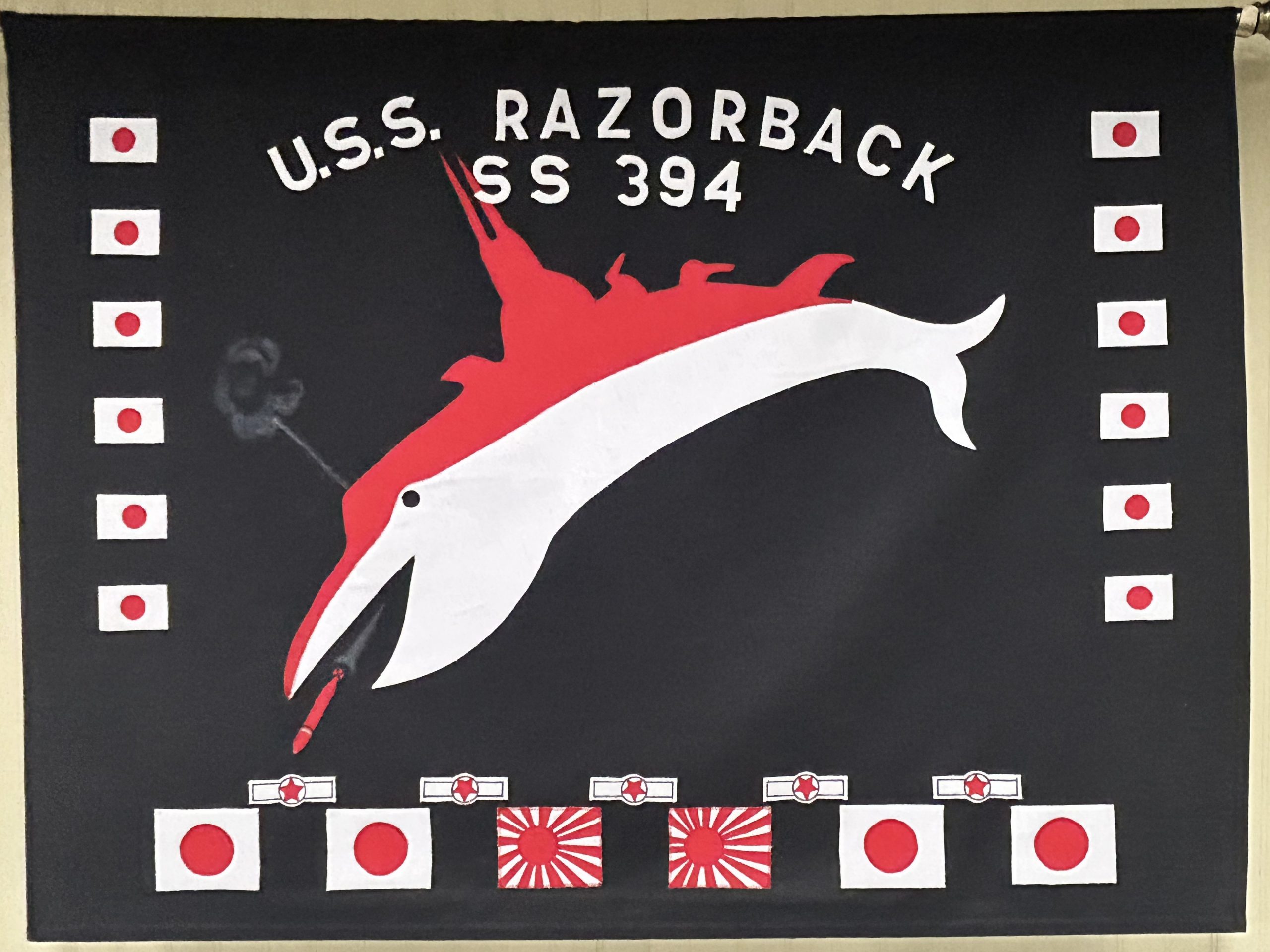
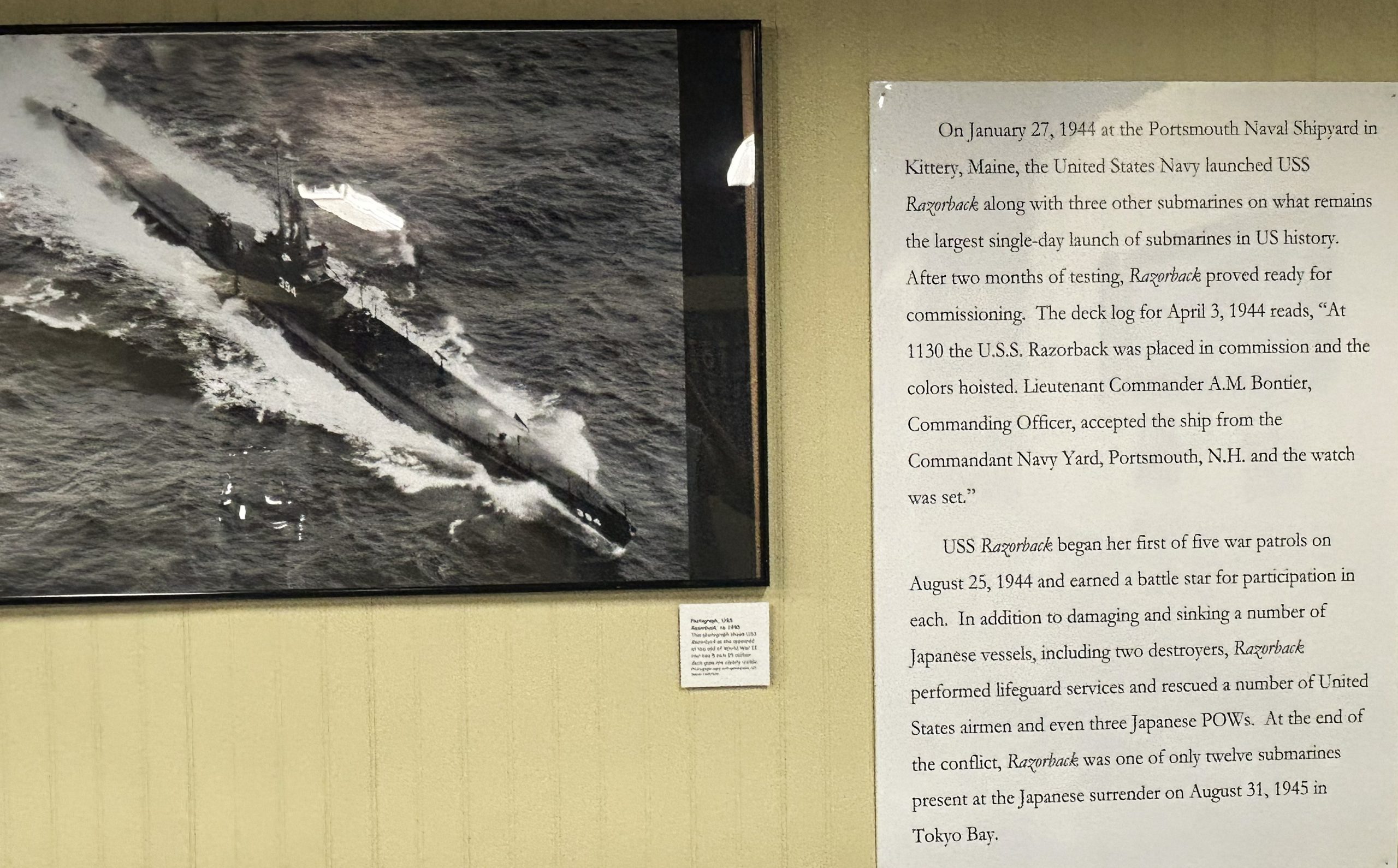
The Razorback was commissioned in 1944 and saw action on five patrols. It sank several Japanese ships, including a couple of destroyers. It was at the formal surrender of Japan in Tokyo Bay on September 2, 1945. The submarine was modified during the Cold War and saw active duty in Vietnam. In 1970, it was turned over to Turkey (as part of NATO) and remained on active duty for that country until 2001 when it was sold to North Little Rock. It currently flies the United States and Turkey flags.
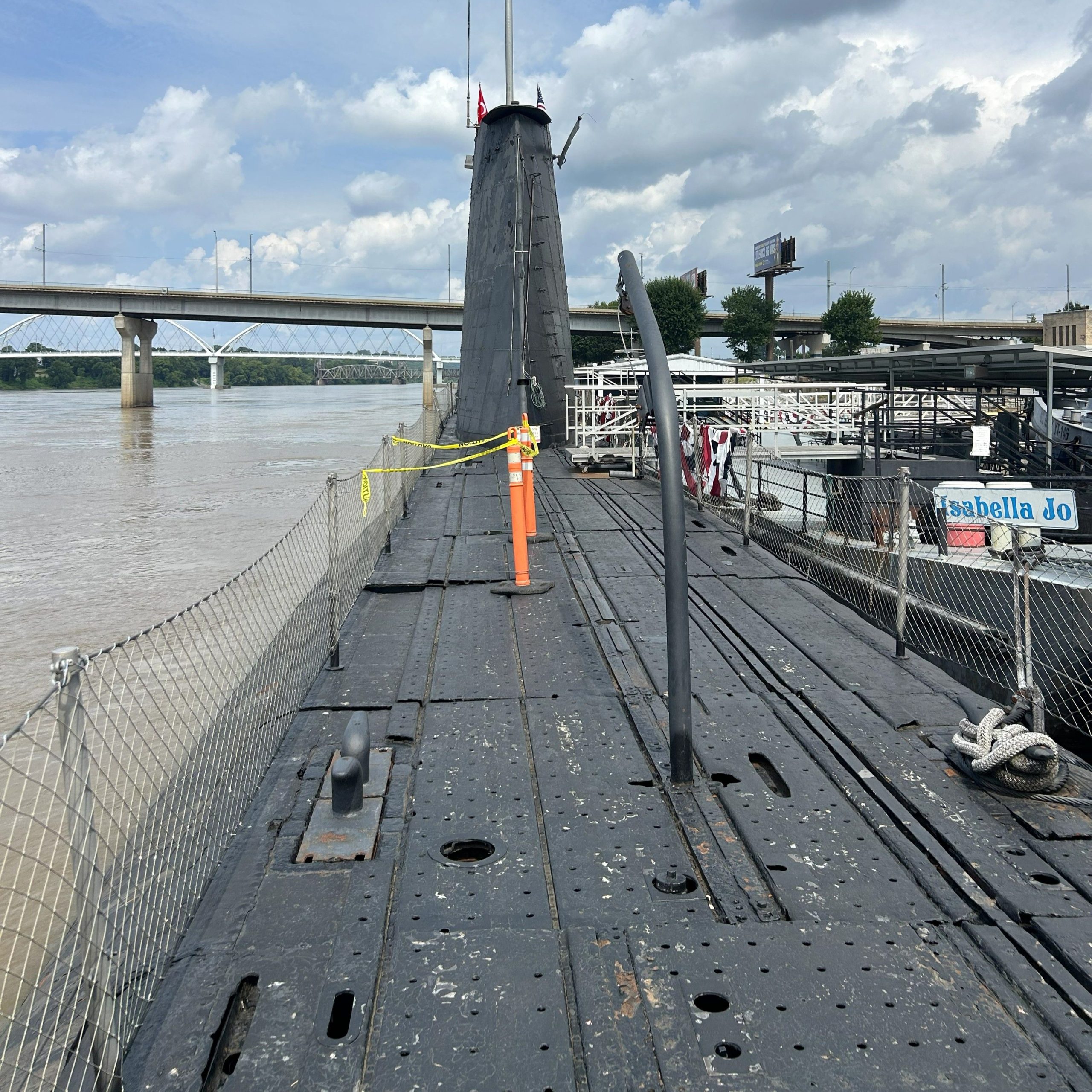
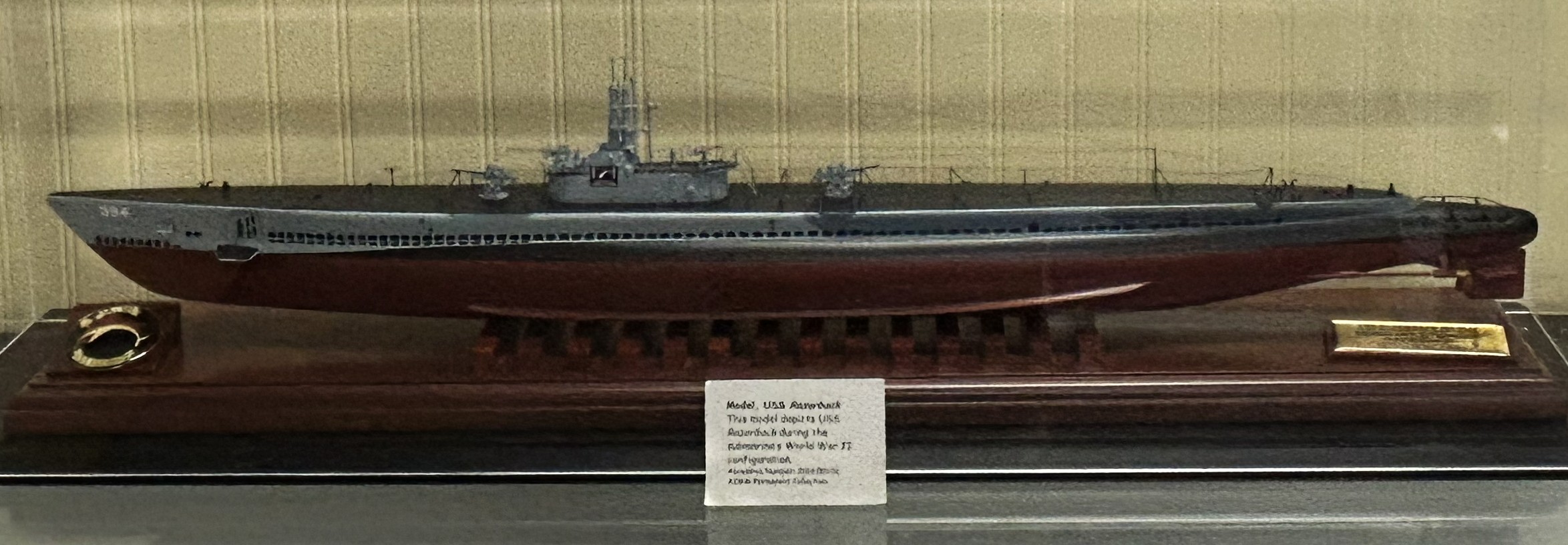
It is one of (if not the) longest serving submarines in the world, serving the two navies for a total of 56  years. Naturally, during that time, it underwent several modifications. I’m guessing very little of it looks the way it did during WWII. Here’s a model of how it originally looked.
A guide took us through the boat. We had climb down (and up) ladders through narrow hatches.

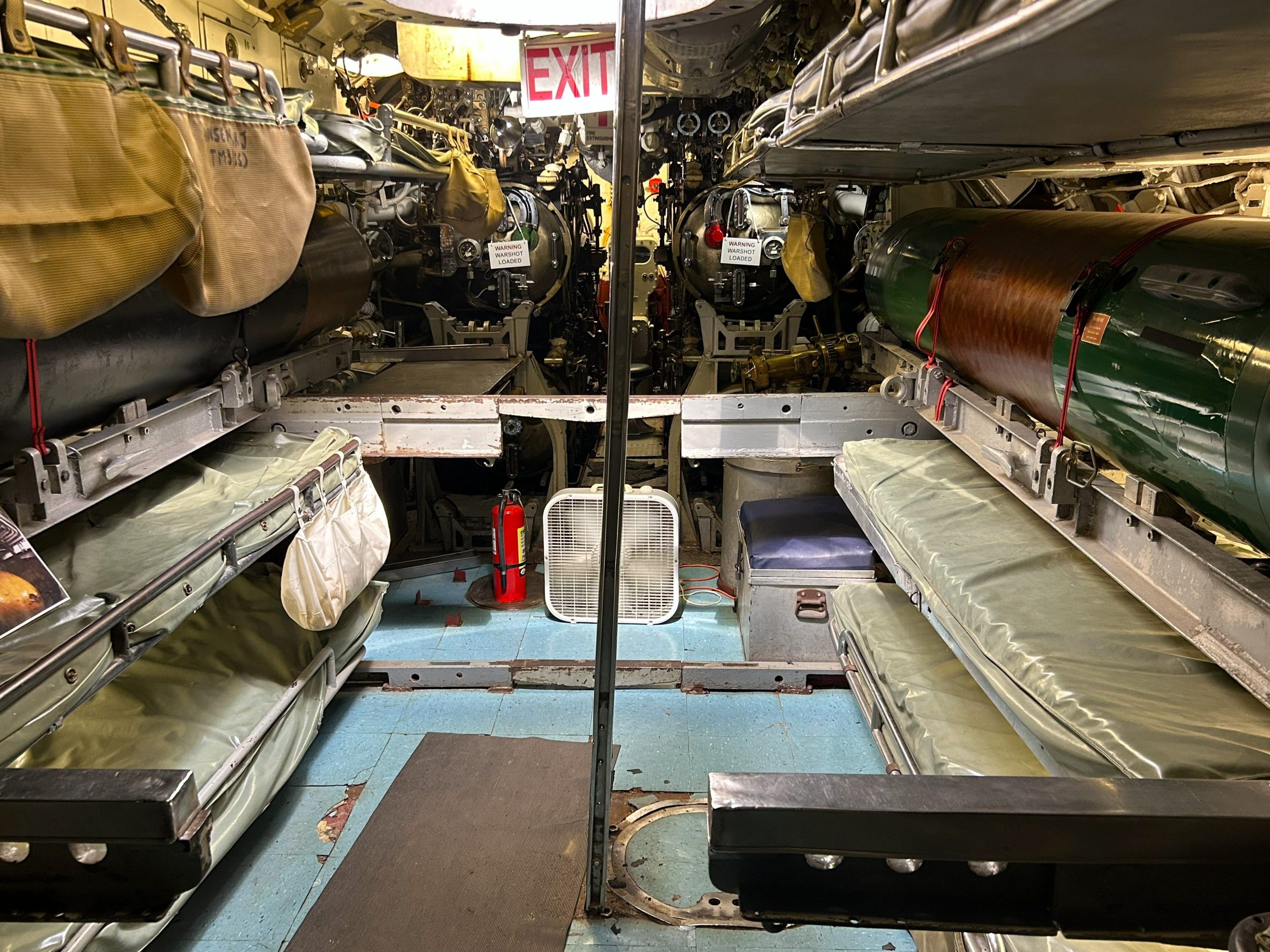
Read torpedo room with bunks. That canvas back hanging from the bunk on the left was how much personal belongings each sailor could bring onboard.
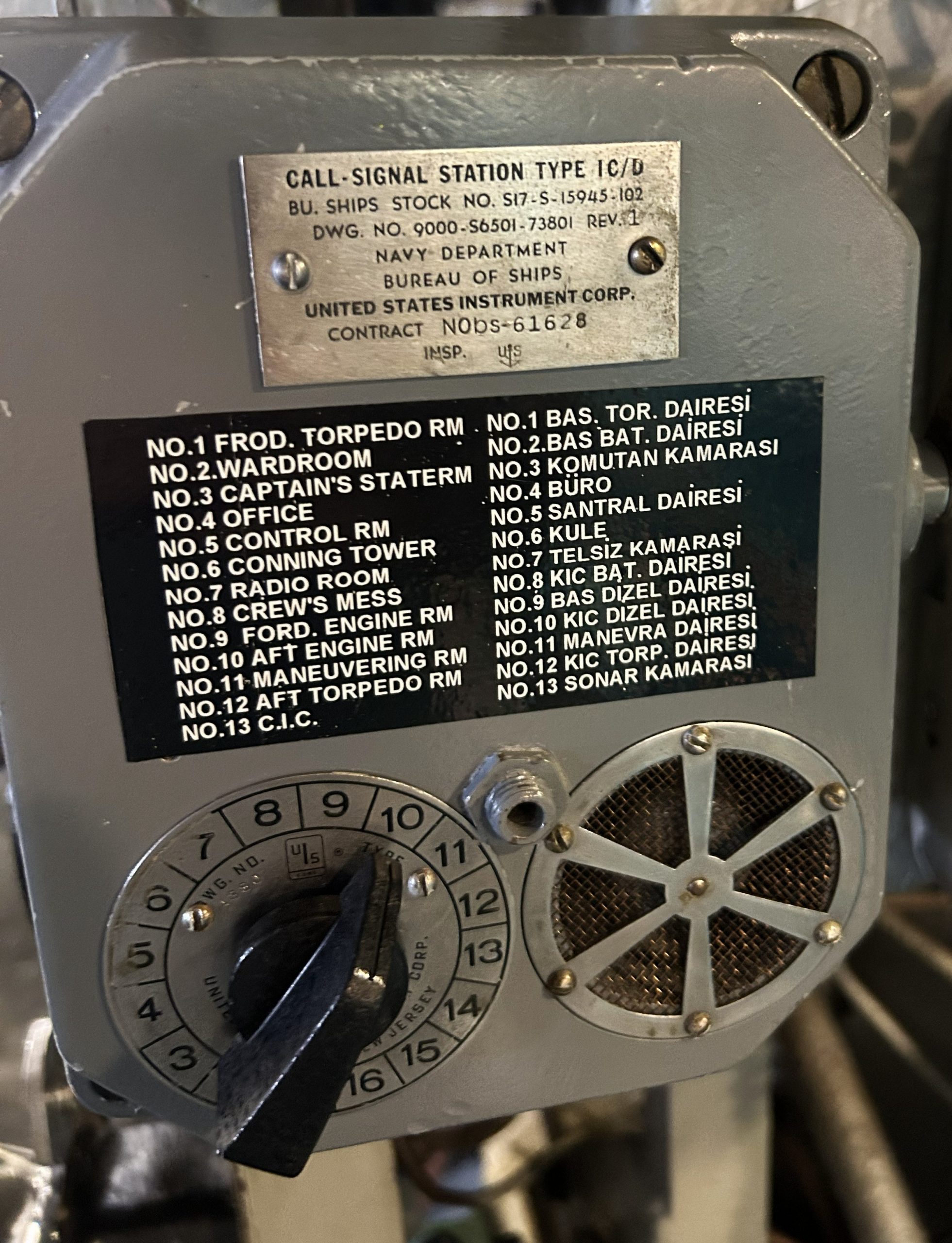
The Turkish sailors had to know English to serve on the submarine, but some of the more important information is also in Turkish. We were told that Turkey sold the submarine to North Little Rock for far below its salvage value because they liked the idea of their history being preserved in a museum.
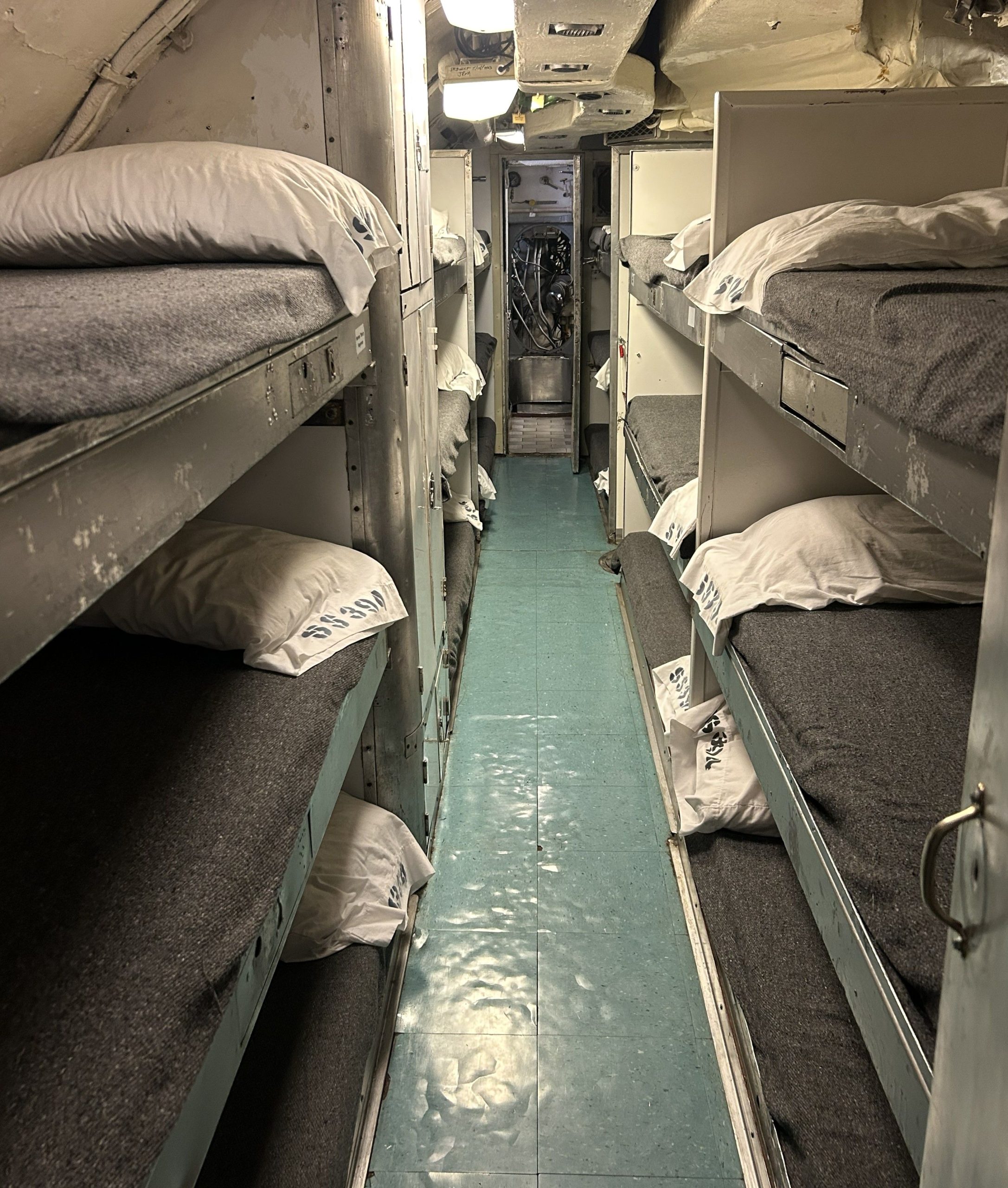
There were well over 100 crewmen, and only 75 bunks. Officers got their own beds, but enlisted men had to share. When one was on duty, another used the bed. Salt water was distilled into fresh water for cooling the engines, cooking, etc. Each crewman got one 30-second shower every two weeks. Add to that that the temperature was usually around 100 degrees inside. The sub was known as a “pig boat” for obvious reasons.
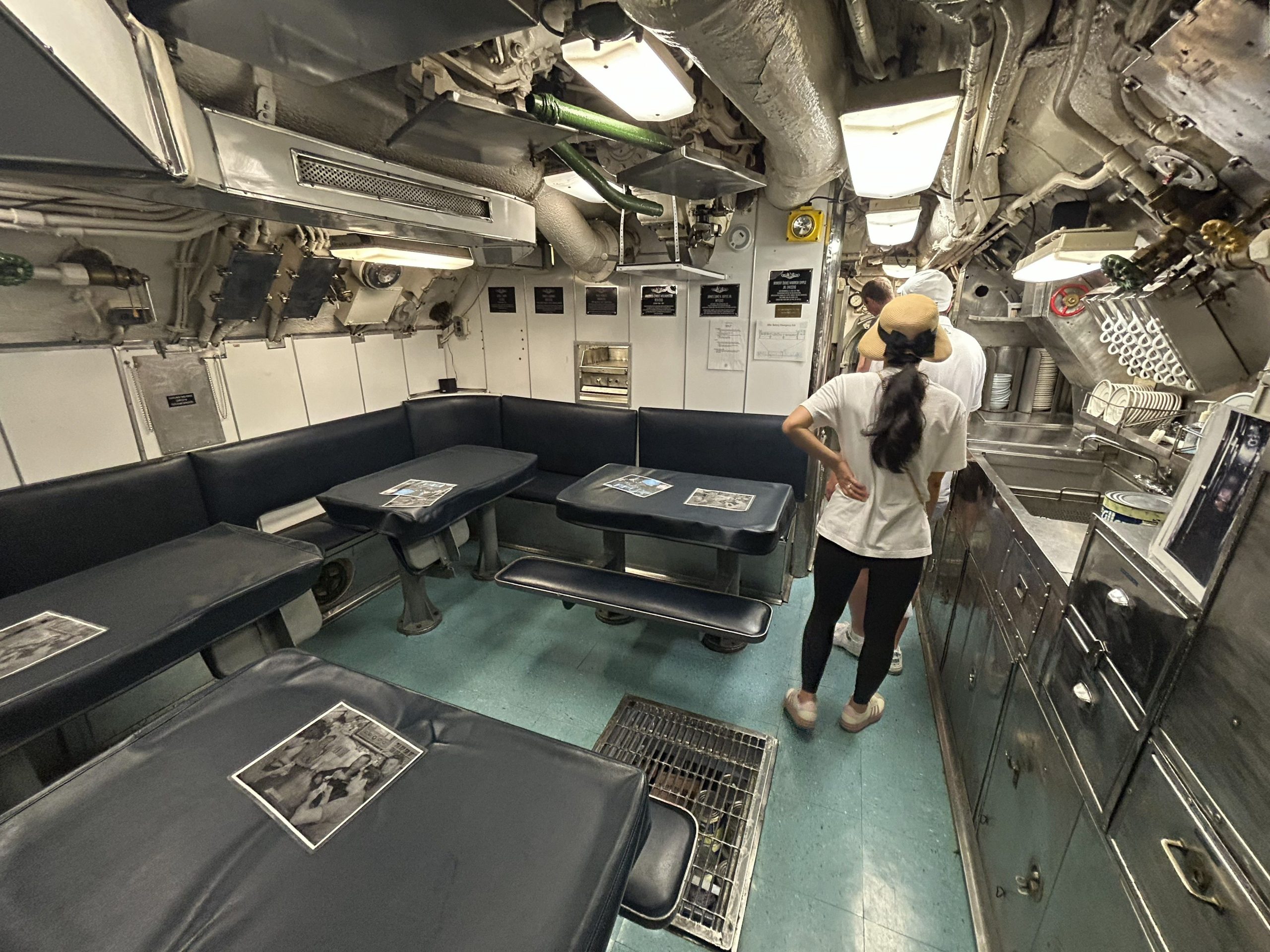
The crew mess. Twenty-four men ate at a time in 15-minute rotations. There were four meals a day (including one at midnight).
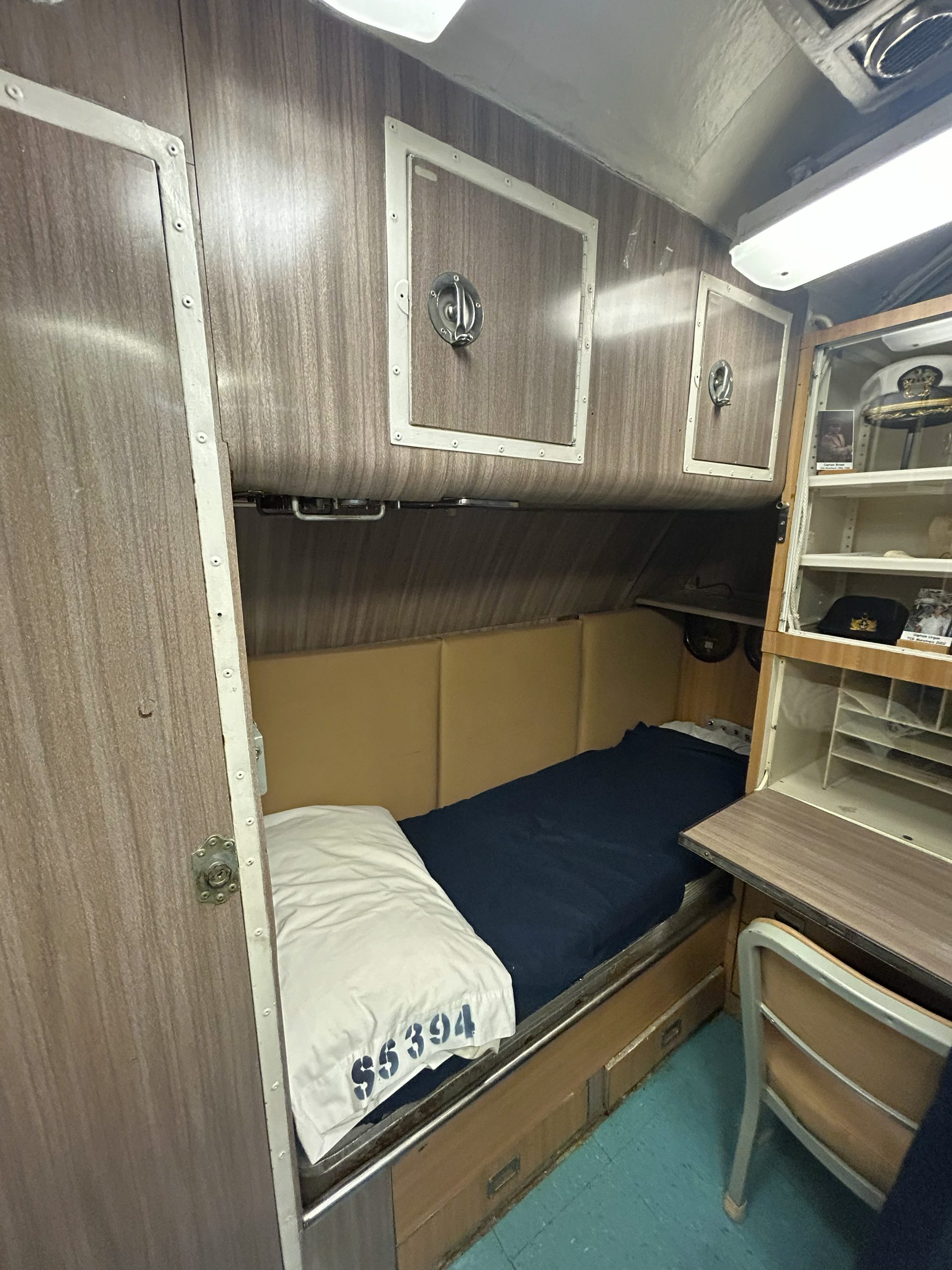
The captain’s quarters.
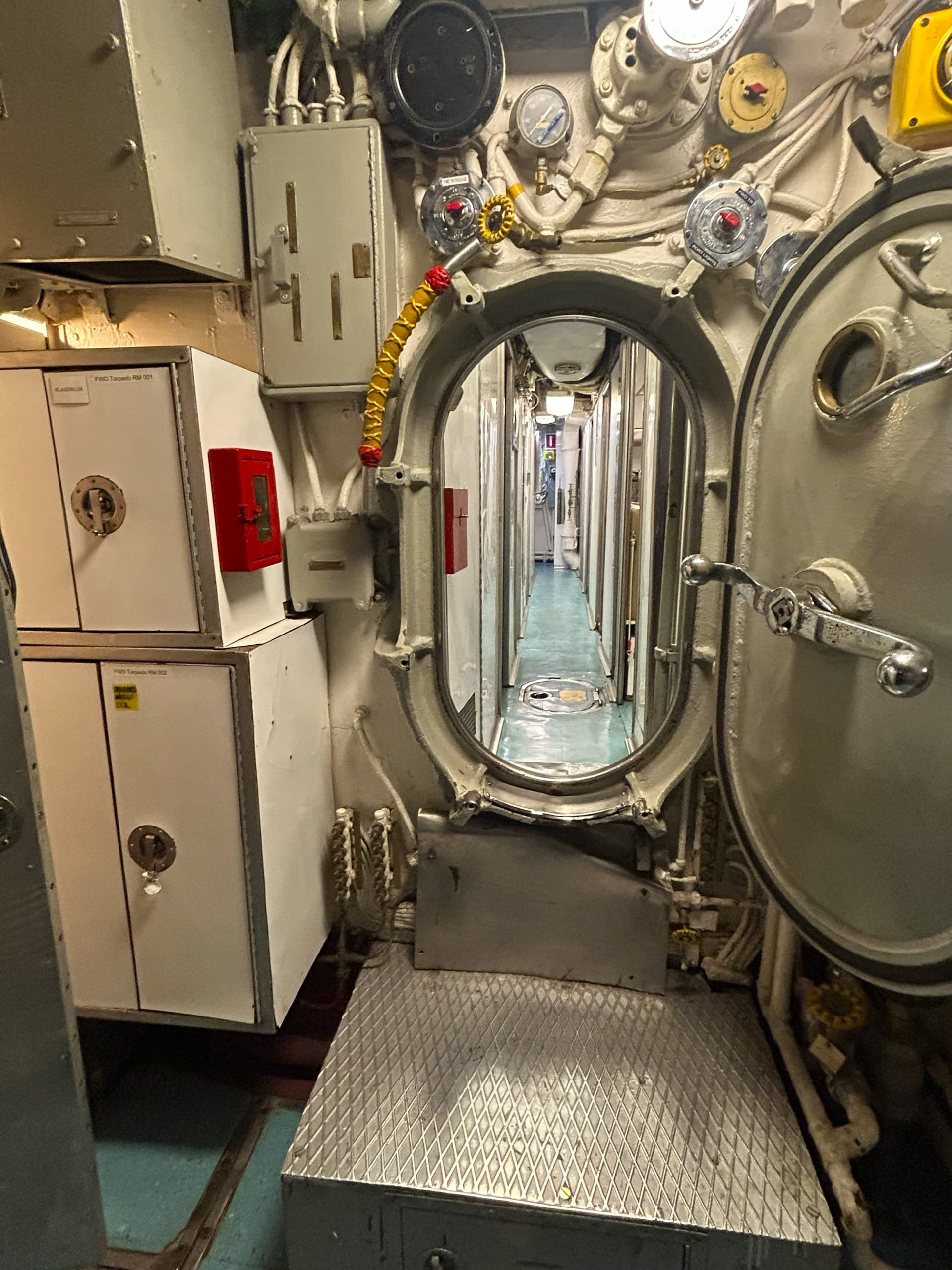
One of the seven water-tight bulkhead doors we had to climb through.
There was more on the Razorback in the museum.
The USS Hoga (the Sioux language word for “fish”) tugboat was at Pearl Harbor and is one of two surviving ships that were involved in that battle. It helped beach the battleship Nevada when it was damaged and in danger of sinking in the main harbor channel. It helped fight fires on several ships after the attack and helped clear the harbor afterwards.

In 1948, the Hoga was loaned to Oakland as a fireboat.
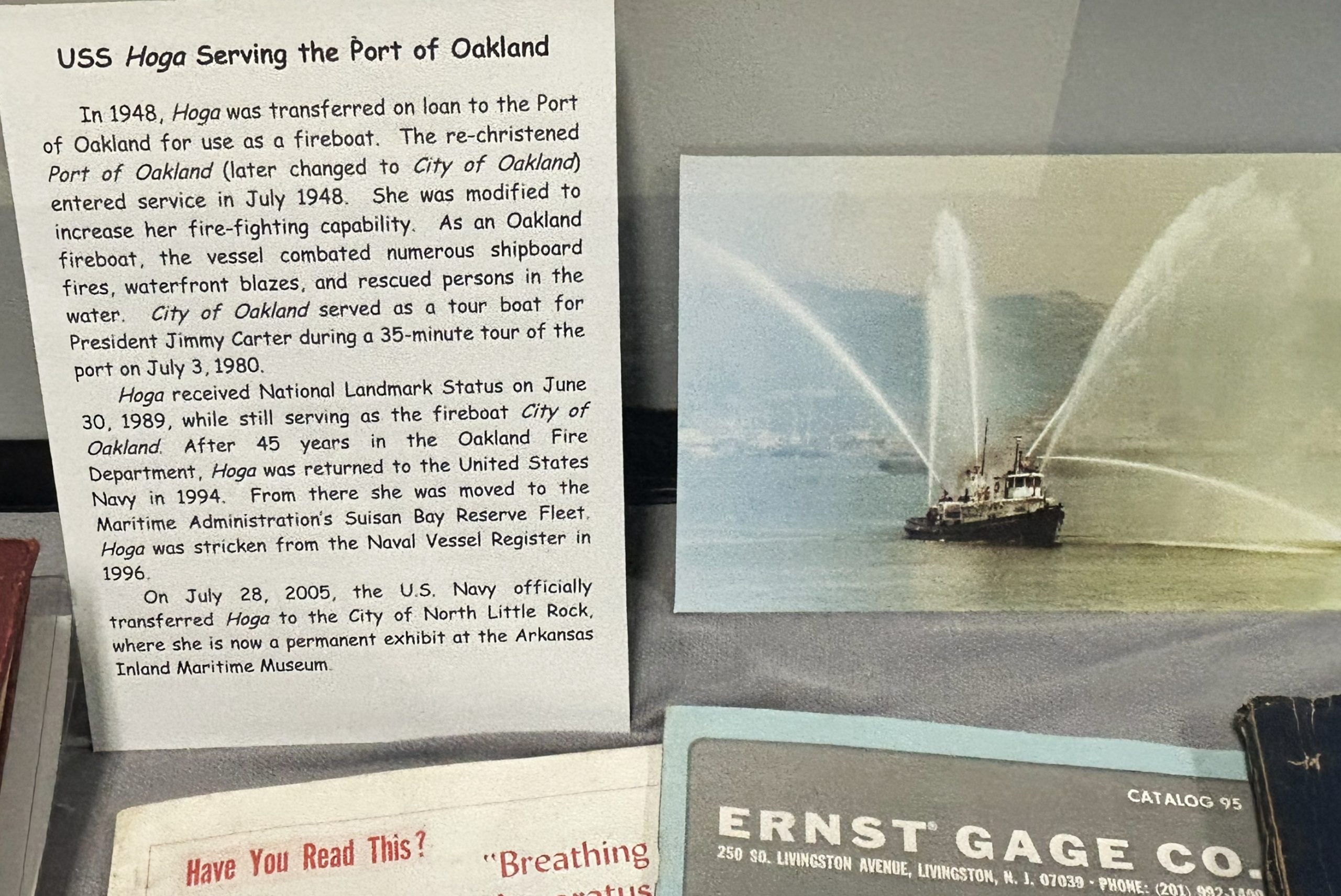
President Carter took a tour of the harbor on the tugboat in 1980. In 1994, it was returned to the Navy, and in 2012, it was given to North Little Rock.
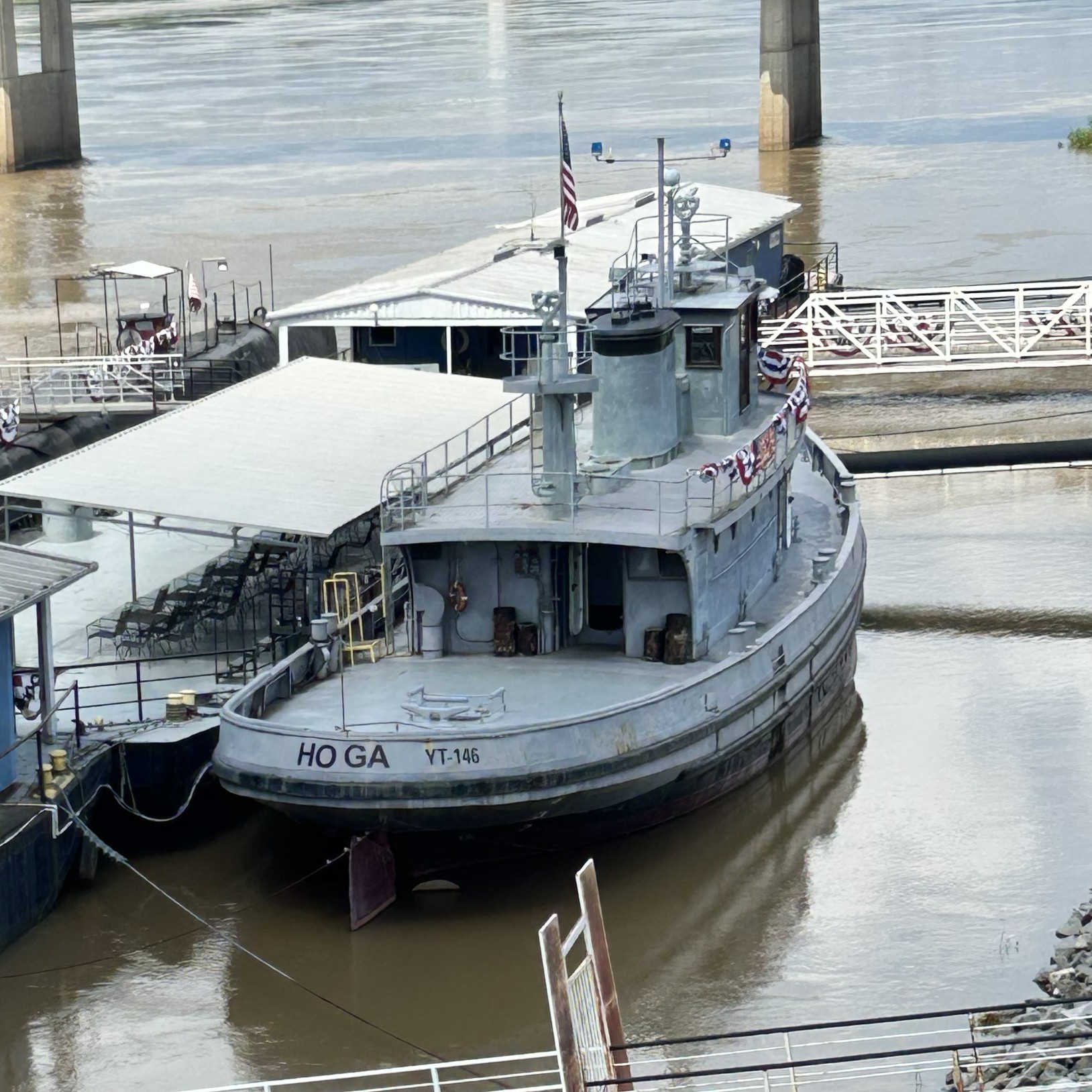
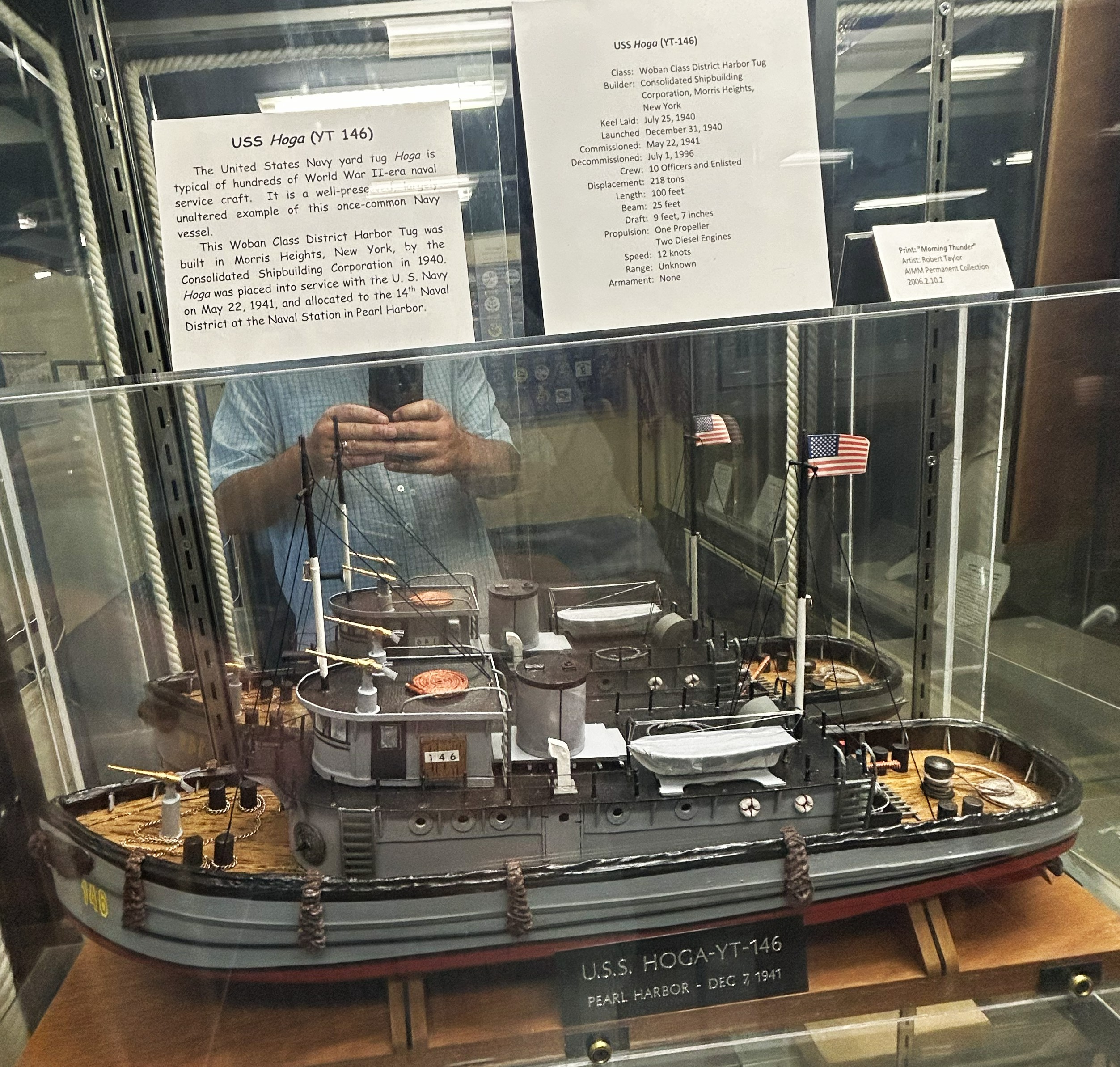
I neglected to get a good photo of the tug at the museum, but here’s a model of what it looks like.
I wandered around on board (there wasn’t much to see). Here’s the view from the pilothouse.
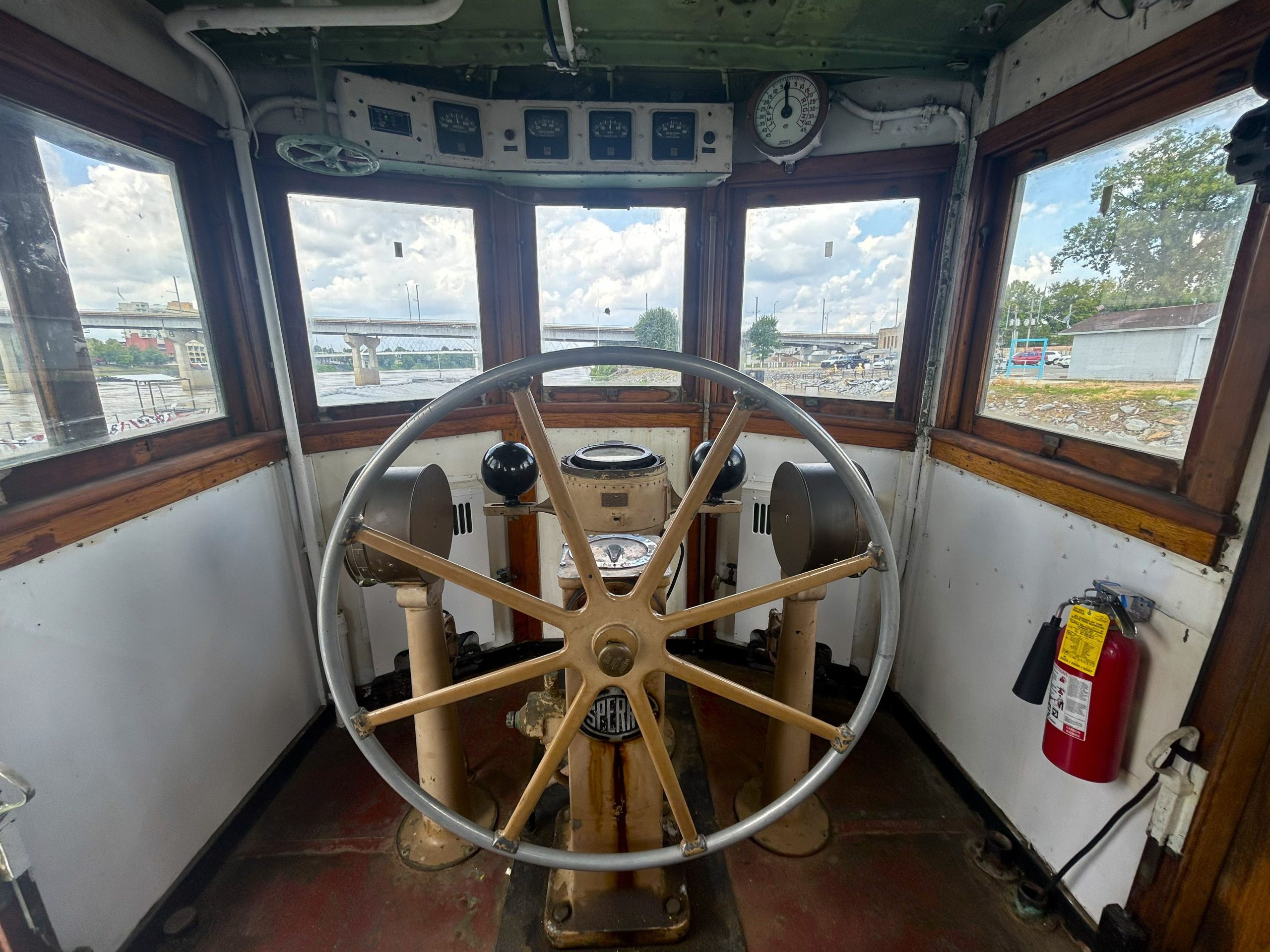
Things got a big dramatic while I was touring the tug. About 100-yards away, across the parking lot, a policeman and an idiot got into a shouting match. The policeman had his hand near his weapon as the guy shouted “You’re going to shoot me.” I stopped to watch and soon saw the guy point toward me and say, “See the guy on the boat. He’s going to see you shoot me.” At that point, I decided I’d seen enough and went inside the museum.

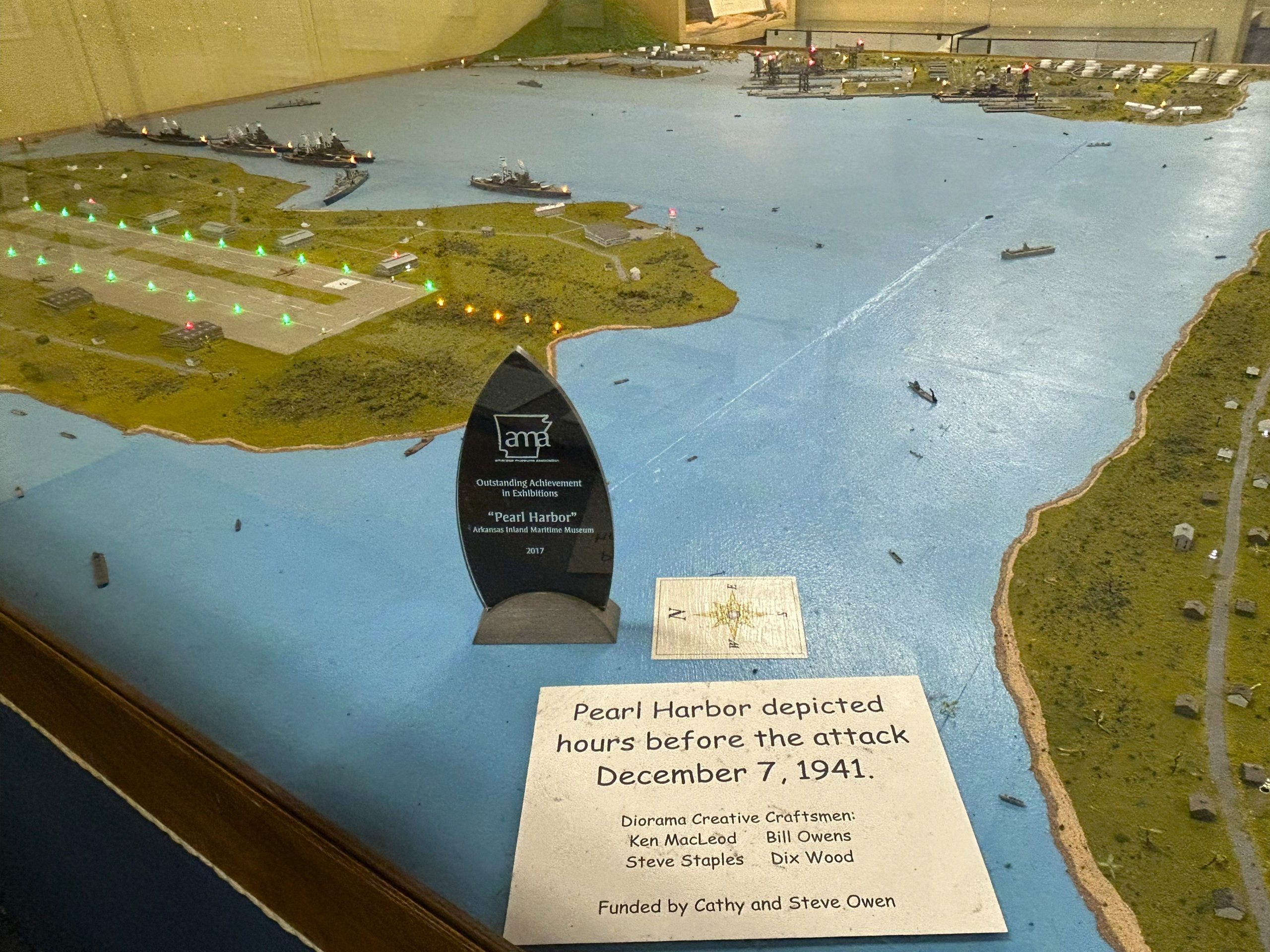
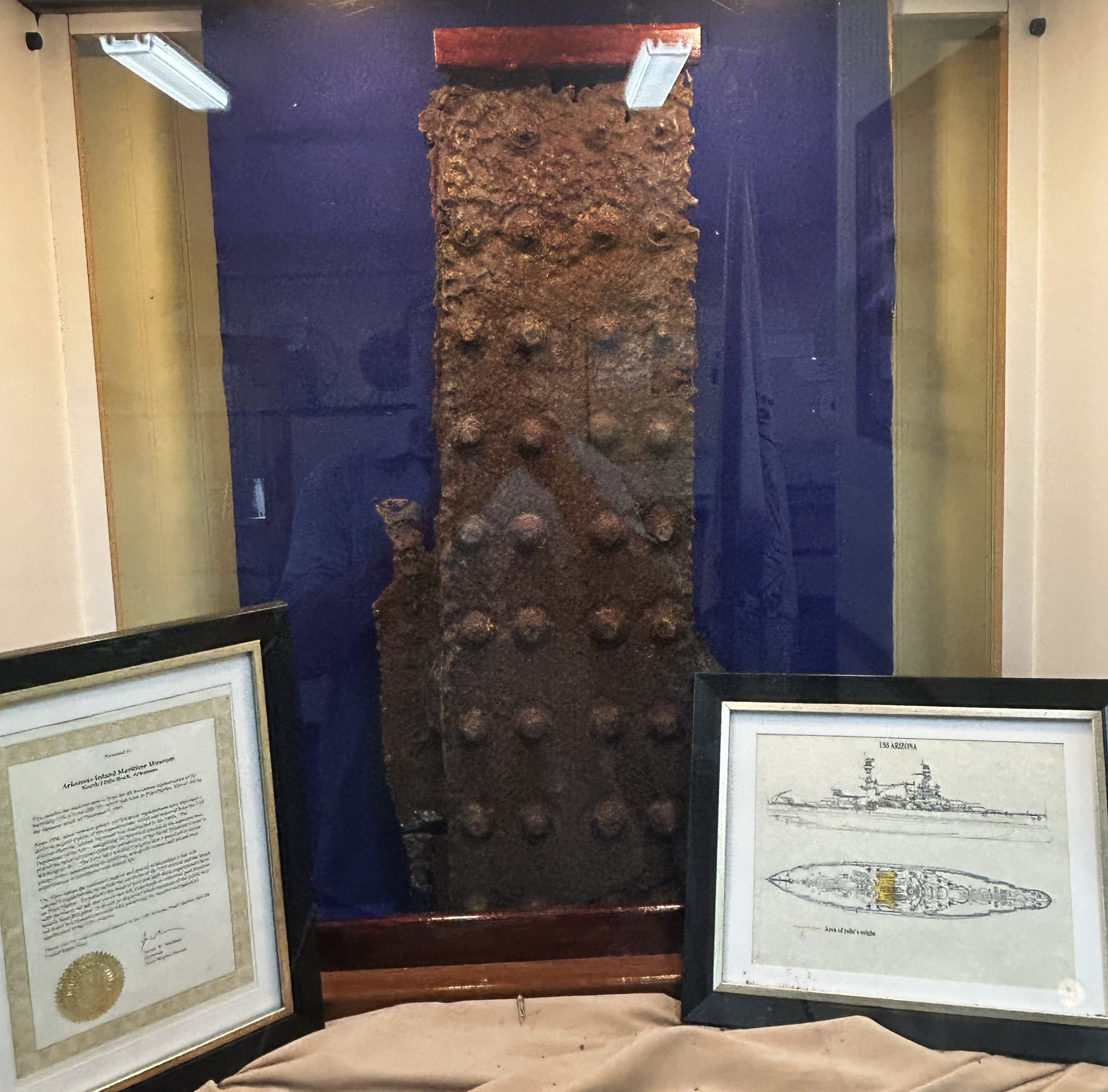
There were displays on the Razorback and the Hoga, on Pearl Harbor, and on various ships named “Arkansas” over the years.
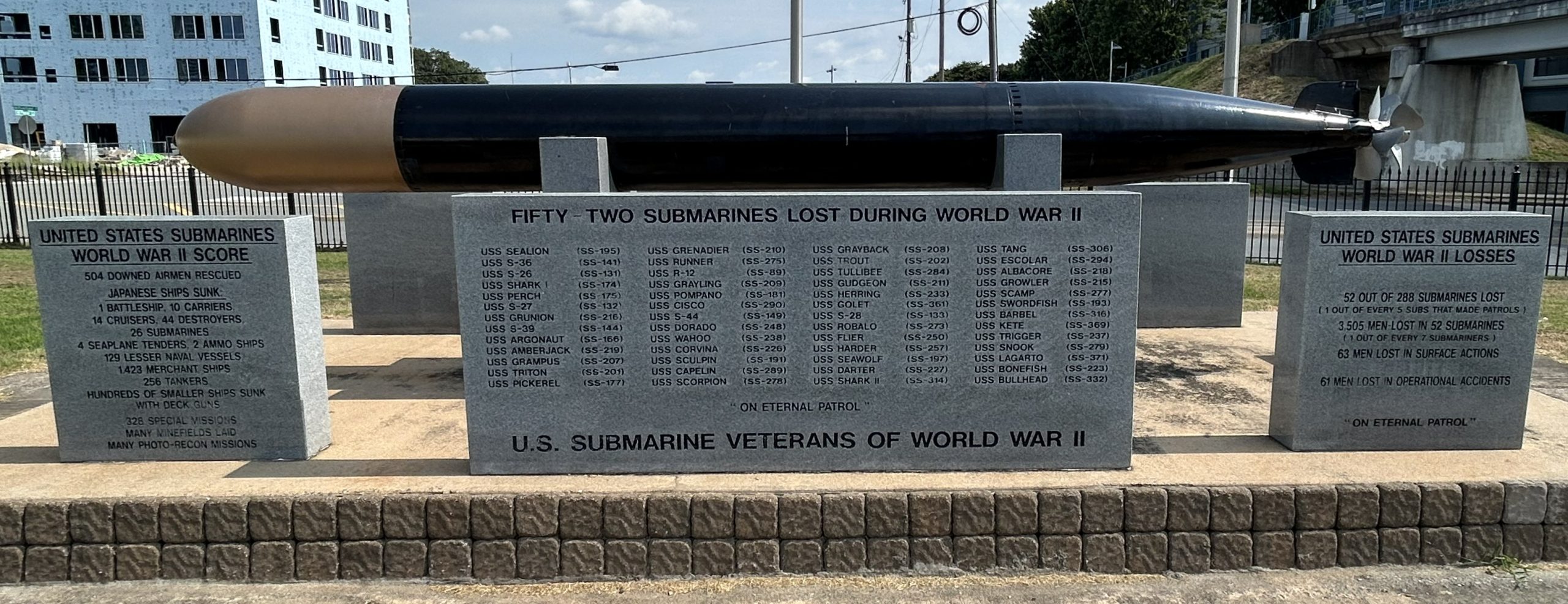
A memorial to those who served on submarines was in the parking lot.
Posted in Arkansas | Leave a comment

Junction Bridge

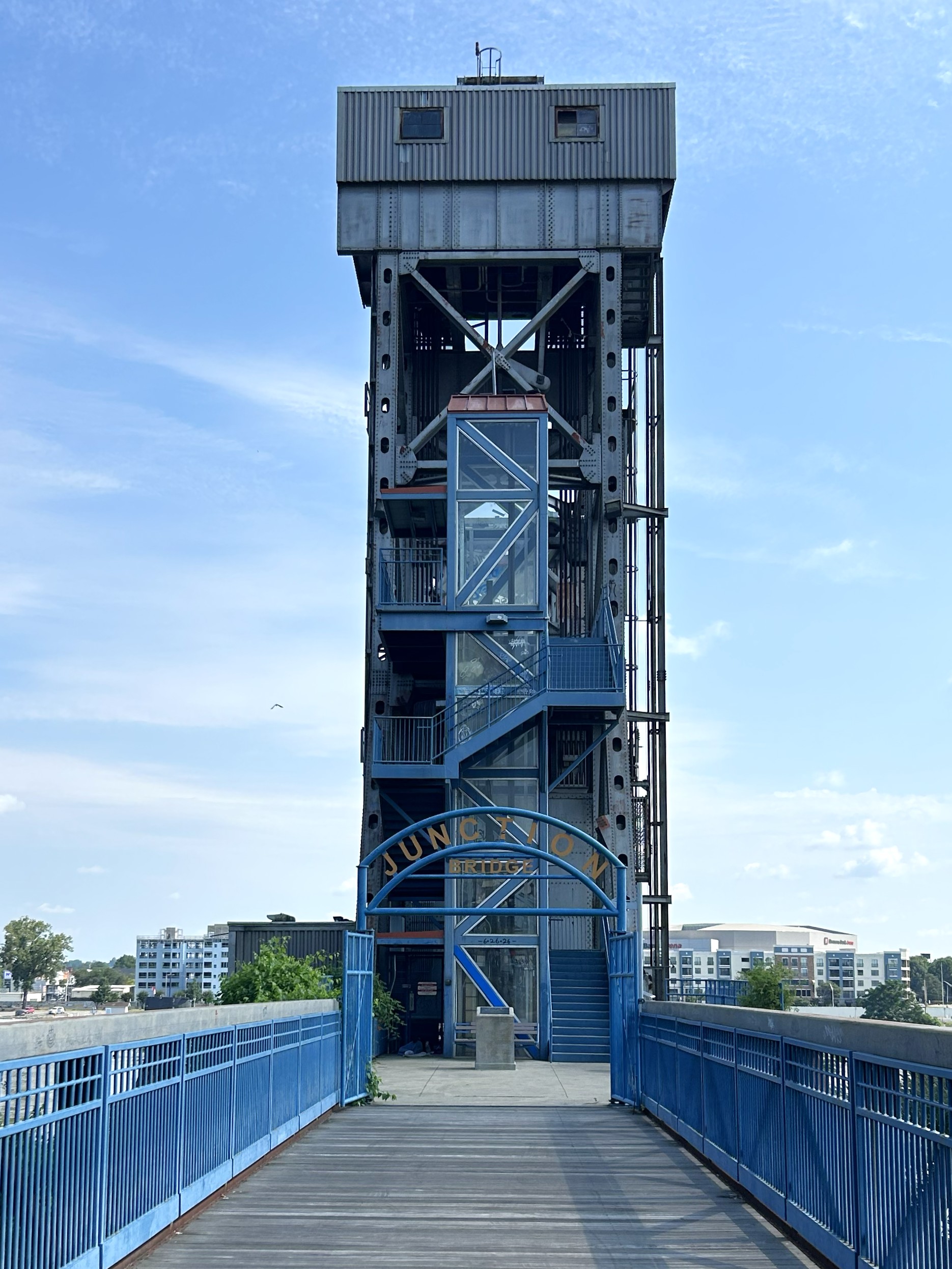
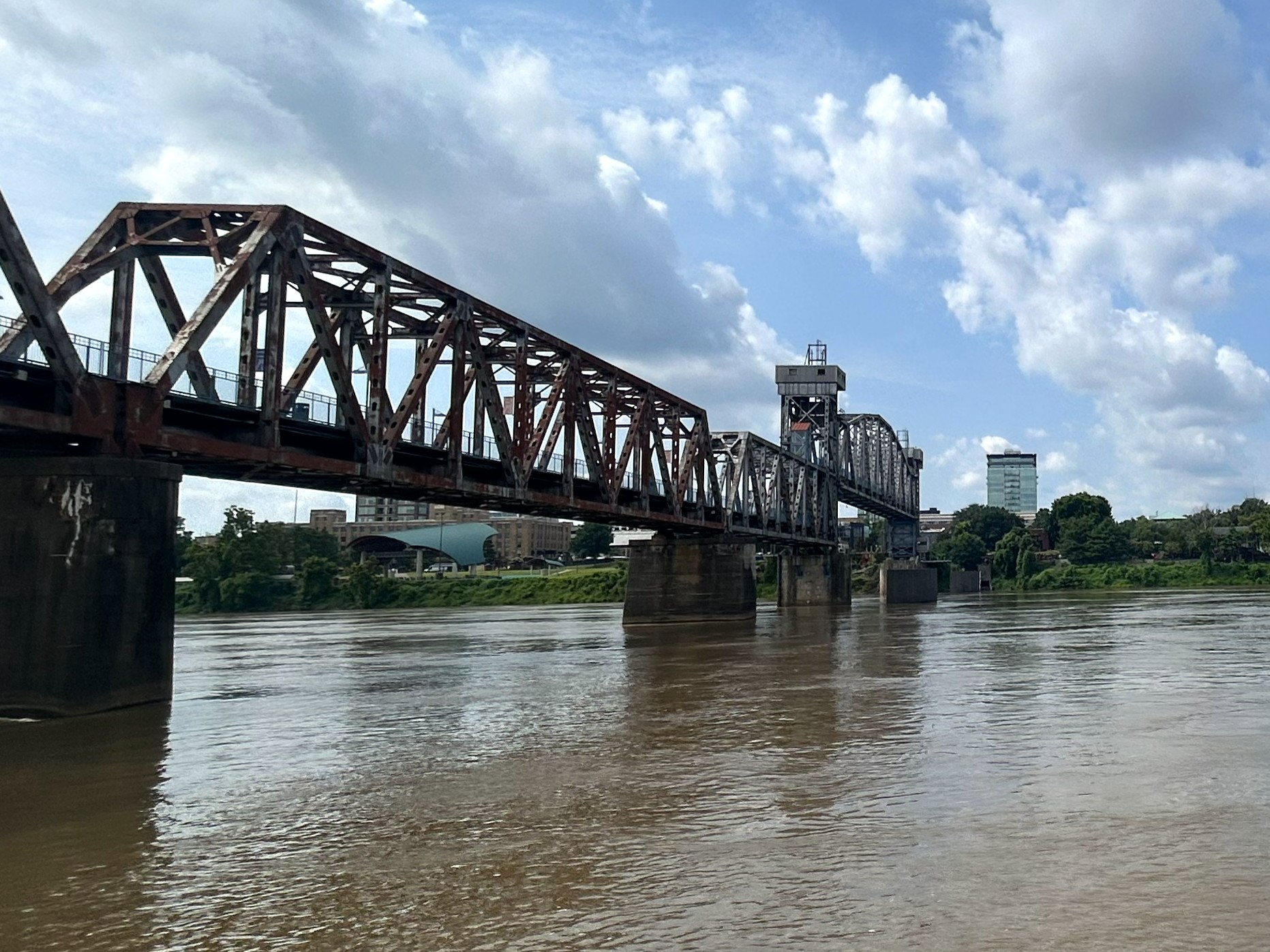
Junction Bridge, which crossed the Arkansas River from Little Rock to North Little Rock, was built in 1884 as a railroad bridge. The Little Rock end of it was actually anchored in “the little rock,” the outcropping that gave the town its name. In 1885, a second level was built for pedestrian and wagon traffic. In 1970, it was rebuilt with a lift span (instead of a swing span) to accommodate river traffic. And in 2008, it was made into a pedestrian bridge. The lift span was set permanently in place 38 feet above the river, with stairs on both ends. There’s also an elevator, but I have never seen it used. Today, there was a guy sprawled on a mattress in front of the elevator door, so …

After touring the Old State House Museum, I crossed the river on the Junction Bridge to get to the Arkansas Inland Maritime Museum. It was a warm, sticky day, but there was a breeze over the river, so I had no reason to regret my decision.

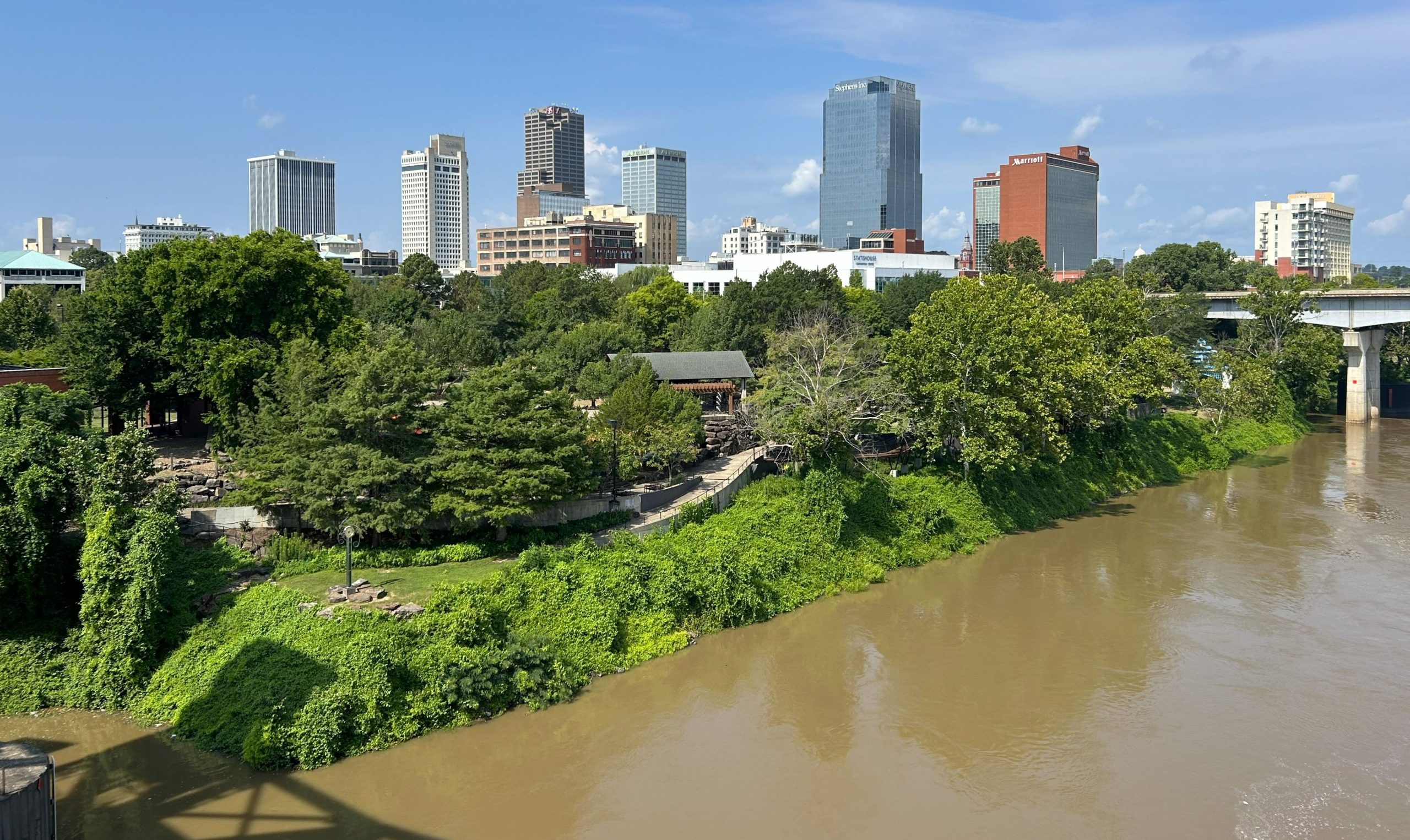
Looking back at Little Rock from the bridge.

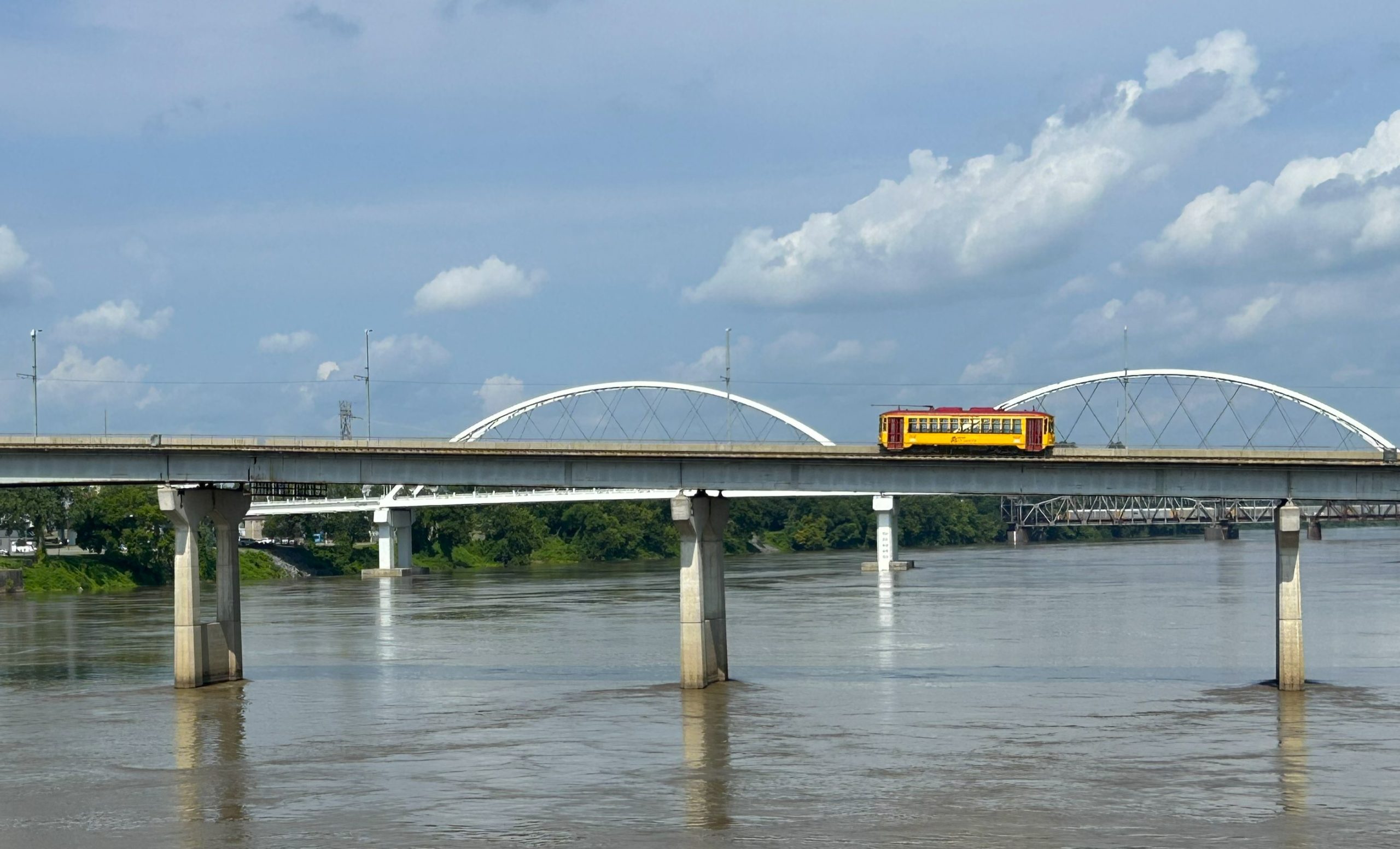
While I was crossing the Junction Bridge, the trolley was crossing on the next bridge upstream.

The bride from the deck of the submarine at the maritime museum.

Posted in Arkansas | Leave a comment

Old State House Museum — Again

I’ve toured this museum at least six times before, including visits with my wife in 2009 and 2022. But I heard there was a special exhibit this summer called Arkansas250, which I thought might have something to do with the “semiquincentennial” or “sestercentennial” (depending on what authority you prefer) celebration of American independence.

What it turned out to be was an explanation of the various state nicknames Arkansas has had over the years with a bunch of random historical artifacts. Not was what I was expecting, but fairly interesting. I’m glad it was free. Here, because I know you were wondering, is what I found out.

Here are just a few of the artifacts:

An old hand-painted state seal.

The sponsor of King Biscuit Time, one of the longest-running radio shows anywhere. It began in 1941 and is still going today, playing blues music.

A suit Johnny Cash wore for the bicentennial in 1976, his guitar, and a pair of his alligator boots.

I wandered through the rest of the museum, but I didn’t linger since I’d seen it all before. And how many times can one really enjoy a display of the inaugural ball gowns of governor’s wives?

Posted in Arkansas | Leave a comment