When I decided to create my own Arkansas t0-do list, I thought it would be fun to find at least one attraction to visit in each county. For several counties, this proved to be a challenge. Sharp County was one of the challenges. I drove through much of the county on my way up to Mammoth Spring State Park and stopped to see what there was to see.
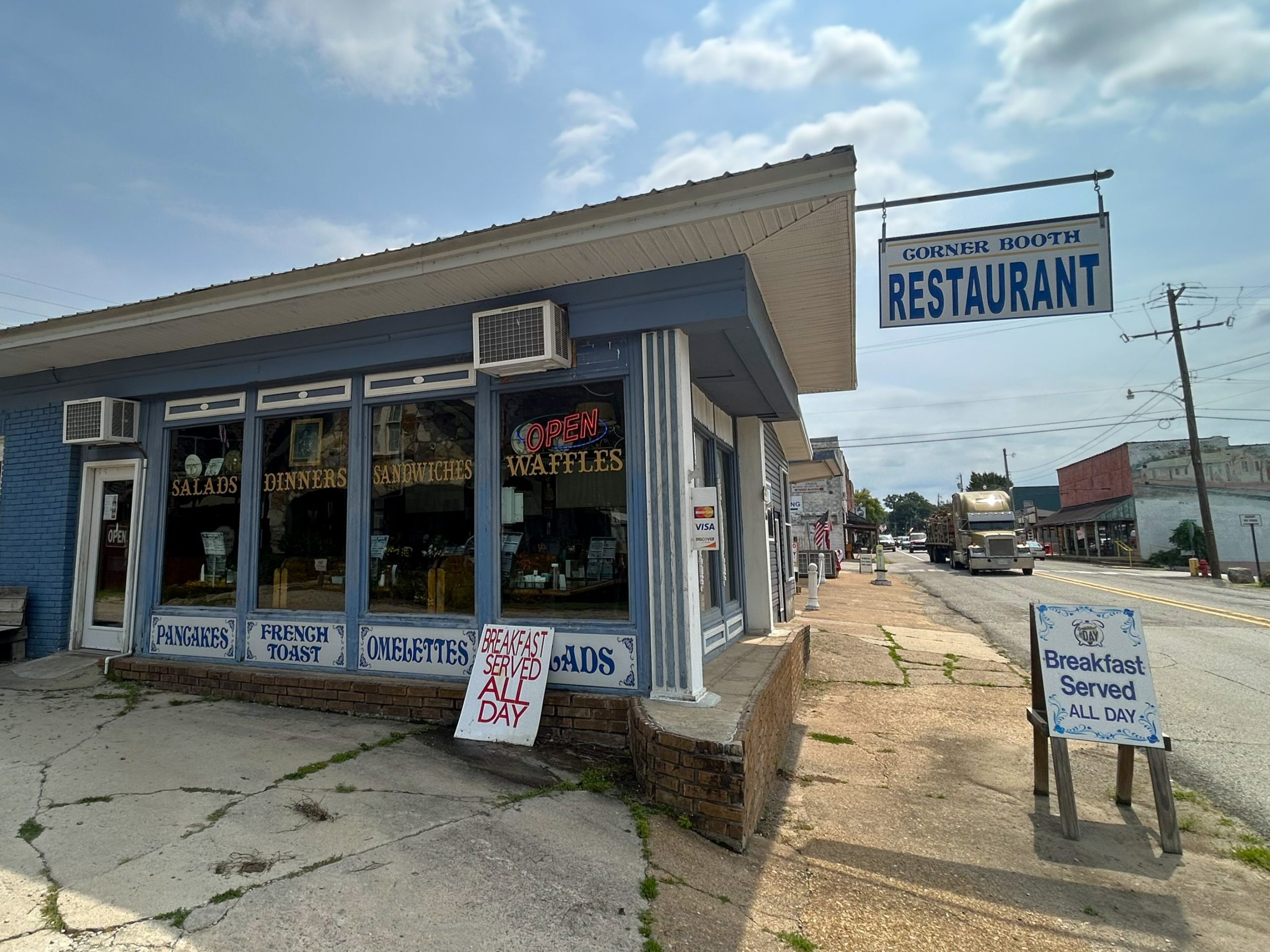
Corner Booth Restaurant in Hardy
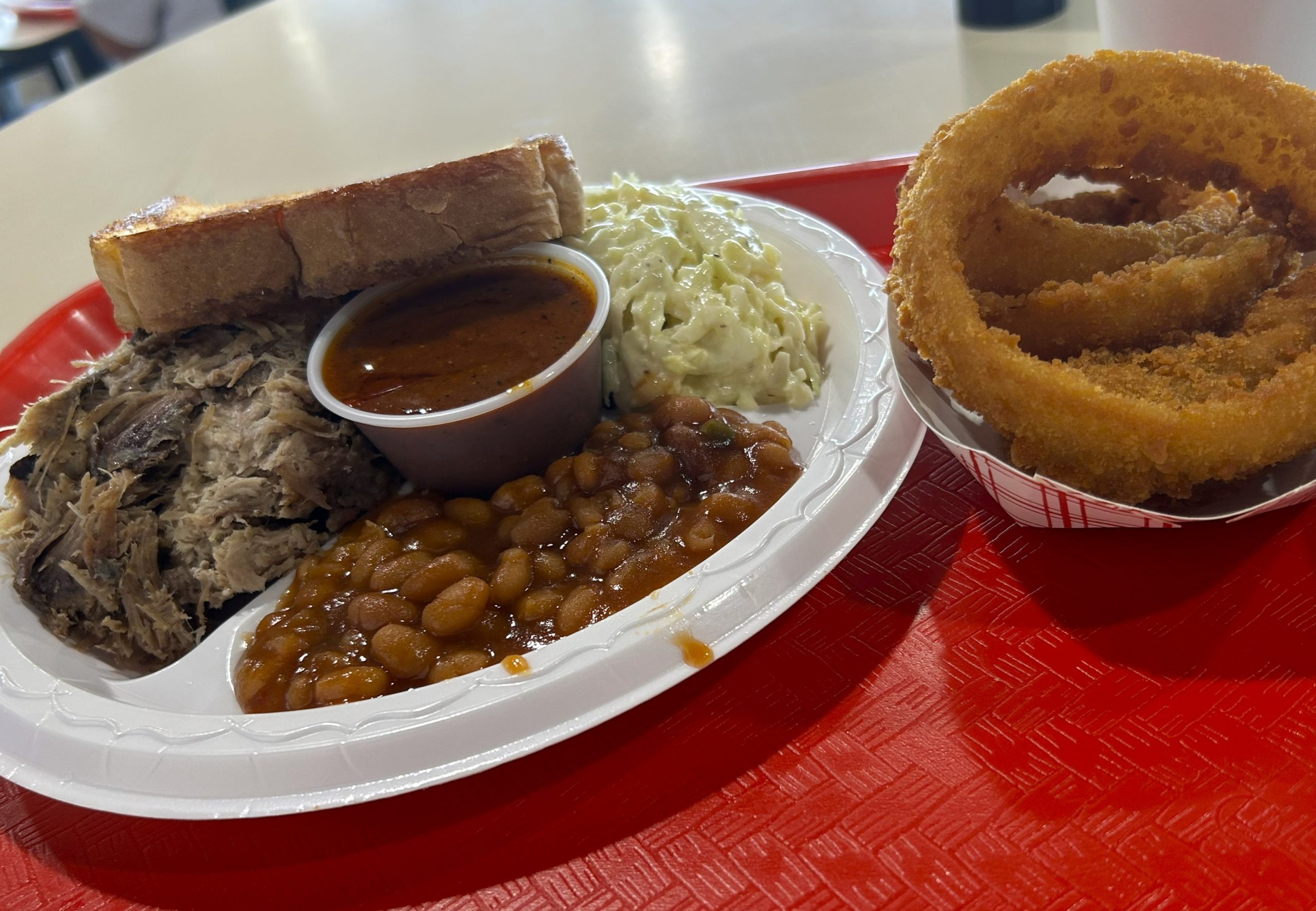
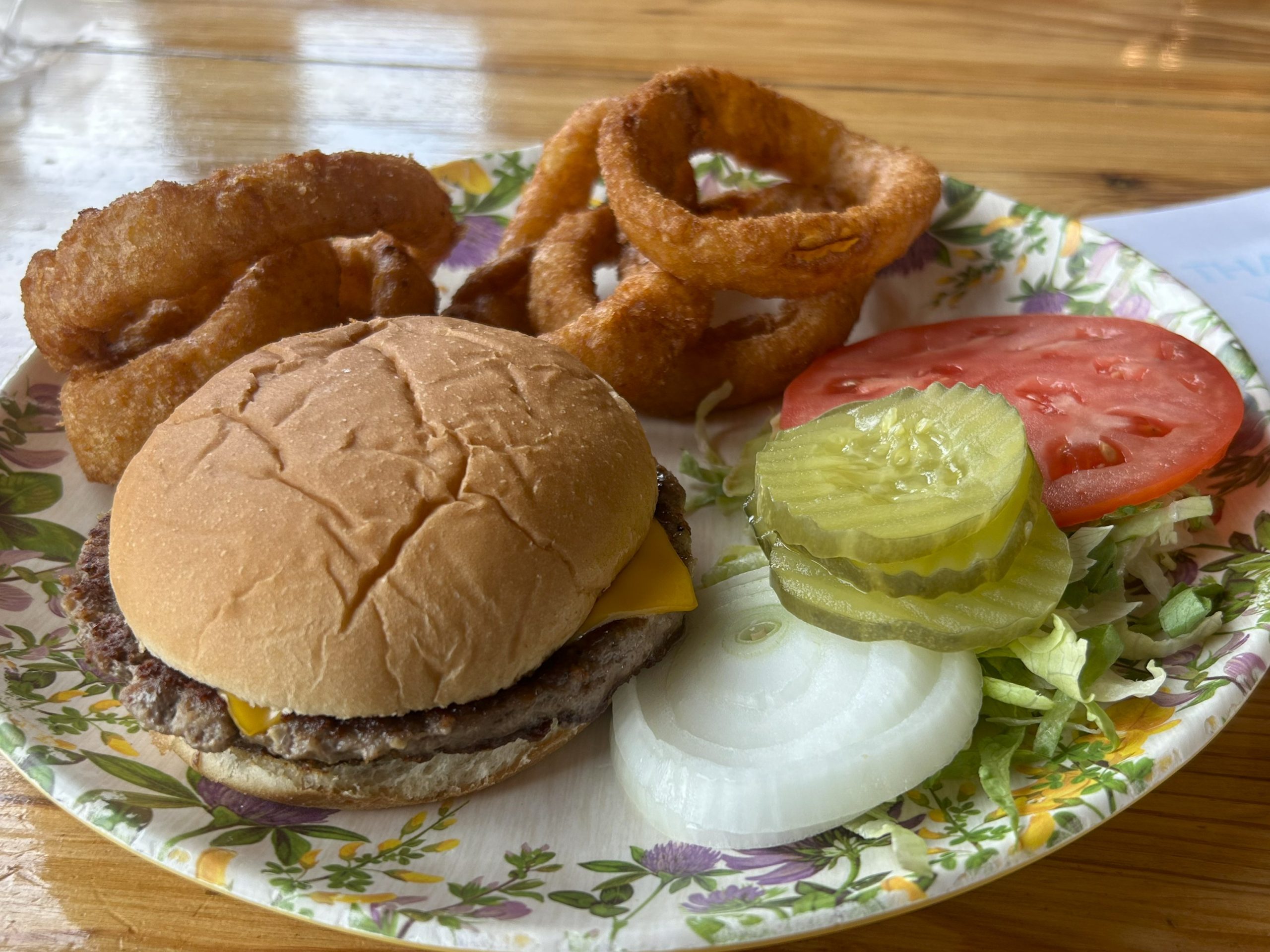
It was around 10:50 when I stopped in. Obviously, they think of themselves as a breakfast place, and that’s what I probably should have ordered. But the menu was mostly omelettes and pancakes, and I just wasn’t in the mood. I ordered a cheeseburger and onion rings, and I can’t complain. The tomato was as large as the hamburger patty and overwhelmed it, but once I took it off, the burger was tasty. So were the onion rings. It just turned out that I wasn’t in the mood for that either. I should have bought breakfast.
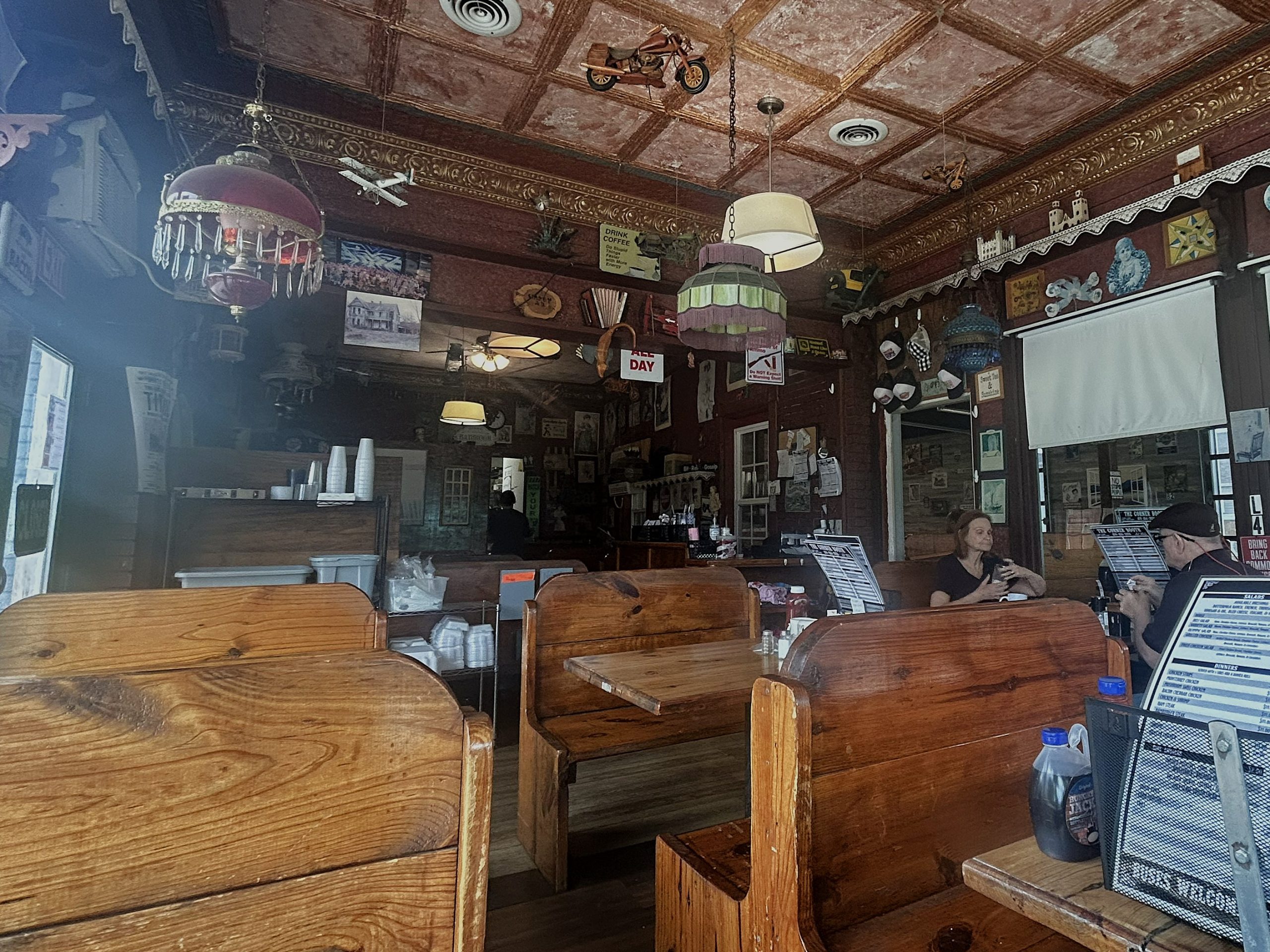
I got the distinct feeling that if I could go back in time and visit the place in 1964, my experience would have been no different.
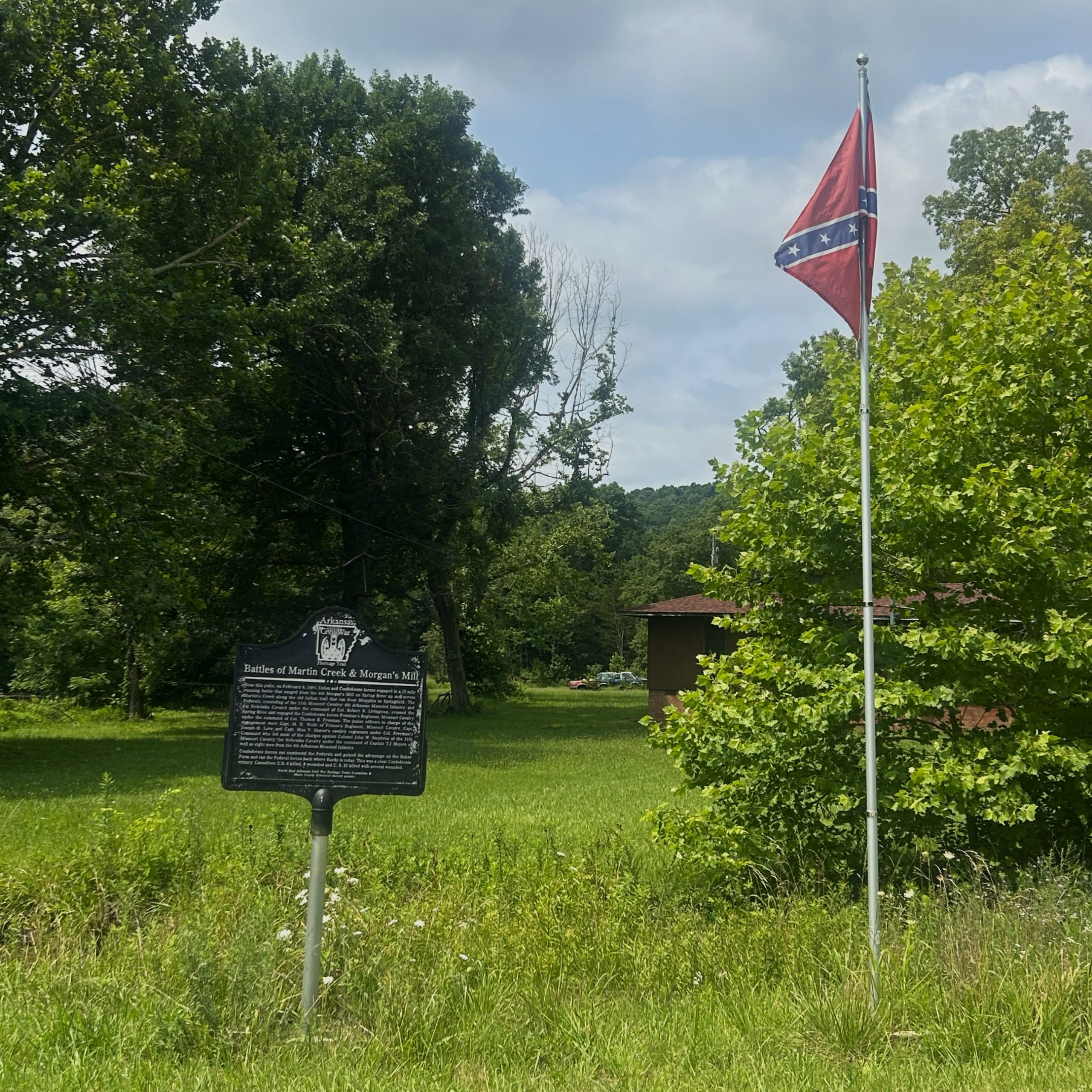
I drove eight miles east of Hardy to the Morgan’s Mill Battlefield marker.
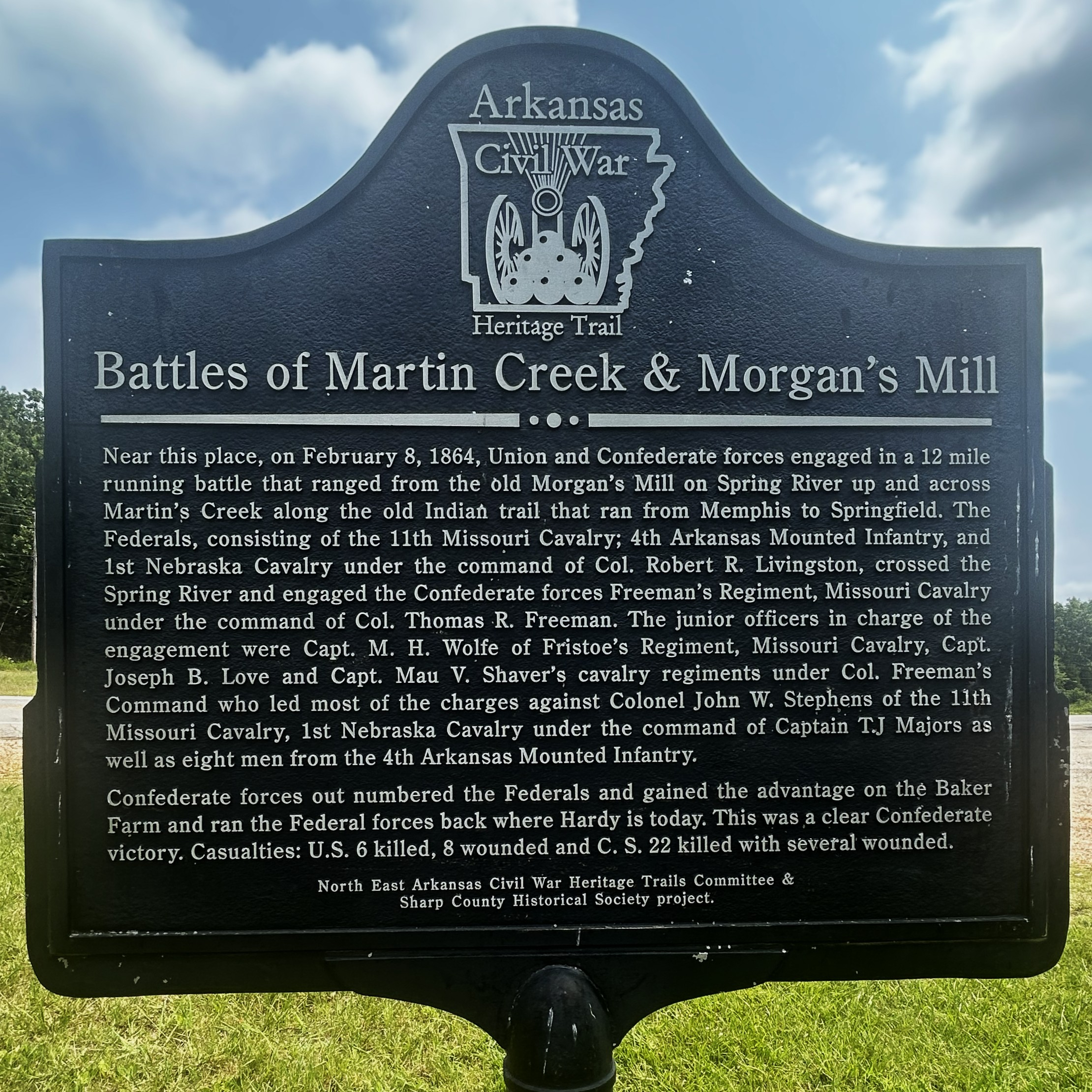
In a nutshell, the Union Army was in Batesville, about 40 miles south of here as the crow flies. A small force (112 men) was sent to chase off a Confederate force. They found the enemy and attacked, but it turned out there were considerably more Confederates (around 300 men) than they’d realized. After some initial success, the Union force had to retreat, and they were chased for about 12 miles west towards Hardy before the action petered out. The Confederates had significantly more casualties (dead, injured, or captured) than the Union, but they kept the field, which makes them the considered winner — as is stated on the sign, which I thought was funny. It feels like more of a draw to me. To reinforce that the Confederates won, there’s a Confederate flag next to the marker.
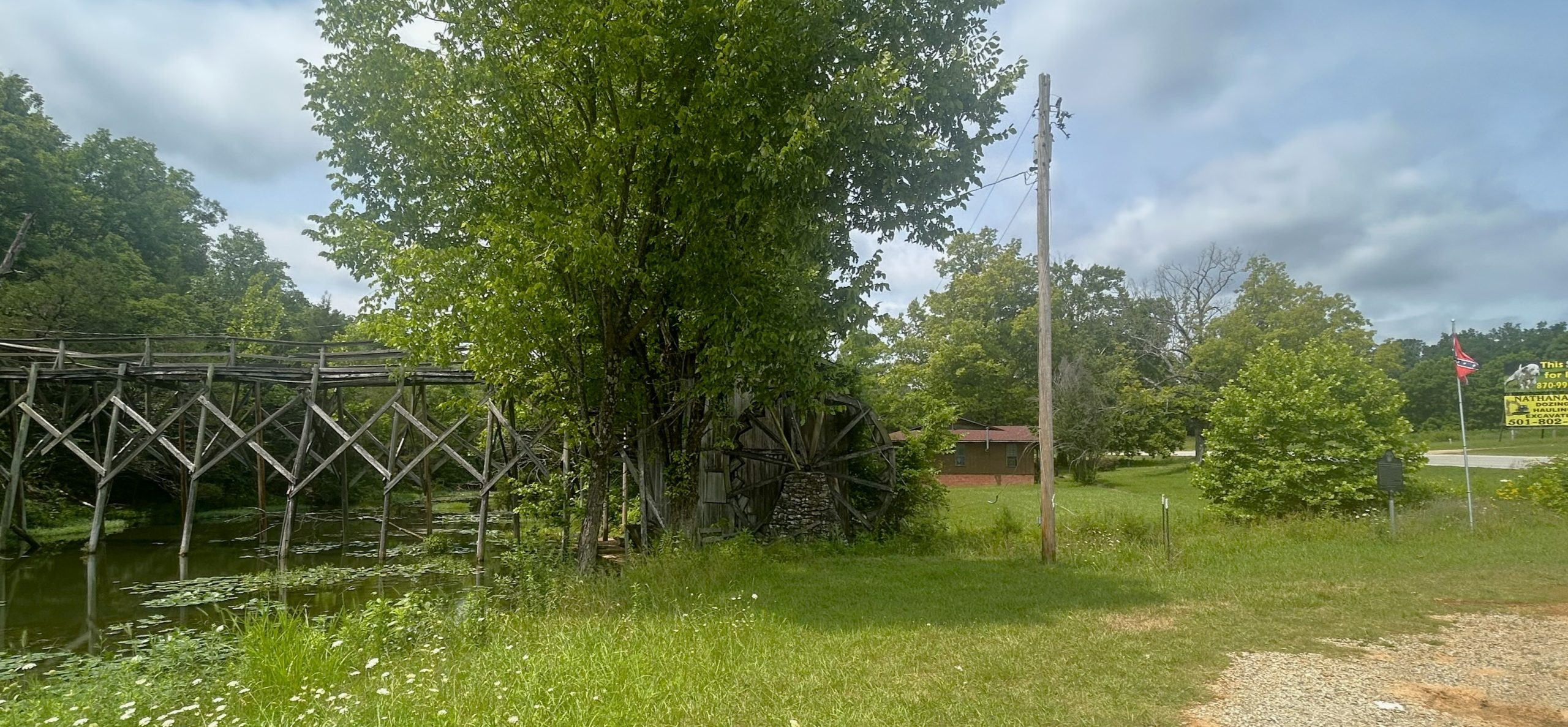
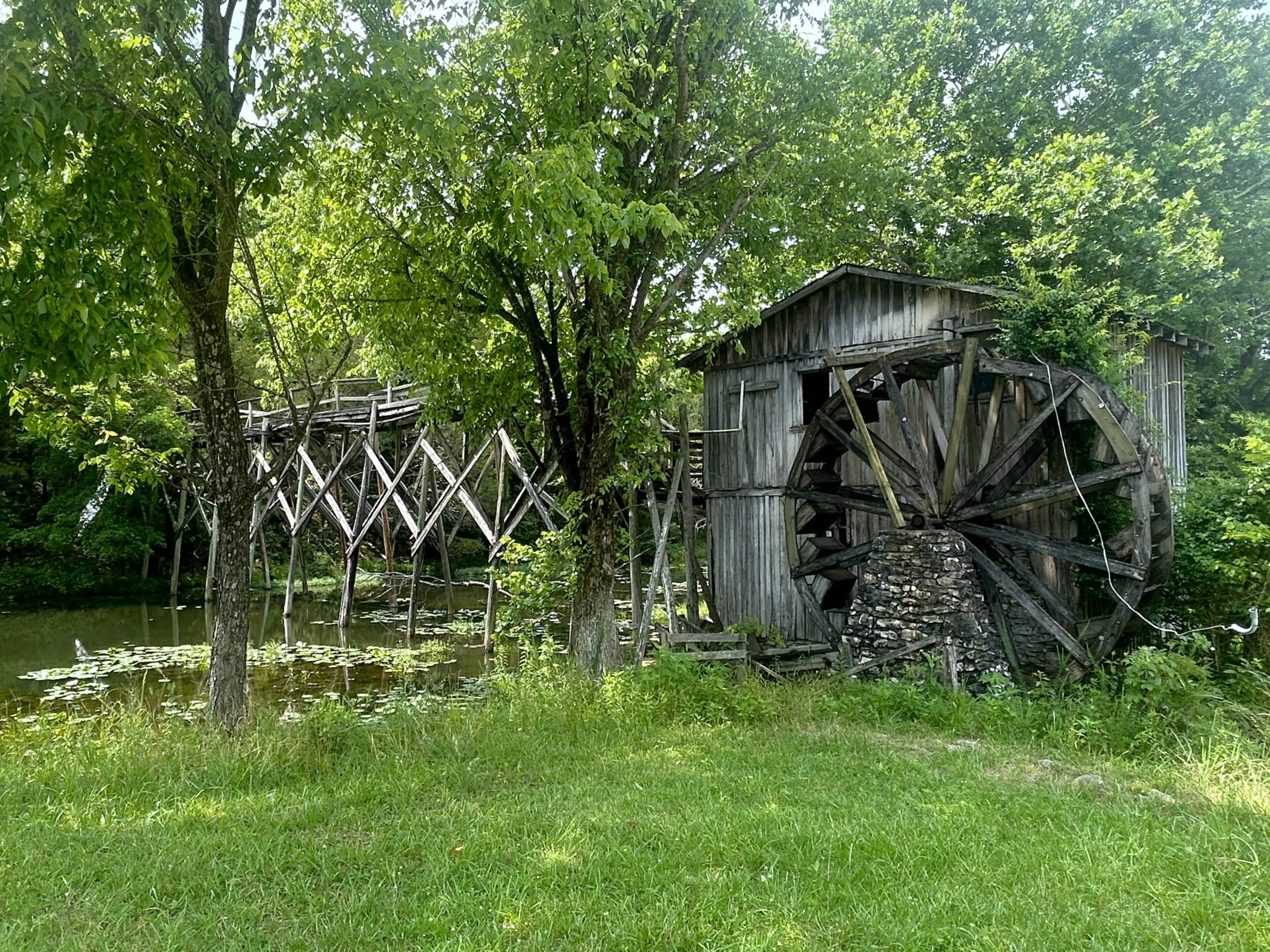
There’s a mill nearby, although there’s no information about it on the site or on the internet that I can find. Whether it’s a reconstruction of Morgan’s Mill on the original foundation, a reproduction of what it may have looked like, or just somebody’s folly, I don’t know. My guess is that it was built by someone who wanted to turn this site into a tourist attraction and has since given up on the idea. But that’s just my guess.
On my way to the battlefield, I passed a store that caught my eye. I decided to stop on the way back, looking for one of those serendipitous moments that can turn good days into great ones.
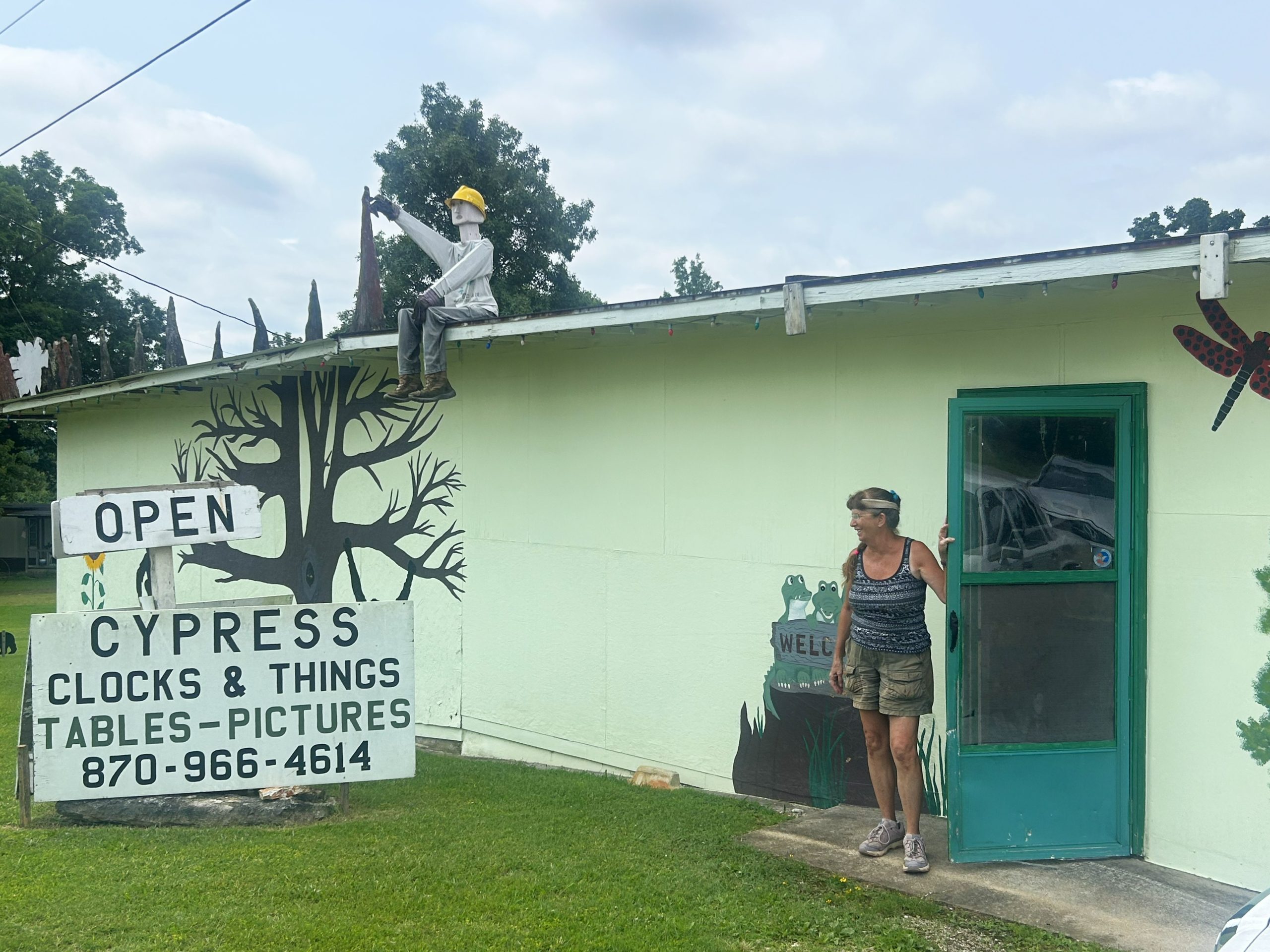
It turned out to be two small rooms filled with cypress tables, clocks, and … things, just like the sign said. As I entered, I told the woman who greeted me that I very likely wasn’t in the market for anything but I thought I’d take a look. That set her off on a 10-minute monologue that covered subjects like how her husband was down pouring concrete, the neighbor who had his shed blown over in a storm and gave the wood to her husband who built another shed out of it, all the occasions for which I might “need” one of her products, and how they’d taken their flags down and hadn’t gotten around to putting them back up . I kept edging my way toward the door, trying to get away without being rude. She got up from behind her desk and followed me outside, still talking. She didn’t stop until I actually got in my car.
As for the store, some of the tables were cool, but out of my price range. The clocks were too gaudy for my taste. The cheesy Indian and animal pictures on the walls looked like decoupage crafts I used to make at summer camp in decoupage craft class — the kind of thing that covers the walls of Northwoods rental cabins. I didn’t buy anything.
And that was it for Sharp County. There were a couple promising antique stores in Hardy, but I had neither the time or money, so I didn’t stop.