
On a lazy Saturday morning, my wife and I drove to the two state parks near Scott so I could get my passport stamped. (I’ve been to both parks before, but my wife hadn’t.)
On entering the Plum Bayou visitor center, we were greeted by a ranger who escorted us into the theater and then spent the next 20 minutes or so telling us everything he knew about Mound Builder Indians and the park. He was a nice guy, and I appreciated his enthusiasm, but you wouldn’t want to talk to him if you were in a hurry. He’s the kind of guy who, if you asked him what time it was, would tell you how to build a watch.
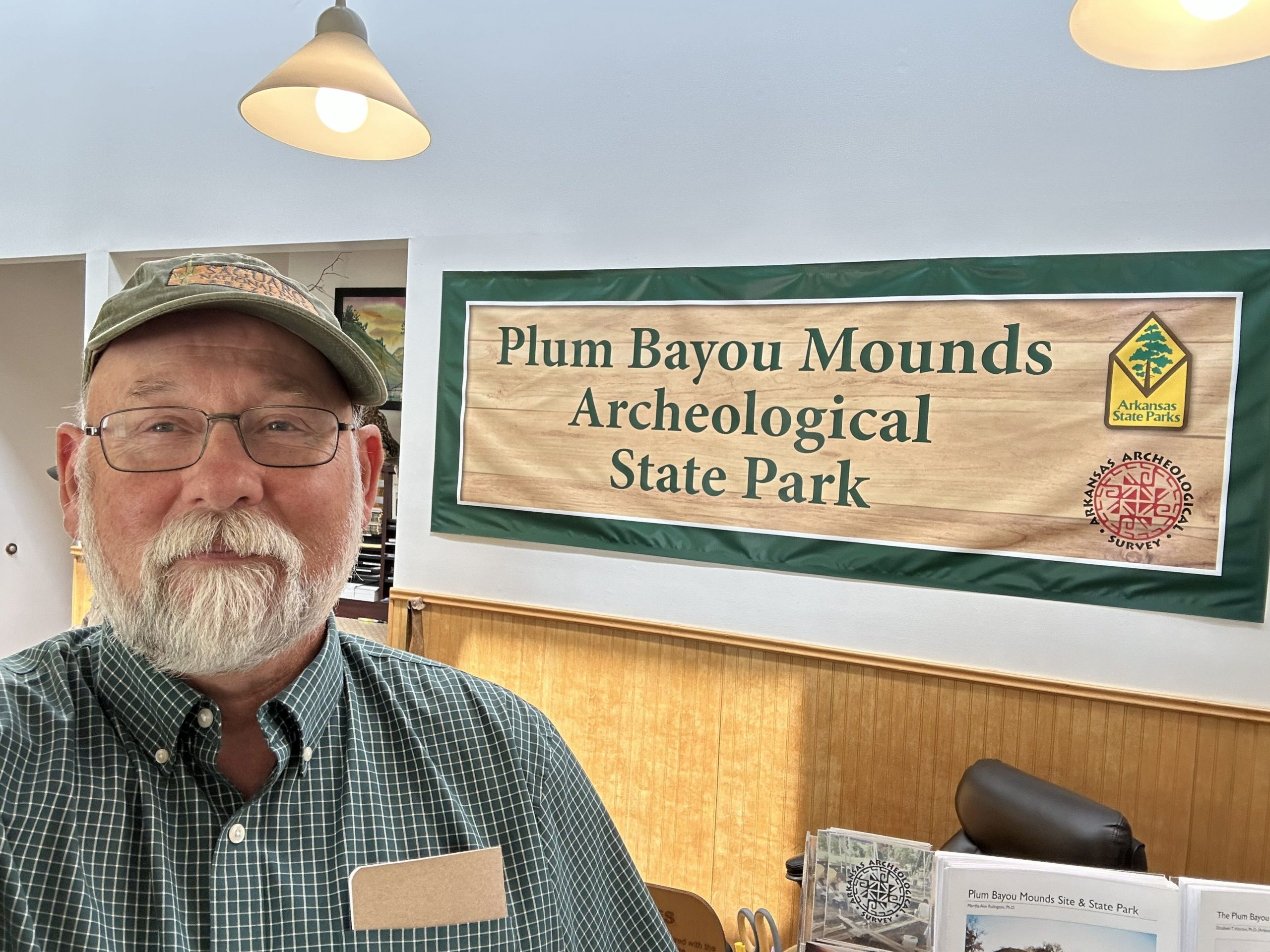
On our drive in, we noticed that the sign was missing. My wife asked the ranger about it, and 10 minutes later, we had our answer. The park used to be called Totlec Mounds, named for the Toltec Indians in Mexico who also built mounds. But historians don’t think the Toltecs got anywhere near Arkansas, so the site has been renamed for a local stream. It took the state a couple years to provide a sign with the new name, and just a few months later, a local lad, probably high on some substance, lost control of his car and destroyed it. They’re still waiting for another sign. I had to take my picture with a banner over the front desk.
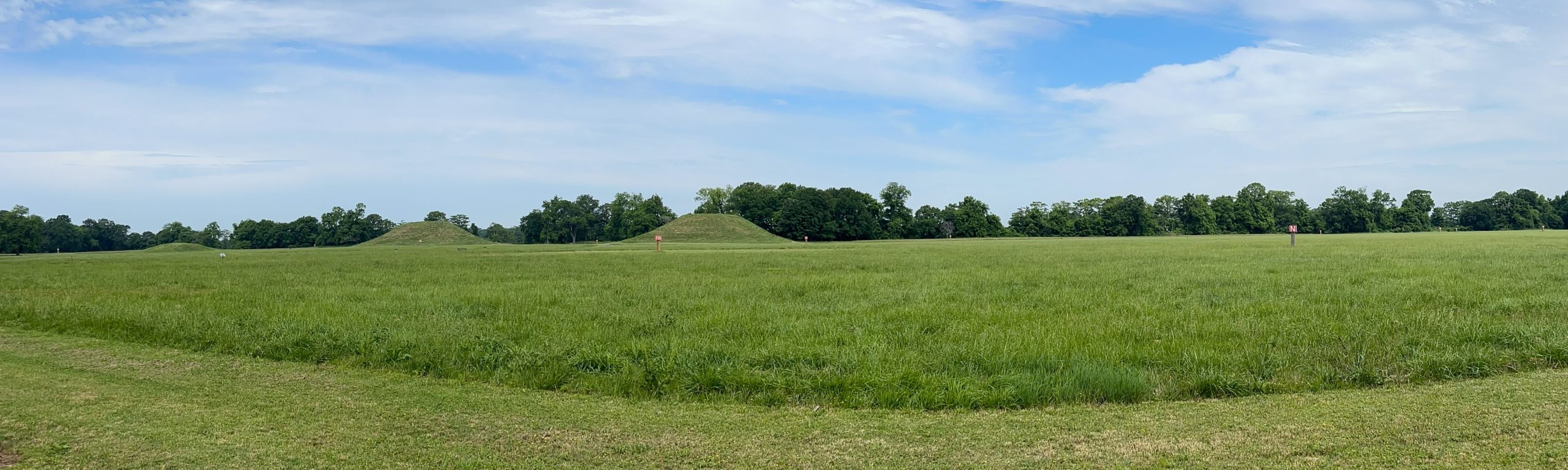
The park preserves the location of a group of 18 mounds constructed, supposedly, between the 7th and 11th centuries. It’s thought that the area was used for ceremonial and burial purposes and that very few people actually lived here. Many of the mounds have been leveled by farming, but there are still two large ones that probably had temples or such on the top and a smaller conical mound used as a burial site. There was once an embankment and moat surrounding the site on three side, while an ox-bow lake did, and still does, border the other side. It is believed the builders arranged the mounds to be used as a solar calendar.
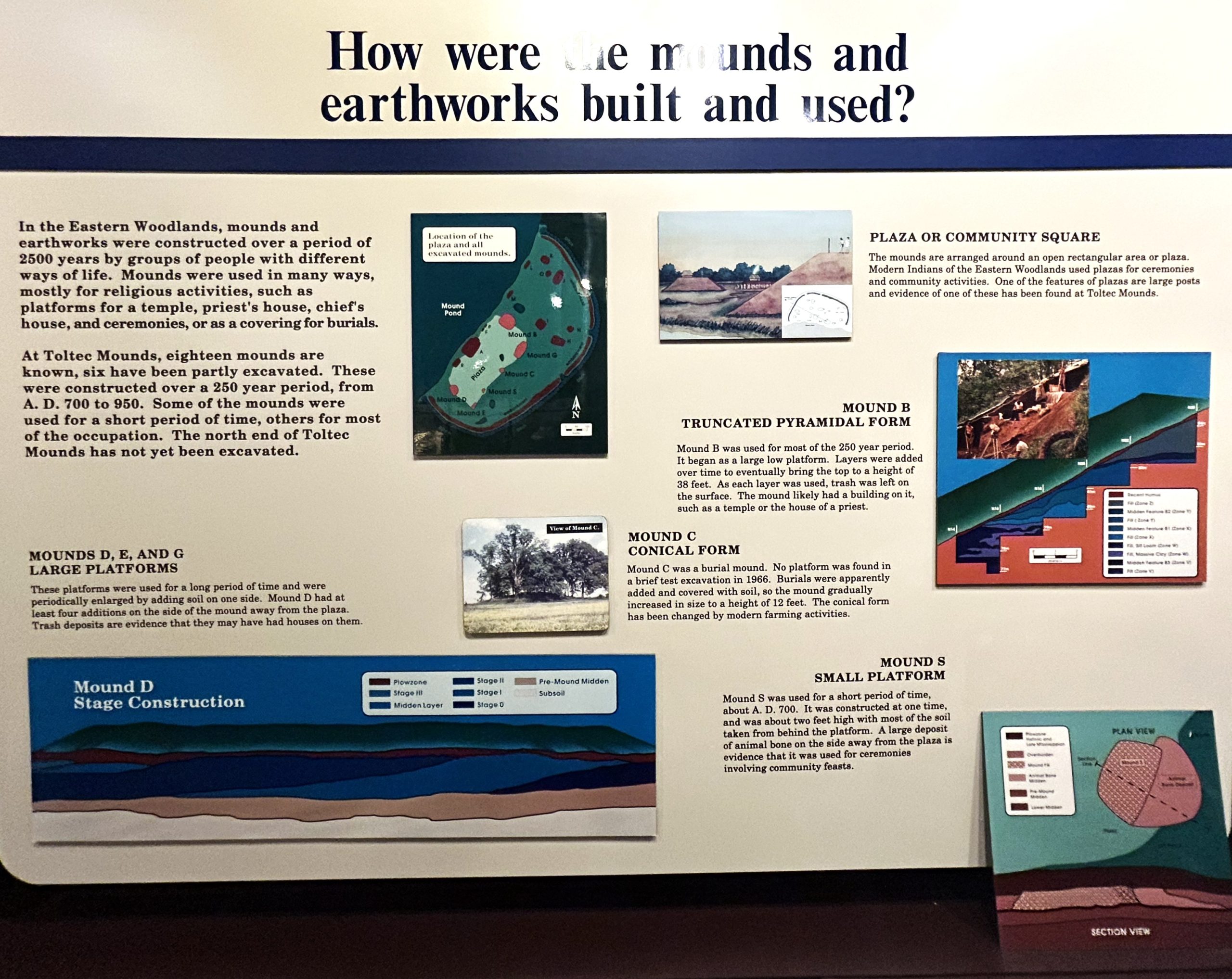
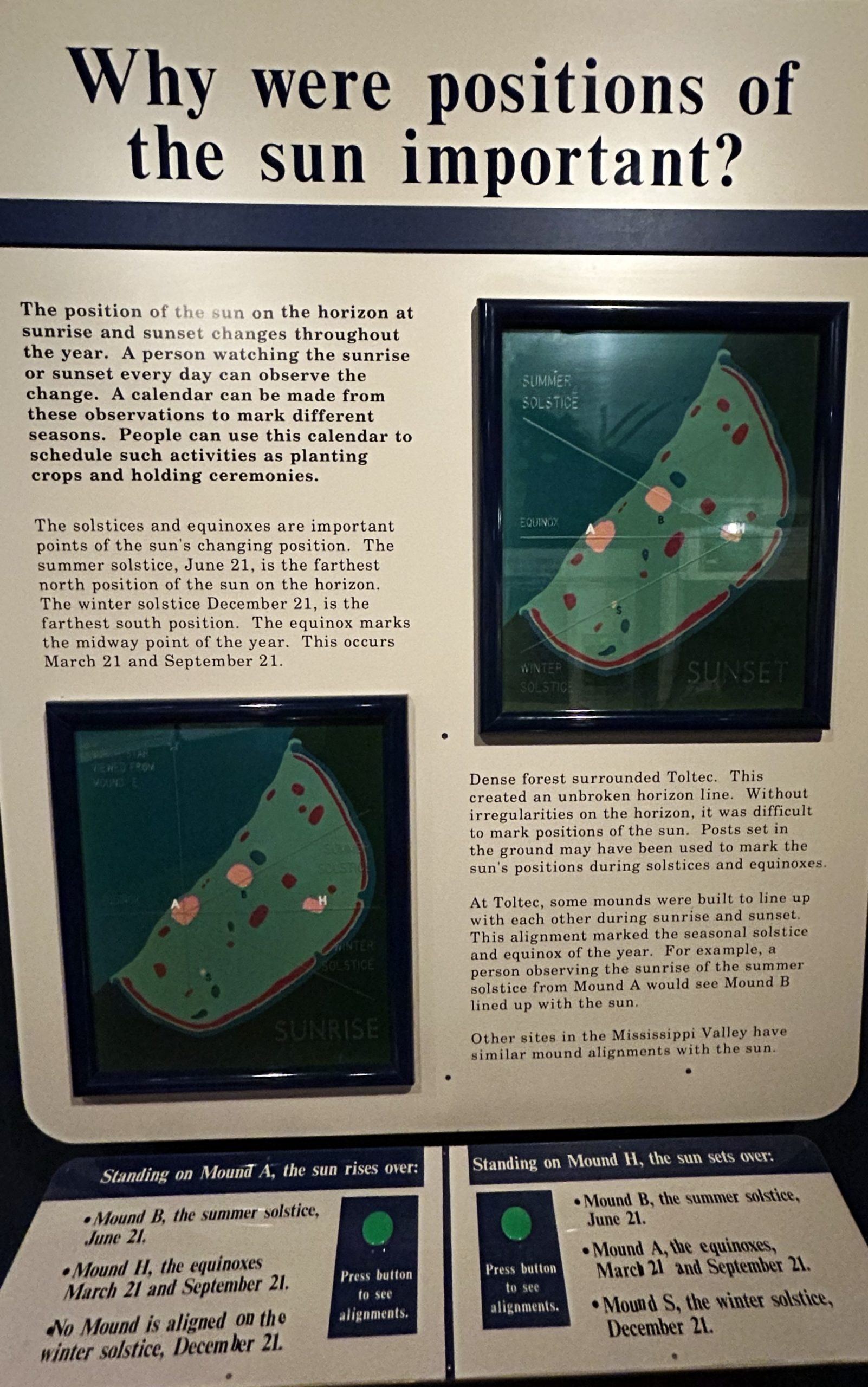
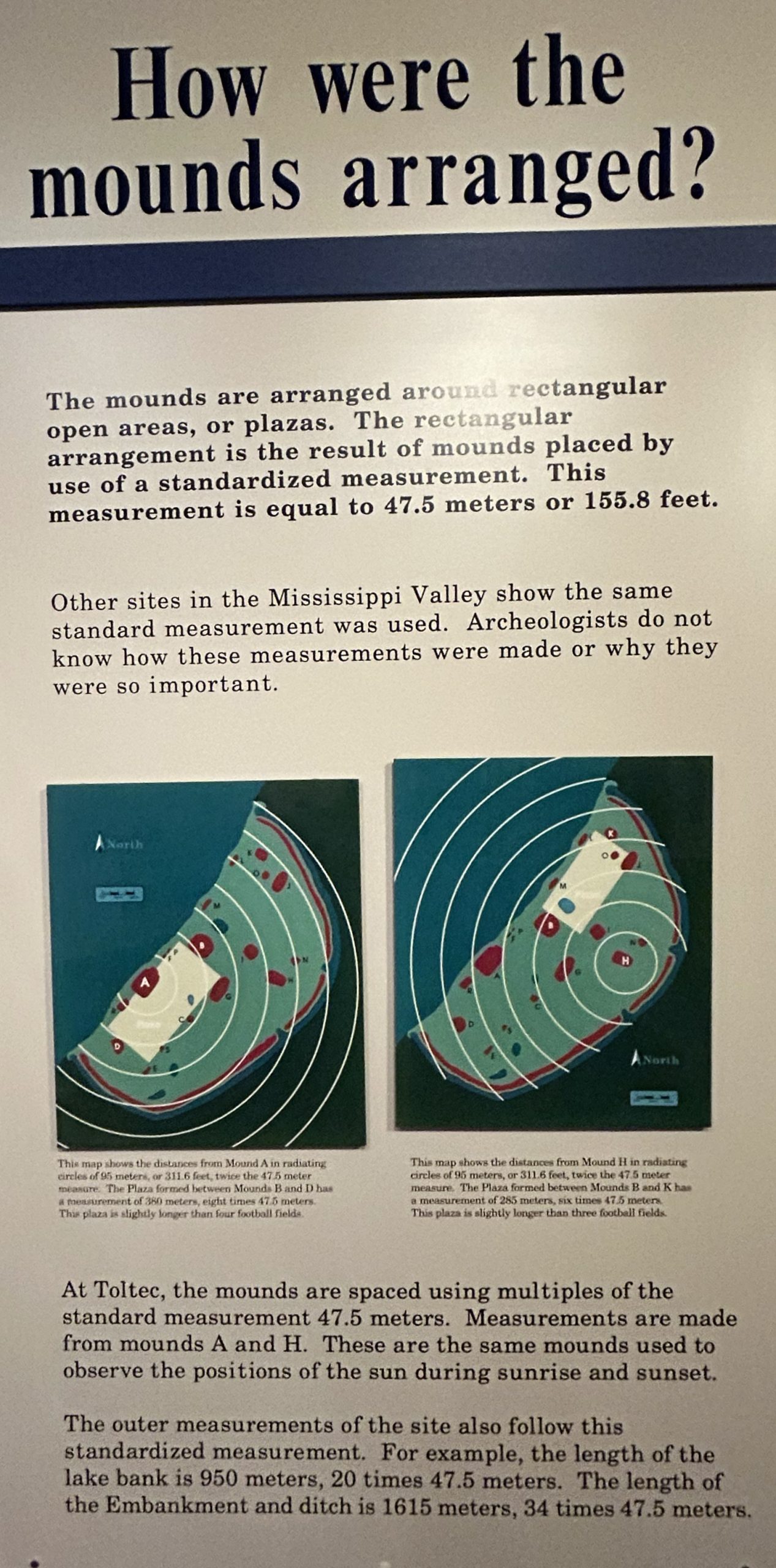
We walked outside so my wife could see the mounds, but it was too warm for a mile-long hike, and mounds of dirt don’t look any different up close. Also, I’d been there before and knew there wasn’t anything fascinating that couldn’t be seen at a distance.
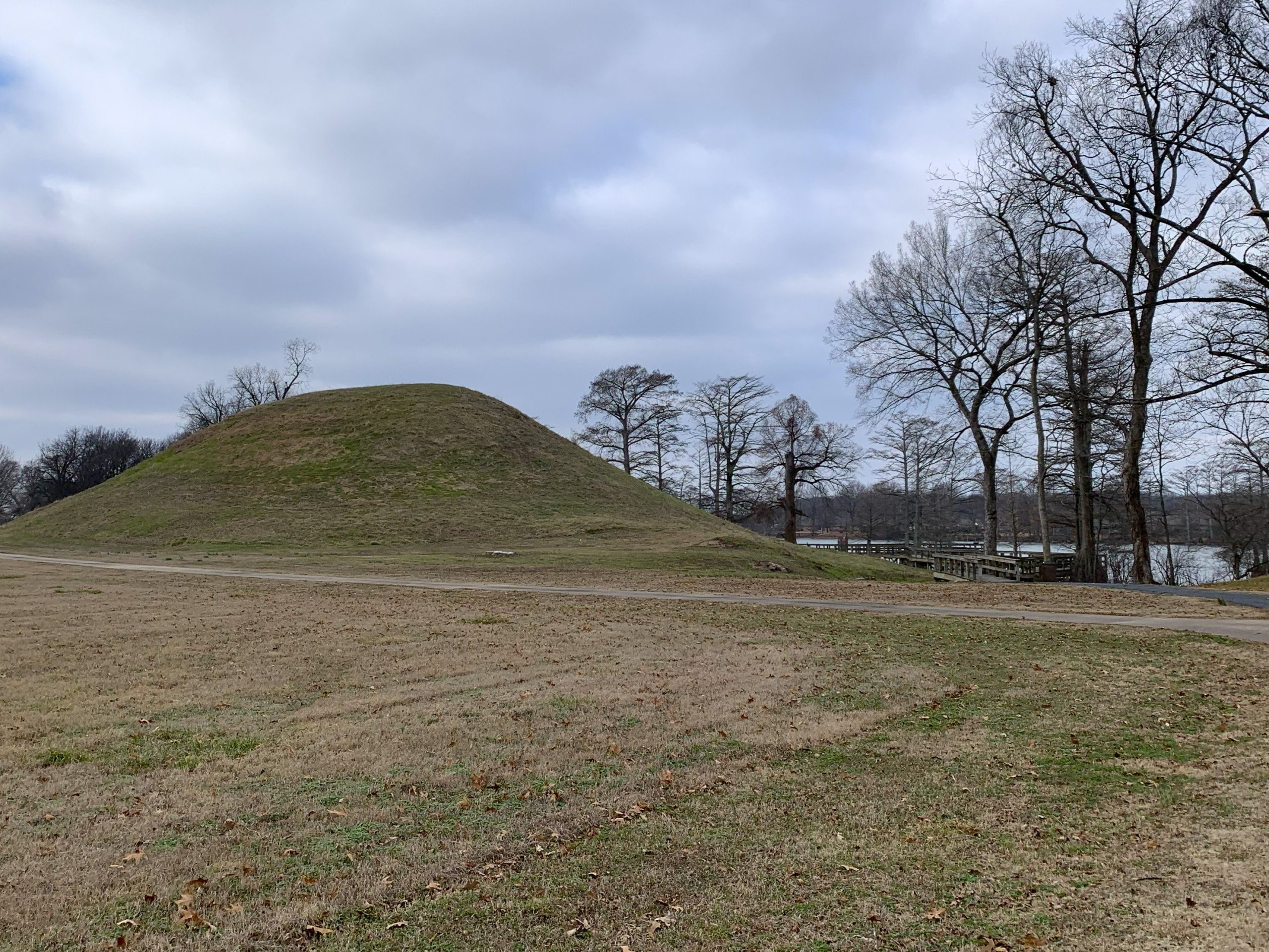
Here’s a photo I took in January, 2023 that shows the proximity of the larger mound to the ox-bow lake.
We were the only visitors for the entire time we were there, which surprised us on a Saturday morning.