
calcarius (spur) mccownii (named for J.P. McCown, U.S. Army captain who discovered the bird)
Monday, May 7, 2018 — 9:14 am
Pawnee National Grassland, Colorado — Weld County Road 96
This one was pretty easy. I knew where other birders had been seeing McCown’s Longspurs on the Birding Tour in the western section of Pawnee National Grasslands. I pulled onto the dirt road and drove very slowly — stopping to check out every bird I saw. I discovered that the windshield on our new Honda distorts the view through cameras and binoculars a great deal.
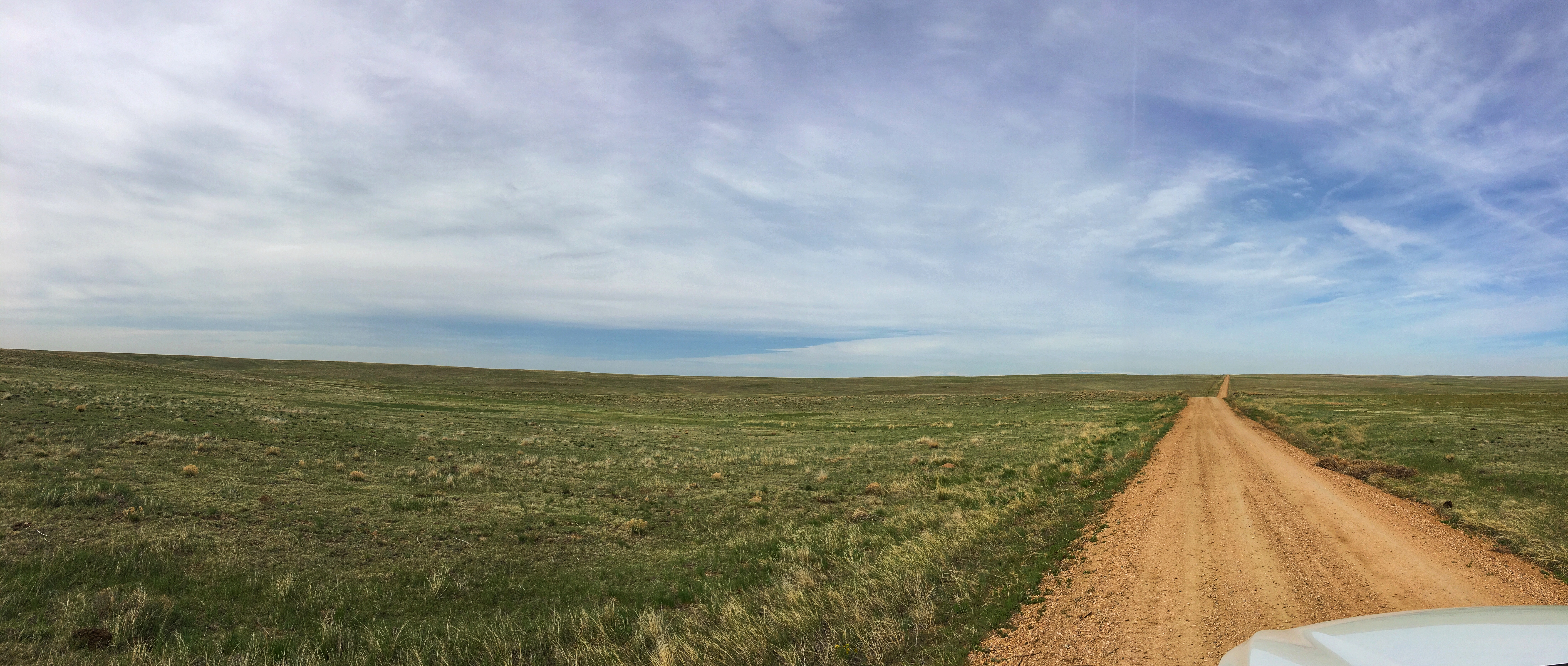
The area was short-grass prairie without a tree or building in sight. I crested a rise and saw three birds on the road. One of them was Horned Lark, which helped me tell immediately that the other two weren’t.
The female McCown’s Longspur looked somewhat like a female House Sparrow with a broad, pale line above her eye. (That’s the longspur on the right.)

The female flew off into the prairie. I angled the car across the road so I could look at the male through the driver-side window. It picked at the road, moving slowly but steadily away from me most of the time.
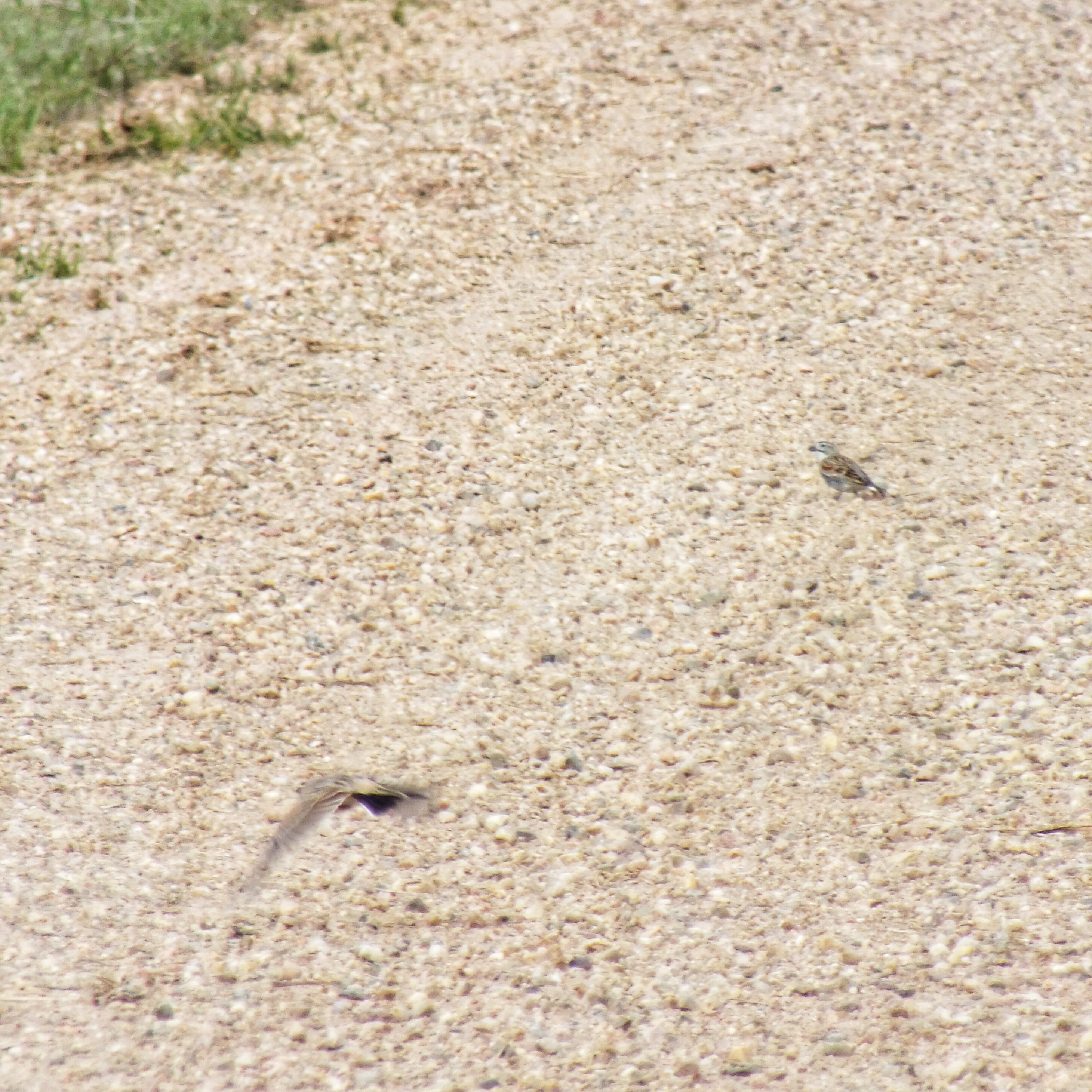


The Horned Lark came and went and came again. The male longspur stuck around for about five minutes, then flew off into the prairie toward where the female had gone. I expected to see more, but these were the only two I spotted.
Update: The politically correct police have decided to change the name of this bird to Thick-billed Longspur, truly one of the ugliest and clunkiest bird names. Their reasoning was that John Porter McCown, who collected the first specimen, was a Confederate officer during the Civil War. They claimed that this name might offend someone. I maintain that you could ask an awful lot of people before you found anyone who had a clue who John Porter McCown was, and even longer before you found anyone who was offended that an obscure prairie bird was named for him. It’s all dumb because, in fact, he will always be the guy who discovered the bird and the Latin name is still mccownii.