
Every time I’ve been to Kansas City , I’ve spotted the sign for Jesse James’ Birthplace. On my way home, I decided to stop and see what there was to see.
It was interesting and informative. I appreciated the fact that whoever runs the place has decided to present the facts and not make any moral judgments. Not that I’m a big fan of Jesse James, — I’m decidedly not — but I get tired of being told how to think. There was a 20-minute video about Jesse and his family, a small museum with some artifacts and history, and then a tour of the home.
After Jesse died, his mother gave tours of the house to paying customers. When she died, Jesse’s brother Frank (who had surrendered and been acquitted for his crimes) gave tours. This continued as a family tradition until fairly recently, so all the furnishings in the house belonged to one generation of the James or another.
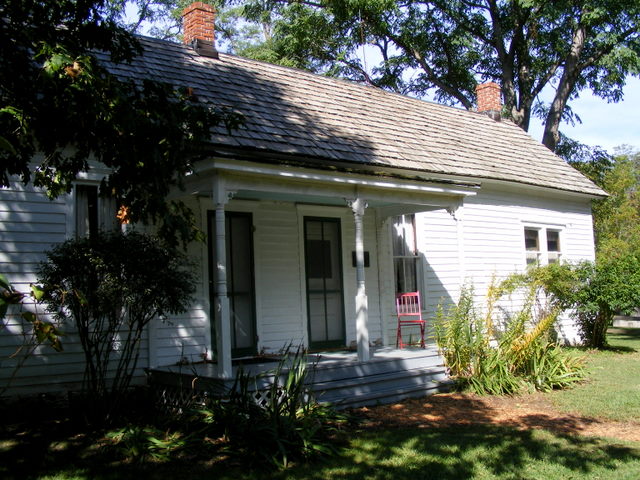
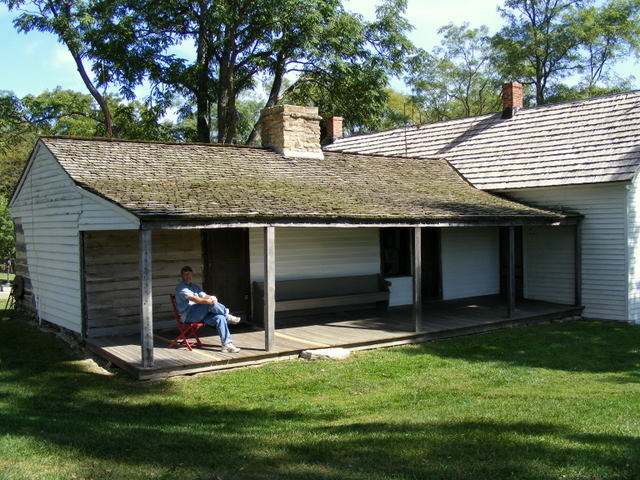
The front part of the house was built by the James family sometime after Jesse was born. The door on the left leads to the room Frank and his wife used as their bedroom. The door on the right leads to the parlor.
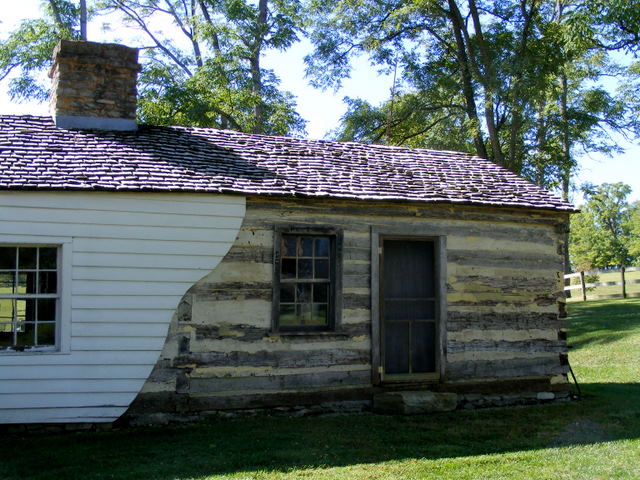
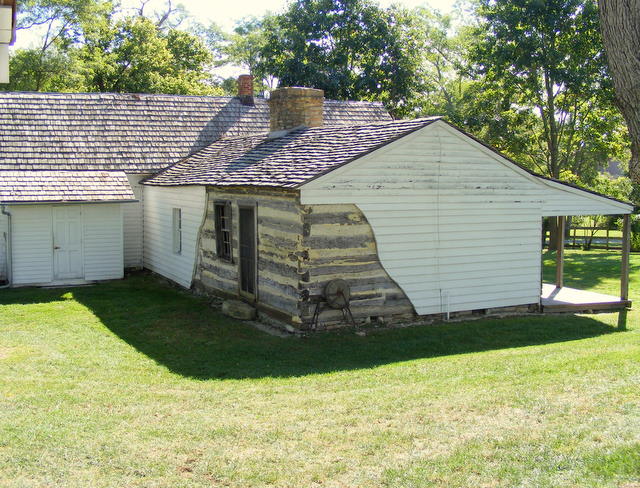
When Jesse lived here, the house wasn’t yet framed. In 1875, the Pinkerton Detective Agency got word that Jesse and Frank were at the house. Several agents made a nighttime raid on the house, tossing a bomb in through the window next to the door (above). Jesse and Frank had escaped a short time before, but the bomb killed Jesse’s eight-year-old half-brother and mangled his mother’s arm. Here’s another shot of the back of the house.
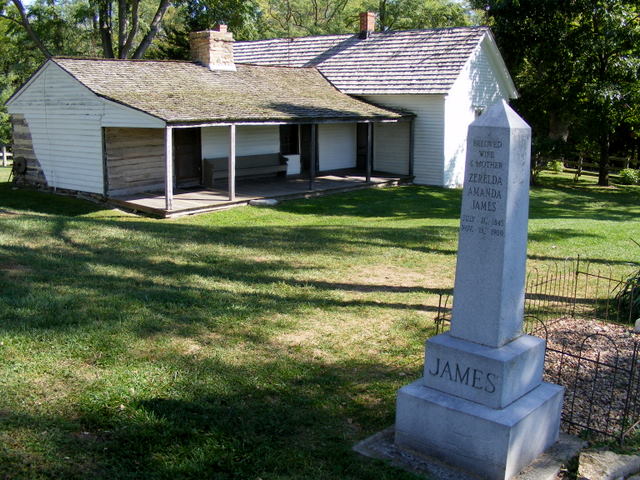
After Jesse was killed by Robert Ford, he was buried in the yard of the house so his mother could keep an eye on the grave and prevent anyone from robbing the body and displaying it for profit.
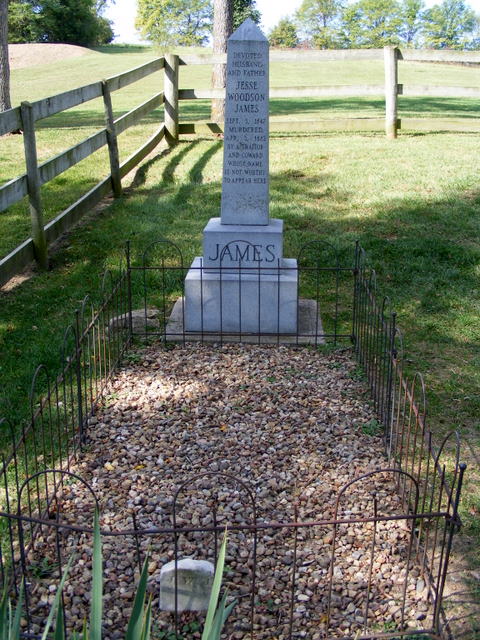
His mother dumped gravel from the nearby creek on top of the grave and sold the stones to visitors for .25. (I picked one up for free.) The words on the stone — “murdered by a traitor and coward whose name is not worthy to appear here” — are from a memorial banner that Jesse’s mother made. Earlier, I had gotten permission from the guide to take some photos of the house with the chair. After the tour, she volunteered to take a shot of me in the chair.
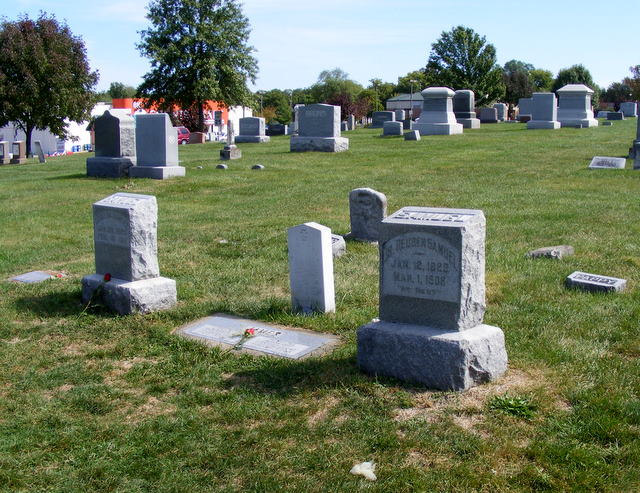
After his mother died, Jesse’s remains were moved to the cemetery in town. I stopped by briefly on the way back to the interstate and had a cell-phone conversation with my younger daughter about whether or not she should put gas in the car while I took these photos.
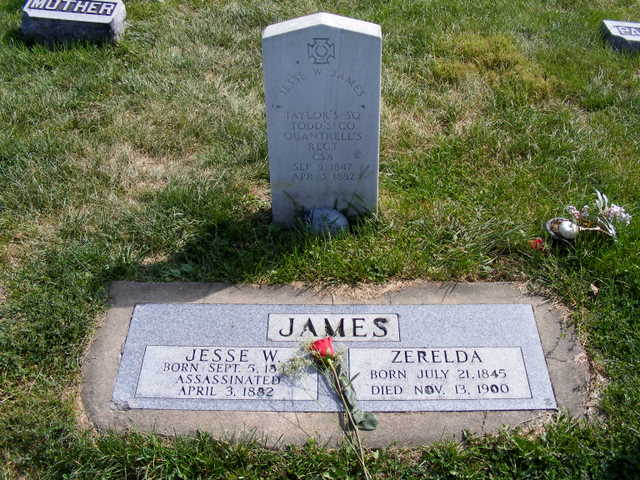
Jesse’s mother and wife (Jesse’s cousin) were both named Zerelda. Jesse had four children, two who survived to adulthood.