Bird #602 – American Oystercatcher

haematopus palliatus

Jekyll Island, Georgia – South Beach

Monday, March 24, 2025 – 3:27 pm

Whenever I told someone I was going to the coast to look for lifers, I would explain that I’d never seen, for example, an American Oystercatcher. It felt like a hole in the list

After leaving the visitor center, I paid my $7 toll and drove out to the island. I headed for the south tip of the island, and, after a few wrong attempts to find a place to park that would allow me to access the southern tip of the island, I was on my way. It was about a mile walk to the end of the beach. There were tons of gulls, terns, skimmers, and shorebirds around, and as soon as I turned the corner at the tip, I spotted six Oystercatchers standing with some Laughing Gulls right at the water’s edge. They were silhouetted by the sun, so I walked past them so I could get some decent photos. For the half hour I remained in the area, they didn’t do much other than stand and stare or tuck their bills into their back feathers and sleep.

They were large — very close in size to the Laughing Gulls. with brown backs, white bellies, black heads, huge orange bills, and pink legs. Later in the week, I saw two foraging along a rock jetty and in the nearby sand at Huguenot Memorial Park and others in the distance on Dauphin Island in Alabama.

Posted in Birds | Comments Off on Bird #602 – American Oystercatcher

Bird #601 – Clapper Rail

rallus longirostris

Jekyll Island, Georgia – Jekyll Island Guest Information Center

Monday, March 24, 2025 – 2:35 pm

The Jekyll Island visitor center (gift shop, actually) sits on a wide space along the causeway out to the island. Behind the building there’s a raised deck that looks out over an extensive marsh along the Turtle River. As the tide came in, many shorebirds flew in from further out in the marsh and hung out on the flats near the platform. Another birder, a Wisconsin native who spends his winters on the island, came by, and we began to chat.  I told him that I’d been informed that that was THE PLACE to see Clapper Rails. He didn’t agree, although he said they were certainly in the marsh.

A couple of minutes later, I saw a Clapper Rail break out of the reeds along a narrow channel through the mud. It flew across the water, landed on the mud on the far side, and scurried immediately into the marsh grasses on the other side. I barely had time to get it in my binoculars but certainly didn’t have time to take a photo. When I told the other birder, he played the song, and immediately two others called out, one of which was somewhere just below the platform. I didn’t see one again then, or later in the evening when I stopped by on my way back to my hotel.

The Wisconsin birder told me I could get a photo at Driftwood Beach, on the island, early in the morning, so I made sure I was there shortly after dawn. I parked my car and began walking toward the trail when a Clapper Rail ran across the road into a marsh on the other side. I walked a short way down the trail and soon saw two Clappers wading along the edge of a grassy channel. The walked right past me, not five feet away and perhaps two feet below the level I was standing on. I got some good photos of one of them, and then some more photos of one that walked along a muddy bank on the other side of the path. I spotted what I believe was a fifth one nearby a few minutes later.

They were larger than a Virginia Rail, but with basically the same markings, although the markings were not nearly as sharp or contrasting. They poked under the water with their bills as they stalked furtively in rail fashion. They even acted furtive when they were right out in the open. Frequently, they gave their clapping calls, often in response between two birds.

Posted in Birds | Comments Off on Bird #601 – Clapper Rail

State First

On a gloomy Monday in March, I decided to head for Pulaski County to bird. I’ve set myself the goal of finding 100 birds each month, and I thought Lake Maumelle might be a good spot for some late-lingering ducks.

My first stop, at Vista Point, resulted in so few birds that I didn’t bother making a list. My next stop, at Loon Point, offered 12 loons and a smattering of other expected birds. The third and final stop on the lake, Bufflehead Bay — one that usually isn’t terribly productive — came through on this day. There were 42 Common Loons in sight, and some of them occasionally hooted or yodeled, which is worth the trip by itself. Then I found a Pacific Loon and even managed to get a photo that showed a trace of its chinstrap, something I’ve never been able to capture before.

And then I saw a black-and-white grebe. It was a long way off, but I could tell it wasn’t a Horned Grebe. Western Grebes are seen in Arkansas from time to time, so that’s what I called it.  It drifted closer, and I got some lousy photos and sent out a notice to the rare bird email group.

Because it’s rare, my checklist and photo were also sent to any birders who subscribe to eBird’s Arkansas notifications. Apparently, a couple people who saw my photo thought the bird might be a Clark’s Grebe, a close relative of the Western Grebe, and contacted Kenny N., who is generally considered Arkansas’ top birder.

Kenny and his wife went to Lake Maumelle the next day and saw the grebe from a distance. They were convinced that it was a Clark’s because of the pale sides and restricted amount of black on the head. I still thought it was a Western because the Clark’s Grebes I’d seen in Colorado and Wyoming looked like this. Obviously, this bird isn’t just pale on the sides — it’s white. And it’s eye is obviously set apart from the black cap. Neither of those marks were obvious in my photo of Lake Maumelle bird.

I went back on Thursday for a better look on a sunny day. The grebe was still there, and this time drifted fairly close to where I could get better photos. The key marks were more obvious and I began to be persuaded.

I was there about an hour when Kenny and his wife showed up along with Michael and Patty, two other local birders. By this time, the grebe had drifted a mile away to the far side of the lake. We flagged down a passing fisherman and convinced him to take Michael — because he has the best camera — across the lake for a better look. While we yelled confusing instructions into a phone, Michael and the boater tried to find the grebe. It all got a little frustrating and hilarious before it was over, but Michael got several definitive photos that prove it was indeed a Clark’s Grebe.

Nobody had seen a Clark’s in Arkansas before, so my name will go down in history as the the finder of the first one in the state — the 425th species all time.

Of course, it would be more impressive if I’d actually identified it correctly, but I’m developing a reputation for finding rare birds and misidentifying them as something more common. That’s definitely a skill — lots of people find common birds and misidentify them as something rare. I do have this distinction — except for the ones Michael got from the boat — my photos are definitely the best ones taken. I went back a third time the next Thursday and got even closer. If I had gotten these photos on the first day, I would definitely have called it correctly.

The bird hung around for 12 days, giving almost all the serious birders in Arkansas a chance to see it. On one of my visits, I met three birders from Pennsylvania who had stopped by to find it. In exchange, they pointed out a Little Gull far out over the lake, another very rare bird that didn’t stick around for anyone else to see.

One last note — on the sixth, the day we confirmed the i.d. of the grebe, there were three loons in the area — Common, Pacific, and Red-throated — and five grebes — Clark’s, Horned, Eared, Red-necked, and Pied-billed. There aren’t too many people who have seen all of those in one spot in one day.

Posted in Birds | Comments Off on State First

Highlights from Recent Reading

At suppertime he [Minstral, a poodle] would camp underneath the table in front of me and would down anything I slipped him — meat, fish, pasta, the occasional napkin, even vegetables, including Brussels sprouts. In those days there was a TV show called Lassie, wherein every week a boy named Timmy — who was, with all due respect, an idiot — would get stuck in a well, or fall into some quicksand, or get into some other dire predicament. Then his faithful collie, Lassie, would race back to the farmhouse and bark at Timmy’s parents — who were not themselves rocket scientists (For example, Timmy was eventually replaced by an entirely new boy named Jeff, and they didn’t even notice that.) — until they finally figured out, with some difficulty (“What’s wrong, girl? Are you hungry?”), what Lassie was trying to tell them, even though this happened every single week. So they’d go rescue Timmy, and everybody would praise Lassie for being a hero.

To my  mind, Minstral was way more heroic. Any dog can run around barking. But show me the episode where Lassie eats Timmy’s Brussels sprouts.

from Lessons from Lucy, by Dave Barry

__________

I’ve been paying into the Social Security system since the French and Indian War, and I want to cash in. Yes, I am aware that Social Security is basically a giant Ponzi scheme, and the we baby boomers, as we retire in vast numbers and start collecting from the system, will be imposing an enormous, unfair and potentially ruinous financial burden on younger generations. I view this as payback for what the younger generations have done to music.

from Lessons from Lucy, by Dave Barry

__________

You’re only  young once, but you can always be immature.

from Lessons from Lucy, by Dave Barry

__________

Green Eyes [his wife] is not worried about The Widow wooing me away. And I say: “Why not? I am a decent fellow and can be nice when I put my mind to it.” and she says: “You sit and watch television in your undershirt and scratch your stomach through the most beautiful parts.” And I say: “But how would The Widow know that?” And she says: “Because I told her.”

from The Squirrel Cage, by Douglass Welch

__________

Francis Galton … was Charles Darwin’s cousin. [He] wrote a popular book called The Art of Travel, which offered explorers practical information such as a formula for determining the trajectory of a charging animal and advice to hire women for expeditions, explaining that they like to carry heavy objects and cost little to feed because they can just lick their fingers while cooking.

from River of the Gods, by Candice Millard

__________

I have held a lot of different jobs in my life. I was an accountant. I once worked — this is true — for the Illinois State Unemployment Compensation Board, behind the counter. This is true. And at that time we made $60 a week, and the claimants made $55. This is true. This is true. And they only had to come in one day a week. Now, it took me about a week to figure that out. So, I really did get fired and wound up on the other side of the line and only had to come in one day a week.

from SNL sketch, by Bob Newhart

__________

[Admiral Bull] Halsey was not convinced that the peace would stick — and even if the Japanese government really meant to surrender, there was every reason to expect kamikaze attacks by defiant pilots. In a message that prompted hearty laughter throughout the fleet, he ordered the Hellcat and Corsair pilots to “investigate and shoot down all snoopers — not vindictively, but in a friendly sort of way.”

from Twilight of the Gods, by Ian w. Toll

__________

From a  1935 Japanese book on motoring directions. It wasn’t meant to be poetry, but was made so when someone added line-breaks.

Beware the Festive Dog

At the rise of the hand,
of policeman, stop rapidly.
Do not pass him by
or otherwise disrespect him.

When a passenger of the foot
hove in sight, tootle the horn trumpet
to him melodiously at first.
If he still obstacles your passage,
tootle him with vigor
and express by word of the mouth
the warning “Hi, Hi!”

Beware the wandering horse
that he shall not take fright
as you pass him.
Do not explode
the exhaust box at him.
Go soothingly by
or stop by the road-side
till he pass away.

Give big space
to the festive dog
that makes sport
in the road-way.
Avoid entanglement of dog
with your wheel-spokes.

Go soothingly on the grease-mud,
as there lurk the skid demon.
Press the brake of the foot
as you roll round the corners
to save the collapse
and tie-up.

__________

Twenty-five minutes brought us to the Bryson Tower, a white stucco palace with fretted lanterns in the forecourt and tall date palms. The entrance was in an L, up marble steps, through a Moorish archway, and over a lobby that was too big and a carpet that was too blue. Blue Ali Baba oil jars were dotted around, big enough to keep tigers in. There was a desk and a night clerk with one of those mustaches that get stuck under your fingernail.

Degarmo lunged past the desk towards an open elevator beside which a tired old man sat on a stool waiting for a customer. The clerk snapped at Degarmo’s back like a terrier.

“One moment, please. Whom did you wish to see?”

Degarmo spun on his heel and looked at me wonderingly. “Did he say ‘whom’?”

“Yeah, but don’t hit him,” I said. “There is such a word.”

Degarmo licked his lips. “I knew there was,” he said. “I often wondered where they kept it.”

from The Lady in the Lake, by Raymond Chandler

__________

The Colonel snorted. “It seems to me, my innocents,” he said, “that you have got hold of the wrong end of the stick. You may be fighting a just war, but against the wrong enemy. It isn’t the very rich who are a danger to any country but the ignorant poor. It is the latter who are always trying to pull down the structure and entomb themselves with it, instead of endeavoring to learn how wealth is acquired and following the example. And for that matter, you half-wits,” the Colonel continued, “who is it that supports charities, endows foundations, creates universities, aids hospitals, and makes possible research intended to relieve every human ailment? It is the rich. The world today would be unspeakably ghastly if the philanthropies of the wealthy were to come to an end. You can afford to leave them their toys.

from The Zoo Gang, by Paul Gallico

__________

A theater critics review of King Lear:

Mr. Clarke played the King all evening as though under constant fear that some one else was about to play the Ace.

from A Sub-Treasury of American Humor, by E.B. and Katharine White (eds.)

__________

Proof we need editors:

Crawling about on hands and knees with their red hair often touching, is the only way the two men could have studied the maps, following the Missouri around the great bend to the Rocky Mountains, and then down the Columbia to the Pacific, extending through the archway and under Jefferson’s suspended bed.

from John Colter, by Burton Harris

__________

Envy was once considered to be one of the seven deadly sins before it became one of the most admired virtues under its new name, “social justice.”

seen online, by Thomas Sowell

__________

TV is a device that permits people who haven’t anything to do to watch people who can’t do anything.

Fred Allen

Posted in Books and Literature | Comments Off on Highlights from Recent Reading

Washita Battlefield National Historic Site

We spent Monday night in Elk City, Oklahoma, on old Route 66. In the morning, I left my wife sleeping in the room and drove 30 miles north-northwest to the Washita Battlefield. I arrived shortly before the visitor center opened, so I drove the mile to the actual battlefield and walked the trail.

As the marker says, it was a battle fought between Custer and the 7th Cavalry and the Cheyenne Indians. Many of the Indians had been raiding in Kansas, killing and kidnapping settlers. Since the Indians wouldn’t give up the murderers, and since the warring Indians were mixed in with Indians who claimed to want peace, General Sheridan opted for total war. Custer led his force through a blizzard and attacked the first Cheyenne camp he came upon. It just happened to be led by Black Kettle, who had also been at Sand Creek four years earlier and who had done all he could to promote peace, but he had lost influence over his tribe. There were other villages — Arapaho, Kiowa, and Cheyenne — nearby, filled with warring Indians.

Black Kettle and his wife were killed in the battle, along with about 18 other warriors. About 18 women and children were also killed, mostly by the Osage Indians who accompanied the army as scouts. The U.S. Army lost 22 men, including second-in-command Joel Elliot and his troop of 17 soldiers who pursued Indians toward the other villages, were surrounded, and killed. Custer’s men destroyed the villages and a herd of over 800 Indian horses. Indians from the other villages were threatening, so Custer skedaddled before they attacked. Custer claimed victory, although from a numbers standpoint, it wasn’t much of one, and was considered a hero by many. The battle gave him a reputation as a great Indian fighter.

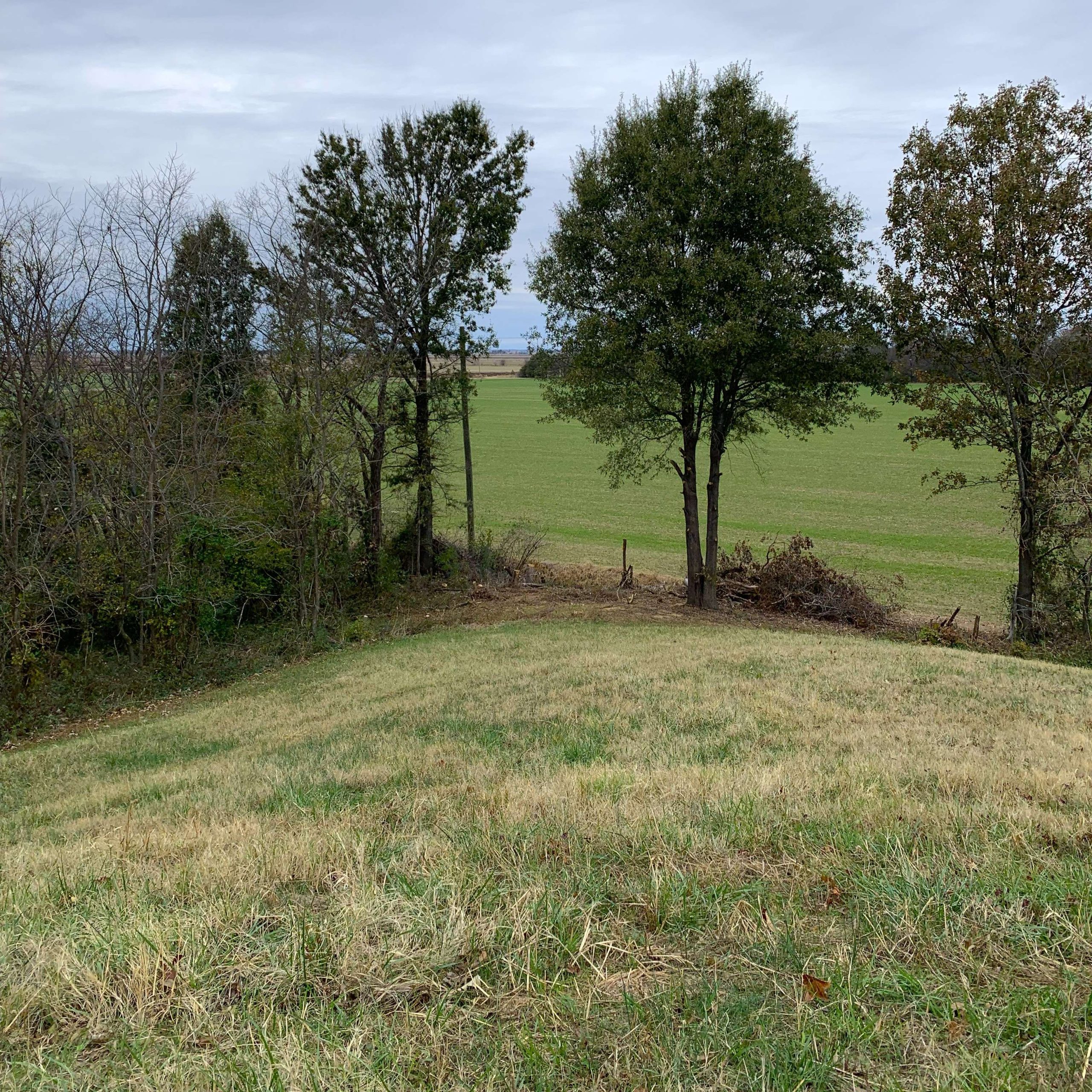
Anyway, I had the battlefield totally to myself as I walked the trail. Here’s the view from the overlook along the road.

Black Kettle’s camp was set up along the Washita River where the clump of trees is on the left.

A closer view of the camp area, with prayer flags in the tree.

I read a book on the battle shortly after I got home.

I walked through the visitor center museum, bought a few souvenirs, and went back to Elk City for my wife.

We went to the Route 66 museum in Elk City, which turned out to be a bust. There were a few rooms of cars and so forth that were visually impressive but uninformative. Then there were about 15 out buildings filled with local historical society stuff that were a waste of our time. We didn’t even bother with several of them. We passed signs for at least two other Route 66 museums in the next hour or so. At least we only paid $5 each.

We were finally vacationed-out, although we still had six hours to go. We didn’t stop much. My wife took over the driving in Checotah and took us the rest of the way home.

Posted in Battlefields, National Parks | Comments Off on Washita Battlefield National Historic Site