
Categories
- Baseball (137)
- Concerts/Performances (25)
- Europe (57)
- Humor (92)
- Miscellaneous (44)
- Photos (155)
- Places to Go (1,179)
- Alabama (5)
- Arizona (1)
- Arkansas (159)
- Conway (5)
- California (27)
- Colorado (205)
- Florida (14)
- Georgia (16)
- Idaho (3)
- Illinois (216)
- Indiana (58)
- Iowa (14)
- Kansas (12)
- Kentucky (17)
- Louisiana (1)
- Maryland (1)
- Massachusetts (10)
- Michigan (44)
- Minnesota (20)
- Mississippi (5)
- Missouri (40)
- Montana (2)
- Nebraska (4)
- New Mexico (4)
- New York (5)
- North Carolina (2)
- North Dakota (26)
- Ohio (87)
- Oklahoma (6)
- Oregon (14)
- Pennsylvania (7)
- South Carolina (3)
- South Dakota (33)
- Tennessee (27)
- Texas (21)
- Utah (10)
- West Virginia (2)
- Wisconsin (46)
- Wyoming (17)
- Pop Culture (17)
- Reading (40)
- Scenery (41)
- Sports (5)
- Stories (79)
- Wildlife (961)
Archives
Stuff
Meta
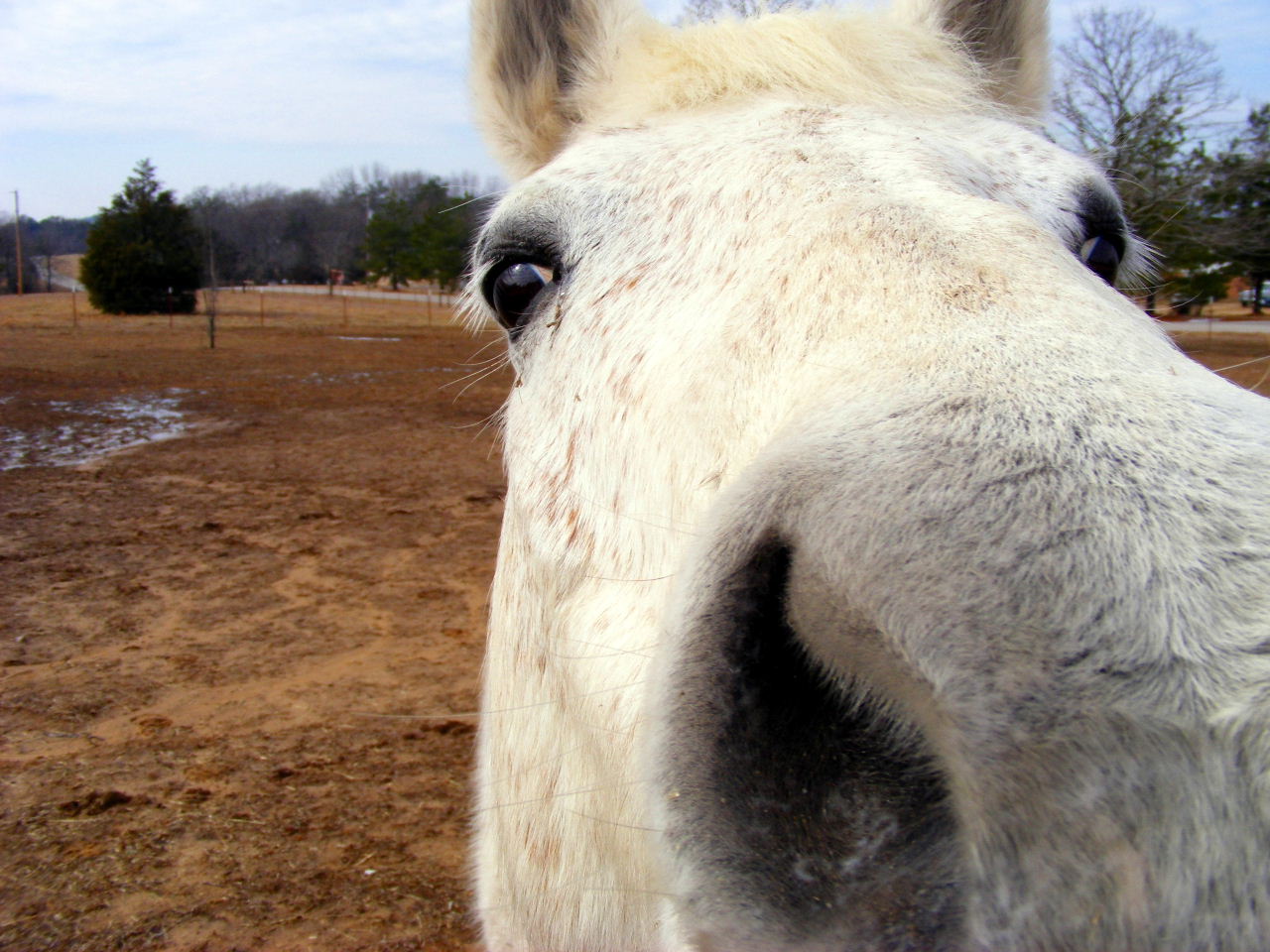
oh my, granny…what big nostrils you have!
In order to understand the mysterious pairing of a one-word title and a picture of a horse, some theories have been proposed.
1. Sparkle may be functioning here as a noun. If that’s indeed the case, Sparkle must be the name of the horse, a proper noun.
2. Taking the noun theory further, if this proper noun happens to be the vocative case (most likely), Sparkle, the horse, is having his name invoked here. Judging from the photo, this makes sense. Perhaps Sparkle was previously looking in a different direction and only turned his head toward the camera once his/her name was called.
What undermines the vocative noun theory, however, is the look of puzzlement on the horse’s face. If sparkle is indeed his/her name, why does the horse look so puzzled?
3. This leads to a different theory which could explain the quizzical look.
Sparkle could also function as a verb. The form indicates that “sparkle” is functioning as either an infinitive or a verb in the imperative mood (the two are identical). Since free-standing infinitives don’t make much sense, this is most likely the verb sparkle in the imperative form. If so, the speaker (assuming to be the same person as the author) is telling the horse (with no name) to sparkle.
4. Building on the previous presupposition, in order to understand what the speaker/author expect the horse to do, one needs to explore the entire range of meanings of the verb “sparkle.” Most of the time, the verb sparkle does not take a direct object; that is to say, it generally functions as an intransitive verb (e.g. His eyes sparkle).
But sparkle also sometimes functions as a transitive verb, meaning it requires a direct object (e.g. Moonlight sparkles the waves). However, judging from the absence of a direct object, the speaker/author is using this verb INtransitively.
5. This has narrowed down the possibilities to two most common meanings for sparkle as an intransive verb. The two meanings are as follows:
*To give off spark or light, to glitter (e.g. Jimmy’s eyes sparkled as he talked.)
*To release gas bubbles, to effervesce (e.g. The champagne sparkles.)
Therefore, assuming “sparkle” is an intransitive verb in the imperative mood, the speaker/author is telling this horse to either give off light or sparks or to release gas bubbles.
This is where our theory leaves the realm of linguistics and enters the realm of zoology wherein we learn that horses do not emit light.
This has led to the only possible conclusion — “sparkle” here, understood in conjunction with a picture of a horse, is a command for the horse to release gas.
siri, you crack me up. umm…..no pun intended………
And, narrowing things down a little further, horses can’t burp.
An unusual command indeed.