
buteo albonotatus
Patagonia, Arizona — Paton Center for Hummingbirds
Sunday, May 8, 2022 — 4:16
When I was in Arizona in 1984 with my wife and parents, we visited the Patagonia-Sonoita Creek Sanctuary, which is right next door to Paton’s. My family weren’t birders (although my Mom took some half-serious interest), so I had to bird quickly. I saw some Turkey Vultures overhead and ignored them in search of bigger game. And there was bigger game — in the hour or so we spent there, I saw nine lifers. As we were leaving, a guy who worked in the park asked if we’d seen the Zone-tailed Hawk flying with the vultures. He explained that they’re the same size as the vultures, with similar coloring, and a very similar flight pattern. They sometimes fly with vultures as a way to sneak up on prey. I kicked myself for not paying more attention, and it’s rankled with me for the past 38 years.
When the young guy at Paton’s pointed out the Violet-crowned Hummingbird, I told him I admired his bird-summoning skills and asked if he could summon a Zone-tailed Hawk. He laughed and said he’d go scare one up for me. He told me they’re often seen right over the center. Not 10 minutes later, I saw a hawk circling fairly low overhead and knew immediately that I’d finally seen a Zone-tailed Hawk. I jumped up with my camera, but it was moving fast, disappearing and reappearing behind the tall cottonwoods. It probably stayed in the neighborhood for 10 minutes. Twice that afternoon it came into view. These are the best photos I could get.
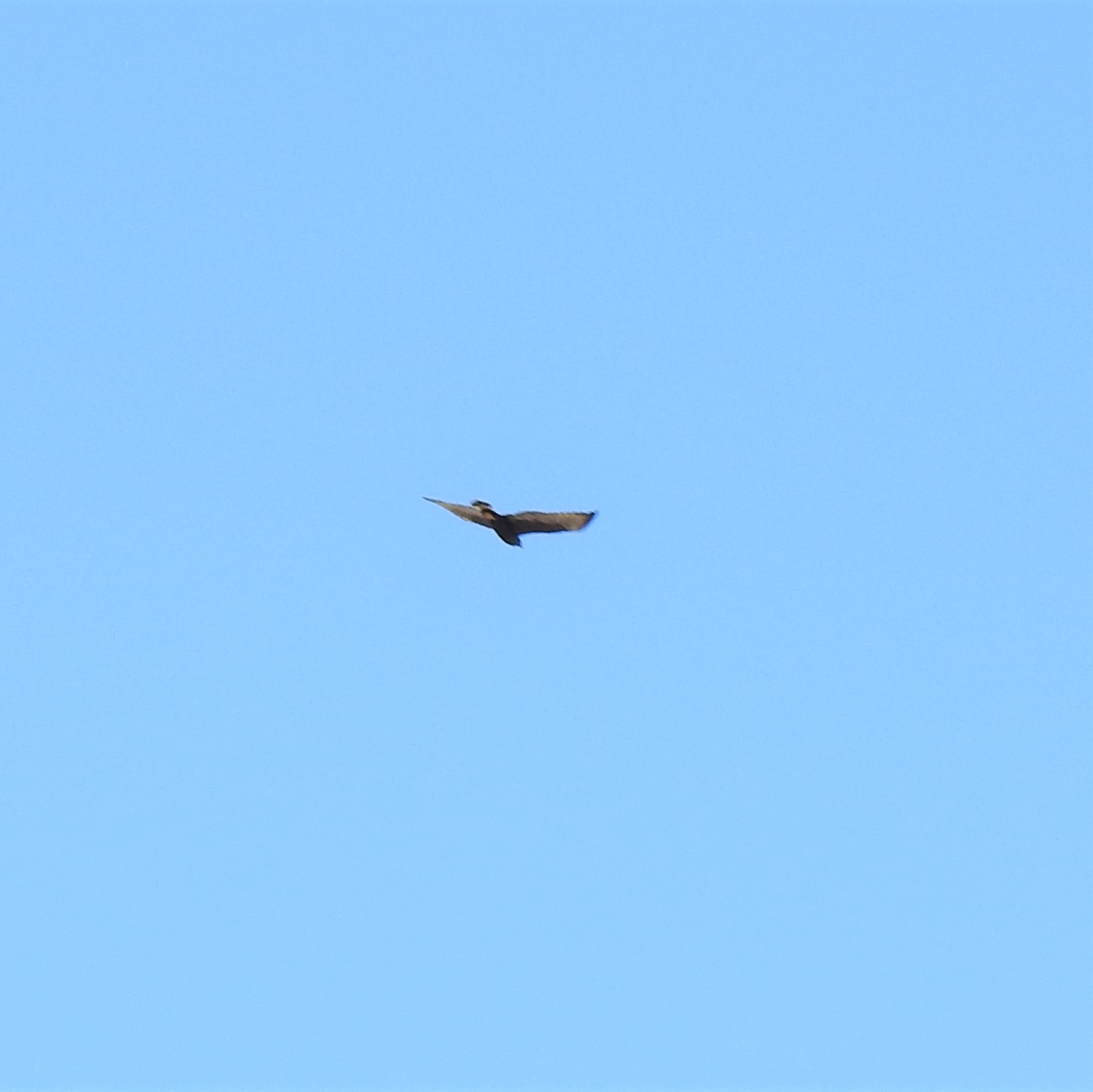
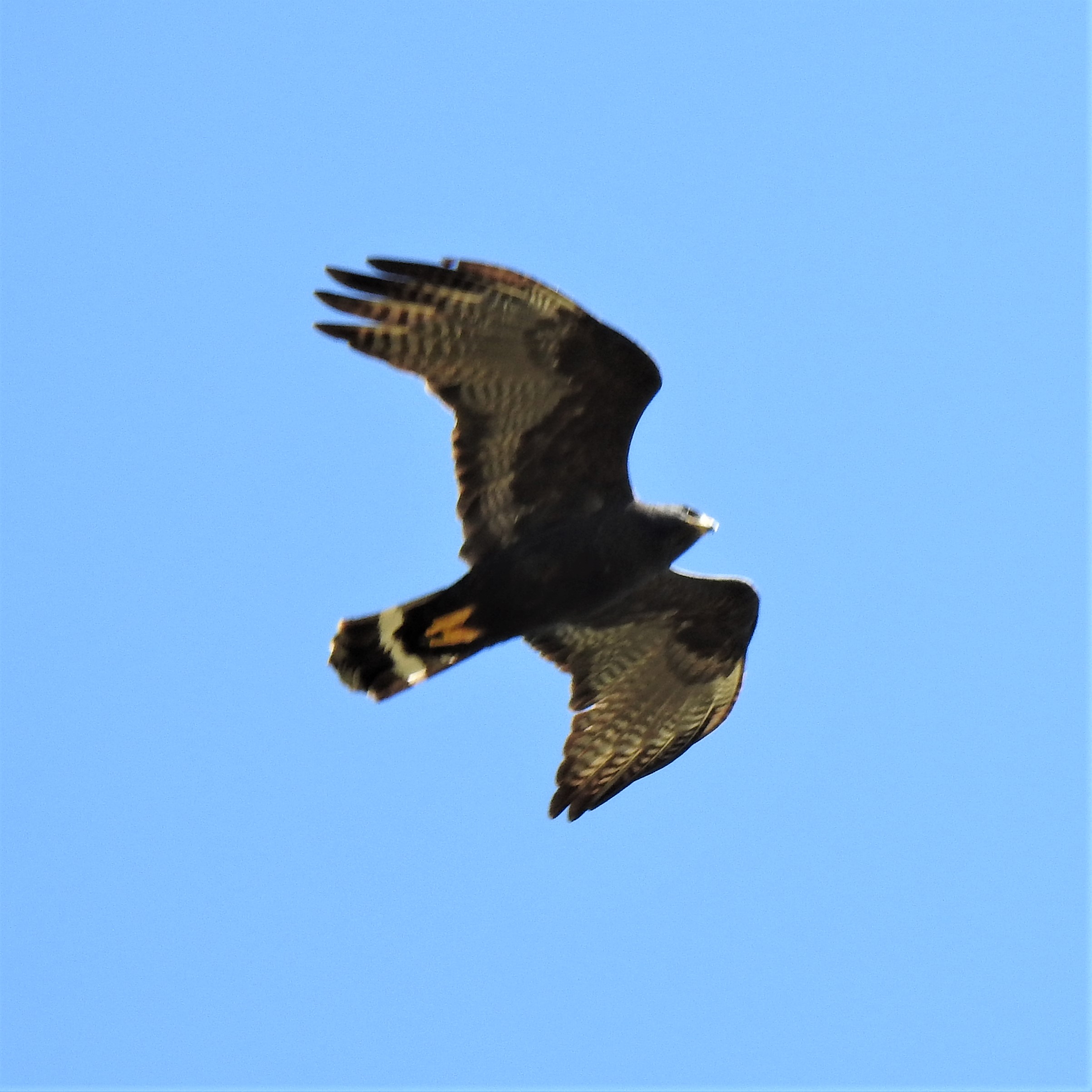
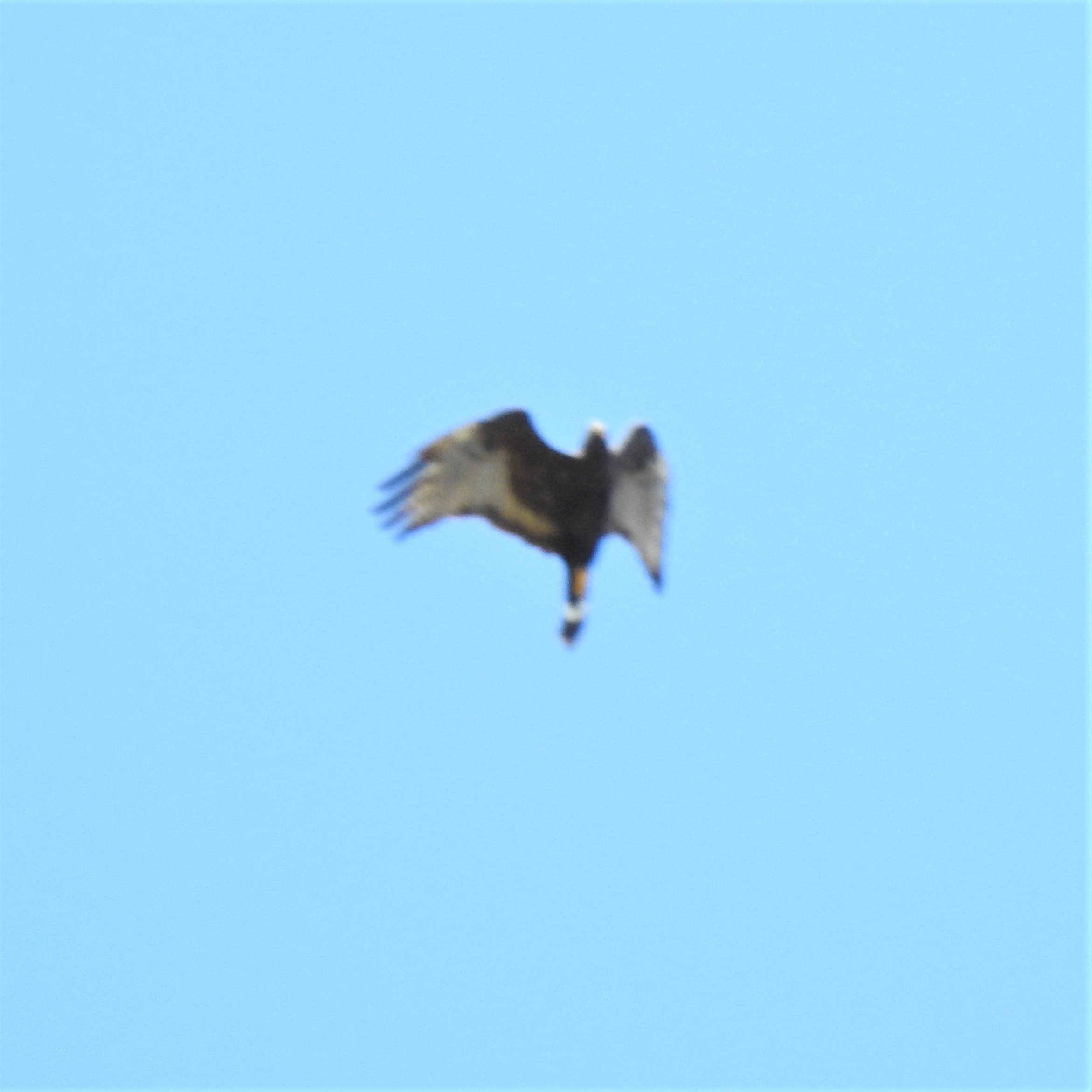
The young guy had wandered off, but I saw him again later. He asked if I’d seen the hawk. I said I had and thanked him again for summoning it for me. He was very friendly and thought the whole story was fun.
It really does look very much like a Turkey Vulture when its soaring overhead. The black color, the pale trailing edges of the wings, the habit it has of holding its wings in a shallow “V” and tilting side to side all resemble avulture. With good looks, the black feathered head, the yellow bill, and the white stripes on the black tail set it apart. Why they’re called “zones” and not stripes or bars, I can’t say.
The next afternoon, I returned to Paton’s and saw the hawk once more as it soared low over the dry creek bed behind the feeders. I would like to have gotten better photos, but at least I can stop regretting my lack of attention in 1984.